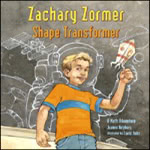
Zachary Zormer, Shape Transformer: A Math Adventure
Grade 4
4 skill lessons · 3 math-through-reading
Math
Skill lessons
The mathematics the book carries, taught directly. Printable workbook pages and teacher keys are not available for this book yet.
- 1The Same Card, Two Different Numbers
- 2Five Rows of Eight Square Inches
- 3Twenty Inches Around a Hall Pass
- 4One Square Inch or Forty
Math + reading
Math through the reading
The same book, entered through a sentence it prints. Change one word in the reading and the numbers change with it.
- 5Change One Word, Change the Answer
- 6The Number Zack Did Not Say
- 7Say It Both Ways About the Light
Reading
Reading and language lessons
The same book read as a text. What a word means in its sentence, how a character is shown, how the writing is put together - no mathematics.
- 8What Their Hands Say: Reading a Motive Off the Page
- 9The Locker Banana: Where the Book Stops Meaning It
- 10Bullets, Numbers and Because: How Directions Are Built
- 11Asked Suspiciously: What a Tag Word Does
- 12Three Fridays: Following What Changes and What Does Not
Skill lessons
4 lessons on the mathematics the book carries. Printable workbook pages and teacher keys are not available for this book yet.
1. The Same Card, Two Different Numbers
Zack gives the hall pass two numbers on one page — 4 inches long, 6 inches wide — and then names only one thing about it, its perimeter of about 20 inches. The area of that card is nowhere in the book. Students take the same two numbers, produce 20 by going round and 24 by covering, and then have to say which question each number answers. The point is that the numbers do not tell you which measure is wanted; the words do.
Full lesson — 20 minutes
1. Build the card twice (6 min)
Each pair takes two identical 4-by-6-inch cards. On the first, students run a length of yarn right round the edge, cut it where it meets, and lay it straight along a ruler to read its length. On the second, they cover the face with one-inch squares and count them. Write the two numbers side by side with nothing between them yet.
Word preview: perimeter, area
2. Label which number the book gives (5 min)
Students read aloud the sentence where Zack measures the hall pass and underline the one number in it that matches one of theirs. Write beside the other number the words the book never uses about this card. Say to a partner which of the two numbers the book leaves out.
Word preview: perimeter, area
“It’s about 4 inches long and 6 inches wide, so it has a perimeter of about 20 inches,”
3. Sort four questions to the right number (5 min)
Each pair gets four questions about the card — how much ribbon goes round its edge, how much paint covers its face, how far a beetle walks along the border, how many one-inch stickers fit on it — and writes 20 or 24 beside each. For every answer, write the one word from the question that decided it.
Word preview: perimeter, area
4. Say why one number is inches and the other is square inches (4 min)
Students write one sentence explaining why 20 is measured in inches and 24 in square inches, with the yarn and the tiles both on the desk to point at. Read the sentence to a partner, who has to touch the material that goes with each unit.
Word preview: square inch
Short version — 9 minutes
1. Build the card twice (5 min)
Each pair runs yarn right round one 4-by-6-inch card, cuts it where it meets and reads its straightened length off a ruler; on a second identical card they cover the face with one-inch squares and count them. Write the two numbers side by side.
Word preview: perimeter, area
2. Sort four questions to the right number (4 min)
Each pair writes 20 or 24 beside four questions about the card — ribbon round the edge, paint on the face, a beetle's walk along the border, stickers that fit — and beside every answer the one word from the question that decided it.
Word preview: perimeter, area
Three levels
- Support
- Work with the yarn and the tiles already prepared for one card, so both numbers are in front of you before any sorting starts. Sort two questions rather than four — the ribbon and the paint — and say aloud the word in each that decided it. Explaining why the units differ stays yours.
- At Grade
- Build both measures on identical cards, find 20 and 24, underline the number the book actually gives, sort all four questions and name the deciding word in each, then write why one number is inches and the other square inches.
- Extension
- Zack needed the perimeter for the trick he was about to do. Say what he was going to do with the card, then argue from the story whether the area or the perimeter was the number worth telling the class — and give both numbers in the argument.
English learners
Both measures are performed with the hands here, and that is deliberate: the yarn and the tiles say what the two Latin words cannot say to a child meeting them in English for the first time. Neither perimeter nor area breaks into parts a student can lean on, and the two are often a single word or a single phrase in other languages, so they arrive fused. Keep them separated by gesture throughout — a finger travelling the edge for one, a flat palm on the face for the other — and name the unit each time, inches for the trip, square inches for the covering. Rehearse the frame aloud before writing: this question asks about ___, so the answer is ___. Students may reason in their strongest language and report the finished English sentence.
Materials
- 4-by-6-inch index cards
- Yarn
- Rulers marked in inches
- One-inch paper squares
- Scissors
- Pencils
- Lined paper
- Question cards for the sorting step
- Word cards: area, perimeter, square inch
Standards & curriculum
Choose your curriculum above to see the standards for this lesson.
Standards are held back while this plan is edited. Every standard shown here was matched against the supplied wording of this lesson, quoting its steps, so a changed step is no longer the thing that was checked. Undo your changes to bring the standards back — your edits stay in this browser either way.
2. Five Rows of Eight Square Inches
The book's third demonstration hands over the area rule and a page to use it on: a book page 5 inches by 8 inches has an area of 40 square inches. Students build that page out of one-inch squares before they multiply, laying five rows of eight and counting the rows rather than the squares, so the 5 and the 8 in the sentence turn out to be a number of rows and a number in each row. The multiplication is then a shortcut for a thing already on the desk.
Full lesson — 20 minutes
1. Tile the page with one-inch squares (6 min)
Working in pairs, students lay one-inch paper squares onto a rectangle drawn 5 inches by 8 inches until no gap is left and nothing overhangs. Squares go corner to corner with no overlaps. When the rectangle is covered, count how many squares are in one row and how many rows there are, and write those two numbers at the edges.
Word preview: area, square inch
2. Count by rows and write the multiplication (5 min)
Students count the covered rectangle by rows — eight, sixteen, twenty-four, thirty-two, forty — touching a whole row on each number word rather than a single square. Then write 5 × 8 = 40 underneath and say which number in that equation was the rows and which was the squares in a row.
Word preview: area
3. Read the book's sentence against your rectangle (5 min)
Each student reads aloud the sentence where Zack gives the page's measurements and its area, then puts a finger on their own tiled rectangle at the 5, the 8 and the 40 as each is said. Write one sentence saying what the words square inches count, and what plain inches counted in the sentence before it.
Word preview: area, square inch
“I can angle the flashlight until the beam of light covers a whole page of a book that is 5 by 8 inches. That’s an area of 40 square inches.”
4. Cover a second rectangle without tiling it (4 min)
Students take a rectangle 3 inches by 7 inches with no squares supplied and find its area by writing the multiplication alone. Then lay just one row of squares along it to check that the row really does hold seven, and say whether the answer needs changing.
Word preview: area
Short version — 9 minutes
1. Tile the page with one-inch squares (5 min)
In pairs, students cover a rectangle drawn 5 inches by 8 inches with one-inch paper squares, corner to corner and no overhang, then write at the edges how many squares fill one row and how many rows there are.
Word preview: area, square inch
2. Count by rows and write the multiplication (4 min)
Students count the covered rectangle by rows — eight, sixteen, twenty-four, thirty-two, forty — touching a whole row per number word, then write 5 × 8 = 40 and say aloud which factor counted the rows.
Word preview: area
Three levels
- Support
- Work on a rectangle where the first row of eight squares is already laid down and the row lines are ruled. Fill the remaining rows, then count by rows aloud with a whole hand on each row — eight, sixteen, twenty-four, thirty-two, forty. Writing the multiplication and saying what each factor counted stays yours.
- At Grade
- Tile the 5-by-8 rectangle completely, label the rows and the squares in a row, count by rows to forty, write 5 × 8 = 40, then read the book's sentence and point at each of the three numbers on your own rectangle.
- Extension
- Zack chose a page 5 inches by 8 inches. Find every rectangle with whole-inch sides that also has an area of 40 square inches, list them, and then say which of them has the shortest trip round the outside — and show the working that settles it.
English learners
Multiplication and counting cross language borders intact; a student who can find five eights already holds this lesson's arithmetic. The barrier is that English marks the difference between a length and an area by moving one word — inches becomes square inches — and that small word carries the whole change from a trip round the edge to a covering of the middle. Say both phrases with the material in view before either is written: a finger travelling one side for inches, a flat hand pressed on the tiles for square inches, three turns each. Rehearse the frame aloud: the area is ___ square inches because ___ rows of ___ cover it. A student who counts more surely in another language should count the rows in it and hand only the finished English sentence to their partner.
Materials
- One-inch paper squares
- Paper rectangles drawn 5 inches by 8 inches
- Pencils
- Lined paper
- Word cards: area, square inch
Standards & curriculum
Choose your curriculum above to see the standards for this lesson.
Standards are held back while this plan is edited. Every standard shown here was matched against the supplied wording of this lesson, quoting its steps, so a changed step is no longer the thing that was checked. Undo your changes to bring the standards back — your edits stay in this browser either way.
3. Twenty Inches Around a Hall Pass
Zack holds up a hall pass, says how long and how wide it is, and names its perimeter in the same breath — 4 inches, 6 inches, about 20 inches around. The book never shows the working. Students cut a 4-by-6-inch card, walk a finger all the way around it while counting the inches off a ruler, and find that the trip is 20 inches because two sides of 4 and two sides of 6 are travelled, not one of each. Perimeter here means the distance round the outside, and students produce it by going round.
Full lesson — 20 minutes
1. Cut the card and read the two measurements (5 min)
Each student cuts a card 4 inches long and 6 inches wide, checking both measurements against a ruler before cutting. Read aloud the sentence where Zack gives those two numbers, then write the 4 and the 6 on the two sides of the card they belong to. Every side of the card gets a number written on it, not just two.
Word preview: perimeter, length, width
“It’s about 4 inches long and 6 inches wide, so it has a perimeter of about 20 inches,”
2. Walk the ruler around the outside (6 min)
Students lay the ruler along one side of the card and read the inches, then turn the corner and lay it along the next, keeping a running count aloud: four, ten, fourteen, twenty. One finger stays on the card so the trip is never lost. Stop when the finger arrives back where it started and say the number reached.
Word preview: perimeter
3. Write the four sides as one sum (5 min)
On paper each student writes the four side lengths in the order they walked them and adds: 4 + 6 + 4 + 6 = 20. Underneath, write the same thing the short way, two fours and two sixes, and circle whichever of the two lines shows more clearly why 4 and 6 each appear twice. Read the circled line to a partner.
Word preview: perimeter
4. Find the perimeter of the fossil's neighbour (4 min)
The book gives one more perimeter — the fossil's, 6 inches — with no sides at all. Students read that sentence, then take a card 1 inch by 2 inches and find its perimeter by walking it the same way. Say aloud whether that card could be the fossil, and give the number that decides it.
Word preview: perimeter
Its perimeter is only 6 inches, but this little seashell fossil proves that the mountains were once under the sea!
Short version — 9 minutes
1. Walk the ruler around the outside (5 min)
On a card already cut to 4 by 6 inches, students lay the ruler along each side in turn and keep a running count aloud — four, ten, fourteen, twenty — one finger holding their place so the trip is never lost.
Word preview: perimeter
2. Write the four sides as one sum (4 min)
Each student writes the four side lengths in walked order and adds them: 4 + 6 + 4 + 6 = 20. Read the sum to a partner with a finger travelling the card as the numbers are said.
Word preview: perimeter
Three levels
- Support
- Work on a card with the four side lengths already written on it and only the walking left to do. Keep one finger on the starting corner and say the running count aloud — four, ten, fourteen, twenty — one number at each corner. Writing the sum stays yours; only the measuring comes off.
- At Grade
- Cut the card, write a number on every side, walk the ruler right round keeping the count aloud, then write 4 + 6 + 4 + 6 = 20 and the short version underneath, and say which line shows the doubling better.
- Extension
- The book says the fossil's perimeter is 6 inches and never gives a single side. Find every rectangle with whole-inch sides whose perimeter is 6 inches, show on paper why there are no others, and say what the book would have had to print for the answer to be one card instead of a set.
English learners
The arithmetic here is addition a student brings with them from any language; four sixes and fours added up come out to twenty in every classroom. What does not travel is that perimeter names a journey rather than a shape — the distance round the outside — and English hides that inside a Latin word a child cannot break apart. Tie the word to the finger before it is tied to a number: as the finger goes round, the class says round the outside, then perimeter, on the same trip. Rehearse the frame aloud before it is written: the perimeter is ___ inches because I walked ___ and ___ and ___ and ___. Students who count faster in another language should keep the running count in it and give only the finished English sentence to their partner.
Materials
- 4-by-6-inch index cards
- Rulers marked in inches
- Scissors
- Pencils
- Lined paper
- Word cards: length, perimeter, width
Standards & curriculum
Choose your curriculum above to see the standards for this lesson.
Standards are held back while this plan is edited. Every standard shown here was matched against the supplied wording of this lesson, quoting its steps, so a changed step is no longer the thing that was checked. Undo your changes to bring the standards back — your edits stay in this browser either way.
4. One Square Inch or Forty
One flashlight, one page, two angles — and the book quantifies both: the straight-on beam lights about one square inch, the tilted beam covers a page of 40 square inches. The book supplies only the word larger. Students reproduce both patches on graph paper, count the squares in each, and then have to say the relation in both directions, because forty is more than one and one is fewer than forty are the same fact and children routinely believe they are two.
Full lesson — 20 minutes
1. Trace both light patches on graph paper (6 min)
In a darkened corner, each pair stands a ruler upright on quarter-inch graph paper with a small flashlight taped at the top pointing straight down, and outlines the lit patch. Without moving the ruler's foot, tilt it so the light falls at a slant and outline the new patch. Two outlines, one sheet.
Word preview: area
2. Count the squares in each patch (5 min)
Students count the whole squares inside each outline, marking each square with a dot as it is counted so none is counted twice. Write the two counts beside their outlines. Say aloud which patch holds more squares and by how many.
Word preview: area
Count the graph squares in the two shapes.
3. Read the book's two areas and write both sentences (5 min)
Students read aloud the two sentences where Zack gives the beam's area and the page's area. Then write the relation twice about the book's own numbers: the page is 39 square inches more than the small beam, and the small beam is 39 square inches fewer than the page. Circle the word that had to change between them.
Word preview: area, more than, fewer than
It only lights about seven words. That’s an area of about one square inch.
“I can angle the flashlight until the beam of light covers a whole page of a book that is 5 by 8 inches. That’s an area of 40 square inches.”
4. Say the relation about your own two patches (4 min)
Each student says both sentences aloud to a partner about their own counted patches, not the book's, with a hand on each outline as it is named. The partner checks that the two sentences give the same difference and that the comparison word changed.
Word preview: more than, fewer than
Short version — 9 minutes
1. Count the squares in each patch (5 min)
On a sheet already carrying both outlines, students count the whole squares inside each, dotting every square as it is counted, and write the two totals beside them. Say which patch holds more and by how many.
Word preview: area
Count the graph squares in the two shapes.
2. Read the book's two areas and write both sentences (4 min)
Students read the two sentences giving the beam's area and the page's area, then write the relation both ways about those numbers — 39 square inches more, and 39 square inches fewer — and circle the word that changed.
Word preview: more than, fewer than
It only lights about seven words. That’s an area of about one square inch.
“I can angle the flashlight until the beam of light covers a whole page of a book that is 5 by 8 inches. That’s an area of 40 square inches.”
Three levels
- Support
- Count only the small patch and the first two rows of the large one, with the row lines already ruled, and say the two counts aloud. Then say one sentence of the pair with the frame supplied — the big patch has more squares than the small one — and let the partner say the other. The counting load comes down; the pair of sentences stays.
- At Grade
- Trace both patches, count both, write the relation about the book's 1 and 40 in both directions, circle the word that changed, then say both sentences about your own two counts with a hand on each outline.
- Extension
- Zack's tilted beam covers a whole page and no more. Say what would have to be true of the tilt for the lit patch to be exactly twice the page, give the area that patch would have, and explain why counting squares would still settle it.
English learners
Comparison is where a fluent mathematician can be stopped cold by English. The two sentences here carry the same fact in opposite word orders, and the language marks the switch with a change of word — more than becomes fewer than — where many languages change a case ending, a particle, or nothing at all. A student can compute 39 instantly and still produce a reversed sentence that says something false. Build both sentences with the outlines in view and the hands moving: name the larger patch first for one sentence, the smaller first for the other, three turns each, before a pencil is picked up. Students should count squares in whatever language they count fastest in and give only the finished English pair to their partner.
Materials
- Small flashlights
- Rulers
- Graph paper
- Tape
- Pencils
- Lined paper
- Word cards: area, fewer than, more than
Standards & curriculum
Choose your curriculum above to see the standards for this lesson.
Standards are held back while this plan is edited. Every standard shown here was matched against the supplied wording of this lesson, quoting its steps, so a changed step is no longer the thing that was checked. Undo your changes to bring the standards back — your edits stay in this browser either way.
Math through the reading
The mathematics is reached through a sentence the book prints: change one word in the reading and the numbers change with it. These carry their own standards, matched against these lessons rather than inherited from the skill ones.
5. Change One Word, Change the Answer
Students take the hall pass's own two measurements, produce 20 by going round the card and 24 by covering it, and then find which single word in Zack's sentence is the one that chose 20.
Full lesson — 20 minutes
1. Make both numbers from one card (7 min)
Each pair cuts two cards 4 inches long and 6 inches wide, checking both against a ruler. On the first card they run yarn right round the edge, cut it where it meets and lay it straight along the ruler to read 20. On the second they lay one-inch squares over the face until nothing overhangs and count 24. Write the two numbers with their units on the two cards.
2. Read the sentence and underline the word that chose (4 min)
Each pair copies out Zack's sentence about the hall pass, underlines the one number in it that matches a number on one of their cards, and circles the single word that made the sentence name that number rather than the other. Say aloud to a partner which card the sentence is about.
3. Swap the word and write the new sentence (6 min)
Students write the sentence again with perimeter replaced by area, and put the number the new sentence asks for at the end of it with its unit. Both sentences sit on the page together. Say to a partner what changed in the sentence and what changed in the answer, naming both numbers.
4. Test the unit words on the fossil (3 min)
Students read the sentence giving the fossil's perimeter and write which of their two units — inches or square inches — belongs on that number, then say what the book would have had to print for the other unit to be right.
Short version — 9 minutes
1. Make both numbers from one card (7 min)
Each pair cuts two cards 4 inches long and 6 inches wide, checking both against a ruler. On the first card they run yarn right round the edge, cut it where it meets and lay it straight along the ruler to read 20. On the second they lay one-inch squares over the face until nothing overhangs and count 24. Write the two numbers with their units on the two cards.
2. Swap the word and write the new sentence (6 min)
Students write the sentence again with perimeter replaced by area, and put the number the new sentence asks for at the end of it with its unit. Both sentences sit on the page together. Say to a partner what changed in the sentence and what changed in the answer, naming both numbers.
Three levels
- Support
- Work with the yarn already cut and the squares already laid, so both numbers are on the desk before any reading starts, and with the book's sentence copied out for you. Your work is the swap: cross out perimeter, write area above it, and put the right number at the end. Say both sentences aloud to a partner with a hand on the card each one describes.
- At grade
- Cut both cards, make 20 with the yarn and 24 with the squares, copy the sentence, circle the deciding word, write the swapped sentence with its number and unit, and finish by putting the right unit on the fossil's 6.
- Extension
- Zack could have said either word about that card and both would have been true. Write the two sentences he could have said, then find a rectangle with whole-inch sides where the two numbers come out the same, give both numbers, and say what makes that card different from the hall pass.
English learners
The arithmetic here crosses every language border: a child who can add four numbers and count a covering already holds it. What does not cross is that English marks the difference between the trip and the covering by moving one word, and marks it a second time by adding square in front of the unit. Both marks are small and both are load-bearing. Say each pair with the material moving before either is written — a finger travelling the edge for perimeter and inches, a flat palm pressed on the tiles for area and square inches, three turns each. Rehearse the frame aloud before the swap is written: this sentence says ___, so the answer is ___ ___. Students may reason and count in whichever language they count fastest in and hand only the finished English sentence to their partner.
Materials
- 4-by-6-inch index cards
- Yarn
- Rulers marked in inches
- One-inch paper squares
- Scissors
- Pencils
- Lined paper
- The hall-pass sentence written large
- The fossil sentence written large
Standards & curriculum
Choose your curriculum above to see the standards for this lesson.
Standards are held back while this plan is edited. Every standard shown here was matched against the supplied wording of this lesson, quoting its steps, so a changed step is no longer the thing that was checked. Undo your changes to bring the standards back — your edits stay in this browser either way.
6. The Number Zack Did Not Say
Students find the area of Zack's hall pass — 24 square inches, a number nowhere in the book — and hand it in together with the one sentence that makes it the only possible answer.
Full lesson — 20 minutes
1. Read the sentence and mark what it fixes (5 min)
Each pair reads Zack's hall-pass sentence aloud, twice, then underlines every number in it and writes beside each one what that number measures. Under the sentence they write the one measure of the card the sentence names, and the one it does not. No card is touched yet.
2. Cover the card and count the rows (7 min)
Each pair cuts a card to the two dimensions they underlined and lays one-inch squares over it, corner to corner, until nothing overhangs and no gap is left. They count by rows aloud — six, twelve, eighteen, twenty-four — touching a whole row on each number word, then write the count with its unit and the multiplication that matches the rows underneath it.
3. Put the number and its sentence on one sheet (5 min)
Students write their number with its unit at the top of a sheet and copy the book's sentence directly beneath it, underlining the two words that gave them the size of the card. Beside it they write one sentence saying why no other card could have been meant.
4. Say why the book's own number is a different number (3 min)
Each pair says aloud to another pair which number the book printed for this card and which number they produced, giving both with their units, and names the one word in the sentence that decided which of the two the book was going to say.
Short version — 9 minutes
1. Read the sentence and mark what it fixes (5 min)
Each pair reads Zack's hall-pass sentence aloud, twice, then underlines every number in it and writes beside each one what that number measures. Under the sentence they write the one measure of the card the sentence names, and the one it does not. No card is touched yet.
2. Cover the card and count the rows (7 min)
Each pair cuts a card to the two dimensions they underlined and lays one-inch squares over it, corner to corner, until nothing overhangs and no gap is left. They count by rows aloud — six, twelve, eighteen, twenty-four — touching a whole row on each number word, then write the count with its unit and the multiplication that matches the rows underneath it.
Three levels
- Support
- Work from a card already cut to 4 inches by 6 inches with the row lines ruled on it, so the covering goes down without measuring. Lay the squares, count by rows aloud with a whole hand on each row, and write the number with its unit. Copying the sentence and underlining the two words that fixed the size stays yours — that half is the point.
- At grade
- Read and mark the sentence, cut the card to the dimensions it gives, cover and count to 24 by rows, write the multiplication, then hand in the number and the sentence together with the two deciding words underlined and a line saying why no other answer fits.
- Extension
- The fossil's perimeter is 6 inches and the book gives none of its sides. Say whether the fossil's area can be settled the way the hall pass's was, give the reason in terms of what the sentence does and does not fix, and then show every whole-inch rectangle whose perimeter is 6 — with its area — to prove your answer either way.
English learners
The covering and the counting are the same in every language and a child who can count to twenty-four in any of them can do this lesson's mathematics today. The English that blocks it is the pair long and wide, which arrive in one sentence as two ordinary adjectives and are in fact the names of two different sides of one card. A child who reads them as one idea cuts a square. Put both words on the card with the ruler in hand before the sentence is read — a finger down the long side saying long, across the short one saying wide, three turns each. Rehearse the frame aloud: the card is ___ inches long and ___ inches wide, so ___ rows of ___ cover it. Students may read the sentence in translation and count in whichever language they count fastest in, and hand in the finished English sentence.
Materials
- Index card stock
- Rulers marked in inches
- Scissors
- One-inch paper squares
- Pencils
- Lined paper
- The hall-pass sentence written large
- The fossil sentence written large
Standards & curriculum
Choose your curriculum above to see the standards for this lesson.
Standards are held back while this plan is edited. Every standard shown here was matched against the supplied wording of this lesson, quoting its steps, so a changed step is no longer the thing that was checked. Undo your changes to bring the standards back — your edits stay in this browser either way.
7. Say It Both Ways About the Light
Students count the squares in two light patches they have traced themselves, then state the relation between the book's own two areas in both directions and show that the two sentences describe one arrangement.
Full lesson — 20 minutes
1. Trace the two patches the flashlight makes (6 min)
In a darkened corner each pair stands a ruler upright on graph paper with a small flashlight taped at the top pointing straight down, and outlines the lit patch. Without moving the ruler's foot they tilt it so the light falls at a slant, and outline the new patch on the same sheet. Two outlines, one sheet, nothing rubbed out.
2. Count the squares in both patches (4 min)
Students count the whole squares inside each outline, dotting each square as it is counted so none is counted twice, and write the two totals beside the outlines. Say aloud which patch holds more squares and by how many.
3. Write the relation in both directions (6 min)
Students read aloud the two sentences where Zack gives the small beam's area and the page's area, subtract to find the difference, and write the relation twice about those numbers: the page is 39 square inches more than the small beam, and the small beam is 39 square inches fewer than the page. Circle the word that had to change between the two sentences.
4. Prove both sentences describe one sheet (4 min)
Each student says both sentences aloud to a partner about their own two counted patches, moving a hand to the outline named first in each sentence. The partner checks that the difference is the same number both times and that the comparison word changed, and says which single arrangement both sentences are about.
Short version — 9 minutes
1. Count the squares in both patches (4 min)
Students count the whole squares inside each outline, dotting each square as it is counted so none is counted twice, and write the two totals beside the outlines. Say aloud which patch holds more squares and by how many.
2. Write the relation in both directions (6 min)
Students read aloud the two sentences where Zack gives the small beam's area and the page's area, subtract to find the difference, and write the relation twice about those numbers: the page is 39 square inches more than the small beam, and the small beam is 39 square inches fewer than the page. Circle the word that had to change between the two sentences.
Three levels
- Support
- Work on a sheet where both outlines are already traced and the rows inside them ruled, so the counting is a count and not a hunt. Say the first sentence with the frame supplied — the big patch has ___ more squares than the small patch — and let your partner say the reversed one; then swap and say the reversed one yourself. Both sentences still get said by both of you.
- At grade
- Trace both patches, count both, subtract the book's 1 from its 40, write the relation in both directions with the changed word circled, and then say both sentences about your own two counts with a hand on each outline.
- Extension
- The book says the tilted beam covers a whole page of 40 square inches. Say how many times over the small beam's one square inch would fit inside that page, write that relation in both directions the way you wrote the difference, and then explain why the two pairs of sentences are not saying the same thing about the same two patches.
English learners
English is what most often stops a fluent mathematician here. The two sentences carry one fact in opposite word orders and English marks the switch by exchanging one word, more than for fewer than, where many languages change a case ending, a particle or nothing at all, and where some put the compared thing first in both. A child can produce 39 instantly and still write a reversed sentence that says something false. Build both sentences with the outlines in view and the hands moving before a pencil is picked up: name the larger patch first and say the whole sentence, then the smaller patch first and say the whole sentence, three turns each. Rehearse the frame aloud: the ___ patch has ___ square inches more than the ___ patch. Students should count in whichever language they count fastest in and hand only the finished English pair to their partner.
Materials
- Small flashlights
- Rulers
- Graph paper
- Tape
- Pencils
- Lined paper
- The small-beam sentence written large
- The lit-page sentence written large
Standards & curriculum
Choose your curriculum above to see the standards for this lesson.
Standards are held back while this plan is edited. Every standard shown here was matched against the supplied wording of this lesson, quoting its steps, so a changed step is no longer the thing that was checked. Undo your changes to bring the standards back — your edits stay in this browser either way.
Reading and language lessons
5 lessons on the reading and language the book carries - what a word means in its sentence, how a character is shown, how a text is built. No mathematics: these are matched against the English language arts curricula, which are a different and smaller set than the mathematics ones.
8. What Their Hands Say: Reading a Motive Off the Page
Nobody in this book announces what he wants. Tyler marches, holds up, brags and strutts; Zack sinks, shoves his hands in his pockets and hopes not to be called. Students build a two-column chart of what each boy's body does, then locate the one sentence where the narrator quietly tells you Tyler knows Zack has nothing. The work is inferring a want from actions and then pointing at the words that carried it.
Full lesson — 20 minutes
1. Read the two entrances side by side (6 min)
Read both passages aloud with a partner, one voice each. Tyler goes first, then Zack. Underline every word that tells you how each boy moved and how he sounded. Say aloud which boy wants the class watching him and which boy is hoping nobody looks.
Word preview: bragged
Tyler marched up to the front of the room and held up a photograph. “My mom and I raised this orchid,” he bragged. “It grew a flower that was eight inches wide and got first place at the state fair. We won the blue ribbon and my picture was on the front page of the newspaper.” As Tyler strutted back to his seat, all the kids leaned over to see the photograph up close.
He looked around. “Oh rats, I forgot! I was supposed to bring in something fun to measure!” Zack sank down in his chair. “Maybe Ms. Merkle won’t call on me.”
2. Chart what each boy does with his hands (5 min)
Fold a page in half and head one side Tyler, one side Zack. In each column write two things that boy's body does in the passage below and in the passages you just read. Do not write what he feels — write only what he does. Then write one sentence under each column naming what that boy wants from the class.
Word preview: frantically
Tyler waved his hand frantically in the air. He wanted to go first.
Zack shoved his hands into his pockets as he walked to the front of the room. He felt a dime, a pencil stub, and a folded-up piece of paper he had meant to throw in the recycle bin. He turned to face the class. Everyone was looking at him.
3. Find the sentence where Tyler's want turns unkind (5 min)
Read this passage twice. The first time, find what Tyler says out loud. The second time, find what the narrator tells you Tyler knows. Copy the exact sentence that shows Tyler is not being helpful, and write in one line what he is really doing to Zack.
Word preview: announced
As Tyler walked back to his seat, he announced, “I think Zack has something really interesting to show next.” “Zachary?” Ms. Merkle asked. The color drained from Zack’s face. He had nothing – and Tyler knew it.
4. Say a motive and name the words that prove it (4 min)
Choose one boy. In one sentence say what he wants, then read aloud the exact words from the passage below that made you decide. Listeners raise a hand only when the speaker reads words that are actually on the page, not words about how the boy felt.
Word preview: motive
As Tyler walked back to his seat, he announced, “I think Zack has something really interesting to show next.” “Zachary?” Ms. Merkle asked. The color drained from Zack’s face. He had nothing – and Tyler knew it.
Zack shoved his hands into his pockets as he walked to the front of the room. He felt a dime, a pencil stub, and a folded-up piece of paper he had meant to throw in the recycle bin. He turned to face the class. Everyone was looking at him.
Short version — 9 minutes
1. Read the two entrances side by side (5 min)
Read both passages aloud with a partner, one voice each. Underline every word telling you how each boy moved. Say aloud which boy wants the class watching him.
Word preview: bragged
Tyler marched up to the front of the room and held up a photograph. “My mom and I raised this orchid,” he bragged. “It grew a flower that was eight inches wide and got first place at the state fair. We won the blue ribbon and my picture was on the front page of the newspaper.” As Tyler strutted back to his seat, all the kids leaned over to see the photograph up close.
He looked around. “Oh rats, I forgot! I was supposed to bring in something fun to measure!” Zack sank down in his chair. “Maybe Ms. Merkle won’t call on me.”
2. Find the sentence where Tyler's want turns unkind (4 min)
Read this passage twice: once for what Tyler says, once for what the narrator says Tyler knows. Copy the exact sentence showing Tyler is not being helpful.
Word preview: announced
As Tyler walked back to his seat, he announced, “I think Zack has something really interesting to show next.” “Zachary?” Ms. Merkle asked. The color drained from Zack’s face. He had nothing – and Tyler knew it.
Three levels
- Support
- Work Tyler only, and only from the first printed passage in step 1. Circle three action words — marched, held up, strutted — and answer aloud: does he want people looking at him, yes or no? Then copy one of the three words into the chart under Tyler.
- At Grade
- Fill both columns from the printed passages, two actions each, then write the want sentence for each boy and keep only the actions you can put a finger on.
- Extension
- Tyler's announcement in step 3 sounds generous and is not. Write two sentences: one saying what a listener in the room would hear, one saying what Zack hears, and name the words in the passage that make the two different.
English learners
Marched, strutted, shoved and sank are all ordinary walking-and-moving verbs carrying an attitude, and that attitude does not travel word for word into another language. Act each one out before reading, then invite students to name, in their strongest language, a way of walking that shows off, and to show it. Rehearsable frame: He ___, so I think he wants ___.
Materials
- Zachary Zormer, the passage printed in this step
- pencil
- motive chart, folded in two columns
- Word cards: bragged, frantically, announced, motive
Standards & curriculum
Choose your curriculum above to see the standards for this lesson.
Standards are held back while this plan is edited. Every standard shown here was matched against the supplied wording of this lesson, quoting its steps, so a changed step is no longer the thing that was checked. Undo your changes to bring the standards back — your edits stay in this browser either way.
9. The Locker Banana: Where the Book Stops Meaning It
This book is funny because its people say things nobody could mean literally. Zack names a locker banana as the oldest thing he owns and wishes for a weird jungle disease at the end of an otherwise ordinary list. Students bracket the stretched claims, sort literal from stretched, then catch the four words under cover of darkness doing honest work in Tyler's mouth and comic work in Zack's head. The work is telling literal from figurative and saying what the stretch buys.
Full lesson — 20 minutes
1. Read the three brags aloud and stop at the impossible part (5 min)
Read the two passages below aloud, one partner each. When you reach a claim nobody could actually mean literally, say STOP and put a light pencil bracket around it. Then say aloud what the speaker really means, in ordinary words.
Word preview: exaggeration
“Wow!” said Zack. “The oldest thing I have is the banana at the bottom of my locker.”
Perfect attendance! What was he thinking? He could have stayed home in bed with a fever, a nosebleed, or a weird jungle disease. He muttered, “Maybe Friday isn’t my favorite day anymore.”
2. Sort literal from stretched in one list (5 min)
The passage below builds a list of three things Zack wishes he had. Write the three in order down your log. Beside each write REAL if a fourth grader could actually have it and STRETCHED if nobody could. Then write one sentence saying what the stretched one adds that the real ones do not.
Word preview: literal
Perfect attendance! What was he thinking? He could have stayed home in bed with a fever, a nosebleed, or a weird jungle disease. He muttered, “Maybe Friday isn’t my favorite day anymore.”
3. Catch the same words used two ways (6 min)
Tyler's grandfather earned a bar under cover of darkness. A page later Zack wishes for the same four words. Read both passages, then write what the four words mean the first time and what they mean the second. Say in one line why hearing them twice is funny.
Word preview: echo
“My grandfather always says, ‘Good things come in little packages.’ This little bar means a lot to him, even though its area is only one square inch. He got it in World War II for leading his troops out of enemy territory under cover of darkness.”
For a second he thought, “Maybe lightning will knock out the electricity and I can escape under cover of darkness.”
4. Write one exaggeration of your own and defend it (4 min)
Write one sentence in Zack's voice about the worst thing in your desk, stretched the way he stretches the locker banana below. Trade with a partner. Your partner circles the stretched part and writes underneath what you actually mean.
Word preview: stretch
“Wow!” said Zack. “The oldest thing I have is the banana at the bottom of my locker.”
Short version — 9 minutes
1. Read the three brags aloud and stop at the impossible part (4 min)
Read both passages aloud, one partner each. Say STOP at any claim nobody could mean literally, and bracket it. Then say what the speaker really means.
Word preview: exaggeration
“Wow!” said Zack. “The oldest thing I have is the banana at the bottom of my locker.”
Perfect attendance! What was he thinking? He could have stayed home in bed with a fever, a nosebleed, or a weird jungle disease. He muttered, “Maybe Friday isn’t my favorite day anymore.”
2. Catch the same words used two ways (5 min)
Read both passages. Write what under cover of darkness means the first time and what it means the second, then say in one line why hearing it twice is funny.
Word preview: echo
“My grandfather always says, ‘Good things come in little packages.’ This little bar means a lot to him, even though its area is only one square inch. He got it in World War II for leading his troops out of enemy territory under cover of darkness.”
For a second he thought, “Maybe lightning will knock out the electricity and I can escape under cover of darkness.”
Three levels
- Support
- Work only the locker banana in step 1's first printed passage. Answer aloud: could a banana really be the oldest thing a person owns? Then say the plain sentence Zack could have said instead, and write it in four words or fewer.
- At Grade
- Bracket the stretched claims in both printed passages, sort the three-item list into REAL and STRETCHED, and write what the stretch adds.
- Extension
- The fever, the nosebleed and the jungle disease are in that order and not another. Write two sentences on why the list would be less funny if the jungle disease came first, using the printed passage's own order as your evidence.
English learners
Exaggeration for humour exists in every language, but the particular images do not carry — a locker banana is a joke about a specific school. Say the plain meaning first, then the stretched one, so students hear the gap. Invite them to tell an exaggeration from their strongest language and then say the plain version in English. Rehearsable frame: He says ___, but he really means ___.
Materials
- Zachary Zormer, the passage printed in this step
- pencil
- figurative language log
- Word cards: exaggeration, literal, echo, stretch
Standards & curriculum
Choose your curriculum above to see the standards for this lesson.
Standards are held back while this plan is edited. Every standard shown here was matched against the supplied wording of this lesson, quoting its steps, so a changed step is no longer the thing that was checked. Undo your changes to bring the standards back — your edits stay in this browser either way.
10. Bullets, Numbers and Because: How Directions Are Built
The back of this book stops telling a story and starts telling a reader what to do. Students read a materials list that has no sentences at all, then a numbered set of actions, then set both beside a narrative sentence about a lost picture frame. They sort who each is speaking to and whether it reports or instructs, and finish by rewriting a story sentence as directions. No strip is folded and nothing is measured; the work is entirely about how the two kinds of writing are put together.
Full lesson — 20 minutes
1. Read the materials list and the numbered steps (5 min)
Read the two passages below. The first tells you what to gather; the second tells you what the finished thing does. Count aloud how many bullet items the list has, then read the second passage and underline the word because. Say what the word because is doing there.
Word preview: materials
To make a Moebius strip you’ll need: • a long, thin strip of paper • tape
Starting from any point, you can draw a line down the middle of the Moebius strip. The line will end where you started, because the Moebius strip has only one continuous surface.
2. Number the actions in a set of directions (5 min)
The passage below numbers what a reader must do. Copy the numbered actions onto your log in order, then circle the first verb in each one. Write one sentence saying what all four circled words have in common.
Word preview: directions
Go Further: 1. Get a pair of scissors. 2. Carefully poke a hole anywhere along the line that you drew. 3. Cut along the line. What happens?
3. Compare a direction with a story sentence (6 min)
The first passage below gives directions. The second tells a story. Read both aloud. On your log write, for each, who the sentence is speaking to and whether it says what to do or what happened. Then write one sentence naming the biggest difference you hear.
Word preview: procedure
Go Further: 1. Get a pair of scissors. 2. Carefully poke a hole anywhere along the line that you drew. 3. Cut along the line. What happens?
He searched all of the pockets in his backpack. He even turned the pack upside-down and shook it. His picture frame was gone.
4. Turn one story sentence into a direction (4 min)
Read the story passage below. Rewrite it as three numbered directions telling a reader what to do, using the same kind of opening word you circled earlier. Read yours aloud; a partner says whether it now tells them to do something or tells them what happened.
Word preview: rewrite
He searched all of the pockets in his backpack. He even turned the pack upside-down and shook it. His picture frame was gone.
Short version — 9 minutes
1. Read the materials list and the numbered steps (4 min)
Read both passages. Count the bullet items aloud, then underline because in the second and say what it is doing there.
Word preview: materials
To make a Moebius strip you’ll need: • a long, thin strip of paper • tape
Starting from any point, you can draw a line down the middle of the Moebius strip. The line will end where you started, because the Moebius strip has only one continuous surface.
2. Compare a direction with a story sentence (5 min)
Read both passages aloud. For each, say who it speaks to and whether it says what to do or what happened. Write one sentence naming the biggest difference.
Word preview: procedure
Go Further: 1. Get a pair of scissors. 2. Carefully poke a hole anywhere along the line that you drew. 3. Cut along the line. What happens?
He searched all of the pockets in his backpack. He even turned the pack upside-down and shook it. His picture frame was gone.
Three levels
- Support
- Stay with the two printed passages in step 1. Point to a bullet mark, then to a capital letter that begins a full sentence. Answer aloud: which passage would you read while your hands are busy? Then copy the two bullet items onto the log.
- At Grade
- Work both printed passages plus the numbered directions, filling the log's who-it-speaks-to and what-it-does columns, then write the difference sentence.
- Extension
- The second printed passage in step 1 explains why the trick works, and the directions never do. Write three sentences on what a reader gains from an explanation that a list of steps alone cannot give, quoting the because sentence.
English learners
Numbered directions in English use the bare command form — Get, Poke, Cut — with no subject at all, and many languages mark a command differently or require a pronoun. Read the numbered passage aloud with a hand gesture on each verb. Invite students to give a two-step direction in their strongest language and then in English, and notice together whether a word for you appears. Rehearsable frame: First ___. Then ___.
Materials
- Zachary Zormer, the passage printed in this step
- pencil
- text structure log
- Word cards: materials, directions, procedure, rewrite
Standards & curriculum
Choose your curriculum above to see the standards for this lesson.
Standards are held back while this plan is edited. Every standard shown here was matched against the supplied wording of this lesson, quoting its steps, so a changed step is no longer the thing that was checked. Undo your changes to bring the standards back — your edits stay in this browser either way.
11. Asked Suspiciously: What a Tag Word Does
Three quoted lines land in a row with no speaker named, and students must work out who is talking from the sentence in front of them. Then they collect the tags a page later, where the author does name the speakers and adds suspiciously to one of them. They read one exchange three ways to hear how a tag governs tone, and finish by swapping a tag out to see what breaks. The work is reading dialogue — who speaks, and how the author tells you how it sounds.
Full lesson — 20 minutes
1. Read a scene where nobody is named (5 min)
Read the passage below aloud in a group of four. Three of the lines have no he said at all. Decide together who is speaking each one and mark your choice with a pencil letter. Say aloud the one word in the passage's first sentence that tells you these speakers are not being kind.
Word preview: dialogue
The kids were used to Zack’s jokes. “Yeah, right.” “What planet do you live on?” “No way.”
2. Collect the tags an author actually used (5 min)
The passage below is thick with speaker tags. List every tag word you find on your log — the word that follows the quotation, such as said or asked. Beside each, write one word for how that person sounds. Circle the two tags that tell you more than said does.
Word preview: suspiciously
Zack took a deep breath. “Tyler?” Tyler scowled at him. “What do you want?” “I have to tell you a secret,” said Zack. “Yeah, what?” asked Tyler suspiciously. “I had nothing to show today or on the other days,” Zack said. “I just think things up on the spot.”
3. Read one exchange three ways (6 min)
Read the passage below aloud three times with a partner: once flat, once as though Tyler is still angry, once as though he means it. After each reading write one word for how Tyler sounded. Then find the exact words in the passage that make the third reading the right one.
Word preview: slowly
Tyler didn’t say anything for a long time. Then, to Zack’s surprise Tyler said slowly, “The light thing was really cool. I read under the covers at night, too.” “Yeah, it’s the best way to read comic books,” Zack agreed. “Especially Galaxy Warriors,” Tyler added. “Yeah! That’s my favorite!” said Zack.
4. Replace one tag and say what breaks (4 min)
Choose one tag from the printed passage below and swap in a different word — shouted, whispered, laughed. Read the line aloud with your new tag. Then write one sentence saying what changes about the person, and whether the rest of the passage still makes sense.
Word preview: tag
Zack took a deep breath. “Tyler?” Tyler scowled at him. “What do you want?” “I have to tell you a secret,” said Zack. “Yeah, what?” asked Tyler suspiciously. “I had nothing to show today or on the other days,” Zack said. “I just think things up on the spot.”
Short version — 9 minutes
1. Read a scene where nobody is named (4 min)
Read the passage aloud in a group of four. Decide who speaks each untagged line and mark it. Say the word in the first sentence telling you these speakers are not being kind.
Word preview: dialogue
The kids were used to Zack’s jokes. “Yeah, right.” “What planet do you live on?” “No way.”
2. Collect the tags an author actually used (5 min)
List every speaker tag in the passage below and write one word for how each person sounds. Circle the tag that tells you more than said does.
Word preview: suspiciously
Zack took a deep breath. “Tyler?” Tyler scowled at him. “What do you want?” “I have to tell you a secret,” said Zack. “Yeah, what?” asked Tyler suspiciously. “I had nothing to show today or on the other days,” Zack said. “I just think things up on the spot.”
Three levels
- Support
- Stay with step 1's printed passage. Read the three quoted lines aloud yourself, one at a time, and after each one answer: is this a friend being nice? Then copy the first sentence of the passage and underline jokes.
- At Grade
- Do both printed passages: mark speakers for the untagged lines, then list every tag with a word for how that person sounds.
- Extension
- In step 2's printed passage only one tag carries an attitude. Write three sentences on what the scene would lose if suspiciously were cut, and name what other words in the passage would then have to do the work.
English learners
English packs the attitude into a single adverb after the tag — asked suspiciously — where many languages carry it in the verb itself or in a sentence-final particle. Read the tagged line aloud twice, once with the adverb and once without, so students hear the difference before they read it. Invite them to say the line in their strongest language and tell the class where the suspicion sits in their version. Rehearsable frame: He said it ___, so he sounds ___.
Materials
- Zachary Zormer, the passage printed in this step
- pencil
- dialogue tag log
- Word cards: dialogue, suspiciously, slowly, tag
Standards & curriculum
Choose your curriculum above to see the standards for this lesson.
Standards are held back while this plan is edited. Every standard shown here was matched against the supplied wording of this lesson, quoting its steps, so a changed step is no longer the thing that was checked. Undo your changes to bring the standards back — your edits stay in this browser either way.
12. Three Fridays: Following What Changes and What Does Not
The book runs the same Friday three times, and each time Zack arrives without the thing he needs. Students read the three openings in order and chart what repeats, then set the class's first reaction beside its last and mark where mockery turns to applause. They locate the sentence where Tyler stops scowling and finish by retelling the change in three ordered sentences, each backed by a line they can point to. The work is following a relationship across a whole book.
Full lesson — 20 minutes
1. Read the three Friday openings in order (6 min)
Read the three passages below in the order printed. Each one opens a new Friday. On your log write, for each, one thing Zack has and one thing he is missing. Say aloud what is the same in all three and what is different.
Word preview: repeats
He looked around. “Oh rats, I forgot! I was supposed to bring in something fun to measure!” Zack sank down in his chair. “Maybe Ms. Merkle won’t call on me.”
Before long it was Friday again. This time Zack was ready. At least, he thought he was. “Rats, where is it?”
Before Zack knew it, it was Friday again. It was raining hard so his dad drove him to school. They got there only minutes before the bell. Zack jumped out of the car and raced up the front steps. “Made it!” he shouted. Then he realized he’d left his backpack in the car.
2. Mark where the class stops laughing at him (5 min)
The two passages below come from different Fridays. Read both. On your log write what the class does in each. Then write one sentence naming what changed about how they treat Zack, and copy the four words that end the second passage.
Word preview: reaction
The kids were used to Zack’s jokes. “Yeah, right.” “What planet do you live on?” “No way.”
The kids were silent at first. Then they started clapping! Everyone took out scissors and paper and began to cut. Everyone but Tyler.
3. Find the turn in the last conversation (5 min)
Read the passage below with a partner. Find the sentence where Tyler stops scowling. Copy it onto your log, then write in one line what Tyler admits about himself that lets him and Zack agree.
Word preview: turning point
Tyler didn’t say anything for a long time. Then, to Zack’s surprise Tyler said slowly, “The light thing was really cool. I read under the covers at night, too.” “Yeah, it’s the best way to read comic books,” Zack agreed. “Especially Galaxy Warriors,” Tyler added. “Yeah! That’s my favorite!” said Zack.
4. Retell the change in three sentences (4 min)
Using your log, tell a partner how things stood between Zack and Tyler at the start, in the middle, and at the end — three sentences, in that order. After each sentence, read aloud one line from the passage printed under this step that backs it up.
Word preview: retell
Zack sat down grinning. He thought to himself, “That was close. Next time I’ll remember to bring something in.” At the back of the room, Tyler was scowling.
Tyler didn’t say anything for a long time. Then, to Zack’s surprise Tyler said slowly, “The light thing was really cool. I read under the covers at night, too.” “Yeah, it’s the best way to read comic books,” Zack agreed. “Especially Galaxy Warriors,” Tyler added. “Yeah! That’s my favorite!” said Zack.
Short version — 9 minutes
1. Read the three Friday openings in order (5 min)
Read the three passages in the printed order. For each, write one thing Zack has and one thing he is missing. Say aloud what is the same in all three.
Word preview: repeats
He looked around. “Oh rats, I forgot! I was supposed to bring in something fun to measure!” Zack sank down in his chair. “Maybe Ms. Merkle won’t call on me.”
Before long it was Friday again. This time Zack was ready. At least, he thought he was. “Rats, where is it?”
Before Zack knew it, it was Friday again. It was raining hard so his dad drove him to school. They got there only minutes before the bell. Zack jumped out of the car and raced up the front steps. “Made it!” he shouted. Then he realized he’d left his backpack in the car.
2. Find the turn in the last conversation (4 min)
Read the passage with a partner and find the sentence where Tyler stops scowling. Copy it, then write in one line what Tyler admits that lets the two boys agree.
Word preview: turning point
Tyler didn’t say anything for a long time. Then, to Zack’s surprise Tyler said slowly, “The light thing was really cool. I read under the covers at night, too.” “Yeah, it’s the best way to read comic books,” Zack agreed. “Especially Galaxy Warriors,” Tyler added. “Yeah! That’s my favorite!” said Zack.
Three levels
- Support
- Use only the first two printed passages in step 1. For each, answer aloud: what day is it, and does Zack have what he needs? Then say the one word that is the same at the start of both, and write it on the log.
- At Grade
- Chart all three printed openings, then compare the two class reactions and write the change sentence.
- Extension
- The third printed opening in step 1 is the only one where Zack says Made it! before losing something. Write three sentences on why the book puts that shout there, using the printed passage's own order of events as your evidence.
English learners
Retelling in order leans on English's time-order signals — Before long, Before Zack knew it, at first, Then — which sit at the front of the sentence and are easy to miss when read quickly. Highlight those openers in the printed passages before students retell. Invite students to retell the three Fridays first in their strongest language, then in English, keeping the same order. Rehearsable frame: At first ___. Then ___. At the end ___.
Materials
- Zachary Zormer, the passage printed in this step
- change-over-time log
- Word cards: repeats, reaction, turning point, retell
Standards & curriculum
Choose your curriculum above to see the standards for this lesson.
Standards are held back while this plan is edited. Every standard shown here was matched against the supplied wording of this lesson, quoting its steps, so a changed step is no longer the thing that was checked. Undo your changes to bring the standards back — your edits stay in this browser either way.