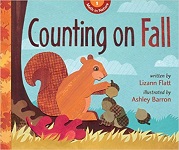
Counting on Fall (Math in Nature)
Grade 1
5 skill lessons
Math
Skill lessons
The mathematics the book carries, taught directly. Printable workbook pages and teacher keys are not available for this book yet.
- 1Ten in Every Group, and More Than One Way to Fill It
- 2Five Toes, Four Paws, and the Number the Book Never Says
- 3Two More Than Five, Two Less Than Ten
- 4Ten Bats Awake, Then Nine
- 5More on the Floor, Fewer on the Trees
Math + reading
Math through the reading
The same book, entered through a sentence it prints. Change one word in the reading and the numbers change with it.
No math-through-reading lessons for this book yet.
Reading
Reading and language lessons
The same book read as a text. What a word means in its sentence, how a character is shown, how the writing is put together - no mathematics.
No reading and language lessons for this book yet.
Skill lessons
5 lessons on the mathematics the book carries. Printable workbook pages and teacher keys are not available for this book yet.
1. Ten in Every Group, and More Than One Way to Fill It
The geese spread puts a number in the reader's hands and then asks for it back in pieces: ten geese in every group, and then two questions in a row asking for ways to make that ten. Students count ten paper geese onto a lake mat, slide some of them to a second lake, and say the two numbers they can see. They keep going until the class chart holds every pair, and finish by naming how many geese are hidden behind a card when only one lake is showing. Ten stays ten however it is split, and the pair that fills it is something a child finds rather than remembers.
Full lesson — 20 minutes
1. Fill one lake with ten geese (5 min)
Count ten paper geese onto the lake mat, one goose to each square, touching each goose as you say its number. Stop when every square is full and say ten with your hand flat over the whole mat. Then say the book's word for it to your partner: ten apiece, ten on this lake and ten on every other lake too.
Word preview: group, apiece
If honk honking geese kept to groups 10 apiece, what a sight that would make at the lake.
2. Slide some geese to the second lake (6 min)
Slide any number of geese across to the empty lake mat and leave the rest where they are. Say both numbers out loud with a hand on each mat: six here, four there. Say them again in the other order, and say whether ten geese are still on the table.
Word preview: make
Can you see several ways to make up 10?
3. Find a split nobody has said yet (5 min)
Look at the class chart and find a split of the ten that is not on it yet. Move your geese to make it and say both numbers with a hand on each mat while your teacher writes the pair up. Keep going until nobody can find a split that is not already there.
Word preview: ways
Can you think of other ways to make 10?
4. Say how many geese are hidden (4 min)
Your partner splits the ten geese and covers one lake with a card. Look at the lake you can see, say its number, then say how many must be under the card before it is lifted. Lift it and count to check.
Short version — 9 minutes
1. Slide some geese to the second lake (5 min)
Count ten geese onto one lake mat, then slide some across to the empty mat. Say both numbers with a hand on each mat. Say whether ten geese are still on the table.
Word preview: make
Can you see several ways to make up 10?
2. Say how many geese are hidden (4 min)
Your partner splits the ten geese and covers one lake with a card. Say how many must be hidden before the card is lifted, then lift it and count.
Three levels
- Support
- Work with six geese instead of ten, so both lakes stay inside a count the child can check by touching. Keep every other part whole: slide, say both numbers, say them the other way round, and check that six geese are still on the table. Move up to ten once the child has named the hidden number before the card came off twice in a row.
- At Grade
- Split ten geese across the two lakes, say both numbers aloud with a hand on each mat, and keep finding splits until the class chart holds every pair. Then name the hidden number before the card is lifted.
- Extension
- Once the chart is full, say how you know no pair is missing: start at ten and none, and say each pair in turn as one goose crosses the water. Then take twelve geese to the same two mats and say which pairs on the ten chart still work and which do not, and why.
English learners
Counting to ten and sliding counters carry over from any language, and a child who counts in Spanish or Somali will build every split on this mat correctly. Two things do not come free. Apiece is rare even for children who speak English at home, and it means in each group rather than altogether, so show it with two full mats side by side before saying it. And the split sentence holds two numbers in one breath. Rehearse one frame and reuse it all lesson: ___ here and ___ there makes ten. Children may count and argue about a doubtful goose in their strongest language and give only the frame in English.
Materials
- Lake mats printed with a ten-frame, two per pair
- Paper geese counters, ten per pair, grey on one side and white on the other
- Class chart headed Ways to Make Ten, with a column for each lake
- A sheet of card used as a screen
- Word cards: group, apiece, make, ways
Standards & curriculum
These lessons are being matched against curricula now.
Standards are held back while this plan is edited. Every standard shown here was matched against the supplied wording of this lesson, quoting its steps, so a changed step is no longer the thing that was checked. Undo your changes to bring the standards back — your edits stay in this browser either way.
2. Five Toes, Four Paws, and the Number the Book Never Says
The raccoon spread asks for a count by fives and prints no total anywhere on it; the sentence that settles the answer is in the notes at the back, where the book says a raccoon has five toes on all four paws. Students count the toes on one paw, lay four paws in a row, and touch each paw once while saying five, ten, fifteen, twenty. Then they say which sentence made twenty the only possible ending. One touch stands for five things here, which is worth having because it reaches the same twenty in four number words instead of twenty.
Full lesson — 20 minutes
1. Make one paw and count its toes (4 min)
Take one paw card and count its toes by ones, touching each toe as you say its number. Say five with your whole hand over the paw. Put your own hand down beside the card and say whether the two match.
Word preview: toes, paws
With toes like those do you suppose raccoons can count on trouble?
2. Lay out all four paws (5 min)
Put four paw cards in a row along the paper strip, left to right. Check each one has five toes before you go on, and say four when every paw is down. Do not count the toes yet.
Word preview: four
Can you count the toes by fives?
3. Count the paws by fives (7 min)
Touch the first paw once and say five. Touch the next and say ten, then fifteen, then twenty. One touch, one number word, and the number word jumps five toes each time. Say the whole count again with your eyes on the number line, landing on five, ten, fifteen and twenty.
Word preview: fives
4. Say the sentence that makes it twenty (4 min)
Read the sentence card from the book's notes with your partner. Say why twenty is the only number the count can end on, using both numbers in that sentence. Then say the thing the book never tells you anywhere: how many raccoons there are.
They have five toes on all four paws.
Short version — 9 minutes
1. Lay out all four paws (4 min)
Put four paw cards in a row on the strip and check each one has five toes. Say four when every paw is down. Do not count the toes yet.
Word preview: four
Can you count the toes by fives?
2. Count the paws by fives (5 min)
Touch each paw once and say five, ten, fifteen, twenty. One touch, one number word. Say the whole count again with your eyes on the number line.
Word preview: fives
Three levels
- Support
- Work with two paws instead of four and count five, ten, with the toes visible on both cards. The child still touches once per paw and still says one number word for five toes, which is the thing being learned; only the length of the count comes down. Add the third and fourth paw one at a time, saying the new last number each time a paw arrives.
- At Grade
- Lay out four paws, count five, ten, fifteen, twenty with one touch per paw, check by counting every toe by ones, and say the sentence from the notes that fixes the answer at twenty.
- Extension
- Turn one paw face down and say where the count would end now, then two face down, saying each new last number before checking. Then put a fifth paw on the strip, which no raccoon has, and say where the count would end and how you knew without touching.
English learners
Touching one object and saying one number word is the same act in every language, so a child should make the whole count in their strongest language first and then again in English. The hard part in English is that fives is a plural noun doing a preposition's work: by fives means in jumps of five, and nothing in the phrase says jump. Show it before saying it, with four paws down and one touch each, then rehearse one frame: one paw is five toes, so I say ___. Toes, paws and the counting words to twenty are worth pre-teaching with the cards in hand.
Materials
- Paw cards, four per pair, each printed with five toes
- A long paper strip to lay the four paws on in a row
- A number line to twenty, marked at five, ten, fifteen and twenty
- The raccoon sentence from the book's notes, copied onto a sentence card
- Word cards: toes, paws, four, fives
Standards & curriculum
These lessons are being matched against curricula now.
Standards are held back while this plan is edited. Every standard shown here was matched against the supplied wording of this lesson, quoting its steps, so a changed step is no longer the thing that was checked. Undo your changes to bring the standards back — your edits stay in this browser either way.
3. Two More Than Five, Two Less Than Ten
The bear spread names no bear's berries and pins two of them exactly: one bear has two berries more than five, another has two berries less than ten. Students build both counts with red counters, counting on from five and counting back from ten, then set the two rows under each other and find the berry that has no partner. They say which bear has more and how many more, and then answer the fairness question the book asks and never settles. The numbers come out of the sentences rather than out of the picture, which is what lets one child check another's answer.
Full lesson — 20 minutes
1. Build both bears' berries (7 min)
Put five red counters in the first bear's row, then count on two more, saying six, seven, as each one lands. Fill the second bear's row with ten counters, then take two away, saying nine, eight as each one leaves. Say both bears' numbers out loud with a hand on each row.
Word preview: more than, less than
Which bear has two berries more than five?
Which bear has two berries less than ten?
2. Match the two rows and find the leftover (5 min)
Slide the two bear mats so one row sits directly under the other and every counter has a counter above or below it. Lay the straight edge down the end of the shorter row. Point at the counter with nobody opposite it and say how many are left over.
Word preview: match
3. Say which bear has more, and how many more (4 min)
Say one sentence naming both bears and both numbers: eight is more than seven. Then say the same fact the other way round, starting with seven. Keep a finger on the leftover counter while you say how many more.
Word preview: how many more
4. Answer the book's question out loud (4 min)
Listen to the bear question and say whether you think it is fair, with a number from your mats inside your answer. A partner who disagrees gives their reason with a number in it too. Nobody has to change their mind.
Word preview: fair
If the bears were aware, would they think that it's fair if one were to gobble more than his or her share?
Short version — 9 minutes
1. Build both bears' berries (5 min)
Put five counters in the first row and count on two more. Fill the second row with ten and take two away. Say both numbers with a hand on each row.
Word preview: more than, less than
Which bear has two berries more than five?
Which bear has two berries less than ten?
2. Match the two rows and find the leftover (4 min)
Slide the rows so one sits under the other with every counter matched. Point at the counter with nobody opposite it and say how many are left over.
Word preview: match
Three levels
- Support
- Build one bear at a time and clear the mat between them, so only one row is ever on the desk. Give the five counters already placed and let the child count on the two, then give the ten already placed and let the child take the two off. Bring both rows back for the matching step, which is where the comparison lives and which the child should still do whole.
- At Grade
- Build seven by counting on two from five and eight by taking two from ten, match the rows, name the leftover, and say which bear has more and how many more.
- Extension
- Say what a bear with two berries less than five would have, and lay its row under the other two so all three ends show at once. Then say which of the three rows sits closest to the other two, and say how the matched ends let you tell.
English learners
Counting on and taking away are done with hands here, so a child with little English can build both rows correctly from a demonstration. Two English pieces carry the mathematics and neither is guessable. More than and less than sit after the number they act on, as in two berries more than five, which reverses the order many languages use, and a child who hears five last often builds five. Say each sentence twice, slowly, with the counters moving on the right words. Rehearse one frame for the comparison: ___ is more than ___, so ___ has ___ more. Children may count in their strongest language throughout and give only the frame in English.
Materials
- Red counters, twenty per pair
- Two bear mats, each printed with a row of ten squares
- A ruler or straight edge to line the two rows up
- Word cards: more than, less than, match, how many more, fair
Standards & curriculum
These lessons are being matched against curricula now.
Standards are held back while this plan is edited. Every standard shown here was matched against the supplied wording of this lesson, quoting its steps, so a changed step is no longer the thing that was checked. Undo your changes to bring the standards back — your edits stay in this browser either way.
4. Ten Bats Awake, Then Nine
The bat spread gives both the count and its direction in the book's own words: bats slip into sleep one by one, and the reader is told to count backward from ten. Students hang ten paper bats upside down on a string, turn one to its sleeping face at a time, and say how many are still awake after each turn. Then they say the whole backward count with the string empty. Each bat that falls asleep takes the awake count down by exactly one, which is why the number words come out in that order and no other.
Full lesson — 20 minutes
1. Hang ten bats in the cave (4 min)
Peg ten paper bats upside down along the string with their awake faces showing. Count them by ones from left to right, touching each bat as you say its number, and say ten with your hand under the whole row.
Word preview: awake, asleep
The bats hibernate hanging upside down.
2. Send one bat to sleep at a time (7 min)
Turn one bat round to its sleeping face. Before anybody counts, say how many are still awake, then check by touching the awake ones. Do it again and again until no bat is awake, saying the awake number before each check.
Word preview: one by one
Could bats all behave and keep count in the cave so they'd slip into sleep one by one?
3. Say the whole count with the string empty (5 min)
Turn every bat back to its awake face, then say the backward count with your hands down: ten, nine, eight, all the way to zero. Say it a second time with a finger walking along the number track. Stop and start again if two numbers come out in the wrong order.
Word preview: backward
Count backward from 10.
4. Start somewhere other than ten (4 min)
Your partner points at a bat to start from and you count backward from there to zero. Swap and do it again from a different bat. Say which starting bat made the shortest count.
Short version — 9 minutes
1. Hang ten bats in the cave (4 min)
Peg ten paper bats upside down along the string with their awake faces showing. Count them by ones, touching each one, and say ten with your hand under the row.
Word preview: awake, asleep
The bats hibernate hanging upside down.
2. Send one bat to sleep at a time (5 min)
Turn one bat to its sleeping face. Say how many are still awake before you check, then check by touching. Keep going until no bat is awake.
Word preview: one by one
Could bats all behave and keep count in the cave so they'd slip into sleep one by one?
Three levels
- Support
- Start with five bats rather than ten and count back from five, keeping every other part whole: one bat turns, the awake number is said before anybody checks, and the check is made by touching. Add bats one at a time across the week and say the new starting number each time one arrives.
- At Grade
- Hang ten bats, turn one to sleep at a time and say the awake number before checking, then say the whole backward count from ten to zero with the string empty.
- Extension
- Turn two bats to sleep at once and say the new awake number before checking, then three at once. Say what changes about the count when bats fall asleep in twos rather than one by one, and whether every number from ten to zero still gets said.
English learners
Turning a bat and counting the ones left is a physical routine that carries over whole, and a child who counts backward in their strongest language should make the first run that way. What has to be built in English is the backward sequence itself, which knowing the forward one does not supply: children who say one to ten fluently often stall at seven, six. Chant it away from the bats, slowly, before it is asked for over the string. Rehearse one frame for the prediction: one is asleep, so ___ are awake. Awake, asleep and the word backward are worth pre-teaching with a bat in hand.
Materials
- A length of string hung between two chairs as the cave roof
- Ten paper bats, an awake face on one side and a sleeping face on the other
- Clothes pegs, ten per group
- A number track running from ten down to zero
- Word cards: awake, asleep, one by one, backward
Standards & curriculum
These lessons are being matched against curricula now.
Standards are held back while this plan is edited. Every standard shown here was matched against the supplied wording of this lesson, quoting its steps, so a changed step is no longer the thing that was checked. Undo your changes to bring the standards back — your edits stay in this browser either way.
5. More on the Floor, Fewer on the Trees
The leaf spread asks twice for a judgement made without counting, then a few lines later invites a guess and a count. Students set paper leaves on a tree mat and a floor mat, say which has more before anybody counts, and then lay the two groups in matched rows so the leftover row settles it. They move one leaf at a time from the tree to the floor and say both numbers again, watching one count go down as the other goes up. The answer comes off the leftover row rather than out of a subtraction, and the two mats hold the same leaves between them the whole time.
Full lesson — 20 minutes
1. Say which has more before anybody counts (4 min)
Look at the two mats and say which one has more leaves and which has fewer, without counting either. Say how you decided. Do not move a leaf yet.
Word preview: more, fewer
Without counting, where do you see more leaves?
2. Match the leaves one to one (6 min)
Lay the tree leaves along the top row of the matching frame and the floor leaves along the bottom row, one leaf to a square, starting at the left. Point at the squares holding a leaf with nothing opposite. Say which group has more and how many are left over, keeping a finger on the leftover leaves.
Word preview: match
Where do you see fewer leaves?
3. Move one leaf and say both numbers again (6 min)
Move one leaf from the tree mat to the floor mat and say both numbers again. Do it four more times, saying both numbers each time. Say what happens to the tree number every time a leaf lands on the floor, and say whether the number of leaves on the table has changed.
Word preview: floor
As more and more fall to the forest floor, the less there are left on the trees.
4. Guess, then count (4 min)
Cover the floor mat, uncover it just long enough to say the word fall, and guess how many leaves are on it. Say your guess out loud rather than writing it. Then count them by ones and say whether your guess was near.
Word preview: guess
Guess how many leaves are on the ground?
Count them if you'd like.
Short version — 9 minutes
1. Match the leaves one to one (5 min)
Lay the tree leaves along the top row of the frame and the floor leaves along the bottom, one to a square. Point at the squares with nothing opposite and say which group has more.
Word preview: match
Where do you see fewer leaves?
2. Move one leaf and say both numbers again (4 min)
Move one leaf from the tree mat to the floor mat and say both numbers again. Do it four more times. Say whether the number of leaves on the table has changed.
Word preview: floor
As more and more fall to the forest floor, the less there are left on the trees.
Three levels
- Support
- Use eight leaves rather than twenty so both rows of the frame stay inside one glance. Keep the matching step exactly as written, because that is where the answer comes from; the child still says which group has more and still points at the leftover. Move one leaf at a time as in the third step, and say only the tree number if saying both at once is too much.
- At Grade
- Say which mat has more before counting, match the two groups row against row, name the leftover, and move leaves one at a time saying both numbers each time.
- Extension
- Start with the two groups matched exactly, so nothing is left over, and then move leaves until the floor has four more than the tree. Say how many leaves you had to move and why it was not four. Then say whether the number on the table ever changed, and how the frame shows it.
English learners
Pointing at the row with something left over is an answer that needs no English at all, and a child should be able to give it on the first day by pointing. The words to teach are the pair more and fewer, which children often hear as one word meaning big: fewer is about how many rather than how much, and it is the one most likely to be missing from a child who says more confidently. Put the two mats side by side and say both words while pointing, then rehearse one frame all lesson: the ___ has more, the ___ has fewer. Children may count in their strongest language and give only the frame in English.
Materials
- A tree mat and a floor mat for each pair
- Paper leaves, twenty per pair, in two autumn colours
- A matching frame of two rows of squares, one row above the other
- Word cards: more, fewer, match, floor, guess
Standards & curriculum
These lessons are being matched against curricula now.
Standards are held back while this plan is edited. Every standard shown here was matched against the supplied wording of this lesson, quoting its steps, so a changed step is no longer the thing that was checked. Undo your changes to bring the standards back — your edits stay in this browser either way.