Sorting Through Spring (Math in Nature)
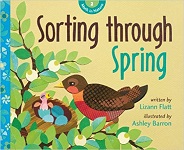
Grade 1
4 skill lessons · 2 math-through-reading
Math
Skill lessons
The mathematics the book carries, taught directly. Printable workbook pages and teacher keys are not available for this book yet.
- 1Sort the Antlers, Then Sort Them Again
- 2Say the Rule, Then Say What Comes Next
- 3More Than Five, Fewer Than Five, Exactly Five
- 4The Tallest Bar Answers the Question
Math + reading
Math through the reading
The same book, entered through a sentence it prints. Change one word in the reading and the numbers change with it.
- 5The Word That Makes You Sort Them Twice
- 6Answering the Book Back: Is There a Right Way to Sort?
Reading
Reading and language lessons
The same book read as a text. What a word means in its sentence, how a character is shown, how the writing is put together - no mathematics.
- 7Plop, Drop, Plop: Reading Rain With Your Ears
- 8Question Page, Notes Page: The Same Worms Written Twice
- 9What If: Questions That Ask You to Imagine
- 10Woo Woo Flap: Saying a Line the Book Wants Performed
- 11Before and After: The Words That Fix the Day in Order
Skill lessons
4 lessons on the mathematics the book carries. Printable workbook pages and teacher keys are not available for this book yet.
1. Sort the Antlers, Then Sort Them Again
The caribou spread hands students a pile of objects and two questions in a row: which coloured pile does each one belong in, and then how else the same pile could be split. Students sort a tray of paper antlers by colour into labelled piles, count each pile, and then push the piles back together and sort the identical objects a second way, by size. A sorting rule is a choice a person makes, not a property the objects carry: the same antlers give two different sets of piles, and each pile only means something once somebody says what the rule was. Students say their rule aloud before they sort and say it again while a partner checks that every object obeys it.
Full lesson — 20 minutes
1. Sort by the colour the book names (6 min)
Each pair takes a tray of twelve paper antlers in three colours and makes one pile for each colour on a labelled mat. Every antler goes in exactly one pile and no antler is left on the tray. Count each pile aloud and say the three numbers to your partner while your finger rests on the pile you are naming.
Word preview: sort, pile
Into which colored pile would you sort the antlers below?
2. Say the rule you used (4 min)
Push all twelve antlers back into one heap. Say to your partner the sentence that tells what made a pile a pile: I put them together because they are the same colour. Your partner points at any two antlers in one of the old piles and asks whether they obey the rule you just said.
Word preview: rule, same
How else could you sort them?
3. Sort the same antlers a second way (6 min)
With the same twelve antlers, make new piles by size instead of colour: big antlers in one pile, small antlers in another. Count the new piles aloud. Say out loud how many piles you had the first time and how many you have now, and put a hand on each pile as you say its number.
Word preview: size, again
When their atlas fall off, will the caribou take care to place them in proper piles?
4. Guess a partner's rule (4 min)
One partner sorts the twelve antlers behind a folder and then lifts it. The other looks at the piles and says the rule out loud in one sentence. Check the guess by picking up one antler and asking which pile it would have to go in, and why.
Word preview: guess, because
Short version — 9 minutes
1. Sort by the colour the book names (5 min)
Take twelve paper antlers and make one pile for each colour on the mat. Every antler goes in a pile. Count each pile aloud with your finger on it.
Word preview: sort, pile
Into which colored pile would you sort the antlers below?
2. Sort the same antlers a second way (4 min)
Push the antlers back into one heap. Now make new piles by size instead of colour. Say aloud how many piles you had before and how many you have now.
Word preview: size, again
When their atlas fall off, will the caribou take care to place them in proper piles?
Three levels
- Support
- Work with six antlers in two colours and two sizes rather than twelve in three. The child still sorts twice and still says both rules aloud; only the size of the collection comes down, so the second sort remains the thing being learned. Keep the colour piles on the mat visible while the size sort is made, so the child can see the same objects standing in two different arrangements.
- At Grade
- Sort twelve antlers by colour into three piles, count each pile, say the rule, then re-sort the same twelve by size and count again. Say both rules aloud and say how many piles each rule produced.
- Extension
- Find a third rule for the same twelve antlers that neither partner has used, sort by it, and say why it is a rule rather than a preference: every antler must have exactly one pile it belongs in, and a partner following your sentence must produce the same piles you did. Then say which of your three rules made the fewest piles and which made the most.
English learners
Sorting is a physical act and transfers whole; a child who has never met the English word sort will still make correct colour piles from a demonstration. The sentence that names the rule is the hard part, because it needs a because clause and a plural noun in the same breath. Rehearse one frame and reuse it for both sorts: These go together because they are the same ____. Fill the blank with colour on the first sort and size on the second, so the only word that changes is the one carrying the mathematics. Colour and size words are worth pre-teaching with the antlers in hand rather than on a chart. Children may count their piles and argue about a doubtful antler in their strongest language and give only the rule sentence in English.
Materials
- Paper antler cut-outs, twelve per pair in three colours and two sizes
- Sorting mat with three labelled circles
- Manila folder used as a screen
- Word cards: sort, pile, rule, same
Standards & curriculum
Choose your curriculum above to see the standards for this lesson.
Standards are held back while this plan is edited. Every standard shown here was matched against the supplied wording of this lesson, quoting its steps, so a changed step is no longer the thing that was checked. Undo your changes to bring the standards back — your edits stay in this browser either way.
2. Say the Rule, Then Say What Comes Next
This book is built out of repeating patterns and it says so on nearly every spread: a rain rhythm, a prairie chicken's stamping, a milk snake's skin, rows of flowers in an ABA arrangement, and morning-noon-night. Students clap and step the book's own two sound patterns, then build a three-colour ABA row with cubes, say the rule as a sentence, and extend the row two terms further. Saying what comes next is a claim that has to be defended from the rule rather than from a feeling: a child who can say the rule can also say why the next term must be that one and not another.
Full lesson — 20 minutes
1. Perform the book's two sound patterns (5 min)
Clap the rain pattern the book prints, one clap for each word, and then stamp the prairie chicken pattern the same way. Do each one three times through without stopping so the repeat is audible. Say how many sounds go by before the pattern starts over.
Word preview: pattern, repeat
Plop, drop, plop, plop. Plop, drop, plop.
Can you perform this pattern? Stampity stomped stamp!
2. Build the ABA row (6 min)
Using two colours of cube, build the row the book calls ABA, ABA: first colour, second colour, first colour, and then the whole thing again. Lay it left to right in one straight line. Point at each cube and say its colour aloud, then say where the row starts over.
Word preview: row, again
Which rows make an ABA, ABA pattern?
Could flowers only grow and set patterns row by row?
3. Say the rule out loud (5 min)
Say the rule of your row in one sentence, naming the part that repeats: red, blue, red and then it starts again. Your partner covers the last three cubes with a hand and asks what is underneath. Say the answer and say which part of your rule told you.
Word preview: rule, next
Can you see two pattern rules here?
4. Extend the row and defend it (4 min)
Add two more cubes to the end of your row so the pattern keeps going. Before each cube goes down, say which colour it must be and say why, using the rule sentence. Your partner may put down a wrong-coloured cube on purpose; say what it breaks.
Word preview: must, because
The sun sets a pattern of light we all like.
Short version — 9 minutes
1. Build the ABA row (5 min)
With two colours of cube, build the row the book calls ABA, ABA, left to right in one line. Point at each cube and say its colour aloud.
Word preview: row, again
Which rows make an ABA, ABA pattern?
Could flowers only grow and set patterns row by row?
2. Say the rule out loud (4 min)
Say the rule of your row in one sentence, naming the part that repeats. Your partner covers the last three cubes and asks what is underneath.
Word preview: rule, next
Can you see two pattern rules here?
Three levels
- Support
- Build an AB row, two colours alternating, before the ABA row is attempted. The child still says the rule sentence and still says what is under a partner's hand; only the length of the repeating part comes down from three to two. Leave the clapped rain pattern going underneath as the child builds, so the ear carries the repeat while the hand builds it.
- At Grade
- Perform the book's two sound patterns, build an ABA row in cubes, say the rule in a sentence naming the repeating part, and extend the row two terms while saying why each new cube must be the colour it is.
- Extension
- Build a row whose rule takes four cubes to state rather than three, show it to a partner without saying anything, and have them say your rule from the row alone. Then say what the shortest row is that would let somebody else work out your rule, and say why a shorter one would not be enough.
English learners
Pattern is one of the few academic words here that a child is likely to meet identically in another language, and the clapping and stamping carry the meaning without any English at all. The hard part is the rule sentence, which needs a sequence of colour words held together with and then, and the word next, which is spatial in some languages and temporal in others. Rehearse the frame with the cubes under a finger: red, blue, red, and then it starts again. The book's own sound words are nonsense syllables in every language, so they are safe to chant and are worth using as the first thing every child says aloud together. Children may argue about a doubtful cube in their strongest language and give the rule sentence in English.
Materials
- Open floor space for stamping
- Interlocking cubes in two colours, twenty per pair
- Word cards: pattern, rule, row, next
Standards & curriculum
Choose your curriculum above to see the standards for this lesson.
Standards are held back while this plan is edited. Every standard shown here was matched against the supplied wording of this lesson, quoting its steps, so a changed step is no longer the thing that was checked. Undo your changes to bring the standards back — your edits stay in this browser either way.
3. More Than Five, Fewer Than Five, Exactly Five
The cottontail spread asks a single question with three answers built into it, and the question is about a count rather than about a picture: whether a nest holds a number of babies greater than five, less than five, or equal to five. Students build nests with counters, count what is in each, and sort the nests into three hoops labelled with the three verdicts. The concept is that comparison is a relation between two numbers rather than a property of one: five is the fixed thing every count is held against, and a nest of four and a nest of nine both fail to be five for opposite reasons. Every verdict is said aloud in a full sentence that names both numbers.
Full lesson — 20 minutes
1. Build the nests (5 min)
Each pair makes six paper nests and drops a handful of counters into each one, between two and nine per nest. Count what is in each nest by touching each counter once and say the number aloud. Write nothing; keep the count in your mouth and your finger on the counters.
Word preview: count, nest
Could cotton tails claim that their cramped in their nests might some feel more comfortable than the rest?
2. Hold each nest against five (7 min)
Line up five counters on a strip as the number to test against. For each nest, match its counters one to one against the five on the strip and see what happens: counters left over on the strip, counters left over from the nest, or nothing left over anywhere. Say the verdict aloud each time.
Word preview: greater, less, equal
Which nests hold a number of babies that is greater than five, less than five equal to five.
3. Put each nest in its hoop (4 min)
Place each nest into one of three hoops on the floor labelled greater than five, less than five, and equal to five. Before a nest is released, say the sentence that puts it there: this nest holds seven and seven is greater than five. Your partner checks the count before the nest goes down.
Word preview: hoop, than
4. Change one nest to change its hoop (4 min)
Choose a nest sitting in the less than five hoop. Add counters one at a time, counting aloud after each one, until the nest has to move to a different hoop. Say how many you added and which hoop it moved to, and say the same sentence again with the new number.
Word preview: add, move
Short version — 9 minutes
1. Hold each nest against five (5 min)
Line up five counters on a strip. Match each nest's counters one to one against those five. Say what is left over and say the verdict aloud.
Word preview: greater, less, equal
Which nests hold a number of babies that is greater than five, less than five equal to five.
2. Put each nest in its hoop (4 min)
Put each nest in the hoop its verdict names. Before you let go, say the sentence: this nest holds seven and seven is greater than five.
Word preview: hoop, than
Three levels
- Support
- Keep every nest between three and seven counters, so each nest differs from five by at most two and the leftover after matching is small enough to see without recounting. The child still matches against the five-frame and still says the full verdict sentence; only the spread of the counts narrows. Leave the five-frame strip filled and in front of the child for every nest.
- At Grade
- Count six nests holding between two and nine counters, match each against a five-frame, sort them into the three labelled hoops, and say a sentence for each nest that names the nest's number and five and the relation between them.
- Extension
- Without touching the counters, say for a nest of eight how many would have to be taken out for it to land in the equal to five hoop, and say how you know. Then find every count between two and nine that would go in the less than five hoop, say them in order, and say how many such counts there are.
English learners
The three verdicts are a closed set of three phrases, which makes this unusually learnable: greater than five, less than five, equal to five are rehearsable as wholes before any nest is counted. What causes trouble is that greater and less are comparative forms with no shared root and that than is unstressed and easily lost, leaving a child saying greater five. Say the three phrases with the hoops in view and let each child repeat the one that matches the nest in their hand. The matching itself is language-independent and most children will place a nest correctly before they can say why. Accept the placement first, then attach the sentence. Counting aloud in the strongest language is fine; the verdict sentence is the part said in English.
Materials
- Paper nests, six per pair
- Counters, forty per pair
- Five-frame strip, one per pair
- Three labelled hoops or yarn circles
- Word cards: greater, less, equal, than
Standards & curriculum
Choose your curriculum above to see the standards for this lesson.
Standards are held back while this plan is edited. Every standard shown here was matched against the supplied wording of this lesson, quoting its steps, so a changed step is no longer the thing that was checked. Undo your changes to bring the standards back — your edits stay in this browser either way.
4. The Tallest Bar Answers the Question
The mosquito spread prints a graph with three labelled categories and asks a question that the graph alone answers: where the mosquitoes should lay their eggs. Students rebuild that graph as three towers of cubes on a labelled base, find the tallest, and answer the book's question aloud. The representation work is the point: a bar is tall because a number is large, and the answer is read off the picture rather than computed. Students then rebuild the peeper vote as a second three-tower graph and find the most votes the same way, so the same reading move is made twice on two different subjects.
Full lesson — 20 minutes
1. Build the three mosquito towers (6 min)
Build three cube towers on a base labelled lots of water, some water, and no water, using the heights your teacher gives you. Stand them side by side with their bottoms level so the tops can be compared. Say each label aloud while your hand is on its tower.
Word preview: graph, tallest
Number of mosquitoes, lots of water, some water, no water.
mosquito habitat.
2. Answer the book's question from the towers (5 min)
Find the tallest tower without counting anything, by looking along the tops. Say the book's own question and then answer it in a full sentence that names the category: the mosquitoes should lay their eggs where there is lots of water, because that tower is tallest. Count that tower only if a partner disagrees.
Word preview: most, because
According to the graph, where should the mosquitoes lay their eggs?
3. Build the peeper vote (5 min)
Take the three peepers' vote counts your teacher gives you and build them as three more towers on a fresh labelled base. Say which peeper has the most votes and put your hand on that tower while you say it.
Word preview: votes, most
Which of the three spring peepers has the most votes?
Matchfingers to find out.
4. Say what the graph cannot tell you (4 min)
Look at the mosquito towers again and say one thing the graph does tell you and one thing it does not. Say the second one as a full sentence beginning: the graph does not say. Your partner says whether they could find that thing by looking at the towers.
Word preview: does not, tell
What if mosquitoes were mistaken and ignored the data taken?
Short version — 9 minutes
1. Build the three mosquito towers (5 min)
Build three cube towers on the labelled base, bottoms level so the tops can be compared. Say each label aloud with your hand on its tower.
Word preview: graph, tallest
Number of mosquitoes, lots of water, some water, no water.
mosquito habitat.
2. Answer the book's question from the towers (4 min)
Find the tallest tower by looking along the tops. Answer the book's question in a full sentence that names the category and says why.
Word preview: most, because
According to the graph, where should the mosquitoes lay their eggs?
Three levels
- Support
- Build two towers rather than three, lots of water and no water, so the comparison is between an obvious tallest and an obvious shortest. The child still answers the book's question in a full sentence naming the category. Add the third tower once the two-tower answer has been said correctly.
- At Grade
- Build three labelled towers for the mosquito graph and three for the peeper vote, find the tallest in each by looking, and answer each question in a sentence that names the category rather than the number.
- Extension
- Say what would have to change about the towers for the answer to the book's question to become a different category, and say the smallest change that would do it. Then say whether two towers of the same height would leave the book's question with an answer at all, and why.
English learners
Reading a bar graph by height is language-independent and every child will find the tallest tower without any English. The English load sits entirely in the answer sentence, which needs a category name the child may never have said aloud: lots of water, some water, no water are three quantity phrases that differ only in their first word, and some is the hardest of the three because it names neither end. Say all three with a hand on the matching tower before any question is asked. Rehearse the answer frame: the mosquitoes should lay their eggs where there is ____, because that tower is tallest. Children may compare and count in their strongest language and give the answer sentence in English.
Materials
- Interlocking cubes, thirty per pair
- Labelled base strip with three category names
- Second labelled base strip
- Word cards: graph, tallest, most, votes
Standards & curriculum
Choose your curriculum above to see the standards for this lesson.
Standards are held back while this plan is edited. Every standard shown here was matched against the supplied wording of this lesson, quoting its steps, so a changed step is no longer the thing that was checked. Undo your changes to bring the standards back — your edits stay in this browser either way.
Math through the reading
The mathematics is reached through a sentence the book prints: change one word in the reading and the numbers change with it. These carry their own standards, matched against these lessons rather than inherited from the skill ones.
5. The Word That Makes You Sort Them Twice
Students find that the small word else is what turns one sort into two, and prove it by carrying out the book's question both ways over the same tray of antlers.
Full lesson — 20 minutes
1. Hear both questions before touching anything (4 min)
Students hear the two caribou questions read aloud in order and say what each one is asking them to do. They say which word in the second question makes it different from the first, and the competing guesses are left standing while the tray is still untouched.
2. Sort them the way the book asks first (5 min)
Pairs sort twelve paper antlers into colour piles on a labelled mat, count each pile aloud, and say how many piles they made. They say the rule sentence that names what made a pile a pile.
3. Hear the second question and sort again (7 min)
Students hear how else could you sort them, push the antlers back into one heap, and find a different attribute to sort by. They build the new piles, count them, and say aloud how many piles each rule produced and why the numbers differ.
4. Try the question with the word changed (4 min)
Students hear the question with again in place of else and carry out exactly what it orders, which returns them to the colour piles. They say what the changed word let them get away with, and say which version made them find something new.
Short version — 9 minutes
1. Sort them the way the book asks first (5 min)
Pairs sort twelve paper antlers into colour piles on a labelled mat, count each pile aloud, and say how many piles they made. They say the rule sentence that names what made a pile a pile.
2. Hear the second question and sort again (7 min)
Students hear how else could you sort them, push the antlers back into one heap, and find a different attribute to sort by. They build the new piles, count them, and say aloud how many piles each rule produced and why the numbers differ.
Three levels
- Support
- Work with six antlers in two colours and two sizes. The child still hears both questions, still sorts twice, and still says both rule sentences; only the collection shrinks, so the word else stays the thing under test. Leave the first set of piles photographed or drawn on the mat so the child can see the two arrangements side by side rather than holding the first in memory.
- At grade
- Sort twelve antlers by colour, count the piles, hear the second question, re-sort the same twelve by size, count again, and say both rule sentences aloud naming the attribute each time.
- Extension
- Find a third rule for the same twelve antlers that neither partner has used, and say what makes it a rule rather than a preference: a partner following your sentence must produce the same piles you did. Then say whether the word else would still be doing any work if the antlers were all one colour and all one size, and why.
English learners
The mathematics here is a physical act that transfers completely: a child with no English will make correct colour piles from watching one demonstration. The load is entirely in the word else, which is unstressed, easy to lose in connected speech, and has no single-word equivalent in many languages. Say the two questions back to back with the same rhythm so the difference is one word rather than one sentence, and let the tray rather than the pronunciation show what changed. Rehearse one rule frame and reuse it for both sorts, These go together because they are the same ____, filling the blank with colour and then size, so only the word carrying the mathematics changes. Colour and size words are worth pre-teaching with the antlers in hand. Children may count their piles and argue about a doubtful antler in their strongest language and give only the rule sentence in English.
Materials
- Paper antler cut-outs, twelve per pair in three colours and two sizes
- Sorting mat with labelled circles
- The two caribou questions written large on a card, one above the other
- The changed question, with again in place of else, on a third card
Standards & curriculum
Choose your curriculum above to see the standards for this lesson.
Standards are held back while this plan is edited. Every standard shown here was matched against the supplied wording of this lesson, quoting its steps, so a changed step is no longer the thing that was checked. Undo your changes to bring the standards back — your edits stay in this browser either way.
6. Answering the Book Back: Is There a Right Way to Sort?
Students take a position on whether the book's colour sort is the correct one and defend it out loud with pile counts from their own tray.
Full lesson — 20 minutes
1. Hear the question the book left open (3 min)
Students hear both caribou questions read aloud and say what the book did not tell them. They say, before any sorting, which of the three positions they think they hold, and no position is corrected.
2. Sort it two ways and count both (6 min)
Pairs sort twelve antlers by colour, count each pile and the total placed, then re-sort the same twelve by size and count again. They say both pile counts aloud and check that twelve antlers were placed under each rule.
3. Test whether a rule is really a rule (6 min)
One partner says a rule in one sentence and the other sorts the twelve antlers by that sentence alone, without watching. Both count the piles and compare them pile for pile, and say whether the counts matched and what that shows about the rule.
4. Say your position out loud (5 min)
Each child says their position to the book's reader in one or two sentences, and must include a number they counted themselves. A partner who holds a different position says one number back that supports theirs.
Short version — 9 minutes
1. Sort it two ways and count both (6 min)
Pairs sort twelve antlers by colour, count each pile and the total placed, then re-sort the same twelve by size and count again. They say both pile counts aloud and check that twelve antlers were placed under each rule.
2. Say your position out loud (5 min)
Each child says their position to the book's reader in one or two sentences, and must include a number they counted themselves. A partner who holds a different position says one number back that supports theirs.
Three levels
- Support
- Work with six antlers in two colours and two sizes, and offer the three positions as three spoken sentences the child chooses between rather than composes. The child still counts both arrangements and still supplies one number in their own words, so the defending is intact; only the sentence construction is lifted off. Keep both arrangements on the mat while the position is said.
- At grade
- Sort twelve antlers two ways, count the piles under each rule, test a partner's rule by sorting to their sentence and comparing counts, and say a position aloud that contains a number counted from your own tray.
- Extension
- Take a rule that fails the test, such as sorting the nicest antlers into one pile, and say exactly which part of the check it fails and what count would reveal the failure. Then say whether two rules could ever produce the same piles from these twelve antlers, and what would have to be true of the antlers for that to happen.
English learners
The counting and the sorting carry themselves and need no English at all, and a child will usually hold a position physically, by refusing to re-sort or by eagerly re-sorting, before they can say one. Take the position from the hands first and attach words afterwards. The English load is the because clause, which needs a claim and a number joined in one breath, so rehearse a single frame with the tray in view: I think ____ because I counted ____. Offer the three positions as three pre-said sentences on cards so a child can choose one and then supply only the number, which is the part that must be theirs. The word else is the pivot of the whole lesson and is unstressed and easily lost; say the two questions back to back so the difference between them is one word rather than one sentence. Children may count, compare piles and argue with a partner in their strongest language, and say only the position sentence in English.
Materials
- Paper antler cut-outs, twelve per pair in three colours and two sizes
- Sorting mat with labelled circles
- Position cards, the three positions written one per card
- The two caribou questions written large, one above the other
- The sentence frame, I think blank because I counted blank
Standards & curriculum
Choose your curriculum above to see the standards for this lesson.
Standards are held back while this plan is edited. Every standard shown here was matched against the supplied wording of this lesson, quoting its steps, so a changed step is no longer the thing that was checked. Undo your changes to bring the standards back — your edits stay in this browser either way.
Reading and language lessons
5 lessons on the reading and language the book carries - what a word means in its sentence, how a character is shown, how a text is built. No mathematics: these are matched against the English language arts curricula, which are a different and smaller set than the mathematics ones.
7. Plop, Drop, Plop: Reading Rain With Your Ears
This book is written in rhyme, and its rain page is made almost entirely of noises. Students read the noise line aloud, find the two words that rhyme in the same passage, and then clap what the words sound like. The skill is hearing what sound words and rhyming words do to a line, not counting anything in it.
Full lesson — 20 minutes
1. Read the rain noises aloud (6 min)
The teacher reads the passage below once. Then read the two noise lines together as a class, saying each noise separately. Circle every time the word plop is printed. Say aloud whether the noises come in the same order both times.
Word preview: plop, rhythm
What if raindrops weren't random dropping down from the sky? What if raind had a rhythm or a beat to repeat? Plop, drop, plop, plop. Plop, drop, plop. Could that steady wet sound awaken warm, underground?
2. Find the two words that rhyme (5 min)
Read the passage below again. Two words at the ends of the questions sound alike. Say them both aloud and write them on a rhyme card. Then say a third word of your own that would rhyme with them.
Word preview: rhyme
What if raindrops weren't random dropping down from the sky? What if raind had a rhythm or a beat to repeat? Plop, drop, plop, plop. Plop, drop, plop. Could that steady wet sound awaken warm, underground?
3. Read a longer rainy sentence (5 min)
Read the passage below with a partner. The noises come back here inside one long sentence. Underline the noise part. Say aloud one word in this sentence that tells you how the rain feels, not how it sounds.
Word preview: sound
As more raindrops flop to the plop, drop, plop, plop, they gather in muddled wet rhythmic rain huddles while worms wiggle around on the ground.
4. Clap the rain (4 min)
Read the passage below, which asks you to do exactly this. Then clap the rain noises from the rain passage printed here beside it, one clap for each noise word. Say aloud whether your claps stayed even or changed.
Can you make up a clapping rhythm for rain?
What if raindrops weren't random dropping down from the sky? What if raind had a rhythm or a beat to repeat? Plop, drop, plop, plop. Plop, drop, plop. Could that steady wet sound awaken warm, underground?
Short version — 9 minutes
1. Read the rain noises aloud (5 min)
The teacher reads the passage below once. Read the two noise lines together, saying each noise separately, and circle every printed plop.
Word preview: plop, rhythm
What if raindrops weren't random dropping down from the sky? What if raind had a rhythm or a beat to repeat? Plop, drop, plop, plop. Plop, drop, plop. Could that steady wet sound awaken warm, underground?
2. Find the two words that rhyme (4 min)
Read the passage below again. Say aloud the two words at the ends of the questions that sound alike, and write them on a rhyme card.
Word preview: rhyme
What if raindrops weren't random dropping down from the sky? What if raind had a rhythm or a beat to repeat? Plop, drop, plop, plop. Plop, drop, plop. Could that steady wet sound awaken warm, underground?
Three levels
- Support
- Say the noise line from the step 1 passage after the teacher, one noise at a time. Point to each plop as you say it.
- At Grade
- Read the noise lines in the step 1 passage aloud, find the rhyming pair, and clap the noises evenly.
- Extension
- The step 1 passage prints the noise line twice and the second one is shorter than the first. Say two sentences about what that shortening does to the sound of the page, using the printed words.
English learners
Noise words are spelled differently in every language and plop has a final cluster that is hard at speed. Say it slowly, then at rain speed, before reading the line. Invite students to say the sound rain makes in their strongest language and write it on a rhyme card beside plop. Note that this passage carries a damaged word, raind, which is not a word in English; tell students so rather than letting them puzzle at it.
Materials
- Sorting Through Spring: Math in Nature, the passage printed in this step
- pencil
- rhyme cards
- Word cards: plop, rhythm, rhyme, sound
Standards & curriculum
Choose your curriculum above to see the standards for this lesson.
Standards are held back while this plan is edited. Every standard shown here was matched against the supplied wording of this lesson, quoting its steps, so a changed step is no longer the thing that was checked. Undo your changes to bring the standards back — your edits stay in this browser either way.
8. Question Page, Notes Page: The Same Worms Written Twice
This book writes about the same animal twice, once in a rhyming question and once in a plain paragraph of notes at the back. Students read both, say which one asks and which one tells, and name one fact only the notes give. The skill is noticing that a writer can choose a shape, and saying what each shape is good for.
Full lesson — 20 minutes
1. Read the rhyming page about worms (5 min)
The teacher reads the passage below once, then everyone reads it together. Find the words about worms. Say aloud whether this passage tells you a fact about worms or asks you to notice something.
Word preview: asks
As more raindrops flop to the plop, drop, plop, plop, they gather in muddled wet rhythmic rain huddles while worms wiggle around on the ground.
2. Read the notes page about worms (6 min)
Read the passage below with the teacher. This part of the book is called Nature notes. Underline one thing this passage tells you about worms that the first passage did not. Say aloud how this writing sounds different when you read it out.
Word preview: notes, facts, tells
Nature notes. After lying dormant through the winter, worms begin to eat and move around again when the ground thaws in the spring. They come up to the surface when it rains so that they can move over the ground to new areas without drying out.
3. Sort what each page gives you (5 min)
Read both passages below. Write on your two-column sheet one thing from each. Then tell a partner which passage you would use if a friend asked what worms do when it rains, and say why.
As more raindrops flop to the plop, drop, plop, plop, they gather in muddled wet rhythmic rain huddles while worms wiggle around on the ground.
Nature notes. After lying dormant through the winter, worms begin to eat and move around again when the ground thaws in the spring. They come up to the surface when it rains so that they can move over the ground to new areas without drying out.
4. Read a second pair the same way (4 min)
Read the two passages below, which are the rhyming page and the notes page about the same bird. Say aloud one word that appears in both, and one fact that appears in only the notes.
Would Prairie chickens practice their moves so they match? Woo woo flap! Stampity stomped stamp! Can you perform this pattern? Stampity stomped stamp!
Every spring in breeding grounds called lex, prairie chicken males perform a dance to attract females. Ruby males use their orange necks to make a woo woo sound that acts as their mating call. They also stamp their feet, strut and fly at one another.
Short version — 9 minutes
1. Read the rhyming page about worms (4 min)
The teacher reads the passage below once, then everyone reads it together. Find the words about worms and say whether this passage asks or tells.
Word preview: asks
As more raindrops flop to the plop, drop, plop, plop, they gather in muddled wet rhythmic rain huddles while worms wiggle around on the ground.
2. Read the notes page about worms (5 min)
Read the passage below with the teacher. Underline one thing it tells you about worms that the rhyming page did not, and say how it sounds different read aloud.
Word preview: notes, facts, tells
Nature notes. After lying dormant through the winter, worms begin to eat and move around again when the ground thaws in the spring. They come up to the surface when it rains so that they can move over the ground to new areas without drying out.
Three levels
- Support
- Read only the first two sentences of the step 2 passage with the teacher. Point to the words Nature notes. Then say aloud one thing worms do in the spring, using the passage's words.
- At Grade
- Read both printed passages, fill in both columns of the sheet, and say which one answers a question about worms and rain.
- Extension
- The step 2 passage gives a reason worms come up when it rains. Say two sentences about why the rhyming passage in step 1 could not have carried that reason, using words from both.
English learners
The two passages sit at very different levels of English: one is dense with noise words and the other is plain expository prose. Read the notes passage first for meaning, then the rhyming one for sound, so students meet the ideas before the wordplay. Invite students to say one worm fact in their strongest language before writing on the sheet. Rehearsable frame: This page asks ___. That page tells ___.
Materials
- Sorting Through Spring: Math in Nature, the passage printed in this step
- pencil
- two-column sheet (asks / tells)
- Word cards: notes, facts, asks, tells
Standards & curriculum
Choose your curriculum above to see the standards for this lesson.
Standards are held back while this plan is edited. Every standard shown here was matched against the supplied wording of this lesson, quoting its steps, so a changed step is no longer the thing that was checked. Undo your changes to bring the standards back — your edits stay in this browser either way.
9. What If: Questions That Ask You to Imagine
Some questions in this book want an answer and some want a picture in your head. Students read a page full of the imagining kind, find the two words that start them, and then read a question that really does want an answer. The skill is hearing what a question is for, which is a reading move and not a counting one.
Full lesson — 20 minutes
1. Read the opening questions (6 min)
The teacher reads the passage below once, then everyone reads it together. Underline the word Imagine. Say aloud whether the first question here wants a yes, a no, or a picture in your head.
Word preview: imagine, wonder
Do you think that math matters to the animals and plants? What if nature knew numbers like you? Let's look at the spring. Imagine what patterns and sorting could do.
2. Find the two words that start an imagining (5 min)
Read the passage below with the teacher. Two questions here start with the same two words. Circle those two words both times. Say aloud what those words tell a reader to do before answering.
Word preview: what if
What if raindrops weren't random dropping down from the sky? What if raind had a rhythm or a beat to repeat? Plop, drop, plop, plop. Plop, drop, plop. Could that steady wet sound awaken warm, underground?
3. Read a question that wants a real answer (5 min)
Read the passage below. This question wants something you can actually do or say. Put it on the answer side of your sorting mat, and put a what-if question from the earlier passage on the imagining side. Say aloud how you told them apart.
Word preview: answer
How can you tell it's morning? How can you tell it's afternoon?
4. Ask a what-if of your own (4 min)
Read the passage below one more time. Then say a what-if question of your own about something outdoors, starting with the same two words the passage uses. Your partner says whether your question wants an answer or a picture.
What if raindrops weren't random dropping down from the sky? What if raind had a rhythm or a beat to repeat? Plop, drop, plop, plop. Plop, drop, plop. Could that steady wet sound awaken warm, underground?
Short version — 9 minutes
1. Read the opening questions (5 min)
The teacher reads the passage below once, then everyone reads it together. Underline the word Imagine and say whether the first question wants a yes, a no, or a picture in your head.
Word preview: imagine, wonder
Do you think that math matters to the animals and plants? What if nature knew numbers like you? Let's look at the spring. Imagine what patterns and sorting could do.
2. Read a question that wants a real answer (4 min)
Read the passage below. Say what this question wants from you, and how that is different from an imagining question.
Word preview: answer
How can you tell it's morning? How can you tell it's afternoon?
Three levels
- Support
- Read only the last sentence of the step 1 passage with the teacher. Point to the word Imagine. Then close your eyes and say aloud one thing you pictured.
- At Grade
- Underline Imagine in the step 1 passage, circle the two-word opener in the step 2 passage, and sort one question of each kind onto the mat.
- Extension
- The step 1 passage asks two questions before it says Imagine. Say two sentences about why a writer would ask first and explain afterwards, using the passage's own words.
English learners
What if is a conditional opener that carries no question word, so students may not hear it as a question at all until the rise at the end. Read one what-if sentence twice, once flat and once rising. Invite students to say a what-if wish in their strongest language and then rebuild it in English. Rehearsable frame: What if ___?
Materials
- Sorting Through Spring: Math in Nature, the passage printed in this step
- pencil
- question sorting mat
- Word cards: imagine, what if, wonder, answer
Standards & curriculum
Choose your curriculum above to see the standards for this lesson.
Standards are held back while this plan is edited. Every standard shown here was matched against the supplied wording of this lesson, quoting its steps, so a changed step is no longer the thing that was checked. Undo your changes to bring the standards back — your edits stay in this browser either way.
10. Woo Woo Flap: Saying a Line the Book Wants Performed
One page of this book prints a bird's dance as words and then asks the reader to perform it. Students read the line, decide which words are noises and which are movements, and perform it as the punctuation directs. Then they check the notes page to see which of those words matches something the bird really does. The skill is reading aloud with expression and matching a performance to printed words.
Full lesson — 20 minutes
1. Read the dance line aloud (6 min)
The teacher reads the passage below once. Then read the two short lines together as a class. Circle every exclamation mark. Say those lines again, letting the marks make your voice louder, and say aloud what the marks changed.
Word preview: perform
Would Prairie chickens practice their moves so they match? Woo woo flap! Stampity stomped stamp! Can you perform this pattern? Stampity stomped stamp!
2. Sort noises from movements (5 min)
Read the passage below again with a partner. Some of the printed words are noises you make with your mouth and some are things you do with your body. Say each word aloud and decide which it is. Then perform the whole line together.
Word preview: stamp
Would Prairie chickens practice their moves so they match? Woo woo flap! Stampity stomped stamp! Can you perform this pattern? Stampity stomped stamp!
3. Check the line against the notes (5 min)
Read the passage below, which is the notes page about the same bird. Underline two things here that the dance line also had. Say aloud one thing this passage names that the dance line did not.
Word preview: strut, dance
Every spring in breeding grounds called lex, prairie chicken males perform a dance to attract females. Ruby males use their orange necks to make a woo woo sound that acts as their mating call. They also stamp their feet, strut and fly at one another.
4. Perform it for a partner (4 min)
Read the passage below one last time. Perform the dance line for a partner exactly as it is printed, in the printed order. Your partner listens and says which printed word your voice made loudest.
Would Prairie chickens practice their moves so they match? Woo woo flap! Stampity stomped stamp! Can you perform this pattern? Stampity stomped stamp!
Short version — 9 minutes
1. Read the dance line aloud (5 min)
The teacher reads the passage below once. Read the two short lines together, circle every exclamation mark, and say them again with the marks making your voice louder.
Word preview: perform
Would Prairie chickens practice their moves so they match? Woo woo flap! Stampity stomped stamp! Can you perform this pattern? Stampity stomped stamp!
2. Check the line against the notes (4 min)
Read the passage below, the notes page about the same bird. Underline two things here that the dance line also had.
Word preview: strut, dance
Every spring in breeding grounds called lex, prairie chicken males perform a dance to attract females. Ruby males use their orange necks to make a woo woo sound that acts as their mating call. They also stamp their feet, strut and fly at one another.
Three levels
- Support
- Say the two short lines from the step 1 passage after the teacher, one at a time. Do one stamp on the word stamp. That is enough.
- At Grade
- Read the step 1 passage aloud with the exclamation marks, sort its noises from its movements, and check them against the notes passage.
- Extension
- The step 1 passage prints the same short line twice, once before the instruction and once after it. Say two sentences about why the writer put it on both sides, using the printed words.
English learners
Exclamation marks direct volume and energy rather than meaning, and students may read straight past them. Read one line flat and then again with the mark honoured, and ask which sounded like a dance. Invite students to name an animal call in their strongest language and perform it. Note that these lines are invented noise words, not ordinary English vocabulary; say so, so students do not try to look them up.
Materials
- Sorting Through Spring: Math in Nature, the passage printed in this step
- pencil
- performance space
- Word cards: perform, stamp, strut, dance
Standards & curriculum
Choose your curriculum above to see the standards for this lesson.
Standards are held back while this plan is edited. Every standard shown here was matched against the supplied wording of this lesson, quoting its steps, so a changed step is no longer the thing that was checked. Undo your changes to bring the standards back — your edits stay in this browser either way.
11. Before and After: The Words That Fix the Day in Order
One page states the order of a day in a single sentence, using one word twice to lock it together, and then deliberately prints the wrong order to show that it sounds wrong. Students find the ordering word, read the scrambled version aloud, and say why it does not work. The skill is reading the words that carry order, not counting hours.
Full lesson — 20 minutes
1. Find the word that puts things in order (6 min)
The teacher reads the passage below once, then everyone reads it together. One word is printed twice and it is the word doing all the ordering. Circle it both times. Then lay your three day cards down in the order this sentence gives.
Word preview: before, morning, noon, night
Morning comes before noon and noon comes before night. If the pattern was changed, wouldn't that be a sight? Maybe noon morning night? That wouldn't be right.
2. Read the wrong order out loud (5 min)
Read the passage below again. Find the place where the three words are printed in a different order. Read that part aloud, then read the first sentence aloud. Say which one sounds right and point to the word that decided it.
Morning comes before noon and noon comes before night. If the pattern was changed, wouldn't that be a sight? Maybe noon morning night? That wouldn't be right.
3. Read the order said a second way (5 min)
Read the passage below with a partner. Here the same three words come again with no ordering word between them at all. Say aloud how you still know the order, and whether this way is easier or harder to follow than the first.
The sun sets a pattern of light we all like. Morning noon night, morning noon night.
4. Say the order with your own before-sentence (4 min)
Read the passage below one more time. Then say your own sentence about your day using the word before twice, the way this passage does. Your partner lays the day cards out to match what you say.
Morning comes before noon and noon comes before night. If the pattern was changed, wouldn't that be a sight? Maybe noon morning night? That wouldn't be right.
Short version — 9 minutes
1. Find the word that puts things in order (5 min)
The teacher reads the passage below once, then everyone reads it together. Circle the ordering word both times it is printed, and lay your day cards in the order the sentence gives.
Word preview: before, morning, noon, night
Morning comes before noon and noon comes before night. If the pattern was changed, wouldn't that be a sight? Maybe noon morning night? That wouldn't be right.
2. Read the wrong order out loud (4 min)
Read the passage below again. Find the place where the three words come in a different order, read it aloud, and say why it sounds wrong.
Morning comes before noon and noon comes before night. If the pattern was changed, wouldn't that be a sight? Maybe noon morning night? That wouldn't be right.
Three levels
- Support
- Read only the first sentence of the step 1 passage with the teacher, echoing after her. Lay the three day cards down as you hear each word. Say the three words aloud in order.
- At Grade
- Circle both printings of the ordering word in the step 1 passage, lay the cards to match, and read the scrambled version aloud to say why it is wrong.
- Extension
- The step 1 passage says the wrong order would be a sight. Say two sentences about why a writer would print an order they say is wrong, and what it helps a reader notice.
English learners
Before places the earlier thing first in English, which is the reverse of how some students will have learned to say it, so a sentence with before twice can be genuinely confusing. Lay the cards out physically while reading the sentence so the order is seen as well as heard. Invite students to say the three parts of the day in their strongest language and lay the cards to match. Rehearsable frame: ___ comes before ___.
Materials
- Sorting Through Spring: Math in Nature, the passage printed in this step
- pencil
- three day cards
- Word cards: before, morning, noon, night
Standards & curriculum
Choose your curriculum above to see the standards for this lesson.
Standards are held back while this plan is edited. Every standard shown here was matched against the supplied wording of this lesson, quoting its steps, so a changed step is no longer the thing that was checked. Undo your changes to bring the standards back — your edits stay in this browser either way.