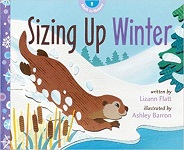
Sizing Up Winter
Grade 1
4 skill lessons
Math
Skill lessons
The mathematics the book carries, taught directly. Printable workbook pages and teacher keys are not available for this book yet.
- 1Lay the Birds End to End
- 2Say Which Question the Word Asks
- 3Line Them Up and Say Which
- 4Count the Months the Bear Slept
Math + reading
Math through the reading
The same book, entered through a sentence it prints. Change one word in the reading and the numbers change with it.
No math-through-reading lessons for this book yet.
Reading
Reading and language lessons
The same book read as a text. What a word means in its sentence, how a character is shown, how the writing is put together - no mathematics.
No reading and language lessons for this book yet.
Skill lessons
4 lessons on the mathematics the book carries. Printable workbook pages and teacher keys are not available for this book yet.
1. Lay the Birds End to End
This book asks for five measurements and never once supplies a ruler. It measures a feeder in birds, a distance in footprints, a snowfall in snowflakes, an owl's flight in flakes and a lake in otters, so the unit is always some thing a reader would have to have a pile of. Students lay identical paper birds end to end along a paper feeder with no gaps and no overlaps, count them, and say the feeder is so many birds long. Then they measure that same feeder in smaller paper footprints, get a larger number for an object that has not changed, and say which of the two units is smaller. What a child has to hold onto is that the number moved and the feeder did not: the answer is a count of units laid down, not something the feeder was carrying all along.
Full lesson — 20 minutes
1. Circle the unit in each question (3 min)
Read the four questions on your strip with a partner and circle the thing each one counts with, birds in the first and footprints in the second. Say out loud what you would need a whole pile of before you could answer each one. Do not answer any of them yet.
Word preview: unit
How many birds long is each feeder?
How many footprints long is the distance for the deer mouse for the snow shoe hair?
2. Lay the birds along the feeder (7 min)
Lay paper birds end to end along the feeder strip, the first one flush with the heavy mark at the left edge. Push each bird up until its beak touches the tail of the one before it, with no gap showing and no bird riding over another. Count the birds and say the whole sentence out loud: the feeder is so many birds long.
Word preview: gaps, overlap
Are the feeders the same size?
3. Measure the same feeder in footprints (6 min)
Clear the birds off and lay paper footprints along the same feeder the same way, flush from the left mark, no gaps, no overlaps. Count them and say the sentence again with the new unit in it. Hold one bird against one footprint and say which unit is smaller, then say which unit gave the bigger number.
Word preview: long
Both animals often leave footprints in the snow.
4. Turn a question into an answer (4 min)
Take the sentence card with three blanks and fill it out loud for your feeder, once for the birds and once for the footprints. Read both sentences to another pair and let them check your two numbers against the two piles still lying on your table.
How many snowflakes deep is the snow?
Short version — 9 minutes
1. Lay the birds along the feeder (5 min)
Lay paper birds end to end along the feeder strip from the left mark, beak to tail, no gaps and no overlaps. Count them and say the feeder is so many birds long.
Word preview: gaps, overlap
Are the feeders the same size?
2. Measure the same feeder in footprints (4 min)
Clear the birds off and lay footprints along the same feeder the same way. Count them, say the sentence again, and say which unit is smaller.
Word preview: long
Both animals often leave footprints in the snow.
Three levels
- Support
- Work with the birds only, on a feeder strip cut to five birds long so the whole row sits inside one glance. The child still lays them flush from the left mark, still keeps every gap out, and still says the full sentence with the number and the word birds in it. Only the second unit waits; nothing about the laying or the sentence comes down.
- At Grade
- Measure the feeder in birds and then in footprints, both rows flush from the left mark, and say both sentences with the number and the unit named in each. Then say which of the two units is smaller and which sentence carried the bigger number.
- Extension
- Before a single footprint goes down, hold one footprint against one bird, say how many footprints fit along one bird, and predict the footprint count for the whole feeder. Lay them and say whether the prediction held. Then lay the birds again with a finger-width gap between each one, count what you get, and say which of your two bird numbers is the feeder's real length and how you know.
English learners
Long is the load-bearing word and it is doing something a child may not have met: in how many birds long it names the attribute, where many children know it only as the opposite of short. The laying and the counting carry across languages with no help at all, and a child who builds a flush, gapless row has met the mathematical demand of this step whatever they can say about it. Rehearse one frame before the birds come out, the feeder is ___ ___ long, with the number in the first blank and the unit in the second, because English puts the unit in front of long and many languages put it after. Invite a child to count and to argue about the two units in their strongest language and to give the two numbers and the two unit names in English, which is what this step collects. Read the unit words off the cards rather than off the book: the animal names in these two questions are mistranscribed, hare printed as hair and the snow flea spelled three different ways across the text.
Materials
- A strip per pair carrying four of the book's measuring questions, one to a line, with space to circle the unit each one counts with
- A paper feeder strip per pair, thirty centimetres long, with a heavy mark at its left edge
- Twelve identical paper birds per pair, four centimetres beak to tail, cut from card
- Twenty identical paper footprints per pair, two centimetres long, cut from card
- A sentence card per pair reading the blank is blank blank long, with three blanks to fill aloud
- Word cards: long, unit, gaps, overlap
Standards & curriculum
These lessons are being matched against curricula now.
Standards are held back while this plan is edited. Every standard shown here was matched against the supplied wording of this lesson, quoting its steps, so a changed step is no longer the thing that was checked. Undo your changes to bring the standards back — your edits stay in this browser either way.
2. Say Which Question the Word Asks
Two sentences apart, this book asks one snowfall how high it is and how deep it goes, and those two questions send a measuring finger in opposite directions from the same pile. Elsewhere it asks a feeder for a length, a sunny patch for an area and a lake for a capacity, and it explains none of those words anywhere. Students answer three measuring questions about one shoebox, counting cubes along its edge, tiles across its lid and scoops into its inside, and each time say which word in the question decided what they counted. The point is not the three numbers but that they are three numbers about one box, and that the word rather than the box chose which one to go and find.
Full lesson — 20 minutes
1. Point out high and point out deep (4 min)
Pile the cotton into your tub and pat it flat. Run one finger up from the table to the top of the pile for how high, then run the other finger down from the top of the pile to the floor of the tub for how deep. Say what your two fingers had in common and say which way each one travelled.
Word preview: high, deep
How high is the snow?
How deep does it go?
2. Measure one box three ways (7 min)
Take your shoebox and answer three questions about it. Lay cubes along its long edge and count them. Cover the lid with square tiles, no gaps, and count them. Fill the box with level scoops of rice and count them. Put each number on the card beside the job it came out of.
Word preview: cover, fill
How many birds long is each feeder?
Which lake has a larger capacity?
3. Lay each word card beside the job it asks for (5 min)
Spread the five word cards taken from the book and put each one beside the thing you did to the box, the cubes, the tiles or the scoops. Two cards will reach for the same equipment and you must still keep them apart. Say the sentence for every card: this word asks how blank, so I used the blank.
Word preview: area, capacity
How many snowfllies cover the area of this sunny space?
Imagine what measuring could do.
4. Catch the wrong answer (4 min)
Your partner answers one of the three questions with the wrong number on purpose, handing you the scoop count when the card says long. Say which word they walked past, and give back the right number without measuring anything again.
Short version — 9 minutes
1. Point out high and point out deep (3 min)
Pile the cotton into the tub and pat it flat. Run one finger up from the table for how high and the other down from the top of the pile for how deep, and say which way each finger travelled.
Word preview: high, deep
How high is the snow?
How deep does it go?
2. Measure one box three ways (6 min)
Lay cubes along the box's long edge, tile the lid with no gaps, and fill the box with level scoops. Count each one and put the three numbers on the card beside the job they came out of.
Word preview: cover, fill
Which lake has a larger capacity?
Three levels
- Support
- Work two questions rather than five and take them both on the shoebox: cubes along the long edge for how long, then the box stood on end against a tower of those same cubes for how high. The child still says which word chose which job. The tiles and the scoops wait for another day, and the sentence is not shortened.
- At Grade
- Answer all three questions about the box, record the three numbers on the card, and lay all five word cards beside the job each one asks for, saying the sentence for every card.
- Extension
- Find the two questions on your card that could both be answered out of the same pile of cubes, and say why their two answers are still different numbers. Then think of something about the shoebox that none of the five words asks for, and say what you would have to count to find it.
English learners
High and deep are the pair to rehearse, because English sends them in opposite directions through the same pile and plenty of languages cover both with one word; the two fingers in the first step do more work here than any sentence will. Area and capacity are everyday words in no language at all, and this book prints both without explaining either, so a child meets them here as names for two jobs already done rather than as definitions to hold in the air. Rehearse the frame this word asks how ___, so I used the ___ before the cards come out. A child who lays the five cards correctly and points at the cubes, the tiles and the scoops has met the demand of this step; invite them to say why in their strongest language and to give the word and the equipment name in English.
Materials
- A clear plastic tub per pair, filled halfway with cotton wool or foam chips standing in for snow
- A shoebox per pair with its lid kept separate
- Twenty linking cubes per pair
- Twenty square paper tiles per pair, cut to tile the lid with no gaps
- A scoop and a tub of dry rice per pair
- A three-line recording card per pair, one line for each of the three jobs
- Five word cards per pair, each printed with one of the book's measuring words
- Word cards: high, deep, long, area, capacity
Standards & curriculum
These lessons are being matched against curricula now.
Standards are held back while this plan is edited. Every standard shown here was matched against the supplied wording of this lesson, quoting its steps, so a changed step is no longer the thing that was checked. Undo your changes to bring the standards back — your edits stay in this browser either way.
3. Line Them Up and Say Which
Underneath the ice this book holds a contest and asks five questions in a row about who wins it, and it quantifies nobody. The winners are in the artwork; no fish, turtle or frog carries a number anywhere in the text, so the only way to settle any of them is to put the creatures side by side and look. Students stand four paper fish on one shared baseline, order them, and answer the book's own questions about their own set. Then one fish is slid forward off the line so that it looks the longest, and students have to say why the answer did not change and what must be put right before anyone is allowed to answer at all. One of the five contest questions is left out of the card: the animal in it is mistranscribed and the question cannot be read aloud as written.
Full lesson — 20 minutes
1. Hear the contest (3 min)
Listen to the four contest questions read straight through and say what each one asks you to look at, how tall, how wide, how long. Say which of them you could settle by standing two creatures side by side, and which one you could not settle without seeing the picture.
Word preview: tallest, longest
Could the creatures compare, hold a contest?
Which turtle is tallest?
2. Stand them on one line (6 min)
Take the four paper fish and stand them on the card with every nose touching the heavy line. Do not let one fish start out ahead of another. Slide them along the line until they sit in order, the shortest at one end and the longest at the other.
Word preview: shortest
Which ling is longest?
3. Answer the contest for your own set (6 min)
Answer two of the book's questions about your fish instead of about its own: which is longest, and which is biggest. Point at the line while you answer and say how the line lets you tell. If the two questions pick out different fish, say what each question was looking at.
Word preview: biggest
Which bass is biggest?
Which frog is fattest?
4. Break the line (5 min)
Slide the second-longest fish forward until its nose sits ahead of the line and its tail sticks out furthest of all. Ask your partner which fish is longest now. Say why the answer has not changed, and say what has to be put right before anybody is allowed to answer.
Short version — 9 minutes
1. Stand them on one line (5 min)
Stand the four fish on the card with every nose touching the heavy line, then slide them into order, shortest at one end and longest at the other.
Word preview: shortest
Which ling is longest?
2. Answer the contest for your own set (4 min)
Answer the book's questions about your own fish: which is longest, and which is biggest. Point at the line and say how it lets you tell.
Word preview: biggest
Which bass is biggest?
Three levels
- Support
- Work two fish rather than four, cut far enough apart in length that the difference survives a careless start. The child still stands both noses on the line, still answers which is longest, and still points at the line to say how they can tell. Ordering a whole set waits; the baseline and the sentence do not.
- At Grade
- Order all four fish from the line, answer both of the book's questions about the set, and for each answer say what the question was looking at and how the line settled it.
- Extension
- Order the four fish by length, then order them again by how wide they are, and say which fish changed places between the two orders and how one creature can win one contest and lose another. Then set out two fish of the same length and say what the contest questions can and cannot settle about that pair.
English learners
The superlative ending is the whole language load and it does not carry over: English builds longest and tallest by adding to the adjective, while many languages put a separate word in front, and a learner who hears long may never hear that the ending is what turns it into a contest with exactly one winner. The comparing needs no English whatever, and a child who lines four noses up and points at the winner has done the mathematics. Rehearse the frame the ___ one is the ___est before the fish come out, and let a child answer in their strongest language and supply only the superlative in English. Read the contest questions off the card and not off the book: one animal's name in the book's own run is mistranscribed and the run comes out wrong when it is read aloud.
Materials
- A card per pair carrying four of the book's contest questions, printed one to a line
- A baseline card per pair with one heavy line ruled across it
- Four paper fish per pair of clearly different lengths, all cut from card of the same colour
- Word cards: longest, tallest, biggest, shortest
Standards & curriculum
These lessons are being matched against curricula now.
Standards are held back while this plan is edited. Every standard shown here was matched against the supplied wording of this lesson, quoting its steps, so a changed step is no longer the thing that was checked. Undo your changes to bring the standards back — your edits stay in this browser either way.
4. Count the Months the Bear Slept
This book asks how long winter is four times over and answers it none of them, but its notes on the polar bear name two months and so fix one winter's length between them: the den is dug around the middle of October and all three bears leave it in March or April. Students find both months on a twelve-month strip, hop a finger from one to the other saying every month name aloud, and report the count, then move the second counter to the later month the book allows and report a second count. They colour their own winter on a blank strip and set it against the bear's. Nobody subtracts anything here: the two winters are settled by laying the two coloured runs side by side and seeing which one goes further.
Full lesson — 20 minutes
1. Find the book's two months (4 min)
Read the two bear sentences with a partner and find both months on your twelve-month strip. Put a red counter on the month the den is dug and a blue counter on the month the bears come out. The book allows two different months for coming out, so keep the second blue counter in your hand for now.
Word preview: month, calendar
A female polar bear digs a den in a snowbank around mid-October.
All three come out of the den in March or April.
2. Hop the months and count (6 min)
Start on the red counter and hop your finger one box at a time until you land on the blue one, saying each month name out loud as you land. Count your hops, not the box you started from, and say how many months the bear was inside. Now move the blue counter on to the later month the book allows, hop it again, and say the second number.
Word preview: between
Through the long winter the cubs drink their mother's milk, but the mother doesn't eat anything.
3. Colour your own winter (6 min)
On a blank strip, colour in every month you would call winter where you live. Count the coloured boxes and say the number out loud. Then say why you stopped colouring where you stopped.
Word preview: winter
Which months are winter for you?
Which months did the groundhog sleep through?
4. Lay the two winters side by side (4 min)
Line your coloured strip up underneath the bear's, January under January, and say which winter has more months in it. Do not work out how many more. Say whose run of colour goes further and put a finger where the shorter one stops.
So how long is winter and how do you know?
Short version — 9 minutes
1. Find the book's two months (4 min)
Find both of the book's months on your twelve-month strip. Put a red counter on the month the den is dug and a blue counter on the month the bears come out.
Word preview: month, calendar
A female polar bear digs a den in a snowbank around mid-October.
All three come out of the den in March or April.
2. Hop the months and count (5 min)
Hop your finger from the red counter to the blue one, one box at a time, saying each month name as you land. Count the hops and say how many months the bear was inside.
Word preview: between
Three levels
- Support
- Work one arrival month rather than two: put the blue counter on March and leave the second counter in the box. The child still hops month by month saying each name, and still reports one count out loud. Saying the months in order is the load being carried here and none of it comes down.
- At Grade
- Hop both counts, October to March and October to April, and say both numbers. Then colour your own winter, count the boxes, and set your strip against the bear's.
- Extension
- Say what happens to the count if the bear goes in at the middle of October rather than at the start of it, and whether that makes the answer more or less than the whole months you hopped. Then find a month that is winter on your strip and not on your partner's, and say what the two of you would have to agree about before either count could be called right.
English learners
The month names are the whole vocabulary load and there is a great deal of it: twelve proper nouns that no amount of mathematics helps a child guess, in an order that has to be learned rather than worked out. The hopping and the counting need no English, and a child who lands one finger per box and reports a number has done the mathematics whatever they can name. Let the printed strip carry the names while a child says them in their strongest language, and rehearse one frame before the counting starts, the bear slept for ___ months. Between is worth previewing on its own: English uses it here for a run of whole boxes rather than for a gap, and a child who reads it as the space between two things will begin the count a month late.
Materials
- A twelve-month strip per pair, January to December, one box to a month
- Two red and two blue counters per pair
- A blank twelve-month strip per child, January to December, with each box big enough to colour
- A crayon per child
- Word cards: month, calendar, winter, between
Standards & curriculum
These lessons are being matched against curricula now.
Standards are held back while this plan is edited. Every standard shown here was matched against the supplied wording of this lesson, quoting its steps, so a changed step is no longer the thing that was checked. Undo your changes to bring the standards back — your edits stay in this browser either way.