The Great Number Rumble
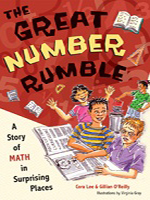
Grade 4
5 skill lessons · 4 math-through-reading
Math
Skill lessons
The mathematics the book carries, taught directly. Printable workbook pages and teacher keys are not available for this book yet.
- 1One Cent, Then Double: Building Sam's Wage Table
- 2Take It From One Side, Put It Back On the Other
- 3Stacking Dots: Where 1, 3, 6, 10 Comes From
- 4Why the Bees Chose Hexagons
- 5Reverse and Add Until It Reads Both Ways
Math + reading
Math through the reading
The same book, entered through a sentence it prints. Change one word in the reading and the numbers change with it.
- 6The Word That Cost Ten Million Dollars
- 7Rebuild the Table Sam Wrote
- 8The Rows Sam Never Showed Us
- 9Would You Have Picked the Hexagon?
Reading
Reading and language lessons
The same book read as a text. What a word means in its sentence, how a character is shown, how the writing is put together - no mathematics.
- 10That's what I thought
- 11Two ways of saying the same news
- 12The box with its own name
- 13Agreeing on the way to disagreeing
- 14The reason he gives and the reason he has
Skill lessons
5 lessons on the mathematics the book carries. Printable workbook pages and teacher keys are not available for this book yet.
1. One Cent, Then Double: Building Sam's Wage Table
Sam offers to work for one cent the first day and double it every day after. The book prints three points on that table and nothing in between: thirty-one cents after five days, over six hundred dollars by mid-month, and a month's total over ten million. Students build the table themselves, one doubling at a time, and find out where the small numbers stop being small. The lesson ends with students marking the day their own table first passes one dollar.
Full lesson — 20 minutes
1. Read the offer and write the first four days (4 min)
Partners read Sam's offer aloud, then write the first four days of the table on the day strip: one cent, two cents, four cents, eight cents. Say each number aloud as you write it and say what you did to the number before it. Do not write a fifth day yet.
Word preview: double
I was going to suggest that you pay me one cent a day for the first day, then double it to two cents the second, four cents the third, eight cents the fourth, and so on.
2. Double your way to day five and check against Ralph (5 min)
Keep doubling one row at a time until you reach day five. Add up every day's pay so far and write that total in the running-total column. Read Ralph's line aloud and check your total against his thirty-one cents before you go any further.
Word preview: running total
“No way,” exclaimed Ralph. “After five days of work, Sam’s going to make only 31 cents? That’s not fair.”
3. Mark the day the pay first passes one dollar (6 min)
Carry on doubling the daily pay, one row at a time, and stop the moment a single day's pay is more than one hundred cents. Circle that row and write the day number in the box at the top of your strip. Say to your partner how many days it took and whether that was sooner or later than you expected.
Word preview: more than
Mrs. Norton was frowning as she watched the numbers grow.
4. Compare your table with what the book reports (5 min)
Read Rosa's line and the grand total aloud. Point at the row on your own strip that is closest to the middle of the month and say whether your number is heading the same way Rosa says it is. Finish the spoken frame with your partner: on day one it was one cent, and by day ____ it was more than ____.
Word preview: grand total
“Wicked,” said Rosa. “Sam’s going to make over $600 by the middle of the month. That’s big money.”
when Sam turned to give him the grand total for the month—$10,737,418.23—the director was sweating like mad.
Short version — 9 minutes
1. Read the offer and write the first four days (4 min)
Partners read Sam's offer aloud, then write the first four days of the table on the day strip: one cent, two cents, four cents, eight cents. Say each number aloud as you write it and say what you did to the number before it. Do not write a fifth day yet.
Word preview: double
I was going to suggest that you pay me one cent a day for the first day, then double it to two cents the second, four cents the third, eight cents the fourth, and so on.
2. Double your way to day five and check against Ralph (5 min)
Keep doubling one row at a time until you reach day five, then add up every day's pay so far. Read Ralph's line aloud and check your total against his thirty-one cents.
Word preview: running total
“No way,” exclaimed Ralph. “After five days of work, Sam’s going to make only 31 cents? That’s not fair.”
Three levels
- Support
- The doubling and the checking stay exactly as they are. The day strip is pre-ruled with the first two rows already filled in, one cent and two cents, so the pattern is visible before the student continues it, and a partner holds a hundred-square as a picture of one dollar so the stopping point can be seen rather than only counted. The comparison in the last segment is spoken with a finger on the row instead of written.
- At Grade
- Build the table from day one by doubling each row, keep a running total, check the five-day total against Ralph's thirty-one cents, circle the first day the daily pay passes one hundred cents, and say which row of your strip matches the middle of the month.
- Extension
- Start a second strip where the first day is two cents instead of one and everything else works the same way. Run both strips to day ten side by side, and say what happened to the gap between them as the days went on. Then say, without doubling all the way there, whether a table that starts at two cents would ever fall behind the one that starts at one cent.
English learners
The mathematics transfers completely: a student who counts in Tagalog, Arabic or Portuguese doubles a number correctly with no English at all, and the strip can be filled in silence. Two English pieces do not transfer. The verb double is used here as an instruction, not a description, and learners who know the word only as an adjective may not hear it as something to do. And the running total is a different quantity from the day's pay, but English names them with the same word, total, so a student may write one where the other belongs. Rehearse two frames with a finger on the two columns: this day I earned ____, and altogether I have earned ____. Students may double and check in their strongest language first, then read the two frames aloud in English pointing at each column.
Materials
- Day strip ruled with twenty numbered rows, one per pair
- Calculator, one per pair, for the running total only
- Red pencil per pair
- Word cards: double, running total, more than, grand total
Standards & curriculum
Choose your curriculum above to see the standards for this lesson.
Standards are held back while this plan is edited. Every standard shown here was matched against the supplied wording of this lesson, quoting its steps, so a changed step is no longer the thing that was checked. Undo your changes to bring the standards back — your edits stay in this browser either way.
2. Take It From One Side, Put It Back On the Other
The book gives its own tiling procedure in one sentence and then carries it out: cut a piece from one side of a square, tape it to the opposite side, and the weird shape still tiles. Students perform the exact procedure Sam performs, make a copy of their shape, and cover a sheet with it in two colours. The lesson ends with students naming what they took and where it went back, so the rule is stated and not just followed.
Full lesson — 20 minutes
1. Say what tessellating means before you cut (4 min)
Read the definition strip aloud to your partner, twice. Then sort the six picture cards on your desk into ones that tessellate and ones that do not, and say for each card in the second pile whether the problem is a gap or an overlap. Leave the cards sorted where you can see them.
Word preview: tessellate, gaps
“Shapes that tessellate fit together perfectly with no gaps or overlaps,” said Sam.
2. Cut one side and tape it to the opposite side (6 min)
Start with the square of card. Cut a wavy piece from the left side and tape it onto the right side, matching it up so nothing is lost. Then cut a piece from the bottom and tape it to the top the same way. Hold up your finished shape and say aloud which side each piece came from and which side it went to.
Word preview: opposite side
“It’s like this: when you create your basic tiling shape, you can take anything you like from one side as long as you put it back on the opposite side.”
Sam cut a squiggly shape from one side of the square and taped it to the opposite side. He cut another shape from the bottom and taped it to the top.
3. Trace a copy and test the two against each other (5 min)
Trace your finished shape onto a second piece of card and cut out the copy. Fit the two shapes together along every side in turn and check each time for a gap or an overlap. Say to your partner how many sides you tested and whether every one of them closed.
Word preview: fit together
Tracing the finished shape onto another piece of foam, he cut out a copy and showed how the two pieces fit together on all sides.
4. Cover the sheet in two colours (5 min)
Draw round your shape at the top left corner of the poster sheet in one colour, then take turns with your partner drawing round the copy next to it in the other colour, working across and then down. Fill the sheet. Then look along one row and say whether any white shows between your shapes, and where.
Word preview: side by side
Stamping his shape at the top left corner of the poster, he motioned for me to take the other copy and do one next to his with the green paint. Taking turns, we quickly covered the paper with red and green figures, neatly side by side and down the page.
Short version — 9 minutes
1. Cut one side and tape it to the opposite side (5 min)
Start with the square of card. Cut a wavy piece from the left side and tape it onto the right side. Then cut a piece from the bottom and tape it to the top. Say which side each piece came from and which side it went to.
Word preview: opposite side
“It’s like this: when you create your basic tiling shape, you can take anything you like from one side as long as you put it back on the opposite side.”
Sam cut a squiggly shape from one side of the square and taped it to the opposite side. He cut another shape from the bottom and taped it to the top.
2. Trace a copy and test the two against each other (4 min)
Trace your finished shape onto a second piece of card, cut out the copy, and fit the two together along every side in turn. Say whether every side closed with no gap.
Word preview: fit together
Tracing the finished shape onto another piece of foam, he cut out a copy and showed how the two pieces fit together on all sides.
Three levels
- Support
- All the cutting, taping, tracing and testing stays. The square arrives with the two cut lines already drawn on it, so the student cuts along a line rather than judging where to cut, and one strip of tape is pre-torn per cut. The naming in the last segment is done by pointing at the shape and finishing the spoken frame — I took this piece from the ____ side and put it on the ____ side — rather than writing it.
- At Grade
- Cut and tape both pieces from opposite sides, trace and cut a copy, test the pair along every side for gaps and overlaps, and cover the poster sheet in two alternating colours with no white showing.
- Extension
- Make a second tiling shape, but this time break the rule on purpose: take a piece from one side and tape it onto a side that is next to it rather than opposite. Try to tile with it and say exactly where it fails and why, pointing at the two sides that no longer match. Then say what has to be true about a pair of sides for the pieces to close.
English learners
The whole procedure is watchable and every step can be copied from a demonstration, so a student with no English can cut, tape, trace and tile correctly. The English that carries the mathematics is positional and small. Opposite is the load-bearing word in this lesson and it is easy to hear as the vaguer other, which would let a student tape onto a neighbouring side and destroy the tiling. Gap and overlap are also a pair many learners collapse into one idea of does not fit, and the last segment asks for the difference. Rehearse with a hand on each edge: this side and the opposite side; here is a gap, here is an overlap. Students may sort the picture cards and explain their sorting in their strongest language first, then say the two frames in English with a finger on the join.
Materials
- Definition strip printed with the sentence defining tessellate
- Six picture cards per pair, some tessellating and some not
- Square of card, one per student
- Scissors per pair
- Tape per pair
- Second piece of card, one per student
- Pencil per student
- Poster sheet per pair
- Two coloured pencils per pair
- Word cards: tessellate, gaps, opposite side, fit together, side by side
Standards & curriculum
Choose your curriculum above to see the standards for this lesson.
Standards are held back while this plan is edited. Every standard shown here was matched against the supplied wording of this lesson, quoting its steps, so a changed step is no longer the thing that was checked. Undo your changes to bring the standards back — your edits stay in this browser either way.
3. Stacking Dots: Where 1, 3, 6, 10 Comes From
Rosa asks what is so triangular about 1, 3, 6 and 10, and the book answers twice: once by stacking dots and once by adding up the counting numbers. Students build both answers, the dots and the sums, and set them side by side so each number appears in two forms. The lesson ends with students predicting the next triangle number from the sum and then checking it by building the row of dots.
Full lesson — 20 minutes
1. Hear Rosa's question and build the first four stacks (5 min)
Read Rosa's question aloud. Then build four dot stacks with counters: one counter, then a row of two under a row of one, then a row of three under that stack, then a row of four. Count the total in each stack and write the four totals in a line.
Word preview: triangle numbers
“Triangles?” challenged Rosa. “What’s so triangular about 1, 3, 6, 10…?”
“Not the numbers…but see what happens if I start stacking dots, like this?” said Sam.
2. Write each stack as a sum (6 min)
Beside each stack, write the sum that makes it: one, then one plus two, then one plus two plus three, then one plus two plus three plus four. Add each sum up and check it against the total you counted for that stack. Say to your partner what gets added on each time you move to the next stack.
Word preview: adding
“You know the natural numbers? Start with 1, and just keep adding the next natural number to get the next triangle number. See how that works? 1 is 0 + 1, 3 is 1 + 2, 6 is 1 + 2 + 3, 10 is 1 + 2 + 3 + 4, and so on.
3. Predict the fifth before you build it (5 min)
Do not touch the counters yet. Work out the next sum on paper and write down what you think the fifth triangle number is. Then build the fifth stack with counters, count it, and say whether your prediction matched. If it did not, find which row you got wrong.
Word preview: predict
Rosa scanned Pascal’s triangle with more interest. “Does it have other patterns?”
4. Put two stacks together and see what comes out (4 min)
Take your stack of three and your stack of six and push them together to make one square arrangement. Count it. Do the same with the stack of six and the stack of ten. Read the book's line aloud and say whether the numbers you counted are on its list.
Word preview: square numbers
And if you add neighboring triangle numbers, you get square numbers—like 1, 4, 9, or 16,” he added, drawing dots to make squares.
Short version — 9 minutes
1. Hear Rosa's question and build the first four stacks (4 min)
Read Rosa's question aloud, then build four dot stacks with counters: one, then two under one, then three under that, then four. Count the total in each stack and write the four totals in a line.
Word preview: triangle numbers
“Triangles?” challenged Rosa. “What’s so triangular about 1, 3, 6, 10…?”
“Not the numbers…but see what happens if I start stacking dots, like this?” said Sam.
2. Write each stack as a sum (5 min)
Beside each stack write the sum that makes it, up to one plus two plus three plus four, add each one up, and check it against the total you counted.
Word preview: adding
“You know the natural numbers? Start with 1, and just keep adding the next natural number to get the next triangle number. See how that works? 1 is 0 + 1, 3 is 1 + 2, 6 is 1 + 2 + 3, 10 is 1 + 2 + 3 + 4, and so on.
Three levels
- Support
- Every stack is still built and every sum is still added. The recording sheet arrives with the row lengths pre-printed as empty boxes, one row of one, one row of two and so on, so the student places counters into boxes rather than judging the row lengths, and the first sum is filled in as a model. The prediction segment is done aloud with a partner rather than written, and the counters stay available while it happens.
- At Grade
- Build the first four stacks, write and add the sum beside each one, check every sum against the counted total, predict the fifth triangle number from the sum before building it, and push neighbouring stacks together to find the square arrangements.
- Extension
- Without building it, work out the tenth triangle number by continuing the sums, and write down how many counters you would need. Then find a faster way to add one through ten than adding them one at a time, and show your way to a partner. Say what it is about the list of numbers that makes your shortcut work.
English learners
Counting and stacking transfer completely and a learner can build every stack and get every total right without English. The English that carries meaning here is a pair of noun phrases that sound almost identical and mean different things: triangle numbers are the totals, and square numbers are what you get when two neighbouring totals are joined, so a student who hears only numbers may report the wrong list. The word next is also doing quiet mathematical work in this book's rule — the next natural number is the one added on, not any number — and learners often read next as another. Rehearse two frames with a hand on the counters: this stack is a triangle number, it holds ____; these two stacks together make a square number, it holds ____. Students may count and check in their strongest language, then say both frames in English pointing at the arrangement.
Materials
- Twenty-one counters per pair
- Recording sheet ruled in two columns, one per pair
- Pencil per student
- Word cards: triangle numbers, adding, predict, square numbers
Standards & curriculum
Choose your curriculum above to see the standards for this lesson.
Standards are held back while this plan is edited. Every standard shown here was matched against the supplied wording of this lesson, quoting its steps, so a changed step is no longer the thing that was checked. Undo your changes to bring the standards back — your edits stay in this browser either way.
4. Why the Bees Chose Hexagons
The book says three shapes tile on their own and then says the bees picked one of them for a reason. Students tile a fixed area with triangles, then squares, then hexagons, count the tiles and count the edges each tiling needs, and put the three results in one table. The lesson ends with students saying which shape asked for the least wall, using their own counted numbers as the reason.
Full lesson — 20 minutes
1. Find the tessellation in the honeycomb (4 min)
Read the two honeycomb sentences aloud. Look at the honeycomb picture and trace one whole cell with your finger, then count how many cells touch it all the way round. Say the number aloud and say what shape every cell is.
Word preview: hexagon, cells
“Oh no,” I exclaimed in spite of myself. “There’s a tessellation in that honeycomb.”
“Sure, why not? Honeybees use wall-to-wall hexagons to make storage cells for honey.
2. Tile the same frame three ways (7 min)
Fill the tiling frame completely with triangle tiles and count how many it took. Clear it and fill the same frame with squares, then clear it again and fill it with hexagons, counting each time. Write all three counts in the table. The frame must be full each time with nothing sticking out.
Word preview: tiles
“The simplest tessellations are made from just one shape with the same size angles and sides all around, like triangles, or squares, or hexagons.
3. Count the walls each tiling needs (5 min)
Rebuild each tiling one at a time and count the edges around the outside of a single tile, then multiply by the number of tiles you used to get the total wall count. Write each total in the wall column. Say to your partner which tiling needed the most wall and which needed the least.
Word preview: edges, less
Triangles and squares tessellate by themselves too, but honeycombs made of tessellating hexagons hold more honey and take less wax to build. Less work, too.”
4. Say which shape the bees should pick and why (4 min)
Read your table across and say aloud which shape covered the frame with the fewest tiles and which needed the least wall. Then tell your partner which shape a bee should choose, giving one number from your own table as the reason. Your reason has to have a number in it.
Word preview: fewest
It’s a smart choice.
Short version — 9 minutes
1. Tile the same frame three ways (5 min)
Fill the tiling frame completely with triangles and count them, then clear it and do the same with squares, then hexagons. Write all three counts in the table.
Word preview: tiles
“The simplest tessellations are made from just one shape with the same size angles and sides all around, like triangles, or squares, or hexagons.
2. Say which shape the bees should pick and why (4 min)
Read your table across, say which shape covered the frame with the fewest tiles, and tell your partner which shape a bee should choose, giving one number from your table as the reason.
Word preview: fewest
It’s a smart choice.
Three levels
- Support
- All three tilings are still built and all three counts are still made. The tiling frame is smaller, so each fill takes fewer tiles and the counts stay inside twenty, and the table arrives with the shape names and a worked first row already entered as a model. The reason in the last segment is spoken with a hand on the table row rather than written, and the frame is supplied — the ____ needed the fewest tiles, only ____.
- At Grade
- Fill the same frame with triangles, squares and hexagons in turn, count the tiles each time, count the edges each tiling needs, complete all three rows of the comparison table, and give a reason for the bees' choice that carries a number from your own table.
- Extension
- Try to fill the frame completely with regular pentagon tiles and record what happens. Say precisely where the pentagons fail, using the words gap and overlap, and then say what the three shapes that worked have that the pentagon does not. Test your idea by predicting, before you try it, whether octagons alone will fill the frame.
English learners
Tiling and counting transfer completely: a learner fills the frame and counts the tiles correctly with no English at all, and the three counts can be compared as numbers alone. The English work here is comparison language, which is exactly what the last segment asks for. Fewest and least are two different words for the same direction, and English chooses between them by what is being counted rather than by meaning, so a learner who has one may not recognise the other. The comparative frames themselves — needed fewer tiles than, took less wall than — put the two things being compared on either side of the word, and many languages mark the comparison differently. Rehearse one frame with a finger on two table rows: the hexagons took less wall than the triangles. Students may compare and decide in their strongest language, then say the comparison in English pointing at both rows.
Materials
- Honeycomb picture card per pair
- Tiling frame card per pair
- Tile set per pair: triangles, squares and hexagons of matching size
- Comparison table printed with three shape rows, one per pair
- Word cards: hexagon, cells, tiles, edges, less, fewest
Standards & curriculum
Choose your curriculum above to see the standards for this lesson.
Standards are held back while this plan is edited. Every standard shown here was matched against the supplied wording of this lesson, quoting its steps, so a changed step is no longer the thing that was checked. Undo your changes to bring the standards back — your edits stay in this browser either way.
5. Reverse and Add Until It Reads Both Ways
The book gives a rule and works two examples: reverse a number's digits, add the two, and if the answer does not read the same backwards, do it again. Twenty-one takes one round; forty-nine takes two. Students run the rule on numbers of their own, keeping a round count, and the lesson ends with the class sorting their starting numbers by how many rounds each one needed.
Full lesson — 20 minutes
1. Work the book's first example together (4 min)
Read the palindrome sentence aloud and say what makes a number read the same both ways. Then work the book's twenty-one exactly as it is written: write twenty-one, write its digits reversed underneath, add them, and check whether the answer reads the same backwards. Write one in the rounds box.
Word preview: palindrome, reverse
Like “palindrome numbers”— they read the same backwards and forwards, like 626 or 147,741.
You can start with any twodigit number, like 21 and get a palindrome by reversing the digits, 12, and adding them: 21 + 12 = 33.
2. Work the example that needs a second round (5 min)
Now work forty-nine the same way. Add forty-nine and ninety-four, check the answer, and when it does not read the same backwards, reverse that answer and add again. Count both rounds and write two in the rounds box. Say to your partner what told you to go round a second time.
Word preview: round
If a palindrome doesn’t turn up the first, time, keep it up until you get one: 49 + 94 = 143, not a palindrome, so keep going; 143 + 341 = the palindrome 484.
3. Run the rule on four numbers of your own (7 min)
Choose four two-digit numbers nobody else at your table has chosen and run the rule on each one, writing every round. Stop each number as soon as the answer reads the same both ways and write the number of rounds it took. Check one of your partner's four by working it yourself.
Word preview: digits
I guess by now I shouldn’t be so surprised by the patterns that show up in math—but some of them are so bizarre even I remember them.
4. Sort the table's numbers by rounds (4 min)
Put every number from your table into piles by how many rounds it needed: one round, two rounds, more than two. Count each pile and say which pile is biggest. Say one thing you notice about the numbers that finished in a single round.
Word preview: how many
Or perfect numbers—the numbers that add up to a perfect number are also the ones that can be multiplied to make it.
Short version — 9 minutes
1. Work the book's first example together (4 min)
Read the palindrome sentence aloud and say what makes a number read the same both ways. Then work the book's twenty-one exactly as it is written: write twenty-one, write its digits reversed underneath, add them, and check whether the answer reads the same backwards. Write one in the rounds box.
Word preview: palindrome, reverse
Like “palindrome numbers”— they read the same backwards and forwards, like 626 or 147,741.
You can start with any twodigit number, like 21 and get a palindrome by reversing the digits, 12, and adding them: 21 + 12 = 33.
2. Work the example that needs a second round (5 min)
Work forty-nine the same way: add forty-nine and ninety-four, and when the answer does not read the same backwards, reverse it and add again. Count both rounds and say what told you to go round a second time.
Word preview: round
If a palindrome doesn’t turn up the first, time, keep it up until you get one: 49 + 94 = 143, not a palindrome, so keep going; 143 + 341 = the palindrome 484.
Three levels
- Support
- The rule is run in full and no round is skipped. The rounds sheet arrives with the two numbers already stacked one above the other in a column, so the student adds a sum that is already lined up rather than setting it out, and the four chosen numbers are drawn from a card set whose numbers all finish inside two rounds. The noticing in the last segment is spoken to a partner rather than written.
- At Grade
- Work both of the book's examples, then run the rule on four two-digit numbers of your own, writing every round and recording how many rounds each took, and check one of your partner's.
- Extension
- Find a two-digit number that takes three rounds or more and show every round. Then look at all the numbers on your table that finished in one round and say what those starting numbers have in common, testing your idea on a number nobody has tried yet.
English learners
The arithmetic transfers completely: reversing digits and adding are done with a pencil and need no English. Two things do not transfer. Palindrome is a long unfamiliar word for an idea most learners already hold, and the phrase that defines it, reads the same backwards and forwards, is easier to hold onto than the term itself, so use both together. The bigger trap is the instruction keep it up, which is an idiom meaning do it again and can be read as continue upward, sending a student the wrong way entirely. Say the plain version alongside it: if the answer does not read the same both ways, do the rule again on the answer. Students may work the rounds and count them in their strongest language, then report how many rounds a number took in English.
Materials
- Rounds sheet with a rounds box per number, one per student
- Pencil per student
- Three labelled pile cards per table
- Word cards: palindrome, reverse, round, digits, how many
Standards & curriculum
Choose your curriculum above to see the standards for this lesson.
Standards are held back while this plan is edited. Every standard shown here was matched against the supplied wording of this lesson, quoting its steps, so a changed step is no longer the thing that was checked. Undo your changes to bring the standards back — your edits stay in this browser either way.
Math through the reading
The mathematics is reached through a sentence the book prints: change one word in the reading and the numbers change with it. These carry their own standards, matched against these lessons rather than inherited from the skill ones.
6. The Word That Cost Ten Million Dollars
Students build Sam's wage table twice, once under the word the book uses and once under a word one letter of meaning away, and use the book's own printed totals to say which table Sam wrote.
Full lesson — 20 minutes
1. Read the offer and mark the operative word (4 min)
Partners read Sam's offer sentence aloud to each other, twice, swapping who reads. Underline the one word that tells you what to do to get the next day's pay. Say to your partner what a different word in that spot would make you do instead, before any table is built.
2. Build both tables to day five (6 min)
On the left half of the strip build the table the book's word gives: one cent, then keep doubling to day five. On the right half build the table you get by adding one cent each day. Fill both daily-pay columns and both running-total columns, one row at a time, and leave both standing.
3. Test both tables against Ralph (5 min)
Read Ralph's line aloud with a hand on your strip. Find the running total for day five on each table and say both numbers out loud. Point at the table that matches the figure Ralph gives and say which word produced it.
4. Write the sentence that settles it (5 min)
Write one sentence naming the word Sam used and giving the printed figure that proves it. Circle the word in your sentence that decides the operation. Read it to a partner, who checks that the sentence carries the number and not only the word.
Short version — 9 minutes
1. Build both tables to day five (6 min)
On the left half of the strip build the table the book's word gives: one cent, then keep doubling to day five. On the right half build the table you get by adding one cent each day. Fill both daily-pay columns and both running-total columns, one row at a time, and leave both standing.
2. Test both tables against Ralph (5 min)
Read Ralph's line aloud with a hand on your strip. Find the running total for day five on each table and say both numbers out loud. Point at the table that matches the figure Ralph gives and say which word produced it.
Three levels
- Support
- Both tables are still built and both running totals are still kept, so no arithmetic is removed. The strip arrives with the two column headings printed and the first two rows filled in on both sides, which is honest because the two tables genuinely agree there, and it lets the student see the moment they separate rather than hunt for it. The settling sentence is spoken rather than written: with a hand on the matching column the student finishes the frame — Ralph says thirty-one cents, and only the ____ table reaches thirty-one, so Sam said ____.
- At grade
- Build both tables to day five with running totals, find the day-five total on each, match one of them to Ralph's printed figure, and write a sentence naming the operative word and quoting the number that proves it.
- Extension
- Carry the doubling table on to day ten and the adding table with it. Record the gap between the two running totals at day five and at day ten, and say what happened to that gap. Then answer without extending either table: if Sam had been paid for one hundred days, would the gap be larger or smaller than at day ten, and say what in the two rules makes you sure.
English learners
Doubling and adding both transfer completely — a learner builds both tables correctly with no English at all, and the two day-five figures can be compared as bare numbers. The English is where the whole lesson sits. Double is used here as a verb, an instruction to perform, and learners who meet it first as an adjective may not hear an action in it; and English marks the difference between doubling and adding one only by that single word, where several languages would mark it with a different verb form entirely. The second trap is the running total, which shares the word total with the day's pay and is a different quantity, so a student may check the wrong number against Ralph's thirty-one. Rehearse two frames with a finger on the two columns: this day I earned ____, and altogether I have earned ____. Students may build both tables and decide which matches in their strongest language first, then say which word Sam used in English with a hand on the matching column.
Materials
- Two-column day strip per pair, ruled for ten rows on each of two tables
- Offer strip printed with Sam's sentence, one per pair
- Ralph strip printed with the thirty-one-cent sentence, one per pair
- Pencil per student
- Sentence line, one per student
- Sam's offer sentence enlarged and kept up for the whole lesson
- One pair of day-five rows shown side by side, sixteen cents against five cents
Standards & curriculum
Choose your curriculum above to see the standards for this lesson.
Standards are held back while this plan is edited. Every standard shown here was matched against the supplied wording of this lesson, quoting its steps, so a changed step is no longer the thing that was checked. Undo your changes to bring the standards back — your edits stay in this browser either way.
7. Rebuild the Table Sam Wrote
Students reconstruct the missing rows of Sam's wage table between the three totals the book reports, and prove the order matters by trying to compute a row with the row above it hidden.
Full lesson — 20 minutes
1. Put the seven events in the book's order (5 min)
Spread the seven event cards face up and read each one aloud. Place them left to right in the order they happen in the book. Then say to your partner which single card tells you how to get from one day's pay to the next, and set that card slightly above the line.
2. Run the rule and hit the first checkpoint (5 min)
Build the day table from day one, doubling each row, and keep the running total beside it. Stop at day five and read your running total aloud. Check it against the figure on Ralph's card before you carry on.
3. Find where the rule breaks if a row goes missing (5 min)
Cover day seven on your table with the blank card and hand the strip to your partner, who must try to write day eight without uncovering it. Then uncover day seven and finish the table to day eleven. Say aloud what your partner needed before day eight could be written.
4. Read the ordered chain back with its numbers (5 min)
Read your seven cards back in order, and after each card that reports a total, say the row of your own table it matches. Where your table does not reach far enough to match a card, say so and say which direction your numbers are heading.
Short version — 9 minutes
1. Put the seven events in the book's order (5 min)
Spread the seven event cards face up and read each one aloud. Place them left to right in the order they happen in the book. Then say to your partner which single card tells you how to get from one day's pay to the next, and set that card slightly above the line.
2. Run the rule and hit the first checkpoint (5 min)
Build the day table from day one, doubling each row, and keep the running total beside it. Stop at day five and read your running total aloud. Check it against the figure on Ralph's card before you carry on.
Three levels
- Support
- The ordering, the doubling and the dependence test all stay. The event cards are reduced to five by removing the two that report totals the table will not reach, so every card a student places can be matched to a row they actually build, and the day table is pre-ruled with day one entered. The account in the last segment is spoken with a finger on the covered row and a supplied frame — I could not write day eight until I knew day ____ — rather than written.
- At grade
- Order all seven event cards and identify the rule-setting card, build the day table to day eleven with running totals, check day five against Ralph's figure, and demonstrate the dependence by rebuilding a covered row before continuing.
- Extension
- Rosa's card reports over six hundred dollars by the middle of the month. Work out which day of the table first passes six hundred dollars in running total, and say whether that day is before or after the middle of a thirty-day month. Then say what it would take for the director to have spotted the trap at the moment he agreed, using the first four days as the reason he did not.
English learners
Ordering cards and doubling numbers both transfer, and a learner can place the cards and build the table correctly with no English. The English work is temporal and comparative at once. The cards are ordered by narrative time, and English marks that with tense and with small connectives — then, later, by the middle of, finally — rather than with the explicit sequence markers many languages use, so a learner may order by which card has the biggest number instead of by when it happens. The other trap is that the rule-setting card and the reporting cards look alike: both contain numbers, and only one of them says what to do. Rehearse the distinction aloud with the cards in hand: this card tells me what to do, these cards tell me what happened. Students may order and compute in their strongest language first, then read the chain back in English naming a row for each card.
Materials
- Seven event cards per pair, each printed with one sentence from the book
- Day table strip per pair, ruled for eleven numbered rows with two columns
- One blank cover card per pair
- Pencil per student
- The seven events enlarged in a scrambled row where the class can see them
- One day table with day seven covered, held up during the dependence test
Standards & curriculum
Choose your curriculum above to see the standards for this lesson.
Standards are held back while this plan is edited. Every standard shown here was matched against the supplied wording of this lesson, quoting its steps, so a changed step is no longer the thing that was checked. Undo your changes to bring the standards back — your edits stay in this browser either way.
8. The Rows Sam Never Showed Us
Students recover the day-five pay the book leaves out and the day the wage first passes a dollar, and must hand in each number with the sentences that force it.
Full lesson — 20 minutes
1. Read the offer and say the rule in your own words (4 min)
Partners read the offer sentence aloud, twice, swapping who reads. Then each says the rule back in their own words without looking at the strip, while the other checks it against the sentence. Write the four days the book gives you into the recovery table and stop there.
2. Recover day five and check it against the book (5 min)
Work out day five from day four using the rule, and write it in. Add up all five days in the running-total column. Read Ralph's strip aloud and say whether your total and his figure agree; if they do not, find the row you got wrong.
3. Hunt the sentences that force the answer (5 min)
Read the four candidate sentences on the evidence sheet and underline only the ones that make day five have to be sixteen. Read each underlined sentence to your partner and say what it contributes — a starting amount, a rule, or a check. Do not underline a sentence just because it has a number in it.
4. Find the dollar crossing and hand in the card (6 min)
Keep doubling and comparing each day's pay against one hundred cents until one is bigger, and write that day number in the crossing box. Then fill in the evidence card: both recovered numbers, the arithmetic under each, and your underlined sentences copied below. A card with numbers and no sentences goes back, and so does one with sentences and no numbers.
Short version — 9 minutes
1. Recover day five and check it against the book (5 min)
Work out day five from day four using the rule, and write it in. Add up all five days in the running-total column. Read Ralph's strip aloud and say whether your total and his figure agree; if they do not, find the row you got wrong.
2. Find the dollar crossing and hand in the card (6 min)
Keep doubling and comparing each day's pay against one hundred cents until one is bigger, and write that day number in the crossing box. Then fill in the evidence card: both recovered numbers, the arithmetic under each, and your underlined sentences copied below. A card with numbers and no sentences goes back, and so does one with sentences and no numbers.
Three levels
- Support
- Both numbers are still recovered by the student and no row is supplied. The recovery table arrives with the four stated days already entered, since the book states them anyway, and a hundred-square sits on the desk as a picture of one dollar so the comparison in the last segment can be seen as well as computed. The evidence card is completed by cutting and pasting the printed candidate sentences rather than copying them out, so the choosing of the right sentences is unchanged and only the transcription is lifted.
- At grade
- State the rule in your own words, recover day five and check the five-day total against Ralph's figure, underline only the sentences that force the answer, find the first day the pay passes one dollar, and hand in an evidence card carrying both numbers, the arithmetic, and the sentences.
- Extension
- The director agrees to the deal after hearing four days. Work out the day on which the single day's pay first passes one hundred dollars, and say how many days after the dollar crossing that is. Then answer with the table in front of you: was there any point in the first week at which the director could have seen the trap from the numbers alone, and say what he would have had to do to see it.
English learners
Doubling, summing and comparing all transfer, and a learner recovers both numbers correctly with no English. The English is what makes this a recovery rather than a search, and two things trip learners. The book's phrase and so on is what carries the rule past the fourth day, and it is an idiom — a learner may read the offer as a list of four amounts that simply ends, in which case there is no rule to apply and nothing to recover. Say the plain version beside it: keep doing the same thing to every day after. The second trap is the word first in the crossing question, which asks for the earliest day above the threshold rather than any day above it, and a student may report day nine or ten and be arithmetically right and wrong on the question. Rehearse the frame with a finger moving down the column: this is the first day that is more than one dollar. Students may recover both numbers and check them in their strongest language, then say which sentences forced the answer in English with a hand on each one.
Materials
- Recovery table per pair, ruled for ten numbered rows with two columns and a crossing box
- Offer strip printed with Sam's sentence, one per pair
- Ralph strip printed with the thirty-one-cent sentence, one per pair
- Evidence sheet with four candidate sentences, one per student
- Evidence card, one per student
- Pencil per student
- The offer sentence enlarged and kept up for the whole lesson
- A hundred-square displayed as one dollar beside the crossing question
Standards & curriculum
Choose your curriculum above to see the standards for this lesson.
Standards are held back while this plan is edited. Every standard shown here was matched against the supplied wording of this lesson, quoting its steps, so a changed step is no longer the thing that was checked. Undo your changes to bring the standards back — your edits stay in this browser either way.
9. Would You Have Picked the Hexagon?
Students tile one frame with triangles, squares and hexagons, count what each tiling costs, and argue for the shape the bees should have chosen using a number they counted themselves.
Full lesson — 20 minutes
1. Read the claim and say what it leaves open (4 min)
Partners read the honeycomb sentence aloud, twice. Underline the part that says which shape the bees chose and the part that says the other shapes work too. Say to your partner which shape you would pick right now and why, before anything is counted.
2. Tile the frame three times and count (7 min)
Fill the frame completely with triangles and count them, then clear it and fill it with squares, then with hexagons, counting each time. The frame must be full each time with nothing sticking out. Write all three tile counts in the table.
3. Work out what each tiling costs in wall (5 min)
For each shape, count the edges around one tile and multiply by the number of tiles you used, and write the result in the wall column. Read your two columns across and say aloud which shape wins on tiles and which wins on wall, and whether they are the same shape.
4. Argue your position with a number in it (4 min)
Say your position aloud to a partner who chose a different shape or a different reason, naming the shape, the reason, and one count from your table. Listen to theirs. Then write one sentence in the frame given, and let your partner check that it carries a number and names what the number counts.
Short version — 9 minutes
1. Tile the frame three times and count (7 min)
Fill the frame completely with triangles and count them, then clear it and fill it with squares, then with hexagons, counting each time. The frame must be full each time with nothing sticking out. Write all three tile counts in the table.
2. Argue your position with a number in it (4 min)
Say your position aloud to a partner who chose a different shape or a different reason, naming the shape, the reason, and one count from your table. Listen to theirs. Then write one sentence in the frame given, and let your partner check that it carries a number and names what the number counts.
Three levels
- Support
- All three tilings are still built and both counts are still made for each. The frame is smaller so every count stays inside twenty and the wall totals stay inside sixty, and the table arrives with the shape names and the edges-per-tile figure already entered for each row, since that is a property of the tile rather than a result of the work. The position in the last segment is spoken with a hand on the table row and the frame supplied aloud rather than written.
- At grade
- Fill the frame with all three shapes and record the tile counts, compute the wall count for each tiling, compare the two columns, and state and write a position naming a shape, a criterion and a number counted from your own table.
- Extension
- Your table gives the cost of covering one frame. Now work out what happens at a larger size: predict, before you build it, which shape will win on wall count if the frame is doubled, and say what in your numbers makes you confident. Then argue the opposite position from the one you chose, using a real number from your own table to support it, and say what would have to be true for that position to be the better one.
English learners
Tiling and counting transfer completely and a learner produces all six numbers correctly with no English. This lesson's language work is argument structure, which is the hardest thing here for a learner and the whole point of the segment. English joins a claim to its reason with because, and puts the claim first and the evidence second, where many languages put the reason first; a learner may produce the two halves in the reverse order and be heard as not having given a reason at all. The other trap is that fewest and least are the same idea in two words, chosen by what is being counted rather than by meaning, and the table asks for both. Rehearse the whole frame once with a finger travelling from the shape name to the number: I would build with hexagons because they needed only ____. Students may tile, count and decide in their strongest language, then say the frame in English pointing at the row that supports it.
Materials
- Tiling frame card per pair
- Tile set per pair: triangles, squares and hexagons of matching side length
- Comparison table per pair, printed with three shape rows and two columns
- Position sentence line, one per student
- Pencil per student
- The honeycomb sentence enlarged and kept up for the whole lesson
- The three completed tilings of one frame displayed side by side once every pair has finished
Standards & curriculum
Choose your curriculum above to see the standards for this lesson.
Standards are held back while this plan is edited. Every standard shown here was matched against the supplied wording of this lesson, quoting its steps, so a changed step is no longer the thing that was checked. Undo your changes to bring the standards back — your edits stay in this browser either way.
Reading and language lessons
5 lessons on the reading and language the book carries - what a word means in its sentence, how a character is shown, how a text is built. No mathematics: these are matched against the English language arts curricula, which are a different and smaller set than the mathematics ones.
10. That's what I thought
The narrator opens by telling you exactly what he thinks and then, one sentence later, signals that he was wrong — and the book keeps him interrupting his own scenes to comment on himself. Students read his self-introduction, find the four words that undo it in advance, hear him break into a sentence to describe himself, and finally write the change as one claim carrying a quotation from each end.
Full lesson — 20 minutes
1. Read the narrator's own introduction (5 min)
Read these opening lines aloud in the narrator's voice. He tells you his name, his opinion, and one thing he admits about himself. Say all three aloud, and quote the words in which he admits the third.
Word preview: narrator
My friend Sam, he’s crazy about math. Me (the name’s Jeremy), I can do without it. Math has nothing to do with me, and I have nothing to do with it—except when it comes to homework, and then I’m the kind of guy who needs a calculator desperately.
2. Find the sentence that warns you he will change (5 min)
Read this line aloud. It looks back at everything he has just said and does something to it. Say what four words do that work, and say what a reader now expects from the rest of the book.
Word preview: thought
At least, that’s what I thought until last fall, when we had our great math debate or, as I like to call it, “The Number Rumble.”
3. Hear the narrator interrupt his own story (5 min)
Read this line aloud. The narrator stops describing the scene to describe himself, using two words joined by a dash. Say those two words, say what they claim about him, and say why he put them in the middle of the sentence rather than at the end.
Word preview: interrupt
Sam had just succeeded in making me—math-avoiding me—see math.
4. Track the change with two quotations (5 min)
Put the opening beside the later line and read both aloud. Write one sentence naming how the narrator changed, attaching a quotation from each passage. Read it to a partner, who checks that each quotation really says what you claim.
Word preview: change
My friend Sam, he’s crazy about math. Me (the name’s Jeremy), I can do without it. Math has nothing to do with me, and I have nothing to do with it—except when it comes to homework, and then I’m the kind of guy who needs a calculator desperately.
Sam had just succeeded in making me—math-avoiding me—see math.
Short version — 9 minutes
1. Read the narrator's own introduction (4 min)
Read these opening lines aloud in the narrator's voice. Say his name, his opinion, and the one thing he admits about himself, quoting the admission.
Word preview: narrator
My friend Sam, he’s crazy about math. Me (the name’s Jeremy), I can do without it. Math has nothing to do with me, and I have nothing to do with it—except when it comes to homework, and then I’m the kind of guy who needs a calculator desperately.
2. Find the sentence that warns you he will change (5 min)
Read this line aloud. Say which four words look back and undo what he just said, and say what a reader now expects from the rest of the book.
Word preview: thought
At least, that’s what I thought until last fall, when we had our great math debate or, as I like to call it, “The Number Rumble.”
Three levels
- Support
- Read the opening lines and the interruption line aloud with the student. Ask one question: at the start, did Jeremy like math? At the end of the story, has anything changed? Two spoken answers, each pointing at a printed line.
- At Grade
- Name what the narrator reveals in the opening, find the words that warn of a change, and support the change with a quotation from each end.
- Extension
- The narrator warns you he will change his mind before he tells you the story that changed it. Say what a reader gains and what a reader loses by being told the ending first, and say whether the book would be better the other way round.
English learners
First-person narration with a narrator who undercuts himself is a stance rather than a vocabulary problem, and the signals are small: At least, that's what I thought, and the dashes around math-avoiding me. Read those aloud on their own before the passages. Rehearse the frame: At first he thought ___. Later he ___. A student may name the change in their strongest language before quoting the English.
Materials
- Printed opening lines
- Printed warning line
- Printed interruption line
- Notebook
- Word cards: narrator, thought, interrupt, change
Standards & curriculum
Choose your curriculum above to see the standards for this lesson.
Standards are held back while this plan is edited. Every standard shown here was matched against the supplied wording of this lesson, quoting its steps, so a changed step is no longer the thing that was checked. Undo your changes to bring the standards back — your edits stay in this browser either way.
11. Two ways of saying the same news
The book drops a newspaper report into the middle of a boy's own storytelling, and then puts the same official on stage saying the same thing in his own loose voice. The gap between the two is the lesson. Students name the markers of report language, hold the two versions side by side, notice a sentence that reports opinion without ever quoting anyone who holds it, and rewrite one voice into the other.
Full lesson — 20 minutes
1. Read the report and find who is speaking (5 min)
Read this aloud in a newsreader's voice. Say who is being reported on and who is doing the reporting. Then say how you can tell nobody in the story is telling you this — quote the words that make it sound like a newspaper rather than a friend.
Word preview: report
Mathematics will be removed from the school curriculum, effective immediately, director of education Lawrence Lake announced today. Lake says he has been considering the move for months, and believes that removing the topic will have little impact on students.
2. Compare the report with the same man talking (5 min)
Read the report again and then read this line, which is the same man speaking in his own words. Say two ways the language is different, and quote one word or phrase from each passage that could not have appeared in the other.
Word preview: formal
Mathematics will be removed from the school curriculum, effective immediately, director of education Lawrence Lake announced today. Lake says he has been considering the move for months, and believes that removing the topic will have little impact on students.
“Heck, they can use calculators for most of that. Math isn’t much more anyway. I mean, who needs the extra stress? Budgets bother me, statistics stump me, fractions frazzle me—if I’m having so much trouble with math, how’s the average student or teacher going to get through it?”
3. Find where the report hides who is claiming what (5 min)
Read this sentence aloud. It reports something about parents and teachers but never lets a parent or a teacher speak. Say who the sentence actually got its information from, and quote the words that tell you. Then say what a careful reader should notice about that.
Word preview: source
Asked what parents and teachers thought, Lake cited widespread support for the move, saying many of them shared his views and were certain that children would experience less stress without mathematics.
4. Rewrite one line into the other's voice (5 min)
Take the man's spoken line and rewrite one sentence of it in your notebook as a news report would put it. Read both aloud. Say what your version makes him sound like that his own words did not, and whether that is fair to him.
Word preview: rewrite
“Heck, they can use calculators for most of that. Math isn’t much more anyway. I mean, who needs the extra stress? Budgets bother me, statistics stump me, fractions frazzle me—if I’m having so much trouble with math, how’s the average student or teacher going to get through it?”
Short version — 9 minutes
1. Read the report and find who is speaking (4 min)
Read this aloud in a newsreader's voice. Say who is reported on and who is reporting, and quote the words that make it sound like a newspaper.
Word preview: report
Mathematics will be removed from the school curriculum, effective immediately, director of education Lawrence Lake announced today. Lake says he has been considering the move for months, and believes that removing the topic will have little impact on students.
2. Compare the report with the same man talking (5 min)
Read the report again, then this line of the same man speaking. Say two ways the language differs and quote a word from each that could not appear in the other.
Word preview: formal
Mathematics will be removed from the school curriculum, effective immediately, director of education Lawrence Lake announced today. Lake says he has been considering the move for months, and believes that removing the topic will have little impact on students.
“Heck, they can use calculators for most of that. Math isn’t much more anyway. I mean, who needs the extra stress? Budgets bother me, statistics stump me, fractions frazzle me—if I’m having so much trouble with math, how’s the average student or teacher going to get through it?”
Three levels
- Support
- Read both passages aloud to the student, one in a newsreader voice and one in an ordinary voice. Ask which one sounds like a newspaper, and let them point to one word that made them decide.
- At Grade
- Name the markers of report language, compare the two versions, and quote a word from each that could not appear in the other.
- Extension
- The report says Lake cited widespread support. Say what that sentence lets a reader assume that it never actually claims, and say what a report would have to print instead for the claim to be checkable.
English learners
Register is the whole lesson and it is exactly what a second-language reader has least exposure to. Contrast the markers explicitly: effective immediately and cited versus Heck and I mean. Read the two passages aloud back to back before any analysis. Rehearse the frame: This sounds like a ___ because it says ___. Students may sort words into two piles rather than explaining first.
Materials
- Printed news report
- Printed spoken quotation
- Printed second news sentence
- Notebook
- Word cards: report, formal, source, rewrite
Standards & curriculum
Choose your curriculum above to see the standards for this lesson.
Standards are held back while this plan is edited. Every standard shown here was matched against the supplied wording of this lesson, quoting its steps, so a changed step is no longer the thing that was checked. Undo your changes to bring the standards back — your edits stay in this browser either way.
12. The box with its own name
This book keeps a recurring boxed feature with its own standing heading, in which the narrator steps out of the scene to sort out a word he and his friend use differently. Students identify the voice, separate the everyday meaning from the technical one, notice what quotation marks are doing around a newly named term, and judge whether the box has to be read where it sits or can be saved for later.
Full lesson — 20 minutes
1. Read the sidebar and say who is talking (5 min)
Read this sidebar aloud. Say who is speaking in it and how you know. Then say what it interrupted — is it part of the scene in the gym, or is it the narrator stepping outside the scene to explain something?
Word preview: sidebar
Jeremy Wrestles with the Weird Stuff: Sam’s always getting on my case about the word “chaos.” When I use it, I mean a huge, confused mess! But Sam says that in mathematics, chaos is something that’s perfectly logical underneath, even though the situation is always changing and impossible to predict.
2. Find the two meanings the sidebar sets against each other (5 min)
This sidebar exists because one word means two things. Say what the narrator means by the word and what his friend means by it. Quote the exact clause that gives each meaning, and say which meaning most people would use at school.
Word preview: meaning
Jeremy Wrestles with the Weird Stuff: Sam’s always getting on my case about the word “chaos.” When I use it, I mean a huge, confused mess! But Sam says that in mathematics, chaos is something that’s perfectly logical underneath, even though the situation is always changing and impossible to predict.
3. Read the sentence that names a second term (5 min)
Read this line, which follows on from the sidebar. It names a term and puts it in quotation marks. Say what the quotation marks are doing there, and say which earlier sentence you need in order to understand why the term has that name.
Word preview: term
That’s because tiny changes at the start make a huge difference in the end. It’s called the “butterfly effect.”
4. Decide where the sidebar should sit (5 min)
The sidebar carries its own heading, so a reader can skip it or read it at any point. Read it once more and say whether it must be read before the story continues, or whether it can wait. Then write one sentence saying what a reader would misunderstand if they skipped it entirely.
Word preview: skip
Jeremy Wrestles with the Weird Stuff: Sam’s always getting on my case about the word “chaos.” When I use it, I mean a huge, confused mess! But Sam says that in mathematics, chaos is something that’s perfectly logical underneath, even though the situation is always changing and impossible to predict.
Short version — 9 minutes
1. Read the sidebar and say who is talking (4 min)
Read this sidebar aloud. Say who is speaking and how you know, and say whether it is part of the scene or the narrator stepping outside it.
Word preview: sidebar
Jeremy Wrestles with the Weird Stuff: Sam’s always getting on my case about the word “chaos.” When I use it, I mean a huge, confused mess! But Sam says that in mathematics, chaos is something that’s perfectly logical underneath, even though the situation is always changing and impossible to predict.
2. Find the two meanings the sidebar sets against each other (5 min)
Say what the narrator means by the word and what his friend means by it, quoting the clause that gives each meaning.
Word preview: meaning
Jeremy Wrestles with the Weird Stuff: Sam’s always getting on my case about the word “chaos.” When I use it, I mean a huge, confused mess! But Sam says that in mathematics, chaos is something that’s perfectly logical underneath, even though the situation is always changing and impossible to predict.
Three levels
- Support
- Read the sidebar aloud with the student. Ask two questions with two answers: when Jeremy says the word, what does he mean? When Sam says it, what does he mean? Pointing at the two halves of the box is enough.
- At Grade
- Identify the voice, quote the clause giving each meaning, and say what the quotation marks around the second term are doing.
- Extension
- The sidebar sets an everyday meaning against a technical one and does not say which is correct. Say why the book leaves that open, and say which meaning the narrator is using when he calls the scene at school a circus.
English learners
Sidebars are a print convention as much as a language one: the heading signals that the main text has paused. Show the box's boundary physically before reading it. Everyday-versus-technical meaning is the substance here, and chaos carries both. Rehearse aloud: In ordinary talk it means ___. In mathematics it means ___.
Materials
- Printed chaos sidebar
- Printed butterfly effect line
- Notebook
- Word cards: sidebar, meaning, term, skip
Standards & curriculum
Choose your curriculum above to see the standards for this lesson.
Standards are held back while this plan is edited. Every standard shown here was matched against the supplied wording of this lesson, quoting its steps, so a changed step is no longer the thing that was checked. Undo your changes to bring the standards back — your edits stay in this browser either way.
13. Agreeing on the way to disagreeing
The book is built as a debate, so its objections and replies are printed as speech and can be laid side by side. Students name what an objection denies, separate a bare assertion from one that offers a reason, and then read a reply whose first move is to concede. Laying the exchange out as objected, conceded, answered is the whole task, and it is done entirely with quoted words.
Full lesson — 20 minutes
1. Read the objection and name what it denies (5 min)
Read this objection aloud in the objector's voice. Say what claim it is refusing, and quote the exact words in which it says what it thinks is true instead. Say whether it offers any reason or only asserts.
Word preview: objection
“A bike is a bike,” he said. “And getting up a hill takes simple, hard work—not thinking about a lot of numbers and shapes.”
2. Read a second objection and find its reason (5 min)
Read this one aloud. Unlike the first, it gives a reason for doubting. Say the reason in your own words and quote the clause that carries it. Then say which of the two objections would be harder to answer, and why.
Word preview: reason
“Sorry,” he replied. “You’ll have to do better than that if you’re going to convince me that math is part of everything we do. There can’t be too many kids in the area who are serious enough about sports to actually use the math.”
3. Read the answer that agrees before it disagrees (5 min)
Read this reply aloud. It begins by agreeing with the objection and then turns. Say the words that agree, say the word that turns, and say what the reply concedes and what it takes back.
Word preview: concede
“You know something?” said Sam with a grin, “Statistically speaking, you’re right. The serious athletes are a small percentage of the whole, and a wider survey might better reflect the majority.”
4. Lay the exchange out in order (5 min)
Put the objection and the reply side by side and read them aloud in two voices. Then write the exchange as three labelled lines in your notebook: what was objected, what was conceded, what was answered. Quote at least four words for each line.
Word preview: exchange
“Sorry,” he replied. “You’ll have to do better than that if you’re going to convince me that math is part of everything we do. There can’t be too many kids in the area who are serious enough about sports to actually use the math.”
“You know something?” said Sam with a grin, “Statistically speaking, you’re right. The serious athletes are a small percentage of the whole, and a wider survey might better reflect the majority.”
Short version — 9 minutes
1. Read the objection and name what it denies (4 min)
Read this objection aloud. Say what claim it refuses and quote the words saying what it thinks is true instead.
Word preview: objection
“A bike is a bike,” he said. “And getting up a hill takes simple, hard work—not thinking about a lot of numbers and shapes.”
2. Read the answer that agrees before it disagrees (5 min)
Read this reply aloud. Say the words that agree, the word that turns, and what the reply concedes and takes back.
Word preview: concede
“You know something?” said Sam with a grin, “Statistically speaking, you’re right. The serious athletes are a small percentage of the whole, and a wider survey might better reflect the majority.”
Three levels
- Support
- Use the bike objection alone. Read it aloud with the student and ask one thing: does this speaker think a bike has anything to do with shapes? Then ask which words say so.
- At Grade
- Name what each objection denies, say which one offers a reason, and lay the exchange out as objected, conceded, answered.
- Extension
- The reply agrees with the objection and still comes out ahead. Say precisely what was conceded and precisely what was not, and say whether the objector should have accepted the concession as a win.
English learners
Concession language is the hard part and is easy to mishear as surrender: you're right, followed by a turn. Read that reply aloud twice, once stopping at the concession and once continuing, so the shape is audible. Rehearse the frame: He objected that ___. Sam agreed that ___, but said ___.
Materials
- Printed bike objection
- Printed sports objection
- Printed reply
- Notebook
- Word cards: objection, reason, concede, exchange
Standards & curriculum
Choose your curriculum above to see the standards for this lesson.
Standards are held back while this plan is edited. Every standard shown here was matched against the supplied wording of this lesson, quoting its steps, so a changed step is no longer the thing that was checked. Undo your changes to bring the standards back — your edits stay in this browser either way.
14. The reason he gives and the reason he has
A character refuses outright, then reverses within a page and supplies a reason that mentions nothing that actually happened. The book leaves the real cause to the reader, marking it with one hesitant syllable inside a comma pair and with a room full of people laughing. Students take the stated reason at face value, then read against it and support a different account from the printed words.
Full lesson — 20 minutes
1. Read the refusal and take it at its word (5 min)
Read this aloud. The speaker gives his verdict and the reason he says he holds it. Say the verdict, and quote the reason exactly as he states it. For now, believe him.
Word preview: verdict
“This has been a very entertaining hour,” said Mr. Lake slowly, “but I’m not changing my mind. The ban stays.”
2. Read the reversal and the reason he gives for it (5 min)
Read these two lines aloud in order. The same speaker now says the opposite. Say what reason he gives for changing, and quote the words in which he gives it. Say whether that reason mentions anything that happened in the debate.
Word preview: reversal
“I’ve been thinking it over while you were doing your, er, calculations,” said Mr. Lake.
“And perhaps I was a bit hasty in making my decision,” he continued.
3. Find the word that quietly disagrees with him (5 min)
Read the first of those lines again, closely. One small word inside it, set off by commas, shows that the speaker himself does not quite believe what he is saying. Find it, say it aloud, and say what it tells a reader about how carefully he was listening.
Word preview: hesitation
“I’ve been thinking it over while you were doing your, er, calculations,” said Mr. Lake.
4. Say what the last line tells you everyone understood (5 min)
Read the closing line aloud. Say what everyone in the room did, and say what they must have understood for that to be the natural thing to do. Then write one sentence naming the real reason the speaker changed his mind, and quote the words from the earlier lines that support your reading rather than his.
Word preview: infer
Well, everybody laughed, and the math program stayed on the curriculum.
“And perhaps I was a bit hasty in making my decision,” he continued.
Short version — 9 minutes
1. Read the refusal and take it at its word (4 min)
Read this aloud. Say the verdict and quote the reason exactly as the speaker states it.
Word preview: verdict
“This has been a very entertaining hour,” said Mr. Lake slowly, “but I’m not changing my mind. The ban stays.”
2. Read the reversal and the reason he gives for it (5 min)
Read these two lines aloud in order. Say what reason he gives for changing and quote it. Say whether it mentions anything that happened in the debate.
Word preview: reversal
“I’ve been thinking it over while you were doing your, er, calculations,” said Mr. Lake.
“And perhaps I was a bit hasty in making my decision,” he continued.
Three levels
- Support
- Read the refusal and the reversal aloud with the student. Ask one question: first he said no — then what did he say? Naming the switch aloud is the whole task; no inference is required.
- At Grade
- State the reason he gives, then say what the printed hesitation and the laughter suggest instead, quoting the words that support your reading.
- Extension
- He claims he had been thinking it over during the calculations. Say what that claim would require to be true, say what the printed hesitation suggests, and say why the author let him keep his excuse rather than exposing it outright.
English learners
This lesson turns on inference from tiny signals — a hesitation set off by commas, and one word, laughed, standing for a whole room's judgement. Point to both explicitly before asking for the inference. Rehearse the two frames aloud: He says he changed because ___. I think he really changed because ___, and I know because the book says ___.
Materials
- Printed refusal
- Printed reversal lines
- Printed reversal line
- Printed closing line
- Notebook
- Word cards: verdict, reversal, hesitation, infer
Standards & curriculum
Choose your curriculum above to see the standards for this lesson.
Standards are held back while this plan is edited. Every standard shown here was matched against the supplied wording of this lesson, quoting its steps, so a changed step is no longer the thing that was checked. Undo your changes to bring the standards back — your edits stay in this browser either way.