Ask Mia

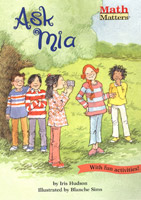
Ask Mia book cover

Grade 3
5 skill lessons · 3 math-through-reading

Math

Skill lessons

The mathematics the book carries, taught directly. Each lesson has printable workbook pages and a separate teacher key.

  • 1Four Rows, One Figure for Ten Votes
  • 2Forty Figures or Four
  • 3Thirty More Votes Than Advice
  • 4Ask Our Class
  • 5Figures to Votes and Back

Math + reading

Math through the reading

The same book, entered through a sentence it prints. Change one word in the reading and the numbers change with it.

  • 6How Many Figures Does the Whole Graph Need?
  • 7Dear Mia: Does Forty Mean Most?
  • 8Thirty More, Thirty Fewer

Reading

Reading and language lessons

The same book read as a text. What a word means in its sentence, how a character is shown, how the writing is put together - no mathematics.

  • 9Will Talk Means No: Reading the Words Around the Word
  • 10The Visor Goes On: Reading a Character Without Dialogue
  • 11Dear Left Out: Writing a Letter the Column Would Print
  • 12Oops, I Mean: Asking So Someone Wants to Say Yes
  • 13Be a Star, But Let Others Shine: Tracking Mia From First Line to Last
Download
PDF

Both exports carry any edits you have made. Edits are saved in this browser only — nobody else sees them, and they are not sent anywhere.

Skill lessons

5 lessons on the mathematics the book carries. Each lesson has printable workbook pages and a separate teacher key.

1. Four Rows, One Figure for Ten Votes Representation · Making a scaled pictograph with a key of ten

The book hands the class one line of results, forty, thirty, twenty and ten votes across four columns, and one line telling how a pictograph shrinks. Students take those four counts and build the graph themselves: one drawn figure for every ten votes, four rows, then the sentence that says what a figure is worth. The figures are theirs to space, draw and count, and a row is wrong if its figures do not match its count.

Full lesson — 20 minutes

  1. 1. Write the four counts on your strip (4 min)

    Listen for the results line and write the four counts in order on your strip: jokes and quizzes, wildlife, sports, advice. Say each number to your partner and point to the column it belongs to. Both of you must have the same four numbers before either of you draws anything.

    40 for jokes and quizzes. 30 for wildlife. 20 for sports. And only 10 for advice.
  2. 2. Draw the jokes row at ten votes a figure (6 min)

    Count 40 by tens, ten, twenty, thirty, forty, and raise a finger on each number word. Draw one stick figure for each finger you raised, one figure per square, and stop when your fingers stop. Check with your partner that four figures sit in the row and that no figure is squeezed between two squares.

    Word preview: pictograph

    Jokes and quizzes got 40 votes. So if we make one stick person stand for 10 votes, then four stick people will stand for 40 votes.
  3. 3. Finish the other three rows (6 min)

    Do the same for wildlife, sports and advice: count each number by tens, draw one figure for every ten, and line each row up under the one above it. Count the figures on the whole graph and tell your partner the total. Then count the votes by tens across the whole graph and check that you land on one hundred.

    Word preview: pictograph

    If you want to do a survey, talk to 100 kids, Mia told us, then make a pictograph.
  4. 4. Write the key and read it aloud (4 min)

    Write one sentence at the bottom of your graph: Each figure stands for 10 votes. Read it to a pair who has not seen your graph, then let them use it to say how many votes each row holds. If they name a wrong number, fix your sentence, not their answer.

    Word preview: key

    Every pictograph has a sentence that tells you how many items each symbol stands for. It's called the key. Example? Each person stands for 10 votes.

Short version — 9 minutes

  1. 1. Draw the jokes row at ten votes a figure (6 min)

    Count 40 by tens and raise a finger on each number word. Draw one stick figure for each finger, one per square, and stop where your fingers stop. Check with your partner that four figures sit in the row.

    Word preview: pictograph

    Jokes and quizzes got 40 votes. So if we make one stick person stand for 10 votes, then four stick people will stand for 40 votes.
  2. 2. Write the key and read it aloud (3 min)

    Write the sentence under your row: Each figure stands for 10 votes. Read it to a pair who has not seen the row and let them tell you how many votes it holds. If the number comes back wrong, fix your sentence.

    Word preview: key

    Every pictograph has a sentence that tells you how many items each symbol stands for. It's called the key. Example? Each person stands for 10 votes.

Three levels

Support
Work on a frame that already has the ten squares ruled and numbered, so spacing the figures is not part of the job. Everything else stays: you take the four counts off the results line, count each one by tens, draw every figure in all four rows, and write the key yourself.
At Grade
Rule your own rows on graph paper, take the four counts off the results line, and draw one figure for every ten votes across all four rows. Write the key underneath, then hand the graph to a pair who must recover all four vote counts from the rows and your sentence alone.
Extension
Redraw the same four counts with one figure standing for 5 votes. Count how many figures the graph needs now, say which key you would send to the printer and why, and name the thing that did not change when the figures doubled.

English learners

The key sentence is idiomatic: no word in stands for means equals. Practise one frame until it is automatic: Each figure stands for ten votes. Then swap the number and say it again: Each figure stands for five votes. Count your rows aloud in your first language first, then give your partner the total in English.

Materials

  • Survey strip with the four column names
  • Pencils
  • Graph paper ruled in ten squares across
  • Sentence strip for the key
  • Word cards: key, pictograph

Workbook

Print these for the class. They carry your edits, and they print in black and white.

Survey strip and key sentence half page

Ask Mia — Four Rows, One Figure for Ten Votes

Survey strip and key sentence

Write the four counts in order. Say each number to your partner.

  1. Jokes and quizzes ______________________
  2. Wildlife ______________________
  3. Sports ______________________
  4. Advice ______________________

Key sentence

Write the one sentence that tells what each figure is worth.

______________________________________

______________________________________

Graph frame with ten squares in every row Support full page

Ask Mia — Four Rows, One Figure for Ten Votes

Graph frame with ten squares in every row

Draw one stick figure for every ten votes. One figure per square.

Jokes and quizzes

12345678910

Wildlife

12345678910

Sports

12345678910

Advice

12345678910
Word cards: key, pictograph card set

Ask Mia — Four Rows, One Figure for Ten Votes

Word cards

Cut on the lines.

key pictograph
Teacher key (1 page) — not for the class
Teacher key: survey strip, graph frame and key sentence full page

Ask Mia — Four Rows, One Figure for Ten Votes

Teacher key: survey strip, graph frame and key sentence

The four counts and the rows they make

  • Jokes and quizzes: 40 votes, 4 figures
  • Wildlife: 30 votes, 3 figures
  • Sports: 20 votes, 2 figures
  • Advice: 10 votes, 1 figure

The finished graph holds 10 figures and 100 votes.

Key sentence

Expected: Each figure stands for 10 votes. Accept any sentence that names one figure and ten votes together, in either order.

Read for

A close key sentence says what one figure is worth, so a pair who has not seen the graph can recover every row from it. A loose one gives the total instead (there are 100 votes), gives a bare number (ten), or describes a single row rather than the graph.

Check each row against its count before the key sentence: a row is wrong if its figures do not match its count, and the advice row is worth checking first, since one figure there is easy to read as one vote.

Standards & curriculum

Choose your curriculum above to see the standards for this lesson.

2. Forty Figures or Four Concept · Choosing what one symbol stands for

In the book the kids draw a figure for every single vote, wear their hands out, and are told the graph is too big for the page. Students live that: they draw the forty-vote row one figure per vote, lay it against a page, then redraw it at ten votes a figure and find it fits in four. The concept is that a symbol's worth is a choice somebody makes, and that choosing ten shrinks the drawing without touching the data. Forty votes before, forty votes after, and the sentence at the bottom is what says so.

Full lesson — 20 minutes

  1. 1. Draw the row one figure per vote (6 min)

    Split the forty votes with your partner, twenty each, and draw one stick figure for every single vote along your paper strip. Keep the figures the same size, one per square. Tape the two strips end to end and count the figures by tens to be sure there are forty.

    40 for jokes and quizzes. 30 for wildlife. 20 for sports. And only 10 for advice.
  2. 2. Lay the strip on the page (3 min)

    Hold your forty-figure strip against the sheet standing in for the newspaper page. Mark the figure where the strip runs off the edge and count how many figures never made it onto the page. Tell your partner what has to change if this row must fit.

    Word preview: symbol

    Sorry, guys, she said, this is way too big to fit in the paper.
  3. 3. Redraw the row at ten votes a figure (6 min)

    On a fresh strip, draw one figure for every ten votes in that same forty. Count by tens as you draw, ten, twenty, thirty, forty, and stop at four figures. Lay the new strip on the page and check that it fits with room to spare.

    Word preview: pictograph

    want to make a pictograph smaller? Let each stick figure stand for more than one vote.
  4. 4. Say what changed and what stayed the same (5 min)

    Put the two strips side by side and finish the frame card twice, once for each strip. Then tell your partner one thing that changed between the strips and one thing that did not. The votes are the thing that did not change, so say the number when you say it.

    Word preview: key, symbol

    Every pictograph has a sentence that tells you how many items each symbol stands for. It's called the key. Example? Each person stands for 10 votes.

Short version — 9 minutes

  1. 1. Redraw the row at ten votes a figure (6 min)

    On a fresh strip, draw one figure for every ten votes in the forty. Count by tens as you draw and stop at four figures. Lay the strip on the page and check that it fits.

    Word preview: pictograph

    want to make a pictograph smaller? Let each stick figure stand for more than one vote.
  2. 2. Say what changed and what stayed the same (3 min)

    Finish the frame card for the long strip and for the short one. Then name one thing that changed and one thing that did not, with the number in your sentence.

    Word preview: key

    Every pictograph has a sentence that tells you how many items each symbol stands for. It's called the key. Example? Each person stands for 10 votes.

Three levels

Support
Draw your first strip for the ten advice votes instead of the forty jokes votes, so the one-figure-per-vote row is ten figures long rather than forty. Everything else stays: redraw at ten votes a figure, test both strips on the page, and say what changed and what did not.
At Grade
Draw the forty-vote row one figure per vote, test it against the page, redraw it at ten votes a figure, and state both what changed and what stayed the same with the numbers in your sentences.
Extension
Find the key that fits the whole graph, all four rows and one hundred votes, into ten figures. Then prove that a key of 20 will not work by testing it on the thirty-vote row, and say why a key has to work on every row and not just the longest one.

English learners

The work here is language-light: drawing, counting by tens, holding a strip against a page. A student new to English can do all of it today. The load is the phrase stands for, which sounds like is but is not, because the figure is not ten votes, it is standing in for them. Drill the two sentences as a pair until they come without thinking: On this strip one figure stands for one vote. On this strip one figure stands for ten votes. Talk the comparison through in your home language, then give the class both numbers in English.

Materials

  • Long paper strips
  • Pencils
  • A sheet of paper standing in for the newspaper page
  • Sentence frame card: On this strip one figure stands for ___ votes.
  • Word cards: key, pictograph, symbol

Workbook

Print these for the class. They carry your edits, and they print in black and white.

Sentence frame card: one figure stands for ___ votes card set

Ask Mia — Forty Figures or Four

Sentence frame card

Finish the sentence once for each strip. Cut on the lines.

Long strip: On this strip one figure stands for ______________ votes.


Short strip: On this strip one figure stands for ______________ votes.

Word cards: key, pictograph, symbol card set

Ask Mia — Forty Figures or Four

Word cards

Cut on the lines.

key pictograph symbol
Teacher key (1 page) — not for the class
Teacher key: sentence frame card full page

Ask Mia — Forty Figures or Four

Teacher key: sentence frame card

Expected on the two cards

  • Long strip (one figure per vote): 1 vote
  • Short strip (ten votes a figure): 10 votes

At Grade the strips carry the jokes and quizzes count: 40 figures on the long strip, 4 figures on the short one.

Support starts from the advice count instead: 10 figures on the long strip, 1 figure on the short one. The two numbers written on the card are the same, 1 vote and 10 votes.

What changed and what stayed the same

Changed: the number of figures and the length of the strip. Stayed the same: the votes, 40 of them at Grade and 10 for Support.

Read for

A close answer names the votes as the thing that did not change and says the number with it: it is still forty votes. A loose one says only that the strip got shorter or that there are fewer figures, which is the change, not the thing that held still.

Watch the card itself: a student who writes 40 on the long strip has written the count of the row, not what one figure stands for.

Standards & curriculum

Choose your curriculum above to see the standards for this lesson.

3. Thirty More Votes Than Advice Reasoning · Comparing categories and totalling a pictograph

The results line sets four counts against each other and the characters start arguing about them at once: one column takes the front page, one is waved off with the word only. Students do the arithmetic those arguments need. They read each count off their own rows, find how many more and how many fewer between two pairs of columns, add all four counts to one hundred, and then take a front-page position in a sentence that carries a number.

Full lesson — 20 minutes

  1. 1. Read the four counts off your rows (4 min)

    Use the key to turn each row of figures back into votes and write the four numbers on your comparison strip. Count the figures first, then count by tens. Do not look back at the results line until all four numbers are written, then check yourself against it.

    40 for jokes and quizzes. 30 for wildlife. 20 for sports. And only 10 for advice.
  2. 2. Find how many more and how many fewer (6 min)

    Lay the jokes and quizzes row directly under the advice row and count the figures that stick out past the short one. Turn those figures into votes, then write both sentences: jokes and quizzes got ___ more votes than advice, and advice got ___ fewer votes than jokes and quizzes. Do the same for wildlife against sports.

    Word preview: more, fewer

    kids like jokes and sports and wildlife not advice.
  3. 3. Add the four counts and check one hundred (5 min)

    Add your four vote counts in any order you like and say the running total aloud as you go. Compare your total with the number of kids the survey asked. If the two do not match, recount the row you are least sure of and find where the votes went.

    If you want to do a survey, talk to 100 kids, Mia told us, then make a pictograph.
  4. 4. Argue for the front page with a number in it (5 min)

    Tell your partner which column you would print on the front page and put at least two of your counts in the sentence. Your partner has to answer with counts too, not with what they would rather read. Finish by saying how many of the hundred kids did not pick the column you chose.

    Word preview: more

    On the front page, with jokes and quizzes?

Short version — 9 minutes

  1. 1. Find how many more and how many fewer (6 min)

    Lay the jokes and quizzes row under the advice row and count the figures that stick out. Turn them into votes and write both sentences, the more one and the fewer one, with the same number in each.

    Word preview: more, fewer

    kids like jokes and sports and wildlife not advice.
  2. 2. Argue for the front page with a number in it (3 min)

    Tell your partner which column you would print first and put two counts in the sentence. Finish by saying how many of the hundred kids did not pick it.

    Word preview: more

    On the front page, with jokes and quizzes?

Three levels

Support
Work one pair of rows, jokes and quizzes against advice, instead of two. Still line the rows up, still count the figures that stick out, still say both sentences with the number in them, and still name how many of the hundred kids did not pick your column.
At Grade
Compare both pairs of rows, write both directions of each comparison, add all four counts to one hundred, and defend a front-page choice with two of your counts inside the sentence.
Extension
Argue the case against your own front-page choice. Name the counts that make it the weaker call, use the sixty votes that went elsewhere, then say what count would have had to change, and by how much, for you to switch sides.

English learners

More than and fewer than put the two columns in opposite places in the sentence, and many languages mark the comparison on a different word, so a student can compute thirty correctly and still say it backwards. Model the two sentences as one unit, both of them every time: Jokes and quizzes got thirty more votes than advice. Advice got thirty fewer votes than jokes and quizzes. Work out which row is longer in your own language, then say both English sentences with a finger on each row.

Materials

  • A pictograph of the survey with four rows and a key
  • Pencils
  • Comparison sentence strips
  • Word cards: fewer, more

Workbook

Print these for the class. They carry your edits, and they print in black and white.

The survey pictograph: four rows and a key full page

Ask Mia — Thirty More Votes Than Advice

The survey pictograph

Jokes and quizzesWildlifeSportsAdvice

Key: Each figure stands for 10 votes.

Comparison strip and sentences full page

Ask Mia — Thirty More Votes Than Advice

Comparison strip and sentences

Count the figures in each row, then count by tens. Write the four vote counts.

  1. Jokes and quizzes ______________________
  2. Wildlife ______________________
  3. Sports ______________________
  4. Advice ______________________

Comparison sentences

Jokes and quizzes got ____________ more votes than advice.

Advice got ____________ fewer votes than jokes and quizzes.

Wildlife got ____________ more votes than sports.

Sports got ____________ fewer votes than wildlife.

Word cards: fewer, more card set

Ask Mia — Thirty More Votes Than Advice

Word cards

Cut on the lines.

fewer more
Teacher key (1 page) — not for the class
Teacher key: comparison strip and sentences full page

Ask Mia — Thirty More Votes Than Advice

Teacher key: comparison strip and sentences

The four counts read off the rows

  • Jokes and quizzes: 4 figures, 40 votes
  • Wildlife: 3 figures, 30 votes
  • Sports: 2 figures, 20 votes
  • Advice: 1 figure, 10 votes

The four sentences

  • Jokes and quizzes got 30 more votes than advice.
  • Advice got 30 fewer votes than jokes and quizzes.
  • Wildlife got 10 more votes than sports.
  • Sports got 10 fewer votes than wildlife.

The total

40 and 30 and 20 and 10 make 100, the number of kids the survey asked. A total that is not 100 points at a row read from the wrong number of figures.

The front page argument

There is no single right column here. A strong answer names a column, carries at least two of the counts inside the sentence, and finishes with the number of the hundred kids who did not pick it: 60 for jokes and quizzes, 70 for wildlife, 80 for sports, 90 for advice.

Read for

A close pair of comparison sentences carries the same number both ways, 30 in the more sentence and 30 in the fewer sentence, with the two columns swapped. A loose pair changes the number, or keeps the columns in the same order so the fewer sentence says the opposite of what the rows show.

In the argument, listen for counts doing the work. Saying advice is boring is a preference; saying advice got 30 fewer votes than jokes and quizzes is the lesson.

Standards & curriculum

Choose your curriculum above to see the standards for this lesson.

4. Ask Our Class Application · Collecting survey data and choosing a workable key

In the story the kids ask around, tally what they hear, and only then draw. Students run the same job on their own room with the book's four columns, then meet the problem the book never has to face: a class-sized survey rarely divides by ten. Students test candidate keys against all four of their counts, keep the largest one that leaves no half figures, and draw their rows with it.

Full lesson — 20 minutes

  1. 1. Ask every classmate and mark one tally (6 min)

    Take the book's four columns to every person in the room and mark exactly one tally for each classmate's answer. Say the four choices the same way every time so nobody is answering a different question. Mark your own answer last and check that nobody got marked twice.

    Word preview: survey

    Why don't we ask around, said Joey?
  2. 2. Count each tally group and write the four numbers (3 min)

    Count each group of tallies by fives and write the four numbers at the top of your sheet. Add the four numbers and check the total against the number of people you asked. A total that is too big means somebody was marked twice.

    Yes, take a survey.
  3. 3. Test keys and choose one (5 min)

    Try 1, then 2, then 5, then 10 against all four of your counts. A key only works if every one of your counts can be drawn in whole figures, so cross out any key that leaves half a figure in any row. Keep the largest key still standing and tell your partner which count knocked the bigger ones out.

    Word preview: key

    want to make a pictograph smaller? Let each stick figure stand for more than one vote.
  4. 4. Draw your rows, write your key, read it to another pair (6 min)

    Work out how many figures each count needs at the key you kept, and draw that many in its row. Write your key sentence under the graph. Hand the graph to another pair. Have them tell you all four vote counts from your rows alone. If a number comes back wrong, find out whether the row or the sentence is at fault.

    Word preview: pictograph, key

    Every pictograph has a sentence that tells you how many items each symbol stands for. It's called the key. Example? Each person stands for 10 votes.

Short version — 9 minutes

  1. 1. Count each tally group and write the four numbers (3 min)

    Take the tally sheet your class filled in and count each group by fives. Write the four numbers at the top and check their total against the number of people asked.

    Word preview: votes

    Yes, take a survey.
  2. 2. Draw your rows, write your key, read it to another pair (6 min)

    Work out how many figures each count needs at the key on the card, draw that many in each row, and write your key sentence underneath. Hand it to another pair and have them read all four counts back to you.

    Word preview: pictograph, key

    Every pictograph has a sentence that tells you how many items each symbol stands for. It's called the key. Example? Each person stands for 10 votes.

Three levels

Support
Ask six classmates instead of the whole room, so the counting stays small and the asking is over quickly. You still test 1, 2, 5 and 10 against your four counts, still keep the largest key that gives whole figures, still draw every row and write the sentence.
At Grade
Survey the whole class, test all four keys against your counts, draw the rows with the largest key that leaves no half figures, and hand the graph to another pair to read back.
Extension
Name exactly which of your counts blocked each key you crossed out. Then find what one classmate's answer would have to change to for a key of 5 to work, and say why changing one count changes which keys the whole graph can use.

English learners

Asking the same question twenty-five times is heavy language work and light mathematics, so rehearse the question itself word for word before the survey starts and carry a card with the four column names on it to point at. Tallying, counting by fives and dividing by the key transfer without English. One frame carries the whole survey: Which one would you read, jokes and quizzes, wildlife, sports, or advice? Record your counts in whatever numerals you write fastest, and give the four totals to the class in English.

Materials

  • Tally sheet with the four column names
  • Pencils
  • Key-testing card listing 1, 2, 5 and 10
  • Graph paper ruled in ten squares across
  • Sentence strip for the key
  • Word cards: key, pictograph, survey

Workbook

Print these for the class. They carry your edits, and they print in black and white.

Tally sheet with the four column names full page

Ask Mia — Ask Our Class

Tally sheet

Mark one tally for each classmate’s answer. Count each group by fives.

Jokes and quizzes

Count ____________________

Wildlife

Count ____________________

Sports

Count ____________________

Advice

Count ____________________

Check

The four counts added ____________________

People asked ____________________

Key-testing card and key sentence strip half page

Ask Mia — Ask Our Class

Key-testing card and key sentence strip

Try each key on all four of your counts, in the order on your tally sheet. Cross out a key that leaves half a figure.

  • Key of 1: figures needed ________ ________ ________ ________
  • Key of 2: figures needed ________ ________ ________ ________
  • Key of 5: figures needed ________ ________ ________ ________
  • Key of 10: figures needed ________ ________ ________ ________

The largest key still standing __________________

Key sentence strip

Write the sentence that tells what one figure stands for.

______________________________________

______________________________________

Word cards: key, pictograph, survey card set

Ask Mia — Ask Our Class

Word cards

Cut on the lines.

key pictograph survey
Teacher key (1 page) — not for the class
Teacher key: tally sheet and key-testing card full page

Ask Mia — Ask Our Class

Teacher key: tally sheet and key-testing card

There is no fixed answer here: the counts are this room’s

Every number on both pages comes from the class survey, so check the working rather than the values.

Tally sheet

The four counts added must equal the number of people asked. A total larger than the number asked means somebody was marked twice; a total smaller means somebody was missed, or a group was counted short by fives.

Key-testing card

A key works only when all four counts divide by it with nothing left over. A key of 1 always works and always survives, so it is the floor, not the answer. The answer is the largest key that leaves whole figures in every row, and the count that blocks the bigger keys is the one that is not a multiple of them.

Figures needed in a row = that row’s count divided by the key. At a key of 5, a count of 20 needs 4 figures, while a count of 7 cannot be drawn in whole figures at all, so the key of 5 falls.

Key sentence

Expected: a sentence naming one figure and the number of votes it stands for, using the key the pair kept. Accept any wording another pair can read the rows with.

Read for

A close response tests every key against all four counts and can point at the count that knocked each key out. A loose one picks 10 because the book used 10, or crosses a key out after checking only the longest row.

When another pair reads a number back wrong, the fault is either a row with the wrong number of figures or a key sentence naming the wrong number. Have them check the sentence first, since one wrong sentence makes all four rows read wrong.
Standards & curriculum

Choose your curriculum above to see the standards for this lesson.

5. Figures to Votes and Back Fluency · Multiplying and dividing by ten within one hundred

One figure is fixed at ten votes, and every row's arithmetic is left to the reader. Students drill that conversion until it is instant in both directions: four figures to forty votes, thirty votes to three figures, ten figures to the whole hundred. The cards carry drawn figures on one side of the deck and numerals on the other, and the only thing being raced is the arithmetic.

Full lesson — 20 minutes

  1. 1. Count figure cards by tens (5 min)

    Turn over a figure card, count the figures on it by tens, and say the vote count before your partner can say it with you. Stack the cards you named without hesitating in one pile and the ones you had to recount in another. Go back through the recount pile twice.

    Each person stands for 10 votes.
  2. 2. Turn vote cards into figures (5 min)

    Draw a vote card, 10, 20, 30, 40 or 100, and say how many figures that row needs before you touch anything. Then check yourself by counting up by tens on your fingers. Say the whole sentence every time: forty votes needs four figures.

    Word preview: key

    Jokes and quizzes got 40 votes. So if we make one stick person stand for 10 votes, then four stick people will stand for 40 votes.
  3. 3. Race your partner both directions (6 min)

    One of you holds the figure cards and the other holds the vote cards, and you alternate. Answer in the direction the card asks, figures to votes or votes to figures. Swap decks halfway so you both work in both directions, and keep a mark for every answer you got on the first try.

    Word preview: key

    Every pictograph has a sentence that tells you how many items each symbol stands for. It's called the key. Example? Each person stands for 10 votes.
  4. 4. Write the four number sentences (4 min)

    Write two number sentences for the jokes row, 4 x 10 = 40 and 40 divided by 10 = 4, then write the same two for the wildlife row. Read each one aloud with the words figures and votes in it. Circle the 10 in every sentence and say out loud what that 10 is.

    40 for jokes and quizzes. 30 for wildlife. 20 for sports. And only 10 for advice.

Short version — 9 minutes

  1. 1. Race your partner both directions (6 min)

    One holds figure cards, one holds vote cards, and you alternate. Answer in the direction the card asks and swap decks halfway. Keep a mark for every first-try answer.

    Word preview: key

    Every pictograph has a sentence that tells you how many items each symbol stands for. It's called the key. Example? Each person stands for 10 votes.
  2. 2. Write the four number sentences (3 min)

    Write 4 x 10 = 40 and 40 divided by 10 = 4 for the jokes row, then the same two for the wildlife row. Circle the 10 in each and say what it is.

    Word preview: votes

    40 for jokes and quizzes. 30 for wildlife. 20 for sports. And only 10 for advice.

Three levels

Support
Work the figures-to-votes direction only, with the cards face up so you can touch each figure as you count by tens. The full deck, the two piles and the first-try marks all stay; the reverse direction waits until the counts come without hesitating.
At Grade
Work both directions from the full deck, answering before you count wherever you can, and write both number sentences for two of the rows.
Extension
Add a card for the whole graph, ten figures and one hundred votes. Then work out what a figure would have to stand for if one hundred votes had to fit in five figures, and check your answer by counting your new key up to one hundred.

English learners

Tens facts are the most transferable mathematics in this book: a student who learned them in another language already has them, and the numerals on the cards are the same ones. What is new is putting the two nouns, figures and votes, in the right slots. Rehearse one frame in both directions until it is automatic: Four figures stand for forty votes. Forty votes need four figures. Count aloud in your strongest language during the race if that is faster for you, and give the answer sentence in English.

Materials

  • Figure-row cards showing one, two, three, four and ten figures
  • Vote cards showing 10, 20, 30, 40 and 100
  • Number sentence strips
  • Pencils
  • Word cards: key

Workbook

Print these for the class. They carry your edits, and they print in black and white.

Figure cards and vote cards card set

Ask Mia — Figures to Votes and Back

Figure cards and vote cards

Cut on the lines. Keep the two decks apart.

Figure cards

Vote cards

30 votes 100 votes 10 votes 40 votes 20 votes
Number sentence strips half page

Ask Mia — Figures to Votes and Back

Number sentence strips

Write two number sentences for each row. Circle the 10 in every sentence.

Jokes row

______________________________________

______________________________________

Wildlife row

______________________________________

______________________________________

Word cards: key card set

Ask Mia — Figures to Votes and Back

Word cards

Cut on the lines.

key
Teacher key (1 page) — not for the class
Teacher key: figure cards, vote cards and number sentences full page

Ask Mia — Figures to Votes and Back

Teacher key: figure cards, vote cards and number sentences

Figure cards, counted by tens

  • 1 figure: 10 votes
  • 2 figures: 20 votes
  • 3 figures: 30 votes
  • 4 figures: 40 votes
  • 10 figures: 100 votes

Vote cards, turned into figures

  • 10 votes: 1 figure
  • 20 votes: 2 figures
  • 30 votes: 3 figures
  • 40 votes: 4 figures
  • 100 votes: 10 figures

Number sentences

  • Jokes row: 4 x 10 = 40 and 40 divided by 10 = 4
  • Wildlife row: 3 x 10 = 30 and 30 divided by 10 = 3

The circled 10 is the key: the number of votes one figure stands for. It is the same 10 in all four sentences.

Read for

A close answer says what the 10 is, not just where it is: it is what one figure stands for. A loose one names the row, calls it the answer, or reads it as ten figures.

In the race, listen for the sentence keeping both nouns in the right slots: four figures stand for forty votes, forty votes need four figures. A student who says four votes stand for forty figures has the arithmetic and not the meaning, and the cards alone will not catch it.

Standards & curriculum

Choose your curriculum above to see the standards for this lesson.

Math through the reading

The mathematics is reached through a sentence the book prints: change one word in the reading and the numbers change with it. These carry their own standards, matched against these lessons rather than inherited from the skill ones.

6. How Many Figures Does the Whole Graph Need? Integrated · Students find a number the book never says, the figures in the finished pictograph, and must read out the sentence that funds it before they may say it.

Students find a number the book never says, the figures in the finished pictograph, and must read out the sentence that funds it before they may say it.

Full lesson — 20 minutes

  1. 1. Find the sentence that fixes what a figure is worth (5 min)

    Students hunt the reread text for the line that says what one figure is worth, mark it, and say why the results line alone cannot answer the question.

  2. 2. Work out the length of each row (6 min)

    Students divide each of the four counts by ten by counting up in tens, and draw the wildlife, sports and advice rows to the lengths they find.

  3. 3. Say the sentence, then say the number (5 min)

    Each pair reads its funding sentence aloud, states what that sentence rules out, and only then gives the total number of figures in the whole graph.

  4. 4. Test the answer against a key the book did not use (4 min)

    Students recount the whole graph as it would be at five votes a figure and say which number changed and which did not.

Short version — 9 minutes

  1. 1. Find the sentence that fixes what a figure is worth (5 min)

    Students hunt the reread text for the line that says what one figure is worth, mark it, and say why the results line alone cannot answer the question.

  2. 2. Say the sentence, then say the number (5 min)

    Each pair reads its funding sentence aloud, states what that sentence rules out, and only then gives the total number of figures in the whole graph.

Three levels

Support
Choose between two sentences the teacher rereads aloud instead of searching the page for one. Only one of them fixes what a figure is worth. The arithmetic is unchanged: still divide all four counts by the key, still draw the three missing rows, still total the graph.
At grade
Find the funding sentence in the text without help, compute all four row lengths and the total, and read the sentence aloud before giving the number.
Extension
Say what the whole graph would total if a figure stood for five votes, then explain why the figures doubled while the votes stayed at one hundred. Then find a key this survey could not use at all and name the row that blocks it.

English learners

The arithmetic is the accessible half of this lesson and the citation is the hard half. Dividing by ten transfers; saying what a sentence rules out does not, because it needs a negative and a comparison in one breath. Rehearse two frames and let students lean on them: This sentence tells me one figure stands for ten votes. This sentence does not tell me how many figures the graph needs. Students may point at the sentence rather than read the whole of it aloud, and may reason through the division in their strongest language before giving the total in English.

Materials

  • Graph paper ruled in ten squares across
  • Pencils
  • Two-part answer cards with a line for the number and a line for the sentence
  • The book, reread aloud at the results line and at the key line

Standards & curriculum

Choose your curriculum above to see the standards for this lesson.

IB PYP developmental alignment

Phases are not grades. The Primary Years Programme is a developmental continuum and your school places each student in a phase, so this names the strand the lesson works in and the phases it could sit across. Confirm against your own school's placement.

Number · Phases 1–4

Phase 1
Develop meaning for counting, quantity, number relationships, simple operations, and early fractions in meaningful contexts.
Phase 2
Develop place value and whole-number operations, mental strategies, fractions, and mathematical language for practical problem solving.
Phase 3
Extend number understanding to larger numbers, fractions, decimals, percentages, and efficient strategies for the four operations.
Phase 4
Apply whole-number, fraction, decimal, percentage, ratio, and proportion concepts with increasingly efficient and flexible computation.

Data handling · Phases 1–4

Phase 1
Collect and organize simple information, sort objects by attributes, represent data in simple displays, and discuss chance in everyday events.
Phase 2
Collect, organize, represent, and interpret data in multiple graph forms; compare likelihood using appropriate probability language.
Phase 3
Collect, display, and interpret data using graphs and scale; summarize data and explore experimental probability.
Phase 4
Select effective data displays, analyze data using common statistical measures, and compare theoretical with experimental probability.
7. Dear Mia: Does Forty Mean Most? Integrated · Students settle whether forty out of a hundred votes means most kids wanted jokes, and write the answer to Mia's column with their counts inside it.

Students settle whether forty out of a hundred votes means most kids wanted jokes, and write the answer to Mia's column with their counts inside it.

Full lesson — 20 minutes

  1. 1. Recover the four counts from your rows (4 min)

    Students read each column's votes off their own pictograph rows by counting on in tens and write the four counts where they can see them.

  2. 2. Add up the kids who did not pick your column (5 min)

    Students add the three counts they are not arguing for, compare that total with the count they are, and find the difference between the two.

  3. 3. Take a position out loud to a partner (5 min)

    Each student says which column should lead the paper and gives two counts as the reason; the partner must answer with counts of their own rather than a preference.

  4. 4. Write the letter to Mia with your counts in it (6 min)

    Students write to Mia taking their position, and every letter has to carry at least two counts from the graph and one difference the writer computed.

Short version — 9 minutes

  1. 1. Add up the kids who did not pick your column (5 min)

    Students add the three counts they are not arguing for, compare that total with the count they are, and find the difference between the two.

  2. 2. Write the letter to Mia with your counts in it (6 min)

    Students write to Mia taking their position, and every letter has to carry at least two counts from the graph and one difference the writer computed.

Three levels

Support
Write from the frame the lesson supplies, Dear Mia, I think ___ should go on the front page because ___ kids picked it and ___ kids picked something else, filling the blanks from your own graph. The arithmetic is unchanged: you still add the three other counts and still find the difference.
At grade
Compute the sixty, compare it with the forty, rehearse a position with a partner, and write an unframed letter carrying two counts and a difference.
Extension
Write the strongest letter you can against your own position, using the counts that hurt it. Then say which of the two letters you would actually send, and name what would have to change in the numbers before you would send the other one.

English learners

The arithmetic transfers and the argument syntax does not. Because is the hinge of every letter here, and many languages place the reason before the claim rather than after it, so a student who reasons perfectly may produce a letter an English reader reads as backwards. Rehearse the frame in the order the letter needs it: I think ___ because ___ kids picked it. Students may argue the position with their partner in their strongest language first; the letter is written in English and the numerals inside it are already shared.

Materials

  • The four pictograph rows the class built
  • Pencils
  • Letter paper headed Dear Mia
  • The book, reread aloud at the results line and at the front-page question

Standards & curriculum

Choose your curriculum above to see the standards for this lesson.

IB PYP developmental alignment

Phases are not grades. The Primary Years Programme is a developmental continuum and your school places each student in a phase, so this names the strand the lesson works in and the phases it could sit across. Confirm against your own school's placement.

Number · Phases 1–4

Phase 1
Develop meaning for counting, quantity, number relationships, simple operations, and early fractions in meaningful contexts.
Phase 2
Develop place value and whole-number operations, mental strategies, fractions, and mathematical language for practical problem solving.
Phase 3
Extend number understanding to larger numbers, fractions, decimals, percentages, and efficient strategies for the four operations.
Phase 4
Apply whole-number, fraction, decimal, percentage, ratio, and proportion concepts with increasingly efficient and flexible computation.

Data handling · Phases 1–4

Phase 1
Collect and organize simple information, sort objects by attributes, represent data in simple displays, and discuss chance in everyday events.
Phase 2
Collect, organize, represent, and interpret data in multiple graph forms; compare likelihood using appropriate probability language.
Phase 3
Collect, display, and interpret data using graphs and scale; summarize data and explore experimental probability.
Phase 4
Select effective data displays, analyze data using common statistical measures, and compare theoretical with experimental probability.
8. Thirty More, Thirty Fewer Integrated · Students compute the gap between two rows of their graph and say it both ways, with the figures in front of them proving the two sentences are one fact.

Students compute the gap between two rows of their graph and say it both ways, with the figures in front of them proving the two sentences are one fact.

Full lesson — 20 minutes

  1. 1. Cut two rows loose and line them up (5 min)

    Students cut the jokes and quizzes row and the advice row off their graph, lay them one under the other with the left ends flush, and count the figures that overhang.

  2. 2. Turn the overhang into votes (4 min)

    Students count the overhanging figures on in tens to name the gap in votes, and check it against the two counts by subtracting.

  3. 3. Say it both ways with your finger on the rows (6 min)

    Each student says the relation forwards and then backwards, touching the longer row on one sentence and the shorter row on the other, and the partner stops any reversal that keeps the first sentence's comparison word.

  4. 4. Write both sentences and swap with another pair (5 min)

    Students write the pair of sentences on strips and trade with another pair, who must lay the strips against their own rows and say whether both can be true at once.

Short version — 9 minutes

  1. 1. Say it both ways with your finger on the rows (6 min)

    Each student says the relation forwards and then backwards, touching the longer row on one sentence and the shorter row on the other, and the partner stops any reversal that keeps the first sentence's comparison word.

  2. 2. Write both sentences and swap with another pair (5 min)

    Students write the pair of sentences on strips and trade with another pair, who must lay the strips against their own rows and say whether both can be true at once.

Three levels

Support
Build the sentences from word cards rather than from nothing: the two column names, the number, and the two comparison words on separate cards to place in order. You still cut the rows, still count the overhang, and still produce both directions.
At grade
Compute the gap from the two rows you lined up, say and write both directions unaided, and check another pair's strips against your own arrangement.
Extension
Find the two pairs of columns whose gap is the same ten votes and say why two pairs that look nothing alike can be equally far apart. Then say the jokes and advice relation a second way, using how many times as many, and prove it on the figures.

English learners

Comparative syntax is where this lesson will cost English learners the most, and it has nothing to do with their arithmetic. Many languages mark the comparison on a separate word or invert which noun comes first, so a student who counts the gap perfectly can still produce the reversal with the wrong word. Teach the two sentences as one inseparable pair and rehearse them together every single time: Jokes and quizzes got thirty more votes than advice. Advice got thirty fewer votes than jokes and quizzes. Decide which row is longer in your strongest language, then say both English sentences with a finger on each row.

Materials

  • The four pictograph rows the class built
  • Scissors
  • Comparison sentence strips
  • Pencils
  • The book, reread aloud at the results line

Standards & curriculum

Choose your curriculum above to see the standards for this lesson.

IB PYP developmental alignment

Phases are not grades. The Primary Years Programme is a developmental continuum and your school places each student in a phase, so this names the strand the lesson works in and the phases it could sit across. Confirm against your own school's placement.

Number · Phases 1–4

Phase 1
Develop meaning for counting, quantity, number relationships, simple operations, and early fractions in meaningful contexts.
Phase 2
Develop place value and whole-number operations, mental strategies, fractions, and mathematical language for practical problem solving.
Phase 3
Extend number understanding to larger numbers, fractions, decimals, percentages, and efficient strategies for the four operations.
Phase 4
Apply whole-number, fraction, decimal, percentage, ratio, and proportion concepts with increasingly efficient and flexible computation.

Data handling · Phases 1–4

Phase 1
Collect and organize simple information, sort objects by attributes, represent data in simple displays, and discuss chance in everyday events.
Phase 2
Collect, organize, represent, and interpret data in multiple graph forms; compare likelihood using appropriate probability language.
Phase 3
Collect, display, and interpret data using graphs and scale; summarize data and explore experimental probability.
Phase 4
Select effective data displays, analyze data using common statistical measures, and compare theoretical with experimental probability.

Reading and language lessons

5 lessons on the reading and language the book carries - what a word means in its sentence, how a character is shown, how a text is built. No mathematics: these are matched against the English language arts curricula, which are a different and smaller set than the mathematics ones.

9. Will Talk Means No: Reading the Words Around the Word Language · Context Clues

The book hands students a character who translates for them. Amy asks to be a reporter, gets the answer will talk, and states flatly in the next sentence what it means. Students trace how she got there, then run the same move on crisply, a word the book never defines. The work is deciding what a word means from the sentences packed around it, and saying which words did the deciding.

Full lesson — 20 minutes

  1. 1. Read Amy's translation aloud (5 min)

    Read the passage twice with a partner, once each. Underline the four words Amy repeats from Mia's answer, then put your finger on the sentence where Amy tells you what those words mean. Say aloud what Amy asked for and what she actually got.

    Word preview: reporter

    So Amy, do you want to be the photographer? Mia handed me her digital camera. You can use this. Cool, I said. Can I also be a reporter? Come to the meeting said Mia will talk. Will talk means no.
  2. 2. Name the clue that carried the meaning (5 min)

    Nothing in the passage says the word no out loud, so find what told Amy anyway. Write the one sentence from the second passage that explains why will talk means no when Mia says it. Then finish this frame in writing: Amy knows will talk means no because ___.

    Word preview: meaning

    Mia likes to do things her way, and her way works most of the time.
  3. 3. Test the strategy on a second phrase (6 min)

    Read the printed passage and circle the word crisply. Nobody defines it. List two things happening around it that tell you how Mia sounds, then write your own meaning for crisply in under eight words. Trade logs with a partner and mark one place their clue is stronger than yours.

    Word preview: crisply

    You say every problem has a solution, I said? Why don't you help us find one? I'm busy, Mia told me crisply.
  4. 4. Defend one meaning to the class (4 min)

    Choose either will talk or crisply. Say your meaning in one sentence, then say the exact words from the printed passage that made you decide. Listeners hold up a thumb only when they hear the speaker name words that are actually on the page.

    So Amy, do you want to be the photographer? Mia handed me her digital camera. You can use this. Cool, I said. Can I also be a reporter? Come to the meeting said Mia will talk. Will talk means no.
    Mia likes to do things her way, and her way works most of the time.
    You say every problem has a solution, I said? Why don't you help us find one? I'm busy, Mia told me crisply.

Short version — 9 minutes

  1. 1. Read Amy's translation aloud (4 min)

    Read the passage once with a partner. Put your finger on the sentence where Amy tells you what Mia's four words mean, and say aloud what Amy asked for and what she got.

    Word preview: reporter

    So Amy, do you want to be the photographer? Mia handed me her digital camera. You can use this. Cool, I said. Can I also be a reporter? Come to the meeting said Mia will talk. Will talk means no.
  2. 2. Test the strategy on a second phrase (5 min)

    Read the printed passage and circle crisply. Name two things happening around it that tell you how Mia sounds, then write your own meaning for crisply in under eight words.

    Word preview: crisply

    You say every problem has a solution, I said? Why don't you help us find one? I'm busy, Mia told me crisply.

Three levels

Support
Stay with will talk only. Read the printed passage with a partner and answer two questions aloud before writing: what did Amy ask for, and did she get it? Then copy the sentence Will talk means no. into the log and add three words of your own about how Mia sounds.
At Grade
Work both phrases. For each, write your meaning and the exact words from the printed passage that led you there, and keep only the clue you can point to on the page.
Extension
After both phrases, write a sentence of your own in which crisply would be the wrong word for Mia, and explain in one line what would have to change in the scene to make it wrong.

English learners

Will talk means no is an idiom: the words say the opposite of the meaning, and that trick does not survive translation. Many languages have their own version, so invite students to say a phrase from their strongest language that means no without the word no, then say what it literally says. That transfer is the whole skill. Rehearsable frame: The words say ___, but Amy knows it means ___.

Materials

  • Ask Mia, the passage printed in this step
  • pencil
  • context clue log
  • Word cards: reporter, meaning, crisply

Standards & curriculum

Choose your curriculum above to see the standards for this lesson.

10. The Visor Goes On: Reading a Character Without Dialogue Reading · Character Motive from Actions

Three times this book shows Mia getting her way without arguing for it: she puts on a visor, she stares, she grips the visor with both hands. Each time the transcript gives the action and then the other child's response, and never a sentence explaining either. Students build a two-column chart of move and result, then state Mia's motive in words she never says, pointing to the action that proves it.

Full lesson — 20 minutes

  1. 1. Mark what the visor does (5 min)

    Read the printed passage aloud in a group of three, one sentence each, around and around until it runs out. Underline every thing that happens after the visor goes on. Nobody in the passage explains the visor, so say aloud to your group what wearing it tells the other kids to do.

    Word preview: visor

    Mia put on a visor. I've got a lot to do when I'm wearing this. No one talks. The room grew quiet. The meeting's over.
  2. 2. Track a second wordless move (6 min)

    Read the printed passage. Find the one sentence where Mia does something without speaking, and the very next sentence, which is Joey's answer to it. Write both on the motive chart in two columns: what Mia did, what it made Joey do. Then write in one sentence what Mia wanted, using no word that appears in her dialogue.

    Word preview: slumped

    Joey jumped up. Wood tucks, how about a wildlife column? Today I saw a mallard duck sitting in a puddle on the soccer field. And that duck is a dope, said Mia. I threw it a potato chip and it ran into the bushes. Maybe it's building a nest, said Joey. Mia stared at him on the soccer field. Joey slumped back into his chair.
  3. 3. Find where the signal stops working (5 min)

    Read the printed passage and put a star on the moment Amy refuses the visor. On your chart, add a third row: what Mia did, and what it made Amy do this time. Tell your partner in one sentence why the same move gets a different result, and point at the words that prove it.

    Word preview: demanded

    It was time for me to listen to me for a change. I stormed inside. Take that off, I demanded. Mia held on to her visor with both hands.
  4. 4. Say what Mia wants and how you know (4 min)

    Each student says one sentence in this shape: Mia wants ___, and I know because she ___. The second half must name an action from a printed passage, never a feeling and never a line she speaks. The group asks whoever cannot name the action to try a different row of the chart.

    Mia put on a visor. I've got a lot to do when I'm wearing this. No one talks. The room grew quiet. The meeting's over.
    Joey jumped up. Wood tucks, how about a wildlife column? Today I saw a mallard duck sitting in a puddle on the soccer field. And that duck is a dope, said Mia. I threw it a potato chip and it ran into the bushes. Maybe it's building a nest, said Joey. Mia stared at him on the soccer field. Joey slumped back into his chair.
    It was time for me to listen to me for a change. I stormed inside. Take that off, I demanded. Mia held on to her visor with both hands.

Short version — 9 minutes

  1. 1. Mark what the visor does (4 min)

    Read the printed passage aloud with a partner. Underline everything that happens after the visor goes on, then say what wearing it tells the other kids to do.

    Word preview: visor

    Mia put on a visor. I've got a lot to do when I'm wearing this. No one talks. The room grew quiet. The meeting's over.
  2. 2. Track a second wordless move (5 min)

    Read the printed passage. Find the sentence where Mia acts without speaking and the sentence right after it. Write both on the chart, then say in one sentence what Mia wanted, using none of her own words.

    Word preview: slumped

    Joey jumped up. Wood tucks, how about a wildlife column? Today I saw a mallard duck sitting in a puddle on the soccer field. And that duck is a dope, said Mia. I threw it a potato chip and it ran into the bushes. Maybe it's building a nest, said Joey. Mia stared at him on the soccer field. Joey slumped back into his chair.

Three levels

Support
Work the visor passage only, and work it orally first. Answer three questions in order with your finger on the words: what did Mia put on, what did the room do, who decided the meeting was over? Then write one row of the chart.
At Grade
Build all three rows and write the motive sentence for each, naming the action every time. Keep only the motive you can tie to a printed action.
Extension
Compare the third row to the first two and write two sentences on why the visor fails on Amy when it worked on the room, using words from both printed passages.

English learners

The visor carries meaning by convention, not by language, and the convention is local to this classroom. Say plainly what it means here before the reading. Then ask students for a wordless signal from home or from their strongest language that tells people to stop talking, and let them show it. Rehearsable frame: She did not say ___, but she ___, so the others ___.

Materials

  • Ask Mia, the passage printed in this step
  • pencil
  • motive chart
  • Word cards: visor, slumped, demanded

Standards & curriculum

Choose your curriculum above to see the standards for this lesson.

11. Dear Left Out: Writing a Letter the Column Would Print Writing · Writing in a Known Form: The Advice Letter

This book prints its own genre samples. Three letters arrive at Mia's column, each in four parts, each signed with a made-up name that states the trouble. Students take two of them apart, name what each part does, then write their own letter to the column in the same form. The reply is deliberately not their job here, so the whole demand sits on stating a problem clearly to a stranger.

Full lesson — 20 minutes

  1. 1. Cut the letter into its four parts (6 min)

    Read the printed pair aloud with a partner, one of you the writer, one of you Mia. Draw a line across the page at each of the four places the letter changes job: who it is to, what the trouble is, the signature that hides the writer's name, and where the answer starts. Label the four strips on the letter-parts handout.

    Word preview: advice

    Dear Mia, someone I know is a ball hog. How can I make her be a better team player? Left out. Dear left out. Be a winner, not a whiner. Learn to play better. Then maybe she'll pass you the ball. Mia.
  2. 2. Check the parts against a second letter (5 min)

    Read the printed pair and mark the same four parts. Two of the parts sit in a different order than in the first letter, so write on the handout which two, and copy the words that show it. Tell your partner what the writer chose to be called and why that name fits the trouble.

    Word preview: signature

    Dear Mia, I really want a goat, but my mom says no. Petless. Dear petless, make a chart showing reasons for having a goat and name the goat after your mother. That's how I got my pony. Mia.
  3. 3. Write a letter to the column (6 min)

    Read the printed note Mia herself sent. Now write your own letter to an advice column about a small trouble you are willing to share, using all four parts in order and a made-up signature that names the trouble the way Left out and Petless do. Four to six sentences. Do not write the reply.

    Word preview: column

    Dear Amy, I feel like I always have to be the star. It ruins my friendships. Any advice?
  4. 4. Trade letters and check the four parts (3 min)

    Swap letters with a partner. Read theirs once and point to each of the four parts on their page, saying its job aloud. If a part is missing, say which one and hand the letter back for one minute of fixing.

Short version — 9 minutes

  1. 1. Cut the letter into its four parts (5 min)

    Read the printed pair aloud with a partner, one of you the writer, one of you Mia. Draw a line at each of the four places the letter changes job, and label the strips on the handout.

    Word preview: advice

    Dear Mia, someone I know is a ball hog. How can I make her be a better team player? Left out. Dear left out. Be a winner, not a whiner. Learn to play better. Then maybe she'll pass you the ball. Mia.
  2. 2. Write a letter to the column (4 min)

    Read the printed note Mia sent, then write your own four-part letter about a small trouble, with a made-up signature that names it. Four sentences. Do not write the reply.

    Word preview: column

    Dear Amy, I feel like I always have to be the star. It ruins my friendships. Any advice?

Three levels

Support
Use the first printed letter as a model held open beside you and write over the four labelled boxes on the handout, one sentence per box. Borrow the opening Dear Mia, and the closing shape, and change only the trouble and the signature.
At Grade
Write the four parts unaided in four to six sentences, with a signature you invented that names the trouble the way the printed letters do.
Extension
Write the letter, then write a second version of the same trouble addressed to a grown-up instead of a column, and mark two words you had to change.

English learners

The salutation Dear plus a name is a fixed English letter formula and it is worth teaching as one unbreakable chunk rather than as two words. Letter conventions differ a great deal across languages, so ask students how a letter opens in their strongest language and write both openings side by side on the board before drafting. Rehearsable frame: Dear ___, my problem is ___. Signed, ___.

Materials

  • Ask Mia, the passage printed in this step
  • letter-parts handout
  • pencil
  • lined paper
  • Word cards: advice, signature, column

Standards & curriculum

Choose your curriculum above to see the standards for this lesson.

12. Oops, I Mean: Asking So Someone Wants to Say Yes Discussion · Speaking to an Audience: Requests and Register

The book opens with a child wearing a grown-up down by repeating please, and closes with the same child hearing herself bark an order and fixing it mid-breath. Between them sits a flat three-word demand. Students perform all three, name what each does to the listener, and rebuild the demand two ways before asking the room for something they actually want.

Full lesson — 20 minutes

  1. 1. Perform the two ways of asking (5 min)

    In pairs, read the printed passage twice. The first time, one of you is Mia asking a grown-up for something big. The second time, swap. Then underline the one sentence in the passage that is a reason and put a box around every sentence that is only asking. Say aloud which sentence you think moved Mr. Alby.

    Word preview: please

    A newspaper will help with math, science and reading. So please, can we do it? Can we? Please, please, please? Mr. Alby smiled. OK, OK, I give in.
  2. 2. Catch the self-correction (5 min)

    Read the printed line aloud exactly as it is written, oops and all. Two requests are hiding in one line. Write both on the asking chart, one under the other, and circle the three words the speaker added the second time. Say to your partner what those three words change for the person being asked.

    Word preview: polite

    Take our picture! Oops! I mean, will you please take our picture?
  3. 3. Rebuild a demand as a request (6 min)

    Read the printed passage and find Amy's three-word demand. Rewrite it twice on the asking chart: once as a question with please, and once as a request that gives a reason before it asks. Read all three versions aloud to your partner in a row and let them rank which one they would say yes to.

    Word preview: demanded

    It was time for me to listen to me for a change. I stormed inside. Take that off, I demanded. Mia held on to her visor with both hands.
  4. 4. Ask the room for something real (4 min)

    Think of one thing you would genuinely ask this class for. Stand and ask it in two sentences: the reason first, the request second, phrased as a question. The class listens for the reason and raises a hand only if they heard one before the ask.

Short version — 9 minutes

  1. 1. Catch the self-correction (4 min)

    Read the printed line aloud exactly as written, oops and all. Write the two requests hiding in it one under the other, and circle the three words added the second time.

    Word preview: polite

    Take our picture! Oops! I mean, will you please take our picture?
  2. 2. Rebuild a demand as a request (5 min)

    Read the printed passage and find Amy's three-word demand. Rewrite it as a question with please, then as a request that gives a reason first. Read both aloud to your partner.

    Word preview: demanded

    It was time for me to listen to me for a change. I stormed inside. Take that off, I demanded. Mia held on to her visor with both hands.

Three levels

Support
Work the self-correction line only. Read it aloud three times until the two requests come apart cleanly, then say the polite one from memory with the three added words in place. Write only that one version on the chart.
At Grade
Perform all three printed passages and write both rebuilds of the demand, keeping the reason ahead of the ask in the second one.
Extension
After the rebuilds, write one sentence on when Amy's flat demand was the right choice in that scene, using words from the printed passage to say why.

English learners

Politeness in English rides on the question form and the word please, not on tone alone, and a student whose strongest language marks respect with a verb ending or a different pronoun may sound blunt while being perfectly polite in their own terms. Say that out loud to the class, then ask students how their strongest language would soften Take that off. Rehearsable frame: Will you please ___, because ___?

Materials

  • Ask Mia, the passage printed in this step
  • pencil
  • asking chart
  • Word cards: please, polite, demanded

Standards & curriculum

Choose your curriculum above to see the standards for this lesson.

13. Be a Star, But Let Others Shine: Tracking Mia From First Line to Last Reading · How a Character Changes Across a Story

One sentence near the opening fixes Mia in place, and a note near the end undoes it in her own handwriting. Between them Amy pushes back and gets refused. Students fill a three-box chart from printed passages only, then tell the change in three sentences and get caught on any blank they filled from memory rather than from the page.

Full lesson — 20 minutes

  1. 1. Fix Mia at the start (4 min)

    Read the printed sentence aloud together twice. On the change chart, copy it into the box marked At the start. Then write two words of your own under it for what Mia is like, and be ready to say which words in the sentence gave you each one.

    Word preview: character

    Mia likes to do things her way, and her way works most of the time.
  2. 2. Mark the moment someone pushes back (5 min)

    Read the printed passage with a partner, taking a character each. Put a star on the first sentence where Amy stops going along with Mia. On the chart, write what Amy does and what Mia does back, and say aloud whether Mia has changed yet in this scene.

    Word preview: confront

    It was time for me to listen to me for a change. I stormed inside. Take that off, I demanded. Mia held on to her visor with both hands. You say every problem has a solution, I said? Why don't you help us find one? I'm busy, Mia told me crisply.
  3. 3. Read what Mia writes when no one is watching (6 min)

    Read both printed notes. Copy Mia's note into the box marked At the end. Underline the words in it that Mia would not have said out loud in the earlier scene. Then write one sentence naming what changed about her, and one sentence naming something about her that stayed exactly the same.

    Word preview: friendships

    Dear Amy, I feel like I always have to be the star. It ruins my friendships. Any advice?
    Dear Mia, my advice? Be a star, but let others shine too.
  4. 4. Tell the change in three sentences (5 min)

    Tell a partner how Mia changed, in exactly three sentences: at the start she ___, then ___ happened, and by the end she ___. Every blank has to be filled with something from a printed passage. Your partner marks the one blank you filled with a guess instead.

    Mia likes to do things her way, and her way works most of the time.
    It was time for me to listen to me for a change. I stormed inside. Take that off, I demanded. Mia held on to her visor with both hands. You say every problem has a solution, I said? Why don't you help us find one? I'm busy, Mia told me crisply.
    Dear Amy, I feel like I always have to be the star. It ruins my friendships. Any advice?
    Dear Mia, my advice? Be a star, but let others shine too.

Short version — 9 minutes

  1. 1. Fix Mia at the start (3 min)

    Read the printed sentence aloud twice and copy it into the box marked At the start. Write two words of your own for what Mia is like.

    Word preview: character

    Mia likes to do things her way, and her way works most of the time.
  2. 2. Read what Mia writes when no one is watching (6 min)

    Read both printed notes and copy Mia's note into the box marked At the end. Underline what she would not have said out loud earlier, then write one sentence on what changed and one on what stayed the same.

    Word preview: friendships

    Dear Amy, I feel like I always have to be the star. It ruins my friendships. Any advice?
    Dear Mia, my advice? Be a star, but let others shine too.

Three levels

Support
Work the first and last boxes only, skipping the middle. Read the two printed passages side by side and answer one question aloud before writing: does Mia say sorry, or does she ask for advice? Then write one sentence for what changed.
At Grade
Fill all three boxes from printed passages, then write both sentences, one for what changed and one for what stayed the same.
Extension
Write the two sentences, then add a third arguing whether the note proves Mia changed or only proves she noticed, quoting from a printed passage on each side.

English learners

The chart is the support here: three boxes in time order let a student show a change they cannot yet narrate in English. Accept the change told in the strongest language first, then help move it into the frame. Rehearsable frame: At the start Mia ___. At the end Mia ___. What changed is ___.

Materials

  • Ask Mia, the passage printed in this step
  • change chart
  • pencil
  • Word cards: character, confront, friendships

Standards & curriculum

Choose your curriculum above to see the standards for this lesson.

Return to this book in TumbleMath