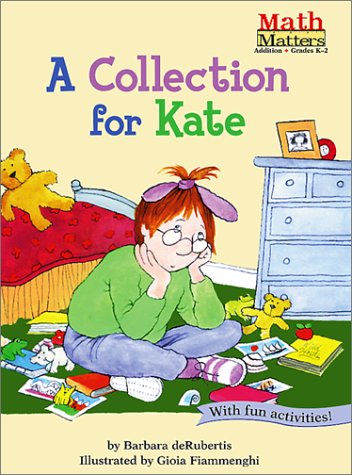
Collection for Kate, A
Grade 2
4 skill lessons · 4 math-through-reading
Math
Skill lessons
The mathematics the book carries, taught directly. Printable workbook pages and teacher keys are not available for this book yet.
- 1Rachel's Five Boxes: Adding Until the Ones Make a Ten
- 2Bigger Than Ten, So Bigger Than Thirty: Kate Predicts John's Total
- 3Ben's Three Boxes: Holding One Number While You Add the Next
- 4Whose Collection Was Bigger: Saying It Both Ways
Math + reading
Math through the reading
The same book, entered through a sentence it prints. Change one word in the reading and the numbers change with it.
- 5The Two Jobs of the Word More
- 6Why Rachel Could Not Go First
- 7Is Nineteen Things a Collection? Answering Kate's Teacher
- 8The Word This Book Never Says
Reading
Reading and language lessons
The same book read as a text. What a word means in its sentence, how a character is shown, how the writing is put together - no mathematics.
- 9Oh, Brother: The Two Words Kate Keeps Saying
- 10Monday, Tuesday, Wednesday: Following a Week Through a Book
- 11The Problem Was: Finding the Trouble and the Answer
- 12What Counts as a Collection: Building a Meaning from the Book
- 13Slumped and Frowned: Reading a Feeling the Book Never Names
Skill lessons
4 lessons on the mathematics the book carries. Printable workbook pages and teacher keys are not available for this book yet.
1. Rachel's Five Boxes: Adding Until the Ones Make a Ten
The book hands students its largest sum already worked: Rachel's pig collection is listed as five separate counts and Kate arrives at 49 twice, once by regrouping and once on a calculator. Students rebuild that sum with ones cubes and ten rods, discovering that the ones column reaches nineteen and must be traded before the tens can be read. What the lesson is after is a trade that happens automatically and a student who can say why it happened, not an answer that arrives fast. The book states the answer, so nothing rests on students producing 49 unaided; what they produce is the regrouping move Kate names but never shows.
Full lesson — 20 minutes
1. Lay out the five counts (5 min)
Read Rachel's list aloud and build each count in a separate pile: ten cubes, then twelve, then sixteen, then four, then seven. Keep the five piles apart on the mat so each one still belongs to its own kind of pig. Do not combine anything yet.
Word preview: regroup
The box is held 10 wood pigs, 12 glass pigs, 16 metal pigs, 4 plastic pigs, and 7 plush pigs.
2. Push the ones together (5 min)
Slide every loose cube from all five piles into the ones column and count them. You will have more than ten. Say the number of loose cubes aloud before you touch anything else.
3. Trade ten ones for one ten (6 min)
Trade ten of your loose cubes for a single ten rod and move that rod into the tens column. Trade again if ten loose cubes are still there. Then read the tens column and the ones column and say the whole number. Point to the rod you just made and say which pigs it came from.
Word preview: sum
Kate had to regroup to find the sum.
4. Check it the way Kate checked it (4 min)
Enter the five numbers on a calculator in the order the book lists them and compare the screen with your mat. Say whether the two agree. Then say which method told you a trade happened, because only one of them did.
There it was again 49
Short version — 9 minutes
1. Lay out the five counts (4 min)
Build Rachel's five counts as five separate piles of cubes: ten, twelve, sixteen, four, seven. Keep the piles apart.
Word preview: regroup
The box is held 10 wood pigs, 12 glass pigs, 16 metal pigs, 4 plastic pigs, and 7 plush pigs.
2. Trade ten ones for one ten (5 min)
Slide all the loose cubes together, trade ten of them for one ten rod, and trade again if you still can. Read the tens and the ones and say the whole number.
Word preview: sum
Kate had to regroup to find the sum.
Three levels
- Support
- Work with the three largest counts only, ten and twelve and sixteen, and leave the four and the seven in their piles. The ones column still passes ten, so the trade still has to happen, and the student still meets the whole move with fewer things to track.
- At Grade
- Build all five counts, push the ones together, and trade until fewer than ten loose cubes remain. Read the tens and ones and say the number, then name the pigs the traded rod came from.
- Extension
- Rebuild the sum with the five counts in a different order and show that the same trade still happens and the same number comes out. Then say what would change if Rachel had eight plush pigs instead of seven, and check the trade on the mat before saying the new number.
English learners
Regroup is the word to rehearse and it does not transfer: many languages describe this move as carrying or as exchanging, and a student who knows the move may not recognise the English name for it. Trade is the everyday word that helps, because the action on the mat is a trade. Give the frame "Ten ones make one ten, so I trade" and have students say it while their hands do it. Sum is the other new label; the book supplies it in Kate's own sentence, so point at that sentence rather than defining the word. Invite students to narrate the trade in their strongest language first and then repeat the frame in English.
Materials
- Interlocking ones cubes and ten rods
- Place-value mat, one per pair
- Simple four-function calculator, one per pair
- Word cards: regroup, sum
Standards & curriculum
Choose your curriculum above to see the standards for this lesson.
Standards are held back while this plan is edited. Every standard shown here was matched against the supplied wording of this lesson, quoting its steps, so a changed step is no longer the thing that was checked. Undo your changes to bring the standards back — your edits stay in this browser either way.
2. Bigger Than Ten, So Bigger Than Thirty: Kate Predicts John's Total
Before she adds John's three postcard counts, Kate reasons about the answer's size from the size of the addends alone: each number is bigger than ten, so the sum must be more than thirty. The book prints that reasoning as a sentence and then prints the sum. Students perform the same two moves in the same order, predicting a floor for the total before computing it, then adding the three numbers and testing the prediction. A bound can be known before an answer is, and the bound comes from place value rather than from guessing.
Full lesson — 20 minutes
1. Read the three counts and find the floor (6 min)
Read John's three numbers and check each one against ten. Write the sentence "each one is more than ten" only if all three really are. Then say what three tens would make, and write that number as your floor. Do not add the real numbers yet.
Word preview: floor
John had 11 postcards from Colorado, 13 from New Mexico, and 15 from Arizona.
Each of these numbers is bigger than 10, she thought.
2. Say the prediction aloud (4 min)
Tell your partner the prediction as a full sentence: the sum must be more than thirty, and here is why. Your reason must name the ten, not the postcards. Mark thirty on your number line and shade the region where the answer has to land.
Word preview: predict
So, the sum must be more than 30.
3. Add the three counts (6 min)
Now add eleven, thirteen and fifteen. Add two of them first, say that partial number aloud, then add the third. Write the total on your recording sheet under the floor you already wrote.
4. Test the prediction against the answer (4 min)
Put your total on the number line and check whether it landed in the shaded region. Say by how much it beat the floor, and say whether the prediction was right, using the words more than.
11, 13 plus 15 equals 39.
Short version — 9 minutes
1. Read the three counts and find the floor (5 min)
Read John's three numbers, check each against ten, and say what three tens would make. Write that as your floor. Do not add the real numbers yet.
Word preview: floor
Each of these numbers is bigger than 10, she thought.
2. Add the three counts (4 min)
Add eleven, thirteen and fifteen, saying the partial number aloud before you add the third. Write the total under your floor and say whether it beat the floor.
Three levels
- Support
- Work with two of John's counts instead of three, eleven and thirteen. The floor is two tens, and the reasoning is identical with one less number to hold. Keep the number line and keep the spoken prediction; only the count of addends is reduced.
- At Grade
- Find the floor from three tens, say the prediction as a sentence that names the ten, add the three counts, and test the total against the floor on the number line.
- Extension
- Find a ceiling as well as a floor. Each of John's numbers is also less than twenty, so ask what three twenties would make and shade the band between the two bounds. Then say whether thirty-nine sits inside that band, and say which bound was the tighter guide.
English learners
The frame to rehearse is "each one is more than ten, so the sum is more than thirty", and the load-bearing word is so, which marks a conclusion rather than a sequence. Students whose languages mark conclusions with a sentence-final particle may hear so as simply next. Point at Kate's own sentence where so does the reasoning work. More than is the other frame; it appears twice in the book in this passage and both times means greater in quantity, which is the sense students need here. Let students state the prediction in their strongest language before rendering it in English.
Materials
- Number line to 50, one per pair
- Recording sheet with a floor line and a sum line
- Word cards: predict, floor
Standards & curriculum
Choose your curriculum above to see the standards for this lesson.
Standards are held back while this plan is edited. Every standard shown here was matched against the supplied wording of this lesson, quoting its steps, so a changed step is no longer the thing that was checked. Undo your changes to bring the standards back — your edits stay in this browser either way.
3. Ben's Three Boxes: Holding One Number While You Add the Next
Ben's shells arrive as three separate box counts and the book adds them in one continuous line, showing the partial total of twenty-five before the final thirty. That printed partial is the whole concept: when three numbers are added, a number exists partway through that is neither an addend nor the answer. Students build the three boxes, stop at the partial deliberately, name it, and only then add the last box. The book prints the same chain twice, in two different wordings, which lets students see that makes and equals are doing the same job.
Full lesson — 20 minutes
1. Fill the three boxes (5 min)
Count fifteen counters into the first box, ten into the second, five into the third. Label each box with its number. Keep the lids off so the counts stay visible.
The first box held 15 shells from a trip to Florida.
The second box held 10 shells from a trip to California.
And the third box held 5 shells from his grandmother in Hawaii.
2. Stop at the partial total (6 min)
Pour box one and box two together and count them. Say that number aloud and write it down. This number is not the answer and it is not a box. Tell your partner what it is a total of, using the words first and second.
Word preview: partial
15 plus 10 equals 25 plus 5 more makes 30.
3. Add the last box (5 min)
Now pour the third box in and count on from your partial number rather than starting again at one. Touch each new counter and say the next number word. Write the total.
4. Match the book's two wordings (4 min)
The book writes this same chain twice, once with makes and once with equals. Find both, read them aloud, and say whether the two sentences give different answers. Then say which word your own recording sheet used.
Word preview: equals
15 plus 10 equals 25 plus 5 equals 30.
Short version — 9 minutes
1. Fill the three boxes (4 min)
Count fifteen counters into the first box, ten into the second, five into the third, and label each box with its number.
The first box held 15 shells from a trip to Florida.
2. Stop at the partial total (5 min)
Pour the first two boxes together, count them, and say that number aloud. Say what it is a total of. Then pour in the third box and count on to the answer.
Word preview: partial
15 plus 10 equals 25 plus 5 more makes 30.
Three levels
- Support
- Use the two easier boxes first, fifteen and ten, and name that partial before the third box is offered at all. The third box holds only five, so counting on from twenty-five stays within one hand. Keep the counters visible throughout rather than writing the numbers.
- At Grade
- Build all three boxes, stop at twenty-five and name what it is a total of, then count on by five to thirty and record both numbers.
- Extension
- Pour the boxes together in a different order and record the partial each order produces. Fifteen and five first gives twenty; ten and five first gives fifteen. Say which partials are possible, which is not, and whether the final total ever changed.
English learners
Partial total is the phrase to rehearse and it is unfamiliar in any language, because everyday talk names starts and finishes but rarely middles. Anchor it to the hands: the counters in the bowl after two pours and before the third. The frame is "twenty-five is the total of the first two boxes", and the words first and second do real work in it. Makes and equals are used interchangeably by this book in the same chain, which is worth naming aloud so students do not hunt for a difference. Let students count the pours in their strongest language and record in English.
Materials
- Three small boxes or trays per pair
- Counters, at least thirty per pair
- Recording sheet with three box lines and a partial line
- Word cards: partial, equals
Standards & curriculum
Choose your curriculum above to see the standards for this lesson.
Standards are held back while this plan is edited. Every standard shown here was matched against the supplied wording of this lesson, quoting its steps, so a changed step is no longer the thing that was checked. Undo your changes to bring the standards back — your edits stay in this browser either way.
4. Whose Collection Was Bigger: Saying It Both Ways
Five children show collections and the book states each total, so every comparison a class might draw has two quantified sides already on the page. The book itself compares only upward, saying collections kept getting bigger and that a sum was more than thirty; it never once says fewer, less or smaller of any quantity. Students build the five totals as towers, order them, and then supply the direction the book withheld, saying each comparison both ways from the same pair of towers. The representation is the point: one tower pair funds two sentences.
Full lesson — 20 minutes
1. Build a tower for each collection (6 min)
Build five cube towers, one per child, using the totals the book gives: fourteen, twenty-four, thirty, thirty-nine, forty-nine. Stand them in the order the children presented them, Monday through Wednesday. Label each tower with the child's name.
9 plus 5 equals 14.
I definitely don't have 24 of anything.
2. Say what the book says (4 min)
Read the book's own comparison aloud and check it against your towers. Point along the row and say whether each tower really is taller than the one before it. Say the book's sentence again while your finger moves up the row.
Word preview: bigger
the collections kept getting bigger, and so did Kate's problem
3. Say it the other way (6 min)
Pick any two towers and say the comparison twice, once starting with the taller and once starting with the shorter. The book never gives you the second sentence, so you must build it. Use fewer or smaller in the second one. Do this for three different pairs.
Word preview: fewer
4. Find the pair the book compared (4 min)
Kate judged her own six shells against Ben's shell collection and the book says what she decided. Read that sentence, then set a six-cube tower beside Ben's thirty and say the comparison both ways.
Sure, she had a few C-shells, but six shells were not enough for a collection.
Short version — 9 minutes
1. Build a tower for each collection (4 min)
Build five cube towers using the totals the book gives: fourteen, twenty-four, thirty, thirty-nine, forty-nine. Stand them in presentation order and label each with a name.
9 plus 5 equals 14.
2. Say it the other way (5 min)
Pick two towers and say the comparison twice, once starting with the taller and once starting with the shorter, using fewer or smaller in the second. Do this for two different pairs.
Word preview: fewer
Three levels
- Support
- Work with two towers rather than five, Joseph's fourteen and Rachel's forty-nine, where the height difference is unmistakable at a glance. Say both directions for that one pair until each sentence comes without prompting, then add a third tower.
- At Grade
- Build all five towers, check the book's upward comparison along the row, then say three different pairs both ways, supplying fewer or smaller yourself.
- Extension
- Say a comparison that names how much, not only which is taller, by matching cubes one to one along two towers and counting the overhang. Say that sentence both ways as well. Note that the book never states any of these differences, so the number came from your towers.
English learners
The reversal is the language work and it does not transfer evenly: several languages express the smaller side with a negated form of the larger word rather than with a distinct word, so a student may produce not as big rather than smaller and be reasoning correctly. Accept it, then offer the English pair. Rehearse "Rachel has more than Joseph" alongside "Joseph has fewer than Rachel" as one unit rather than two facts. Fewer is the word the book never uses, so it must come from the room; write it where students can see it. Invite the first version of each pair in a student's strongest language.
Materials
- Interlocking cubes, about one hundred sixty per group
- Name labels for five towers
- Sentence strips with a blank for each of two names
- Word cards: bigger, fewer
Standards & curriculum
Choose your curriculum above to see the standards for this lesson.
Standards are held back while this plan is edited. Every standard shown here was matched against the supplied wording of this lesson, quoting its steps, so a changed step is no longer the thing that was checked. Undo your changes to bring the standards back — your edits stay in this browser either way.
Math through the reading
The mathematics is reached through a sentence the book prints: change one word in the reading and the numbers change with it. These carry their own standards, matched against these lessons rather than inherited from the skill ones.
5. The Two Jobs of the Word More
Students find the two places this book uses more, discover that one of them adds and the other compares, and rewrite each so the other meaning is forced.
Full lesson — 20 minutes
1. Find the word twice (5 min)
Students hunt the two sentences containing more, read each aloud, and mark them on a strip. They do not yet say what the word does; they only locate it.
2. Do what each sentence says (6 min)
With cubes, students carry out the first sentence by adding five to a tower of twenty-five, and carry out the second by placing a tower of thirty-nine against a line marked at thirty. One hand adds; the other compares.
3. Say which job the word did (5 min)
Each pair states aloud, for each sentence, whether more brought something in or held something up against a mark, and gives the cube evidence for the claim.
4. Make the sentence force the other meaning (4 min)
Students rewrite each sentence so the word must take the other job, then test whether the book's printed number still fits. It will not, and they say why.
Short version — 9 minutes
1. Find the word twice (5 min)
Students hunt the two sentences containing more, read each aloud, and mark them on a strip. They do not yet say what the word does; they only locate it.
2. Make the sentence force the other meaning (4 min)
Students rewrite each sentence so the word must take the other job, then test whether the book's printed number still fits. It will not, and they say why.
Three levels
- Support
- Work with the additive sentence alone, five more makes thirty, and build it twice with cubes before the comparative sentence is offered at all. Once adding-more is secure in the hands, introduce the second sentence and ask only whether anything was added, which is a yes-or-no judgement rather than a full account.
- At grade
- Find both sentences, carry out each with cubes, state which job more did in each, and rewrite each to force the other meaning while testing the printed number against the rewrite.
- Extension
- Find a third sentence in the book where a comparison word decides something, and say whether its word could be swapped for more without changing the mathematics. Students should reach bigger than ten, and should notice that more than and bigger than are interchangeable there while more and more than are not.
English learners
This is a hard collision for learners whose languages use one form for both jobs, and it is also hard for those whose languages use clearly different forms, because they will not expect English to reuse the word. Rehearse the two frames as a contrasting pair, five more makes thirty and more than thirty, said back to back so the than is audible as the signal. Than is the whole difference and it is a small unstressed word, so say it loudly and write it in a different colour. Invite students to give the two sentences in their strongest language first and to say whether that language used one word or two; either answer is useful and should be shared with the room.
Materials
- Interlocking cubes
- Sentence strips carrying the two sentences
- A number line marked at thirty
- The two sentences displayed one above the other
- A chart with the word than highlighted
Standards & curriculum
Choose your curriculum above to see the standards for this lesson.
Standards are held back while this plan is edited. Every standard shown here was matched against the supplied wording of this lesson, quoting its steps, so a changed step is no longer the thing that was checked. Undo your changes to bring the standards back — your edits stay in this browser either way.
6. Why Rachel Could Not Go First
Students rebuild the five collection days in order, name the new demand each day adds, and prove by retelling that no day can trade places with another.
Full lesson — 20 minutes
1. Build the week (6 min)
Groups build one cube tower per collection day using the totals the book gives, and stand them left to right in the order the children presented. They add each day's counts themselves rather than copying the totals.
2. Name what each day made harder (5 min)
For each tower, students say in one sentence what that day asked for that the day before it did not, using the book's own words where the book supplies them.
3. Retell the week (5 min)
One student per group retells all five days in order without notes, giving the demand for each. The rest check the retelling against the towers.
4. Prove the order cannot change (4 min)
Groups swap two days and find the sentence in the book that the swap makes false. They read that sentence aloud as their proof.
Short version — 9 minutes
1. Build the week (6 min)
Groups build one cube tower per collection day using the totals the book gives, and stand them left to right in the order the children presented. They add each day's counts themselves rather than copying the totals.
2. Prove the order cannot change (4 min)
Groups swap two days and find the sentence in the book that the swap makes false. They read that sentence aloud as their proof.
Three levels
- Support
- Build three towers rather than five, Joseph and Emma and Rachel, which keeps the two ends of the escalation and one middle. The demands remain clearly different, single digits, two digits, and a trade, and the retelling is three sentences instead of five.
- At grade
- Build all five towers by adding each day's counts, name the new demand each day introduces, retell the week in order from the towers, and refute a swap by finding the sentence it breaks.
- Extension
- Insert Kate's own night-time finds into the sequence, four books, five magnets, six shells, four postcards, and say where they belong relative to the five collection days and why they never form a step in the escalation. Students should notice these counts fall rather than rise, which is why they read as her problem rather than as a sixth day.
English learners
Retelling in order is the language demand and it is heavy, so give the sequence words as a displayed set, first, next, then, after that, last, and let students point at them while speaking. The book supplies four of these itself, in showed his collection first, in Next, came Emma, in Joan was next, and in the day names, so the frame is the book's rather than an imported one. For the justification, rehearse the single frame this day added, which is harder because, and accept a gesture at the towers as part of the answer while the English is still forming. Invite the full retelling in a student's strongest language first; the order is the thing being assessed and it survives translation intact.
Materials
- Interlocking cubes
- A left-to-right mat with five labelled places
- The five day names on cards
- The five totals displayed in order
- The sequence words first, next, then, after that, last
Standards & curriculum
Choose your curriculum above to see the standards for this lesson.
Standards are held back while this plan is edited. Every standard shown here was matched against the supplied wording of this lesson, quoting its steps, so a changed step is no longer the thing that was checked. Undo your changes to bring the standards back — your edits stay in this browser either way.
7. Is Nineteen Things a Collection? Answering Kate's Teacher
Students take a position on whether Kate's four small groups make a collection and defend it aloud to the teacher who asked, using counts from the book.
Full lesson — 20 minutes
1. Count Kate's things two ways (6 min)
Students build Kate's four groups as four small towers, record each count, then combine them and record the total. They now hold two different descriptions of the same display and say both aloud.
2. Set them against the collections (5 min)
Students place Kate's total and her largest single group beside the five collection towers and say where each one falls in the row.
3. Pick a side (4 min)
Each student decides whether Kate brought a collection and writes down the one number their answer depends on.
4. Say your case to the teacher (5 min)
Partners take turns as Kate's teacher. The speaker gives the position, the number, and what the number counts. The listener may ask only one question: what are you counting?
Short version — 9 minutes
1. Count Kate's things two ways (6 min)
Students build Kate's four groups as four small towers, record each count, then combine them and record the total. They now hold two different descriptions of the same display and say both aloud.
2. Say your case to the teacher (5 min)
Partners take turns as Kate's teacher. The speaker gives the position, the number, and what the number counts. The listener may ask only one question: what are you counting?
Three levels
- Support
- Compare one pair rather than the whole row: Kate's six shells against Joseph's fourteen books. The two towers make the gap plain, and the position can be stated in one sentence with one number in it. Keep the spoken justification and keep the requirement that the number is named; only the number of comparisons is reduced.
- At grade
- Count Kate's groups both ways, place both figures against the five collection totals, choose a position, and defend it aloud to a partner playing the teacher with a number and what it counts.
- Extension
- Argue the position you did not choose, using a different number from the one you first relied on. Then say whether the book itself takes a side, and point to the sentence that made you think so. Students should find that the teacher's Very nice is the closest thing to a verdict and that it commits to no count at all.
English learners
Justifying aloud is demanding, so give the frame as a fixed three-part sentence and let students fill it: I think Kate did or did not bring a collection, because the number is blank, and that number counts blank. The third part is the one that does the mathematical work and it is the one most likely to be dropped, so hold students to it gently and repeatedly. Because is the pivot word and it may be positioned differently in a student's first language, so model it in the middle of the sentence rather than at the start. Students should be invited to make their case in their strongest language first and then to render only the number and what it counts in English, which is the assessable part; the reasoning does not have to be in English to be correct.
Materials
- Interlocking cubes
- A recording card with the three-part frame
- The five collection totals on a strip
- Kate's four group counts displayed
- The teacher's closing question written out
Standards & curriculum
Choose your curriculum above to see the standards for this lesson.
Standards are held back while this plan is edited. Every standard shown here was matched against the supplied wording of this lesson, quoting its steps, so a changed step is no longer the thing that was checked. Undo your changes to bring the standards back — your edits stay in this browser either way.
8. The Word This Book Never Says
Students discover that a book full of comparisons only ever compares upward, and supply the downward sentence for every pair themselves.
Full lesson — 20 minutes
1. Build two towers and compare them (6 min)
Pairs build cube towers for two of the collections on a common base and say which is taller and by how much, matching cubes one to one along the towers to find the overhang.
2. Say the book's sentence (4 min)
Students find how the book compares in that part of the story and read it aloud. They check which of their two towers the sentence is about.
3. Say the sentence the book left out (6 min)
Students say the same comparison starting from the other tower. The word they need is not in the book, so it comes from the room, and they say it while pointing at the shorter tower.
4. Hunt for the missing word (4 min)
Groups search the book for fewer and for less used about a quantity, report what they find, and say what that absence means about how this author writes.
Short version — 9 minutes
1. Build two towers and compare them (6 min)
Pairs build cube towers for two of the collections on a common base and say which is taller and by how much, matching cubes one to one along the towers to find the overhang.
2. Hunt for the missing word (4 min)
Groups search the book for fewer and for less used about a quantity, report what they find, and say what that absence means about how this author writes.
Three levels
- Support
- Work with one pair whose gap is large and obvious, Kate's six shells against Ben's thirty. The taller tower is unmistakable, so no counting is needed to decide direction and all the effort goes into saying the second sentence. Add a closer pair only once both directions come without prompting.
- At grade
- Build at least three pairs of towers, find and read the book's own upward comparison for each part of the story, supply the reversed sentence with a downward word, and report the results of the search for fewer.
- Extension
- Say the comparison a third way, by naming the gap rather than the direction, and check the number by matching cubes. Then say whether the gap sentence is upward or downward, and notice that it is neither, which is why the book could have used it and still did not compare downward anywhere.
English learners
The downward vocabulary has to be taught here because the text cannot model it, which is unusual and worth saying to the class. Fewer and less are the pair, and English splits them by countability in a way most languages do not, so accept less with countable things and offer fewer as the tidier choice rather than as a correction. Rehearse the two sentences as a single unit, John has more than Ben and Ben has fewer than John, said one after the other while the hand moves from the taller tower to the shorter one, so the reversal is felt as a movement rather than memorised as a rule. Students should give the reversed sentence in their strongest language first if that helps them find it, then say it in English with the tower in hand.
Materials
- Interlocking cubes
- A common base board for two towers
- Cards showing the five totals
- The word fewer written where the class can see it
- The book's upward comparison sentences displayed
Standards & curriculum
Choose your curriculum above to see the standards for this lesson.
Standards are held back while this plan is edited. Every standard shown here was matched against the supplied wording of this lesson, quoting its steps, so a changed step is no longer the thing that was checked. Undo your changes to bring the standards back — your edits stay in this browser either way.
Reading and language lessons
5 lessons on the reading and language the book carries - what a word means in its sentence, how a character is shown, how a text is built. No mathematics: these are matched against the English language arts curricula, which are a different and smaller set than the mathematics ones.
9. Oh, Brother: The Two Words Kate Keeps Saying
Kate says the same two words four separate times, and every time she has just found out somebody else's collection is bigger than hers. Students read all four aloud, write what happened just before each, then find two more unhappy lines where she uses different words. They finish by naming what the repeat tells a reader and pointing at the moment she stops. Nothing is added or counted; the work is noticing that a book repeats a phrase and asking why.
Full lesson — 20 minutes
1. Hear the same two words four times (6 min)
Read the four short passages below aloud in the order printed, one student for each. After all four, say aloud the two words that begin three of them and end nowhere else. Then say who is saying those words every single time.
Word preview: refrain
Oh, brother, she muttered under her breath.
Oh, brother, she thought. I don't have 14 of anything.
Oh, brother, was all she could say.
Oh, brother Kate muttered
2. Write down what happens just before each one (5 min)
Copy the four repeated lines onto your log, one under another. Beside each write, in three words or fewer, what has just happened to Kate. Use the passages below and the ones you have already read. Then say aloud whether Kate is happy or unhappy every time she says it.
Word preview: repeated
Kate wrote down the 13 and the 11. Now she had to add two digit numbers. She already knew this was going to be a big sum. Kate moaned. I definitely don't have 24 of anything.
Kate spent most of the weekend looking for a collection. She looked through her closet, her drawers, and her junk box. She looked on top of her bookshelves. She looked under her bed. Kate had a little of this, she had a little of that, but she didn't have a lot of anything.
3. Find the two other things Kate says when she is upset (5 min)
Read the two short passages below. Each is Kate again, unhappy again, but she does not use her usual two words. Copy both onto your log under the heading Other unhappy words. Then underline the word in each that tells you how she sounds.
Word preview: groaned
I feel sick she groaned.
Kate fussed and fumed.
4. Say what the repeat tells a reader (4 min)
Kate says the same two words again and again, and then in the passage below she does something different. Read it aloud. Tell a partner one sentence: what a reader learns about Kate because the book repeats those words, and how you know she has stopped.
Word preview: stops
Slowly, Kate began to smile. Ah-ha! That's it, she thought. Then she quickly packed up everything on the bed.
Short version — 9 minutes
1. Hear the same two words four times (5 min)
Read the four short passages aloud in the printed order, one student each. Say aloud the two words that begin three of them, and say who says them every time.
Word preview: refrain
Oh, brother, she muttered under her breath.
Oh, brother, she thought. I don't have 14 of anything.
Oh, brother, was all she could say.
Oh, brother Kate muttered
2. Say what the repeat tells a reader (4 min)
Read the passage below aloud. Tell a partner one sentence: what a reader learns about Kate because the book repeats her two words, and how you know she has stopped saying them.
Word preview: stops
Slowly, Kate began to smile. Ah-ha! That's it, she thought. Then she quickly packed up everything on the bed.
Three levels
- Support
- Read only the first two printed passages in step 1 aloud. Point to the two words that start both. Then answer aloud: is Kate happy when she says them, yes or no? Copy just those two words onto the log.
- At Grade
- Read all four printed passages, log what happened just before each, and say whether Kate sounds the same every time.
- Extension
- The last of the four printed passages in step 1 ends with no punctuation at all, where the first three are finished sentences. Write two sentences on how that changes the way you read it aloud, and read both versions to a partner.
English learners
A refrain — the same short phrase coming back — is a story move that exists in most languages, but Oh, brother is an English exclamation with no brother in it and will not translate. Say it aloud with the right sighing tone before students read, and give the plain meaning: this is not good news. Invite students to say the phrase their family uses when something disappointing happens. Rehearsable frame: She says ___ when ___.
Materials
- A Collection for Kate, the passage printed in this step
- pencil
- refrain log
- Word cards: refrain, repeated, groaned, stops
Standards & curriculum
Choose your curriculum above to see the standards for this lesson.
Standards are held back while this plan is edited. Every standard shown here was matched against the supplied wording of this lesson, quoting its steps, so a changed step is no longer the thing that was checked. Undo your changes to bring the standards back — your edits stay in this browser either way.
10. Monday, Tuesday, Wednesday: Following a Week Through a Book
This book marches through a school week and tells you so at the top of nearly every scene. Students read the three day openings in order, then hunt the softer signals — first, next, that night — that carry the reader between days. They put a scrambled pair back in order using only the time words, and retell the whole week in four sentences. Nothing is summed; the work is using an author's own time words to hold a sequence together.
Full lesson — 20 minutes
1. Read the three day openings in order (5 min)
Read the three passages below aloud in the order printed, one student each. Point to the first word or two of each. Say aloud what those opening words tell you, and put the three days in order on your fingers before you write anything.
Word preview: Monday
On Monday morning, Joseph showed his collection first. He had two tote bags full of books. He could hardly carry them all. I collect books about reptiles, he said.
On Tuesday, Ben shared his shell collection. He had three boxes full of sea shells.
On Wednesday, Rachel shared her pig collection. It was huge. Her mom had to help her carry the six shoe boxes filled with pigs.
2. Collect the words that are not day names (5 min)
Not every step of this week starts with a day. Read the two passages below and copy onto your log every word or phrase that tells you when — words like first, next and that night. Write beside each one whether it means before, after, or at the same time.
Word preview: Next
Next, came Emma. She could hardly wait to show her collection. I collect two kinds of magnets, she said. She had 13 animal magnets, including a giraffe and a zebra. And she had 11 food magnets, including a pizza slice and a cookie with jelly in the middle. The cookie looked good enough to eat.
That night Kate searched the house. She found a little of this. Four old books about horses. She found a little of that. Five magnets on the refrigerator. But she didn't find a lot of anything.
3. Put a scrambled pair back in order (6 min)
The two passages below are printed out of order. Read both. Decide which one happened first in the week and write 1 and 2 on your log. Then write the exact words from each passage that made you sure — the time words, not the story.
Word preview: order
That night, Kate found two old postcards in a drawer. She found one in between the sofa cushions and Dad gave her one that had come in the mail. Four postcards. Big deal.
Kate slumped in her seat. She frowned. Her teacher was giving the class one last reminder. Next week is collection week. If you signed up to share your collection, be sure to bring it on the right day.
4. Retell the week to a partner (4 min)
Read the passage below, which tells you where the week ends. Then use your log to retell the week to a partner in four sentences, starting each with a time word from your list. Your partner listens and holds up a finger every time they hear a time word.
Word preview: retell
At school the next day, Kate set out all her things. Everyone watched. No one set a word. Finally, her teacher spoke. What is it that you collect, Kate? She asked. Kate smiled proudly. I collect collections, she said. Cool! What a great idea, said the kids.
Short version — 9 minutes
1. Read the three day openings in order (5 min)
Read the three passages aloud in the printed order, one student each. Point to the opening words and say the three days in order on your fingers.
Word preview: Monday
On Monday morning, Joseph showed his collection first. He had two tote bags full of books. He could hardly carry them all. I collect books about reptiles, he said.
On Tuesday, Ben shared his shell collection. He had three boxes full of sea shells.
On Wednesday, Rachel shared her pig collection. It was huge. Her mom had to help her carry the six shoe boxes filled with pigs.
2. Collect the words that are not day names (4 min)
Read the two passages below and copy every word that tells you when — first, next, that night. Write beside each whether it means before or after.
Word preview: Next
Next, came Emma. She could hardly wait to show her collection. I collect two kinds of magnets, she said. She had 13 animal magnets, including a giraffe and a zebra. And she had 11 food magnets, including a pizza slice and a cookie with jelly in the middle. The cookie looked good enough to eat.
That night Kate searched the house. She found a little of this. Four old books about horses. She found a little of that. Five magnets on the refrigerator. But she didn't find a lot of anything.
Three levels
- Support
- Use only step 1's three printed passages. Read the first two or three words of each aloud. Then lay three day cards on the desk in the order the passages come, and say the three days out loud in that order.
- At Grade
- Read all three day passages and both time-word passages, fill the log with each word and whether it means before or after, then order the scrambled pair.
- Extension
- In step 2's printed passages, Next and That night do different jobs: one moves you to the next speaker, one moves you to a different part of the day. Write two sentences saying what each one moves, quoting the phrase you mean.
English learners
English puts most of its time signals at the front of the sentence — On Monday morning, Next, That night — where a listener meets them before the event. Some languages place them elsewhere or leave them out when the order is obvious. Read the openings with a hand sweep on each time phrase. Invite students to name the days of the week in their strongest language and line the two sets up. Rehearsable frame: First ___, then ___, after that ___.
Materials
- A Collection for Kate, the passage printed in this step
- pencil
- time-word log
- Word cards: Monday, Next, order, retell
Standards & curriculum
Choose your curriculum above to see the standards for this lesson.
Standards are held back while this plan is edited. Every standard shown here was matched against the supplied wording of this lesson, quoting its steps, so a changed step is no longer the thing that was checked. Undo your changes to bring the standards back — your edits stay in this browser either way.
11. The Problem Was: Finding the Trouble and the Answer
This book states its trouble in a sentence that begins with the word problem, then spends most of its pages on tries that fail before the answer arrives. Students box the problem sentence, list the failed tries in order, read the moment the idea lands and predict it, then match Kate's four-word answer back to the sentence they boxed at the start. No collection is totalled and nothing is added; the work is seeing how a whole text is held together by one problem and one answer.
Full lesson — 20 minutes
1. Find the sentence that names the problem (5 min)
Read the two passages below aloud with a partner. One of them contains a sentence that says straight out what is wrong. Find it, put a box around it, and read it aloud on its own. Then say what Kate has to do about it and by when.
Word preview: problem
Kate slumped in her seat. She frowned. Her teacher was giving the class one last reminder. Next week is collection week. If you signed up to share your collection, be sure to bring it on the right day.
Kate peaked at the calendar with one eye. She had signed up for Thursday. The problem was that she didn't have a collection. And she had less than a week to get one.
2. List the tries that did not work (5 min)
Read the two passages below. Both show Kate trying to fix her problem. On your log write TRIED at the top and list, in order, every place she looked or every thing she found. Then write in one sentence why each try failed.
Word preview: searched
Kate spent most of the weekend looking for a collection. She looked through her closet, her drawers, and her junk box. She looked on top of her bookshelves. She looked under her bed. Kate had a little of this, she had a little of that, but she didn't have a lot of anything.
That night Kate searched the house. She found a little of this. Four old books about horses. She found a little of that. Five magnets on the refrigerator. But she didn't find a lot of anything.
3. Read the moment the idea arrives (5 min)
Read the two passages below in the order printed. Circle the exact words that show Kate has had an idea. Then, without turning back, tell a partner what you think her idea is going to be, and write your guess in one sentence on the log.
Word preview: idea
Kate arranged all the little groups on her bed. She had four books about horses, she had five magnets, six shells, and four postcards.
Slowly, Kate began to smile. Ah-ha! That's it, she thought. Then she quickly packed up everything on the bed.
4. Match the solution back to the problem (5 min)
Read the passage below, where Kate finally says her answer out loud. Copy her four-word answer onto the log beside the problem sentence you boxed earlier. Then tell a partner one sentence: how this answer solves the problem that was named at the start.
Word preview: solution
At school the next day, Kate set out all her things. Everyone watched. No one set a word. Finally, her teacher spoke. What is it that you collect, Kate? She asked. Kate smiled proudly. I collect collections, she said. Cool! What a great idea, said the kids.
Short version — 9 minutes
1. Find the sentence that names the problem (4 min)
Read the two passages aloud with a partner. Find the sentence that says straight out what is wrong, box it, and read it on its own. Say what Kate must do and by when.
Word preview: problem
Kate slumped in her seat. She frowned. Her teacher was giving the class one last reminder. Next week is collection week. If you signed up to share your collection, be sure to bring it on the right day.
Kate peaked at the calendar with one eye. She had signed up for Thursday. The problem was that she didn't have a collection. And she had less than a week to get one.
2. Match the solution back to the problem (5 min)
Read the passage below. Copy Kate's four-word answer onto the log beside the problem sentence, then tell a partner how the answer solves it.
Word preview: solution
At school the next day, Kate set out all her things. Everyone watched. No one set a word. Finally, her teacher spoke. What is it that you collect, Kate? She asked. Kate smiled proudly. I collect collections, she said. Cool! What a great idea, said the kids.
Three levels
- Support
- Work only with step 1's second printed passage. Read it aloud twice. Then answer two questions out loud before writing: what does Kate not have, and how long does she have to get one? Copy the sentence that begins The problem was onto the log.
- At Grade
- Box the problem sentence, list the failed tries in order from both printed passages, and match the four-word answer back at the end.
- Extension
- Kate's answer works only because her failed tries left her with several small groups instead of one big one. Write three sentences explaining that, quoting one line from a printed passage that shows a failed try.
English learners
The word problem here does not mean a question to work out; it means the trouble in a story, and students who have met it only in a mathematics lesson will hear the wrong thing. Say both meanings aloud and give an everyday example of the story kind. Invite students to name in their strongest language a trouble somebody in a story had, and how it ended. Rehearsable frame: The problem was ___. She solved it by ___.
Materials
- A Collection for Kate, the passage printed in this step
- pencil
- problem and solution log
- Word cards: problem, searched, idea, solution
Standards & curriculum
Choose your curriculum above to see the standards for this lesson.
Standards are held back while this plan is edited. Every standard shown here was matched against the supplied wording of this lesson, quoting its steps, so a changed step is no longer the thing that was checked. Undo your changes to bring the standards back — your edits stay in this browser either way.
12. What Counts as a Collection: Building a Meaning from the Book
Nobody in this book defines the word collection, but four children use it and the narration keeps saying what Kate's things are not. Students underline the word wherever it lands, pull the repeated rule out of the narration, then meet Kate stacking the word on itself in a way the book has not used before. They finish by stating a meaning and reading the words that support it. Nothing is counted; the work is deciding what a word means from the sentences around it.
Full lesson — 20 minutes
1. Read four people saying what they collect (6 min)
Read the three passages below aloud, one student each. Every speaker uses the word collect or collection. Underline the word each time you meet it. Then say aloud, in your own words, what a collection seems to be, using only what these passages show you.
Word preview: collection
On Monday morning, Joseph showed his collection first. He had two tote bags full of books. He could hardly carry them all. I collect books about reptiles, he said.
Next, came Emma. She could hardly wait to show her collection. I collect two kinds of magnets, she said. She had 13 animal magnets, including a giraffe and a zebra. And she had 11 food magnets, including a pizza slice and a cookie with jelly in the middle. The cookie looked good enough to eat.
On Wednesday, Rachel shared her pig collection. It was huge. Her mom had to help her carry the six shoe boxes filled with pigs.
2. Write the two rules the book keeps repeating (5 min)
Read the two passages below. Both say something about Kate's things that keeps her from having a collection. Write the sentence they share, word for word, on your log. Then write in one line the rule it teaches you about what a collection needs.
Word preview: a lot
Kate spent most of the weekend looking for a collection. She looked through her closet, her drawers, and her junk box. She looked on top of her bookshelves. She looked under her bed. Kate had a little of this, she had a little of that, but she didn't have a lot of anything.
How many of something did she need to make a collection? She decided to wait and see what the other kids would bring.
3. Meet the word used a new way (5 min)
Read the passage below. Kate says two words that both come from collect, and she means something the book has not said before. Copy her sentence onto your log. Then write in one line what makes her answer different from Joseph's and Rachel's.
Word preview: collections
Kate smiled proudly. I collect collections, she said.
4. Say your meaning and point at the words (4 min)
Read the printed passage below. Then say your own meaning for the word collection in one sentence, and read aloud the exact words from this passage that support it. Listeners raise a hand only when the speaker reads words that are really on the page.
Word preview: meaning
At school the next day, Kate set out all her things. Everyone watched. No one set a word. Finally, her teacher spoke. What is it that you collect, Kate? She asked. Kate smiled proudly. I collect collections, she said. Cool! What a great idea, said the kids.
Short version — 9 minutes
1. Read four people saying what they collect (5 min)
Read the three passages aloud, one student each. Underline collect or collection every time. Then say in your own words what a collection seems to be.
Word preview: collection
On Monday morning, Joseph showed his collection first. He had two tote bags full of books. He could hardly carry them all. I collect books about reptiles, he said.
Next, came Emma. She could hardly wait to show her collection. I collect two kinds of magnets, she said. She had 13 animal magnets, including a giraffe and a zebra. And she had 11 food magnets, including a pizza slice and a cookie with jelly in the middle. The cookie looked good enough to eat.
On Wednesday, Rachel shared her pig collection. It was huge. Her mom had to help her carry the six shoe boxes filled with pigs.
2. Meet the word used a new way (4 min)
Read the passage below. Copy Kate's sentence onto the log, then write one line on what makes her answer different from the other children's.
Word preview: collections
Kate smiled proudly. I collect collections, she said.
Three levels
- Support
- Use only step 1's first printed passage. Read it aloud and point to the word collect. Then answer aloud: what does Joseph collect? Draw one thing from his collection and label it with the word from the passage.
- At Grade
- Underline the word in all three printed passages, write the repeated rule about a lot of anything, and give your own meaning.
- Extension
- Kate's phrase in step 3's printed passage uses the word twice in a row and means something the other children never meant. Write three sentences on what her meaning adds, quoting one other child's sentence to show the difference.
English learners
Collect, collection and collections are one word family, and English builds them by adding endings the way many languages do — so the family is the transfer, not the individual word. Write the three forms on the board and read them in a row before students meet them in the passages. Invite students to name the same word family in their strongest language and say what changes at the end of each form. Rehearsable frame: A collection is ___ because the book says ___.
Materials
- A Collection for Kate, the passage printed in this step
- pencil
- word meaning log
- Word cards: collection, a lot, collections, meaning
Standards & curriculum
Choose your curriculum above to see the standards for this lesson.
Standards are held back while this plan is edited. Every standard shown here was matched against the supplied wording of this lesson, quoting its steps, so a changed step is no longer the thing that was checked. Undo your changes to bring the standards back — your edits stay in this browser either way.
13. Slumped and Frowned: Reading a Feeling the Book Never Names
The narration never says Kate is worried. It says she slumped, she frowned, she peaked at the calendar with one eye, she muttered, she groaned. Students underline the body words, collect the sound words, and then find the passages where those words swap for smile and proudly. They finish by naming a feeling and pointing at the one word that proves it. The work is inferring from what a character does what a book has chosen not to state.
Full lesson — 20 minutes
1. Read what Kate's body does (5 min)
Read the two passages below aloud. Nobody says Kate is worried. Underline every word that tells you what her body did — how she sat, what her face did, how she used her eyes. Say aloud one word for how she is feeling, and say which underlined word made you choose it.
Word preview: slumped
Kate slumped in her seat. She frowned. Her teacher was giving the class one last reminder. Next week is collection week. If you signed up to share your collection, be sure to bring it on the right day.
Kate peaked at the calendar with one eye. She had signed up for Thursday. The problem was that she didn't have a collection. And she had less than a week to get one.
2. Collect the sound words (5 min)
Read the three short passages below. Each tells you how Kate sounded rather than what she felt. Copy the three sound words onto your log — the words that say how she spoke. Beside each write one feeling word of your own.
Word preview: muttered
Oh, brother, she muttered under her breath.
I feel sick she groaned.
Kate fussed and fumed.
3. Find where the body words change (5 min)
Read the two passages below. Underline the words about Kate's face and body in each. Then write one sentence saying what changed between the first passage and the second, using only the underlined words as your reason.
Word preview: proudly
Slowly, Kate began to smile. Ah-ha! That's it, she thought. Then she quickly packed up everything on the bed.
Kate smiled proudly. I collect collections, she said.
4. Say a feeling and give the evidence (5 min)
Choose any moment from your log. Say in one sentence how Kate felt, then read aloud the exact words from the passage printed under this step, or from one you logged, that show it. A listener asks you: which word? You answer with one word only.
Word preview: evidence
Kate slumped in her seat. She frowned. Her teacher was giving the class one last reminder. Next week is collection week. If you signed up to share your collection, be sure to bring it on the right day.
Kate smiled proudly. I collect collections, she said.
Short version — 9 minutes
1. Read what Kate's body does (5 min)
Read both passages aloud. Underline every word telling you what Kate's body did. Say one word for how she feels and which underlined word made you pick it.
Word preview: slumped
Kate slumped in her seat. She frowned. Her teacher was giving the class one last reminder. Next week is collection week. If you signed up to share your collection, be sure to bring it on the right day.
Kate peaked at the calendar with one eye. She had signed up for Thursday. The problem was that she didn't have a collection. And she had less than a week to get one.
2. Find where the body words change (4 min)
Read both passages and underline the words about Kate's face and body. Write one sentence on what changed, using only the underlined words as your reason.
Word preview: proudly
Slowly, Kate began to smile. Ah-ha! That's it, she thought. Then she quickly packed up everything on the bed.
Kate smiled proudly. I collect collections, she said.
Three levels
- Support
- Stay with step 1's first printed passage. Act out slumped and frowned yourself, one at a time. Then answer aloud: does a person who does those two things feel good or bad? Copy the two words onto the log.
- At Grade
- Underline body words in both printed passages, log a feeling word for each, then find what changes in the later passages.
- Extension
- Step 3's printed passages use smile and proudly where the earlier ones used slumped and frowned. Write three sentences on what a reader would lose if the book had simply written that Kate felt better, quoting one body word you would miss.
English learners
Slumped, frowned, muttered and groaned all describe a body or a voice and let the reader supply the feeling — a move English uses constantly and many students will recognise from their own languages once it is named. Act each word out before reading. Invite students to show a body word from their strongest language and let the class guess the feeling. Rehearsable frame: She ___, so I think she feels ___.
Materials
- A Collection for Kate, the passage printed in this step
- pencil
- feelings log
- Word cards: slumped, muttered, proudly, evidence
Standards & curriculum
Choose your curriculum above to see the standards for this lesson.
Standards are held back while this plan is edited. Every standard shown here was matched against the supplied wording of this lesson, quoting its steps, so a changed step is no longer the thing that was checked. Undo your changes to bring the standards back — your edits stay in this browser either way.