Everybody Wins!
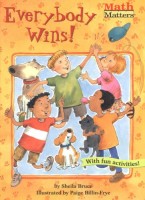
Grade 3
4 skill lessons · 3 math-through-reading
Math
Skill lessons
The mathematics the book carries, taught directly. Printable workbook pages and teacher keys are not available for this book yet.
- 1Twenty-four bags, two ways of sharing
- 2Thirty-six boxes, three sharers then four
- 3Twenty-four bags for twenty kids
- 4Twelve dollars three ways, forty dollars four ways
Math + reading
Math through the reading
The same book, entered through a sentence it prints. Change one word in the reading and the numbers change with it.
- 5The words that decide the number
- 6The share nobody says out loud
- 7Telling Hugo what the numbers say
Reading
Reading and language lessons
The same book read as a text. What a word means in its sentence, how a character is shown, how the writing is put together - no mathematics.
- 8I've never won anything: following a repeated line through a story
- 9Three weeks later, a week later, a month later
- 10Why Hugo asks Oscar and Emmy to enter with him
- 11How the first pages set the trouble up
- 12Does everybody win? Reading the title against the last page
Skill lessons
4 lessons on the mathematics the book carries. Printable workbook pages and teacher keys are not available for this book yet.
1. Twenty-four bags, two ways of sharing
The book shares the same twenty-four bags of marshmallows twice: between two winners, and then one to each of twenty-four classmates. Students deal counters both ways and read the book's own two lines against what their hands did. The amount shared stays fixed while the number of shares moves, and the size of one share moves the other way. Students name the three numbers in a division line by what each one counts, rather than reciting a procedure.
Full lesson — 20 minutes
1. Deal the marshmallow bags into two piles (5 min)
Count out twenty-four counters as the twenty-four bags of marshmallows. Deal them one at a time into two paper plates, one for Oscar and one for Emmy, until your hands are empty. Count what sits on one plate and say the number aloud.
Word preview: divided, equals
24 bags of them.
You get 12.
2. Match the dealing to the book's line (5 min)
Read the book's line for this share and point to each number in it on your plates: the twenty-four you started with, the two plates you dealt into, the twelve on one plate. Say which plate the twelve counts and which number counts the plates themselves.
Word preview: divided
24 divided by 2 equals 12.
3. Deal the same bags one to a kid (5 min)
Clear the plates and take the same twenty-four counters. This time deal one counter to each of twenty-four spaces on a class strip. Say how many each kid gets. Notice the number of shares changed and the amount you started with did not.
Word preview: each
How many kids in our class asked Oscar?
24 said Emmy.
A bag for each kid said Oscar, excellent.
4. Say what changed between the two deals (5 min)
Put your two results side by side: twelve each for two people, one each for twenty-four people. Say in one sentence what stayed the same and what changed. Use the words dividend is not needed here; say twenty-four, the number of shares, and how much one share got.
Word preview: shares
24 divided by 24 equals 1.
Short version — 9 minutes
1. Deal the marshmallow bags into two piles (5 min)
Deal twenty-four counters one at a time into two plates. Count one plate and say the number aloud.
Word preview: divided, equals
24 bags of them.
You get 12.
2. Deal the same bags one to a kid (4 min)
Deal the same twenty-four counters one to each of twenty-four spaces. Say how many each kid gets.
Word preview: each
How many kids in our class asked Oscar?
24 said Emmy.
A bag for each kid said Oscar, excellent.
Three levels
- Support
- Stay with the two-plate deal only. Deal twenty-four counters one at a time into two plates and count one plate. Say twelve aloud and point to the twelve on the board's line. Do not take on the twenty-four-share deal until the two-share deal is steady.
- At Grade
- Deal both ways and record both results on the two-column sheet. Say which number in each printed line counts the shares and which counts what one share holds.
- Extension
- Deal the same twenty-four into three plates and then into four, and say what happens to one share each time the number of plates grows. Say why the amount on one plate must shrink when the number of plates grows, using the twenty-four counters in front of you as the reason.
English learners
Dealing is the same action in every language and it carries the meaning here, so students can do the mathematics before they have the English for it. The phrase to rehearse is "twenty-four shared between two is twelve each", then the same frame with twenty-four and one. The word "each" is the one doing the work and it does not translate as a number word in many languages, so point at one plate when you say it. Invite students to say what one share got in their strongest language first, then to say only the number in English.
Materials
- 24 counters per pair
- Two paper plates per pair
- The line 24 divided by 2 equals 12 on the board
- A 24-space class strip per pair
- A two-column recording sheet per pair
- Word cards: divided, equals, each, share
Standards & curriculum
Choose your curriculum above to see the standards for this lesson.
Standards are held back while this plan is edited. Every standard shown here was matched against the supplied wording of this lesson, quoting its steps, so a changed step is no longer the thing that was checked. Undo your changes to bring the standards back — your edits stay in this browser either way.
2. Thirty-six boxes, three sharers then four
This is the book's one place where the same amount is shared twice with different numbers of sharers and both results are printed: thirty-six boxes among three, then among four when Tony joins. Students deal the same thirty-six cubes twice and watch one tray shrink from twelve to nine. The reasoning is directional rather than computational: students say why a bigger number of sharers must give a smaller share, and point at the trays as the reason. Nobody subtracts twelve and nine, and nobody is asked how much smaller.
Full lesson — 20 minutes
1. Share thirty-six boxes among three (5 min)
Count thirty-six cubes as the boxes of bubblegum in the contest prize. Deal them into three trays for Oscar, Hugo and Emmy. Count one tray and say the number aloud.
Word preview: split, three ways
First prize is 36 boxes of bubblegum.
If we win, we'll split the prize three ways.
2. Add Tony and share the same thirty-six again (5 min)
Tony asks to enter too. Put the cubes back into one pile, add a fourth tray, and deal the same thirty-six again. Count one tray. The prize did not change, so say what did.
Word preview: share
"'I'll enter with you,' said Tony.
Then we can all share the prize.'
3. Put the two printed lines side by side (5 min)
Read the book's two lines for this one prize, the three-way and the four-way. Point to the thirty-six in each and say whether it is the same thirty-six. Then point to what one person gets in each and say which is larger.
Word preview: divided, equals
36 divided by 3 equals 12.
Thirty-six divided by four equals nine.
4. Say the rule your trays showed (5 min)
In one sentence, say what happens to one person's share when more people join and the prize stays the same size. Your trays are the evidence, so say what you would point at to convince someone who did not deal the cubes.
Word preview: fewer
"'Twelve boxes,' she said.
Short version — 9 minutes
1. Share thirty-six boxes among three (5 min)
Deal thirty-six cubes into three trays. Count one tray and say the number aloud.
Word preview: split, three ways
First prize is 36 boxes of bubblegum.
If we win, we'll split the prize three ways.
2. Add Tony and share the same thirty-six again (4 min)
Add a fourth tray and deal the same thirty-six again. Count one tray and say what changed.
Word preview: share
"'I'll enter with you,' said Tony.
Then we can all share the prize.'
Three levels
- Support
- Deal the thirty-six into three trays and then into four with a partner reading the count aloud with you. Say only which tray holds more, the one from three trays or the one from four. The direction is the whole answer at this tier.
- At Grade
- Deal both shares, record twelve and nine, and say in a sentence what happens to one share when a fourth person joins.
- Extension
- Predict what one share would be if a fifth friend entered, say your prediction aloud before dealing, then deal thirty-six into five trays and say what you find. Say why this share does not come out even when the other two did.
English learners
The comparative ending in "smaller" and "fewer" is a grammar point that does not exist in the same shape in every language, and students often have the idea long before the ending. Rehearse "more people, smaller share" as a fixed pair of phrases. The trays let a student show the answer by pointing, so accept a pointed answer and then supply the words for it. Invite the sentence in the student's strongest language first; the direction is what you are listening for, not the English.
Materials
- 36 cubes per pair
- Four trays per pair
- A recording sheet with two rows per pair
- Both printed lines on the board
- A sentence strip per pair
- Word cards: share, split, smaller, fewer
Standards & curriculum
Choose your curriculum above to see the standards for this lesson.
Standards are held back while this plan is edited. Every standard shown here was matched against the supplied wording of this lesson, quoting its steps, so a changed step is no longer the thing that was checked. Undo your changes to bring the standards back — your edits stay in this browser either way.
3. Twenty-four bags for twenty kids
Twenty-four bags meet twenty kids at the campout and four bags do not fit the share. Students hand out one bag per kid and are told to keep the remainder visible in a tray rather than tidying it away, because the leftover is the thing this lesson represents. The book prints the line naming one each with four left over, and students map all four of its numbers onto objects on the table. The last step is deliberate honesty work: the book says the spare bags were left to share and never says how, so students say that the text stops there instead of inventing a second share.
Full lesson — 20 minutes
1. Set out a bag for every kid who came (5 min)
Count twenty-four cubes as the bags of marshmallows. Now set out only twenty counters as the kids who actually came to the campout. Give one bag to each kid until every kid has one. Do not put the extras away.
Word preview: left over
Only 20 kids came, so there were four bags left to share.
2. Count what is left in your hand (5 min)
Count the cubes nobody received and say the number aloud. Say why these are left over rather than shared out: every kid already holds one, and there are not enough spare bags to go round again.
Word preview: left over
24 divided by 20 equals 1 with 4 left over.
3. Read the book's line for this share (5 min)
Read the line the book prints for the campout. Point to the twenty-four, the twenty, the one each kid got, and the four in your leftovers tray. Say which of those four numbers is the one your hand is still holding.
Word preview: equals
24 divided by 20 equals 1 with 4 left over.
4. Say what the book does not settle (5 min)
The book says the four spare bags were left to share and never says how. Say aloud that the book stops here. Then say one thing you would need to be told before you could work out what each person got from those four bags.
Word preview: left over
Only 20 kids came, so there were four bags left to share.
Short version — 9 minutes
1. Set out a bag for every kid who came (5 min)
Give one of your twenty-four cubes to each of twenty kids. Leave the extras out where you can see them.
Word preview: left over
Only 20 kids came, so there were four bags left to share.
2. Count what is left in your hand (4 min)
Count the cubes nobody received and say why they are left over rather than shared again.
Word preview: left over
24 divided by 20 equals 1 with 4 left over.
Three levels
- Support
- Hand out one cube to each of twenty kids with a partner counting kids aloud beside you. Stop when every kid has one and count what is left in your hand. Saying the four is the whole task at this tier.
- At Grade
- Hand out the bags, keep the four leftovers in the tray, and map all four numbers in the book's line onto what is on your table.
- Extension
- Say what the leftover would be if twenty-two kids had come instead of twenty, and deal it to check. Then say for which numbers of kids there would be nothing left over at all, and show one of them with the cubes.
English learners
"Left over" is a two-word phrase that behaves as one word here, and students who know the everyday sense of leftovers already have the idea. The frame to rehearse is "each kid gets one, four are left over". Keeping the remainder physically in a tray means a student can answer by pointing before they can answer in a sentence. Invite the count in the student's strongest language, then ask only for the English number and the phrase "left over".
Materials
- 24 cubes per pair
- 20 counters per pair
- A leftovers tray per pair
- The campout line on the board
- A question card per pair
- Word cards: left over, each, share
Standards & curriculum
Choose your curriculum above to see the standards for this lesson.
Standards are held back while this plan is edited. Every standard shown here was matched against the supplied wording of this lesson, quoting its steps, so a changed step is no longer the thing that was checked. Undo your changes to bring the standards back — your edits stay in this browser either way.
4. Twelve dollars three ways, forty dollars four ways
Two money shares in this book are carried all the way to a named amount per person: the twelve-dollar ticket split three ways, and the forty-dollar certificate split four ways. Students deal dollar-cards into purses and count one purse, then read the book's sentence against the purse in front of them. The application is that a price and a number of payers settle what one payer owes, and that the answer can be checked by counting a single share rather than by trusting the printed line.
Full lesson — 20 minutes
1. Build the three-way split of the ticket (5 min)
Lay out twelve dollar-cards as the price of one raffle ticket. Deal them into three purses, one for Oscar, one for Emmy, one for Tony, until the pile is gone. Count one purse and say what each child pays.
Word preview: split, three ways
Each ticket was $12.
Why don't we split the ticket three ways?
2. Check your purse against Emmy's sentence (5 min)
Read Emmy's sentence naming what each of the three children pays. Put your counted purse beside it. Say whether the number in your purse and the number in her sentence are the same, and say how you would know if one purse had been short.
Word preview: equals
I could pay $4, you could pay $4, and Tony could pay $4.
$12 divided by 3 equals $4.
3. Split the gift certificate four ways (5 min)
Take forty dollar-cards as Hugo's gift certificate and four purses for the four friends. Deal them out and count one purse. The book has Hugo answer this one before anyone can work it out, so say your number before you look at his.
Word preview: divided
A month later, Hugo got a letter saying he'd won second prize, a $40 gift certificate to Pet Depot.
What's $40 divided 4 ways?
4. Read Hugo's answer against your purses (5 min)
Now read what Hugo said and the line the book prints under it. Say whether your ten and his ten came from the same four purses. Say one thing you could count on the table that would show a friend the ten is right.
Word preview: equals
Before anyone else could figure it out, Hugo said $10.
$40 divided by 4 equals $10.
Short version — 9 minutes
1. Build the three-way split of the ticket (5 min)
Deal twelve dollar-cards into three purses. Count one purse and say what each child pays.
Word preview: split, three ways
Each ticket was $12.
Why don't we split the ticket three ways?
2. Split the gift certificate four ways (4 min)
Deal forty dollar-cards into four purses. Count one purse and say your number before you look at Hugo's.
Word preview: divided
A month later, Hugo got a letter saying he'd won second prize, a $40 gift certificate to Pet Depot.
What's $40 divided 4 ways?
Three levels
- Support
- Work the twelve-dollar ticket only, and deal one dollar-card at a time so each round of dealing puts the same amount in every purse. Count one purse and say four dollars aloud. Leave the forty-dollar certificate for another day.
- At Grade
- Deal both shares and count one purse each time. Read each book sentence against your own purse and say whether they agree.
- Extension
- Say what each child would pay if only two of them, rather than three, bought the twelve-dollar ticket, and deal it to check. Then say which of the two prices is harder on one child's pocket and why the number of payers is the reason.
English learners
Money words carry over unevenly: the dollar sign sits before the number in English and after it in several languages students may read at home, so write $4 and say "four dollars" together each time. The frame to rehearse is "twelve dollars split three ways is four dollars each". Students who can count the purse can say the answer before they can say the frame, so take the number first and build the sentence around it. Let students say the amount in their strongest language and then place the dollar-cards to show it.
Materials
- 12 dollar-cards per pair
- Three labelled purses per pair
- Emmy's sentence on a sentence strip
- 40 dollar-cards per pair
- A fourth purse per pair
- A recording line per pair
- Word cards: split, each, divided, equals
Standards & curriculum
Choose your curriculum above to see the standards for this lesson.
Standards are held back while this plan is edited. Every standard shown here was matched against the supplied wording of this lesson, quoting its steps, so a changed step is no longer the thing that was checked. Undo your changes to bring the standards back — your edits stay in this browser either way.
Math through the reading
The mathematics is reached through a sentence the book prints: change one word in the reading and the numbers change with it. These carry their own standards, matched against these lessons rather than inherited from the skill ones.
5. The words that decide the number
Students find the four words in this book that decide what a share comes to, and prove it by swapping one and dealing the cubes again.
Full lesson — 20 minutes
1. Deal the prize the sentence describes (5 min)
Pairs take thirty-six cubes and the sentence naming three ways, deal the cubes into three trays, and count one tray.
2. Find the word that set the divisor (5 min)
Pairs underline the one phrase in their sentence that says how many shares there are, and say aloud why the numerals alone could not have told them.
3. Swap the word and deal again (6 min)
Pairs replace three ways with six ways, deal the same thirty-six cubes into six trays, and say both answers in one sentence naming the word that changed.
4. Test a second word against the trays (4 min)
Pairs swap each for the in Emmy's payment sentence and say what the ticket would then cost one child.
Short version — 9 minutes
1. Deal the prize the sentence describes (5 min)
Pairs take thirty-six cubes and the sentence naming three ways, deal the cubes into three trays, and count one tray.
2. Swap the word and deal again (6 min)
Pairs replace three ways with six ways, deal the same thirty-six cubes into six trays, and say both answers in one sentence naming the word that changed.
Three levels
- Support
- Work only with three ways and six ways on the thirty-six cubes. Deal both, count one tray each time, and say the two numbers. Naming the word that changed is the language demand; leave the second word for another day.
- At grade
- Deal the original and the swapped share, name the deciding phrase, and say in one sentence what the word changed and what the answer became.
- Extension
- Write a third version of the sentence that would make one person's share eighteen boxes, and say how you chose the number of ways. Then say why some numbers of ways cannot be used on thirty-six without something being left over.
English learners
The four register words are function words, which are exactly the words a developing reader skips to get to the nouns, and several have no single-word equivalent in other languages. "Each" is the hardest: many languages mark it on the verb or not at all. Say "each" while pointing at one tray, every time. The frame to rehearse is "the words three ways tell me to make three trays". Students may name the deciding word in their strongest language and point to it in the English sentence.
Materials
- 36 cubes per pair
- Six labelled trays per pair
- The book's sentence on a strip
- A pencil for underlining
- The two printed lines for thirty-six
- The swapped sentence beside the original
Standards & curriculum
Choose your curriculum above to see the standards for this lesson.
Standards are held back while this plan is edited. Every standard shown here was matched against the supplied wording of this lesson, quoting its steps, so a changed step is no longer the thing that was checked. Undo your changes to bring the standards back — your edits stay in this browser either way.
6. The share nobody says out loud
The book gives thirty-six boxes and a fourth person joining, and lets the story move on without saying what each one gets; students settle it.
Full lesson — 20 minutes
1. Read to the gap and notice it (4 min)
Pairs read the bubblegum scene aloud to the line where Hugo agrees they can all share, and say what number they expected to be told and were not.
2. Name the sharers from the dialogue (6 min)
Pairs list who is sharing and read out the sentence that puts each person in, including Tony's own line, then say how many sharers there are.
3. Deal the prize among them (6 min)
Pairs deal thirty-six cubes into one tray per sharer and count a single tray.
4. State the answer as the book would have (4 min)
Pairs say the missing sentence aloud in the book's own form, naming the prize, the number of sharers and one person's share.
Short version — 9 minutes
1. Name the sharers from the dialogue (6 min)
Pairs list who is sharing and read out the sentence that puts each person in, including Tony's own line, then say how many sharers there are.
2. Deal the prize among them (6 min)
Pairs deal thirty-six cubes into one tray per sharer and count a single tray.
Three levels
- Support
- Work from a list of the four names already written down, so the reading load is lifted and the counting is not. Deal thirty-six cubes into the four trays and count one tray. Say nine boxes each.
- At grade
- Assemble the four sharers from the dialogue, deal the thirty-six, and state the missing sentence with all three numbers in it.
- Extension
- Say what one person's share would have been if Tony had not entered, and why the book's own earlier line already tells you. Then say what would have happened to the sharing if a fifth friend had joined, and whether the boxes would still have come out even.
English learners
The gap is invisible to a reader still decoding, because noticing an absence requires fluent expectation. Read the scene aloud twice before asking what is missing. The frame to rehearse is "the book does not tell us how many each one gets". Naming the four sharers can be done by pointing at names on the page rather than by speaking them. Invite students to say the final sentence in their strongest language first and then in English with the three numbers.
Materials
- 36 cubes per pair
- Four trays per pair
- The bubblegum scene on a reading card
- The line naming the thirty-six box prize
- A blank sentence frame for the missing line
Standards & curriculum
Choose your curriculum above to see the standards for this lesson.
Standards are held back while this plan is edited. Every standard shown here was matched against the supplied wording of this lesson, quoting its steps, so a changed step is no longer the thing that was checked. Undo your changes to bring the standards back — your edits stay in this browser either way.
7. Telling Hugo what the numbers say
Students take a side on whether Hugo really did worse than his friends, and have to put a number from the book in the sentence they say to him.
Full lesson — 20 minutes
1. Chart what each friend received (6 min)
Pairs fill a chart with what Oscar, Emmy, Tony and Hugo each got from the pizza, the marshmallows, the raffle and the certificate, taking every figure from the book.
2. Hear Hugo's claim in his own words (4 min)
Students read Hugo's repeated line aloud and say what he is claiming about himself.
3. Choose a side and find your number (5 min)
Each student picks a position and marks the one figure on the chart they will use to support it.
4. Say it to Hugo (5 min)
Students say their position aloud to Hugo, in one sentence containing their chosen number, and hear one classmate who chose differently.
Short version — 9 minutes
1. Chart what each friend received (6 min)
Pairs fill a chart with what Oscar, Emmy, Tony and Hugo each got from the pizza, the marshmallows, the raffle and the certificate, taking every figure from the book.
2. Say it to Hugo (5 min)
Students say their position aloud to Hugo, in one sentence containing their chosen number, and hear one classmate who chose differently.
Three levels
- Support
- Work from a chart already filled in, and choose between two positions written on cards rather than composing one. Point to the number on the chart that goes with your card, and say the sentence with that number in it.
- At grade
- Build the chart, choose a position, and say it to Hugo in one sentence containing a figure from the book.
- Extension
- Take the third position, that the amounts cannot be ranked because the things shared are different in kind, and say what the book would have had to tell you for the comparison to be settled. Name the specific missing information.
English learners
This lesson asks for a stance, which is a demanding speech act in a new language, so give the sentence frame and let the number do the arguing: "Hugo, you got ten dollars, and that is more than nothing." The chart carries the meaning without English, so a student can choose a side by pointing at a row. Let students rehearse the sentence with a partner in their strongest language before saying it to the group, and accept a position stated with a number and a gesture.
Materials
- A four-column chart per pair
- Position cards
- The book's share lines on a card
- Hugo's repeated line
- The forty dollar certificate line
Standards & curriculum
Choose your curriculum above to see the standards for this lesson.
Standards are held back while this plan is edited. Every standard shown here was matched against the supplied wording of this lesson, quoting its steps, so a changed step is no longer the thing that was checked. Undo your changes to bring the standards back — your edits stay in this browser either way.
Reading and language lessons
5 lessons on the reading and language the book carries - what a word means in its sentence, how a character is shown, how a text is built. No mathematics: these are matched against the English language arts curricula, which are a different and smaller set than the mathematics ones.
8. I've never won anything: following a repeated line through a story
Hugo says the same five words four separate times, and the sentence around it is different every time: alone with his bird, standing beside two friends who won, after missing a raffle, and while asking for a favour. Students read all four spans, describe what is happening at each one, and say how the repetition changes from a complaint to an argument. The four occurrences are printed here in full because the line alone cannot be located on the page.
Full lesson — 20 minutes
1. Read the first two times the line appears (5 min)
Read both passages below aloud with your partner. Underline the sentence that is exactly the same in both. Say what is happening around it each time.
Word preview: repeat, refrain
Hugo went home. I've never won anything. He told Twitter. Twitter just looked at him.
Hugo said, you two are so lucky. I've never won anything.
2. Read the last two times the line appears (5 min)
Read both passages below aloud. Find the same sentence again in each. Tell your partner who Hugo is talking to in each one and what he wants.
Word preview: chipped in
Wish I'd been there. I could have chipped in, said Hugo. I've never won anything.
We didn't win the Raffle, said Oscar. You won Marshmallows, said Hugo. I've never won anything.
3. Sort the four uses from complaint to request (4 min)
All four passages are printed here. Put them in the book's order and tell your partner which ones are Hugo just feeling sorry and which one is Hugo asking for something. Point at the words around the repeated line that decided you.
Hugo went home. I've never won anything. He told Twitter. Twitter just looked at him.
Hugo said, you two are so lucky. I've never won anything.
Wish I'd been there. I could have chipped in, said Hugo. I've never won anything.
We didn't win the Raffle, said Oscar. You won Marshmallows, said Hugo. I've never won anything.
4. Read the ending and say what the repeating was for (6 min)
Read the two passages printed here aloud. Tell your partner what finally happens to Hugo, and then say in one sentence why you think the writer had him say the same five words four times before it. Read aloud one of the repeated lines printed here as your proof.
Word preview: certificate
We didn't win the Raffle, said Oscar. You won Marshmallows, said Hugo. I've never won anything.
A month later, Hugo got a letter saying he'd won second prize, a $40 gift certificate to Pet Depot. Oscar, Emmy, and Tony came over to celebrate.
Short version — 9 minutes
1. Read the first two times the line appears (4 min)
Read both passages aloud, underline the sentence that is identical in both, and say what is happening around it each time.
Word preview: repeat, refrain
Hugo went home. I've never won anything. He told Twitter. Twitter just looked at him.
Hugo said, you two are so lucky. I've never won anything.
2. Read the ending and say what the repeating was for (5 min)
Read the two passages printed here aloud. Say what finally happens to Hugo, then say why the writer repeated those five words, reading one of them here as proof.
Word preview: chipped in, certificate
We didn't win the Raffle, said Oscar. You won Marshmallows, said Hugo. I've never won anything.
A month later, Hugo got a letter saying he'd won second prize, a $40 gift certificate to Pet Depot. Oscar, Emmy, and Tony came over to celebrate.
Three levels
- Support
- Work two occurrences, not four. Read the first passage and the last, underline the identical sentence in each, and say who Hugo is talking to in each one. Stop there.
- At Grade
- Track all four occurrences and sort them from complaint to request.
- Extension
- Say what Hugo gains by repeating the line in the passage where he asks Oscar and Emmy to enter with him, and say whether the line is still true at the moment he says it there.
English learners
The line is a present-perfect negative, I have never won, which many languages express with a simple past instead, so the tense will not transfer even though the meaning is plain. Read all four occurrences aloud as a chant before any analysis. Rehearse Here Hugo is ______, and invite the description of each scene in the strongest language first.
Materials
- Printed passage: Hugo tells Twitter
- Printed passage: Hugo at the campfire
- Passage copies for underlining
- Printed passage: Hugo after the raffle
- Printed passage: Hugo asks for help
- Printed passage: Hugo wins
- Word cards: repeat, refrain, chipped in, certificate
Standards & curriculum
Choose your curriculum above to see the standards for this lesson.
Standards are held back while this plan is edited. Every standard shown here was matched against the supplied wording of this lesson, quoting its steps, so a changed step is no longer the thing that was checked. Undo your changes to bring the standards back — your edits stay in this browser either way.
9. Three weeks later, a week later, a month later
This story jumps forward again and again, and each jump is announced by a short phrase at the front of a sentence. Students find the time phrase in each of three printed spans, say how long the jump is, and then put the three spans in order using only those phrases. The work is on the phrase and its position, never on adding the times together.
Full lesson — 20 minutes
1. Find the time phrase in the campfire passage (5 min)
Read the passage below aloud. Find the two words at the very start that tell you when this happens. Say the whole opening phrase to your partner.
Word preview: weekend
That weekend, the class roasted marshmallows around the campfire. They were delicious. Only 20 kids came, so there were four bags left to share. Everyone thanked Oscar and Emmy.
2. Find the time phrase in two more passages (5 min)
Read both passages below aloud. In each one find the phrase at the front that says when it happens, and write both phrases on your slate exactly as the book gives them.
Word preview: later
A week later at the Village Fair, Oscar saw some people selling raffle tickets. First prize was a giant screen TV. Wow, he thought, it would be so cool to watch baseball on a giant TV. I've just got to enter.
A month later, Hugo got a letter saying he'd won second prize, a $40 gift certificate to Pet Depot. Oscar, Emmy, and Tony came over to celebrate.
3. Put the three passages in order using the phrases alone (4 min)
All three passages are printed here. Cover everything except the opening phrase of each, and order the three from earliest to latest using only those phrases. Tell your partner which phrase you were least sure about.
That weekend, the class roasted marshmallows around the campfire. They were delicious. Only 20 kids came, so there were four bags left to share. Everyone thanked Oscar and Emmy.
A week later at the Village Fair, Oscar saw some people selling raffle tickets. First prize was a giant screen TV. Wow, he thought, it would be so cool to watch baseball on a giant TV. I've just got to enter.
A month later, Hugo got a letter saying he'd won second prize, a $40 gift certificate to Pet Depot. Oscar, Emmy, and Tony came over to celebrate.
4. Write one new time phrase and test it (6 min)
Two of the passages are printed here again. Write a different time phrase that could open each one without changing what happens, and read your version aloud to your partner. Your partner says whether the story still makes sense with your phrase in front.
A week later at the Village Fair, Oscar saw some people selling raffle tickets. First prize was a giant screen TV. Wow, he thought, it would be so cool to watch baseball on a giant TV. I've just got to enter.
A month later, Hugo got a letter saying he'd won second prize, a $40 gift certificate to Pet Depot. Oscar, Emmy, and Tony came over to celebrate.
Short version — 9 minutes
1. Find the time phrase in the campfire passage (4 min)
Read the passage aloud and say the opening phrase that tells you when this happens.
Word preview: weekend
That weekend, the class roasted marshmallows around the campfire. They were delicious. Only 20 kids came, so there were four bags left to share. Everyone thanked Oscar and Emmy.
2. Find the time phrase in two more passages (5 min)
Read both passages printed here aloud, find the opening phrase in each, and write both on your slate exactly as the book gives them.
Word preview: later
A week later at the Village Fair, Oscar saw some people selling raffle tickets. First prize was a giant screen TV. Wow, he thought, it would be so cool to watch baseball on a giant TV. I've just got to enter.
A month later, Hugo got a letter saying he'd won second prize, a $40 gift certificate to Pet Depot. Oscar, Emmy, and Tony came over to celebrate.
Three levels
- Support
- Find the time phrase in two passages, not three. The teacher reads each passage aloud pausing after the opening phrase, and the student says the phrase back before anything else is asked.
- At Grade
- Find all three phrases and order the passages using only those phrases.
- Extension
- Say what a reader would lose if all three opening phrases were deleted, and say which of the three the story could least afford to lose.
English learners
Time phrases sit at the front of the sentence here and are followed by a comma, and that fronted position with its comma is the pattern to rehearse rather than the words themselves. Say That weekend, A week later, A month later as a set. Invite students to say how long each jump is in the strongest language first, then in English.
Materials
- Printed passage: the campfire
- Printed passage: the Village Fair
- Printed passage: Hugo wins
- Slates
- Word cards: weekend, later
Standards & curriculum
Choose your curriculum above to see the standards for this lesson.
Standards are held back while this plan is edited. Every standard shown here was matched against the supplied wording of this lesson, quoting its steps, so a changed step is no longer the thing that was checked. Undo your changes to bring the standards back — your edits stay in this browser either way.
10. Why Hugo asks Oscar and Emmy to enter with him
Hugo makes an unusual request: he asks two friends to enter a contest with him, and he gives his reason out loud in the same span. Students read the request span, find the sentence that carries the reason, and test it against a second span where Hugo talks to his bird about luck. The whole lesson is about grounding a why-answer in a printed sentence.
Full lesson — 20 minutes
1. Read the contest offer and say what Hugo wants (5 min)
Read the passage below aloud with your partner, one of you as Hugo and one as Oscar. Say in one sentence what Hugo wants Oscar to do.
Word preview: contest, enter
A few days later, Hugo went over to Oscar's house. There's this contest, he said. First prize is 36 boxes of bubblegum. Wow, said Oscar. He read the entry form. Are you going to enter?
2. Find the sentence that gives Hugo his reason (5 min)
Read this passage aloud. Find the sentence where Hugo says why he wants them with him and read it on its own. Then say Hugo asks them because, filling in the rest from that sentence.
Word preview: lucky, reason
Well, said Hugo. I was thinking, maybe you and Emmy could enter with me. You're both pretty lucky. We didn't win the Raffle, said Oscar. You won Marshmallows, said Hugo. I've never won anything.
3. Test the reason against what Hugo asks his bird (4 min)
Read this passage aloud. Tell your partner whether it fits the reason you gave for Hugo or works against it, and name the sentence here that decided you.
Word preview: luck
As soon as he got home, Hugo filled out the entry form. Do you think my luck will change? Hugo asked Twitter? Twitter pecked him.
4. Say the reason with both proofs (6 min)
Both passages are printed here. Say your because sentence, then read aloud the one sentence from each of the two passages that supports it. Your partner checks that both sentences you read are on this page.
Well, said Hugo. I was thinking, maybe you and Emmy could enter with me. You're both pretty lucky. We didn't win the Raffle, said Oscar. You won Marshmallows, said Hugo. I've never won anything.
As soon as he got home, Hugo filled out the entry form. Do you think my luck will change? Hugo asked Twitter? Twitter pecked him.
Short version — 9 minutes
1. Find the sentence that gives Hugo his reason (4 min)
Read the passage aloud, find the sentence where Hugo says why he wants them with him, and say Hugo asks them because, filling in the rest from that sentence.
Word preview: lucky, reason
Well, said Hugo. I was thinking, maybe you and Emmy could enter with me. You're both pretty lucky. We didn't win the Raffle, said Oscar. You won Marshmallows, said Hugo. I've never won anything.
2. Test the reason against what Hugo asks his bird (5 min)
Read this passage aloud. Say whether it fits the reason you gave or works against it, and name the sentence here that decided you.
Word preview: luck
As soon as he got home, Hugo filled out the entry form. Do you think my luck will change? Hugo asked Twitter? Twitter pecked him.
Three levels
- Support
- Work only with the request passage. The teacher reads it and offers three sentences from it aloud, and the student picks which one is the reason and says it back whole.
- At Grade
- Find the reason unaided and test it against the second passage.
- Extension
- Say whether Hugo believes his own reason, using the question he asks his bird in the second printed passage, and say what that question tells you that his request to Oscar does not.
English learners
Lucky as a property of a person rather than of an event is the idea to check here, since some students will read You're both pretty lucky as a wish rather than a claim. Rehearse Hugo asks them because he thinks ______. Invite the reason in the strongest language first, then rebuild it in the frame with the passage in view.
Materials
- Printed passage: the bubblegum contest
- Printed passage: Hugo asks for help
- Printed passage: Hugo asks Twitter
- Word cards: contest, enter, lucky, reason, luck
Standards & curriculum
Choose your curriculum above to see the standards for this lesson.
Standards are held back while this plan is edited. Every standard shown here was matched against the supplied wording of this lesson, quoting its steps, so a changed step is no longer the thing that was checked. Undo your changes to bring the standards back — your edits stay in this browser either way.
11. How the first pages set the trouble up
The opening span makes Oscar want something, and the very next span puts an obstacle in front of it in four short sentences: a rule, a shortage, a deadline, and a boy who does not know what to do. Students name what Oscar wants from the first span, name each part of the obstacle from the second, and say the setup as a want-but sentence. Nothing here asks how many box tops are needed to be counted or compared.
Full lesson — 20 minutes
1. Read the opening and say what Oscar wants (5 min)
Read the passage below aloud. Say in one sentence what Oscar wants, and read aloud the sentence that shows how badly he wants it.
Word preview: contest, prize
Oscar was eating his favorite lunch, frozen pizza. It was his dog, Bob's favorite, too. While he ate, Oscar read about a contest. First prize was 100 frozen pizzas. Oscar got so excited he couldn't swallow.
2. Read the next passage and list what is in the way (5 min)
Read this passage aloud. List on your slate every separate thing here that stands between Oscar and what he wants. Read aloud the sentence that shows he is stuck.
Word preview: rules, deadline
Oscar's mother read the contest rules. You need two Peppy Pooch box tops, she said. We only have one box. The deadline for mailing the entry form was the next day. Oscar wondered what to do.
3. Say the setup as one want-but sentence (4 min)
Both passages are printed here. Say the setup in one sentence: Oscar wants ______, but ______. Name the passage each half came from.
Oscar was eating his favorite lunch, frozen pizza. It was his dog, Bob's favorite, too. While he ate, Oscar read about a contest. First prize was 100 frozen pizzas. Oscar got so excited he couldn't swallow.
Oscar's mother read the contest rules. You need two Peppy Pooch box tops, she said. We only have one box. The deadline for mailing the entry form was the next day. Oscar wondered what to do.
4. Try the opening without the obstacle (6 min)
Both passages are printed here again. Cover the second passage and read only the first aloud. Tell your partner what kind of story you would expect from the first passage alone, and then what the second passage changes.
Oscar was eating his favorite lunch, frozen pizza. It was his dog, Bob's favorite, too. While he ate, Oscar read about a contest. First prize was 100 frozen pizzas. Oscar got so excited he couldn't swallow.
Oscar's mother read the contest rules. You need two Peppy Pooch box tops, she said. We only have one box. The deadline for mailing the entry form was the next day. Oscar wondered what to do.
Short version — 9 minutes
1. Read the opening and say what Oscar wants (4 min)
Read the passage aloud, say what Oscar wants in one sentence, and read aloud the sentence showing how badly he wants it.
Word preview: contest, prize
Oscar was eating his favorite lunch, frozen pizza. It was his dog, Bob's favorite, too. While he ate, Oscar read about a contest. First prize was 100 frozen pizzas. Oscar got so excited he couldn't swallow.
2. Read the next passage and list what is in the way (5 min)
Read this passage aloud, list everything standing between Oscar and what he wants, and read aloud the sentence showing he is stuck.
Word preview: rules, deadline
Oscar's mother read the contest rules. You need two Peppy Pooch box tops, she said. We only have one box. The deadline for mailing the entry form was the next day. Oscar wondered what to do.
Three levels
- Support
- Name one thing in the way, not all of them. The teacher reads the obstacle passage one sentence at a time and the student says after each whether that sentence makes things harder for Oscar.
- At Grade
- List every obstacle and say the setup as one want-but sentence.
- Extension
- Say which of the obstacles in the second passage is the one that actually forces Oscar to leave the house, and say how the sentence would have to read for the problem to disappear.
English learners
But joins two clauses of equal weight in English and sits between them, and several languages mark contrast at the end of the clause instead, so the middle position needs rehearsing. Practise Oscar wants ______, but ______ empty first. Invite both halves in the strongest language, then in English, with both passages printed in view.
Materials
- Printed passage: Oscar reads about a contest
- Printed passage: the contest rules
- Slates
- Word cards: contest, prize, rules, deadline
Standards & curriculum
Choose your curriculum above to see the standards for this lesson.
Standards are held back while this plan is edited. Every standard shown here was matched against the supplied wording of this lesson, quoting its steps, so a changed step is no longer the thing that was checked. Undo your changes to bring the standards back — your edits stay in this browser either way.
12. Does everybody win? Reading the title against the last page
The title makes a claim, and the story tests it: the raffle is lost outright, and the last printed line hands the best prize to a bird. Students read the losing span and the closing span, decide whether the title is honest, and back the decision with a sentence from each. This is an argument lesson, and both sides can be defended from the printed text.
Full lesson — 20 minutes
1. Read the losing passage and say what happened (5 min)
Read the passage below aloud. Say in one sentence what happens here. Tell your partner whether this passage fits a story called Everybody Wins.
Word preview: raffle, drawing
The raffle drawing was two weeks later. They didn't win a prize. Oscar walked over to Emmy's house to tell her.
2. Read the last lines and say who wins (5 min)
Read this passage aloud. Say who Oscar thinks gets the best prize. Read aloud the last sentence of the passage and say what it adds.
Word preview: prize
I think Twitter is getting the best prize of all," said Oscar. And guess what? Twitter thought so too.
3. Take a side on whether the title is honest (4 min)
Both passages are printed here. Decide with your partner whether the title Everybody Wins is honest or a joke. Say your side and read aloud one sentence from these passages that supports it.
Word preview: honest
The raffle drawing was two weeks later. They didn't win a prize. Oscar walked over to Emmy's house to tell her.
I think Twitter is getting the best prize of all," said Oscar. And guess what? Twitter thought so too.
4. Argue the other side (6 min)
Both passages are printed here again. Now argue the side you did not take. Say it in one sentence and read aloud a different sentence from these passages as proof. Your partner checks that your new sentence is really on the page and is not the one you used before.
The raffle drawing was two weeks later. They didn't win a prize. Oscar walked over to Emmy's house to tell her.
I think Twitter is getting the best prize of all," said Oscar. And guess what? Twitter thought so too.
Short version — 9 minutes
1. Read the last lines and say who wins (4 min)
Read the passage aloud, say who Oscar thinks gets the best prize, and read the last sentence aloud saying what it adds.
Word preview: prize
I think Twitter is getting the best prize of all," said Oscar. And guess what? Twitter thought so too.
2. Take a side on whether the title is honest (5 min)
Both passages are printed here. Decide whether the title Everybody Wins is honest or a joke, say your side, and read aloud one sentence from these passages that supports it.
Word preview: raffle, honest
The raffle drawing was two weeks later. They didn't win a prize. Oscar walked over to Emmy's house to tell her.
I think Twitter is getting the best prize of all," said Oscar. And guess what? Twitter thought so too.
Three levels
- Support
- Take one side only. The teacher reads both passages aloud and asks a single yes-or-no question, does anyone lose in this story, and the student answers with the sentence from the passage that shows it.
- At Grade
- Take a side and support it with a sentence from either passage.
- Extension
- Say what the word Everybody in the title has to be stretched to include for the title to come out true, using the last printed passage.
English learners
Win here covers both winning a prize and coming out well, and the title leans on the second sense, which is worth naming before students take a side. Rehearse I think the title is ______ because the book says ______. Invite the position first in the strongest language and then rebuild it in English with the quoted sentence kept in English.
Materials
- Printed passage: the raffle drawing
- Printed passage: the last lines
- Word cards: raffle, drawing, prize, honest
Standards & curriculum
Choose your curriculum above to see the standards for this lesson.
Standards are held back while this plan is edited. Every standard shown here was matched against the supplied wording of this lesson, quoting its steps, so a changed step is no longer the thing that was checked. Undo your changes to bring the standards back — your edits stay in this browser either way.