Fair is Fair!
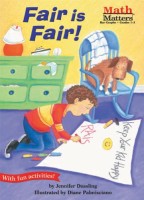
Grade 2
3 skill lessons · 3 math-through-reading
Math
Skill lessons
The mathematics the book carries, taught directly. Printable workbook pages and teacher keys are not available for this book yet.
- 1One Square, One Dollar: Building Marco's Graph the Way the Book Builds It
- 2Maria's Empty Column: Reading a Graph Where One Bar Is Nothing
- 3Two Surveys, Two Graphs: Which Question Did You Ask?
Math + reading
Math through the reading
The same book, entered through a sentence it prints. Change one word in the reading and the numbers change with it.
- 4What One Square Is Worth
- 5Make the Case to Marco's Dad
- 6Three More and Three Fewer Are the Same Three
Reading
Reading and language lessons
The same book read as a text. What a word means in its sentence, how a character is shown, how the writing is put together - no mathematics.
- 7The problem Marco has and the thing that fixes it
- 8Three tries that did not work: reading attempts in order
- 9Towers, a skyscraper, and barely a house
- 10He scratched his chin: reading a person by their actions
- 11Fair is fair: reading the last line against the first trouble
Skill lessons
3 lessons on the mathematics the book carries. Printable workbook pages and teacher keys are not available for this book yet.
1. One Square, One Dollar: Building Marco's Graph the Way the Book Builds It
The book stops the story to narrate how Marco makes his first bar graph, and it gives four moves in order: he spreads out grid paper, he writes the numbers 0 to 10 up the left side, he decides that one square stands for one dollar, and he writes a name under each column. Students carry out those four moves on their own grid to plot the one allowance the book states as a number, Marco's three dollars, and then plot two amounts a partner names. The representation work is the point: a bar means an amount only because a numbered side and a stated key make it mean one, and a child who colours squares without setting those two things first has drawn a picture rather than built a graph. Students say what one square is worth before they colour anything.
Full lesson — 20 minutes
1. Hear the four moves and put them in order (5 min)
Listen to the four sentences that tell how Marco made his graph, then lay four move cards in the order the book gives them: get the grid paper, number the side, decide what one square is worth, name the columns. Say each move aloud as you place its card. Keep the cards where you can see them, because you are about to do all four.
Word preview: grid, column, square
When he got home, he spread out a big piece of grid paper on his bedroom floor.
First, Marco wrote the numbers 0 to 10 on the left side of the grid.
One square stood for each dollar a kid god.
Next, he wrote a kid's name at the bottom of each column.
2. Number the side and say what one square is worth (5 min)
Write the numbers 0 to 10 up the left side of your grid, one number to a line, starting with 0 at the bottom. Then say to your partner, one square stands for one dollar, and touch a single square while you say it. Write a name under each of four columns. Do not colour anything yet.
Word preview: scale
First, Marco wrote the numbers 0 to 10 on the left side of the grid.
Next, he wrote a kid's name at the bottom of each column.
3. Colour the one bar the book gives you a number for (5 min)
The book states one allowance as a number: Marco gets three dollars a week. Colour three squares up from the bottom of Marco's column, counting one, two, three aloud as you fill them, and stop. Run a finger from the top coloured square across to the numbered side and read the number your bar reaches.
Word preview: bar
Marco got $3 a week.
4. Plot a partner's amount and read it back (5 min)
Your partner names an amount from zero to ten dollars for one of the other columns and you colour that many squares from the bottom. Swap and do it again for a third column. Then trade grids: read your partner's two bars by running a finger across to the numbered side, and say the two amounts aloud. If your reading and their amount disagree, count the squares together to find out which of you is right.
Word preview: taller
Short version — 9 minutes
1. Number the side and say what one square is worth (5 min)
Write 0 to 10 up the left side of your grid, one number to a line, with 0 at the bottom. Touch a single square and say, one square stands for one dollar. Write a name under each of four columns.
Word preview: scale
First, Marco wrote the numbers 0 to 10 on the left side of the grid.
One square stood for each dollar a kid god.
2. Colour the one bar the book gives you a number for (4 min)
Colour three squares up from the bottom of Marco's column for the three dollars the book states, counting aloud as you fill them. Run a finger across to the numbered side and read what your bar reaches.
Word preview: bar
Marco got $3 a week.
Three levels
- Support
- Work on a grid that is already numbered 0 to 10 up the left side, so the whole of your work is the key and the bars. Say one square stands for one dollar while touching one square, then colour Marco's three and one amount your partner names, counting each square aloud as you fill it. Nobody writes numbers on the side in this tier and nothing else is reduced.
- At Grade
- Number the side 0 to 10 yourself with 0 at the bottom, write the four names, say the key aloud, then plot Marco's three dollars and two amounts your partner names. Read every finished bar by running a finger across to the numbered side rather than by counting the squares again, so the numbered side is doing the work it was drawn for.
- Extension
- After both grids are finished, redraw Marco's graph on a grid that is only five squares tall and decide what one square must stand for now. Say the new key aloud, plot the same three amounts under it, and say what the two graphs have in common and what changed. The amounts must not change; only what a square is worth may.
English learners
The word column is a near cognate in Spanish, columna, and in French, colonne, and it transfers cleanly here because the book uses it for exactly what a child can point at. The phrase stands for does not transfer and is the one to rehearse: it is idiomatic English for a correspondence, and a child who reads it as an ordinary verb of standing gets nothing from it. Rehearse the frame one square stands for one dollar with a finger on a single square, then one square stands for one chore in the next lesson, so the frame is felt as a slot rather than a fixed sentence. Invite students to say what one square is worth first in their strongest language, then in the frame, and accept the two sentences together as a complete answer.
Materials
- Grid paper, one sheet per pair, at least ten squares tall and five columns wide
- Four move cards per pair, one sentence to a card
- A pencil for each student
- Crayons or coloured pencils in two colours
- A number card set from 0 to 10 for each pair
- Word cards: column, square, scale, stands for
Standards & curriculum
Choose your curriculum above to see the standards for this lesson.
Standards are held back while this plan is edited. Every standard shown here was matched against the supplied wording of this lesson, quoting its steps, so a changed step is no longer the thing that was checked. Undo your changes to bring the standards back — your edits stay in this browser either way.
2. Maria's Empty Column: Reading a Graph Where One Bar Is Nothing
The chore survey hands over four counts attached to named children, and one of them is a zero. Students plot the four counts on a graph they already know how to set up and then answer questions by looking at the bars rather than by recounting the sentences. The concept the lesson is for is the zero: Maria has no chores, so her column is a real column with a real answer in it, and a child who leaves the column off has lost a piece of the data rather than saved themselves some colouring. The book reads its own finished graph only in building words, the tower and houses, and students replace those words with counts and with the names of the children the counts belong to.
Full lesson — 20 minutes
1. Take the four counts out of the sentences (5 min)
Listen to the chore sentences and write each count on the card for the child it belongs to: Sam, Nathan, Maria, Marco. One of the counts is a zero, so write the 0 rather than leaving the card blank. Marco's card gets a five, and you can check that five against the five jobs the book lists for him by counting them on your fingers as they are read.
Word preview: count
He asked them how many chores they had, Sam and Nathan had two chores to do, and had three.
Maria didn't have any chores at all.
Marco had five chores.
He had to sweep the floor, feed the dog, set the table, take out the trash, and make his bed.
2. Plot all four, including the one that is nothing (5 min)
Set up a grid numbered 0 to 5 up the left side and write the four names underneath, one to a column. Colour each bar to the count on that child's card. When you reach Maria, colour nothing and put your finger flat on the bottom line of her column, because that line is where a count of zero sits. Her column stays on the graph.
Word preview: zero
3. Answer four questions from the bars alone (5 min)
Turn the name cards face down. Now answer from the graph only: who has the most chores, who has the fewest, who has the same number as somebody else, and how many children have fewer chores than Marco. Point at the bars you used for each answer before you say it. Turn the cards back up at the end and check yourselves.
Word preview: most, fewest
4. Say what the tower and the houses are worth (5 min)
The book calls Marco's bar the tower and the other bars houses. Say aloud what the tower is worth as a number and what one of the houses is worth as a number, naming the child each time. Then say one sentence about your graph that a person who cannot see it could still understand, and check it against your partner's grid.
Word preview: tallest
This time, Marco had the tower.
Everyone else had houses.
Short version — 9 minutes
1. Take the four counts out of the sentences (4 min)
Write each count on the card for the child it belongs to: Sam, Nathan, Maria, Marco. Write Maria's as a 0 rather than leaving her card blank.
Word preview: count
Maria didn't have any chores at all.
Marco had five chores.
2. Plot all four, including the one that is nothing (5 min)
Number a grid 0 to 5, write the four names underneath, and colour each bar to its count. At Maria's column colour nothing and put a finger on the bottom line, because that is where zero sits. Her column stays on the graph.
Word preview: zero
Three levels
- Support
- Work with the four name cards already filled in, so the reading of the sentences is done and the graph is all that is left. Plot the four bars, colouring nothing at Maria's column and keeping a finger on her bottom line, then answer only the first two questions, who has the most and who has the fewest, pointing at a bar before each answer.
- At Grade
- Take the four counts out of the sentences yourself, plot all four bars including Maria's zero, and answer all four questions from the bars with the name cards face down, pointing at the bars each answer rests on before you say it.
- Extension
- Take the graph to a child who has not heard the story and say, before they look, what they will be able to tell from it and what they will not. Then say what Maria's empty column tells a reader that leaving her column off the graph would have hidden, and what someone reading a graph with her column missing would wrongly believe about how many children were asked.
English learners
The superlatives most and fewest are the load here and they do not transfer as a pair: many languages build them with an ordinary comparative plus a marker, and fewest in particular is a form many fluent adult speakers avoid, so a child who says the least is not making an error of mathematics. Accept least for fewest throughout and rehearse the frame ___ has the most chores and ___ has the fewest, with a hand on the tallest bar and then on the shortest. The word zero is a cognate across many languages and can carry the weight while none and not any are being sorted out. Invite students to say who has the most in their strongest language while pointing, then take the frame, and treat the pointing as part of the answer.
Materials
- A name card for each of Sam, Nathan, Maria and Marco, one set per pair
- A pencil for each student
- Grid paper, one sheet per pair, at least six squares tall and four columns wide
- Crayons or coloured pencils in two colours
- A question strip with the four questions, one per pair
- A sentence frame card reading: ___ has ___ chores, and ___ has ___
- Word cards: most, fewest, zero, bar graph
Standards & curriculum
Choose your curriculum above to see the standards for this lesson.
Standards are held back while this plan is edited. Every standard shown here was matched against the supplied wording of this lesson, quoting its steps, so a changed step is no longer the thing that was checked. Undo your changes to bring the standards back — your edits stay in this browser either way.
3. Two Surveys, Two Graphs: Which Question Did You Ask?
Marco makes two graphs and they are not the same graph twice. The first asks his classmates what their allowances are and the second asks how many chores they have, and because the questions differ the columns mean different things and the bars point the opposite way: Marco's column is barely a house on the first and the tower on the second. Students match survey questions to finished graphs and say which question a given graph could and could not answer. The reasoning is about what a representation carries: a graph answers the question its survey asked and no other, and the same four children can produce two graphs that disagree without either one being wrong.
Full lesson — 20 minutes
1. Hear the two questions Marco asked (5 min)
Listen for the two different questions Marco put to his classmates and say them back in your own words. Write each on a question card. Notice that both surveys ask the same children, and that only the question changes between them.
Word preview: survey
At lunch, Marco asked some kids in his class about their allowances.
The next day, Marco did another survey of his classmates.
He asked them how many chores they had, Sam and Nathan had two chores to do, and had three.
2. Match each question to its graph (5 min)
You have two finished graphs with the numbers on them and the titles torn off. Put a question card beside each graph and say the one thing on the graph that told you which was which. Marco's column is the shortest on one and the tallest on the other, so his bar alone can settle it if you know what the book says about each survey.
Word preview: title
Marco's column was barely a house.
This time, Marco had the tower.
3. Say what each graph cannot tell you (5 min)
Take three questions in turn and decide, for each graph, whether that graph can answer it: how many chores does Sam have, how much allowance does Maria get, and who does the most jobs at home. Say can or cannot for each pairing and give the reason from the columns. Two of the six pairings are cannot, and finding them is the work.
Word preview: cannot
4. Say why the second graph moved the father (5 min)
The first graph made Marco's dad look carefully and change nothing. The second one changed his mind. Say to your partner what the second graph showed that the first one could not, using a number from each graph in what you say. Both of you say it, and listen for whether your partner's reason names a bar or only names a feeling.
Word preview: evidence
But I still think $3 is fair.
I thought $3 was fair, but I was wrong.
Short version — 9 minutes
1. Match each question to its graph (5 min)
Put a question card beside each untitled graph and say the one thing on the graph that told you which was which. Marco's bar is shortest on one and tallest on the other, so his column alone can settle it.
Word preview: title
Marco's column was barely a house.
This time, Marco had the tower.
2. Say what each graph cannot tell you (4 min)
For each graph, say whether it can answer how many chores Sam has and whether it can answer how much allowance Maria gets. Say can or cannot and give the reason from the columns.
Word preview: cannot
Three levels
- Support
- Work with the two graphs already titled, so the matching is done for you, and spend the whole time on the can-or-cannot question with two pairings instead of six. Point at the columns that make your answer true before you say can or cannot, and say the child's name and the number you are pointing at.
- At Grade
- Match both untitled graphs to their questions, then work all six pairings of question and graph, saying can or cannot with a reason drawn from the columns, and finish by saying what the second graph showed that the first could not, with a number from each in your sentence.
- Extension
- Write a third survey question that could be put to the same four children, say what its graph's columns would be, and say what that graph would be able to settle that neither of Marco's two can. Then say what it still could not settle, and why asking more children would not fix that.
English learners
The word survey does not transfer and is worth teaching directly with the action attached: Marco asked, and wrote down what he heard. The modal pair can and cannot is the real load, because many languages express impossibility with a separate word rather than a verb form, and a child may hear cannot as a refusal rather than as a statement about what the graph holds. Rehearse the frame this graph can tell us ___ and cannot tell us ___ with a hand moving to the columns and then to the empty air beside the graph, so the second half has something to point at. Invite students to give the reason in their strongest language first and then to name just the child and the number in English, and count that as a complete reason.
Materials
- Two blank question cards per pair
- A pencil for each student
- Two prepared bar graphs per pair, numbered and named but untitled
- A card with the three questions, one per pair
- A sentence frame card reading: The second graph showed ___, and the first graph could not show that because ___
- Word cards: survey, cannot, title
Standards & curriculum
Choose your curriculum above to see the standards for this lesson.
Standards are held back while this plan is edited. Every standard shown here was matched against the supplied wording of this lesson, quoting its steps, so a changed step is no longer the thing that was checked. Undo your changes to bring the standards back — your edits stay in this browser either way.
Math through the reading
The mathematics is reached through a sentence the book prints: change one word in the reading and the numbers change with it. These carry their own standards, matched against these lessons rather than inherited from the skill ones.
4. What One Square Is Worth
Students build the same allowance data under the book's key and under a swapped key, and say what a square is worth before either bar goes down.
Full lesson — 20 minutes
1. Read the key sentence and say what it fixes (4 min)
Students hear the four sentences that build Marco's graph and pick out the one that says what a square is worth. They say it back with a finger on a single square, then say what the sentence would leave them unable to do if it were missing.
2. Build the book's graph (6 min)
Students number a grid 0 to 10, name four columns, and colour Marco's three dollars plus two amounts a partner names, counting each square aloud as they fill it and reading each finished bar across to the numbered side.
3. Change the key and rebuild (6 min)
Students take the changed key sentence, one square stands for two dollars, say it aloud, and plot the same three amounts on a second grid. They find that one of the three amounts will not fill whole squares and say what they did about it.
4. Say what moved and what stayed (4 min)
Students put the two grids side by side and say one sentence naming something that changed and something that did not, using a number from each grid. A listening pair says which grid was built under which key by looking only at the bars.
Short version — 9 minutes
1. Build the book's graph (6 min)
Students number a grid 0 to 10, name four columns, and colour Marco's three dollars plus two amounts a partner names, counting each square aloud as they fill it and reading each finished bar across to the numbered side.
2. Change the key and rebuild (6 min)
Students take the changed key sentence, one square stands for two dollars, say it aloud, and plot the same three amounts on a second grid. They find that one of the three amounts will not fill whole squares and say what they did about it.
Three levels
- Support
- Work on a grid already numbered 0 to 10 with the four names in place, so the whole of the work is the key and the bars. Say one square stands for one dollar with a finger on a single square before colouring, then colour Marco's three. On the second grid, say one square stands for two dollars and colour a ten-dollar bar, counting the squares aloud in twos. The two grids are compared by putting a hand on the top of each bar rather than by saying a sentence about both.
- At grade
- Number and name both grids, say each key sentence aloud before its first bar, plot Marco's three dollars and two amounts a partner names on the first grid and the same three amounts on the second, and finish by saying one sentence that names a number from each grid and says what changed between them.
- Extension
- Write a key sentence of your own for a grid only four squares tall that can still hold a ten-dollar bar, say it aloud, and plot the same three amounts under it. Then say which of the three grids you would give to somebody who needed to see the exact difference between two children, and why the other two are worse for that job even though all three are true.
English learners
The phrase stands for is the load and it does not transfer: it is idiomatic English for a correspondence, and a child who parses stood as an ordinary verb of standing gets nothing from the book's key sentence. Rehearse the frame one square stands for ___ with a finger on one square, and vary only the slot, so the frame is felt as a pattern rather than memorised whole. The word each is a second load and behaves differently across languages, several of which mark distributivity on the verb or with a repeated noun rather than with a separate word; a child may hear each dollar as all the dollars, which is exactly the misreading that flattens every bar to one square. Say the key sentence while colouring one square and then the next, so each is attached to a repeated action. Invite students to say what a square is worth first in their strongest language and then in the frame, and treat the two together as the complete answer.
Materials
- Grid paper, two sheets per pair, at least ten squares tall and five columns wide
- Crayons or coloured pencils in two colours
- A number card set from 0 to 10 for each pair
- A pencil for each student
- The book's four building sentences, one to a strip, in the order the text gives them
- Two key cards: one square stands for one dollar, and one square stands for two dollars
Standards & curriculum
Choose your curriculum above to see the standards for this lesson.
Standards are held back while this plan is edited. Every standard shown here was matched against the supplied wording of this lesson, quoting its steps, so a changed step is no longer the thing that was checked. Undo your changes to bring the standards back — your edits stay in this browser either way.
5. Make the Case to Marco's Dad
Students take a position on which of Marco's two graphs proves his point, and argue it to the father with the counts from the bars inside what they say.
Full lesson — 20 minutes
1. Hear the two moments and the silence between them (4 min)
Students hear the father's two verdicts, that he still thinks three dollars is fair and later that he was wrong, and notice that the book never says what changed his mind. They say what they would need to know to fill that gap.
2. Count what each graph actually gives you (6 min)
Students put a number on every bar they can and a question mark on every bar they cannot. On the chore graph all four bars get numbers, five, two, two and zero. On the allowance graph only Marco's three gets a number and the rest get question marks, and students say why at least five will not fill them in.
3. Take a position and find your numbers (5 min)
Students choose one of the three positions and pick out the bars that fund it, keeping a finger on each one while they say what it shows. They rehearse the case once to themselves with the frame in front of them.
4. Say it to the father, then say the case against you (5 min)
Students deliver the case aloud as if to Mr. Salano, with at least one child's name and count inside it. Their partner, holding a different position, says back what the case rested on and then gives the strongest thing against it. Either student may change position at the end and say what moved them.
Short version — 9 minutes
1. Count what each graph actually gives you (6 min)
Students put a number on every bar they can and a question mark on every bar they cannot. On the chore graph all four bars get numbers, five, two, two and zero. On the allowance graph only Marco's three gets a number and the rest get question marks, and students say why at least five will not fill them in.
2. Take a position and find your numbers (5 min)
Students choose one of the three positions and pick out the bars that fund it, keeping a finger on each one while they say what it shows. They rehearse the case once to themselves with the frame in front of them.
Three levels
- Support
- Work with both graphs already drawn and the countable bars already numbered, so the whole of the work is the case. Choose between the first two positions only, put a finger on one bar, and say the frame aloud: I think the ___ graph proves it, because ___ has ___ and Marco has ___. The number must be in the sentence, and the frame stays in front of you while you say it.
- At grade
- Number every bar you can and mark the ones you cannot, choose any of the three positions, and make the case aloud to the father with a child's name and a count inside it. Then hear your partner's case and say back what it rested on before giving the strongest thing against your own.
- Extension
- Argue the position you did not choose, as strongly as you can, with its own numbers, and then say which of the two cases you now think is better and what specifically moved you. If you have not changed your mind, say what a person would have to show you on either graph that would.
English learners
A justification in English hangs on because, and the clause order that follows it is not the order many languages use, so a child may put the reason first and the position second and be heard as having no position at all. Accept the reason-first order and rehearse the frame I think ___ because ___ has ___ and Marco has ___, which puts the number in a slot where it cannot be dropped. The comparative more than is the second load and is built differently across languages, several of which mark it on the noun rather than with a separate word. The disagreement vocabulary is worth pre-teaching as a pair, I agree and I do not agree, because a child who cannot say the second one politely will hold their position silently and look as though they have none. Invite students to make the case first in their strongest language and then to say only the graph, the name and the number in English, and count that as a complete case.
Materials
- Two prepared bar graphs per pair, one chore and one allowance, on numbered grids
- A position card set of three, one position to a card
- A sentence frame card reading: I think the ___ graph proves it, because ___ has ___ and Marco has ___
- A pencil for each student
- The father's two verdicts on strips, side by side
- The sentence that gives the class floor: Everyone else got at least $5.
Standards & curriculum
Choose your curriculum above to see the standards for this lesson.
Standards are held back while this plan is edited. Every standard shown here was matched against the supplied wording of this lesson, quoting its steps, so a changed step is no longer the thing that was checked. Undo your changes to bring the standards back — your edits stay in this browser either way.
6. Three More and Three Fewer Are the Same Three
Students match Marco's chore count against a classmate's, count the unmatched counters, and say the relation in both directions over the same counters.
Full lesson — 20 minutes
1. Take the counts from the book (4 min)
Students hear the chore sentences and set out a counter for each chore in two rows, Marco's five in the top row and Sam's two in the bottom row. Maria's row is set out too, and it is empty, which students say aloud rather than skip.
2. Match the rows and find what is left (5 min)
Students line the two rows up from a common left-hand end, pair off the counters that face each other, and slide the unmatched counters slightly to the right. They count the unmatched counters aloud and keep a finger on them.
3. Say it both ways over the same counters (7 min)
Without moving the counters or lifting the finger, students say Marco has three more chores than Sam and then Sam has three fewer chores than Marco, and say what their finger is touching each time. They repeat the pair for Marco against Maria, where the count left over is all five and the reversal changes the word to fewer over an empty row.
4. Rebuild from a sentence (4 min)
One partner turns away while the other says one of their sentences aloud, and the listener builds both rows from that sentence and the smaller count alone. The two mats are compared, and any disagreement is traced to the sentence rather than to the counters.
Short version — 9 minutes
1. Match the rows and find what is left (5 min)
Students line the two rows up from a common left-hand end, pair off the counters that face each other, and slide the unmatched counters slightly to the right. They count the unmatched counters aloud and keep a finger on them.
2. Say it both ways over the same counters (7 min)
Without moving the counters or lifting the finger, students say Marco has three more chores than Sam and then Sam has three fewer chores than Marco, and say what their finger is touching each time. They repeat the pair for Marco against Maria, where the count left over is all five and the reversal changes the word to fewer over an empty row.
Three levels
- Support
- Stay with Marco against Sam only and work on a two-row mat with the pairing lines already drawn, so the counters fall into place. Lay five counters in the top row and two in the bottom, slide the leftover counters right, and count them. Say both sentences with a finger on those counters, taking the frames one at a time from the card. Nothing about the counting is reduced; only the second comparison is set aside.
- At grade
- Build both comparisons, Marco against Sam and Marco against Maria, matching from a common end each time and counting what is left over. Say both directions of each relation with a finger on the unmatched counters, then rebuild a partner's arrangement from one spoken sentence and the smaller count.
- Extension
- Say both sentences for Marco against Maria and then explain why the reversed sentence is still true when one row has nothing in it, using the counters to show what fewer means over an empty row. Then find the one pair of children in this book whose counts are the same and say what happens to both sentences there, and why neither more nor fewer will do.
English learners
Comparative syntax is the whole load of this lesson and it is where the pairing most often fails children whose arithmetic is fine. English marks the comparison twice, on the adjective and again with than, and many languages mark it once or place the thing being compared against before the adjective rather than after it, so a child may produce Marco has more chores Sam and be understood as having made a small slip when in fact the sentence is complete in their first language. Accept it and supply than. Fewer is the harder half: several languages use one word for less and fewer, and English speakers themselves commonly say less here, so a child who says three less chores has made no mathematical error and should be moved to fewer without their answer being marked wrong. Rehearse the two frames as a matched pair with the finger never leaving the counters, ___ has three more than ___ and ___ has three fewer than ___, so the reversal is attached to a physical constant. Invite students to say the relation first in their strongest language while pointing at the leftover counters, then take the frames.
Materials
- Counters, at least ten per pair
- A two-row mat per pair with a common left-hand starting line
- A frame card reading: ___ has ___ more chores than ___, and ___ has ___ fewer chores than ___
- The chore sentences on strips, one child to a strip
- A large two-row mat for the class demonstration of matching
Standards & curriculum
Choose your curriculum above to see the standards for this lesson.
Standards are held back while this plan is edited. Every standard shown here was matched against the supplied wording of this lesson, quoting its steps, so a changed step is no longer the thing that was checked. Undo your changes to bring the standards back — your edits stay in this browser either way.
Reading and language lessons
5 lessons on the reading and language the book carries - what a word means in its sentence, how a character is shown, how a text is built. No mathematics: these are matched against the English language arts curricula, which are a different and smaller set than the mathematics ones.
7. The problem Marco has and the thing that fixes it
The book states Marco's problem plainly and then states, much later, what changed his father's mind. Students read the problem span and say the problem in one sentence, read the toast span and say the solution in one sentence, and then say the pair as a problem-and-solution statement. Nothing here asks a student to read or build a graph.
Full lesson — 20 minutes
1. Read the opening trouble and say the problem (5 min)
Read the passage below aloud with your partner. Say Marco's problem in one sentence beginning with Marco's problem is that. Then point to the sentence in the passage that made you sure.
Word preview: problem, allowance, fair
Marco sighed. The other kids in his class had bigger allowances. Marco got $3 a week. Everyone else got at least $5. It wasn't fair. No matter what his dad said.
2. Read the toast and say what solved it (5 min)
Read this passage aloud. Find the sentence where Marco's dad says what changed his mind. Say the solution in one sentence beginning with What finally worked was.
Word preview: convinced, toast
Mr. Salano called for a toast. Here's to Marco. His bar graphs were clear and powerful. They convinced me. I thought $3 was fair, but I was wrong.
3. Check that the solution really answers the problem (4 min)
Both passages are printed here. Read your problem sentence, then your solution sentence, and tell your partner whether the second one really answers the first. Name the sentence in each passage that supports you.
Marco sighed. The other kids in his class had bigger allowances. Marco got $3 a week. Everyone else got at least $5. It wasn't fair. No matter what his dad said.
Mr. Salano called for a toast. Here's to Marco. His bar graphs were clear and powerful. They convinced me. I thought $3 was fair, but I was wrong.
4. Say the problem and the solution as one statement (6 min)
Both passages are printed here again. Say the whole thing in one turn: Marco's problem was ______, and it was solved when ______. Your partner listens for both halves and checks each half against the passage it came from.
Marco sighed. The other kids in his class had bigger allowances. Marco got $3 a week. Everyone else got at least $5. It wasn't fair. No matter what his dad said.
Mr. Salano called for a toast. Here's to Marco. His bar graphs were clear and powerful. They convinced me. I thought $3 was fair, but I was wrong.
Short version — 9 minutes
1. Read the opening trouble and say the problem (4 min)
Read the passage aloud and say Marco's problem in one sentence beginning with Marco's problem is that, then point to the sentence that made you sure.
Word preview: problem, allowance, fair
Marco sighed. The other kids in his class had bigger allowances. Marco got $3 a week. Everyone else got at least $5. It wasn't fair. No matter what his dad said.
2. Read the toast and say what solved it (5 min)
Read the passage printed here aloud. Find the sentence where Marco's dad says what changed his mind, and say the solution beginning with What finally worked was.
Word preview: convinced, toast
Mr. Salano called for a toast. Here's to Marco. His bar graphs were clear and powerful. They convinced me. I thought $3 was fair, but I was wrong.
Three levels
- Support
- Work the problem passage only. The teacher reads it twice and offers two spoken statements of the problem, one true to the passage and one not, and the student picks the true one and says why using a sentence from the passage.
- At Grade
- Say both halves and check that the solution answers the problem.
- Extension
- Say the problem and solution, then say why the father's own words in the toast are stronger proof than the narrator saying he changed his mind would have been.
English learners
Problem and solution are told here across two far-apart spans, so the work is holding one idea while reading another, not new vocabulary. Rehearse Marco's problem was ______, and it was solved when ______ aloud before either half is filled. Invite each half first in the strongest language and then in English, with both passages in view.
Materials
- Printed passage: Marco's problem
- Printed passage: the toast
- Word cards: problem, allowance, fair, convinced, toast
Standards & curriculum
Choose your curriculum above to see the standards for this lesson.
Standards are held back while this plan is edited. Every standard shown here was matched against the supplied wording of this lesson, quoting its steps, so a changed step is no longer the thing that was checked. Undo your changes to bring the standards back — your edits stay in this browser either way.
8. Three tries that did not work: reading attempts in order
Before the graphs, Marco tries a sign, then sticky notes, then a calendar appointment, and the book reports each failure in a short flat sentence. Students read the two spans that carry those tries, list them in order, and read aloud the sentence that shows each one failing. The skill is following repeated attempts and finding the sentence that reports the result.
Full lesson — 20 minutes
1. Read the sign try and find how it went (5 min)
Read the passage below aloud. Tell your partner what Marco tried here. Then read aloud the one sentence that tells you it did not work.
Word preview: sign, eyebrows
When Mr. Solano came home, Marco was walking back and forth in front of the TV. He was carrying a sign that said, keep your kid happy, raise his allowance. The only thing Mr. Salano raised was his eyebrows.
2. Read the next two tries and find how they went (5 min)
Read this passage aloud. Name the two more things Marco tries here, in the order the passage gives them. Read aloud the sentence that says the first one failed and the words that say the second one did too.
Word preview: sticky notes, calendar, hints
The next day, Marco left little sticky notes all over the house. They said, don't forget, raise Marco's allowance. His dad didn't take the hints. Early Saturday morning, Marco wrote a note on his dad's calendar, 10am, meet Marco about money. Mr. Salano laughed and took Marco to the zoo instead.
3. List all three tries in the book's order (4 min)
Both passages are printed here. Write the three tries on your slate in the order the book gives them, one line each, and put a cross beside each one because none of them worked.
When Mr. Solano came home, Marco was walking back and forth in front of the TV. He was carrying a sign that said, keep your kid happy, raise his allowance. The only thing Mr. Salano raised was his eyebrows.
The next day, Marco left little sticky notes all over the house. They said, don't forget, raise Marco's allowance. His dad didn't take the hints. Early Saturday morning, Marco wrote a note on his dad's calendar, 10am, meet Marco about money. Mr. Salano laughed and took Marco to the zoo instead.
4. Retell the three tries and their endings (6 min)
Both passages are printed here again. Retell all three tries in one turn using First, Then and After that, and after each one read aloud from the page the words that show it failed.
When Mr. Solano came home, Marco was walking back and forth in front of the TV. He was carrying a sign that said, keep your kid happy, raise his allowance. The only thing Mr. Salano raised was his eyebrows.
The next day, Marco left little sticky notes all over the house. They said, don't forget, raise Marco's allowance. His dad didn't take the hints. Early Saturday morning, Marco wrote a note on his dad's calendar, 10am, meet Marco about money. Mr. Salano laughed and took Marco to the zoo instead.
Short version — 9 minutes
1. Read the sign try and find how it went (4 min)
Read the passage aloud, say what Marco tried, then read aloud the sentence that tells you it did not work.
Word preview: sign, eyebrows
When Mr. Solano came home, Marco was walking back and forth in front of the TV. He was carrying a sign that said, keep your kid happy, raise his allowance. The only thing Mr. Salano raised was his eyebrows.
2. Read the next two tries and find how they went (5 min)
Read the passage printed here aloud. Name the two further tries in order and read aloud the words that show each one failed.
Word preview: sticky notes, calendar, hints
The next day, Marco left little sticky notes all over the house. They said, don't forget, raise Marco's allowance. His dad didn't take the hints. Early Saturday morning, Marco wrote a note on his dad's calendar, 10am, meet Marco about money. Mr. Salano laughed and took Marco to the zoo instead.
Three levels
- Support
- Work one try. Read the sign passage and find the single sentence that reports the result. Say what Marco tried and what his father did, and stop there.
- At Grade
- List all three tries in order and read the failure sentence for each.
- Extension
- Say why the writer puts three failed tries in before the one that works, using the failure sentences to show they get funnier rather than sadder.
English learners
The failure sentences are short and idiomatic, and raised was his eyebrows and didn't take the hints will not carry over from a first language, so gloss both as pictures before reading. Rehearse First Marco tried ______. It did not work because ______. Invite the retelling in the strongest language first, keeping both passages printed in front of the student.
Materials
- Printed passage: the sign
- Printed passage: notes and the calendar
- Slates
- Retelling checklist
- Word cards: sign, eyebrows, sticky notes, calendar, hints
Standards & curriculum
Choose your curriculum above to see the standards for this lesson.
Standards are held back while this plan is edited. Every standard shown here was matched against the supplied wording of this lesson, quoting its steps, so a changed step is no longer the thing that was checked. Undo your changes to bring the standards back — your edits stay in this browser either way.
9. Towers, a skyscraper, and barely a house
One printed sentence run describes columns of squares as tall towers, a skyscraper and barely a house. None of these are buildings; they are pictures the writer uses so a reader sees height at a glance. Students read the span, say which picture is tallest and which is shortest, and then say what each picture tells them about the person it sits over. They compare pictures, not numbers.
Full lesson — 20 minutes
1. Read the description and name the three pictures (5 min)
Read the passage below aloud. Name the three building words the writer uses. Tell your partner that none of them are really buildings.
Word preview: towers, skyscraper, column
When Marco was finished, Sam, Maria, and Nathan had tall towers of squares above their names. Anne had a skyscraper. Marco's column was barely a house.
2. Put the three pictures in order from tallest to shortest (5 min)
The passage is printed here again. With your partner put the three building words in order from tallest picture to shortest picture. Say the order aloud and give the word from the passage that decided the shortest one.
Word preview: barely
When Marco was finished, Sam, Maria, and Nathan had tall towers of squares above their names. Anne had a skyscraper. Marco's column was barely a house.
3. Say what each picture tells you about a person (4 min)
Working from the passage printed here, tell your partner what the writer wants you to feel about Marco when his column is called barely a house rather than a short column.
When Marco was finished, Sam, Maria, and Nathan had tall towers of squares above their names. Anne had a skyscraper. Marco's column was barely a house.
4. Make one building picture of your own (6 min)
Read the passage printed here once more for the pattern. Then pick something tall and something short in this room and describe each one with a building word the way the writer does. Say both aloud and say which one you would rather have.
When Marco was finished, Sam, Maria, and Nathan had tall towers of squares above their names. Anne had a skyscraper. Marco's column was barely a house.
Short version — 9 minutes
1. Read the description and name the three pictures (4 min)
Read the passage aloud, name the three building words, and say that none of them are really buildings.
Word preview: towers, skyscraper, column
When Marco was finished, Sam, Maria, and Nathan had tall towers of squares above their names. Anne had a skyscraper. Marco's column was barely a house.
2. Put the three pictures in order from tallest to shortest (5 min)
The passage is printed here again. Put the three building words in order tallest to shortest and give the word from the passage that decided the shortest.
Word preview: barely
When Marco was finished, Sam, Maria, and Nathan had tall towers of squares above their names. Anne had a skyscraper. Marco's column was barely a house.
Three levels
- Support
- Order two pictures, not three. Take skyscraper and house only, say which is taller in real life, and then say which name the writer gave Marco.
- At Grade
- Order all three pictures and say what each one tells a reader about its person.
- Extension
- Say what the word barely does in the last sentence, and say how the sentence would land if the writer had written a house instead of barely a house.
English learners
Skyscraper is a compound whose parts a student may know separately, so build it from sky and scraper before reading. Barely is the hard word, and it is a hedge rather than a size, so gloss it as almost not. Rehearse ______ is taller than ______, and invite the ordering first in the strongest language.
Materials
- Printed passage: towers and a skyscraper
- Slates
- Word cards: towers, skyscraper, column, barely
Standards & curriculum
Choose your curriculum above to see the standards for this lesson.
Standards are held back while this plan is edited. Every standard shown here was matched against the supplied wording of this lesson, quoting its steps, so a changed step is no longer the thing that was checked. Undo your changes to bring the standards back — your edits stay in this browser either way.
10. He scratched his chin: reading a person by their actions
In one printed span the father does four things and says nothing, and the very next printed span says the boy could not tell whether that was good or bad. The book withholds the thought on purpose. Students name the four actions, say what each might mean, and then read the following span to see the story admit that the actions were unreadable. The skill is inference, and knowing when a text refuses to settle one.
Full lesson — 20 minutes
1. Read the four actions and list them (5 min)
Read the passage below aloud. List on your slate the four things Marco's dad does here. Notice with your partner that he says nothing at all.
Word preview: scratched, mumbled
Mr. Salano spent a whole 10 minutes looking at Marco's new bar graph. He scratched his chin. He mumbled to himself. He walked away without saying anything.
2. Guess what each action might mean (5 min)
The passage is printed here again. For each action on your list tell your partner one thing it might mean about what the dad is thinking. Say Maybe it means before each guess.
Word preview: maybe
Mr. Salano spent a whole 10 minutes looking at Marco's new bar graph. He scratched his chin. He mumbled to himself. He walked away without saying anything.
3. Read what the book says next about the guessing (4 min)
Read this next passage aloud. Tell your partner what Marco himself decides about the four actions, and read aloud the sentence that says he could not tell.
Word preview: couldn't tell
Marco couldn't tell if that was good or bad. He decided to act like it was good. But it wasn't good. It was great!
4. Say your best guess and say why it stays a guess (6 min)
Both passages are printed here. Give your best guess about what the dad was thinking, name the action it rests on, and then read aloud the sentence from the second passage that shows even Marco could not be sure.
Mr. Salano spent a whole 10 minutes looking at Marco's new bar graph. He scratched his chin. He mumbled to himself. He walked away without saying anything.
Marco couldn't tell if that was good or bad. He decided to act like it was good. But it wasn't good. It was great!
Short version — 9 minutes
1. Read the four actions and list them (4 min)
Read the passage aloud, list the four things Marco's dad does, and notice he says nothing at all.
Word preview: scratched, mumbled
Mr. Salano spent a whole 10 minutes looking at Marco's new bar graph. He scratched his chin. He mumbled to himself. He walked away without saying anything.
2. Guess what each action might mean (5 min)
The passage is printed here again. For each action say one thing it might mean, beginning with Maybe it means.
Word preview: maybe
Mr. Salano spent a whole 10 minutes looking at Marco's new bar graph. He scratched his chin. He mumbled to himself. He walked away without saying anything.
Three levels
- Support
- List the actions and guess about one of them only. The teacher mimes each of the four actions first, and the student names the action before guessing at its meaning.
- At Grade
- Guess at all four actions and then read what the book decides.
- Extension
- Say why a writer would show four actions and no thoughts here, and say what the story would lose if the passage had ended with a sentence saying what the dad was thinking.
English learners
The four verbs are the load here: scratched, mumbled, walked away and spent looking are all concrete and easy to mime, and miming them first removes most of the difficulty. Rehearse Maybe it means he ______. Invite the guess in the strongest language first and then move it into the English frame.
Materials
- Printed passage: he scratched his chin
- Slates
- Printed passage: good or bad
- Word cards: scratched, mumbled, maybe, couldn't tell
Standards & curriculum
Choose your curriculum above to see the standards for this lesson.
Standards are held back while this plan is edited. Every standard shown here was matched against the supplied wording of this lesson, quoting its steps, so a changed step is no longer the thing that was checked. Undo your changes to bring the standards back — your edits stay in this browser either way.
11. Fair is fair: reading the last line against the first trouble
The story ends on the same three words as its title, and those words first appear as the boy's complaint that things are not fair. Students read the opening trouble span and the closing span, find the word fair in both, and say what has changed between them. The whole comparison is a language one: same words, different meaning.
Full lesson — 20 minutes
1. Read the ending and find the last three words (5 min)
Read the passage below aloud. Say the last three words of the passage to your partner. Tell them where else you have seen those words on this book.
Word preview: fair, ending
That night, Marco taped up his two bar graphs. He lay back in bed and looked at them. He smiled. Just a week ago, it seemed as if his dad would never change his mind. Now he understood what Marco had been trying to show him all along. Fair is fair.
2. Read the opening trouble and find the same word (5 min)
Read this passage aloud. Find the word fair in it and read that sentence on its own. Tell your partner who is saying it is not fair and what they mean.
Word preview: allowance
Marco sighed. The other kids in his class had bigger allowances. Marco got $3 a week. Everyone else got at least $5. It wasn't fair. No matter what his dad said.
3. Say what changed between the two uses of fair (4 min)
Both passages are printed here. Tell your partner what is different about the word fair at the start and the word fair at the end, using a sentence from each passage as your proof.
Marco sighed. The other kids in his class had bigger allowances. Marco got $3 a week. Everyone else got at least $5. It wasn't fair. No matter what his dad said.
That night, Marco taped up his two bar graphs. He lay back in bed and looked at them. He smiled. Just a week ago, it seemed as if his dad would never change his mind. Now he understood what Marco had been trying to show him all along. Fair is fair.
4. Say why the ending is a good place to stop (6 min)
Both passages are printed here again. Tell your partner why Fair is fair is a satisfying last line for this story rather than just the last thing that happened. Name one sentence from each passage that supports you.
Marco sighed. The other kids in his class had bigger allowances. Marco got $3 a week. Everyone else got at least $5. It wasn't fair. No matter what his dad said.
That night, Marco taped up his two bar graphs. He lay back in bed and looked at them. He smiled. Just a week ago, it seemed as if his dad would never change his mind. Now he understood what Marco had been trying to show him all along. Fair is fair.
Short version — 9 minutes
1. Read the ending and find the last three words (4 min)
Read the passage aloud, say its last three words, and say where else you have seen them on this book.
Word preview: fair, ending
That night, Marco taped up his two bar graphs. He lay back in bed and looked at them. He smiled. Just a week ago, it seemed as if his dad would never change his mind. Now he understood what Marco had been trying to show him all along. Fair is fair.
2. Read the opening trouble and find the same word (5 min)
Read the passage printed here aloud. Find the word fair, read that sentence on its own, and say who is speaking and what they mean.
Word preview: allowance
Marco sighed. The other kids in his class had bigger allowances. Marco got $3 a week. Everyone else got at least $5. It wasn't fair. No matter what his dad said.
Three levels
- Support
- Find the word fair in both passages and read the sentence around it in each, without saying yet what changed. Say only who is happy at the start and who is happy at the end.
- At Grade
- Say what changed between the two uses of fair with a sentence from each passage as proof.
- Extension
- Say what the title promises a reader before the story starts, and whether the last line keeps that promise or turns it around, using both printed passages.
English learners
Fair carries several senses in English, including a village fair, so fix the sense as right and equal before reading. The two-sentence frame At the start, fair means ______. At the end, it means ______ carries the whole lesson and is worth rehearsing empty. Invite both halves in the strongest language first.
Materials
- Printed passage: the ending
- Printed passage: Marco's problem
- Word cards: fair, ending, allowance
Standards & curriculum
Choose your curriculum above to see the standards for this lesson.
Standards are held back while this plan is edited. Every standard shown here was matched against the supplied wording of this lesson, quoting its steps, so a changed step is no longer the thing that was checked. Undo your changes to bring the standards back — your edits stay in this browser either way.