Kitten Castle
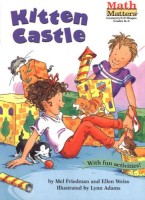
Grade 1
3 skill lessons · 3 math-through-reading
Math
Skill lessons
The mathematics the book carries, taught directly. Printable workbook pages and teacher keys are not available for this book yet.
- 1Does It Fit? Four Kittens, Four Boxes
- 2Curvy, Square, High, Low
- 3Nine Pets, and Then Four More
Math + reading
Math through the reading
The same book, entered through a sentence it prints. Change one word in the reading and the numbers change with it.
- 4Each Kitten, Its Own Room
- 5How Many Rooms Does the Castle Have?
- 6Were Nine Pets Enough?
Reading
Reading and language lessons
The same book read as a text. What a word means in its sentence, how a character is shown, how the writing is put together - no mathematics.
- 7Fudge and Trouble: names that come from what a kitten does
- 8The kittens must go, and what Tom says to do
- 9Too boxy: why one box failed and the next one worked
- 10They called. They looked. They put out snacks.
- 11Retelling how the kittens were saved
Skill lessons
3 lessons on the mathematics the book carries. Printable workbook pages and teacher keys are not available for this book yet.
1. Does It Fit? Four Kittens, Four Boxes
The book stages the same test four times: a kitten is placed in a box, and the box is kept or swapped. No box in this story is ever given a size and no kitten is ever given one either, so every decision is made by putting the two things together and looking. That is what students do here. A cardboard cat either sits wholly inside a box floor or hangs over an edge, and the child says which, and names the part that hangs. The concept is that a comparison can be settled by direct placement without any number, and that the answer still has a reason that can be spoken. Fit here is not a word about feeling; it is a claim about an outline and an edge that a partner can check by looking.
Full lesson — 20 minutes
1. Hear the four rejections (4 min)
Sit with a hand on the table and listen for the four times a kitten is put into a box. Put a thumb up when the kitten stays and a flat hand down when the kitten comes back out. Say out loud what was wrong with the box each time it came out, using the words the book used.
Word preview: fit, inside
But when they put Fudge inside, she jumped right out.
Fudge likes curvy places explained Anna, not square ones with corners.
2. Try one kitten against three boxes (6 min)
Take the cardboard cat named Fudge, who is cut curvy with no straight side, and press her flat onto the floor of each of the three boxes in turn. She fits only when her whole outline sits on the floor with nothing hanging over an edge. Say aloud for each box whether Fudge fits or does not fit, and if she does not, put a finger on the part of her that hangs over.
Word preview: fits, over the edge
Right away, Fudge hopped in and curled up.
3. Match four cats to four boxes (6 min)
Now four cardboard cats sit in front of the four boxes and every cat must end in a box of its own. Try a cat, and when it hangs over an edge take it out and try the next box. Say the sentence out loud each time: this one fits, or this one does not fit, and why.
Word preview: each, its own
Let's give each kitten its own special room, said Anna.
4. Say the rule for one box (4 min)
Hold up the box nobody could use and say aloud what would have to change about it for the cat to fit, naming the part that hung over. Then hold up the box that took a cat first try and say why that one worked. Both sentences say fits or does not fit and name a part of the cat and a part of the box.
Word preview: does not fit
It's round, so they switched boxes.
Short version — 9 minutes
1. Try one kitten against three boxes (5 min)
Press the curvy cardboard cat named Fudge flat onto the floor of each of three boxes in turn. She fits only when her whole outline sits inside with nothing over an edge. Say fits or does not fit for each box, and point at what hangs over.
Word preview: fits
Right away, Fudge hopped in and curled up.
2. Match four cats to four boxes (4 min)
Four cardboard cats and four boxes, and every cat ends in a box of its own. Try a cat, and when it hangs over an edge take it out and try the next. Say aloud each time whether it fits and why.
Word preview: each
Let's give each kitten its own special room, said Anna.
Three levels
- Support
- Work with two boxes rather than four, the round hat box and the square one, and one cat, the curvy Fudge. Keep the same placing and the same spoken sentence, and let the child point at the overhang instead of describing it in words.
- At Grade
- Four cats and four boxes, each cat placed until it has a box of its own, with fits or does not fit spoken for every trial and the overhanging part named.
- Extension
- After all four cats are placed, swap two cats between their boxes and say what goes wrong in each, so the child argues that a particular cat needs a particular box rather than that any cat needs any box. Then cut a fifth box lid to make a cat fit that did not.
English learners
Fits carries the whole lesson and it is a verb some children will meet here for the first time. What transfers is the act: a child who has put a shape into a box knows the idea before knowing the word. The English preposition pairing is the hard part, since in, inside and into are one word in many languages and children may say the cat fits on the box. Rehearse the frame it fits in this box and it does not fit in this box before the placing starts, and let a child point at the overhang and say the noun alone if the full sentence is not yet available. Invite a child to say fits and does not fit in their strongest language and teach the class both words.
Materials
- The book read aloud
- A curvy cardboard cat, one per pair
- Three open boxes per pair: one square, one round hat box, one narrow
- A set of four cardboard cats per pair: curvy, tall, wide, small
- A sorting mat with four box outlines drawn on it
- A sentence strip reading: it fits because, it does not fit because
- Word cards: fits, inside, over the edge
Standards & curriculum
Choose your curriculum above to see the standards for this lesson.
Standards are held back while this plan is edited. Every standard shown here was matched against the supplied wording of this lesson, quoting its steps, so a changed step is no longer the thing that was checked. Undo your changes to bring the standards back — your edits stay in this browser either way.
2. Curvy, Square, High, Low
Tom asks the four words out loud and the book never answers him, which makes them a set worth handling rather than a list to recite. Two of them are about the outline of a container and two are about where it sits, and children keep mixing the pairs because English uses tall for both a thing and a place. Here a finger run round a rim settles curvy against square by touch before sight, and two builds settle high against low by standing them on one table and looking along the top. The representation being built is a two-way sort a child can defend: this side by the corner my finger turned, that side by the top I had to look up at. Nothing is measured and no unit appears, because the book supplies none.
Full lesson — 20 minutes
1. Sort the four room words (4 min)
Listen to the four words Tom asks about and hold up the card for each one as it is read. Then put the four cards on the table and say which two are about the shape of a thing and which two are about how high it sits. Say each word aloud once with a hand shape that shows it.
Word preview: curvy, square, high, low
Curvy, square, high, low?
2. Feel curvy and square (5 min)
With eyes closed, reach into the feely bag and take one container. Run a finger all the way round its rim without lifting, and say curvy if the finger never stops and square if the finger turns a corner. Open your eyes and check by looking, and put the container on the curvy side or the square side of the mat.
Word preview: corner, rim
She was a cuddly kitten who liked to curl up in curvy places.
Fudge hated corners.
3. Build a tall one and a low one (7 min)
Stack boxes to build a tower a cardboard cat can sit on top of, and beside it build a low bed the same cat can step into without climbing. Put the cat on each in turn and say aloud which one it has to jump up to and which one it steps into. Then say which of your two builds is the taller by standing them side by side on the same table top.
Word preview: tall, taller, stack
He needs a tall box so he can jump off it.
They stacked their tallest box on top of fudges.
4. Say which room for which kitten (4 min)
Take the four kitten cards and the four rooms the class has built, and say for each kitten which room suits it, using one of the four words. Each sentence names the kitten, names the word, and gives the reason the book gives or a reason from the building. A partner may disagree and say a different word, and both say why.
Word preview: suits
Who knows, Anna said, trouble is full of surprises.
Short version — 9 minutes
1. Feel curvy and square (4 min)
Eyes closed, take a container from the feely bag and run a finger all the way round its rim. Say curvy if the finger never stops and square if it turns a corner. Look to check, then put it on the curvy side or the square side of the mat.
Word preview: corner
Fudge hated corners.
2. Build a tall one and a low one (5 min)
Stack boxes into a tower a cardboard cat sits on top of, and beside it a low bed the same cat steps into. Put the cat on each and say which it jumps up to and which it steps into. Stand both on the same table top and say which is taller.
Word preview: tall, taller
He needs a tall box so he can jump off it.
Three levels
- Support
- Work with curvy and square only, four containers instead of six, and let the finger-round-the-rim test stand alone as the answer without adding the looking check. Keep the spoken word for every container.
- At Grade
- All four words, six containers sorted by touch and checked by sight, and two builds compared by standing them on one table top.
- Extension
- Find a container the two-way sort cannot take, one with a curved side and a corner both, and say what the class should do with it. Then build a tower that is taller than a partner's and prove it without moving either, by finding a third thing taller than one and shorter than the other.
English learners
Curvy and square are the pair that transfers most easily here because the finger does the explaining, and a child can pass the test in silence and then take the word. High and low are the pair that does not: many languages use one word for tall and high and mark the difference elsewhere, so a child may say a low box for a short cat and mean something exact that English hears as wrong. Rehearse this one is taller and this one is lower with two builds in front of the child before any sorting begins. A child may say the four words in their strongest language first and match each to a card, and the class should hear both.
Materials
- Word cards for curvy, square, high, low, one set per pair
- The book read aloud
- A feely bag with six containers per pair, three round and three with corners
- A two-side sorting mat labelled curvy and square
- Six stacking boxes per pair
- A cardboard cat, one per pair
- Four kitten cards naming Fudge, Ambush, Lovely and Trouble
- Word cards: curvy, square, high, low, taller
Standards & curriculum
Choose your curriculum above to see the standards for this lesson.
Standards are held back while this plan is edited. Every standard shown here was matched against the supplied wording of this lesson, quoting its steps, so a changed step is no longer the thing that was checked. Undo your changes to bring the standards back — your edits stay in this browser either way.
3. Nine Pets, and Then Four More
This is the only place in the book where anything is counted, and the book supplies both the parts and the answer: five, two, one and one more animal, and then the number nine spoken by Mr. Cole in the next breath. That makes it a real check rather than a bare drill, because a child who reaches ten or eight has something to go back to. Students lay out one counter per animal in labelled rows, touch and count to nine, and hear the book's own number against theirs. Then four counters join for the kittens and the count goes on from nine rather than restarting, which is the fluency being built. Every total here is spoken and touched; nothing is written in symbols and nothing is added on paper.
Full lesson — 20 minutes
1. Set out the pets (5 min)
Listen for Mr. Cole's list of pets and put out a counter for each animal as it is named, keeping the goldfish counters in one row, the hamsters in a second and the canary in a third. Add one more counter for Streaks at the end of the third row. Do not count yet.
Word preview: plus
We have five goldfish, two hamsters, one canary, plus streaks.
2. Count them all and check the book (6 min)
Touch each counter once and say one number word for each touch, going along one row before starting the next, and stop on the last one. Say the number you reached out loud. Then listen to Mr. Cole's own number and say whether it agrees with yours, and if it does not, count again touching more slowly.
Word preview: how many
Aren't nine pets enough?
3. Add the kittens and count on (5 min)
Put four more counters in a new row for the kittens. Keep a finger on the number you already had for the pets and count on from it, one number word for each new counter, without going back to the start. Say the new number out loud and say how you got it.
Word preview: count on, more
There, off in a corner, lay streaks the family cat, and nestled beside her were four tiny new kittens.
4. Say both numbers (4 min)
Point at the first arrangement and say the pet number, then point at the whole table and say the number with the kittens. Say which is more and how you know, using the rows in front of you rather than a rule. A partner listens and repeats the two numbers back.
Word preview: more
Short version — 9 minutes
1. Set out the pets (4 min)
Listen for Mr. Cole's list of pets and put out one counter for each animal as it is named, goldfish in one row, hamsters in a second, canary in a third, and one more for Streaks. Do not count yet.
Word preview: plus
We have five goldfish, two hamsters, one canary, plus streaks.
2. Count them all and check the book (5 min)
Touch each counter once and say one number word per touch, finishing one row before the next. Say your number aloud, then hear Mr. Cole's number and say whether the two agree. If they do not, count again more slowly.
Word preview: how many
Aren't nine pets enough?
Three levels
- Support
- Count the pets only, and stop before the kittens join. Put the counters in a single line rather than four rows so no row change interrupts the count, and let the child use the number line to check where they stopped.
- At Grade
- Nine pets counted in four rows against the book's own number, then four kittens added and counted on from nine without restarting.
- Extension
- Cover the pet rows with a cloth once the nine is known, and count on to the kittens with the nine unseen, saying the number aloud at each new counter. Then rearrange all thirteen counters into a different set of rows and say, before counting, whether the number changed.
English learners
The counting sequence itself often transfers whole, since many children arrive already counting fluently in another language and only need the English number words. The touch-and-say pairing at the row change is where it breaks down: a child who counts fluently in one language may double-count the first counter of a new row while switching. Rehearse one touch, one word across a row break before the pets are set out. Counting aloud in the strongest language and then again in English is welcome here and the two counts should reach the same number, which is worth saying to the class.
Materials
- Nine counters per pair
- A row mat with four labelled rows
- A number line to nine on the table
- Four more counters per pair
- A sentence strip reading: before there were, now there are
- Word cards: plus, how many, count on
Standards & curriculum
Choose your curriculum above to see the standards for this lesson.
Standards are held back while this plan is edited. Every standard shown here was matched against the supplied wording of this lesson, quoting its steps, so a changed step is no longer the thing that was checked. Undo your changes to bring the standards back — your edits stay in this browser either way.
Math through the reading
The mathematics is reached through a sentence the book prints: change one word in the reading and the numbers change with it. These carry their own standards, matched against these lessons rather than inherited from the skill ones.
4. Each Kitten, Its Own Room
Students build the castle twice, once from the book's sentence and once from a sentence with one word changed, and count the two different castles.
Full lesson — 20 minutes
1. Hear the sentence and hold the kittens (4 min)
Each pair takes four cardboard kittens and names them as the book does. They hear Anna's sentence read twice and hold up one kitten for each time they hear that a kitten is being provided for. They say aloud, before any building starts, how many rooms they think the castle will need and why.
2. Build from the book's sentence (6 min)
Pairs build the castle from Anna's own sentence, taking one box at a time and putting one kitten in it, until no kitten is left over. They count their boxes aloud, touching each once, and say the number. Then they point at each box in turn and say which kitten lives there.
3. Build from the changed sentence (6 min)
The teacher reads the same sentence with each changed to the, and pairs build a second castle beside the first from the new words alone. They count that castle's boxes aloud and say the number. When asked which box is Fudge's, they answer from what is in front of them.
4. Say what the word did (4 min)
With both castles on the table, each child says the two counts aloud and then says what changed between them, naming the word that changed. A partner listens and says whether the account matches the two builds they can both see.
Short version — 9 minutes
1. Build from the book's sentence (6 min)
Pairs build the castle from Anna's own sentence, taking one box at a time and putting one kitten in it, until no kitten is left over. They count their boxes aloud, touching each once, and say the number. Then they point at each box in turn and say which kitten lives there.
2. Build from the changed sentence (6 min)
The teacher reads the same sentence with each changed to the, and pairs build a second castle beside the first from the new words alone. They count that castle's boxes aloud and say the number. When asked which box is Fudge's, they answer from what is in front of them.
Three levels
- Support
- Build only from the book's sentence, with two kittens rather than four, and let the child place the kittens while the partner passes the boxes. The child says the count aloud and names one box and its kitten. The changed sentence is heard and acted out by the teacher with the same two kittens while the child watches and says how many boxes that castle has.
- At grade
- Both castles built by the pair from the two sentences, both counted aloud, and each of the four rooms in the first castle named with its kitten.
- Extension
- Add a fifth kitten to the table without changing either sentence, and say what each castle must now do about it. Then write a third sentence of their own, using each, that would make the castle need a different number of rooms, and build it to show that it does.
English learners
Each is the load-bearing word and it is hard in a particular way: many languages mark distribution with a repeated noun or a suffix rather than a separate word, so a child may understand the idea perfectly and still not hear which English word carried it. The act rescues this, because a child who builds four rooms has demonstrated the reading whatever they can say about it. Rehearse the frame this box is for Fudge before the building begins, and let a child point at a box and name a kitten if the full frame is not yet available. Invite children to say the sentence in their strongest language and to say which word in it does the work of each; the class benefits from hearing that different languages put the work in different places.
Materials
- Four cardboard kittens per pair, labelled Fudge, Ambush, Lovely and Trouble
- A supply of at least six open boxes per pair
- Two building mats per pair, labelled first castle and second castle
- Anna's sentence written on a strip
- The same sentence on a second strip with the one word changed
- The book
Standards & curriculum
Choose your curriculum above to see the standards for this lesson.
Standards are held back while this plan is edited. Every standard shown here was matched against the supplied wording of this lesson, quoting its steps, so a changed step is no longer the thing that was checked. Undo your changes to bring the standards back — your edits stay in this browser either way.
5. How Many Rooms Does the Castle Have?
Students answer a number the book never prints, and hold up the sentence that made them sure of it.
Full lesson — 20 minutes
1. Notice that nobody says it (4 min)
Children hear the last part of the story again and put a hand up the moment the castle is finished. They are asked how many rooms it has and find that they cannot point to anybody saying so. Each child says aloud what they think the answer might be, before any evidence is looked at.
2. Find the sentences that help (6 min)
Six sentence strips lie face down, four of which fix the number and two of which carry numbers that do not. Pairs turn them over one at a time, read each aloud with the teacher, and put it in the helps pile or the does not help pile, saying which pile and why before turning the next.
3. Build the matching and count (6 min)
Using the strip about the kittens and the strip with Anna's rule, pairs put four kitten cards on the mat and draw or place one room beside each. They touch and count the rooms aloud. Then they check it the other way, laying out the three rooms already built and adding the one Anna says is left.
4. Say the number and hold up the strip (4 min)
Each child says the number aloud while holding up the strip that made them sure, and says in one sentence what that strip told them. They then hold up a strip from the does not help pile and say why a number on it was no use.
Short version — 9 minutes
1. Find the sentences that help (6 min)
Six sentence strips lie face down, four of which fix the number and two of which carry numbers that do not. Pairs turn them over one at a time, read each aloud with the teacher, and put it in the helps pile or the does not help pile, saying which pile and why before turning the next.
2. Say the number and hold up the strip (4 min)
Each child says the number aloud while holding up the strip that made them sure, and says in one sentence what that strip told them. They then hold up a strip from the does not help pile and say why a number on it was no use.
Three levels
- Support
- Work with three strips rather than six, the two that fix the number and one that does not, and let the teacher read each aloud twice. The matching is done with the four kitten cards already on the mat so the child places rooms rather than both. The child says the number and points at the strip rather than reading it back.
- At grade
- Six strips sorted into helps and does not help, the matching built from the two strips the pair chose, the count spoken, and the answer given with the strip held up and its content said aloud.
- Extension
- Take the two strips that were put aside and say what question each one would answer, so a number that was no use here is shown to be useful somewhere else. Then find the one thing Mr. Cole would still need to know that no strip in the set supplies, and say why the castle's four rooms do not tell him how many pets the house now has.
English learners
The reasoning a child must do here is short and the language around it is long, which is the situation this note exists for. A child can hold up the right strip and place four rooms before they can say the sentence I know because. Accept the strip held up with the number said, and treat that as the full answer while the sentence frame is still being built. Rehearse it says four kittens, so four rooms with the strip in hand before the sorting starts, and let a child say the number in their strongest language first and then in English, since the number word is often the piece that arrives last rather than first. Where two children share a language, let them sort the strips talking to each other in it and report only the pile names in English.
Materials
- Six sentence strips per pair, printed from the book's own sentences
- Four kitten cards per pair
- A matching mat with four room outlines
- Two labelled trays: helps and does not help
- The book
- A large copy of the four sentences that fix the number
Standards & curriculum
Choose your curriculum above to see the standards for this lesson.
Standards are held back while this plan is edited. Every standard shown here was matched against the supplied wording of this lesson, quoting its steps, so a changed step is no longer the thing that was checked. Undo your changes to bring the standards back — your edits stay in this browser either way.
6. Were Nine Pets Enough?
Students take a side on Mr. Cole's own question and say it to him with a number in it.
Full lesson — 20 minutes
1. Hear the question and take a first side (4 min)
Children hear the dinner scene again and put a hand on the yes mat or the no mat to say whether nine was enough. They do this before counting anything, and each child says their side aloud so it is on record and can be changed later.
2. Count the house both ways (7 min)
Pairs lay out counters for the pets in labelled rows and count to nine. They put the four kittens on a separate mat, count them, then slide the mat next to the rows and count on to find the whole house. They then slide it away again and say what the nine on its own shows.
3. Say it to Mr. Cole (6 min)
One child in each pair speaks to Mr. Cole, played by the partner standing in the den at the end of the story, and gives their position in one sentence with their number in it. The partner says the number back before answering with their own. Then they swap roles.
4. Change a mind or keep it (3 min)
Each child returns to the yes mat or the no mat and either stays or moves, and says which number they heard from their partner that made them stay or move. Moving is a good outcome and is named as one.
Short version — 9 minutes
1. Count the house both ways (7 min)
Pairs lay out counters for the pets in labelled rows and count to nine. They put the four kittens on a separate mat, count them, then slide the mat next to the rows and count on to find the whole house. They then slide it away again and say what the nine on its own shows.
2. Say it to Mr. Cole (6 min)
One child in each pair speaks to Mr. Cole, played by the partner standing in the den at the end of the story, and gives their position in one sentence with their number in it. The partner says the number back before answering with their own. Then they swap roles.
Three levels
- Support
- Count the pets to nine and the kittens to four and stop there, without the whole-house count. Speak to Mr. Cole with the frame I think ___ because there are ___ pets and ___ kittens, filled from the two mats in front of the child. The partner repeats the two numbers back, which is the whole of the listening job at this tier.
- At grade
- Both counts built, a position spoken to Mr. Cole with its number inside it, the partner's number repeated back, and a final choice to stay or move with a reason.
- Extension
- Take the side the child did not choose and make the best case for it out loud, using its number rather than their own. Then answer the hardest fact for whichever side they end on: that Trouble was missing when Mr. Cole came home, so the quiet house he judged had one fewer kitten in it than the house he agreed to keep.
English learners
Argument is the hardest register in these lessons and the counters carry most of it. A child can slide the kitten mat next to the pet rows and say thirteen, and that gesture with that number is already a position stated. Rehearse the frame I think Mr. Cole was right because before the counting, and again with the number filled in from the child's own mats. Repeating a partner's number back is deliberately the easiest job in the pairing and is the right entry point for a child new to English, since it requires listening and one number word. Let children argue in their strongest language and give only the position and the number in English, and let a pair who share a language do the whole exchange in it and report the two numbers to the class.
Materials
- Thirteen counters per pair
- A row mat labelled goldfish, hamsters, canary, Streaks
- A separate kitten mat that can be slid beside the rows
- A yes mat and a no mat for the class floor
- The book
- The dinner sentences on a strip
- A sentence frame reading: I think Mr. Cole was right because, I think Mr. Cole was wrong because
Standards & curriculum
Choose your curriculum above to see the standards for this lesson.
Standards are held back while this plan is edited. Every standard shown here was matched against the supplied wording of this lesson, quoting its steps, so a changed step is no longer the thing that was checked. Undo your changes to bring the standards back — your edits stay in this browser either way.
Reading and language lessons
5 lessons on the reading and language the book carries - what a word means in its sentence, how a character is shown, how a text is built. No mathematics: these are matched against the English language arts curricula, which are a different and smaller set than the mathematics ones.
7. Fudge and Trouble: names that come from what a kitten does
Two printed spans each name a kitten and then say plainly what that kitten does. Students read each span, say the doing part in their own words, and then say why the name fits. The lesson works entirely on the reasons the book prints beside each name, so it never asks a child to count kittens.
Full lesson — 20 minutes
1. Read about the chocolate kitten (5 min)
Read the passage below aloud with your teacher. Tell your partner two things this kitten likes to do. Then say why Fudge is a good name for her.
Word preview: chocolate, cuddly, curvy
The kittens grew cuter every day. One had a chocolate coat, and a named her Fudge. She was a cuddly kitten who liked to curl up in curvy places. Fudge hated corners.
2. Read about the fourth kitten (5 min)
Read the passage below aloud. Tell your partner two things this kitten does. Then find the sentence that says how he got his name and read it out loud.
Word preview: tear around, oddest
The fourth kitten liked to tear around the house knocking things over. He disappeared for hours, then turned up in the oddest places. That kitten is trouble, Mr. Cole said, and that's how trouble got his name.
3. Match each name to its doing sentence (4 min)
Both passages are printed here. Point to the one sentence in each that best explains the name. Say the two sentences aloud to your partner, one after the other.
The kittens grew cuter every day. One had a chocolate coat, and a named her Fudge. She was a cuddly kitten who liked to curl up in curvy places. Fudge hated corners.
The fourth kitten liked to tear around the house knocking things over. He disappeared for hours, then turned up in the oddest places. That kitten is trouble, Mr. Cole said, and that's how trouble got his name.
4. Name a pet the same way (6 min)
Look at the two passages printed here for how it is done. Then think of an animal you know, or make one up, and give it a name that comes from what it does. Say your name aloud and then say the doing sentence that explains it.
The kittens grew cuter every day. One had a chocolate coat, and a named her Fudge. She was a cuddly kitten who liked to curl up in curvy places. Fudge hated corners.
The fourth kitten liked to tear around the house knocking things over. He disappeared for hours, then turned up in the oddest places. That kitten is trouble, Mr. Cole said, and that's how trouble got his name.
Short version — 9 minutes
1. Read about the chocolate kitten (4 min)
Read the passage aloud with your teacher, say two things this kitten likes to do, and say why Fudge is a good name for her.
Word preview: chocolate, cuddly, curvy
The kittens grew cuter every day. One had a chocolate coat, and a named her Fudge. She was a cuddly kitten who liked to curl up in curvy places. Fudge hated corners.
2. Read about the fourth kitten (5 min)
Read the passage aloud, say two things this kitten does, and read out loud the sentence that says how he got his name.
Word preview: tear around, oddest
The fourth kitten liked to tear around the house knocking things over. He disappeared for hours, then turned up in the oddest places. That kitten is trouble, Mr. Cole said, and that's how trouble got his name.
Three levels
- Support
- Work one kitten. Read the Fudge passage twice with the teacher and say one doing thing, then say the name. Do not take the second kitten until the first sentence comes out whole.
- At Grade
- Read both passages and say why each name fits.
- Extension
- Say which of the two names tells you more about its kitten, and find the sentence in the other passage that would have to change for the names to swap.
English learners
Naming an animal after what it does is common across languages, so the idea transfers even when the words do not. Fudge is a food word that will be new, and tear around is an idiom meaning to run wildly, not to rip. Rehearse This kitten is called ______ because she ______, and invite the reason first in the strongest language.
Materials
- Printed passage: the kitten called Fudge
- Printed passage: how Trouble got his name
- Word cards: chocolate, cuddly, curvy, tear around, oddest
Standards & curriculum
Choose your curriculum above to see the standards for this lesson.
Standards are held back while this plan is edited. Every standard shown here was matched against the supplied wording of this lesson, quoting its steps, so a changed step is no longer the thing that was checked. Undo your changes to bring the standards back — your edits stay in this browser either way.
8. The kittens must go, and what Tom says to do
The father states the problem in five words and a friend states the plan in one sentence a page later. Students read both short spans, say the problem aloud, say the plan aloud, and then say the two together. Both spans are short enough for a grade one reader to hold whole.
Full lesson — 20 minutes
1. Read what the dad says and name the trouble (5 min)
Read the short passage below aloud with your teacher. Say what Mr. Cole wants to happen to the kittens. Say it in one sentence starting with The problem is.
Word preview: must go
That's it, said Mr. Cole. These kittens must go.
2. Read what Tom says and name the plan (5 min)
Read this short passage aloud. Say what Tom thinks they should make. Say it in one sentence starting with The plan is to.
Word preview: plan, their own
Exactly, Tom said. We need to make the kittens a place of their own.
3. Say the problem and the plan together (4 min)
Both short passages are printed here. Say them as one turn: The problem is ______, so the plan is to ______. Point to the passage each half came from.
That's it, said Mr. Cole. These kittens must go.
Exactly, Tom said. We need to make the kittens a place of their own.
4. Read the finished castle and say if the plan worked (6 min)
Read this new passage aloud. Tell your partner whether it looks like Tom's plan happened, and say what in this passage shows it. Then say the whole thing: the problem, the plan, and what happened.
Word preview: towers, flags, amazing
They added towers, pointy tops and flags. The castle looked amazing.
Short version — 9 minutes
1. Read what the dad says and name the trouble (4 min)
Read the short passage aloud with your teacher and say what Mr. Cole wants to happen, starting with The problem is.
Word preview: must go
That's it, said Mr. Cole. These kittens must go.
2. Read what Tom says and name the plan (5 min)
Read this short passage aloud and say what Tom thinks they should make, starting with The plan is to.
Word preview: plan, their own
Exactly, Tom said. We need to make the kittens a place of their own.
Three levels
- Support
- Say the problem only. Read the first passage with the teacher three times and say These kittens must go in your own words. Add the plan on another day.
- At Grade
- Say the problem and the plan as one turn.
- Extension
- Say why a place of their own would fix what Mr. Cole is unhappy about, using the words of the first printed passage to say what he is unhappy about.
English learners
A place of their own is a possessive phrase that many languages build differently, and the meaning here is a room just for them. Rehearse The problem is ______, so the plan is to ______ empty before filling it. Invite both halves in the strongest language first, then in English, with both short passages in view.
Materials
- Printed passage: the kittens must go
- Printed passage: Tom's plan
- Printed passage: the finished castle
- Word cards: must go, plan, their own, towers, flags, amazing
Standards & curriculum
Choose your curriculum above to see the standards for this lesson.
Standards are held back while this plan is edited. Every standard shown here was matched against the supplied wording of this lesson, quoting its steps, so a changed step is no longer the thing that was checked. Undo your changes to bring the standards back — your edits stay in this browser either way.
9. Too boxy: why one box failed and the next one worked
Two printed spans run a small experiment: a square box is refused, and then a round box is accepted, with the reason stated in between. Students read the failure, say what went wrong, read the fix, and say why the second box worked. Round and square are described here, not measured.
Full lesson — 20 minutes
1. Read what happened with the first box (5 min)
Read the passage below aloud with your teacher. Say what Fudge did when they put her in the box. Then read aloud the sentence where Anna guesses why.
Word preview: jumped, boxy
Anna and Tom put a large box next to lovelies and painted it. But when they put Fudge inside, she jumped right out. I'll bet it's too boxy Anna said.
2. Read what they tried next (5 min)
Read this passage aloud. Say what kind of box they use this time. Then read aloud the sentence that shows Fudge liked it.
Word preview: curvy, round, hopped
Fudge likes curvy places explained Anna, not square ones with corners. Well, how about that hat box, Tom said. It's round, so they switched boxes. Right away, Fudge hopped in and curled up.
3. Say why the second box worked (4 min)
Both passages are printed here. Say the whole thing in one turn: The first box did not work because ______, and the second box worked because ______. Point at the sentence in each passage that gave you your answer.
Anna and Tom put a large box next to lovelies and painted it. But when they put Fudge inside, she jumped right out. I'll bet it's too boxy Anna said.
Fudge likes curvy places explained Anna, not square ones with corners. Well, how about that hat box, Tom said. It's round, so they switched boxes. Right away, Fudge hopped in and curled up.
4. Use the same reason on a new kitten (6 min)
Read this passage aloud. It tells you what a different kitten likes to do. Using the way Anna worked out Fudge's box in the passages you have read, say what kind of room this kitten would want and say the sentence here that told you.
Word preview: closet, asleep
He slipped into Mr. Cole's closet and pulled down all his ties. Then he fell asleep in a shoe.
Short version — 9 minutes
1. Read what happened with the first box (4 min)
Read the passage aloud with your teacher, say what Fudge did, and read aloud the sentence where Anna guesses why.
Word preview: jumped, boxy
Anna and Tom put a large box next to lovelies and painted it. But when they put Fudge inside, she jumped right out. I'll bet it's too boxy Anna said.
2. Read what they tried next (5 min)
Read this passage aloud, say what kind of box they use this time, and read aloud the sentence showing Fudge liked it.
Word preview: curvy, round, hopped
Fudge likes curvy places explained Anna, not square ones with corners. Well, how about that hat box, Tom said. It's round, so they switched boxes. Right away, Fudge hopped in and curled up.
Three levels
- Support
- Work the second passage only. Read it with the teacher and answer one question, did Fudge like this box, using the last sentence of the passage as the answer.
- At Grade
- Say why the first box failed and the second worked, using a sentence from each passage.
- Extension
- Say what Anna knows about Fudge that lets her guess before she tries, and find the words in either printed passage that carry that knowledge.
English learners
Boxy is invented on the spot from the word box and means shaped like a box, and no first language will supply it, so build it from box aloud before reading. Curvy and square are describing words here, not shapes to be drawn. Rehearse It did not work because ______, and invite the reason in the strongest language first.
Materials
- Printed passage: Fudge jumps out
- Printed passage: the hat box
- Printed passage: the closet and the shoe
- Word cards: jumped, boxy, curvy, round, hopped, closet, asleep
Standards & curriculum
Choose your curriculum above to see the standards for this lesson.
Standards are held back while this plan is edited. Every standard shown here was matched against the supplied wording of this lesson, quoting its steps, so a changed step is no longer the thing that was checked. Undo your changes to bring the standards back — your edits stay in this browser either way.
10. They called. They looked. They put out snacks.
One printed span runs three short sentences with the same shape, all starting with They and all ending with the same name, and then breaks the pattern with a But sentence. Students read it aloud, clap the three matching sentences, and hear the fourth one land differently. The claim about repetition sits beside the passage that shows it.
Full lesson — 20 minutes
1. Read the searching passage aloud (5 min)
Read the passage below aloud with your teacher, twice. The second time, put your hands together once for each sentence.
Word preview: called, snacks
All the kittens came. Except trouble. Anna and Tom called trouble. They looked for trouble. They put snacks out for trouble. But trouble didn't come.
2. Find the three sentences that match (5 min)
The passage is printed here again. Point to the three sentences in a row that all start with the same word. Read those three aloud one after another and say the word they all end with.
Word preview: same
All the kittens came. Except trouble. Anna and Tom called trouble. They looked for trouble. They put snacks out for trouble. But trouble didn't come.
3. Find the sentence that breaks the pattern (4 min)
The passage is printed here once more. Point to the last sentence. Say how it is different from the three before it, and say the word it starts with.
Word preview: but
All the kittens came. Except trouble. Anna and Tom called trouble. They looked for trouble. They put snacks out for trouble. But trouble didn't come.
4. Read it aloud so a listener hears the pattern break (6 min)
Read the passage printed here to your partner. Say the three matching sentences quickly and evenly, then stop before the last one and say it slowly. Ask your partner whether they heard the change.
All the kittens came. Except trouble. Anna and Tom called trouble. They looked for trouble. They put snacks out for trouble. But trouble didn't come.
Short version — 9 minutes
1. Read the searching passage aloud (4 min)
Read the passage aloud with your teacher twice, clapping once for each sentence the second time.
Word preview: called, snacks
All the kittens came. Except trouble. Anna and Tom called trouble. They looked for trouble. They put snacks out for trouble. But trouble didn't come.
2. Find the three sentences that match (5 min)
The passage is printed here again. Point to the three sentences in a row that start with the same word, read them aloud, and say the word they all end with.
Word preview: same, but
All the kittens came. Except trouble. Anna and Tom called trouble. They looked for trouble. They put snacks out for trouble. But trouble didn't come.
Three levels
- Support
- Clap the sentences with the teacher and stop there. Say only how many sentences start with the same word, pointing at each one as you count it.
- At Grade
- Find the three matching sentences and the one that breaks the pattern.
- Extension
- Say what a reader feels when the fourth sentence does not match the three before it, and say what would be lost if the writer had written only one searching sentence instead of three.
English learners
Repetition for effect is used in stories in every language, so the device transfers directly; what needs support is hearing English sentence boundaries in a run of short sentences. Read the passage aloud with a clear pause at each full stop before any question is asked. Rehearse These three sentences all start with ______.
Materials
- Printed passage: looking for Trouble
- Word cards: called, snacks, same, but
Standards & curriculum
Choose your curriculum above to see the standards for this lesson.
Standards are held back while this plan is edited. Every standard shown here was matched against the supplied wording of this lesson, quoting its steps, so a changed step is no longer the thing that was checked. Undo your changes to bring the standards back — your edits stay in this browser either way.
11. Retelling how the kittens were saved
Three printed spans mark the beginning, middle and end of the rescue: Anna phones for help, the friends build, and the missing kitten turns up. Students read each span, say what happens in it in one sentence, and then retell all three in order with First, Then and Last. Nothing here is counted.
Full lesson — 20 minutes
1. Read how it starts (5 min)
Read the passage below aloud with your teacher. Say in one sentence what Anna does here. Start your sentence with First.
Word preview: phoned, save
The next day Anna phoned her best friend Tom. Come over quick, she said, You've got to help me save the kittens. Then she told him all about her problem. Tom came right over.
2. Read what they build (5 min)
Read this passage aloud. Say in one sentence what Anna and Tom make. Start your sentence with Then.
Word preview: towers, pointy, flags
They added towers, pointy tops and flags. The castle looked amazing.
3. Read how it ends (4 min)
Read this passage aloud. Say in one sentence what Anna finds. Start your sentence with Last.
Word preview: noise, closet
All of a sudden they heard a noise coming from the hall closet. A little muing noise. Anna opened the door. Trouble, she said. There you are.
4. Retell all three parts in one turn (6 min)
All three passages are printed here in the book's order. Retell the whole rescue to your partner in one turn using First, Then and Last. Your partner listens for all three words and for the parts staying in order.
The next day Anna phoned her best friend Tom. Come over quick, she said, You've got to help me save the kittens. Then she told him all about her problem. Tom came right over.
They added towers, pointy tops and flags. The castle looked amazing.
All of a sudden they heard a noise coming from the hall closet. A little muing noise. Anna opened the door. Trouble, she said. There you are.
Short version — 9 minutes
1. Read how it starts (4 min)
Read the passage aloud with your teacher and say in one sentence what Anna does, starting with First.
Word preview: phoned, save
The next day Anna phoned her best friend Tom. Come over quick, she said, You've got to help me save the kittens. Then she told him all about her problem. Tom came right over.
2. Retell all three parts in one turn (5 min)
All three passages are printed here in the book's order. Retell the rescue in one turn using First, Then and Last while your partner listens for the order words.
Word preview: towers, noise
The next day Anna phoned her best friend Tom. Come over quick, she said, You've got to help me save the kittens. Then she told him all about her problem. Tom came right over.
They added towers, pointy tops and flags. The castle looked amazing.
All of a sudden they heard a noise coming from the hall closet. A little muing noise. Anna opened the door. Trouble, she said. There you are.
Three levels
- Support
- Retell two parts. Use the phoning passage and the castle passage only, with First and Then on a strip you touch as you say them.
- At Grade
- Retell all three parts in one turn with First, Then and Last said aloud.
- Extension
- Retell all three parts, then say which part could not come first and point to the words in that printed passage that fix its place.
English learners
The three order words sit at the front of the sentence in English and are followed by a small pause, and that slot is what to rehearse. Say First, Then, Last as a chant while touching three fingers. Invite the whole retelling in the strongest language first and then rebuild it in English, keeping the three words in place while the rest grows.
Materials
- Printed passage: Anna phones Tom
- Printed passage: the finished castle
- Printed passage: finding Trouble
- Retelling checklist
- Word cards: phoned, save, towers, pointy, flags, noise, closet
Standards & curriculum
Choose your curriculum above to see the standards for this lesson.
Standards are held back while this plan is edited. Every standard shown here was matched against the supplied wording of this lesson, quoting its steps, so a changed step is no longer the thing that was checked. Undo your changes to bring the standards back — your edits stay in this browser either way.