Lights Out!
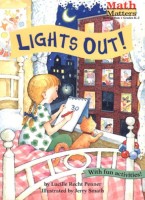
Grade 2
5 skill lessons
Math
Skill lessons
The mathematics the book carries, taught directly. Printable workbook pages and teacher keys are not available for this book yet.
- 1Count Back the Way the Notebook Does
- 2Break a Ten to Take Six
- 3Keep the Watcher's Notebook
- 4Does That Count?
- 5Three Bedtimes, One Hour Apart
Math + reading
Math through the reading
The same book, entered through a sentence it prints. Change one word in the reading and the numbers change with it.
No math-through-reading lessons for this book yet.
Reading
Reading and language lessons
The same book read as a text. What a word means in its sentence, how a character is shown, how the writing is put together - no mathematics.
No reading and language lessons for this book yet.
Skill lessons
5 lessons on the mathematics the book carries. Printable workbook pages and teacher keys are not available for this book yet.
1. Count Back the Way the Notebook Does
The boy in this story watches thirty-two windows go dark and keeps the count as they do. Three of his four early drops are small enough to say in one breath, and he tells the reader exactly how he handles them: he counts back to get the answer. Students put a counter on all thirty-two squares of a window card, take the counters off in the story's own order, and say the next number back as each one comes off, one counter to one number word. They land on twenty-six, then twenty-five, then twenty-one, and check each landing against the sentence the book prints for it. The counting is the drill. What earns the period is the last drop, where the words are four more lights out and the count has to go down by four, so a child who hears more and reaches for counters ends four away from the number the next line prints.
Full lesson — 20 minutes
1. Fill the building and take the first two lights off (5 min)
Lay the window card flat and put a yellow counter on all thirty-two squares, one to a square, so every light in the building across the street is on. Read the two sentences on the quote card and take two counters off. Touch what is left one square at a time and say the count out loud; you should land on thirty. Write 30 on the first row of your notebook strip, the way the boy does, with nothing beside it yet.
Word preview: notebook
There were 32 lights before.
Now there are only 30.
Two people are already asleep.
I write 30 in my notebook.
2. Count back four to twenty-six (6 min)
Four windows go dark in three goes: a girl's, then two on the floor above, then one more. Take the counters off in that order and say the next number back as each one comes off, twenty-nine, twenty-eight, twenty-seven, twenty-six. One counter, one number word, and no skipping. Write 30 minus 4 is 26 on the next row and check your answer against the boy's own sentence on the drop card.
Word preview: minus, back
A girl on the first floor turns out her light.
A minute later, two lights go out on the second floor.
That's four lights.
I write 30 minus 4 in my notebook.
I count back to get the answer.
There are 26 lights to go.
3. Count back one for the parrot (5 min)
A woman covers her parrot's cage with a cloth and then turns out her light. Lay the cloth square over one counter and decide how many counters come off. It is one counter and one number word, twenty-five, because the cloth over the cage is not a light. Take it off, say the count, and write 26 minus 1 is 25 on the next row.
Word preview: count
A woman comes into a room and covers her parrot's cage with a cloth.
Then she turns out her light.
No, I can't count the parrot.
It's only one light.
There are 25 lights left.
4. Count back four more to twenty-one (4 min)
On the twins' floor a light goes out for the boys, then their mother's, then two more. Take four counters off one at a time and count back, twenty-four, twenty-three, twenty-two, twenty-one. Write 25 minus 4 is 21 on the next row. Then say what the words four more did to your count, and whether the word more made your number bigger or smaller.
Word preview: more
She kisses them and turns out the light.
She turns out her light too.
Then two more lights go off on the same floor.
That's four more lights out.
21 still to go.
Short version — 9 minutes
1. Count back four to twenty-six (5 min)
Your window card comes to you with thirty counters already on it. Four windows go dark, one and then two and then one more; take a counter off for each and say the next number back as it comes off, twenty-nine, twenty-eight, twenty-seven, twenty-six. Write 30 minus 4 is 26 and check it against the sentence on the card.
Word preview: minus, back
That's four lights.
I write 30 minus 4 in my notebook.
There are 26 lights to go.
2. Count back four more to twenty-one (4 min)
First take one counter off for the woman's window, which the story does next, and count back one so the card shows twenty-five. Then four more windows go dark on the twins' floor: take four counters off one at a time, counting back twenty-four, twenty-three, twenty-two, twenty-one, and write 25 minus 4 is 21. Then say whether the word more made your number bigger or smaller.
Word preview: more
It's only one light.
That's four more lights out.
21 still to go.
Three levels
- Support
- Keep the window card at thirty and work only two of the drops, the four lights and the parrot's one. Every counter stays on the table where it can be touched, and you say the next number back out loud as each one comes off, so no count has to be held in the head. Write only the two answers, 26 and 25; the rest of each sentence is printed on the drop card for you to read.
- At Grade
- Work all four drops in the story's order, taking counters off one at a time and saying one number word for each, and write the whole sentence for each drop: 30 minus 4 is 26, then 26 minus 1 is 25, then 25 minus 4 is 21. Check every answer against the book's own sentence before starting the next row.
- Extension
- Start at thirty and do the last three drops again with a sheet of paper laid over the counters, so nothing can be touched or seen, saying the count back aloud and lifting the paper only to check. Then say which of the three you would least want to count back this way, and what it is about the size of the number coming off that makes counting back quick or slow.
English learners
Counting back is the same act in every language, and a child who takes one counter off for each number word and lands on twenty-six has done this step's mathematics whatever they can say about it. Two English words are worth rehearsing before any counter moves. Back here does not mean behind you; it means going down through the number words, and a child who hears it as going again will start over at thirty. And out, in lights out, means the light is off, not that the lights are outdoors. Rehearse one frame with the counters in hand: ___ minus ___ is ___, filling it with the count you started from, the number of counters you took off, and the number you landed on. Invite a child to do the counting and to argue about how many counters the covered cage is worth in their strongest language, and to give the three numbers of the frame in English, which is what this step collects.
Materials
- A window card per pair, thirty-two squares ruled in four rows of eight, one square to a window
- Thirty-two yellow counters per pair, one to a window
- A notebook strip per pair, ruled into six rows
- A pencil per child
- Four drop cards per pair, one for each set of windows that goes dark, carrying the sentences that report it
- A small cloth square per pair, to lay over one counter for the parrot's cage
- Word cards: minus, back, out
Standards & curriculum
These lessons are being matched against curricula now.
Standards are held back while this plan is edited. Every standard shown here was matched against the supplied wording of this lesson, quoting its steps, so a changed step is no longer the thing that was checked. Undo your changes to bring the standards back — your edits stay in this browser either way.
2. Break a Ten to Take Six
Twice in this book the boy stops counting back and does something else. Six windows go dark at once when he is at twenty-one, and he says he has to regroup to get the answer; eight go dark on one floor when he is at fifteen, and the answer is printed with no method beside it. Students build twenty-one out of two sticks of ten and one loose cube, try to take six loose cubes off, find one cube where six are needed, and break a stick to make the take possible. They do it again for fifteen minus eight, then sort the story's five drops by the two sentences the boy says about his own method. Only two of the five cards can go on a mat, because the boy says how he got an answer only twice, and noticing that is half the lesson.
Full lesson — 20 minutes
1. Build twenty-one and try to take six (5 min)
Build the count the boy is at: two sticks of ten and one loose cube, twenty-one. Read the sentence that says six lights go out and try to take six loose cubes away. Say out loud what stops you, which is that there is one loose cube on the table and six are needed. Leave the sticks alone for now.
Word preview: enough
21 still to go.
All of a sudden, six lights go out.
2. Break one stick and take the six (6 min)
Break one stick of ten into ten single cubes and push them beside the cube you already had, then count them: eleven. Now take six of those away. Count what is left on the table, one whole stick and five single cubes, and say the number: fifteen. Write 21 minus 6 is 15 on your strip and read the boy's own two sentences beside it.
Word preview: regroup
Now I have to regroup to get the answer.
21 minus 6 is 15.
3. Do it again to take eight (5 min)
You are holding one stick and five cubes, fifteen, which is where the boy is when a whole floor goes dark. Eight lights go out. Five single cubes is not eight, so break the last stick and count the cubes: fifteen. Take eight away and count what is left: seven. Write 15 minus 8 is 7 and check it against the boy's sentence.
Word preview: enough, regroup
All the other lights on his floor go out.
There were eight lights on that floor.
15 minus 8 is 7.
7 lights to go and I will be the last one up.
4. Sort the five drops by what the boy did (4 min)
Spread the five drop cards. Only two of them can go on a mat, because only twice does the boy say how he got an answer: read the sentence at the head of each mat and find the card it belongs to. Lay the other three cards between the mats, because the story prints their answers and never says how. Then take the regrouping card, 21 minus 6, and do it the other way as well, counting back along the number path, twenty, nineteen, eighteen, seventeen, sixteen, fifteen. Say how many number words that took, and why fifteen comes out whichever way you go.
Word preview: back
This is easy.
I count back to get the answer.
Now I have to regroup to get the answer.
Short version — 9 minutes
1. Break one stick and take the six (5 min)
Twenty-one is already built for you as two sticks of ten and one loose cube. Six lights go out and one cube is not six, so break a stick, push the ten new cubes beside the one you had, and count them: eleven. Take six away, count what is left, and write 21 minus 6 is 15.
Word preview: regroup, enough
All of a sudden, six lights go out.
Now I have to regroup to get the answer.
21 minus 6 is 15.
2. Do it again to take eight (4 min)
You are left holding one stick and five cubes. Eight lights go out on one floor, and five is not eight, so break the last stick and count: fifteen. Take eight away, count what is left, and write 15 minus 8 is 7.
Word preview: enough
There were eight lights on that floor.
15 minus 8 is 7.
Three levels
- Support
- Work only twenty-one minus six, and work it with the sticks and cubes never leaving the table. Break the stick, push the ten new cubes beside the one you had, and count all eleven out loud before taking any away. Then take the six off one cube at a time, saying the count as you go. The sentence to say at the end is: I broke a ten because one cube was not enough.
- At Grade
- Work twenty-one minus six and then fifteen minus eight, breaking a stick each time, writing the sentence for each, and saying each time why the stick had to come apart. Then sort the five drop cards against the boy's own two sentences and say which three cards go between the mats and why.
- Extension
- Build twenty-one again and find every one-digit number you could take off it without breaking a stick, and every one you could not. Lay the two groups out with the cubes in front of you and say what is true of all the numbers in each group.
English learners
Breaking a stick and counting what is left carries with no English at all, and a child who ends with one stick and five cubes and says fifteen has done this step. The word to teach is regroup, which is the boy's own word and which English builds from group with re- in front of it, meaning to make the groups again a different way; a child who hears it as regret or report will look for something to be sorry about instead of something to break. Enough is the second word, and it is the reason for the whole move: one cube is not enough to take six from. Rehearse one frame with the cubes in hand: I had ___ ones and I needed ___, so I broke a ten. Invite a child to explain the break in their strongest language and to say the frame in English with a number in each blank, which is what this step collects.
Materials
- Snap cubes per pair, made up beforehand as two sticks of ten that come apart and five loose cubes
- A notebook strip per pair, ruled into four rows
- A pencil per child
- Five drop cards per pair, one to a card, reading 30 minus 4, 26 minus 1, 25 minus 4, 21 minus 6 and 15 minus 8
- Two sorting mats per pair, one headed with the boy's counting-back sentence and one headed with his regrouping sentence
- A number path per pair, marked 0 to 32 in ones
- Word cards: regroup, enough, ten
Standards & curriculum
These lessons are being matched against curricula now.
Standards are held back while this plan is edited. Every standard shown here was matched against the supplied wording of this lesson, quoting its steps, so a changed step is no longer the thing that was checked. Undo your changes to bring the standards back — your edits stay in this browser either way.
3. Keep the Watcher's Notebook
The boy keeps a notebook and the book shows exactly what goes into it. His first entry is a bare number, 30, with no sentence around it. His second is a sentence with the answer missing, 30 minus 4, and the answer arrives two lines later in speech instead of writing. Students keep that notebook alongside him: a number on the first rows, then a sentence, then the four rows the story settles, checking each answer against the printed sentence rather than working it out. At the end they read the right-hand column downward, 32, 30, 26, 25, 21, 15, 7, and find the one place where the boy's notebook stops recording. This lesson is about what a record holds and what it leaves out, so no row is filled in that the story does not fill in first.
Full lesson — 20 minutes
1. Start the notebook with a number, not a sentence (5 min)
Write 32 on the first row of your notebook page and 30 on the second. The boy himself writes only the 30; the 32 is a count he says out loud and never puts on paper. Both rows are bare numbers with nothing beside them, and that is worth saying: they record how many lights are on, not what changed. Read the two sentences on the quote card and say aloud what the second row does not tell anybody, which is that two people fell asleep.
Word preview: row
There were 32 lights before.
Now there are only 30.
Two people are already asleep.
I write 30 in my notebook.
2. Write the change, and finish the row he leaves open (6 min)
Find the sentence where the boy writes in his notebook and copy it onto the third row exactly as he writes it, with nothing after the 4. Then find the sentence a few lines on that gives the number of lights still on, and write is 26 to finish your row. Say what the boy did with that answer instead of writing it down.
Word preview: minus
I write 30 minus 4 in my notebook.
I count back to get the answer.
There are 26 lights to go.
3. Fill the four rows the story settles (5 min)
Take the four count cards, one drop to a card, and write a full row for each in the story's order: 26 minus 1 is 25, then 25 minus 4 is 21, then 21 minus 6 is 15, then 15 minus 8 is 7. Check every answer against the sentence printed on its own card before you write the next row.
Word preview: left
There are 25 lights left.
21 still to go.
21 minus 6 is 15.
15 minus 8 is 7.
4. Read the column down and mark the empty row (4 min)
Read your right-hand column from top to bottom, 32, 30, 26, 25, 21, 15, 7, and say what is true of every number compared with the one above it. Then add the last two rows the story gives numbers for, 3 minus 1 is 2 and 2 minus 1 is 1. Between the 7 and the 3 there is a stretch the boy's notebook never records; draw one row there with your red pencil, put a question mark where its answer belongs, and leave it. Say what you would need from the story to fill it in.
Word preview: row
7 lights to go and I will be the last one up.
Now only three lights are still on.
Only two lights are on now.
A light must have gone out while I had my eyes closed.
A light goes out.
Now there's only one light left.
Short version — 9 minutes
1. Write the change, and finish the row he leaves open (4 min)
Copy the boy's notebook sentence onto a row exactly as he writes it, with nothing after the 4. Then find the sentence that gives the number of lights still on and write is 26 to finish the row. Say what he did with the answer instead of writing it.
Word preview: minus
I write 30 minus 4 in my notebook.
I count back to get the answer.
There are 26 lights to go.
2. Fill the four rows the story settles (5 min)
Write a full row for each of the four count cards in the story's order, 26 minus 1 is 25, 25 minus 4 is 21, 21 minus 6 is 15, 15 minus 8 is 7, checking every answer against the sentence on its card. Then read your right-hand column downward and say what is true of every number compared with the one above it.
Word preview: left, row
There are 25 lights left.
21 still to go.
21 minus 6 is 15.
15 minus 8 is 7.
Three levels
- Support
- Work with rows the teacher has already numbered and with the four count cards laid out in the story's order, so nothing has to be hunted for in the text. Write only the answer in each row; the minus part is printed for you. At the end read your column downward and say whether the numbers get bigger or smaller.
- At Grade
- Write all seven rows yourself, finding each answer in the story's own sentence before you write it, and finish the row the boy leaves open. Read the column downward and mark the row the story never gives a number for.
- Extension
- Beside your column write a second column of just the numbers that came off: 2, 4, 1, 4, 6 and 8. Read that column downward and say what it tells you about the night that the first column does not. Then say which of the two columns the boy himself wrote, and point at the rows that prove it.
English learners
Copying a number sentence off a card and reading a column downward need no English, and a child whose seven rows carry the right seven numbers has done this step. The English to rehearse is row, and the two direction words down and above, because a column read the wrong way tells the opposite story about the night. Minus is the boy's own word and it sits on every row; is stands where the answer goes, and English puts it in the middle of the sentence rather than at the front. Rehearse two frames, one while pointing at a row, ___ minus ___ is ___, and one while running a finger down the column, this number is smaller than the one above it. Invite a child to talk the column through in their strongest language and to read one row aloud in English, which is what this step collects.
Materials
- A notebook page per child, ten ruled rows with a wide right-hand column
- A pencil per child
- A quote card per pair carrying the two sentences in which the boy writes in his notebook
- Four count cards per pair, one for each drop the story settles, carrying the sentence that reports its answer
- A red pencil per child, for the row the story leaves empty
- Word cards: row, minus, left
Standards & curriculum
These lessons are being matched against curricula now.
Standards are held back while this plan is edited. Every standard shown here was matched against the supplied wording of this lesson, quoting its steps, so a changed step is no longer the thing that was checked. Undo your changes to bring the standards back — your edits stay in this browser either way.
4. Does That Count?
Twice the boy refuses to change his count. A cloth goes over a parrot's cage and he says he cannot count the parrot, it is only one light; a boy across the way turns out his light and reads on by flashlight, and the boy says he cannot count a window whose flashlight is on. Between those two refusals sits a whole floor of eight windows that go dark at one moment and come off the count together. Students sort four windows by what each one did to the count, write the rule they have been using in one line, and settle the flashlight window by checking their counters against the number the story prints next. The story says the flashlight goes out and then says it again, so the printed three is what settles how many times the count moves. The last window is where the reasoning bites: it never goes dark at all, and in the morning the boy learns that the person behind it was asleep the whole time.
Full lesson — 20 minutes
1. Sort four windows by what they did to the count (5 min)
Read the four window cards with a partner and put each one on a mat: the count goes down, or the count stays the same. You have the woman with the parrot, the man whose whole floor goes dark, the boy who turns out his light and reads by flashlight, and the same boy turning the flashlight off. Say your reason out loud for each card before you put it down.
Word preview: count
A woman comes into a room and covers her parrot's cage with a cloth.
Then she turns out her light.
All the other lights on his floor go out.
A boy turns out his light, but he starts reading with a flashlight.
I can't count you if your flashlight is on, I think.
The boy turns out the flashlight.
2. Say the rule the boy counts by (6 min)
Put twenty-six counters on the window card. Lay the cloth over one counter for the parrot's cage and ask whether the count has changed; it has not, because a cloth is not a light. Now take that counter off and count back one, twenty-five, which is the number the boy gives. Then clear the card down to fifteen counters, where the boy is when the man's floor goes dark, and lift eight off together; count what is left and say it, seven. Write on the sentence strip, in one line, the rule you have been using about what comes off, and check it against the boy's own words on the window card.
Word preview: count, only
No, I can't count the parrot.
It's only one light.
There are 25 lights left.
Do the people on that floor always go to sleep at the same time?
There were eight lights on that floor.
3. Decide when the boy's window comes off (5 min)
The boy across the way turns out his light and then reads by flashlight. Read what the watching boy says about that flashlight and decide whether the window comes off the count yet. Put seven counters on the card, take off only what your reason allows, then take three more off for the three windows that go dark next, and check your card against the number the story prints: three still on. The story says the flashlight goes out and then says it again, and the count still moves once, because there is one flashlight. If your card does not show three, go back and say which window you counted wrongly.
Word preview: still on
7 lights to go and I will be the last one up.
A boy turns out his light, but he starts reading with a flashlight.
I can't count you if your flashlight is on, I think.
The boy turns out the flashlight.
I open them very wide and suddenly three lights go out.
Now only three lights are still on.
4. Say what a count of lights cannot tell you (4 min)
One window never goes dark, and in the morning the boy finds out why. Read what Daniel says about his own light and then say, in one sentence, what a count of lit windows could never have told the boy. Clear your card down to the one counter for Daniel's window and say whether, by the rule on your strip, that counter belongs there.
Word preview: count
Now there's only one light left.
Why doesn't it go out?
I always sleep with my light on.
I was asleep by 8 o'clock last night.
Short version — 9 minutes
1. Sort four windows by what they did to the count (4 min)
Put each of the four window cards on a mat, the count goes down or the count stays the same, and say your reason out loud before the card goes down. The four are the woman with the parrot, the man's whole floor, the boy reading by flashlight, and the same boy turning the flashlight off.
Word preview: count
Then she turns out her light.
A boy turns out his light, but he starts reading with a flashlight.
I can't count you if your flashlight is on, I think.
2. Decide when the boy's window comes off (5 min)
Put seven counters on the card. Read what the watching boy says about the flashlight, take off only what your reason allows, then take three more off for the three windows that go dark next. Check your card against the three the story prints, and if it does not show three, say which window you counted wrongly.
Word preview: still on
7 lights to go and I will be the last one up.
I can't count you if your flashlight is on, I think.
The boy turns out the flashlight.
Now only three lights are still on.
Three levels
- Support
- Work two cards only, the parrot's window and the flashlight window, with the counters on the card and in reach the whole time. Take a counter off, or leave it on, and say the count out loud after each decision. The two sentences to say are: it comes off, because ___, and it stays on, because ___.
- At Grade
- Sort all four windows with a reason said aloud for each, write the rule in one line on the strip, and settle the flashlight window by checking your counters against the three the story prints.
- Extension
- Find the number the story never prints. Seven windows are lit when the boy says so, and three are still lit after the next three go dark, so say how many were lit the moment the flashlight went off. Show it two ways with the counters: take one off the seven, and set the three that went dark beside the three still on. Say why the two ways have to agree.
English learners
Deciding and pointing carry across languages, and a child who moves a counter off or leaves it on for a good reason has done this step's thinking whatever they can say about it. Two English uses need care. Count names both the act and the number it produces, and it also carries the boy's refusals, I can't count you, where it means will not be included; a child who hears that as cannot count to a number will think he has forgotten how. Still on means the light has not gone off yet, not that it is standing quietly. Rehearse the two frames with a counter in hand: it comes off, because ___, and it stays on, because ___. Invite a child to argue the flashlight window in their strongest language and to give one of the two frames in English with a reason in the blank, which is what this step collects.
Materials
- Four window cards per pair, one to a card, each carrying the sentences for one window in the building
- Two sorting mats per pair, one headed the count goes down and one headed the count stays the same
- A window card per pair, thirty-two squares ruled in four rows of eight, one square to a window
- Thirty-two yellow counters per pair, one to a window
- A small cloth square per pair, to lay over one counter for the parrot's cage
- A sentence strip per pair for writing the rule the boy counts by
- Two number cards per pair, one reading 7 and one reading 3
- Word cards: count, still on, off
Standards & curriculum
These lessons are being matched against curricula now.
Standards are held back while this plan is edited. Every standard shown here was matched against the supplied wording of this lesson, quoting its steps, so a changed step is no longer the thing that was checked. Undo your changes to bring the standards back — your edits stay in this browser either way.
5. Three Bedtimes, One Hour Apart
Before a single light goes out this book prints three bedtimes: ten o'clock for the brother, nine for the sister, eight for the boy telling the story, who is the youngest. It performs one hour difference of its own accord, saying that a clock reading nine o'clock is one hour longer than he usually stays up, and it prints a fourth bedtime on the last page when Daniel says he was asleep by eight. Students stand name cards on an hour strip, put a counter in each gap to count the hours between two bedtimes, and write the sentences, 9 minus 8 is 1 and 10 minus 8 is 2. Then they stand Daniel where his own words put him and find that he shares the boy's hour, which is what settles the contest the story spends the night on. The lesson closes on what a strip of four sleepers cannot settle, which is the boy's claim about the whole world.
Full lesson — 20 minutes
1. Stand the three bedtimes on the hour strip (5 min)
Lay the five hour cards in order, 7 o'clock through 11 o'clock. Read the sentences on the card and stand a name card on the hour each sleeper goes to bed: my brother on 10 o'clock, my sister on 9 o'clock, me on 8 o'clock. Say which name is earliest and which is latest, touching its card as you say it.
Word preview: o'clock, before
I'm the youngest kid in my family.
I have to go to sleep before everyone else.
My brother goes to sleep at 10 o'clock.
My sister can stay up until 9 o'clock.
Guess when I have to go to sleep? 8 o'clock.
2. Count the hours between two bedtimes (5 min)
Put a counter in the gap between 8 o'clock and 9 o'clock and count on: one hour. Do the same from 8 o'clock to 10 o'clock, one counter to a gap: two hours. Write 9 minus 8 is 1 and 10 minus 8 is 2 on your strip. Then read the boy's own sentence about his clock and check it against your counters: his bedtime is 8 o'clock, the clock says 9 o'clock, and his one hour is the counter sitting in the first gap.
Word preview: longer than
It says 9 o'clock.
I've already stayed up one hour longer than I usually do.
3. Stand Daniel on the strip (6 min)
Read what Daniel says in the morning and stand his name card on the hour he was asleep by. It lands on 8 o'clock, the same hour as the boy's own bedtime, while the boy's clock had already said 9 o'clock with his light still on. Say who was up later, and show it on the strip by dropping a counter into every gap between Daniel's 8 o'clock and the 9 o'clock the boy's own clock reached. Then read the boy's last two claims and say which one your strip agrees with and which one it cannot judge.
Word preview: later
I was asleep by 8 o'clock last night.
This is fairer than fair.
I was the last person up last night.
4. Say what the strip cannot settle (4 min)
Read the boy's biggest claim, that he was probably the last person up in the whole world. Count the name cards standing on your strip: four sleepers, with two hours from the earliest bedtime to the latest. Say what your strip would have to carry before it could settle a claim about everybody, and then say plainly what it does settle.
Word preview: last
I wasn't the last one up even though I tried so hard.
I was probably the last person up in the whole world.
Short version — 9 minutes
1. Stand the three bedtimes on the hour strip (4 min)
Lay the five hour cards in order from 7 o'clock to 11 o'clock and stand a name card on each bedtime the story gives: my brother on 10 o'clock, my sister on 9 o'clock, me on 8 o'clock. Say which is earliest and which is latest, touching the card as you say it.
Word preview: o'clock, before
My brother goes to sleep at 10 o'clock.
My sister can stay up until 9 o'clock.
Guess when I have to go to sleep? 8 o'clock.
2. Count the hours between two bedtimes (5 min)
Put a counter in the gap between 8 o'clock and 9 o'clock and count on: one hour. Do it again from 8 o'clock to 10 o'clock, one counter to a gap: two hours. Write 9 minus 8 is 1 and 10 minus 8 is 2, then check the one hour against the boy's own sentence about his clock.
Word preview: longer than
It says 9 o'clock.
I've already stayed up one hour longer than I usually do.
Three levels
- Support
- Work with the hour cards already laid out and only three name cards, brother, sister and me. Stand each one on its hour, then count the gap between two of them with a counter dropped into each gap, saying the count aloud. Write only the two answers, 1 and 2.
- At Grade
- Lay the strip yourself, stand all four name cards, count the hours between the boy's bedtime and each of the other three, and write a number sentence for each, including the one that comes out as no hours at all. Check the one-hour count against the boy's own sentence about his clock before going on.
- Extension
- Look at the strip at the start of the story and at the end and say what moved: no name card does, so what the boy calls fairer than fair is not a change in anybody's hour. Then find the one hour where two name cards stand together, say whose they are, and say why that shared hour, rather than any bedtime, is what settled his contest.
English learners
Standing a card on an hour and dropping a counter into each gap need no English, and a child whose counters fill one gap for one hour has done this step. The English worth rehearsing is the pair of words that say which way along the strip you are travelling: before and earlier point to the left here, later and until point to the right, and o'clock comes after the number in English where several languages put the hour word first. Longer than is the boy's own comparison and it is the frame to practise with a counter in each gap: ___ o'clock is ___ hours later than ___ o'clock. Invite a child to say who goes to bed first in their strongest language and to give the frame in English with a number in each blank, which is what this step collects.
Materials
- An hour strip per pair, five cards reading 7 o'clock through 11 o'clock, laid in order
- Four name cards per pair: my brother, my sister, me, and Daniel
- Two counters per pair for standing in the gaps between hours on the strip
- A notebook strip per pair, ruled into three rows
- A pencil per child
- Word cards: o'clock, before, later
Standards & curriculum
These lessons are being matched against curricula now.
Standards are held back while this plan is edited. Every standard shown here was matched against the supplied wording of this lesson, quoting its steps, so a changed step is no longer the thing that was checked. Undo your changes to bring the standards back — your edits stay in this browser either way.