Lulu's Lemonade
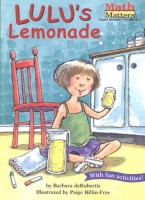
Grade 2
5 skill lessons · 4 math-through-reading
Math
Skill lessons
The mathematics the book carries, taught directly. Printable workbook pages and teacher keys are not available for this book yet.
- 1They Both Hold the Same Amount
- 2Eight, Sixteen, Thirty-Two, Sixty-Four
- 3Half Full, and the Half That Is Missing
- 4Two Cups, One Pint, One Bottle
- 5Put the Recipe in Order, Biggest First
Math + reading
Math through the reading
The same book, entered through a sentence it prints. Change one word in the reading and the numbers change with it.
- 6Half Full Is an Instruction
- 7How Much Room Is Left in the Jug
- 8Write to Lulu: Did It Fit?
- 9Four Cups of Orange, One Cup of Lime
Reading
Reading and language lessons
The same book read as a text. What a word means in its sentence, how a character is shown, how the writing is put together - no mathematics.
- 10Bored, Grumpy and Thirsty: Three People in One Backyard
- 11Please, Please, I'm Going to Scream: Four Ways to Ask
- 12Mix in Gallon Jug: When a Book Stops Telling a Story
- 13Her Mouth Dropped Open: What a Face Tells a Reader
- 14Lulu Wants Lemonade: Reading for the Sound of Words
Skill lessons
5 lessons on the mathematics the book carries. Printable workbook pages and teacher keys are not available for this book yet.
1. They Both Hold the Same Amount
The book settles an argument by pouring: Lulu is sure the big pitcher holds more, and Martin fills one, empties it into the other, and the water comes right up to the top. Students run that same test on two containers that look nothing alike, pouring in both directions so the result is a proof rather than one lucky pour. The concept is that how tall a container looks does not tell you how much it holds, and that pouring, not looking, is what decides it.
Full lesson — 20 minutes
1. Predict which container holds more (4 min)
Set the tall narrow container beside the short wide one and look at them without touching. Each of you says out loud which one you think holds more, and why you think so. Write your prediction on your strip in three words or fewer: tall one, wide one, or the same.
Word preview: holds
We'll make a whole gallon, she said. Which picture should we use Lulu? The big one, Lulu answered. They both hold the same amount, said Matty.
2. Fill one and pour it into the other (7 min)
Fill the tall container to the very top with water. Now pour all of it into the wide container and stop when the tall one is empty. Watch where the water lands: short of the top, right at the top, or spilling over. Say what happened in one sentence to your partner before you write anything down.
Word preview: pour
He filled one pitcher with water. Then he poured the water into another pitcher. It came right up to the top.
3. Pour it back the other way (5 min)
Empty the wide container back into the tall one, all of it. Watch the same three things: short of the top, at the top, or over. Doing it both directions is what makes it a proof and not a lucky pour, so say the result of each direction aloud as it happens.
Word preview: prove
Wow, said Lulu. They do hold the same amount.
4. Write what the pouring settled (4 min)
Write one sentence on your strip that says which container holds more, and add the words because I poured. Then look back at your prediction from the first step and mark it right or wrong. Being wrong here is the ordinary result, so say your partner's prediction out loud too and mark that one.
Word preview: same amount
No way, said Lulu. The big kids were always trying to fool her.
Short version — 9 minutes
1. Fill one and pour it into the other (6 min)
Fill the tall container to the top with water, then pour every drop into the wide one. Watch whether the water stops short of the top, arrives at the top, or spills.
Word preview: pour
He filled one pitcher with water. Then he poured the water into another pitcher. It came right up to the top.
2. Write what the pouring settled (3 min)
Write one sentence saying which container holds more, ending with the words because I poured. Read it to your partner.
Word preview: same amount
Three levels
- Support
- Work with the same two containers and stop after the first pour, tall into wide. Say aloud where the water stopped and write only that one sentence. You still make the prediction first and you still pour it yourself; the second direction is the only thing set aside.
- At Grade
- Predict, pour both directions, and write the sentence that says what the pouring settled and what your prediction was.
- Extension
- Find a third container in the room that you believe holds the same as your tall one, and test it by pouring both directions. If it does not hold the same, say how far off it was in cups, using the measuring cup to find out.
English learners
The word for this is a whole phrase, not a single word: holds the same amount. English puts the container first and the amount second, and hold here means contain, not carry in your hands. Rehearse one frame until it runs without thinking: The tall one and the wide one hold the same amount. Make your prediction in whichever language is fastest for you, then pour, then give the result to your partner in English with that frame.
Materials
- Two clear containers of different shapes that hold the same amount, one tall and narrow and one short and wide, per group
- Recording strip, one per student
- Pencil
- A jug of water and a tray or basin to pour over, per group
- An eight-ounce measuring cup, one per pair
- Word cards: pour, holds, same amount
Standards & curriculum
Choose your curriculum above to see the standards for this lesson.
Standards are held back while this plan is edited. Every standard shown here was matched against the supplied wording of this lesson, quoting its steps, so a changed step is no longer the thing that was checked. Undo your changes to bring the standards back — your edits stay in this browser either way.
2. Eight, Sixteen, Thirty-Two, Sixty-Four
The recipe at the back of the book prints four liquids with both a unit name and an ounce number, and each number is twice the one below it: a cup is eight ounces, a pint sixteen, a quart thirty-two, a half-gallon sixty-four. Students build those four amounts in ounce tokens, making each row by doubling the row beneath it, and then set the unit cards beside the rows they name. The concept is that the customary capacity units are a doubling ladder, and that a unit name and an ounce count are two names for one amount.
Full lesson — 20 minutes
1. Read the recipe's four ounce numbers aloud (4 min)
Read the four measured liquids off the recipe strip in the order the book prints them, saying both the unit name and the ounce number each time: half a gallon, sixty-four ounces. Then say what you notice about how the numbers travel down the list.
Word preview: ounces
Half a gallon, 64 ounces lemonade. One quart, 32 ounces orange juice.
One pint, 16 ounces lemon-lined soda pop. One cup, 8 ounces lime juice.
2. Build each amount in ounce tokens (7 min)
Make four rows of ounce tokens, one row for each liquid: sixty-four, thirty-two, sixteen, eight. Build the smallest row first and then build the next one by making a second row just like it and pushing the two together. Do that all the way up. Say what you did each time in one sentence.
Word preview: double
3. Match each row to its unit card (5 min)
Lay the unit cards beside your rows so each card sits with the row it names. Say the pair aloud, card and number together, from the smallest row to the largest. Then say which card would sit beside a row twice as long as your longest one, and check it against the recipe's last line.
Word preview: quart, pint
One tablespoon vanilla. One teaspoon mint leaves. Mix in gallon jug. Add ice. Very tasty.
4. Write the ladder as four lines (4 min)
Write the four pairs on your strip, largest first, unit name and ounce number on each line. Under the list write one sentence saying what happens to the ounce number each time you go down a line. Read that sentence to your partner.
Word preview: half of
I don't remember exactly what we put in, said Maddie. Or how much added Martin. You have to know that for a recipe.
Short version — 9 minutes
1. Build each amount in ounce tokens (6 min)
Make four rows of ounce tokens: eight, then a second eight pushed together to make sixteen, then sixteen more for thirty-two, then thirty-two more for sixty-four. Say each doubling aloud as you make it.
Word preview: double
2. Match each row to its unit card (3 min)
Set the cup, pint, quart and half-gallon cards beside the rows they name and say each pair aloud, smallest first.
Word preview: quart, pint
One pint, 16 ounces lemon-lined soda pop. One cup, 8 ounces lime juice.
Three levels
- Support
- Work with two rungs of the ladder instead of four: build eight tokens, then build a second eight and push them together to make sixteen. Set the cup and pint cards beside them and say both pairs aloud. You build the rows yourself and you do the doubling; the two larger rungs are the only thing set aside.
- At Grade
- Build all four rows by doubling upward, match all four unit cards, and write the ladder with the sentence that says what happens going down it.
- Extension
- The recipe says to mix in a gallon jug and the book calls a half-gallon sixty-four ounces. Work out how many ounces a gallon is and say how you got there. Then say how many cups that is, and check one of your two answers with the measuring cup and the jug.
English learners
Cup, pint and quart are ordinary English words in other jobs too, and the capacity meanings do not follow from those jobs, so they have to be met fresh here. Ounce is the one that carries the number. Rehearse the frame A pint is sixteen ounces, which is two cups, and swap the unit names into it. Build and count your rows in whichever language is fastest, then say the matched pairs to your partner in English.
Materials
- Recipe strip printed with the book's six lines, one per pair
- Ounce tokens, one hundred and thirty per group, each token standing for one ounce
- Unit cards reading cup, pint, quart, half-gallon and gallon, one set per pair
- Recording strip, one per student
- Pencil
- Word cards: ounce, cup, pint, quart
Standards & curriculum
Choose your curriculum above to see the standards for this lesson.
Standards are held back while this plan is edited. Every standard shown here was matched against the supplied wording of this lesson, quoting its steps, so a changed step is no longer the thing that was checked. Undo your changes to bring the standards back — your edits stay in this browser either way.
3. Half Full, and the Half That Is Missing
Maddie reads the mix directions and finds the pitcher will be only half full, and Martin turns that shortfall into the plan for the rest of the book: fill the other half with something. Students build that gallon themselves, eight cups to a taped half-gallon line and eight cups above it, then refill in the opposite order to show the two halves are the same size. The representation is a marked jug in which a half is a visible place, not a word.
Full lesson — 20 minutes
1. Mark the half-gallon line on your jug (5 min)
Pour eight full measuring cups of water into the empty gallon jug, counting each one aloud as it goes in. Stick a piece of tape at the water line and write half-gallon on it. That line is where the lemonade mix alone stops, and everything you do after this is about the space above it.
Word preview: half-gallon
This makes only a half-gallon, so the pitcher will be half full. Great said Martin. Then we can fill it with a half-gallon of interesting stuff.
2. Count how many cups the top half takes (6 min)
Keep pouring cups of water above your tape line, counting on from eight, until the jug is full. Stop and say how many cups you added to the top half. Say the whole finding to your partner as one sentence: eight cups to the line and eight cups above it.
Word preview: full
They both hold the same amount, said Matty. A gallon.
3. Show that the two halves are equal (5 min)
Empty the jug. Now fill it a second time but change the order: pour the top eight cups first, mark where they stop, then pour the other eight. Check that the water reaches the same total place. Tell your partner what this shows about a half and a half.
Word preview: equal
4. Write the two halves as one line (4 min)
Write on your strip: a half-gallon and a half-gallon make a gallon. Underneath it write the same fact in cups, using the number you counted twice. Read both lines aloud to your partner and point at the tape line as you read the first one.
Word preview: makes
Mix in gallon jug.
Short version — 9 minutes
1. Mark the half-gallon line on your jug (5 min)
Pour eight measuring cups of water into the empty gallon jug, counting each aloud. Tape the water line and write half-gallon on the tape.
Word preview: half-gallon
This makes only a half-gallon, so the pitcher will be half full. Great said Martin. Then we can fill it with a half-gallon of interesting stuff.
2. Count how many cups the top half takes (4 min)
Pour more cups above the tape, counting on from eight, until the jug is full. Say how many cups went into the top half.
Word preview: full
They both hold the same amount, said Matty. A gallon.
Three levels
- Support
- Use the jug that already has the half-gallon tape on it and pour only the top half, counting on from eight to sixteen out loud. You still count every cup and you still say the finding; the bottom half is already poured for you so the counting-on is the one thing you carry.
- At Grade
- Mark the line yourself, count both halves, refill in the reversed order, and write the gallon fact in both words and cups.
- Extension
- Your partner marks a line somewhere that is not the half. Find out what fraction of the jug it is by pouring and counting, and say whether the space above it is bigger or smaller than the space below, and by how many cups.
English learners
Half full and half a gallon look alike and do different jobs: the first describes the jug and the second names an amount. English also uses a hyphen inside half-gallon and none inside half full, which the ear cannot hear. Rehearse the frame The jug is half full, so it needs a half-gallon more. Count your cups aloud in your strongest language if that is faster, then give your partner the finding in English.
Materials
- An empty gallon jug with a marked half-gallon line, one per group
- An eight-ounce measuring cup, one per pair
- A jug of water and a tray or basin to pour over, per group
- A strip of tape and a marker for labelling the jug, one per group
- Recording strip, one per student
- Pencil
- Word cards: half-gallon, half full, equal
Standards & curriculum
Choose your curriculum above to see the standards for this lesson.
Standards are held back while this plan is edited. Every standard shown here was matched against the supplied wording of this lesson, quoting its steps, so a changed step is no longer the thing that was checked. Undo your changes to bring the standards back — your edits stay in this browser either way.
4. Two Cups, One Pint, One Bottle
In the kitchen Martin finds about two cups of soda left; in the recipe at the back the same soda is one pint, sixteen ounces. The book never puts those two lines next to each other and never says they agree. Students pour the two cups, count the ounces to sixteen, and reason out that the story and the recipe are two names for one bottle. The reasoning is the whole task: nothing in the book asserts the equivalence, so the students supply it.
Full lesson — 20 minutes
1. Find the same drink named two ways (4 min)
Read the story line about the soda pop off one card and the recipe line about the soda pop off the other. Both name the same bottle. Say to your partner what each card calls the amount, and say why the two cards do not look like they agree.
Word preview: about
Hey, here's some lemon-lined soda pop, said Martin. Hmm, about two cups left.
One pint, 16 ounces lemon-lined soda pop.
2. Pour two cups and see what they make (7 min)
Pour one measuring cup of water into the empty container and mark where it stops. Pour a second cup in. Now count the ounces you poured, eight and eight, and say the total aloud. Set the pint card against the container at the line the second cup reached.
Word preview: pint
3. Say the equal amounts as one sentence (5 min)
Tell your partner what the two cards were both describing, in one sentence that uses both names and the ounce number. Then do the same for the lime juice line, where the story and the recipe use the same word, and say which of the two drinks needed the extra work.
Word preview: equals
One cup, 8 ounces lime juice.
4. Write both names for one amount (4 min)
Write the soda pop amount on your strip twice: once the way the story says it and once the way the recipe says it, with the ounce number beside each. Draw one line connecting them and write the word same on that line.
Word preview: same
We didn't write anything down, Monde Maddie. I did, said Lulu.
Short version — 9 minutes
1. Pour two cups and see what they make (6 min)
Pour one measuring cup of water into the container and mark it, then pour a second cup. Count the ounces aloud, eight and eight, and say the total. Set the pint card at the line the second cup reached.
Word preview: pint
2. Say the equal amounts as one sentence (3 min)
Tell your partner in one sentence what the story's two cups and the recipe's one pint were both describing, using the ounce number.
Word preview: equals
One pint, 16 ounces lemon-lined soda pop.
Three levels
- Support
- Work with the soda pop pair only, and keep both cards face up in front of you the whole time. Pour the two cups, count eight and eight aloud, and say the sentence that names both. You do the pouring, the counting and the sentence; the lime juice pair is the only thing set aside.
- At Grade
- Compare both pairs, pour the two cups, and write the soda amount in both of its names with the ounce number beside each.
- Extension
- The recipe's orange juice is one quart. Say how many cups that is and how you know, using the ladder rather than the measuring cup, then check yourself by pouring. Say whether your answer would change if the story had said about four cups instead.
English learners
Two cups and one pint are the same amount in different words, which is the whole point and is also exactly what makes it hard to hear. The story's word about is a hedge, and English uses it to mean roughly, near enough. Rehearse the frame Two cups is the same as one pint, which is sixteen ounces. Count and pour in your strongest language, then say that frame to your partner in English.
Materials
- Recipe strip printed with the book's six lines, one per pair
- An eight-ounce measuring cup, one per pair
- Ounce tokens, one hundred and thirty per group, each token standing for one ounce
- Unit cards reading cup, pint, quart, half-gallon and gallon, one set per pair
- Recording strip, one per student
- Pencil
- Word cards: pint, equals, about
Standards & curriculum
Choose your curriculum above to see the standards for this lesson.
Standards are held back while this plan is edited. Every standard shown here was matched against the supplied wording of this lesson, quoting its steps, so a changed step is no longer the thing that was checked. Undo your changes to bring the standards back — your edits stay in this browser either way.
5. Put the Recipe in Order, Biggest First
The recipe lists six amounts and the book happens to print them from largest to smallest, which students discover rather than are told: half a gallon, quart, pint, cup, tablespoon, teaspoon. Students cut the lines apart, rebuild the order themselves, and check the bottom two by pouring a teaspoon and a tablespoon side by side where no ounce number is given. Then they compare two units and say how many of the small one make the large one.
Full lesson — 20 minutes
1. Lay the recipe out largest to smallest (4 min)
Cut your recipe strip into its six lines and lay them in a row on the desk, biggest amount on the left. Read the row aloud, unit name only, from left to right. Say which two lines you had to think hardest about and why.
Word preview: largest
Half a gallon, 64 ounces lemonade. One quart, 32 ounces orange juice.
Sometimes Mom puts a tablespoon of vanilla in lemonade, she said.
2. Check the order by pouring the two smallest (6 min)
Take the two smallest lines and check them with real amounts: pour a teaspoon of water into the measuring cup, then pour a tablespoon in beside it and look. Say which is bigger and how you can tell without any number at all. Then say how many teaspoons you would guess make one tablespoon.
Word preview: teaspoon, tablespoon
Just enough for a teaspoon, said Martin.
3. Say where the biggest one would not fit (6 min)
Point to the largest line and say how many ounces it is. Now point to the smallest line with an ounce number and say how many of the small one it would take to make the large one, using your ounce rows to work it out rather than guessing. Say the answer to your partner as a sentence with both unit names in it.
Word preview: how many
4. Write the order and one comparison (4 min)
Write the six unit names on your strip in the order you laid them out. Underneath, write one sentence comparing any two of them, using the words bigger than or smaller than and at least one ounce number. Read it to your partner and let them check it against the row on the desk.
Word preview: bigger than
She dumped the whole tray of ice into the pitcher. Kerr splash! Lemonade splattered in Lulu's face.
Short version — 9 minutes
1. Lay the recipe out largest to smallest (4 min)
Lay the six cut recipe lines in a row, biggest amount on the left, and read the unit names aloud from left to right.
Word preview: largest
Half a gallon, 64 ounces lemonade. One quart, 32 ounces orange juice.
2. Check the order by pouring the two smallest (5 min)
Pour a teaspoon of water into the measuring cup, then a tablespoon beside it. Say which is bigger and how you can tell without a number.
Word preview: teaspoon, tablespoon
Just enough for a teaspoon, said Martin.
Three levels
- Support
- Order the four lines that carry ounce numbers and leave the tablespoon and teaspoon aside. Read your row aloud largest first, then pour the teaspoon and tablespoon and say which is bigger. You do the ordering and the pouring; the two lines without numbers stay out of the row.
- At Grade
- Order all six lines, check the two smallest by pouring, work out how many cups make a half-gallon, and write one comparison sentence with an ounce number in it.
- Extension
- The two smallest lines carry no ounce number anywhere in the book. Say what that stops you from working out about them, and then design a way to find how many teaspoons make a tablespoon using only the water and the spoons. Run it and report what you got.
English learners
Bigger than and smaller than put the two things in a fixed order in English, and reversing the two names reverses the sentence's meaning while keeping every word. Tablespoon and teaspoon differ by one syllable and name very different amounts. Rehearse the frame A quart is bigger than a pint, and swap in your own two units. Do the ordering in your strongest language first, then give one comparison sentence to your partner in English.
Materials
- Recipe strip printed with the book's six lines, one per pair
- An eight-ounce measuring cup, one per pair
- A jug of water and a tray or basin to pour over, per group
- Ounce tokens, one hundred and thirty per group, each token standing for one ounce
- Recording strip, one per student
- Pencil
- Word cards: largest, smallest, bigger than, teaspoon, tablespoon
Standards & curriculum
Choose your curriculum above to see the standards for this lesson.
Standards are held back while this plan is edited. Every standard shown here was matched against the supplied wording of this lesson, quoting its steps, so a changed step is no longer the thing that was checked. Undo your changes to bring the standards back — your edits stay in this browser either way.
Math through the reading
The mathematics is reached through a sentence the book prints: change one word in the reading and the numbers change with it. These carry their own standards, matched against these lessons rather than inherited from the skill ones.
6. Half Full Is an Instruction
Students pour the book's half-gallon into a gallon jug, read the sentence that names what is left, then change one phrase in that sentence and pour what the changed sentence demands instead.
Full lesson — 20 minutes
1. Read the sentence and find the phrase that gives you work (3 min)
Read Maddie's sentence aloud from the display. Say which two words tell you the job is not finished, and say what you would still have to do if you were Martin.
2. Pour the book's half-gallon and mark it (6 min)
Pour eight eight-ounce cups of water into the gallon jug, counting each aloud. Tape the line where the water stops and write half full on the tape. Say how many ounces are in the jug and how many the jug still has room for.
3. Swap the phrase and pour that jug instead (6 min)
Read the second card, where half full has been replaced. Fill the second jug the way that sentence demands, counting the cups aloud as you go. Say what is left in this jug, then say the two amounts left, one for each jug, one after the other.
4. Say which sentence made which jug (5 min)
Stand the two jugs side by side and tell another pair which sentence produced each, naming the phrase that separates them. Then say what would happen to the orange juice, the soda pop and the lime juice in each jug.
Short version — 9 minutes
1. Pour the book's half-gallon and mark it (6 min)
Pour eight eight-ounce cups of water into the gallon jug, counting each aloud. Tape the line where the water stops and write half full on the tape. Say how many ounces are in the jug and how many the jug still has room for.
2. Swap the phrase and pour that jug instead (6 min)
Read the second card, where half full has been replaced. Fill the second jug the way that sentence demands, counting the cups aloud as you go. Say what is left in this jug, then say the two amounts left, one for each jug, one after the other.
Three levels
- Support
- Work with both sentence cards face up and the swapped phrase already circled on the second one. Read the circled phrase aloud, say which jug it belongs to, then pour both jugs exactly as the At Grade does - neither jug is poured for you and the counting is still yours.
- At grade
- Find the deciding phrase yourself on each card, pour and count both jugs, and account for the difference between them by naming the phrase and both remaining amounts.
- Extension
- Write a sentence about this jug that would leave exactly a quart of room, and say what phrase you had to use to do it. Test it by pouring and say whether your sentence and your jug agree.
English learners
Half full describes the jug and half a gallon names an amount, and English lets them stand one word apart in the same sentence while doing different jobs. The word only in the book's sentence is a signal of disappointment rather than of quantity, which is worth saying aloud once. Rehearse the frame The jug is half full, so it needs a half-gallon more, and count your cups in whichever language is fastest before giving the frame to your partner in English.
Materials
- A gallon jug with tape and a marker, two per group
- An eight-ounce measuring cup, one per pair
- A jug of water and a basin, per group
- The book's sentence printed large on one card
- The swapped sentence printed on a second card, the changed phrase circled
Standards & curriculum
Choose your curriculum above to see the standards for this lesson.
Standards are held back while this plan is edited. Every standard shown here was matched against the supplied wording of this lesson, quoting its steps, so a changed step is no longer the thing that was checked. Undo your changes to bring the standards back — your edits stay in this browser either way.
7. How Much Room Is Left in the Jug
Students total the recipe's four printed liquids, work out how big a gallon jug is from the recipe's own half-gallon line, and find the one amount the book never prints.
Full lesson — 20 minutes
1. Read the recipe and find the two kinds of line (3 min)
Read the six recipe lines aloud. Sort them into lines that say what goes in and lines that say something else, and say what the last kind is doing there.
2. Build the four liquids in ounce rows (6 min)
Lay out four rows of ounce tokens, sixty-four, thirty-two, sixteen and eight. Push the four rows end to end into one long row and count what you have, saying the running amount aloud as each row joins.
3. Work out how big the jug is from the recipe itself (6 min)
Find the line that tells you what a half-gallon is in ounces. Say aloud what that makes a whole gallon, and say how you know. Build that many tokens as a second row beneath your long one.
4. Say what the book never printed (5 min)
Line your two rows up at one end and say how much sticks out. Tell another pair the missing amount, which line of the recipe let you find it, and which ingredient in this recipe is exactly that size.
Short version — 9 minutes
1. Build the four liquids in ounce rows (6 min)
Lay out four rows of ounce tokens, sixty-four, thirty-two, sixteen and eight. Push the four rows end to end into one long row and count what you have, saying the running amount aloud as each row joins.
2. Work out how big the jug is from the recipe itself (6 min)
Find the line that tells you what a half-gallon is in ounces. Say aloud what that makes a whole gallon, and say how you know. Build that many tokens as a second row beneath your long one.
Three levels
- Support
- Work with the four ingredient rows already counted and labelled, and spend your time on the second half: find the line that gives the gallon, build the gallon row, and line the two rows up to see what sticks out. You still find the jug size yourself and you still say the missing amount; only the four ingredient counts are done in advance.
- At grade
- Build all four rows and total them, derive the gallon from the recipe's own half-gallon line, and state the missing amount together with the ingredient that matches it.
- Extension
- Lulu dumps a whole tray of ice into the jug on top of everything. Say whether the book gives you enough to work out if it fits, and if it does not, say exactly what the book would have had to print for you to answer.
English learners
The recipe writes each amount twice, once as a unit name and once as a number of ounces, and English puts them side by side with only a comma between - one quart, thirty-two ounces. Reading that comma as and rather than as or is what makes the line usable. Rehearse the frame A quart is thirty-two ounces. Do the adding in whichever language is fastest for you, then say the missing amount to your partner in English.
Materials
- Ounce tokens, one hundred and thirty per group
- A copy of the recipe's six lines, one per pair
- A long strip of paper for laying rows against
- The six recipe lines printed large
- An empty gallon jug standing where everyone can see it
Standards & curriculum
Choose your curriculum above to see the standards for this lesson.
Standards are held back while this plan is edited. Every standard shown here was matched against the supplied wording of this lesson, quoting its steps, so a changed step is no longer the thing that was checked. Undo your changes to bring the standards back — your edits stay in this browser either way.
8. Write to Lulu: Did It Fit?
Students work out how much room the recipe leaves in the jug, take a side on whether the tray of ice fit, and write Lulu the note that says which and why, with the number in it.
Full lesson — 20 minutes
1. Read the ending and find the open question (4 min)
Read the last recipe lines and the page where Lulu dumps the ice. Say what the book tells you and what it does not, and say out loud what the unanswered question is.
2. Find the room left in the jug (7 min)
Total the four ounce amounts from the recipe. Work out how many ounces the gallon jug holds, using the recipe's own half-gallon line. Find the difference and say it aloud, and say which ingredient in the recipe is that same size.
3. Take a side and say your reason to a partner (4 min)
Say which way you think it went and give your partner one reason with the number in it. Your partner takes the other side and does the same. Neither of you has to agree at the end.
4. Write the note to Lulu (5 min)
Write Lulu three or four sentences: what you think happened, how much room was in the jug, and one thing the book says that made you think so. Sign it. Trade notes with a partner who took the other side and read theirs.
Short version — 9 minutes
1. Find the room left in the jug (7 min)
Total the four ounce amounts from the recipe. Work out how many ounces the gallon jug holds, using the recipe's own half-gallon line. Find the difference and say it aloud, and say which ingredient in the recipe is that same size.
2. Write the note to Lulu (5 min)
Write Lulu three or four sentences: what you think happened, how much room was in the jug, and one thing the book says that made you think so. Sign it. Trade notes with a partner who took the other side and read theirs.
Three levels
- Support
- Work from a number line already marked to 128 with the four liquid amounts shown as jumps, so the room left is there to be read off rather than computed from nothing. You still find the difference, you still choose your side and you still write the whole note with the number in it.
- At grade
- Total the four amounts, derive the gallon, find the room left, take a side, and write Lulu a note carrying the position, the number and a sentence from the book.
- Extension
- Write Lulu a second note answering a different question: how much ice would have to be in that tray for the jug to overflow. Say whether the book lets you know that, and if it does not, say what it would have to print.
English learners
A written reason in English usually leads with the claim and follows with the because, which is the reverse of the order students often work in. The number belongs inside the because, not stranded on its own line. Rehearse the frame I think it fit, because there were eight ounces of room left. Work out the amount in whichever language is fastest for you, then write the note in English using that frame as its first sentence.
Materials
- Ounce tokens or a recording strip, per pair
- A copy of the recipe's six lines, one per pair
- Note paper, one sheet per student
- The recipe's six lines printed large
- The ice page displayed beside them
Standards & curriculum
Choose your curriculum above to see the standards for this lesson.
Standards are held back while this plan is edited. Every standard shown here was matched against the supplied wording of this lesson, quoting its steps, so a changed step is no longer the thing that was checked. Undo your changes to bring the standards back — your edits stay in this browser either way.
9. Four Cups of Orange, One Cup of Lime
Students lay two of the recipe's ingredients side by side in ounce tokens, find how many of the small one make the large one, and say the comparison both ways round.
Full lesson — 20 minutes
1. Read the two recipe lines and predict (3 min)
Read the orange juice line and the lime juice line aloud, both names and both numbers. Say which is bigger and guess how many of the small one would make the big one. Write your guess down before you build anything.
2. Build the two rows and line them up (7 min)
Lay thirty-two ounce tokens in one row and eight in another, lined up at the left end. Cut the long row into pieces the size of the short one by marking where each copy ends. Count the pieces aloud and check your guess.
3. Say it forwards, then say it backwards (6 min)
Say one sentence putting the orange juice first and one putting the lime juice first, about the same two rows. Neither sentence may use the same comparison word as the other. Your partner points at the rows while you say each one and stops you if the words and the tokens disagree.
4. Try it on a pair that does not come out even (4 min)
Take the lemonade row, sixty-four, against the soda pop row, sixteen, and do the same. Then try the soda pop against the lime juice and say what is different about how those two sit together.
Short version — 9 minutes
1. Build the two rows and line them up (7 min)
Lay thirty-two ounce tokens in one row and eight in another, lined up at the left end. Cut the long row into pieces the size of the short one by marking where each copy ends. Count the pieces aloud and check your guess.
2. Say it forwards, then say it backwards (6 min)
Say one sentence putting the orange juice first and one putting the lime juice first, about the same two rows. Neither sentence may use the same comparison word as the other. Your partner points at the rows while you say each one and stops you if the words and the tokens disagree.
Three levels
- Support
- Work with the two rows already built and aligned, and spend your time on the marking and the saying: cut the long row into copies of the short one, count them, and give both sentences. You still make the partition and you still say the comparison both ways round.
- At grade
- Build and align both rows, partition the long one, and say the comparison forwards and backwards with a different word each time, then repeat on a second pair.
- Extension
- Find the pair of ingredients in this recipe that are closest in size and the pair that are furthest apart, and say what makes a pair close - the number of ounces between them, or how many copies of one make the other. Say whether your two answers to that question agree.
English learners
Times as much as puts the big amount first in English, and a quarter of puts the small amount first, so reversing which ingredient you name forces you to change the comparison word as well. Getting the words right while the tokens stay still is the whole exercise. Rehearse both frames before you build: The orange juice is four times as much as the lime juice, and The lime juice is a quarter of the orange juice.
Materials
- Ounce tokens, one hundred per group
- A copy of the recipe's six lines, one per pair
- Markers for cutting a row into pieces
- The six recipe lines printed large, the ounce numbers in a column
Standards & curriculum
Choose your curriculum above to see the standards for this lesson.
Standards are held back while this plan is edited. Every standard shown here was matched against the supplied wording of this lesson, quoting its steps, so a changed step is no longer the thing that was checked. Undo your changes to bring the standards back — your edits stay in this browser either way.
Reading and language lessons
5 lessons on the reading and language the book carries - what a word means in its sentence, how a character is shown, how a text is built. No mathematics: these are matched against the English language arts curricula, which are a different and smaller set than the mathematics ones.
10. Bored, Grumpy and Thirsty: Three People in One Backyard
Three characters open this book wanting three different things, and the whole story is the gap between them. Students read the opening in three voices and name each want, chart what the big kids talk about against what Lulu keeps asking for, then find the two narrator sentences that quietly take Lulu's side. They finish by retelling one moment from each of two perspectives. Nothing is measured or poured; the work is telling whose view a sentence carries.
Full lesson — 20 minutes
1. Read the opening in three voices (6 min)
Read the three passages below aloud with three readers — one for Maddie, one for Martin, one for Lulu. Each reader says, after their turn, the one thing their character wants. Then the group says aloud which two characters want the same kind of thing and which one wants something else entirely.
Word preview: bored
Please come down from that tree, Martin, Maddie called. Let's think of something to do. I'm bored.
Don't want to come down, Martin Grumped. Don't want to think.
Maddie's little sister Lulu was sprawled on the grass. I'm thirsty, she announced.
2. Chart what the big kids are busy with (5 min)
Read the two passages below. On your log, head one column BIG KIDS and write what Maddie and Martin are talking about in each. Then head a second column LULU and write what she is asking for. Say aloud whether the two columns are about the same thing.
Word preview: thirsty
How about watching Crazy Cat cartoons on TV, Maddie asked? Double Boring said Martin.
Lulu sat up. You could make me something to drink. I'm really thirsty.
3. Find the sentence the narrator uses to take sides (5 min)
Read the passage below. Two of its sentences are not spoken by anybody — they are the narrator telling you what is going on. Find both, underline them, and write in one line whose side the narrator seems to be on.
Word preview: narrator
The big kids were just talking. Lemonade was not getting made. Lulu flopped on the floor. If I don't get some lemonade right now, I'm going to scream!
4. Retell one moment from the other person's side (4 min)
Read the passage below. Then tell a partner the same moment twice: once starting I am Lulu, and once starting I am Maddie. Say what each one thinks is happening. Your partner names one thing that was different between the two tellings.
Word preview: side
I know it's hard to wait Lulu said, Maddie. Why don't you draw a picture while we finish?
Short version — 9 minutes
1. Read the opening in three voices (5 min)
Read the three passages aloud with three readers. After each turn the reader says what their character wants. Then say which character wants something different from the others.
Word preview: bored
Please come down from that tree, Martin, Maddie called. Let's think of something to do. I'm bored.
Don't want to come down, Martin Grumped. Don't want to think.
Maddie's little sister Lulu was sprawled on the grass. I'm thirsty, she announced.
2. Find the sentence the narrator uses to take sides (4 min)
Read the passage below and underline the two sentences nobody speaks. Write in one line whose side the narrator seems to be on.
Word preview: narrator
The big kids were just talking. Lemonade was not getting made. Lulu flopped on the floor. If I don't get some lemonade right now, I'm going to scream!
Three levels
- Support
- Read only the third printed passage in step 1. Point to the two words Lulu says. Then answer aloud: what does Lulu want? Draw her holding it and label the drawing with the word from the passage.
- At Grade
- Read all three printed passages, name each want, then fill both chart columns from the step 2 passages.
- Extension
- In step 3's printed passage the narrator says the big kids were just talking. Write three sentences on why a narrator who was on Maddie's side would not have written that word just, quoting the sentence.
English learners
Bored, grumpy and thirsty are all states expressed in English with the verb to be plus a describing word — I'm bored, I'm thirsty — where many languages use a have construction or a single verb. Read the three I'm lines aloud together so the pattern is heard as one shape. Invite students to say I am thirsty in their strongest language and tell the class which words they used. Rehearsable frame: ___ wants ___, but ___ wants ___.
Materials
- Lulu's Lemonade, the passage printed in this step
- pencil
- who wants what chart
- Word cards: bored, thirsty, narrator, side
Standards & curriculum
Choose your curriculum above to see the standards for this lesson.
Standards are held back while this plan is edited. Every standard shown here was matched against the supplied wording of this lesson, quoting its steps, so a changed step is no longer the thing that was checked. Undo your changes to bring the standards back — your edits stay in this browser either way.
11. Please, Please, I'm Going to Scream: Four Ways to Ask
Lulu asks for lemonade four times and each ask is louder than the last: announced, then really thirsty, then begged with a bare Please, then a threat. Students order the four, collect the asking words from two other speakers, and find the one request that gets an answer in the very next sentence. They finish by writing a polite ask and a pushy ask of their own. The work is hearing how English builds a request and what makes one land.
Full lesson — 20 minutes
1. Rank four ways of asking (6 min)
Read the four passages below aloud in the order printed. Each is Lulu asking for the same thing. On your log number them 1 to 4 from calmest to loudest. Then say aloud the one word or mark in the last passage that told you it was the loudest.
Word preview: begged
Maddie's little sister Lulu was sprawled on the grass. I'm thirsty, she announced.
Lulu sat up. You could make me something to drink. I'm really thirsty.
Lulu wasn't happy with that answer. Please give me some lemonade now, she begged. Please!
The big kids were just talking. Lemonade was not getting made. Lulu flopped on the floor. If I don't get some lemonade right now, I'm going to scream!
2. Collect the asking words (5 min)
Look back at the four passages you numbered and read the two below as well. On your log write every asking word you find — please, could, would, want, may. Beside each write whether it sounds polite or pushy, and say aloud who uses the most polite one.
Word preview: please
Just then a voice called. May I borrow a jar of pickles? It was Jason from across the street. Sure, Maddie said. We're making lemonade. Want to help?
I know it's hard to wait Lulu said, Maddie. Why don't you draw a picture while we finish?
3. Find the request that finally works (5 min)
Read the passage below. Lulu asks for something and this time she gets it in the very next sentence. Copy her question onto your log. Then write in one line what is different about this request compared with the ones that were ignored.
Word preview: request
It's ready now, right? asked Lulu. Almost said Maddie. Want to put in the ice cubes? Sure said Lulu. She dumped the whole tray of ice into the pitcher.
4. Ask for something two ways (4 min)
Read the printed passage below one more time for the words Maddie uses. Then write your own two sentences asking a busy person for something: one polite, one pushy. Read both aloud to a partner. Your partner says which one they would say yes to, and why.
Word preview: polite
I know it's hard to wait Lulu said, Maddie. Why don't you draw a picture while we finish?
Short version — 9 minutes
1. Rank four ways of asking (5 min)
Read the four passages aloud in the printed order. Number them 1 to 4 from calmest to loudest, then say the word or mark that made the last one loudest.
Word preview: begged
Maddie's little sister Lulu was sprawled on the grass. I'm thirsty, she announced.
Lulu sat up. You could make me something to drink. I'm really thirsty.
Lulu wasn't happy with that answer. Please give me some lemonade now, she begged. Please!
The big kids were just talking. Lemonade was not getting made. Lulu flopped on the floor. If I don't get some lemonade right now, I'm going to scream!
2. Find the request that finally works (4 min)
Read the passage below. Copy Lulu's question, then write one line on what is different about this request from the ones that were ignored.
Word preview: request
It's ready now, right? asked Lulu. Almost said Maddie. Want to put in the ice cubes? Sure said Lulu. She dumped the whole tray of ice into the pitcher.
Three levels
- Support
- Use only the first and third printed passages in step 1. Read both aloud yourself. Then answer out loud: which one sounds louder? Put your finger on the exclamation mark that helped you decide, and copy the word Please onto the log.
- At Grade
- Order all four printed passages, collect the asking words from both step 2 passages, and mark each polite or pushy.
- Extension
- The fourth printed passage in step 1 is the only one that names what Lulu will do if she is refused. Write three sentences on whether that makes it a stronger ask or a weaker one, quoting the sentence.
English learners
English softens a request with please, could and would, and stacks them — Please give me some lemonade now — where other languages carry politeness in the verb ending or in a title for the person addressed. Read Lulu's four asks aloud in a rising voice so the escalation is audible before it is analysed. Invite students to make a polite request in their strongest language and say which word did the softening. Rehearsable frame: Could you please ___?
Materials
- Lulu's Lemonade, the passage printed in this step
- pencil
- asking words log
- Word cards: begged, please, request, polite
Standards & curriculum
Choose your curriculum above to see the standards for this lesson.
Standards are held back while this plan is edited. Every standard shown here was matched against the supplied wording of this lesson, quoting its steps, so a changed step is no longer the thing that was checked. Undo your changes to bring the standards back — your edits stay in this browser either way.
12. Mix in Gallon Jug: When a Book Stops Telling a Story
The last page of this book stops naming people and starts giving orders. Students read a story sentence beside a recipe line and notice that one has characters and the other has none, sort short spans under STORY and RECIPE headings, then find the moment in the story that explains why anyone needed the recipe written down at all. They finish by rewriting a story line as a recipe line. Nothing is measured; the work is telling two kinds of writing apart by how they are built.
Full lesson — 20 minutes
1. Read a story sentence and a recipe line (5 min)
Read the two passages below aloud. The first tells you what happened. The second tells you how to make something. Underline every verb you can find in the second passage, then say aloud who those verbs are speaking to.
Word preview: recipe
Maddie was looking in the spice cupboard. Sometimes Mom puts a tablespoon of vanilla in lemonade, she said.
One tablespoon vanilla. One teaspoon mint leaves. Mix in gallon jug. Add ice. Very tasty.
2. Split a page into two kinds of writing (5 min)
Read the two passages below. On your log make two headings: STORY and RECIPE. Write each passage's first three words under the right heading. Then write one sentence saying how you can tell them apart without reading the whole thing.
Word preview: heading
Winning recipe, Lulu's lemonade.
Lulu licked her lips. This is good, she said. This is the best lemonade I ever tasted.
3. Find why the recipe had to be written down (6 min)
Read the two passages below in the order printed. The first shows a problem; the second shows who solved it. Copy the sentence that names the problem onto your log, and beside it copy the three words that show who had already fixed it. Then say aloud why a recipe has to be written and a story does not.
Word preview: written
You should enter this lemonade in the kids' cooking contest, Lulu announced. Maddie and Martin stared at each other. The contest. They had forgotten all about it.
I did, said Lulu. She grinned as she held up her drawing. Maddie's mouth dropped open. I don't believe it, she said. That's great! Martin looked stunned, too. Good job, Lulu, he told her.
4. Turn one story line into a recipe line (4 min)
Read the story passage below. Rewrite what happens in it as one recipe line: no names, no she, just the action and the thing. Read yours aloud. A partner says whether it now sounds like a story or a recipe.
Word preview: rewrite
It's ready now, right? asked Lulu. Almost said Maddie. Want to put in the ice cubes? Sure said Lulu. She dumped the whole tray of ice into the pitcher.
Short version — 9 minutes
1. Read a story sentence and a recipe line (4 min)
Read both passages aloud. Underline every verb in the second, then say who those verbs are speaking to.
Word preview: recipe
Maddie was looking in the spice cupboard. Sometimes Mom puts a tablespoon of vanilla in lemonade, she said.
One tablespoon vanilla. One teaspoon mint leaves. Mix in gallon jug. Add ice. Very tasty.
2. Find why the recipe had to be written down (5 min)
Read both passages in the printed order. Copy the sentence naming the problem and the three words showing who fixed it, then say why a recipe must be written down.
Word preview: written
You should enter this lemonade in the kids' cooking contest, Lulu announced. Maddie and Martin stared at each other. The contest. They had forgotten all about it.
I did, said Lulu. She grinned as she held up her drawing. Maddie's mouth dropped open. I don't believe it, she said. That's great! Martin looked stunned, too. Good job, Lulu, he told her.
Three levels
- Support
- Use step 1's two printed passages. In the first, point to a person's name. In the second, look for one and find none. Then answer aloud: which one is telling you what to do? Copy the two words Add ice onto the log.
- At Grade
- Compare both printed passages, sort the step 2 spans under STORY and RECIPE, and write how you tell them apart.
- Extension
- Step 3's printed passages show the big kids forgetting and Lulu remembering. Write three sentences on what a recipe does that a memory cannot, quoting the sentence where the big kids realise they have forgotten.
English learners
Recipe English drops nearly everything a sentence usually needs: no subject, no article, no tense — Mix in gallon jug. Add ice. Many languages write instructions more fully, so this clipped style reads as broken rather than as a style. Say the recipe line, then the full sentence it stands for, so students hear what has been left out. Invite them to bring or describe a recipe line in their strongest language and say what is missing from it too. Rehearsable frame: A story says ___. A recipe says ___.
Materials
- Lulu's Lemonade, the passage printed in this step
- pencil
- text kinds log
- Word cards: recipe, heading, written, rewrite
Standards & curriculum
Choose your curriculum above to see the standards for this lesson.
Standards are held back while this plan is edited. Every standard shown here was matched against the supplied wording of this lesson, quoting its steps, so a changed step is no longer the thing that was checked. Undo your changes to bring the standards back — your edits stay in this browser either way.
13. Her Mouth Dropped Open: What a Face Tells a Reader
This book shows surprise instead of naming it: a mouth drops open, two children look surprised that they agreed, somebody looks stunned. Students underline the face-and-body words in three reaction moments, collect them onto a log with what caused each, then read the strongest one closely and say what it reveals about what the big kids had assumed about Lulu. They finish by acting a reaction and naming its words. The work is reading a reaction as evidence.
Full lesson — 20 minutes
1. Read three faces reacting (6 min)
Read the three passages below aloud. In each, somebody is surprised, but nobody says the word surprised about themselves. Underline the words that describe a face or a body. Then say aloud who is surprised in each one, and what surprised them.
Word preview: surprised
He filled one pitcher with water. Then he poured the water into another pitcher. It came right up to the top. Wow, said Lulu. They do hold the same amount. I thought you were just teasing me.
Yes, said Lulu and Martin. They both look surprised that they agreed.
I did, said Lulu. She grinned as she held up her drawing. Maddie's mouth dropped open. I don't believe it, she said. That's great! Martin looked stunned, too. Good job, Lulu, he told her.
2. Collect the surprise words (5 min)
Look at the passages you have read and the one below. On your log list every word or phrase that shows surprise — a mouth, a stare, a Wow. Beside each, write in three words or fewer what caused it.
Word preview: stunned
That's more like it, said Maddie. Right, Lulu? Lulu nodded. It sounds good enough to drink now.
3. Say what a reaction tells you about the person (5 min)
Read the passage below. Maddie and Martin react before either of them speaks. Write one sentence saying what their reaction tells you they thought about Lulu before this moment. Then write one sentence saying what they think now.
Word preview: reaction
I did, said Lulu. She grinned as she held up her drawing. Maddie's mouth dropped open. I don't believe it, she said. That's great! Martin looked stunned, too. Good job, Lulu, he told her.
4. Act one reaction and name its words (4 min)
Choose one reaction from your log. Act it out silently for a partner — face and body only. Your partner guesses which one. Then read aloud the exact words from the passage printed under this step that describe it, or from a passage you logged.
Word preview: act
I did, said Lulu. She grinned as she held up her drawing. Maddie's mouth dropped open. I don't believe it, she said. That's great! Martin looked stunned, too. Good job, Lulu, he told her.
Yes, said Lulu and Martin. They both look surprised that they agreed.
Short version — 9 minutes
1. Read three faces reacting (5 min)
Read the three passages aloud. Underline the words describing a face or a body, then say who is surprised in each and what surprised them.
Word preview: surprised
He filled one pitcher with water. Then he poured the water into another pitcher. It came right up to the top. Wow, said Lulu. They do hold the same amount. I thought you were just teasing me.
Yes, said Lulu and Martin. They both look surprised that they agreed.
I did, said Lulu. She grinned as she held up her drawing. Maddie's mouth dropped open. I don't believe it, she said. That's great! Martin looked stunned, too. Good job, Lulu, he told her.
2. Say what a reaction tells you about the person (4 min)
Read the passage below. Write one sentence on what Maddie and Martin thought about Lulu before this moment, and one on what they think now.
Word preview: reaction
I did, said Lulu. She grinned as she held up her drawing. Maddie's mouth dropped open. I don't believe it, she said. That's great! Martin looked stunned, too. Good job, Lulu, he told her.
Three levels
- Support
- Stay with step 1's third printed passage. Act out mouth dropped open yourself. Then answer aloud: is Maddie expecting this, yes or no? Copy the three words mouth dropped open onto the log.
- At Grade
- Underline the face-and-body words in all three printed passages and log what caused each reaction.
- Extension
- In step 1's second printed passage the book says the two of them look surprised that they agreed. Write three sentences on what that tells you about how Lulu and Martin usually get along, quoting the sentence.
English learners
Mouth dropped open and looked stunned are English idioms for surprise built out of body parts, and every language has its own set that will not match word for word. Act each one out before reading it. Invite students to show and name the surprise expression their strongest language uses and let the class compare. Rehearsable frame: Her ___, so I know she is ___.
Materials
- Lulu's Lemonade, the passage printed in this step
- pencil
- reaction log
- Word cards: surprised, stunned, reaction, act
Standards & curriculum
Choose your curriculum above to see the standards for this lesson.
Standards are held back while this plan is edited. Every standard shown here was matched against the supplied wording of this lesson, quoting its steps, so a changed step is no longer the thing that was checked. Undo your changes to bring the standards back — your edits stay in this browser either way.
14. Lulu Wants Lemonade: Reading for the Sound of Words
Lulu stops asking and starts chanting, and the book prints the chant in full with one word repeated five times. Students read it aloud and clap the repeats, then find the run of L-words in a later sentence and feel what their mouths do. They set the chant beside an ordinary line to hear why one is easy to remember, and finish by making a chant of their own. Nothing is poured or measured; the work is hearing how a writer uses sound.
Full lesson — 20 minutes
1. Read a chant out loud and clap it (6 min)
Read the passage below aloud together twice — once slowly, once clapping on every word that is repeated. Count on your fingers how many times the same made-up word appears. Then say aloud what the book calls what Lulu is doing.
Word preview: chant
Lulu went back to her artwork. As she drew, she started to chant. Lamanade, Lamanade, Lulu wants lemonade. Lamanade, Lamanade, Lamanade now! As usual, the big kids didn't seem to hear.
2. Find the words that begin the same way (5 min)
Read the passage below and the chant again. On your log write every word that begins with the letter L. Read your list aloud in one breath and say what your mouth does the same way each time.
Word preview: licked
Lulu licked her lips. This is good, she said. This is the best lemonade I ever tasted.
3. Compare a chant with an ordinary line (5 min)
Read the two passages below aloud, the chant first and then the plain sentence. On your log write which one is easier to say twice from memory, and write one sentence saying why, naming the repeating you noticed.
Word preview: repeat
Lulu went back to her artwork. As she drew, she started to chant. Lamanade, Lamanade, Lulu wants lemonade. Lamanade, Lamanade, Lamanade now! As usual, the big kids didn't seem to hear.
Right, said Jason. In fact, Chef Fifi's show is on in a minute. We're making a pickle and beet pudding. With a wave, Jason was out the door.
4. Make a chant of your own (4 min)
Read the printed chant below one last time for its shape. Then make a three-line chant asking for something you want, repeating one word at least three times. Say it aloud to the class in Lulu's rhythm. Listeners clap on your repeated word.
Word preview: rhythm
Lulu went back to her artwork. As she drew, she started to chant. Lamanade, Lamanade, Lulu wants lemonade. Lamanade, Lamanade, Lamanade now! As usual, the big kids didn't seem to hear.
Short version — 9 minutes
1. Read a chant out loud and clap it (5 min)
Read the passage aloud twice — once slowly, once clapping on every repeated word. Count how many times the made-up word appears and say what the book calls what Lulu is doing.
Word preview: chant
Lulu went back to her artwork. As she drew, she started to chant. Lamanade, Lamanade, Lulu wants lemonade. Lamanade, Lamanade, Lamanade now! As usual, the big kids didn't seem to hear.
2. Find the words that begin the same way (4 min)
Read the passage below aloud. Write every word beginning with L, read your list in one breath, and say what your mouth does the same way each time.
Word preview: licked
Lulu licked her lips. This is good, she said. This is the best lemonade I ever tasted.
Three levels
- Support
- Read step 1's printed passage aloud with the teacher, one line at a time. Clap only on the made-up word. Then answer aloud: does the same word come back? Copy that word once onto the log.
- At Grade
- Clap the chant, count the repeats, then list the L-words from the second printed passage and read them in one breath.
- Extension
- The narration says the big kids didn't seem to hear even though Lulu is chanting loudly. Write three sentences on why a writer might make a chant loud and then say nobody heard it, quoting the printed sentence.
English learners
The chant repeats a single word until it becomes rhythm rather than meaning, which is how playground chants work in most languages — that shape transfers even when the word does not. Clap the beat before reading so students hold the rhythm without the vocabulary. Invite students to teach the class a short chant from their strongest language and clap it together. Rehearsable frame: ___, ___, I want ___.
Materials
- Lulu's Lemonade, the passage printed in this step
- pencil
- sound log
- Word cards: chant, licked, repeat, rhythm
Standards & curriculum
Choose your curriculum above to see the standards for this lesson.
Standards are held back while this plan is edited. Every standard shown here was matched against the supplied wording of this lesson, quoting its steps, so a changed step is no longer the thing that was checked. Undo your changes to bring the standards back — your edits stay in this browser either way.