Slowpoke
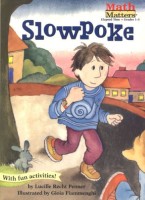
Grade 3
5 skill lessons
Math
Skill lessons
The mathematics the book carries, taught directly. Printable workbook pages and teacher keys are not available for this book yet.
- 1From Start to Finish
- 2Where Does Forty Minutes Land?
- 3Count Forward to the Finish
- 4Two Minutes Faster
- 5Which Box Is Empty
Math + reading
Math through the reading
The same book, entered through a sentence it prints. Change one word in the reading and the numbers change with it.
No math-through-reading lessons for this book yet.
Reading
Reading and language lessons
The same book read as a text. What a word means in its sentence, how a character is shown, how the writing is put together - no mathematics.
No reading and language lessons for this book yet.
Skill lessons
5 lessons on the mathematics the book carries. Printable workbook pages and teacher keys are not available for this book yet.
1. From Start to Finish
The story stamps five of Teddy's runs with a start and a finish and then says how long the run took in a different sentence, so the two halves of every one of its amounts are printed apart from each other. Students put them back together: write the two clock times at the ends of a minute track, hop from one to the other counting the minutes aloud, then find the sentence that names the amount and see whether it agrees. The number they produce is not a time of day, and the book's closing section gives them the wording for what it is instead.
Full lesson — 20 minutes
1. Write the two clock times (4 min)
Take one run card and write its start time at the left end of your minute track and its finish time at the right end. The card leaves the colon out, so put it in yourself: 8:02, 8:06. Read both times aloud to your partner before you count anything.
Word preview: start time, finish time
Start 802. Finish 806.
Start 1150. Finish 1215.
2. Hop the minutes between them (5 min)
Put a finger on the start time and hop one minute at a time to the finish time, counting the hops out loud. One hop, one number word. Write the number of hops in the middle of the track and say out loud what you just counted.
Start 1110, finish 1122.
3. Check the amount against the story (6 min)
Find the sentence strip that says how long that run took and read it aloud. Hold the strip beside the number you counted and say whether the story and your track agree. If they do not, hop the track again with your partner watching every hop.
I made it in four minutes, he told Robert.
Now, he could run there in 12 minutes.
4. Say what the middle number is (5 min)
Point at your two end numbers and say what each one is, a time the day reaches. Now point at your middle number and say what that one is, in the book's own words. Then say all three in one sentence, ending with the amount.
Word preview: amount of time
the amount of time that passes between a start time and a finish time.
Short version — 9 minutes
1. Write the two clock times (4 min)
Write the start time at the left end of your minute track and the finish time at the right end, putting the colon in yourself. Read both times aloud to your partner.
Word preview: start time, finish time
Start 802. Finish 806.
Start 1150. Finish 1215.
2. Hop the minutes between them (5 min)
Hop one minute at a time from the start time to the finish time, counting the hops aloud, one hop and one number word. Write the number of hops in the middle.
Start 1110, finish 1122.
Three levels
- Support
- Stay with the run from 8:02 to 8:06 and hop it with a counter you slide one minute at a time, so every hop can be heard as well as seen. Four hops, four minutes. Write the amount in the same middle box everybody else fills.
- At Grade
- Write both clock times for all three run cards, hop the minutes for each, and check every amount against the story sentence that names it.
- Extension
- Take the run from 11:50 to 12:15. Hop it, then say where you had to stop and start the count again, and why the amount is not the difference between the 50 and the 15. Then say what would change if the finish time were 12:20 instead, before you count it.
English learners
Hopping the minutes needs no English at all, and a child can produce the amount before saying anything about it. The English is where the trouble sits: a clock time and an amount of minutes are both said as bare numbers, so 8:06 and six minutes sound like the same kind of thing and are not. Rehearse one frame until it is easy, from ___ to ___ is ___ minutes, with the two clock times in the first two blanks and the amount in the last. Let children count the hops and say the amount in their strongest language first, then read the two clock times off the track and say the frame in English.
Materials
- Minute track marked in single minutes with each hour written along it, one per pair
- Story run cards, one printed start time and finish time per card
- Story sentence strips, one duration sentence per strip
- Word cards: start time, finish time, amount of time
Standards & curriculum
These lessons are being matched against curricula now.
Standards are held back while this plan is edited. Every standard shown here was matched against the supplied wording of this lesson, quoting its steps, so a changed step is no longer the thing that was checked. Undo your changes to bring the standards back — your edits stay in this browser either way.
2. Where Does Forty Minutes Land?
The closing section works one problem the whole way through and hands over the method in a single sentence: count forward 40 minutes from 2:40. Students read that sentence, count the forty on a track that has to cross 3:00, write the finish time and check it against the answer the book prints. Then they do the same for two of Teddy's own runs, where the story supplies the amount and the start time and the finish time is theirs to produce.
Full lesson — 20 minutes
1. Read the hint before you count (4 min)
Read the hint and the start time aloud with your partner. Say which two of the three numbers you have been given and which one is missing. Put a finger on 2:40 and say which way you are going to move it before you move it.
Word preview: hint, count forward
Hint. Count forward 40 minutes from 240.
Start time. 240.
2. Count the forty past the hour (5 min)
Count forward from 2:40 in fives. Stop when you reach 3:00 and say how many of the forty minutes you have used. Keep counting until all forty are used and write the finish time. Then read the book's answer and say whether it matches yours.
Answer. 320.
3. Do it for Teddy's runs (6 min)
Take the run card for recess and cover its finish time with your thumb. Read the sentence that says how long Teddy ran, count forward that many minutes from 11:50, and write the finish time before you lift your thumb. Do the same for the block runs, starting at 4:00, then uncover both cards and check.
He ran for 25 minutes.
It took him 20 minutes.
4. Say why the answer had to pass three o'clock (5 min)
With the track in front of you, tell your partner why 40 minutes from 2:40 cannot finish before 3:00. Use the number of minutes left before 3:00 in what you say. Then say how many of the forty were used after 3:00.
Short version — 9 minutes
1. Read the hint before you count (4 min)
Read the hint and the start time aloud. Say which numbers you have and which one is missing, then say which way you will count before you move a finger.
Word preview: hint, count forward
Hint. Count forward 40 minutes from 240.
Start time. 240.
2. Count the forty past the hour (5 min)
Count forward from 2:40 in fives, stopping at 3:00 to say how many minutes are used. Finish the forty, write the finish time, and check it against the book's answer.
Answer. 320.
Three levels
- Support
- Work the book's own problem only, counting the forty in tens on a track that has 3:00 marked in colour. Say the finish time aloud and write it in the same box everybody else fills.
- At Grade
- Work the book's problem and both of Teddy's runs, counting in fives and writing each finish time, then check every one against what is printed.
- Extension
- Answer this with the track in front of you and say your answer before you count it: if the start time had been 2:20 instead, would forty minutes finish before, on, or after 3:00, and would the finish time be earlier or later than 3:20? Then count to test what you said.
English learners
The hint sentence is the whole method and it is one imperative, count forward, so children who have not met that verb in English can still do the counting; let the finger move first and the words come after. Where English is most likely to mislead here is the little word from: it marks the start time, not the answer, and a child who reads from 40 minutes counts the wrong number. Rehearse count forward ___ minutes from ___ with the amount in the first blank and the clock time in the second, and invite children to say the finish time in their strongest language before they write it in English.
Materials
- Minute track marked in single minutes with each hour written along it, one per pair
- Story run cards, one printed start time and finish time per card
- Story sentence strips, one duration sentence per strip
- Word cards: hint, count forward, finish time
Standards & curriculum
These lessons are being matched against curricula now.
Standards are held back while this plan is edited. Every standard shown here was matched against the supplied wording of this lesson, quoting its steps, so a changed step is no longer the thing that was checked. Undo your changes to bring the standards back — your edits stay in this browser either way.
3. Count Forward to the Finish
The book's closing section names the method twice and never shows it working: count forward. Students do that counting until it comes out without a track to lean on, in single minutes for the four-minute run, in fives and then ones for the twelve-minute one, and stopping at the hour and starting again for the run that crosses noon. What gets practised is the hop, one number word per minute, and knowing where to change from fives to ones.
Full lesson — 20 minutes
1. Count forward in single minutes (4 min)
Start at 8:02 and count forward one minute at a time until you reach 8:06, holding up a finger for each minute. Say how many fingers are up. Do it three times, faster each time, until you can do it with your hands still.
Word preview: count forward
Start 802. Finish 806.
2. Change from fives to ones (5 min)
Start at 11:10 and count forward in fives: 11:15, 11:20. Now finish in ones: 11:21, 11:22. Say how many minutes that was altogether and where you changed from fives to ones. Then count 4:00 to 4:20 in fives only.
Start 1110, finish 1122.
Start 4 o'clock. Finish 420.
3. Stop at the hour and start again (6 min)
Start at 11:50 and count forward to 12:00, saying how many minutes that took. Keep going to 12:15 and say how many more. Put the two amounts together, say the whole amount, then check it against the sentence that says how long Teddy ran at recess.
Start 1150. Finish 1215.
He ran for 25 minutes.
4. Run the cards with your hands still (5 min)
Turn the run cards face down and take turns. One partner turns a card and counts forward from its start time to its finish time out loud with no track; the other follows on the track and stops the count at any hop that is wrong. Swap after every card.
Short version — 9 minutes
1. Count forward in single minutes (4 min)
Count forward one minute at a time from 8:02 to 8:06, a finger up for each minute, and say how many fingers are up. Do it again faster.
Word preview: count forward
Start 802. Finish 806.
2. Change from fives to ones (5 min)
Count forward from 11:10 in fives to 11:20, then in ones to 11:22. Say the whole amount and say where you changed from fives to ones.
Start 1110, finish 1122.
Start 4 o'clock. Finish 420.
Three levels
- Support
- Stay inside one hour: count the four-minute run and then the twelve-minute run, keeping a finger on the track for every hop. Change from fives to ones when you reach 11:20, and say the amount aloud the way the rest of the class does.
- At Grade
- Count all four runs, using fives wherever fives help, and do the last card with your hands still while your partner checks you on the track.
- Extension
- Count forward from 11:50 to 12:15 with no track at all, then say why the 10 and the 15 have to be put together rather than read off as 50 and 15. Then find a pair of run cards whose amounts are eight minutes apart, and then find a second pair that is also eight minutes apart.
English learners
Counting forward is the same motion in every language and can be done long before it can be described. Two English words point in opposite directions and a child who takes the wrong one counts the wrong way: forward moves toward the finish time and back moves away from it, and the book supplies only the first. Rehearse count forward from ___ to ___ while a finger moves left to right along the track, and let children count aloud in their strongest language first and then say the amount in English.
Materials
- Minute track marked in single minutes with each hour written along it, one per pair
- Story sentence strips, one duration sentence per strip
- Story run cards, one printed start time and finish time per card
- Word cards: count forward, minutes
Standards & curriculum
These lessons are being matched against curricula now.
Standards are held back while this plan is edited. Every standard shown here was matched against the supplied wording of this lesson, quoting its steps, so a changed step is no longer the thing that was checked. Undo your changes to bring the standards back — your edits stay in this browser either way.
4. Two Minutes Faster
The story times the same trip twice, and does it twice over. The bus stop takes six minutes on Monday and four on Thursday, and the difference is named in the very next sentence. The errand takes twenty minutes walked and twelve run, and that difference is named too, as the extra eight minutes Teddy spends on a magazine. Students build both pairs as strips of minute squares, count what stands above the shorter strip, and then say the relation both ways round about the one arrangement in front of them. Nobody writes a subtraction; the difference is what is left standing.
Full lesson — 20 minutes
1. Build the two times (4 min)
Snap six minute squares into one strip and four into another, and stand them side by side with their bottoms level. Read the two sentences that gave you those numbers aloud, saying which strip is Monday and which is Thursday.
It took him six minutes.
I made it in four minutes, he told Robert.
2. Count what stands above the shorter strip (5 min)
Count the squares on the longer strip that have nothing standing beside them, and say the number aloud. Now read the sentence that says how much faster Thursday was and hold it against your strips. Say whether the story's number and your count are the same number.
Word preview: faster
Two minutes faster than usual.
3. Do the errand to the store (6 min)
Build twenty squares and twelve squares and stand them level. Count what stands above the shorter strip. Then read the sentence about the magazine and say what those eight minutes are: not a third trip, but the part of the twenty that the twelve does not need.
Word preview: extra
It used to take Teddy 20 minutes to get to the store.
Now, he could run there in 12 minutes.
He used the extra 8 minutes to look at Runner Magazine.
4. Say it both ways, then find the change that is not the same kind (5 min)
Point at your two strips and say the comparison with the twenty first, then say it again with the twelve first, without moving anything. Then read the two sentences about running after school and decide with your partner whether that change is the same kind as the errand. Say what went up, what went down, and why that matters.
He used to run for 20 minutes every day after school.
Now he ran for 30 minutes.
Short version — 9 minutes
1. Build the two times (4 min)
Snap six minute squares into one strip and four into another and stand them side by side with their bottoms level. Read the two sentences aloud, naming which strip is which day.
It took him six minutes.
I made it in four minutes, he told Robert.
2. Count what stands above the shorter strip (5 min)
Count the squares on the longer strip with nothing beside them and say the number. Read the sentence that says how much faster Thursday was and say whether the two numbers agree.
Word preview: faster
Two minutes faster than usual.
Three levels
- Support
- Build the six and the four only, and slide the shorter strip along until its bottom square is level with the other, so the two squares standing above can be seen and touched. Count them, say the number, then say the same sentence the rest of the class is saying.
- At Grade
- Build both pairs, count each difference, and say both directions of the comparison for the errand while pointing at the one arrangement.
- Extension
- Your strips say the errand saved eight minutes. Say what would have to be true of the twenty and the twelve for the saving to be four minutes instead, then build it. Then say whether the twenty minutes after school and the thirty minutes after school can be compared the same way, and why the answer is not simply that thirty is more.
English learners
The comparison can be seen before it can be said: two squares stand above the shorter strip whatever language a child is thinking in. The English is where the direction hides. Faster and extra both mean the trip number went down here, which is the opposite of what more and bigger usually do, so a child who reads faster as more counts the wrong way. Rehearse ___ minutes is ___ fewer minutes than ___ minutes and then the same sentence turned round with more, pointing at the same two strips both times, and let children say the difference in their strongest language before they say either English sentence.
Materials
- Interlocking minute squares, about eighty per pair
- Story sentence strips, one duration sentence per strip
- Word cards: faster, extra, more minutes than, fewer minutes than
Standards & curriculum
These lessons are being matched against curricula now.
Standards are held back while this plan is edited. Every standard shown here was matched against the supplied wording of this lesson, quoting its steps, so a changed step is no longer the thing that was checked. Undo your changes to bring the standards back — your edits stay in this browser either way.
5. Which Box Is Empty
The book's closing chart keeps three things in three places, the time a run starts, the amount of minutes it takes and the time it finishes, and each of its two rows leaves a different one of the three empty. Students fold a strip into the same three boxes, copy the book's two rows into them, and find that the empty box is what decides which way they count. Then they build a row for one of Teddy's runs, leave a box empty on purpose, and write a hint of their own for the partner who has to fill it.
Full lesson — 20 minutes
1. Fold the three boxes (4 min)
Fold your strip into three boxes and label them: the time it starts, the minutes it takes, the time it finishes. Read the book's two start-time lines aloud and write each start time into the first box of its own strip, colon and all.
Word preview: start time, finish time
Start time. 240.
Start time. 405.
2. Copy the book's rows and ring the empty box (5 min)
Fill in whatever else each row gives you: one row gives you the minutes, the other gives you the finish time. Put a ring round the box that is still empty on each strip and say aloud which one it is.
Hint. Count forward 40 minutes from 240.
Finish time. 440.
3. Fill the empty box (6 min)
For the row whose finish box is empty, count forward on the track from the start time by the minutes you were given and write the finish time in. For the row whose minutes box is empty, hop from the start time to the finish time and write the number of hops in. Say which way you counted each time.
Word preview: hint
Hint. Count forward until you get to 440.
4. Make a row for a partner (5 min)
Choose one of Teddy's runs from the cards, fill two of your three boxes from the story and leave the third empty. Write one sentence under your strip telling your partner which way to count. Trade strips, fill each other's empty box, and check the answer against the card.
Short version — 9 minutes
1. Fold the three boxes (4 min)
Fold your strip into three boxes and label them for the time it starts, the minutes it takes and the time it finishes. Write each of the book's two start times into the first box of its own strip.
Word preview: start time, finish time
Start time. 240.
Start time. 405.
2. Copy the book's rows and ring the empty box (5 min)
Fill in whatever else each row gives you, the minutes for one and the finish time for the other, then ring the box still empty on each strip and say which one it is.
Hint. Count forward 40 minutes from 240.
Finish time. 440.
Three levels
- Support
- Work the row where both clock times are given and the middle box is the empty one. Hop the track from 4:05 to 4:40 with a finger on every hop and write the number of hops into the middle box.
- At Grade
- Fill both of the book's rows, ring the empty box on each, and build one row of your own for a partner with a hint written underneath it.
- Extension
- Build a row where the empty box is the start time, using one of Teddy's runs, and write the hint your partner will need. Then say which way that hint has to send them, and why a row like this one is harder than either of the book's two.
English learners
The three boxes carry the mathematics without any English inside them, and a child can point at the empty one before being able to name it. What English adds is two labels that sound nearly alike: start time and finish time differ by one word and mark opposite ends of the same run. Rehearse the box names in order, the time it starts, the minutes it takes, the time it finishes, touching each box as it is said, and let children write the hint for their partner in their strongest language first and then in English.
Materials
- Three-box recording strip, two per pair
- Minute track marked in single minutes with each hour written along it, one per pair
- Story run cards, one printed start time and finish time per card
- Word cards: start time, finish time, hint
Standards & curriculum
These lessons are being matched against curricula now.
Standards are held back while this plan is edited. Every standard shown here was matched against the supplied wording of this lesson, quoting its steps, so a changed step is no longer the thing that was checked. Undo your changes to bring the standards back — your edits stay in this browser either way.