Where's That Bone
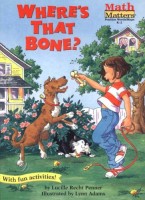
Grade K
4 skill lessons · 2 math-through-reading
Math
Skill lessons
The mathematics the book carries, taught directly. Printable workbook pages and teacher keys are not available for this book yet.
- 1The Bone Is Behind the Bird Feeder
- 2Jill Draws the Yard
- 3Behind What?
- 4One Mark for Every Bone
Math + reading
Math through the reading
The same book, entered through a sentence it prints. Change one word in the reading and the numbers change with it.
- 5One Word Moves the Bone
- 6Which Way Would You Tell the Dog?
Reading
Reading and language lessons
The same book read as a text. What a word means in its sentence, how a character is shown, how the writing is put together - no mathematics.
- 7Behind, In Front Of, Between: The Words That Tell Where the Bone Is
- 8Why Would a Dog Bury a Bone? Finding the Reason in the Sentences
- 9The Bones Kept Getting Lost: Telling the Trouble and the Fix
- 10The Next Day, Later, A Week Later: How the Story Says Time Passed
- 11Or Did They? When the Book Turns and Asks the Reader
Skill lessons
4 lessons on the mathematics the book carries. Printable workbook pages and teacher keys are not available for this book yet.
1. The Bone Is Behind the Bird Feeder
Bingo buries every bone somewhere and then cannot say where, and the book fixes that by handing the reader eight words for it: left of, right of, under, on, inside, outside, behind and between, printed in one line at the back. Children put their own bodies in each of those places, watch a bone go down in a yard built on the carpet, and then say one sentence that gets a partner to the exact spot. The word does work: a child who says under when the bone is behind sends their partner to the wrong place, and the wrong place is visible to everyone in the group.
Full lesson — 20 minutes
1. Hear the eight words (4 min)
Sit where you can see the chart. As the teacher reads each of the eight position words from the back of the book, put your own body in that place next to your chair: get behind it, get under it, get on it, stand left of it and right of it. Say the word out loud at the same time your body arrives.
Word preview: behind, under, between, outside
Left of the tree, right of the bucket, under the blanket, on the swing, inside the house, outside the garage, behind the fence, between the bushes.
2. Watch where Bingo puts it (5 min)
Four children build the yard corner on the carpet: chair for the apple tree, box for the porch, hoop for the pond, ruler for the bird feeder, rock beside the chair. One child is Bingo and walks a bone to a hiding place while the others watch. Nobody speaks until the bone is down.
Word preview: behind, in front of
He carried his bone behind the bird feeder and looked around.
Finally, Bingo buried it in front of the bush with the pink flowers.
3. Say where it is (7 min)
Take turns saying one whole sentence about the bone you just watched go down, in the form the bone is ___ the ___. Use one of the eight words from the chart and name a thing in the yard corner. The child who was Bingo says yes or no, and a no means somebody else tries with a different word.
Word preview: between, left of, right of, on
Left of the tree, right of the bucket, under the blanket, on the swing, inside the house, outside the garage, behind the fence, between the bushes.
Bingo buried the bone between the tree and a rock.
4. Dig it up from the words alone (4 min)
Close your eyes while a partner moves the bone somewhere new. Open them, listen to your partner's one sentence, and walk straight to the bone and pick it up without guessing twice. If you land in the wrong place, your partner says the sentence again and you both work out which word sent you wrong.
Word preview: under, inside, outside
Bingo, Doug, here and there, but he couldn't remember where he had buried his bone.
Short version — 9 minutes
1. Hear the eight words (4 min)
As the teacher reads each of the eight position words from the back of the book, put your body in that place next to your chair and say the word as you arrive.
Word preview: behind, under, between
Left of the tree, right of the bucket, under the blanket, on the swing, inside the house, outside the garage, behind the fence, between the bushes.
2. Say where it is (5 min)
Watch a partner hide the bone in the yard corner, then say one whole sentence: the bone is ___ the ___. Your partner says yes or no.
Word preview: between, right of
Bingo buried the bone between the tree and a rock.
Three levels
- Support
- Work with three of the eight words rather than all eight, under, on and behind, and keep the chart pictures in the child's hand while they speak. The sentence frame is unchanged and so is the walk to the bone, so the child still has to be right for a partner to find it; only the number of words competing in their head at the moment of choosing comes down.
- At Grade
- Use all eight words from the chart. Watch the bone go down, say one whole sentence naming a position word and a landmark, and then find a partner's bone from their sentence alone without a second guess.
- Extension
- Hide the bone where two different position words are both true of it, under the chair and behind the box at once, and say the sentence that a partner cannot get wrong. Then say the sentence that would send them to the other true place, and say what makes the difference between the two.
English learners
Position prepositions are exactly where a child's first language will not carry them across, so this note earns its keep. Under, on and behind are learnable in one session because a body can be put in each of them and the word can be said at the same moment, which is what the first step is for. Between is the one that costs more: it needs two landmarks, and several languages mark it with a case ending or a postposition rather than a word standing in front of the noun, so a child may produce the tree the rock between and be entirely correct. Accept that order and recast it once. Post and rehearse the bone is ___ the ___ before any bone is hidden and fill the blanks aloud with the group. Left and right transfer as words but not as reliable directions at this age in any language, so let a child point instead of choosing between them. A child may say the whole sentence in their strongest language to a partner who shares it and then say only the position word and the landmark in English, and a child who walks to the right spot has understood the sentence whether or not they can produce it.
Materials
- The eight-term position line from the back of the book, copied large onto chart paper with a picture beside each term
- Yard corner built on the carpet, one per group of four: a chair for the apple tree, an upturned box for the porch, a hoop for the turtle pond, a ruler standing in a lump of clay for the bird feeder, and a rock
- One dog-bone cutout per child, big enough to be seen across the carpet
- Word cards: behind, between, under, outside
Standards & curriculum
Choose your curriculum above to see the standards for this lesson.
Standards are held back while this plan is edited. Every standard shown here was matched against the supplied wording of this lesson, quoting its steps, so a changed step is no longer the thing that was checked. Undo your changes to bring the standards back — your edits stay in this browser either way.
2. Jill Draws the Yard
Jill's dog cannot remember where he buried anything, so she draws the backyard on a sheet of paper and puts a mark on the drawing wherever the bone goes down. Children do both halves of that in one lesson: they stand in a yard built on the carpet, put a mark on their own paper where the bone is, and then read somebody else's mark and walk to the place it names. Representation means the drawing has to stand for the room, so a mark in the wrong corner of the paper sends a child to the wrong corner of the carpet, and the mismatch is something everyone can see rather than something the teacher rules on.
Full lesson — 20 minutes
1. Stand in the yard and look down (4 min)
Stand together at one edge of the yard corner so everything is in front of you, and name the four things out loud: tree, porch, pond, bird feeder. Now look at the paper and find those same four things drawn on it. Point at the tree on the carpet, then at the tree on the paper, and do that for all four before you draw anything.
Word preview: map, yard
She made a big map of her backyard.
2. Put the mark where the bone went (6 min)
One child hides the bone while the group watches. Everybody puts one red mark on their own paper at the place on the map that matches the place on the carpet. Say the position sentence out loud as you draw so the mark and the words agree: the bone is ___ the ___.
Word preview: mark, place
Jill marked the place on her map.
She had marked an X for every bone.
3. Read a mark back into the yard (6 min)
Swap papers with a partner. Look only at their mark, not at the carpet, and say where the bone must be using a position word and a landmark. Then walk to that spot in the yard corner and put your hand on it. The partner tells you whether their mark meant that place.
Word preview: mark, under
The bone was right where Jill had put the mark on her map right under the tree.
4. Find the one that does not work (4 min)
The teacher hides the bone and puts one mark on the big paper that is in the wrong corner of the map. Walk to where the mark says and find nothing there. Then say which landmark the mark is next to on the paper and which landmark the bone is next to on the carpet, and say the two are not the same one.
Word preview: map, place
All they found was an empty hole.
Short version — 9 minutes
1. Put the mark where the bone went (5 min)
Watch a child hide the bone, then put one red mark on your paper at the place on the map that matches the place on the carpet. Say the position sentence aloud as you draw.
Word preview: mark, map
Jill marked the place on her map.
2. Read a mark back into the yard (4 min)
Swap papers, look only at the mark, and walk to that spot in the yard corner with your hand out. Your partner says whether the mark meant that place.
Word preview: mark
The bone was right where Jill had put the mark on her map right under the tree.
Three levels
- Support
- Use a map with two landmarks on it rather than four, the tree and the porch, and let the child keep standing in the yard corner while they draw instead of turning away from it. They still put the mark down themselves and still walk to a partner's mark, so nothing about the two-way work is reduced; there are simply fewer places on the paper the mark could be confused with.
- At Grade
- With four landmarks on the map, put a mark down for a bone you watched go into the yard corner, then read a partner's mark, say the position sentence it stands for, and walk to that spot without looking at where the bone actually is.
- Extension
- Hide the bone yourself, mark it, and then draw the same yard again on a fresh sheet turned a quarter way round, so the tree that was at the top is now at the side. Put the mark on the turned map for the same bone, and say which landmark you used to work out where the mark had to go.
English learners
A map is a second language on top of the one being learned, and the two can be kept apart here because the walking says everything the speaking would. A child who reads a partner's mark and puts a hand on the right patch of carpet has done the whole lesson without a sentence. Map and mark are worth pre-teaching as objects rather than words: hold the paper up beside the carpet and point from one tree to the other, twice, before anyone draws. The sentence frame is the same one from the position lesson, the bone is ___ the ___, so a child who rehearsed it there carries it straight in. Where a child's family uses drawings of a home or a route, invite them to say in their strongest language what their mark means and have a partner who shares it report the landmark name in English. Watch for children who draw the mark beautifully in the middle of the paper regardless of the bone: that is a drawing, not a map, and the fix is to walk them to the carpet and back with their finger on the paper the whole way.
Materials
- Yard corner built on the carpet, one per group of four: a chair for the apple tree, an upturned box for the porch, a hoop for the turtle pond, a ruler standing in a lump of clay for the bird feeder, and a rock
- One blank map sheet per child: a sheet of paper with the same four landmarks already drawn in the same four corners as the yard corner on the carpet
- One dog-bone cutout per child, big enough to be seen across the carpet
- A red crayon per child, for marks
- Word cards: map, mark
Standards & curriculum
Choose your curriculum above to see the standards for this lesson.
Standards are held back while this plan is edited. Every standard shown here was matched against the supplied wording of this lesson, quoting its steps, so a changed step is no longer the thing that was checked. Undo your changes to bring the standards back — your edits stay in this browser either way.
3. Behind What?
The book describes one buried bone twice over, once as between the tree and a rock and once as being to the right of the apple tree, which quietly shows that a position word is never about the object alone. Children discover that a word with no landmark after it sends nobody anywhere, sort the eight words by how many landmarks each one needs, and then describe a single bone two true ways and check that both descriptions land a partner on the same patch of carpet. A child argues why between needs two cards and under needs one, and the test of that argument is a partner who either arrives or does not.
Full lesson — 20 minutes
1. Say the word with nothing after it (4 min)
The teacher says only a position word and stops: behind. Try to walk to it and find that you cannot, because behind what has not been said. Do this for under, between and outside, and each time say out loud what is missing from the sentence before you sit back down.
Word preview: behind, under, between
Left of the tree, right of the bucket, under the blanket, on the swing, inside the house, outside the garage, behind the fence, between the bushes.
2. Count the things the word needs (6 min)
Put a landmark card down for every thing a position word needs before it can send anybody anywhere. Under the blanket takes one card. Between the bushes takes two, and you have to say both. Sort the eight words from the chart into a one-card pile and a two-card pile, and be ready to say why any word is where you put it.
Word preview: between, under, landmark
Left of the tree, right of the bucket, under the blanket, on the swing, inside the house, outside the garage, behind the fence, between the bushes.
Bingo buried the bone between the tree and a rock.
3. Find the bone two different ways (6 min)
One bone goes down in the yard corner while everybody watches. Say two true sentences about that one bone using two different landmarks, the way the book says the same bone is between the tree and a rock and also to the right of the apple tree. Both sentences must send a partner to the same spot, and you test that by sending them twice.
Word preview: between, right of
Bingo buried the bone between the tree and a rock.
Then he circled the apple tree.
4. Take one landmark away (4 min)
Your partner says a between sentence about a hidden bone and then leaves out one of the two things. Try to find the bone from what is left, and when you cannot, say which card would put it back. Then do it once with an under sentence and notice that taking the one thing away leaves nothing at all.
Word preview: between, under
Left of the tree, right of the bucket, under the blanket, on the swing, inside the house, outside the garage, behind the fence, between the bushes.
Short version — 9 minutes
1. Count the things the word needs (5 min)
Put a landmark card down for every thing a position word needs. Under takes one card, between takes two and you must say both. Sort the eight chart words into a one-card pile and a two-card pile.
Word preview: between, under
Left of the tree, right of the bucket, under the blanket, on the swing, inside the house, outside the garage, behind the fence, between the bushes.
2. Find the bone two different ways (4 min)
Watch one bone go down, then say two true sentences about it using two different landmarks. Send a partner with each sentence and check they arrive at the same spot both times.
Word preview: between, right of
Bingo buried the bone between the tree and a rock.
Three levels
- Support
- Sort four words rather than eight, under, on, behind and between, so the one-card pile and the two-card pile each start with something obvious in them. The child still says why each word sits where they put it and still hands a partner the cards to prove it, which is the whole reasoning; there is simply less to hold at once while they make the argument.
- At Grade
- Sort all eight chart words by how many landmarks each needs, say why for any word asked about, then describe one hidden bone two true ways with two different landmarks and send a partner with each sentence.
- Extension
- Find a spot in the yard corner where between is true of two different pairs of things at once, so between the two things is true twice over of one bone but sends a partner to two places. Say which pair a listener would pick and what you would add to the sentence to stop them picking the other.
English learners
This lesson is about a piece of grammar and not only a piece of vocabulary, which makes it unusually reachable for a child new to English and unusually easy to grade wrongly. The idea that a position word is incomplete on its own is true in every language a child in the room speaks, so the first step, where the teacher says behind and stops, lands without any English at all: the child who looks around confused has understood it. The card counting carries the whole lesson without speech, and a child who puts two cards under between has made the argument. Where the landmark sits is the difference: many languages put it before the position word, and a child may say the tree behind, which is correct thinking in a different order and should be recast once and accepted. Give the frame the bone is ___ the ___ and the ___ for the two-card words specifically, since the second landmark is the piece children drop. A child may argue their sort in their strongest language with a partner who shares it and report only the pile in English.
Materials
- The eight-term position line from the back of the book, copied large onto chart paper with a picture beside each term
- Yard corner built on the carpet, one per group of four: a chair for the apple tree, an upturned box for the porch, a hoop for the turtle pond, a ruler standing in a lump of clay for the bird feeder, and a rock
- Two landmark cards per pair, each a photograph or drawing of one thing in the yard corner, plus one blank card marked with a question mark
- One dog-bone cutout per child, big enough to be seen across the carpet
- Word cards: between, landmark
Standards & curriculum
Choose your curriculum above to see the standards for this lesson.
Standards are held back while this plan is edited. Every standard shown here was matched against the supplied wording of this lesson, quoting its steps, so a changed step is no longer the thing that was checked. Undo your changes to bring the standards back — your edits stay in this browser either way.
4. One Mark for Every Bone
Jill's rule is printed in one sentence, that she had marked an X for every bone, and the book then breaks its own rule in front of the reader when the last bone turns out to be missing and all they find is an empty hole. Children build the rule by drawing exactly one mark for every bone that goes down, then take a prepared map and lay a piece of yarn from each mark to the bone it stands for until something is left over with no yarn on it. The pairing itself carries the finding: nobody counts marks or bones, and the child knows something is wrong because one mark has nothing on the other end of its yarn.
Full lesson — 20 minutes
1. One mark, one bone (5 min)
Watch the teacher put a bone down and draw one mark, then another bone and another mark, saying one mark for one bone each time. Now do it yourselves: every time your partner puts a bone in the yard corner you draw exactly one mark, and every time you draw a mark they put down exactly one bone. Nobody draws two marks for one bone.
Word preview: mark, every
She had marked an X for every bone.
2. Tie each mark to its bone (6 min)
Take a prepared map with marks already on it and a yard corner that already has bones in it. Lay a piece of yarn from one mark on the paper to the bone it stands for, and keep going until you run out of one or the other. Do not count anything; just pair them off one at a time and leave the yarn where it lies.
Word preview: match, every
She had marked an X for every bone.
Every day they dug up another bone.
3. Find the one left over (5 min)
Look at what has no yarn on it. Point at it and say out loud whether it is a mark with no bone or a bone with no mark. Then go to the place in the yard corner that the leftover mark stands for and put your hand flat on the empty ground there, the way Jill and Bingo found nothing where a mark said something should be.
Word preview: left over, empty
But the last bone was missing.
All they found was an empty hole.
4. Say what the leftover mark means (4 min)
Tell your partner one thing that could have happened, using the mark and the empty ground as your reason: the mark says a bone went here and there is no bone here now. Listen to what your partner says happened and say whether the yarn agrees with them. You do not have to end up thinking the same thing.
Word preview: left over, empty
Jill knew he thought Hulk had taken it.
Short version — 9 minutes
1. Tie each mark to its bone (5 min)
Lay a piece of yarn from each mark on the prepared map to the bone it stands for, pairing them off one at a time until you run out of one or the other. Do not count.
Word preview: match, every
She had marked an X for every bone.
2. Find the one left over (4 min)
Point at whatever has no yarn on it and say whether it is a mark with no bone or a bone with no mark. Then put your hand on the empty ground the leftover mark stands for.
Word preview: left over, empty
All they found was an empty hole.
Three levels
- Support
- Use a prepared map with three marks and a yard holding two bones, so the leftover is found after two pieces of yarn rather than after several. The child still lays every piece of yarn themselves, still finds the leftover themselves and still walks to the empty ground, so the matching is whole; only the length of the pairing before the answer appears comes down.
- At Grade
- Draw one mark for every bone as the bones go down, then take a prepared map and a yard, lay yarn from every mark to its bone, find what has no yarn on it, name it as a mark with no bone or a bone with no mark, and walk to the ground the leftover mark stands for.
- Extension
- Take a map and a yard where two things are left over at once, one mark with no bone and one bone with no mark, and say why those two leftovers do not cancel each other out even though there is one of each. Move the yarn to show a partner that the leftover mark and the leftover bone are in two different places.
English learners
Nothing in the matching itself needs English, which is why this lesson is a good place for a child new to the language to be visibly right in front of the group. The yarn is the whole argument: a child who lays it correctly and points at the strand that has nothing on its far end has done the mathematics completely, and the teacher can see it from across the room. Two phrases are worth putting up and rehearsing before any yarn is handed out, one for one and left over, both of which are short and both of which the child will hear all year. The sentence in the last step, that the mark says a bone went here and there is no bone here now, is a long one and should be broken into its two halves and posted separately so a child can say either half and be understood. Every is the word that trips children up, because several languages use one word where English splits every and all, so accept all the bones for every bone without correction. Children may work the yarn in pairs who share a language and report only which thing was left over in English.
Materials
- Yard corner built on the carpet, one per group of four: a chair for the apple tree, an upturned box for the porch, a hoop for the turtle pond, a ruler standing in a lump of clay for the bird feeder, and a rock
- One dog-bone cutout per child, big enough to be seen across the carpet
- One blank map sheet per child: a sheet of paper with the same four landmarks already drawn in the same four corners as the yard corner on the carpet
- A red crayon per child, for marks
- One prepared map per pair with red marks already on it, and a matching yard corner where a bone lies at every marked place except one
- A length of yarn per pair, long enough to reach from a mark to a bone
- Word cards: match, left over
Standards & curriculum
Choose your curriculum above to see the standards for this lesson.
Standards are held back while this plan is edited. Every standard shown here was matched against the supplied wording of this lesson, quoting its steps, so a changed step is no longer the thing that was checked. Undo your changes to bring the standards back — your edits stay in this browser either way.
Math through the reading
The mathematics is reached through a sentence the book prints: change one word in the reading and the numbers change with it. These carry their own standards, matched against these lessons rather than inherited from the skill ones.
5. One Word Moves the Bone
Children place two bones for two sentences that differ by one position word, then send a partner to each with a sentence of their own.
Full lesson — 20 minutes
1. Put your body in each word (4 min)
Standing beside their own chairs, children act out each of the eight words from the back of the book as the teacher reads it, getting behind the chair, under it, on it, and saying the word aloud at the moment their body arrives there. Nobody says a word they have not just been.
2. Place two bones for two sentences (6 min)
Each group hears the book's sentence about the bird feeder and puts a bone where it says. Then they hear the same sentence with in front of swapped in for behind and put a second bone where that one says. Both bones stay on the carpet with the bird feeder standing between them, and each child says which bone belongs to which sentence.
3. Send your partner with one sentence (7 min)
One child hides a bone while their partner's eyes are shut, then says exactly one sentence: the bone is ___ the ___. The partner opens their eyes, walks once, and picks up whatever is there. No second sentence and no pointing. If the partner lands wrong, the pair works out together which word sent them there.
4. Name the word that moved it (3 min)
Each group reports one pair of sentences they used that differed by a single word, says both aloud, and says how far apart the two places were. Children point at the two spots rather than describing the distance.
Short version — 9 minutes
1. Place two bones for two sentences (6 min)
Each group hears the book's sentence about the bird feeder and puts a bone where it says. Then they hear the same sentence with in front of swapped in for behind and put a second bone where that one says. Both bones stay on the carpet with the bird feeder standing between them, and each child says which bone belongs to which sentence.
2. Send your partner with one sentence (7 min)
One child hides a bone while their partner's eyes are shut, then says exactly one sentence: the bone is ___ the ___. The partner opens their eyes, walks once, and picks up whatever is there. No second sentence and no pointing. If the partner lands wrong, the pair works out together which word sent them there.
Three levels
- Support
- Work with three words rather than eight, under, on and behind, and let the child hold the chart picture for the word they are about to say. The swap in the second segment becomes under against on, which are as far apart as behind and in front of and easier to see. The child still places both bones, still says a whole sentence, and is still scored by where their partner walks; only the number of words competing at the moment of choosing comes down.
- At grade
- Use all eight words. Place a bone for the book's sentence and a second for the one-word swap, then hide a bone and get a partner to it with one sentence, naming the word that sent them wrong if they miss.
- Extension
- Hide the bone somewhere that two different position words are both true of, behind the box and under the chair at the same time, and say the one sentence that a partner cannot get wrong. Then say the other true sentence and say why a listener might have gone somewhere else with it.
English learners
Position prepositions are the hardest thing in this lesson for a child new to English and the first segment exists because of them: a word said at the moment the body arrives in the place is learned in a way a word said at a chart is not. Under, on and behind come quickly for this reason. Between is slower and needs its second landmark named every time, and many languages mark it with an ending on the noun rather than a separate word, so a child may say the tree the rock between and be reasoning correctly in a different order; recast it once and accept the walk as the answer. Left and right are unreliable at this age in every language, so let a child point rather than choose. Post the bone is ___ the ___ and fill it aloud with the group twice before any bone is hidden. A child may say the sentence in their strongest language to a partner who shares it and then say only the position word and the landmark name in English, and a child who walks straight to the bone has understood the sentence completely whether or not they can produce one.
Materials
- Two dog-bone cutouts per group, in two colours so each belongs to one sentence
- A yard corner per group of four: a chair for the apple tree, an upturned box for the porch, a hoop for the turtle pond, a ruler standing in clay for the bird feeder
- One small picture card per position word, for the children who are holding one
- The eight-term position line from the back of the book, copied large with a picture beside each term
- A posted sentence frame reading the bone is ___ the ___
Standards & curriculum
Choose your curriculum above to see the standards for this lesson.
Standards are held back while this plan is edited. Every standard shown here was matched against the supplied wording of this lesson, quoting its steps, so a changed step is no longer the thing that was checked. Undo your changes to bring the standards back — your edits stay in this browser either way.
6. Which Way Would You Tell the Dog?
Children put one bone in a spot two true sentences describe, count the landmarks each sentence needs, and argue aloud for the one they would put on the map.
Full lesson — 20 minutes
1. Bury one bone two ways (5 min)
Each group puts a chair out for the apple tree and a block down for the rock, then buries one bone in the patch of carpet that is between the chair and the block and also to the right of the chair. Children check both sentences against the one bone and agree out loud that both are true of it.
2. Count what each sentence needs (5 min)
Lay a landmark card down for every thing each sentence names. The between sentence gets two cards, the right of sentence gets one. Children say the two counts aloud and then walk to the bone twice, once from each side of the yard, and notice which sentence sent them wrong the second time.
3. Tell Bingo which one and why (7 min)
Each child in turn tells the group which sentence they would put on the map for Bingo, using the frame I would tell Bingo ___ because it needs ___ things and ___. The reason has to have the card count in it. Nobody may repeat the reason the child before them gave without adding something to it.
4. Say the other side back (3 min)
Each child names one person in the group who chose differently and says that person's reason back to them, with the card count in it. The group does not vote and does not have to agree; they only have to be able to say each other's reasons.
Short version — 9 minutes
1. Count what each sentence needs (5 min)
Lay a landmark card down for every thing each sentence names. The between sentence gets two cards, the right of sentence gets one. Children say the two counts aloud and then walk to the bone twice, once from each side of the yard, and notice which sentence sent them wrong the second time.
2. Tell Bingo which one and why (7 min)
Each child in turn tells the group which sentence they would put on the map for Bingo, using the frame I would tell Bingo ___ because it needs ___ things and ___. The reason has to have the card count in it. Nobody may repeat the reason the child before them gave without adding something to it.
Three levels
- Support
- Stay with the two sentences from the second segment and give the child the landmark cards already in their hand, one card in the left hand for the right of sentence and two in the right hand for the between sentence. The reason frame is unchanged and the child still says it to the group with the count in it; they are simply holding the count rather than building it, so the whole demand falls on the reason instead of on the card laying.
- At grade
- Bury one bone that both sentences are true of, lay a card for every landmark each sentence names, walk to the bone from two sides of the yard, then say which sentence you would put on the map with the card count inside your reason, and say a groupmate's different reason back to them.
- Extension
- Move the rock while the group is not looking and then say what happens to each of the two sentences. Say which one still finds the bone, which one now finds nothing, and what that tells you about picking a landmark for a map somebody will read days later. Naming what would have to change to settle the question is harder than naming why it is open.
English learners
The reason is the entire product here, which makes this the hardest lesson in the book for a child new to English and the one where the frame has to be supplied whole rather than expected. Post I would tell Bingo ___ because it needs ___ things and ___ and fill it aloud with the group twice before anybody chooses. The count slot is the friendly one: number words to two transfer from every language in the room and give a child a correct piece of the sentence from the first minute. Because is the piece that does not transfer, since several languages put the reason in front of the claim, so a child may say it needs two things, the between one, which is the same reasoning in a different order and is complete as it stands. The two position words themselves should be pre-taught with bodies and not with pictures, since between needs its two landmarks named every time and right is unreliable at this age in any language. A child may argue their choice in their strongest language with a partner who shares it and report only the sentence name and the number in English, and a child who lays two cards for between and one for right of has made the mathematical half of the argument without speaking.
Materials
- One bone cutout per group of three or four
- A chair for the apple tree and a fist-sized block for the rock, one set per group
- Landmark cards, three per group, blank on one side
- The book's two sentences about the same bone, written large one above the other
- A posted reason frame reading I would tell Bingo ___ because it needs ___ things and ___
Standards & curriculum
Choose your curriculum above to see the standards for this lesson.
Standards are held back while this plan is edited. Every standard shown here was matched against the supplied wording of this lesson, quoting its steps, so a changed step is no longer the thing that was checked. Undo your changes to bring the standards back — your edits stay in this browser either way.
Reading and language lessons
5 lessons on the reading and language the book carries - what a word means in its sentence, how a character is shown, how a text is built. No mathematics: these are matched against the English language arts curricula, which are a different and smaller set than the mathematics ones.
7. Behind, In Front Of, Between: The Words That Tell Where the Bone Is
Every time Bingo hides a bone, one small word in the sentence is doing all the work of telling where. Students act the hiding places out with a toy bone and a chair, mark the where-word in three sentences, meet the book's own back-matter list of eight such words, and finish by saying a where-word for a hiding place of their own. Nothing is counted and no bones are added up; the work is hearing which word in a sentence answers where.
Full lesson — 20 minutes
1. Act out where the bone went (6 min)
The teacher reads the two sentences below. Put a toy bone behind a chair when you hear behind, then in front of the chair when you hear in front of. Say the where-word aloud as you move the bone. Then say which of the two places is easier to see from far away.
Word preview: behind, in front of
He carried his bone behind the bird feeder and looked around. Finally, Bingo buried it in front of the bush with the pink flowers.
2. Put a counter on the where-word (5 min)
Read the sentences below with a partner. Put a counter on the words that tell where the bone ended up: between the tree and a rock. Say the whole where-part aloud. Then say what between needs that behind does not.
Word preview: between
He went around and around the turtle pond. He sniffed the air. Then he circled the apple tree. Bingo buried the bone between the tree and a rock.
3. Say the eight where-words the book lists (5 min)
At the end of the book there is a list of where-words with no story around them. Read the list below with the teacher and act each one out with your toy bone and chair. Say each word as you do it, then say which two are opposites.
Word preview: under, outside
In each picture, bingo is hiding from Hulk. Where is bingo? Left of the tree, right of the bucket, under the blanket, on the swing, inside the house, outside the garage, behind the fence, between the bushes.
4. Hide it yourself and say where (4 min)
Read the sentence below, where Bingo hides one more bone. Then hide your toy bone somewhere in the room and tell a partner where it is, using one where-word from the list. Your partner finds it. Say whether your word was enough.
Word preview: where
Bingo carried the next bone all over the yard. Suddenly he dashed behind the swing. He made a left turn and buried the bone under the tree where Jill was sitting.
Short version — 9 minutes
1. Act out where the bone went (5 min)
The teacher reads the two sentences below. Move a toy bone behind a chair on behind, then in front of it on in front of, saying the where-word aloud each time.
Word preview: behind, in front of
He carried his bone behind the bird feeder and looked around. Finally, Bingo buried it in front of the bush with the pink flowers.
2. Say the eight where-words the book lists (4 min)
Read the book's closing list below with the teacher and act each where-word out with your toy bone and chair, saying each word as you do it.
Word preview: between, under, outside, where
In each picture, bingo is hiding from Hulk. Where is bingo? Left of the tree, right of the bucket, under the blanket, on the swing, inside the house, outside the garage, behind the fence, between the bushes.
Three levels
- Support
- Work one sentence at a time in step 1, moving the bone with the child before asking for the word. Behind and in front of are enough; leave the list of eight for another day. Accept the child's hands showing the place as the answer.
- At Grade
- Act out both places in step 1 and say each where-word, then read the book's list of eight and act out four of them.
- Extension
- After the list, say which two of the eight where-words could both be true of the same hiding place at once, and give an example of a place where both would fit.
English learners
English piles its where-words in front of the noun and some of them are two or three words long, so in front of can be heard as three separate words rather than one meaning. Say each where-word while moving the object, so the meaning arrives through the hands first. Invite the child to say the where-word in their strongest language and put the English beside it. Rehearsable frame: The bone is ___ the ___.
Materials
- Where's That Bone, the passage printed in this step
- One toy bone or small object
- A chair to hide it around
- One counter per child to mark words
- Word cards: behind, in front of, between, under, outside, where
Standards & curriculum
Choose your curriculum above to see the standards for this lesson.
Standards are held back while this plan is edited. Every standard shown here was matched against the supplied wording of this lesson, quoting its steps, so a changed step is no longer the thing that was checked. Undo your changes to bring the standards back — your edits stay in this browser either way.
8. Why Would a Dog Bury a Bone? Finding the Reason in the Sentences
The book never says Bingo is worried in those words, but it prints exactly the sentences a reader needs to work it out: the cat takes his food and his toys, and the very next day the bone goes in the ground. Students read what Hulk does, read what Bingo does after, say the reason aloud, and then meet Jill's mother saying it out loud too. The skill is giving a reason and pointing at the sentence it came from.
Full lesson — 20 minutes
1. Read what the cat does (5 min)
The teacher reads the sentences below. Each one names a thing Hulk does to Bingo. Hold up a finger for each one you hear. Then say aloud how you would feel if someone did those things to your things.
Word preview: scared, grabbed
She brought her cat Hulk. Bingo was scared of Hulk. Hulk jumped on Bingo. He ate his food. He even grabbed Bingo's toys.
2. Read what Bingo does next (5 min)
Read the sentences below with a partner. They tell what Bingo did the very next day. Say aloud what he did with his bone instead of eating it, then say one reason you think he did it.
Word preview: instead, buried
The day after Hulk came, Bingo didn't eat his bone. Instead, he buried it outside in the yard. Jill saw him through the window.
3. Say the reason and point at your proof (6 min)
Read both passages below again. Say this out loud to a partner: Bingo buried his bone because ___. Then point with your finger at the one sentence that made you sure. Your partner says whether that sentence really shows it.
Word preview: because, reason
She brought her cat Hulk. Bingo was scared of Hulk. Hulk jumped on Bingo. He ate his food. He even grabbed Bingo's toys.
The day after Hulk came, Bingo didn't eat his bone. Instead, he buried it outside in the yard. Jill saw him through the window.
4. Hear a character give the same reason (4 min)
Read the passage below, where Jill's mother says out loud what you worked out for yourself. Say whether her reason matches yours. Then say which is easier for a reader: being told the reason, or working it out.
Word preview: hiding, worry
I think he's hiding it from Hulk, she said. Don't worry, Jill told Bingo. Cats don't eat bones. Bingo just sighed and put his head on his paws.
Short version — 9 minutes
1. Read what the cat does (4 min)
The teacher reads the sentences below. Hold up a finger for each thing Hulk does to Bingo, then say how you would feel if someone did that to your things.
Word preview: scared, grabbed
She brought her cat Hulk. Bingo was scared of Hulk. Hulk jumped on Bingo. He ate his food. He even grabbed Bingo's toys.
2. Say the reason and point at your proof (5 min)
Read both passages below. Say to a partner: Bingo buried his bone because ___. Then point at the one sentence that made you sure.
Word preview: instead, buried, because, reason, hiding, worry
She brought her cat Hulk. Bingo was scared of Hulk. Hulk jumped on Bingo. He ate his food. He even grabbed Bingo's toys.
The day after Hulk came, Bingo didn't eat his bone. Instead, he buried it outside in the yard. Jill saw him through the window.
Three levels
- Support
- Read the cat sentences one at a time and let the child answer with a face or a gesture before words. Then ask only: did Bingo like Hulk? Point at the sentence together rather than asking the child to find it alone.
- At Grade
- Read both passages, say the because sentence aloud, and point at the one sentence that proves it.
- Extension
- Two different sentences in the printed passages could each serve as proof. Name both, then say which one proves it better and why the other is weaker.
English learners
Because is the whole lesson and it is a word many languages place differently in the sentence, so rehearse the frame before the reading, not after. Let the child say the reason in their strongest language first and then rebuild it in English with the frame. Pointing at the proof sentence is a full answer on its own for a child still gathering English words. Rehearsable frame: Bingo buried his bone because ___.
Materials
- Where's That Bone, the passage printed in this step
- Feelings cards
- pointing finger
- Word cards: scared, grabbed, instead, buried, because, reason, hiding, worry
Standards & curriculum
Choose your curriculum above to see the standards for this lesson.
Standards are held back while this plan is edited. Every standard shown here was matched against the supplied wording of this lesson, quoting its steps, so a changed step is no longer the thing that was checked. Undo your changes to bring the standards back — your edits stay in this browser either way.
9. The Bones Kept Getting Lost: Telling the Trouble and the Fix
This story has an unusually clean shape for a kindergartner to hold: something goes wrong over and over, somebody thinks, and something new gets made that fixes it. Students read the trouble, read the fix working, and then retell the whole thing in three sentences using first, then and at the end. The retelling is the skill; no bones and no marks are counted.
Full lesson — 20 minutes
1. Read the trouble (6 min)
The teacher reads the passage below, which tells what kept going wrong. Say aloud, in one sentence, what Bingo's problem was. Then say what Jill did when she saw the problem.
Word preview: problem, thought
The same thing happened the next day and the day after that. Bingo buried his bones, then he couldn't find them. Bingo kept losing all his bones. How could Jill help him? She thought and thought. At last she had it. She made a big map of her backyard.
2. Read the fix working (5 min)
Read the passage below with a partner. It tells what happened the first time Jill used her idea. Say aloud whether the problem got fixed, and say the sentence that told you.
Word preview: worked, map
She took out her map. Let's go find one, she said. Yay! Hurray! The bone was right where Jill had put the mark on her map right under the tree. The map worked.
3. Put the three parts in order (5 min)
Read both passages below again. On your mat, put one hand on the trouble part and the other hand on the fixed part. Say which came first. Then say what had to happen in between the two.
Word preview: first, order
The same thing happened the next day and the day after that. Bingo buried his bones, then he couldn't find them. Bingo kept losing all his bones. How could Jill help him? She thought and thought. At last she had it. She made a big map of her backyard.
She took out her map. Let's go find one, she said. Yay! Hurray! The bone was right where Jill had put the mark on her map right under the tree. The map worked.
4. Retell it in three sentences (4 min)
Read the passage below one more time. Then tell a partner the whole story in exactly three sentences, starting them with First, Then and At the end. Your partner says whether the trouble and the fix were both in there.
Word preview: retell, at the end
She took out her map. Let's go find one, she said. Yay! Hurray! The bone was right where Jill had put the mark on her map right under the tree. The map worked.
Short version — 9 minutes
1. Read the trouble (5 min)
The teacher reads the passage below. Say in one sentence what Bingo's problem was, then say what Jill did about it.
Word preview: problem, thought
The same thing happened the next day and the day after that. Bingo buried his bones, then he couldn't find them. Bingo kept losing all his bones. How could Jill help him? She thought and thought. At last she had it. She made a big map of her backyard.
2. Retell it in three sentences (4 min)
Read the passage below, which shows the fix working. Then tell a partner the story in three sentences beginning First, Then and At the end.
Word preview: worked, map, first, order, retell, at the end
She took out her map. Let's go find one, she said. Yay! Hurray! The bone was right where Jill had put the mark on her map right under the tree. The map worked.
Three levels
- Support
- Give the child the three sentence openers on cards and ask for one sentence at a time, supplying First yourself. Two sentences, the trouble and the fix, is a complete retelling at this level.
- At Grade
- Read both passages, then retell the story in three sentences using First, Then and At the end.
- Extension
- Retell it in three sentences, then say which single sentence in the printed passages you would have to keep if you were allowed only one, and why that one carries the most of the story.
English learners
First, then and at the end are the scaffolding of every retelling a child will be asked for this year, so teach them as three fixed cards rather than as vocabulary. Let the child retell in their strongest language at full speed first, then rebuild it in English one card at a time. Rehearsable frames: First ___. Then ___. At the end ___.
Materials
- Where's That Bone, the passage printed in this step
- Beginning middle end mat
- Word cards: problem, thought, worked, map, first, order, retell, at the end
Standards & curriculum
Choose your curriculum above to see the standards for this lesson.
Standards are held back while this plan is edited. Every standard shown here was matched against the supplied wording of this lesson, quoting its steps, so a changed step is no longer the thing that was checked. Undo your changes to bring the standards back — your edits stay in this browser either way.
10. The Next Day, Later, A Week Later: How the Story Says Time Passed
This story covers weeks, and it does it with a handful of small phrases at the fronts of sentences. Students hear the time words, sort three passages onto a day-line by their opening phrases alone, and then say a time word of their own to start a sentence. The skill is noticing the phrase that tells a reader time has moved, which is a listening and language job, not a counting one.
Full lesson — 20 minutes
1. Listen for the time words (6 min)
The teacher reads the two passages below. Both begin with words that tell you time has moved. Clap once when you hear the time words at the start. Say them aloud, then say which one covers more time.
Word preview: the next day, a week later
The next day, Bingo got another bone. He went around and around the turtle pond.
A week later Jill got a letter from Aunt Sally. There was a picture of Hulk in it and guess what he was holding?
2. Put the passages on a day-line (5 min)
Read the three passages below with a partner. Using only the words at the very start of each one, lay them along your day-line in the order they happened. Say the time words aloud as you place each one.
Word preview: every day, order
Then she and her dog Bingo would go for a walk around the block. When they got home, Jill always gave Bingo a bone. Bingo loved bones.
The next day, Bingo dug a hole in front of the porch. He put in his new bone. But when he saw Hulk, he took it out again.
Every day they dug up another bone. But the last bone was missing. All they found was an empty hole.
3. Say what changes if you take the time words away (5 min)
Read the passage below. Now say the same sentences to a partner but leave off the words at the front that tell when. Say what a listener would no longer know. Then put them back.
Word preview: when, leave off
The next day, Bingo dug a hole in front of the porch. He put in his new bone. But when he saw Hulk, he took it out again.
4. Start a sentence with a time word (4 min)
Read the passage below, which begins with its own time words. Then tell a partner one thing you did, starting your sentence with a time word: yesterday, this morning, or after lunch. Say why the time word helped.
Word preview: yesterday, after
A week later Jill got a letter from Aunt Sally. There was a picture of Hulk in it and guess what he was holding?
Short version — 9 minutes
1. Listen for the time words (5 min)
The teacher reads the two passages below. Clap once when you hear the time words at the start of each, say them aloud, and say which covers more time.
Word preview: the next day, a week later
The next day, Bingo got another bone. He went around and around the turtle pond.
A week later Jill got a letter from Aunt Sally. There was a picture of Hulk in it and guess what he was holding?
2. Put the passages on a day-line (4 min)
Using only the words at the very start of each passage below, lay them along your day-line in the order they happened, saying the time words aloud.
Word preview: every day, order, when, leave off, yesterday, after
Then she and her dog Bingo would go for a walk around the block. When they got home, Jill always gave Bingo a bone. Bingo loved bones.
The next day, Bingo dug a hole in front of the porch. He put in his new bone. But when he saw Hulk, he took it out again.
Every day they dug up another bone. But the last bone was missing. All they found was an empty hole.
Three levels
- Support
- Read one passage at a time and clap the time words with the child rather than waiting for them to clap alone. Two passages on the day-line is enough, and saying the time words aloud counts as the answer.
- At Grade
- Clap the time words in both passages, say them aloud, then lay all three passages on the day-line by their opening phrases.
- Extension
- After laying out all three, say which passage would still be placeable if its opening time words were removed, and what other words in it would give it away.
English learners
Time phrases sit at the front of the English sentence and are easy to hear past, because a listener reaching for meaning goes hunting for the verb. Clapping puts the phrase in the body before it has to be understood. Invite the child to say when something happened in their strongest language and then place the English phrase beside it. Rehearsable frame: ___ , I ___.
Materials
- Where's That Bone, the passage printed in this step
- Day-line strip
- clapping hands
- Word cards: the next day, a week later, every day, order, when, leave off, yesterday, after
Standards & curriculum
Choose your curriculum above to see the standards for this lesson.
Standards are held back while this plan is edited. Every standard shown here was matched against the supplied wording of this lesson, quoting its steps, so a changed step is no longer the thing that was checked. Undo your changes to bring the standards back — your edits stay in this browser either way.
11. Or Did They? When the Book Turns and Asks the Reader
Three times this book stops telling and asks. Students find the question mark, hear how the voice rises at the end of a question, answer the book's last question with a reason, and then ask a question of their own about the story. The skill is telling a question from a telling sentence and answering one properly, which is speaking and reading work throughout.
Full lesson — 20 minutes
1. Find the question mark (6 min)
The teacher reads the passage below twice: once making every sentence sound like telling, once letting the voice go up at the end of the question. Point at the question mark. Say which reading sounded right, and why.
Word preview: question mark, asking
Every day they dug up another bone. But the last bone was missing. All they found was an empty hole. Bingo looked around. Jill knew he thought Hulk had taken it. But she was sure cats didn't eat bones. Or did they?
2. Sort the asking sentences from the telling ones (5 min)
Read the passage below with a partner. Hold up one finger for a telling sentence and two fingers for an asking one. Say aloud how you knew, without using the word mark.
Word preview: telling, guess
A week later Jill got a letter from Aunt Sally. There was a picture of Hulk in it and guess what he was holding?
3. Answer the book's question with a reason (5 min)
Read the passage below, where the book asks its question and then shows you something. Answer the question out loud in a full sentence, and add because and your reason. Your partner says whether your reason came from the passage.
Word preview: answer, because
You were right Bingo, Jill said. I guess cats do like bones. Do you think they read maps, too?
4. Ask the book a question of your own (4 min)
Read the passage below once more. Then ask a question of your own about what happens after the story ends. Say it so a listener can hear it is a question, and say where you would put the question mark.
Word preview: ask, your question
Jill showed Bingo her map. She had marked an X for every bone.
Short version — 9 minutes
1. Find the question mark (5 min)
The teacher reads the passage below twice, once as all telling and once letting the voice rise on the question. Point at the question mark and say which reading was right.
Word preview: question mark, asking
Every day they dug up another bone. But the last bone was missing. All they found was an empty hole. Bingo looked around. Jill knew he thought Hulk had taken it. But she was sure cats didn't eat bones. Or did they?
2. Answer the book's question with a reason (4 min)
Read the passage below, where the book asks and then shows. Answer out loud in a full sentence with because and your reason.
Word preview: telling, guess, answer, because, ask, your question
You were right Bingo, Jill said. I guess cats do like bones. Do you think they read maps, too?
Three levels
- Support
- Read only the last two sentences of step 1's passage, and read them as a pair so the rise is easy to hear. Ask the child to point at the mark and to answer yes or no; the reason can wait.
- At Grade
- Point at the question mark, say which reading was right, then answer the book's question in a full sentence with a reason.
- Extension
- The book asks a question it does not answer. Say what the book has already shown you that makes one answer more likely than the other, naming the sentence you are leaning on.
English learners
A question in English is often marked by voice alone rather than by a word, which is unlike many languages where a particle does the job. Read each pair aloud twice, once flat and once rising, and let the child point rather than explain. Invite them to ask a question in their strongest language so the rise can be compared. Rehearsable frame: I think ___ because ___.
Materials
- Where's That Bone, the passage printed in this step
- Asking and telling cards
- pointing finger
- Word cards: question mark, asking, telling, guess, answer, because, ask, your question
Standards & curriculum
Choose your curriculum above to see the standards for this lesson.
Standards are held back while this plan is edited. Every standard shown here was matched against the supplied wording of this lesson, quoting its steps, so a changed step is no longer the thing that was checked. Undo your changes to bring the standards back — your edits stay in this browser either way.