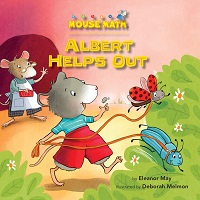
Albert Helps Out
Grade 1
4 skill lessons · 3 math-through-reading
Math
Skill lessons
The mathematics the book carries, taught directly. Printable workbook pages and teacher keys are not available for this book yet.
- 1Four Coins, Four Cent Values
- 2Trade Five Pennies for One Nickel
- 3Count Up to Fifty Cents, One Payment at a Time
- 4Which Help Came With Coins
Math + reading
Math through the reading
The same book, entered through a sentence it prints. Change one word in the reading and the numbers change with it.
- 5The Word That Keeps the Money the Same
- 6Put the Payments Back in Order
- 7The Payment Nobody Names
Reading
Reading and language lessons
The same book read as a text. What a word means in its sentence, how a character is shown, how the writing is put together - no mathematics.
- 8Two kinds of help
- 9Why is Albert knocking on doors?
- 10Who said that?
- 11Door to door, in order
- 12The boy who asked and asked
Skill lessons
4 lessons on the mathematics the book carries. Printable workbook pages and teacher keys are not available for this book yet.
1. Four Coins, Four Cent Values
The book stops the story to print its four coin values one after another, each as a plain equation with the coin on the left and a number of cents on the right. Students put a real coin on each printed sentence, say the value aloud, and build the strip the book never draws. A coin's name carries a value that its size does not show: the nickel is bigger than the dime and worth less, and students meet that by handling both while reading the two sentences.
Full lesson — 20 minutes
1. Lay the four coins out (5 min)
Each pair takes one penny, one nickel, one dime and one quarter out of the tray and lines them up left to right in the order the book names them. Read the four printed sentences aloud, one per coin, touching the coin as you say its cent value. Say the whole sentence, not just the number.
Word preview: cent, equals
A penny equals one cent.
A nickel equals five cents.
A dime equals ten cents.
A quarter equals twenty-five cents.
2. Build the cent strip (5 min)
Write each coin's name on the strip and the number of cents beside it, copying the value from the book's own sentence rather than from memory. Put the actual coin on the line you just wrote. When all four lines are filled, read the strip top to bottom as four sentences.
Word preview: penny, nickel, dime, quarter
3. Size does not tell you value (5 min)
Hold the nickel in one hand and the dime in the other. Say which one is bigger across, then say which one is worth more cents, reading both sentences off your strip. Tell your partner the one sentence that says the smaller coin is worth more, using the two cent numbers.
Word preview: bigger, worth
4. Say a coin from its value (5 min)
One partner says a number of cents from the strip and the other picks up the coin that equals it and names it, without looking at the strip. Swap after four turns. If you disagree, put the coin on the book's sentence and read it to settle it.
Short version — 9 minutes
1. Lay the four coins out (5 min)
Line up a penny, nickel, dime and quarter left to right. Read the four printed sentences aloud, touching each coin as you say its cent value.
Word preview: cent, equals
A penny equals one cent.
A quarter equals twenty-five cents.
2. Say a coin from its value (4 min)
One partner says a number of cents and the other picks up the coin that equals it and names it. Swap after four turns.
Three levels
- Support
- Work with the penny and the nickel only. Put five pennies in a row and the nickel beside them, and say the two sentences that go with those coins. Add the dime once the five-and-one pair is said without help, and leave the quarter for another day.
- At Grade
- Build all four lines of the strip and run the naming game in both directions, coin to value and value to coin. Expect the nickel and dime pair to be the one students slow down on, and send them back to the printed sentence rather than telling them.
- Extension
- Add a fifth line to the strip for two quarters together and write the cents beside it, then say which single coin on the strip a reader would need two of to reach the same number. Keep the coins on the table; this is a reading of the strip, not a new count.
English learners
Cent, penny, nickel, dime and quarter are four names and a unit that do not transfer: a learner may know the value of a coin in another currency perfectly and still not know which disc here is the dime. What does transfer is equals, which behaves as it does in arithmetic anywhere. Rehearse the frame "A ____ equals ____ cents" with the coin in hand for all four coins before any game starts. Invite students to name each coin in their strongest language first and write that name on the strip beside the English one.
Materials
- A tray of real or plastic coins per pair: 10 pennies, 4 nickels, 3 dimes, 3 quarters
- Printed source passage in this step
- A cent-value strip per pair, blank, with room for four coin names
- Word cards: cent, equals, penny, nickel, dime, quarter
Standards & curriculum
Choose your curriculum above to see the standards for this lesson.
Standards are held back while this plan is edited. Every standard shown here was matched against the supplied wording of this lesson, quoting its steps, so a changed step is no longer the thing that was checked. Undo your changes to bring the standards back — your edits stay in this browser either way.
2. Trade Five Pennies for One Nickel
Three times the book answers Albert's question with a trade rather than an amount: five pennies become a nickel, two nickels become a dime, and two dimes with a nickel become a quarter. Each trade swaps a handful for a single coin without changing what the money is worth. Students perform all three trades with real coins on a mat, saying what went in and what came out, so that the fairness of a trade is something they check by cent value rather than by how many coins they end up holding.
Full lesson — 20 minutes
1. Five for one (5 min)
Each pair puts five pennies on the mat and reads the sentence where Albert is told what he can do with them. Count the five pennies aloud, then swap all five for one nickel and say what the nickel is worth. Say out loud whether you have more money than before, less, or exactly the same.
Word preview: trade
No, but you can trade five pennies for a nickel.
Five pennies equals one nickel.
2. Two for one (5 min)
Put two nickels on the mat and read the sentence where Mr. Squeak turns down the quarter. Say each nickel's cent value, then trade the pair for one dime and say the dime's value. Count how many coins you were holding before and after and say which number got smaller.
Word preview: trade
Sorry, but you can trade two nickels for a dime.
3. Three for one (5 min)
Lay out two dimes and a nickel, the coins Albert names when he comes back from the dog walk. Say the three cent values one at a time, then trade the whole group for a single quarter. Tell your partner what the quarter is worth and what the three coins together were worth.
Now I have two dimes and a nickel,
4. Check a trade that is wrong (5 min)
Your teacher offers you one dime for four pennies. Use your strip and the coins to decide whether to take it, and say the two cent numbers that made up your mind. Then say what you would need to add to the four pennies to make the trade fair.
Word preview: fair
Short version — 9 minutes
1. Five for one (5 min)
Put five pennies on the mat, count them aloud, then swap all five for one nickel. Say whether you have more money than before, less, or exactly the same.
Word preview: trade
Five pennies equals one nickel.
2. Two for one (4 min)
Put two nickels on the mat, say each one's cent value, then trade the pair for one dime and say what the dime is worth.
Word preview: trade
Three levels
- Support
- Do the five-for-one trade only, and do it three times with the same five pennies so the swap becomes familiar before a second coin pair arrives. Keep the five pennies visible beside the nickel after each trade rather than putting them away, so the equal value stays in sight.
- At Grade
- Run all three trades in the book's own order and hold each result before starting the next, so the coins in hand at the end of one trade are the coins the next one begins with. Ask for the cent value at every swap, not just at the end.
- Extension
- Find a second group of coins from the tray, different from the book's, that trades fairly for one quarter, and say the cent values that prove it. Then say why a group of four pennies can never trade fairly for any single coin on the strip.
English learners
Trade carries a plain meaning here that its everyday one only partly covers: nothing is bought and nobody profits, and the two sides have to be worth exactly the same. Some learners will expect a trade to be a swap of unlike things, so say fair trade with the coins side by side on the mat. Rehearse "I trade ____ for ____ because both are ____ cents." Ask students who have handled another currency to say whether it has a coin worth five of its smallest coin, and let them answer in their strongest language.
Materials
- A tray of real or plastic coins per pair: 10 pennies, 4 nickels, 3 dimes, 3 quarters
- A ten-frame mat per pair
- Printed source passage in this step
- A cent-value strip per pair, blank, with room for four coin names
- Word cards: trade, fair, worth
Standards & curriculum
Choose your curriculum above to see the standards for this lesson.
Standards are held back while this plan is edited. Every standard shown here was matched against the supplied wording of this lesson, quoting its steps, so a changed step is no longer the thing that was checked. Undo your changes to bring the standards back — your edits stay in this browser either way.
3. Count Up to Fifty Cents, One Payment at a Time
Albert is paid four times and the book prints the running total in cents after each payment. The additions are the book's own: five and five, ten and ten, twenty and five, twenty-five and twenty-five, each written out as a sentence. Students rebuild the whole climb with coins and a wall chart, adding one payment at a time and reading the book's printed line only after they have said their own answer, so the page confirms the total rather than supplying it.
Full lesson — 20 minutes
1. Start at five cents (4 min)
Each pair puts one nickel on the mat, the coin Albert has after the pennies are traded. Write five on the chart line. Read aloud what Mrs. Nibble offers him and put a second nickel on the mat.
Word preview: total
I'll pay you a nickel to take Ringo for a walk.
5 cents plus 5 cents equals 10 cents.
2. Add the dime (6 min)
Trade your two nickels for a dime, then read the line where Cousin Pete pays Albert and put a second dime on the mat. Before you look at the book's sentence, say what the two dimes are worth together and write it on the chart. Then read the printed line and say whether it matches.
Word preview: plus
He gave Albert a dime.
Ten cents plus ten cents equals twenty cents.
3. Add the last nickel (5 min)
Put one more nickel beside the two dimes, the coin Albert is given when he brings the dogs back. Say the new total before reading anything, write it on the chart, then read the book's sentence to check. Trade the three coins for a single quarter and say what you are holding now.
20 cents plus 5 cents equals 25 cents.
4. Reach two quarters (5 min)
Read the line where Albert is given the second quarter and put it on the mat. Say the total in cents before you write it, then write the last line of the chart. Read the book's closing sentence and say the one number both you and the book ended on.
Word preview: fifty
In that case, here's another quarter.
25 cents plus 25 cents equals 50 cents.
Short version — 9 minutes
1. Add the dime (5 min)
Trade two nickels for a dime, then put a second dime on the mat when Cousin Pete pays Albert. Say what the two dimes are worth together before you read the book's line, then check it.
Word preview: plus
Ten cents plus ten cents equals twenty cents.
2. Reach two quarters (4 min)
Put the second quarter on the mat when Albert is given it. Say the total in cents before you write it, then read the book's closing sentence to check.
Word preview: fifty
25 cents plus 25 cents equals 50 cents.
Three levels
- Support
- Climb only as far as twenty-five cents, stopping where Albert trades for his first quarter. Keep every coin on the mat rather than trading it away, so the total can be recounted from the start whenever a student loses the thread.
- At Grade
- Run all four payments, and require the spoken total before the printed line is read every time. The chart is the record of what students said, so write their number first and the book's after it.
- Extension
- Say what Albert would still need if the smasher took three quarters instead of two, using the coins on the mat and the cent values on the strip. Say the number of cents, and say which coins would make it.
English learners
The frame here is a running one and it is worth rehearsing whole: "I had ____ cents, I got ____ cents, now I have ____ cents." Plus and equals transfer straight from arithmetic in any language, but the payment words earn, pay and give do not all behave the same way and only one of them puts a coin in Albert's hand. Say the sentence with the coins moving on the mat. Let students say the running total in their strongest language first and then in English, and accept the coin names in either.
Materials
- A tray of real or plastic coins per pair: 10 pennies, 4 nickels, 3 dimes, 3 quarters
- A ten-frame mat per pair
- A wall chart the teacher writes the running total on
- Printed source passage in this step
- Word cards: total, plus, cents, fifty
Standards & curriculum
Choose your curriculum above to see the standards for this lesson.
Standards are held back while this plan is edited. Every standard shown here was matched against the supplied wording of this lesson, quoting its steps, so a changed step is no longer the thing that was checked. Undo your changes to bring the standards back — your edits stay in this browser either way.
4. Which Help Came With Coins
Albert helps six times in this book and is paid for exactly three of them. The book never lines the two groups up, and the difference is what the whole story turns on: he opens a door and picks up books for nothing, and walks two dogs and minds three triplets for coins. Students sort the job cards by whether the text names a payment, then say the cent value beside every card that has one, so the sorting is settled by what the book says rather than by how helpful the act seems.
Full lesson — 20 minutes
1. Sort the jobs (6 min)
Spread the job cards face up and read each one. Put a card on the paid side only if you can point to the sentence where the book names a coin for it, and on the unpaid side if you cannot. Read aloud the sentence where Wanda turns down Albert's question about being paid.
Word preview: paid
How much were you pay me?" Albert asked. Albert, Wanda said. That's not the kind of help I meant.
2. Put a coin on every paid card (5 min)
Take a coin from the tray for each card on the paid side, matching what the book says Albert was given. Say the cent value of each one aloud. Count the paid cards and the unpaid cards and say the two numbers.
I'll pay you a nickel to take Ringo for a walk.
3. Find the job with no coin on the card (5 min)
One card names help the book pays for without ever naming which coin. Find it, and say what the text does tell you about that payment. Put it on the paid side anyway and say the reason you did.
I'll even pay you in advance.
4. Say what the last help was worth (4 min)
Read the closing lines where Albert helps Dr. Cremble a second time. Say whether that card belongs on the paid side, and say the sentence that settles it. Then say what Albert says he wants instead of a coin.
I don't need another penny. I like to help.
Short version — 9 minutes
1. Sort the jobs (5 min)
Read each job card and put it on the paid side only if you can point to a sentence naming a coin for it. Read aloud the line where Wanda turns down Albert's question.
Word preview: paid
That's not the kind of help I meant.
2. Put a coin on every paid card (4 min)
Take a coin from the tray for each card on the paid side, matching what the book says. Say the cent value of each one aloud.
Three levels
- Support
- Work with three cards only: the door Albert opens, the dog he walks, and the books he picks up. Sort those three and say the coin for the one that has one, leaving the rest of the deck out of it.
- At Grade
- Sort all the cards, coin every paid one, and say the two counts. Send any disagreement back to the page: the rule is that a card moves to the paid side only when a sentence can be pointed at.
- Extension
- Say which single job paid the most and which paid the least, using the cent values on the coined cards, and say how you know the unpaid cards cannot be ranked at all.
English learners
Pay, paid and pay in advance are three forms of one word here and only the third one puts the coin in Albert's hand before the work. Help is the trap: it means the same thing on both sides of the sort, and it is the presence of a coin, not the word help, that decides the side. Rehearse "This card is paid because the book says ____." Invite students to explain a sort in their strongest language and then name just the coin in English.
Materials
- A set of five job cards naming what Albert did for each payment
- Printed source passage in this step
- A tray of real or plastic coins per pair: 10 pennies, 4 nickels, 3 dimes, 3 quarters
- Word cards: paid, help, cents
Standards & curriculum
Choose your curriculum above to see the standards for this lesson.
Standards are held back while this plan is edited. Every standard shown here was matched against the supplied wording of this lesson, quoting its steps, so a changed step is no longer the thing that was checked. Undo your changes to bring the standards back — your edits stay in this browser either way.
Math through the reading
The mathematics is reached through a sentence the book prints: change one word in the reading and the numbers change with it. These carry their own standards, matched against these lessons rather than inherited from the skill ones.
5. The Word That Keeps the Money the Same
Students run each of Albert's trades twice, once with the book's word and once with a swapped word, and say which version keeps the cent value still.
Full lesson — 20 minutes
1. Read the coin table and load the mat (4 min)
Students lay out a penny, nickel, dime and quarter and read the four value sentences aloud, touching each coin.
2. Trade with the book's word (6 min)
Students perform the two trades the book names, saying the cent value before and after each one, and say aloud that the amount did not change.
3. Trade with the swapped word (6 min)
Students redo the first trade with add in place of trade, count what they are now holding, and say the cent value that results and how far it is from the book's.
4. Say which word the book needed (4 min)
Each pair says which word keeps the money the same and points at the sentence where the book uses it.
Short version — 9 minutes
1. Trade with the book's word (6 min)
Students perform the two trades the book names, saying the cent value before and after each one, and say aloud that the amount did not change.
2. Say which word the book needed (4 min)
Each pair says which word keeps the money the same and points at the sentence where the book uses it.
Three levels
- Support
- Work with the five-pennies trade alone and run it both ways, keeping the five pennies on the mat beside the nickel after the swap so both amounts stay in sight while the student says the two numbers.
- At grade
- Run both trades in both versions and require the cent value spoken at every move rather than only at the end. Students should be able to say which version leaves Albert unable to reach fifty cents.
- Extension
- Take the in advance sentence and say what Albert could have said he had if Mr. Squeak had not paid early, using Mrs. Nibble's promise as the model. Say the number of nickels and the number of cents.
English learners
Trade, pay and earn all describe getting or moving money and a learner may have one word covering all three. The distinction that matters is that trade leaves the amount alone while pay and earn raise it, and coins on a mat show that faster than any definition. Rehearse "I trade ____ for ____ and I still have ____ cents." Let students say the before and after values in their strongest language first; the coin names can stay in English while the reasoning does not have to.
Materials
- A tray of coins per pair: 10 pennies, 4 nickels, 3 dimes, 3 quarters
- A mat for laying coins out
- The printed trade sentences, one per card
- The four coin-value sentences, enlarged
- The two versions of the trade sentence side by side
Standards & curriculum
Choose your curriculum above to see the standards for this lesson.
Standards are held back while this plan is edited. Every standard shown here was matched against the supplied wording of this lesson, quoting its steps, so a changed step is no longer the thing that was checked. Undo your changes to bring the standards back — your edits stay in this browser either way.
6. Put the Payments Back in Order
Students rebuild Albert's climb from fifty cents backwards, placing each payment card where its coins make the printed total come out right.
Full lesson — 20 minutes
1. Lay out the coins Albert ends with (4 min)
Students set out two quarters and say the total in cents, then read the closing sum aloud.
2. Place the payment cards (7 min)
Students order the six event cards and set the matching coins under each, saying the running total after every card.
3. Test the pivot (5 min)
Students try moving the pennies-for-nickel trade one place later, say what Albert would then be holding, and say which sentence in the book that makes untrue.
4. Retell it from the first penny (4 min)
Each pair narrates the whole chain aloud in order, naming who paid and what the total became.
Short version — 9 minutes
1. Place the payment cards (7 min)
Students order the six event cards and set the matching coins under each, saying the running total after every card.
2. Retell it from the first penny (4 min)
Each pair narrates the whole chain aloud in order, naming who paid and what the total became.
Three levels
- Support
- Work with the last three cards only, starting from the two dimes already laid out, and say the total after each addition with the coins in front of you. Add earlier cards one at a time once the three are secure.
- At grade
- Order all six cards and say the running total after each. Send disagreements back to the printed sums: the correct order is the one where every sum starts from the number the previous card left.
- Extension
- Say which two payments were promised in a different order from the one in which they were paid, and explain using the coins why that does not change the final total but does change what Albert can say he has partway through.
English learners
The time words this retelling needs - before, after, then, already, still - are the load-bearing vocabulary and they are harder here than the coin names, because two payments are promised in one order and made in another. Rehearse "Before ____ he had ____ cents. After ____ he had ____ cents." with the coins moving as the sentence is said. Students may narrate a card in their strongest language and then give the two cent numbers in English.
Materials
- Six payment event cards
- A tray of coins per pair
- A long strip to lay the cards on
- The book's four printed sums, enlarged
- A blank running-total line
Standards & curriculum
Choose your curriculum above to see the standards for this lesson.
Standards are held back while this plan is edited. Every standard shown here was matched against the supplied wording of this lesson, quoting its steps, so a changed step is no longer the thing that was checked. Undo your changes to bring the standards back — your edits stay in this browser either way.
7. The Payment Nobody Names
Students work out what Mr. Squeak paid Albert, a coin the book never names, from four sentences that leave only one possibility.
Full lesson — 20 minutes
1. Build the before row (4 min)
Students lay out what Albert is holding just before he meets Mr. Squeak and say its value in cents, reading the trade sentence to confirm it.
2. Sort the two promises (6 min)
Students read the sentences about Mrs. Nibble and Mr. Squeak and say which coin is already in Albert's hand and which is not yet, giving the words that told them.
3. Find the missing coin (6 min)
Students build the after row to match Albert's two nickels, name the coin that must have been added, and say its value.
4. Check against the book (4 min)
Students read the printed sum for two nickels and say whether their answer agrees with it.
Short version — 9 minutes
1. Sort the two promises (6 min)
Students read the sentences about Mrs. Nibble and Mr. Squeak and say which coin is already in Albert's hand and which is not yet, giving the words that told them.
2. Find the missing coin (6 min)
Students build the after row to match Albert's two nickels, name the coin that must have been added, and say its value.
Three levels
- Support
- Put the one nickel Albert has in the before row and two nickels in the after row before any reading is done, and ask only what is different between the rows. Bring in the timing sentences once the missing coin has been named from the coins alone.
- At grade
- Work from the sentences forward rather than from the rows backward: read the four constraining lines, say what each one rules in or out, and only then build the rows and name the coin.
- Extension
- Say what Albert would have had to answer if Mr. Squeak had also said he was going to pay rather than paying in advance, and give the number of nickels and the number of cents he could truthfully have claimed at that moment.
English learners
In advance and going to pay are the whole lesson and neither is transparent: both describe a payment, and only one has happened. Rehearse the pair against the coins - "paid in advance, the coin is here; going to pay, the coin is not here yet" - with a hand open and a hand empty. Students may reason aloud in their strongest language and then name the coin and the two totals in English.
Materials
- A two-row mat per pair
- A tray of coins per pair
- The four constraining sentences on cards
- The four constraining sentences, enlarged
- The printed sum for two nickels
Standards & curriculum
Choose your curriculum above to see the standards for this lesson.
Standards are held back while this plan is edited. Every standard shown here was matched against the supplied wording of this lesson, quoting its steps, so a changed step is no longer the thing that was checked. Undo your changes to bring the standards back — your edits stay in this browser either way.
Reading and language lessons
5 lessons on the reading and language the book carries - what a word means in its sentence, how a character is shown, how a text is built. No mathematics: these are matched against the English language arts curricula, which are a different and smaller set than the mathematics ones.
8. Two kinds of help
The word help runs through this whole book carrying two different meanings, and the story turns on the difference. When Albert helps the librarian pick up dropped books he means one thing; when he asks what he will be paid for opening a door he means another, and his sister tells him so. Students read three printed runs, decide in each one which kind of help the word is doing, and give the reason from the sentence beside it. No amount is added or traded; the work is reading one small word twice.
Full lesson — 20 minutes
1. Meet the word help doing a kind thing (5 min)
The teacher reads the printed passage aloud once, then the class reads it together. Put your finger on the word helped, and then on the word help. Say aloud what Albert did in this passage. Did anyone give him anything for doing it? Answer using only the words printed here.
Word preview: help, helper
Crash! Oh dear! Said Dr. Cremble the librarian, looking at the book she'd dropped. Albert helped her pick them up. What a good help for you, Albert! Dr. Cremble said. I like to help! Albert said.
2. Meet the word help meaning a paid job (6 min)
Read the printed passage with a partner. Wanda uses the word helping, and then Albert asks a question about it. Underline Wanda's sentence and underline Albert's question. Say aloud what Albert thinks the word means here. Read Albert's question exactly as the book prints it, even though the words are jumbled, and say what you think he was trying to ask.
Word preview: earn, meant
Wanda said, You could earn money by helping someone out. She stopped. Would you open the door? My arms are full of books. How much were you pay me?" Albert asked. Albert, Wanda said. That's not the kind of help I meant.
3. Sort two sentences into two meanings (5 min)
Here is a third printed passage. Read it, then take your two meaning cards, one that says a kind thing and one that says a paid job. Put the card that fits beside the word help in this passage, and say the words in the passage that made you choose it.
Word preview: help
Mrs. Nibble said. My cheese biscuits just came out of the oven. Would you like to help me eat them? Is that the kind of help you pay for? Albert asked.
4. Say the meaning in your own sentence (4 min)
Tell your partner one sentence about a time you helped somebody, and say which kind of help it was. Use the sentence frame on the board: I helped by ___. That was the ___ kind of help. Your partner says whether they agree and why.
Word preview: help, helper, earn, meant
Short version — 9 minutes
1. Meet the word help doing a kind thing (5 min)
The teacher reads the printed passage once, then the class reads it together. Point to the word helped and to the word help. Say what Albert did, and say whether anyone paid him for it.
Word preview: help
Crash! Oh dear! Said Dr. Cremble the librarian, looking at the book she'd dropped. Albert helped her pick them up. What a good help for you, Albert! Dr. Cremble said. I like to help! Albert said.
2. Meet the word help meaning a paid job (4 min)
Read the printed passage. Underline Wanda's sentence about earning and underline Albert's question. Say what Albert thinks the word help means here, and what Wanda tells him it means.
Word preview: earn, meant
Wanda said, You could earn money by helping someone out. She stopped. Would you open the door? My arms are full of books. How much were you pay me?" Albert asked. Albert, Wanda said. That's not the kind of help I meant.
Three levels
- Support
- Work only the first printed passage. Echo the teacher line by line, then point at the word help each time it appears in it. Answer aloud: did Albert get anything for helping here? Yes or no.
- At Grade
- Decide for all three printed passages which kind of help the word carries, and give the words from that passage that made you decide.
- Extension
- In the second printed passage Wanda says that is not the kind of help she meant. Say two sentences explaining what she did mean, using only what those printed sentences say, and say why Albert was confused.
English learners
English uses one word, help, for a favour done freely and for paid work, and many languages keep those apart with two different verbs. Name that directly: the sentences here mean two different things by the same four letters. Let students say in their strongest language what word they would use for each kind, then speak the English frame. Rehearsable frame: Here help means ___, because the sentence says ___.
Materials
- Albert Helps Out, the passage printed in this step
- Pointing finger
- Pencils
- Two meaning cards
- Sentence frame on the board
- Word cards: help, helper, earn, meant
Standards & curriculum
Choose your curriculum above to see the standards for this lesson.
Standards are held back while this plan is edited. Every standard shown here was matched against the supplied wording of this lesson, quoting its steps, so a changed step is no longer the thing that was checked. Undo your changes to bring the standards back — your edits stay in this browser either way.
9. Why is Albert knocking on doors?
Albert spends the middle of this book going from neighbour to neighbour, and a reader who missed one sentence would not know why. The book states his reason outright in a short line he speaks to Mrs. Nibble, and repeats the reason differently at the end when he tells what he is saving for. Students find the stated reason, hold it beside a later passage that names the same goal in other words, and say the reason back in their own sentence. Nothing is added or counted; the work is locating a motive a character puts into words.
Full lesson — 20 minutes
1. Find the sentence that gives the reason (6 min)
Read the printed passage together. Albert says one sentence that tells why he is knocking on doors. Find it and underline it. Then say aloud: Albert is doing this because ___.
Word preview: reason, trying
Mrs. Nibble looked confused. I'm trying to earn money. Albert explained. Wanda said to ask if you need any help.
2. Find the same reason said a second way (5 min)
Read this second printed passage. Albert names his reason again, but not with the same words. Underline the part that says what he wants the money for. Say which of the two printed passages tells you more about what Albert wants.
Word preview: saving
I'm saving up to try the penny smasher at the library." Albert said.
3. Read the opening that set the whole reason going (5 min)
Read the printed passage from the beginning of the book. This is where Albert first sees the thing he later saves for. Say one sentence joining this passage to the reason you underlined earlier: Albert wants ___, so he ___.
Word preview: because
The library had a brand new machine. What is it? Albert asked. It's a Penny smasher. His sister Wanda explained. You put a penny in and turn the crank. The penny comes out flat with a new picture on it.
4. Say the reason in one sentence of your own (4 min)
Without looking at the book, tell your partner in one sentence why Albert knocked on the neighbours' doors. Use the word because. Your partner then says whether your sentence names something the book actually said or something you added yourself.
Word preview: reason, because, trying, saving
Short version — 9 minutes
1. Find the sentence that gives the reason (5 min)
Read the printed passage. Underline the one sentence in which Albert says why he is knocking on doors. Then say aloud: Albert is doing this because ___.
Word preview: reason, trying
Mrs. Nibble looked confused. I'm trying to earn money. Albert explained. Wanda said to ask if you need any help.
2. Find the same reason said a second way (4 min)
Read this second printed passage. Underline the part that names what Albert is saving for. Say which passage told you more about what he wants.
Word preview: saving
I'm saving up to try the penny smasher at the library." Albert said.
Three levels
- Support
- Work only the first printed passage. The teacher reads it, then reads it again stopping after each sentence. Raise your hand at the sentence that says why. Then say the two words earn money aloud.
- At Grade
- Find the stated reason in the first printed passage and the second way of saying it in the second, and say one sentence of your own using because.
- Extension
- The first printed passage says Albert is trying to earn money and the second says what he is saving for. Say two sentences about which one a reader would need more, and why, using only what the two printed passages say.
English learners
The reason here is carried by the verb trying plus to, a pattern that does not exist in many languages and that learners often shorten to I try earn money. Read the sentence, then build the frame slowly: trying to ___. Invite students to give their own reason for doing something in their strongest language first. Rehearsable frame: He is trying to ___, because he wants ___.
Materials
- Albert Helps Out, the passage printed in this step
- Pencils
- Sentence frame on the board
- Word cards: reason, because, trying, saving
Standards & curriculum
Choose your curriculum above to see the standards for this lesson.
Standards are held back while this plan is edited. Every standard shown here was matched against the supplied wording of this lesson, quoting its steps, so a changed step is no longer the thing that was checked. Undo your changes to bring the standards back — your edits stay in this browser either way.
10. Who said that?
This transcription lost most of its quotation marks and fused several speaker tags into the sentences around them, so the book in front of a reader does not always mark where one voice stops and the next begins. Rather than hide that, this lesson makes it the work. Students read printed runs of back and forth talk, decide from the words themselves who is speaking each line, and mark the places where the printed page genuinely does not settle it. Nothing is counted; the work is tracking voices through a conversation.
Full lesson — 20 minutes
1. Mark each speaker with a coloured pencil (6 min)
Read the printed passage aloud in pairs, one of you as Albert and one as Mr. Squeak. Then go back with two coloured pencils and underline Albert's words in one colour and Mr. Squeak's in the other. Point to the words in the passage that told you which was which.
Word preview: said, asked
Mr. Squeak asked, could you walk lady too? I'll even pay you in advance. Now I have two nickels, Albert said.
2. Find a line the page does not settle (6 min)
Read the printed passage. Some of these lines carry stray marks, and one of them does not clearly say who speaks. Underline any line where you are sure of the speaker, and put a question mark beside any line where the printed page does not tell you. Do not change any word. Say aloud which line you marked with a question mark and why.
Word preview: speaker, voice
Now I have two dimes and a nickel," he said. "'You can trade that for a quarter,' Mrs. Nimble said. "'I can,'' Albert exclaimed.
3. Use the earlier passage to name the he (4 min)
Read this printed passage, which comes just before the one you questioned. Now say who the word he stood for in that line, and say which words in this passage told you. This is how a reader fills in what a page leaves out.
Word preview: speaker
Albert dropped off Lady and Ringo. Mrs. Nimble gave Albert a nickel.
4. Read the conversation aloud in parts (4 min)
In your pair, read your marked-up sheets aloud again, each taking one character. When you reach a line you marked with a question mark, both stop and say aloud who you decided it was and what made you decide.
Word preview: said, asked, speaker, voice
Short version — 9 minutes
1. Mark each speaker with a coloured pencil (5 min)
Read the printed passage in pairs, one as Albert and one as Mr. Squeak. Underline each character's words in a different colour, and point to the words that told you which was which.
Word preview: said, asked
Mr. Squeak asked, could you walk lady too? I'll even pay you in advance. Now I have two nickels, Albert said.
2. Find a line the page does not settle (4 min)
Read the printed passage. Put a question mark beside the line where the page does not say clearly who is speaking. Do not change any word. Say why you marked it.
Word preview: speaker, voice
Now I have two dimes and a nickel," he said. "'You can trade that for a quarter,' Mrs. Nimble said. "'I can,'' Albert exclaimed.
Three levels
- Support
- Work only the first printed passage, which names both speakers. Underline the two names, Mr. Squeak and Albert, then read the passage aloud twice, once as each one.
- At Grade
- Mark both printed conversations, question the line the page leaves open, and settle it from the third printed passage.
- Extension
- The second printed passage carries marks that do not match each other. Write two sentences saying what a reader has to do when a page's punctuation cannot be trusted, using only lines from the printed passages as your examples.
English learners
English can put the speaker tag before the words, after them, or nowhere at all, and this transcription does all three within a few lines. Read each line twice, once with the tag moved to the front so the speaker is heard first. Invite students to say how their strongest language marks a change of speaker. Rehearsable frame: ___ said, ___. I know because ___.
Materials
- Albert Helps Out, the passage printed in this step
- Two coloured pencils
- Pencils
- Marked-up passage sheets
- Word cards: said, asked, speaker, voice
Standards & curriculum
Choose your curriculum above to see the standards for this lesson.
Standards are held back while this plan is edited. Every standard shown here was matched against the supplied wording of this lesson, quoting its steps, so a changed step is no longer the thing that was checked. Undo your changes to bring the standards back — your edits stay in this browser either way.
11. Door to door, in order
Albert's afternoon is a chain of visits, each one leading to the next, and the book prints them one after another. Students read three printed passages, put the visits in the order the book gives them, and retell the chain aloud using first, next and last. They also find the one word in the printed text that a writer uses to move a reader from one place to another. Nothing is added up; the work is holding a sequence of events and telling it back in order.
Full lesson — 20 minutes
1. Read the first visit and name what happened (5 min)
Read the printed passage together. Say in one sentence what happened at this door: who Albert visited, and what she asked him to do. Write your sentence on a strip of paper and put it on the left of your desk.
Word preview: first
Mrs. Nibble smiled. I'll pay you a nickel to take Ringo for a walk.
2. Read the second visit and find the moving-along word (6 min)
Read this printed passage. It begins with words that tell a reader when this happened compared with the last passage. Circle those words. Then write a sentence strip for this visit and put it to the right of your first strip.
Word preview: next, then
On the way out, Albert ran into their neighbor, Mr. Squeak. I'm walking Ringo for Mrs. Nibble. Albert said, she's going to pay me a nickel.
3. Read the third visit and finish the row (5 min)
Read this printed passage. Write a sentence strip for it and place it to the right of the other two. Now read your three strips left to right and check that each one could only come after the one before it. Move any strip that does not fit.
Word preview: then, last
Then he saw his cousin Pete, babysitting the mousely triplets, Albert asked. Pete nodded. They wouldn't take turns on the slide.
4. Retell the whole afternoon out loud (4 min)
Turn your three strips face down. Retell Albert's afternoon to your partner in order, starting with the word First and using Next and Last for the other two. Then turn the strips over and check whether you left anything out.
Word preview: first, next, then, last
Short version — 9 minutes
1. Read the second visit and find the moving-along word (5 min)
Read the printed passage. Circle the words at the start that tell a reader when this happened. Say in one sentence what happened at this meeting.
Word preview: next, then
On the way out, Albert ran into their neighbor, Mr. Squeak. I'm walking Ringo for Mrs. Nibble. Albert said, she's going to pay me a nickel.
2. Read the third visit and finish the row (4 min)
Read this printed passage. Circle the word at the start that shows it comes after. Then retell both printed passages in order, using Next and Last.
Word preview: then, last
Then he saw his cousin Pete, babysitting the mousely triplets, Albert asked. Pete nodded. They wouldn't take turns on the slide.
Three levels
- Support
- Work with the first two printed passages only. The teacher reads each one, then you say one word for what happened: walk, and meet. Put the two strips in order and say First and Next.
- At Grade
- Write all three strips, order them, and retell the afternoon aloud using First, Next and Last.
- Extension
- Two of the printed passages begin with words that place them in time, On the way out and Then. Say two sentences about what a reader would lose if a writer left those words off, using the printed passages as your evidence.
English learners
Time words in English often sit at the very front of a sentence and carry the whole link to what came before, as On the way out and Then do here. Read each printed passage twice, once with the opening words covered, so students hear what disappears without them. Rehearsable frame: First Albert ___. Next he ___. Last he ___.
Materials
- Albert Helps Out, the passage printed in this step
- Sentence strips
- Pencils
- Word cards: first, next, then, last
Standards & curriculum
Choose your curriculum above to see the standards for this lesson.
Standards are held back while this plan is edited. Every standard shown here was matched against the supplied wording of this lesson, quoting its steps, so a changed step is no longer the thing that was checked. Undo your changes to bring the standards back — your edits stay in this browser either way.
12. The boy who asked and asked
Albert asks something on nearly every page, and the printed sentences show it in two ways at once: the words are arranged in the asking order, and most of them end in a question mark. Students read printed passages aloud, find the sentences that ask rather than tell, and practise the rising voice a question takes. One of the book's questions is printed with its words tangled, and students meet that one as it stands rather than mended. Nothing is counted; the work is reading and speaking questions.
Full lesson — 20 minutes
1. Find the asking sentences (5 min)
Read the printed passage together. Some of these sentences ask and some tell. Draw a curved line under each sentence that asks something. Read those sentences aloud with your voice going up at the end, then read a telling sentence and hear the difference.
Word preview: ask, question
Would you pay me to do your homework? Albert asked. Or I could make you a super duper special snack.
2. Read a question that is printed in a tangle (5 min)
Read the printed passage. One sentence here is an asking sentence, but the printing has gone wrong and its words are jumbled. Read it aloud exactly as it stands, jumble and all. Do not fix it. Then say what you think Albert was asking, and say what in the sentence made you sure it was a question at all.
Word preview: question
How much were you pay me?" Albert asked.
3. Match a question to its answer (6 min)
Read the printed passage. Find the asking sentence and underline it, then find the sentence that answers it and draw an arrow from one to the other. Read the pair aloud with a partner, one of you asking and one answering.
Word preview: answer
On the way out, Albert asked, Where can I get two quarters? Dr. Crumble said you're a good helper.
4. Ask your own question in Albert's voice (4 min)
Think of one thing you would ask a neighbour if you wanted a job. Say it aloud to your partner as a question, with your voice going up at the end. Your partner answers it, then says whether what you said was an asking sentence or a telling sentence.
Word preview: ask, question, answer, voice
Short version — 9 minutes
1. Find the asking sentences (5 min)
Read the printed passage together. Draw a curved line under the sentence that asks. Read it aloud with your voice going up, then read the telling sentence and hear the difference.
Word preview: ask, question
Would you pay me to do your homework? Albert asked. Or I could make you a super duper special snack.
2. Match a question to its answer (4 min)
Read the printed passage. Underline the asking sentence, then say whether the sentence after it answers what Albert wanted to know.
Word preview: answer
On the way out, Albert asked, Where can I get two quarters? Dr. Crumble said you're a good helper.
Three levels
- Support
- Work only the first printed passage. The teacher reads each sentence and you show thumbs up for asking and thumbs down for telling. Then read the asking sentence aloud together twice.
- At Grade
- Mark the asking sentences in all three printed passages and read each one aloud with a rising voice.
- Extension
- In the third printed passage Albert asks where he can get two quarters and the sentence that follows says something else. Write two sentences saying what would have to change for that second sentence to be an answer, quoting the printed question exactly.
English learners
English marks a question by moving the verb to the front, Would you pay, rather than by adding a question word at the end as many languages do. Read the telling version and the asking version of the same idea one after the other so the swap is heard. The damaged sentence in the second step is a good place to say plainly that the printing is wrong, not the student's reading. Rehearsable frame: Would you ___? Yes, I ___ / No, I ___.
Materials
- Albert Helps Out, the passage printed in this step
- Pencils
- Sentence frame on the board
- Word cards: ask, question, answer, voice
Standards & curriculum
Choose your curriculum above to see the standards for this lesson.
Standards are held back while this plan is edited. Every standard shown here was matched against the supplied wording of this lesson, quoting its steps, so a changed step is no longer the thing that was checked. Undo your changes to bring the standards back — your edits stay in this browser either way.