Albert is NOT Scared
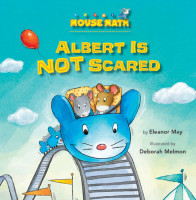
Grade K
5 skill lessons
Math
Skill lessons
The mathematics the book carries, taught directly. Printable workbook pages and teacher keys are not available for this book yet.
- 1The Ride That Does Almost Everything He Refused
- 2Six Moves, One Order
- 3Which Way Did It Go?
- 4Say the Move That Puts It Back
- 5Draw the Path, Then Point the Arrow
Math + reading
Math through the reading
The same book, entered through a sentence it prints. Change one word in the reading and the numbers change with it.
No math-through-reading lessons for this book yet.
Reading
Reading and language lessons
The same book read as a text. What a word means in its sentence, how a character is shown, how the writing is put together - no mathematics.
No reading and language lessons for this book yet.
Skill lessons
5 lessons on the mathematics the book carries. Printable workbook pages and teacher keys are not available for this book yet.
1. The Ride That Does Almost Everything He Refused
Albert names five kinds of moving he will not ride, and then rides a coaster that does four of them. Students set out a card for each refusal, hear the ride, and slide a card up every time the coaster makes that move. Four cards travel and one does not. Naming the one that stayed, and saying what the ride would have had to do to shift it, is a matching answer rather than a remembered one: the cards on the table are the working. The last four minutes put Wanda's closing sentence against the same cards and find what she leaves out of it.
Full lesson — 20 minutes
1. Lay out the five things Albert will not ride (5 min)
Spread your five cards face up. The teacher reads the five places where Albert says what he will not ride. Touch the card that matches each one as it is read and say the move out loud. Leave every card where it is for now.
I just don't like rides that go up and down.
I don't like things that go side to side.
I just don't like rides that go across things.
I bet you don't like rides that go through things.
I don't like rides that go around.
2. Slide a card up when the coaster does it (6 min)
Now the teacher reads the roller coaster. Slide a card to the top of the table the moment the ride makes that move. The hill card is the careful one: it does not go up until you have heard both halves, the going up and the coming down, so keep your hand off it until the drop.
They headed up and up and up.
Whatever you do, don't look! Down!
They tilted left. They tilted right.
They raced around a loop.
They barreled through a long dark tunnel.
3. Name the card that stayed (5 min)
Look at what is still in front of you. Say the move on it. Count the cards that went to the top and say that number to your partner. Then say one thing the roller coaster would have had to do for the last card to go up as well.
I just don't like rides that go across things. That's all. Across.
4. Check Wanda's last sentence against your cards (4 min)
Listen to the last thing Wanda says about what Albert does not like. Point at every card her sentence names. Then point at the cards she leaves out, say them one at a time, and finish her sentence properly for her.
You just don't like it when a ride goes up and down and all around.
Short version — 9 minutes
1. Slide a card up when the coaster does it (6 min)
The teacher reads the roller coaster. Slide a card to the top of the table the moment the ride makes that move. The hill card waits until you have heard both the going up and the coming down.
They headed up and up and up.
Whatever you do, don't look! Down!
They tilted left. They tilted right.
They raced around a loop.
They barreled through a long dark tunnel.
2. Name the card that stayed (3 min)
Say the move on the card that stayed, count the cards that went to the top, and say one thing the ride would have had to do to move the last one.
I just don't like rides that go across things. That's all. Across.
Three levels
- Support
- Work with three cards, the hill, the tunnel and the boat crossing the pond, and the reading pauses after each move of the ride. One card will still be left at the end, and you still have to name it and say what the ride would have had to do to move it.
- At Grade
- All five cards, no pauses in the reading, and you say how many cards went to the top before you say which one stayed.
- Extension
- Find a second ride in the park that the roller coaster could not have stood in for, and say the sentence that proves it. Then say whether Albert could have known that from where he was standing, before he got in the line.
English learners
The matching is the accessible half and the saying is the hard half, so accept a pointed finger at the card and the ride's move together as a first answer. Rehearse two frames: The coaster goes ___ and This one did not move because the ride never goes ___. The second one needs a negative and a direction in the same breath, which is the part to practise aloud before the reading starts. Let a child give the reason in their strongest language and then say only the direction word in English.
Materials
- Five refusal cards for each pair, one picture on each: a hill, a swinging ship, a boat crossing a pond, a tunnel, a carousel
- Word cards: up and down, side to side, across, through, around
Standards & curriculum
These lessons are being matched against curricula now.
Standards are held back while this plan is edited. Every standard shown here was matched against the supplied wording of this lesson, quoting its steps, so a changed step is no longer the thing that was checked. Undo your changes to bring the standards back — your edits stay in this browser either way.
2. Six Moves, One Order
The roller coaster makes six moves and the book gives them in a fixed order. Students hear the ride twice: hands flat the first time, then a card laid down left to right the moment each move arrives, so the row is built by listening and not by remembering. Then they attack their own row. Putting the drop before the climb makes a ride that cannot happen, and swapping the loop and the tunnel makes a ride that could happen but is not this one. Telling the two apart, and saying what has to be true before a car can drop, is the whole lesson.
Full lesson — 20 minutes
1. Listen once with your hands flat (4 min)
Keep both hands flat on the table for the whole first reading of the roller coaster. Just listen, and watch the ride in your head. When it stops, tell your partner one move you are sure the car made.
Before Albert could answer, the ride started.
The cars moved forward.
2. Lay a card down the moment you hear its move (6 min)
Second reading. Put a card down, left to right, as soon as you hear its move. Do not go back and tidy the row afterwards, because the row is your answer. When the reading stops, run a finger along your row and name the six moves in order.
They headed up and up and up.
Whatever you do, don't look! Down!
They tilted left. They tilted right.
They raced around a loop.
They barreled through a long dark tunnel.
3. Try to move one card (6 min)
Slide your drop card in front of your hill card and ask your partner whether the ride could happen that way. Then swap your loop card and your tunnel card and ask again. One of those two swaps makes a ride that cannot happen at all, and the other makes a ride that could happen but is not this one. Say which is which, and say what has to be true before a car can drop.
They headed up and up and up.
Whatever you do, don't look! Down!
4. Say the ride back to someone who was not listening (4 min)
Take your row to a pair at another table. Start by telling them the cars moved forward, then point at each of your six cards in turn and name its move. They build a row of their own six from your telling alone. Put the two rows side by side and find the first place they differ.
The cars moved forward.
Short version — 9 minutes
1. Lay a card down the moment you hear its move (6 min)
Put a card down, left to right, the moment you hear its move. Leave the row exactly as it lands. When the reading stops, run a finger along it and name the six moves in order.
They headed up and up and up.
Whatever you do, don't look! Down!
They tilted left. They tilted right.
They raced around a loop.
They barreled through a long dark tunnel.
2. Try to move one card (3 min)
Slide the drop card in front of the hill card and ask your partner whether the ride could happen that way. Say what has to be true before a car can drop.
They headed up and up and up.
Whatever you do, don't look! Down!
Three levels
- Support
- Work with three cards, the hill, the drop and the tunnel, and the reading pauses after each move. The thinking is not reduced: you still place them as you hear them, you still slide the drop in front of the hill, and you still say why the ride cannot happen that way.
- At Grade
- Place all six cards as you hear them, test both swaps, and say in your own words which swap breaks the ride and which one only disagrees with the book.
- Extension
- Look for a third swap that breaks the ride, and if there is not one, say so and say how you know. Then add a seventh card for the curve the book names between the drop and the left tilt, and say whether that card could move without breaking anything.
English learners
The listening load here is heavier than the talking load, so give the first reading with the cards face up in front of every child and point at each picture as the move is read. The ordering words are the ones to rehearse, not the direction words: first, then, next, last, and the frame It goes ___ before it goes ___. A child may lay the row and then explain the broken swap in their strongest language before saying it in English, and pointing at two cards in order is an acceptable answer.
Materials
- Six move cards for each pair, one picture on each: a hill, a drop, a tilt to the left, a tilt to the right, a loop, a tunnel
- Word cards: up, down, left, right, around, through
Standards & curriculum
These lessons are being matched against curricula now.
Standards are held back while this plan is edited. Every standard shown here was matched against the supplied wording of this lesson, quoting its steps, so a changed step is no longer the thing that was checked. Undo your changes to bring the standards back — your edits stay in this browser either way.
3. Which Way Did It Go?
Every ride in this book moves one way, and the book prints one word for that way on a page of its own. Students walk a mouse up a card hill and down the far side, across a paper pond, through a tube and around a chair leg, saying the word while the mouse is still moving. Then they race the page: card up before the word is read. The last thing they do is the test that matters, inventing a move nobody in the book made that the same word still fits, so the word stops belonging to one ride and starts naming a kind of path.
Full lesson — 20 minutes
1. Walk the mouse up the ramp and back down (6 min)
Stand your folded card on the table so it makes a hill. When you hear the Daredevil Drop, one of you walks the mouse slowly up the near side while the other says up, up, up. Stop at the top. Then let the mouse run down the far side and say down as it goes. Do it twice more, so the word comes out while the mouse is moving and not after it has stopped.
Word preview: up, down
Slowly, the ride carried them up. Up.
Ah! The mice shrieked as they came down.
2. Hold up the word before the page says it (5 min)
The teacher reads a ride and stops before the one word printed at the end of the page. Hold up the card you think that word will be and keep it up while the teacher reads. If your card and the page disagree, put your card down and say the page's word out loud before the next ride starts.
I just don't like rides that go up and down. Down.
The pirate ship swung left. All the mice screamed. Left.
3. Make a new move for your word (5 min)
Take one card. Make a move with your mouse that nobody in the book made and that your word still fits: through the tube, around a chair leg, across the blue strip. Show the move without saying anything. The other pairs say your word. If they say a different word, make the move bigger and show it again.
Word preview: across, through, around
I just don't like rides that go across things. That's all. Across.
4. Through, or around? (4 min)
Watch two moves made with the same tube. In the first the mouse goes in one end and comes out the other. In the second the mouse stays outside and circles the tube. Say which one is through. Then run your own finger along both and say what your finger has to do differently for each.
The Molehole ride went through a long, dark tunnel.
Short version — 9 minutes
1. Walk the mouse up the ramp and back down (6 min)
Stand your folded card up as a hill. Walk the mouse slowly up the near side saying up, up, up, stop at the top, then let it run down and say down. Do it again so the word comes out while the mouse is still moving.
Word preview: up, down
Slowly, the ride carried them up. Up.
Ah! The mice shrieked as they came down.
2. Make a new move for your word (3 min)
Take one card. Make a move with your mouse that nobody in the book made and that your word still fits. Show it silently and let the other pairs say your word.
Word preview: across, through, around
I just don't like rides that go across things. That's all. Across.
Three levels
- Support
- Work with two words, up and down, and keep the card hill in front of you the whole time. Nothing else is taken out: you move the mouse yourself, you say the word while it is moving, and you finish by making one up-and-down move of your own that is not the Daredevil Drop.
- At Grade
- Work with all seven words. Move the mouse, say the word while it moves, get your card up before the page prints its word, and invent one move the class has not seen that your word still fits.
- Extension
- Take two cards at once and build a single move that both words fit, around the chair leg and then through the tube. Say the two words in the order your mouse does them. Now do the same two moves in the other order and look hard at where the mouse stops. Tell your partner whether it stopped in the same place, and if it did, say what was different anyway.
English learners
Direction words come early in every language and most children arrive with them. English is the new part: the direction rides on the verb as a small separate word, goes up, goes around, goes through, and then the same word turns up alone on the page with a full stop after it. Rehearse two frames while the mouse is still moving, It goes ___ and It goes ___ the tube, and let a child say the direction in their strongest language first and then in English. A hand doing the move counts as the answer while the English catches up.
Materials
- A toy mouse or a wooden bead for each pair
- A folded card that stands up as a hill
- A cardboard tube
- A hoop or a chair leg to move around
- A strip of blue paper for the pond
- Word cards: up, down, left, right, across, through, around
Standards & curriculum
These lessons are being matched against curricula now.
Standards are held back while this plan is edited. Every standard shown here was matched against the supplied wording of this lesson, quoting its steps, so a changed step is no longer the thing that was checked. Undo your changes to bring the standards back — your edits stay in this browser either way.
4. Say the Move That Puts It Back
Every direction in this book has one that cancels it, and three of the pairs turn up in the text with one word straight after the other. Students work the pairs by hand first, one child moving the mouse and the other putting it back, then speed it up with the cards face down until the undoing word arrives without a pause. Two of the eight words, toward and away, are never printed together, and students hunt for the two sentences that carry them and decide whether the place Albert walked toward is the place he was led away from.
Full lesson — 20 minutes
1. Move it, then put it back (5 min)
One of you says a word and moves the mouse that way. The other says the word that puts the mouse back where it started, and does it. Up, then down. Left, then right. Forward, then backward. Say the word while your hand is moving, every time, and swap who goes first after each pair.
I just don't like rides that go up and down.
2. Fast rounds with the cards face down (6 min)
Turn one card over, say its word and make the move. Your partner says the word that undoes it and makes that move. Swap who turns the card. Keep going until every card has been turned twice. If you get stuck, do both moves with your hands first and say the words afterwards.
backward, forward.
3. Find the pairs the book prints together (5 min)
Listen for three places where the book says two of your words one straight after the other. Hold up both cards each time you hear one. Then say which two of your words never turn up next to each other anywhere in the book, and say where each of those two does turn up.
I just don't like rides that go up and down. Down.
backward, forward.
They tilted left. They tilted right.
4. Undo the trip to the train (4 min)
Put a chair down as the train. Say toward and walk the mouse to the chair. Now say the word that undoes it and walk the mouse back. Then say where Albert went toward and where Wanda led him away from, and say whether those two are the same place.
Albert pulled Wanda toward the train.
She took his paw and led him away from the ride. Away.
Short version — 9 minutes
1. Move it, then put it back (5 min)
One of you says a word and moves the mouse that way. The other says the word that puts it back and does it. Up then down, left then right, forward then backward, with the word said while the hand is moving.
I just don't like rides that go up and down.
2. Fast rounds with the cards face down (4 min)
Turn a card over, say its word and make the move. Your partner says the word that undoes it and makes that move. Swap who turns the card and keep going.
backward, forward.
Three levels
- Support
- Work one pair at a time, up and down first, with the card hill under your hand so the move is easy to undo. Nothing is taken out: you say the word while you move, your partner says the one that puts it back, and both moves happen before the next card is turned.
- At Grade
- All six cards in the pile, face down, with the undoing word said before the mouse moves rather than after it, and then the fourth pair walked out on the floor in the last step.
- Extension
- Take three cards at once and do all three moves in order, leaving a counter wherever the mouse turns. Now bring the mouse home the way it came, back over its own counters, so it never cuts across the table. Say the three undoing words aloud in the order your hands need them, and say why the first one you undo is the last one you did.
English learners
Pairs of opposites are a strong place to start, because a child who has one word usually has the other in their first language too. The English to rehearse is the sentence that joins them, It goes up and then it goes down, and the small word back in goes back. Do the round with hands only for the first minute so the words are attached to a movement rather than to another word. A child may answer by making the undoing move, and the word can follow.
Materials
- A toy mouse or a wooden bead for each pair
- A folded card that stands up as a hill
- A face-down pile of the six move cards for each pair
- A toward card and an away card
- Word cards: up, down, left, right, backward, forward, toward, away
Standards & curriculum
These lessons are being matched against curricula now.
Standards are held back while this plan is edited. Every standard shown here was matched against the supplied wording of this lesson, quoting its steps, so a changed step is no longer the thing that was checked. Undo your changes to bring the standards back — your edits stay in this browser either way.
5. Draw the Path, Then Point the Arrow
A move is gone the moment it stops, so this lesson turns each of the book's rides into a line that stays. Students trace five drawn paths with a finger, then draw the Daredevil Drop as a hill and the carousel as a closed loop on their own paper, one unbroken line each. An arrowhead and a starting dot are what carry the direction, and the check is a stranger's finger: another pair must run the path the right way round from the mark alone, with nobody telling them which ride it is.
Full lesson — 20 minutes
1. Trace the five paths with one finger (5 min)
Come to the big sheet and put one finger at the start of the hill. Run it up, over and down, saying up, down while the finger moves. Do the same on the swing, on the line over the blue strip, on the tube and on the loop. Your finger stays on the paper until the path ends.
Word preview: path
The pirate ship swung left.
Albert didn't want to go across the pond.
2. Draw your own hill and your own loop (6 min)
Draw the Daredevil Drop as one line: up one side, over the top, down the other. Then draw the carousel as one line that comes back to the place it started. Do not lift your pencil in the middle of a path. Put a dot where each path starts and show your partner both dots.
I just don't like rides that go up and down.
I don't like rides that go around.
3. Put the arrowhead on (5 min)
Go back to both paths and add one arrowhead where the ride is heading. On the hill the arrow points down the far side. On the loop it can point either way round, so choose one and say which. Then draw the pond path and the tunnel path and give each of those an arrowhead too.
Word preview: arrow
The Molehole ride went through a long, dark tunnel.
4. Read a path you did not draw (4 min)
Swap papers with another pair. Put your finger on their starting dot and run it the way their arrow points. Say the word for that path without being told which ride it is. If you cannot find where a path begins, hand it back and ask them to make the dot bigger.
Short version — 9 minutes
1. Draw your own hill and your own loop (6 min)
Draw the Daredevil Drop as one line, up one side and down the other, then the carousel as one line that comes back to where it started. Keep the pencil down all the way and mark a dot where each path begins.
I just don't like rides that go up and down.
I don't like rides that go around.
2. Read a path you did not draw (3 min)
Swap papers with another pair, run your finger from their dot the way the arrow points, and say the word for the path without being told which ride it is.
Three levels
- Support
- Draw on paper that already carries a faint hill and a faint loop and go over them. The rest is the same: your own starting dot, your own arrowhead, your own word said aloud, and another pair reading your arrow at the end.
- At Grade
- Draw all four paths on plain paper, put a dot and an arrowhead on each, and read another pair's paths from their marks alone.
- Extension
- Draw one path that holds two words, over the hill and then round the loop, with two arrowheads on it numbered so a reader knows which comes first. Hand it over and watch whether their finger goes the way you meant. If it does not, change the marks rather than telling them.
English learners
This is the lesson where a child with little English can be read correctly, because the arrow says the direction and the dot says the start. Say the word with the finger moving, never before it. Two frames carry the whole lesson, It starts here and It goes ___, and both can be pointed at. Let a child name the path in their strongest language while drawing and give the English word to the pair who reads it.
Materials
- A large sheet carrying five drawn paths: a hill, a swing, a straight line over a blue strip, a tube and a closed loop
- Plain paper
- Fat pencils or crayons
- Word cards: up, down, across, through, around
Standards & curriculum
These lessons are being matched against curricula now.
Standards are held back while this plan is edited. Every standard shown here was matched against the supplied wording of this lesson, quoting its steps, so a changed step is no longer the thing that was checked. Undo your changes to bring the standards back — your edits stay in this browser either way.