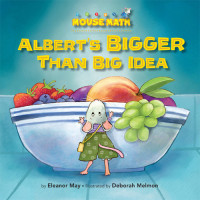
Albert's Bigger Than Big Idea
Grade K
4 skill lessons · 2 math-through-reading
Math
Skill lessons
The mathematics the book carries, taught directly. Printable workbook pages and teacher keys are not available for this book yet.
- 1Small, Smaller, Smallest
- 2Will It Fit?
- 3Bigger Than the Last One
- 4Two Ways to Say One Pair
Math + reading
Math through the reading
The same book, entered through a sentence it prints. Change one word in the reading and the numbers change with it.
- 5The Word That Picks the Bag
- 6Tell Albert Which Bag to Make
Reading
Reading and language lessons
The same book read as a text. What a word means in its sentence, how a character is shown, how the writing is put together - no mathematics.
- 7One word, three endings
- 8The line that keeps coming back
- 9Who is talking here?
- 10What Albert keeps going back for
- 11First, then, last
Skill lessons
4 lessons on the mathematics the book carries. Printable workbook pages and teacher keys are not available for this book yet.
1. Small, Smaller, Smallest
Cousin Pete hands out three bags and the book states their order in three flat sentences, then chants small, smaller, smallest four separate times across the story. Children lay three real bags in that order, prove each placement by sliding one bag inside the next, and label them with the three words. The concept is that small is not a property one bag has on its own: the middle bag is smaller than one neighbour and bigger than the other, and only the ends of the line can carry a superlative.
Full lesson — 20 minutes
1. Lay the three bags in order (6 min)
Take the three bags out of the pile and put them down in a line, the roomiest one on the left and the tightest one on the right. Slide each bag inside the one you say is bigger to prove it goes there. Say the line out loud, pointing bag by bag: small, smaller, smallest.
Word preview: smallest
His bag was small.
Wanda's was smaller.
Albert's was smallest.
2. Put a sash on each bag (5 min)
Lay the three paper sashes across the bags, one word to one bag. Then a partner shuts their eyes while you shuffle the bags, and opens them and puts the sashes back. Say why the smallest sash went where it went, using the bag next to it.
Word preview: smaller
Small, smaller, smallest.
3. Answer Albert's question with the bags (5 min)
Albert asks why he gets the smallest bag. Line up three children by height, shortest on the right, and hand each one the bag that matches their place in the line. Say who gets the smallest bag and say the word that tells you so.
Word preview: small
Why do I get the smallest bag?
You're the smallest mouse.
4. Turn the line around (4 min)
Pick the line up and lay it down the other way, tightest bag on the left. Point along the new line and say it: smallest, smaller, small. Say whether any bag changed size when you turned the line around.
Big, bigger, biggest.
Short version — 9 minutes
1. Lay the three bags in order (5 min)
Put the three bags down in a line, roomiest on the left and tightest on the right, and slide each bag inside the one you call bigger to prove it belongs there. Point bag by bag and say small, smaller, smallest.
His bag was small.
Wanda's was smaller.
Albert's was smallest.
2. Turn the line around (4 min)
Lift the line and set it down the other way round, tightest bag on the left. Point along it and say smallest, smaller, small. Say whether any bag changed size when the line turned.
Big, bigger, biggest.
Three levels
- Support
- Work with two bags only, the roomiest and the tightest, and one pair of words, small and smaller. Nest one inside the other every time before saying which is which, so the words are always attached to a fit the child has just seen. Add the third bag only when the two-bag line is said correctly twice without help.
- At Grade
- Order all three bags, prove every placement by nesting, place the three sashes, and reorder after a partner shuffles them. Then turn the line round and say it the other way, and say that the bags did not change when the line did.
- Extension
- Take a fourth bag whose size falls between two bags already in the line and put it in its place without moving the others. Say which two bags it sits between and why it cannot go at either end, then say what the sash on it would have to read now that four words are needed and only three exist.
English learners
The three words share one root and differ only at the end, so a child who hears smaller and smallest as one word will place bags correctly and still lose the labels. Say the words far apart from each other and always with the bag in hand, and let the ending land on the final syllable. English is unusual in stacking the comparison onto the adjective itself; many languages put a separate word beside it, so children may reach for something like more small, which is worth accepting warmly and then re-saying in the book's form. Invite children to order the bags and name the sizes in their strongest language first, then take the sash and say the English word as they lay it down.
Materials
- Three cloth bags per group, cut small, smaller and smallest from the same fabric
- Three paper sashes per group reading small, smaller, smallest
- Word cards: small, smaller, smallest
Standards & curriculum
Choose your curriculum above to see the standards for this lesson.
Standards are held back while this plan is edited. Every standard shown here was matched against the supplied wording of this lesson, quoting its steps, so a changed step is no longer the thing that was checked. Undo your changes to bring the standards back — your edits stay in this browser either way.
2. Will It Fit?
The book settles every size question by trying it: the plum will not go into Albert's smallest bag, the blueberry will, and later the plum goes into the big bag and the peach into the bigger one. Children run that same test with play fruit and three real bags, saying will fit or will not fit before they try. The application is that a comparison can be checked by the world instead of by an adult, and that too big is a statement about a pair of things rather than about the fruit alone.
Full lesson — 20 minutes
1. Try the plum in Albert's bag (5 min)
Albert has the smallest bag and picks up the plum. Take the smallest bag and the play plum and try it. Push, do not force. Say out loud whether it went in, and say which is too big, the plum or the bag.
Word preview: too big
Albert dropped a plum.
But it is too big for my bag.
2. Find the fruit that fits (6 min)
Wanda says the smallest fruit will fit. Set out all five fruits and try them one at a time in the smallest bag, keeping the ones that go in. Say which fruit you would give Albert and say the word for its size next to the fruit you rejected.
Word preview: fit
I know which fruit will fit in your bag.
It's just right for the smallest bag.
3. Match every bag to a fruit (5 min)
Put the three bags in a line, roomiest first. Give each bag one fruit that fits it and nothing smaller than it needs, so no bag is left holding a fruit that would rattle in it. Say each pair aloud: this fruit goes in this bag because it fits and the next one down does not.
Word preview: just right
Cousin Pete popped a strawberry into a small bag.
Wanda squeezed a grape into her smaller bag.
4. Guess before you try (4 min)
One partner holds up a fruit and a bag. The other says will fit or will not fit before anything is touched, then tries it and finds out. Swap after every three guesses and keep the ones you got wrong to try again at the end.
Short version — 9 minutes
1. Try the plum in Albert's bag (5 min)
Take the smallest bag and the play plum and try it, pushing but not forcing. Say whether it went in, and say which one is too big, the plum or the bag.
Albert dropped a plum.
But it is too big for my bag.
2. Guess before you try (4 min)
One partner holds up a fruit and a bag and the other says will fit or will not fit before anything is touched, then tries it. Swap after every three guesses and keep the wrong ones to try again.
Three levels
- Support
- Use two fruits only, the blueberry and the plum, against the smallest bag, so every trial has a clear yes and a clear no with nothing in between. Say the result in three words, fits or does not fit, before any size word is asked for. Keep the bag in the child's own hand throughout so the push that fails is felt rather than watched.
- At Grade
- Test all five fruits against the smallest bag, then match each of the three bags to a fruit that fits it, and say each pairing aloud with the fruit that failed named beside it. Guess before every trial in the last step and check by trying.
- Extension
- Take a fruit and find every bag it fits, then say which is the smallest bag that will hold it and why the bags below that one all fail. Then reverse it: take the smallest bag and say every fruit it will not hold, and say what all those rejected fruits have in common.
English learners
Fit is language-free, which is the gift here: the fruit goes in or it does not, and every child can report the result by holding the bag up before any word is required. English says too big for, with the container marked by a preposition, and children commonly produce too big alone and leave the listener guessing which thing was too big for which. Rehearse one frame all lesson, the plum is too big for this bag, with a hand on the fruit at the first word and on the bag at the last, and accept a pointed finger as the first version of the sentence. Invite children to say fits and does not fit in their strongest language while they test, then take the frame for the pairs they report to the group.
Materials
- Three cloth bags per group, cut small, smaller and smallest from the same fabric
- A set of five play fruits per group: blueberry, grape, strawberry, plum, peach
- A shallow bowl per group, standing in for the fruit bowl
- Word cards: fit, just right, too big
Standards & curriculum
Choose your curriculum above to see the standards for this lesson.
Standards are held back while this plan is edited. Every standard shown here was matched against the supplied wording of this lesson, quoting its steps, so a changed step is no longer the thing that was checked. Undo your changes to bring the standards back — your edits stay in this browser either way.
3. Bigger Than the Last One
Albert builds three bags one after another, and the book measures each new one against the one before rather than against the first: even bigger than your other bag, and then the biggest bag yet. Children tape their own bags to hold a plum and then a peach, lay them on a shared size strip, and slot another group's bag into the order without disturbing what is already down. The reasoning is that biggest is a claim about everything currently on the strip, so it can change the moment a new bag arrives or the current holder is taken away.
Full lesson — 20 minutes
1. Make the first bag (5 min)
Albert goes into his room and comes out with a bag big enough for a plum. Tape one sheet of newspaper into a bag of your own and try the play plum in it. If the plum does not go in, open the bag wider and try again until it does.
Word preview: big
Look what I made!
I hope it's big enough for a plum.
2. Make one that beats it (6 min)
Albert sees a peach and makes a bag bigger than the one he already has. Tape a second bag that holds the peach, then set it beside your first bag and check by putting the smaller bag inside the bigger one. Say the pair out loud: this one is big, this one is bigger.
Word preview: bigger
It's even bigger than a plum.
That's even bigger than your other bag.
3. Lay them on the size strip (5 min)
Put both of your bags on the size strip, smallest end on the left. Then take a bag from another group and put it in the right place on your strip without moving the two that are already down. Say which two bags it landed between, or say it went past the end.
Word preview: biggest
Albert was staring at a watermelon.
4. Name the biggest on the strip (4 min)
Look along the whole strip with every group's bags on it. Point at the one bag that nothing on the strip is bigger than and say it is the biggest. Then take that bag off and say which bag is the biggest now.
It's the biggest bag I've ever seen.
Short version — 9 minutes
1. Make one that beats it (5 min)
Tape a bag that holds the peach, then set it beside a bag that holds only the plum and check by putting the smaller one inside the bigger one. Say the pair aloud: this one is big, this one is bigger.
It's even bigger than a plum.
That's even bigger than your other bag.
2. Name the biggest on the strip (4 min)
Look along the strip with every group's bags on it. Point at the one bag that nothing on the strip is bigger than and say it is the biggest. Take that bag off and say which bag is the biggest now.
It's the biggest bag I've ever seen.
Three levels
- Support
- Make one bag, for the plum, and place it on a strip that already has two bags on it rather than building the order from nothing. The child's whole job is deciding which side of each bag theirs belongs on, checked by nesting, and the taping is done with a partner so no time goes on the tape.
- At Grade
- Build both bags, check the second against the first by nesting, place them on the strip and then place a visiting bag into the order without moving anything. Name the biggest on the full strip and name the new biggest once it is removed.
- Extension
- Before a visiting bag is opened, hold it against your own two and say aloud where you predict it will land and what would have to be true for it to go past the end. Then place it and say whether you were right. Finish by saying what would have to arrive for your own biggest bag to stop being the biggest.
English learners
Bigger than carries the two things it compares in a fixed order in English, and the thing being beaten comes second, which is the reverse of the order in several languages and is the commonest place children lose the sentence rather than the idea. Keep both bags in view and touch them in the order the words come, this one first and the other on than, so the sentence has a shape a child can copy with their hands. Yet in the biggest bag yet is idiomatic and means so far, not still to come; say it plainly and do not assume it. Invite children to announce their placement in their strongest language as they set the bag down, then say the English pair with a hand on each bag.
Materials
- Newspaper, one sheet per child, and a roll of tape per group
- A set of five play fruits per group: blueberry, grape, strawberry, plum, peach
- A size strip, a long paper lane marked smallest at one end and biggest at the other
- Word cards: big, bigger, biggest
Standards & curriculum
Choose your curriculum above to see the standards for this lesson.
Standards are held back while this plan is edited. Every standard shown here was matched against the supplied wording of this lesson, quoting its steps, so a changed step is no longer the thing that was checked. Undo your changes to bring the standards back — your edits stay in this browser either way.
4. Two Ways to Say One Pair
Every comparison in this book runs one way, with the larger thing named first: even bigger than a plum, bigger than your other bag, bigger than you. The book never once turns a comparison around. Children take one of those pairs, say the book's sentence with a hand on each object, then say the same fact starting from the other object, which forces the word to change from bigger to smaller. The representation is the pair of objects itself: both sentences describe one arrangement on the table, and a child can check a sentence by looking rather than by being told.
Full lesson — 20 minutes
1. Say the book's sentence with the objects (5 min)
Put the peach and the plum side by side on the table. Say the book's sentence with a hand on each fruit, the peach first: it's even bigger than a plum. Then swap which fruit your hands are on and try to say it starting from the plum instead.
Word preview: bigger
He was staring at a peach.
It's even bigger than a plum.
2. Turn it around and keep it true (6 min)
Starting from the plum, the word bigger will not work. Find the word that keeps the sentence true and say the pair out loud both ways, hands moving to whichever thing you name first. Then do the same for the bag and the mouse who made it.
Word preview: smaller
It's bigger than you!
3. Catch the sentence that went wrong (5 min)
A partner says one of the two sentences about a pair on the table, and sometimes says it with the wrong word on purpose. Point at the two things and say true or not true. If it is not true, say the sentence again with the word that fixes it.
Word preview: than
4. Say both ways for your own pair (4 min)
Pick any two things from the table that are clearly different sizes. Say both sentences about them, the bigger one first and then the smaller one first, moving your hands each time. Say the pair to another group and let them check with the objects.
Small, smaller, smallest.
Short version — 9 minutes
1. Turn it around and keep it true (5 min)
Starting from the plum instead of the peach, the word bigger will not work. Find the word that keeps the sentence true and say the pair both ways, hands moving to whichever thing you name first.
It's bigger than you!
2. Say both ways for your own pair (4 min)
Pick two things from the table that are clearly different sizes. Say both sentences about them, the bigger one first and then the smaller one first, moving your hands each time, and let another group check with the objects.
Small, smaller, smallest.
Three levels
- Support
- Work with one pair all lesson, the peach and the plum, and a sentence opening supplied on a card for each direction. The child's work is choosing bigger or smaller for the opening they were handed, with both fruits under their hands; building the sentence from nothing comes off, and the choosing does not.
- At Grade
- Say both directions for the peach and the plum and for the bag and the mouse, judge a partner's sentences true or not true against the objects, and finish by producing both directions for a pair the child chooses themselves.
- Extension
- Take a pair that is hard to call, two things close in size, and say what you would have to do to settle which sentence is true. Do it, then say both sentences. Then take a pair from the book that nobody has objects for, the cat and the watermelon, and say both directions using only what the book says about them.
English learners
This is the sharpest language work in these lessons and the point where mathematics and English come apart most easily: a child who can see which object is larger will still produce the wrong word when the sentence starts from the other one, because reversing a comparison in English swaps the adjective for its opposite rather than reordering the sentence. Rehearse the two frames together, this one is bigger than that one and this one is smaller than that one, with the hand landing on the first thing named at the first word every time, so the hand teaches which end the sentence starts from. Smaller has no everyday partner some children have met, and less will be offered for it; take it, then re-say it with smaller. Invite children to state the relation in their strongest language first, then produce both English sentences with their hands on the objects.
Materials
- A set of five play fruits per group: blueberry, grape, strawberry, plum, peach
- Three cloth bags per group, cut small, smaller and smallest from the same fabric
- Word cards: bigger, smaller, than
Standards & curriculum
Choose your curriculum above to see the standards for this lesson.
Standards are held back while this plan is edited. Every standard shown here was matched against the supplied wording of this lesson, quoting its steps, so a changed step is no longer the thing that was checked. Undo your changes to bring the standards back — your edits stay in this browser either way.
Math through the reading
The mathematics is reached through a sentence the book prints: change one word in the reading and the numbers change with it. These carry their own standards, matched against these lessons rather than inherited from the skill ones.
5. The Word That Picks the Bag
Children hear one sentence twice, once with smallest and once with smaller, and put the blueberry in the bag each version sends it to, then say which word sent it where.
Full lesson — 20 minutes
1. Rank the three bags (5 min)
Groups lay the three bags in a line from roomiest to tightest and prove each placement by sliding one bag inside the next. They point along the line and say small, smaller, smallest, then say which bag belongs to Albert.
2. Send the blueberry where the sentence says (5 min)
Children hear the book's sentence about the blueberry and put it into the bag the sentence names. They say the bag's name aloud before the fruit goes in, and check that the fruit fits once it is there.
3. Hear it again with one word changed (6 min)
Children hear the same sentence with smaller in place of smallest and move the blueberry to the bag that version names. With the two bags side by side they say which word sent the fruit to which bag, and say what is wrong with the second version given who already has a grape.
4. Say it about your own line (4 min)
Each child picks a bag from their line and says a sentence about it that uses smaller or smallest correctly, with a hand on the bag they name. A partner checks by looking at the line and says agree or does not agree.
Short version — 9 minutes
1. Rank the three bags (5 min)
Groups lay the three bags in a line from roomiest to tightest and prove each placement by sliding one bag inside the next. They point along the line and say small, smaller, smallest, then say which bag belongs to Albert.
2. Hear it again with one word changed (6 min)
Children hear the same sentence with smaller in place of smallest and move the blueberry to the bag that version names. With the two bags side by side they say which word sent the fruit to which bag, and say what is wrong with the second version given who already has a grape.
Three levels
- Support
- Use two bags rather than three, Wanda's and Albert's, so the choice is between one pair of words and the ending is the only thing to attend to. The child still hears both versions of the sentence and still moves the fruit; only the third bag and the third word come off, and the nesting proof stays.
- At grade
- Rank all three bags with the nesting proof, place the blueberry from the book's sentence, move it when the sentence changes, and say which word sent it to which bag. Finish by producing a correct sentence about a bag of your own choosing.
- Extension
- Take the swapped sentence and say what would have to be true of the bags for it to be the right sentence after all. Then rebuild the line so that it is right, and say which bag had to change and in which direction. Finish by saying why no version of this sentence can send the fruit to Cousin Pete's bag.
English learners
The three words differ only at the end and share every earlier sound, so a learner may hear one word said three times and place the bags correctly while losing every label. Say the words far apart from each other, always with a bag in hand, and let the ending fall on the last syllable rather than rushing past it. English stacks the comparison onto the adjective itself, where many languages set a separate word beside it, so children may offer something like more small; take it warmly, then re-say it in the book's form with the bag still in your hand. Give one frame and use only it, this bag is smaller than that bag, with the hand landing on the bag named first. Invite children to rank the bags and name the sizes in their strongest language before any English is asked for, and accept a pointed finger as the first version of the answer.
Materials
- Three cloth bags per group, cut small, smaller and smallest from the same fabric
- A set of five play fruits per group: blueberry, grape, strawberry, plum, peach
- Three paper sashes per group reading small, smaller, smallest
- The book's page where the three bags are handed out
- The two versions of the sentence written large, one under the other
Standards & curriculum
Choose your curriculum above to see the standards for this lesson.
Standards are held back while this plan is edited. Every standard shown here was matched against the supplied wording of this lesson, quoting its steps, so a changed step is no longer the thing that was checked. Undo your changes to bring the standards back — your edits stay in this browser either way.
6. Tell Albert Which Bag to Make
Children rank the bags and the fruit, take a side on whether Albert should make the biggest bag, and say out loud to Albert which bag and which fruit their side rests on.
Full lesson — 20 minutes
1. Lay the bags and the fruit in two lines (6 min)
Groups lay the bags in one line from roomiest to tightest and the fruits in a second line beside it, largest to smallest. They set each bag next to the largest fruit it will actually take, testing rather than guessing, and say which fruits are left over with no bag beside them.
2. Find where the bag stops being carryable (5 min)
Children try to lift and drag each bag with the fruit inside it, up onto a chair standing in for the counter. They mark the last bag in the line that a pair of children can still get up there, and say which bags are past that mark.
3. Say it to Albert (6 min)
Each child says out loud to Albert which bag he should have made, and says the bag and the fruit that make them think so. The rule is that a reason has to name a thing on one of the two lines; pointing at it does not count as saying it.
4. Say the other side's best point (3 min)
Children who chose differently stand together and each says back the strongest thing the other one said, naming the same bag or fruit the other named. Any child who wants to change sides after hearing it says so and says what changed their mind.
Short version — 9 minutes
1. Lay the bags and the fruit in two lines (6 min)
Groups lay the bags in one line from roomiest to tightest and the fruits in a second line beside it, largest to smallest. They set each bag next to the largest fruit it will actually take, testing rather than guessing, and say which fruits are left over with no bag beside them.
2. Say it to Albert (6 min)
Each child says out loud to Albert which bag he should have made, and says the bag and the fruit that make them think so. The rule is that a reason has to name a thing on one of the two lines; pointing at it does not count as saying it.
Three levels
- Support
- Cut the choice to two bags, the bigger and the biggest, and hand the child a frame that carries the objects: I think Albert should make the ___ bag because it holds the ___. The ranking and the lifting stay exactly as they are, because that is where the reason comes from; only building the sentence from nothing comes off.
- At grade
- Build both lines and match them, find the last carryable bag by trying it, take a side and say it to Albert with a bag and a fruit named in the reason, then say back the best point from a child who chose differently.
- Extension
- Take the side you did not choose and make the strongest case you can for it, naming a bag and a fruit as before. Then say what would have to be different about the fruit bowl for that side to be plainly right, and change your own lines to make it so.
English learners
The mathematics is visible and needs no English at all: the lines get built, the bags get lifted, and every child can show their position by standing beside a bag before a word is required. The language demand is the reason, and because reasons in English hang on because with the claim in front and the evidence behind, a learner often produces the evidence alone and is heard as having no position. Give one frame and hold everyone to it, Albert should make the ___ bag, because it holds the ___, and let children rehearse it once with a partner before saying it to the group. Invite children to say their reason in their strongest language first and then take the frame; accept a hand on the bag and the fruit as the first version of the reason, and ask for the names in English on the second pass.
Materials
- Three cloth bags per group, cut small, smaller and smallest from the same fabric
- A paper bag per group, taped large enough that two children must drag it
- A set of five play fruits per group: blueberry, grape, strawberry, plum, peach
- A weighted ball standing in for the watermelon
- The book's page where the biggest bag is dragged across the kitchen floor
- The reason frame written large
Standards & curriculum
Choose your curriculum above to see the standards for this lesson.
Standards are held back while this plan is edited. Every standard shown here was matched against the supplied wording of this lesson, quoting its steps, so a changed step is no longer the thing that was checked. Undo your changes to bring the standards back — your edits stay in this browser either way.
Reading and language lessons
5 lessons on the reading and language the book carries - what a word means in its sentence, how a character is shown, how a text is built. No mathematics: these are matched against the English language arts curricula, which are a different and smaller set than the mathematics ones.
7. One word, three endings
This book says its describing words three at a time, and the only thing that changes is the ending: small, smaller, smallest. Students hear the three endings, say them, clap the extra beat that -er and -est add, and then meet the same pattern on a second word later in the book. The work is entirely about the word's ending and what that ending signals about who a word is being said about. Nothing is measured and no bag is compared by size; the ending is the whole lesson.
Full lesson — 20 minutes
1. Say the three endings (6 min)
The teacher reads the passage below once. Then say the three describing words together, slowly: small, smaller, smallest. Clap once for small, twice for smaller, twice for smallest. Say aloud which ending you hear at the end of the second word, and which ending you hear at the end of the third.
Word preview: ending
Cousin Pete handed out the bags. His bag was small. Wanda's was smaller. Albert's was smallest. Small, smaller, smallest.
2. Find the ending in a second word (5 min)
Read the passage below with the teacher. It does the very same thing to a different word. Say the three words aloud, then say the two endings you heard before. Tell a partner whether the endings are the same ones the mice's bags had.
Word preview: same
Albert was staring at a watermelon. Wow, he said, that must be the biggest fruit in the whole world. Big, bigger, biggest.
3. Point to the longest word (5 min)
Read the passage below with a partner. Three describing words sit side by side in it. Point with your finger to the shortest one to look at and then to the longest one to look at. Say aloud what got added to the end to make it longer.
Word preview: added
It's just right for the smallest bag. Small, smaller, smallest. When they got home, Albert went into his room and shut the door.
4. Say the ending on a word of your own (4 min)
Read the passage below, where two more of these words appear. Then think of a describing word of your own, like tall or fast. Say it three times the way this book does, putting the two endings on the second and third. Say your three words to a partner.
Word preview: your own
Ta-da! Albert announced, my goodness! Albert's mother said, that's the biggest bag yet! It's the biggest bag I've ever seen.
Short version — 9 minutes
1. Say the three endings (5 min)
The teacher reads the passage once. Say the three describing words together, slowly, then clap the beats: once for small, twice for smaller, twice for smallest. Say which ending you hear on the second word and which on the third.
Word preview: ending
Cousin Pete handed out the bags. His bag was small. Wanda's was smaller. Albert's was smallest. Small, smaller, smallest.
2. Find the ending in a second word (4 min)
Read the passage. It does the very same thing to a different word. Say the three words aloud, then say whether the endings are the same two you heard before.
Word preview: same
Albert was staring at a watermelon. Wow, he said, that must be the biggest fruit in the whole world. Big, bigger, biggest.
Three levels
- Support
- Work only with the first printed passage. The teacher says small, the child echoes; then smaller, then smallest, with a clap on each. Ask only for the last sound of the middle word. Two words instead of three is enough for a first sitting.
- At Grade
- Say all three printed words, clap the beats, and name the ending you hear on the second word and the ending on the third.
- Extension
- The printed passage gives small, smaller and smallest in one line. Say which of the three would be used if there were only two bags to talk about, and which one needs three or more, and say how the ending told you.
English learners
Many languages mark comparison with a separate word rather than a word ending, so a learner may hear smaller as an unfamiliar word rather than as small with something added. Say the base word alone first, then add the ending aloud with a pause: small ... small-ER. Let the child say the base word in their strongest language and then hear the English base and ending built on top of it. Rehearsable frame: The word is ___. The ending is ___.
Materials
- Albert's Bigger Than Big Idea, the passage printed in this step
- Hands for clapping the beats
- Pointing finger
- Word cards: ending, same, added, your own
Standards & curriculum
Choose your curriculum above to see the standards for this lesson.
Standards are held back while this plan is edited. Every standard shown here was matched against the supplied wording of this lesson, quoting its steps, so a changed step is no longer the thing that was checked. Undo your changes to bring the standards back — your edits stay in this browser either way.
8. The line that keeps coming back
One short line returns three times in this book, and a second line just like it takes over near the end. Students learn to hear a returning line, join in on it, and notice the moment the book swaps it for a different one. Recognising a refrain and predicting when it will come round again is the skill; the words inside the refrain are read, not used to work anything out.
Full lesson — 20 minutes
1. Hear the line come back (6 min)
The teacher reads the two passages below. The same short line sits inside both of them. Listen for it, and the second time, say it out loud along with the teacher. Then say aloud what those repeated words are.
Word preview: again
Cousin Pete handed out the bags. His bag was small. Wanda's was smaller. Albert's was smallest. Small, smaller, smallest.
It's just right for the smallest bag. Small, smaller, smallest. When they got home, Albert went into his room and shut the door.
2. Catch the line that changed (5 min)
Read the passage below with the teacher. The returning line is here too, but it is not the same one any more. Say the new line aloud. Then tell a partner which word swapped places with which.
Word preview: changed
Albert was staring at a watermelon. Wow, he said, that must be the biggest fruit in the whole world. Big, bigger, biggest.
3. Say when it is coming (5 min)
Read the passage below. The teacher will stop just before the returning line. Say it yourself, before the teacher reads on. Then say aloud what usually happens in the story right before the line arrives.
Word preview: coming
It's just right for the smallest bag. Small, smaller, smallest. When they got home, Albert went into his room and shut the door.
4. Read the ending with no line in it (4 min)
Read the passage below, which is how the book finishes. The returning line does not come back here. Say aloud whether you expected it, and say one reason a book might stop repeating a line at the very end.
Word preview: stops
Cousin Pete was right. Albert said that bag was too big. Too big for getting fruit. Wanda agreed. But just the right size to catch a cat.
Short version — 9 minutes
1. Hear the line come back (5 min)
The teacher reads both passages. The same short line sits inside each one. Say it out loud with the teacher the second time, then say what the repeated words are.
Word preview: again
Cousin Pete handed out the bags. His bag was small. Wanda's was smaller. Albert's was smallest. Small, smaller, smallest.
It's just right for the smallest bag. Small, smaller, smallest. When they got home, Albert went into his room and shut the door.
2. Catch the line that changed (4 min)
Read the passage. The returning line is here too, but changed. Say the new line aloud and say which word swapped places with which.
Word preview: changed
Albert was staring at a watermelon. Wow, he said, that must be the biggest fruit in the whole world. Big, bigger, biggest.
Three levels
- Support
- Read only the first printed passage and let the child hear the line once, then say it with the teacher. Ask the child to raise a hand the next time it is read aloud rather than to say it. Naming the words is enough.
- At Grade
- Say the returning line along with the teacher in both printed passages, and say what the repeated words are.
- Extension
- Both printed passages end with the same three-word line, and the third passage prints a line built the same way with different words. Say what stayed the same about the shape of the line when the words changed.
English learners
A refrain is a gift to a learner: it is the one part of the book that is safe to say aloud because it comes round again. Rehearse the line on its own before the passage is read, so joining in costs nothing. Invite the child to name a line that repeats in a song or story they know in their strongest language, and to say it. Rehearsable frame: The book says ___ again.
Materials
- Albert's Bigger Than Big Idea, the passage printed in this step
- Word cards: again, changed, coming, stops
Standards & curriculum
Choose your curriculum above to see the standards for this lesson.
Standards are held back while this plan is edited. Every standard shown here was matched against the supplied wording of this lesson, quoting its steps, so a changed step is no longer the thing that was checked. Undo your changes to bring the standards back — your edits stay in this browser either way.
9. Who is talking here?
This telling of the book is a narration transcript, and its speech tags have come out tangled: one line is given two speakers in a row, and another carries a stray word where a tag belongs. That damage makes it an honest place to practise the real skill, which is using who is in the room and what each character wants to work out who is talking. Students read the tangled lines exactly as they stand, decide who they think said what, and say what evidence made them decide.
Full lesson — 20 minutes
1. Read the line with two speakers (6 min)
The teacher reads the passage below exactly as it is printed. It gives one short line of talking two different speakers, one right after the other. Say aloud which two names you heard. Then say which one you think really said Very big, and why you think so.
Word preview: speaker
Look what I made! That's a big bag, as Mother said. Very big. Wanda said. Albert said. I hope it's big enough for a plum.
2. Meet the same tangle again (5 min)
Read the passage below with the teacher, exactly as it is printed. It has the same trouble as before: two names in a row where one line of talking is. Say aloud who is in the room. Then say who you think says It's bigger than you, and say the clue that made you pick that person.
Word preview: clue
Look what I made now! Albert said. That's even bigger than your other bag. His mother said. Wanda said. It's bigger than you!
3. Find a line that says who plainly (5 min)
Read the passage below with a partner. This one names its speaker plainly. Point to the name. Say aloud how you can tell straight away who is talking here, and why that was harder in the passages before.
Word preview: plainly
Here's the plan, cousin Pete said. Head straight for that big fruit bowl. Snatch a piece of fruit and stuff it in your bag.
4. Say the line with a name in front (4 min)
Read the passage below. It ends with one character agreeing with another. Say the last sentence aloud, but put a name in front of it first, so a listener knows who is speaking. Say why you chose that name.
Word preview: name
Cousin Pete was right. Albert said that bag was too big. Too big for getting fruit. Wanda agreed. But just the right size to catch a cat.
Short version — 9 minutes
1. Read the line with two speakers (5 min)
The teacher reads the passage exactly as printed. It gives one short line of talking two speakers in a row. Say which two names you heard, then say who you think really said Very big and why.
Word preview: speaker
Look what I made! That's a big bag, as Mother said. Very big. Wanda said. Albert said. I hope it's big enough for a plum.
2. Meet the same tangle again (4 min)
Read the passage exactly as printed. Say who is in the room, then say who you think says It's bigger than you and what clue made you pick that person.
Word preview: clue
Look what I made now! Albert said. That's even bigger than your other bag. His mother said. Wanda said. It's bigger than you!
Three levels
- Support
- Read the first printed passage aloud to the child and ask only for the names in it. Point to each name as it is read. The child does not have to settle who said the line; naming the people who are talking is the whole task.
- At Grade
- Read the printed passage as it stands, name the two speakers it gives to one line, and say which one you think said it and why.
- Extension
- The printed passage says Very big. Wanda said. Albert said. Say what a reader loses when a line is given two speakers, and say what one small change to those words would make the speaker certain.
English learners
English puts its speech tag after the words spoken as often as before them, and this telling scrambles even that, so a learner cannot lean on word order here. Read the spoken words in one voice and the tag in another so the two jobs are audible. Say plainly that this page is muddled and that a good reader is allowed to be unsure. Invite the child to say who they think is talking in their strongest language first. Rehearsable frame: I think ___ said it, because ___.
Materials
- Albert's Bigger Than Big Idea, the passage printed in this step
- Pointing finger
- Word cards: speaker, clue, plainly, name
Standards & curriculum
Choose your curriculum above to see the standards for this lesson.
Standards are held back while this plan is edited. Every standard shown here was matched against the supplied wording of this lesson, quoting its steps, so a changed step is no longer the thing that was checked. Undo your changes to bring the standards back — your edits stay in this browser either way.
10. What Albert keeps going back for
Albert never says what he wants. He goes quiet, he shuts a door, he stares at a bigger fruit, and he comes out with something new. Students read those actions and say the wanting behind them, then read the moment his want turns into a problem, and finish by saying what he wanted at the very end instead. This is inference from behaviour; no bag and no fruit is measured or compared to work anything out.
Full lesson — 20 minutes
1. Watch what Albert does instead of speaking (6 min)
The teacher reads the passage below. Albert does not say what he wants, but he does three things. Say aloud one thing Albert does here. Then finish this out loud: Albert wants a bag that will hold a ____.
Word preview: wants
When they went back to the fruit bowl, Albert took his big bag. Look Albert, Wanda said. Your bag is big enough for a plum. Albert? But Albert wasn't looking. He was staring at a peach. Wow! He said. It's even bigger than a plum.
2. Read the quiet and say what it means (5 min)
Read the passage below with the teacher. Albert says almost nothing in it. Say aloud two things he does instead of talking. Then tell a partner what you think he was doing behind that shut door, and what makes you think so.
Word preview: quiet
Albert hardly spoke on the way home. After dinner, he went back into his room and shut the door. Look what I made now! Albert said.
3. Find where wanting more becomes a problem (5 min)
Read the passage below with a partner. Cousin Pete asks Albert a question Albert cannot answer. Say the question aloud. Then say what Albert wanting bigger and bigger has now caused, in one sentence.
Word preview: problem
When cousin Pete arrived, he stared at Albert's bag. How are you going to get that bag all the way up to the counter? Albert hadn't thought about that.
4. Say what he wanted at the end (4 min)
Read the passage below, which is the last thing that happens. Say aloud what the big bag turned out to be good for. Then say whether that is what Albert wanted when he made it, and how you know.
Word preview: end
Cousin Pete was right. Albert said that bag was too big. Too big for getting fruit. Wanda agreed. But just the right size to catch a cat.
Short version — 9 minutes
1. Watch what Albert does instead of speaking (5 min)
The teacher reads the passage. Albert does not say what he wants, but he does three things. Say one thing Albert does, then finish this out loud: Albert wants a bag that will hold a ____.
Word preview: wants
When they went back to the fruit bowl, Albert took his big bag. Look Albert, Wanda said. Your bag is big enough for a plum. Albert? But Albert wasn't looking. He was staring at a peach. Wow! He said. It's even bigger than a plum.
2. Read the quiet and say what it means (4 min)
Read the passage. Albert says almost nothing. Say two things he does instead of talking, then say what you think he was doing behind the shut door and why.
Word preview: quiet
Albert hardly spoke on the way home. After dinner, he went back into his room and shut the door. Look what I made now! Albert said.
Three levels
- Support
- Read the first printed passage aloud and ask only what Albert is looking at. Point to the word peach together. Then ask one question: does Albert look at the plum his sister shows him? Yes or no is a complete answer.
- At Grade
- Name one thing Albert does in the printed passage instead of speaking, and say what it tells you he wants.
- Extension
- In the printed passage Wanda tells Albert his bag is big enough for a plum, and Albert is staring at a peach instead. Say what that tells you about Albert that he never says out loud, and say which words in the passage told you.
English learners
This lesson asks for an inference, which is heavy language work for a child still gathering English words. Let the body carry part of it: the child can act out staring, shutting a door, or going quiet rather than describe it. Accept an answer given in the child's strongest language and supply the English beside it. Rehearsable frame: Albert wants ___. I know because he ___.
Materials
- Albert's Bigger Than Big Idea, the passage printed in this step
- Word cards: wants, quiet, problem, end
Standards & curriculum
Choose your curriculum above to see the standards for this lesson.
Standards are held back while this plan is edited. Every standard shown here was matched against the supplied wording of this lesson, quoting its steps, so a changed step is no longer the thing that was checked. Undo your changes to bring the standards back — your edits stay in this browser either way.
11. First, then, last
The story runs through the same shape three times, each time with a bigger fruit and a bigger bag, and then breaks the pattern at the end. Students put four printed moments in the order the book gives them, say the order aloud with the words first, then and last, and finish by telling the whole story to a partner in three sentences. The skill is sequencing and retelling; no step asks how many bags or how much bigger anything got.
Full lesson — 20 minutes
1. Read the beginning (5 min)
The teacher reads the two passages below, which are how the book starts. Say aloud where the three mice are going and what the plan is. Then say the word first, and say this part of the story in one sentence.
Word preview: first
Albert and his sister Wanda were going to the people kitchen with their cousin Pete.
Here's the plan, cousin Pete said. Head straight for that big fruit bowl. Snatch a piece of fruit and stuff it in your bag.
2. Read the middle (6 min)
Read the two passages below with the teacher. Both come after the beginning. Put them in the order the book gives them by saying which one you think happened first. Then say the word then, and say what Albert does over and over in the middle of this story.
Word preview: then
When they went back to the fruit bowl, Albert took his big bag. Look Albert, Wanda said. Your bag is big enough for a plum. Albert? But Albert wasn't looking. He was staring at a peach. Wow! He said. It's even bigger than a plum.
Ta-da! Albert announced, my goodness! Albert's mother said, that's the biggest bag yet! It's the biggest bag I've ever seen.
3. Read the last thing that happens (5 min)
Read the two passages below with a partner. They are the end of the book. Say the word last, and say what happens to the cat. Then say aloud how the ending is different from everything that came before it.
Word preview: last
A shadow fell across their path. The cat, it was very big, as big as a watermelon Albert thought, but with a lot more teeth. Run Albert! Wanda said.
Cousin Pete was right. Albert said that bag was too big. Too big for getting fruit. Wanda agreed. But just the right size to catch a cat.
4. Tell the whole story in three sentences (4 min)
Read the passage below once more, then tell a partner the whole story in exactly three sentences, starting them with first, then and last. Your partner says whether you left anything out that they would have kept.
Word preview: retell
Cousin Pete was right. Albert said that bag was too big. Too big for getting fruit. Wanda agreed. But just the right size to catch a cat.
Short version — 9 minutes
1. Read the beginning (4 min)
The teacher reads both passages, which are how the book starts. Say where the three mice are going and what the plan is, then say the word first and say this part in one sentence.
Word preview: first
Albert and his sister Wanda were going to the people kitchen with their cousin Pete.
Here's the plan, cousin Pete said. Head straight for that big fruit bowl. Snatch a piece of fruit and stuff it in your bag.
2. Read the middle (5 min)
Read both passages. Say which one you think happened first, then say the word then and say what Albert does over and over in the middle of this story.
Word preview: then
When they went back to the fruit bowl, Albert took his big bag. Look Albert, Wanda said. Your bag is big enough for a plum. Albert? But Albert wasn't looking. He was staring at a peach. Wow! He said. It's even bigger than a plum.
Ta-da! Albert announced, my goodness! Albert's mother said, that's the biggest bag yet! It's the biggest bag I've ever seen.
Three levels
- Support
- Read only the first printed passage and ask where the mice are going. Say the word first together and let the child repeat it. Retelling one part of the story, in one short sentence, is the whole task.
- At Grade
- Say the word first, then say the beginning of the story in one sentence using the two printed passages.
- Extension
- The first printed passage names three mice going to the people kitchen and the second prints Cousin Pete's plan. Say which of those two a listener would need first to follow the story, and say why the order matters.
English learners
First, then and last are the scaffolding of every retelling in English, and they are worth rehearsing on their own before any passage is read. Say the three words in order, holding up a hand each time, and have the child echo. Invite the child to retell one part in their strongest language at full speed, then say only that part again in English. Rehearsable frame: First ___. Then ___. Last ___.
Materials
- Albert's Bigger Than Big Idea, the passage printed in this step
- Two order cards marked then and last
- Word cards: first, then, last, retell
Standards & curriculum
Choose your curriculum above to see the standards for this lesson.
Standards are held back while this plan is edited. Every standard shown here was matched against the supplied wording of this lesson, quoting its steps, so a changed step is no longer the thing that was checked. Undo your changes to bring the standards back — your edits stay in this browser either way.