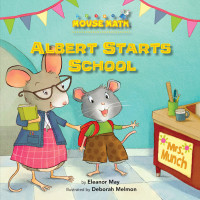
Albert Starts School
Grade 1
4 skill lessons · 2 math-through-reading
Math
Skill lessons
The mathematics the book carries, taught directly. Printable workbook pages and teacher keys are not available for this book yet.
- 1The Week Albert Walks
- 2One Thing on Every Day
- 3Whose Turn Was Wednesday
- 4One Day Only, or Any Day
Math + reading
Math through the reading
The same book, entered through a sentence it prints. Change one word in the reading and the numbers change with it.
- 5The Word That Moves the Pointer
- 6Rebuild the Rota in Order
Reading
Reading and language lessons
The same book read as a text. What a word means in its sentence, how a character is shown, how the writing is put together - no mathematics.
- 7At Home and At School: Following a Pair of Words Through a Story
- 8The Next Day Was: How the Story Says Time Has Passed
- 9A Paw Shot Up, A Face Fell: Reading Feelings the Story Does Not Name
- 10Who Said That? Sorting Two Voices in a Printed Conversation
- 11Playing School: The Same Word Meaning Two Different Things
Skill lessons
4 lessons on the mathematics the book carries. Printable workbook pages and teacher keys are not available for this book yet.
1. The Week Albert Walks
The book names all seven days in order across five school days, marking each one twice, and it moves along them with the same three words a child uses: tomorrow, yesterday and the day before. Children lay a seven-card strip in the story's order, put a pointer on a day and slide it one card for each of those words, then clip the strip into a ring so Saturday meets Sunday. The concept is that a day name is a position, not a label: Wednesday is fixed by having Tuesday on one side and Thursday on the other, and moving forward and moving back are the same walk in opposite directions along one fixed line.
Full lesson — 20 minutes
1. Lay the week out in order (6 min)
Deal the seven day cards face up in a jumble, then lay them left to right in the order the story walks them, starting at Sunday. Read the line aloud, touching one card per day name. Turn one card face down and say from the cards on either side which day is hiding.
Word preview: Wednesday
On Sunday, Albert could not wait to go to bed.
On Monday, Wanda dropped off Albert at his classroom.
The next day was Tuesday.
The next day was Wednesday.
2. Walk the pointer one day forward (5 min)
Put the pointer on Monday. Each time your partner says the story's words for one day forward, slide the pointer one card to the right and say the day you land on. Do it four times from Monday and say where you stop, then start again from Tuesday and say whether you stop on the same card.
Word preview: tomorrow
The next day was Tuesday.
We will paint tomorrow.
Thursday was Jim Day.
3. Walk the pointer one day back (5 min)
Put the pointer on Friday and slide it one card to the left for yesterday, then one more for the day before that. Say each day out loud as you land on it. Say which direction the pointer moves for tomorrow and which for yesterday, with a finger on the strip.
Word preview: yesterday
Charlie Federer yesterday and my turn was the day before.
But Albert, tomorrow is Saturday.
4. Close the week into a ring (4 min)
Clip the seven cards end to end so Saturday touches Sunday and the strip becomes a loop. Walk the pointer round the loop from Monday and count the days until it comes back to Monday. Say how many days that walk took, and say which day Frankie's turn falls on if it comes one whole loop after Friday.
You'll get a turn next week.
Short version — 9 minutes
1. Lay the week out in order (5 min)
Lay the seven day cards left to right in the order the story walks them, beginning at Sunday, and read the line aloud touching one card per day. Turn one card face down and name the hidden day from its neighbours.
On Sunday, Albert could not wait to go to bed.
On Monday, Wanda dropped off Albert at his classroom.
The next day was Tuesday.
2. Walk the pointer one day back (4 min)
Put the pointer on Friday and slide it one card left for yesterday, then one more for the day before that, saying each day as you land. Say which way the pointer goes for tomorrow and which way for yesterday.
Charlie Federer yesterday and my turn was the day before.
Three levels
- Support
- Work with the five school days only, Monday to Friday, so the ring and the weekend come off and the line has two clear ends. Keep the pointer walk to single steps, one card at a time, and say the day aloud on every landing. Add Saturday and Sunday once the child lays the five in order twice without help.
- At Grade
- Lay all seven cards in the story's order, name a hidden day from its neighbours, walk the pointer forward four days from Monday and back two days from Friday, and say which direction each of tomorrow and yesterday moves. Finish by closing the ring and walking one whole loop.
- Extension
- Start the pointer on Friday and walk forward three days, saying every day you cross including the two with no school. Then say which day is four days after Thursday without moving the pointer, and check yourself by walking it. Finish by saying why the ring never runs out of cards while the strip does.
English learners
The seven day names are long, they share the same ending, and five of them carry a first part that means nothing on its own, so a learner can hold the order perfectly and still lose which name goes where. Keep a card in the child's hand for every name said, and say the names slowly and far apart rather than as one chant. Many languages number the days instead of naming them, so a child may reach for day two where English wants Tuesday; take it, then re-say the English name with the card still in their hand. Give one frame and use only it, the day after Monday is Tuesday, sliding the pointer as the sentence is said. Invite children to say the days in their strongest language first, laying their own cards in that order, and let a pointed finger stand as the whole answer while the English names are still arriving.
Materials
- A seven-card day strip per pair: Sunday, Monday, Tuesday, Wednesday, Thursday, Friday, Saturday, one day to a card
- A wooden pointer or lolly stick per pair for walking the day strip
- A seven-place paper loop per pair, the day cards clipped round it end to end
- Word cards: yesterday, tomorrow, Wednesday
Standards & curriculum
Choose your curriculum above to see the standards for this lesson.
Standards are held back while this plan is edited. Every standard shown here was matched against the supplied wording of this lesson, quoting its steps, so a changed step is no longer the thing that was checked. Undo your changes to bring the standards back — your edits stay in this browser either way.
2. One Thing on Every Day
Albert lists the whole week in a single sentence, one activity to each of five days, and the story spends three chapters on what goes wrong when he puts an activity on the wrong day. Children build that list as a row of paired cards, read it in both directions, then deliberately misplace the art card the way Albert does and count how far it had to move. What makes this mathematics rather than recall is the exactly-one rule: the row is only right when every day carries one card and no card is left over, and a child can check that by looking rather than by being told.
Full lesson — 20 minutes
1. Match one activity to one day (6 min)
Albert says the whole week's schedule in one sentence. Lay the five school-day cards in order and put exactly one activity card on each. Read your row back as Albert says it, day then activity, and check that no day has two cards and no card is left over.
Word preview: every
Monday is library, Tuesday is art, Wednesday is music, Thursday is gym, and today we make our own class snack.
We did something special every day.
2. Find the day from the activity (5 min)
Your partner holds up an activity card without saying its day. Point to the day it belongs on and say the day name. Then swap: your partner names a day and you hold up its activity. Say what happens if two activity cards land on one day.
Word preview: day
Tuesday is our art day.
today is music day.
Thursday was Jim Day.
3. Catch Albert's mistake (5 min)
Albert brings out the paints on the wrong day and his teacher tells him which day art belongs on. Put the art card where Albert put it and then move it to where the schedule says it goes. Say how many days he was out by, counting the cards your hand crosses.
today is Monday.
Tuesday is our art day.
I didn't get to paint today,
4. Say what the two empty days hold (4 min)
Lay Saturday and Sunday at the end of your row with no activity card on them. Say why the schedule has nothing to put there, using Wanda's words. Then say what Albert can do on those days instead, and whether it is fixed to one day the way art is.
on Saturday, there isn't any school.
You can read or rest or paint or play, anytime.
Short version — 9 minutes
1. Match one activity to one day (5 min)
Lay the five school-day cards in order and put exactly one activity card on each, following Albert's sentence. Read the row back day then activity, and check no day carries two cards.
Monday is library, Tuesday is art, Wednesday is music, Thursday is gym, and today we make our own class snack.
2. Find the day from the activity (4 min)
Your partner holds up an activity card and you point to its day and name it. Swap, so your partner names a day and you find its activity. Say what would go wrong if two activity cards landed on one day.
Tuesday is our art day.
today is music day.
Three levels
- Support
- Use three days and three activity cards, Monday, Tuesday and Wednesday, so the row is short enough to hold in one glance and the pairing rule is still visible. Lay the day cards down first and hand the activity cards over one at a time. Bring in the fourth and fifth days once the child has read a three-card row back in both directions.
- At Grade
- Build the full five-day row from Albert's sentence, read it back day then activity and activity then day, move the art card from Monday to Tuesday and count the days crossed, and lay the two empty weekend days at the end with nothing on them.
- Extension
- Take one activity card off the row and hand your partner only the four that are left. Ask them to say which day is now empty and which activity is missing, without looking at the book. Then say why naming the empty day is enough to name the missing card, and whether the same trick would work if two cards were taken.
English learners
The five activity words are ordinary classroom nouns, but four of them are being used here as the name of a day as well as the name of a thing, and English says Tuesday is art with nothing between the two nouns. A learner may hear that as a claim that a day is a substance. Say the fuller form the book also gives, Tuesday is our art day, with a hand on each card as it is named, and keep both cards in view while the sentence is said. Many languages need a small word where English puts none, so accept on Tuesday we do the art warmly and re-say the book's form afterwards. Give one frame and use only it, on Wednesday we have music, laying the day card down first and the activity card second. Invite children to name their own week's activities in their strongest language and place them on the day strip before any English label is asked for.
Materials
- A seven-card day strip per pair: Sunday, Monday, Tuesday, Wednesday, Thursday, Friday, Saturday, one day to a card
- Five activity cards per pair: library, art, music, gym, class snack
- A wooden pointer or lolly stick per pair for walking the day strip
- Two setting cards per pair, one reading school and one reading home
- Word cards: day, every
Standards & curriculum
Choose your curriculum above to see the standards for this lesson.
Standards are held back while this plan is edited. Every standard shown here was matched against the supplied wording of this lesson, quoting its steps, so a changed step is no longer the thing that was checked. Undo your changes to bring the standards back — your edits stay in this browser either way.
3. Whose Turn Was Wednesday
The class feeds the fish on a rota and the book gives it away in two separate places without ever writing it out. On Tuesday a classmate claims the day and tells Albert his turn is tomorrow; on Friday Albert names Rachel for today, a classmate for yesterday and himself for the day before. Children build the rota by laying the two turns the story shows, then counting back two days from Friday, and find that both roads put Albert on the same card. The application is that a position reached by stepping back along the days can be checked against one the story stated outright, and that a day the text never constrains stays empty.
Full lesson — 20 minutes
1. Put the two turns the story shows you (6 min)
The story shows two feeding turns as they happen. Lay the school-day cards in order and put Melody's name on the day she claims the fish and Albert's name on the day the story gives him his turn. Say aloud how you knew Albert's day, using the words his classmate said to him the day before.
Word preview: turn
Tuesday is my day to feed the fish.
Tomorrow is your turn.
My turn to feed the fish.
2. Count back from Friday to fill the rest (6 min)
On Friday Albert names his own turn by counting backwards from that day. Put Rachel on Friday, then walk one day back for the classmate who fed the fish yesterday and one day further back for the turn Albert calls his own. Say each day name as you put a card down.
Word preview: yesterday
Today is Friday, so it's Rachel's turn.
Charlie Federer yesterday and my turn was the day before.
3. Check the two roads to Wednesday (4 min)
You have now put Albert on a day twice, once from the story as it happened and once by counting back from Friday. Point to both and say whether they landed on the same card. Say which day of the week that card is, and say what you would have to change about the story for the two roads to disagree.
My turn to feed the fish.
Charlie Federer yesterday and my turn was the day before.
4. Say which day the row cannot fill (4 min)
Look along the finished row and find the one school day with no name on it. Say which day it is. Then say whether the story anywhere tells you who fed the fish that day, and why guessing a name would not be reading.
Monday is library, Tuesday is art, Wednesday is music, Thursday is gym, and today we make our own class snack.
You'll get a turn next week.
Short version — 9 minutes
1. Put the two turns the story shows you (5 min)
Lay the school-day cards in order and put Melody's name on the day she claims the fish and Albert's on the day the story gives him his turn. Say how you knew Albert's day from what was said to him the day before.
Tuesday is my day to feed the fish.
Tomorrow is your turn.
My turn to feed the fish.
2. Count back from Friday to fill the rest (4 min)
Put Rachel on Friday, then step one day back for the classmate who fed the fish yesterday and one further back for the turn Albert calls his own, saying each day as you lay a card.
Today is Friday, so it's Rachel's turn.
Charlie Federer yesterday and my turn was the day before.
Three levels
- Support
- Keep the pointer on the strip for every step and move it one card at a time, saying the day out loud on each landing, rather than counting back in the head. Do only the Friday walk, placing Rachel and then stepping back twice, and let the Tuesday and Wednesday cards be laid for the child in advance so the walk is the whole task.
- At Grade
- Place Melody and Albert from the story as it happens, then walk back two days from Rachel on Friday to place the other two names, checking that Albert's card lands on the same day both times. Finish by naming the school day the row leaves empty and saying that the story never fills it.
- Extension
- Frankie is told a turn is coming next week. Walk one whole loop of the ring from Rachel's Friday and say which day Frankie would feed the fish if the rota simply repeated. Then say what the story would have had to tell you for that answer to be certain rather than a guess, and say which of your four placed names rest on the story and which on the pattern.
English learners
The whole lesson turns on three time words that all point backwards, yesterday, the day before and was, and English marks the last of them inside the verb where a learner may not hear it. Say the sentence with the pointer already moving left, so the direction is visible before the words are parsed. The phrase the day before is two steps of meaning in four small words and is worth saying on its own, slowly, with two cards touched in turn. Many languages mark the past with a separate word that stays put, so a child may offer yesterday-yesterday for the day before; take it warmly, then re-say the book's phrase with both cards under their hand. Give one frame and use only it, the day before Friday is Thursday. Invite children to say who feeds a pet at home, and on which day, in their strongest language before any English placement is asked for.
Materials
- A seven-card day strip per pair: Sunday, Monday, Tuesday, Wednesday, Thursday, Friday, Saturday, one day to a card
- Four name cards per pair reading Melody, Albert, Charlie, Rachel
- A paper fish bowl per pair with Mini drawn in it
- A wooden pointer or lolly stick per pair for walking the day strip
- Blank slips and a pencil per pair
- Word cards: turn, yesterday
Standards & curriculum
Choose your curriculum above to see the standards for this lesson.
Standards are held back while this plan is edited. Every standard shown here was matched against the supplied wording of this lesson, quoting its steps, so a changed step is no longer the thing that was checked. Undo your changes to bring the standards back — your edits stay in this browser either way.
4. One Day Only, or Any Day
Albert keeps colliding with school because at home nothing is pinned to a day and at school everything is. The book states both rules outright, three times each, and never resolves them into one. Children build two rows on the table, one where every activity sits on exactly one day card and one with no day cards at all, then move a single activity between the rows and say how many days it is allowed on in each. The reasoning is the distinction itself: a rule that names a day can be checked against the strip and gives one answer, while a rule that says any day cannot be checked that way and gives many.
Full lesson — 20 minutes
1. Sort the school row and the home row (6 min)
Make two rows on the table, one under the school card and one under the home card. Deal the five activity cards to the school row and put each on its day. Then take painting, feeding the pet and resting and put them in the home row, where there are no day cards at all. Say what the home row has none of.
Word preview: anytime
At home I can paint any time I want.
At home, I get to feed my pet every day.
2. Test one activity against both rows (5 min)
Take the painting card. Put it in the school row and say the one day it is allowed on. Move it to the home row and say how many days it is allowed on there. Do the same with feeding the fish, and say which row pins an activity to a day and which does not.
Word preview: any
Tuesday is our art day.
At home I can paint any time I want.
Tuesday is my day to feed the fish.
3. Put the nap where each row wants it (5 min)
The teacher says it is nap time and Albert says when he naps at home. Put a nap slip on the school row where the teacher's rule puts it, on one day at one moment. Then put a nap slip in the home row and say what decides it there. Say which of the two rules a clock could check.
but it's nap time now.
At home, I only nap when I feel tired.
4. Say the rule for each row in one sentence (4 min)
Point at the school row and say its rule in one sentence, then point at the home row and say its rule. Use Wanda's words for the home row if they help. Finish by saying which row you could ask what happens on Thursday and get one answer.
school isn't the same as home, but it's fun too.
You can read or rest or paint or play, anytime.
Short version — 9 minutes
1. Sort the school row and the home row (5 min)
Build two rows, one under the school card with the five activities on their days, and one under the home card with painting, feeding the pet and resting and no day cards at all. Say what the home row has none of.
At home I can paint any time I want.
At home, I get to feed my pet every day.
2. Test one activity against both rows (4 min)
Put the painting card in the school row and say the one day it is allowed on, then move it to the home row and say how many days it is allowed on there. Say which row pins an activity to a day.
Tuesday is our art day.
At home I can paint any time I want.
Three levels
- Support
- Use one activity only, painting, and two cards, school and home. Put the painting card in each row in turn and count aloud the day cards it is allowed to sit on, one in the school row and every card in the home row. Add feeding the fish once the child has said the one-day and any-day answers for painting without help.
- At Grade
- Build both rows, move painting and feeding the fish between them saying how many days each is allowed on in each row, place the nap in both rows, and finish by saying each row's rule in one sentence and which row answers a question about Thursday.
- Extension
- Find the one activity in the story that appears in both rows on the same terms, and say what makes it different from painting. Then invent a rule for the home row that would pin an activity to a day without naming that day, and say whether the day strip could still check it.
English learners
This lesson rests on a contrast English carries in two tiny words, any and one, and a learner may hear any day as a particular day rather than as all of them. Do the counting rather than the explaining: put the card down and touch every day it may sit on, so any is seven touches and one is a single touch. Many languages use the same word for any and for some, which makes the school row and the home row sound alike, so accept some day warmly and re-say it as any day with the seven touches repeated. Give one frame and use only it, at school painting is on one day, at home painting is on any day, said with the card moving between the rows. Invite children to say which things at their own home happen on a fixed day and which happen whenever, in their strongest language, before the English sort is asked for.
Materials
- Two setting cards per pair, one reading school and one reading home
- A seven-card day strip per pair: Sunday, Monday, Tuesday, Wednesday, Thursday, Friday, Saturday, one day to a card
- Five activity cards per pair: library, art, music, gym, class snack
- Blank slips and a pencil per pair
- Word cards: anytime, any
Standards & curriculum
Choose your curriculum above to see the standards for this lesson.
Standards are held back while this plan is edited. Every standard shown here was matched against the supplied wording of this lesson, quoting its steps, so a changed step is no longer the thing that was checked. Undo your changes to bring the standards back — your edits stay in this browser either way.
Math through the reading
The mathematics is reached through a sentence the book prints: change one word in the reading and the numbers change with it. These carry their own standards, matched against these lessons rather than inherited from the skill ones.
5. The Word That Moves the Pointer
Children hear Melody's sentence twice, once with tomorrow and once with yesterday, step a pointer along the day strip each time, and say which word sent Albert's turn to which day.
Full lesson — 20 minutes
1. Build the strip and stand on Tuesday (5 min)
Pairs lay the seven day cards left to right in the order the story walks them and read the line aloud, one touch per day. They put the pointer on Tuesday, because that is the day Melody speaks, and say aloud which cards sit either side of it.
2. Step where the sentence sends you (5 min)
Children hear Melody's sentence and move the pointer one card in the direction they think tomorrow means, then lay Albert's name card on the day they land on. They say the day aloud before the card goes down, then hear the book's next page and check whether the story agrees with them.
3. Hear it again with one word changed (6 min)
Children hear the same sentence with yesterday in place of tomorrow and move Albert's name to the day that version sends it to. With both days marked they say which word sent the name to which card, and say which of the two the book itself settles.
4. Say it about today (4 min)
Each child puts the pointer on the day the class is actually on and says one sentence about tomorrow and one about yesterday, naming the day each time with a finger on the card. A partner watches the pointer and says agree or does not agree.
Short version — 9 minutes
1. Build the strip and stand on Tuesday (5 min)
Pairs lay the seven day cards left to right in the order the story walks them and read the line aloud, one touch per day. They put the pointer on Tuesday, because that is the day Melody speaks, and say aloud which cards sit either side of it.
2. Hear it again with one word changed (6 min)
Children hear the same sentence with yesterday in place of tomorrow and move Albert's name to the day that version sends it to. With both days marked they say which word sent the name to which card, and say which of the two the book itself settles.
Three levels
- Support
- Work with the five school days only, so the strip has two clear ends and the weekend cannot be stepped onto by accident. Keep the pointer in the child's hand for every sentence and let them move it before they say anything, so the direction is settled by the hand first and named second. The swap is still heard both ways and Albert's card is still moved; only the two weekend cards come off.
- At grade
- Build the full seven-card strip, stand the pointer on Tuesday, step where Melody's sentence sends it and lay Albert's card, then hear the swapped version and move the card. Say which word sent it to which day and which day the book confirms. Finish by saying a true tomorrow sentence and a true yesterday sentence about the day the class is on.
- Extension
- Take Albert's own sentence on Friday, where he steps back twice in one breath, and walk both steps with the pointer. Say which card the second step starts from and why starting it from Friday instead gives the wrong classmate. Then say what would have to change about which day Albert was speaking on for the swapped version of Melody's sentence to be the true one.
English learners
The two words carry their whole meaning in a direction that English never says out loud, and a learner may hold both words while losing which way each points. Move the pointer before the word is said, every time, so the direction arrives through the hand rather than through the vocabulary. Many languages build these words transparently, with a piece meaning day and a piece meaning after, while English gives no clue inside tomorrow at all, so children may reasonably expect the word to tell them something it does not; say it slowly and always with the strip under it. Accept the day after Tuesday warmly when it is offered in place of tomorrow, since it is the more explicit form, then re-say the book's word with the pointer still on the card. Give one frame and use only it, the day after Tuesday is Wednesday, with the hand landing on the first day named. Invite children to say the days and to step through them in their strongest language first, laying their own cards as they go, and let a pointer resting on the right card stand as a complete answer.
Materials
- A seven-card day strip per pair: Sunday, Monday, Tuesday, Wednesday, Thursday, Friday, Saturday, one day to a card
- A wooden pointer or lolly stick per pair for walking the day strip
- Four name cards per pair reading Melody, Albert, Charlie, Rachel
- The book's page where Melody claims Tuesday and tells Albert his turn is tomorrow
- The two versions of the sentence written large, one under the other
Standards & curriculum
Choose your curriculum above to see the standards for this lesson.
Standards are held back while this plan is edited. Every standard shown here was matched against the supplied wording of this lesson, quoting its steps, so a changed step is no longer the thing that was checked. Undo your changes to bring the standards back — your edits stay in this browser either way.
6. Rebuild the Rota in Order
Children receive the five rota sentences out of order, restore the sequence on a day strip, and lay a name card after each one, showing that Albert's Wednesday is reached twice by two different walks.
Full lesson — 20 minutes
1. Sort the five events onto the week (6 min)
Pairs receive the five event strips shuffled and lay them in the order the story tells them, using the day names inside the sentences that have them. They say aloud which two sentences they placed first and what let them, then set the three that name no day where they think those belong.
2. Lay a name after every event (5 min)
Working along their order, children take each event in turn and put a name card on the day it fixes, saying the day out loud first. After each one they count aloud how many school days now carry a name.
3. Walk back from Friday and meet in the middle (5 min)
Children take Albert's Friday sentence and step the pointer back one card and then one more, laying Charlie and then Albert. They check whether Albert's card has landed where their earlier forward walk already put him, and say what they would have to change if the two disagreed.
4. Move one event and watch it break (4 min)
Pairs move the sentence that says tomorrow to a different place in the order, rebuild the rota from there, and say which day ends up with two names and which ends up empty. They then say why that sentence cannot be moved, using the day it lands on as the reason.
Short version — 9 minutes
1. Sort the five events onto the week (6 min)
Pairs receive the five event strips shuffled and lay them in the order the story tells them, using the day names inside the sentences that have them. They say aloud which two sentences they placed first and what let them, then set the three that name no day where they think those belong.
2. Walk back from Friday and meet in the middle (5 min)
Children take Albert's Friday sentence and step the pointer back one card and then one more, laying Charlie and then Albert. They check whether Albert's card has landed where their earlier forward walk already put him, and say what they would have to change if the two disagreed.
Three levels
- Support
- Hand over the two sentences that name their own day already placed on the strip, Melody's Tuesday and Rachel's Friday, so the ordering task is the three stepping sentences only. Keep the pointer in the child's hand and move it before any name card is laid. The count of filled days is still said aloud after each event, and the meeting on Wednesday is still checked.
- At grade
- Sort all five events into the story's order, lay a name card after each and count the filled days as you go, then walk back twice from Friday and check that Albert's card lands where the forward walk already put him. Finish by moving the tomorrow sentence out of place and saying which day is doubled and which is emptied.
- Extension
- Say which of the five events could be moved without breaking anything at all, and why that one is different from the other four. Then work out what Melody would have had to say instead for the rota to come out the same with her sentence placed last, and say whether any wording of her sentence could make the order stop mattering.
English learners
The three stepping sentences all hide their day inside a time word, and two of them also put the verb in the past, which English marks inside the word rather than beside it. A learner may follow the rota perfectly and still not hear that was and yesterday both point backwards. Move the pointer first and say the sentence second, so direction is carried by the hand. The phrase the day before is four small words doing two steps of work and is worth saying alone, slowly, touching two cards in turn. Many languages mark past time with a separate word that never changes, so take my turn was yesterday-yesterday warmly when it comes and re-say the book's phrase with both cards under the child's hand. Give one frame and use only it, the day before Friday is Thursday. Invite children to retell the rota in their strongest language while laying the name cards, and accept a correctly built strip as a complete retelling while the English sentences are still arriving.
Materials
- A seven-card day strip per pair: Sunday, Monday, Tuesday, Wednesday, Thursday, Friday, Saturday, one day to a card
- Five event strips per pair, one rota sentence printed on each, shuffled
- Four name cards per pair reading Melody, Albert, Charlie, Rachel
- A wooden pointer or lolly stick per pair for walking the day strip
- The book's Friday page where Albert counts the turns backwards
- A large empty week strip for building the class rota together
Standards & curriculum
Choose your curriculum above to see the standards for this lesson.
Standards are held back while this plan is edited. Every standard shown here was matched against the supplied wording of this lesson, quoting its steps, so a changed step is no longer the thing that was checked. Undo your changes to bring the standards back — your edits stay in this browser either way.
Reading and language lessons
5 lessons on the reading and language the book carries - what a word means in its sentence, how a character is shown, how a text is built. No mathematics: these are matched against the English language arts curricula, which are a different and smaller set than the mathematics ones.
7. At Home and At School: Following a Pair of Words Through a Story
Albert says 'At home' four times, and every time a grown-up answers him with the word 'school'. Students listen for that pair of words across three printed passages, put a hand on the table for 'home' and a hand in the air for 'school', and then say in their own words what Albert keeps noticing. The work is hearing a repeated phrase and saying what it does for the reader; nothing is measured, counted or added.
Full lesson — 20 minutes
1. Listen for a phrase that comes back (6 min)
The teacher reads the passage below aloud twice. The second time, put one hand flat on the table every time you hear the words at home. Then say to a partner: which two words did Albert use to talk about the place he already knew?
Word preview: home
Oh! Albert said. At home I can paint any time I want. His teacher put a paw around his shoulder. Yes, but this is school.
2. Hear the same phrase in a new place (5 min)
Read the passage below with the teacher. Put a hand on the table again when you hear at home. This is a different day and a different room, but Albert says the same words. Tell a partner what Albert wanted to do this time.
Word preview: again
I got to paint today. Albert told Wanda after school, but I didn't get to feed her class pet. At home, I get to feed my pet every day. Wanda said, school isn't the same as home, but it's fun too.
3. Find the word that answers him (5 min)
Read the passage below with the teacher. Albert says at home, and someone answers him with a different word. Raise a hand in the air when you hear the word school. Say aloud who said it.
Word preview: school
At home, I only nap when I feel tired. Albert said, Mrs. Munch side. I know. Albert said, this is school.
4. Say what the two words mean together (4 min)
Here is the passage from step one printed again. Tell a partner one sentence: Albert says at home because ___. Then say one thing that is different about school in this story. Use the words home and school in your sentence.
Word preview: different
Oh! Albert said. At home I can paint any time I want. His teacher put a paw around his shoulder. Yes, but this is school.
Short version — 9 minutes
1. Listen for a phrase that comes back (5 min)
The teacher reads the passage below twice. Put a hand on the table when you hear at home. Say which two words Albert uses for the place he already knew.
Word preview: home
Oh! Albert said. At home I can paint any time I want. His teacher put a paw around his shoulder. Yes, but this is school.
2. Find the word that answers him (4 min)
Read the passage below with the teacher. Raise a hand when you hear the word school, and say aloud who said it.
Word preview: school
At home, I only nap when I feel tired. Albert said, Mrs. Munch side. I know. Albert said, this is school.
Three levels
- Support
- Listen to the teacher read the passage in step 1. Echo just the sentence that begins At home. Then point to the table when you say home. Say the word home twice.
- At Grade
- Read the passages in steps 1 and 3, signal for home and for school, and tell a partner one thing about school that is not like home in this story.
- Extension
- Both printed passages end with a grown-up using the word school. Say two sentences about why the story gives the grown-up the last word each time, using the printed words.
English learners
English uses at home and at school with no the, which is unusual and easy to over-correct into at the home. Say the two phrases in a pair several times so the pattern is heard rather than explained. Invite students to say, in their strongest language, one thing they do at home that they do not do at school. Rehearsable frame: At home I ___. At school I ___.
Materials
- Albert Starts School, the passage printed in this step
- Home and school hand signals
- Word cards: home, again, school, different
Standards & curriculum
Choose your curriculum above to see the standards for this lesson.
Standards are held back while this plan is edited. Every standard shown here was matched against the supplied wording of this lesson, quoting its steps, so a changed step is no longer the thing that was checked. Undo your changes to bring the standards back — your edits stay in this browser either way.
8. The Next Day Was: How the Story Says Time Has Passed
This story moves by naming a day. Students read three short printed passages that each open a new day, notice the phrase the story reuses to hand the reader to the next one, and then retell the order aloud with day cards. Day names are treated as order words, the way first and next are; no lesson asks how many days there are or how long anything lasted.
Full lesson — 20 minutes
1. Find the words that open a new day (6 min)
Read the passage below with the teacher. Underline with your finger the three words that tell you a new day has started. Say them aloud together.
Word preview: next
The next day was Tuesday. Art Day Mrs. Munch announced. Tuesday. After painting, Albert went over to the fish bowl.
2. Hear the same opening again (5 min)
Read the passage below with the teacher. It starts with the very same three words as the last one. Say aloud which day it hands you this time, and tell a partner how you knew a new day had started without anyone saying so.
Word preview: again
The next day was Wednesday. Albert beamed. My turn to feed the fish.
3. Put the days in the order the story gives them (5 min)
Read the passage below with the teacher. It names the days one after another in the order Albert lived them. Lay your day cards out on the table in that same order while a partner reads the sentence aloud slowly.
Word preview: order
We did something special every day. Albert said. Monday is library, Tuesday is art, Wednesday is music, Thursday is gym, and today we make our own class snack.
4. Retell using the story's own order words (4 min)
Here is the passage from step 3 printed again. Using your day cards, retell what Albert's week was like to a partner. Begin with the word first and use the word then at least once. Say the day names in the order the passage gives them.
Word preview: retell
We did something special every day. Albert said. Monday is library, Tuesday is art, Wednesday is music, Thursday is gym, and today we make our own class snack.
Short version — 9 minutes
1. Find the words that open a new day (5 min)
Read the passage below with the teacher. Point to the three words that tell you a new day has started, and say them aloud.
Word preview: next
The next day was Tuesday. Art Day Mrs. Munch announced. Tuesday. After painting, Albert went over to the fish bowl.
2. Put the days in the order the story gives them (4 min)
Read the passage below with the teacher and lay your day cards out in the order the sentence names them.
Word preview: order
We did something special every day. Albert said. Monday is library, Tuesday is art, Wednesday is music, Thursday is gym, and today we make our own class snack.
Three levels
- Support
- With the teacher, read only the first sentence of the passage in step 1. Echo the words The next day was. Then find the same three words at the start of the passage in step 2 and point to them.
- At Grade
- Read the passages in steps 1 and 3, find the repeated opening phrase, and lay the day cards out in the order the story gives them.
- Extension
- The passage in step 3 lists the days in one long sentence instead of opening a new one for each. Say two sentences about why an author might pack a whole week into one sentence there.
English learners
Day names are proper nouns in English and always take a capital letter, which many languages do not do, and the phrase the next day was carries the tense on was rather than on next. Read the opening phrase and the day name as one chunk. Invite students to name the days in their strongest language and then in English, pointing at a card each time. Rehearsable frame: The next day was ___. On ___ we ___.
Materials
- Albert Starts School, the passage printed in this step
- Day cards
- Word cards: next, again, order, retell
Standards & curriculum
Choose your curriculum above to see the standards for this lesson.
Standards are held back while this plan is edited. Every standard shown here was matched against the supplied wording of this lesson, quoting its steps, so a changed step is no longer the thing that was checked. Undo your changes to bring the standards back — your edits stay in this browser either way.
9. A Paw Shot Up, A Face Fell: Reading Feelings the Story Does Not Name
Three printed passages end on a body moving, not on a feeling word: a paw shooting up, a face falling, a character perking up. Students act out each ending, name the feeling the story left out, and point to the sentence just before that tells them why. The work is inferring a feeling from an action; nothing is compared, ordered by size or counted.
Full lesson — 20 minutes
1. Act out how the passage ends (6 min)
The teacher reads the passage below aloud. Listen for what Albert's body does in the very last sentence, then do it yourself where you are sitting. Say one feeling word that goes with it. The passage never uses a feeling word, so the word is yours.
Word preview: feeling
On Friday Mrs. Munch had a surprise. We have a new student. She told the class. This is Frankie. Who would like to show Frankie around? Albert's paw shot up.
2. Find the opposite ending (5 min)
Read the passage below with the teacher. Albert's body does something at the end of this one too, and it is the opposite of last time. Show it with your own face, then say a feeling word for it.
Word preview: opposite
There's a new mouse in our class. Albert told Wanda after school. Tomorrow, I'm going to play with him at recess. But Albert, tomorrow is Saturday. Wanda said, on Saturday, there isn't any school. No school? Albert's face fell.
3. Point to the sentence that caused it (5 min)
Here is the passage from step 2 printed again. Point with your finger to the sentence that tells you why Albert's face changed. Tell a partner: Albert felt that way because ___.
Word preview: because
There's a new mouse in our class. Albert told Wanda after school. Tomorrow, I'm going to play with him at recess. But Albert, tomorrow is Saturday. Wanda said, on Saturday, there isn't any school. No school? Albert's face fell.
4. Watch the feeling turn around (4 min)
Read the passage below with the teacher. Albert's body changes one more time here. Show that change with your own body, and say aloud what Wanda said that turned him around.
Word preview: changed
At home you can do anything you like, Wanda reminded him. You can read or rest or paint or play, anytime. Albert perked up. That's right, I can. And you know what I'm gonna do first? I'm going to play school.
Short version — 9 minutes
1. Act out how the passage ends (5 min)
The teacher reads the passage below. Do with your body what Albert's body does in the last sentence, and say a feeling word for it.
Word preview: feeling
On Friday Mrs. Munch had a surprise. We have a new student. She told the class. This is Frankie. Who would like to show Frankie around? Albert's paw shot up.
2. Point to the sentence that caused it (4 min)
Read the passage below with the teacher, point to the sentence that tells you why Albert's face changed, and finish the sentence: Albert felt that way because ___.
Word preview: because
There's a new mouse in our class. Albert told Wanda after school. Tomorrow, I'm going to play with him at recess. But Albert, tomorrow is Saturday. Wanda said, on Saturday, there isn't any school. No school? Albert's face fell.
Three levels
- Support
- Listen to the teacher read the passage in step 1. Copy what Albert's paw does with your own arm. Then choose a feeling card that matches and say the word on it.
- At Grade
- Read the passages in steps 1 and 2, act out each ending, and say a feeling word for each one and one reason from the passage.
- Extension
- Both printed passages end on Albert's body and neither uses a feeling word. Say two sentences about why an author might show a feeling that way instead of naming it.
English learners
These endings are English idioms of the body: a paw shot up, a face fell, perked up. Translated word for word they read as physical accidents rather than feelings, so act each one out before naming it and pair the action with a feeling card. Invite students to show a matching gesture from their own home culture and to name the feeling in their strongest language first. Rehearsable frame: His face fell. That means he felt ___.
Materials
- Albert Starts School, the passage printed in this step
- Feeling word cards
- Word cards: feeling, opposite, because, changed
Standards & curriculum
Choose your curriculum above to see the standards for this lesson.
Standards are held back while this plan is edited. Every standard shown here was matched against the supplied wording of this lesson, quoting its steps, so a changed step is no longer the thing that was checked. Undo your changes to bring the standards back — your edits stay in this browser either way.
10. Who Said That? Sorting Two Voices in a Printed Conversation
These passages print a conversation with no quotation marks at all, and one of them attaches the tag Albert said to a line Albert cannot have spoken. Students read the exchange aloud in two voices, decide who each line belongs to using what the characters want, and then say out loud which line they could not settle and why. The uncertainty is treated as the lesson rather than smoothed over; no lesson asks for a quantity of anything.
Full lesson — 20 minutes
1. Read it in two voices (6 min)
With a partner, read the passage below out loud. One of you is Albert and one is Mrs. Munch. Decide together, before you read, which lines belong to each of you. The passage has no quotation marks, so you have to work it out from what each character wants.
Word preview: speaker
Albert? Mrs. Munch said a few minutes later. What are you doing? I'm getting out the pop paints. Albert said, today is Monday. Mrs. Munch said, Tuesday is our art day. We will paint tomorrow.
2. Use what a character wants (5 min)
Here is the passage from step 1 printed again. One character wants to paint and one character is in charge of the classroom. Point to a line that only the one who wants to paint could say, and a line that only the one in charge could say. Say aloud how you knew.
Word preview: decide
Albert? Mrs. Munch said a few minutes later. What are you doing? I'm getting out the pop paints. Albert said, today is Monday. Mrs. Munch said, Tuesday is our art day. We will paint tomorrow.
3. Read a passage with three people in it (5 min)
Read the passage below with two partners, in three voices. Work out together which line belongs to Frankie and which belongs to Albert. Say aloud the clue you used.
Word preview: clue
Sometimes I help make snacks at home. Frankie said, me too. Albert said, but this is different. This is school.
4. Name the line you could not settle (4 min)
Look again at the passage below. Some lines here are hard to give to one speaker, because the name sits next to the wrong words. Tell a partner one line you could not settle, and say what would have made it clear. A reader is allowed to say a text is unclear.
Word preview: unclear
Sometimes I help make snacks at home. Frankie said, me too. Albert said, but this is different. This is school.
Short version — 9 minutes
1. Read it in two voices (5 min)
With a partner, read the passage below out loud in two voices. Decide first which lines belong to Albert and which to Mrs. Munch. There are no quotation marks, so use what each one wants.
Word preview: speaker
Albert? Mrs. Munch said a few minutes later. What are you doing? I'm getting out the pop paints. Albert said, today is Monday. Mrs. Munch said, Tuesday is our art day. We will paint tomorrow.
2. Name the line you could not settle (4 min)
Read the passage below again. Tell a partner one line you could not give to a speaker, and say what would have made it clear.
Word preview: unclear
Albert? Mrs. Munch said a few minutes later. What are you doing? I'm getting out the pop paints. Albert said, today is Monday. Mrs. Munch said, Tuesday is our art day. We will paint tomorrow.
Three levels
- Support
- Read only the first two sentences of the passage in step 1 with the teacher. Hold up the Albert card or the Mrs. Munch card for each one. Say the name aloud.
- At Grade
- Read the passage in step 1 in two voices with a partner, give every line a speaker, and say the clue you used for one of them.
- Extension
- The passage in step 3 puts a name beside words that character does not seem to be saying. Say two sentences about what a reader should do when a text does not make the speaker clear.
English learners
English drops the speaker's name inside a long exchange and expects the reader to carry it forward, and this transcript has no quotation marks to help. Read each line and then say the speaker's name out loud after it, so every line is heard with its speaker attached. Invite students to perform the exchange in their strongest language first, with a name card raised for each turn. Rehearsable frame: ___ says ___. I know because ___.
Materials
- Albert Starts School, the passage printed in this step
- Two name cards: Albert, Mrs. Munch
- Third name card: Frankie
- Word cards: speaker, decide, clue, unclear
Standards & curriculum
Choose your curriculum above to see the standards for this lesson.
Standards are held back while this plan is edited. Every standard shown here was matched against the supplied wording of this lesson, quoting its steps, so a changed step is no longer the thing that was checked. Undo your changes to bring the standards back — your edits stay in this browser either way.
11. Playing School: The Same Word Meaning Two Different Things
The story's last three words use school to mean a game, after a whole book of using it to mean a building Albert has to go to. Students read the ending, say what school means in that sentence, then read an earlier passage where the same word means the other thing, and hold the two side by side. The work is word meaning in context; the printed sentences are not measured or compared by size.
Full lesson — 20 minutes
1. Read the last thing Albert says (6 min)
The teacher reads the passage below aloud. Listen for the very last word. Say to a partner what Albert is going to do on Saturday, in your own words. Then say whether he is going to a real school.
Word preview: ending
At home you can do anything you like, Wanda reminded him. You can read or rest or paint or play, anytime. Albert perked up. That's right, I can. And you know what I'm gonna do first? I'm going to play school.
2. Find the same word earlier (5 min)
Read the passage below with the teacher. The word school is in this one too. Say aloud what it means here: a place, or a game. Show with your hands which one you mean.
Word preview: place
Oh! Albert said. At home I can paint any time I want. His teacher put a paw around his shoulder. Yes, but this is school.
3. Hold the two meanings side by side (5 min)
Both passages are printed below. Read them one after the other with a partner. Put a meaning card next to each one: a place, or a game. Say aloud one sentence about how the same word can mean two things.
Word preview: meaning
At home you can do anything you like, Wanda reminded him. You can read or rest or paint or play, anytime. Albert perked up. That's right, I can. And you know what I'm gonna do first? I'm going to play school.
Oh! Albert said. At home I can paint any time I want. His teacher put a paw around his shoulder. Yes, but this is school.
4. Say why the story ends there (4 min)
Here is the ending printed again. Tell a partner why it is a good last sentence for a story about a mouse who did not want to leave home. Use the word school in your answer and say which meaning you are using.
Word preview: why
At home you can do anything you like, Wanda reminded him. You can read or rest or paint or play, anytime. Albert perked up. That's right, I can. And you know what I'm gonna do first? I'm going to play school.
Short version — 9 minutes
1. Read the last thing Albert says (5 min)
The teacher reads the passage below. Say what Albert is going to do on Saturday, and whether he is going to a real school.
Word preview: ending
At home you can do anything you like, Wanda reminded him. You can read or rest or paint or play, anytime. Albert perked up. That's right, I can. And you know what I'm gonna do first? I'm going to play school.
2. Hold the two meanings side by side (4 min)
Read both passages below one after the other and put a meaning card next to each: a place, or a game. Say one sentence about the same word meaning two things.
Word preview: meaning
At home you can do anything you like, Wanda reminded him. You can read or rest or paint or play, anytime. Albert perked up. That's right, I can. And you know what I'm gonna do first? I'm going to play school.
Oh! Albert said. At home I can paint any time I want. His teacher put a paw around his shoulder. Yes, but this is school.
Three levels
- Support
- Listen to the teacher read the passage in step 1. Echo the last sentence. Then answer aloud: is Albert going to a building, or is he playing? Say your answer twice.
- At Grade
- Read both passages in step 3, put the right meaning card beside each, and say one sentence about the word school meaning two different things.
- Extension
- Albert spends the whole story wanting home to be like school. Say two sentences about what it tells a reader that he chooses to play school at home, using words from the printed ending.
English learners
Play school is an English collocation meaning to pretend, and a learner who knows only the noun will hear it as attending. Say the phrase beside play shop and play doctor so the pattern is heard rather than the word. Invite students to name a pretend game they play in their strongest language and say what it copies. Rehearsable frame: When I play ___, I pretend to be ___.
Materials
- Albert Starts School, the passage printed in this step
- Two meaning cards: a place, a game
- Word cards: ending, place, meaning, why
Standards & curriculum
Choose your curriculum above to see the standards for this lesson.
Standards are held back while this plan is edited. Every standard shown here was matched against the supplied wording of this lesson, quoting its steps, so a changed step is no longer the thing that was checked. Undo your changes to bring the standards back — your edits stay in this browser either way.