Albert the Muffin-Maker
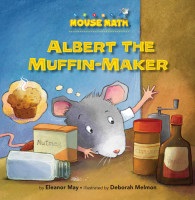
Grade 1
4 skill lessons
Math
Skill lessons
The mathematics the book carries, taught directly. Printable workbook pages and teacher keys are not available for this book yet.
- 1Down the Recipe: First to Tenth
- 2Seventh and 7th Are the Same Place
- 3The Muffins Nobody Names
- 4Four Trips to One Door
Math + reading
Math through the reading
The same book, entered through a sentence it prints. Change one word in the reading and the numbers change with it.
No math-through-reading lessons for this book yet.
Reading
Reading and language lessons
The same book read as a text. What a word means in its sentence, how a character is shown, how the writing is put together - no mathematics.
No reading and language lessons for this book yet.
Skill lessons
4 lessons on the mathematics the book carries. Printable workbook pages and teacher keys are not available for this book yet.
1. Down the Recipe: First to Tenth
The recipe is worked from its first line to its tenth and every ingredient is labelled by the place it holds rather than by how much of it Albert needs, so the book hands over ten positions and not one amount. Students lay a blank ten-square strip, put each named ingredient in the square the book gives it, and say the run of places back from first each time one lands, checking that the run is exactly as long as the row of cards. The last step takes the restart away: a place has to be named from the middle of the strip, the way Albert names the seventh and eighth without going back to the start.
Full lesson — 20 minutes
1. Lay out the ten places (5 min)
Each pair lays a strip of ten blank squares left to right and parks a counter on the leftmost one. Say the ten place words along the strip, first to tenth, sliding the counter one square per word, then say them again with the counter lifted off. Nothing goes into the squares yet.
Word preview: first, tenth
Albert checked his recipe again.
2. Put each ingredient in its place (6 min)
One partner reads a sentence card; the other says which place it names and lays that ingredient card in that square. Say the whole place word before the card goes down - the fifth, not five. Nine of the ten places get an ingredient; the first gets the blank card, because this telling gives that place a number and no name a reader can make out. Every square ends up covered.
Word preview: second, fifth
Second ingredient, oatmeal.
The third and fourth ingredients were baking powder and salt
The fifth ingredient was cinnamon.
The sixth ingredient, a walnut, Albert got from his friend Leo.
the seventh ingredient, honey
And the eighth came from Rachel and her brother Ronald.
Careful not to spill that oil!
Albert was stirring in the ninth ingredient when Wanda walked into the kitchen.
I didn't know we had apple sauce, she said.
The 10th and last ingredient was milk.
3. Say the run back after every card (5 min)
Each time a card lands, say the whole run from first up to the place just covered, touching one square per word. The run gains a word for every ingredient that arrives, and gains two at the top shelf, where two come at once. Check each run by counting the cards on the strip, blank one included: the run is exactly as long as the row of cards.
Word preview: third, fourth
Albert said, first, second.
First, second, third, fourth.
First, second, third, fourth, fifth.
4. Start from the middle (4 min)
One partner names any of the first seven places; the other says the next three places on from there without going back to first. Turn the strip face down for the last two turns each. Albert stops restarting halfway through the book, and this is the step where students stop too.
Word preview: seventh, ninth
Seventh, eighth.
Short version — 9 minutes
1. Put each ingredient in its place (6 min)
One partner reads a sentence card; the other says which place it names and lays that ingredient card in that square. Say the whole place word before the card goes down - the fifth, not five. The blank card goes in the first square.
Word preview: second, fifth
Second ingredient, oatmeal.
The third and fourth ingredients were baking powder and salt
The 10th and last ingredient was milk.
2. Say the run back after every card (3 min)
Say the run from first up to the place just filled each time a card lands, touching one square per word, and count the cards on the strip to check the run is the same length.
Word preview: third, fourth
Albert said, first, second.
First, second, third, fourth, fifth.
Three levels
- Support
- Work the first four places only, with their cards face up beside the strip so the job is placing a named thing rather than recalling it. Say the whole run from first each time, one touch per square. Open the fifth place only once the four run without a stumble, and keep the strip face up all the way through.
- At Grade
- Cover all ten places from the sentence cards, the blank one included, say the run from first after each card and check its length against the row of cards, then name three places on from a middle place with the strip face down.
- Extension
- Take the sentence cards in a shuffled order and place them anyway, so the place word in the sentence is the only thing telling you where the card goes. Then run the strip backwards from the tenth to the first, and say which two places the book fills in a single sentence and why the doorbell had to be rung twice for them.
English learners
Position words exist in every language and a child who can already count things in order owns what this lesson needs. Two things do not carry across. English builds its position words irregularly at the front - first, second, third - and only then settles into the -th ending, so the three hardest words are the three used most here. And English puts the place word in front of the thing, the fifth ingredient, where several languages put it behind. Rehearse one frame until it runs by itself: the ___ ingredient is ___. Invite students to count the ten squares in their strongest language first, touching each one, then run the frame in English over the same strip.
Materials
- A ten-square recipe strip per pair, squares blank and carrying no numerals
- A counter per pair for marking the place being named
- Sentence cards carrying the book's ingredient lines, one set per pair
- One blank card per pair for the first place, whose ingredient this telling gives no name a reader can make out
- Ingredient cards for the nine ingredients the book names - oatmeal, baking powder, salt, cinnamon, walnut, honey, oil, apple sauce, milk - one set per pair
- Word cards: first, tenth, ingredient
Standards & curriculum
These lessons are being matched against curricula now.
Standards are held back while this plan is edited. Every standard shown here was matched against the supplied wording of this lesson, quoting its steps, so a changed step is no longer the thing that was checked. Undo your changes to bring the standards back — your edits stay in this browser either way.
2. Seventh and 7th Are the Same Place
This telling changes its mind about how to write a place halfway through. The first six places arrive only as words, the seventh through the tenth arrive both ways, and the eleventh and twelfth arrive only as numerals - so the book itself supplies both notations and two places that are never spelled at all. Students sort the book's four place runs into a words pile and a numerals pile, match twelve word cards to twelve numeral cards, write the numeral under every square of the recipe strip, and finish by reading a numeral for a place the book leaves them no spelling of. The word beside the tenth numeral gets its own moment, because it is the word that closes the recipe.
Full lesson — 20 minutes
1. Sort the book's own strips (5 min)
Spread the four strips and sort them into a words pile and a numerals pile. Read every strip aloud the same way whichever pile it is in - 7th is read seventh. Then find the two places that turn up on a strip in both piles, and say which two they are.
Word preview: seventh, eighth
Seventh, eighth.
7th, 8th, 9th.
2. Match the word to the numeral (6 min)
Deal the twelve word cards and the twelve numeral cards face down. Turn two: keep the pair only if both name the same place, and say the place aloud to claim it. Two of the twelve places are ones the book itself never spells out anywhere - find out which two while you play.
Word preview: eleventh, twelfth
the 11th and 12th muffins on two plates
3. Write the numeral under the place (4 min)
Lay the ten-square recipe strip out again and write the numeral form under each square, 1st through 10th, saying the word form aloud as the pen moves. Check the tenth square against the book's own line before going on, and say what the word beside that numeral tells you about the recipe.
Word preview: tenth, last
The 10th and last ingredient was milk.
4. Say a place you have never seen spelled (5 min)
One partner holds up a numeral card from 7th to 12th; the other says the word for it and drops a counter on that square of a twelve-square line. Six cards, three turns each. Say the whole word - eleventh, twelfth - and not the numeral's own name.
Word preview: twelfth
Sharing the last two muffins with you.
Short version — 9 minutes
1. Sort the book's own strips (4 min)
Sort the four strips into a words pile and a numerals pile, reading every strip aloud as words. Find the two places that turn up in both piles.
Word preview: seventh, eighth
Seventh, eighth.
7th, 8th, 9th.
2. Match the word to the numeral (5 min)
Play the matching game with the twelve word cards and twelve numeral cards, saying the place aloud to claim each pair. Two of the places have to be said off the numeral alone.
Word preview: eleventh, twelfth
the 11th and 12th muffins on two plates
Three levels
- Support
- Play the matching game face up with the first six pairs only, so the job is reading a numeral rather than remembering where a card lay. Say the word aloud for every numeral turned. Add 7th to 10th once the six run clean, and keep the sorted strips in view the whole time as the answer key the book supplied.
- At Grade
- Sort the four strips, name the two places written both ways, match all twelve pairs from face down, write 1st to 10th under the recipe strip, and read the six numerals from 7th to 12th aloud as words.
- Extension
- Find every place in the whole book that is written both ways, not just the two on the strips, and say how many there are. Then lay the twelve numeral cards out and mark which of them the book actually prints and which the pack supplies, and say why a reader could still name the twelfth without ever having seen the word.
English learners
A numeral for a place is read as a whole spoken word in English, and the word is not the numeral's own name: 7th is said seventh, not seven-th. That mismatch between what the eye sees and what the mouth says is the whole load of this lesson, and it is a load in English specifically, because many languages mark a place with a regular ending or a small word the learner can hear. Rehearse one frame: 7th says seventh. Then let students say the numeral in their strongest language first, holding the card up, before saying the English word for the same card.
Materials
- Four strips carrying the book's own place runs - two printed in words, the run of five and the pair seventh and eighth, and two printed in numerals, 7th 8th 9th and the 11th and 12th muffins - one set per pair
- Twelve place-word cards and twelve place-numeral cards per pair, first to twelfth and 1st to 12th
- A ten-square recipe strip per pair, squares blank and carrying no numerals
- A dry-wipe pen per pair
- A twelve-square line per pair
- A counter per pair for marking the place being named
- Word cards: seventh, eleventh, twelfth
Standards & curriculum
These lessons are being matched against curricula now.
Standards are held back while this plan is edited. Every standard shown here was matched against the supplied wording of this lesson, quoting its steps, so a changed step is no longer the thing that was checked. Undo your changes to bring the standards back — your edits stay in this browser either way.
3. The Muffins Nobody Names
Twelve muffins go out by place - the first, the second, the third, then a jump to the ninth, the tenth, and two left on plates - and the five in the middle are handed to mice this telling never names. Students lay a line of twelve, place the names the book does give, and count on from Leo's third to cousin Pete's ninth to find how many bare muffins lie between them. Counting the line is the point rather than a way round it: taking three from nine gives six, one more than the five muffins actually unnamed, because Pete's own muffin is not one of them. The basket then supplies its own check, since one muffin left after the ninth is only true if every place up to the ninth has gone out, and the last plate supplies the count of the whole batch.
Full lesson — 20 minutes
1. Lay the muffin line and name what you can (5 min)
Each pair lays twelve muffin counters in a line. One partner reads a delivery card; the other puts the right name card on the muffin it belongs to, saying the place aloud first. Only three of the five name cards go on at this stage. Leave every other muffin bare.
Word preview: first, third
We brought you the first muffin, Wanda said.
Wanda gave the second muffin to Mr. Squeak.
Leo stuffed the third muffin into his mouth
2. Count on from the third to the ninth (6 min)
Read cousin Pete's line and put his name on the muffin it gives him. Now start at Leo's third muffin and count on along the line, saying the place word for every muffin you pass and stopping before Pete's. Count the bare muffins you passed and say how many muffins went to somebody this telling never names, then say their places.
Word preview: ninth, between
And the ninth muffin went to cousin Pete.
3. Find out what the basket held (5 min)
Cover every muffin already handed out with a lid card and count what is left uncovered - three. Now read what Albert sees in the basket: one. Work out which two muffins cannot have been in that basket at all, and use the line about the kitchen still smelling to say where they were instead. Take the tenth to the cat, then say how many muffins the basket carried out of the kitchen.
Word preview: left, basket
Albert peered into the basket.
There was just one muffin left.
Wanda rolled the tenth muffin across the floor, and the cat pounced.
It still smells like muffins.
4. Say how many were baked (4 min)
Put the last two muffins on two plates beside the line. Say the place the very last muffin holds, then say how many muffins were baked altogether, and point along the line to show why those two answers land on the same number.
Word preview: last, twelfth
the 11th and 12th muffins on two plates
Sharing the last two muffins with you.
Short version — 9 minutes
1. Lay the muffin line and name what you can (4 min)
Lay twelve muffin counters in a line and put a name card on each of the three muffins the book names, saying the place aloud first. Leave the rest bare.
Word preview: first, third
We brought you the first muffin, Wanda said.
Leo stuffed the third muffin into his mouth
2. Count on from the third to the ninth (5 min)
Put cousin Pete's name on the muffin his line gives him. Count on from Leo's third along the line, saying every place word and stopping before Pete's, then say how many bare muffins you passed.
Word preview: ninth, between
And the ninth muffin went to cousin Pete.
Three levels
- Support
- Number the muffin counters 1 to 12 before the pair starts and keep the three name cards on the line while they count. Count on from the third out loud with a finger on each muffin, and let the pair say the count of bare muffins in two goes - the places passed, then how many that was. The basket step can be watched rather than worked.
- At Grade
- Lay the line, place the names the book gives, count on from the third to the ninth and say both how many muffins are unnamed and which places they hold, then settle what the basket held and say how many were baked in all.
- Extension
- Say how many muffins would be unnamed if the book had named a fourth muffin as well as a third, and say what that does to the count without recounting the line. Then split the twelve into the muffins the book gives an owner and the muffins it does not, and lay both sets back over the line to show that nothing is left over and nothing is counted twice.
English learners
Counting on from a place other than the start is the mathematics here, and it is carried by two small English words that do a lot of work: between, which excludes both ends, and left, which here means still in the basket rather than the direction. Both are easy to hear as the opposite of what they mean. Rehearse one frame with the line under a finger: from the third to the ninth there are ___ muffins between. Invite students to count the line in their strongest language before saying the frame in English, and accept the number in either language while the frame is being learned.
Materials
- Twelve muffin counters per pair
- Name cards for Mrs. Nibble, Mr. Squeak, Leo, cousin Pete and the cat, one set per pair
- Delivery sentence cards, one set per pair
- Lid cards for covering a delivered muffin, ten per pair
- Two paper plates per pair
- Word cards: between, left, basket
Standards & curriculum
These lessons are being matched against curricula now.
Standards are held back while this plan is edited. Every standard shown here was matched against the supplied wording of this lesson, quoting its steps, so a changed step is no longer the thing that was checked. Undo your changes to bring the standards back — your edits stay in this browser either way.
4. Four Trips to One Door
Four of the ten places in the recipe were filled from one neighbour's cupboard, which is why the doorbell had to be rung twice for the two on the top shelf, and Wanda says so without ever giving the number. Students ring those places on the recipe strip, count the ringed and the bare, then count what came back: one muffin by name for that door, and one muffin by name for Leo, who filled a single place. Both counts are the students' to make, and the argument they then have is real, because five of the twelve muffins go to mice the book never names and any share counted for Mrs. Nibble is one muffin plus however many of those five a child hands her.
Full lesson — 20 minutes
1. Ring what came from one door (5 min)
Lay the recipe strip out again and put a red ring round every place Mrs. Nibble supplied. The first of them is the blank card, ringed on the strength of the sentence about her door rather than the ingredient's name, which is not readable here. Read the doorbell line and decide how many places one ringing each earns. Then count the ringed places aloud and count the bare ones.
Word preview: twice, ringed
Mrs. Nibble opened her door with a big smile.
Mrs. Nibble's smile wasn't quite as big this time, but she filled Albert's cup with oatmeal.
The third and fourth ingredients were baking powder and salt
Albert had to ring Mrs. Nibble's doorbell twice.
This time he didn't go to Mrs. Nibble.
2. Count what went back (5 min)
Lay the twelve-muffin line beside the strip and put the name cards on the muffins the book names. Say how many muffins Mrs. Nibble is given by name and which place it is. Do the same for Leo, then go back to the strip and say how many places Leo filled.
Word preview: first, sixth
We brought you the first muffin, Wanda said.
Leo stuffed the third muffin into his mouth
The sixth ingredient, a walnut, Albert got from his friend Leo.
3. Say what Wanda is counting (4 min)
Read Wanda's two lines about Mrs. Nibble. For each one, say whether she is counting ringed places on the strip or muffins on the line, and put a finger on what she is counting. Say what she never counts anywhere in the book.
Word preview: enough, all
Albert, Wanda said when he came back, you can't get all of your ingredients from Mrs. Nibble.
Wanda agreed, but Mrs. Nibble has already shared enough.
4. Argue it at the door (6 min)
Each partner takes a side on whether the muffins came out even, and every turn has to carry a number lifted off the strip or the line. Answer what the other side said rather than saying your own again. Finish by naming the five muffins the book leaves unsettled, because that is what the argument turns on.
Word preview: rest, share
Wasn't it nice to share with our friends?
Where did you get the rest of these ingredients?
Short version — 9 minutes
1. Ring what came from one door (4 min)
Lay the recipe strip out and ring every place Mrs. Nibble supplied, taking the first from the sentence about her door. Read the doorbell line, decide how many places it earns, then count the ringed places and the bare ones aloud.
Word preview: twice, ringed
Mrs. Nibble opened her door with a big smile.
Albert had to ring Mrs. Nibble's doorbell twice.
This time he didn't go to Mrs. Nibble.
2. Argue it at the door (5 min)
Take a side on whether the muffins came out even, carrying a number off the strip or the line in every turn, and answer what your partner said. Finish by naming the five muffins the book leaves unsettled.
Word preview: rest, share
Wasn't it nice to share with our friends?
Three levels
- Support
- Ring the places with the pair while reading each sentence aloud, so the counting is theirs and the finding is not. Ask for the two counts one at a time - the ringed places, then the bare ones - and let the argument be one sentence each with a single number in it, said to the teacher rather than across the table.
- At Grade
- Ring the four places and count both sides of the strip, count the muffins each named mouse is given, say what Wanda is counting in each of her two lines, then argue a side with a number in every turn.
- Extension
- Put her name on every muffin the book leaves bare and count the most she could have had, then take them all off again and count the fewest, and say which sentences stop the largest count going any higher. Then take the cat's side: it never chose to share anything and still holds the tenth muffin, so say what it gave and what it got, using places from both lines.
English learners
The argument in the last step is the language work, and what does not carry from a first language is not the counting but the shape of English disagreement: children need a way to answer a claim without contradicting a person. Two frames carry it, and both are worth rehearsing before the arguing starts: she gave ___ places, so ___, and you said ___, but the book says ___. The word enough is the other load, because it names a quantity while giving no number at all - Wanda uses it exactly that way. Invite students to count the ringed places in their strongest language and then take a turn in English with one number in it.
Materials
- The ten-square recipe strip with its blank first card and nine ingredient cards, one set per pair
- A pot of red rings or loops of wool, more than any pair will need
- Twelve muffin counters per pair
- Name cards for Mrs. Nibble, Mr. Squeak, Leo, cousin Pete and the cat, one set per pair
- Word cards: share, enough, rest
Standards & curriculum
These lessons are being matched against curricula now.
Standards are held back while this plan is edited. Every standard shown here was matched against the supplied wording of this lesson, quoting its steps, so a changed step is no longer the thing that was checked. Undo your changes to bring the standards back — your edits stay in this browser either way.