Beach for Albert
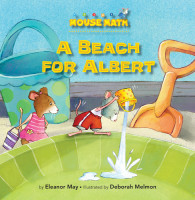
Grade 1
3 skill lessons · 2 math-through-reading
Math
Skill lessons
The mathematics the book carries, taught directly. Printable workbook pages and teacher keys are not available for this book yet.
- 1Taller, Wider, or Just the Same
- 2Twice as Much, and Twice as Heavy
- 3A Bigger Scoop Means Fewer Trips
Math + reading
Math through the reading
The same book, entered through a sentence it prints. Change one word in the reading and the numbers change with it.
- 4The Word That Picks Up the Scoop
- 5Tell Albert What to Carry It In
Reading
Reading and language lessons
The same book read as a text. What a word means in its sentence, how a character is shown, how the writing is put together - no mathematics.
- 6I Have an Idea: The Sentence Albert Keeps Saying
- 7Taller, But Wider: Two Words About Shape
- 8Then Not Quickly At All: Three Sentences That Get Slower
- 9Oops, Albert Said: Finding the Speaker With No Quotation Marks
- 10At First, Then, At the End: Telling the Whole Book
Skill lessons
3 lessons on the mathematics the book carries. Printable workbook pages and teacher keys are not available for this book yet.
1. Taller, Wider, or Just the Same
The book hands this lesson its whole argument and none of its numbers. Albert wants Wanda's pale because it looks bigger; Wanda answers that hers is taller and his is wider and that the two hold the same amount, and she settles it by pouring one into the other rather than by saying a number. Students do the same thing with two jars of different shapes: they look, they commit out loud to a guess, then they pour one full jar into the empty other and read the answer off the water line. Height alone does not decide how much a container holds, and pouring is what decides it. No student measures in units and no student is told a capacity; every finding in this lesson is reached by watching where the water stops.
Full lesson — 20 minutes
1. Guess from looking alone (4 min)
Sit with a partner behind three pairs of jars, one jar in each pair taller and thinner, the other shorter and wider. Point at the jar in each pair you think holds more water and say taller or wider as your reason. Write nothing and touch no water yet; the guesses go on the table as a pointing finger and a spoken word.
Word preview: taller, wider
My pale is taller, Wanda said, but yours is wider.
2. Pour one jar into the other (6 min)
Fill the taller jar of your first pair to the line marked on it, then pour the whole of it into the empty wider jar and watch where the water stops. Say out loud what happened: it came up short of the line, it ran over the top, or it landed right at the line. Do the same for your second and third pairs, one pour each.
Word preview: holds
They hold the same amount of water, see?
3. Find the pair that ties (6 min)
Look at your three results and find the pair where the water landed at the line, so a taller jar and a wider jar hold the same amount. Hold both of those jars up and say the sentence about them: this one is taller, this one is wider, they hold the same amount. Then say which of your three first guesses the pouring proved wrong.
Word preview: the same amount
She poured the water from Albert's pale into her own.
4. Say what decided it (4 min)
Stand your three pairs in a row with the tied pair in the middle. Each child says one sentence naming the thing that decided which jar holds more, using the word pouring in it. A partner listens and says whether looking at the jars would have given the same answer.
Short version — 9 minutes
1. Pour one jar into the other (5 min)
Fill the taller jar of your pair to its marked line and pour all of it into the wider jar. Say out loud where the water stopped: short of the line, over the top, or right at the line.
Word preview: holds
They hold the same amount of water, see?
2. Find the pair that ties (4 min)
Hold up the two jars where the water landed at the line and say the sentence about them: this one is taller, this one is wider, they hold the same amount. Say whether that is what you guessed by looking.
Word preview: the same amount
She poured the water from Albert's pale into her own.
Three levels
- Support
- Work with the pair of jars whose difference is largest, so the water line lands well above or well below the rim and the answer is unmistakable. Pour first and talk second: fill one jar, pour it across, then point at where the water stopped and say only fits or does not fit. Keep the guessing step, because guessing wrong is the point of the lesson, but let the sentence stay at two words until the pouring has settled it.
- At Grade
- Look at each of the three jar pairs, say aloud which one you think holds more and why you think so, then fill one jar to its line and pour it into its partner. Say what the water did: it came up short, it ran over, or it landed at the line. Finish by finding the pair Wanda was right about, where a taller jar and a wider jar hold the same amount, and say the sentence about your own two jars.
- Extension
- Take the pair that came out the same and find a third jar in the tray that also holds the same amount as those two, proving it by pouring rather than by looking. Then say what would have to be true of a jar for you to be sure it holds more without pouring at all, and test your rule on the tallest jar in the tray to see whether it survives.
English learners
The mathematics here travels: a child who has poured water anywhere has this concept already, and pouring is the same in every language. The comparative endings are what does not travel. English builds tall into taller and wide into wider with a small ending that is easy to hear past, and many languages mark the comparison with a separate word instead, so a learner may say more tall and be reasoning perfectly. Accept more tall and more wide warmly and re-say the book's form with a hand on the jar. Give one frame and use only it: This jar is taller, that jar is wider, they hold the same amount. Say each part with the hand on the thing it describes, so taller arrives with a vertical hand and wider with two hands apart. Invite children to make their guess and say what the water did in their strongest language first, then say the frame in English with the jars still in front of them; a finger on the water line is a complete answer while the words are still coming.
Materials
- Three pairs of clear jars per pair of students, one tall and narrow and one short and wide in each pair
- A shallow tray per pair to pour over
- A jug of water per table and a cloth
- Word cards: taller, wider, holds, the same amount
Standards & curriculum
Choose your curriculum above to see the standards for this lesson.
Standards are held back while this plan is edited. Every standard shown here was matched against the supplied wording of this lesson, quoting its steps, so a changed step is no longer the thing that was checked. Undo your changes to bring the standards back — your edits stay in this browser either way.
2. Twice as Much, and Twice as Heavy
Albert guesses that the tea cup holds twice as much as a pale, and the book does the rare thing of checking his guess and reporting that he was right, then adding the cost he had not thought about: it was twice as heavy too. Students test the same claim the same way, by filling the small container and emptying it into the large one, counting the fills as they go, and finding whether two fills reach the line or not. Then they lift the filled large container against the filled small one and say what the doubling cost. The mathematics is repeating one container inside another and reading the result as twice or not twice; nothing is weighed and no number of ounces or grams appears anywhere.
Full lesson — 20 minutes
1. Say the guess out loud (4 min)
Sit with your pair in front of a small cup and a larger container. Before touching either, say what you think: does the large one hold twice as much as the small one, more than twice, or not quite twice? Hold up two fingers as you say twice, and leave your guess sitting on the table unsettled.
Word preview: twice as much
I'll bet it holds twice as much as our pales.
2. Fill it and count the fills (6 min)
Fill the small cup to its line and empty the whole of it into the large container, saying one as it goes in. Fill and empty it again, saying two. Look at where the water sits and say whether two fills reached the line on the large container, stopped short of it, or ran over.
Word preview: fill
The cup did hold twice as much water.
3. Lift them both (5 min)
Fill the small cup to its line again and stand it beside the large container you have just filled with two fills. Take one in each hand, lift both at once, and say which hand is working harder. Say the sentence the book says about it, using the words twice as heavy, with both containers still in your hands.
Word preview: twice as heavy
It was twice as heavy, too.
4. Report the check (5 min)
Each child tells a partner what their guess was, what the pouring showed, and whether Albert's guess would have been right about their pair. The partner listens for the number of fills and says it back. Finish by saying one sentence naming what filling the large container cost, now that you have lifted it.
Short version — 9 minutes
1. Fill it and count the fills (5 min)
Fill the small cup to its line and empty it into the large container, saying one. Fill and empty it again, saying two. Say whether two fills reached the line, stopped short, or ran over.
Word preview: fill
The cup did hold twice as much water.
2. Lift them both (4 min)
Stand a freshly filled small cup beside the large container you just filled. Lift one in each hand at the same time and say which hand is working harder, using the words twice as heavy.
Word preview: twice as heavy
It was twice as heavy, too.
Three levels
- Support
- Use only the pair the teacher has already checked, where two fills reach the line exactly, so the counting has a clean answer. Pour and say one and two aloud as each fill goes in, and stop there. The lifting comparison still happens, held one container in each hand, and the answer stays at the single word heavier.
- At Grade
- Take each of the three small-and-large pairs in turn. Say Albert's guess about the pair first, fill the small container and empty it into the large one counting the fills aloud, and say whether two fills reached the line, came up short, or overflowed. Then lift the full large container in one hand and the full small one in the other and say which is harder to hold and why that follows from what you just poured.
- Extension
- Find the pair in the tray where two fills came up short and say roughly how many fills it would take instead, then pour to find out whether you were right. Say what Albert would have had to do differently to find out about the weight before he picked the cup up, and whether a container that holds twice as much must always be twice as heavy or only when it holds the same kind of thing.
English learners
The doubling idea is not language-bound and a child can show it entirely with two pours and two fingers held up. The English phrase is what obstructs. Twice as much packs a comparison into a word that does not look like two, and many languages say the equivalent of two times more, which learners often carry across intact and which reads to an English ear as three times. Accept two times and two times more warmly, then re-say the book's phrase with two fingers up and the small container in the other hand. Give one frame and use only it: two fills of this one fill that one, so that one holds twice as much. Say fills with the pouring hand moving. Invite children to count the fills aloud in their strongest language, since the count is the evidence and the language of the count does not change it, and let two raised fingers stand as a complete answer while the phrase is still being learned.
Materials
- A small cup and a larger clear container per pair, three pairings per table
- A jug of water per table and a cloth
- Word cards: twice as much, twice as heavy, fill
Standards & curriculum
Choose your curriculum above to see the standards for this lesson.
Standards are held back while this plan is edited. Every standard shown here was matched against the supplied wording of this lesson, quoting its steps, so a changed step is no longer the thing that was checked. Undo your changes to bring the standards back — your edits stay in this browser either way.
3. A Bigger Scoop Means Fewer Trips
Albert's whole problem is that his pale is small and the bowl is not, and Wanda states the rule that governs it: every pale of water means another trip. Students fill one tub twice, once with a small scoop and once with a large one, counting trips aloud each time and putting down a cube for each trip so the two counts stand side by side as two towers. They then say the rule the towers show, that the bigger the scoop the shorter the tower. The mathematics is repeating a unit to fill a space and comparing two counts of the same space; no student is told how much either scoop holds and no student subtracts one tower from the other.
Full lesson — 20 minutes
1. Fill the tub with the small scoop (6 min)
Fill the small scoop at the jug and empty it into the tub, and put one cube on the table for each scoop you carry across. Count the trips aloud as the cubes go down. Stop when the water reaches the line drawn inside the tub, and snap your cubes into one tower.
Word preview: trip, every
And every pale of water means another trip for you.
2. Empty it and fill it again (6 min)
Tip the tub out, then fill the same tub to the same line using the large scoop instead. Put down a cube for each trip again and count aloud as before. Snap this second set into a tower of its own and stand it next to the first one.
3. Stand the towers side by side (5 min)
Look at your two towers standing together. Say which scoop made the shorter tower and put a hand on it. Then say the rule your towers show, that a bigger scoop makes fewer trips, with a hand on each tower as you say it.
Word preview: fewer
If I use a bigger pale, I won't have to make as many trips.
4. Give Albert the answer (3 min)
Each child says one sentence telling Albert which of the two scoops to carry his water in, and names the two towers as the reason. A partner says whether they would give him the same one.
Short version — 9 minutes
1. Fill the tub with the small scoop (5 min)
Fill the small scoop and empty it into the tub, putting a cube down for each trip and counting aloud. Stop at the line inside the tub and snap your cubes into a tower.
Word preview: trip, every
And every pale of water means another trip for you.
2. Stand the towers side by side (4 min)
Stand your small-scoop tower next to the large-scoop tower the teacher has built. Put a hand on the shorter one and say that a bigger scoop makes fewer trips.
Word preview: fewer
If I use a bigger pale, I won't have to make as many trips.
Three levels
- Support
- Fill a smaller tub so both counts stay short and the towers stay easy to see side by side. Put a cube down each time the scoop goes in, so the counting is done by the hand and not held in the head, and say the number only at the end when the tub is full. The comparison stays at the two towers and the single word shorter.
- At Grade
- Fill the tub once with the small scoop and once with the large one, counting each trip aloud and stacking a cube per trip. Stand the two towers side by side, say which scoop made the shorter tower, and say the rule in your own words with a hand on each tower. Then say what Albert should have carried the water in and why the towers are your reason.
- Extension
- Look at your two towers and say which scoop you would want if you had to fill a tub twice this size, and say what you expect both towers to do. Then find the scoop in the tray that would make a tower of about three and test it. Finish by saying whether there is any scoop that would make a tower of one and what would have to be true of it.
English learners
Counting trips is mathematics a child can do before they can narrate it, and the two towers say the finding without a sentence, so nothing here is gated on English. The comparative fewer is the obstacle and it is a genuinely hard one, because English splits fewer from less on a distinction most languages do not draw and many children who speak only English do not draw either. Accept less trips warmly; it is the near-universal form and the reasoning behind it is sound. Give one frame and use only it: the big scoop made fewer trips, with a hand flattening beside the shorter tower as fewer is said. Invite children to count their trips aloud in their strongest language while they pour, since the count is what carries the argument, then point at the two towers and say the frame. A hand resting on the shorter tower is a complete answer to which scoop you would want.
Materials
- A tub per pair with a fill line drawn inside
- A small scoop and a large scoop per pair
- A jug of water per table and a cloth
- Interlocking cubes, about twenty per pair
- Word cards: trip, every, fewer
Standards & curriculum
Choose your curriculum above to see the standards for this lesson.
Standards are held back while this plan is edited. Every standard shown here was matched against the supplied wording of this lesson, quoting its steps, so a changed step is no longer the thing that was checked. Undo your changes to bring the standards back — your edits stay in this browser either way.
Math through the reading
The mathematics is reached through a sentence the book prints: change one word in the reading and the numbers change with it. These carry their own standards, matched against these lessons rather than inherited from the skill ones.
4. The Word That Picks Up the Scoop
Children hear Albert's trade sentence twice, once with bigger and once with smaller, fill the same tub with the scoop each version sends them to, and say which word built which tower of cubes.
Full lesson — 20 minutes
1. Hear the trade and pick a scoop (4 min)
Pairs hear Albert's sentence about trading pales and choose which of the two scoops on their table it tells them to pick up. They hold the scoop they chose in the air and say the word in the sentence that decided it, before any water is poured.
2. Fill the tub the way the sentence says (6 min)
Children fill the tub to the line inside it using the scoop they picked up, putting one cube on the table for each trip and counting the trips aloud. They snap the cubes into a tower and stand it beside the tub.
3. Hear it again with one word changed (6 min)
Children hear the same sentence with smaller in place of bigger, tip the tub out and fill it to the same line with the other scoop, again laying a cube per trip. They build the second tower and stand the two side by side.
4. Say which word built which tower (4 min)
Each child puts a hand on each tower and says which version of Albert's sentence built it, then says the rule the pair of towers shows. A partner listens and says whether the shorter tower sits under the word they expected.
Short version — 9 minutes
1. Fill the tub the way the sentence says (6 min)
Children fill the tub to the line inside it using the scoop they picked up, putting one cube on the table for each trip and counting the trips aloud. They snap the cubes into a tower and stand it beside the tub.
2. Hear it again with one word changed (6 min)
Children hear the same sentence with smaller in place of bigger, tip the tub out and fill it to the same line with the other scoop, again laying a cube per trip. They build the second tower and stand the two side by side.
Three levels
- Support
- Use the smaller tub so both towers stay short enough to see whole and to count without losing the place. Let the child put the cube down before saying the number, so the hand keeps the count and the mouth follows it. Both versions of the sentence are still heard and both tubs are still filled; only the height of the towers comes down, and the answer may be given as a hand resting on the shorter tower.
- At grade
- Hear Albert's sentence, pick up the scoop it names and say the word that decided it. Fill the tub to the line with that scoop, a cube per trip, and build the tower. Hear the sentence with smaller in place of bigger, fill the same tub with the other scoop and build the second tower. Stand them side by side, say which word built which, and say the rule with a hand on each tower.
- Extension
- Say which scoop you would want if the tub were twice the size, and say what you expect each tower to do before you test it. Then take Wanda's sentence about every pale meaning another trip and say what it would take for that sentence to be false - what a scoop or a trip would have to be like - and whether anything on your table could make it so.
English learners
The mathematics is fully carried by the two towers and needs no English at all: a child who has poured and counted has the finding, and a hand on the shorter tower is a complete answer. The comparative machinery does not transfer. English hides the comparison inside an ending, so bigger and smaller differ by a syllable in the middle of a word, and a learner tracking the sentence for meaning can easily lose the very piece that decides which scoop to lift. Say the two versions slowly and far apart in time, each with the scoop it names held up as the word is said, so the difference arrives in the hand as well as the ear. Accept more big and less trips warmly; both are the forms most languages would use and the reasoning behind them is sound. Give one frame and use only it: the bigger scoop made fewer trips, said with a flat hand beside the shorter tower. Invite children to count their trips aloud in their strongest language while they pour, since the count is the evidence and it does not change language, and to say which scoop they would give Albert in whichever language reaches it first.
Materials
- A tub per pair with a fill line drawn inside
- A large scoop and a small scoop per pair
- Interlocking cubes, about twenty per pair
- A jug of water per table and a cloth
- The book's page where Albert asks Wanda to trade pales
- The two versions of Albert's sentence written large, one under the other, with the changed word underlined
Standards & curriculum
Choose your curriculum above to see the standards for this lesson.
Standards are held back while this plan is edited. Every standard shown here was matched against the supplied wording of this lesson, quoting its steps, so a changed step is no longer the thing that was checked. Undo your changes to bring the standards back — your edits stay in this browser either way.
5. Tell Albert What to Carry It In
Children build the trip towers for a pale and for a cup that holds twice as much, lift both containers full, and then tell Albert out loud which to use, naming their towers as the reason.
Full lesson — 20 minutes
1. Hear what Albert is deciding (3 min)
Children hear the stretch where Albert reaches for the tea cup, the book confirms it holds twice as much, and the fall follows. Each pair says in one sentence what Albert is trying to decide, before touching the containers on the table.
2. Build the two towers (7 min)
Pairs fill the tub to its line with the small container, laying a cube for each trip and counting aloud, then tip it out and fill it again with the large container the same way. They stand the two towers side by side beside the tub.
3. Lift them both full (4 min)
Children fill both containers to their lines and lift one in each hand at the same time. They say which hand is working harder, and say which tower that hand belongs to.
4. Tell Albert and hear the answer back (6 min)
Each child speaks to Albert and says which container to carry the water in, naming their towers or the lifting as the reason. The partner then says the strongest thing they can against it, using the other piece of evidence, and both children say whether Albert should change his mind.
Short version — 9 minutes
1. Build the two towers (7 min)
Pairs fill the tub to its line with the small container, laying a cube for each trip and counting aloud, then tip it out and fill it again with the large container the same way. They stand the two towers side by side beside the tub.
2. Tell Albert and hear the answer back (6 min)
Each child speaks to Albert and says which container to carry the water in, naming their towers or the lifting as the reason. The partner then says the strongest thing they can against it, using the other piece of evidence, and both children say whether Albert should change his mind.
Three levels
- Support
- Give the frame and let the child fill it from the table in front of them: I think Albert should use the ___ because it made ___ trips. Point at the tower as the number is said, so the reason arrives with the hand before it arrives in the sentence. The child still hears the counter-case from a partner and still says whether it changes their mind, which is the part of the argument that matters most; only the sentence is carried for them.
- At grade
- Build both towers, lift both full containers, then tell Albert which one to use and name your towers or the lift as your reason. Hear the strongest case a partner can make against you, using the evidence you did not use, and say whether it changes your mind and why.
- Extension
- Take the position you did not argue for and make the best case you can for it, using the evidence you left on the table. Then say what the friends arriving at the end do to the whole question, given that each one of them is carrying an ordinary pale rather than a bigger one, and say which of the three answers you would now give Albert.
English learners
The reasoning this lesson asks for is not language-bound and it should not be gated on English: a child who has built the two towers and lifted the two containers has the entire argument in their hands, and pointing at the shorter tower and then at the tired arm is a complete case. What is hard is the shape English gives a justification, where the claim comes first and the reason arrives after a small word that is easy to miss. Give one frame and use only it: Albert should use the ___ because it made ___ trips, said with a hand landing on the container and then on the tower. Accept because it is more easy and because it is little trips warmly; the reasoning is sound and the ending will come. Invite children to work out what they think, and to say it to a partner, in their strongest language first, then to say the frame in English with both towers still standing. When the counter-case is heard, let a child answer it by moving a hand from one tower to the other before any words are asked for.
Materials
- A tub per pair with a fill line drawn inside
- A small container and a large container per pair, the large one taking two fills of the small
- Interlocking cubes, about twenty per pair
- A jug of water per table and a cloth
- The book's pages where Albert reaches for the tea cup and where he lands on the ground
- The sentence frame written large: Albert should use the ___ because it made ___ trips
Standards & curriculum
Choose your curriculum above to see the standards for this lesson.
Standards are held back while this plan is edited. Every standard shown here was matched against the supplied wording of this lesson, quoting its steps, so a changed step is no longer the thing that was checked. Undo your changes to bring the standards back — your edits stay in this browser either way.
Reading and language lessons
5 lessons on the reading and language the book carries - what a word means in its sentence, how a character is shown, how a text is built. No mathematics: these are matched against the English language arts curricula, which are a different and smaller set than the mathematics ones.
6. I Have an Idea: The Sentence Albert Keeps Saying
Albert says the same four words every time the story turns, and the book prints them six times. Students hear the sentence in two passages, say what different plan follows each one, then meet the place where Wanda cuts him off and says the words herself. The work is noticing a repeated sentence and saying what it tells a reader about a character, not weighing pails or comparing how much they hold.
Full lesson — 20 minutes
1. Hear the sentence that keeps coming back (6 min)
The teacher reads the two passages below out loud. Listen for the one short sentence that is the same in both. Say that sentence aloud with the teacher, and say who says it both times.
Word preview: idea, again
I have an idea, Albert said. What if we fill this giant bowl with water? Then we'll have sand and swimming like a real beach.
Albert looked at Wanda's pale. I have an idea, he said. Let's trade pales. Your pale is bigger than mine. If I use a bigger pale, I won't have to make as many trips.
2. Say what Albert does right after he says it (5 min)
Read the two passages below with a partner. Each one starts with Albert saying his sentence. Say aloud what he wants to try in the first passage, then what he wants to try in the second. Then say whether the two plans are the same plan or two different plans.
Word preview: plan, trade
Albert looked at Wanda's pale. I have an idea, he said. Let's trade pales. Your pale is bigger than mine. If I use a bigger pale, I won't have to make as many trips.
Albert sat up smiling. I have an idea. See that toy dump truck? He said, it's perfect. I can put a lot of water in the back.
3. Find the time Wanda says it instead (5 min)
Read the passage below. This time the sentence you have been listening for is said twice, and the second person to say it is not Albert. Point to Albert's turn, then to Wanda's turn. Say aloud how Wanda sounds when she says it, and why she takes the words away from him.
Word preview: cut him off
I'm sorry, Wanda. Albert said. But I have an idea. No. Wanda cut him off. I have an idea. She turned and squelched away.
4. Say what the repeated sentence tells you about Albert (4 min)
Read the last passage below, where Albert says the sentence one more time. Then finish this sentence out loud for a partner: Albert is the kind of mouse who ___. Use the repeated sentence in your answer.
Word preview: kind of
Albert grinned. Actually, I have an idea.
Short version — 9 minutes
1. Hear the sentence that keeps coming back (5 min)
The teacher reads the two passages below. Listen for the short sentence that is the same in both, say it aloud, and say who says it.
Word preview: idea
I have an idea, Albert said. What if we fill this giant bowl with water? Then we'll have sand and swimming like a real beach.
Albert looked at Wanda's pale. I have an idea, he said. Let's trade pales. Your pale is bigger than mine. If I use a bigger pale, I won't have to make as many trips.
2. Find the time Wanda says it instead (4 min)
Read the passage below. Point to Albert's turn saying the sentence, then to Wanda's turn, and say why she takes the words away from him.
Word preview: cut him off
I'm sorry, Wanda. Albert said. But I have an idea. No. Wanda cut him off. I have an idea. She turned and squelched away.
Three levels
- Support
- The teacher reads the first printed passage in step 1 and stops at the four words I have an idea. Echo them. Then find those four words in the second printed passage and point to them.
- At Grade
- Read both printed passages in step 1, say the repeated sentence, and say what different thing Albert wants to try after each one.
- Extension
- In step 3 the same words are printed twice in a row, once from Albert and once from Wanda. Say two sentences about why the book gives Wanda his own words right after she says No.
English learners
The phrase I have an idea is a fixed English expression: idea takes have, not make or do, and many languages use their verb for make here. Say the phrase whole, several times, so it is learned as one chunk rather than three choices. Invite students to say, in their strongest language, what someone in their family says over and over. Rehearsable frame: Albert says ___ again. This time he wants to ___.
Materials
- Beach for Albert, the passage printed in this step
- pointing finger
- partner
- Word cards: idea, again, plan, trade, cut him off, kind of
Standards & curriculum
Choose your curriculum above to see the standards for this lesson.
Standards are held back while this plan is edited. Every standard shown here was matched against the supplied wording of this lesson, quoting its steps, so a changed step is no longer the thing that was checked. Undo your changes to bring the standards back — your edits stay in this browser either way.
7. Taller, But Wider: Two Words About Shape
Wanda says one pail is taller but the other is wider, and a page later Albert says a cup is taller and wider. The two sentences use the same pair of describing words and two different joining words, so the shape of the sentence changes what is being claimed. Students read both, test what happens when but is removed, and build their own sentence about two real cups. No pouring, weighing or amount is decided here; the work is what taller and wider each describe and what but and and do between them.
Full lesson — 20 minutes
1. Read the two size words in one sentence (6 min)
Read the passage below with the teacher. Wanda uses two words that end the same way: taller and wider. Point to each one. Say aloud which pail each word is about, and say what part of a pail taller talks about and what part wider talks about.
Word preview: taller, wider, but
My pale is taller, Wanda said, but yours is wider. They hold the same amount of water, see? She poured the water from Albert's pale into her own. Oh! Albert said, you're right.
2. Say the little word that turns the sentence around (5 min)
Read the passage below again. Cover the word but with your finger and read the sentence without it. Say aloud what sounds wrong. Then say what job but is doing between Wanda's two size words.
Word preview: but
My pale is taller, Wanda said, but yours is wider. They hold the same amount of water, see? She poured the water from Albert's pale into her own. Oh! Albert said, you're right.
3. Find the same two words said about one thing (5 min)
Read the passage below. Albert uses taller and wider too, but this time he puts both of them on the same cup, and he joins them with a different little word. Point to that word. Say aloud how Albert's sentence is different from Wanda's.
Word preview: and
Albert scampered over to a doll tea cup. This cup is taller and wider, he said. I'll bet it holds twice as much as our pales. He took the cup and filled it out the spigot. The cup did hold twice as much water. It was twice as heavy, too.
4. Make your own taller-but-wider sentence (4 min)
Read the passage below one more time and borrow Wanda's sentence shape. Look at two real cups on the table. Tell a partner one sentence in the same shape: This one is taller, but that one is wider. Say it about the cups you can see.
Word preview: taller, wider
My pale is taller, Wanda said, but yours is wider. They hold the same amount of water, see? She poured the water from Albert's pale into her own. Oh! Albert said, you're right.
Short version — 9 minutes
1. Read the two size words in one sentence (5 min)
Read the passage below with the teacher. Point to taller, then to wider, and say which pail each word is about.
Word preview: taller, wider
My pale is taller, Wanda said, but yours is wider. They hold the same amount of water, see? She poured the water from Albert's pale into her own. Oh! Albert said, you're right.
2. Find the same two words said about one thing (4 min)
Read the passage below. Point to the place where Albert puts taller and wider on one cup, and say which little word joins them there.
Word preview: and
Albert scampered over to a doll tea cup. This cup is taller and wider, he said. I'll bet it holds twice as much as our pales. He took the cup and filled it out the spigot. The cup did hold twice as much water. It was twice as heavy, too.
Three levels
- Support
- In the printed passage in step 1, point to taller and echo it, then point to wider and echo it. Hold two cups and say tall for one and wide for the other.
- At Grade
- Read the printed passage in step 1 and say which pail is taller and which is wider, then say what job the word but does between them.
- Extension
- Step 1 joins taller and wider with but and step 3 joins them with and. Say two sentences about why the writer needed a different joining word each time.
English learners
English builds a comparing word by adding -er to the end, and the thing being compared to is often left unsaid: taller means taller than yours. Say the full form aloud once, taller than yours, so the missing half is heard, then the short form the book prints. Invite students to compare two classroom objects in their strongest language and then in English. Rehearsable frame: This one is ___, but that one is ___.
Materials
- Beach for Albert, the passage printed in this step
- two cups of different shapes
- partner
- Word cards: taller, wider, but, and
Standards & curriculum
Choose your curriculum above to see the standards for this lesson.
Standards are held back while this plan is edited. Every standard shown here was matched against the supplied wording of this lesson, quoting its steps, so a changed step is no longer the thing that was checked. Undo your changes to bring the standards back — your edits stay in this browser either way.
8. Then Not Quickly At All: Three Sentences That Get Slower
Three sentences in a row are built on the same word, and each one takes a little more of it away, so a reader hears Albert tiring without the book saying so. Students read the run, walk the three speeds, then meet the sentence that follows and name a feeling the book never names. Nothing here is measured or counted; the work is hearing what a sentence pattern does to a reader and reading a feeling from what a character does.
Full lesson — 20 minutes
1. Read three sentences that slow down (6 min)
The teacher reads the passage below out loud, slowing down a little at each of the last three sentences. Read those three with the teacher. Point to the word quickly each time it appears. Say aloud what is happening to Albert as the sentences go by.
Word preview: quickly, then
Albert ran to the spigot by the peoplehouse. He turned on the water and filled his pale. Then he ran back and dumped the water out into the bowl. Quickly, Albert scurried back and forth. Then not quite so quickly. Then not quickly at all.
2. Act out the three speeds (5 min)
Read the passage below again. Walk on the spot at the speed of the first sentence, then at the speed of the second, then at the speed of the third. Say aloud which words in the sentences told you to change your speed.
Word preview: speed
Albert ran to the spigot by the peoplehouse. He turned on the water and filled his pale. Then he ran back and dumped the water out into the bowl. Quickly, Albert scurried back and forth. Then not quite so quickly. Then not quickly at all.
3. Say how Albert feels by the next sentence (5 min)
Read the passage below. It comes right after the three slowing sentences. The book never says Albert is tired or disappointed. Say aloud one word for how he feels, and say which words in the passage made you choose it.
Word preview: stared, tired
Albert stared down into the bowl. It isn't very full, he said.
4. Tell the trip in your own three sentences (4 min)
Read the passage below one more time. Then tell a partner the same trip in three sentences of your own, one for the beginning, one for the middle and one for the end. Make your last sentence sound slower than your first.
Word preview: beginning, end
Albert ran to the spigot by the peoplehouse. He turned on the water and filled his pale. Then he ran back and dumped the water out into the bowl. Quickly, Albert scurried back and forth. Then not quite so quickly. Then not quickly at all.
Short version — 9 minutes
1. Read three sentences that slow down (5 min)
The teacher reads the passage below, slowing down at the last three sentences. Read those three along, point to quickly each time, and say what is happening to Albert.
Word preview: quickly
Albert ran to the spigot by the peoplehouse. He turned on the water and filled his pale. Then he ran back and dumped the water out into the bowl. Quickly, Albert scurried back and forth. Then not quite so quickly. Then not quickly at all.
2. Say how Albert feels by the next sentence (4 min)
Read the passage below, which comes right after. Say one word for how Albert feels and which printed words told you.
Word preview: stared
Albert stared down into the bowl. It isn't very full, he said.
Three levels
- Support
- The teacher reads the three slowing sentences in step 1 and you echo each one, slower each time. Then point to the word quickly wherever you can see it.
- At Grade
- Read the printed passage in step 1, act out the three speeds, and say which words told you to slow down.
- Extension
- The printed passage in step 3 never uses a feeling word. Say two sentences about how the writer still lets you know how Albert feels, using words from that passage.
English learners
English builds these three sentences by chipping away at one word: quickly, not quite so quickly, not quickly at all. The meaning lives in the little words around quickly rather than in a new word, which is easy to miss. Read them as a set, three times, with a hand lowering each time. Invite students to say in their strongest language how they show someone is getting tired without saying tired. Rehearsable frame: First he is ___. At the end he is ___.
Materials
- Beach for Albert, the passage printed in this step
- pointing finger
- room to move
- partner
- Word cards: quickly, then, speed, stared, tired, beginning, end
Standards & curriculum
Choose your curriculum above to see the standards for this lesson.
Standards are held back while this plan is edited. Every standard shown here was matched against the supplied wording of this lesson, quoting its steps, so a changed step is no longer the thing that was checked. Undo your changes to bring the standards back — your edits stay in this browser either way.
9. Oops, Albert Said: Finding the Speaker With No Quotation Marks
This printing of the book carries no quotation marks at all, so the only thing telling a reader who is speaking is a name followed by said. Students use those tags to sort two speakers in a passage, find one place where the tag sits inside the speech instead of after it, and finally read the exchange in two voices. The passages are quoted exactly as the book prints them, missing marks and all, and the missing marks are the lesson.
Full lesson — 20 minutes
1. Find out who is talking without any quotation marks (6 min)
Read the passage below with the teacher. This book prints no quotation marks at all, so nothing shows where a speech starts and stops. Say aloud who says Oops and who says I guess it was. Then say which words in the passage told you.
Word preview: said, who
Albert looked down at Wanda. She was very wet. Oops. Albert said. I guess that was the dump button I pushed. I guess it was. Wanda said.
2. Point to the tag, then to the speech it belongs to (5 min)
Read the passage below again with a partner. Put one finger on a name-plus-said tag and the other finger on the words that person actually says. Do this for both speakers. Say aloud whether the tag comes before the speech or after it.
Word preview: tag, before, after
Albert looked down at Wanda. She was very wet. Oops. Albert said. I guess that was the dump button I pushed. I guess it was. Wanda said.
3. Read a place where the tag comes first instead (5 min)
Read the passage below. Here the tag is in the middle of what Wanda says, not after it. Point to Wanda said, then say aloud which words on each side of it belong to Wanda. Say why a reader has to hunt harder in this one.
Word preview: middle
That's a big bowl. Wanda said, I'll bet it holds a lot of water.
4. Read the two speakers out loud in two voices (4 min)
With a partner, read the passage below out loud. One of you is Albert and one of you is Wanda. Leave out the name-plus-said tags when you read, because your two voices are doing that job now. Say afterwards which was easier to follow, the page or your reading.
Word preview: voice
Albert looked down at Wanda. She was very wet. Oops. Albert said. I guess that was the dump button I pushed. I guess it was. Wanda said.
Short version — 9 minutes
1. Find out who is talking without any quotation marks (5 min)
Read the passage below with the teacher. There are no quotation marks anywhere. Say who says Oops and who says I guess it was, and which words told you.
Word preview: said
Albert looked down at Wanda. She was very wet. Oops. Albert said. I guess that was the dump button I pushed. I guess it was. Wanda said.
2. Read a place where the tag comes first instead (4 min)
Read the passage below. Point to Wanda said, in the middle, and say which words on each side of it are hers.
Word preview: middle
That's a big bowl. Wanda said, I'll bet it holds a lot of water.
Three levels
- Support
- In the printed passage in step 1, find the word said twice and put a finger on the name in front of it each time. Say the two names aloud.
- At Grade
- Read the printed passage in step 1 and say who speaks each of the two lines, naming the words that told you.
- Extension
- The tag in step 3 sits in the middle of Wanda's speech rather than after it. Say two sentences about how that changes what a reader has to do.
English learners
Many languages mark speech with dashes or with marks this printing has lost entirely, so a student may be looking for a signal that is simply not on the page. Say plainly that the marks are missing here and that the name-plus-said tag is doing the whole job. Read the passage twice, once flat and once in two voices, so the difference is heard. Rehearsable frame: ___ says ___. I know because it says ___ said.
Materials
- Beach for Albert, the passage printed in this step
- pointing finger
- partner
- Word cards: said, who, tag, before, after, middle, voice
Standards & curriculum
Choose your curriculum above to see the standards for this lesson.
Standards are held back while this plan is edited. Every standard shown here was matched against the supplied wording of this lesson, quoting its steps, so a changed step is no longer the thing that was checked. Undo your changes to bring the standards back — your edits stay in this browser either way.
10. At First, Then, At the End: Telling the Whole Book
Four passages are printed in the order the book prints them: the wish, the accident, the return with friends and the last line. Students say what each one does for the story and then retell the whole book in three sentences using At first and At the end. The retelling is about order and about which events matter enough to keep; no pails, trips or amounts are worked out.
Full lesson — 20 minutes
1. Read the beginning and say what the two of them want (6 min)
The teacher reads the passage below. It is how the book starts. Say aloud what Albert wishes for and what Wanda says they can do instead. Then say in one sentence what the whole problem of this book is going to be.
Word preview: beginning, wish
The people were heading off to the beach. I wish we could go to the beach too. Albert said, swimming, sand, and sun.
His sister Wanda said, and we can play in the big sand box while the people are away.
2. Read a middle part and say what goes wrong (5 min)
Read the passage below with a partner. This one comes from the middle of the book. Say aloud what Albert tried, and what happened to Wanda because of it. Put this passage on the middle card.
Word preview: middle, went wrong
Albert looked down at Wanda. She was very wet. Oops. Albert said. I guess that was the dump button I pushed. I guess it was. Wanda said.
3. Read the turn and say who fixes the problem (5 min)
Read the passage below. Wanda has gone away angry and come back. Say aloud who she brought and what each of them is carrying. Then say whose idea finally worked, and say how you know from the words in front of you.
Word preview: behind, helpers
Albert sat on the edge of the sandbox, chin and paw. Then Wanda came back. Behind her came Albert's best friend Leo. Behind Leo came his sister Lucy. Behind Lucy came all their other friends. And every one of them was carrying a pale.
4. Read the ending and retell the whole book in three sentences (4 min)
Read the last passage of the book, printed below. Then tell a partner the whole story in three sentences: one for the beginning, one for the middle, one for the end. Start your first sentence with At first and your last with At the end.
Word preview: at first, at the end
Not quite full. Albert pointed out, and they jumped in.
Short version — 9 minutes
1. Read the beginning and say what the two of them want (5 min)
The teacher reads the passage below, which is how the book starts. Say what Albert wishes for, and say in one sentence what the problem will be.
Word preview: beginning
The people were heading off to the beach. I wish we could go to the beach too. Albert said, swimming, sand, and sun.
2. Read the ending and retell the whole book in three sentences (4 min)
Read the last passage of the book, printed below. Then tell a partner the story in three sentences, starting with At first and ending with At the end.
Word preview: at the end
Not quite full. Albert pointed out, and they jumped in.
Three levels
- Support
- The teacher reads the printed passage in step 1 and you echo the last sentence. Then say one thing Albert wants, in one word if you like.
- At Grade
- Read the printed passages in steps 1 and 2 and say which one is the beginning and which is the middle, giving a reason from the words.
- Extension
- The printed passage in step 3 gives the turn of the story. Say two sentences about why the story could not end without it.
English learners
The signposts At first and At the end are what carry order in an English retelling, and they are easy to leave out when a student is concentrating on the events. Give them first, on cards, and let students speak the events into them. Invite students to retell one part in their strongest language before saying it in English. Rehearsable frame: At first, ___. Then ___. At the end, ___.
Materials
- Beach for Albert, the passage printed in this step
- three story cards marked beginning, middle, end
- partner
- Word cards: beginning, middle, end, at first, behind, helpers
Standards & curriculum
Choose your curriculum above to see the standards for this lesson.
Standards are held back while this plan is edited. Every standard shown here was matched against the supplied wording of this lesson, quoting its steps, so a changed step is no longer the thing that was checked. Undo your changes to bring the standards back — your edits stay in this browser either way.