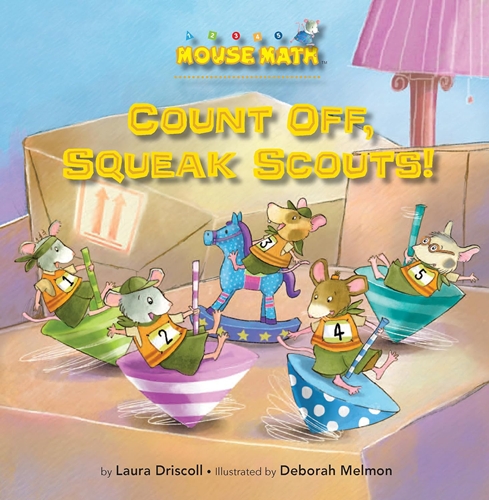
Count Off, Squeak Scouts!
Grade K
4 skill lessons · 2 math-through-reading
Math
Skill lessons
The mathematics the book carries, taught directly. Printable workbook pages and teacher keys are not available for this book yet.
- 1First, Second, and the Spot You Are Standing In
- 2The Count That Finds Somebody Missing
- 3Two Goes Between One and Three
- 4Backwards Order and the End You Start From
Math + reading
Math through the reading
The same book, entered through a sentence it prints. Change one word in the reading and the numbers change with it.
- 5First, Second, and the Word That Moves You
- 6What Albert Counted In His Head
Reading
Reading and language lessons
The same book read as a text. What a word means in its sentence, how a character is shown, how the writing is put together - no mathematics.
- 7Words that are only a sound
- 8How each mouse gets there
- 9The sentence that tells you what a souvenir is
- 10What Albert is looking for the whole time
- 11First, next, then, last in the attic
Skill lessons
4 lessons on the mathematics the book carries. Printable workbook pages and teacher keys are not available for this book yet.
1. First, Second, and the Spot You Are Standing In
Agnes hands out vests with numbers on them and Wanda states the rule that makes the numbers mean something: number one comes first, number two comes second. Children wear the numbers, stand in a mixed-up line and walk themselves into order, then count off down the line. A number on a vest names a PLACE, not an amount. Nobody in this lesson finds out how many children there are; five is known before the first count and every count confirms it. What children learn to do is turn a number into a position and a position back into a number word.
Full lesson — 20 minutes
1. Put on a number and find its spot (5 min)
Five children each take one numbered vest and stand on the five taped spots in any mixed-up order. Say your own number out loud so the group hears all five. Nobody moves yet.
Word preview: number
Agnes passed out safety vests, each with a number on it.
His number was two.
2. Walk the line into order (6 min)
Listen to Wanda's rule, then fix your own line. The child wearing one walks to the front spot, the child wearing two stands right behind, and the rest follow. Say who comes first and who comes second while you walk, not after.
Word preview: first, second
Albert said Wanda, your number is two. Number one comes first. Number two comes second.
Albert and Rachel switched places.
3. Count off down the line (5 min)
Starting at the front spot, each child calls out the number on their own vest, one after the other, with no gaps and no two at once. The rule is one child, one number. If the count does not come out one, two, three, four, five, stop and walk somebody to a new spot.
Word preview: order
When I call Count Off, Agnes said, line up in order and call out your numbers.
Rachel, Albert, Leo, Wanda and Tim all shouted out their numbers. One, two, three, four, five.
4. Say your place without your number (4 min)
Turn the vests around so no number shows. Point at yourself and say which place you are standing in, using first, second, third, fourth or last. A partner checks you by turning your vest back around.
Word preview: third
Short version — 9 minutes
1. Walk the line into order (5 min)
Five children take numbered vests, stand mixed up on the taped spots, then walk into order using Wanda's rule. Say who comes first and who comes second while you walk.
Word preview: first, second
Albert said Wanda, your number is two. Number one comes first. Number two comes second.
2. Count off down the line (4 min)
From the front spot, each child calls out the number on their own vest in turn. One child, one number. If the count does not come out one, two, three, four, five, walk somebody to a new spot.
Word preview: order
Rachel, Albert, Leo, Wanda and Tim all shouted out their numbers. One, two, three, four, five.
Three levels
- Support
- Stay with three children and the numbers one, two and three, on three spots. Wanda's rule still runs the whole line: one comes first, two comes second, three is last. Add the fourth and fifth child only once the three-child line orders itself twice without a walk-back.
- At Grade
- Five children, five spots, vests mixed up before every round. Each round the line orders itself and then counts off, and a round only ends when the count comes out one through five with no gap and no double.
- Extension
- Hand the front child the number five instead of one and let the line work out that it must now count off from the other end. Children say which spot changed and which did not, and the ones who did not move say why standing still was correct.
English learners
Position words are the load here, not the numbers. One through five transfer directly for nearly every child, and many arrive already able to say them in a first language; first, second and last do not transfer and are irregular in English in a way the numbers are not. Give the rehearsable frame I am ___ and ___ comes after me, and let a child say the number in their strongest language while pointing at their spot before saying the position word in English. A child who walks to the correct spot has shown the mathematics whether or not the English word arrives with it.
Materials
- Five numbered vests or paper bibs, one each for the numbers 1 to 5
- A floor line marked with five taped spots
- Five large numeral cards, 1 to 5
- Word cards: first, second, order
Standards & curriculum
Choose your curriculum above to see the standards for this lesson.
Standards are held back while this plan is edited. Every standard shown here was matched against the supplied wording of this lesson, quoting its steps, so a changed step is no longer the thing that was checked. Undo your changes to bring the standards back — your edits stay in this browser either way.
2. The Count That Finds Somebody Missing
Agnes says exactly why she counts: that is how she will know if anyone is missing. That makes this book's count a check rather than a tally, and the fluency being built is the fluency of running the count cleanly enough that a gap in it means something. Children count off with five present, then with four, and say both the number the count stopped on and the number nobody wore. The number found is not a total anyone needed; five was known from the start. What the count produces is the name of the absent one.
Full lesson — 20 minutes
1. Count off with everybody there (4 min)
Five children stand on the spots in order and count off, one child one number, ending on five. Do it twice so the sound of a whole count is in everyone's ears before anything goes wrong.
Word preview: count
When I call Count Off, Agnes said, line up in order and call out your numbers.
That's how I'll know if anyone is missing.
2. Send one scout to the merry-go-round (6 min)
One child steps out of the line and hides behind the teacher. The rest close up the gap and count off again. Say the number the count stopped on, then say how many children are standing. Do this three times with a different child stepping out each time.
Word preview: missing
Count off a few fashion stars, called Agnes, the scouts lined up. Where's Albert?
3. Say who is not here (6 min)
After each short count, the line says out loud the number the count reached and then names the number nobody wore. Clip that numeral card onto the empty spot on the chart. The count tells you something is wrong; the card tells you exactly what.
Word preview: number
That's how I'll know if anyone is missing.
4. Bring the scout back and count again (4 min)
The hidden child returns to their own spot and the whole line counts off once more, all the way to five. Say what changed between the short count and this one, using the number the short count stopped on.
Word preview: five
Then he zipped right into place.
Albert, Wanda said, you've got it.
Short version — 9 minutes
1. Send one scout to the merry-go-round (5 min)
One child steps out of the line and hides. The rest close the gap and count off again. Say the number the count stopped on and how many children are standing.
Word preview: missing
Count off a few fashion stars, called Agnes, the scouts lined up. Where's Albert?
2. Say who is not here (4 min)
After the short count, the line names the number the count reached and then the number nobody wore, and clips that numeral card onto the empty spot.
Word preview: number
That's how I'll know if anyone is missing.
Three levels
- Support
- Keep all five children in the line and take away nobody. Run the count off cleanly three times in a row, one child one number, until the whole line can hear its own rhythm. Only then send a child out, and send the last one first so the count simply stops short at four rather than skipping a number in the middle.
- At Grade
- Five children, one child out each round, the child taken from a different place in the line every time so the gap falls at the front, in the middle and at the end. Each round produces two spoken numbers: where the count stopped and who is not here.
- Extension
- Send two children out at once and let the line report both missing numbers before either returns. Children say why the count stopping at three does not by itself tell them which two are gone, and what they had to do besides count to name them.
English learners
The counting sequence one to five is the most transferable thing in this lesson and most children will already own it, sometimes more securely in a first language than in English; invite them to run the private count in whichever language is faster and to call out only their own number in English. The word missing, used about a number rather than about a person, does not transfer, and neither does the frame nobody wore ___. Rehearse the frame The count stopped at ___ and nobody wore ___ before the second round, and accept a child pointing at the empty spot as the answer while the words are still arriving.
Materials
- Five numbered vests or paper bibs, one each for the numbers 1 to 5
- A floor line marked with five taped spots
- A pocket chart or clothesline with five clips
- Five large numeral cards, 1 to 5
- Word cards: count, missing
Standards & curriculum
Choose your curriculum above to see the standards for this lesson.
Standards are held back while this plan is edited. Every standard shown here was matched against the supplied wording of this lesson, quoting its steps, so a changed step is no longer the thing that was checked. Undo your changes to bring the standards back — your edits stay in this browser either way.
3. Two Goes Between One and Three
The book gives Albert two different rules on two different pages and never says they agree. On the first count-off Wanda tells him number two comes second, which is a rule about counting forward from the front. On the second she tells him two goes between one and three, which is a rule about the two numbers on either side and needs no front at all. Children run both rules on the same mixed-up line and find they land on the same spot, then say which rule they used. The reasoning is that a number has neighbours as well as a position, and either fact will find it.
Full lesson — 20 minutes
1. Find your spot by counting from the front (5 min)
Stand mixed up on the five spots. To find where you belong, start at the front spot and count forward on your fingers until you reach your own number, then walk to that spot. Say the number you stopped on as you arrive.
Word preview: second
Albert said Wanda, your number is two. Number one comes first. Number two comes second.
2. Find your spot by looking at your neighbours (6 min)
Now use Wanda's other rule. Hold your own numeral card and look for the two children holding the numbers on either side of yours. Stand between them without counting from the front at all. Say the two names you stood between.
Word preview: between
The Scouts changed places. 1 to whispered. Albert! 2 goes between 1 and 3.
Albert found his place between Rachel and Leo. 1, 2, 3, 4, 5.
3. Do both and see the same spot (5 min)
One child does it both ways for the group: first counting up from the front, then stepping out and coming back by finding their two neighbours. The group watches and says whether the two ways put the child on the same spot.
Word preview: same
4. Say which way you used (4 min)
Mix the line up one last time. Each child walks to their spot and then tells a partner which of the two ways they used, either I counted from the front or I stood between two names. Partners say whether they used the same way.
Word preview: between
Short version — 9 minutes
1. Find your spot by looking at your neighbours (5 min)
Hold your numeral card and find the two children holding the numbers on either side of yours. Stand between them without counting from the front. Say the two names you stood between.
Word preview: between
The Scouts changed places. 1 to whispered. Albert! 2 goes between 1 and 3.
2. Say which way you used (4 min)
Walk to your spot, then tell a partner which way you used, either I counted from the front or I stood between two names. Partners say whether they used the same way.
Word preview: between
Three levels
- Support
- Give the child the two neighbour cards already held up by two standing children and ask only for the walk into the gap between them. The counting-from-the-front rule stays out of this round entirely; one rule at a time is the reduction, not fewer children.
- At Grade
- Five children, both rules, every child using each rule at least once and saying afterwards which one they used on the last round.
- Extension
- Take the child holding one out of the line. Ask the child holding two to find their spot by neighbours now that only three is standing beside them, and to say what the missing neighbour would have told them and why one neighbour is not enough.
English learners
Between is the whole lesson and it is a preposition, which is where comparative and positional language most often diverges across languages; several languages mark it with a case ending or a paired postposition rather than one word, so a child may have the idea firmly and the English word not at all. Let children show between with two hands before saying it, and give the frame I am between ___ and ___ to rehearse with the two names filled in. Counting forward from the front is available in any language and a child may run it silently in theirs; only the report needs English.
Materials
- Five numbered vests or paper bibs, one each for the numbers 1 to 5
- A floor line marked with five taped spots
- Five large numeral cards, 1 to 5
- Two neighbour cards reading 1 and 3, and a blank card for the child in the middle
- Word cards: between, next to
Standards & curriculum
Choose your curriculum above to see the standards for this lesson.
Standards are held back while this plan is edited. Every standard shown here was matched against the supplied wording of this lesson, quoting its steps, so a changed step is no longer the thing that was checked. Undo your changes to bring the standards back — your edits stay in this browser either way.
4. Backwards Order and the End You Start From
Agnes tells the dizzy scouts they are all in backwards order and asks them to try again, and the book has them change places. But a line of five read from the other end is the same five children, and this lesson makes children feel that. They count a backwards line from the front and hear it fail, count the same unmoved line from the far end and hear it come out right, then go back and fix the line the way Agnes asked. The representation being built is the line itself as something with two ends, where a count depends on which end you start from and how many children there are does not.
Full lesson — 20 minutes
1. Line up backwards on purpose (5 min)
Five children stand on the spots with five at the front and one at the back, exactly the way Agnes found the dizzy scouts. Count off from the front spot and listen to what comes out.
Word preview: backwards
Agnes looked at them. You're all in backwards order. Try again.
2. Count the same line from the other end (6 min)
Do not move anybody. Lay the arrow card down pointing at the other end of the line and count off again, starting from the child who was last. Say both counts aloud, the one that came out backwards and the one that came out one, two, three, four, five.
Word preview: order
Albert found his place between Rachel and Leo. 1, 2, 3, 4, 5.
3. Fix the line instead of the arrow (5 min)
Put the arrow back pointing at the original front. Now the children change places, not the arrow, until the count from that end comes out one, two, three, four, five. Say who had to move and who stayed still.
Word preview: changed
The Scouts changed places. 1 to whispered. Albert! 2 goes between 1 and 3.
4. Show a partner both ways (4 min)
Set out five numeral cards on the table in backwards order. Show a partner the two things you could do to make the count come out right, moving the cards or moving where you start, and say which one Agnes asked the scouts for.
Word preview: backwards
Agnes looked at them. You're all in backwards order. Try again.
Short version — 9 minutes
1. Count the same line from the other end (5 min)
Five children stand backwards on the spots. Without moving anybody, lay the arrow card pointing at the other end and count off from there. Say both counts aloud.
Word preview: backwards
Agnes looked at them. You're all in backwards order. Try again.
Albert found his place between Rachel and Leo. 1, 2, 3, 4, 5.
2. Fix the line instead of the arrow (4 min)
Put the arrow back pointing at the first end. Now the children change places until the count from that end comes out one, two, three, four, five. Say who moved and who stayed still.
Word preview: changed
The Scouts changed places. 1 to whispered. Albert! 2 goes between 1 and 3.
Three levels
- Support
- Work with three children and the numbers one, two and three. A three-child backwards line is short enough to see whole, and the child in the middle staying still while the two ends swap is the thing to notice before five is attempted.
- At Grade
- Five children, a backwards line counted from both ends before anybody moves, then repaired by moving children while the starting end is held fixed.
- Extension
- Give the group a line that is neither in order nor exactly backwards, with only two children swapped. Children say why moving the arrow will not fix this one, however they point it, and what is different about this muddle and the backwards one.
English learners
Backwards is the hard word and it is doing two jobs at once here, describing an order and implying a direction; many children will know a first-language word for one of those jobs and not the other. Point along the line with a whole arm while saying it, and let children answer with the arrow card before they answer with the word. The frame worth rehearsing is It comes out right if I start at ___. Number names transfer and may be counted in a first language; the words about ends and direction are what the group works on in English.
Materials
- Five numbered vests or paper bibs, one each for the numbers 1 to 5
- A floor line marked with five taped spots
- A large arrow card that can be laid pointing either way along the line
- Five large numeral cards, 1 to 5
- Word cards: backwards, changed
Standards & curriculum
Choose your curriculum above to see the standards for this lesson.
Standards are held back while this plan is edited. Every standard shown here was matched against the supplied wording of this lesson, quoting its steps, so a changed step is no longer the thing that was checked. Undo your changes to bring the standards back — your edits stay in this browser either way.
Math through the reading
The mathematics is reached through a sentence the book prints: change one word in the reading and the numbers change with it. These carry their own standards, matched against these lessons rather than inherited from the skill ones.
5. First, Second, and the Word That Moves You
Children wear the numbers one to five, stand in a line, and discover that changing one position word in Wanda's rule sends a child to a different spot and makes the count off come out differently.
Full lesson — 20 minutes
1. Wear a number and hear the rule (4 min)
Five children put on the numbered vests and stand mixed up on the taped spots. Listen to Wanda's two sentences read aloud, then each child says out loud where those sentences send them before anybody moves.
2. Walk the rule and count off (6 min)
Children walk to the spots the rule gives them, then count off along the line, one child one number. If the count does not come out one, two, three, four, five, the line finds who is standing wrong and says which part of the rule they missed.
3. Change one word and walk it again (6 min)
The teacher reads the rule again with second replaced by last. Children work out who has to move, walk the new line, and count off along it. They say the new count aloud and compare it with the one they said before.
4. Name the word that did it (4 min)
Children say which single word was different between the two rounds and which child it moved. Each child who changed spots says where they were and where they went, using the position words for both.
Short version — 9 minutes
1. Walk the rule and count off (6 min)
Children walk to the spots the rule gives them, then count off along the line, one child one number. If the count does not come out one, two, three, four, five, the line finds who is standing wrong and says which part of the rule they missed.
2. Change one word and walk it again (6 min)
The teacher reads the rule again with second replaced by last. Children work out who has to move, walk the new line, and count off along it. They say the new count aloud and compare it with the one they said before.
Three levels
- Support
- Work with three children wearing one, two and three, and keep the rule to its first sentence only, number one comes first. Ask the child to say the position word before stepping, and accept pointing at the spot as half the answer while the word is coming. The mathematics is not reduced; three numbers in a line is still a placement rule and still counts off, and the child moves to four and five once the word arrives reliably.
- At grade
- Five children, both of Wanda's sentences, and the swap run at least twice with a different word changed each time. Every child says where the rule sends them before moving, and the group names the changed word after each round.
- Extension
- Give the group a rule with two words changed at once, number one comes last and number two comes second, and let them discover the two sentences now disagree about where the line starts. Children say which of the two sentences they obeyed and why the other one could not also be obeyed with the same five children.
English learners
Numbers one to five are the most transferable thing in this lesson and many children arrive owning them, sometimes more securely in a first language than in English; invite a child to say their vest number in whichever language comes first and to point at their spot. The position words are the real load. First, second and last are irregular in English in a way the count words are not, and several languages build them with an ending on the number rather than a new word, so a child may have the concept firmly while the English form is still arriving. Give the frame I come ___ and ___ is in front of me to rehearse with a partner before the first walk, and let a child show a position by standing in it before naming it. Never ask a child to say which language they counted in.
Materials
- Five numbered vests or paper bibs, one each for the numbers 1 to 5
- A floor line marked with five taped spots
- Five large numeral cards, 1 to 5
- The book, open to the two count-off pages where Wanda states the rule
- A chart strip carrying the rule sentence with the word second on a removable card
Standards & curriculum
Choose your curriculum above to see the standards for this lesson.
Standards are held back while this plan is edited. Every standard shown here was matched against the supplied wording of this lesson, quoting its steps, so a changed step is no longer the thing that was checked. Undo your changes to bring the standards back — your edits stay in this browser either way.
6. What Albert Counted In His Head
Children act out Albert's late arrival both ways, then each tell Wanda which rule they think he used and say the numbers that got him there.
Full lesson — 20 minutes
1. Run the line and send one child out (4 min)
Five children take vests and stand in order on the spots. One child steps away to be Albert. The rest close up, and the group reads aloud the two sentences Wanda said to Albert on the two earlier count-offs.
2. Bring Albert back by counting from the front (5 min)
Albert walks back in and finds his spot by counting forward from the front spot until he reaches his own number, saying each number out loud as he passes a child. The group says which spot he landed on.
3. Bring Albert back by finding his neighbours (5 min)
Albert steps out and comes back a second time, now looking for the children holding the numbers either side of his own and stepping into the gap between them. He says both neighbour numbers aloud. The group says whether this landed him on the same spot as last time.
4. Tell Wanda which one he used (6 min)
Each child says out loud to the child playing Wanda which rule they think the book's Albert used, giving the numbers that fund it, and then says what the other rule would have had him do. Wanda answers only whether a number was in what she heard.
Short version — 9 minutes
1. Bring Albert back by finding his neighbours (5 min)
Albert steps out and comes back a second time, now looking for the children holding the numbers either side of his own and stepping into the gap between them. He says both neighbour numbers aloud. The group says whether this landed him on the same spot as last time.
2. Tell Wanda which one he used (6 min)
Each child says out loud to the child playing Wanda which rule they think the book's Albert used, giving the numbers that fund it, and then says what the other rule would have had him do. Wanda answers only whether a number was in what she heard.
Three levels
- Support
- Give the child a two-card frame to hold while they speak, one card reading I counted and one reading I looked between, so the choice is made by holding a card up and the sentence is built from the card outward. Ask for the number after the card is up, not before. The mathematics stays whole - the child still walks both routes with the group and still counts aloud on both - and it is only the sentence that is scaffolded.
- At grade
- Five children on five spots, both routes walked by every child at least once, and every child producing a spoken position that names a rule and contains the number two. Children who disagree hear each other before the group moves on, and nobody is asked to change their answer.
- Extension
- Ask the group to find a spot where the two rules would NOT agree. Put a child holding four at the front of the line and let them discover that counting forward now sends Albert somewhere his neighbours do not. Children take a position on which rule Albert should trust when the two disagree and argue the strongest case against the position they just gave.
English learners
This lesson asks for a claim and a reason in one breath, which is heavy language even for a child working in a first language, so the numbers should carry as much of it as possible. Counting to five and holding up two fingers are available to every child and are accepted here as half the answer; the rule words are the part being built. Because is the hinge and it is a connector many children will not yet produce in English while producing it easily elsewhere, so let a child say the reason in their strongest language to a partner first and bring only the frame I think he ___, because he is number ___ into English. Rehearse that frame with the number filled in before the first child speaks to Wanda. Do not ask a child to defend a position a second time if the first attempt did not come out; hearing another child differ is the point, and holding up the card is a full contribution.
Materials
- Five numbered vests or paper bibs, one each for the numbers 1 to 5
- A floor line marked with five taped spots
- Five large numeral cards, 1 to 5
- Two position cards reading I counted and I looked between
- The book, open to the merry-go-round count-off and the fancy-hats count-off
- A chart strip carrying Wanda's two placement sentences side by side
Standards & curriculum
Choose your curriculum above to see the standards for this lesson.
Standards are held back while this plan is edited. Every standard shown here was matched against the supplied wording of this lesson, quoting its steps, so a changed step is no longer the thing that was checked. Undo your changes to bring the standards back — your edits stay in this browser either way.
Reading and language lessons
5 lessons on the reading and language the book carries - what a word means in its sentence, how a character is shown, how a text is built. No mathematics: these are matched against the English language arts curricula, which are a different and smaller set than the mathematics ones.
7. Words that are only a sound
This adventure keeps breaking into pure noise: bubbles go Boing and POP, a camera goes beep and Flash, and Albert says Ooh when the attic opens up in front of him. Students hear those words, say them out loud with the loudness the page asks for, sort them from the ordinary words around them, and tell what each noise lets a listener know is happening. No step asks a child to count anything; the work is hearing a word as a sound and saying what that sound tells.
Full lesson — 20 minutes
1. Say the bubble noises out loud (5 min)
Listen while the sentences below are read twice. Then say the last three words aloud with the class, once softly and once as loudly as the big letters ask. Say what the bubbles are doing when each noise happens.
Word preview: Boing, POP
The scouts bounced across a field of bubbles. Boing! Boing! POP!
2. Pick the noise out of the sentence (6 min)
Read the two passages below with a partner. In each one, put a counter down on every word that is only a noise and not something a mouse says. Then say aloud which passage has more noises in it.
Word preview: beep, Flash, Ooh
A second later, they all heard, beep, beep, beep, beep, the mice slowly turned and... Flash! There was a blinding light. Some of the mice froze. Others do for cover.
Ooh! Said Albert, his eyes wide. The attic went on and on and on. It was full of wonderful things.
3. Tell what each noise lets you know (5 min)
Read the passage below again. Say what the mice hear first and what happens right after. Then tell a partner in one sentence what the noise beep, beep, beep, beep warns the mice about.
Word preview: beep
A second later, they all heard, beep, beep, beep, beep, the mice slowly turned and... Flash! There was a blinding light. Some of the mice froze. Others do for cover.
4. Say a noise the story could have used (4 min)
Read the passage below with the teacher. The paper slides out quietly and the book gives it no noise at all. Say a noise word you would put in, and say why that noise fits a paper sliding out of a box.
Word preview: slid
A white paper slid out from the black box Albert had stepped on. Slowly, colors and shapes appeared on the paper, like magic.
Short version — 9 minutes
1. Say the bubble noises out loud (5 min)
Listen to the sentences twice. Say the last three words aloud with the class, softly and then loudly. Say what the bubbles are doing when each noise happens.
Word preview: Boing, POP
The scouts bounced across a field of bubbles. Boing! Boing! POP!
2. Pick the noise out of the sentence (4 min)
Read the passage and put a counter down on every word that is only a noise. Say aloud how many noises you found.
Word preview: beep, Flash
A second later, they all heard, beep, beep, beep, beep, the mice slowly turned and... Flash! There was a blinding light. Some of the mice froze. Others do for cover.
Three levels
- Support
- Work only with the bubble sentences in step 1. Echo the teacher on Boing, Boing and POP, one at a time, and clap once for each noise. Then say which of the three is the loudest.
- At Grade
- Say the bubble noises aloud, then find the noises in the camera passage and say what the beeping warns the mice about.
- Extension
- The bubble noises and the camera noises are printed in step 1 and step 2. Say two sentences about why POP is written in big letters when Boing is not, using both passages.
English learners
Noise words rarely translate: a language may hear a bursting bubble as something quite unlike POP, so a child who says a different noise is not making an error. Say each printed noise, then invite students to say the noise their strongest language uses for the same thing, and put both on the board side by side. Rehearsable frame: In the book it says ___. In my language we say ___.
Materials
- Count Off, Squeak Scouts!, read aloud by the teacher
- One counter per child to mark words
- Word cards: Boing, POP, beep, Flash, Ooh, slid
Standards & curriculum
Choose your curriculum above to see the standards for this lesson.
Standards are held back while this plan is edited. Every standard shown here was matched against the supplied wording of this lesson, quoting its steps, so a changed step is no longer the thing that was checked. Undo your changes to bring the standards back — your edits stay in this browser either way.
8. How each mouse gets there
Nobody in this book simply goes. Mice scurry, race, climb, bounce, zip, bump and stumble, and each of those words puts a different picture in a listener's head. Students act three of them out, match a moving word to the mouse who does it, and then say why a story would choose zipped instead of went. Numbers appear in the passages because this is a counting book, but no step asks a child to use them; the work is hearing one word do the job of a whole picture.
Full lesson — 20 minutes
1. Move the way the words say (6 min)
Listen while the two passages below are read. Stand up and show with your body what scurried looks like, then what bounced looks like. Say which of the two is faster, and say how you knew from the word alone.
Word preview: scurried, bounced
The scouts scurried along a maze of pipes, then up a mountain of steps. And they were there.
The scouts bounced across a field of bubbles. Boing! Boing! POP!
2. Match the moving word to the mouse (5 min)
Read the passage below with a partner. Put a counter down on the word that tells how Rachel moved and another on the word that tells how Leo moved. Say both words aloud and show each one with your hands.
Word preview: raced, climbed
Right away, Rachel raced over to a giant slide. Leo climbed onto a rocking horse.
3. Say why the story picked that word (5 min)
Read the two short sentences below. Albert zipped into place, and earlier he bumped into a ball. Say what zipped tells you that went would not tell you, and say the same for bumped.
Word preview: zipped, bumped
Then he zipped right into place.
Albert bumped into a big glass ball. It was all snowy inside, but it was way too heavy to carry home.
4. Put a better moving word in (4 min)
Read the passage below, where Albert falls over the camera. Say the word the book uses for how he moved, then say one other moving word that would also fit, and tell a partner which one you like better and why.
Word preview: stumbled
Oh, rats! He said he ran to catch up and stumbled over a red bump in his path.
Short version — 9 minutes
1. Move the way the words say (5 min)
Listen to the two passages. Show scurried with your body, then bounced. Say which is faster and how the word told you.
Word preview: scurried, bounced
The scouts scurried along a maze of pipes, then up a mountain of steps. And they were there.
The scouts bounced across a field of bubbles. Boing! Boing! POP!
2. Match the moving word to the mouse (4 min)
Read the passage with a partner. Put a counter on the word that tells how Rachel moved and one on the word that tells how Leo moved. Say both aloud.
Word preview: raced, climbed
Right away, Rachel raced over to a giant slide. Leo climbed onto a rocking horse.
Three levels
- Support
- Work only with the first passage in step 1. Echo the word scurried, then walk it with quick little steps. Say one place in your classroom you could scurry to.
- At Grade
- Act out scurried and bounced from step 1, then find Rachel's word and Leo's word in step 2 and say each aloud.
- Extension
- Step 1 prints scurried and bounced and step 2 prints raced and climbed. Say two sentences about which of those four words you would use for a mouse who is late, and why.
English learners
English piles the manner of moving into the verb itself, where many languages carry it in a separate word beside a plain go. A child may translate scurried as went quickly and be exactly right about the meaning while missing that English did it in one word. Act each verb out before naming it, so the picture arrives before the word does. Invite students to name the moving word their strongest language would use. Rehearsable frame: He did not just go. He ___.
Materials
- Open floor space for travelling across
- Count Off, Squeak Scouts!, read aloud by the teacher
- One counter per child to mark words
- Word cards: scurried, bounced, raced, climbed, zipped, bumped, stumbled
Standards & curriculum
Choose your curriculum above to see the standards for this lesson.
Standards are held back while this plan is edited. Every standard shown here was matched against the supplied wording of this lesson, quoting its steps, so a changed step is no longer the thing that was checked. Undo your changes to bring the standards back — your edits stay in this browser either way.
9. The sentence that tells you what a souvenir is
Souvenir is a hard word for a kindergartner and the book does not leave it hanging: the very next sentence says what one is, and the sentence after that gives three examples. Students find the explaining sentence, use it to say the meaning in their own words, then test the meaning against two things Albert decides not to take and against the thing he finally does. The work is reading one sentence to unlock another, and nothing is counted.
Full lesson — 20 minutes
1. Find the sentence that explains the word (6 min)
Listen while the passage below is read twice. Put a counter down on the word souvenir the first time you hear it, then put a second counter on the sentence that tells you what a souvenir is. Say that meaning aloud in your own words.
Word preview: souvenir, collection
Albert told Wanda, I'm going to look for a souvenir. Albert had a collection of souvenirs, things that reminded him of places he'd been. There was the funny red cup from the swimming pool, the hula hoop from the kitchen. And the frisbee from the backyard.
2. Try the meaning on two things Albert leaves (6 min)
Read the two passages below with a partner. Albert does not take the glass ball and he does not take the cat statue. For each one, say aloud the reason the book gives, and say whether that reason is about what a souvenir means or about something else.
Word preview: statue
Albert bumped into a big glass ball. It was all snowy inside, but it was way too heavy to carry home.
Albert saw a cat statue near some boxes. He thought about bringing it home, but decided it would give him bad dreams.
3. Say why the picture works as a souvenir (4 min)
Read the passage below. Say what Albert calls the paper, then say the part of the sentence that tells what the picture will do for him later. Tell a partner whether that fits the meaning you said earlier.
Word preview: remind
It's my souvenir!" Albert exclaimed. It was perfect for his collection. A magical picture that would always remind him of the squeak scouts amazing attic adventure.
4. Name a souvenir of your own (4 min)
Read the passage below once more, where the book lists three things Albert has kept. Say one thing you have kept from somewhere you went, and say the place it reminds you of, in one sentence.
Word preview: reminded
Albert told Wanda, I'm going to look for a souvenir. Albert had a collection of souvenirs, things that reminded him of places he'd been. There was the funny red cup from the swimming pool, the hula hoop from the kitchen. And the frisbee from the backyard.
Short version — 9 minutes
1. Find the sentence that explains the word (5 min)
Listen to the passage twice. Put a counter on the word souvenir, then on the sentence that tells what a souvenir is. Say the meaning aloud in your own words.
Word preview: souvenir
Albert told Wanda, I'm going to look for a souvenir. Albert had a collection of souvenirs, things that reminded him of places he'd been. There was the funny red cup from the swimming pool, the hula hoop from the kitchen. And the frisbee from the backyard.
2. Say why the picture works as a souvenir (4 min)
Read the passage. Say what Albert calls the paper and say the words that tell what it will do for him later.
Word preview: remind
It's my souvenir!" Albert exclaimed. It was perfect for his collection. A magical picture that would always remind him of the squeak scouts amazing attic adventure.
Three levels
- Support
- Work only with the passage in step 1. The teacher reads it, then reads only the sentence that begins Albert had a collection of souvenirs. Say the three things on Albert's shelf, one at a time, and say the place each came from.
- At Grade
- Find the explaining sentence in step 1, say what a souvenir is in your own words, then check that meaning against the glass ball and the cat statue in step 2.
- Extension
- Step 1 prints the meaning and step 2 prints the two things Albert leaves behind. Say two sentences about whether Albert leaves them because they are not souvenirs or for some other reason, using both passages.
English learners
Souvenir is a borrowed word and a student may already own it in French, Spanish, Portuguese or another language, sometimes with a wider meaning such as memory itself. Ask first whether anyone knows the word, then read the book's own explaining sentence beside it, so the English meaning is heard as narrower rather than as new. Invite students to name a keepsake in their strongest language. Rehearsable frame: A souvenir is ___. It reminds me of ___.
Materials
- Count Off, Squeak Scouts!, read aloud by the teacher
- One counter per child to mark words
- Word cards: souvenir, collection, reminded, remind, statue
Standards & curriculum
Choose your curriculum above to see the standards for this lesson.
Standards are held back while this plan is edited. Every standard shown here was matched against the supplied wording of this lesson, quoting its steps, so a changed step is no longer the thing that was checked. Undo your changes to bring the standards back — your edits stay in this browser either way.
10. What Albert is looking for the whole time
Albert wants one thing from the first page to the last, and the book never says he wants it in those words; it shows him too excited to stand still, unable to wait, still looking while everyone else plays, and finally protesting when it is time to leave. Students collect those showings one at a time, say what they add up to, and hear how the last page answers the want. The work is holding a character's wish across a whole book, and no step asks a child to count.
Full lesson — 20 minutes
1. Hear how excited Albert is (5 min)
Listen while the passage below is read. Say the words Wanda uses to make Albert hold still, then say the sentence that tells you why he cannot. Show with your face how Albert looks in this passage.
Word preview: excited
Albert's big sister, Wanda, was helping him with his squeaks scout uniform. Hold still, she said. I'm almost done. But Albert was too excited.
2. Collect what Albert keeps doing (6 min)
Read the two passages below with a partner. Put a counter down on the words that tell what Albert is hoping for in each one. Then say aloud one sentence that names the thing Albert wants, using your own words.
Word preview: special, souvenir
Albert couldn't wait to find something special in the attic.
Albert told Wanda, I'm going to look for a souvenir. Albert had a collection of souvenirs, things that reminded him of places he'd been. There was the funny red cup from the swimming pool, the hula hoop from the kitchen. And the frisbee from the backyard.
3. Notice him still looking when others play (5 min)
Read the two passages below. In one, the other mice are busy playing. In the other, Albert is doing something different. Say what Albert is doing while the others play, and say how that shows what he wants.
Word preview: marching
Right away, Rachel raced over to a giant slide. Leo climbed onto a rocking horse.
Wait, I haven't found my souvenir!" said Albert, but the scouts were marching on.
4. Say whether Albert gets what he wanted (4 min)
Read the passage below, the last thing that happens in the book. Say what Albert calls the paper. Then tell a partner whether Albert got the thing he was looking for, and say the words from this passage that made you sure.
Word preview: exclaimed
It's my souvenir!" Albert exclaimed. It was perfect for his collection. A magical picture that would always remind him of the squeak scouts amazing attic adventure.
Short version — 9 minutes
1. Hear how excited Albert is (4 min)
Listen to the passage. Say the words Wanda uses to make Albert hold still, then the sentence that tells why he cannot.
Word preview: excited
Albert's big sister, Wanda, was helping him with his squeaks scout uniform. Hold still, she said. I'm almost done. But Albert was too excited.
2. Say whether Albert gets what he wanted (5 min)
Read the passage, the last thing that happens in the book. Say what Albert calls the paper, then say whether he got the thing he was looking for and which words made you sure.
Word preview: exclaimed
It's my souvenir!" Albert exclaimed. It was perfect for his collection. A magical picture that would always remind him of the squeak scouts amazing attic adventure.
Three levels
- Support
- Work only with the passage in step 1. Echo the sentence But Albert was too excited. Then say one thing that makes you too excited to hold still.
- At Grade
- Say how excited Albert is from step 1, then collect from step 2 the words that name the thing he is hoping to find, and say that thing in your own words.
- Extension
- Step 1 shows Albert too excited to stand still and step 2 names what he is after. Say two sentences about how the book lets you know what Albert wants without ever using the word want, pointing at words in both passages.
English learners
English often shows a wish through behaviour rather than stating it, and a student used to a language or a storytelling tradition that names feelings outright may look for a sentence that says Albert wanted a souvenir and not find one. Say plainly that the book shows it instead, then read each showing aloud and name the wish after it. Invite students to tell, in their strongest language, about a time they could not wait for something. Rehearsable frame: The book does not say it. It shows it, because ___.
Materials
- Count Off, Squeak Scouts!, read aloud by the teacher
- One counter per child to mark words
- Word cards: excited, special, souvenir, marching, exclaimed
Standards & curriculum
Choose your curriculum above to see the standards for this lesson.
Standards are held back while this plan is edited. Every standard shown here was matched against the supplied wording of this lesson, quoting its steps, so a changed step is no longer the thing that was checked. Undo your changes to bring the standards back — your edits stay in this browser either way.
11. First, next, then, last in the attic
The trip has a clear shape a kindergartner can hold: the mice get ready, they climb up, they play through the middle of the book, and the last thing that happens gives Albert his picture. Students put four printed moments in the order the book gave them, say the order aloud with first, next, then and last, and retell the middle in their own words. The passages carry numbers because this is a counting book; no step asks a child to add or count, only to say what came before what.
Full lesson — 20 minutes
1. Say what happens before they go (5 min)
Listen while the two passages below are read in the order they are printed. Say which one tells you where the mice are going and which one tells you they have started. Say first for one and next for the other.
Word preview: first, next
It was the day of the Squeaks Scout Field Trip. They were going to the attic of the people house. I can't wait!
The scouts scurried along a maze of pipes, then up a mountain of steps. And they were there.
2. Put the middle in order (6 min)
Read the three passages below with a partner. They are printed in the order the book gives them. Say each one back in your own words, using then at the start, and put a counter down each time you finish one.
Word preview: then
The scouts played hide and go squeak.
They found a merry-go-round. It was a little fast for Albert.
They tried on fancy hats in a mouse mansion.
3. Find the last thing that happens (5 min)
Read the two passages below. One is Albert falling over something, and one is what comes out of the box afterwards. Say which came first, and say the word in the second passage that tells you time is passing.
Word preview: last, Slowly
Oh, rats! He said he ran to catch up and stumbled over a red bump in his path.
A white paper slid out from the black box Albert had stepped on. Slowly, colors and shapes appeared on the paper, like magic.
4. Retell the whole trip to a partner (4 min)
Read the passage below, which is how the book finishes. Then tell a partner the whole trip in four sentences, starting them with first, next, then and last, and finish with what this passage says Albert got.
Word preview: souvenir
It's my souvenir!" Albert exclaimed. It was perfect for his collection. A magical picture that would always remind him of the squeak scouts amazing attic adventure.
Short version — 9 minutes
1. Say what happens before they go (4 min)
Listen to the two passages in the order they are printed. Say which tells where the mice are going and which tells they have started. Say first for one and next for the other.
Word preview: first, next
It was the day of the Squeaks Scout Field Trip. They were going to the attic of the people house. I can't wait!
The scouts scurried along a maze of pipes, then up a mountain of steps. And they were there.
2. Retell the whole trip to a partner (5 min)
Read the passage, which is how the book finishes. Tell a partner the whole trip in four sentences beginning first, next, then and last, ending with what Albert got.
Word preview: souvenir
It's my souvenir!" Albert exclaimed. It was perfect for his collection. A magical picture that would always remind him of the squeak scouts amazing attic adventure.
Three levels
- Support
- Work only with the two passages in step 1. The teacher reads them in order. Point to the one that comes first and say first, then point to the other and say next. Say them back in that order.
- At Grade
- Order the two passages in step 1 with first and next, then retell the three middle moments in step 2 in your own words, beginning each with then.
- Extension
- Step 2 prints three things the mice do in the middle of the trip. Say two sentences about whether those three could be told in a different order without spoiling the story, and why.
English learners
Order words in English sit at the front of the sentence and carry the whole job of sequencing, which some students will handle instead with verb endings from their strongest language and so leave out. Rehearse first, next, then and last as a chant before the retelling, and accept a retelling in the strongest language first, then again in English with the four words supplied. Rehearsable frame: First ___. Next ___. Then ___. Last ___.
Materials
- Count Off, Squeak Scouts!, read aloud by the teacher
- One counter per child to mark words
- Word cards: first, next, then, last, Slowly, souvenir
Standards & curriculum
Choose your curriculum above to see the standards for this lesson.
Standards are held back while this plan is edited. Every standard shown here was matched against the supplied wording of this lesson, quoting its steps, so a changed step is no longer the thing that was checked. Undo your changes to bring the standards back — your edits stay in this browser either way.