Make a Wish, Albert!
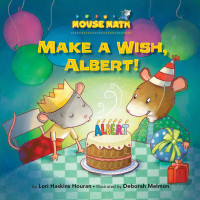
Grade K
4 skill lessons
Math
Skill lessons
The mathematics the book carries, taught directly. Printable workbook pages and teacher keys are not available for this book yet.
- 1Four Names, Four Solids
- 2Round Like What?
- 3The Name That Is Missing
- 4Find the Four in This Room
Math + reading
Math through the reading
The same book, entered through a sentence it prints. Change one word in the reading and the numbers change with it.
No math-through-reading lessons for this book yet.
Reading
Reading and language lessons
The same book read as a text. What a word means in its sentence, how a character is shown, how the writing is put together - no mathematics.
No reading and language lessons for this book yet.
Skill lessons
4 lessons on the mathematics the book carries. Printable workbook pages and teacher keys are not available for this book yet.
1. Four Names, Four Solids
The book hands over four names and nothing else. Cylinder, sphere, cube and cone arrive as single words dropped between sentences of the party story, twelve times in all, and one line reads all four together. No object is ever described, no face or corner is ever counted, and nothing is measured, so the four names are the whole of what a child has to work with. Children set out a ball, a can with its label off, a small box and a party hat, take one card for each name they hear, slide one card to each object until none is left in hand, and then pick an object up and say the name with a reason attached. Knowing these names means picking up an object nobody has named yet and saying which of the four it belongs with, and saying what about the object decided it, rather than reciting four words in order.
Full lesson — 20 minutes
1. Put four objects out (5 min)
Each pair sets four things out of the tray one at a time: a ball, a can with its label off, a small box and a party hat. Say what each one is in your own words as you put it down, a ball, a can. Leave a hand's width between them so a card can lie beside each one.
2. Hear the book's four names (6 min)
Listen to the one line where the book says all four of its names together. Take the card for each name as you hear it and set it in front of you, saying the name back before you pick the card up. When the line ends you should be holding four cards and there should be no name left over.
Word preview: cube, sphere, cone, cylinder
Cube, sphere, cone, cylinder.
3. Slide one card to each object (5 min)
Slide one card across to one object, then the next card to another object, until every object has a card lying against it and your hand is empty. If two cards both want the same object, lay them side by side against it, say out loud what is different about the two names, and choose again.
4. Say the name and say why (4 min)
Pick up one of your four objects, say the name on its card, and then finish this out loud: I know it is a ___ because ___. Hand the object to your partner and let them take the next one. Go round until all four have been picked up and all four names have been said.
Short version — 9 minutes
1. Hear the book's four names (4 min)
Listen to the one line where the book says all four names together and take the card for each name as you hear it. Say the name back before you pick the card up. You should end with four cards and no name left over.
Word preview: cube, sphere, cone, cylinder
Cube, sphere, cone, cylinder.
2. Slide one card to each object (5 min)
Slide one card across to one object, then the next to another, until every object has a card against it and your hand is empty. If two cards want the same object, say what is different about the two names and choose again.
Three levels
- Support
- Work with two objects and two cards to begin with, the ball and the box against sphere and cube, and say each name with the object actually in your hands before the other two cards come out. Bring in the can and cylinder when the first two come back without a pause, and the party hat and cone last. Nothing else about the lesson changes: the sliding, the reason and the handing over all stay.
- At Grade
- All four objects and all four cards on the table at once, sorted in one pass, and the sentence at the end says what decided it. A name said with no reason after it gets handed straight back for the reason, and pointing at the object while saying it counts.
- Extension
- Once the four are placed, put a fifth thing on the table that the book has no name for, a spoon or a shoe or a pencil case, and say which of the four names comes nearest and what stops it being that name exactly. The book names four things and the room is full of things that are none of them, and saying why a near miss is a miss is the harder half of naming.
English learners
All four of these names travel almost unchanged from Spanish, Portuguese, Italian and French, cubo, esfera, cono, cilindro, so a child who has met the solids in a first language already holds the mathematics and needs only the English ending. The words that give no such help are the everyday ones: kickball, party hat and can have no shortcut, and a child can hold the object up instead of naming it and still be understood. Rehearse one frame and keep it all lesson: This is a ___. It is a ___ because ___. Invite the reason in whichever language is strongest and the name in English, so a child does not lose the reason while hunting for the English word for point.
Materials
- A tray for each pair holding a ball, a can with the label off, a small box and a party hat
- Four name cards for each pair: cube, sphere, cone, cylinder
- One extra object for each pair that is none of the four: a spoon, a shoe or a pencil case
- Word cards: cube, sphere, cone, cylinder
Standards & curriculum
These lessons are being matched against curricula now.
Standards are held back while this plan is edited. Every standard shown here was matched against the supplied wording of this lesson, quoting its steps, so a changed step is no longer the thing that was checked. Undo your changes to bring the standards back — your edits stay in this browser either way.
2. Round Like What?
Everywhere else in this book a name simply lands on a page. In one place, and one only, the book describes an object first and names it afterwards: the last package is round, it is like a kickball, it is maybe like a globe, it is definitely not like a scooter, and only then does the word Sphere arrive. That gap is the whole lesson. Children lay out four name cards, hear the description with the name still withheld, put a finger on one card before anybody speaks, say which word in the sentence put it there, add a not of their own about one of the three cards they did not choose, and then hear the book's name and check. A child who lands on sphere and cannot say which word took them there has done only half of it, because in this sentence the word is as much the answer as the name is.
Full lesson — 20 minutes
1. Choose a card from the words alone (5 min)
Lay your four cards face up where you can both see them. Listen to the one sentence that says what the package looks like, before anyone has opened it, then each put a finger on the card you think it is. Fingers down before anybody says a name, so that nobody follows anybody.
Word preview: round, globe
It was round, like a kickball, or maybe a globe.
2. Say which word chose your card (5 min)
Say out loud which word in that sentence put your finger where it is. Then pick one of the three cards you did not choose and finish this: it is not a ___, because ___. The book does the same thing in the very next line, when it says what the package is not.
Word preview: not
Definitely not like a scooter.
3. Hear the book's name and check (5 min)
Listen to the name the book gives the package and look at where your finger is. If the card and the book's name match, say again which word got you there. If they do not, say what you would have had to hear instead to end up where the book did.
Word preview: sphere
Sphere.
4. Describe one and let your partner name it (5 min)
Put one thing from the tray into the paper bag while your partner looks away, then push the tray out of sight, because a partner who can see the gap in the tray does not need your words. Describe it the way the book describes the package, saying what it is like and what it is not like, and use none of the four names. Your partner puts a finger on a card. Take the object out of the bag and both of you look.
Short version — 9 minutes
1. Choose a card from the words alone (5 min)
Lay the four cards face up. Listen to the one sentence that says what the package looks like and put a finger on a card before anybody says a name.
Word preview: round, globe
It was round, like a kickball, or maybe a globe.
2. Hear the book's name and check (4 min)
Listen to the name the book gives the package and look at where your finger is. Say which word in the sentence got you there, or what you would have had to hear to end up where the book did.
Word preview: sphere
Sphere.
Three levels
- Support
- Take the cone and cylinder cards away and choose between sphere and cube only, with a ball in one hand and a box in the other while the sentence is read, so that round has something to be true of. Bring the other two cards back once the ball and the box are being chosen without a glance at the partner. The checking against the book's name stays exactly as it is.
- At Grade
- All four cards down, the finger on one of them before anyone speaks, and the word that decided it said aloud. A child who says round has to answer round like what, and the book has already supplied two answers to borrow.
- Extension
- After the book's name has been heard, keep every word of the sentence except the two things the package is round like, and put two things of your own in their place. Say which card the package lands on now. Then try to find a pair of things that would move it to each of the other three cards in turn, and say which card is hardest to reach and why.
English learners
The mathematics of this lesson runs on one everyday word, round, and in English that word does two jobs: a plate is round and a ball is round and only one of them is a sphere. Say that out loud rather than leaving it to be found. The book supplies the fix itself by naming two real things the package is round like, so a child who cannot yet produce round can point at a ball and be completely understood. Rehearse one frame: it is round, like a ___. Take the describing in whichever language is strongest and the name in English, because the name is the part being watched.
Materials
- Four name cards for each pair: cube, sphere, cone, cylinder
- A tray for each pair holding a ball, a can with the label off, a small box and a party hat
- A paper bag for each pair
- Word cards: round, sphere, globe
Standards & curriculum
These lessons are being matched against curricula now.
Standards are held back while this plan is edited. Every standard shown here was matched against the supplied wording of this lesson, quoting its steps, so a changed step is no longer the thing that was checked. Undo your changes to bring the standards back — your edits stay in this browser either way.
3. The Name That Is Missing
The book says all four of its names together in one line, and later, when Albert's presents are opened, it says only three of them. The three are the same line with one name lifted out. That is the whole apparatus of this lesson and it is entirely on the page. Children lay four cards in a row, touch one card per name as the four-name line is read, then turn a card face down the moment they hear its name in the three-name line, and find one card still facing up. The reason has to be the matching, name to card until the names run out and a card is left over, not a count and not a take-away. Then they keep the leftover card in front of them and listen for the place at the end of the story where that name finally turns up.
Full lesson — 20 minutes
1. Lay the four out in the book's order (5 min)
Put your four cards in a row in the order the book says them, cube, sphere, cone, cylinder, and touch each card once as the line is read out. One touch, one name. When the line ends your finger should be resting on the fourth card and every card should have been touched exactly once.
Cube, sphere, cone, cylinder.
2. Turn over the ones you hear (5 min)
Listen to the presents Albert opens, and then to the names the book puts straight after them. Turn a card face down the moment you hear its name. When the line ends, look at what is still facing up.
Albert opened up a puzzle from cousin Pete, a spinning top from Grandpa Andy, and a drum from Leo.
Cube, cone, cylinder.
3. Say which name is left and how you know (5 min)
Say the name on the card that is still facing up. Then say how you know it is the only one, not by counting the cards but by going along the names one at a time, this name went to this card, this name went to this card, this name went to this card, and this card had nobody. Turn the three back up and run it again if your partner is not convinced.
4. Find where it turns up (5 min)
Keep the leftover card in front of you and listen to the last package being handed over. Put your hand flat on the card the moment you hear the book say that name. It does not come straight away: the sentence about what the package looked like comes first, and the story runs on for another line or two before the name arrives.
It was round, like a kickball, or maybe a globe.
Sphere.
Short version — 9 minutes
1. Turn over the ones you hear (5 min)
Listen to the presents Albert opens and then to the names the book puts straight after them. Turn a card face down the moment you hear its name, and when the line ends look at what is still facing up.
Albert opened up a puzzle from cousin Pete, a spinning top from Grandpa Andy, and a drum from Leo.
Cube, cone, cylinder.
2. Say which name is left and how you know (4 min)
Say the name on the card still facing up, and say how you know, by going along the names one at a time until the names run out and one card has had nobody.
Three levels
- Support
- Start with two cards, sphere and cube, and one name read out instead of the book's three: hear cube, turn cube down, say the name still facing up. Then three cards, sphere and cube and cone, with cube and cone read out. Come to the four-card round with the turning already working, because the whole of the lesson sits in the one card that never gets turned, and a child still working out the turning will miss it.
- At Grade
- Four cards down, the three-name line read once at ordinary speed, and the leftover named without turning the other three back over to check. The reason has to be the matching, this name here and this name here and this name here and this card nobody, rather than a count of what is left.
- Extension
- Take the leftover card off the table before the line is read, so that the three cards left face the book's three names exactly and nothing is standing at the end. Say what that tells you: a line that names every card leaves no card up, and the book's line leaves one up because it is one name short of the set. Then put the fourth card back and say which name would have to be added to the line to leave nothing standing.
English learners
Almost nothing in this lesson has to be said in English: the answer is one of four names and the card itself can be held up instead. The listening is where the load sits, because three names arrive inside one short line and a child tracking a second language can lose the third one. Read the line twice, the second time with a clear pause after each name, and let children put a finger on a card before turning it, so that a slow hand does not read as a wrong answer. Rehearse one frame: ___ is still up. Take the explaining, which name went to which card, in whichever language is strongest.
Materials
- Four name cards for each pair: cube, sphere, cone, cylinder
Standards & curriculum
These lessons are being matched against curricula now.
Standards are held back while this plan is edited. Every standard shown here was matched against the supplied wording of this lesson, quoting its steps, so a changed step is no longer the thing that was checked. Undo your changes to bring the standards back — your edits stay in this browser either way.
4. Find the Four in This Room
The book drops its four names into scenes full of ordinary party things: a cake being checked on in the kitchen, balloons in the living room, a big box Wanda is carrying, a balloon loose on the floor, a drum, a spinning top. It never says in words which thing in a scene the name belongs to, so the first move is to argue about that, and the second is to leave the book and do the same job in the room the children are sitting in. Each pair takes the four cards, walks the classroom, brings back one carryable thing for each card, sets each one down on its card, and then takes one across to another pair and asks them to name it. What makes this work is that nothing counts unless a child can pick it up.
Full lesson — 20 minutes
1. Hear where the names land (4 min)
Listen to three sentences from Albert's house and say what ordinary thing each one puts in the room: a cake, a box, a balloon. The book puts one of its four names beside scenes like these and never says in words which thing the name belongs to, so say which thing in each scene could carry a name and what about it makes you say so.
I'd better check on my cake.
Wanda walked by with a big box.
He didn't see the slippery balloon on the floor.
2. Hunt the room (6 min)
Take your four cards and walk the room with your partner. Bring back one thing for each card, four things in all. Nothing counts unless you can pick it up and carry it, so a table leg stays where it is and a glue stick comes with you.
3. Set them out and say the names (6 min)
Put your four things down on their cards where another pair can see them, and say each name aloud with a hand flat on the object. If one card has nothing on it, say which card and go back out for it. The cone is the hard one in most rooms, and a party hat counts.
4. Send one across the room (4 min)
Carry one of your four things over to another pair, hold it out, and ask them to name it without telling them which card it came from. When they have said a name, tell them which card it was standing on, and both pairs say what part of the object they were looking at.
Short version — 9 minutes
1. Hunt the room (4 min)
Take your four cards and walk the room with your partner. Bring back one thing for each card, four things in all, and nothing counts unless you can carry it.
2. Set them out and say the names (5 min)
Put your four things down on their cards and say each name with a hand on the object. If a card has nothing on it, say which card and go back out for it.
Three levels
- Support
- Hunt for two cards only, sphere and cylinder, and leave cube and cone on the table. A ball and a glue stick are what a classroom actually holds, and filling those two cards quickly is worth more than hunting a cone that is not there. Add cube next and cone last, with a party hat put out on a shelf beforehand so that the cone hunt can end in success rather than in giving up.
- At Grade
- Four cards, four objects carried back, one standing on each card, and the name said with a hand on the object. A pair who cannot fill a card says which card out loud instead of leaving a gap and hoping nobody looks.
- Extension
- Bring back one thing that two of the cards could fight over, a paper cup, a roll of tape, a rolled-up poster, and stand it between the two cards. Say what would have to change about the object for each card to win it outright, and then say which card you would give it to if you had to choose and could not change anything.
English learners
The four names are the only English this lesson needs and the objects supply everything else: a child who cannot yet say glue stick can hold it up and say cylinder, and that is the entire mathematical answer. Teach the one carrying sentence and stop there: here is a ___. Where the English name of an object is missing, let the child give the solid name and point, and have a partner supply the object's name afterwards, which turns a gap into a swap rather than a failure. Take the arguing in whichever language is strongest and the four names in English.
Materials
- Four name cards for each pair: cube, sphere, cone, cylinder
- A party hat set out somewhere in the room before the hunt begins
Standards & curriculum
These lessons are being matched against curricula now.
Standards are held back while this plan is edited. Every standard shown here was matched against the supplied wording of this lesson, quoting its steps, so a changed step is no longer the thing that was checked. Undo your changes to bring the standards back — your edits stay in this browser either way.