Mousier the Merrier!
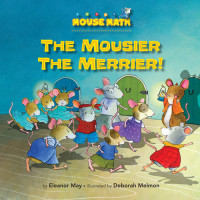
Grade K
3 skill lessons · 4 math-through-reading
Math
Skill lessons
The mathematics the book carries, taught directly. Printable workbook pages and teacher keys are not available for this book yet.
- 1The Train That Never Starts Over
- 2How Many Triplets Came
- 3The Last Word Is How Many
Math + reading
Math through the reading
The same book, entered through a sentence it prints. Change one word in the reading and the numbers change with it.
- 4One Word, Four More Mice
- 5Put the Mice Back in Order
- 6The Group the Book Never Counts
- 7What Would Mom Say?
Reading
Reading and language lessons
The same book read as a text. What a word means in its sentence, how a character is shown, how the writing is put together - no mathematics.
- 8Cheese Tag and Hide and Go Squeak: Games Named the Mouse Way
- 9Crash! Bang! Howl! Words That Are Really Noises
- 10Albert Shrugged Cheerfully: What Inviting Everybody Tells You
- 11Want to Come Over? Asking, Answering and Saying Not Yet
- 12And Then More Came: A Story That Piles Up
Skill lessons
3 lessons on the mathematics the book carries. Printable workbook pages and teacher keys are not available for this book yet.
1. The Train That Never Starts Over
The book gathers mice in named groups and never sends one home, so the number at the door is a running total that only a reader keeps. Students build that total as one cube train: four for the first group, then a push for Charlie, then two, then the triplets, then the band, then Fred. The concept is counting on. A child who breaks the train apart and recounts from one arrives at the right number with the wrong idea, so the rule of this lesson is that the train is never recounted from its beginning once it has been built. The book itself recites from one every time; the train is what stops the class doing the same.
Full lesson — 20 minutes
1. Stand four mice at the door (3 min)
Each pair snaps four cubes into one train and stands it on the doorway mat. Touch each cube and say Albert, Wanda, Lucy, Leo as you go, then say four. That train stays whole for the rest of the lesson and nobody takes it apart.
Word preview: four
Four mice were going to play at our house.
One to said, You, me, Lucy, and Leo.
2. Push Charlie on and count on (4 min)
Snap one more cube onto the end of the train for Charlie without lifting the train off the mat. Do not go back to one. Say five as the cube goes on, then say the number the train has reached. Your partner stops you if your voice restarts at one.
Word preview: five
Now we'll have five.
One, two, three, four, five.
3. Take each arrival card in book order (8 min)
One partner reads an arrival card and the other pushes that many cubes onto the same train, counting on aloud from the number the train already holds. Work the cards in the order the book gives them: Rachel and Ronald, then the triplets, then the band, then Fred. Say the number the train reaches after every card before the next card is read.
Word preview: six, seven
There were going to be five of us, one to say, Rachel makes six, Ronald makes seven.
Albert invited all four of them.
Can we bring our cousin Fred?
4. Lay the train on the strip and read it (5 min)
Lay the finished train along the counting strip with the first cube on one. Run a finger down the train and say the number the last cube sits on. Say one sentence to your partner naming that number and the mice at the door.
Word preview: fifteen
But 15 mice?
Short version — 9 minutes
1. Stand four mice at the door (3 min)
Each pair snaps four cubes into one train on the doorway mat and says four. The train stays whole from here on.
Word preview: four
Four mice were going to play at our house.
2. Take each arrival card in book order (6 min)
One partner reads an arrival card and the other pushes that many cubes onto the same train, counting on aloud from the number the train already holds. Say the number the train reaches after every card.
Word preview: six, seven
There were going to be five of us, one to say, Rachel makes six, Ronald makes seven.
Three levels
- Support
- Stay with the first three cards and stop the train at ten. Put a finger on the last cube before each new group goes on and say that number out loud first, so the count has somewhere to start from. Push the new cubes on one at a time, one number word per cube, never past ten.
- At Grade
- Run all six cards and reach fifteen. Say the number the train holds before each card is read and again after the cubes go on, so both numbers are spoken every time.
- Extension
- Before the band's four cubes go on, say the number the train will reach and then push them on to check. Then name the number the train held just before the triplets joined, without touching a single cube.
English learners
Counting on is a motor habit before it is an English one, so a child can run this whole lesson on the cubes with almost no English. Number words to fifteen are the transferable part and most children arrive with them in some language; invite a child to count the train in their strongest language and then say only the last number in English, which is the number the lesson actually collects. The phrase count on itself does not transfer, and neither do the two names for the same train, so rehearse one frame aloud before the cards start: We had ___, now we have ___. The refrain the book repeats is mistranscribed five different ways in this text and is not a phrase to teach from.
Materials
- Linking cubes, twenty per pair, all one colour
- A doorway mat, one sheet of paper per pair with a door drawn at one end
- Six arrival cards, each showing one group of mice as dots
- A counting strip printed one to fifteen
- Word cards: four, five, six, seven, fifteen
Standards & curriculum
Choose your curriculum above to see the standards for this lesson.
Standards are held back while this plan is edited. Every standard shown here was matched against the supplied wording of this lesson, quoting its steps, so a changed step is no longer the thing that was checked. Undo your changes to bring the standards back — your edits stay in this browser either way.
2. How Many Triplets Came
The book never says how many mice the triplets are. It says only that they were met, and then its count picks up at eight and runs to ten. That gap is the whole lesson: the number is genuinely absent from the page, and the two counts on either side of it fix it at exactly one answer. Students rebuild the seven, hear where the count resumes, and push cubes on until the train reaches ten, then count what they pushed. The lesson insists on two things together, the number and the line that funds it, because a child who says three from the word triplets alone has guessed a fact about triplets rather than read this book.
Full lesson — 20 minutes
1. Stop the count at seven (4 min)
Each pair builds a train of seven cubes on the mat and lays it on the counting strip. Say seven and leave the train where it is. Everyone's train must reach the same number before anyone moves on.
Word preview: seven
One, two, three, four, five, six, seven.
2. Listen to where the count starts again (4 min)
The teacher reads the next count aloud twice. Both partners listen for the first number said and put a finger on that number on the strip. Say that number to your partner and keep your finger there.
Word preview: eight, ten
8 9 10 1 to ground.
3. Fill the gap with cubes and say how many (7 min)
Push cubes onto the seven train one at a time until the train reaches the number your finger is on. Count the cubes you pushed on. That is how many triplets came. Say the number aloud and then say the sentence you heard that told you where to stop.
Word preview: three
They met up with the mousely triplets next.
Where are we going to put 10 mice?
4. Say the number and the line together (5 min)
Tell your partner two things in one turn: how many triplets came, and the words in the book that let you know. Neither one counts on its own. Your partner listens for both and says which one you left out if you leave one out.
Word preview: three
Albert invited them too.
Short version — 9 minutes
1. Stop the count at seven (4 min)
Each pair builds a train of seven cubes and lays it on the counting strip. Say seven and leave the train alone.
Word preview: seven
One, two, three, four, five, six, seven.
2. Fill the gap with cubes and say how many (5 min)
The teacher reads the next count aloud. Push cubes onto the seven train until it reaches the last number you heard, then count the cubes you pushed on and say that number with the line that told you.
Word preview: three, ten
8 9 10 1 to ground.
Three levels
- Support
- Work with the strip only and skip the cube train. Put one finger on seven and one on ten, then say each number word between them out loud, lifting a finger off the table for each one. The number of fingers you lifted is the answer, and the teacher rereads the two counts as often as you want to hear them.
- At Grade
- Build the train, find the number by pushing cubes on, and give the number with the book line that fixed it in the same turn.
- Extension
- Say what the answer would have been if the book's count had picked up at nine instead of eight, and show it on the train. Then say why the word triplets on its own would not have settled it in this book.
English learners
The reasoning here survives almost no English at all, because the evidence is two spoken counts and a strip, and a child who knows number words to ten can run the whole task. Number sequence is the transferable part; the word triplets does not transfer: it carries its three inside it in English and inside nothing in many other languages, so do not let that word do the work. Invite a child to think and count in their strongest language and to report just the number in English, and rehearse one frame before the last step: The book stopped at ___ and started at ___, so ___ came.
Materials
- Linking cubes, twenty per pair, all one colour
- A counting strip printed one to fifteen
- Six arrival cards, each showing one group of mice as dots
- Word cards: seven, eight, ten, three
Standards & curriculum
Choose your curriculum above to see the standards for this lesson.
Standards are held back while this plan is edited. Every standard shown here was matched against the supplied wording of this lesson, quoting its steps, so a changed step is no longer the thing that was checked. Undo your changes to bring the standards back — your edits stay in this browser either way.
3. The Last Word Is How Many
This book recites its count from one on every page and never once answers its own how many question with a single number, so the class hears fifteen number words where a child needs one. Students say the longest count with the book, stop on the last word, and then answer a partner asking how many with that word alone. Then the cubes are scattered and counted again in a different order to show the answer does not move when the objects do. This lesson practises cardinality, and the failure it is built against is the child who answers how many by starting the whole count over.
Full lesson — 20 minutes
1. Recite with the book and stop dead (5 min)
The class says the book's longest count aloud together, one number word at a time, while one partner in each pair touches a cube for each word. Stop on the last word and keep the finger on that cube. Nobody says anything after that word.
Word preview: fifteen
One, two, three, four, five, six, seven, eight, nine, ten, eleven, twelve, thirteen, fourteen, fifteen.
2. Answer the how many question (5 min)
Your partner asks how many mice, and you answer with one number and nothing else. Then swap. The answer is the word you stopped on, not the whole count again, and a partner who hears the whole count again asks the question a second time.
Word preview: fifteen
Where are we going to put 10 mice?
3. Scatter the cubes and ask again (6 min)
Sweep your fifteen cubes into a loose pile so they are no longer in a line. Count them again in any order you like, touching each one once, and say the last number. Tell your partner whether the number changed when the cubes moved.
Word preview: fifteen
She looked at all the mice.
4. Say the closing line with your number (4 min)
One partner reads the book's last line aloud. The other holds up the pile and says how many mice ran outside, using one number. Say it as a whole sentence about the mice, not as a number on its own.
Word preview: fifteen
and 15 mice ran outside to play in the sun.
Short version — 9 minutes
1. Recite with the book and stop dead (4 min)
The class says the book's longest count aloud together while one partner touches a cube for each word. Stop on the last word and keep a finger on that cube.
Word preview: fifteen
One, two, three, four, five, six, seven, eight, nine, ten, eleven, twelve, thirteen, fourteen, fifteen.
2. Answer the how many question (5 min)
Your partner asks how many mice and you answer with one number and nothing else, then swap. Reciting the whole count again is not an answer, and your partner asks again if they hear one.
Word preview: fifteen
Where are we going to put 10 mice?
Three levels
- Support
- Work with ten cubes rather than fifteen and stop the recitation at ten. Touch one cube for each word with a partner watching the touching, then answer the how many question with that one word. Scatter and recount only if the ten held steady the first time.
- At Grade
- Run the full fifteen, answer with one number, and hold that number through the scatter and the recount.
- Extension
- Count the scattered pile starting from a cube in the middle and going any way round, then say why the last number came out the same as it did in the line. Then say what would have to change about the pile for it not to.
English learners
The number words to fifteen are the transferable part and many children bring them already; the thing that does not transfer is the shape of the answer, because a question that expects one word gets a whole recitation in any language when the child is unsure. So the frame to rehearse before the second step is short and worth saying twice: There are ___ mice. Invite a child to count in their strongest language and answer in English with the single number, which is all this lesson collects. The book's own repeated line is garbled five different ways in this transcript and should not be used as a language model.
Materials
- Linking cubes, twenty per pair, all one colour
- A counting strip printed one to fifteen
- Six arrival cards, each showing one group of mice as dots
- A paper cup to hold a group back in, one per pair
- Word cards: fifteen, ten
Standards & curriculum
Choose your curriculum above to see the standards for this lesson.
Standards are held back while this plan is edited. Every standard shown here was matched against the supplied wording of this lesson, quoting its steps, so a changed step is no longer the thing that was checked. Undo your changes to bring the standards back — your edits stay in this browser either way.
Math through the reading
The mathematics is reached through a sentence the book prints: change one word in the reading and the numbers change with it. These carry their own standards, matched against these lessons rather than inherited from the skill ones.
4. One Word, Four More Mice
Children push cubes onto a growing train according to what one word in the sentence says, then swap that word and build the other train beside it.
Full lesson — 20 minutes
1. Build the train the book's word says (6 min)
Pairs build a train of ten cubes, then hear the band sentence read aloud and push on as many cubes as the sentence tells them. Say the number the train reaches and leave it lying on the mat.
2. Swap the word and build the other train (6 min)
The teacher reads the sentence again with one word changed. Pairs build a second train from ten and push on what the new sentence says, laying it directly under the first train from a common left edge. Both trains stay on the mat.
3. Say what the word did (5 min)
Each child tells a partner one sentence: which word changed, what their first train reached, and what their second train reached. The partner points at the two trains while the sentence is said and says so if a number is missing from it.
4. Run the same test on a second word (3 min)
Pairs hear the sentence about Rachel and Ronald and push cubes on for it, then hear it with makes replaced by is and push cubes for that. Say which of the two trains matches the book's next count.
Short version — 9 minutes
1. Build the train the book's word says (6 min)
Pairs build a train of ten cubes, then hear the band sentence read aloud and push on as many cubes as the sentence tells them. Say the number the train reaches and leave it lying on the mat.
2. Swap the word and build the other train (6 min)
The teacher reads the sentence again with one word changed. Pairs build a second train from ten and push on what the new sentence says, laying it directly under the first train from a common left edge. Both trains stay on the mat.
Three levels
- Support
- Work with the band sentence only and keep the trains at five rather than ten to start, so the swap changes four cubes against a total a child can see whole. Push the cubes on one at a time saying one number word per cube, and say only the two end numbers rather than a full sentence about them.
- At grade
- Both sentences are swapped and both pairs of trains are built, and each child says the word and both numbers in one turn without the partner prompting.
- Extension
- Change the word so the swap makes the train shorter rather than longer, then say what the book's own count would have to become for that train to be right. Then find another word in the same sentence that could be changed without any cube moving at all, and say why that one does not count.
English learners
The number words and the cube pushing carry across languages almost entirely, and a child with little English can build both trains correctly from watching. The force of the small words does not transfer: all, too and now are exactly the kind of word a language learner is taught to skip as filler, and in this book they are the whole quantity. So name them as number words, not as grammar, and rehearse one frame before the third segment: The word ___ made ___ mice, not ___ mice. Invite a child to reason and count in their strongest language and to give the two numbers in English, which is what this segment collects. Do not use the book's repeated line as a model of any kind; it is mistranscribed five different ways in this text.
Materials
- Linking cubes, twenty per pair, all one colour
- A doorway mat, one sheet of paper per pair with a door drawn at one end
- A counting strip printed one to fifteen
- The band sentence and its swapped version, written large on chart paper with the changed word underlined
Standards & curriculum
Choose your curriculum above to see the standards for this lesson.
Standards are held back while this plan is edited. Every standard shown here was matched against the supplied wording of this lesson, quoting its steps, so a changed step is no longer the thing that was checked. Undo your changes to bring the standards back — your edits stay in this browser either way.
5. Put the Mice Back in Order
Children receive the six arrival cards shuffled, restore the order by making the running total work, and say the number at every stage.
Full lesson — 20 minutes
1. Start the train at four (3 min)
Each pair snaps four cubes into a train and stands it on the doorway mat, touching each cube and naming Albert, Wanda, Lucy and Leo. The four card goes down first and the rest are shuffled face up beside it.
2. Restore the order card by card (8 min)
Pairs choose which card can run next by asking what the train holds now, push that many cubes on, and say the number the train reaches before choosing again. A card that will not work goes back and another is tried; the train is never taken apart to test one.
3. Say why a card cannot move (6 min)
Each child picks two cards from their finished line and tells a partner why the first must come before the second, saying both numbers in the reason. The partner listens for two numbers and says which one was missing if only one was said.
4. Check against the book (3 min)
The class recites the book's longest count aloud while each pair runs a finger down its own train, one cube per number word. Say whether the train ran out early, ran out late, or landed exactly on the last word.
Short version — 9 minutes
1. Restore the order card by card (8 min)
Pairs choose which card can run next by asking what the train holds now, push that many cubes on, and say the number the train reaches before choosing again. A card that will not work goes back and another is tried; the train is never taken apart to test one.
2. Say why a card cannot move (6 min)
Each child picks two cards from their finished line and tells a partner why the first must come before the second, saying both numbers in the reason. The partner listens for two numbers and says which one was missing if only one was said.
Three levels
- Support
- Work with the first four cards only and stop the train at ten. The four cards are handed over in two pairs rather than shuffled all at once, so only one choice is open at a time, and the reason may be said as two numbers alone rather than as a whole sentence.
- At grade
- All six cards are ordered from a shuffle, the number is said at every stage, and the reason for two placements names both numbers in one turn.
- Extension
- Take the triplets card out of the line, hand it to a partner without saying which it is, and have them work out both which card it is and how many mice are on it from the gap it left. Then say why that card is the only one in the set that could be identified this way.
English learners
Counting on and card ordering are almost entirely language-independent and a child with little English can complete the ordering correctly and be right for the right reason. The place English is genuinely required is the third segment, where the reason has to carry two numbers and a because, and that syntax is where children who understand the mathematics perfectly still stall. Rehearse one frame aloud before that segment and leave it visible: This card goes first because the train had ___ and this card needs ___. Invite a child to work out the order and say the reason in their strongest language first, then give the same reason in English with both numbers in it. The book's repeated line is mistranscribed five separate ways in this text and should not be read aloud as a model.
Materials
- Linking cubes, twenty per pair, all one colour
- Six arrival cards, each showing one group of mice as dots
- A doorway mat, one sheet of paper per pair with a door drawn at one end
- A single set of the six arrival cards enlarged for the class check
Standards & curriculum
Choose your curriculum above to see the standards for this lesson.
Standards are held back while this plan is edited. Every standard shown here was matched against the supplied wording of this lesson, quoting its steps, so a changed step is no longer the thing that was checked. Undo your changes to bring the standards back — your edits stay in this browser either way.
6. The Group the Book Never Counts
Children rebuild the count to seven, hear where it starts again, and work out how many triplets came from the gap between the two counts.
Full lesson — 20 minutes
1. Build the count to seven (4 min)
Each pair snaps a train of seven cubes and lays it on the counting strip starting at one. Say seven and leave the train where it lies.
2. Listen for where the count starts again (4 min)
The teacher reads the next lines aloud twice. Both partners listen for the first number said after the triplets are met and for the last, and each puts a finger on the strip at the number they heard last. Say that number to your partner.
3. Fill the gap and say how many (7 min)
Push cubes onto the seven train one at a time until the train reaches the number under your finger, keeping the pushed cubes a little apart at the end. Count only those cubes and say how many triplets came.
4. Give the number with its evidence (5 min)
Tell your partner the number and the words from the book that let you know it, in one turn. The partner listens for both parts and names the one you left out. Then swap.
Short version — 9 minutes
1. Build the count to seven (4 min)
Each pair snaps a train of seven cubes and lays it on the counting strip starting at one. Say seven and leave the train where it lies.
2. Fill the gap and say how many (7 min)
Push cubes onto the seven train one at a time until the train reaches the number under your finger, keeping the pushed cubes a little apart at the end. Count only those cubes and say how many triplets came.
Three levels
- Support
- Skip the cube train and work on the counting strip alone. Put one finger on seven and one on ten, then say each number word in between out loud, raising a finger from the table for each. The raised fingers are the answer, and the teacher rereads the two counts as many times as you ask.
- At grade
- The train is built, the gap is filled by counting on, and the number is given with the evidence in the same turn without prompting.
- Extension
- Say what the answer would have been if the book's count had picked up at nine instead of eight, and show that on the train. Then say why the word triplets on its own would not have settled this, given what this particular book does and does not say.
English learners
This task was built so that a child with very little English can be right for the right reason: the evidence is two spoken counts and the answer is a number, and number words to ten are the most transferable thing in any early mathematics lesson. The trap for language learners here is the opposite of the usual one, because the English word triplets carries its own answer inside it and a child who knows the word can produce three without doing any of the mathematics. So the lesson never accepts the word as a reason. Rehearse this frame before the fourth segment: The book stopped at ___ and started again at ___, so ___ came. Invite a child to count in their strongest language and to give the number and the two counts in English, which is all this segment collects.
Materials
- Linking cubes, twenty per pair, all one colour
- A counting strip printed one to fifteen
- The counting strip enlarged for the class, with seven and ten marked
Standards & curriculum
Choose your curriculum above to see the standards for this lesson.
Standards are held back while this plan is edited. Every standard shown here was matched against the supplied wording of this lesson, quoting its steps, so a changed step is no longer the thing that was checked. Undo your changes to bring the standards back — your edits stay in this browser either way.
7. What Would Mom Say?
Children take Wanda's side or Albert's, and say it to a partner playing Mom with a number in the sentence.
Full lesson — 20 minutes
1. Build the four and the fifteen (5 min)
Each pair builds one train of four for the mice who were going to play at the start and one train of fifteen for the mice at the door at the end, and lays them one under the other from a common left edge. Say both numbers aloud.
2. Pick your side (4 min)
Each child puts a hand on the train that matters most to their answer and says out loud whether they are with Wanda or with Albert. Nobody has to have the same side as their partner and nobody explains yet.
3. Say it to Mom (8 min)
One partner holds the door card and plays Mom. The other says their position to her with a number from their trains inside the sentence. Mom's only job is to report back whether she heard a number. Then swap, and swap sides if you want to.
4. Hear the other side (3 min)
Each pair finds another pair who chose differently and listens to one sentence from them. Say back the number the other child used, and say whether it changed your mind.
Short version — 9 minutes
1. Build the four and the fifteen (5 min)
Each pair builds one train of four for the mice who were going to play at the start and one train of fifteen for the mice at the door at the end, and lays them one under the other from a common left edge. Say both numbers aloud.
2. Say it to Mom (8 min)
One partner holds the door card and plays Mom. The other says their position to her with a number from their trains inside the sentence. Mom's only job is to report back whether she heard a number. Then swap, and swap sides if you want to.
Three levels
- Support
- Keep both trains in front of you the whole time and answer with the frame the teacher says first, filling in one number from a train you are touching. You may point at the train instead of saying the number's name if the word will not come, and then say the number after your partner says it once.
- At grade
- Both trains are built, a side is chosen, and the position is spoken to Mom with a number in it and without the frame being supplied.
- Extension
- Argue the side you did not choose, to the same partner, with a different number in it than the one you used before. Then say which of your two sentences you actually believe and what number would have to change in the book for you to switch.
English learners
Taking a position is a heavy language demand and it is exactly where a child whose mathematics is fine will say nothing at all, so the frame carries real weight here and should be visible and rehearsed twice before the third segment: I think ___ was right because there were ___ mice at the start and ___ at the end. The numbers are the transferable part and the child already has them on the mat; the because clause does not transfer, and in several languages the reason comes before the claim rather than after it, so a child who says it in that order has said something correct and should be heard as correct. Invite children to decide and rehearse in their strongest language and to say the sentence to Mom in English. Never ask a child to say anything about their own home or family here; the question is about the mice.
Materials
- Linking cubes, twenty per pair, all one colour
- A door card, one per pair, for the partner playing Mom
- A doorway mat, one sheet of paper per pair with a door drawn at one end
- The frame sentence written large on chart paper with the two number blanks left empty
Standards & curriculum
Choose your curriculum above to see the standards for this lesson.
Standards are held back while this plan is edited. Every standard shown here was matched against the supplied wording of this lesson, quoting its steps, so a changed step is no longer the thing that was checked. Undo your changes to bring the standards back — your edits stay in this browser either way.
Reading and language lessons
5 lessons on the reading and language the book carries - what a word means in its sentence, how a character is shown, how a text is built. No mathematics: these are matched against the English language arts curricula, which are a different and smaller set than the mathematics ones.
8. Cheese Tag and Hide and Go Squeak: Games Named the Mouse Way
This book is about mice, so its games have mouse words swapped into names children already know. Students hear the two game names, say the real names they were built from, name the one word that got changed in each, and then build a game name of their own the same way. The skill is word play and word building; nothing here is counted.
Full lesson — 20 minutes
1. Hear the two game names (6 min)
The teacher reads the passage below. Two of the sentences name a game. Say each game name aloud. Then say the name of a game you already know that each one sounds like.
Word preview: game, squeak
It was a rainy day. Albert was bored. No outside games today. No cheese tag. No hide and go squeak.
2. Find the word that got swapped (5 min)
Read the passage below with a partner. For each game name, say the one word that a mouse word took the place of. Put a counter on the mouse word. Say what a squeak has to do with mice.
Word preview: swap, cheese
It was a rainy day. Albert was bored. No outside games today. No cheese tag. No hide and go squeak.
3. Say why a mouse would name it that (5 min)
Read the passage below, where the mice's whole world is inside the walls of a people house. Say why a mouse would name a game with cheese and squeak instead of the words you use. Give one reason from the passage.
Word preview: walls, reason
His friends were all holed up in their own homes in the walls of the people house. I wish I had someone to play with.
4. Build a game name yourself (4 min)
Read the passage below one more time. Then make up a game name the same way, by putting a mouse word into a game you play. Say your name aloud and say which word you swapped.
Word preview: make up, your name
It was a rainy day. Albert was bored. No outside games today. No cheese tag. No hide and go squeak.
Short version — 9 minutes
1. Hear the two game names (5 min)
The teacher reads the passage below. Say each of the two game names aloud, then say a game you already know that each one sounds like.
Word preview: game, squeak
It was a rainy day. Albert was bored. No outside games today. No cheese tag. No hide and go squeak.
2. Find the word that got swapped (4 min)
Read the passage below again. For each game name, say the one word that a mouse word took the place of, and put a counter on the mouse word.
Word preview: swap, cheese, walls, reason, make up, your name
It was a rainy day. Albert was bored. No outside games today. No cheese tag. No hide and go squeak.
Three levels
- Support
- Say the real game name first and let the child hear the mouse version against it, one pair at a time. One game name is enough. Accept the child pointing at the mouse word rather than naming the swap.
- At Grade
- Say both game names, name the real games behind them, and mark the swapped mouse word in each.
- Extension
- One of the two game names changed a word in the middle and the other changed one at the front. Say which is which, and say which change is easier to hear.
English learners
A pun only lands if the original is already known, so name the real games first and check the child has played something like them; a child who has not will hear two ordinary names. Invite them to name a chasing or hiding game from their own home language and build the mouse version of that one instead. Rehearsable frame: They call it ___ because they are ___.
Materials
- Mousier the Merrier!, the passage printed in this step
- Word building cards
- One counter per child to mark words
- Word cards: game, squeak, swap, cheese, walls, reason, make up, your name
Standards & curriculum
Choose your curriculum above to see the standards for this lesson.
Standards are held back while this plan is edited. Every standard shown here was matched against the supplied wording of this lesson, quoting its steps, so a changed step is no longer the thing that was checked. Undo your changes to bring the standards back — your edits stay in this browser either way.
9. Crash! Bang! Howl! Words That Are Really Noises
The band arrives as three words that are not sentences at all, and a cat noise earlier in the book fools a mouse. Students read the sound words aloud, notice they have no who and no what doing, hear how a sound word can be used to trick somebody, and then supply a sound word for something in the room. The skill is recognising and using words that stand for a sound.
Full lesson — 20 minutes
1. Say the three sound words (5 min)
The teacher reads the three words below, then you read them together, loudly. Make each sound with your hands or your voice. Say which of the three is the loudest word to say.
Word preview: crash, bang
Crash! Bang! Howl!
2. Say what a sound word is missing (5 min)
Read the three words below again with a partner, then read the sentences in the second passage. Say what the sentences have that the three words do not. Then say the three words again as a whole sentence, adding who made the noise.
Word preview: sentence, who
Crash! Bang! Howl!
Mom opened the door. She looked at all the mice. She looked at Albert. You know what I always say.
3. Hear a sound word used as a trick (5 min)
Read the passage below with a partner. A sound word here is not a noise the world made, it is a noise somebody chose to make. Say who made it and why. Then say what a mouse would think on hearing it.
Word preview: meow, trick
Then suddenly they heard, meow! It was their friend Charlie.
4. Supply a sound word of your own (5 min)
Read the passage below once more. Then say a sound word for something in this room: a door, a chair, a bag. Say it the way the book says its sound words, and say what made the noise.
Word preview: noise, your word
Crash! Bang! Howl!
Short version — 9 minutes
1. Say the three sound words (4 min)
The teacher reads the three words below, then read them together loudly, making each sound with your hands or your voice.
Word preview: crash, bang
Crash! Bang! Howl!
2. Hear a sound word used as a trick (5 min)
Read the passage below. Say who made the noise and why, then say what a mouse would think on hearing it.
Word preview: sentence, who, meow, trick, noise, your word
Then suddenly they heard, meow! It was their friend Charlie.
Three levels
- Support
- Read one sound word at a time and make the noise together before asking anything. Saying the three words with the right loudness is the whole task at this level; leave the missing-parts question out.
- At Grade
- Read the three sound words aloud with expression, then say who made the trick noise in the second passage and why.
- Extension
- The trick noise in the printed passage is a cat sound made by somebody who is not a cat. Say how the book lets you know that within one sentence, and what would have been lost if it had told you first.
English learners
Sound words differ sharply between languages, so a child may firmly know a different noise for a cat and be right. Say the English one, invite theirs, and put them side by side rather than correcting. The three band words carry no grammar at all, which makes them a safe first thing to read aloud with full volume. Rehearsable frame: The ___ went ___.
Materials
- Mousier the Merrier!, the passage printed in this step
- Sound word cards
- Word cards: crash, bang, sentence, who, meow, trick, noise, your word
Standards & curriculum
Choose your curriculum above to see the standards for this lesson.
Standards are held back while this plan is edited. Every standard shown here was matched against the supplied wording of this lesson, quoting its steps, so a changed step is no longer the thing that was checked. Undo your changes to bring the standards back — your edits stay in this browser either way.
10. Albert Shrugged Cheerfully: What Inviting Everybody Tells You
Albert is never described. He is shown, over and over, saying yes to one more mouse while his sister worries. Students read what Albert does, read what he says when asked where to put everyone, name what he is like in one word, and then find the sentence where he finally notices. The skill is drawing a character trait from actions and naming the evidence.
Full lesson — 20 minutes
1. Read what Albert keeps doing (6 min)
The teacher reads the two passages below. In both, Albert does the same kind of thing. Say aloud what he does each time. Then say whether he stops to think about it first.
Word preview: invite, again
A delicious smell drifted through an open door. Ronald and Rachel were making cheese soup for lunch. Want to come over and play? Albert asked.
They met up with the mousely triplets next. Albert invited them too.
2. Name what he is like in one word (5 min)
Read the passage below with a partner. It shows how Albert answers a worried question. Pick one word from your cards that says what Albert is like. Say your word, then say the part of the passage that made you pick it.
Word preview: cheerful, carefree
Albert shrugged cheerfully. He ran on ahead.
3. Find where he finally notices (5 min)
Read the passage below. Something changes in Albert here. Say which sentence is the one where he notices, and say what he notices. Then say whether your one word still fits him.
Word preview: gulped, notice
Albert looked around and gulped. All he had wanted was a friend or two to make a rainy day more fun. But 15 mice? What in the world would mom say?
4. Say it as a sentence with proof (4 min)
Read the passage below one more time. Then say a full sentence to a partner: Albert is ___ because he ___. Your partner says whether your because part came from the passage.
Word preview: because, proof
Albert shrugged cheerfully. He ran on ahead.
Short version — 9 minutes
1. Read what Albert keeps doing (5 min)
The teacher reads the two passages below. Say what Albert does in each, then say whether he stops to think about it first.
Word preview: invite, again
A delicious smell drifted through an open door. Ronald and Rachel were making cheese soup for lunch. Want to come over and play? Albert asked.
They met up with the mousely triplets next. Albert invited them too.
2. Name what he is like in one word (4 min)
Read the passage below. Pick one word from your cards that says what Albert is like, and say the part of the passage that made you pick it.
Word preview: cheerful, carefree, gulped, notice, because, proof
Albert shrugged cheerfully. He ran on ahead.
Three levels
- Support
- Read one passage and ask only: did Albert say yes or no? Then offer two character cards and let the child choose between them rather than from the whole set. Pointing at the sentence is a complete answer.
- At Grade
- Say what Albert does in both passages, then choose one character word and name the part of the passage behind it.
- Extension
- Albert stays the same across the printed passages and then changes. Say what a reader learns about him from the change that they could not learn from the yeses alone.
English learners
Character words are abstract and hard to reach for, so keep the cards face up and let the child point before speaking. Because is the load-bearing word here; rehearse the frame before the reading. A child may name the trait accurately in their strongest language and then need only the English label handed to them. Rehearsable frame: Albert is ___ because he ___.
Materials
- Mousier the Merrier!, the passage printed in this step
- Character word cards
- pointing finger
- Word cards: invite, again, cheerful, carefree, gulped, notice, because, proof
Standards & curriculum
Choose your curriculum above to see the standards for this lesson.
Standards are held back while this plan is edited. Every standard shown here was matched against the supplied wording of this lesson, quoting its steps, so a changed step is no longer the thing that was checked. Undo your changes to bring the standards back — your edits stay in this browser either way.
11. Want to Come Over? Asking, Answering and Saying Not Yet
Almost every line in this book is somebody asking for something, and the answers come in three different shapes: a plain yes, a yes with a rule attached, and a yes that has to wait. Students read each shape, sort them, and then practise inviting and answering. The skill is speaking and listening for the words that carry a condition.
Full lesson — 20 minutes
1. Hear an invitation and the answer (5 min)
The teacher reads the passage below. Say the words Albert uses to invite somebody. Then say the words the answer uses. Practise the invitation with a partner, taking turns.
Word preview: invite, want to
A delicious smell drifted through an open door. Ronald and Rachel were making cheese soup for lunch. Want to come over and play? Albert asked.
2. Find the yes that has a rule on it (5 min)
Read the passage below with a partner. Albert says yes, but he adds something you must not do. Say the yes part, then say the rule part. Say why he adds it.
Word preview: but, rule
Sure, Albert said, but no more meowing. You might scare my mom. Charlie went to ask his parents if he could go play.
3. Find the yes that has to wait (5 min)
Read the sentence below. This is a yes that cannot happen yet. Say the word at the front that tells you when it can happen. Then say the whole thing in your own words, starting with the word first.
Word preview: after, first
After we washed the dishes, Ronald reminded her.
4. Ask, and answer three ways (5 min)
Read the passage below once more. Then invite a partner to something. Your partner answers three times: a plain yes, a yes with a rule, and a yes that has to wait. Say which answer was hardest to say.
Word preview: answer, yes
Sure, Albert said, but no more meowing. You might scare my mom. Charlie went to ask his parents if he could go play.
Short version — 9 minutes
1. Hear an invitation and the answer (5 min)
The teacher reads the passage below. Say the words Albert uses to invite somebody, then practise the invitation with a partner, taking turns.
Word preview: invite, want to
A delicious smell drifted through an open door. Ronald and Rachel were making cheese soup for lunch. Want to come over and play? Albert asked.
2. Find the yes that has a rule on it (4 min)
Read the passage below. Say the yes part, then say the rule part Albert adds, and say why he adds it.
Word preview: but, rule, after, first, answer, yes
Sure, Albert said, but no more meowing. You might scare my mom. Charlie went to ask his parents if he could go play.
Three levels
- Support
- Practise the invitation as a two-line exchange with the teacher taking one side, and repeat it until it is easy. The plain yes is enough; leave the rule and the waiting answers for another day.
- At Grade
- Say the invitation words and practise them, then name the yes part and the rule part in the second passage.
- Extension
- The second printed passage attaches a rule to a yes and gives the reason in the very next sentence. Say the yes, the rule and the reason as three separate parts, then say which part a listener could not do without.
English learners
Conditional yeses are a politeness pattern rather than a grammar point, and a child may hear a yes with a rule attached as a refusal. Say each answer twice, warmly, and name aloud which of the three shapes it is. Invite the child to say how a grown-up at home says yes-but and yes-later, in their strongest language. Rehearsable frames: Want to ___ ? Sure, but ___.
Materials
- Mousier the Merrier!, the passage printed in this step
- Asking and telling cards
- Word cards: invite, want to, but, rule, after, first, answer, yes
Standards & curriculum
Choose your curriculum above to see the standards for this lesson.
Standards are held back while this plan is edited. Every standard shown here was matched against the supplied wording of this lesson, quoting its steps, so a changed step is no longer the thing that was checked. Undo your changes to bring the standards back — your edits stay in this browser either way.
12. And Then More Came: A Story That Piles Up
This story is built by repetition with a difference: the same thing happens again and again, and each time the crowd is bigger, until the last one lands as a surprise. Students read three moments from the pile-up, place them in order by how big the crowd has grown, hear the sentence where the pile-up finally lands, and then say what makes a pile-up funny. The work is story shape and retelling.
Full lesson — 20 minutes
1. Read three moments from the pile-up (6 min)
The teacher reads the three passages below, one after another. Each one adds more mice than the one before. Say aloud, after each, whether the crowd got bigger or smaller.
Word preview: more, bigger
They met up with the mousely triplets next. Albert invited them too.
Finally, they reached Leo and Lucy's house. Can we bring our cousin Fred? Leo asked.
On the way home, the four band members joined them, then the mousely triplets, Rachel and Ronald and Charlie. Wow, Charlie said that's a lot of mice.
2. Put the moments in order (5 min)
Read the three passages below with a partner and lay your strips out so the smallest crowd is first and the biggest is last. Say aloud what tells you which one is last.
Word preview: order, last
They met up with the mousely triplets next. Albert invited them too.
Finally, they reached Leo and Lucy's house. Can we bring our cousin Fred? Leo asked.
On the way home, the four band members joined them, then the mousely triplets, Rachel and Ronald and Charlie. Wow, Charlie said that's a lot of mice.
3. Find where the pile-up lands (5 min)
Read the passage below. Here the story stops piling and somebody finally looks at what has happened. Say the word that shows Albert's face changing. Then say what he wanted at the start, in his own words from the passage.
Word preview: gulped, wanted
Albert looked around and gulped. All he had wanted was a friend or two to make a rainy day more fun. But 15 mice? What in the world would mom say?
4. Say why a pile-up is funny (4 min)
Read the passage below one more time. Say to a partner why a story that keeps getting bigger makes people laugh at the end. Then say what would have happened to the story if Albert had said no the very first time.
Word preview: funny, what if
On the way home, the four band members joined them, then the mousely triplets, Rachel and Ronald and Charlie. Wow, Charlie said that's a lot of mice.
Short version — 9 minutes
1. Read three moments from the pile-up (5 min)
The teacher reads the three passages below one after another. Say, after each, whether the crowd got bigger or smaller.
Word preview: more, bigger
They met up with the mousely triplets next. Albert invited them too.
Finally, they reached Leo and Lucy's house. Can we bring our cousin Fred? Leo asked.
On the way home, the four band members joined them, then the mousely triplets, Rachel and Ronald and Charlie. Wow, Charlie said that's a lot of mice.
2. Find where the pile-up lands (4 min)
Read the passage below, where the story stops piling and Albert looks at what has happened. Say the word that shows his face changing.
Word preview: order, last, gulped, wanted, funny, what if
Albert looked around and gulped. All he had wanted was a friend or two to make a rainy day more fun. But 15 mice? What in the world would mom say?
Three levels
- Support
- Read two of the three passages rather than all three, and ask only bigger or smaller after each. Let the child answer with hands opening wide. Ordering can wait.
- At Grade
- Say bigger or smaller after each of the three passages, then find the word in the last passage that shows Albert's face changing.
- Extension
- The pile-up passages are all built the same way and the landing passage is not. Say what the landing passage does that the others do not, using words from it.
English learners
A pile-up story is easy to follow even with little English, because the shape carries the meaning and the shape is visible in the strips. Lay the strips out physically and let the child order them before any talking. Invite them to name a story from home that grows the same way. Rehearsable frame: Then more ___ came, so now there are ___.
Materials
- Mousier the Merrier!, the passage printed in this step
- Story order strips
- pointing finger
- Word cards: more, bigger, order, last, gulped, wanted, funny, what if
Standards & curriculum
Choose your curriculum above to see the standards for this lesson.
Standards are held back while this plan is edited. Every standard shown here was matched against the supplied wording of this lesson, quoting its steps, so a changed step is no longer the thing that was checked. Undo your changes to bring the standards back — your edits stay in this browser either way.