Mouse Math, a Mousey Mess
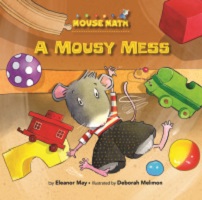
Grade K
4 skill lessons · 2 math-through-reading
Math
Skill lessons
The mathematics the book carries, taught directly. Printable workbook pages and teacher keys are not available for this book yet.
- 1Four Bins and No Others
- 2One Rule, One Pile
- 3Sort It Again a Different Way
- 4The Blue Ball Problem
Math + reading
Math through the reading
The same book, entered through a sentence it prints. Change one word in the reading and the numbers change with it.
- 5All of Them, or Only Some
- 6Three Piles Want the Same Ball
Reading
Reading and language lessons
The same book read as a text. What a word means in its sentence, how a character is shown, how the writing is put together - no mathematics.
- 7Why the mice have to put it all back
- 8Zipped, darted, dove
- 9The moment Albert stops and wonders
- 10The way Wanda tells them they got it wrong
- 11One bin falls and everything follows
Skill lessons
4 lessons on the mathematics the book carries. Printable workbook pages and teacher keys are not available for this book yet.
1. Four Bins and No Others
Wanda ends the argument by producing a number: four piles, and she names all four. This is the only place in the book where a count governs the work, and it changes the task completely, because now the categories are fixed in advance instead of chosen by the sorter. Children take a mixed set and place every object into one of exactly four labelled bins, with no fifth bin allowed and no object left out. Application means the rule is handed to them and the work is carrying it out without exception, including for the objects that would have made a lovely pile of their own.
Full lesson — 20 minutes
1. Read the four labels (4 min)
Sit around the four bins and touch each label in turn, saying what belongs in it. Count the bins aloud together, one two three four, touching each one. Then say back how many bins there are and name all four, without looking, before any object is picked up.
Word preview: four, bin, label
But we only need four piles, one from our bowls, one for blocks, one for balls, and one for trains.
Wanda pointed to the picture label on each bin.
2. Put every object away (7 min)
Take one object at a time from the shared heap, hold it up, name which of the four bins it goes in, and put it there. Every object must go in a bin; nothing may stay on the carpet and no new bin may be started. Keep going until the heap is empty.
Word preview: every, all
All the blocks went in the block bin.
And all the bouncy balls went in the bouncy ball bin.
3. Test the hard ones (5 min)
The teacher hands the group four objects held back from the heap, each one a colour or a size that matches a different bin than its kind does. For each, say aloud which bin it goes in and finish the sentence it goes in the ___ bin because it is a ___. Place it only after the sentence is said.
Word preview: kind
But we need to sort everything by the kind of toy it is.
One just said, these are both marbles, so they go in the marble jar.
4. Check the bins (4 min)
Each child picks one bin and lifts out its objects one at a time, saying the bin's name each time. If an object does not match the label, put it on the carpet and say which bin it should be in. Then put everything back and tell the group whether your bin is right.
Word preview: right
you start sorting these things so we can put them back in the right bins.
Short version — 9 minutes
1. Read the four labels (3 min)
Touch each of the four bin labels in turn and say what belongs in it, then count the bins aloud together and name all four without looking.
Word preview: four, bin, label
But we only need four piles, one from our bowls, one for blocks, one for balls, and one for trains.
2. Put every object away (6 min)
Take one object at a time from the heap, name which of the four bins it goes in, and put it there. Every object goes in a bin and no new bin may be started.
Word preview: every, all
All the blocks went in the block bin.
Three levels
- Support
- Work with two bins instead of four, marbles and blocks, and a heap containing only those two kinds. The rule is still kind and still handed to the child, and every object still has to be placed and named; only the number of labels a child holds in mind at once comes down.
- At Grade
- Place every object from the full heap into one of the four labelled bins, naming the bin as each object goes in, then place the four held-back objects whose colour or size pulls against their kind, saying the because sentence for each.
- Extension
- Take a bin that has been sorted correctly by kind and say what a second label on that same bin could be, one that is true of every object in it. Then find an object in another bin that the second label would also be true of, and say why it still does not belong.
English learners
Kind and bin are the load-bearing words and neither is guessable from context, so both are worth showing on the label as a picture beside the word. The number four transfers with no work at all and gives every child something correct to say from the first minute. The because sentence does not transfer: because-clauses sit before the main clause in many languages and children reverse the halves. Rehearse it goes in the ___ bin because it is a ___ as a whole frame rather than as grammar, and accept the two content words alone from a child who is still building the sentence. Reasoning in a stronger language and reporting the bin name in English is a complete answer here.
Materials
- Four labelled bins or hoops, each with a picture label: marbles, blocks, balls, trains
- Shared heap of 20 to 24 objects in exactly four kinds: marbles, small blocks, small balls, toy train cars, in mixed colors and two sizes
- Four held-back objects chosen so colour or size pulls against kind: a blue ball, a round blue block, a large marble, a small train car
- Word cards: four, bin, label, every, all, kind, right
Standards & curriculum
Choose your curriculum above to see the standards for this lesson.
Standards are held back while this plan is edited. Every standard shown here was matched against the supplied wording of this lesson, quoting its steps, so a changed step is no longer the thing that was checked. Undo your changes to bring the standards back — your edits stay in this browser either way.
2. One Rule, One Pile
Albert is told to make piles of things that are alike and is given no rule for which likeness counts, so he picks one: a blue marble and a blue block are the same color, and that becomes the blue pile. Each child does what Albert does. They take a mixed handful of objects, say aloud the one likeness they are going to use, and build a pile that obeys it, testing every object against the rule they said. The pile itself is the record: a child who can point at any object in the pile and say the rule again has represented a category, and a child who cannot has only made a heap.
Full lesson — 20 minutes
1. Spread the mess (4 min)
Each pair of children tips a tray of mixed objects onto the carpet the way the bin toppled in the story, and pushes them apart so nothing is stacked. Take turns picking up two objects and saying one way they are alike and one way they are different. Do not make any piles yet.
Word preview: similar, alike
Together, the three mice stared at the mess.
Just make piles of toys that are similar, or the same in some way.
2. Say your rule out loud (4 min)
Each child chooses one likeness and says it aloud to their partner before touching anything, in the form my rule is ___. Albert said his rule as a color, blue, and Leo said his as a shape, round and rolly. Your partner repeats your rule back to you so you both know what the pile is going to mean.
Word preview: rule, same, color, shape
These are the same color, blue.
These have a round, rolly shape.
3. Build the pile (7 min)
Pick up each object one at a time, hold it, and say yes or no against the rule you announced. Yes objects go on your mat and no objects go back on the carpet. Do not move an object twice and do not change your rule partway through, even when a tempting object turns up.
I'll make a blue pile.
He added a blue train car.
4. Guess your partner's rule (5 min)
Swap mats without speaking. Look at your partner's pile and say what you think their rule was. Then your partner says whether you got it, and hands you one object from the carpet for you to place on their mat by their rule, so the guess is tested rather than only stated.
Word preview: pile
Hmm, said Albert, which toys are similar?
Short version — 9 minutes
1. Say your rule out loud (4 min)
Each child chooses one likeness from the tray and says it aloud to their partner before touching anything, in the form my rule is ___. The partner repeats it back.
Word preview: rule, same, color, shape
These are the same color, blue.
2. Build the pile (5 min)
Pick up each object one at a time and say yes or no against the rule you announced. Yes objects go on your mat, no objects go back. Do not change your rule partway through.
I'll make a blue pile.
Three levels
- Support
- Hand the child a tray in which only color varies, so every object is the same size and the same shape and the only rule available is the one Albert used first. The child still says the rule aloud and still tests every object one at a time; nothing about the language is reduced, only the number of likenesses competing for attention.
- At Grade
- Work from the full mixed tray, where color, size and shape all vary. Announce one rule, build the pile that obeys it, then guess a partner's rule from their pile alone and place one more object into it correctly.
- Extension
- Build a pile and hand your partner an object that does NOT belong in it, and have them say which part of your rule it breaks. Naming the part that fails is harder than naming a match, because it requires holding the whole rule while looking at one object.
English learners
Color words and shape words are the content here and they are concrete, so a child can hold the object up while saying the word and be understood without a sentence. The sentence that carries the rule does not transfer: my rule is ___ puts the criterion in a slot that many languages fill differently, and same as and alike take prepositions that vary. Rehearse my rule is ___ and this one is ___ so both are available, and let a child announce the rule in their strongest language first and then say only the attribute word in English. A child who points at two objects and says the attribute word has met the demand of this step.
Materials
- Tray of 12 to 16 mixed sorting objects per pair: counting bears, plastic links, buttons and lids in two sizes and three colors
- Sorting mat, one per child, with a blank rule card taped at the top
- Word cards: similar, alike, rule, same, color, shape, pile
Standards & curriculum
Choose your curriculum above to see the standards for this lesson.
Standards are held back while this plan is edited. Every standard shown here was matched against the supplied wording of this lesson, quoting its steps, so a changed step is no longer the thing that was checked. Undo your changes to bring the standards back — your edits stay in this browser either way.
3. Sort It Again a Different Way
This is the claim the book makes in its own words when Wanda tells Albert and Leo they were not wrong, only sorting by something else. Children take one set of objects, sort it by one rule, record where the objects landed, sweep the piles back together and sort the same objects again by a different rule. The concept is that the piles come from the rule and not from the objects: the same handful makes different piles depending on what a sorter decides to look at, and the only way to know what a pile means is to know the rule that built it.
Full lesson — 20 minutes
1. Sort by color (5 min)
Each pair sorts their whole tray by color and pushes each color into its own corner of the mat. Say the color of each pile aloud as you finish it. Leave the piles where they are and do not tidy them.
Word preview: color
These are the same color, blue.
2. Take a picture with your hands (4 min)
Before anything moves, each child chooses one object and holds it up, then says which pile it is in right now and why. Go around the pair four times so four objects have been placed in words. This is the record you will check against later, so say it clearly enough for your partner to remember.
Wanda pointed to the picture label on each bin.
3. Sweep and sort by size (6 min)
Sweep every pile back into one heap in the middle of the mat, so nothing carries over. Now sort the same objects again, this time by size, into a big pile and a small pile. Use no other rule, even for objects that seem to want their old pile back.
Word preview: size, big, small
Small things, big things, red things.
You sorted some things by color, some by shape, and some by size.
4. Find the ones that moved (5 min)
Pick up the four objects you named earlier and say, for each one, the pile it was in before and the pile it is in now. Then tell your partner one object whose pile-mates are completely different this time, and say what changed. The objects did not change; say what did.
Word preview: different
You can sort in lots of different ways, said Wanda, and you did.
Short version — 9 minutes
1. Sort by color (4 min)
Each pair sorts their whole tray by color into corners of the mat, saying each color aloud as the pile is finished.
Word preview: color
These are the same color, blue.
2. Sweep and sort by size (5 min)
Sweep every pile back into one heap so nothing carries over, then sort the same objects again by size into a big pile and a small pile.
Word preview: size, big, small
Small things, big things, red things.
Three levels
- Support
- Cut the tray to six objects, chosen so that each one changes pile between the color sort and the size sort. With six objects a child can hold the before and after of the whole set in view at once, and the point that the piles moved while the objects did not arrives without any object having to be remembered.
- At Grade
- Sort the full tray by color, name four objects and their piles aloud, sweep, sort the same tray by size, and then say for each of those four objects which pile it was in before and which it is in now.
- Extension
- Choose the second rule yourself instead of being given size, and choose it so that at least one object keeps the same pile-mates it had under color. Then say why that object did not move while the others did.
English learners
The mathematics here is visible on the mat and needs no English at all to perform, which makes this a good lesson to do before a child has much of it. The language that does not transfer is the before-and-after frame: it was in ___ and now it is in ___ needs two tenses in one sentence, and many languages mark that change with a particle rather than a verb form. Rehearse before ___, now ___ as a two-word frame the child can fill with color and size words alone. Invite children to say the whole comparison in their strongest language to a partner who shares it, then report only the two pile names in English.
Materials
- Tray of 12 to 16 mixed sorting objects per pair: counting bears, plastic links, buttons and lids in two sizes and three colors
- Sorting mat, one per child, with a blank rule card taped at the top
- Word cards: color, size, big, small, different
Standards & curriculum
Choose your curriculum above to see the standards for this lesson.
Standards are held back while this plan is edited. Every standard shown here was matched against the supplied wording of this lesson, quoting its steps, so a changed step is no longer the thing that was checked. Undo your changes to bring the standards back — your edits stay in this browser either way.
4. The Blue Ball Problem
Albert stops in the middle of the floor holding a blue ball, because it is blue and it is round and it is big, and he has already built a pile for each of those. The book prints his three candidate piles as three questions and never answers them; Wanda changes the rule instead. Children meet the same object and the same three open piles, and each child places it and says which likeness they used. The reasoning is not finding the right pile, because there is no right pile until a rule is chosen: it is knowing that the placement follows from the rule and being able to say the rule when asked.
Full lesson — 20 minutes
1. Build the three piles (5 min)
In groups of three, build Albert's three piles on one mat: a blue pile, a pile of round rolly things, and a big pile. Each child takes one pile and fills it from the tray, saying their rule aloud as they start. Stop when all three piles exist.
Word preview: pile
Albert and Leo zipped around making piles.
Small things, big things, red things.
2. Hold the hard object (4 min)
The teacher gives each group one blue ball that is big. Pass it around the group and have each child say one of Albert's three piles it could go in and why, until all three piles have been named. Nobody places it yet.
Word preview: could
Albert picked up a blue ball and headed for the blue pile.
Should it go in the round rolly pile instead?
Or maybe the big pile?
3. Place it and say why (6 min)
Each child in turn says I would put it in the ___ pile because it is ___, then puts it there, then takes it out again for the next child. Listen to whether the three of you chose the same pile. If you did not, say so out loud; the group does not have to agree.
Word preview: because
Then he stopped.
4. Change the rule and watch it move (5 min)
Now the teacher gives the group one rule for the whole mat, the kind of toy, the way Wanda did. Say where the blue ball goes now and whether that is where you put it before. Then say the one thing that changed, using the word rule.
Word preview: rule, kind
But we need to sort everything by the kind of toy it is.
You can sort in lots of different ways, said Wanda, and you did.
Short version — 9 minutes
1. Hold the hard object (4 min)
In groups of three with a blue pile, a round rolly pile and a big pile already on the mat, pass one big blue ball around and have each child name one pile it could go in and why, until all three have been named. Nobody places it yet.
Word preview: could
Should it go in the round rolly pile instead?
2. Place it and say why (5 min)
Each child in turn says I would put it in the ___ pile because it is ___, places it, then takes it out for the next child. Say out loud whether the three of you chose the same pile.
Word preview: because
Then he stopped.
Three levels
- Support
- Cut the open piles from three to two, blue and round rolly, and hand the child the two rules on picture cards to hold while they decide. The decision is still theirs and the because sentence is still required in full; only the number of live rules competing at the moment of choosing comes down from three to two.
- At Grade
- With all three of Albert's piles on the mat, take the big blue ball, name a pile, say I would put it in the ___ pile because it is ___, and place it. Then hear the other two children's choices and say whether all three of you used the same likeness.
- Extension
- Take the pile you did not choose and argue for it: say why a child who put the ball there would also be right, using that pile's rule. Then say what would have to be true of the ball for that pile to be the only place it could go.
English learners
This lesson asks for a reason, which is the hardest thing it could ask of a child new to English, and the reason is the whole point, so the frame has to be carried rather than expected. I would put it in the ___ pile because it is ___ is worth posting and rehearsing whole before the object is handed out, and the two slots take only words the child has already been holding: blue, round, big. Because is the piece that does not transfer; some languages put the reason first and children then produce it is blue, the blue pile, which is the same reasoning and should be accepted as complete. A child who points at the pile and says only the attribute word has justified the placement.
Materials
- Tray of 12 to 16 mixed sorting objects per pair: counting bears, plastic links, buttons and lids in two sizes and three colors
- Sorting mat, one per child, with a blank rule card taped at the top
- One large blue ball per group of three, big enough to belong in a big pile
- Word cards: pile, could, because, rule, kind
Standards & curriculum
Choose your curriculum above to see the standards for this lesson.
Standards are held back while this plan is edited. Every standard shown here was matched against the supplied wording of this lesson, quoting its steps, so a changed step is no longer the thing that was checked. Undo your changes to bring the standards back — your edits stay in this browser either way.
Math through the reading
The mathematics is reached through a sentence the book prints: change one word in the reading and the numbers change with it. These carry their own standards, matched against these lessons rather than inherited from the skill ones.
5. All of Them, or Only Some
Children carry out Wanda's tidying twice, once under the word all and once under the word some, and say which floor the book's sentence describes.
Full lesson — 20 minutes
1. Hear the two instructions (4 min)
Children sit around one heap and hear Wanda's sentence about the blocks read twice, once as the book has it and once with some in place of all. They repeat each version back and hold up a hand for the one that means keep going until there are no blocks left.
2. Empty the blocks out of the heap (6 min)
Half the pairs work under all and half under some. The all pairs move blocks into the block bin until no block is anywhere on the carpet, saying block each time. The some pairs move four blocks and stop, leaving the rest where they are. Nobody touches the other kinds of toy.
3. Say which word your floor obeys (6 min)
Pairs walk to another pair's floor without being told which word that pair had. Each child says all or some about it and finishes ___ the blocks went in the bin, then points at what on the carpet made them say it. The pair who built the floor says whether the guess is right.
4. Fix the some floor (4 min)
Every pair goes back to a floor built under some and turns it into an all floor, moving the leftover blocks in one at a time. As the last block goes in, the pair says the book's sentence together and then says the carpet is empty of blocks.
Short version — 9 minutes
1. Empty the blocks out of the heap (6 min)
Half the pairs work under all and half under some. The all pairs move blocks into the block bin until no block is anywhere on the carpet, saying block each time. The some pairs move four blocks and stop, leaving the rest where they are. Nobody touches the other kinds of toy.
2. Say which word your floor obeys (6 min)
Pairs walk to another pair's floor without being told which word that pair had. Each child says all or some about it and finishes ___ the blocks went in the bin, then points at what on the carpet made them say it. The pair who built the floor says whether the guess is right.
Three levels
- Support
- Work with a heap that holds only blocks and marbles, so the objects a child is deciding about are two kinds rather than four and the category to exhaust is immediately visible. The all and some contrast is untouched, the child still empties the carpet of blocks under one word and stops early under the other, and still says which word a floor obeys.
- At grade
- Work under one of the two words on a heap of four kinds, exhaust or leave the block category accordingly, then read another pair's floor and say all or some about it with the leftover objects as the reason.
- Extension
- Take a floor where the blocks are all in the bin and say whether some of the blocks went in the bin is a true sentence about it. It is, and children who say it is false have found the thing this lesson exists to surface. Say what all adds that some does not, using the two floors as the evidence.
English learners
Quantity words are the part of a word problem that stays hard longest after the arithmetic is easy, and all and some are the pair children meet first. Both are short, high-frequency and easy to hear, which makes them easy to nod along to without having separated them. Many languages mark the difference with a particle or with word order rather than with two separate words, so a child may be producing one word for both meanings without any confusion in their own head. The floor is the fix: the two carpets differ visibly, so a child can point rather than explain. Rehearse the frame ___ the blocks went in the bin with both fillers before the sorting begins, and invite children to say which floor is which in their strongest language first and then supply only all or some in English. A child who walks to the correct floor when the teacher says all has met the demand of this lesson.
Materials
- Shared heap of 20 to 24 objects in four kinds: small blocks, marbles, small balls and toy train cars
- One labelled block bin and one labelled marble jar per pair
- A sentence card reading All the blocks went in the block bin, with a second card that covers All and shows Some
Standards & curriculum
Choose your curriculum above to see the standards for this lesson.
Standards are held back while this plan is edited. Every standard shown here was matched against the supplied wording of this lesson, quoting its steps, so a changed step is no longer the thing that was checked. Undo your changes to bring the standards back — your edits stay in this browser either way.
6. Three Piles Want the Same Ball
Children count how many of Albert's three piles a blue ball could go in, then each place it and say aloud the one rule that decided them.
Full lesson — 20 minutes
1. Build Albert's three piles (5 min)
In groups of three, each child takes one of Albert's rules, colour blue, round and rolly, or big, and builds that pile on a shared mat from the tray, saying the rule aloud as they start. Stand a rule card at the head of each pile.
2. Count the piles that want it (4 min)
The teacher gives each group one big blue ball. Every child holds it against each of the three piles in turn and says yes or no. Then the group says together how many of the three piles it could go in, and holds up that many fingers.
3. Place it and say your rule (7 min)
Each child in turn takes the ball and says to the other two, it could go in three piles, I am putting it in the ___ pile because it is ___, and places it. Then they take it out for the next child. Nobody may place it before the sentence is finished.
4. Say who you disagreed with (4 min)
Each group says out loud whether all three of them chose the same pile. If they did not, each child names the rule a partner used and says why that partner's pile also has a claim on the ball. The group does not have to agree and does not vote.
Short version — 9 minutes
1. Count the piles that want it (4 min)
The teacher gives each group one big blue ball. Every child holds it against each of the three piles in turn and says yes or no. Then the group says together how many of the three piles it could go in, and holds up that many fingers.
2. Place it and say your rule (7 min)
Each child in turn takes the ball and says to the other two, it could go in three piles, I am putting it in the ___ pile because it is ___, and places it. Then they take it out for the next child. Nobody may place it before the sentence is finished.
Three levels
- Support
- Build two of Albert's piles instead of three, blue and round and rolly, and give the child the two rule cards to hold while they decide. The count is now to two, which a child can hold without fingers, and the whole spoken frame is unchanged: it could go in two piles, I am putting it in the ___ pile because it is ___. Nothing about the explanation is reduced, only the number of live rules the child weighs at the moment of choosing.
- At grade
- With all three piles standing, test the ball against each rule, say how many of the three could take it, then place it with the full sentence naming the rule, and hear the other two children's placements and rules.
- Extension
- Take the pile you did NOT choose and argue its case: say what its rule is and why a child who put the ball there would also be right, then say what would have to be different about the ball for that pile to be the only one with a claim on it. Naming the change that would close the question is harder than naming the reason it is open.
English learners
The reason is the whole product of this lesson, which makes it the hardest possible demand on a child new to English, so the sentence has to be supplied whole rather than expected. Post and rehearse it could go in ___ piles, I am putting it in the ___ pile because it is ___ before any ball is handed out, and fill the slots in front of the children with the three words they will need, blue, round, big, all of which are short and all of which they can point at. Number words to three transfer with no work and give every child a correct contribution from the first minute. Because is the piece that does not transfer: several languages put the reason before the claim, so a child may produce it is blue, the blue pile, which is the same reasoning in a different order and should be accepted as complete. Children may argue the placement in their strongest language with a partner who shares it and then report only the pile name and the attribute word in English, and a child who holds the ball against a pile and says the attribute word has justified the placement.
Materials
- One large blue ball per group of three, big enough to belong in a big pile
- Tray of 12 to 16 mixed sorting objects per group, including blue objects of several kinds and round objects of several colours
- Three rule cards per group, each with a picture: a blue patch, a round outline, a large object beside a small one
- One shared sorting mat per group
- A posted sentence frame reading it could go in ___ piles, I am putting it in the ___ pile because it is ___
Standards & curriculum
Choose your curriculum above to see the standards for this lesson.
Standards are held back while this plan is edited. Every standard shown here was matched against the supplied wording of this lesson, quoting its steps, so a changed step is no longer the thing that was checked. Undo your changes to bring the standards back — your edits stay in this browser either way.
Reading and language lessons
5 lessons on the reading and language the book carries - what a word means in its sentence, how a character is shown, how a text is built. No mathematics: these are matched against the English language arts curricula, which are a different and smaller set than the mathematics ones.
7. Why the mice have to put it all back
Nothing the mice do in this book makes sense until you know what they are afraid of, and the book says it plainly in one sentence: the people must not know they were here. Students read Wanda's warning and name her two rules, read why the playroom is open at all, watch Albert's worry drop away the moment he arrives, and then hold the ending up against the rule to see whether it was kept. The skill is inferring a character's motive from what they say; no step counts, sorts or measures anything.
Full lesson — 20 minutes
1. Read what Wanda tells the others (6 min)
The teacher reads the passage below twice. Wanda gives two rules. Say aloud what she tells the mice to be ready to do, and then say the other thing she says they must do before they go. Say why she thinks it matters.
Word preview: warned, ready, must
We don't know when the people will be home. Wanda warned, so we have to be ready to leave quickly. And we must put everything back, or they'll know we've been here.
2. Read why the playroom is open at all (5 min)
Read the passage below with a partner. It tells you why the mice can visit a room they usually cannot. Say aloud where the people have gone. Then say what would change for the mice if the people came back today, and say which sentence in the passage made you think so.
Word preview: off limits, away
The playroom was a long way from home, so it was usually off limits, but lately things had been different. The people had been away for days. They had packed suitcases and even the cat. Then they had put everything in the car and driven away.
3. Read what happens to the worry (5 min)
Read the two passages below. In the first, Albert is excited to go. In the second, he stops worrying once he arrives. Say aloud what makes him forget. Then say whether forgetting was a good thing for Albert, and say one reason.
Word preview: forgot, worrying
I can't believe my mom said we can go. Albert said.
But soon they were there, an Albert forgot about worrying. There were too many things to play with.
4. Say what the mice are afraid of (4 min)
Read the passage below one more time, and then say in one sentence what the mice do not want to happen. Tell a partner whether the mess at the end of the story breaks Wanda's rule or keeps it, and say how you decided.
Word preview: afraid, never know
We don't know when the people will be home. Wanda warned, so we have to be ready to leave quickly. And we must put everything back, or they'll know we've been here.
Wanda laughed. Yes, she said, but lucky for us, the people will never know. It's a mousey mess.
Short version — 9 minutes
1. Read what Wanda tells the others (5 min)
The teacher reads the passage twice. Say the two things Wanda tells the mice they must do, and say why she thinks it matters.
Word preview: warned, ready, must
We don't know when the people will be home. Wanda warned, so we have to be ready to leave quickly. And we must put everything back, or they'll know we've been here.
2. Say what the mice are afraid of (4 min)
Read both passages again and say in one sentence what the mice do not want to happen. Say whether the mess at the end breaks Wanda's rule or keeps it.
Word preview: afraid, never know
We don't know when the people will be home. Wanda warned, so we have to be ready to leave quickly. And we must put everything back, or they'll know we've been here.
Wanda laughed. Yes, she said, but lucky for us, the people will never know. It's a mousey mess.
Three levels
- Support
- Read Wanda's warning one sentence at a time and ask for one rule only, pointing at the words as you both say them. Be ready to leave quickly is enough. Leave the why out.
- At Grade
- Name both of Wanda's rules and say in your own words why she thinks they matter.
- Extension
- Name both rules, then say which of the two Wanda seems to care about more, and say which words in the passage made you decide.
English learners
Motive lives in the gap between what a character says and what they mean, which is heavy work in a second language. Read Wanda's warning slowly and act it out, one rule per hand, before asking anything about it. Invite children to say in their strongest language what somebody at home has told them they must always put back, then find the English words for it. Rehearsable frame: Wanda wants ___ because ___.
Materials
- Mouse Math, a Mousey Mess, the passages printed in this step
- Pointing finger
- Word cards: warned, ready, must, off limits, away, forgot, worrying, afraid
Standards & curriculum
Choose your curriculum above to see the standards for this lesson.
Standards are held back while this plan is edited. Every standard shown here was matched against the supplied wording of this lesson, quoting its steps, so a changed step is no longer the thing that was checked. Undo your changes to bring the standards back — your edits stay in this browser either way.
8. Zipped, darted, dove
This book will not let a mouse simply go somewhere. Wanda zips, Albert darts, both of them dive for cover, and a bin topples while another one keeps falling. Students move each verb with their bodies, mark the moving word in two more passages, notice that some of these words belong to a falling bin rather than a running mouse, and then supply one of their own for a climb. The skill is verb choice and how precisely a word can carry speed and manner. Nothing is counted.
Full lesson — 20 minutes
1. Move the way each mouse moves (6 min)
Stand up. As the passage below is read, move the way each mouse does: tried, then zipped, then darted. Say the moving word aloud as you go. Then sit and say which of the three mice was in the biggest hurry, and say which word told you.
Word preview: zipped, darted
Leo tried out the marbles first, Wanda zipped right over to the books. Albert darted from one bin to the next.
2. Mark the moving word (5 min)
With a partner, read the two passages below and put a counter on the one word in each that says how a mouse moved: dove, and zipped. Say each word aloud and show it with your hand on the table. Then say which one you would use for somebody hiding fast.
Word preview: dove, zipped
Wanda and Leo dove for cover.
Albert and Leo zipped around making piles. Small things, big things, red things.
3. A moving word for something that is not alive (5 min)
Read the two passages below. Here the moving words belong to a bin and a mouse falling, not to a mouse running: toppled, falling, knocking, fell. Say each one aloud and show it with your hands. Then say which of these words you could use about a person and which one you could not.
Word preview: toppled, falling, fell
Whoa! Albert cried as the bin toppled.
He grabbed onto a shelf, but the bin kept falling, knocking over other bins as it went.
4. Choose a moving word yourself (4 min)
Read the passage below, where Albert climbs up to the marble jar. Say a moving word of your own for how a small mouse would get up a tall shelf, then say the sentence with your word in it. Say why your word suits climbing and not diving.
Word preview: climbed
He tucked it under his shirt, then climbed up to put it away all by himself.
Short version — 9 minutes
1. Move the way each mouse moves (5 min)
Move the way each mouse in the passage does: tried, then zipped, then darted, saying the moving word aloud as you go. Then say which mouse was in the biggest hurry.
Word preview: zipped, darted
Leo tried out the marbles first, Wanda zipped right over to the books. Albert darted from one bin to the next.
2. Mark the moving word (4 min)
Put a counter on the word in each passage that says how a mouse moved, say it aloud, and show it with your hand on the table.
Word preview: dove, zipped
Wanda and Leo dove for cover.
Albert and Leo zipped around making piles. Small things, big things, red things.
Three levels
- Support
- Take one mouse at a time and move it with the child before asking for the word, saying the word together as you both move. Two of the three is enough; leave the biggest-hurry question out.
- At Grade
- Move all three mice, saying each moving word aloud, then say which mouse was in the biggest hurry and which word says so.
- Extension
- After moving all three, say which two of the moving words could swap mice without the sentence looking strange, and which one could not, and say what decides it.
English learners
English packs speed and manner into a single verb where many languages use a verb plus a separate word for how, so zipped may be heard simply as went. Let the body answer first: a child who darts correctly has the word. Rehearse the frame he moved by before step two. Invite the child to say the movement in their strongest language and hear the English word beside it, and accept a gesture as the answer for as long as it takes.
Materials
- Mouse Math, a Mousey Mess, the passages printed in this step
- Open floor space for moving across
- One counter per child to mark words
- Word cards: zipped, darted, dove, toppled, falling, fell, climbed
Standards & curriculum
Choose your curriculum above to see the standards for this lesson.
Standards are held back while this plan is edited. Every standard shown here was matched against the supplied wording of this lesson, quoting its steps, so a changed step is no longer the thing that was checked. Undo your changes to bring the standards back — your edits stay in this browser either way.
9. The moment Albert stops and wonders
In the middle of a busy scene the book slows right down for four sentences and lets a reader hear Albert think: he heads somewhere, he stops, and then he asks himself two questions nobody answers. Students find the thinking, name the small words that mark the turn, hold it beside two mice who never hesitate at all, and then step into the gap the book leaves open and say what they would tell him. The skill is recognising a character's inner voice; the piles are named but never counted or compared.
Full lesson — 20 minutes
1. Read a mouse deciding (6 min)
The teacher reads the passage below twice. Albert is walking somewhere and then he stops. Say aloud what he was going to do. Then say the two questions he asks himself, and say what they tell you is happening inside his head.
Word preview: stopped, instead, maybe
Albert picked up a blue ball and headed for the blue pile. Then he stopped. Should it go in the round rolly pile instead? Or maybe the big pile?
2. Find the word that shows him changing his mind (5 min)
Read the passage below again with a partner. Put your finger on the word then, and then on the word stopped. Say what those two words together tell you about when he changed his mind. Then say what the word instead does in the question that follows.
Word preview: then, stopped, instead
Albert picked up a blue ball and headed for the blue pile. Then he stopped. Should it go in the round rolly pile instead? Or maybe the big pile?
3. Read two mice who did not stop (5 min)
Read the two passages below. Neither Albert nor Leo stops to wonder here; each one just decides and says so. Say the sentence in each passage where the mouse announces what he will do. Then say what makes Albert's later moment different from these two.
Word preview: similar, same
Hmm, said Albert, which toys are similar? He looked at a blue marble and a blue block. These are the same color, blue. I'll make a blue pile. He added a blue train car.
Leo picked up a yellow marble and a red ball. These have a round, rolly shape. He said, I'll start a pile of round, rolly things.
4. Say what you would tell Albert (4 min)
Read the passage below one more time. Albert is stuck between three piles and the book never says which he chose. Tell a partner which pile you would tell him to use and say one reason. Use the words from his own questions when you say it.
Word preview: choose, because
Albert picked up a blue ball and headed for the blue pile. Then he stopped. Should it go in the round rolly pile instead? Or maybe the big pile?
Short version — 9 minutes
1. Read a mouse deciding (5 min)
The teacher reads the passage twice. Say what Albert was going to do, then say the two questions he asks himself and what they tell you about his thinking.
Word preview: stopped, instead, maybe
Albert picked up a blue ball and headed for the blue pile. Then he stopped. Should it go in the round rolly pile instead? Or maybe the big pile?
2. Say what you would tell Albert (4 min)
Read the passage again. Tell a partner which pile you would tell Albert to use and one reason, using the words from his own questions.
Word preview: choose, because
Albert picked up a blue ball and headed for the blue pile. Then he stopped. Should it go in the round rolly pile instead? Or maybe the big pile?
Three levels
- Support
- Read the passage one sentence at a time and ask only what Albert was going to do at first. Point at the word stopped and say it together. One of the two questions is enough.
- At Grade
- Say what Albert was going to do, then say both of the questions he asks himself and what they show about his thinking.
- Extension
- Say both questions, then say why the book gives Albert no answer, and whether leaving it open makes the moment better or worse for a reader.
English learners
Inner speech in English often looks exactly like ordinary speech, with no marker at all, so a child may hear Albert's questions as somebody talking to him. Read the passage twice, once pointing at the mouse who is thinking, then say aloud a thought of your own in the same way so the difference is heard. Invite children to say a thinking sentence in their strongest language. Rehearsable frame: He wondered whether ___.
Materials
- Mouse Math, a Mousey Mess, the passage printed in this step
- Pointing finger
- Word cards: stopped, instead, maybe, then, similar, same, choose, because
Standards & curriculum
Choose your curriculum above to see the standards for this lesson.
Standards are held back while this plan is edited. Every standard shown here was matched against the supplied wording of this lesson, quoting its steps, so a changed step is no longer the thing that was checked. Undo your changes to bring the standards back — your edits stay in this browser either way.
10. The way Wanda tells them they got it wrong
Wanda has to tell two friends that everything they worked on has to be redone, and the book shows her doing it carefully: she praises what they did, names it as real work, and only then turns the sentence with a single but. Students read her first instruction, take her correction apart into its kind half and its hard half, watch how it lands on the two mice, and then deliver the same instruction in their own words. The skill is how spoken instruction and correction are built. No sorting is actually performed and nothing is counted.
Full lesson — 20 minutes
1. Read an instruction being given (6 min)
The teacher reads the passage below. Wanda is telling the others what to do. Say aloud the two jobs she gives out, in the order she gives them. Then say which words in the passage are the ones telling somebody to do something.
Word preview: sorting, similar
I'll get more mice to help. Wanda said, you start sorting these things so we can put them back in the right bins. Just make piles of toys that are similar, or the same in some way.
2. Read somebody being corrected kindly (5 min)
Read the passage below with a partner. Wanda is telling the mice they did it wrong, but she says something nice first. Say aloud the part that praises them, then the part that changes what they must do. Say which word in the middle turns the passage around.
Word preview: but, need
You can sort in lots of different ways, said Wanda, and you did. You sorted some things by color, some by shape, and some by size. But we need to sort everything by the kind of toy it is.
3. Read how the correction lands (5 min)
Read the two passages below. In the first Wanda arrives and praises the piles. In the second the two mice hear what she really means. Say aloud what their faces are doing, and say what the question at the end of the second passage tells you they are feeling.
Word preview: stared, again
Soon, Wanda returned with a bunch of mouse friends. You two have been busy, she said, looking around at all the piles.
Albert and Leo stared at each other. They had to sort everything all over again?
4. Give the instruction in your own words (4 min)
Read Wanda's correction below once more. Then tell a partner, in one or two sentences of your own, what she wants the mice to do, as though you were the one saying it. Start with something kind, the way she does, and then say what must change.
Word preview: explain, kind
You can sort in lots of different ways, said Wanda, and you did. You sorted some things by color, some by shape, and some by size. But we need to sort everything by the kind of toy it is.
Wanda pointed to the picture label on each bin.
Short version — 9 minutes
1. Read an instruction being given (5 min)
The teacher reads the passage. Say the two jobs Wanda gives out, in order, and say which words are the ones telling somebody to do something.
Word preview: sorting, similar
I'll get more mice to help. Wanda said, you start sorting these things so we can put them back in the right bins. Just make piles of toys that are similar, or the same in some way.
2. Read somebody being corrected kindly (4 min)
Say the part of the passage that praises the mice and the part that changes what they must do, and say which word in the middle turns it around.
Word preview: but, need
You can sort in lots of different ways, said Wanda, and you did. You sorted some things by color, some by shape, and some by size. But we need to sort everything by the kind of toy it is.
Three levels
- Support
- Read Wanda's instruction one sentence at a time and ask for one job only, acting it out together as you say it. Start sorting is enough. Leave the question about telling words out.
- At Grade
- Name both jobs in the order Wanda gives them and point to the words that tell somebody to do something.
- Extension
- Name both jobs, then say why Wanda gives the sorting job to the others and keeps the fetching job for herself, and say which words in the passage decide it.
English learners
A correction softened by praise can be heard as praise alone, especially by a child listening hard for the words they know. Read the kind half and the hard half as two separate sentences with a pause between, and mark the turn with a hand as you say but. Invite children to say in their strongest language how somebody at home tells them to try again. Rehearsable frame: You did ___, but now we need ___.
Materials
- Mouse Math, a Mousey Mess, the passages printed in this step
- Pointing finger
- Word cards: sorting, similar, but, need, stared, again, explain, kind
Standards & curriculum
Choose your curriculum above to see the standards for this lesson.
Standards are held back while this plan is edited. Every standard shown here was matched against the supplied wording of this lesson, quoting its steps, so a changed step is no longer the thing that was checked. Undo your changes to bring the standards back — your edits stay in this browser either way.
11. One bin falls and everything follows
The whole middle of this book is a chain: a bin topples, other bins go over, three mice stare at what is left, Wanda fetches help, and with help it comes right. Students find the first cause, follow the mess into what it made the mice do, read the sentence where luck turns it around, and then lay three order cards down and retell the chain in three sentences using because. The skill is sequencing and causal retelling. No pile, bin or marble is counted anywhere in the module.
Full lesson — 20 minutes
1. Read what set it all off (6 min)
The teacher reads the two passages below. Something falls and then more things fall. Say aloud what Albert grabbed and what happened anyway. Then say, in one sentence, what caused the mess.
Word preview: toppled, caused
Whoa! Albert cried as the bin toppled.
He grabbed onto a shelf, but the bin kept falling, knocking over other bins as it went.
2. Read what the mess made them do (5 min)
Read the two passages below with a partner. The mess is what makes the next thing happen. Say aloud what the three mice do when they see it, and then what Wanda says she will go and do. Say which of the two passages is the cause and which is what came after.
Word preview: mess, because
Together, the three mice stared at the mess.
I'll get more mice to help. Wanda said, you start sorting these things so we can put them back in the right bins. Just make piles of toys that are similar, or the same in some way.
3. Read how it ends up all right (5 min)
Read the passage below. Say aloud the word at the start that tells you something good is about to be said. Then say what having lots of help changed, and say whether the ending would have been the same if Wanda had not gone for the others.
Word preview: luckily, help
Luckily, Albert and Leo had lots of help now. Before long, there was just one marble left on the floor.
4. Retell it in order, first, next, last (4 min)
Lay your three order cards down. Read the three passages below again in the order they happened and put a card on each. Then tell a partner the whole thing in three sentences, starting each one with first, next and last, and using the word because once.
Word preview: first, next, last
Whoa! Albert cried as the bin toppled.
I'll get more mice to help. Wanda said, you start sorting these things so we can put them back in the right bins. Just make piles of toys that are similar, or the same in some way.
Luckily, Albert and Leo had lots of help now. Before long, there was just one marble left on the floor.
Short version — 9 minutes
1. Read what set it all off (5 min)
The teacher reads both passages. Say what Albert grabbed and what happened anyway, then say in one sentence what caused the mess.
Word preview: toppled, caused
Whoa! Albert cried as the bin toppled.
He grabbed onto a shelf, but the bin kept falling, knocking over other bins as it went.
2. Retell it in order, first, next, last (4 min)
Read the three passages again in the order they happened, lay an order card on each, and tell a partner the whole thing in three sentences beginning first, next and last.
Word preview: first, next, last
Whoa! Albert cried as the bin toppled.
I'll get more mice to help. Wanda said, you start sorting these things so we can put them back in the right bins. Just make piles of toys that are similar, or the same in some way.
Luckily, Albert and Leo had lots of help now. Before long, there was just one marble left on the floor.
Three levels
- Support
- Read the two passages one at a time and ask only what fell. Act the toppling with your hands together. One cause named aloud is the goal; leave the one-sentence summary out.
- At Grade
- Say what Albert grabbed and what fell anyway, then say in one sentence what caused the mess.
- Extension
- Say what caused the mess, then say which single sentence in the two passages you would keep if you could keep only one, and say what a reader would lose without the other.
English learners
Because and so put cause and effect in opposite orders, and a child may state the effect first and be heard as confused when they are not. Accept the effect first, then rebuild the sentence together with because in the middle. Let the order cards carry the sequence so the language does not have to. Invite the retelling in the strongest language first. Rehearsable frames: First, ___. Next, ___. Last, ___. It happened because ___.
Materials
- Mouse Math, a Mousey Mess, the passages printed in this step
- Three order cards marked first, next, last
- Word cards: toppled, caused, mess, because, luckily, help, first, next, last
Standards & curriculum
Choose your curriculum above to see the standards for this lesson.
Standards are held back while this plan is edited. Every standard shown here was matched against the supplied wording of this lesson, quoting its steps, so a changed step is no longer the thing that was checked. Undo your changes to bring the standards back — your edits stay in this browser either way.