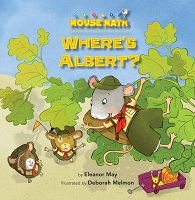
Where's Albert?
Grade 2
4 skill lessons · 2 math-through-reading
Math
Skill lessons
The mathematics the book carries, taught directly. Printable workbook pages and teacher keys are not available for this book yet.
- 1Ninety, and Then Albert
- 2Two Cheesy Puffs, Five Tent Pegs
- 3Nine Plates, Ninety Sticks
- 4Forty-Five, and Five in Her Hand
Math + reading
Math through the reading
The same book, entered through a sentence it prints. Change one word in the reading and the numbers change with it.
- 5Two Puffs Each, Not Two Puffs Total
- 6The Count Agnes Never Finished
Reading
Reading and language lessons
The same book read as a text. What a word means in its sentence, how a character is shown, how the writing is put together - no mathematics.
- 7Where Is He This Time? The Question That Keeps Coming Back
- 8It Is Always the Snail: Why Albert Keeps Falling Behind
- 9A Fallen Tent: Tracing a Problem Back to Its Cause
- 10Who Said That? Reading a Line Whose Speaker Tag Is Broken
- 11Bellowed, Groaned, Announced: Words That Carry a Voice
Skill lessons
4 lessons on the mathematics the book carries. Printable workbook pages and teacher keys are not available for this book yet.
1. Ninety, and Then Albert
Agnes asks every scout for ten twigs and counts the returning scouts by tens. Nine scouts get her to ninety and she stops; when Albert's ten arrive the same count reaches one hundred. Students build the bundles, run both counts with the book's printed lines as the script, and finish by counting a row of bundles nobody has told them the size of.
Full lesson — 20 minutes
1. Ten in a bundle (4 min)
Each pair of students bundles ten craft sticks with one elastic and sets the bundle down. Build nine bundles between you, saying "ten twigs, one scout" as each one is tied. Do not count the loose sticks yet; only whole bundles go on the table.
Word preview: bundle, tens
If every scout can carry back 10 twigs, we'll have a nice big bonfire.
2. Agnes stops at ninety (6 min)
Touch each bundle and count aloud by tens with the printed line: ten, twenty, thirty, forty, fifty, sixty, seventy, eighty, ninety. Stop where Agnes stops. On your paper write the number you landed on and the number of scouts still to come.
Word preview: ninety, count on
Ten, twenty, thirty, forty, fifty, sixty, seventy, eighty, ninety. Oh no, not again. Where is Albert?
3. Albert's bundle (6 min)
Add the tenth bundle to the row and count the whole row by tens again, one touch per number word, to one hundred. Then count the same ten bundles a second time starting from the far end. Both counts must land on the same last number; if they do not, count once more slowly.
Word preview: hundred, tens
Agnes counted again by tens. This time all the scouts joined in. 10, 20, 30, 40, 50, 60, 70, 80, 90, 100.
4. Count a called row (4 min)
One partner lays out somewhere between four and ten bundles while the other looks away. The counting partner turns back, counts the row by tens, and says the last number. Swap and repeat until each of you has counted four different rows correctly.
Word preview: row
Short version — 9 minutes
1. Agnes stops at ninety (4 min)
Touch nine bundles of ten craft sticks and count aloud by tens with the printed line, stopping at ninety where Agnes stops. Say how many scouts have not come back yet.
Word preview: ninety
Ten, twenty, thirty, forty, fifty, sixty, seventy, eighty, ninety. Oh no, not again. Where is Albert?
2. Albert's bundle (5 min)
Add the tenth bundle and count the row by tens to one hundred, one touch per number word. Count the row again from the other end and check that you land on one hundred both times.
Word preview: hundred
Agnes counted again by tens. This time all the scouts joined in. 10, 20, 30, 40, 50, 60, 70, 80, 90, 100.
Three levels
- Support
- Work with five bundles and count by tens to fifty, touching one bundle per number word. Keep the elastic bands on so a bundle can never come apart mid-count. Add one bundle at a time and say one more number word each time, never past one hundred.
- At Grade
- Build all ten bundles and run both of Agnes's counts, the one that stops at ninety and the one that reaches one hundred, then count called rows of four to ten bundles.
- Extension
- Lay out bundles of ten alongside four loose sticks and count the whole set: tens for the bundles, then ones for the remainder. Say the last number and explain to your partner which part of the row the tens count and which part it does not.
English learners
The counting sequence transfers: a student who counts by tens in another language already has the tens structure and needs only the English number words, which are regular from twenty upward. The English pattern break at thirteen through nineteen does not transfer, though this count never enters it. Rehearse the frame "nine bundles is ninety, ten bundles is one hundred" chorally before any student counts alone, and invite students to run the bundle count in their strongest language first and then in English with the same touches.
Materials
- 100 craft sticks per pair of students
- 20 elastic bands per pair
- Printed source passage in this step
- Recording paper and pencil per student
- Word cards: bundle, ninety, hundred
Standards & curriculum
Choose your curriculum above to see the standards for this lesson.
Standards are held back while this plan is edited. Every standard shown here was matched against the supplied wording of this lesson, quoting its steps, so a changed step is no longer the thing that was checked. Undo your changes to bring the standards back — your edits stay in this browser either way.
2. Two Cheesy Puffs, Five Tent Pegs
The book runs the same count twice with different group sizes: two cheesy puffs per scout and five pegs per tent. Students build both, run each count with the book's printed line, and record where each count stops. The last step compares how many number words each count took over the same ten groups.
Full lesson — 20 minutes
1. Two to a scout (5 min)
Set out nine paper plates, one per scout, and put two counters on each plate. Count the counters aloud by twos, touching a plate on each number word, and stop where the plates run out. Write the number you stopped on.
Word preview: twos, each
Counting by twos, Agnes gave two cheesy puffs to each of the ten scouts.
Two, four, six, eight, ten, twelve, fourteen, sixteen, eighteen. She stopped. I still have two left. Where's Albert?
2. The two left over (5 min)
Agnes still holds two counters. Put down the tenth plate, place those two on it, and count the plates by twos again to twenty. On your paper write the two numbers Agnes said last: the one she stopped on and the one she finished on.
Word preview: twenty, left
Two, four, six, eight, ten, twelve, fourteen, sixteen, eighteen, twenty.
Two cheesy puffs per scout.
3. Five to a tent (6 min)
Clear the plates and set out nine again, this time with five counters on each for the tent pegs. Count by fives with the printed line, one touch per plate, and stop exactly where Agnes stops. Write that number down beside your twos numbers.
Word preview: fives, pegs
She said five pegs for every tent. Agnes counted by fives as she handed out the pegs. 5, 10, 15, 20, 25, 30, 35, 40, 45. She held up the last five pegs.
4. Which count is quicker (4 min)
Look at your three written numbers. With your partner, count the same ten plates once by twos and once by fives and say how many number words each count took. Say aloud which count took fewer words, using the numbers on your paper.
Word preview: fewer
Short version — 9 minutes
1. Two to a scout (4 min)
Set out nine paper plates with two counters each and count aloud by twos, touching one plate per number word. Stop where the plates run out and say that number.
Word preview: twos
Two, four, six, eight, ten, twelve, fourteen, sixteen, eighteen. She stopped. I still have two left. Where's Albert?
2. The two left over (5 min)
Put down the tenth plate with the last two counters and count the plates by twos again to twenty. Say the number Agnes stopped on and the number she finished on.
Word preview: twenty
Two, four, six, eight, ten, twelve, fourteen, sixteen, eighteen, twenty.
Three levels
- Support
- Stay with the twos. Build five plates of two and count to ten, touching one plate per number word, then add plates one at a time and extend the count by one number word each time, never past twenty. The rule is one plate, one number.
- At Grade
- Run both counts, twos to twenty and fives, record where each stops, and compare the number of words the two counts take over ten plates.
- Extension
- Count the ten plates of five by tens instead, pairing two plates for each number word, and tell your partner what has to be true about the plates for that to work. Say which of the three counts you would use for a pile of fifty and why.
English learners
Skip counting by twos and fives transfers directly for students who have it in another language; the number words are what is new, and the fives count in English is regular throughout. The English word "per" in "two cheesy puffs per scout" and the phrase "for every" in "five pegs for every tent" do not transfer — both name the same each-group relation with no shared root. Rehearse the frame "two for each scout, five for each tent" before the counting starts, and let students say the count in their strongest language while touching plates before running it in English.
Materials
- 12 paper plates per pair of students
- 50 counters per pair of students
- Recording paper and pencil per student
- Printed source passage in this step
- Word cards: twos, fives, each
Standards & curriculum
Choose your curriculum above to see the standards for this lesson.
Standards are held back while this plan is edited. Every standard shown here was matched against the supplied wording of this lesson, quoting its steps, so a changed step is no longer the thing that was checked. Undo your changes to bring the standards back — your edits stay in this browser either way.
3. Nine Plates, Ninety Sticks
Agnes hands out the same thing to every scout three times over — two puffs, five pegs, ten twigs — so the book holds the number of groups steady at ten and changes only the group size. Students build rows of equal plates, name each row with two numbers, and watch the total move when the group size moves while the number of plates does not.
Full lesson — 20 minutes
1. Build one scout's share (4 min)
Each student takes one paper plate and puts exactly ten craft sticks on it: that is one scout's load of twigs. Say aloud what your plate holds using two numbers, one plate and ten sticks. Every plate at the table must hold the same ten.
Word preview: group, each
If every scout can carry back 10 twigs, we'll have a nice big bonfire.
2. Two numbers for one row (6 min)
Line up nine plates. Write two numbers on your paper: how many plates, and how many sticks in all. Count the sticks by tens to get the second number. Say the row aloud as "nine plates, ninety sticks" and check that your partner's paper says the same two numbers.
Word preview: plates, in all
Ten, twenty, thirty, forty, fifty, sixty, seventy, eighty, ninety. Oh no, not again. Where is Albert?
3. Change the group size (6 min)
Clear the sticks and rebuild the same nine plates with five counters each for tent pegs. Write the two numbers again: nine plates, and the total you reach counting by fives. The number of plates did not change and the total did. Tell your partner which number changed and why.
Word preview: fives, total
She said five pegs for every tent. Agnes counted by fives as she handed out the pegs. 5, 10, 15, 20, 25, 30, 35, 40, 45. She held up the last five pegs.
4. Read a row cold (4 min)
One partner builds a row of equal plates while the other looks away, using two, five or ten to a plate. The counting partner turns back, says how many plates and how many counters in all, and names the group size out loud. Swap after each row.
Word preview: equal
Short version — 9 minutes
1. Two numbers for one row (5 min)
Line up nine plates of ten craft sticks. Write how many plates and how many sticks in all, counting by tens for the second number. Say the row aloud as nine plates, ninety sticks.
Word preview: plates
Ten, twenty, thirty, forty, fifty, sixty, seventy, eighty, ninety. Oh no, not again. Where is Albert?
2. Change the group size (4 min)
Rebuild the same nine plates with five counters each and write the two numbers again. Say which of the two numbers changed and which stayed the same.
Word preview: total
She said five pegs for every tent. Agnes counted by fives as she handed out the pegs. 5, 10, 15, 20, 25, 30, 35, 40, 45. She held up the last five pegs.
Three levels
- Support
- Work with plates of two only, and build up to five plates. Write the two numbers for each row as you go, so that two plates read as two and four, three plates as three and six. Keep the plates in a straight line so a plate is never counted twice.
- At Grade
- Build rows of nine and ten plates at two, five and ten to a plate, record both numbers for each row, and read a partner's row cold.
- Extension
- Build a row of ten plates holding five each and a row of five plates holding ten each. Both reach fifty. Tell your partner what is the same about the two rows and what is different, using the words group and in all.
English learners
The two-number description of a group — how many groups, how many in all — is a structure students often already hold, and it transfers whole. The English distinction between "how many plates" and "how many in all" does not transfer; in several languages it is carried by one question word plus a classifier rather than by two different questions. Rehearse the frame "nine plates, ninety sticks" as a fixed pair before students write anything, and invite students to describe their row in their strongest language first, then repeat it in English while pointing at each number on their paper.
Materials
- 12 paper plates per pair of students
- 100 craft sticks per pair of students
- Recording paper and pencil per student
- Printed source passage in this step
- 50 counters per pair of students
- Word cards: group, in all, equal
Standards & curriculum
Choose your curriculum above to see the standards for this lesson.
Standards are held back while this plan is edited. Every standard shown here was matched against the supplied wording of this lesson, quoting its steps, so a changed step is no longer the thing that was checked. Undo your changes to bring the standards back — your edits stay in this browser either way.
4. Forty-Five, and Five in Her Hand
Every time Agnes counts, the count stops one group early and that is how she learns Albert is gone. Students run the stopped count themselves, hold the last group in hand, and say where the count would land without starting over. The peg count is the one the book never finishes, so the last number is theirs to reach.
Full lesson — 20 minutes
1. The count that stops short (5 min)
Read the two printed tail counts side by side. On your paper write the last number of each. Then say aloud what Agnes knows the moment she hears nine and not ten, and what she does not know.
Word preview: missing, expected
One, two, three, four, five, she counted. Six, seven, eight, nine, wait! I only count nine tails. Where's Albert?
Agnes counted tails again. One, two, three, four, five, six, seven, eight, nine, ten mice.
2. Stop the peg count (6 min)
Set out nine plates with five counters each and count by fives with the printed line, stopping at forty-five as Agnes does. Now hold five more counters in your hand, as Agnes holds the last five pegs. Say the number the count would reach if you put them down, and write it beside your forty-five.
Word preview: fives, reach
She said five pegs for every tent. Agnes counted by fives as she handed out the pegs. 5, 10, 15, 20, 25, 30, 35, 40, 45. She held up the last five pegs.
3. Say how you knew (5 min)
Tell your partner how you got your number without counting the plates all over again. Use the words five more and the number you stopped on. Your partner listens for those two things and says whether they heard both.
Word preview: more
4. Somebody is missing (4 min)
One partner builds a row of plates of ten and secretly removes one plate. The other counts by tens, says the number reached, and says how many plates are missing and how many sticks with them. Swap and repeat with plates of five.
Word preview: missing
Short version — 9 minutes
1. The count that stops short (4 min)
Read both printed tail counts and write the last number of each. Say what Agnes knows as soon as she hears nine instead of ten.
Word preview: missing
One, two, three, four, five, she counted. Six, seven, eight, nine, wait! I only count nine tails. Where's Albert?
Agnes counted tails again. One, two, three, four, five, six, seven, eight, nine, ten mice.
2. Stop the peg count (5 min)
Count nine plates of five counters by fives with the printed line, stopping at forty-five. Hold five more in your hand and say the number the count would reach if you put them down.
Word preview: reach
She said five pegs for every tent. Agnes counted by fives as she handed out the pegs. 5, 10, 15, 20, 25, 30, 35, 40, 45. She held up the last five pegs.
Three levels
- Support
- Work with the tail count only. Count nine counters one at a time to nine, add one more counter, and say ten. Say aloud that one was missing and now it is there. Do not move on to the fives until the one-at-a-time count is steady.
- At Grade
- Run the stopped peg count to forty-five, reach fifty by counting on one group of five, and say how you knew without recounting.
- Extension
- Agnes stops at ninety in the twig count and at forty-five in the peg count. Both times one scout is missing. Tell your partner why the two stopping numbers are different even though the same one scout is away, using the group size in your answer.
English learners
Counting on from a number rather than restarting is a strategy, not a vocabulary item, and it transfers whole once a student has it. The English phrase "five more" does not transfer, because it puts the amount before the comparison word where several languages put it after, and neither does the idiom "count on" itself, which has nothing to do with counting in most first languages. Rehearse the frame "I stopped at forty-five, five more is fifty" chorally before step three, and invite students to give their reason in their strongest language first, then in English with the same two numbers.
Materials
- Recording paper and pencil per student
- Printed source passage in this step
- 12 paper plates per pair of students
- 50 counters per pair of students
- Word cards: missing, more, reach
Standards & curriculum
Choose your curriculum above to see the standards for this lesson.
Standards are held back while this plan is edited. Every standard shown here was matched against the supplied wording of this lesson, quoting its steps, so a changed step is no longer the thing that was checked. Undo your changes to bring the standards back — your edits stay in this browser either way.
Math through the reading
The mathematics is reached through a sentence the book prints: change one word in the reading and the numbers change with it. These carry their own standards, matched against these lessons rather than inherited from the skill ones.
5. Two Puffs Each, Not Two Puffs Total
Students test what the words each, per and every do to a count by swapping them out of Agnes's own sentences and running the count both ways.
Full lesson — 20 minutes
1. Place the counters by the sentence (5 min)
Pairs read the cheesy-puff rule aloud from the printed card, then place counters on ten paper plates exactly as the sentence directs and count them by twos to twenty.
2. Take out the word (6 min)
The teacher hands each pair the same sentence with each replaced by the. Pairs place counters again for the new sentence, count what is on the plates, and say the new total aloud.
3. Say what the word did (5 min)
Each pair says in one sentence what changed between the two totals and which word changed it, pointing at the word on both cards.
4. Run it on the pegs (4 min)
Pairs do the same two-count test on the tent-peg sentence, swapping every for the, and report both totals to the class.
Short version — 9 minutes
1. Place the counters by the sentence (5 min)
Pairs read the cheesy-puff rule aloud from the printed card, then place counters on ten paper plates exactly as the sentence directs and count them by twos to twenty.
2. Take out the word (6 min)
The teacher hands each pair the same sentence with each replaced by the. Pairs place counters again for the new sentence, count what is on the plates, and say the new total aloud.
Three levels
- Support
- Work with five plates instead of ten and with the twos sentence only. Place the counters for each, count to ten, then clear the plates and place them for the, and count again. Say the two totals aloud one after the other before saying anything about the word.
- At grade
- Run both swaps, twos and fives, place counters for all four sentences, and state each time which word moved the total and by how much.
- Extension
- Write a sentence of your own using every that would send five pegs to each of ten tents, then write the version that would send five pegs to the camp altogether. Hand both to a partner and have them build each one with counters without being told which is which.
English learners
Each, per and every are three English forms of one relation, and most students have that relation in their first language even where the syntax is unlike English — Spanish cada, Mandarin 每, Arabic كل all sit before the noun as each does, so the placement transfers and only the three-way English variation is new. Per is the outlier: it is Latin, it appears in no everyday register, and 'two cheesy puffs per scout' cannot be worked out from its parts. Teach the three as one meaning with three faces rather than as three words, rehearse the frame 'two for each scout' chorally before any counters move, and invite students to say the rule in their strongest language while placing the counters, then say the total in English.
Materials
- Paper plates, ten per pair
- Counters, fifty per pair
- Two printed sentence cards per pair, one original and one swapped
- The book's printed cheesy-puff rule and its count line
- The book's printed tent-peg rule and its count line
Standards & curriculum
Choose your curriculum above to see the standards for this lesson.
Standards are held back while this plan is edited. Every standard shown here was matched against the supplied wording of this lesson, quoting its steps, so a changed step is no longer the thing that was checked. Undo your changes to bring the standards back — your edits stay in this browser either way.
6. The Count Agnes Never Finished
Students find the peg total the book stops one number short of, and say which printed sentence tells them the count is not over.
Full lesson — 20 minutes
1. Read the count to its stop (4 min)
Pairs read the printed peg passage aloud and place counters on plates to match it, ending with nine plates of five and forty-five said out loud.
2. Find the sentence that says it is not over (5 min)
Pairs hunt the printed passage for the sentence proving Agnes is not finished, underline it, and read it to another pair.
3. Count on to the answer (6 min)
Pairs put the last five counters on a tenth plate and count on from forty-five to fifty, then recount all ten plates by fives from the start to check they land on the same number.
4. Give both halves (5 min)
Each pair says the sentence first and the number second to the class, in that order, and the class checks that both halves arrived.
Short version — 9 minutes
1. Read the count to its stop (4 min)
Pairs read the printed peg passage aloud and place counters on plates to match it, ending with nine plates of five and forty-five said out loud.
2. Count on to the answer (6 min)
Pairs put the last five counters on a tenth plate and count on from forty-five to fifty, then recount all ten plates by fives from the start to check they land on the same number.
Three levels
- Support
- Work with the counters only and skip the hunting step. Build the nine plates of five with the teacher and count to forty-five together, then put the tenth plate down and count on, forty-five, fifty. Say fifty while touching the tenth plate, so that the number and the last group stay attached.
- At grade
- Read the passage, find the evidence sentence unaided, count on to fifty, and give the sentence and the number in that order without prompting.
- Extension
- Agnes handed out five pegs to every tent and Albert's tent had no poles at all. Say whether the fifty pegs still get used, and which sentence in the passage decides it. Then say what the peg total would have been if there had been nine scouts instead of ten, and how you know without counting all over again.
English learners
The counting-on move transfers freely; the English perfective sense of 'the last five pegs' does not, because there last means the final remaining ones rather than the previous ones, an ambiguity English carries and many languages resolve with two different words. Students who read last as previous will conclude the pegs are already handed out and answer forty-five, which is a language error producing a wrong number and is precisely the seam. Rehearse the contrast 'the last five are still in her hand' against 'the first five went to the first tent' before the hunting segment, and let students state their evidence in their strongest language before giving it in English.
Materials
- Paper plates, ten per pair
- Counters, fifty per pair
- Printed copy of the tent-peg passage per pair
- Pencil for underlining
- The book's printed tent-peg passage, enlarged
- A tenth empty plate kept visible but out of reach until segment three
Standards & curriculum
Choose your curriculum above to see the standards for this lesson.
Standards are held back while this plan is edited. Every standard shown here was matched against the supplied wording of this lesson, quoting its steps, so a changed step is no longer the thing that was checked. Undo your changes to bring the standards back — your edits stay in this browser either way.
Reading and language lessons
5 lessons on the reading and language the book carries - what a word means in its sentence, how a character is shown, how a text is built. No mathematics: these are matched against the English language arts curricula, which are a different and smaller set than the mathematics ones.
7. Where Is He This Time? The Question That Keeps Coming Back
Four times in this book the group is short one scout, somebody asks where Albert is, and Albert turns up somewhere unexpected. Students read three of those moments, name the parts the pattern always has, and predict what the fourth will look like before reading it. Then they say what the pattern tells them about how the book is built. This is story-structure reading; the amounts inside the passages are never used.
Full lesson — 20 minutes
1. Read two moments that match (6 min)
The teacher reads the two passages below. They happen at different points in the book but they are built the same way. With a partner, say the two things that happen in both: somebody notices Albert is missing, and then Albert is found somewhere. Say aloud where he is found each time.
Word preview: pattern
I only count nine tails. Where's Albert?
Up here, Albert called, dangling from a bush. I'm getting flash to snack. Snails don't eat cheesy puffs, you know?
2. Predict the next one, then read it (5 min)
Before you read, tell a partner what you expect the next missing-Albert moment to look like. Then read the passage below and say whether your prediction was right. Say which part of the pattern this one keeps.
Word preview: predict
Where is Albert now? Albert poked his head out from a fallen tent.
3. Find the part that changes (5 min)
Read the passage below with a partner. This time the answer to the question is not Albert alone but the whole troop calling out. Say aloud what stays the same as the earlier moments and what is new here.
Word preview: changes
Oh no, not again. Where is Albert? All the Squeak Scouts Corridor. Right here, Albert called.
4. Say the pattern in your own words (4 min)
Read the passage below one more time. Then tell a partner the pattern of this whole book in two sentences, without naming any particular moment. Start with: Every time ___, then ___.
Word preview: repeat
Where is Albert now? Albert poked his head out from a fallen tent.
Short version — 9 minutes
1. Read two moments that match (5 min)
The teacher reads the two passages below. Say the two things that happen in both, and say where Albert is found each time.
Word preview: pattern
I only count nine tails. Where's Albert?
Up here, Albert called, dangling from a bush. I'm getting flash to snack. Snails don't eat cheesy puffs, you know?
2. Say the pattern in your own words (4 min)
Read the passage below. Then say the pattern of the whole book in two sentences, without naming a particular moment: Every time ___, then ___.
Word preview: repeat
Where is Albert now? Albert poked his head out from a fallen tent.
Three levels
- Support
- Read only the first passage in step 1 with the teacher. Answer aloud: who is missing? Then read the second passage and answer the same question. Say what is the same about the two.
- At Grade
- Read both passages in step 1, name the two parts the pattern always has, and say where Albert turns up in each.
- Extension
- The two passages in step 1 use the same pattern but put Albert in a different place each time. Say two or three sentences about why a writer would keep the pattern and change only the place.
English learners
The pattern is carried by a repeated question, and English questions invert the subject and verb in a way many languages do not. Read the question form aloud several times and let students echo it before they work with the passages. Invite students to tell a repeating story or song from their strongest language and name what repeats. Rehearsable frame: Every time ___, then ___.
Materials
- Where's Albert?, the passage printed in this step
- sentence frame card
- Word cards: pattern, predict, changes, repeat
Standards & curriculum
Choose your curriculum above to see the standards for this lesson.
Standards are held back while this plan is edited. Every standard shown here was matched against the supplied wording of this lesson, quoting its steps, so a changed step is no longer the thing that was checked. Undo your changes to bring the standards back — your edits stay in this browser either way.
8. It Is Always the Snail: Why Albert Keeps Falling Behind
Albert is late four times and the book never says why in so many words, but every one of his own sentences names the same reason. Students read three passages in which Albert explains himself, find the word that appears in all three, and use it to say what matters most to him. They finish by judging one of his choices. This is inference about motive, and it uses no amount from any passage.
Full lesson — 20 minutes
1. Read what Albert says for himself (6 min)
The teacher reads the two passages below. Both are Albert explaining why he is behind the others. Find the one thing that is named in both of them. Say aloud what that tells you about what Albert cares about.
Word preview: reason
Albert, I'm not sure snails like to hike. Hmm, Albert found. Maybe you're right. He took flash back inside.
Up here, Albert called, dangling from a bush. I'm getting flash to snack. Snails don't eat cheesy puffs, you know?
2. Find the solution he invents (5 min)
Read the passage below with a partner. Albert has been told his snail cannot come. Say aloud what he does about that, and say what his idea shows about how badly he wants the snail along.
Word preview: solution
Ta-da! Albert came back out. Problem solved. Flash can ride in my red wagon so he doesn't have to hike.
3. Judge one of his choices (5 min)
Read the passage below. Here Albert explains what he did with his tent poles. Tell a partner whether you think that was a good decision, and give one reason from the passage itself. Say your reason in a full sentence.
Word preview: decide
Sure I packed them, Albert said. But the wagon felt so heavy going up that hill. I tossed a few things out. I was going to pick everything back up on the way home.
4. Say what Albert wants most (4 min)
Read the passage below one more time. Then say one sentence about what Albert wants more than anything in this story, and one sentence giving your evidence. Use: Albert wants ___. I know because ___.
Word preview: evidence
Ta-da! Albert came back out. Problem solved. Flash can ride in my red wagon so he doesn't have to hike.
Short version — 9 minutes
1. Read what Albert says for himself (5 min)
The teacher reads the two passages below. Find the one thing named in both, and say what it tells you about what Albert cares about.
Word preview: reason
Albert, I'm not sure snails like to hike. Hmm, Albert found. Maybe you're right. He took flash back inside.
Up here, Albert called, dangling from a bush. I'm getting flash to snack. Snails don't eat cheesy puffs, you know?
2. Find the solution he invents (4 min)
Read the passage below. Say what Albert does after being told his snail cannot hike, and what that shows about how much he wants it along.
Word preview: solution
Ta-da! Albert came back out. Problem solved. Flash can ride in my red wagon so he doesn't have to hike.
Three levels
- Support
- Read the first passage in step 1 with the teacher, then the second. Point to the snail's name in each. Answer aloud: what is Albert always thinking about?
- At Grade
- Read both passages in step 1, name the thing they have in common, and say in a full sentence what Albert cares about most.
- Extension
- In the passages in step 1 Albert never says outright that the snail matters more than keeping up. Say two or three sentences about how the writer shows it instead of saying it.
English learners
Albert's reasons are carried by dialogue that this transcript renders without quotation marks, so the reader must decide from sense alone where his voice starts. Read each passage twice, once naming the speaker aloud before each sentence. Invite students to explain, in their strongest language, a time they did not want to leave something behind. Rehearsable frame: Albert wants ___. I know because ___.
Materials
- Where's Albert?, the passage printed in this step
- sentence frame card
- Word cards: reason, solution, decide, evidence
Standards & curriculum
Choose your curriculum above to see the standards for this lesson.
Standards are held back while this plan is edited. Every standard shown here was matched against the supplied wording of this lesson, quoting its steps, so a changed step is no longer the thing that was checked. Undo your changes to bring the standards back — your edits stay in this browser either way.
9. A Fallen Tent: Tracing a Problem Back to Its Cause
A tent falls down, and the reason for it sits several pages earlier in something Albert did on a hill. Students read the effect first, then hunt for the cause in a second passage, and say the two in order. They finish by writing the chain aloud as a because-sentence. Cause-and-effect reading only; the passages carry no quantity that this lesson touches.
Full lesson — 20 minutes
1. Read what went wrong (5 min)
The teacher reads the passage below once. Something has gone wrong for Albert. Say aloud what it is. Then say whether this passage tells you why it went wrong.
Word preview: effect
Where is Albert now? Albert poked his head out from a fallen tent.
2. Hunt for the cause (6 min)
Read the passage below with a partner. This one comes a little later and it does explain what happened. Point to the sentence that tells you what Albert did. Say aloud why he did it.
Word preview: cause
Sure I packed them, Albert said. But the wagon felt so heavy going up that hill. I tossed a few things out. I was going to pick everything back up on the way home.
3. Put the chain in order (5 min)
Read the two passages below. One is the cause and one is the effect, but they are not printed in that order in the book. Say aloud which came first in time. Then say the chain in order to a partner.
Word preview: order
Where is Albert now? Albert poked his head out from a fallen tent.
Sure I packed them, Albert said. But the wagon felt so heavy going up that hill. I tossed a few things out. I was going to pick everything back up on the way home.
4. Say it as one because-sentence (4 min)
Read the passage below one more time. Then say the whole chain out loud in one sentence using the word because. Start with: Albert's tent fell down because ___.
Word preview: because
Sure I packed them, Albert said. But the wagon felt so heavy going up that hill. I tossed a few things out. I was going to pick everything back up on the way home.
Short version — 9 minutes
1. Hunt for the cause (5 min)
Read the passage below. Point to the sentence that tells what Albert did, and say aloud why he did it.
Word preview: cause
Sure I packed them, Albert said. But the wagon felt so heavy going up that hill. I tossed a few things out. I was going to pick everything back up on the way home.
2. Say it as one because-sentence (4 min)
Read the passage below again. Say the whole chain out loud in one sentence using because: Albert's tent fell down because ___.
Word preview: because
Sure I packed them, Albert said. But the wagon felt so heavy going up that hill. I tossed a few things out. I was going to pick everything back up on the way home.
Three levels
- Support
- Work with step 2 only. The teacher reads the passage and you echo the second sentence. Point to the words tossed a few things out. Answer aloud: what did Albert throw away?
- At Grade
- Read the passage in step 2, point to the sentence that names what Albert did, and say the cause and the effect in the right order.
- Extension
- The passage in step 2 gives Albert's reason in his own words, which may not be the whole truth. Say two or three sentences about whether you believe his reason, and why.
English learners
Because-clauses in English can follow or precede the main clause, and this passage separates cause from effect across several sentences rather than joining them with one word. Model the joined form aloud the tent fell because the poles were gone before students try it. Invite students to give a because-reason in their strongest language first. Rehearsable frame: ___ happened because ___.
Materials
- Where's Albert?, the passage printed in this step
- pointing finger
- two order cards
- sentence frame card
- Word cards: effect, cause, order, because
Standards & curriculum
Choose your curriculum above to see the standards for this lesson.
Standards are held back while this plan is edited. Every standard shown here was matched against the supplied wording of this lesson, quoting its steps, so a changed step is no longer the thing that was checked. Undo your changes to bring the standards back — your edits stay in this browser either way.
10. Who Said That? Reading a Line Whose Speaker Tag Is Broken
This book comes from a transcript with damage in it, and one exchange has lost the words that would say who is talking. Students read the passage exactly as it is printed, mark where they think each speaker changes, and argue for their reading using what the sentences themselves make sensible. They compare with an undamaged exchange to see what a working speaker tag does. Nothing is repaired, and nothing is counted; the work is reading and arguing about a text.
Full lesson — 20 minutes
1. Read an exchange that works (5 min)
The teacher reads the passage below. In this one you can tell who is talking, because the text says so. Point to the words that name each speaker. Say aloud which sentence is spoken out loud and which sentence is the narrator telling you what happened.
Word preview: speaker
Albert Sister Wanda ran to find him. Come on Albert, she said everyone is ready.
2. Read a passage where it broke (6 min)
Read the passage below with the teacher. It is printed here exactly as the source prints it, and part of it is damaged, so the speaker is not clearly marked. Do not fix it. Read it aloud as it stands. Say aloud which sentence you find hardest to give to a speaker.
Word preview: damaged
Albert, where are your tent poles? Want to ask? Tent poles. Albert asked. Uh-oh. Wanda groaned. You didn't pack your tent poles?
3. Argue for your reading (5 min)
Read the passage below again with a partner. Decide together who you think says each part, and say why the rest of the passage makes your choice sensible. Say your reason out loud in a full sentence beginning: I think ___ says it, because ___.
Word preview: because
Albert, where are your tent poles? Want to ask? Tent poles. Albert asked. Uh-oh. Wanda groaned. You didn't pack your tent poles?
4. Say what a working tag gives you (4 min)
Read the passage below once more. Then tell a partner one thing this passage gives a reader that the damaged one does not. Say it in one sentence.
Word preview: tag
Albert Sister Wanda ran to find him. Come on Albert, she said everyone is ready.
Short version — 9 minutes
1. Read a passage where it broke (5 min)
Read the passage below with the teacher, exactly as the source prints it. Part of it is damaged and the speaker is not clearly marked. Do not fix it. Say which sentence is hardest to give to a speaker.
Word preview: damaged
Albert, where are your tent poles? Want to ask? Tent poles. Albert asked. Uh-oh. Wanda groaned. You didn't pack your tent poles?
2. Argue for your reading (4 min)
Read the passage below again with a partner. Decide who says each part and say why: I think ___ says it, because ___.
Word preview: because
Albert, where are your tent poles? Want to ask? Tent poles. Albert asked. Uh-oh. Wanda groaned. You didn't pack your tent poles?
Three levels
- Support
- Work with step 1 only. The teacher reads the passage and you echo it. Point to the name Wanda and to the words she said. Answer aloud: who is talking?
- At Grade
- Read the passages in steps 1 and 2 and say what step 1 gives you about the speaker that step 2 does not.
- Extension
- The passage in step 2 can be read with two speakers or with three. Say two or three sentences arguing for one reading, using only what is printed.
English learners
Learners often assume a printed text is always correct, so a damaged passage can read as their own failure to understand. Say plainly and first that the source itself is broken here and that no reading is wrong. Invite students to say who they think is talking in their strongest language before arguing in English. Rehearsable frame: I think ___ says it, because ___.
Materials
- Where's Albert?, the passage printed in this step
- pointing finger
- sentence frame card
- Word cards: speaker, damaged, because, tag
Standards & curriculum
Choose your curriculum above to see the standards for this lesson.
Standards are held back while this plan is edited. Every standard shown here was matched against the supplied wording of this lesson, quoting its steps, so a changed step is no longer the thing that was checked. Undo your changes to bring the standards back — your edits stay in this browser either way.
11. Bellowed, Groaned, Announced: Words That Carry a Voice
This book almost never uses the word said on its own for the scout leader. It uses bellowed, announced, called and groaned, and each one puts a different sound in the reader's ear. Students read the passages those words come from, say each aloud in the way the word asks for, and then swap in said and describe what is lost. The work is word choice and reading aloud; nothing is measured.
Full lesson — 20 minutes
1. Read bellowed the way it sounds (6 min)
The teacher reads the passage below once. Find the word bellowed. Then read the first sentence aloud yourself the way somebody who bellows would say it. Tell a partner what bellowed tells you that said would not.
Word preview: bellowed
Okay, squeak scouts. Bellowed Agnes, the Scout Leader. Time to go on our big camp out. The Squeak scouts cheered.
2. Compare with announced (5 min)
Read the passage below with a partner. Find the word announced. Read that sentence aloud the way somebody announcing would say it. Say aloud whether announced sounds louder, quieter or the same as bellowed.
Word preview: announced
Time to build the bonfire. Agnes announced. She told the scouts to go out in the woods and find dry twigs. If every scout can carry back 10 twigs, we'll have a nice big bonfire. She looked at Albert. Every scout, okay?
3. Find groaned and say why it fits (5 min)
Read the passage below, printed exactly as the source prints it, damage and all. Find the word groaned. Say aloud what a person feels when they groan, and say why that feeling fits what is happening here.
Word preview: groaned
Albert, where are your tent poles? Want to ask? Tent poles. Albert asked. Uh-oh. Wanda groaned. You didn't pack your tent poles?
4. Swap in the plain word (4 min)
Read the passage below one more time. Say its first sentence aloud twice, once with bellowed and once with said instead. Tell a partner what you stop hearing when the word changes.
Word preview: said
Okay, squeak scouts. Bellowed Agnes, the Scout Leader. Time to go on our big camp out. The Squeak scouts cheered.
Short version — 9 minutes
1. Read bellowed the way it sounds (5 min)
The teacher reads the passage below. Find the word bellowed, read the first sentence aloud the way somebody who bellows would say it, and say what bellowed tells you that said would not.
Word preview: bellowed
Okay, squeak scouts. Bellowed Agnes, the Scout Leader. Time to go on our big camp out. The Squeak scouts cheered.
2. Swap in the plain word (4 min)
Read the passage below again. Say its first sentence aloud with bellowed, then with said. Say what you stop hearing when the word changes.
Word preview: said
Okay, squeak scouts. Bellowed Agnes, the Scout Leader. Time to go on our big camp out. The Squeak scouts cheered.
Three levels
- Support
- Work with step 1 only. The teacher reads the passage and you echo it. Say the word bellowed aloud in a big voice, then in a small voice. Answer aloud: which one is bellowing?
- At Grade
- Read the passages in steps 1 and 2, say each speaking word aloud in the voice it asks for, and say how bellowed and announced differ.
- Extension
- The passages in steps 1 and 2 give the same character two different speaking words. Say two or three sentences about why a writer changes the word instead of using said each time.
English learners
These verbs encode volume and feeling that many languages carry with an adverb or a particle instead, so a direct translation flattens them. Demonstrate each with the voice before defining it, and let students echo. Invite students to name the loud-speaking word in their strongest language and say when it is used. Rehearsable frame: Bellowed means said ___.
Materials
- Where's Albert?, the passage printed in this step
- word cards on the table
- Word cards: bellowed, announced, groaned, said
Standards & curriculum
Choose your curriculum above to see the standards for this lesson.
Standards are held back while this plan is edited. Every standard shown here was matched against the supplied wording of this lesson, quoting its steps, so a changed step is no longer the thing that was checked. Undo your changes to bring the standards back — your edits stay in this browser either way.