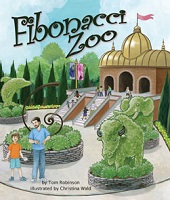
Fibonacci Zoo
Grade 2
3 skill lessons · 3 math-through-reading
Math
Skill lessons
The mathematics the book carries, taught directly. Printable workbook pages and teacher keys are not available for this book yet.
- 1The Rule That Builds the Next Exhibit
- 2Predict the Gorillas Before You See Them
- 3Eli's Notebook, and Why the Order Matters
Math + reading
Math through the reading
The same book, entered through a sentence it prints. Change one word in the reading and the numbers change with it.
- 4The Three Words That Pick the Pair
- 5Why Eli Could Not Have Met the Gorillas First
- 6The Number the Zoo Never Shows You
Reading
Reading and language lessons
The same book read as a text. What a word means in its sentence, how a character is shown, how the writing is put together - no mathematics.
- 7Then They Came To: Retelling a Visit in Order
- 8Why Does Eli Keep Writing? A Character and His Notebook
- 9That Word Is Wrong: Reading Around a Printing Mistake
- 10Exactly 13! Reading a Line the Way a Character Said It
- 11Can You Guess? When the Book Turns and Asks You
Skill lessons
3 lessons on the mathematics the book carries. Printable workbook pages and teacher keys are not available for this book yet.
1. The Rule That Builds the Next Exhibit
Eli writes down eight exhibits and then states, in his own words, the rule that made them: take any two numbers in order and add them, and you get the next one. The book prints five worked sums that show it. Students lay the eight counts out as piles of counters, cover one exhibit at a time, and rebuild the covered count by pushing the two piles to its left together and counting the result. They finish by writing an adding sentence under each exhibit from the camels on, and by saying the rule aloud without the book in front of them.
Full lesson — 20 minutes
1. Lay out the zoo (4 min)
Working in pairs, build the first six exhibits as six piles of counters on the strip: one, one, two, three, five, eight. Read the animal names off the exhibit cards as you build, and put the card above its pile. Do not push anything together yet; the piles just sit in the order Eli walked them.
Word preview: exhibit, in order
We saw one alligator, one bison, two camels, three dolphins, five elephants, and now eight flamingos.
2. Cover one and rebuild it (6 min)
One partner covers the camel pile with a card. The other pushes the alligator pile and the bison pile together, counts the result, and says what the covered pile must be. Lift the card and check. Work along the row this way, covering the dolphins, then the elephants, then the flamingos, always pushing the two piles immediately to the left. Each time, say the two numbers you used before you say the answer.
If I take any two numbers in order and add them up, I get the next number.
3. Write the sentence under each (6 min)
Under the camel box write 1 plus 1 equals 2, then keep going along the strip: the dolphins, the elephants, the flamingos. Compare your four sentences with Eli's printed ones. Where a sentence of yours matches his exactly, tick it; where you have written something he did not print, read it aloud to your partner and check it with the counters.
1 plus 1 equals 2. 1 plus 2 equals 3. 2 plus 3 equals 5 and 3 plus 5 equals 8.
4. Say the rule cold (4 min)
Turn the strip face down. Each student says the rule to a partner in their own words, without using the counters and without reading it. The partner then names two numbers standing next to each other in the row and asks what comes after; the speaker must answer and say which two they added. Anyone who cannot answer turns the strip back over and tries the row again.
Short version — 9 minutes
1. Lay out the zoo (4 min)
Build the first six exhibits as six piles of counters on the strip: one, one, two, three, five, eight. Put each exhibit card above its pile. The piles sit in the order Eli walked them.
Word preview: exhibit, in order
We saw one alligator, one bison, two camels, three dolphins, five elephants, and now eight flamingos.
2. Cover one and rebuild it (5 min)
One partner covers the camel pile. The other pushes the two piles to its left together, counts, and says what the covered pile must be. Lift the card and check. Work along to the dolphins and the elephants, saying the two numbers you used before the answer.
If I take any two numbers in order and add them up, I get the next number.
Three levels
- Support
- Stay inside the first five exhibits, where every pile fits in one hand and no sum passes five. Keep the exhibit cards face up the whole time so the animal names carry the order, and cover only one pile per turn. The student pushes and counts; the partner writes the sentence. Reduce the row, not the rebuilding, which is the thing worth doing.
- At Grade
- Build all six piles, rebuild four covered exhibits by pushing the two piles to the left, write the four adding sentences, and state the rule cold with the strip face down.
- Extension
- Cover TWO piles standing next to each other, say why one of them cannot be rebuilt until the other is, and then rebuild them in the only order that works. Then set the row up wrongly on purpose, swapping the camels and the dolphins, and show your partner the first pile that stops matching.
English learners
The counting transfers whole, and so does the pushing: two piles becoming one is the same gesture in any language of schooling. The phrase in order does not transfer; in English here it means standing next to each other in the row rather than sorted by size. Teach it with two fingers laid on the two piles being pushed, and rehearse the frame I pushed ___ and ___, so the next one is ___. Let students say the rule in their strongest language first, then in English with that frame in front of them.
Materials
- 40 two-colour counters per pair of students
- One exhibit strip per pair, ruled into eight boxes
- Eight exhibit cards carrying the book's counts, one animal per card
- Printed source passage in this step
- Word cards: exhibit, in order, pattern
Standards & curriculum
Choose your curriculum above to see the standards for this lesson.
Standards are held back while this plan is edited. Every standard shown here was matched against the supplied wording of this lesson, quoting its steps, so a changed step is no longer the thing that was checked. Undo your changes to bring the standards back — your edits stay in this browser either way.
2. Predict the Gorillas Before You See Them
Twice in this book Eli says a number before he sees the animals, and twice the book confirms him. He predicts thirteen gorillas and the text answers Exactly 13; he predicts twenty-one and the text answers He was right. Students make the same two predictions from the counts they already have, write each one down before the next page is read, and then hear the book settle it. The mathematics is adding two two-digit-or-smaller numbers; the discipline is committing to an answer in writing before the evidence arrives.
Full lesson — 20 minutes
1. Commit to thirteen (5 min)
Your strip already carries the six exhibits up to eight flamingos. Before anyone reads on, write the number you think the next exhibit holds in the seventh box, and underneath it write the two numbers you added to get it. Every pair writes something; a blank box is not allowed. Fold the strip so nobody can change it.
Word preview: predict
If this keeps up, I bet we'll find 5 plus 8 equals 13 animals next.
2. Hear the zoo answer (4 min)
Listen while the gorilla page is read aloud. Unfold your strip and hold it up. Say aloud whether your number matched, and say the two numbers you used. If your number was wrong, do not rub it out; write the book's number beside it and find with counters which two piles you should have pushed.
Sitting under some trees were 13 gorillas. Exactly 13!
3. Commit to twenty-one (7 min)
Do it again for the eighth box, this time with bigger piles: build eight counters and thirteen counters, push them together, and count the result before you write it. Write the number and the two numbers you added. Then check your written sum against the book's own sentence about that exhibit.
Looking at his notebook, Eli saw that the next exhibit should contain 21 animals. He was right!
4. What made you sure (4 min)
Tell a partner why you were willing to write a number down before seeing the animals. Your answer has to name the rule and at least two counts from the strip. Saying I guessed is sent back; saying I added eight and thirteen because they are the two before it is what the strip supports.
Short version — 9 minutes
1. Commit to thirteen (5 min)
Before anyone reads on, write in the seventh box the number you think the next exhibit holds, and underneath it the two numbers you added. Every pair writes something. Fold the strip so nobody can change it.
Word preview: predict
If this keeps up, I bet we'll find 5 plus 8 equals 13 animals next.
2. Hear the zoo answer (4 min)
Listen while the gorilla page is read aloud, then unfold your strip and hold it up. Say whether your number matched and say the two numbers you used. If it was wrong, write the book's number beside yours and find the two piles you should have pushed.
Sitting under some trees were 13 gorillas. Exactly 13!
Three levels
- Support
- Predict only the gorillas, and predict with the counters rather than in your head: build the five pile and the eight pile, push, count, then write what you counted. The commitment in writing stays, because that is the point of the lesson; it is the size of the numbers that comes down, not the discipline.
- At Grade
- Make both predictions in writing before either page is read, naming the two numbers used each time, and defend one of them aloud by naming the rule and two counts.
- Extension
- Predict the ninth exhibit, which the book never prints, and say plainly what makes that prediction different from the other two: nothing in the text will confirm it. Then say what you would need to see at the zoo to find out whether you were right.
English learners
Predicting is a stance before it is a word. Set it up physically, hand over the folded strip, so the meaning of committing to an answer is visible before the English is secure. The frame worth rehearsing is I think ___ because ___ plus ___, and it carries the whole lesson; write it on the board and leave it there. Students may say the reason in their strongest language first, then again in English with the frame. Do not require the word predict as a condition for taking part.
Materials
- 40 two-colour counters per pair of students
- One exhibit strip per pair, ruled into eight boxes
- Printed source passage in this step
- Word cards: predict, next
Standards & curriculum
Choose your curriculum above to see the standards for this lesson.
Standards are held back while this plan is edited. Every standard shown here was matched against the supplied wording of this lesson, quoting its steps, so a changed step is no longer the thing that was checked. Undo your changes to bring the standards back — your edits stay in this browser either way.
3. Eli's Notebook, and Why the Order Matters
Eli writes one line per exhibit, in the order he walks past them, and the notebook is what lets him find the pattern at all. Students keep the same kind of record for eight counts, then discover what a shuffled record costs: with the lines out of order the rule stops working, and no two lines can be pushed together to make a third. The lesson builds an ordered record and reads it back; it does not build or read a graph, and the difference is the point students end on.
Full lesson — 20 minutes
1. Keep the record (5 min)
Write your own notebook page the way Eli writes his: one line per exhibit, the count first and the animal after it, in the order you meet them. Eight lines, no drawings, nothing crossed out. Read your page back to your partner from the top and check that the two of you have the same eight lines in the same eight places.
Word preview: record, entry
He pulled out his notebook and wrote, one alligator.
2. Shuffle it and try the rule (6 min)
Cut a spare copy of your page into eight strips and deal them out in a jumbled order. Now try Eli's rule on the jumbled page: take two lines standing next to each other and add them, and see whether the line after them matches. Find and read aloud the first place it fails. Say the three numbers involved.
I've been keeping track of the animals we've seen.
3. Put it back (5 min)
Working from the counts alone with the animal names covered, rebuild the eight strips into the order that makes the rule work again. When you think you have it, test three places along the row by pushing counters. Uncover the animal names last and see whether your order matches the order Eli walked.
4. What the page is not (4 min)
Look at your ordered page and say two things aloud to your partner: one thing it tells you that the jumbled strips could not, and one thing it does not tell you at all. It does not tell you which exhibit was biggest at a glance, it has no bars and no numbered side, and nothing on it is drawn to size. A record in order is not the same as a picture of the counts.
Short version — 9 minutes
1. Keep the record (4 min)
Write your own notebook page the way Eli writes his: one line per exhibit, the count first and the animal after it, in the order you meet them. Read it back to your partner from the top and check you both have the same eight lines in the same places.
Word preview: record, entry
He pulled out his notebook and wrote, one alligator.
2. Shuffle it and try the rule (5 min)
Deal out a cut-up copy of the page in a jumbled order, then try Eli's rule on it: add two lines standing next to each other and see whether the line after them matches. Find the first place it fails and say the three numbers involved.
I've been keeping track of the animals we've seen.
Three levels
- Support
- Work with five strips instead of eight and jumble only two of them, so the break is easy to walk to. Keep the animal names showing throughout; the order of the animals is a second handhold on the order of the counts. The student still finds the failing place and still says the three numbers, which is the work.
- At Grade
- Keep all eight lines, find the first failure on a fully jumbled page, rebuild the order from the counts alone with names covered, and say one thing the page cannot tell you.
- Extension
- Jumble the page so that the rule works for the first three lines and then fails, and challenge a partner to find the break. Then say why a reader who checked only the first three lines would have been fooled, and how many places along a row you would want to check before trusting it.
English learners
Two English words here do work that a translation may not carry. An entry is one line in a book, not an entrance; and keeping track means holding a record over time, not following someone. Introduce both with the page in hand, pointing at a single line for entry and running a finger down all eight for keeping track. The rehearsable frame is line ___ says ___ animals, and it lets a student read the record back before saying anything about it. Number words and the counting are the same in any language and need no teaching here.
Materials
- One notebook page per student
- Eight exhibit cards carrying the book's counts, one animal per card
- Printed source passage in this step
- A spare cut-up copy of the page, in eight strips
- 40 two-colour counters per pair of students
- Word cards: record, entry, in order
Standards & curriculum
Choose your curriculum above to see the standards for this lesson.
Standards are held back while this plan is edited. Every standard shown here was matched against the supplied wording of this lesson, quoting its steps, so a changed step is no longer the thing that was checked. Undo your changes to bring the standards back — your edits stay in this browser either way.
Math through the reading
The mathematics is reached through a sentence the book prints: change one word in the reading and the numbers change with it. These carry their own standards, matched against these lessons rather than inherited from the skill ones.
4. The Three Words That Pick the Pair
Eli's rule works only because of a phrase in the middle of it, and students prove that by running the rule with the phrase removed and watching the gorillas come out wrong.
Full lesson — 20 minutes
1. Find the working words (4 min)
Hear Eli's rule read aloud twice, then underline on a sentence card the words you think decide which two numbers may be added. Pairs compare underlinings and argue for their choice before any counter moves. Nobody is told the answer yet.
2. Run the rule as written (6 min)
Lay the six counts out as piles, then work the rule along the row exactly as the sentence says: push two neighbouring piles together, count, and check the result against the pile after them. Do it three times, at the camels, the dolphins and the elephants, saying the two numbers each time.
3. Take the words out (6 min)
Now run the sentence with in order removed. Each pair chooses a different illegal pair from the row, adds it, and writes the gorilla count that reading predicts. Post all the rival answers, then hear the gorilla page read aloud. Say which readings the zoo just eliminated and which one survived.
4. Say what the words did (4 min)
Tell a partner, with the strip between you, what the three words in order made you do and what happened without them. The sentence must contain two numbers, the one you predicted and the one the book printed.
Short version — 9 minutes
1. Run the rule as written (6 min)
Lay the six counts out as piles, then work the rule along the row exactly as the sentence says: push two neighbouring piles together, count, and check the result against the pile after them. Do it three times, at the camels, the dolphins and the elephants, saying the two numbers each time.
2. Take the words out (6 min)
Now run the sentence with in order removed. Each pair chooses a different illegal pair from the row, adds it, and writes the gorilla count that reading predicts. Post all the rival answers, then hear the gorilla page read aloud. Say which readings the zoo just eliminated and which one survived.
Three levels
- Support
- Give the frame we pushed ___ and ___ because they are next to each other, spoken while two fingers rest on the two piles, and let the student work only the as-written reading. The swap is run by the teacher on the display strip and described by the student, so the reading load comes down while both rival numbers stay something the student counted.
- At grade
- Run both readings on your own strip, produce the rival gorilla count your chosen illegal pair gives, and say what the book's confirmation settled.
- Extension
- Take out the other qualifier instead. Run the rule with any replaced by these five and say what Eli would then have had no right to do at the gorilla exhibit. Then say which of the two qualifiers the zoo could survive losing and which it could not.
English learners
The pushing and counting need no English at all, and should happen before any talk about the sentence. What needs teaching is that in order here means next to each other in the row, not sorted from small to large, which is the likelier reading for a student meeting the phrase cold; show it with two fingers on two neighbouring piles rather than with a definition. Rehearse the frame we pushed ___ and ___ and got ___, and accept the reason for a choice in the student's strongest language before asking for it in English.
Materials
- 40 two-colour counters per pair
- One exhibit strip ruled into eight boxes per pair
- A sentence card carrying Eli's rule
- The rule sentence enlarged, with the qualifiers coverable by a sticky note
- A posting space for the rival gorilla counts
Standards & curriculum
Choose your curriculum above to see the standards for this lesson.
Standards are held back while this plan is edited. Every standard shown here was matched against the supplied wording of this lesson, quoting its steps, so a changed step is no longer the thing that was checked. Undo your changes to bring the standards back — your edits stay in this browser either way.
5. Why Eli Could Not Have Met the Gorillas First
The zoo's exhibits are generated by the ones before them, so students jumble the eight counts, find the exact place the rule breaks, and rebuild the only order it survives.
Full lesson — 20 minutes
1. Walk the zoo in order (5 min)
Lay the eight exhibit strips out in the order Eli walks them and retell the visit to a partner, saying the animal and its count for each. Then go back along the row and, at three places of your partner's choosing, name the two exhibits that made that count.
2. Jumble it and find the break (6 min)
Deal the eight strips into a jumbled order. Work the rule along the jumbled row: add each neighbouring pair and check whether the count after them matches. Find the FIRST place it fails, and read out the three numbers, the two you added and the one that was printed there.
3. Argue one position (5 min)
Take a challenge card naming one exhibit and argue that it cannot move. Your case must name the two exhibits that produce it, give both their counts, and say what the count of the exhibit AFTER it would have to become if it moved. Partners may push back by proposing a different position and being answered.
4. Put the zoo back (4 min)
With the animal names turned face down and only the counts showing, rebuild the eight strips into the order that makes the rule work everywhere. Turn the names back up last and check that the order you built from arithmetic alone is the order Eli walked.
Short version — 9 minutes
1. Walk the zoo in order (5 min)
Lay the eight exhibit strips out in the order Eli walks them and retell the visit to a partner, saying the animal and its count for each. Then go back along the row and, at three places of your partner's choosing, name the two exhibits that made that count.
2. Jumble it and find the break (6 min)
Deal the eight strips into a jumbled order. Work the rule along the jumbled row: add each neighbouring pair and check whether the count after them matches. Find the FIRST place it fails, and read out the three numbers, the two you added and the one that was printed there.
Three levels
- Support
- Work with the first five exhibits and jumble only two of them, so the break is near and findable. Keep the animal names showing all the way through, since the names give a second hold on the order while the sums are being checked. The student still names the two exhibits that make a count and still reads out the three numbers, which is the whole of the reasoning.
- At grade
- Retell all eight in order, find the first break in a fully jumbled row, argue one position with both feeding counts named, and rebuild the row from counts alone.
- Extension
- Jumble the row so that the rule holds for the first four exhibits and only then fails, and hand it to a partner. Afterwards say why a reader who checked the first four positions would have accepted the wrong row, and say how far along a row you would want to check before believing it.
English learners
The retelling is what carries the language and it is heavy, so give it a spine: the frame first the ___, then the ___ , said while moving a finger along the strips. Eight animal names in a fixed order is a substantial memory task in a new language and the names should be available in print throughout; nobody should be asked to recall them. Let the challenge argument be made in the student's strongest language first, then repeated in English with the frame ___ comes from ___ and ___ , which carries the mathematics on its own.
Materials
- A set of eight cut exhibit strips per pair, counts and animal names on separate ends
- 20 counters per pair for checking a disputed sum
- Challenge cards naming one exhibit each
- The eight exhibits in order, enlarged, kept covered while the jumbled row is being worked
Standards & curriculum
Choose your curriculum above to see the standards for this lesson.
Standards are held back while this plan is edited. Every standard shown here was matched against the supplied wording of this lesson, quoting its steps, so a changed step is no longer the thing that was checked. Undo your changes to bring the standards back — your edits stay in this browser either way.
6. The Number the Zoo Never Shows You
The book ends by asking how many animals are in the next exhibit and then closes without saying, and students produce the number together with the three sentences that force it.
Full lesson — 20 minutes
1. Prove it is not there (4 min)
Hunt the passage cards for the count of the exhibit after the hippos. Report back that the number is absent, and say what IS there instead: the rule, the thirteen, the twenty-one, and a question aimed at you. Nobody computes yet.
2. Choose the lines that pin it (5 min)
From six candidate sentence cards, choose the ones that force the answer and set aside the ones that do not. Read your chosen cards to another pair and be ready to say why the alligator sentence, which is a real count from this book, does nothing to settle this particular number.
3. Answer the zoo (7 min)
Build thirteen and twenty-one on ten-frames and push them together. Count the full frames first, then the loose ones: three tens and four, thirty-four. Write it. Then check by rebuilding one of the sums the book DID print, five plus eight, the same way, and confirm your method gives the thirteen the zoo confirmed.
4. Number and lines together (4 min)
Deliver the answer to another pair: thirty-four, and the sentences that make it thirty-four, read aloud. A number without its lines is sent back for the lines; lines without the number are sent back for the number.
Short version — 9 minutes
1. Prove it is not there (4 min)
Hunt the passage cards for the count of the exhibit after the hippos. Report back that the number is absent, and say what IS there instead: the rule, the thirteen, the twenty-one, and a question aimed at you. Nobody computes yet.
2. Answer the zoo (7 min)
Build thirteen and twenty-one on ten-frames and push them together. Count the full frames first, then the loose ones: three tens and four, thirty-four. Write it. Then check by rebuilding one of the sums the book DID print, five plus eight, the same way, and confirm your method gives the thirteen the zoo confirmed.
Three levels
- Support
- Cut the evidence hunt to three cards, two of which are the rule and the hippo count, and keep the ten-frames filled and in view for the whole of the answering. The student still says the number and still reads the two lines that force it, because holding the evidence and the answer together is the lesson; what comes down is the searching, not the answering.
- At grade
- Establish the absence, select the constraining sentences from six candidates, compute thirty-four on frames, and deliver number and evidence together.
- Extension
- Answer the question the book asks after that one: what would the exhibit after the thirty-four hold. Then say plainly how your confidence in that number differs from your confidence in thirty-four, given that the book confirms two of Eli's predictions and will never confirm either of yours.
English learners
The hunting step is where the English is heaviest, so make the absence physical: a card for every count the book prints, and a visibly empty card where the last one would go. That empty card explains the task without a sentence. The frame to rehearse is the book says ___ and ___, so the answer is ___, and it should be spoken with a finger on each evidence card. Accept the reason for rejecting a card in the student's strongest language; the reading judgement is what is being assessed, not the English it arrives in.
Materials
- Ten-frames, four per pair
- 40 counters per pair
- Six candidate sentence cards per pair, one visibly blank card
- The book's closing question, enlarged
- The row of printed counts with the last box left empty
Standards & curriculum
Choose your curriculum above to see the standards for this lesson.
Standards are held back while this plan is edited. Every standard shown here was matched against the supplied wording of this lesson, quoting its steps, so a changed step is no longer the thing that was checked. Undo your changes to bring the standards back — your edits stay in this browser either way.
Reading and language lessons
5 lessons on the reading and language the book carries - what a word means in its sentence, how a character is shown, how a text is built. No mathematics: these are matched against the English language arts curricula, which are a different and smaller set than the mathematics ones.
7. Then They Came To: Retelling a Visit in Order
The story walks Eli through a zoo one exhibit at a time, and the writer marks each move with a word like Leaving, Next, After and Soon. Students find those signal words, use them to put three passages in the order they happened, and then retell the visit aloud in sequence. The skill is retelling narrative order and noticing the words that carry it; students name which exhibit came before which, never how many animals were in one.
Full lesson — 20 minutes
1. Find the words that move the story along (6 min)
The teacher reads the two passages below aloud. Listen for the word at the very start of each one that tells you the story has moved on. Read them again together and put a finger under Leaving and under Next. Say aloud what each word tells a reader about when this part happens.
Word preview: order
Leaving the alligator, he discovered a bison out-sending himself. Again, Eli looked, but he could see only one. In his notebook, he wrote, one bison.
Next, they found a tank of water. The animals inside were swimming and jumping into the air. When all three sort above the wall, Eli recognized the dolphins.
2. Put three parts in the order they happened (6 min)
Three passages are printed below, but not in the order the story tells them. Read all three with a partner. Put your order cards down to show which happened first, which came next and which came last. Say aloud the word in each passage that helped you decide.
Word preview: first
After a short walk through some trees, Eli and his father saw five large creatures. They moved in a familiar way. They swished their tails and swung their trunks. These were elephants. Eli made his next entry.
Eli entered the zoo and saw an alligator swimming in a shallow lake. He looked around for others, but there were none. He pulled out his notebook and wrote, one alligator.
They heard the next group of animals long before they reached them. Sitting under some trees were 13 gorillas. Exactly 13! Just like I thought, shouted Eli. He made an entry in his notebook.
3. Retell the visit to a partner (4 min)
The passage below shows how the visit began. Read it, then close the page in your mind and retell the whole visit to a partner in order, from entering the zoo to the last exhibit. Use the words first, then, next and last. Your partner listens for whether any part arrived out of order.
Word preview: retell
Today was a special day for Eli and his father. They were going to visit the Fibonacci Zoo. His teacher said it was different from most zoos and Eli couldn't wait to find out why. He brought an notebook to record what he saw.
4. Say how the story stops (4 min)
Read the passage printed below. It is the end of the story. Say aloud whether it tells you the visit is over, and find the sentence that turns and speaks to you, the reader. Tell a partner what the story leaves you wondering about.
Word preview: ending
This was an unusual zoo. Eli enjoyed the animals he saw. He had discovered the secret of the Fibonacci Zoo. He couldn't wait to see how many animals would be in its next exhibit. Can you guess?
Short version — 9 minutes
1. Find the words that move the story along (5 min)
The teacher reads the two passages below. Put a finger under Leaving and under Next, and say what each word tells you about when this part happens.
Word preview: order
Leaving the alligator, he discovered a bison out-sending himself. Again, Eli looked, but he could see only one. In his notebook, he wrote, one bison.
Next, they found a tank of water. The animals inside were swimming and jumping into the air. When all three sort above the wall, Eli recognized the dolphins.
2. Put three parts in the order they happened (4 min)
Read the three passages below with a partner and lay your order cards down to show which came first, next and last. Say the word that helped you decide.
Word preview: first
After a short walk through some trees, Eli and his father saw five large creatures. They moved in a familiar way. They swished their tails and swung their trunks. These were elephants. Eli made his next entry.
Eli entered the zoo and saw an alligator swimming in a shallow lake. He looked around for others, but there were none. He pulled out his notebook and wrote, one alligator.
They heard the next group of animals long before they reached them. Sitting under some trees were 13 gorillas. Exactly 13! Just like I thought, shouted Eli. He made an entry in his notebook.
Three levels
- Support
- Use the two passages in step 1. The teacher reads them in order. Say which one happened first. Point to the word Leaving. Say the two exhibit names in order.
- At Grade
- Order the three passages in step 2 and name the signal word in each that told you where it belonged in the visit.
- Extension
- The passages open with Leaving, Next and After a short walk. Say two sentences about how a reader would manage if the writer had removed all of those opening words, and what would be harder.
English learners
The words that carry sequence here sit in front of the sentence and are easy to skip: Leaving, Next, After, Soon. Read each passage twice, once with the opening word and once without, so students hear how much the small word was doing. Invite them to retell a walk to school in their strongest language and notice which words they used to move it along. Rehearsable frame: First ___, then ___, next ___.
Materials
- Fibonacci Zoo, the passage printed in this step
- order cards
- Word cards: order, first, retell, ending
Standards & curriculum
Choose your curriculum above to see the standards for this lesson.
Standards are held back while this plan is edited. Every standard shown here was matched against the supplied wording of this lesson, quoting its steps, so a changed step is no longer the thing that was checked. Undo your changes to bring the standards back — your edits stay in this browser either way.
8. Why Does Eli Keep Writing? A Character and His Notebook
Eli brings a notebook and stops at every exhibit to write in it, and the story never states outright why. Students gather the sentences that show him writing, notice the one sentence that reports what he was wondering, and put together a reason for his behaviour from the evidence. They finish by finding the line where his purpose pays off. This is inference about a character's motive, supported by quoted sentences, and no entry is added up.
Full lesson — 20 minutes
1. Notice what Eli brought and what he does with it (6 min)
The teacher reads the two passages below aloud. In the first, find the sentence that says what Eli brought with him. In the second, find the sentence that says what he does with it. Read both sentences aloud and say what they tell you about the kind of boy Eli is.
Word preview: record
Today was a special day for Eli and his father. They were going to visit the Fibonacci Zoo. His teacher said it was different from most zoos and Eli couldn't wait to find out why. He brought an notebook to record what he saw.
Eli entered the zoo and saw an alligator swimming in a shallow lake. He looked around for others, but there were none. He pulled out his notebook and wrote, one alligator.
2. Find the sentence that says what he was wondering (6 min)
Read the passage below. It is one short sentence, and it is the story telling you what is going on inside Eli's head. Say aloud what he wanted to know. Then say why somebody who wanted to know that might keep writing things down.
Word preview: wonder
Eli wondered why there were so few animals in this zoo.
3. Build the reason out of the evidence (4 min)
Both passages are printed below. Read them again with a partner. Put a sticky note on the sentence that gives the best evidence for why Eli keeps his notebook. Say your reason out loud in one sentence beginning Eli writes in his notebook because.
Word preview: because
Eli wondered why there were so few animals in this zoo.
Eli entered the zoo and saw an alligator swimming in a shallow lake. He looked around for others, but there were none. He pulled out his notebook and wrote, one alligator.
4. Find where it pays off (4 min)
Read the passage printed below, near the end of the story. Say aloud how Eli sounds here compared with the beginning, and point to the words that show he got what he was after. Tell a partner whether his notebook turned out to be worth carrying.
Word preview: proved
They heard the next group of animals long before they reached them. Sitting under some trees were 13 gorillas. Exactly 13! Just like I thought, shouted Eli. He made an entry in his notebook.
Short version — 9 minutes
1. Notice what Eli brought and what he does with it (5 min)
The teacher reads the two passages below. Find the sentence saying what Eli brought and the sentence saying what he does with it. Say what they show about him.
Word preview: record
Today was a special day for Eli and his father. They were going to visit the Fibonacci Zoo. His teacher said it was different from most zoos and Eli couldn't wait to find out why. He brought an notebook to record what he saw.
Eli entered the zoo and saw an alligator swimming in a shallow lake. He looked around for others, but there were none. He pulled out his notebook and wrote, one alligator.
2. Find the sentence that says what he was wondering (4 min)
Read the passage below. Say aloud what Eli wanted to know, and why someone wondering that might keep writing things down.
Word preview: wonder
Eli wondered why there were so few animals in this zoo.
Three levels
- Support
- Use the passages in step 1. The teacher reads and stops after notebook. Say the word notebook. Point to it in both passages. Say one sentence: Eli writes in his notebook.
- At Grade
- Name what Eli brought, what he does with it and what he was wondering, then say a because sentence that ties the three together.
- Extension
- The story says Eli wondered why there were so few animals, and later has him shout Just like I thought. Say two sentences about how his wondering changed into knowing, and which sentence in between made the difference.
English learners
Motive here is never stated, only shown, and English readers are expected to supply the because themselves from what a character does. Ask the question aloud in a plain form, why does he write, and accept an answer in any language before rebuilding it in English. Point out that wondered is a thinking verb, not a speaking one, so nothing was said out loud. Rehearsable frame: Eli ___ because he wanted to ___.
Materials
- Fibonacci Zoo, the passage printed in this step
- evidence sticky notes
- Word cards: record, wonder, because, proved
Standards & curriculum
Choose your curriculum above to see the standards for this lesson.
Standards are held back while this plan is edited. Every standard shown here was matched against the supplied wording of this lesson, quoting its steps, so a changed step is no longer the thing that was checked. Undo your changes to bring the standards back — your edits stay in this browser either way.
9. That Word Is Wrong: Reading Around a Printing Mistake
This book was typed up from a recording and some words came out wrong. A bison is said to be out-sending himself and dolphins to sort above the wall. The passages are printed here exactly as the book has them and are not corrected. Students use the rest of the sentence to work out what the word was meant to be, then say how they knew. The skill is using sentence context to judge whether a word fits, which is a reading skill and needs no numbers.
Full lesson — 20 minutes
1. Meet a word that cannot be right (6 min)
The teacher reads the passage below aloud exactly as it is printed. Listen for the word that does not make sense for an animal lying in the sun. Read it again together and put a finger under out-sending. Say aloud why that word cannot be right here.
Word preview: fit
Leaving the alligator, he discovered a bison out-sending himself. Again, Eli looked, but he could see only one. In his notebook, he wrote, one bison.
2. Work out what the sentence needed (6 min)
Read the passage below with a partner, printed as the book has it. The dolphins sort above the wall. Talk about what dolphins actually do above a wall of water. Say aloud a word that would fit, and say which other words in the passage helped you choose it.
Word preview: clue
Next, they found a tank of water. The animals inside were swimming and jumping into the air. When all three sort above the wall, Eli recognized the dolphins.
3. Read a passage where nothing is wrong (4 min)
Read the passage below. Every word in this one fits. Read it aloud and say how it feels different from the two you just read. Point to two words that tell you exactly what the animals were doing.
Word preview: clear
After a short walk through some trees, Eli and his father saw five large creatures. They moved in a familiar way. They swished their tails and swung their trunks. These were elephants. Eli made his next entry.
4. Say what a careful reader does (4 min)
The passage below is printed once more, still with its wrong word. With a partner, say what a reader should do when a word looks wrong: stop, read the rest of the sentence, and decide. Say one sentence about why we did not change the book's words even though we think we know what it meant.
Word preview: careful
Leaving the alligator, he discovered a bison out-sending himself. Again, Eli looked, but he could see only one. In his notebook, he wrote, one bison.
Short version — 9 minutes
1. Meet a word that cannot be right (5 min)
The teacher reads the passage below as printed. Put a finger under out-sending and say why that word cannot be right for an animal in the sun.
Word preview: fit
Leaving the alligator, he discovered a bison out-sending himself. Again, Eli looked, but he could see only one. In his notebook, he wrote, one bison.
2. Work out what the sentence needed (4 min)
Read the passage below with a partner. Say a word that would fit better than sort, and say which words in the passage helped you choose it.
Word preview: clue
Next, they found a tank of water. The animals inside were swimming and jumping into the air. When all three sort above the wall, Eli recognized the dolphins.
Three levels
- Support
- Use the passage in step 1. The teacher reads it and says the word out-sending twice. Say whether it sounds like a real word you know. Point to it. Say one word an animal might really be doing.
- At Grade
- Name the word that does not fit in each of the two damaged passages, and say which other words in the sentence told you it was wrong.
- Extension
- The dolphin passage says the animals were swimming and jumping into the air, then that they sort above the wall. Say two sentences about how the earlier part of the passage helps a reader repair the later part in their head.
English learners
This lesson asks students to judge that an English word is wrong, which is hard when every other word is also new. Make the safety clear: the book made the mistake, not the reader. Work from the surrounding words that are picturable, jumping into the air, swimming, and let those carry the judgement. Invite students to say what the animal is doing in their strongest language first. Rehearsable frame: ___ does not fit because ___.
Materials
- Fibonacci Zoo, the passage printed in this step
- detective badges
- Word cards: fit, clue, clear, careful
Standards & curriculum
Choose your curriculum above to see the standards for this lesson.
Standards are held back while this plan is edited. Every standard shown here was matched against the supplied wording of this lesson, quoting its steps, so a changed step is no longer the thing that was checked. Undo your changes to bring the standards back — your edits stay in this browser either way.
10. Exactly 13! Reading a Line the Way a Character Said It
When Eli's guess comes true the writing changes: short bursts, an exclamation mark, and the word shouted. Students compare that passage with the flat, quiet sentences from earlier in the story, name the marks and words that carry the excitement, and read the line aloud twice to hear the difference. The skill is reading with expression and noticing how punctuation and verb choice show feeling. The numeral in the line is read aloud but nothing is calculated.
Full lesson — 20 minutes
1. Read an excited line the way it is written (6 min)
The teacher reads the passage below aloud twice, once flatly and once with real excitement. Say which reading matched the writing. Read it together with excitement. Put a finger on the exclamation mark and on the word shouted.
Word preview: shouted
They heard the next group of animals long before they reached them. Sitting under some trees were 13 gorillas. Exactly 13! Just like I thought, shouted Eli. He made an entry in his notebook.
2. Compare it with a quiet passage (6 min)
Read the passage below with a partner. This one is calm: nothing is shouted and there is no exclamation mark. Read it in a quiet voice. Then read the excited passage again. Say aloud two things that are different about how the words are written, not about what happens.
Word preview: quiet
Eli entered the zoo and saw an alligator swimming in a shallow lake. He looked around for others, but there were none. He pulled out his notebook and wrote, one alligator.
They heard the next group of animals long before they reached them. Sitting under some trees were 13 gorillas. Exactly 13! Just like I thought, shouted Eli. He made an entry in his notebook.
3. Find another moment that jumps (4 min)
Read the passage below. It has an exclamation mark too. Read it aloud the way you think the writer wanted. Say what Eli is feeling here and which mark on the page told you.
Word preview: mark
He was right! 21 enormous creatures lay in a shallow pond. This was the hippopotamus exhibit.
4. Say a line of your own with feeling (4 min)
Look again at the passage printed below and read Eli's shouted words once more. Now think of a time you guessed something and turned out to be right. Say what you said, out loud, with the same feeling. Your partner says which words you stressed and whether they heard an exclamation mark in your voice.
Word preview: feeling
They heard the next group of animals long before they reached them. Sitting under some trees were 13 gorillas. Exactly 13! Just like I thought, shouted Eli. He made an entry in his notebook.
Short version — 9 minutes
1. Read an excited line the way it is written (5 min)
The teacher reads the passage below flatly, then excitedly. Say which matched the writing, read it together with excitement, and point to the exclamation mark.
Word preview: shouted
They heard the next group of animals long before they reached them. Sitting under some trees were 13 gorillas. Exactly 13! Just like I thought, shouted Eli. He made an entry in his notebook.
2. Compare it with a quiet passage (4 min)
Read the passage below quietly, then read the excited one again. Say two things that are different about how they are written.
Word preview: quiet
Eli entered the zoo and saw an alligator swimming in a shallow lake. He looked around for others, but there were none. He pulled out his notebook and wrote, one alligator.
They heard the next group of animals long before they reached them. Sitting under some trees were 13 gorillas. Exactly 13! Just like I thought, shouted Eli. He made an entry in his notebook.
Three levels
- Support
- Use the passage in step 1. The teacher reads Just like I thought with excitement. Echo it. Point to the exclamation mark. Say the line once in an excited voice.
- At Grade
- Read the excited passage and the quiet passage aloud in matching voices, and name two things on the page that made you change how you read.
- Extension
- The writer chose shouted rather than said. Say two sentences about what shouted tells a reader that said would not, and name another word the writer could have used for a quieter version of the same moment.
English learners
English packs feeling into punctuation and into the reporting verb rather than into any change in the words themselves, so shouted and said may look interchangeable on the page. Read the same short line three times, said, shouted, whispered, and let students pick which the exclamation mark belongs to. Invite them to shout a happy line in their strongest language. Rehearsable frame: He shouted ___ because he felt ___.
Materials
- Fibonacci Zoo, the passage printed in this step
- expression cards
- Word cards: shouted, quiet, mark, feeling
Standards & curriculum
Choose your curriculum above to see the standards for this lesson.
Standards are held back while this plan is edited. Every standard shown here was matched against the supplied wording of this lesson, quoting its steps, so a changed step is no longer the thing that was checked. Undo your changes to bring the standards back — your edits stay in this browser either way.
11. Can You Guess? When the Book Turns and Asks You
Almost every sentence in this book is about Eli, but the last one turns around and asks the reader a question. Students find that switch, name the word that makes it personal, compare it with a sentence that reports rather than asks, and then write a closing question of their own for a different story. The skill is noticing audience and address, and the answer to the book's question is never worked out or checked.
Full lesson — 20 minutes
1. Find the sentence that talks to you (6 min)
The teacher reads the passage below aloud. Most of it is about Eli. The very last sentence is not. Read it again together and put a finger on the word you. Say aloud who that sentence is speaking to.
Word preview: you
This was an unusual zoo. Eli enjoyed the animals he saw. He had discovered the secret of the Fibonacci Zoo. He couldn't wait to see how many animals would be in its next exhibit. Can you guess?
2. Sort sentences by who they are about (6 min)
Two passages are printed below. Read them with a partner. Hold up the Eli card for a sentence that tells you about Eli, and the you card for a sentence that speaks to the reader. Say aloud what changes about a sentence when it starts speaking to you.
Word preview: about
This was an unusual zoo. Eli enjoyed the animals he saw. He had discovered the secret of the Fibonacci Zoo. He couldn't wait to see how many animals would be in its next exhibit. Can you guess?
Eli wondered why there were so few animals in this zoo.
3. Say how the ending makes you feel (4 min)
Read the passage below once more. The book stops without telling you the answer to its own question. Say aloud whether you liked that, and why a writer might finish a book by asking instead of telling.
Word preview: ending
This was an unusual zoo. Eli enjoyed the animals he saw. He had discovered the secret of the Fibonacci Zoo. He couldn't wait to see how many animals would be in its next exhibit. Can you guess?
4. Write a closing question of your own (4 min)
Look at the passage printed below and read its last sentence again. Now think of another story you know well. Say aloud a closing question that book could ask its reader. Your partner says whether your sentence really speaks to a reader, and how they could tell.
Word preview: ask
This was an unusual zoo. Eli enjoyed the animals he saw. He had discovered the secret of the Fibonacci Zoo. He couldn't wait to see how many animals would be in its next exhibit. Can you guess?
Short version — 9 minutes
1. Find the sentence that talks to you (5 min)
The teacher reads the passage below. Put a finger on the word you in the last sentence and say who that sentence is speaking to.
Word preview: you
This was an unusual zoo. Eli enjoyed the animals he saw. He had discovered the secret of the Fibonacci Zoo. He couldn't wait to see how many animals would be in its next exhibit. Can you guess?
2. Sort sentences by who they are about (4 min)
Read the two passages below with a partner. Hold up the Eli card or the you card for each, and say what changes when a sentence speaks to you.
Word preview: about
This was an unusual zoo. Eli enjoyed the animals he saw. He had discovered the secret of the Fibonacci Zoo. He couldn't wait to see how many animals would be in its next exhibit. Can you guess?
Eli wondered why there were so few animals in this zoo.
Three levels
- Support
- Use the passage in step 1. The teacher reads the last sentence twice. Say the word you. Point to it. Say whether the book is talking about Eli or to you.
- At Grade
- Find the sentence that addresses the reader, sort it against a sentence about Eli, and say what changes when a book speaks to you.
- Extension
- The book ends Can you guess? rather than telling you the answer. Say two sentences about what that ending asks a reader to do, and whether the book could have ended with a statement instead.
English learners
English you is both singular and plural and carries no politeness marking, so a student whose language distinguishes those may not feel the sudden closeness this ending creates. Read the final question while looking directly at the class, then read a sentence about Eli while looking at the book, so the shift in address is visible. Rehearsable frame: This sentence talks to ___.
Materials
- Fibonacci Zoo, the passage printed in this step
- who is it about cards
- Word cards: you, about, ending, ask
Standards & curriculum
Choose your curriculum above to see the standards for this lesson.
Standards are held back while this plan is edited. Every standard shown here was matched against the supplied wording of this lesson, quoting its steps, so a changed step is no longer the thing that was checked. Undo your changes to bring the standards back — your edits stay in this browser either way.