Sort it Out!
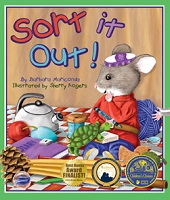
Grade K
4 skill lessons · 2 math-through-reading
Math
Skill lessons
The mathematics the book carries, taught directly. Printable workbook pages and teacher keys are not available for this book yet.
- 1All Things That Are Green
- 2The Turtle Is In Two Piles
- 3Three Things In Every Pile
- 4Guess Packrat's Rule
Math + reading
Math through the reading
The same book, entered through a sentence it prints. Change one word in the reading and the numbers change with it.
- 5All, Some, and What Goes In The Pile
- 6Which Pile Does The Turtle Belong In?
Reading
Reading and language lessons
The same book read as a text. What a word means in its sentence, how a character is shown, how the writing is put together - no mathematics.
- 7Words that end the same way
- 8The words at the end that name the pile
- 9Every verse is built the same way
- 10What his mother asked, and what he found
Skill lessons
4 lessons on the mathematics the book carries. Printable workbook pages and teacher keys are not available for this book yet.
1. All Things That Are Green
Packrat's mother tells him to sort his collection and he does it eight times over, and every time the book hands the reader the rule in words: things that are green, things with a hard outer shell, things that are round, things made out of metal. Children get the same objects and one of the book's own rule cards, and build the pile that card describes. The concept is that a pile is not a heap: it is the set of every object that makes the rule true, so a thing that fits goes in even when the hoop already looks full, and a thing that nearly fits stays out. Reading the hoop back with the book's sentence frame, these are all things that ___, is how a child shows the rule is still the rule after the objects moved.
Full lesson — 20 minutes
1. Spill the bag (4 min)
Each group of three tips the cloth bag out and spreads the fifteen things so nothing sits on top of anything else, the way Packrat spilled his collection onto the bed. Take turns picking up two things and saying one way they are alike. Do not build any piles yet.
Word preview: alike, sort
An egg and umbrella, a brush and some thread, are just some of the things he spilled out on his bed.
But before he could put all these treasures away, he grouped them with things that they're like in some way.
2. Take a rule card (3 min)
One child in each group draws a rule card and reads its words aloud with the teacher, then lays it beside an empty hoop. Every child in the group says the rule back before anyone touches an object, so the pile has a meaning before it has anything in it. The rule is the book's rule, not one you made up.
Word preview: rule, all, things
These are all things with a hard outer shell.
These are examples of things that are round.
3. Test every thing against the rule (8 min)
Pick up one object at a time, hold it where your group can see it, and say yes or no against the rule on the card. A yes goes inside the hoop and a no goes back on the carpet, and no object gets moved twice. Work all the way to the last object even after the hoop looks full, because the rule is about all of them and not about the first few.
Word preview: yes, no, pile
The turtle, the clover, the skinny string bean, he placed in a pile made of things that are green.
He sorted them this way and that way and then he looked them all over and sorted again.
4. Read your hoop back (5 min)
Point at each thing in your hoop one at a time and name it, then finish the book's own sentence out loud: these are all things that ___. Your group says yes or challenges one object. If a group challenges, the child who put it there picks it up again and says the rule about that one thing.
Word preview: all, these
The needle, the locket, the dented tin kettle, all these three things have been made out of metal.
The a-corn, the pine cone, the cherry you see, all of these things can be plucked from a tree.
Short version — 9 minutes
1. Take a rule card (3 min)
One child draws a rule card and reads it aloud with the teacher, then lays it beside an empty hoop. Everyone in the group says the rule back before touching an object.
Word preview: rule, all, things
These are all things with a hard outer shell.
2. Test every thing against the rule (6 min)
Pick up one object at a time and say yes or no against the rule on the card. A yes goes inside the hoop, a no goes back on the carpet, and nothing gets moved twice. Work to the last object even after the hoop looks full.
Word preview: yes, no, pile
The turtle, the clover, the skinny string bean, he placed in a pile made of things that are green.
Three levels
- Support
- Hand the group a tray of eight objects instead of fifteen, chosen so that the yes objects for their card are unmistakable and nothing sits near the edge of the rule. The child still draws the card, still says the rule aloud, and still tests every object one at a time; only the number of hard decisions comes down, not the language.
- At Grade
- Work from the full fifteen with one of the book's eight cards. Test every object against the card, place the yes objects in the hoop, and read the hoop back with the frame these are all things that ___ while pointing at each one.
- Extension
- After the hoop is read back, hand the group one object from the carpet that they left out and ask them to say which word of the rule it breaks. Naming the word that fails is harder than naming a match, because the child has to hold the whole rule while looking at one thing.
English learners
The objects are the vocabulary here and they are all in the child's hands, so a child can hold the pine cone up and be understood without a sentence. The frame these are all things that ___ is another matter: English puts the rule after the noun and many languages put it before; and the word all is doing quantifier work rather than naming anything. Rehearse these are all ___ and this one is ___ so both are ready. Let a child say the rule in their strongest language first and then say only the attribute word in English. A child who points at three objects in the hoop and says the attribute word has met the demand of this step.
Materials
- A cloth bag per group, standing in for Packrat's red checkered bag
- Tray of 15 real objects per group of three, one object for each thing Packrat names: a toy turtle, a clover leaf, a green bean, a plastic egg, an acorn, a pine cone, a cherry, a marble, a ball of yarn, a blunt plastic needle, a spool of thread, a locket or small hinged tin, a metal kettle or small saucepan, a child's umbrella, a board book, a square of sandpaper, and a scrubbing brush
- Rule cards, one set per group: green, hard outer shell, from a tree, round, for sewing, metal, opens and closes, scratchy
- Three yarn loops or hoops per group, each big enough to hold three objects
- Word cards: sort, rule, all, pile, alike
Standards & curriculum
Choose your curriculum above to see the standards for this lesson.
Standards are held back while this plan is edited. Every standard shown here was matched against the supplied wording of this lesson, quoting its steps, so a changed step is no longer the thing that was checked. Undo your changes to bring the standards back — your edits stay in this browser either way.
2. The Turtle Is In Two Piles
The book does something quietly hard and never comments on it: the turtle is in the green pile and then it is in the hard outer shell pile, the cherry is a thing from a tree and a thing that is round, the yarn is round and also for sewing. Nothing is taken back out. Children reproduce that with two overlapping hoops and discover that an object is not spent when it is used, because a rule asks a question about the object and two different questions can both get yes. The reasoning is in the last step, where a child has to answer does it still belong to the green pile using the rule rather than pointing at where the object is lying.
Full lesson — 20 minutes
1. Find the turtle twice (5 min)
The teacher rereads the green line and the shell line and stops after each. Both times, one child fetches the toy turtle from the carpet and holds it up. Say out loud what just happened: the turtle went into a pile, and then the turtle went into another pile, and nobody took it out of the first one.
Word preview: turtle, pile
The turtle, the clover, the skinny string bean, he placed in a pile made of things that are green.
The turtle, the egg, and the acorn that fell.
2. Put the turtle in both hoops (5 min)
Lay two hoops side by side with the green card beside one and the hard outer shell card beside the other. Fill both hoops from the carpet. When you reach the turtle, decide as a group what to do about it, and then push the two hoops together until they overlap so the turtle can sit in the part that belongs to both.
Word preview: both
These are all things with a hard outer shell.
3. Hunt for another one (6 min)
Every object that Packrat sorted twice is still on your carpet. Go through the rule cards two at a time and find another thing that would sit in the overlap. Say the two rules out loud about the one object, in the form the ___ is ___ and it is also ___, and place it where the hoops cross.
Word preview: also, both, and
The cherry, the marble, the yarn tightly wound.
The yarn, the needle and thread are you know all things that we use when we knit stitch or sew.
The a-corn, the pine cone, the cherry you see, all of these things can be plucked from a tree.
4. Say why it is not cheating (4 min)
One child from each group tells the class about their overlap object using both rules in one sentence. Then answer the question the class asks back: does the thing in the middle belong to the green pile or not? Everyone has to say yes and say why, using the rule and not the hoop.
Word preview: belong, both
He sorted them this way and that way and then he looked them all over and sorted again.
Short version — 9 minutes
1. Put the turtle in both hoops (4 min)
Lay two hoops side by side with the green card beside one and the hard outer shell card beside the other, and fill both from the carpet. When you reach the turtle, push the hoops together so it can sit in the part that belongs to both.
Word preview: both
These are all things with a hard outer shell.
2. Hunt for another one (5 min)
Go through the rule cards two at a time and find another thing that would sit in the overlap. Say the two rules out loud about the one object, in the form the ___ is ___ and it is also ___.
Word preview: also, both, and
The cherry, the marble, the yarn tightly wound.
Three levels
- Support
- Work with the turtle only and with the two hoops already overlapping on the carpet before the child arrives, so the arrangement is not one more thing to build. The child still fetches the turtle at both readings and still answers whether it is green while it is lying in the middle. The reasoning demand is untouched; only the setting up comes off.
- At Grade
- Build the two overlapping hoops, fill both, place the turtle in the crossing part, then find a second overlap object of your own from a different pair of rule cards and say both rules about it in one sentence.
- Extension
- Find a thing on the carpet that sits in three of the book's piles at once and say all three rules about it. Then take the hardest case in the book, the pine cone, which the book puts with things from a tree and with things that feel scratchy and rough, and argue whether the clover could join either of those piles.
English learners
Doing the mathematics does not need English here: a child who lays the turtle in the crossing part of two hoops has shown the whole idea without saying a word. The language that does not transfer is the joining word, because and it is also ___ compresses two whole sentences into one, and languages differ in whether the second rule needs its verb repeated. Rehearse the long form first, it is green and it has a hard outer shell, and accept it all lesson; the short form is the extension, not the entry price. Invite children to argue about the pine cone in their strongest language and report only the two attribute words in English.
Materials
- Tray of 15 real objects per group of three, one object for each thing Packrat names: a toy turtle, a clover leaf, a green bean, a plastic egg, an acorn, a pine cone, a cherry, a marble, a ball of yarn, a blunt plastic needle, a spool of thread, a locket or small hinged tin, a metal kettle or small saucepan, a child's umbrella, a board book, a square of sandpaper, and a scrubbing brush
- Three yarn loops or hoops per group, each big enough to hold three objects
- Rule cards, one set per group: green, hard outer shell, from a tree, round, for sewing, metal, opens and closes, scratchy
- Word cards: both, also, belong
Standards & curriculum
Choose your curriculum above to see the standards for this lesson.
Standards are held back while this plan is edited. Every standard shown here was matched against the supplied wording of this lesson, quoting its steps, so a changed step is no longer the thing that was checked. Undo your changes to bring the standards back — your edits stay in this browser either way.
3. Three Things In Every Pile
The book counts once. It says all these three things have been made out of metal, and then it never counts again, although it goes on to build seven more piles and every one of them has three things in it. Children count the metal pile first, where the book has told them the answer and counting is a check, then count the piles the book leaves uncounted and find three each time. They practise one touch and one number word, in order, ending on the number that says how many; the three-frame mat exists so a child can see whether their counting ran out of objects or ran out of squares. The pattern children notice is real and it is the book's, not the teacher's: eight piles, three things each, said once.
Full lesson — 20 minutes
1. Count the metal pile (4 min)
The teacher reads the metal line and stops on the word three. Children take the needle, the locket and the kettle from the carpet, set them in a row on the three-frame mat, one in each square, and count them by touching, one two three. The book said three before you counted; check whether the book was right.
Word preview: three, count
The needle, the locket, the dented tin kettle, all these three things have been made out of metal.
2. Count a pile the book did not count (6 min)
The teacher reads the green line, the round line and the sewing line without stopping. After each one, build that pile on your three-frame mat and count it by touching each square. Say the number out loud before the next line is read. Notice what keeps happening and be ready to say it.
Word preview: three, every
The turtle, the clover, the skinny string bean, he placed in a pile made of things that are green.
These are examples of things that are round.
The yarn, the needle and thread are you know all things that we use when we knit stitch or sew.
3. Say the pattern out loud (4 min)
Tell your partner what you found, in a whole sentence: every pile Packrat made has three things in it. Then the teacher reads one more of the book's lines, the tree line, and you say the number before you build it. Build it and count to check.
Word preview: every, three
The a-corn, the pine cone, the cherry you see, all of these things can be plucked from a tree.
4. Fill the chart (6 min)
Each pair takes one line of the class chart. Build that pile from the carpet, count it by touching, and set the three objects in the three blank spaces beside the rule so the whole chart is holding real things. Walk the chart with the class and count each row aloud together, touching one object per number word.
Word preview: three, row
These are all things with a hard outer shell.
The sandpiper pine cone and brush her enough are all some things that feel scratchy and rough.
Short version — 9 minutes
1. Count the metal pile (4 min)
The teacher reads the metal line and stops on the word three. Take the needle, the locket and the kettle, set them one to a square on the three-frame mat, and count them by touching, one two three. Check whether the book was right.
Word preview: three, count
The needle, the locket, the dented tin kettle, all these three things have been made out of metal.
2. Count a pile the book did not count (5 min)
The teacher reads the green line and the round line. After each, build that pile on your three-frame mat and count it by touching each square. Say the number out loud before the next line is read.
Word preview: three, every
These are examples of things that are round.
Three levels
- Support
- Hand the child the three objects for the pile already gathered, so the counting is not competing with the sorting. The child still places one object per square and still touches once per number word, and still says the last number as the answer to how many. The load that comes off is finding the objects, not the count.
- At Grade
- Gather each pile from the fifteen on the carpet yourself, lay it on the three-frame mat one to a square, and count by touching. Say the number aloud before the teacher reads the next line once you have seen the pattern.
- Extension
- Count the piles, then ask the harder question the chart makes visible: the chart has eight rows of three things and there are only fifteen things on the carpet, so some objects are standing in more than one row. Find one and say which two rows it is in.
English learners
The number words to three are short, and counting by touching is the same act in every language, so a child can join this step on the first day. Invite children to count aloud in their strongest language while touching, then say only the last number in English, because the last number is the answer and it is the part the partner needs. The how many question itself is built differently in some languages, with a counting word attached to the noun; rehearse how many ___ and three ___ as a pair so the question and its answer arrive together.
Materials
- Tray of 15 real objects per group of three, one object for each thing Packrat names: a toy turtle, a clover leaf, a green bean, a plastic egg, an acorn, a pine cone, a cherry, a marble, a ball of yarn, a blunt plastic needle, a spool of thread, a locket or small hinged tin, a metal kettle or small saucepan, a child's umbrella, a board book, a square of sandpaper, and a scrubbing brush
- Three-frame mat per child: a strip of card with three empty squares printed left to right
- Teacher chart of the eight rules the book names, one rule per line, with three blank spaces beside each
- Word cards: three, count, how many, every
Standards & curriculum
Choose your curriculum above to see the standards for this lesson.
Standards are held back while this plan is edited. Every standard shown here was matched against the supplied wording of this lesson, quoting its steps, so a changed step is no longer the thing that was checked. Undo your changes to bring the standards back — your edits stay in this browser either way.
4. Guess Packrat's Rule
Every one of the book's eight verses runs the same way round: the three things first, then the rule that gathered them. The cherry, the marble, the yarn tightly wound, and only then, these are examples of things that are round. This lesson runs a child in that direction, which is the harder one: the pile is the representation, and the child's job is to read it and say what it means. The test in the third step is what stops a lucky guess counting, because a rule that is true of the three but wrong will accept an object the class can see does not belong. A rule that survives a fourth object has been read from the pile rather than remembered.
Full lesson — 20 minutes
1. Watch a pile appear (4 min)
The teacher builds one of the book's piles on the carpet without saying the rule, laying the three objects down one at a time. Watch all three land before anyone speaks. Then say one thing that is true about the whole pile, not about one object in it.
Word preview: true, whole
The cherry, the marble, the yarn tightly wound.
These are examples of things that are round.
2. Say the rule in the book's words (5 min)
Say what the rule is, using the book's own frame: these are all things that ___. Say it about all three objects at once. If your rule is only true of two of them, it is not the rule yet, so look at the third one again and try a rule that covers it too.
Word preview: all, rule
These are all things with a hard outer shell.
The Lockett Umbrella and book that he chose, these are all things you can open and close.
3. Test the rule with a fourth thing (7 min)
Once your group has a rule, take a fourth object from the carpet that you believe obeys it and set it down beside the pile, saying the rule about that object as you place it. The other groups say keep it or take it back. If they take it back, say the rule again and point at the part of the object that decided it.
Word preview: test, rule
But before he could put all these treasures away, he grouped them with things that they're like in some way.
He sorted them this way and that way and then he looked them all over and sorted again.
4. Build a pile for someone else to name (4 min)
Now do it to another group. Choose one of the book's rules without saying it, build the three-object pile from the carpet, and let them work it out. Answer only yes or no when they try a rule on you, and hold your card face down until they say a rule that is true of all three.
Word preview: yes, no, all
He sorted them this way and that way and then he looked them all over and sorted again.
These are examples of things that are round.
Short version — 9 minutes
1. Say the rule in the book's words (4 min)
Look at the three objects the teacher laid down and say the rule using the book's frame: these are all things that ___. If your rule is only true of two of them, look at the third again and try a rule that covers it too.
Word preview: all, rule
These are all things with a hard outer shell.
2. Test the rule with a fourth thing (5 min)
Take a fourth object from the carpet that you believe obeys your rule and set it beside the pile, saying the rule about it as you place it. The other groups say keep it or take it back.
Word preview: test, rule
He sorted them this way and that way and then he looked them all over and sorted again.
Three levels
- Support
- Give the child two rule cards face up and tell them one of the two made this pile. The child still has to check the rule against all three objects and still has to say it aloud in the book's frame, but the words are supplied so the work is the matching and not the wording.
- At Grade
- Read the pile cold with no cards showing, say the rule in the frame these are all things that ___, then defend it by placing a fourth object and hearing the class keep it or take it back.
- Extension
- Build a pile of three whose rule two different children could name two different ways, using objects the book itself double-sorted, then ask the class for both rules and say which of the two your fourth object would settle.
English learners
This lesson asks a child to produce a rule rather than recognise one, which is the biggest language step in the four, so the frame carries the weight: these are all things that ___ should be on the wall and said by the teacher before every turn. What transfers is the noticing, which happens before any language at all. What does not is the relative clause after things that, which is a shape English uses constantly and many languages build differently. Accept a single attribute word placed in the slot as a complete answer, and accept the rule in the child's strongest language with only the attribute word in English.
Materials
- Tray of 15 real objects per group of three, one object for each thing Packrat names: a toy turtle, a clover leaf, a green bean, a plastic egg, an acorn, a pine cone, a cherry, a marble, a ball of yarn, a blunt plastic needle, a spool of thread, a locket or small hinged tin, a metal kettle or small saucepan, a child's umbrella, a board book, a square of sandpaper, and a scrubbing brush
- Rule cards, one set per group: green, hard outer shell, from a tree, round, for sewing, metal, opens and closes, scratchy
- Three yarn loops or hoops per group, each big enough to hold three objects
- Word cards: rule, all, true, guess
Standards & curriculum
Choose your curriculum above to see the standards for this lesson.
Standards are held back while this plan is edited. Every standard shown here was matched against the supplied wording of this lesson, quoting its steps, so a changed step is no longer the thing that was checked. Undo your changes to bring the standards back — your edits stay in this browser either way.
Math through the reading
The mathematics is reached through a sentence the book prints: change one word in the reading and the numbers change with it. These carry their own standards, matched against these lessons rather than inherited from the skill ones.
5. All, Some, and What Goes In The Pile
Children build Packrat's piles and discover that the word all is what makes a pile a pile, because a rule that says all has to be true of the last thing as well as the first.
Full lesson — 20 minutes
1. Hear the two kinds of line (4 min)
Children listen to two lines read one after the other and put a thumb up for the one that means every single one. The teacher reads an egg and umbrella, a brush and some thread, are just some of the things he spilled out on his bed, and then these are all things with a hard outer shell. Children say which line tells you there are more things you have not heard about yet, and which line tells you there are not.
2. Take a rule card and say it back (3 min)
Each group of three draws one of the book's rule cards, reads it with the teacher, and lays it beside an empty hoop. Every child in the group says the whole rule back before anyone touches an object, so the pile means something before it holds anything.
3. Test every thing against the rule (8 min)
Children pick up the fifteen objects one at a time, hold each one up, and say yes or no against the card. Yes objects go in the hoop, no objects go back on the carpet, and nothing is moved twice. They keep going to the last object even after the hoop looks full, because the card says all and all is not finished until the carpet is.
4. Read the hoop back and take a challenge (5 min)
Each group points at their objects one at a time and finishes the book's sentence out loud, these are all things that ___. Another group then hands them one object from the carpet and asks does this belong. The child who answers has to say the rule about that one object, not point at the hoop.
Short version — 9 minutes
1. Take a rule card and say it back (3 min)
Each group of three draws one of the book's rule cards, reads it with the teacher, and lays it beside an empty hoop. Every child in the group says the whole rule back before anyone touches an object, so the pile means something before it holds anything.
2. Test every thing against the rule (8 min)
Children pick up the fifteen objects one at a time, hold each one up, and say yes or no against the card. Yes objects go in the hoop, no objects go back on the carpet, and nothing is moved twice. They keep going to the last object even after the hoop looks full, because the card says all and all is not finished until the carpet is.
Three levels
- Support
- Give the group eight objects instead of fifteen, chosen so no object sits near the edge of their rule, and put the rule card face up in front of each child rather than one to a group. The child still says the whole rule back, still tests every object aloud, and still finishes the all frame at the end. What comes off is the number of hard decisions competing with the sentence, not the sentence.
- At grade
- Work the full fifteen with one of the book's eight cards. Test every object, build the hoop, read it back with these are all things that ___, and answer one challenge from another group by saying the rule about the challenged object.
- Extension
- Take the challenge the other way. Hand another group an object that does not belong in their hoop and make them say which word of their rule it breaks, then do the harder version: hand them an object that belongs and watch whether they take it, because a group that has learned to say no to everything has stopped reading the rule.
English learners
The objects carry themselves. A child can hold the pine cone up and be understood on the first day, and the yes-or-no test in the third segment can be done entirely by placing things, so the mathematics is open before the English is. The frame itself is the hard part: these are all things that ___ hangs a rule off a noun with a relative clause, a shape English leans on constantly and many languages build the other way round or not at all. Put the frame on the wall and say it before every turn, and accept a single attribute word dropped into the slot as a complete answer. All and some are worth rehearsing as a pair rather than separately, because it is the contrast and not either word that does the work. Invite a child to argue a challenge in their strongest language and report only the attribute word in English.
Materials
- A cloth bag per group holding the book's fifteen things: a toy turtle, a clover leaf, a green bean, a plastic egg, an acorn, a pine cone, a cherry, a marble, a ball of yarn, a blunt plastic needle, a spool of thread, a small hinged tin, a metal kettle, a child's umbrella, a board book, a square of sandpaper and a scrubbing brush
- Rule cards, one set per group: green, hard outer shell, from a tree, round, for sewing, metal, opens and closes, scratchy
- One yarn loop or hoop per group, big enough to hold three objects
- The all frame written large: these are all things that ___
- The two contrast lines written side by side, the some line above the all line
Standards & curriculum
Choose your curriculum above to see the standards for this lesson.
Standards are held back while this plan is edited. Every standard shown here was matched against the supplied wording of this lesson, quoting its steps, so a changed step is no longer the thing that was checked. Undo your changes to bring the standards back — your edits stay in this browser either way.
6. Which Pile Does The Turtle Belong In?
The book puts the turtle in the green pile and then in the hard-shell pile without ever saying which one is right, and children have to take a side and say why using the rule.
Full lesson — 20 minutes
1. Hear the turtle sorted twice (4 min)
Children listen to the green line and then the shell line and fetch the toy turtle from the carpet both times, holding it up each time. They say what happened in their own words: the turtle went in a pile, and then it went in another pile, and nobody came and took it out of the first one.
2. Test the turtle against both rules (6 min)
With the green card beside one hoop and the hard outer shell card beside the other, children hold the turtle against each card in turn and say yes or no out loud. Then they do the same with the clover and the egg, so they find that the clover is a yes for one card only and the turtle is a yes for both. Only one hoop is allowed to hold the turtle at this stage.
3. Tell Packrat where it goes (6 min)
Each child says one sentence to Packrat, the boy still sitting in his room full of clutter, telling him where to put his turtle and why: put it in the ___ pile because it is ___. The reason has to be something about the turtle. Children who disagree say so to each other, and anyone who changes their mind says what changed it.
4. Push the hoops together (4 min)
Children push the two hoops until they overlap and put the turtle in the crossing part, then answer the question that arrangement raises out loud: is the turtle still in the green pile now. They have to answer from the rule rather than from where it is lying, and they find another object on the carpet that could join it in the middle.
Short version — 9 minutes
1. Test the turtle against both rules (6 min)
With the green card beside one hoop and the hard outer shell card beside the other, children hold the turtle against each card in turn and say yes or no out loud. Then they do the same with the clover and the egg, so they find that the clover is a yes for one card only and the turtle is a yes for both. Only one hoop is allowed to hold the turtle at this stage.
2. Tell Packrat where it goes (6 min)
Each child says one sentence to Packrat, the boy still sitting in his room full of clutter, telling him where to put his turtle and why: put it in the ___ pile because it is ___. The reason has to be something about the turtle. Children who disagree say so to each other, and anyone who changes their mind says what changed it.
Three levels
- Support
- Give the child the sentence with its first half already said: put it in the green pile because ___, and put it in the shell pile because ___, both on the wall, so choosing a position does not also mean building a sentence from nothing. The child still has to test the turtle against both cards themselves and still has to finish whichever sentence they chose with a property of the turtle, which is the part being taught.
- At grade
- Test the turtle against both cards, take a position, and say it to Packrat in one sentence that names the rule. Then answer whether the turtle is still in the green pile once the hoops overlap, and find a second object that belongs in the crossing part.
- Extension
- Argue the case against your own position. Take whichever pile you chose and say the best reason for the other one, then decide whether you still hold your view. Then take the hardest object in the book, the pine cone, which Packrat puts with things from a tree and also with things that feel scratchy and rough, and say whether a child who put it in only one of those piles would be wrong or only incomplete.
English learners
The reasoning in this lesson is heavier in English than in mathematics, because taking a position is a sentence shape rather than a word. Because is the hinge and it is worth rehearsing on its own with the objects in hand: it is green, so, it goes there. Put put it in the ___ pile because it is ___ on the wall and say it before every turn, and accept a child who points at the hoop and says only the attribute word as having given a position, because they have named the reason even without the frame. Testing the turtle against a card is language-free and every child can do the mathematics from the first minute. Invite children to argue with a partner in their strongest language before saying the one sentence in English, and never require a child to hold a position publicly they have changed their mind about.
Materials
- A toy turtle, a clover leaf and a plastic egg per group, plus the rest of the book's fifteen things on the carpet
- Two yarn loops or hoops per group that can be laid apart or pushed into an overlap
- The green card and the hard outer shell card, one pair per group
- The position frame written large: put it in the ___ pile because it is ___
- The book's two turtle lines written one above the other
Standards & curriculum
Choose your curriculum above to see the standards for this lesson.
Standards are held back while this plan is edited. Every standard shown here was matched against the supplied wording of this lesson, quoting its steps, so a changed step is no longer the thing that was checked. Undo your changes to bring the standards back — your edits stay in this browser either way.
Reading and language lessons
4 lessons on the reading and language the book carries - what a word means in its sentence, how a character is shown, how a text is built. No mathematics: these are matched against the English language arts curricula, which are a different and smaller set than the mathematics ones.
7. Words that end the same way
This whole book is written in rhyme, and every verse ends two lines with words that finish on the same sound. Students listen for the rhyming pair at the ends of the printed verses, say the pair aloud, and then supply a rhyme of their own. The skill is hearing and producing rhyme; the objects named inside the verses are read but nothing about them is counted or grouped in this lesson.
Full lesson — 20 minutes
1. Hear the pair at the ends (6 min)
The teacher reads the passage below once, slowly, and then again. Listen hard to the very last word before each full stop. Say those two words aloud: bean, green. Then say what your mouth does the same way for both.
Word preview: rhyme
The turtle, the clover, the skinny string bean, he placed in a pile made of things that are green.
2. Find the rhyme in two more verses (5 min)
Read the two passages below with the teacher. Each one hides a rhyming pair at the ends. Say the pair you hear in the first, then the pair you hear in the second. Hold up two fingers each time you have found a pair.
Word preview: pair
The cherry, the marble, the yarn tightly wound. These are examples of things that are round.
The needle, the locket, the dented tin kettle, all these three things have been made out of metal.
3. Say which one does not sound like the others (5 min)
Read the passage below with a partner. Say its rhyming pair aloud. Then the teacher will say three words: fell, shell, and green. Say which one of those three does not belong with the other two, and say why.
Word preview: not
The turtle, the egg, and the acorn that fell. These are all things with a hard outer shell.
4. Add a rhyme of your own (4 min)
Read the passage below. Say the two words at the ends that rhyme. Then think of one more word of your own that would rhyme with them, and say it to a partner. Your partner says whether it really rhymes.
Word preview: your own
The a-corn, the pine cone, the cherry you see, all of these things can be plucked from a tree.
Short version — 9 minutes
1. Hear the pair at the ends (5 min)
The teacher reads the passage twice, slowly. Listen to the last word before each full stop. Say those two words aloud: bean, green. Then say what your mouth does the same way for both.
Word preview: rhyme
The turtle, the clover, the skinny string bean, he placed in a pile made of things that are green.
2. Find the rhyme in two more verses (4 min)
Read both passages. Each hides a rhyming pair at the ends. Say the pair in the first, then the pair in the second, holding up two fingers each time you find one.
Word preview: pair
The cherry, the marble, the yarn tightly wound. These are examples of things that are round.
The needle, the locket, the dented tin kettle, all these three things have been made out of metal.
Three levels
- Support
- Read the printed verse and say only the two end words aloud, bean and green, with the child echoing each. Then say the pair together twice. Producing a new rhyme is not needed at this sitting.
- At Grade
- Say the rhyming pair at the ends of the printed verse and say what sounds the same in both.
- Extension
- The printed verse rhymes bean with green. Say whether the two words are spelled the same way at their ends as well as sounding the same, and say what that tells you about listening for rhyme rather than looking for it.
English learners
Rhyme is a listening skill before it is a reading skill, and a learner who cannot yet read the words can hear the pair perfectly. Say only the two end words, apart from the verse, and let the child echo them until the match is audible. Invite the child to say two rhyming words from a song or rhyme in their strongest language, and treat that as proof the skill is already there. Rehearsable frame: ___ and ___ sound the same.
Materials
- Sort it Out!, the passage printed in this step
- Word cards: rhyme, pair, not, your own
Standards & curriculum
Choose your curriculum above to see the standards for this lesson.
Standards are held back while this plan is edited. Every standard shown here was matched against the supplied wording of this lesson, quoting its steps, so a changed step is no longer the thing that was checked. Undo your changes to bring the standards back — your edits stay in this browser either way.
8. The words at the end that name the pile
Each verse in this book lists a few things and then ends with the words that say what they share: green, round, scratchy and rough. Students find those naming words, match a word to the right list, and then say a naming phrase for a group of their own. The skill is the describing word that names a shared quality, which is vocabulary work; no verse is counted and no pile is compared with another.
Full lesson — 20 minutes
1. Find the words that name the pile (6 min)
The teacher reads the two passages below. Each one names some things and then says what they are all like. Say aloud the word at the end of the first passage that names its pile. Then say the word at the end of the second one.
Word preview: names
The turtle, the clover, the skinny string bean, he placed in a pile made of things that are green.
The cherry, the marble, the yarn tightly wound. These are examples of things that are round.
2. Say the naming words in a longer verse (5 min)
Read the passage below with the teacher, exactly as it is printed. This verse names its pile with two words instead of one. Say both words aloud. Then say something you could touch in this room that those two words would also fit.
Word preview: two words
The sandpiper pine cone and brush her enough are all some things that feel scratchy and rough.
3. Match a naming word to its list (5 min)
Read the two passages below with a partner. The teacher will say two naming words: metal and open. Say which passage each word belongs to. Then say one thing named in the first passage and say aloud why the word fits it.
Word preview: match
The needle, the locket, the dented tin kettle, all these three things have been made out of metal.
The Lockett Umbrella and book that he chose, these are all things you can open and close.
4. Name a pile of your own (4 min)
Read the passage below. It names a pile with the words hard outer shell. Now think of two things in this room that are alike in some way. Say what they are, then say the naming words for your pile the way the book does.
Word preview: your pile
The turtle, the egg, and the acorn that fell. These are all things with a hard outer shell.
Short version — 9 minutes
1. Find the words that name the pile (5 min)
The teacher reads both passages. Each names some things and then says what they are all like. Say the word at the end of the first that names its pile, then the word at the end of the second.
Word preview: names
The turtle, the clover, the skinny string bean, he placed in a pile made of things that are green.
The cherry, the marble, the yarn tightly wound. These are examples of things that are round.
2. Say the naming words in a longer verse (4 min)
Read the passage exactly as printed. This verse names its pile with two words instead of one. Say both aloud, then say something in this room those two words would also fit.
Word preview: two words
The sandpiper pine cone and brush her enough are all some things that feel scratchy and rough.
Three levels
- Support
- Read only the first printed passage. Ask for the one naming word at its end and say it together. Then hold up something green in the room and say the word again. One word from one verse is a full sitting.
- At Grade
- Say the naming word at the end of each printed verse and say what the listed things share.
- Extension
- The first printed verse names its pile green and the second names its pile round. Say whether a single thing could belong in both piles at once, and name something from the passages that could.
English learners
Describing words that name a quality are among the most useful English a learner can carry away, because they transfer straight to the classroom and the playground. Hold up a real green object and a real round one while the words are said. Invite the child to give the naming word in their strongest language first, then hear the English beside it. This verse ends her enough where a reader expects other words, so read it whole and do not stop to mend it. Rehearsable frame: These are all ___.
Materials
- Sort it Out!, the passage printed in this step
- Two naming cards marked metal and open
- Word cards: names, two words, match, your pile
Standards & curriculum
Choose your curriculum above to see the standards for this lesson.
Standards are held back while this plan is edited. Every standard shown here was matched against the supplied wording of this lesson, quoting its steps, so a changed step is no longer the thing that was checked. Undo your changes to bring the standards back — your edits stay in this browser either way.
9. Every verse is built the same way
Eight verses in this book are built to one plan: name some things, then say what they are all like. Once a reader hears the plan, every verse becomes predictable. Students read three verses, say the two parts of the plan, and then use the plan to make a sentence of their own. This is sentence structure, a language skill; the lesson never asks how many things are in a list.
Full lesson — 20 minutes
1. Hear the two parts (6 min)
The teacher reads the passage below. It has two parts. The first part names some things. The second part says what they are all like. Say aloud where the first part stops. Then say the second part on your own.
Word preview: two parts
The cherry, the marble, the yarn tightly wound. These are examples of things that are round.
2. Find the same two parts again (5 min)
Read the two passages below with the teacher. Both are built the same way as the one before. For each, say the naming part first and then the what-they-are-like part. Hold up one finger for the first part and two for the second.
Word preview: again
The needle, the locket, the dented tin kettle, all these three things have been made out of metal.
The a-corn, the pine cone, the cherry you see, all of these things can be plucked from a tree.
3. Guess the second part before you hear it (5 min)
The teacher reads only the first part of the passage below and stops. Say what you think the second part will be about, before it is read. Then the teacher reads the whole passage. Say whether your guess matched.
Word preview: guess
The Lockett Umbrella and book that he chose, these are all things you can open and close.
4. Build a sentence on the same plan (4 min)
Read the passage below, which is built on the plan too. Now say a sentence of your own using the same two parts: name two or three things, then say what they are all like. Say it to a partner, who says whether both parts were there.
Word preview: build
The turtle, the clover, the skinny string bean, he placed in a pile made of things that are green.
Short version — 9 minutes
1. Hear the two parts (4 min)
The teacher reads the passage. It has two parts: one names some things, one says what they are all like. Say where the first part stops, then say the second part on your own.
Word preview: two parts
The cherry, the marble, the yarn tightly wound. These are examples of things that are round.
2. Find the same two parts again (5 min)
Read both passages. Both are built the same way. For each, say the naming part and then the what-they-are-like part, holding up one finger for the first and two for the second.
Word preview: again
The needle, the locket, the dented tin kettle, all these three things have been made out of metal.
The a-corn, the pine cone, the cherry you see, all of these things can be plucked from a tree.
Three levels
- Support
- Read the printed verse in two goes, pausing clearly between the parts, and ask the child only to say stop at the pause. Then read the second part alone and have the child echo it. Naming the parts is not required.
- At Grade
- Say where the first part of the printed verse stops and say the second part on your own.
- Extension
- The printed verse names three things and then says what they are all like. Say what a reader could work out about a verse after hearing only its first part, and say what they could not.
English learners
A repeating sentence plan is scaffolding a learner can stand on: once the shape is known, only the words inside it change. Read one verse with a long pause at the join so the two parts are audibly separate. Invite the child to fill only the second part at first, with the teacher reading the first. Rehearsable frame: These are all things that ___.
Materials
- Sort it Out!, the passage printed in this step
- Word cards: two parts, again, guess, build
Standards & curriculum
Choose your curriculum above to see the standards for this lesson.
Standards are held back while this plan is edited. Every standard shown here was matched against the supplied wording of this lesson, quoting its steps, so a changed step is no longer the thing that was checked. Undo your changes to bring the standards back — your edits stay in this browser either way.
10. What his mother asked, and what he found
A mother gives an instruction at the start of this book, and the ending answers it in a way nobody expected. Students read the instruction, say it back in their own words, then read the ending and say the surprise. The skill is following an instruction through a story to its outcome and telling what changed. Nothing is counted; the surprise is about a bag going missing, not about how much is left.
Full lesson — 20 minutes
1. Read what his mother said (6 min)
The teacher reads the two passages below, which are how the book starts. Say aloud who is talking in them. Then say, in your own words and not the book's, the two things his mother told him to do.
Word preview: told
Packrat collected a whole bag of stuff. His mother said, Packie, enough is enough.
And do that stuff you've collected today, then sort it all out and put it away.
2. Read what he did about it (5 min)
Read the two passages below with the teacher. They say what he did after he was told. Say aloud one thing he did. Then say whether he was doing what his mother asked, and say the words in the passage that made you sure.
Word preview: did
But before he could put all these treasures away, he grouped them with things that they're like in some way.
He sorted them this way and that way and then he looked them all over and sorted again.
3. Read the worry (5 min)
Read the two passages below with a partner. Something is bothering him now. Say aloud what he is worried about. Then say whether you think he is right to worry, and why.
Word preview: worry
Still, as he sat in his room full of clutter, shaking his head, packy started to mutter.
A string bean and cherry were in his collection with pieces of sandpaper for his inspection.
4. Say the surprise at the end (4 min)
Read the passage below, which is the last line of the book. Say aloud what they discovered. Then tell a partner why that is a surprise, thinking back to what his mother had asked him to do.
Word preview: surprise
But then, how surprising when his mother was through, they discovered his red checkered bag was gone too.
Short version — 9 minutes
1. Read what his mother said (5 min)
The teacher reads both passages, which are how the book starts. Say who is talking, then say in your own words the two things his mother told him to do.
Word preview: told
Packrat collected a whole bag of stuff. His mother said, Packie, enough is enough.
And do that stuff you've collected today, then sort it all out and put it away.
2. Say the surprise at the end (4 min)
Read the passage, which is the last line of the book. Say what they discovered, then say why that is a surprise, thinking back to what his mother had asked.
Word preview: surprise
But then, how surprising when his mother was through, they discovered his red checkered bag was gone too.
Three levels
- Support
- Read the first printed passage and ask only who is speaking. Then read the second and ask for one thing she told him to do, in any words the child has. One instruction, said back once, is a full sitting.
- At Grade
- Say in your own words the two things his mother told him to do, using the printed passages.
- Extension
- The printed passages carry his mother's instruction at the start of the book. Say what a reader expects to happen by the end because of that instruction, and say whether the book gave it to them.
English learners
Saying something back in your own words is much harder than repeating it, and a learner will reach for the book's words because they are safe. Accept the book's words first, then ask for one word to be swapped for a different one, then another. Let the child give the instruction in their strongest language and supply the English beside it. Rehearsable frame: His mother told him to ___.
Materials
- Sort it Out!, the passage printed in this step
- Word cards: told, did, worry, surprise
Standards & curriculum
Choose your curriculum above to see the standards for this lesson.
Standards are held back while this plan is edited. Every standard shown here was matched against the supplied wording of this lesson, quoting its steps, so a changed step is no longer the thing that was checked. Undo your changes to bring the standards back — your edits stay in this browser either way.