The Great Divide
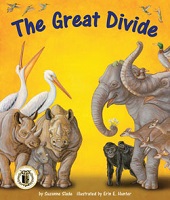
Grade 3
4 skill lessons · 2 math-through-reading
Math
Skill lessons
The mathematics the book carries, taught directly. Printable workbook pages and teacher keys are not available for this book yet.
- 1One Plate at a Time: How Many in Each Group
- 2The Word After the Second Number
- 3The Word This Book Forgot to Print
- 4Three Verses, Four Groups, Three Answers
Math + reading
Math through the reading
The same book, entered through a sentence it prints. Change one word in the reading and the numbers change with it.
- 5The One Word That Sends You Inside a Group
- 6The Answer the Book Never Prints
Reading
Reading and language lessons
The same book read as a text. What a word means in its sentence, how a character is shown, how the writing is put together - no mathematics.
- 7Have Fun Discovering: What the Opening Says the Book Is For
- 8Three Moves, Every Time: How Each Verse Is Built
- 9Dock and Flock: The Rhyme That Picks the Last Word
- 10A Pod, a Pride, a Skulk: Words That Only Name Groups
- 11Tough, Playful, Stubborn: One Word That Sets the Picture
Skill lessons
4 lessons on the mathematics the book carries. Printable workbook pages and teacher keys are not available for this book yet.
1. One Plate at a Time: How Many in Each Group
The book hands a student both numbers a partitive division needs and withholds only the answer: it prints the animals and it prints the groups, then asks how many in each. Students deal counters onto plates one at a time until the pile is gone, which is what makes the sharing equal rather than merely divided, and read the size of one group off a single plate. The student can point at which number counted the animals, which counted the groups, and which one they produced themselves; the dealing is slow on purpose so that the equalness is something they did rather than something they were told.
Full lesson — 20 minutes
1. Lay out the herd and the groups (5 min)
Count ten counters onto your mat for the ten baby leatherbacks, then set five paper plates beside the mat, one for each group heading for the sea. Do not deal anything out yet. Say aloud what the ten counts and what the five counts, so your partner hears which number is the animals and which is the groups.
Word preview: each
10 Baby Leatherbacks Leave a Sandy Trail. 5 Groups Head for Sea. How many in each bail?
2. Deal one at a time until the pile is gone (6 min)
Deal your ten counters onto the five plates, one counter to a plate, then round again, until no counters are left in your hand. Count what sits on one plate and say that number aloud. Write it on your recording strip beside the word bail.
Word preview: bail
5 Groups Head for Sea. How many in each bail?
3. Run three more verses the same way (6 min)
Do the same deal for the leopards, the elephants and the gorillas, changing the number of plates each time to match the number the verse names. After each one, write the animal group name and the number on one plate onto your strip. Keep the plates in front of you; do not clear them until your partner has counted them too.
Word preview: groups
9 hungry leopards waking up from sleep. 3 groups are on the prowl. How many in each leap?
15 playful elephants looking quite absurd, perform in three rings. How many in each heard?
20 tough gorillas magnificent and grand, Marching five directions, how many in each band?
4. Say the sentence that names both numbers (3 min)
Pick one verse from your strip and say a full sentence to your partner in this shape: there were twenty gorillas, they marched in five directions, and that puts four in each band. Your partner checks your plates against your sentence and says whether the numbers match what is on the mat.
20 tough gorillas magnificent and grand, Marching five directions, how many in each band?
Short version — 9 minutes
1. Lay out the herd and the groups (4 min)
Count ten counters for the ten baby leatherbacks and set out five plates for the five groups. Say which number counts animals and which counts groups before you deal anything.
Word preview: each
10 Baby Leatherbacks Leave a Sandy Trail. 5 Groups Head for Sea. How many in each bail?
2. Deal one at a time until the pile is gone (5 min)
Deal the ten counters round the five plates one at a time until your hand is empty. Count one plate, say the number aloud, and write it beside the word bail.
Word preview: bail
5 Groups Head for Sea. How many in each bail?
Three levels
- Support
- Stay with the ten leatherbacks and five plates for the whole lesson and deal a second and a third time from the same ten, so the answer of two arrives more than once from the same hands. Say the number on one plate aloud each time before writing anything. Add the leopards only if the ten have been dealt twice without a miscount.
- At Grade
- Deal all four verses, changing the plate count to match the verse, and write the group name with its number on the strip. Say the naming sentence for at least one verse without looking at the plates.
- Extension
- After dealing the twenty gorillas onto five plates, deal the same twenty onto four plates instead and say what changed about the size of one group and what did not change about the total. The book never asks this; the twenty is the only number it uses twice with different group counts, and comparing the two deals is the extension.
English learners
The counting words transfer once a student can say them; the structure that does not transfer is which of the two numbers the English sentence puts first. The book puts the animals first every time and the groups second, but it names the groups with a different noun almost every verse, so a learner cannot rely on hearing the word groups. Rehearse this frame aloud before dealing: THERE ARE ___ ANIMALS. THEY GO INTO ___ GROUPS. THAT PUTS ___ IN EACH ONE. Invite students to deal and say the frame in their strongest language first, then again in English with the plates still in front of them, because the plates carry the meaning while the English is still arriving.
Materials
- Counters, at least twenty per pair
- Paper plates, five per pair
- Recording strips, one per student
- Pencils
- Word cards: each, bail, groups
Standards & curriculum
Choose your curriculum above to see the standards for this lesson.
Standards are held back while this plan is edited. Every standard shown here was matched against the supplied wording of this lesson, quoting its steps, so a changed step is no longer the thing that was checked. Undo your changes to bring the standards back — your edits stay in this browser either way.
2. The Word After the Second Number
This book almost never says the word groups where a student needs it. It says flowers, lines, directions, puddles and pens instead, and each of those nouns is doing the same job: it names how many piles the animals go into. Students underline the two numbers in a verse, circle the noun that follows the second one, and collect six such nouns to see that no two are the same word. Then they build the groups the noun names. The reasoning demand is that the student decides what counts as a group from the sentence, rather than being handed the word.
Full lesson — 20 minutes
1. Underline the two numbers in one verse (4 min)
On your verse card, underline the two numbers the verse gives you. Circle the noun that comes right after the second number. Say aloud what that noun is: for the hummingbirds it is flowers, for the goats it is pens.
Word preview: divide
12 tiny hummingbirds buzzing on a farm hover near four flowers. How many in each charm?
20 stubborn billi goats lured by tasty bribes run into four pens. How many in each tribe?
2. Sort the second nouns into one pile (6 min)
Read the six verse cards at your table and write the noun after the second number on a sticky note, one noun per note. Put all six notes together and read them out: groups, flowers, lines, directions, puddles, pens. Say what all six have in common even though not one word is repeated.
Word preview: groups
3 groups are on the prowl.
hover near four flowers
paddle into two long lines
Marching five directions
gather round four puddles
run into four pens
3. Build the groups the noun names (7 min)
Take the hummingbird verse and build it: twelve counters, four plates because the verse says four flowers, then deal. Do the same for the goats with four pens and the toads with four puddles. Write the number on one plate each time. Notice that all three verses use four and say whether the answer was the same all three times.
12 tiny hummingbirds buzzing on a farm hover near four flowers. How many in each charm?
20 stubborn billi goats lured by tasty bribes run into four pens. How many in each tribe?
16 shiny river toads in a sunny spot gather round four puddles how many in each knot.
4. Test the pelican verse against the rule (3 min)
Read the pelican verse aloud. The noun after the second number is fish, and fish are not a place the pelicans stand. Deal fourteen counters onto two plates anyway and say whether the number you get still answers the question the verse asks.
Word preview: flock
14 hungry pelicans waiting by the dock find two tasty fish. How many in each flock?
Short version — 9 minutes
1. Underline the two numbers in one verse (4 min)
Underline the two numbers on your verse card and circle the noun right after the second one. Say that noun aloud to your partner.
Word preview: divide
12 tiny hummingbirds buzzing on a farm hover near four flowers. How many in each charm?
2. Build the groups the noun names (5 min)
Build the hummingbird verse: twelve counters, four plates because the verse says four flowers. Deal them out and write the number on one plate.
12 tiny hummingbirds buzzing on a farm hover near four flowers. How many in each charm?
Three levels
- Support
- Work with only the two verses that say the word groups outright, the leopards and the wallabies, and build both. Once the word groups has been circled and built twice, add the hummingbirds and say what flowers is doing that groups did in the other two.
- At Grade
- Collect all six nouns, say what they have in common, and build three verses that share the number four. Say whether four groups gave the same answer each time and why not.
- Extension
- Write a thirteenth verse for an animal of your own, choosing a total and a number of groups that comes out even, and choose a noun for the groups that is not the word groups. Trade with a partner and build theirs. The book supplies twelve verses and never a rule for making one; producing a verse that divides evenly is the extension.
English learners
The noun that names the groups is the hard part of this book for a learner, because it changes every verse and several of the words are unfamiliar as objects before they are unfamiliar as mathematics: muster, rookery, skulk. Separate the two jobs out loud. The animal group name at the end of the question is a label to enjoy and does not affect the arithmetic; the noun after the second number is the one that decides how many plates. Rehearse: THE SECOND NUMBER TELLS ME HOW MANY PILES. Students may sort the six sticky notes and explain their common job in their strongest language, then name the three or four they will use in English.
Materials
- Verse cards, one verse per card
- Pencils
- Sticky notes, six per table
- Counters, at least twenty per pair
- Paper plates, five per pair
- Word cards: divide, groups, flock
Standards & curriculum
Choose your curriculum above to see the standards for this lesson.
Standards are held back while this plan is edited. Every standard shown here was matched against the supplied wording of this lesson, quoting its steps, so a changed step is no longer the thing that was checked. Undo your changes to bring the standards back — your edits stay in this browser either way.
3. The Word This Book Forgot to Print
The book asks how many in each twelve times and never once prints the word equal. A student who splits sixteen wallabies into ten and six has divided them into two groups and can answer the question two ways, which is the whole difficulty. Students make that wrong split deliberately, feel that the verse now has no single answer, then move counters one at a time until it does. The concept is that equal-sized groups are what makes the question answerable, and the evidence is that the class had to supply the word themselves because the book never did.
Full lesson — 20 minutes
1. Split sixteen the wrong way on purpose (5 min)
Put sixteen counters on your mat for the wallabies and split them onto two plates any way you like except evenly: ten and six, or twelve and four. Now answer the verse's question out loud, how many in each mob, and notice that you have two different answers and the verse asked for one.
Word preview: mob
16 busy wallabies mom's always on the job. Two groups hop away. How many in each mob?
2. Move counters until one answer works (5 min)
Slide counters from the bigger plate to the smaller one, one at a time, until both plates hold the same number. Say that number. Say how many moves it took you and whether a partner who split it differently needed a different number of moves to reach the same place.
Two groups hop away. How many in each mob?
3. Find the word the book never uses (6 min)
Read the book's opening line about division and read three verses. Hunt for a word that tells you the groups have to be the same size. The book does not print one anywhere. Write on your strip the word your table would add, and where in the verse you would put it.
Word preview: equal
Have fun discovering animal group names while practicing your division skills too.
12 noisy mallard duck swimming down the stream, paddle into two long lines. How many in each team?
18 purple jellyfish dine on fishy snacks, three groups drift apart. How many in each smack?
4. Check two verses for even splits (4 min)
Take the jellyfish and the ducks. Deal each one into the groups its verse names and check that every plate holds the same number before you write anything down. If a plate is short, deal again from the start rather than moving one counter across.
18 purple jellyfish dine on fishy snacks, three groups drift apart. How many in each smack?
12 noisy mallard duck swimming down the stream, paddle into two long lines. How many in each team?
Short version — 9 minutes
1. Split sixteen the wrong way on purpose (4 min)
Put sixteen counters out for the wallabies and split them onto two plates unevenly. Say how many are in each mob and notice you have two answers where the verse wants one.
Word preview: mob
16 busy wallabies mom's always on the job. Two groups hop away. How many in each mob?
2. Move counters until one answer works (5 min)
Slide counters one at a time from the fuller plate to the emptier one until both hold the same. Say that number aloud and say how many moves it took.
Word preview: equal
Two groups hop away. How many in each mob?
Three levels
- Support
- Use ten counters and two plates rather than sixteen, so the uneven split is small enough to fix in two or three moves. Make the split six and four, then move until both plates read five. Say the number on one plate before writing it.
- At Grade
- Make the uneven split of sixteen, repair it by moving one at a time, then hunt the book for the missing word and check the jellyfish and duck verses for even splits.
- Extension
- Try to deal sixteen wallabies into three groups instead of two and say what happens to the last counter. Say why the book might have chosen two groups for this verse and not three. Every verse in this book divides evenly and nothing in it has anything left over, so a leftover is something only this tier meets.
English learners
The mathematical use of equal is narrower than the everyday one and that is the transfer problem here: a learner who knows equal as the same may still accept two plates that both have wallabies on them as the same. The part a learner will not already have is that sameness is being claimed about the count and nothing else, not the colour, the arrangement or the space they take up. Rehearse while pointing at two plates: SAME NUMBER ON EVERY PLATE. Students can state the repair move in their strongest language, then say the number on one plate in English, which is the part the recording strip needs.
Materials
- Counters, at least twenty per pair
- Paper plates, five per pair
- Recording strips, one per student
- Pencils
- Word cards: mob, equal
Standards & curriculum
Choose your curriculum above to see the standards for this lesson.
Standards are held back while this plan is edited. Every standard shown here was matched against the supplied wording of this lesson, quoting its steps, so a changed step is no longer the thing that was checked. Undo your changes to bring the standards back — your edits stay in this browser either way.
4. Three Verses, Four Groups, Three Answers
The book puts three verses into a student's hands that all divide into four groups: twelve hummingbirds, sixteen river toads and twenty billy goats. It never lines them up or remarks on them, but built side by side they give three answers that climb by one while the number of groups never moves. Students build all three, write the answers in a row, then predict a fourth before touching counters. The representation is the row of built plates held together long enough to be compared, which is something the book's page order never allows.
Full lesson — 20 minutes
1. Build the three verses that use four (6 min)
Your table has three verse cards and every one of them makes four groups: twelve hummingbirds at four flowers, sixteen toads at four puddles, twenty goats in four pens. Build all three on four plates each and write the number on one plate under each verse.
Word preview: each
12 tiny hummingbirds buzzing on a farm hover near four flowers. How many in each charm?
16 shiny river toads in a sunny spot gather round four puddles how many in each knot.
20 stubborn billi goats lured by tasty bribes run into four pens. How many in each tribe?
2. Line the three answers up in order (4 min)
Write your three answers in a row in the order you built them: three, four, five. Say what happened to the number of animals across the three verses and what happened to the number on one plate. Say what stayed the same in all three.
3. Predict a fourth before you build it (6 min)
Your teacher gives you a fourth total that also makes four groups. Before you touch a counter, say what you think will be on one plate and say what made you think so. Then build it and check. If you were wrong, say which part of your prediction the counters disagreed with.
Word preview: groups
4. Test whether the pattern holds for two groups (4 min)
Build the ducks and the pelicans, which both make two groups rather than four. Write those two answers down beside your first three. Say whether the going-up pattern you found still shows itself when the number of groups changes.
12 noisy mallard duck swimming down the stream, paddle into two long lines. How many in each team?
14 hungry pelicans waiting by the dock find two tasty fish. How many in each flock?
Short version — 9 minutes
1. Build the three verses that use four (5 min)
Build the three verses that all make four groups: twelve hummingbirds, sixteen toads, twenty goats. Write the number on one plate under each.
Word preview: each
12 tiny hummingbirds buzzing on a farm hover near four flowers. How many in each charm?
16 shiny river toads in a sunny spot gather round four puddles how many in each knot.
20 stubborn billi goats lured by tasty bribes run into four pens. How many in each tribe?
2. Line the three answers up in order (4 min)
Write your three answers in a row: three, four, five. Say what grew across the three verses and what stayed the same.
Three levels
- Support
- Build only the hummingbirds and the toads, the first two of the three, and set the two rows of plates side by side without clearing the first. Point at one plate in each row and say the two numbers. Add the goats only when the first two rows are both correct and still on the table.
- At Grade
- Build all three, write the answers in a row, predict the fourth aloud with a reason before building it, and check.
- Extension
- Work out what total would put six on each of four plates, and say how you got it without dealing. The book never runs its verses backwards from an answer, so reaching a total from a group size is work no verse models.
English learners
Two English structures collide here and both are load-bearing. The first is the comparative frame the lesson needs and the book never supplies: BIGGER TOTAL, SAME GROUPS, MORE IN EACH. The second is that the number the student produces is not the number the sentence hands them, so the ordinary listening habit of repeating a heard number will produce the wrong thing. Rehearse the frame while pointing along the row of plates rather than at a written row. Students may narrate the pattern in their strongest language first; what English has to carry is the three answers in order and the words same and more.
Materials
- Verse cards, one verse per card
- Counters, at least twenty per pair
- Paper plates, five per pair
- Recording strips, one per student
- Pencils
- Word cards: each, groups
Standards & curriculum
Choose your curriculum above to see the standards for this lesson.
Standards are held back while this plan is edited. Every standard shown here was matched against the supplied wording of this lesson, quoting its steps, so a changed step is no longer the thing that was checked. Undo your changes to bring the standards back — your edits stay in this browser either way.
Math through the reading
The mathematics is reached through a sentence the book prints: change one word in the reading and the numbers change with it. These carry their own standards, matched against these lessons rather than inherited from the skill ones.
5. The One Word That Sends You Inside a Group
Students test four book words by building the verse two ways, then swap each for all in a book question and find that the swapped question needs no arithmetic at all.
Full lesson — 20 minutes
1. Collect the four words from the verses (4 min)
Students read four verse cards and underline each, Groups, into and round where they find them. They write nothing beside the words yet.
2. Predict what the word does, then build it (7 min)
For each verse in turn students say aloud what the underlined word tells them to do to the pile, then deal the counters onto plates and read one plate. They write the answer only after the counters agree with what they said.
3. Swap each for all and build again (6 min)
Students reread the turtle question with all the bails in place of each bail, try to build it, and find there is nothing to deal. They say the answer to the swapped question and where in the verse that number was already sitting.
4. Say which word did the work (3 min)
Each pair tells another pair which single word was carrying the division in their verse, and what the verse would have asked without it.
Short version — 9 minutes
1. Predict what the word does, then build it (7 min)
For each verse in turn students say aloud what the underlined word tells them to do to the pile, then deal the counters onto plates and read one plate. They write the answer only after the counters agree with what they said.
2. Swap each for all and build again (6 min)
Students reread the turtle question with all the bails in place of each bail, try to build it, and find there is nothing to deal. They say the answer to the swapped question and where in the verse that number was already sitting.
Three levels
- Support
- Work only with the turtle verse and the word each. Deal the ten onto five plates, read one plate, then reread the question with all in place of each and point at the ten already printed in the verse. Saying the two different answers to the two questions is the whole of the tier.
- At grade
- Test all four words on their own verses, predicting before building each time, then run the swap on the turtle question and say what the swapped question made unnecessary.
- Extension
- Write the swapped question for a second verse, choosing the wording yourself, and give it to a partner to build. Then say whether any word other than each could be swapped to break the verse in the same way. The book never varies its question, so producing a second broken version is work no page models.
English learners
The four words are all short function words, which is exactly the kind a listener drops first, and this book gives no second chance because it prints no answers to check against. What transfers is the counting; what does not is that each means one group's worth rather than every one of them, a distinction several languages mark with a different construction entirely. Rehearse before every build, pointing at one plate and then at all of them: EACH MEANS THIS ONE. ALL MEANS THESE. Students may predict in their strongest language before dealing, then give the number in English with the plates still out.
Materials
- Verse cards, one verse per card
- Counters, at least twenty per pair
- Paper plates, five per pair
- Pencils
- The turtle verse written out large with each circled
- The swapped question written underneath it
Standards & curriculum
Choose your curriculum above to see the standards for this lesson.
Standards are held back while this plan is edited. Every standard shown here was matched against the supplied wording of this lesson, quoting its steps, so a changed step is no longer the thing that was checked. Undo your changes to bring the standards back — your edits stay in this browser either way.
6. The Answer the Book Never Prints
Students find that every one of the book's twelve questions goes unanswered, then produce three of the missing numbers and read aloud the exact line that made each one the only possible answer.
Full lesson — 20 minutes
1. Notice that nothing is answered (3 min)
Students read four verse cards and hunt for any answer anywhere on them. They report that every card ends in a question and that no card carries a third number.
2. Establish what the verse does say (5 min)
For the leatherback verse students read aloud the sentence giving the animals and the sentence giving the groups, putting a finger on each in turn, and say which number counts which. Nothing is dealt yet.
3. Produce the number the verse does not say (7 min)
Students deal ten counters onto five plates one at a time until the pile is gone, read one plate, and say the number. They then say the line that fixed it before writing the number on the strip beside that verse.
4. Do it twice more and pair each number with its line (5 min)
Students repeat the read-then-deal order for the leopards and the gorillas. For each, a partner checks that the line was read aloud before the counters moved, and that the written number sits beside the right verse.
Short version — 9 minutes
1. Establish what the verse does say (5 min)
For the leatherback verse students read aloud the sentence giving the animals and the sentence giving the groups, putting a finger on each in turn, and say which number counts which. Nothing is dealt yet.
2. Produce the number the verse does not say (7 min)
Students deal ten counters onto five plates one at a time until the pile is gone, read one plate, and say the number. They then say the line that fixed it before writing the number on the strip beside that verse.
Three levels
- Support
- Stay with the leatherback verse for the whole lesson. Read the two stated sentences aloud with the teacher, put a finger on the ten and then on the five, and deal onto five plates. Say the answer aloud with the verse card still under your hand before it is written.
- At grade
- Work the leatherbacks, the leopards and the gorillas in the read-then-deal order, saying the funding line aloud each time before the number is spoken or written.
- Extension
- Take the pelican verse, where the second number belongs to two tasty fish rather than to any place the birds could stand, and say whether the verse still determines one answer and what makes you think so. The book's other eleven verses put the birds into somewhere; this one does not, and deciding whether the question survives that is reasoning no other verse asks for.
English learners
The evidence half of this lesson is spoken, so a learner who can deal counters correctly may still be unable to show the reading that funded them. Give the sentence frame before the first build and keep it visible: THE BOOK SAYS ___ ANIMALS AND ___ GROUPS, SO EACH ONE HAS ___. The dealing transfers and needs no English at all; the piece that has to be taught is that the third blank must be spoken last and must never be a number copied from the verse. Students may read the funding line in English and then say the whole frame in their strongest language, or read and answer entirely in English with the counters as backup, and either counts as the evidence.
Materials
- Verse cards, one verse per card
- Counters, at least twenty per pair
- Paper plates, five per pair
- Recording strips, one per student
- Pencils
- The leatherback verse written out large
- A blank space where an answer would go, left blank for the whole lesson
Standards & curriculum
Choose your curriculum above to see the standards for this lesson.
Standards are held back while this plan is edited. Every standard shown here was matched against the supplied wording of this lesson, quoting its steps, so a changed step is no longer the thing that was checked. Undo your changes to bring the standards back — your edits stay in this browser either way.
Reading and language lessons
5 lessons on the reading and language the book carries - what a word means in its sentence, how a character is shown, how a text is built. No mathematics: these are matched against the English language arts curricula, which are a different and smaller set than the mathematics ones.
7. Have Fun Discovering: What the Opening Says the Book Is For
The introduction to this book states its own two purposes in a single sentence and links them with the word while. Students read the three opening sentences, name the two things the author says the book will do, and decide which of the two the rest of the pages actually spend their words on. They finish by rewriting the purpose statement in their own words. The lesson is about reading a purpose statement; students never carry out the second purpose it names.
Full lesson — 20 minutes
1. Read the opening and name the purposes (6 min)
The teacher reads the passage below once. Read it again as a class. Its last sentence names two different things the author wants you to get from this book. Say both of them aloud. Then point to the word that joins them.
Word preview: purpose
Like people, most animals spend a lot of time with their family and friends. Many groups of animals have their own cool names. Have fun discovering animal group names while practicing your division skills too.
2. Find the promise the first sentence makes (5 min)
Read the passage below again with a partner. Its first sentence compares animals to people. Say aloud what that comparison is doing at the very start of a book, before any animal has been named.
Word preview: compare
Like people, most animals spend a lot of time with their family and friends. Many groups of animals have their own cool names. Have fun discovering animal group names while practicing your division skills too.
3. Check the promise against a page (5 min)
Read the passage below, which is one of the book's pages. The opening promised you would discover animal group names. Point to the word on this page that is a group name. Say aloud whether this page keeps that promise.
Word preview: promise
14 hungry pelicans waiting by the dock find two tasty fish. How many in each flock?
4. Say the purpose in your own words (4 min)
Read the passage below one more time. Then write or say one sentence of your own that tells a friend what this book is for. Do not use any of the author's own words except the animal words.
Word preview: reader
Like people, most animals spend a lot of time with their family and friends. Many groups of animals have their own cool names. Have fun discovering animal group names while practicing your division skills too.
Short version — 9 minutes
1. Read the opening and name the purposes (5 min)
The teacher reads the passage below. Its last sentence names two things the author wants you to get from the book. Say both aloud and point to the word that joins them.
Word preview: purpose
Like people, most animals spend a lot of time with their family and friends. Many groups of animals have their own cool names. Have fun discovering animal group names while practicing your division skills too.
2. Say the purpose in your own words (4 min)
Read the passage below again. Say one sentence of your own telling a friend what this book is for, without using the author's words.
Word preview: reader
Like people, most animals spend a lot of time with their family and friends. Many groups of animals have their own cool names. Have fun discovering animal group names while practicing your division skills too.
Three levels
- Support
- Read the passage in step 1 with the teacher, one sentence at a time. Point to the words animal group names. Answer aloud: what does the author want you to discover?
- At Grade
- Read the passage in step 1, name both purposes its last sentence gives, and say which word joins them.
- Extension
- The passage in step 1 puts one purpose in the main part of the sentence and the other after the word while. Say two or three sentences about which one the author is treating as the main one, and how the sentence shows it.
English learners
A purpose statement in English often hides the second purpose in a subordinate clause after while, so the sentence reads as one idea when it holds two. Read the sentence, then read each half alone. Invite students to say what a favourite book of theirs is for, in their strongest language, before answering in English. Rehearsable frame: This book is for ___ and also for ___.
Materials
- The Great Divide, the passage printed in this step
- pointing finger
- sentence frame card
- Word cards: purpose, compare, promise, reader
Standards & curriculum
Choose your curriculum above to see the standards for this lesson.
Standards are held back while this plan is edited. Every standard shown here was matched against the supplied wording of this lesson, quoting its steps, so a changed step is no longer the thing that was checked. Undo your changes to bring the standards back — your edits stay in this browser either way.
8. Three Moves, Every Time: How Each Verse Is Built
Every page of this book is built the same way: it names an animal and describes it, then says something the animals do, then turns and asks the reader a question. Students read three verses, name the three moves, and mark where each move begins. They then read a fourth verse whose punctuation has collapsed and say which move is hardest to find in it. The work is describing a text's shape, and students answer none of the questions the verses ask.
Full lesson — 20 minutes
1. Name the three moves (6 min)
The teacher reads the two passages below. Both are built out of the same three moves: a description, an action, and a question to you. Read each passage aloud with a partner and say where one move ends and the next begins.
Word preview: structure
12 tiny hummingbirds buzzing on a farm hover near four flowers. How many in each charm?
9 hungry leopards waking up from sleep. 3 groups are on the prowl. How many in each leap?
2. Find the turn to the reader (5 min)
Read the passage below with a partner. Point to the exact word where the verse stops describing and starts talking to you. Say aloud what tells you that the last part is a question and not a statement.
Word preview: question
18 purple jellyfish dine on fishy snacks, three groups drift apart. How many in each smack?
3. A verse whose punctuation collapsed (5 min)
Read the passage below, printed exactly as the source prints it. In this one the break before the question has been lost, so the question runs into the sentence before it and ends with a full stop. Read it aloud and say where you would put the break, and why.
Word preview: punctuation
16 shiny river toads in a sunny spot gather round four puddles how many in each knot.
4. Describe the shape in your own words (4 min)
Read the passage below one more time. Then say two or three sentences describing how every page of this book is put together, so that somebody who has not read it would know what to expect.
Word preview: pattern
12 tiny hummingbirds buzzing on a farm hover near four flowers. How many in each charm?
Short version — 9 minutes
1. Name the three moves (5 min)
The teacher reads the two passages below. Both use the same three moves: a description, an action, and a question to you. Say where each move begins.
Word preview: structure
12 tiny hummingbirds buzzing on a farm hover near four flowers. How many in each charm?
9 hungry leopards waking up from sleep. 3 groups are on the prowl. How many in each leap?
2. Describe the shape in your own words (4 min)
Read the passage below again. Say two or three sentences describing how every page of this book is put together.
Word preview: pattern
12 tiny hummingbirds buzzing on a farm hover near four flowers. How many in each charm?
Three levels
- Support
- Read the first passage in step 1 with the teacher. Point to the question mark at the end. Answer aloud: which part of this verse is talking to you?
- At Grade
- Read both passages in step 1, name the three moves each one makes, and say where the second move begins in each.
- Extension
- Both passages in step 1 end by turning to the reader. Say two or three sentences about what that turn does to a reader that a plain statement would not.
English learners
The turn to the reader is signalled in English by inversion and a question mark rather than by any question word at the front, which can leave the last clause sounding like a statement. Read the closing clause twice, once flat and once with rising intonation, so the difference is audible. Invite students to name the question marker in their strongest language. Rehearsable frame: First the verse ___, then it ___, then it asks ___.
Materials
- The Great Divide, the passage printed in this step
- pointing finger
- sentence frame card
- Word cards: structure, question, punctuation, pattern
Standards & curriculum
Choose your curriculum above to see the standards for this lesson.
Standards are held back while this plan is edited. Every standard shown here was matched against the supplied wording of this lesson, quoting its steps, so a changed step is no longer the thing that was checked. Undo your changes to bring the standards back — your edits stay in this browser either way.
9. Dock and Flock: The Rhyme That Picks the Last Word
The last word of every verse in this book is a group name, and it always rhymes with a word planted earlier in the same verse. Students read three verses aloud, find the rhyming pair in each, and then say what the earlier word had to be for the pairing to work. They finish by inventing a rhyming line of their own. This is sound and word-choice work; no verse's question is answered.
Full lesson — 20 minutes
1. Find the pair in one verse (6 min)
The teacher reads the passage below aloud twice. Say the last word of the whole passage. Then find the earlier word in the same passage that it rhymes with. Say the two words aloud one after the other.
Word preview: rhyme
14 hungry pelicans waiting by the dock find two tasty fish. How many in each flock?
2. Do it again with a harder one (5 min)
Read the passage below aloud with a partner. Find the last word and the earlier word it rhymes with. Say aloud which of the two you think the writer chose first, and give a reason.
Word preview: chose
18 purple jellyfish dine on fishy snacks, three groups drift apart. How many in each smack?
3. A rhyme that damage broke (5 min)
Read the passage below, printed exactly as the source prints it. Its last word is spelled heard, but the verse needs a word that names a group of elephants. Say aloud what the rhyme tells you the intended word was. Do not change the passage.
Word preview: spelling
15 playful elephants looking quite absurd, perform in three rings. How many in each heard?
4. Make a rhyming line of your own (4 min)
Read the passage below one more time. Then say a line of your own out loud about any animal, which ends on a word that rhymes with a word you put earlier in your own line. It does not have to be a real group name.
Word preview: line
14 hungry pelicans waiting by the dock find two tasty fish. How many in each flock?
Short version — 9 minutes
1. Find the pair in one verse (5 min)
The teacher reads the passage below aloud twice. Say the last word, then find the earlier word it rhymes with, and say the pair aloud.
Word preview: rhyme
14 hungry pelicans waiting by the dock find two tasty fish. How many in each flock?
2. Make a rhyming line of your own (4 min)
Read the passage below again. Then say a line of your own about any animal that ends on a word rhyming with an earlier word in your line.
Word preview: line
14 hungry pelicans waiting by the dock find two tasty fish. How many in each flock?
Three levels
- Support
- Read the passage in step 1 with the teacher. Say the last word aloud. Say the word dock aloud. Answer: do they sound the same at the end?
- At Grade
- Read the passages in steps 1 and 2, name the rhyming pair in each, and say which word of the pair had to come first for the verse to work.
- Extension
- The writer of the passage in step 1 needed a group name that rhymed. Say two or three sentences about how that need would have shaped the rest of the line.
English learners
English rhyme rests on the ending sound and ignores spelling, and heard and absurd rhyme while looking unlike. Say each pair slowly, stretching the final sound, before showing the page. Invite students to give a rhyming pair from a song or rhyme in their strongest language. Rehearsable frame: ___ rhymes with ___, so the writer chose ___.
Materials
- The Great Divide, the passage printed in this step
- rhyme word cards
- Word cards: rhyme, chose, spelling, line
Standards & curriculum
Choose your curriculum above to see the standards for this lesson.
Standards are held back while this plan is edited. Every standard shown here was matched against the supplied wording of this lesson, quoting its steps, so a changed step is no longer the thing that was checked. Undo your changes to bring the standards back — your edits stay in this browser either way.
10. A Pod, a Pride, a Skulk: Words That Only Name Groups
English has a special word for a group of each kind of animal, and this book is a list of them. Students read the opening list exactly as printed, sort the pairs into animal and group name, and find several pairs where the transcription has damaged one half. They then meet the same class of word inside a verse. The lesson is vocabulary work on a word class, with nothing counted or divided.
Full lesson — 20 minutes
1. Read the list and see the pairs (6 min)
The teacher reads the passage below once. It is a list of pairs: an animal, then the word for a group of them. Read it aloud with a partner and say five pairs out loud, animal first and group name second.
Word preview: collective
Foxes, Skulk, Flamingo, Stand, Peacocks, Muster, Fish, School, Penguins, Rookery, Squirrels, Dre, Lyons, Pride, Lama, Hurd, Wolves, Pack, Mircats, Mom, Whales, Pod.
2. Find the damaged entries (5 min)
Read the passage below again, printed exactly as the source prints it. Several words in it are misspelled or cut short. Point to at least three you are sure of and say aloud what the word was probably meant to be. Do not change what is printed.
Word preview: damaged
Foxes, Skulk, Flamingo, Stand, Peacocks, Muster, Fish, School, Penguins, Rookery, Squirrels, Dre, Lyons, Pride, Lama, Hurd, Wolves, Pack, Mircats, Mom, Whales, Pod.
3. Meet a group name inside a verse (5 min)
Read the passage below. One word in it is a group name from the same class of word as the list. Point to it. Say aloud how you can tell it is a group name and not a describing word.
Word preview: group
16 busy wallabies mom's always on the job. Two groups hop away. How many in each mob?
4. Use one in a sentence of your own (4 min)
Read the passage below one more time. Choose one group name you can read clearly in it and say your own sentence out loud using that word properly. Your sentence must make it obvious the word names more than one animal.
Word preview: name
Foxes, Skulk, Flamingo, Stand, Peacocks, Muster, Fish, School, Penguins, Rookery, Squirrels, Dre, Lyons, Pride, Lama, Hurd, Wolves, Pack, Mircats, Mom, Whales, Pod.
Short version — 9 minutes
1. Read the list and see the pairs (5 min)
The teacher reads the passage below. It lists an animal, then the word for a group of them. Say five pairs aloud, animal first and group name second.
Word preview: collective
Foxes, Skulk, Flamingo, Stand, Peacocks, Muster, Fish, School, Penguins, Rookery, Squirrels, Dre, Lyons, Pride, Lama, Hurd, Wolves, Pack, Mircats, Mom, Whales, Pod.
2. Find the damaged entries (4 min)
Read the passage below again, exactly as printed. Point to at least three damaged words and say what each was probably meant to be. Do not change what is printed.
Word preview: damaged
Foxes, Skulk, Flamingo, Stand, Peacocks, Muster, Fish, School, Penguins, Rookery, Squirrels, Dre, Lyons, Pride, Lama, Hurd, Wolves, Pack, Mircats, Mom, Whales, Pod.
Three levels
- Support
- Read the passage in step 1 with the teacher. Point to the pair Wolves, Pack. Say the pair aloud twice, then find one more pair you can read.
- At Grade
- Read the passage in step 1, say five animal-and-group pairs aloud, and say what all the second words in the pairs have in common.
- Extension
- Several entries in the passage in step 1 are damaged. Say two or three sentences about how you can still tell which half of a damaged pair is the animal and which is the group name.
English learners
Collective nouns are largely arbitrary and cannot be reasoned out, and many languages use one general word for all of them. Say the pair together as a chunk a pod of whales rather than teaching the group name alone. Invite students to say how their strongest language names a group of animals, which is usually one word for all cases and worth naming as a real difference. Rehearsable frame: A ___ of ___.
Materials
- The Great Divide, the passage printed in this step
- pointing finger
- sentence frame card
- Word cards: collective, damaged, group, name
Standards & curriculum
Choose your curriculum above to see the standards for this lesson.
Standards are held back while this plan is edited. Every standard shown here was matched against the supplied wording of this lesson, quoting its steps, so a changed step is no longer the thing that was checked. Undo your changes to bring the standards back — your edits stay in this browser either way.
11. Tough, Playful, Stubborn: One Word That Sets the Picture
Every verse in this book gives its animal exactly one describing word, and that single word does a lot of work. Students read four verses, name the describing word in each, and say what each one makes them expect the animals to do. They then swap one describing word for another and say what changes. This is word-meaning and word-choice work only.
Full lesson — 20 minutes
1. Find the one describing word (6 min)
The teacher reads the two passages below. Each gives its animal exactly one describing word before the animal is named. Point to that word in each. Say aloud what each word makes you expect the animals to be like.
Word preview: describing
20 tough gorillas magnificent and grand, Marching five directions, how many in each band?
15 playful elephants looking quite absurd, perform in three rings. How many in each heard?
2. Match the word to the action (5 min)
Read the passage below with a partner. Find the describing word and find what the animals do later in the same passage. Say aloud whether the word and the action fit together, and say why.
Word preview: fits
20 stubborn billi goats lured by tasty bribes run into four pens. How many in each tribe?
3. Swap the word and hear the change (5 min)
Read the passage below. Say its first part aloud with the writer's describing word. Then say it again replacing that word with quiet. Tell a partner what changes in the picture you get.
Word preview: swap
12 noisy mallard duck swimming down the stream, paddle into two long lines. How many in each team?
4. Choose a word for an animal of your own (4 min)
Read the passage below one more time. Then say one line of your own out loud about an animal you know, using exactly one describing word in front of its name. Say why you chose that word.
Word preview: choose
20 stubborn billi goats lured by tasty bribes run into four pens. How many in each tribe?
Short version — 9 minutes
1. Find the one describing word (5 min)
The teacher reads the two passages below. Point to the single describing word in each and say what it makes you expect the animals to be like.
Word preview: describing
20 tough gorillas magnificent and grand, Marching five directions, how many in each band?
15 playful elephants looking quite absurd, perform in three rings. How many in each heard?
2. Match the word to the action (4 min)
Read the passage below. Find the describing word and what the animals do, then say whether they fit together and why.
Word preview: fits
20 stubborn billi goats lured by tasty bribes run into four pens. How many in each tribe?
Three levels
- Support
- Read the first passage in step 1 with the teacher. Point to the word tough. Answer aloud: what does tough make you think the gorillas are like?
- At Grade
- Read both passages in step 1, name the describing word in each, and say what each one makes you expect.
- Extension
- Each passage in step 1 spends only one word on describing. Say two or three sentences about why a writer working in rhyme might allow themselves only one.
English learners
English stacks the describing word before the noun, which is the reverse of the order in many languages and can make the phrase hard to segment on first hearing. Say the animal name alone, then add the describing word in front, so the order is built up audibly. Invite students to describe an animal in their strongest language and notice where the describing word sits. Rehearsable frame: The ___ ___ are ___.
Materials
- The Great Divide, the passage printed in this step
- pointing finger
- word cards on the table
- sentence frame card
- Word cards: describing, fits, swap, choose
Standards & curriculum
Choose your curriculum above to see the standards for this lesson.
Standards are held back while this plan is edited. Every standard shown here was matched against the supplied wording of this lesson, quoting its steps, so a changed step is no longer the thing that was checked. Undo your changes to bring the standards back — your edits stay in this browser either way.