All About Probability
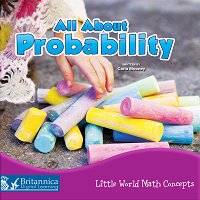
Grade 1
3 skill lessons · 1 math-through-reading
Math
Skill lessons
The mathematics the book carries, taught directly. Printable workbook pages and teacher keys are not available for this book yet.
- 1The Bigger Pile Wins More Often
- 2Most Often, Least Often
- 3Change One Word, Change the Answer
Math + reading
Math through the reading
The same book, entered through a sentence it prints. Change one word in the reading and the numbers change with it.
- 4The Word That Decides
Reading
Reading and language lessons
The same book read as a text. What a word means in its sentence, how a character is shown, how the writing is put together - no mathematics.
- 5Ask, Guess, Answer, Why: How This Book Is Built
- 6More Likely, Less Likely: Two Phrases That Do Opposite Work
- 7Why? Reading the Sentence That Gives the Reason
- 8You Predict: What the Book Is Telling You to Do
Skill lessons
3 lessons on the mathematics the book carries. Printable workbook pages and teacher keys are not available for this book yet.
1. The Bigger Pile Wins More Often
The book asks the same question five times and answers it the same way every time: whichever there is more of is what you are more likely to get. Students build the book's own mixed piles with counters, draw from them without looking, and keep drawing until the bigger colour has pulled ahead on the tally. The idea here is not a number. It is that a lopsided pile makes a lopsided result, and that a child can say which side the lopsidedness falls on before any drawing starts.
Full lesson — 20 minutes
1. Read the book's promise (3 min)
Listen to the book's opening line and its closing question, and say back in your own words what the book claims it can do. Hold two facts: something has not happened yet, and you can still say something true about it. Say the two words the book uses for its two answers, more likely and less likely, and hold up a fist for each.
Word preview: likely, more, less
Probability measures how likely it is something will happen.
Is it more likely or less likely?
2. Build a lopsided bag (6 min)
Each pair builds the book's dice pile in a paper bag: a big handful of green counters and a small handful of another colour, poured in and shaken. Before anyone draws, both partners point at the colour they think will come out more often and say which one it is. Do not count the counters. The pile is meant to look uneven, and looking is the whole job.
What color will he pick the most?
3. Draw and tally (7 min)
Take turns drawing one counter without looking, mark a tally under its colour, and drop it back in before the next draw. Do twenty draws between the two of you. Watch the two tally rows grow, and stop when one row is plainly the longer one. Say which colour won more draws, and say the book's sentence about it: this colour was more likely.
4. Say why, the book's way (4 min)
Look back in the bag at the two piles. The book always answers its own why with a sentence about how many there are, not about luck. Point at the bigger pile and finish the frame aloud for your partner: green came out more because there are more green. Then say the same about the smaller pile using fewer.
Word preview: fewer
He is more likely to choose green.
There are more green dice.
Short version — 9 minutes
1. Build a lopsided bag (3 min)
Build the book's pile in a bag, a big handful of green counters and a small handful of another colour. Before drawing, point at the colour you think will come out more often and say it aloud.
Word preview: likely, more, less
What color will he pick the most?
2. Draw and tally (6 min)
Draw one counter without looking, tally its colour, drop it back, and repeat for twenty draws. Stop when one tally row is plainly longer, name the colour that won, and say why using the bigger pile.
Three levels
- Support
- Work one bag with a far more lopsided split, nearly all of one colour and only two or three of the other, so the tally separates within a few draws. Draw ten times instead of twenty and say the winning colour by pointing at the longer row rather than by reading it.
- At Grade
- Build the bag, predict aloud before drawing, run twenty draws with the tally, and say the winning colour with the book's reason sentence attached.
- Extension
- Build a second bag your partner cannot see, make it lopsided in the other direction, and let them predict from twenty draws alone which colour you loaded more of. Then open it and check. Say what a bag would have to look like for neither colour to be more likely, and build that one too.
English learners
More and fewer are already carried by the hands here, so let the bag teach them before the English does: a big handful and a small handful, held up side by side, are the definition. The word likely has no such gesture and is the harder import, so anchor it to the tally rows instead, longer row means more likely. A rehearsable frame runs blank came out more because there are more blank, and a student may point at the bigger pile and the longer row and be understood completely while the frame is still settling. Invite a child to say the two colours and the reason in their strongest language first, then swap only the frame words into English.
Materials
- Printed source passage in this step
- Paper bag per pair of students
- Two colours of counters, one colour clearly more plentiful
- Two-row tally sheet per pair
- Pencil per student
- Word cards: likely, more, fewer
Standards & curriculum
Choose your curriculum above to see the standards for this lesson.
Standards are held back while this plan is edited. Every standard shown here was matched against the supplied wording of this lesson, quoting its steps, so a changed step is no longer the thing that was checked. Undo your changes to bring the standards back — your edits stay in this browser either way.
2. Most Often, Least Often
The book asks twice for the top of a list and twice for the bottom: what will he play with the most, what will she use the least. Students lay three unequal piles in a row, order them biggest to smallest by matching rather than counting, and read the two ends off the row. The mathematical work is that most and least are the two ends of one ordering, not two separate guesses, and that the middle pile is neither.
Full lesson — 20 minutes
1. Two ends of one question (4 min)
Hear the two questions the book asks about the ball basket and the crayon box, and notice they are opposite ends of the same job. Say which word points to the top of a list and which points to the bottom. Hold both hands high for most and both hands low for least, and sort the book's two questions into the two heights.
Word preview: most, least
What ball will he play with the most?
What color crayon will she use the least?
2. Lay three piles in a row (6 min)
Take a tray holding three unequal piles of coloured objects and lay them in a left-to-right row, biggest on the left. Do not count. Set the piles side by side in rows and slide them level, and whichever row runs on past the other is the bigger. Fix the order by moving piles until the row goes big, middle, small.
3. Read the two ends (5 min)
Point at the left end and say which one you would get most often. Point at the right end and say which one you would get least often. Then point at the middle and say the true thing about it: it is not the most and it is not the least. Say all three sentences to your partner without moving the piles.
4. Predict a partner's tray (5 min)
Swap trays with another pair. Before touching anything, each partner predicts the most and the least out loud. Then lay the new tray into its row and check whether the order agrees with the prediction. Where a prediction was wrong, say what the matching showed that the first look did not.
You predict.
Short version — 9 minutes
1. Lay three piles in a row (5 min)
Lay three unequal piles of coloured objects into a left-to-right row, biggest on the left, by matching them side by side rather than counting.
Word preview: most, least
2. Read the two ends (4 min)
Point at the left end and name what you would get most often, point at the right end and name what you would get least often, then say why the middle pile is neither.
What ball will he play with the most?
Three levels
- Support
- Work with two piles instead of three, with a wide gap between them, and answer only the most question. Slide the two rows level and point at the one that runs on further. The word least can arrive once the pointing is reliable.
- At Grade
- Order three unequal piles by matching, read most and least off the two ends, and say why the middle is neither.
- Extension
- Take a tray of four piles where two are close in size, and settle the close pair by matching object to object until one row runs out. Then say which single pile you would move, and where, to change which one is the least.
English learners
Most and least are superlatives, and many languages build them by stacking the comparative rather than with a separate word, so a student may reach correctly for more-more before landing on most. The row of piles carries the meaning without English at all: the two ends are visible, and pointing at an end is a complete answer here. Rehearse the frame blank the most and blank the least against the left and right ends of the row, and let a student give the ordering in their strongest language while pointing, then take only the two end words into English.
Materials
- Printed source passage in this step
- Tray of three unequal object piles per pair of students
- Word cards: most, least, order
Standards & curriculum
Choose your curriculum above to see the standards for this lesson.
Standards are held back while this plan is edited. Every standard shown here was matched against the supplied wording of this lesson, quoting its steps, so a changed step is no longer the thing that was checked. Undo your changes to bring the standards back — your edits stay in this browser either way.
3. Change One Word, Change the Answer
Every prediction in this book rests on one word in the reason sentence. The book says there are more green dice, and green wins. Students rebuild the pile with the amounts flipped, discover the answer flips with it, and learn that more and fewer are not decoration on the sentence but the part that decides. This is the book's own five-times pattern taken apart and run backwards once.
Full lesson — 20 minutes
1. Find the deciding word (4 min)
Hear the book's dice pages and find the one word in the reason sentence that is doing the work. Try saying the sentence with fewer in place of more and decide together whether green still wins. Do not settle it by arguing. Settle it by building it in the next step.
Word preview: more, fewer, likely
There are more green dice.
He is more likely to choose green.
2. Build the book's pile (5 min)
Build the pile the book describes, with many green counters and few of the other colour, and draw ten times with replacement, tallying each colour. Read your tally and say the book's own sentence about the result. The build should agree with the book, and if it does not, draw ten more and look again.
3. Flip the pile (7 min)
Now swap the two handfuls so that the other colour is the plentiful one and green is the scarce one, and say out loud, before drawing, what you now expect. Draw ten times with replacement onto a fresh tally. Read the new tally aloud. Say the flipped sentence about your own pile, using fewer where the book used more.
4. Say both sentences (4 min)
Hold the two tally sheets side by side and say both sentences to your partner, one for each pile, naming the colour and the reason each time. Then say the one thing that changed between the two builds. The counters were the same counters, so the deciding thing was how many of each went in.
She is less likely to use a blue crayon.
because there are fewer blue crayons.
Short version — 9 minutes
1. Build the book's pile (4 min)
Build the pile the book describes, many green counters and few of another colour, draw ten times with replacement, tally, and say which colour won.
Word preview: more, fewer, likely
There are more green dice.
2. Flip the pile (5 min)
Swap the two handfuls so the scarce colour becomes the plentiful one, say what you now expect before drawing, then draw ten times onto a fresh tally and say the flipped sentence about your own pile.
Three levels
- Support
- Make both piles extreme, nearly all of one colour, so ten draws separate cleanly and the flip is unmistakable. Say the answer by pointing at the fuller handful before drawing and at the longer tally row after, with the reason word supplied by the teacher for the student to repeat.
- At Grade
- Build the book's pile, flip it, predict before each set of draws, and say both reason sentences with the right comparison word in each.
- Extension
- Build a third pile with the two colours as near to even as you can make them, predict what the tally will do, and draw twenty times. Say what happened and why neither sentence fits it well. Then say what you would have to add, and to which handful, to make one colour more likely again.
English learners
More and fewer are a matched pair in English but the reversal is easy to lose, because both sit in the same slot of the same sentence and only one syllable separates the two predictions. The flip built with hands is the fix: the same counters, moved, force the sentence to change, so the word is felt rather than memorised. Rehearse the two frames back to back, there are more blank and there are fewer blank, each said while holding up the handful it describes. A student may run both builds and hold up the right handful with no English at all, and that is a complete answer; take the two words into English after the hands are sure.
Materials
- Printed source passage in this step
- Two colours of counters, one colour clearly more plentiful
- Two-row tally sheet per pair
- Pencil per student
- Word cards: more, fewer, likely
Standards & curriculum
Choose your curriculum above to see the standards for this lesson.
Standards are held back while this plan is edited. Every standard shown here was matched against the supplied wording of this lesson, quoting its steps, so a changed step is no longer the thing that was checked. Undo your changes to bring the standards back — your edits stay in this browser either way.
Math through the reading
The mathematics is reached through a sentence the book prints: change one word in the reading and the numbers change with it. These carry their own standards, matched against these lessons rather than inherited from the skill ones.
4. The Word That Decides
Students rebuild the book's dice pile with the comparison word swapped and show that changing more to fewer changes which colour they draw most.
Full lesson — 20 minutes
1. Hear the sentence that decides (4 min)
Students listen to the dice pages and pick out the word in the reason sentence that is doing the work. They try the sentence aloud with fewer in its place and vote on whether green still wins, then agree to settle it by building rather than by arguing.
2. Build what the book says (6 min)
Each pair builds the pile the book describes, a big handful of green counters and a small handful of another colour, in a bag. Before drawing they say which colour they expect. They draw ten times, replacing each counter, and tally by colour, then read the tally aloud and say the book's sentence about their own pile.
3. Flip it and say the other sentence (7 min)
Pairs swap the two handfuls so the scarce colour becomes the plentiful one, using the same counters. Each partner says aloud what they now expect and why, before any drawing. They draw ten more times onto a fresh tally, read it, and say the reversed sentence about their own pile, putting fewer where the book had more.
4. Name the word that changed (3 min)
With both tally sheets side by side, each pair says both sentences in turn and then names the single word that is different between them. They finish by saying what did not change: the counters were the same counters, so the deciding thing was how many of each went into the bag.
Short version — 9 minutes
1. Build what the book says (6 min)
Each pair builds the pile the book describes, a big handful of green counters and a small handful of another colour, in a bag. Before drawing they say which colour they expect. They draw ten times, replacing each counter, and tally by colour, then read the tally aloud and say the book's sentence about their own pile.
2. Flip it and say the other sentence (7 min)
Pairs swap the two handfuls so the scarce colour becomes the plentiful one, using the same counters. Each partner says aloud what they now expect and why, before any drawing. They draw ten more times onto a fresh tally, read it, and say the reversed sentence about their own pile, putting fewer where the book had more.
Three levels
- Support
- Make both piles extreme, nearly all of one colour and only two or three of the other, so ten draws separate the tally rows unmistakably. The student predicts by pointing at the fuller handful before drawing and at the longer tally row after. The teacher supplies the reason word for the student to say back inside the frame, and the student changes only that word when the pile is flipped.
- At grade
- Build the book's pile, predict aloud, draw and tally, say the book's sentence about it; then flip the same counters, predict aloud again, draw and tally, and say the reversed sentence. Name the one word that changed between them.
- Extension
- Build a third pile with the two colours as near to even as you can make them. Predict what the tally will do, then draw twenty times. Say what happened, and say why neither sentence fits this pile well: with the handfuls the same size there is no more and no fewer to put in the frame. Then say what you would add, and to which handful, to make one colour more likely again, and try it.
English learners
More and fewer sit in the same slot of the same sentence and are separated by one syllable, so the reversal is the easiest thing in this lesson to lose and the most important to keep. The flip is built with hands for exactly that reason: the same counters, moved, force the sentence to change, so the contrast is felt on the desk before it is heard. Rehearse the two frames back to back, there are more blank and there are fewer blank, each said while holding up the handful it describes, so the word is bound to a quantity of counters rather than to a translation. A student who runs both builds and holds up the correct handful for each sentence has given a complete and correct answer, and may do so with no English at all; invite them to say the two piles and the reason in their strongest language first, then take only the two frame words into English. Do not accept a repeated sentence that the pile contradicts, in any language.
Materials
- Paper bag per pair of students
- Two colours of counters, roughly thirty per pair, one colour clearly more plentiful at the start
- Two-row tally sheet per pair, one for each build
- Pencil per student
- The book's dice pages
- The two frame sentences written where every pair can see them, one with more and one with fewer
Standards & curriculum
Choose your curriculum above to see the standards for this lesson.
Standards are held back while this plan is edited. Every standard shown here was matched against the supplied wording of this lesson, quoting its steps, so a changed step is no longer the thing that was checked. Undo your changes to bring the standards back — your edits stay in this browser either way.
Reading and language lessons
4 lessons on the reading and language the book carries - what a word means in its sentence, how a character is shown, how a text is built. No mathematics: these are matched against the English language arts curricula, which are a different and smaller set than the mathematics ones.
5. Ask, Guess, Answer, Why: How This Book Is Built
Every page of this book is built the same way: it asks a question, tells the reader to predict, gives the answer, then asks Why and answers that too. Students read two of those pages side by side, name the four parts in order, and then use the pattern to say what is missing when a page is read with a part left out. The work is noticing how an informational book repeats a shape so a reader always knows what is coming next. Nothing is counted and no picture is compared.
Full lesson — 20 minutes
1. Read one page and name its parts (6 min)
The teacher reads the passage below aloud once while students follow along. Then read it together a second time, stopping after each sentence. Say aloud which sentence asks the question, which one tells you to guess, which one gives the answer, and which one gives the reason. Put a finger on each part as you name it.
Word preview: predict
Spin the arrow. Where will it point most often? You predict. The arrow is more likely to point to red. Why? The red part is larger.
2. Find the same four parts on a different page (6 min)
Read the passage below with a partner. This page is about fruit, not about a spinner, but it is built the same way. Point to the question, the predict sentence, the answer and the reason, in that order. Then say one sentence to your partner: both pages ask, then tell me to guess, then answer, then say why.
Word preview: pattern
What fruit will she get for lunch least often? You predict. She is less likely to get an apple. Why? There are fewer apples.
3. Hear what is missing when a part is left out (4 min)
The teacher reads the passage below, but leaves off the last sentence and stops after the word Why. Listen. Say aloud what the reader still wants to know. Then the teacher reads the whole passage, and you say which sentence filled the hole.
Word preview: missing
What color will he pick the most? You predict. He is more likely to choose green. Why? There are more green dice.
4. Say the pattern in your own words (4 min)
Look again at the two passages printed below, one about a spinner and one about fruit. Without the teacher's help, tell a partner the four things this book does on every page, in order. Use the words ask, guess, answer, why. Then say why a book might keep doing the same four things over and over.
Word preview: order
Spin the arrow. Where will it point most often? You predict. The arrow is more likely to point to red. Why? The red part is larger.
What fruit will she get for lunch least often? You predict. She is less likely to get an apple. Why? There are fewer apples.
Short version — 9 minutes
1. Read one page and name its parts (5 min)
The teacher reads the passage below once. Read it again together, stopping after each sentence. Say which sentence asks, which tells you to guess, which answers, and which gives the reason.
Word preview: predict
Spin the arrow. Where will it point most often? You predict. The arrow is more likely to point to red. Why? The red part is larger.
2. Find the same four parts on a different page (4 min)
Read the passage below with a partner. Point to the question, the predict sentence, the answer and the reason. Say aloud that this page is built like the last one.
Word preview: pattern
What fruit will she get for lunch least often? You predict. She is less likely to get an apple. Why? There are fewer apples.
Three levels
- Support
- Work only with the spinner passage in step 1, echoing the teacher one sentence at a time. Point to the sentence that asks a question. Then point to the sentence that answers it. Say the two words ask and answer aloud.
- At Grade
- Name all four parts of the spinner passage in order, then find the same four parts in the fruit passage and say aloud that the two pages are built the same way.
- Extension
- The spinner passage ends with the reason The red part is larger. Say two sentences about why this book puts the reason last instead of first, and what a reader would lose if the reason came before the question.
English learners
This book's pattern depends on two short function words that carry almost no sound stress in English: Why introduces a reason, and the answer that follows has no because in front of it on most pages. Read the question and its reason as a pair, then say the same pair again with because added at the front, so the logical link is heard rather than guessed. Invite students to ask and answer a why question about their own classroom in their strongest language first. Rehearsable frame: The question is ___. The reason is ___.
Materials
- All About Probability, the passage printed in this step
- four part cards labelled question, predict, answer, reason
- Word cards: predict, pattern, missing, order
Standards & curriculum
Choose your curriculum above to see the standards for this lesson.
Standards are held back while this plan is edited. Every standard shown here was matched against the supplied wording of this lesson, quoting its steps, so a changed step is no longer the thing that was checked. Undo your changes to bring the standards back — your edits stay in this browser either way.
6. More Likely, Less Likely: Two Phrases That Do Opposite Work
The book leans on two phrases, more likely and less likely, and swaps them page to page. Students read three passages, find the phrase in each, and sort the passages by which phrase they used. They finish by rewriting one sentence aloud with the opposite phrase and saying how the meaning flipped. The skill is understanding a comparing phrase in the sentence it sits in; students never count objects or compare amounts, only the words.
Full lesson — 20 minutes
1. Find the comparing phrase (6 min)
The teacher reads the passage below aloud. Listen for the two words that go together to say how sure we are. Read it again together and put a finger under more likely when you hear it. Say the whole phrase aloud three times.
Word preview: likely
Spin the arrow. Where will it point most often? You predict. The arrow is more likely to point to red. Why? The red part is larger.
2. Find the phrase that does the opposite job (6 min)
Read the passage below together. This one uses the other phrase. Put a finger under less likely. Now hold the two phrase strips up: say which one means we think it will happen and which one means we think it will not happen much.
Word preview: less
What fruit will she get for lunch least often? You predict. She is less likely to get an apple. Why? There are fewer apples.
3. Sort three passages by their phrase (4 min)
Three passages are printed below. Read each one with a partner. Hold up the more likely strip or the less likely strip for each passage. Say aloud how you knew, naming the words you found.
Word preview: sort
What color will he pick the most? You predict. He is more likely to choose green. Why? There are more green dice.
What color crayon will she use the least? You predict. She is less likely to use a blue crayon. Why? because there are fewer blue crayons.
What ball will he play with the most? You predict. He is more likely to play with a basketball. Why? There are more basketballs.
4. Flip the phrase and hear the meaning change (4 min)
Look again at the passage printed below. Say its answer sentence aloud exactly as the book has it. Now say the same sentence but swap in the other phrase. Tell a partner what changed about what the sentence claims.
Word preview: opposite
Spin the arrow. Where will it point most often? You predict. The arrow is more likely to point to red. Why? The red part is larger.
Short version — 9 minutes
1. Find the comparing phrase (5 min)
The teacher reads the passage below. Read it again together and put a finger under more likely. Say the phrase aloud three times.
Word preview: likely
Spin the arrow. Where will it point most often? You predict. The arrow is more likely to point to red. Why? The red part is larger.
2. Find the phrase that does the opposite job (4 min)
Read the passage below together and put a finger under less likely. Say which phrase means we think it will happen and which means we think it will not.
Word preview: less
What fruit will she get for lunch least often? You predict. She is less likely to get an apple. Why? There are fewer apples.
Three levels
- Support
- Use only the spinner passage in step 1. Echo the teacher saying more likely. Put your finger on those two words in the printed passage. Say the phrase once on your own.
- At Grade
- Find more likely in the spinner passage and less likely in the fruit passage, and say aloud what each phrase tells a reader about how sure the writer is.
- Extension
- The spinner passage says the arrow is more likely to point to red. Say two sentences explaining why the writer chose more likely rather than a word like always, and what would be wrong with always here.
English learners
More likely and less likely are two-word phrases that must be learned whole; students who translate likely on its own often lose the comparison the phrase is making. Say the phrase as one chunk, clap the two beats, then put it into a sentence about the room: I am more likely to read than to sing. Invite students to say a more and a less sentence about their own day in their strongest language, then in English. Rehearsable frame: ___ is more likely than ___.
Materials
- All About Probability, the passage printed in this step
- phrase strips reading more likely and less likely
- Word cards: likely, less, sort, opposite
Standards & curriculum
Choose your curriculum above to see the standards for this lesson.
Standards are held back while this plan is edited. Every standard shown here was matched against the supplied wording of this lesson, quoting its steps, so a changed step is no longer the thing that was checked. Undo your changes to bring the standards back — your edits stay in this browser either way.
7. Why? Reading the Sentence That Gives the Reason
This book never leaves an answer standing alone: it asks Why and then gives a reason. Students read three passages, say the answer and then the reason in their own words, and match a reason back to the answer it belongs with when the pairs are shuffled. They finish by judging one reason sentence that is printed in lower case exactly as the book has it. The skill is identifying an author's stated reason, not evaluating or producing an amount.
Full lesson — 20 minutes
1. Say the answer, then say the reason (6 min)
The teacher reads the passage below aloud twice. The first time, listen for what the book says will happen. The second time, listen for the sentence after the word Why. Say both aloud in this order: the book says ___, and the reason is ___.
Word preview: reason
What ball will he play with the most? You predict. He is more likely to play with a basketball. Why? There are more basketballs.
2. Match a loose reason back to its answer (6 min)
Two passages are printed below. The teacher reads only the reason sentence from one of them, out of order. With a partner, decide which of the two printed passages that reason belongs to, and say the word in the reason that told you.
Word preview: match
What color will he pick the most? You predict. He is more likely to choose green. Why? There are more green dice.
What fruit will she get for lunch least often? You predict. She is less likely to get an apple. Why? There are fewer apples.
3. Read a reason exactly as the book prints it (4 min)
Read the passage below. Its last sentence begins with a small letter b, not a capital one, and it starts with the word because. That is how the book has it, and we are leaving it that way. Read the sentence aloud as printed. Then say what the sentence would need at the front to sound like the reasons on the other pages.
Word preview: because
What color crayon will she use the least? You predict. She is less likely to use a blue crayon. Why? because there are fewer blue crayons.
4. Give a reason for a page of your own (4 min)
Look again at the passage printed below and read its reason sentence once more. Now think of something in this classroom that there is a lot of, and something there is little of. Say a Why sentence about it out loud to a partner, built the way the book builds one. Your partner says whether your sentence gave a reason or just repeated the answer.
Word preview: give
What ball will he play with the most? You predict. He is more likely to play with a basketball. Why? There are more basketballs.
Short version — 9 minutes
1. Say the answer, then say the reason (5 min)
The teacher reads the passage below twice. Say aloud what the book says will happen, then the reason it gives after the word Why.
Word preview: reason
What ball will he play with the most? You predict. He is more likely to play with a basketball. Why? There are more basketballs.
2. Match a loose reason back to its answer (4 min)
Two passages are printed below. The teacher reads one reason sentence out of order. Say which passage it belongs to and which word told you.
Word preview: match
What color will he pick the most? You predict. He is more likely to choose green. Why? There are more green dice.
What fruit will she get for lunch least often? You predict. She is less likely to get an apple. Why? There are fewer apples.
Three levels
- Support
- Use only the passage in step 1. The teacher reads it and asks: what is the word right before the reason? Say Why. Then say the reason sentence after the teacher, once.
- At Grade
- Say the answer and then the reason for the passage in step 1, then match a shuffled reason to the right passage in step 2 and name the word that told you.
- Extension
- The reason in step 1 is There are more basketballs. Say two sentences about whether that reason would still work if the book had asked which ball he plays with least, and what the reason would have to say instead.
English learners
English often gives a reason with no connector at all: the book prints Why? and then a bare statement, where many languages would require because or its equivalent. Read the pair as one breath, then insert because aloud so the link is audible, and point out that the crayon page is the one place the book does print because. Invite students to give a reason for something in their strongest language first. Rehearsable frame: It is ___ because ___.
Materials
- All About Probability, the passage printed in this step
- sentence strips for matching
- Word cards: reason, match, because, give
Standards & curriculum
Choose your curriculum above to see the standards for this lesson.
Standards are held back while this plan is edited. Every standard shown here was matched against the supplied wording of this lesson, quoting its steps, so a changed step is no longer the thing that was checked. Undo your changes to bring the standards back — your edits stay in this browser either way.
8. You Predict: What the Book Is Telling You to Do
You predict is an instruction, not a fact, and it appears on page after page. Students work out what the word is asking of them, act it out, and then tell the difference between a sentence that instructs and a sentence that tells. They close by reading the book's last line and saying what it does that the other lines do not. The skill is the meaning and job of a word in its sentence; no prediction is scored right or wrong and nothing is tallied.
Full lesson — 20 minutes
1. Work out what predict is asking (6 min)
The teacher reads the passage below aloud, then stops right after the sentence You predict. Everyone makes a guess in their head. Now say aloud what the book just asked you to do. Is it asking you to know, or to guess? Say the word predict three times and say one word that means almost the same.
Word preview: predict
What color will he pick the most? You predict. He is more likely to choose green. Why? There are more green dice.
2. Tell an instruction apart from a telling sentence (6 min)
Read the passage below with a partner. Two of its sentences ask you to do something and the others tell you something. Point to the sentence that tells you to do something, then point to a sentence that just tells you a fact. Say aloud how the two sound different.
Word preview: instruction
Spin the arrow. Where will it point most often? You predict. The arrow is more likely to point to red. Why? The red part is larger.
3. Read the opening and say what the whole book will do (4 min)
Read the passage below, which is how the book starts. It names the thing the book is about and then asks a question. Say aloud what you think every page after this one is going to ask you to do, and what word in the passage made you think so.
Word preview: measures
Probability measures how likely it is something will happen. Is it more likely or less likely?
4. Say what changed at the end (4 min)
Read the passage below one last time and notice how it asks and then answers. The very last line of the book is different: it is Woohoo! It's all probability. Say aloud how that line sounds different from the pages you have been reading, and why a writer might end a book that way instead of with one more question.
Word preview: ending
What ball will he play with the most? You predict. He is more likely to play with a basketball. Why? There are more basketballs.
Short version — 9 minutes
1. Work out what predict is asking (5 min)
The teacher reads the passage below and stops after You predict. Make a guess in your head, then say aloud what the book asked you to do, and whether that means knowing or guessing.
Word preview: predict
What color will he pick the most? You predict. He is more likely to choose green. Why? There are more green dice.
2. Tell an instruction apart from a telling sentence (4 min)
Read the passage below with a partner. Point to a sentence that tells you to do something, then to a sentence that tells you a fact. Say how they sound different.
Word preview: instruction
Spin the arrow. Where will it point most often? You predict. The arrow is more likely to point to red. Why? The red part is larger.
Three levels
- Support
- Use only the passage in step 1. The teacher reads to You predict. and stops. Make a guess in your head, then say the word predict aloud. Say whether predict means know or guess.
- At Grade
- Say what You predict asks a reader to do, then in the spinner passage point out one sentence that instructs and one that tells, and say how they differ.
- Extension
- The passage in step 1 says You predict. before it gives its answer. Say two sentences about what would change for a reader if the book gave its answer first and asked you to predict afterwards.
English learners
You predict looks like a statement about the reader but works as a command, and English marks that difference by intonation and position rather than by any ending on the verb. Read You predict. beside He is more likely to choose green. and let students hear the drop in the second. Invite them to give a one-word instruction to a partner in their strongest language, then in English. Rehearsable frame: The book asks me to ___.
Materials
- All About Probability, the passage printed in this step
- guess cards
- Word cards: predict, instruction, measures, ending
Standards & curriculum
Choose your curriculum above to see the standards for this lesson.
Standards are held back while this plan is edited. Every standard shown here was matched against the supplied wording of this lesson, quoting its steps, so a changed step is no longer the thing that was checked. Undo your changes to bring the standards back — your edits stay in this browser either way.