Teaspoons, Tablespoons, and Cups
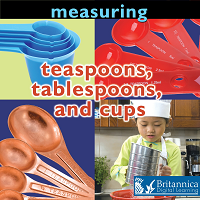
Grade K
3 skill lessons · 2 math-through-reading
Math
Skill lessons
The mathematics the book carries, taught directly. Printable workbook pages and teacher keys are not available for this book yet.
- 1Sixteen Tablespoons Fill One Cup
- 2Which One Holds the Most
- 3Three Teaspoons Fill One Tablespoon
Math + reading
Math through the reading
The same book, entered through a sentence it prints. Change one word in the reading and the numbers change with it.
- 4The Word That Says Which Way to Pour
- 5The Question the Book Never Answers
Reading
Reading and language lessons
The same book read as a text. What a word means in its sentence, how a character is shown, how the writing is put together - no mathematics.
- 6How Much Do We Need? A Book That Asks and Then Tells
- 7Largest, Smallest, Very Small: Words That Hold Things Up Against Each Other
- 8We Use Them When We Cook: A Book That Puts You In It
Skill lessons
3 lessons on the mathematics the book carries. Printable workbook pages and teacher keys are not available for this book yet.
1. Sixteen Tablespoons Fill One Cup
The book prints this relation three times and one of those printings is a duplicate, so a reader meets sixteen repeatedly and never counts to it. Students count to it here, one number word per level tablespoon poured, and the demand is the count itself: holding a running count past ten to sixteen while both hands are busy is the fluency this book funds. The guess made before pouring is what turns sixteen from a number to be read into a number to be found. No student adds, multiplies or works out how far a guess missed by; the two numbers are compared by looking at them.
Full lesson — 20 minutes
1. Guess before you pour (3 min)
Each pair looks at the tablespoon and the empty cup side by side and says a number for how many tablespoons the cup will take. The teacher writes each pair's guess where the pair can see it. Nobody pours yet and no guess is called right or wrong.
Word preview: guess, cup
2. Fill the cup by tablespoons (9 min)
Pairs fill the tablespoon level with water and tip it into the cup, saying the next number word each time, one word per spoonful. They keep going past ten to sixteen without restarting the count. When the water reaches the cup's line they stop and say the number they stopped on. Partners swap after eight so both pour and both count.
Word preview: sixteen
16 tablespoons make 1 cup.
3. Check the count against the guess (4 min)
Each pair reads their own guess card aloud and then says the number they counted. They say whether the cup took more spoonfuls than they expected or fewer, using the two numbers in front of them. Nobody works out the gap between the two numbers; the pair says which is the larger and points at it.
Word preview: more, fewer
4. Pour one cup back out (4 min)
Pairs empty the full cup back into the tablespoon one spoonful at a time onto the tray, counting aloud again as each one comes out. They say whether the count coming out matched the count going in, and what they would say caused it if it did not.
Word preview: empty
Short version — 9 minutes
1. Fill the cup by tablespoons (6 min)
Pairs tip level tablespoons of water into the cup, saying the next number word each time, one word per spoonful, counting on past ten to sixteen. They stop at the cup's line and say the number they stopped on.
Word preview: sixteen
16 tablespoons equals 1 cup. How much do we need? We need one cup.
2. Check the count against the guess (3 min)
Each pair reads their guess aloud, says the number they counted, and says which of the two numbers is larger by pointing at it.
Word preview: more
Three levels
- Support
- Put sixteen counters in a line beside the cup and let the pair move one counter across for each spoonful poured, so the count is held by the counters rather than by memory. The child says the number word as the counter moves. Stop at the cup's line and read the number of counters moved instead of recalling the last word said.
- At Grade
- A guess written before pouring, sixteen level tablespoons counted aloud one word per pour with partners swapping at eight, the stopping number said aloud, and the guess and the count read side by side.
- Extension
- Ask the pair, before they pour, roughly how many teaspoons the cup would take, given what they found about the tablespoon in the earlier lesson. They may pour to find out if they want to, and must say how they would keep the count from slipping past forty. They then say why a guess made in tablespoons and a guess made in teaspoons cannot be the same number.
English learners
The counting sequence past ten is the load here and it does not transfer: the English teen words are irregular and thirteen and thirty are heard as the same word by a child concentrating on not spilling. Rehearse eleven through sixteen aloud before any water is poured, and let a child count in their strongest language while pouring and say the stopping number in English once the cup is full, since the number that must be shared is only the last one. The comparison frame at the end is the second load, and more and fewer are worth rehearsing as a pair with the two written numbers pointed at rather than as isolated words.
Materials
- Metal tablespoon per pair
- Clear cup marked at one cup per pair
- Guess card per pair
- Small jug of water per pair
- Tray per pair
- Word cards: cup, sixteen, more
Standards & curriculum
Choose your curriculum above to see the standards for this lesson.
Standards are held back while this plan is edited. Every standard shown here was matched against the supplied wording of this lesson, quoting its steps, so a changed step is no longer the thing that was checked. Undo your changes to bring the standards back — your edits stay in this browser either way.
2. Which One Holds the Most
The book asks both of its ordering questions on picture spreads and answers neither, so the two answers are genuinely left for a reader. Students settle them with water rather than by looking: a container that another container will not empty into without spilling is the larger, which is a test a five-year-old can run and read. What reasoning means here is giving the pouring as the ground for the answer rather than the size of the picture, and saying the order forwards and backwards so the ordering is a relation and not a memorised list. No student measures any amount, reads any number or works out how much larger one container is than another.
Full lesson — 20 minutes
1. Line up the three (4 min)
Each pair puts the teaspoon, the tablespoon and the cup on the tray in the order they think they go, smallest first. They say the three names aloud in the order they chose, left to right. Nothing is poured and no order is corrected yet.
Word preview: order, smallest
2. Settle the largest by pouring (7 min)
The teacher reads the book's question about the largest aloud. Each pair fills the cup with water and tries to empty it into the tablespoon, and then fills the tablespoon and tries to empty it into the teaspoon, on the tray. They say which container overflowed and which had room left, and they answer the book's question aloud with one container name. The answer is the one nothing else will pour into without spilling.
Word preview: largest, overflow
Which one holds the largest amount?
3. Settle the smallest the same way (5 min)
The teacher reads the book's question about the smallest aloud. Pairs pour a full teaspoon into the tablespoon and see how much room is left, then say which of the three containers is the smallest and how the pouring showed it. They answer the book's second question aloud with one container name.
Word preview: smallest
Which one holds the smallest amount?
4. Fix the line and say it both ways (4 min)
Pairs move the three containers into the order the pouring settled, smallest first. They say the three names in that order, then say the same three names backwards, largest first. They say which container they had in the wrong place at the start, if any, and what the water showed them.
Word preview: backwards
Short version — 9 minutes
1. Settle the largest by pouring (5 min)
Pairs try to empty a full cup into the tablespoon and a full tablespoon into the teaspoon on the tray, say which one overflowed, and answer the book's question aloud with one container name.
Word preview: largest
Measure carefully.
2. Fix the line and say it both ways (4 min)
Pairs put the three containers in order smallest first, say the three names in that order, then say them backwards largest first.
Word preview: order
Three levels
- Support
- Work with two containers rather than three, the teaspoon and the cup, which are far enough apart that one pour settles it. The child pours and says which one held it all, and the spoken answer may be the container name alone while they point at the tray. Add the tablespoon only once the pair of two is secure.
- At Grade
- All three containers ordered by hand first, both of the book's questions settled by pouring on the tray, each answered aloud with one container name and the pouring given as the reason, and the finished order said forwards and backwards.
- Extension
- Ask the pair to place a fourth container the teacher supplies, a small jar, into their line without pouring anything, and say where they think it goes and why. They then pour to check and say whether they were right, and say what they could not have known by looking that the water told them.
English learners
The two superlative endings are the load and they are exactly what gets lost: largest and smallest differ from large and small by an ending that carries the whole comparison, and many languages mark the superlative with a separate word rather than a suffix, so the ending will not transfer and will be dropped. Attach each word to the tray rather than to a definition: largest is the one everything else pours into, smallest is the one that fills first. Rehearse both frames aloud with the containers in hand before the pouring starts, and let a child give the reason in their strongest language and say the one-word answer in English. The backwards saying at the end is worth doing slowly, since reversing the order is where the two endings have to swap.
Materials
- Metal teaspoon per pair
- Metal tablespoon per pair
- Clear cup marked at one cup per pair
- Tray per pair
- Small jug of water per pair
- Word cards: largest, smallest, order
Standards & curriculum
Choose your curriculum above to see the standards for this lesson.
Standards are held back while this plan is edited. Every standard shown here was matched against the supplied wording of this lesson, quoting its steps, so a changed step is no longer the thing that was checked. Undo your changes to bring the standards back — your edits stay in this browser either way.
3. Three Teaspoons Fill One Tablespoon
The book states its first relation three times over and never pours anything, so the three is a fact on the page rather than a result. Students produce it: they tip level teaspoons of water into a tablespoon one at a time, saying one number word per spoonful, and stop when it is full. What concept means here is that a larger unit is made of a countable number of smaller ones and that the count is the same every time, which is why the second tablespoon is predicted before it is poured. No student multiplies or divides anywhere in this lesson; the three arrives by counting spoonfuls.
Full lesson — 20 minutes
1. Feel the small one (4 min)
Each pair holds the teaspoon in one hand and the tablespoon in the other and says which one is smaller without pouring anything. They read the book's sentence about the teaspoon aloud and point to the spoon it names. They say the two spoon names aloud so the names are attached to the right objects before any water moves.
Word preview: teaspoon, tablespoon
The teaspoon is very small.
2. Fill the tablespoon by threes (7 min)
Pairs fill the teaspoon level with water, tip it into the empty tablespoon, and say one as it goes in. They do it again saying two, and again saying three, and stop when the tablespoon is full. The rule is one spoonful, one number word. If the tablespoon fills before three or is still short at three, they empty it and start again with level spoonfuls.
Word preview: fill, level
Three teaspoons make one tablespoon.
3. Say the rule with the spoons in hand (5 min)
Holding three fingers up for the three spoonfuls they just poured, each pair says the book's rule aloud with the spoons on the tray in front of them. Then they take the tablespoon back apart in words: they say how many teaspoons went in, touching the tablespoon once for each number word. Both children say it, not one for the pair.
Word preview: three
Three teaspoons equals one tablespoon.
4. Predict the second tablespoon (4 min)
The teacher puts a second empty tablespoon on the tray and asks each pair to say, before pouring, how many teaspoons this one will take. Pairs pour to check, counting aloud again. They say whether the number came out the same as the first tablespoon and why they expected it to.
Word preview: same
Short version — 9 minutes
1. Fill the tablespoon by threes (5 min)
Pairs fill the teaspoon level with water and tip it into the empty tablespoon, saying one, then two, then three, stopping when it is full. One spoonful, one number word.
Word preview: fill
3T spoons equals 1 table spoon.
2. Say the rule with the spoons in hand (4 min)
Each pair holds up three fingers for the three spoonfuls and says the rule aloud with the spoons in front of them, then touches the tablespoon once for each teaspoon that went in.
Word preview: three
Three levels
- Support
- Stay with one tablespoon and let the pair pour without predicting. Mark the tablespoon's rim with a line so full is visible rather than judged, and have the child say only the number word for each spoonful while the adult says the unit names. Three level spoonfuls, counted aloud, is the whole task.
- At Grade
- Both spoons in hand, three level spoonfuls counted aloud one word per pour, the rule said back with the spoons on the tray, and a prediction made and checked on a second tablespoon.
- Extension
- Hand the pair a tablespoon already holding one teaspoon of water and ask them to say how many more it needs before they pour. They pour to check, then say what they would have to know to answer the same question for a tablespoon that was half full, and whether the counting still works when the first spoonful was not level.
English learners
The two spoon names are the whole difficulty and they are near-identical in English: teaspoon and tablespoon differ by one syllable at the front, and a child working hard on the pouring will hear them as the same word. Many languages name these by size rather than by tea and table, so the distinction will not transfer as vocabulary and must be attached to the objects: the small one is the teaspoon, the big one is the tablespoon, said with the spoon held up each time. Rehearse the frame three teaspoons make one tablespoon aloud with the spoons in hand before pouring starts, because the error lands on which spoon the number belongs to. A child may count the pours in their strongest language and say the English frame once when the tablespoon is full.
Materials
- Metal teaspoon per pair
- Metal tablespoon per pair
- Small jug of water per pair
- Tray per pair
- Second tablespoon per pair
- Word cards: teaspoon, tablespoon, fill
Standards & curriculum
Choose your curriculum above to see the standards for this lesson.
Standards are held back while this plan is edited. Every standard shown here was matched against the supplied wording of this lesson, quoting its steps, so a changed step is no longer the thing that was checked. Undo your changes to bring the standards back — your edits stay in this browser either way.
Math through the reading
The mathematics is reached through a sentence the book prints: change one word in the reading and the numbers change with it. These carry their own standards, matched against these lessons rather than inherited from the skill ones.
4. The Word That Says Which Way to Pour
Students pour a rule both ways and find that one word in the book's sentence decides which pouring is the one the book means.
Full lesson — 20 minutes
1. Read which way it points (4 min)
The teacher displays the book's sentence about the two spoons. Each pair says aloud which spoon they will fill and which they will empty, and picks up the spoon they will be filling before any water is poured. Pairs that pick up the tablespoon are not corrected; they are asked to say the sentence again with a finger on each spoon as they say its name.
2. Pour the book's sentence (6 min)
Pairs fill the teaspoon level and tip it into the tablespoon, saying one, two, three, one word per pour, and stop when it is full. They say aloud whether it came out at three, and if it did not, they say whether the spoonfuls were level and pour again.
3. Pour it backwards (6 min)
The teacher displays the reversed sentence beside the original. Pairs fill the tablespoon once and empty it into teaspoons on the tray, counting the teaspoons they fill. They say what number came out and whether it is the same three as before, then say what is different about the two threes with the spoons in front of them.
4. Say which one the book printed (4 min)
Each pair points at the sentence their first pouring matched and says why, naming which spoon was being filled. They then say what the other sentence would have had them do, and whether both sentences could be true at the same time.
Short version — 9 minutes
1. Pour the book's sentence (6 min)
Pairs fill the teaspoon level and tip it into the tablespoon, saying one, two, three, one word per pour, and stop when it is full. They say aloud whether it came out at three, and if it did not, they say whether the spoonfuls were level and pour again.
2. Pour it backwards (6 min)
The teacher displays the reversed sentence beside the original. Pairs fill the tablespoon once and empty it into teaspoons on the tray, counting the teaspoons they fill. They say what number came out and whether it is the same three as before, then say what is different about the two threes with the spoons in front of them.
Three levels
- Support
- Work with the first pouring only and leave the reversal out. Keep the book's sentence displayed and have the child touch each spoon as its name is said, then pour three level teaspoons counting aloud. The spoken frame may be shortened to filling the tablespoon while pointing, and the word carefully is met by an adult holding the jug so every spoonful comes out level.
- At grade
- Both pourings run, the which-way sentence said aloud before each one with the correct spoon picked up, three counted level pours into the tablespoon, the reversal poured and counted, and a spoken verdict at the end naming which displayed sentence the first pouring matched and what the other would have required.
- Extension
- Hand the pair the book's cup sentence and ask them to say, before touching any water, which container make is pointing at this time and which they would fill. They say what they expect the count to be and whether they could pour the cup sentence backwards on this tray, and if they say they could not, they say what they would need to do it.
English learners
The whole lesson sits on word order and on two spoon names that differ by one syllable, which is the hardest possible combination for a child working in a new language. Teaspoon and tablespoon will be heard as one word under the noise of pouring, so attach each to its object and say the pair aloud with both spoons held up before anything is read. The direction carried by make is signalled in English by which noun comes first and by nothing else, and many languages mark it with a particle or a case ending instead, so it will not transfer and must be rehearsed as a whole frame rather than as a word: I am filling the tablespoon, I am filling the teaspoons. Rehearse both frames before the first pour. A child may reason about the two sentences and argue with a partner in their strongest language, and say the one English frame aloud at the moment they pick up a spoon, which is the point where the error would otherwise be invisible.
Materials
- Metal teaspoon per pair
- Metal tablespoon per pair
- Small jug of water per pair
- Tray per pair
- The book's sentence about the two spoons, written out whole
- The same sentence written out with the two spoons swapped round
Standards & curriculum
Choose your curriculum above to see the standards for this lesson.
Standards are held back while this plan is edited. Every standard shown here was matched against the supplied wording of this lesson, quoting its steps, so a changed step is no longer the thing that was checked. Undo your changes to bring the standards back — your edits stay in this browser either way.
5. The Question the Book Never Answers
Students find that the book asks which container is largest and never says, then settle it twice over, once by pouring and once from two sentences printed thirty words earlier.
Full lesson — 20 minutes
1. Find what the book leaves open (4 min)
The teacher reads the book's question about the largest aloud and then reads what comes next on the page, which is the three containers named one after another. Each pair says whether the book answered its own question. They say what the book would have had to print for the question to be closed, and agree aloud that it is not.
2. Settle it with water (7 min)
Pairs fill the cup and try to empty it into the tablespoon on the tray, then fill the tablespoon and try to empty it into the teaspoon. They say which container overflowed each time and answer the book's question aloud with one container name, giving the overflow as the reason.
3. Find the answer in two older sentences (5 min)
The teacher displays the book's two filling sentences with the water pushed aside. Each pair says which of the two spoons in the first sentence holds more and how the sentence tells them, then does the same for the second sentence, then says what the two together make true about the cup and the teaspoon. Nobody pours during this segment.
4. Set the two answers side by side (4 min)
Each pair says the answer they got from the water and the answer they got from the two sentences, in that order, and says whether the two agree. They say which of the two routes they would trust if the book had printed a sentence that disagreed with the tray, and why.
Short version — 9 minutes
1. Find what the book leaves open (4 min)
The teacher reads the book's question about the largest aloud and then reads what comes next on the page, which is the three containers named one after another. Each pair says whether the book answered its own question. They say what the book would have had to print for the question to be closed, and agree aloud that it is not.
2. Settle it with water (7 min)
Pairs fill the cup and try to empty it into the tablespoon on the tray, then fill the tablespoon and try to empty it into the teaspoon. They say which container overflowed each time and answer the book's question aloud with one container name, giving the overflow as the reason.
Three levels
- Support
- Work only with the cup and the teaspoon, the two ends of the order, so one pour settles the question decisively. The child pours, says which one overflowed, and answers with a container name alone while pointing. In the reading segment they are shown one sentence rather than two and asked only which of its two spoons holds more, with the poured result still on the tray beside it.
- At grade
- Both of the book's questions found to be unanswered and said so aloud, the order settled by pouring across all three containers with the overflow given as the reason, the same order derived from the two displayed sentences without water, and the two routes set side by side and said to agree.
- Extension
- Give the pair a fourth container the book never mentions, a small jar, and ask where it goes in the order. They must say whether the book's sentences can settle this one, and having found that they cannot, say what would have to be printed for a reader to place it without pouring. They then pour to place it and say what kind of question water can answer that sentences cannot.
English learners
This lesson asks a child to say that a book did not answer its own question, which is a speech act many children will not attempt in a new language and some will not attempt at all, since contradicting a printed page is not obviously permitted. Establish it in the first segment as a thing the class says together before any child says it alone. The reasoning frames are the second load: because it spilled over and because it takes more than one are both causal frames that need rehearsing whole, since the connective rather than the vocabulary is where the sentence breaks down. Rehearse both aloud with the containers in hand before the pouring starts. A child may work out the two-sentence derivation in their strongest language with a partner and give the final answer in English as a container name with one rehearsed reason attached, which is the part the teacher needs to hear.
Materials
- Metal teaspoon per pair
- Metal tablespoon per pair
- Clear cup marked at one cup per pair
- Small jug of water per pair
- Tray per pair
- The book's question about the largest amount, written out with what follows it on the page
- The book's two filling sentences, written out side by side
Standards & curriculum
Choose your curriculum above to see the standards for this lesson.
Standards are held back while this plan is edited. Every standard shown here was matched against the supplied wording of this lesson, quoting its steps, so a changed step is no longer the thing that was checked. Undo your changes to bring the standards back — your edits stay in this browser either way.
Reading and language lessons
3 lessons on the reading and language the book carries - what a word means in its sentence, how a character is shown, how a text is built. No mathematics: these are matched against the English language arts curricula, which are a different and smaller set than the mathematics ones.
6. How Much Do We Need? A Book That Asks and Then Tells
This book is written as a question asked over and over with a different answer each time, which is a shape a kindergartner can learn to expect and read along with. Students hear the answers, match each one to the question that came before it, notice that two questions near the end are never answered at all, and then ask and answer in the same shape themselves. The skill is following a question-and-answer pattern in a book that explains something; no amount is measured or compared as a quantity.
Full lesson — 20 minutes
1. Hear the three answers (6 min)
The teacher reads the three short passages below, one after another. Each one is an answer. Say each answer aloud with the teacher. Then say what all three answers start with.
Word preview: answer, we need
We need one teaspoon.
We need one tablespoon.
We need one cup. Measure carefully.
2. Say the question that goes in front (5 min)
Read the three answers below again with a partner. Before each one, say the question the book asks: How much do we need? Take turns, one asking and one answering. Say what stays the same every time.
Word preview: question, same
We need one teaspoon.
We need one tablespoon.
We need one cup. Measure carefully.
3. Find a question the book never answers (5 min)
Read the passage below with a partner. It asks a question, but what comes after it is not an answer, it is a list of the things you could choose from. Say the question aloud. Then say what a reader would still need in order to answer it.
Word preview: choose, not answered
Which one holds the smallest amount? One cup. One tablespoon, one teaspoon.
4. Ask and answer in the same shape (4 min)
Read the passage below one more time. Then ask a partner How much do we need? about something in your classroom, and let them answer starting with We need. Swap. Say whether the shape made answering easier.
Word preview: ask, your turn
We need one tablespoon.
Short version — 9 minutes
1. Hear the three answers (5 min)
The teacher reads the three short passages below. Say each answer aloud together, then say what all three answers start with.
Word preview: answer, we need
We need one teaspoon.
We need one tablespoon.
We need one cup. Measure carefully.
2. Say the question that goes in front (4 min)
Read the three answers below again. Before each one, say the book's question, How much do we need?, taking turns asking and answering.
Word preview: question, same, choose, not answered, ask, your turn
We need one teaspoon.
We need one tablespoon.
We need one cup. Measure carefully.
Three levels
- Support
- Read one answer at a time and say it together twice before moving on. Two answers is enough. Let the child join in on We need and supply the last word yourself.
- At Grade
- Say all three answers aloud, name the two words they share, and take turns asking the book's question before each one.
- Extension
- Every answer in the printed passages begins the same way. Say what a reader gains from that sameness, and what a book would lose if each answer were worded differently.
English learners
This book's whole shape is one question repeated, which makes it unusually good for a child building English: the frame never changes and only the last word does. Rehearse the question and the answer opening as fixed chunks before reading, so the child can join in on the second answer. Invite them to ask the same question in their strongest language and hear how the shape carries over. Rehearsable frames: How much do we need? We need one ___.
Materials
- Teaspoons, Tablespoons, and Cups, the passage printed in this step
- Asking and telling cards
- pointing finger
- Word cards: answer, we need, question, same, choose, not answered, ask, your turn
Standards & curriculum
Choose your curriculum above to see the standards for this lesson.
Standards are held back while this plan is edited. Every standard shown here was matched against the supplied wording of this lesson, quoting its steps, so a changed step is no longer the thing that was checked. Undo your changes to bring the standards back — your edits stay in this browser either way.
7. Largest, Smallest, Very Small: Words That Hold Things Up Against Each Other
Three words in this book do comparing work: very small, which needs nothing beside it, and largest and smallest, which are meaningless unless something else is in the room. Students hear the difference, put three real containers in a line while saying the words, and then use the words about objects of their own. The skill is understanding comparing words; students handle the containers but no amount is measured, poured or added.
Full lesson — 20 minutes
1. Hear a word that describes just one thing (5 min)
The teacher reads the sentence below. It says something about the teaspoon by itself. Hold up the teaspoon while you hear it. Say the two words that tell you about its size.
Word preview: very small, size
The teaspoon is very small.
2. Hear a word that needs other things beside it (6 min)
Read the two passages below with a partner. Each asks about the largest or the smallest. Put all three containers in front of you and point as you answer. Say why you could not answer either question with only one container on the table.
Word preview: largest, smallest
Which one holds the largest amount? One tablespoon?
Which one holds the smallest amount? One cup. One tablespoon, one teaspoon.
3. Line them up and say the words (5 min)
Read the passages below again. Put your three containers in a line from smallest to largest. As you place each one, say a comparing word aloud. Then move the middle one to the end and say what is now wrong with your line.
Word preview: line, order
Which one holds the largest amount? One tablespoon?
Which one holds the smallest amount? One cup. One tablespoon, one teaspoon.
4. Use the words on your own things (4 min)
Read the sentence below one more time. Then choose three things from your table and say which is the largest and which is the smallest. Say one thing that is very small all by itself.
Word preview: your things, choose
The teaspoon is very small.
Short version — 9 minutes
1. Hear a word that describes just one thing (4 min)
The teacher reads the sentence below. Hold up the teaspoon and say the two words that tell you about its size.
Word preview: very small, size
The teaspoon is very small.
2. Hear a word that needs other things beside it (5 min)
Read the two passages below. Put all three containers in front of you and point as you answer, then say why one container alone would not be enough.
Word preview: largest, smallest, line, order, your things, choose
Which one holds the largest amount? One tablespoon?
Which one holds the smallest amount? One cup. One tablespoon, one teaspoon.
Three levels
- Support
- Put two containers out rather than three and ask only which is bigger, letting the child point. Add largest once bigger is easy. Very small can be answered by holding the teaspoon up.
- At Grade
- Say the size words for the teaspoon on its own, then answer both comparing questions with all three containers in front of you.
- Extension
- The printed sentence describes one container and the printed questions compare three. Say which of the two kinds of word would still work if you had only one container in the whole kitchen, and why.
English learners
The -est ending is doing the comparing and it is easy to miss at the end of a spoken word, so say large and largest, small and smallest as pairs while holding the objects. The containers let a child answer correctly with a hand before they can say the ending. Invite them to name the biggest and smallest in their strongest language first. Rehearsable frame: The ___ is the largest.
Materials
- Teaspoons, Tablespoons, and Cups, the passage printed in this step
- A teaspoon, a tablespoon and a cup to hold
- pointing finger
- Word cards: very small, size, largest, smallest, line, order, your things, choose
Standards & curriculum
Choose your curriculum above to see the standards for this lesson.
Standards are held back while this plan is edited. Every standard shown here was matched against the supplied wording of this lesson, quoting its steps, so a changed step is no longer the thing that was checked. Undo your changes to bring the standards back — your edits stay in this browser either way.
8. We Use Them When We Cook: A Book That Puts You In It
This book never names a person, and yet it is full of we and us and them. Students find those words, work out who we means and what them stands for, hear the one sentence that turns and tells the reader to do something, and then say a we sentence of their own. The skill is following pronouns and noticing when a book speaks straight to its reader.
Full lesson — 20 minutes
1. Find the word that means you and me (5 min)
The teacher reads the passage below. It says we twice and us once, but it never says anybody's name. Hold up your hand each time you hear we or us. Then say who you think we means.
Word preview: we, us
We use them when we cook. They tell us how much we need.
2. Work out what them stands for (5 min)
Read the passage below with a partner. It says them twice. Point at your three containers and say what them stands for. Then say the sentence again with the real things in place of them, and say which version is shorter.
Word preview: them, stands for
We use them when we cook. They tell us how much we need. The teaspoon is very small.
3. Find where the book tells you to do something (6 min)
Read the passage below. Its last two words are not telling you a fact, they are telling you what to do. Say those two words in a voice that gives an instruction. Then say who the book is talking to when it says them.
Word preview: carefully, instruction
We need one cup. Measure carefully.
4. Say a we sentence of your own (4 min)
Read the passage below once more. Then say a sentence of your own that starts with We use them when we, about something you and your class use. Say what your them stands for.
Word preview: your sentence, who
We use them when we cook. They tell us how much we need.
Short version — 9 minutes
1. Find the word that means you and me (4 min)
The teacher reads the passage below. Hold up your hand each time you hear we or us, then say who you think we means.
Word preview: we, us
We use them when we cook. They tell us how much we need.
2. Work out what them stands for (5 min)
Read the passage below. Point at your three containers and say what them stands for, then say the sentence again with the real things in place of them.
Word preview: them, stands for, carefully, instruction, your sentence, who
We use them when we cook. They tell us how much we need. The teaspoon is very small.
Three levels
- Support
- Read the passage one sentence at a time and raise your own hand alongside the child's on we and us. Answering who we means by pointing around the room is a complete answer; leave them for another day.
- At Grade
- Raise a hand on we and us, say who we means, then point at what them stands for and say the sentence with the real things in its place.
- Extension
- The printed passages never name a single person. Say what the book gains by using we instead of naming somebody, and say who we would leave out if it named a cook.
English learners
Pronouns are the hardest part of an English informational text for a new reader, because they point backwards to something already said and carry no meaning of their own. Keep the three containers on the table so them can be pointed at rather than explained. Some languages drop these words entirely, so a child may not hear them as words at all; hold up a hand for each one. Rehearsable frame: We use ___ when we ___.
Materials
- Teaspoons, Tablespoons, and Cups, the passage printed in this step
- Pronoun cards
- pointing finger
- A teaspoon, a tablespoon and a cup to hold
- Word cards: we, us, them, stands for, carefully, instruction, your sentence, who
Standards & curriculum
Choose your curriculum above to see the standards for this lesson.
Standards are held back while this plan is edited. Every standard shown here was matched against the supplied wording of this lesson, quoting its steps, so a changed step is no longer the thing that was checked. Undo your changes to bring the standards back — your edits stay in this browser either way.