Deductive Detective
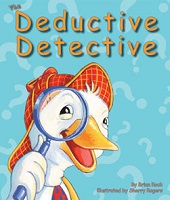
Grade 1
4 skill lessons · 2 math-through-reading
Math
Skill lessons
The mathematics the book carries, taught directly. Printable workbook pages and teacher keys are not available for this book yet.
- 1Twelve Down to One, One Card at a Time
- 2One Clue Sends One Baker Home
- 3Three Things Every Sentence Needs
- 4The Two Piles Always Make Twelve
Math + reading
Math through the reading
The same book, entered through a sentence it prints. Change one word in the reading and the numbers change with it.
- 5The Word That Takes One Away
- 6Which Clue Sent That Baker Home
Reading
Reading and language lessons
The same book read as a text. What a word means in its sentence, how a character is shown, how the writing is put together - no mathematics.
- 7Swans Have Feathers Not Hair: How Duck Says Why
- 8Chocolate Moose Cake: Words That Mean Two Things at Once
- 9A Strand of Hair: What the Characters Notice and What They Do With It
- 10Said Duck, Said Horse: Deciding Whose Words These Are
- 11On the Case to Banana Creak Cake: The First Page and the Last
Skill lessons
4 lessons on the mathematics the book carries. Printable workbook pages and teacher keys are not available for this book yet.
1. Twelve Down to One, One Card at a Time
The book subtracts one eleven times in a row and prints the result every time, which is more repetitions of a single fact family than most texts give and all of them inside twelve. Students build the row, take one card off at a time, and move from counting the whole row again to saying the number that comes just before. The count back replaces the recount: by the middle of the run a child names the new total without touching every card, and the row is still there to check against when they are unsure.
Full lesson — 20 minutes
1. Count out twelve and check the row (4 min)
Lay twelve baker cards in a single row on the strip and count them by touching each card once. Say twelve when you finish and leave your finger on the last card. Name the animal on every card before any of them move.
Detective Duck looked at the scene and said, one of these 12 bakers stole that cake, but I'll quack this case in no time.
2. Take one away and count what is left (6 min)
Slide the mouse card off the row and into the cleared space. Count the cards still in the row by touching each one, and say the number you reach. Do the same for the rooster and then the elephant, counting the row again after each card leaves.
Word preview: minus, leaves
12 suspects minus 1 mouse leaves 11 suspects.
11 suspects minus one rooster leaves 10 suspects.
3. Count back instead of counting all (6 min)
This time do not count the whole row again. Look at the number you had, take one card away, and say the number that comes just before it. Check yourself by counting the row once every third card. Work down until four cards are left.
Ten suspects, minus one elephant, leaves nine suspects.
Nine suspects minus one swan leaves eight suspects.
4. Run it down to one thief (4 min)
Keep taking one card away and saying the number before, until a single card is left in the row. Name the animal still standing. Say how many bakers left the row altogether.
Three suspects, minus one kangaroo, leaves two suspects.
That means our thief could only be two suspects, minus one raccoon, leaves one thief.
Short version — 9 minutes
1. Take one away and count what is left (4 min)
Slide the mouse card off the row into the cleared space. Count the cards still in the row by touching each one and say the number. Do the same for the rooster.
Word preview: minus, leaves
12 suspects minus 1 mouse leaves 11 suspects.
2. Count back instead of counting all (5 min)
Stop counting the whole row. Take one card away and say the number that comes just before the one you had. Check by counting the row every third card.
Ten suspects, minus one elephant, leaves nine suspects.
Three levels
- Support
- Start the row at six rather than twelve and keep every cleared card in a line beside the row, so the child can see both amounts without holding either in mind. Count the row again after each removal for as long as it helps, and only try the count back once the child predicts the number before you ask for it. Six removals still reach one card left, which is the shape of the method.
- At Grade
- Twelve cards, three removals counted in full, then a switch to counting back with a check every third card. The child says the number aloud before the partner recounts, so the prediction is on record and the row settles it.
- Extension
- Give the child a row of nine and ask what the row held before the last card was cleared, working the count back the other way. Then ask how many cards must leave a row of twelve before three are standing, and have them say the number without running the whole sequence.
English learners
Number is the part that transfers, and a child who counts to twelve in any language will count this row correctly at once, so let the cards and the counting carry the first minutes. The English number sequence spoken backward is a separate piece of memory from counting forward and often much weaker even in a fluent speaker. Rehearse eleven, ten, nine as a chant over the shrinking row before asking any child to produce it alone, and let them count back in their strongest language while touching the cards, then say the English number for the total. The words minus and leaves are worth previewing on cards, since they carry the whole sentence and neither is guessable.
Materials
- Twelve baker cards per pair, one for each animal named in the book
- A paper strip long enough to hold twelve cards in one row
- A marked space or small tray for the cleared bakers
- A number line to twelve, one per pair
- Word cards: minus, leaves
Standards & curriculum
Choose your curriculum above to see the standards for this lesson.
Standards are held back while this plan is edited. Every standard shown here was matched against the supplied wording of this lesson, quoting its steps, so a changed step is no longer the thing that was checked. Undo your changes to bring the standards back — your edits stay in this browser either way.
2. One Clue Sends One Baker Home
Duck's clues each name a single feature and each clears exactly one baker, and the book prints the resulting count every time, so a wrong ruling shows up immediately as a count that moved by the wrong amount. Students match each clue to a card, decide whether it clears anybody, and recount. The count polices the logic: a child who clears two bakers on one clue, or clears none, sees the row disagree with the book's number and has to say which card should not have moved.
Full lesson — 20 minutes
1. Match the clue to the baker (5 min)
Listen to a clue and put your finger on the one card it talks about. Say the animal's name and the one thing about it the clue names, such as feathers or a long tail. Do this for four clues before any card moves.
Swans have feathers not hair.
But pig doesn't have a long tail, said duck, so she couldn't have hauled the cape.
2. Decide whether the clue clears anyone (6 min)
For each clue say whether it rules that baker out or leaves them a suspect. Move only the cards the clue clears. Say why the others stay, using the thing the clue names.
So swan couldn't be our thief.
But that's too high to jump, said duck, if you're a cow.
3. Count the suspects after each clue (5 min)
After every card that leaves, count the row and say how many suspects are still standing. Say whether the number went down by one, and check the cleared pile has grown by one card.
Five suspects, minus one cow, leaves four suspects.
4. Say who is left and why (4 min)
When one card remains, name the animal. Say why every other baker was sent home by naming two of the clues. Say what the last card must be, given that all the others are gone.
That means our thief could only be two suspects, minus one raccoon, leaves one thief.
The monkey said duck pointing to the thief.
Short version — 9 minutes
1. Decide whether the clue clears anyone (5 min)
For each clue say whether it rules that baker out or leaves them a suspect. Move only the cards the clue clears, and say why the others stay.
So swan couldn't be our thief.
2. Count the suspects after each clue (4 min)
After every card that leaves, count the row and say how many suspects are still standing. Check the number went down by exactly one.
Five suspects, minus one cow, leaves four suspects.
Three levels
- Support
- Offer the clue with two cards rather than the whole row, one it clears and one it does not, so the decision is a choice between two rather than a search across twelve. Say the feature aloud and let the child point before speaking. Once the choice is reliable, widen to four cards and then to the row.
- At Grade
- The clue is heard once against the full row, the child finds the card and says the feature that clears it, and the count after each removal is produced from the row rather than recited. The partner challenges any removal by naming the feature it should have matched.
- Extension
- Give the child a clue that clears nobody in the row, such as a feature every remaining baker shares, and have them say why the count cannot move. Then ask what a clue would have to name in order to clear the monkey, and why the book never gives one.
English learners
The reasoning in this lesson is available to every child, but the clues rest on animal knowledge that is cultural as much as linguistic: that swans have feathers, that a rooster crows at sunrise, that a pig's tail is short. Preview those facts with the cards before the reading rather than assuming them, since a child who does not know them cannot use a clue however well they understand the task. The negative forms carry the logic and are the hardest English in this book, because could not have and does not have both mean cleared, and one of them is a tense a child may not yet produce. Accept a reason that names the animal and the feature, and invite children to reason with a partner in their strongest language before saying the English.
Materials
- Twelve baker cards per pair, one for each animal named in the book
- A paper strip long enough to hold twelve cards in one row
- A marked space or small tray for the cleared bakers
- A number line to twelve, one per pair
- Word cards: clue, suspect
Standards & curriculum
Choose your curriculum above to see the standards for this lesson.
Standards are held back while this plan is edited. Every standard shown here was matched against the supplied wording of this lesson, quoting its steps, so a changed step is no longer the thing that was checked. Undo your changes to bring the standards back — your edits stay in this browser either way.
3. Three Things Every Sentence Needs
Every clearing sentence in this book carries the same three pieces in the same order, and the book supplies eleven of them, so the pattern is audible long before it is explained. Students put a frame above their own row and speak the sentence about cards they have just moved, which forces the second number to be a count rather than a guess. The representation being built is the spoken sentence itself: a first grader who can say twelve, minus one mouse, leaves eleven while pointing at a row has a durable way to record a subtraction long before writing one down.
Full lesson — 20 minutes
1. Hear the sentence eleven times (4 min)
Listen while the run of clearing sentences is read aloud one after another. Hold up a finger each time you hear the word minus. Say what stays the same in every sentence and what changes.
Word preview: minus, leaves
12 suspects minus 1 mouse leaves 11 suspects.
11 suspects minus one rooster leaves 10 suspects.
2. Fill the frame from your own row (6 min)
Put the frame strip above your row of cards. Take one card away, then say the sentence with your three pieces in it: the number you started with, the animal that left, and the number now in the row. Point at the row for the last number before you say it.
Nine suspects minus one swan leaves eight suspects.
3. Find the number that does not belong (6 min)
Your partner says a sentence about your row and gets one number wrong on purpose. Count the row and say which of the two numbers the row disagrees with. Fix the sentence, not the row, and say the true one.
Ten suspects, minus one elephant, leaves nine suspects.
4. Say the last sentence in the case (4 min)
Work your row down to two cards. Say the sentence for the last removal, ending with one, and then name the animal on the card still standing. Say who the thief is and how the row shows it.
That means our thief could only be two suspects, minus one raccoon, leaves one thief.
The monkey said duck pointing to the thief.
Short version — 9 minutes
1. Fill the frame from your own row (5 min)
Put the frame strip above your row. Take one card away, then say the sentence with your three pieces in it: the starting number, the animal that left, and the number now in the row.
Word preview: minus, leaves
Nine suspects minus one swan leaves eight suspects.
2. Find the number that does not belong (4 min)
Your partner says a sentence about your row with one number wrong. Count the row and say which number the row disagrees with, then say the true sentence.
Ten suspects, minus one elephant, leaves nine suspects.
Three levels
- Support
- Give the frame with the first number already filled in and the animal card sitting in its slot, so only the result has to be produced. Let the child count the row aloud and then say just that number into the frame before trying the whole sentence. Build up to the full three pieces across several turns rather than in one.
- At Grade
- The child says all three pieces from their own row without the frame prefilled, pointing at the row for the result before naming it. The partner checks the result against the row and the pair fixes any sentence the row disagrees with.
- Extension
- Give the child the result and the animal but not the starting number, such as a sentence ending in leaves seven suspects after one horse left, and have them say what the row held before. Then ask them to say the same sentence with the pieces in a different order and decide whether it still says the same thing.
English learners
The three pieces of this sentence appear in an order English fixes and many languages do not, with the result arriving last after a word, leaves, that a learner will not know. That ordering is the whole difficulty and it is worth rehearsing as a shape before any child fills it: say the frame over a shared row several times so the rhythm is familiar. The numbers themselves transfer immediately and the animal names are concrete and picturable, so the counting and the card should never wait on the sentence. Invite children to say what happened in their strongest language first, then fill the English frame over the same row, and accept a sentence whose three pieces are right even when the small words are not.
Materials
- Sentence frame strip: blank suspects minus one blank leaves blank suspects
- Twelve baker cards per pair, one for each animal named in the book
- A paper strip long enough to hold twelve cards in one row
- A marked space or small tray for the cleared bakers
- A number line to twelve, one per pair
- Word cards: minus, leaves, suspects
Standards & curriculum
Choose your curriculum above to see the standards for this lesson.
Standards are held back while this plan is edited. Every standard shown here was matched against the supplied wording of this lesson, quoting its steps, so a changed step is no longer the thing that was checked. Undo your changes to bring the standards back — your edits stay in this browser either way.
4. The Two Piles Always Make Twelve
The book keeps a whole and two parts on the table at every moment: the bakers still suspected and the bakers sent home, always twelve between them, though the book never once counts the cleared side. Students make both piles, put them back together, and then work out a hidden part from the part they can see. The concept being built is that a whole can be split many ways and the pieces still rebuild it, which is what makes a missing part findable rather than guessable, and the cleared pile the book never counts is exactly where students do the counting.
Full lesson — 20 minutes
1. Build both piles from twelve (5 min)
Count twelve cards into the row. Move any four bakers to the cleared space. Count the row, count the cleared pile, and say both numbers with the whole row of twelve still in front of you.
Detective Duck looked at the scene and said, one of these 12 bakers stole that cake, but I'll quack this case in no time.
2. Put the two piles back together (5 min)
Slide the cleared pile back into the row and count the whole set again. Say the number you started with and the number you finished with. Do it twice more, moving a different number of cards each time.
12 suspects minus 1 mouse leaves 11 suspects.
3. Fill the two ten frames (6 min)
Set the cards still in the row into one ten frame and the cleared bakers into the other. Say how many are in each frame. Say how many there would be if you poured both frames into one, and check by doing it.
Eight suspects, my one horse, leaves seven suspects.
4. Find the missing pile (4 min)
Your partner hides the cleared pile and tells you only how many cards are left in the row. Say how many must be hiding. Uncover the pile and count it to see whether you were right.
Five suspects, minus one cow, leaves four suspects.
Short version — 9 minutes
1. Build both piles from twelve (4 min)
Count twelve cards into the row. Move four bakers to the cleared space. Count the row, count the cleared pile, and say both numbers.
Detective Duck looked at the scene and said, one of these 12 bakers stole that cake, but I'll quack this case in no time.
2. Find the missing pile (5 min)
Your partner hides the cleared pile and tells you only how many cards are still in the row. Say how many must be hiding, then uncover and count.
Five suspects, minus one cow, leaves four suspects.
Three levels
- Support
- Work with a whole of six rather than twelve and keep both piles inside two visible spaces so neither is ever out of sight. When the partner hides a pile, let the child count the visible part and then count on with fingers to six rather than working the missing part from memory. The rebuild is the part worth having, so do it after every split.
- At Grade
- A whole of twelve, both parts counted separately, and the two piles rebuilt into twelve at least twice. For the hidden pile the child says a number before uncovering, so the prediction is on record and the count settles it.
- Extension
- Ask for every way the twelve bakers could split into a row and a cleared pile where the cleared pile is smaller, and have the child list the pairs in order so none is missed. Then ask which split the book itself never reaches and why the story stops where it does.
English learners
Part and whole are ideas a child brings with them and does not need English to hold, so the two piles and the rebuild should start before much talking happens. The English that carries weight here is small and easy to miss: how many are left names a part, and how many altogether names the whole, and the two questions differ by a word that is not stressed in speech. Say both questions over the same two piles so the difference is heard against something visible. Children may reason about the hidden pile in their strongest language and report only the number in English, which is the piece that transfers cleanest and is all the check requires.
Materials
- Twelve baker cards per pair, one for each animal named in the book
- A paper strip long enough to hold twelve cards in one row
- A marked space or small tray for the cleared bakers
- Two ten frames per pair
- Word cards: altogether, left
Standards & curriculum
Choose your curriculum above to see the standards for this lesson.
Standards are held back while this plan is edited. Every standard shown here was matched against the supplied wording of this lesson, quoting its steps, so a changed step is no longer the thing that was checked. Undo your changes to bring the standards back — your edits stay in this browser either way.
Math through the reading
The mathematics is reached through a sentence the book prints: change one word in the reading and the numbers change with it. These carry their own standards, matched against these lessons rather than inherited from the skill ones.
5. The Word That Takes One Away
Students hold twelve baker cards and find out which words in the book make a card leave the table and which words leave every card where it is.
Full lesson — 20 minutes
1. Lay out twelve and hear Duck's plan (4 min)
Students count out twelve baker cards into one row, touching each card once as they count. They listen to Duck's plan read aloud twice and then say in their own words what he is going to do to the row.
2. Take one away and say both numbers (6 min)
One child slides the mouse card off the row and away from the others. The pair recounts what is left and both say the book's sentence about their own row, naming twelve, the mouse, and eleven. They repeat for the rooster and the elephant, so three cards leave and three sentences get said.
3. Try the sentence with the word changed (6 min)
The teacher says the sentence again with plus one mouse in place of minus one mouse. Students act on the words exactly as heard, putting a mouse card onto the row instead of taking one off, then recount and say the number they now have. They compare that row against the row minus made and say which word emptied the table toward one thief.
4. Run the row down to the thief (4 min)
Pairs take away one card at a time and say the minus-and-leaves sentence for each, working down until a single card is left. They name the card still standing and say the number of cards that left the table.
Short version — 9 minutes
1. Take one away and say both numbers (6 min)
One child slides the mouse card off the row and away from the others. The pair recounts what is left and both say the book's sentence about their own row, naming twelve, the mouse, and eleven. They repeat for the rooster and the elephant, so three cards leave and three sentences get said.
2. Try the sentence with the word changed (6 min)
The teacher says the sentence again with plus one mouse in place of minus one mouse. Students act on the words exactly as heard, putting a mouse card onto the row instead of taking one off, then recount and say the number they now have. They compare that row against the row minus made and say which word emptied the table toward one thief.
Three levels
- Support
- Work with six cards, not twelve, and keep the removed cards in a pile the child can see and touch. Give the sentence as a frame with only the two numbers and the animal to fill, and let the child point at the row for the second number instead of counting it from memory. The row is short enough that a wrong second number is visible without recounting.
- At grade
- Twelve cards, cards removed to a pile off the table, and the full sentence spoken from the child's own row with both numbers and the animal named. Children take turns so each says at least three sentences, and a partner checks the second number against the row before the next card moves.
- Extension
- Give the pair a row and a spoken sentence that does not match it, such as a sentence naming nine when the row holds ten. The child says which of the two numbers the row disagrees with, fixes the sentence rather than the row, and says how they knew which one was wrong.
English learners
The count itself transfers: a child who counts to twelve in any language counts this row correctly on the first try. In English, minus and leaves sit in one sentence doing two different jobs, one naming the action and one naming the result, in that order. Rehearse the frame as a whole before any card moves, with the teacher saying it over a row the class can see, so the shape is familiar before a child has to produce it. Invite children to count the row and say what happened in their strongest language first and then say the English sentence over the same row. The animal names are the easiest words here and are worth previewing with the cards, since a child who cannot say rooster cannot finish a sentence whose mathematics they have already done.
Materials
- Twelve baker cards per pair, one per animal named in the book
- A long strip of paper to lay the row on
- A sentence frame strip reading blank suspects minus one blank leaves blank suspects
- One enlarged baker card set for the shared row
Standards & curriculum
Choose your curriculum above to see the standards for this lesson.
Standards are held back while this plan is edited. Every standard shown here was matched against the supplied wording of this lesson, quoting its steps, so a changed step is no longer the thing that was checked. Undo your changes to bring the standards back — your edits stay in this browser either way.
6. Which Clue Sent That Baker Home
Students argue to a partner which of the book's clues actually rules a baker out, using the number of suspects standing before and after as their evidence.
Full lesson — 20 minutes
1. Hear one baker's two reasons (5 min)
Students listen to the mouse pages read twice and repeat back both reasons mouse is not the thief, one about carrying a big cake and one about liking cheesecake. They put a finger on the mouse card while both are read.
2. Count before and count after (5 min)
Students count the row with mouse in it, slide mouse to the cleared pile, and count again. They say both numbers aloud and check that exactly one card moved by counting the cleared pile.
3. Tell your partner which clue did it (6 min)
Each child takes a position on which sentence sent mouse home and says it to their partner, naming the count before and the count after inside the reason. Partners who disagree each say their own version, and neither has to change.
4. Test your rule on the swan (4 min)
Students hear the swan pages, which also carry two reasons, and apply the rule they argued for to decide which clue cleared swan. They say whether their rule still holds and what the two counts were this time.
Short version — 9 minutes
1. Hear one baker's two reasons (5 min)
Students listen to the mouse pages read twice and repeat back both reasons mouse is not the thief, one about carrying a big cake and one about liking cheesecake. They put a finger on the mouse card while both are read.
2. Tell your partner which clue did it (6 min)
Each child takes a position on which sentence sent mouse home and says it to their partner, naming the count before and the count after inside the reason. Partners who disagree each say their own version, and neither has to change.
Three levels
- Support
- Give the two candidate sentences on separate strips so the child holds them rather than remembering them, and let them push one strip forward to take a position before saying anything. Supply the frame I think it was this one because there were this many and then there were this many, with the two numbers read off the row and the cleared pile rather than recalled. The position is made physically first and spoken second.
- At grade
- Both reasons held in mind from the reading, a position taken aloud to a partner, and both counts named inside the reason without prompting. Children who disagree say so and each restates their own case once more before moving to the swan.
- Extension
- Take the position you argued against and make the best case you can for it, then say which case you now think is stronger and what would have to be true in the book for you to switch. Children may revise their position and say what changed their mind.
English learners
Counting the row and the pile is available to every child immediately and should be the first thing they do, because it gives them something true to say before they have the words to argue. The hard part is English's because, which links a claim to its evidence in an order some languages reverse, and the whole task lives inside that word. Rehearse the frame over a row the class shares before any child has to produce it alone. Children may take a position and reason it out in their strongest language with a partner who shares it, then say the frame in English with the two numbers, since the numbers are the part that transfers cleanly and they anchor the rest of the sentence.
Materials
- Twelve baker cards per pair
- Sentence strips carrying the two candidate reasons for mouse and for swan
- A tray or marked space for the cleared bakers
- A shared row of enlarged baker cards
- A because frame strip large enough for the class to read together
Standards & curriculum
Choose your curriculum above to see the standards for this lesson.
Standards are held back while this plan is edited. Every standard shown here was matched against the supplied wording of this lesson, quoting its steps, so a changed step is no longer the thing that was checked. Undo your changes to bring the standards back — your edits stay in this browser either way.
Reading and language lessons
5 lessons on the reading and language the book carries - what a word means in its sentence, how a character is shown, how a text is built. No mathematics: these are matched against the English language arts curricula, which are a different and smaller set than the mathematics ones.
7. Swans Have Feathers Not Hair: How Duck Says Why
Duck never just says who is innocent; he says a fact about the animal and then joins it to his decision with a joining word. Students read two of these, underline the fact and the decision, and name the word that ties them together. They finish by making the same kind of sentence about a classmate. No animal is counted and no suspect is subtracted; the work is hearing how a reason is attached to a claim.
Full lesson — 20 minutes
1. Find the fact and the decision (6 min)
The teacher reads the passage below once. Read it again together. Put one finger on the sentence that says a fact about swans, and another finger on the sentence that says what Duck decided. Say aloud which one came first.
Word preview: because
Certainly not swan said duck. Swans have feathers not hair. So swan couldn't be our thief.
2. Say the same idea with because (5 min)
Read the passage below again with a partner. Now say Duck's idea as one sentence using because. Start with Swan is not the thief because ___. Say it aloud so your partner hears the whole sentence.
Word preview: so
Certainly not swan said duck. Swans have feathers not hair. So swan couldn't be our thief.
3. Hear the same shape somewhere else (5 min)
Read the passage below. Duck clears a different animal here. Say aloud what the fact is and what the decision is, then say whether Duck put the fact first or the decision first this time.
Word preview: reason
Then elephant is not our thief, said Duck. Since the only way he can fit into this room is through these two doors. That's because I'm royalty, said elephant. I come from a long line of two doors.
4. Make a reason of your own (4 min)
Turn to your partner. Say a sentence about somebody in this room using because. For example: ___ cannot be the one who opened the window, because ___. Then listen to your partner's sentence and say whether the reason really fits.
Word preview: fact
Short version — 9 minutes
1. Find the fact and the decision (5 min)
The teacher reads the passage below. Point to the sentence with the fact about swans, then to the sentence with the decision. Say which came first.
Word preview: because
Certainly not swan said duck. Swans have feathers not hair. So swan couldn't be our thief.
2. Say the same idea with because (4 min)
Read the passage below again. Say Duck's idea as one sentence: Swan is not the thief because ___.
Word preview: so
Certainly not swan said duck. Swans have feathers not hair. So swan couldn't be our thief.
Three levels
- Support
- In step 1, listen to the printed passage, then point to the word So. Answer aloud: do swans have hair? Then say Swan is not the thief, twice.
- At Grade
- Read the printed passage in step 1, name the fact and the decision, then in step 2 join them into one sentence using because.
- Extension
- The printed passage in step 3 puts the decision before the reason. Say two sentences about which order is easier to follow and why a detective might choose it.
English learners
English can join a reason to a claim at either end — because at the front of the reason, or so at the front of the result — and the two words point in opposite directions even though both signal a reason. Say the pair aloud as a set: Swans have feathers, so swan is not the thief; swan is not the thief because swans have feathers. Invite students to give a reason in their strongest language and say which word did the joining. Rehearsable frame: ___ because ___.
Materials
- Deductive Detective, the passage printed in this step
- pointing finger
- sentence frame card
- partner talk cards
- Word cards: because, so, reason, fact
Standards & curriculum
Choose your curriculum above to see the standards for this lesson.
Standards are held back while this plan is edited. Every standard shown here was matched against the supplied wording of this lesson, quoting its steps, so a changed step is no longer the thing that was checked. Undo your changes to bring the standards back — your edits stay in this browser either way.
8. Chocolate Moose Cake: Words That Mean Two Things at Once
Almost every animal in this book leaves with a joke built on a word that sounds like another word or means two things. Students meet three of them, say the two meanings each time, and decide which meaning the animal meant and which one made it funny. They finish by saying which joke worked best for them. Nothing is added or taken away; the work is hearing two meanings inside one word.
Full lesson — 20 minutes
1. Hear a word that means two things (6 min)
The teacher reads the passage below once, then reads it again slowly. Listen for the word moose. Say aloud what a moose is. Then say what else the word sounds like when somebody is talking about cake. Say why that makes it funny.
Word preview: moose
That's right, said Moose. I haven't been here since I've finished my chocolate moose cake.
2. Find the joke a pig makes (5 min)
Read the passage below with the teacher. Pig uses the word bacon. Say aloud what bacon usually means. Then say why a pig saying it is a joke. Tell your partner whether Pig sounds worried or funny.
Word preview: bacon
I don't know why I even entered this contest, said pig. Nothing good ever happens when I'm bacon.
3. Catch the last one (5 min)
Read the passage below. Tiger says he bakes from scratch. Say aloud what a baker means by from scratch. Then say what a tiger does with claws that is also called a scratch. Say which meaning Tiger wants you to hear.
Word preview: scratch
And I have claws on my paws, said Tiger. That's why I always bake from scratch.
4. Say which joke you liked (4 min)
Talk with your partner. Which of the three jokes made you smile the most? Say the word the joke used, then say a whole sentence about why it worked.
Word preview: joke
Short version — 9 minutes
1. Hear a word that means two things (5 min)
The teacher reads the passage below. Listen for the word moose. Say what a moose is, and say what the word sounds like in a cake name.
Word preview: moose
That's right, said Moose. I haven't been here since I've finished my chocolate moose cake.
2. Catch the last one (4 min)
Read the passage below. Say what from scratch means to a baker, and what a scratch means to a tiger. Say which one Tiger wants you to hear.
Word preview: scratch
And I have claws on my paws, said Tiger. That's why I always bake from scratch.
Three levels
- Support
- In step 1, listen to the printed passage and point to the word moose both times it appears. Answer aloud: is a moose an animal or a cake? Say your answer twice.
- At Grade
- Read the printed passages in steps 1 and 3 and, for each, say the two meanings the word carries and which one the animal meant.
- Extension
- The printed passage in step 3 uses claws and scratch in two sentences in a row. Say two sentences about how putting them close together makes the joke land.
English learners
A pun needs two meanings held at once, and a learner still building the first meaning has nothing to hold the second against — so give both meanings plainly before the joke is asked for. Say the animal word and the food word separately, with a picture for each, then read the sentence. Invite students to name a word in their strongest language that means two things, and explain both. Rehearsable frame: ___ can mean ___ or ___.
Materials
- Deductive Detective, the passage printed in this step
- pointing finger
- partner talk cards
- Word cards: moose, bacon, scratch, joke
Standards & curriculum
Choose your curriculum above to see the standards for this lesson.
Standards are held back while this plan is edited. Every standard shown here was matched against the supplied wording of this lesson, quoting its steps, so a changed step is no longer the thing that was checked. Undo your changes to bring the standards back — your edits stay in this browser either way.
9. A Strand of Hair: What the Characters Notice and What They Do With It
Twice in this book somebody spots something on the floor and the story turns on it. Students read the two noticing passages, say what was found and who found it, and then say what it told the detective. They finish by pointing out something in the classroom that would tell a visitor what happened there. Nothing is measured; the work is finding a detail in a text and saying what it shows.
Full lesson — 20 minutes
1. Find what was spotted (6 min)
The teacher reads the passage below once. Then read it together. Say aloud what Owl found and where he found it. Point to the words in the passage that told you the place.
Word preview: clue
It looks like a strand of hair, said Owl, and look, there's some more over by the kitchen. Who could have left them?
2. Find a second thing on the floor (5 min)
Read the passage below with the teacher. Something else has been spotted on the floor here. Say aloud what it is, and say what Duck thinks the thief did with it.
Word preview: found
Look there on the floor, observed duck. You mean that spilled flour? Ask Owl. Yes, replied duck. Our thief spilled a bag of flour and dragged his long tail through it.
3. Say what each clue told them (5 min)
Read both passages below with a partner. For each one, say a sentence starting They found ___, so they knew ___. Say both sentences aloud, then say which clue you think helped more.
Word preview: knew
It looks like a strand of hair, said Owl, and look, there's some more over by the kitchen. Who could have left them?
Look there on the floor, observed duck. You mean that spilled flour? Ask Owl. Yes, replied duck. Our thief spilled a bag of flour and dragged his long tail through it.
4. Find a clue in this room (4 min)
Look around the room with your partner. Find something that would tell a visitor what happened here today. Point to it and say a sentence: If you saw ___, you would know ___.
Word preview: notice
Short version — 9 minutes
1. Find what was spotted (5 min)
The teacher reads the passage below. Say what Owl found and where. Point to the words that told you the place.
Word preview: clue
It looks like a strand of hair, said Owl, and look, there's some more over by the kitchen. Who could have left them?
2. Find a second thing on the floor (4 min)
Read the passage below. Say what was spotted on the floor and what Duck thinks the thief did with it.
Word preview: found
Look there on the floor, observed duck. You mean that spilled flour? Ask Owl. Yes, replied duck. Our thief spilled a bag of flour and dragged his long tail through it.
Three levels
- Support
- In step 1, listen to the printed passage and point to the words strand of hair. Answer aloud: who found it, Owl or Duck? Say your answer twice.
- At Grade
- Read the printed passages in steps 1 and 2, say what was found in each, and say what the finder thought it meant.
- Extension
- The printed passage in step 1 ends with a question rather than an answer. Say two sentences about why the book asks it there instead of telling you straight away.
English learners
A clue is a noun in English but it does a verb's work in a story — it points at something that has not been said yet — so name what was found before asking what it means. Hold up the object word (hair, flour) and then the meaning sentence, as two separate moves. Invite students to describe, in their strongest language, something that showed them what had happened. Rehearsable frame: They found ___, so they knew ___.
Materials
- Deductive Detective, the passage printed in this step
- pointing finger
- two passage strips
- partner talk cards
- Word cards: clue, found, knew, notice
Standards & curriculum
Choose your curriculum above to see the standards for this lesson.
Standards are held back while this plan is edited. Every standard shown here was matched against the supplied wording of this lesson, quoting its steps, so a changed step is no longer the thing that was checked. Undo your changes to bring the standards back — your edits stay in this browser either way.
10. Said Duck, Said Horse: Deciding Whose Words These Are
This book is nearly all talk, and the little tag beside each line is what tells a reader whose voice it is. Students read a passage where two characters speak in turn, find the tag for each line, and read the lines aloud in two voices. They then meet a passage where the tag is missing and say honestly that the text does not settle it. Nothing is counted; the work is using tags to track a speaker, and noticing when they run out.
Full lesson — 20 minutes
1. Find the tag beside each line (6 min)
The teacher reads the passage below once. Then read it together. Find the words said Duck and put one finger there. Find the words said horse and put another finger there. Say aloud which one speaks first.
Word preview: said
But one of our suspects would never go into a dark room alone, said Duck, which is why horse is free to raise home. It's true, said horse. I'm not a dark horse.
2. Read it in two voices (5 min)
Read the passage below with a partner. One of you is Duck and one of you is horse. Use the tags to know which lines are yours. Read it through twice, swapping parts the second time.
Word preview: voice
But one of our suspects would never go into a dark room alone, said Duck, which is why horse is free to raise home. It's true, said horse. I'm not a dark horse.
3. Meet a line with no tag on it (5 min)
Read the passage below with the teacher. One of these lines has no tag saying who spoke it. Point to that line. Then say honestly whether the words on this page tell you who said it, or whether you would only be guessing.
Word preview: tag
Fox was sitting in a chair crime. Someone stole my beautiful cake! Who could have stolen it? Asked Owl.
4. Say what a tag does for a reader (4 min)
Tell your partner, in a whole sentence, what the little words said Duck do for somebody reading the book. Then say what a reader has to do when those words are not there.
Word preview: speaker
Short version — 9 minutes
1. Find the tag beside each line (5 min)
The teacher reads the passage below. Point to said Duck, then to said horse. Say which one speaks first.
Word preview: said
But one of our suspects would never go into a dark room alone, said Duck, which is why horse is free to raise home. It's true, said horse. I'm not a dark horse.
2. Read it in two voices (4 min)
Read the passage below with a partner. One is Duck, one is horse. Use the tags to know which lines are yours.
Word preview: voice
But one of our suspects would never go into a dark room alone, said Duck, which is why horse is free to raise home. It's true, said horse. I'm not a dark horse.
Three levels
- Support
- In step 1, listen to the printed passage and point to the words said horse. Answer aloud: who says I'm not a dark horse? Say the name twice.
- At Grade
- Read the printed passage in step 1, name the speaker of each line from its tag, then read it in two voices in step 2.
- Extension
- In the printed passage in step 3 one line has no tag at all. Say two sentences about who you think said it and exactly which words on the page made you think so.
English learners
English drops the speaker tag after the words and often reverses it — said Duck rather than Duck said — so a learner scanning for the subject at the front of a clause may read the tag as part of the speech. Read one line with the tag, then the same line without it, so the tag is heard as separable. Invite students to say a line and then a tag in their strongest language and say where the name sits. Rehearsable frame: ___ said ___.
Materials
- Deductive Detective, the passage printed in this step
- pointing finger
- two character cards
- partner talk cards
- Word cards: said, voice, tag, speaker
Standards & curriculum
Choose your curriculum above to see the standards for this lesson.
Standards are held back while this plan is edited. Every standard shown here was matched against the supplied wording of this lesson, quoting its steps, so a changed step is no longer the thing that was checked. Undo your changes to bring the standards back — your edits stay in this browser either way.
11. On the Case to Banana Creak Cake: The First Page and the Last
The opening tells a reader three things fast — who the character is, what happened and what he is going to do — and the last page answers the one question the opening left open. Students read the opening, name the three things it hands over, then read the ending and say which question it answers. They finish by saying what the story never tells. Nothing is calculated; the work is seeing how a beginning sets up an ending.
Full lesson — 20 minutes
1. Read the opening and list what it hands you (6 min)
The teacher reads the passage below once. Read it together. Say aloud who the story is about. Then say what has happened. Then say what he is going to do. Point to the part of the passage that told you each one.
Word preview: opening
Duck, the deductive detective, was seen at his desk when the phone rang with an urgent message. Someone stole one of the cakes from the cake contest. Detective Duck is on the case.
2. Read the last page (5 min)
Read the passage below with the teacher. This is how the book finishes. Say aloud who took the cake and why he says he did it. Then say whether the opening had told you either of those things.
Word preview: ending
I couldn't help it said monkey as Al grabbed his arm. It was a banana creak cake.
3. Match the question to the answer (5 min)
Read both passages below. The first one asks something without asking it out loud. The second one answers it. Tell your partner what that question was, in your own words, and then read out the words that answer it.
Word preview: answer
Duck, the deductive detective, was seen at his desk when the phone rang with an urgent message. Someone stole one of the cakes from the cake contest. Detective Duck is on the case.
I couldn't help it said monkey as Al grabbed his arm. It was a banana creak cake.
4. Say what the book never told you (4 min)
Talk with your partner. Think of one thing you still want to know about this story that the book never says. Say it as a question. Then listen to your partner's question.
Word preview: question
Short version — 9 minutes
1. Read the opening and list what it hands you (5 min)
The teacher reads the passage below. Say who the story is about, what happened, and what he is going to do.
Word preview: opening
Duck, the deductive detective, was seen at his desk when the phone rang with an urgent message. Someone stole one of the cakes from the cake contest. Detective Duck is on the case.
2. Read the last page (4 min)
Read the passage below. Say who took the cake and the reason he gives. Say whether the opening had told you that.
Word preview: ending
I couldn't help it said monkey as Al grabbed his arm. It was a banana creak cake.
Three levels
- Support
- In step 1, listen to the printed passage and point to the name Duck. Answer aloud: what was stolen? Say the word cake twice.
- At Grade
- Read the printed passage in step 1 and name the three things it hands you, then read the ending in step 2 and say which question it answers.
- Extension
- The printed passage in step 2 gives the thief's reason in one short sentence. Say two sentences about whether that is a good enough ending for the story the opening promised.
English learners
An English story opening front-loads the whole setup into a few sentences, and a reader who is still decoding the first one may lose the second and third. Read the opening one sentence at a time and stop after each to name what it added. Invite students to open a story in their strongest language in three sentences: who, what happened, what next. Rehearsable frame: This is about ___. Then ___ happened. Now he will ___.
Materials
- Deductive Detective, the passage printed in this step
- pointing finger
- two passage strips
- partner talk cards
- Word cards: opening, ending, answer, question
Standards & curriculum
Choose your curriculum above to see the standards for this lesson.
Standards are held back while this plan is edited. Every standard shown here was matched against the supplied wording of this lesson, quoting its steps, so a changed step is no longer the thing that was checked. Undo your changes to bring the standards back — your edits stay in this browser either way.