Zero, Zilch, Nada
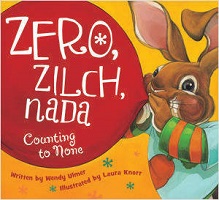
Grade 2
5 skill lessons
Math
Skill lessons
The mathematics the book carries, taught directly. Printable workbook pages and teacher keys are not available for this book yet.
- 1What George, Marcy and Joe Took Away
- 2Once and Only Once
- 3Ten Sets of Ten
- 4Ten Reds to One Hundred
- 5By Fives and By Twos
Math + reading
Math through the reading
The same book, entered through a sentence it prints. Change one word in the reading and the numbers change with it.
No math-through-reading lessons for this book yet.
Reading
Reading and language lessons
The same book read as a text. What a word means in its sentence, how a character is shown, how the writing is put together - no mathematics.
No reading and language lessons for this book yet.
Skill lessons
5 lessons on the mathematics the book carries. Printable workbook pages and teacher keys are not available for this book yet.
1. What George, Marcy and Joe Took Away
The story runs on one chain of numbers and prints every link of it: Harry is sent to make a hundred, ten reds go, ninety are left, eighteen blues go, seventy-two are left, thirty-six greens go, thirty-six are left. Every amount lost and every amount remaining is on the page, and every one of the three is arithmetically true. What the book never does is the arithmetic; each new total is announced by whoever popped the balloons, and Harry only ever believes it after counting. Students do the same thing with chips, taking each loss off a full hundred and counting what is left before they read the number the book gives, so each of the three announcements is either confirmed or caught.
Full lesson — 20 minutes
1. Set out the hundred (5 min)
Fill all ten slot strips so every slot holds a chip, using ten red, eighteen blue and thirty-six green among the yellows. Count the strips by tens to check you have a hundred. Write a hundred in the first box on your strip. That is the order Harry is given on his first morning.
Word preview: hundred
Your first job is to blow up 100 balloons for Mrs. Dupedu's birthday party.
After lunch, Harry decided to count the balloons to be sure he had 100.
2. Take the reds (5 min)
Lift every red chip out and drop it in the lid. Count what is in the lid and say the number. Now count what is left in the slots and write it in the next box. Read George's two sentences and say whether he is right.
Word preview: popped, left
you just popped ten red balloons.
Now you have only ninety balloons.
3. Take the blues, then the greens (6 min)
Lift the blue chips into the lid, count them, count what is left in the slots and write it down. Do the same with the greens. Read Marcy's sentence and then Joe's, and after each one say whether your count agrees with theirs before you go on.
Word preview: only
You just popped eighteen blue balloons.
Now you have only seventy two balloons.
You just popped thirty-six green balloons.
Now you have only thirty-six yellow balloons left.
4. Check Harry's last count (4 min)
Harry counts the leftovers one at a time, and the page shows his count breaking off partway. Count the chips still in your slots by ones and then again by tens and the leftovers, and say which is quicker to check. Read your four boxes out in order and say what happened between each one and the next.
One, two, three, four, 34, 35.
Short version — 9 minutes
1. Take the reds (5 min)
Lift every red chip into the lid, count them, then count what is left in the slots. Read George's two sentences and say whether he is right.
you just popped ten red balloons.
Now you have only ninety balloons.
2. Take the blues, then the greens (4 min)
Lift the blues into the lid and count what is left, then do the same with the greens. Say after each one whether your count agrees with the book's.
You just popped eighteen blue balloons.
Now you have only seventy two balloons.
You just popped thirty-six green balloons.
Now you have only thirty-six yellow balloons left.
Three levels
- Support
- Take the losses off in the order the book gives but stop after the reds and the blues, and keep the chips in their strips so the count of what is left runs by tens and leftovers rather than by ones. Ten off a hundred and eighteen off ninety are the two the lesson needs; thirty-six off seventy-two stays for another day.
- At Grade
- Take all three losses off in order, counting what is left after each and checking it against the book's number before moving on, and record the four totals.
- Extension
- Work one of the three backwards. Cover the amount popped, show your partner only the total before and the total after, and have them find what went into the lid without looking. Then say which of the three is hardest to find that way and why.
English learners
The verbs are doing the arithmetic in this lesson and none of them is a number word. Popped is what takes chips away, left is what stays, and only signals that the number coming is smaller than the one before it, so a child who misses only can hear a loss as a fresh count. Say each of the three sentences with the action: hand into the lid on popped, palm over the strips on left. Note that the book writes seventy two in one place and seventy-two in another for the same amount. The frame to rehearse is: ___ popped, so ___ are left. Children may count and subtract in their strongest language and give only the two numbers in English; the lid and the strips show whether the arithmetic held.
Materials
- Slot strips, ten paper strips each ruled into ten slots, one set of ten strips per pair
- Counting chips in four colours, one hundred and twenty per pair
- Recording strip ruled into four boxes, one per child
- Box lid to hold the chips that come off the strips, one per pair
- Word cards: popped, left, only
Standards & curriculum
These lessons are being matched against curricula now.
Standards are held back while this plan is edited. Every standard shown here was matched against the supplied wording of this lesson, quoting its steps, so a changed step is no longer the thing that was checked. Undo your changes to bring the standards back — your edits stay in this browser either way.
2. Once and Only Once
Four fifths of this book is one man counting the same balloons and getting a different answer every time, and it names three separate reasons: he cannot remember where he started, he cannot remember where he began, and he thinks he may have counted one thing twice. Students count a tipped-out tray of about forty chips without arranging them, compare answers with a partner, and then match their own failure to one of Harry's three. What they build after that is a method, and the book deliberately gives them none: every one of Harry's three helpers is cut off before the advice arrives. So the rule the class ends with, one chip and one number word and every chip once, is theirs, and they have to say why it works.
Full lesson — 20 minutes
1. Count the tray and disagree (5 min)
Tip the tray so the chips lie where they land and do not tidy them. Each of you count them without moving any chip, then say your two numbers out loud. If the numbers differ, say them again and do not fix anything yet. That is where Harry is for most of this story.
Word preview: count, lost
He started at the end of the first balloon bunching station. One, two, three, four.
But now I have to start again because I lost count.
2. Find Harry's three troubles (5 min)
Three sentences on the page say what went wrong for Harry, and they are three different troubles. Read them and put a finger on each. Then tell your partner which one happened to you just now, using Harry's own words.
Word preview: twice, began
Oh my, I don't remember where I started.
Wait, did I count that one twice?
Oh dear, I don't remember where I began.
3. Build a way to keep the count straight (5 min)
Now stop the trouble happening. Lay the arrow beside one chip so you can always find your starting place, and move each chip into the second tray as you count it, so a counted chip cannot be counted again. Count the tray. Both of you do it and see whether your numbers agree this time.
Now wait, I know how to keep my counting straight.
4. Count once through and say your rule (5 min)
Tip the chips back and count them once more, moving each one across as you say its number. Then say your rule in one sentence, and say which of Harry's three troubles it stops. Try to break it: have your partner add chips while you count, and say what that does to your answer.
Word preview: once
This time, I will only count them once.
Short version — 9 minutes
1. Count the tray and disagree (5 min)
Tip the tray and leave the chips where they land. Each of you count them without moving any chip, then say your two numbers out loud.
He started at the end of the first balloon bunching station. One, two, three, four.
2. Find Harry's three troubles (4 min)
Read the three sentences that say what went wrong for Harry and put a finger on each. Say which one happened to you, in Harry's own words.
Oh my, I don't remember where I started.
Wait, did I count that one twice?
Oh dear, I don't remember where I began.
Three levels
- Support
- Use twelve chips rather than forty, and lay them in a line before the first count so the only trouble that can happen is the one about where the count started. Everything else stays: two counts, two numbers said out loud, the arrow, and moving each chip across.
- At Grade
- Count about forty jumbled chips, name which of Harry's three troubles happened, build a method that stops it, and say the rule in one sentence.
- Extension
- Count the tray a second time and get the same number, then work out how you would prove the number to somebody who did not watch you count. Set the chips out so a person walking past could check the total without counting from one, and say what your arrangement shows that a jumbled tray does not.
English learners
Harry's three troubles need three different English constructions and only one of them is about number. Where I started and where I began are the same trouble in two forms, and a child may reasonably take them for two different problems. Counted that one twice is the hard one: twice here means a second time, not two of something, and a child who hears the number in it will look for two chips. Say the three sentences yourself with the action beside each, pointing at the arrow for the first two and at a single chip for the third. The frame to rehearse is: I counted this one ___, so my number was too ___. Children may count in their strongest language and report only the total and which trouble it was in English.
Materials
- Shallow tray holding about forty chips, tipped in loose and not lined up, one per pair
- The page carrying Harry's three troubles, one copy per pair
- Second tray, empty, one per pair
- Paper arrow the pair lay beside the chip they start on, one per pair
- Word cards: count, once, twice
Standards & curriculum
These lessons are being matched against curricula now.
Standards are held back while this plan is edited. Every standard shown here was matched against the supplied wording of this lesson, quoting its steps, so a changed step is no longer the thing that was checked. Undo your changes to bring the standards back — your edits stay in this browser either way.
3. Ten Sets of Ten
Mr. Huffy ends the story by telling Harry what the room is: ten stations, ten slots on each, ten sets of ten, and a hundred every time. Harry does not believe it and asks, and the only answer he gets is the word again. Students build that room and settle it themselves, filling one strip by ones to see the ten, filling all ten to see the sets, then counting the same hundred more than one way round and finding it will not budge. The idea being built is that a total made of equal groups is fixed by the groups and not by the route the counting takes, and the test of it is taking one strip away: nine sets of ten is ninety, so the always in Mr. Huffy's sentence is doing real work.
Full lesson — 20 minutes
1. Fill one station by ones (5 min)
Take one slot strip and drop a chip into each slot, counting aloud from one. Stop when the strip is full and say the number. Turn the strip round and count it again from the other end. Tell your partner whether the number changed.
Word preview: slot, each
There are 10 balloon-bunching stations, and each station has 10 slots.
2. Make all ten sets (5 min)
Fill every one of your ten strips the same way and line them up. Count the strips, and say how many chips are in each one. Then count the strips by tens, touching one strip for each number word, and say what you land on.
Word preview: sets, hundred
10 stations with 10 slots, 10 sets of 10.
Always equals 100.
3. Test Harry's question (5 min)
Harry does not take Mr. Huffy's word for it. Count your hundred three different ways and write the answer in a box each time: by tens along the strips, by tens down the strips after you turn the whole row sideways, and by ones along one strip and then tens for the rest. Read your three boxes out to your partner.
Word preview: always
Always?
It's much easier than that.
4. Take one station away (5 min)
Slide one whole strip off into the lid and count the strips that are left. Count those by tens and say the number. Put the strip back and count again. Tell your partner what has to be true about the strips before the count comes out at a hundred.
Short version — 9 minutes
1. Make all ten sets (5 min)
Fill all ten strips and line them up. Count the strips, say how many chips are in each, then count the strips by tens and say what you land on.
10 stations with 10 slots, 10 sets of 10.
Always equals 100.
2. Take one station away (4 min)
Slide one whole strip into the lid, count the strips left, count them by tens and say the number. Put it back and count again.
Three levels
- Support
- Build four strips instead of ten and keep everything else the same: count one strip by ones to ten, then the four strips by tens to forty, then take one strip away and count to thirty. The strips stay full so no chip is ever counted twice, and only the number of sets comes down.
- At Grade
- Build the ten sets, count the hundred three ways round and record all three, then take a strip away and say what the count becomes and why.
- Extension
- Break the equal sets on purpose. Move three chips from one strip to another so the strips no longer hold ten each, count the whole lot by ones, and say what the total is now and whether counting by tens would still work. Then say what Mr. Huffy's always needs in order to be true.
English learners
Each is the word carrying the mathematics in this lesson and it is easy to hear as a plural. A child who reads ten stations with ten slots as ten slots for the whole room will build ten and not a hundred, and the mistake looks like a counting error when it is a reading of one word. Point at one strip when you say each station and at the whole row when you say the ten stations, and keep the two gestures apart. Set counts as a noun for a full strip rather than for a collection in general, which is not how it works in every language. The frame to rehearse is: each strip has ten, and ten strips make ___. Children may say the count in their strongest language and give only the total in English.
Materials
- Slot strips, ten paper strips each ruled into ten slots, one set of ten strips per pair
- Counting chips in four colours, one hundred and twenty per pair
- Recording strip ruled into three boxes, one per child
- Box lid to hold the chips that come off the strips, one per pair
- Word cards: each, set, hundred
Standards & curriculum
These lessons are being matched against curricula now.
Standards are held back while this plan is edited. Every standard shown here was matched against the supplied wording of this lesson, quoting its steps, so a changed step is no longer the thing that was checked. Undo your changes to bring the standards back — your edits stay in this browser either way.
4. Ten Reds to One Hundred
George's shortcut is the one piece of counting this book carries all the way through: a red balloon stands for ten, there are ten of them, and the text prints the whole run of decades, 10, 20, 30, 40, 50, 60, 70, 80, 90, 100, in digits. Students build the room the book describes, ten strips of ten slots, drop a chip in every slot and a red one at the end of each strip, then count the reds with one touch for each number word until they reach a hundred. The work is saying the decade words in order without a stumble and landing on the same hundred wherever they start, which is the thing Harry cannot do: his first attempt at the shortcut dies at forty because he has lost his starting point.
Full lesson — 20 minutes
1. Build the ten stations (5 min)
Lay your ten slot strips end to end and drop a chip into every slot, putting a red chip in the last slot of each strip. Count the strips aloud as you finish them. When the tenth strip is full, run a finger along the reds and say how many there are.
Word preview: slot, station
There were ten long balloon-bunching stations, each with ten slots to hold the balloon.
Whenever you count a red balloon, it will be the same as counting ten balloons.
2. Count the reds by tens (5 min)
Touch the first red and say ten, touch the next and say twenty, and keep going. One touch, one number word, and no touching a red twice. Say the count for your partner, then let them say it while you watch the touching. Harry gets four words in before his count falls over.
Word preview: tens, twenty
Ten, twenty, thirty, forty.
3. Put a finger on Harry's count (5 min)
Find Harry's count on the page and read it aloud with your finger moving along the numbers. Then read it again with your other hand touching a red chip for each number you say. Stop on the last one and tell your partner what the hundred is counting: the reds, or the chips in all ten strips.
Word preview: hundred
10, 20, 30, 40, 50, 60, 70, 80, 90, 100.
I do have 100 balloons.
4. Start anywhere and still land on a hundred (5 min)
Turn the strips around so a different red is first. Count the reds by tens again and say where you finish. Do it once more starting from the middle red and going out to one end and back. Tell your partner why the last number is the same every time even though you started somewhere else.
Oh my, I don't remember where I started.
Short version — 9 minutes
1. Count the reds by tens (5 min)
Touch the first red and say ten, the next and say twenty, and keep going. One touch, one number word, and no red touched twice.
Ten, twenty, thirty, forty.
2. Put a finger on Harry's count (4 min)
Read Harry's count off the page with your finger on the numbers, then read it again touching a red chip for each number you say.
10, 20, 30, 40, 50, 60, 70, 80, 90, 100.
Three levels
- Support
- Work with five strips and five reds, and count to fifty. Say the decade words along with a partner for the first run, then alone. Add one strip at a time and add one number word to the end of the count, never going past a hundred.
- At Grade
- Count all ten reds to a hundred without help, then read the book's own run of numbers with a finger on a red chip for each one, and say what the hundred counts.
- Extension
- Cover the reds with a card and say the count with nothing to touch. Then start at the sixth red, count that one as ten, and say what you land on; work out how many reds are hidden behind the card when the count you can say out loud stops at seventy.
English learners
The decade words are the load here, not the counting. A child who counts confidently to ten in their first language may still stumble on twenty, thirty and forty, because English does not build those words out of two and ten the way Mandarin, Korean and Japanese do; twenty gives no hint that a two is inside it. Say each decade word as the finger lands and let children echo before they lead. The frame to rehearse is: one red is ten balloons, so ten reds are ___. Children may count the chips in a strip in their strongest language and say only the decade word in English; the touching shows whether the count is right either way.
Materials
- Slot strips, ten paper strips each ruled into ten slots, one set of ten strips per pair
- Counting chips in four colours, one hundred and twenty per pair
- The page carrying Harry's count by tens, one copy per pair
- Word cards: tens, hundred
Standards & curriculum
These lessons are being matched against curricula now.
Standards are held back while this plan is edited. Every standard shown here was matched against the supplied wording of this lesson, quoting its steps, so a changed step is no longer the thing that was checked. Undo your changes to bring the standards back — your edits stay in this browser either way.
5. By Fives and By Twos
Marcy and Joe each hand Harry a rule and the book states both of them cleanly: a blue balloon counts as five, a green one counts as two. What the text does not carry is either count in full. Harry's run of fives is printed as far as twenty and his run of twos as far as eight, and after that the transcript jumps and finishes in noise, so there is no complete run of fives or twos anywhere on the page for a child to read off. Students therefore take the two rules and carry the counts themselves, from twenty on to ninety and from eight on to seventy-two, with a chip under each number word. The last part of the work is counting the number words each way takes, which is the one thing the three helpers never check.
Full lesson — 20 minutes
1. Count the blues by fives (5 min)
Set out eighteen blue chips in a line. Touch the first and say five, the next and say ten, and keep going with one touch for each number word. Read Marcy's rule first so you know what one blue chip is worth. Say where you finish.
Word preview: fives, five
Harry, just count the blue ones by fives.
Whenever you count a blue balloon, it will be the same as counting five balloons.
Five, ten, fifteen, twenty.
2. Count the greens by twos (5 min)
Set out thirty-six green chips in pairs. Read Joe's rule, then touch one pair at a time and count two, four, six and on. Keep one touch to one number word all the way. Say where you finish and how many pairs you touched.
Word preview: twos, pairs
Whenever you count a green balloon, it will be the same as counting two balloons.
Two, four, six, eight.
3. Carry on from where Harry stops (5 min)
The page gives you the start of each count and no more. Find the fives on the page, read them aloud, and then keep the count going out loud from where the page leaves off until you reach ninety. Do the same with the twos, from where the page stops on to seventy-two. Your partner puts a chip down for every number word you say.
Five, ten, fifteen.
Two, four, six.
4. Count the number words each way takes (5 min)
Harry is offered three quicker ways and gets muddled by all three. Count how many number words you had to say for the fives and write it in a box, then the same for the twos, then work out how many the tens took. Read your three boxes out and say which way needs the fewest words. The book never counts them.
I tried to count them, sir, but George told me to count by tens, and I got confused.
And Marcy told me to count by fives, and I got confused.
And then Joe told me to count by twos, and I still got confused.
Short version — 9 minutes
1. Count the blues by fives (5 min)
Set out eighteen blue chips in a line. Read Marcy's rule, then touch each chip in turn saying five, ten, fifteen and on. Say where you finish.
Whenever you count a blue balloon, it will be the same as counting five balloons.
Five, ten, fifteen, twenty.
2. Count the greens by twos (4 min)
Set out thirty-six green chips in pairs. Read Joe's rule, then touch one pair at a time counting two, four, six and on. Say where you finish.
Whenever you count a green balloon, it will be the same as counting two balloons.
Two, four, six, eight.
Three levels
- Support
- Count by fives only, and stop at fifty rather than ninety, with ten blue chips in a line and a partner saying the count with you for the first run. Add chips a few at a time and let the count grow one number word per chip. The twos wait until the fives can be said without help.
- At Grade
- Count eighteen blues by fives to ninety and thirty-six greens by twos to seventy-two, one touch to one number word, then carry each count on past the point where the page stops.
- Extension
- Count the greens by twos to seventy-two, then count the same thirty-six chips by fours and say what you land on. Say why the twos and the fours can be counted on the same chips when the fives cannot, and say what the chips would have to be arranged in for a count by fives to come out even.
English learners
By fives and by twos name the size of the step, not the number of things being counted, and that is a construction English builds with one small word. A child who reads count the blue ones by fives as count five blue ones will stop at the fifth chip. Say the phrase and take the step at the same time, sliding a finger a chip's width for by fives. The words fives and twos as plural nouns for a way of counting are also new; keep them beside the action rather than defining them. The frame to rehearse is: one blue is five, so two blues are ___. Children may say the count in their strongest language first and then in English with the same touching, and the chips left under each number word show whether the two counts matched.
Materials
- Counting chips in four colours, one hundred and twenty per pair
- The page carrying the three counting rules George, Marcy and Joe give, one copy per pair
- Recording strip ruled into three boxes, one per child
- Word cards: fives, twos
Standards & curriculum
These lessons are being matched against curricula now.
Standards are held back while this plan is edited. Every standard shown here was matched against the supplied wording of this lesson, quoting its steps, so a changed step is no longer the thing that was checked. Undo your changes to bring the standards back — your edits stay in this browser either way.