Math on the Move
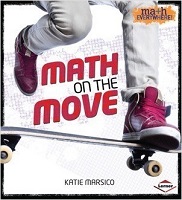
Grade 3
5 skill lessons
Math
Skill lessons
The mathematics the book carries, taught directly. Printable workbook pages and teacher keys are not available for this book yet.
- 1The Bus Is Running Late
- 2How Long From the Bus to the Bell
- 3Counting Back From the Train
- 4Building the Day on a Time Line
- 5Skateboard or Walk
Math + reading
Math through the reading
The same book, entered through a sentence it prints. Change one word in the reading and the numbers change with it.
No math-through-reading lessons for this book yet.
Reading
Reading and language lessons
The same book read as a text. What a word means in its sentence, how a character is shown, how the writing is put together - no mathematics.
No reading and language lessons for this book yet.
Skill lessons
5 lessons on the mathematics the book carries. Printable workbook pages and teacher keys are not available for this book yet.
1. The Bus Is Running Late
On a late-arrival day the buses run one hour and five minutes behind, and the book hands the reader the normal pick-up time, the walk, the run, and the time they left home — then asks whether they can stroll. Children add the delay to eight timetabled times and decide, for each, whether the walk or only the run fits. The work gets applied to a decision that changes with the arithmetic: two minutes either way switches the answer.
Full lesson — 20 minutes
1. Add the delay to the pick-up time (6 min)
Read the delay and the normal pick-up time. Add the hour first and then the five minutes, writing both stages, and say what time the bus will actually come.
Word preview: delay, behind schedule
That means buses will run one hour and five minutes behind schedule.
The bus normally picks you up at 7.47am.
2. How long have you got (5 min)
Read what time you left home and count on to the bus's new time. Write that number of minutes beside the verdict column.
This morning, you leave home at 8.48am.
3. Walk or run (5 min)
Read how long the walk takes and how long the run takes. Write walk, run or neither in the verdict column, and write the two numbers you compared to decide.
Word preview: stroll, sprint
It's a five minute walk from your house to the bus stop.
If you're super short on time, you can run the distance in about three minutes.
4. Seven more late mornings (4 min)
Do the same for the seven other normal pick-up times on your sheet, keeping the same delay and the same leaving time. Ring the row where the verdict changes from walk to run.
Short version — 9 minutes
1. Add the delay to the pick-up time (5 min)
Add the hour and then the five minutes to the normal pick-up time, writing both stages and saying the new time.
That means buses will run one hour and five minutes behind schedule.
The bus normally picks you up at 7.47am.
2. Walk or run (4 min)
Compare the minutes you have with the walk and the run, and write walk, run or neither with the two numbers you compared.
It's a five minute walk from your house to the bus stop.
If you're super short on time, you can run the distance in about three minutes.
Three levels
- Support
- Four pick-up times, all at five-minute marks, and add the delay in one stage on the clock. The verdict and the two compared numbers stay.
- At Grade
- The delay added in two stages to eight times, the minutes available counted for each, a verdict written with its two numbers, and the switching row ringed.
- Extension
- Find the normal pick-up time at which the walk and the run give the same verdict, and say what is true of the minutes available at that time.
English learners
The arithmetic transfers. The sticking point is behind schedule, which means the bus comes later even though behind sounds like earlier or lost. Draw the timetable time and the real time on one line with an arrow from the first to the second and keep it up all lesson. Rehearsable frame: The bus normally comes at ____, but today it comes at ____, so I have ____ minutes. Children may work the times in their strongest language and then say the frame in English with the clock in front of them.
Materials
- The delay sentence and the timetable sentence, enlarged
- A geared demonstration clock per pair
- An eight-row sheet per pair, ruled for the normal time, the delayed time, and the verdict
- A pencil
- Word cards: delay, behind schedule, stroll, sprint
Standards & curriculum
These lessons are being matched against curricula now.
Standards are held back while this plan is edited. Every standard shown here was matched against the supplied wording of this lesson, quoting its steps, so a changed step is no longer the thing that was checked. Undo your changes to bring the standards back — your edits stay in this browser either way.
2. How Long From the Bus to the Bell
The book sets a timetable against a deadline: the bus comes at five to eight, the ride takes about ten minutes, and the bell rings at ten past. Nothing in the book subtracts those times, so the gap is the lesson. Children find the minutes between eight pairs of stated times, counting on round a clock face. The idea under it: the child comes to treat a gap as a count from one hand position to another, and to notice that the count does not care which hour it starts in.
Full lesson — 20 minutes
1. Write both times in colon notation (5 min)
Read the two sentences and copy each time onto your sheet the way a timetable writes it, with a colon. Say which of the two times comes first.
Word preview: timetable, colon
The driver picks everyone up at 7.55am.
The bell rings at 8.10am.
2. Count on from one to the other (6 min)
Set the clock to the earlier time and count on round the face to the later one, in fives to the nearest mark and then in ones. Write the minutes between in the third column.
3. Seven more gaps (5 min)
Do the same for the seven other pairs on the sheet. Three of them cross from one hour into the next, so set the clock every time rather than guessing.
4. Does the ride fit the gap (4 min)
Read how long the bus ride takes and compare it with your first gap. Say whether the ride fits inside the gap and by how many minutes.
She only makes one other stop, so Jacob would get to school in about 10 minutes.
Short version — 9 minutes
1. Count on from one to the other (5 min)
Set the clock to the earlier of the two stated times and count on round the face to the later one, writing the minutes between.
2. Does the ride fit the gap (4 min)
Compare the ten-minute ride with the gap you counted and say whether it fits, and by how many minutes.
She only makes one other stop, so Jacob would get to school in about 10 minutes.
Three levels
- Support
- Four pairs, none of them crossing an hour, with the earlier time already set on the clock. The counting on and the comparison with the ride stay.
- At Grade
- Both times written in colon notation, eight gaps counted on the clock with the hour-crossing pairs set by hand, and the ride compared with the first gap.
- Extension
- Find the latest time the bus could leave and still get Jacob there before the bell, and say how you know no later time would do.
English learners
Counting round the face transfers. What a learner cannot bring across is that English says a clock time in several shapes — five to eight, 7:55, seven fifty-five — and this book's own notation is a fourth. Write all the shapes of one time on a single card and point along them before any counting. Rehearsable frame: From ____ to ____ is ____ minutes. Children may count in their strongest language and then say the frame in English with the clock set.
Materials
- The two timetable sentences, enlarged
- An eight-row gap sheet per pair, ruled for two times and the minutes between
- A geared demonstration clock per pair
- A pencil
- Word cards: timetable, colon, gap, minutes
Standards & curriculum
These lessons are being matched against curricula now.
Standards are held back while this plan is edited. Every standard shown here was matched against the supplied wording of this lesson, quoting its steps, so a changed step is no longer the thing that was checked. Undo your changes to bring the standards back — your edits stay in this browser either way.
3. Counting Back From the Train
The book gives a departure and a rule about arriving early, and the time a traveller actually has to be somewhere is never stated. Children count back from eight deadlines through stated amounts and write the latest possible time for each. Practised until the counting back is quick and always goes in the same order: the largest amount first, then the minutes.
Full lesson — 20 minutes
1. Find the time to be at the station (5 min)
Read the two sentences about the train and count back to find the latest time Megan and her dad can arrive. Write it in colon notation.
Word preview: before, departure
Their train leaves at 6pm.
The ticket agent said to be at the station 30 minutes before their scheduled departure.
2. Take off the cab ride too (5 min)
Read how long to allow for a cab ride and count back again from your station time. Write the latest time they can leave the hotel.
To be safe, plan on 15 minutes for each cab ride.
3. Eight more deadlines (6 min)
Each row of your sheet gives a deadline and an amount to allow. Count back on the clock and write the latest possible time for each. Ring the two rows where counting back crosses into the hour before.
4. Check one forwards (4 min)
Take one of your answers and add the amount back on to check that you land on the deadline. Say which direction you found easier and why.
Short version — 9 minutes
1. Find the time to be at the station (5 min)
Count back from the train's departure by the stated thirty minutes and write the latest arrival time in colon notation.
Their train leaves at 6pm.
The ticket agent said to be at the station 30 minutes before their scheduled departure.
2. Check one forwards (4 min)
Add the thirty minutes back on to your answer and check that you land on the departure time.
Three levels
- Support
- Four deadlines, all on the hour, with amounts of thirty minutes or a whole hour. Counting back on the clock and the forwards check stay.
- At Grade
- The station time and the hotel time found, eight further deadlines counted back with the hour-crossing rows ringed, and one answer checked forwards.
- Extension
- Chain three amounts back from one deadline and say what order you took them in, then do it in the other order and say whether the answer changed.
English learners
Winding the clock back transfers. The English that does not is before meaning earlier by an amount — thirty minutes before six is not six thirty, and that is exactly the mistake the phrase invites. Put a card reading before to the left of a time card and read the pair left to right every time. Rehearsable frame: ____ minutes before ____ is ____. Children may count back in their strongest language and then say the frame in English with the clock in hand.
Materials
- The two train sentences, enlarged
- A geared demonstration clock per pair
- An eight-row count-back sheet per pair
- A pencil
- Word cards: before, departure, deadline, count back
Standards & curriculum
These lessons are being matched against curricula now.
Standards are held back while this plan is edited. Every standard shown here was matched against the supplied wording of this lesson, quoting its steps, so a changed step is no longer the thing that was checked. Undo your changes to bring the standards back — your edits stay in this browser either way.
4. Building the Day on a Time Line
The book plans an afternoon out of a dozen stated durations — an hour and a half at each attraction, a one-minute walk, a six-minute stroll, an hour for lunch, cab rides, half an hour for luggage, two hours to dine and shop — and asks whether they all fit. Children build the plan as a strip of durations and total it. What gets built is the strip: the thing that turns a list of sentences into a length a child can compare with the day.
Full lesson — 20 minutes
1. Cut a strip for every duration (6 min)
Read each sentence and cut a strip of squares for the duration it names, one square to five minutes. Write on each strip what it is for.
Word preview: duration, each
Dad estimates that they'd probably spend an hour and a half at each location.
An online map says it's only a one minute walk from the museum to the aquarium.
The stroll from the aquarium to the planetarium is approximately six minutes.
2. Lay them end to end (5 min)
Lay your strips end to end in the order the day would happen, with no gaps between them. Add the cab rides and the lunch hour in their places.
They know they'll also need to set aside an hour for lunch, and they have to factor in a 10-15 minute cab ride back to their hotel.
To be safe, plan on 15 minutes for each cab ride.
3. Total the strip (5 min)
Count the squares in your whole strip and write the total in hours and minutes. Then add the luggage and the dining strips and total it again.
Word preview: total
Then it'll take roughly 30 minutes to gather their luggage and check out.
Dad says they should give themselves two hours to dine and shop.
4. Does the day hold it (4 min)
Compare your total with the time between the start of the day and the station deadline. Say whether the plan fits, and by how much.
It's 9.30am, and Megan and her dad are wrapping up a visit to Chicago, Illinois.
Short version — 9 minutes
1. Cut a strip for every duration (5 min)
Cut a strip of squares for each of four stated durations at one square to five minutes, labelling each one.
Dad estimates that they'd probably spend an hour and a half at each location.
An online map says it's only a one minute walk from the museum to the aquarium.
The stroll from the aquarium to the planetarium is approximately six minutes.
2. Total the strip (4 min)
Lay the strips end to end, count the squares and write the total in hours and minutes.
Then it'll take roughly 30 minutes to gather their luggage and check out.
Dad says they should give themselves two hours to dine and shop.
Three levels
- Support
- Build the three attraction strips and the two walks only, and total those. The comparison with the available time stays, using a shorter day.
- At Grade
- A labelled strip cut for every stated duration, laid end to end in order, totalled in hours and minutes twice, and compared with the day's available time.
- Extension
- Find which single activity could be dropped to make a plan that does not fit fit, and say whether more than one choice would work.
English learners
Cutting and counting transfer. What has to be built from scratch is each, which turns one duration into three — an hour and a half at each location is four and a half hours, and a learner who reads it as a single total will build a strip a third of the right length. Hold up three location cards and lay a strip beside every one while saying the word. Rehearsable frame: An hour and a half at each of ____ places is ____. Children may total in their strongest language and then say the frame in English with the strips laid out.
Materials
- Squared paper and scissors per pair, at one square to five minutes
- The itinerary sentences, enlarged
- A long sheet to lay the strips on, per pair
- A pencil
- Word cards: duration, each, total, fits
Standards & curriculum
These lessons are being matched against curricula now.
Standards are held back while this plan is edited. Every standard shown here was matched against the supplied wording of this lesson, quoting its steps, so a changed step is no longer the thing that was checked. Undo your changes to bring the standards back — your edits stay in this browser either way.
5. Skateboard or Walk
The book gives two times for the same trip — fifteen minutes on a skateboard, thirty on foot — and a practice that starts at half past one. It then asks how much time to set aside for a shorter journey, and says to round up rather than risk being late. Children work out both journeys, choose, and have to say what they assumed. The demand is naming the assumption: that the same speeds hold over a different distance.
Full lesson — 20 minutes
1. Two times for one trip (5 min)
Read the two sentences about Kylie's journey to her friend's house and write both times. Say how many times longer the walk is than the skate.
Word preview: twice as long
Kylie usually skates to her friend Avie's house in 15 minutes.
She walks there in 30 minutes.
2. Leave in time for practice (6 min)
Read when practice starts. Count back your skating time and then your walking time from it, and write the two times Kylie would have to leave.
Softball practice starts at 1.30pm.
3. Round up and choose (5 min)
Read the book's advice about rounding and about being early. Round each of your two leaving times to a whole minute the safe way, then choose for Kylie and write your choice.
Word preview: round up
Play it safe by rounding up to the next whole minute.
Kylie would rather be a little early than a little late.
4. Say what you assumed (4 min)
The park is not the same distance as the friend's house. Say out loud what you had to assume about Kylie to use her times at all, and what would make your answer wrong.
Word preview: assume
Short version — 9 minutes
1. Two times for one trip (5 min)
Write both stated times for Kylie's journey and say how many times longer the walk is than the skate.
Kylie usually skates to her friend Avie's house in 15 minutes.
She walks there in 30 minutes.
2. Say what you assumed (4 min)
Say what you had to assume about Kylie's speed to use her times for a different journey, and what would make the answer wrong.
Three levels
- Support
- Work only with the skate time and the practice start, counting back on the clock. Naming the assumption stays.
- At Grade
- Both times written and compared, both leaving times counted back and rounded the safe way, a choice made, and the assumption named aloud.
- Extension
- Say what Kylie's walking time to the park would be if the park were half as far as her friend's house, and what else you have now assumed.
English learners
Counting back and comparing transfer. What does not is the English of an assumption — assume, suppose, if we say that — which marks a statement as taken rather than known, and a learner may hear it as a fact. Keep two cards, known and assumed, and sort each sentence of the problem onto one before choosing. Rehearsable frame: I know ____, and I am assuming ____. Children may reason in their strongest language and then say the frame in English with both cards in view.
Materials
- The two journey sentences, enlarged
- A recording card per child, ruled for two times and a choice
- A pencil
- A geared demonstration clock per pair
- Word cards: twice as long, round up, assume, early
Standards & curriculum
These lessons are being matched against curricula now.
Standards are held back while this plan is edited. Every standard shown here was matched against the supplied wording of this lesson, quoting its steps, so a changed step is no longer the thing that was checked. Undo your changes to bring the standards back — your edits stay in this browser either way.