Windows, Rings, and Grapes
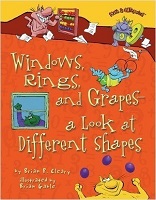
Grade 1
5 skill lessons · 2 math-through-reading
Math
Skill lessons
The mathematics the book carries, taught directly. Printable workbook pages and teacher keys are not available for this book yet.
- 1Three Sticks, Four Sticks, No Corners
- 2Four Sides Is Not Enough
- 3The Pile With No Corners
- 4Stretch It and See What It Is Now
- 5Count It, Then Name It
Math + reading
Math through the reading
The same book, entered through a sentence it prints. Change one word in the reading and the numbers change with it.
- 6The Word That Tells a Square From a Rectangle
- 7Does a Square Fit the Rectangle's Rule?
Reading
Reading and language lessons
The same book read as a text. What a word means in its sentence, how a character is shown, how the writing is put together - no mathematics.
- 8Gown and Round, Dryer and Tire
- 9Tricycle, Triceratops, Triangle
- 10The Rhyme Way and the Plain Way
- 11The Word That Does Not Fit
- 12Doorway, Postcard, Screen, Wallet
Skill lessons
5 lessons on the mathematics the book carries. Printable workbook pages and teacher keys are not available for this book yet.
1. Three Sticks, Four Sticks, No Corners
The closing pages of the book drop the rhyme and state each shape as a short list of things it must have: three sides and three corners, four sides and four corners, four equal sides, or perfectly round with no corners at all. Students hear the list first and then build the shape from sticks and pipe cleaners so that the attributes are things they place and count with their hands, rather than features they pick out of a finished picture. Representation means the shape leaves the student's hands with the right number of sides and corners in it, checkable by counting.
Full lesson — 20 minutes
1. Say the checklist before you draw (5 min)
Listen to the closing pages, where the book stops rhyming and states what each shape must have. For the triangle, say back the two things on the list, three sides and three corners, before anything is drawn. Do the same for the square and for the rectangle, and say the one thing the circle's list has instead, that it has no corners at all.
Word preview: corner, side
A triangle has three sides and three corners.
A rectangle has four sides and four corners.
A circle is perfectly round.
2. Build the three-sided shape (5 min)
Take three craft sticks and lay them so that every stick touches two others end to end, leaving no gap. Count the sticks you used and count the places where two sticks meet. Say both numbers aloud and say whether they match the two numbers on the triangle's list.
Word preview: meet
When three straight lines meet, the result is quite neat.
A triangle shape will be formed.
A triangle has three sides and three corners.
3. Build the four-sided shapes (6 min)
Build a shape with four sticks that all touch end to end, and count the sides and the corners on what you built. Now build a second four-sided shape using two short sticks and two long ones. Count sides and corners again on this one, and say which of the two shapes you built matches the square's list and which matches the rectangle's.
Word preview: equal
A square has four equal sides and four corners.
A rectangle has four sides and four corners.
The sides have to be all the same length you see, like the windows in this new hotel.
4. Build the shape with nothing to count (4 min)
Bend one pipe cleaner round until its two ends meet and there is no bend sharper than any other anywhere along it. Run a finger all the way round and try to find a corner to stop at. Say what your count of corners came to, and say the shape's name.
Word preview: round
There's not one straight line in a circle's design.
It's just a continuous bend.
A circle is perfectly round.
It has no corners.
Short version — 9 minutes
1. Say the checklist before you draw (4 min)
Listen to the closing pages, where the book states what each shape must have. Say back the triangle's two numbers, three sides and three corners, before anything is drawn, and say the one thing the circle's list has instead.
Word preview: corner, side
A triangle has three sides and three corners.
A circle is perfectly round.
2. Build the three-sided shape (5 min)
Lay three craft sticks so that every stick touches two others end to end with no gap. Count the sticks and count the places where two sticks meet. Say both numbers and say whether they match the triangle's list.
Word preview: meet
When three straight lines meet, the result is quite neat.
A triangle has three sides and three corners.
Three levels
- Support
- Build the triangle and the circle only, and leave the two four-sided shapes out. Two sides of the distinction, something to count and nothing to count, is enough to meet what an attribute is. The child still lays every stick and still counts the corners on what was built; only the number of shapes comes down.
- At Grade
- Build all four: the triangle, a square, a rectangle and a circle, counting sides and corners on each and matching each count against the list the book states for that shape.
- Extension
- Take a handful of sticks a partner gives you without being told what to build, count them first, and say which of the book's shapes you can make and which you cannot before laying a single stick down. Then build it and say whether your prediction held.
English learners
Corner and side are the two words carrying the whole lesson and neither is guessable from everyday English: corner is a place in a room before it is a place on a shape, and side means a face or a team before it means an edge. Point at the thing while the word is said, every time, and let the sticks do the defining. Counting is language-independent and most children will produce the right number before they can name what was counted, so accept the count first and attach the word after. Children may count in their strongest language throughout; the built shape records the count either way. A frame worth rehearsing aloud: this shape has ___ sides and ___ corners.
Materials
- Attribute cards, one per shape, blank on the front and ruled into two lines on the back
- Craft sticks, twelve per child, all the same length
- Craft sticks in a second, shorter length, four per child
- Pipe cleaners, two per child
- Word cards: corner, equal, round, side
Standards & curriculum
Choose your curriculum above to see the standards for this lesson.
Standards are held back while this plan is edited. Every standard shown here was matched against the supplied wording of this lesson, quoting its steps, so a changed step is no longer the thing that was checked. Undo your changes to bring the standards back — your edits stay in this browser either way.
2. Four Sides Is Not Enough
The book states both four-sided shapes in almost the same words, four sides and four corners each, and then supplies the one thing that separates them: a square's sides have to be all the same length, and a rectangle is what you have when two are smaller and the other two taller. Students discover that the counts alone leave the two shapes indistinguishable, then decide between them by laying sides directly against each other. Concept means the name follows from a comparison the student made rather than from the picture the tile resembles.
Full lesson — 20 minutes
1. Count first and get stuck (4 min)
Take the square tile and the rectangle tile and count the sides on each, then the corners on each. Say the four numbers you found. Say whether counting alone told you which tile is which.
Word preview: equal
A square has four equal sides and four corners.
A rectangle has four sides and four corners.
2. Lay the sides against each other (6 min)
Take four sticks the same length and make a shape where all four touch end to end. Now take two of those sticks out and put two shorter ones in their place, and make the shape again. Lay one side of each finished shape directly on top of another side of the same shape to see whether they end together, and say for each shape whether all four sides ended together.
Word preview: same, smaller
The sides have to be all the same length you see, like the windows in this new hotel.
If two sides were smaller and the other two taller, a rectangle is what you'd call it.
3. Name each shape by what you found (6 min)
Say which of your two shapes has all four sides the same length and which has two long and two short. Give each shape its name from the book and say the reason in the same breath as the name. Then swap shapes with a partner and have them check your naming by laying the sides together themselves.
Word preview: length
A square has four equal sides and four corners.
If two sides were smaller and the other two taller, a rectangle is what you'd call it.
Like a square only wider, this billboard for citer is rectangular in its shape.
4. Sort a set nobody has named (4 min)
Take a set of four-sided tiles that nobody has told you the names of, and put each one into a square pile or a rectangle pile by laying its sides against each other. Say aloud for at least two of the tiles what you did to decide.
A square has four equal sides and four corners.
A rectangle has four sides and four corners.
Short version — 9 minutes
1. Count first and get stuck (3 min)
Count the sides and then the corners on a square tile and on a rectangle tile. Say the four numbers you found. Say whether counting alone told you which tile is which.
Word preview: equal
A square has four equal sides and four corners.
A rectangle has four sides and four corners.
2. Lay the sides against each other (6 min)
Make a four-sided shape from four sticks the same length. Then swap two of them for shorter sticks and make the shape again. Lay one side of each finished shape on top of another side of that same shape and say whether all four sides ended together.
Word preview: same, smaller
The sides have to be all the same length you see, like the windows in this new hotel.
If two sides were smaller and the other two taller, a rectangle is what you'd call it.
Three levels
- Support
- Give the child two shapes that differ sharply, a square and a long thin rectangle, so that the sides that do not match are obvious the moment they are laid together. The child still lays the sides side by side and still says the name with its reason attached; only the closeness of the comparison comes down.
- At Grade
- Build both four-sided shapes from sticks, compare the sides by laying them together, name each one, and sort a mixed unlabelled set by the same comparison.
- Extension
- Turn a rectangle tile a quarter turn so the long sides now stand upright, and say whether it is still a rectangle and how you know. Then say whether there is any way to turn a square so that it stops being a square, and give the reason from the sides rather than from how it looks.
English learners
Same length is the phrase this lesson turns on and it is a comparison, which is exactly the part of English that stays hard long after number words are easy. Equal appears in the book's own sentence and is worth putting on a card next to two sticks that end together, so the word arrives attached to the thing. Note that a child may know this distinction perfectly in another language and still not have the English word for it, so ask for the comparison with the sticks before asking for the sentence. A frame worth rehearsing: these two sides are the same length, so it is a ___. Children may reason and check in their strongest language and give only the finished naming sentence in English.
Materials
- A square tile and a rectangle tile, one pair per child
- Craft sticks, twelve per child, all the same length
- Craft sticks in a second, shorter length, four per child
- A mixed set of unlabelled four-sided tiles, eight per pair
- Two sorting mats, unlabelled
- Word cards: equal, length, same, side
Standards & curriculum
Choose your curriculum above to see the standards for this lesson.
Standards are held back while this plan is edited. Every standard shown here was matched against the supplied wording of this lesson, quoting its steps, so a changed step is no longer the thing that was checked. Undo your changes to bring the standards back — your edits stay in this browser either way.
3. The Pile With No Corners
The book states the same fact twice at its close, once for the circle and once for the oval: it has no corners. That is the one attribute the book gives as a plain yes or no, and it cuts the book's five shapes cleanly into two groups. Students find corners by touch rather than by sight, sort a mixed set of tiles by what they found, and then say the rule out loud precisely enough that a partner can apply it to a tile the sorter never handled. Concept means the group a tile belongs to is settled by an attribute the child can check, not by what the tile looks like at a glance.
Full lesson — 20 minutes
1. Find the corner with a finger (5 min)
Take a shape tile and run one finger slowly all the way round its outside edge without lifting it. Stop your finger every time it has to turn sharply and put a counter down on the table for each stop. Say how many counters you put down.
Word preview: turn
The corners all look like the edge of this book, a bit like an uppercase L.
It's looped and it's curved and when closely observed, you'll find no beginning or end.
2. Make the two piles (6 min)
Sort every tile in your set into two piles: the ones where your finger had to stop and turn, and the ones where it never did. Do not sort by colour or by size. When both piles are made, say what is true of every tile in the second pile.
Word preview: sort
A circle is perfectly round.
It has no corners.
A novel is a shape like an egg.
3. Say the rule you sorted by (5 min)
Tell a partner the rule you used, in one sentence, naming what the tiles in each pile have or do not have. Your partner then takes a tile you have not sorted yet, listens to your rule, and places the tile by your rule rather than by their own. Check together whether the tile landed where your rule sends it.
Word preview: rule
A circle is perfectly round.
It has no corners.
4. Test the rule on a hard tile (4 min)
Take the long thin oval and the very small triangle and sort them both by your rule. Say for each one which pile it goes in and why, using the word corner. Say whether the size of a tile changed which pile it belonged in.
Most racetracks are oval.
It has no corners.
Short version — 9 minutes
1. Find the corner with a finger (4 min)
Run one finger slowly all the way round the outside edge of a shape tile without lifting it. Put a counter down each time your finger has to stop and turn sharply. Say how many counters you put down.
Word preview: turn
The corners all look like the edge of this book, a bit like an uppercase L.
2. Make the two piles (5 min)
Sort every tile into two piles: the ones where your finger had to stop and turn, and the ones where it never did. Do not sort by colour or by size. Say what is true of every tile in the second pile.
Word preview: sort
A circle is perfectly round.
It has no corners.
Three levels
- Support
- Cut the set down to four tiles, one triangle, one square, one circle and one oval, so that each pile holds two. The finger trace and the spoken rule stay exactly as they are; only the number of tiles to be sorted comes down, so the attribute remains the thing being decided.
- At Grade
- Sort the full mixed set by corners, say the sorting rule in one sentence, and have a partner place an unsorted tile by that rule alone.
- Extension
- Sort the same set a second time by a different rule of your own choosing, without saying what it is, and have your partner work out the rule from the two finished piles. Then say whether any tile changed piles between your two sorts, and what that shows about a tile belonging to more than one group.
English learners
Corner is the load-bearing word again and here it must survive being said about a tile no one is holding, which is much harder than saying it about one in the hand. Let the finger trace stand in for the definition every time the word is used. The sorting sentence has a shape that is worth rehearsing whole before it is needed: these ones have corners and these ones have no corners. Have and have no is the grammar doing the work, and negation is placed differently across languages, so give the frame rather than asking for a sentence from nothing. Children may explain the rule in their strongest language first and give the English sentence to the partner afterwards; the two piles are on the table either way and can be pointed at.
Materials
- Shape tiles, a mixed set of triangles, squares, rectangles, circles and ovals
- Counters, ten per child
- Two sorting mats, unlabelled
- Word cards: corner, round, sort
Standards & curriculum
Choose your curriculum above to see the standards for this lesson.
Standards are held back while this plan is edited. Every standard shown here was matched against the supplied wording of this lesson, quoting its steps, so a changed step is no longer the thing that was checked. Undo your changes to bring the standards back — your edits stay in this browser either way.
4. Stretch It and See What It Is Now
This book stretches two of its own shapes on purpose. A circle that is lengthened and stretched becomes an oval, and a square that is made only wider or only taller becomes a rectangle. In both cases the corner count is untouched and the name changes anyway, so the corner count cannot be what decided it. Students perform both stretches with string and sticks, count sides and corners before and after, and argue from those counts about which change was the one that mattered. Reasoning means the student says why a name held or failed, with the counts as the evidence.
Full lesson — 20 minutes
1. Stretch the round one (5 min)
Make a circle from a loop of string held between two fingers of each hand, and check by eye that no part of it bends more sharply than any other. Now move your hands apart slowly and watch the loop change. Stop when it has become the shape the book says it becomes, and say its new name.
Word preview: stretch
If two dogs would fetch one and lengthen and stretch one, an oval would be its new shape.
A circle is perfectly round.
A novel is a shape like an egg.
2. Ask what did not change (5 min)
With the loop still stretched, run a finger all the way round it and count the corners, then let it go back to a circle and count the corners again. Say both counts. Say which of the two shapes' names you would have to change if the count of corners had changed, and which you would not.
Word preview: change
A circle is perfectly round.
It has no corners.
A novel is a shape like an egg.
3. Stretch the square one (6 min)
Build a square from four sticks of the same length, then take two of them out and put longer sticks in their place so the shape is pulled taller. Count the sides and the corners before and after. Say whether the shape still deserves the name square, and give the reason from the sides.
Word preview: taller, wider
A square has four equal sides and four corners.
Like a square only taller, so is this wall or the frame for this fine painted ape?
Like a square only wider, this billboard for citer is rectangular in its shape.
4. Say which change matters (4 min)
Tell a partner about one of your two stretches, naming what stayed the same and what did not, and say which of those decided the new name. Your partner then says whether they agree, using the counts on the table as their reason rather than how the shape looks.
Triangles have both three sides and three corners, so try to remember these forms.
A rectangle has four sides and four corners.
Short version — 9 minutes
1. Stretch the round one (4 min)
Hold a loop of string as a circle, checking that no part bends more sharply than any other. Move your hands apart slowly and stop when the loop has become the shape the book says it becomes. Say its new name.
Word preview: stretch
If two dogs would fetch one and lengthen and stretch one, an oval would be its new shape.
A circle is perfectly round.
2. Ask what did not change (5 min)
Run a finger round the stretched loop and count the corners, then let it go back to a circle and count again. Say both counts, and say which of the two names you would have had to change if that count had changed.
Word preview: change
A circle is perfectly round.
It has no corners.
Three levels
- Support
- Do the string stretch only and leave the sticks for another day. One stretch, with the corner count taken twice and both counts said aloud, carries the whole point. The child still says which count changed and which did not; only the second case comes out.
- At Grade
- Perform both stretches, take the side and corner counts before and after each, name each resulting shape, and say which change decided the new name.
- Extension
- Find a stretch that does not change the name at all: make a rectangle, then make it longer still, and say whether it is a rectangle both times and how the counts back you up. Then say why the same stretch takes the name away from a square but leaves it with a rectangle.
English learners
The whole lesson lives in past and present together, what it was and what it is now, and that contrast is carried by verb endings that are easy to lose in speech. Keep both shapes physically present, the loop in its circle and the loop stretched, so the tense has something to point at rather than something to remember. Stretch, taller and wider are the words the book supplies and all three are visible actions, so they can be shown before they are said. A frame worth rehearsing aloud: it was a ___ and now it is a ___. Children may say what changed in their strongest language first; the string and the sticks hold the before and the after either way, and the English sentence can be attached to a shape that is still on the table.
Materials
- A closed loop of string, one per child
- Craft sticks, twelve per child, all the same length
- Craft sticks in a third, longer length, four per child
- Word cards: change, stretch, taller, wider
Standards & curriculum
Choose your curriculum above to see the standards for this lesson.
Standards are held back while this plan is edited. Every standard shown here was matched against the supplied wording of this lesson, quoting its steps, so a changed step is no longer the thing that was checked. Undo your changes to bring the standards back — your edits stay in this browser either way.
5. Count It, Then Name It
The book closes by asking its five questions outright and answering each in one or two short sentences, and every answer is either a pair of numbers or the statement that there is nothing to count. Students work from that closing list until the count and the name come together: they say the numbers for a tile in hand, they catch labels whose numbers do not match, and finally they give the numbers for a shape with nothing in front of them. Fluency means the pairing of a name with its counts becomes quick and does not need a picture to lean on.
Full lesson — 20 minutes
1. Answer the book's five questions (5 min)
The book asks five questions in a row and then answers them itself. Hear the five questions first, with the answers held back, and say what you can for each one. Then hear the answers and say, for each shape, whether what you said had the same numbers in it that the book's answer has.
Word preview: how many
So, what is a triangle?
What is a rectangle?
What is a square?
What is a circle?
What is an oval?
Do you know?
2. Count to check a name (6 min)
Take a tile from the pile without looking at the label underneath it and say straight away what you think it is. Then count its sides and its corners and say the two numbers. Turn the label over and say whether the numbers you counted agree with the name written there.
Word preview: check
A triangle has three sides and three corners.
A rectangle has four sides and four corners.
A square has four equal sides and four corners.
3. Catch the wrong label (5 min)
Three tiles in the pile have the wrong name written underneath them. Find all three by counting rather than by looking, and for each one say the name the label claims, the numbers you counted, and the name the numbers give instead.
A triangle has three sides and three corners.
A rectangle has four sides and four corners.
4. Say a shape's numbers without it in front of you (4 min)
Put every tile away. When a partner says the name of one of the book's shapes, say its two numbers back without anything to count, and say if it is one of the two shapes that has no numbers to give. Take turns until each of the five shapes has been named once.
Triangles have both three sides and three corners, so try to remember these forms.
It has no corners.
Short version — 9 minutes
1. Answer the book's five questions (4 min)
Hear the book's five questions with the answers held back and say what you can for each. Then hear the answers and say, for each shape, whether what you said had the same numbers in it.
Word preview: how many
So, what is a triangle?
What is a rectangle?
Do you know?
2. Count to check a name (5 min)
Take a tile without looking at the label underneath and say straight away what you think it is. Count its sides and its corners and say both numbers. Turn the label over and say whether your numbers agree with the name written there.
Word preview: check
A triangle has three sides and three corners.
A square has four equal sides and four corners.
Three levels
- Support
- Work with the triangle and the square only, and keep a counted example of each in view the whole time so a child who loses the number can recover it by counting rather than by being told. The child still says the numbers and still checks a label against them; only the number of shapes in play comes down.
- At Grade
- Give the counts for all five of the book's shapes, check labelled tiles against those counts, find the mislabelled ones, and give the counts for a named shape with no tile in front of you.
- Extension
- Make a mislabelled tile of your own for a partner to catch, and choose the label so that a partner who guesses from the look of it alone will be fooled but a partner who counts will not. Then say what the shape would have to change for your wrong label to become the right one.
English learners
This lesson asks for speed, and speed in a second language is a different demand from speed in a first, so let the numbers come before the sentence and accept three and three long before three sides and three corners. The five shape names are the vocabulary load and they are nouns with everyday objects behind them, so the book's own examples are the fastest route in: a ring for the circle, a grape for the oval, a window for the square. Note that the question form what is a ___ expects a definition rather than a name in reply, which is a distinction worth showing once with an answer that is right and an answer that is a name repeated back. Children may give the numbers in their strongest language; the tile is on the table and the count can be checked against it either way.
Materials
- Answer strip, one per child, ruled into five rows with a shape drawn at the start of each
- Labelled shape tiles, the name written on the underside, twelve per pair
- A set of three deliberately mislabelled tiles, mixed into the pile
- Word cards: check, corner, side
Standards & curriculum
Choose your curriculum above to see the standards for this lesson.
Standards are held back while this plan is edited. Every standard shown here was matched against the supplied wording of this lesson, quoting its steps, so a changed step is no longer the thing that was checked. Undo your changes to bring the standards back — your edits stay in this browser either way.
Math through the reading
The mathematics is reached through a sentence the book prints: change one word in the reading and the numbers change with it. These carry their own standards, matched against these lessons rather than inherited from the skill ones.
6. The Word That Tells a Square From a Rectangle
Students find that one small word, equal, is the whole difference between the book's two four-sided shapes, and prove it by building what each sentence orders.
Full lesson — 20 minutes
1. Hear the two sentences (4 min)
Students hear the book's two four-sided definitions read one after the other, twice, and say which single word appears in one and not the other. They say what they think that word is asking for, before any stick is touched, and competing answers are left standing.
2. Build what the sentence says (6 min)
Students build a shape from four sticks under the rectangle's sentence alone, four sides and four corners, choosing any sticks they like. They count the sides and the corners, say both numbers, and check against the sentence they were given. Round the room, children compare what they built and find that the sentence allowed several different shapes.
3. Put the word back (6 min)
Students hear the square's sentence with equal in it and build again. They lay one side of the finished shape directly on top of another to check whether the two end together, and do this for every pair. They say whether their first shape would have passed this check, and name both shapes.
4. Say it about your own shape (4 min)
Each student says one sentence to a partner about the shape in front of them, naming it and saying whether its sides are equal. The partner lays the sides together to check the claim while the sentence is being said, and says whether the sticks agree with it.
Short version — 9 minutes
1. Build what the sentence says (6 min)
Students build a shape from four sticks under the rectangle's sentence alone, four sides and four corners, choosing any sticks they like. They count the sides and the corners, say both numbers, and check against the sentence they were given. Round the room, children compare what they built and find that the sentence allowed several different shapes.
2. Put the word back (6 min)
Students hear the square's sentence with equal in it and build again. They lay one side of the finished shape directly on top of another to check whether the two end together, and do this for every pair. They say whether their first shape would have passed this check, and name both shapes.
Three levels
- Support
- Give the child sticks in only two lengths and only four at a time, so that the choice is between all four the same and two of each, and no third possibility has to be held in mind. The word is still dropped and put back, both shapes are still built, and the sides are still laid together; only the number of ways the first sentence can be satisfied comes down.
- At grade
- Build under both sentences, compare every pair of sides by laying them together, name both finished shapes, and say a sentence about your own shape using equal correctly.
- Extension
- Take a shape a partner built under one of the two sentences, without being told which, and say from the sticks alone which sentence they were following. Then find a shape that satisfies both sentences at once, and say whether that means the two names describe two different things or not.
English learners
The word doing all the work here is short, unstressed and easy to lose between four and sides, which is exactly what makes this lesson worth running. Say the two sentences back to back with the same rhythm and let the sticks, not the pronunciation, carry the difference. Equal and same length mean the same thing here and the book uses both, so put them on the table together rather than treating one as the explanation of the other. Quantity and direct comparison are language-independent, and most children will lay the sides together correctly long before they can name the word that ordered it, so accept the build first and attach the word afterwards. A frame worth rehearsing aloud: my shape has four ___ sides, so it is a ___. Children may reason and check in their strongest language and give only the finished sentence in English.
Materials
- Craft sticks, twelve per child, all the same length
- Craft sticks in a second, shorter length, four per child
- The two definitions written large on one card, one above the other, with the differing word left out of both
Standards & curriculum
Choose your curriculum above to see the standards for this lesson.
Standards are held back while this plan is edited. Every standard shown here was matched against the supplied wording of this lesson, quoting its steps, so a changed step is no longer the thing that was checked. Undo your changes to bring the standards back — your edits stay in this browser either way.
7. Does a Square Fit the Rectangle's Rule?
The book gives a rule for what makes a rectangle and then builds a square that passes it, and students count sides and corners to argue whether the square should be allowed the second name.
Full lesson — 20 minutes
1. Read the rectangle's rule (4 min)
Students hear the book's rectangle sentence and write its two counts on a check card, four sides and four corners, without any tile in front of them. They say aloud what a shape would have to have to pass this rule, in their own words.
2. Hold the square up to the rectangle's rule (7 min)
Students take a square tile, count its sides and then its corners, and write both counts in the second column of the check card beside the rule's counts. They lay each side of the square against another to find that all four are the same length, and note that too. They say whether the square passed the rectangle's rule, going part by part.
3. Hear the other sentence (4 min)
Students hear the rhyming line that describes a rectangle as having two sides smaller and the other two taller, and check their square against that sentence too. They say which of the two book sentences their square passes and which it fails, using the counts and the side comparison already on their card.
4. Say where you stand and why (5 min)
Each student tells a partner whether a square may be called a rectangle, gives a number from their check card as the reason, and names which of the book's two sentences they are trusting. The partner says whether the reason given actually supports the position, and either student may change position if the other's counts persuade them.
Short version — 9 minutes
1. Hold the square up to the rectangle's rule (7 min)
Students take a square tile, count its sides and then its corners, and write both counts in the second column of the check card beside the rule's counts. They lay each side of the square against another to find that all four are the same length, and note that too. They say whether the square passed the rectangle's rule, going part by part.
2. Say where you stand and why (5 min)
Each student tells a partner whether a square may be called a rectangle, gives a number from their check card as the reason, and names which of the book's two sentences they are trusting. The partner says whether the reason given actually supports the position, and either student may change position if the other's counts persuade them.
Three levels
- Support
- Give the child the check card already ruled with the rectangle's rule written in the first column, so the counting is the whole task and holding the rule in memory is not. The child still counts both sides and corners, still lays the sides together, still takes a position and still names their sentence. Only the recording load comes down.
- At grade
- Check the square against both of the book's sentences, record the counts, take a position, and give a number and a named sentence as the reason for it.
- Extension
- Argue the case against your own position: take the counts on your card and say what someone who disagreed with you would point at, and why it is not silly. Then say what the book would have to have written for the question to have no two ways about it, and whether that would mean changing the rectangle's rule or the square's.
English learners
Taking a position aloud is a heavy language demand and it can be lifted off the mathematics entirely, because the counting is the same in any language and the check card holds it. Let the counts be written first and spoken second. A rule and a shape sit in a relation English marks with words like fits, passes and has, and none of those is guessable, so give the frame whole rather than asking for a sentence from nothing: my square has ___ sides, so it does fit the rule, or so it does not fit the rule. Note that agreeing and disagreeing carry very different politeness in different homes, so accept a position that is only stated and never defended against a partner, and never require a child to contradict anyone out loud. Children may reason and count in their strongest language and give only the position sentence in English, pointing at the card while they say it.
Materials
- A square tile and a rectangle tile, one pair per child
- Check card, ruled into two columns, one for the rule and one for what was counted
- The book's two sentences about rectangles written large on one card, one above the other
Standards & curriculum
Choose your curriculum above to see the standards for this lesson.
Standards are held back while this plan is edited. Every standard shown here was matched against the supplied wording of this lesson, quoting its steps, so a changed step is no longer the thing that was checked. Undo your changes to bring the standards back — your edits stay in this browser either way.
Reading and language lessons
5 lessons on the reading and language the book carries - what a word means in its sentence, how a character is shown, how a text is built. No mathematics: these are matched against the English language arts curricula, which are a different and smaller set than the mathematics ones.
8. Gown and Round, Dryer and Tire
This book rhymes in two places at once: at the end of a line and in the middle of it. Students listen for the pairs, say them back, and mark with their hands where each pair sits. They then find a pair on their own in a second passage and read a stretch aloud so the rhymes carry. Nothing is counted; the work is hearing sound patterns in verse and reading with them.
Full lesson — 20 minutes
1. Say the pairs back (6 min)
The teacher reads the passage below aloud, slowly. Listen for two words that end with the same sound. Say the pair round and gown back to the class, then say the pair dryer and tire. Clap once on each rhyming word as the teacher reads it a second time.
Word preview: rhyme
A circle is round like the dot on this gown, like a hula hoop, pie or some rings. The door on this dryer, a bicycle tire, the circle forms all of these things.
2. Find where the pair sits (5 min)
Read the passage below with the teacher. Some rhyming words come at the very end of a line and some sit in the middle. Point to fetch one and stretch one. Say aloud whether those two are at the end or in the middle.
Word preview: middle
If two dogs would fetch one and lengthen and stretch one, an oval would be its new shape. Like this rag on the floor, and you could make more if you outlined an egg or this grape.
3. Find a pair by yourself (5 min)
Read the passage below with a partner. Find two words that rhyme and say them aloud to each other. Then find a second pair if you can. Say which pair was easier to hear.
Word preview: pair
When three straight lines meet, the result is quite neat. A triangle shape will be formed. This nice slice of pizza he's trying to heat a triangular treat being warmed.
4. Read it so the rhymes ring (4 min)
Read the passage below aloud with a partner, taking one sentence each. Land a little harder on the rhyming words so a listener can hear them. Then swap sentences and read it again.
Word preview: aloud
That sign that says yield where the road meets that field, see that's a triangle as well. These earrings that dangle are each a triangle because both have three sides you can tell.
Short version — 9 minutes
1. Say the pairs back (5 min)
The teacher reads the passage below slowly. Say the pair round and gown back, then the pair dryer and tire. Clap on each rhyming word during a second reading.
Word preview: rhyme
A circle is round like the dot on this gown, like a hula hoop, pie or some rings. The door on this dryer, a bicycle tire, the circle forms all of these things.
2. Read it so the rhymes ring (4 min)
Read the passage below aloud with a partner, one sentence each. Land a little harder on the rhyming words so a listener can hear them.
Word preview: aloud
That sign that says yield where the road meets that field, see that's a triangle as well. These earrings that dangle are each a triangle because both have three sides you can tell.
Three levels
- Support
- Use only the passage in step 1. The teacher says round, then gown. Say them back. Then clap when you hear either word as the teacher reads the passage.
- At Grade
- Find both rhyming pairs in the passage in step 1 and say whether each pair sits at the end of a line or inside it.
- Extension
- Read the passage in step 4. Say two sentences about what field and yield, and dangle and triangle, do for a reader that plain sentences about signs and earrings would not.
English learners
Rhyme depends on hearing the end of an English word, and gown, round, dryer and tire all end in vowel sounds that many students are still separating. Say each pair in isolation before the passage, exaggerating the ending, and let students hold up two fingers when the second word lands. Invite students to give a rhyming pair from a song or rhyme in their strongest language, so the idea of rhyme travels before the English sounds do. Rehearsable frame: ___ and ___ rhyme.
Materials
- Windows, Rings, and Grapes, the passage printed in this step
- clapping hands
- Word cards: rhyme, middle, pair, aloud
Standards & curriculum
Choose your curriculum above to see the standards for this lesson.
Standards are held back while this plan is edited. Every standard shown here was matched against the supplied wording of this lesson, quoting its steps, so a changed step is no longer the thing that was checked. Undo your changes to bring the standards back — your edits stay in this browser either way.
9. Tricycle, Triceratops, Triangle
The book lines up three words that begin the same way and tells you what they have in common. Students read the sentence, say the three words, and work out what the shared beginning must mean. They then test the idea against a fourth word in another passage. Students say what the word part means; they do not use it to work anything out numerically. The work is meaning from a word part.
Full lesson — 20 minutes
1. Say the three words (5 min)
The teacher reads the passage below. Say the three words tricycle, triceratops and triangle aloud together. Then say aloud the sound all three start with.
Word preview: tri
So just as a tricycle has three round wheels and triceratops has three sharp horns. Triangles have both three sides and three corners, so try to remember these forms.
2. Work out what the beginning means (6 min)
Read the passage below again with a partner. The sentence tells you what a tricycle has, what a triceratops has and what a triangle has. Say aloud the one word that is true of all three. Then finish this sentence out loud: tri- means ___.
Word preview: means
So just as a tricycle has three round wheels and triceratops has three sharp horns. Triangles have both three sides and three corners, so try to remember these forms.
3. Test the idea on another word (5 min)
Read the passage below with the teacher. Find the word triangular. Say aloud what you would expect a triangular treat to look like, using what you decided tri- means. Then say whether the passage agrees with you.
Word preview: test
When three straight lines meet, the result is quite neat. A triangle shape will be formed. This nice slice of pizza he's trying to heat a triangular treat being warmed.
4. Say the rule in your own words (4 min)
Read the passage below one last time. Then tell a partner one sentence: when a word starts with tri-, it usually means ___. Do not read the book's sentence out; say your own.
Word preview: rule
So just as a tricycle has three round wheels and triceratops has three sharp horns. Triangles have both three sides and three corners, so try to remember these forms.
Short version — 9 minutes
1. Say the three words (4 min)
The teacher reads the passage below. Say tricycle, triceratops and triangle aloud. Say the sound all three start with.
Word preview: tri
So just as a tricycle has three round wheels and triceratops has three sharp horns. Triangles have both three sides and three corners, so try to remember these forms.
2. Work out what the beginning means (5 min)
Read the passage below again. Say the one word that is true of all three, then finish aloud: tri- means ___.
Word preview: means
So just as a tricycle has three round wheels and triceratops has three sharp horns. Triangles have both three sides and three corners, so try to remember these forms.
Three levels
- Support
- Use only the passage in step 1. Echo the three tri- words after the teacher. Point to the beginning of each word as you say it.
- At Grade
- Read the passage in step 2 and say what tri- means, naming the three words that showed you.
- Extension
- Read the passage in step 3. Say two sentences about how knowing tri- would help you meet a brand new tri- word you had never seen.
English learners
Word beginnings that carry meaning exist in most languages, and many students already know a tri- word from their own — triciclo, triangulo, and their relatives are close cousins. Say the English word and ask whether it sounds like a word from home, and use any match as the anchor. Invite students to name three of something in their strongest language while holding up three fingers, then say the English tri- word. Rehearsable frame: Tri- means ___, so a ___ has three ___.
Materials
- Windows, Rings, and Grapes, the passage printed in this step
- word part cards
- sentence frame strip
- Word cards: tri, means, test, rule
Standards & curriculum
Choose your curriculum above to see the standards for this lesson.
Standards are held back while this plan is edited. Every standard shown here was matched against the supplied wording of this lesson, quoting its steps, so a changed step is no longer the thing that was checked. Undo your changes to bring the standards back — your edits stay in this browser either way.
10. The Rhyme Way and the Plain Way
This book explains each shape twice: once in playful rhyme with everyday objects, and once at the end in short flat sentences. Students read a rhyming stretch and its plain counterpart, say what each one gives them that the other does not, and choose which they would hand to a friend who had never heard the word. No properties are counted or measured; the work is comparing two kinds of writing.
Full lesson — 20 minutes
1. Read the rhyming way (5 min)
The teacher reads the passage below. Say aloud three of the everyday things this passage says are round. Then say whether this passage sounds like a song or like a rule.
Word preview: rhyming
A circle is round like the dot on this gown, like a hula hoop, pie or some rings. The door on this dryer, a bicycle tire, the circle forms all of these things.
2. Read the plain way (5 min)
Read the passage below with the teacher, listening to how it sounds. Say aloud how these sentences sound different from the ones you just read. Point to the shortest sentence here.
Word preview: plain
A triangle has three sides and three corners. A rectangle has four sides and four corners.
3. Hold the two ways side by side (6 min)
Read the two passages below one after the other. Say aloud one thing the first passage gives you that the second does not. Then say one thing the second gives you that the first does not.
Word preview: compare
A circle is round like the dot on this gown, like a hula hoop, pie or some rings. The door on this dryer, a bicycle tire, the circle forms all of these things.
A triangle has three sides and three corners. A rectangle has four sides and four corners.
4. Choose the one you would hand over (4 min)
Read the two passages below again. A friend has never heard the word before. Tell a partner which passage you would read to that friend first, and say one reason why.
Word preview: choose
A circle is round like the dot on this gown, like a hula hoop, pie or some rings. The door on this dryer, a bicycle tire, the circle forms all of these things.
A triangle has three sides and three corners. A rectangle has four sides and four corners.
Short version — 9 minutes
1. Hold the two ways side by side (5 min)
The teacher reads the two passages below one after the other. Say one thing the first gives you that the second does not, and one thing the second gives you that the first does not.
Word preview: compare
A circle is round like the dot on this gown, like a hula hoop, pie or some rings. The door on this dryer, a bicycle tire, the circle forms all of these things.
A triangle has three sides and three corners. A rectangle has four sides and four corners.
2. Choose the one you would hand over (4 min)
Read the two passages below again. Tell a partner which one you would read first to a friend who had never heard the word, and one reason why.
Word preview: choose
A circle is round like the dot on this gown, like a hula hoop, pie or some rings. The door on this dryer, a bicycle tire, the circle forms all of these things.
A triangle has three sides and three corners. A rectangle has four sides and four corners.
Three levels
- Support
- Use only the passage in step 1. Echo the teacher one sentence at a time. Point to one thing named here that you have seen in real life, and say its name.
- At Grade
- Read both passages in step 3 and say one thing each one gives a reader that the other does not.
- Extension
- Read both passages in step 3. Say two sentences about why one book might want both ways in it, instead of choosing just one.
English learners
The two passages sit at very different levels of English: the rhyming one is packed with idiom and object names, while the plain one is short and repetitive. Read the plain passage first as the anchor, then the rhyming one, so the meaning is already in place when the harder language arrives. Invite students to say which one was easier to follow and why, in their strongest language if that is easier. Rehearsable frame: This one is easier because ___.
Materials
- Windows, Rings, and Grapes, the passage printed in this step
- two ways chart
- sentence frame strip
- Word cards: rhyming, plain, compare, choose
Standards & curriculum
Choose your curriculum above to see the standards for this lesson.
Standards are held back while this plan is edited. Every standard shown here was matched against the supplied wording of this lesson, quoting its steps, so a changed step is no longer the thing that was checked. Undo your changes to bring the standards back — your edits stay in this browser either way.
11. The Word That Does Not Fit
One sentence at the end of this transcript has come out wrong: it uses a word that names a book where the shape word belongs. This lesson does not fix it. Students read the sentence exactly as printed, read an earlier passage that describes the very same shape correctly, and say which word in the damaged sentence cannot be right and how the other passage told them. The skill is checking one sentence against another, which is reading, not repair.
Full lesson — 20 minutes
1. Read the sentence as it stands (5 min)
The teacher reads the passage below exactly as it is printed, without changing any word. Say aloud what a reader is told here about the last shape named. Do not fix anything yet.
Word preview: exactly
A circle is perfectly round. It has no corners. A novel is a shape like an egg. It has no corners.
2. Find where the book said it before (6 min)
Read the passage below with the teacher. This passage describes a shape by talking about eggs too. Say aloud what this passage calls that shape. Then say whether it matches the word you read a moment ago.
Word preview: match
If two dogs would fetch one and lengthen and stretch one, an oval would be its new shape. Like this rag on the floor, and you could make more if you outlined an egg or this grape.
3. Say which word cannot be right (5 min)
Read the two passages below side by side. Point to the one word in the first passage that cannot be right, and say the word the other passage shows it should have been. Say how you knew, without changing anything on the page.
Word preview: wrong
A circle is perfectly round. It has no corners. A novel is a shape like an egg. It has no corners.
If two dogs would fetch one and lengthen and stretch one, an oval would be its new shape. Like this rag on the floor, and you could make more if you outlined an egg or this grape.
4. Say what a careful reader does (4 min)
Read the passage below one more time. Then tell a partner one sentence: when a word does not fit, I can ___. Say what you actually did in this lesson.
Word preview: careful
If two dogs would fetch one and lengthen and stretch one, an oval would be its new shape. Like this rag on the floor, and you could make more if you outlined an egg or this grape.
Short version — 9 minutes
1. Read the sentence as it stands (4 min)
The teacher reads the passage below exactly as printed, changing nothing. Say what a reader is told here about the last shape named.
Word preview: exactly
A circle is perfectly round. It has no corners. A novel is a shape like an egg. It has no corners.
2. Say which word cannot be right (5 min)
Read the two passages below side by side. Point to the one word in the first that cannot be right, and say what the other passage shows it should have been.
Word preview: wrong
A circle is perfectly round. It has no corners. A novel is a shape like an egg. It has no corners.
If two dogs would fetch one and lengthen and stretch one, an oval would be its new shape. Like this rag on the floor, and you could make more if you outlined an egg or this grape.
Three levels
- Support
- Use only the passage in step 2. The teacher reads it. Point to the word oval. Say aloud one thing this passage says an oval is like.
- At Grade
- Read both passages in step 3 and say which word in the first one cannot be right, naming the sentence in the second that told you.
- Extension
- Read both passages in step 3. Say two sentences about why a reader should check a strange word against the rest of a book before deciding the book is wrong about the thing itself.
English learners
Asking a student who is still building English to judge that an English word is wrong is a heavy ask, so give them the evidence before the judgement: read the oval passage first and establish egg and oval together, then read the odd sentence. Make clear that this is a printing mistake in the transcript, not a word they are expected to know. Invite students to describe an egg's outline in their strongest language before naming it in English. Rehearsable frame: It should say ___, because the book already said ___.
Materials
- Windows, Rings, and Grapes, the passage printed in this step
- checking chart
- sentence frame strip
- Word cards: exactly, match, wrong, careful
Standards & curriculum
Choose your curriculum above to see the standards for this lesson.
Standards are held back while this plan is edited. Every standard shown here was matched against the supplied wording of this lesson, quoting its steps, so a changed step is no longer the thing that was checked. Undo your changes to bring the standards back — your edits stay in this browser either way.
12. Doorway, Postcard, Screen, Wallet
This book keeps piling up everyday objects and then saying what they share. Students read a list, name the objects, and say the one thing the book claims about all of them. They then read a second list and do it themselves, and finish by adding an object of their own that would fit. Nothing is counted or measured; the work is following a list to the claim it supports.
Full lesson — 20 minutes
1. Name the things in the list (5 min)
The teacher reads the passage below. Say aloud four things this passage names. Then say the one word the passage uses for all of them.
Word preview: list
If two sides were smaller and the other two taller, a rectangle is what you'd call it. It's the shape of this doorway, this postcard from Norway, this screen, and a check, and this wallet.
2. Say what they have in common (5 min)
Read the passage below with a partner. Say aloud what the passage says is true of a hula hoop, a pie and a bicycle tire all at once. Use the words all of these in your answer.
Word preview: common
A circle is round like the dot on this gown, like a hula hoop, pie or some rings. The door on this dryer, a bicycle tire, the circle forms all of these things.
3. Do it with a new list (6 min)
Read the passage below together. Name the things this passage lists. Then say aloud the one thing the passage claims is true of every one of them.
Word preview: every
That sign that says yield where the road meets that field, see that's a triangle as well. These earrings that dangle are each a triangle because both have three sides you can tell.
4. Add one of your own (4 min)
Read the passage below again. Then name one thing in your classroom that could join this list, and tell a partner one sentence saying why it belongs with the others.
Word preview: belong
If two sides were smaller and the other two taller, a rectangle is what you'd call it. It's the shape of this doorway, this postcard from Norway, this screen, and a check, and this wallet.
Short version — 9 minutes
1. Name the things in the list (4 min)
The teacher reads the passage below. Say four things it names, then say the one word the passage uses for all of them.
Word preview: list
If two sides were smaller and the other two taller, a rectangle is what you'd call it. It's the shape of this doorway, this postcard from Norway, this screen, and a check, and this wallet.
2. Add one of your own (5 min)
Read the passage below again. Name one thing in your classroom that could join this list, and say one sentence about why it belongs.
Word preview: belong
If two sides were smaller and the other two taller, a rectangle is what you'd call it. It's the shape of this doorway, this postcard from Norway, this screen, and a check, and this wallet.
Three levels
- Support
- Use only the passage in step 1. Echo the teacher. Point to the word doorway and the word wallet. Say aloud whether you have seen each of those things.
- At Grade
- Read the passage in step 3 and name everything it lists, then say the one thing it claims about all of them.
- Extension
- Read the passages in steps 1 and 2. Say two sentences about why this book keeps naming ordinary things a reader already knows instead of only giving the word.
English learners
A list like doorway, postcard, screen, check, wallet is five vocabulary items in one breath, and a student who loses one loses the sentence. Show or sketch each object as you read its word, then reread the list at speed once the objects are on the table. Invite students to name the same objects in their strongest language and put the two words side by side on a card. Rehearsable frame: A ___ and a ___ are both ___.
Materials
- Windows, Rings, and Grapes, the passage printed in this step
- object picture cards
- sentence frame strip
- Word cards: list, common, every, belong
Standards & curriculum
Choose your curriculum above to see the standards for this lesson.
Standards are held back while this plan is edited. Every standard shown here was matched against the supplied wording of this lesson, quoting its steps, so a changed step is no longer the thing that was checked. Undo your changes to bring the standards back — your edits stay in this browser either way.