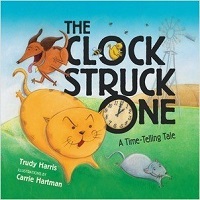
Clock Struck One, The
Grade 1
5 skill lessons
Math
Skill lessons
The mathematics the book carries, taught directly. Printable workbook pages and teacher keys are not available for this book yet.
- 1Which Side Says the Hour
- 2How Many Hours After Midnight
- 3Around to Twelve and Back to One
- 4Which Clock Said It, and How Long After
- 5The Hours Bent Into a Circle
Math + reading
Math through the reading
The same book, entered through a sentence it prints. Change one word in the reading and the numbers change with it.
No math-through-reading lessons for this book yet.
Reading
Reading and language lessons
The same book read as a text. What a word means in its sentence, how a character is shown, how the writing is put together - no mathematics.
No reading and language lessons for this book yet.
Skill lessons
5 lessons on the mathematics the book carries. Printable workbook pages and teacher keys are not available for this book yet.
1. Which Side Says the Hour
Two numerals sitting side by side say nothing at all until a sentence says which side is which, and this book supplies that sentence twice, once for each side, then supplies the sum: one hour plus zero minutes is called one o'clock. Students fold a two-sided box of their own, set a 1 and a 0 into it, read each side as its own count before naming the whole box, then turn the two cards around and hear the same two numerals produce something that is not a time this book names. They finish by building the four o'clock the book asks about and never shows.
Full lesson — 20 minutes
1. Fold the time box (4 min)
Each pair folds an index card down the middle and rules a line on the fold, so the card now has a left side and a right side. Write hour above the left side and minutes above the right side. Nothing goes in the box yet. Point at each side in turn and say its label out loud.
Word preview: hour, minutes
A digital clock has a time box that looks like this.
The left side of the time box tells what hour it is.
The right side shows the minutes.
2. Set one o'clock (5 min)
Put the 1 card in the left side and the 0 card in the right side. Read the box one side at a time, out loud: one hour, zero minutes. Only then say the name the book gives that box, one o'clock. Every pair reads both sides before anyone says the name.
Word preview: o'clock, zero
One hour plus zero minutes is called one o'clock.
3. Turn the two cards around (5 min)
Swap the cards over: the 0 goes to the left side and the 1 goes to the right. Read the box by its sides again, out loud. It now says zero on the hour side and one on the minute side, which is not one o'clock and is not an hour this book ever names. Say which card moved and what changed, then put them back.
Word preview: left, right
4. Guess four o'clock, then build it (6 min)
The book asks what four o'clock would look like and does not show you. Decide with your partner which card belongs in which side, build it, and read it aloud before naming it: four hours, zero minutes, four o'clock. Copy the finished box onto a slip and hold it up for the room.
Word preview: four, digital
Here are some pictures of how these times look on a digital clock.
Can you guess what four o'clock would look like?
Short version — 9 minutes
1. Fold the time box (4 min)
Fold an index card down the middle and rule a line on the fold. Write hour above the left side and minutes above the right. Point at each side and say its label aloud.
Word preview: hour, minutes
The left side of the time box tells what hour it is.
The right side shows the minutes.
2. Set one o'clock (5 min)
Put the 1 card in the left side and the 0 card in the right. Read the box one side at a time, one hour, zero minutes, and only then say the name, one o'clock.
Word preview: o'clock, zero
One hour plus zero minutes is called one o'clock.
Three levels
- Support
- Keep the 1 and the 0 in play and no other numerals, and set the box with the teacher reading the two side labels aloud first. Read one side at a time and say the name, one o'clock, only after both sides have been read. The swap is done with a partner's hand on the cards, one card moved at a time, and at the four o'clock step the 4 is handed over already, so the only decision left is which side it goes in.
- At Grade
- Build the box and label both sides, set one o'clock and read it side by side before naming it, turn the two cards around and say what changed, then build the four o'clock the book only asks about.
- Extension
- Hand your partner a box with a numeral already sitting in each side and no labels written above them. They must say what the box claims under each of the two ways the labels could go, and then say which of the two the book's own sentence allows and how they know.
English learners
Hour, minutes and o'clock are three English words for one reading, and the reading itself, a number on one side and a number on the other, is on every microwave and phone a child has passed. Two things in the English need rehearsing rather than explaining. Many languages give the minutes before the hour, so the left-to-right order here has to be said and pointed at, not assumed. And o'clock is one unbreakable word tacked on after the number, not a word meaning hour. Rehearse the frame aloud before any card is placed: ___ hours, zero minutes, ___ o'clock. A child who can point correctly at the hour side and the minute side has the mathematics while the frame is still arriving, and a child who has these words in a stronger language should read their box that way first and then swap the two English labels in.
Materials
- Index card folded down the middle, one per pair
- Printed source passage in this step
- Numeral cards 0 to 9, one set per pair
- Blank slip per pair for copying the finished box
- Word cards: hour, minutes, o'clock, digital
Standards & curriculum
These lessons are being matched against curricula now.
Standards are held back while this plan is edited. Every standard shown here was matched against the supplied wording of this lesson, quoting its steps, so a changed step is no longer the thing that was checked. Undo your changes to bring the standards back — your edits stay in this browser either way.
2. How Many Hours After Midnight
The book builds a ladder and stops it one rung short. Midnight is 12 o'clock AM; one AM is one hour after midnight; two hours after midnight is called two AM; three AM is three hours after midnight. Then it stops and asks the reader about four instead of finishing. Students hop a counter along the hour cards from the midnight card to rebuild the three printed rows, say aloud the one thing all three have in common, and then produce the fourth row themselves and show why four hops is the only count the three rows leave open.
Full lesson — 20 minutes
1. Put midnight at the start (4 min)
Lay the twelve hour cards in a line with the 12 at the left-hand end, turned so the word midnight shows, and the rest running on from it: midnight, 1, 2, 3 and so on to the 11. Read the book's two sentences about midnight aloud, then put your counter on the midnight card and leave it there. The counter has not moved yet, so no hours have gone by since midnight.
Word preview: midnight, AM
It may seem strange, but time for each day actually starts in the middle of the night at midnight.
Midnight is 12 o'clock AM.
2. Build the three rows the book prints (6 min)
Hop the counter one card forward and say the row out loud: one AM is one hour after midnight. Carry the counter back to midnight and hop two cards, counting the hops aloud, then say the second row. Back to midnight again and hop three. Every hop is one hour and every row starts from midnight.
Word preview: after, hour
One AM is one hour after midnight.
Two hours after midnight is called two AM.
Three AM is three hours after midnight.
3. Say what the three rows share (5 min)
Look at the three rows you have built. Each pair says out loud, in one sentence, the thing that is the same in all three of them. Then test the sentence: the teacher names one of the AM hours you have already built and you say the number of hours without hopping, and hop afterwards to check.
Word preview: same, rule
4. Finish the fourth row (5 min)
The book stops at three and asks about four without answering it. Write your answer on the slip before anybody says it aloud: four AM is how many hours after midnight? Then hop the counter from midnight and count the hops. Hold the slip up and say what made four the only answer the three rows leave open.
Word preview: four, guess
Can you guess what four o'clock would look like?
Short version — 9 minutes
1. Build the three rows the book prints (5 min)
With the hour cards in a line, the midnight card at its head and the counter standing on it, hop one card forward and say the row: one AM is one hour after midnight. Back to midnight, hop two, say the second row. Back again and hop three.
Word preview: after, hour
One AM is one hour after midnight.
Three AM is three hours after midnight.
2. Finish the fourth row (4 min)
The book stops at three and asks about four. Write your answer on the slip first, then hop the counter from midnight and count the hops. Say what made four the only answer.
Word preview: four, guess
Can you guess what four o'clock would look like?
Three levels
- Support
- Build the first two rows only, one AM and two AM, and hop the first of them with a partner's hand under yours. The counter goes back to the midnight card before every new row. The row may be said as two hops, two AM, before the full sentence is tried.
- At Grade
- Build all three printed rows by hopping from midnight, state in one sentence what the three share, and write the fourth row on the slip before hopping to check it.
- Extension
- Carry the ladder past the book's four. Hop five and then six and say those rows aloud, then say what the row would be at eleven AM without hopping at all, and hop afterwards to prove it.
English learners
The counting is the same in every language in the room, so a child hopping the counter is doing the mathematics whatever they are saying while they hop. Two things in the English need rehearsing. AM is a pair of letters rather than a word and is said as its two letters. And the book turns the row round between one sentence and the next, one AM is one hour after midnight beside two hours after midnight is called two AM, so the hour comes first in one row and the count comes first in the next. Practise both frames aloud before the hopping starts: ___ AM is ___ hours after midnight, and ___ hours after midnight is called ___ AM. A child who counts the hops in their strongest language and then fills either English frame from their own counter has the lesson.
Materials
- Twelve hour cards, 1 to 12, one set per pair, the 12 card marked midnight on its back
- Printed source passage in this step
- A counter each pair hops one card at a time
- A slip per pair for the fourth row, written before it is said
- Word cards: midnight, after, hour, AM
Standards & curriculum
These lessons are being matched against curricula now.
Standards are held back while this plan is edited. Every standard shown here was matched against the supplied wording of this lesson, quoting its steps, so a changed step is no longer the thing that was checked. Undo your changes to bring the standards back — your edits stay in this browser either way.
3. Around to Twelve and Back to One
The hours are a count that runs out and starts over, and the book prints both halves of that: the list from one o'clock through twelve o'clock, and the sentence saying the clocks then start all over. Students lay twelve hour cards in a line, say the whole list with one touch for each name, step forward one hour and then two from a card the teacher calls, and finally close the line into a ring so the card after the 12 is the 1 again. Every count in this lesson runs forward; a pair that lands on a smaller number than the one they just said has moved the wrong way and hears it immediately.
Full lesson — 20 minutes
1. Lay the twelve hours out (5 min)
In pairs, put the twelve hour cards in a line, the 1 at the left and the 12 at the right, in counting order. Check the line by touching each card and saying its number. Then say the two hours the book's own sentence names, one o'clock and two o'clock, touching the 1 and the 2 as you say them.
Word preview: hour, order
They have numbers from 1 to 12 printed on their faces.
The clock changes from 1 o'clock to 2 o'clock
2. Say the whole hour list (5 min)
Read the book's printed run of hours aloud with the teacher once, from four o'clock through twelve o'clock. Then say the whole list yourselves from the beginning, one o'clock through twelve o'clock, one touch on one card for each name. Nobody hurries and nobody skips: if a card is touched twice or missed, go back to one o'clock and start again.
Word preview: o'clock, twelve
then 4 o'clock, 5 o'clock, 6 o'clock, 7 o'clock, 8 o'clock, 9 o'clock, 10 o'clock, 11 o'clock, and 12 o'clock.
3. Step forward one hour, then two (5 min)
The teacher calls an hour from the 1 to the 10 and every pair puts their counter on that card. Move the counter forward one card and say the hour you land on. Put it back and move forward two cards this time, naming both hours as you pass them. Forward always means towards the 12: if the number you say is smaller than the one you started on, the counter went the wrong way.
Word preview: forward, next
Every hour, the long hand goes all the way around the clock
4. Close the line into a ring (5 min)
Bend the line of cards round until the 12 sits beside the 1 and tie the ring closed with the string. Put the counter on the 12 and move it forward one card. Say where it landed, and say what the book says happens after twelve o'clock. Then run the counter round the ring twice, naming every hour out loud as you pass it.
Word preview: again, ring
After 12 p.m., clocks start all over with 1 o'clock, 2 o'clock, and keep going until 12 o'clock midnight comes around again.
Short version — 9 minutes
1. Lay the twelve hours out (4 min)
Put the twelve hour cards in a line, the 1 at the left and the 12 at the right. Touch each card and say its number, then say one o'clock and two o'clock, touching the 1 and the 2.
Word preview: hour, order
They have numbers from 1 to 12 printed on their faces.
2. Close the line into a ring (5 min)
Bend the line round until the 12 sits beside the 1 and tie the ring closed. Put the counter on the 12, move it forward one card and say where it landed. Then run the counter once round the ring, naming every hour.
Word preview: again, ring
After 12 p.m., clocks start all over with 1 o'clock, 2 o'clock, and keep going until 12 o'clock midnight comes around again.
Three levels
- Support
- Say the list with the teacher on the first pass and alone on the second, with all twelve cards in front of you both times. The line is never shortened; only the saying is shared. The ring is closed with the teacher's hand steadying the string while the pair does the bending.
- At Grade
- Lay the twelve in order, say the whole list unaided with one touch per name, step forward one hour and then two from a called card, and close the line into a ring.
- Extension
- Put the counter on a card that is not the 1 and run it forward a full twelve hours around the ring, one card and one hour name at a time. Say before you start where you expect to stop, and say afterwards why the counter came home to the card it left.
English learners
The twelve hour names are the only new words here, and every child already owns a full set of them in a stronger language; counting order is the same in every language in the room. The English to rehearse is the ending, o'clock, one unbreakable word attached after the number rather than a word for hour. Say it aloud together before the list is attempted: one o'clock, two o'clock, three o'clock. A child who counts the twelve cards in their strongest language and then reads the English list off the same cards has done the whole lesson, and a pair may split it, one saying the number and the other adding o'clock, until both halves come from one mouth.
Materials
- Twelve hour cards, 1 to 12, one set per pair
- Printed source passage in this step
- A counter each pair moves from card to card
- A length of string long enough to close the twelve cards into a ring
- Word cards: hour, o'clock, forward, again
Standards & curriculum
These lessons are being matched against curricula now.
Standards are held back while this plan is edited. Every standard shown here was matched against the supplied wording of this lesson, quoting its steps, so a changed step is no longer the thing that was checked. Undo your changes to bring the standards back — your edits stay in this browser either way.
4. Which Clock Said It, and How Long After
The chase hands its hours out to a different clock almost every time: a grandfather clock strikes two, a cuckoo says 4, church bells ring out five, and a barn clock, an oven clock, a farmer's watch and a bank clock each take a turn. Students read the hour off each clock's own sentence, lay the cards along a line of hour markers, and discover that some hours have no clock standing on them at all. Then they count the hours from one clock to another by hopping forward, and finish the day past eleven to midnight and round to the grandfather clock's last strike of one.
Full lesson — 20 minutes
1. Give each clock its hour (5 min)
Each pair takes the eight clock cards. Read the sentence on each card and write on it the hour that sentence names. Say the two together out loud as you write: the grandfather clock, two. Leave the cards in a heap for now and do not put them in order.
Word preview: clock, hour
a mouse ran up the clock the clock struck one
The grandfather clock struck two.
The church bells rang out five.
The clock on the barn said six.
2. Lay the clocks along the hours (5 min)
Put the twelve hour markers in a line, 1 to 12. Set each clock card under the marker for the hour it told. When all eight are placed, point at the markers that have no clock under them and say their hours out loud.
Word preview: order, between
Then the clock on the oven turned 7.
The farmer's watch said nine.
till the clock on the bank said 10.
3. Count the hours from one clock to another (6 min)
Pick two clocks and put your counter on the earlier one. Hop forward one marker at a time until you reach the later one, counting the hops aloud, and say the answer as hours: from the cuckoo at 4 to the oven clock at 7 is three hours. Do three more pairs of clocks and say each answer the same way.
Word preview: after, hops
Splattering food, how terribly rude, as the cuckoo cuckooed 4.
4. Finish the day (4 min)
The last numbered hour of the chase is eleven. Put the counter on the 11, hop once to the 12 and lay the midnight card there. The hours now start over, so hop once more, back to the 1 at the head of the line, and say what happens there: the same grandfather clock that struck two at the start strikes one, on the very marker the chase began on. Count your two hops aloud and say how many hours that is from the heap to the last strike.
Word preview: midnight, again
At 11, they fell in a heap.
Hickory Dickory Dell, by midnight all was well.
The grandfather clock struck one.
After 12 p.m., clocks start all over with 1 o'clock, 2 o'clock, and keep going until 12 o'clock midnight comes around again.
Short version — 9 minutes
1. Lay the clocks along the hours (4 min)
Put the twelve hour markers in a line and set each clock card under the marker for the hour its sentence names. Point at the markers with no clock under them and say their hours aloud.
Word preview: order, between
Then the clock on the oven turned 7.
till the clock on the bank said 10.
2. Count the hours from one clock to another (5 min)
Put the counter on the earlier of two clocks and hop forward one marker at a time to the later one, counting the hops aloud. Say the answer as hours: from the cuckoo at 4 to the oven clock at 7 is three hours.
Word preview: after, hops
Splattering food, how terribly rude, as the cuckoo cuckooed 4.
Three levels
- Support
- Work with the four clocks that stand next to each other with no gap between them, the cuckoo at 4, the church bells at 5, the barn clock at 6 and the oven clock at 7. Count between neighbours only, so every answer is one hour, and say each answer aloud before moving on to the next.
- At Grade
- Give all eight clocks their hours, lay them along the twelve markers, count the hours between four different pairs of clocks, and finish the day past midnight to the last strike.
- Extension
- Count across a gap: the barn clock at six to the farmer's watch at nine, where the story names no clock at all for the hour sitting between them. Say how many hours it is, and say how you counted an hour that has no clock standing on it.
English learners
The book gives its clocks five different ways of telling the same thing: a clock strikes an hour, a cuckoo cuckoos it, church bells ring it out, three clocks say it, and the oven clock turns it. A child new to English can know every hour perfectly and still not know that all five mean the clock told the time. Say one frame aloud with each card before the ordering begins: the ___ said ___. Reading the hour off a card and placing it correctly is the mathematics done, and it can be done while the naming is in a stronger language; the English verb goes on afterwards, one card at a time.
Materials
- Eight clock cards, one for each timepiece the story names with an hour
- Printed source passage in this step
- Twelve hour markers, 1 to 12, one set per pair
- A counter each pair moves one hour at a time
- A midnight card
- Word cards: clock, hour, after, between
Standards & curriculum
These lessons are being matched against curricula now.
Standards are held back while this plan is edited. Every standard shown here was matched against the supplied wording of this lesson, quoting its steps, so a changed step is no longer the thing that was checked. Undo your changes to bring the standards back — your edits stay in this browser either way.
5. The Hours Bent Into a Circle
The book says an analog face carries the numbers 1 to 12 and hands that move around it, and that every hour the long hand goes all the way around. Students take the same twelve hour cards they have been counting along a line and bend that line into a ring on a paper plate, so the 12 finishes beside the 1. They pin a long pointer at the centre, sweep it one whole turn for one hour, and move a marker forward one number for each turn completed. The straight count they already own and the round face the book describes turn out to be the same twelve numbers.
Full lesson — 20 minutes
1. Lay the hours out straight first (4 min)
Put the twelve hour cards in a line in counting order, the way you have had them before. Read the two sentences about analog clocks aloud. Count the numbers in your line, then count the numbers the book says are printed on a face, and say whether they are the same twelve.
Word preview: analog, face
Some clocks are called analog clocks.
They have numbers from 1 to 12 printed on their faces.
2. Bend the line into a face (5 min)
Tape the cards around the rim of a paper plate, keeping counting order, until the 12 comes back round beside the 1. Turn the plate so the 12 is at the top. Say which two numbers are neighbours now that were at opposite ends of the line a minute ago.
Word preview: around, circle
These clocks also have hands or pointers that move around the face.
3. Send the long hand all the way around (6 min)
Pin the long pointer through the centre of the plate and put your marker on the 1. Start the pointer at the 12 and sweep it all the way round until it is back at the 12: that whole turn is one hour. Now move the marker forward one number and say the hour the clock has reached. Sweep again from there and say the next one.
Word preview: hand, turn
Every hour, the long hand goes all the way around the clock
The clock changes from 1 o'clock to 2 o'clock
4. Run three hours (5 min)
Put the marker back on the 1. Make three whole turns of the pointer, moving the marker forward one number after each turn and saying the hour aloud each time. Say where the marker finished and how many whole turns it took to get there.
Word preview: three, hours
Short version — 9 minutes
1. Bend the line into a face (4 min)
Tape the twelve hour cards around the rim of a paper plate in counting order until the 12 comes back round beside the 1, and turn the plate so the 12 is at the top.
Word preview: around, circle
These clocks also have hands or pointers that move around the face.
2. Send the long hand all the way around (5 min)
Pin the pointer through the centre and put the marker on the 1. Sweep the pointer from the 12 all the way round to the 12 again: that turn is one hour. Move the marker forward one number and say the hour the clock has reached.
Word preview: hand, turn
Every hour, the long hand goes all the way around the clock
Three levels
- Support
- Sweep the pointer with a partner's hand resting on yours for the first whole turn, and move the marker only once the pointer is back at the 12. One turn and one number at a time, never two, and the hour is said aloud before the next turn begins.
- At Grade
- Build the face from the twelve cards, sweep one whole turn for one hour, move the marker forward one number after each turn, and run three hours from the 1.
- Extension
- Start the marker on the 11 and run three hours. Say what the marker does when it reaches the 12 and where it goes next, and name the hour you will finish on before you get there.
English learners
Round faces and the numbers on them look the same everywhere, so a child who has looked at a wall clock brings the picture with them. The English to rehearse is the four-word phrase for the motion, all the way around, and the word turn used as a thing you can count rather than something you do. Say the frame together before the pointer moves: one whole turn is one hour. Numbers may be counted around the plate in a stronger language and named in English afterwards off the same card, and a pair may split the job, one sweeping and calling the turn, the other moving the marker and naming the hour.
Materials
- Twelve hour cards, 1 to 12, one set per pair
- Printed source passage in this step
- A paper plate per pair
- Tape
- A long paper pointer and a split pin per pair
- A small marker for the hour the clock has reached
- Word cards: analog, face, hand, around
Standards & curriculum
These lessons are being matched against curricula now.
Standards are held back while this plan is edited. Every standard shown here was matched against the supplied wording of this lesson, quoting its steps, so a changed step is no longer the thing that was checked. Undo your changes to bring the standards back — your edits stay in this browser either way.