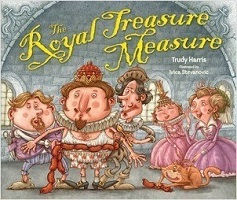
Royal Treasure Measure
Grade 1
5 skill lessons · 3 math-through-reading
Math
Skill lessons
The mathematics the book carries, taught directly. Printable workbook pages and teacher keys are not available for this book yet.
- 1Heel to Toe, and Count
- 2One Ribbon, Two Numbers
- 3Why the Swords Lost
- 4The Stick That Became a Ruler
- 5Ten Steps and Three More
Math + reading
Math through the reading
The same book, entered through a sentence it prints. Change one word in the reading and the numbers change with it.
- 6Ten of What?
- 7The Riddle Never Says Thirteen
- 8No More or No Less
Reading
Reading and language lessons
The same book read as a text. What a word means in its sentence, how a character is shown, how the writing is put together - no mathematics.
- 9Compete and Feet: Listening for the Words That Chime
- 10He Owned No Sword or Sickle: How a Story Says What Someone Lacks
- 11Hmm, What Could I Use? Listening to Someone Think
- 12Down Here! Down Here! Reading a Line That Bounces Back
- 13Footnote: When a Storybook Stops Telling and Starts Explaining
Skill lessons
5 lessons on the mathematics the book carries. Printable workbook pages and teacher keys are not available for this book yet.
1. Heel to Toe, and Count
Arzo has no sword, no sickle and no cow, and he wins the contest by measuring with the only thing he owns. He puts one foot in front of the other and counts. That is unit iteration in full, and it is the one procedure in this book that a child can carry out exactly as the character does. Children lay their own feet end to end along a mat, count the units aloud, and then discover, from two numbers for one mat, that the count is a count of somebody's feet rather than a property of the mat.
Full lesson — 20 minutes
1. Lay one foot down at a time (5 min)
Put your first foot cut-out on the START mark. Put the next one down so its heel touches the toe of the one before it. No gaps. No overlaps. Say the number out loud as each foot lands. Stop after four feet. Now look along the line. Are all four still touching?
Word preview: measure
He hung his head and sadly, he stared down at his feet.
Without a way to measure, how could he compete?
2. Walk the mat and count the steps (6 min)
Stand with your heel on the START mark. Now walk along the mat putting the heel of each foot right against the toe of the last one. Count out loud every time a foot lands. Stop when you reach the end of the mat. How many steps did the mat take?
Word preview: step
Arzo started counting from one step up to 10 to his right where bushes ahead were trees and then that's two steps.
3. Measure the same mat twice (5 min)
Now let your partner walk the very same mat with their feet. Count their steps out loud with them. Write your number and your partner's number at the end of the mat. Read both numbers out loud. Did you both get the same number?
Word preview: same
Because feet vary in size, this measurement made trade between countries difficult.
4. Say what the number is a number of (4 min)
Tell your partner one whole sentence: the mat is how many of what. Say the number and say whose feet. Now listen to your partner's sentence about the same mat. Their number is different. Can both sentences be true? Say what makes them both true.
Word preview: long
A foot is this long. No more or no less.
Short version — 9 minutes
1. Lay one foot down at a time (4 min)
Put your first foot cut-out on the START mark. Put the next one down so its heel touches the toe of the one before it. No gaps. No overlaps. Say the number out loud as each foot lands. Stop after four feet. Now look along the line. Are all four still touching?
Word preview: measure
He hung his head and sadly, he stared down at his feet.
Without a way to measure, how could he compete?
2. Walk the mat and count the steps (5 min)
Stand with your heel on the START mark. Now walk along the mat putting the heel of each foot right against the toe of the last one. Count out loud every time a foot lands. Stop when you reach the end of the mat. How many steps did the mat take?
Word preview: step
Arzo started counting from one step up to 10 to his right where bushes ahead were trees and then that's two steps.
Three levels
- Support
- Keep the mat short enough to take about six steps, and lay the paper foot cut-outs along it first so the child can see where every step must land before walking it. The child still places each unit heel to toe, still counts every unit aloud, and still says the finished number.
- At Grade
- Walk the full mat heel to toe, count every step aloud, and report the number as a number of your own feet. Then measure the same mat with a partner's feet and read both numbers out loud.
- Extension
- Measure the mat with your feet, then predict, before anyone walks it, whether a taller child will need more steps or fewer steps for the same mat. Walk it with them and say whether your prediction held, using both numbers in your answer.
English learners
The action here needs no English at all: a foot goes down, a heel touches a toe, and a number is said. Let a new speaker measure first and speak second, and let the counting itself happen in the child's strongest language, because a count is a count in any language and the mat records it either way. The load is in the closing sentence, which has to hold an object, a number and a unit together, the mat is nine of my feet long, and that three-part shape is exactly what a child will not bring from another language. Give the frame and keep it identical all lesson. Do not accept a bare number as the answer, in any language, because the bare number is the part the lesson is trying to attach a unit to.
Materials
- Foot cards, paper cut-outs of one child's own foot, six identical copies per child
- Measuring mat, a paper strip marked START at one end
- Word cards: foot, long, measure, same, step
Standards & curriculum
Choose your curriculum above to see the standards for this lesson.
Standards are held back while this plan is edited. Every standard shown here was matched against the supplied wording of this lesson, quoting its steps, so a changed step is no longer the thing that was checked. Undo your changes to bring the standards back — your edits stay in this browser either way.
2. One Ribbon, Two Numbers
The whole kingdom's trouble is that a number without a unit settles nothing. Drapes are ordered ten spoons long and a door fourteen sausages high, and nothing fits. Children measure one ribbon twice, once with a short unit and once with a long one, and produce two honest numbers for an object that never changed. The point is not that one measurement is wrong. It is that the number is only half of the answer.
Full lesson — 20 minutes
1. Measure one ribbon with spoons (5 min)
Lay spoons end to end along your ribbon. Start at the very beginning of the ribbon. No gaps. Count the spoons out loud. Write your number, then write the word spoons next to it.
Word preview: spoon
Seemstress, make my drapes 10 spoons long.
2. Measure the same ribbon with sausages (5 min)
Do not change your ribbon. Now lay the paper sausages end to end along the very same ribbon. Count them out loud. Write that number under the first one and write the word sausages next to it.
Word preview: sausage
I'm sure I told him to make that door 14 sausages high.
3. Say why one ribbon has two numbers (6 min)
Your ribbon never changed, but you wrote two different numbers on it. Tell your partner why. Your sentence has to say both units, spoons and sausages. Then answer this: if the king asks for ten of something, does he get the same drapes either way? Say which word he must not leave out.
Word preview: unit
The people of his kingdom had to measure in strange ways, because there were no yardsticks or rulers in those days.
even though they struggled, the fit was never right
4. Put the number back with its word (4 min)
I am going to say a measurement with a word missing. When I do, say stop, and then say the whole thing properly using your own record. Say the number and the word that goes with it.
Seemstress, make my drapes 10 spoons long.
Short version — 9 minutes
1. Measure one ribbon with spoons (5 min)
Lay spoons end to end along your ribbon. Start at the very beginning of the ribbon. No gaps. Count the spoons out loud. Write your number, then write the word spoons next to it.
Word preview: spoon
Seemstress, make my drapes 10 spoons long.
2. Measure the same ribbon with sausages (4 min)
Do not change your ribbon. Now lay the paper sausages end to end along the very same ribbon. Count them out loud. Write that number under the first one and write the word sausages next to it.
Word preview: sausage
I'm sure I told him to make that door 14 sausages high.
Three levels
- Support
- Use a ribbon short enough to take about four sausages, and pre-mark the ribbon at each sausage length so the child can lay units into marked places rather than judging the joins. The child still lays both units, still counts both times, and still says the two numbers.
- At Grade
- Measure the one ribbon with both units, write both numbers with their unit words, and say aloud in one sentence why the same ribbon gave two numbers, naming both units in the sentence.
- Extension
- Without measuring, tell your partner whether a longer unit will give a bigger number or a smaller number for the same ribbon, and say why. Then choose a third unit from the room, predict the count before you lay it, and say whether your prediction landed above or below what you counted.
English learners
The bare number is the trap and it is worse for a new speaker, because a number is the easiest thing to say and the unit word is the hard part. Teach the two-word answer from the first minute, ten spoons rather than ten, and never let a bare number stand as complete, in any language. The word long is doing quiet work here as well: it turns an object into a measurement and it has no equivalent in the child's own sentence until it is pointed at. Children may lay the units, count and discuss in their strongest language and report the two-word answer in English, and the two written records make the answer checkable without any speech at all if a child is not yet ready to speak.
Materials
- Plastic spoons, twelve per pair
- Ribbon lengths, one per pair, all pairs the same length
- Paper sausage strips, twelve per pair, each three times the length of a spoon
- Word cards: long, sausage, spoon, unit
Standards & curriculum
Choose your curriculum above to see the standards for this lesson.
Standards are held back while this plan is edited. Every standard shown here was matched against the supplied wording of this lesson, quoting its steps, so a changed step is no longer the thing that was checked. Undo your changes to bring the standards back — your edits stay in this browser either way.
3. Why the Swords Lost
The contestants measure with swords and sickles, walnuts and broomsticks, row boats and goats, and a watching voice says the flaw out loud: those swords are all different sizes. Children reproduce the failure rather than being told about it. They measure one ribbon twice with unequal sticks and get two numbers, then twice with equal sticks and get one, and argue from their own four numbers about which set can settle anything.
Full lesson — 20 minutes
1. Measure with the mixed sticks (5 min)
Lay the sticks end to end along your ribbon and count them out loud. Write the number. Now pick the sticks up, mix them, and lay them along the very same ribbon again. Count and write that number too.
Word preview: different
They measured using walnuts and broomsticks, swords and sickles.
That night won't win. Those swords are all different sizes.
2. Measure with the matching sticks (5 min)
Now use the matching sticks. They are all the same length. Measure the same ribbon, count and write the number. Mix them up and do it again. Write that number too. Say out loud whether your two numbers agree this time.
Word preview: same
A foot is this long. No more or no less.
3. Say which sticks can settle it (6 min)
Tell your partner which sticks can settle how long the ribbon is. Your reason has to use your own numbers, all four of them. Partner, do not just agree. Say back what you think and why. Then the two of you say one answer to the class.
Word preview: settle
Those swords are all different sizes.
Because feet vary in size, this measurement made trade between countries difficult.
4. Test the rule on the room (4 min)
Choose something in the room. Measure it with the matching sticks and count. Before you measure again, say what number you expect. Now measure it again. If your two numbers do not agree, find the gap or the overlap that did it and tell your partner where it was.
No need to wonder. No need to guess.
Short version — 9 minutes
1. Measure with the mixed sticks (5 min)
Lay the sticks end to end along your ribbon and count them out loud. Write the number. Now pick the sticks up, mix them, and lay them along the very same ribbon again. Count and write that number too.
Word preview: different
They measured using walnuts and broomsticks, swords and sickles.
That night won't win. Those swords are all different sizes.
2. Measure with the matching sticks (4 min)
Now use the matching sticks. They are all the same length. Measure the same ribbon, count and write the number. Mix them up and do it again. Write that number too. Say out loud whether your two numbers agree this time.
Word preview: same
A foot is this long. No more or no less.
Three levels
- Support
- Cut the mixed set down to three sticks with a very large difference between the longest and the shortest, so the two counts come out plainly apart rather than close. The child still measures twice with each set and still says which set they would trust, but the numbers do the arguing before the sentence has to.
- At Grade
- Measure one ribbon twice with the mixed sticks and twice with the matching sticks, write all four numbers, and tell a partner which set can settle the length with a reason that names your numbers.
- Extension
- Argue the other side. Take the mixed sticks and say what would have to be true about them, or about how they were laid, for their count to be trusted after all. Then test whatever you named and report whether it held.
English learners
The reasoning sentence here is a because sentence and that is the hard syntax, not the mathematics. The four numbers can be written and pointed at with no English whatsoever, and a child who lays out two numbers that disagree and two that agree has already made the argument visible. Take the pointing as the position and let the words come after. Different and same are the two words worth pre-teaching, because the whole lesson turns on them and children often hear them as opinions about the sticks rather than as facts about their length. Hold two sticks together at one end when you say each word.
Materials
- Mixed sticks, six per pair, deliberately different lengths
- Ribbon lengths, one per pair, all pairs the same length
- Matching sticks, six per pair, all cut to one length
- Word cards: different, measure, same, settle
Standards & curriculum
Choose your curriculum above to see the standards for this lesson.
Standards are held back while this plan is edited. Every standard shown here was matched against the supplied wording of this lesson, quoting its steps, so a changed step is no longer the thing that was checked. Undo your changes to bring the standards back — your edits stay in this browser either way.
4. The Stick That Became a Ruler
The kingdom's answer is not a foot but a copy of one. Queen Star's stick is cut to the length of the king's foot, and from then on nobody needs the king. Children make their own copy, measure with it rather than with the thing it copies, then trade sticks and watch the same desk take two counts. The lesson closes where the book does, on a class agreeing to one stick, which is the whole reason the object in the story gets a name.
Full lesson — 20 minutes
1. Copy one foot onto a stick (5 min)
Put your foot on the paper and mark where your heel is and where your longest toe ends. Mark your stick at exactly that length. Now hold the stick against your foot. Is it too long? Too short? Fix it until it is exactly your foot.
Word preview: exactly
Yes, Queen Star has an idea for a special stick that will be the length of our new King's foot.
Exactly the size of King Arzo's foot.
2. Measure a desk with the stick (5 min)
Lay your stick along the desk edge. Mark where the stick ends before you move it. Move the stick so it starts at your mark. Count out loud each time. Say the number and say what it is a number of.
Word preview: length
The official measurement of the kingdom shall now be the foot.
3. Trade sticks and measure again (6 min)
Swap sticks with your partner. Measure the very same desk edge again with their stick. Write both numbers on one record. Which stick gave the bigger number? Say what that tells you about the two sticks, and use both numbers when you say it.
Word preview: shorter
Because feet vary in size, this measurement made trade between countries difficult.
4. Agree on one stick for the class (4 min)
We are going to pick one stick for the whole class. Measure the same thing with a copy of that one stick. Read your number out. Listen to everyone else's. Do the numbers agree now? Say what changed from last time.
Word preview: agree
No need to wonder. No need to guess.
In his honor, the stick will be called a ruler.
Short version — 9 minutes
1. Copy one foot onto a stick (5 min)
Put your foot on the paper and mark where your heel is and where your longest toe ends. Mark your stick at exactly that length. Now hold the stick against your foot. Is it too long? Too short? Fix it until it is exactly your foot.
Word preview: exactly
Yes, Queen Star has an idea for a special stick that will be the length of our new King's foot.
Exactly the size of King Arzo's foot.
2. Measure a desk with the stick (4 min)
Lay your stick along the desk edge. Mark where the stick ends before you move it. Move the stick so it starts at your mark. Count out loud each time. Say the number and say what it is a number of.
Word preview: length
The official measurement of the kingdom shall now be the foot.
Three levels
- Support
- Give a stick already cut to the child's foot length and start at the measuring. The end over end laying is the demand being protected here, so mark the desk edge at each stick length in advance and let the child lay the stick into marked places while still counting every length aloud.
- At Grade
- Cut a stick to your own foot, measure a desk edge by laying it end over end, then measure the same edge with a partner's stick and say what the two numbers tell you about the two sticks.
- Extension
- Measure the desk with your stick, then work out and say, before measuring, roughly how many of a stick half as long it would take, and why. Test it with a half stick and say whether your number was near, and which way it was off.
English learners
This is a copying task before it is a talking task, and the copy is either the right length or it is not, which a new speaker can settle by holding the stick against the foot with no words at all. Do that check first. The English that matters comes at the trade: longer and shorter are comparative forms and they are built differently in different languages, so some children will say more long or long more and mean exactly the right thing. Accept the meaning, then supply the English form beside it. Children may reason with a partner in their strongest language and report the two numbers and one comparison word in English.
Materials
- Blank ruler stick, an unmarked strip of card, one per child
- Tracing paper and pencil, one set per child
- Word cards: agree, exactly, length, ruler, shorter
Standards & curriculum
Choose your curriculum above to see the standards for this lesson.
Standards are held back while this plan is edited. Every standard shown here was matched against the supplied wording of this lesson, quoting its steps, so a changed step is no longer the thing that was checked. Undo your changes to bring the standards back — your edits stay in this browser either way.
5. Ten Steps and Three More
The riddle names the distance as ten plus three from the walnut tree and never says what that comes to. Children pace the distance the way the contestants do, ten steps to a marker and then three more counted on from eleven rather than from one, and arrive at a total by walking it. The number path at the end is the same sum in a second record, so the answer is checkable against something other than the teacher.
Full lesson — 20 minutes
1. Pace out the first ten (5 min)
Stand with your heel on the tree mark. Walk heel to toe and count out loud: one, two, three, all the way to ten. Put a cube down where your tenth foot lands. Leave it there.
Word preview: plus
To find a treasure, you'll need to measure 10 plus 3 from the walnut tree.
Arzo started counting from one step up to 10 to his right where bushes ahead were trees and then that's two steps.
2. Carry on for three more (5 min)
Put your heel against the cube. Take three more steps. Do not start at one again. Count on: eleven, twelve, thirteen. Put a second cube where your last foot lands. Partner, listen. Did they start at eleven?
Word preview: more
To find a treasure, you'll need to measure 10 plus 3 from the walnut tree.
3. Say the whole number of steps (5 min)
Now walk it all again from the tree mark to your second cube. Do not stop in the middle. Count every step in one go. Say your number out loud. Now say it like this: ten and three more makes my number. Does your number match what the riddle asked for?
Word preview: altogether
To find a treasure, you'll need to measure 10 plus 3 from the walnut tree.
4. Show the same sum on the number path (5 min)
Put your counter on ten. Hop it three places and say each number as it lands. Where did it stop? Now point at the second cube on your strip and point at your counter. Say out loud whether the two records agree.
Maybe it's 10 over and three down.
Short version — 9 minutes
1. Pace out the first ten (5 min)
Stand with your heel on the tree mark. Walk heel to toe and count out loud: one, two, three, all the way to ten. Put a cube down where your tenth foot lands. Leave it there.
Word preview: plus
To find a treasure, you'll need to measure 10 plus 3 from the walnut tree.
Arzo started counting from one step up to 10 to his right where bushes ahead were trees and then that's two steps.
2. Carry on for three more (4 min)
Put your heel against the cube. Take three more steps. Do not start at one again. Count on: eleven, twelve, thirteen. Put a second cube where your last foot lands. Partner, listen. Did they start at eleven?
Word preview: more
To find a treasure, you'll need to measure 10 plus 3 from the walnut tree.
Three levels
- Support
- Mark the floor strip at every step so each foot has a place to land, and let the child stop at the cube and rest before the three more. The counting on still begins at eleven, and the child still says the finished number aloud, but the walking no longer has to be judged by eye.
- At Grade
- Pace ten from the tree mark, count on three more from eleven, and say the total. Then walk the whole distance again in one unbroken count and check the two numbers agree.
- Extension
- Before walking anything, tell your partner what the total will be and how you know. Then walk it and check. Now say what would change in the riddle if it had asked for ten plus five instead, and pace that one too.
English learners
Counting on is the part that has to be heard, and it is heard in whichever language the child counts in. Do not require English number words before the counting on is fluent, because a child restarting at one is making a mathematical error and a child counting on in another language is not. The load-bearing English here is the small word more, in three more, which marks the second amount as an addition to the first rather than a fresh start. Say it while the foot is moving. The word plus appears in the riddle in the book's own voice and is worth pairing with more so that the child hears two English words for one action.
Materials
- Step strip, a long paper strip taped to the floor with a mark at one end
- Counting cubes, twenty per child
- Number path to twenty, one per pair, unmarked between the numerals
- Word cards: altogether, more, plus, step
Standards & curriculum
Choose your curriculum above to see the standards for this lesson.
Standards are held back while this plan is edited. Every standard shown here was matched against the supplied wording of this lesson, quoting its steps, so a changed step is no longer the thing that was checked. Undo your changes to bring the standards back — your edits stay in this browser either way.
Math through the reading
The mathematics is reached through a sentence the book prints: change one word in the reading and the numbers change with it. These carry their own standards, matched against these lessons rather than inherited from the skill ones.
6. Ten of What?
Students fill the same order twice, changing only the unit word, and end holding two lengths that were both built by counting to ten.
Full lesson — 20 minutes
1. Fill the order in spoons (5 min)
Each child hears the drapes order read aloud, lays ten plastic spoons end to end along a paper strip counting each one, and cuts the strip where the tenth spoon ends.
2. Fill the same order in sausages (5 min)
The same order is read again with one word changed. Children lay ten paper sausage strips end to end on a second paper strip, counting each one, and cut where the tenth ends.
3. Hold both orders up (4 min)
Children hold the two cut strips side by side, say aloud that they counted to ten both times, and say which word in the order made the two strips different.
4. Say the order so it cannot go wrong (6 min)
Each child gives a partner a measuring order of their own for a named object. The partner must be able to fill it without asking anything, so the order has to carry a number and a unit. The giver checks the finished strip against what they meant, and any order that produced the wrong thing is said again with the missing word put in.
Short version — 9 minutes
1. Fill the order in spoons (5 min)
Each child hears the drapes order read aloud, lays ten plastic spoons end to end along a paper strip counting each one, and cuts the strip where the tenth spoon ends.
2. Fill the same order in sausages (5 min)
The same order is read again with one word changed. Children lay ten paper sausage strips end to end on a second paper strip, counting each one, and cut where the tenth ends.
Three levels
- Support
- Cut the count from ten to five so that the laying is quick and both strips are finished and in hand early. The unit swap, the side by side comparison and the closing order-giving are untouched; the child still counts every unit and still says the number with its word.
- At grade
- Fill both orders at ten, cut both strips, hold them together and name the word that made them differ, then give a partner an order of your own that carries a number and a unit and check what comes back against what you meant.
- Extension
- Give your partner an order that is missing its unit word on purpose. Watch what they build. Then say what they would have had to guess, and give the order again properly. Finally say what the king could have written on his order so that every seamstress in the kingdom made the same drapes.
English learners
The two-word answer is the whole lesson and it is also, conveniently, one of the easiest English shapes to acquire: a number and a noun, in that order, with nothing between them. Teach ten spoons from the first minute and never accept a bare ten as a finished answer in any language, because the bare number is exactly what the lesson exists to correct. The word long is harder than it looks. It turns an object into a measurement and many children will not hear it as load-bearing until it is pointed at on a strip. Children may give and fill orders with a partner in their strongest language, since an order that produces the right strip has been understood, and report the finished two-word answer in English.
Materials
- Plastic spoons, twelve per child
- Paper sausage strips, twelve per child, each three times the length of a spoon
- Paper strips for cutting, two per child
- Scissors
- The drape order and the door order, written large on two cards
Standards & curriculum
Choose your curriculum above to see the standards for this lesson.
Standards are held back while this plan is edited. Every standard shown here was matched against the supplied wording of this lesson, quoting its steps, so a changed step is no longer the thing that was checked. Undo your changes to bring the standards back — your edits stay in this browser either way.
7. The Riddle Never Says Thirteen
Students pace the riddle's distance to find the number it never states, and must read the line that funds their answer before they are allowed to claim it.
Full lesson — 20 minutes
1. Find the line that tells you where to start (5 min)
The teacher rereads three candidate lines from the book. Children choose the one that names a starting place and a distance, say aloud what it tells them to do, and say why the other two do not settle it.
2. Pace the riddle (6 min)
From the walnut tree mark, children pace ten steps heel to toe counting aloud, drop a marker, then count on three more from eleven and drop a second marker where they stop.
3. Claim the number with its line (5 min)
Each child tells a partner how many steps the riddle asks for and, in the same breath, says which line of the book they got it from. A number without its line is sent back, and so is a line without its number.
4. Try the other reading (4 min)
Children hear the contestant's version, ten over and three down, pace that instead, and stand where it puts them. They say aloud which word is different in the two versions and which of the two the riddle actually says.
Short version — 9 minutes
1. Find the line that tells you where to start (5 min)
The teacher rereads three candidate lines from the book. Children choose the one that names a starting place and a distance, say aloud what it tells them to do, and say why the other two do not settle it.
2. Pace the riddle (6 min)
From the walnut tree mark, children pace ten steps heel to toe counting aloud, drop a marker, then count on three more from eleven and drop a second marker where they stop.
Three levels
- Support
- Give the riddle line on its own card and let the child hold it, so choosing the right line is a choice between two cards rather than a search through a rereading. The child still chooses, still paces both amounts, and still says the number with the line, but the listening load comes down while the reasoning stays where it is.
- At grade
- Choose the riddle line from three read aloud, pace ten and count on three more, and claim the total in one sentence that names both the number and the line it came from.
- Extension
- Write a riddle of your own for a partner, with two amounts and a starting place, that sends them to a spot you have already marked. Do not tell them the total. If they land somewhere else, work out together whether your riddle or their pacing was at fault, and say which word would have fixed it.
English learners
The mathematics here is almost entirely language-independent and the reading is not, which makes the order of the segments matter for a new speaker: let the pacing come before any sentence is required, because a child who has paced to thirteen has already done the mathematics and can point at their marker while the words are still being assembled. The two demanding English pieces are the small joining word plus, which is what the line turns on, and the shape of the claim itself, a number and a because in one sentence. Supply the frame and keep it identical. Children may reason with a partner in their strongest language and give the finished claim in English, and pointing at the line on the card is an acceptable substitute for naming it aloud.
Materials
- Floor strip taped from a tree mark, one per group
- Counting cubes as markers, four per child
- Riddle line card, one per pair
- Three candidate lines from the book, read aloud and held up on cards
Standards & curriculum
Choose your curriculum above to see the standards for this lesson.
Standards are held back while this plan is edited. Every standard shown here was matched against the supplied wording of this lesson, quoting its steps, so a changed step is no longer the thing that was checked. Undo your changes to bring the standards back — your edits stay in this browser either way.
8. No More or No Less
Students measure one desk with their own feet, discover the class disagrees, and argue from their own counts about whether the kingdom's new rule actually fixes anything.
Full lesson — 20 minutes
1. Measure the desk with your own foot (5 min)
Each child measures the same desk edge by placing one foot heel to toe along it, counting each placement aloud, and writes their count on the class list beside their name.
2. Read the list across (4 min)
The class reads the whole list of counts aloud for the one desk. Children say aloud how far apart the largest and smallest counts are and whether anyone measured it wrongly.
3. Measure it again with one stick (5 min)
Copies of a single stick are handed out and every child measures the very same desk edge again, counting aloud and adding the second count to the list beside the first.
4. Take a position and say your numbers (6 min)
Each child tells a partner who got a different number in the first round whether the kingdom's rule settles measurement, using both rounds of their own counts in the sentence. The partner answers the case. Each pair then gives one position to the class and may change it after hearing another pair.
Short version — 9 minutes
1. Measure the desk with your own foot (5 min)
Each child measures the same desk edge by placing one foot heel to toe along it, counting each placement aloud, and writes their count on the class list beside their name.
2. Take a position and say your numbers (6 min)
Each child tells a partner who got a different number in the first round whether the kingdom's rule settles measurement, using both rounds of their own counts in the sentence. The partner answers the case. Each pair then gives one position to the class and may change it after hearing another pair.
Three levels
- Support
- Supply the frame aloud and keep it identical all lesson: I got ___ and my partner got ___, so I think ___. The child still measures both rounds themselves, still reads both of their numbers out, and still takes a side; only the sentence is carried for them. Do not reduce the measuring, because the numbers are what the child is being asked to argue from.
- At grade
- Measure the desk with your own foot and again with a copy of one stick, read the class list across both rounds, and tell a partner who disagrees whether the kingdom's rule settles measurement, with both of your numbers in the sentence.
- Extension
- Argue the side you did not take. Take the position your partner gave, find the strongest thing the numbers say against it, and say it. Then say what one thing the kingdom would have to do so that the counts still agreed after this king was gone, and say which of your two rounds gives you the reason.
English learners
Every child in the room can produce the evidence for this argument without a word of English, because it is a count of one desk, and a new speaker who reads out a number has contributed the same thing to the class list as anyone else. Let that be visible before any position is asked for. The demanding part is the closing sentence, which has to hold two numbers and a judgement together, and that is a syntax problem rather than a mathematics one, so the frame is supplied and stays fixed. Children may argue with a partner in their strongest language and give the class only the finished sentence in English. Never require a child to defend a position they have changed their mind about; the closing round allows changing it, and changing it after hearing a better argument is the outcome the lesson is looking for.
Materials
- Blank ruler sticks cut to one length, one per child
- Class count list, one large sheet
- The village square announcement and the closing note about feet varying, written large on two cards
Standards & curriculum
Choose your curriculum above to see the standards for this lesson.
Standards are held back while this plan is edited. Every standard shown here was matched against the supplied wording of this lesson, quoting its steps, so a changed step is no longer the thing that was checked. Undo your changes to bring the standards back — your edits stay in this browser either way.
Reading and language lessons
5 lessons on the reading and language the book carries - what a word means in its sentence, how a character is shown, how a text is built. No mathematics: these are matched against the English language arts curricula, which are a different and smaller set than the mathematics ones.
9. Compete and Feet: Listening for the Words That Chime
This story is told in verse, and the chiming words sit at the ends of the lines. Students listen to three printed passages, clap on the second rhyming word each time, and then say the pair aloud. They finish by offering a third word that would chime with a printed pair. The work is hearing and producing rhyme; the passages happen to be about measuring, but nothing is measured here.
Full lesson — 20 minutes
1. Clap on the chiming word (6 min)
The teacher reads the passage below aloud twice, slowly. Two words in it end with the same sound. Clap once when you hear the second one. Then say both words aloud with the teacher.
Word preview: rhyme
Without a way to measure, how could he compete? He hung his head and sadly, he stared down at his feet. His feet.
2. Find the pair in a new passage (5 min)
The teacher reads the passage below aloud. Clap again on the second chiming word. Say the pair to a partner, one word each, then swap.
Word preview: pair
At his left, a maiden, love at first sight bloomed. But she was just a peasant. His search for gold seemed doomed. He took three steps toward her. He gazed into her eyes. Her smile became his treasure.
3. Say where the chiming words sit (5 min)
Both passages are printed below. Look at where the rhyming words appear in each one. Tell a partner: the chiming words come at the ___ of the line. Then read one passage aloud together, resting your voice a moment on each chiming word.
Word preview: end
Without a way to measure, how could he compete? He hung his head and sadly, he stared down at his feet. His feet.
At his left, a maiden, love at first sight bloomed. But she was just a peasant. His search for gold seemed doomed. He took three steps toward her. He gazed into her eyes. Her smile became his treasure.
4. Add a word that chimes (4 min)
Here is the passage from step 1 printed again. Say the rhyming pair aloud, then offer one more word of your own that chimes with them. It can be a made-up word. Your partner says whether it chimes.
Word preview: sound
Without a way to measure, how could he compete? He hung his head and sadly, he stared down at his feet. His feet.
Short version — 9 minutes
1. Clap on the chiming word (5 min)
The teacher reads the passage below twice. Clap when you hear the second word that chimes with an earlier one, then say the pair aloud.
Word preview: rhyme
Without a way to measure, how could he compete? He hung his head and sadly, he stared down at his feet. His feet.
2. Add a word that chimes (4 min)
Read the passage below again with the teacher. Say the rhyming pair, then offer one more word of your own that chimes with them.
Word preview: sound
Without a way to measure, how could he compete? He hung his head and sadly, he stared down at his feet. His feet.
Three levels
- Support
- Listen to the teacher read the passage in step 1. Say only the two chiming words, one after the other, three times. Clap once on each.
- At Grade
- Listen to both printed passages, clap on each chiming word, say the pairs aloud, and say where in the line the chiming words sit.
- Extension
- Both printed passages hide their rhyme inside long sentences rather than on short separate lines. Say two sentences about why a rhyme can be harder to hear when the lines run together.
English learners
English rhyme depends on the vowel and everything after it, so compete and feet chime even though they are spelled differently, which frustrates a learner reading with the eyes. Say the pairs aloud with the writing covered, then uncover it. Invite students to give a rhyming pair from their strongest language and say it for the class. Rehearsable frame: ___ and ___ chime. They end with the same sound.
Materials
- Royal Treasure Measure, the passage printed in this step
- Rhyme clapping chart
- Word cards: rhyme, pair, end, sound
Standards & curriculum
Choose your curriculum above to see the standards for this lesson.
Standards are held back while this plan is edited. Every standard shown here was matched against the supplied wording of this lesson, quoting its steps, so a changed step is no longer the thing that was checked. Undo your changes to bring the standards back — your edits stay in this browser either way.
10. He Owned No Sword or Sickle: How a Story Says What Someone Lacks
Two printed passages set up Arzo's trouble entirely by listing what he does not have. Students read the passages, sort what everyone else brought from what Arzo brought, and say the problem out loud in one sentence. They then find the sentence where the problem is solved. The skill is stating a story problem and its solution in your own words; no lesson asks how many things anyone has.
Full lesson — 20 minutes
1. Read what everybody else brought (6 min)
Read the passage below with the teacher. It names the things other people used. Say two of those things aloud to a partner. Then say whether they sound easy or hard to carry to a field.
Word preview: problem
They measured using walnuts and broomsticks, swords and sickles. I'll bet the crown is buried. Maybe it's 10 over and three down. There's nothing down here! Down here! Down here! Down here! That night won't win. Those swords are all different sizes.
2. Read what Arzo did not have (5 min)
Read the passage below with the teacher. This passage tells you about Arzo by saying what he does not own. Point to the word no. Tell a partner Arzo's problem in one sentence beginning Arzo cannot.
Word preview: without
A simple man named Arzo resolved to try, but how? He owned no sword or sickle and not a single cow.
3. Say the problem out loud (5 min)
Here is the passage from step 2 printed again together with the next one. Say the problem in one sentence to a partner. Then point to the two words in the second passage that Arzo suddenly notices at the end.
Word preview: notice
A simple man named Arzo resolved to try, but how? He owned no sword or sickle and not a single cow.
Without a way to measure, how could he compete? He hung his head and sadly, he stared down at his feet. His feet.
4. Find the solved sentence (4 min)
Here are the two passages printed again. Read the last sentence of the second one aloud with a partner. Say why those two short words are the answer to the problem you named, using the printed words.
Word preview: answer
A simple man named Arzo resolved to try, but how? He owned no sword or sickle and not a single cow.
Without a way to measure, how could he compete? He hung his head and sadly, he stared down at his feet. His feet.
Short version — 9 minutes
1. Read what Arzo did not have (5 min)
Read the passage below with the teacher. Point to the word no, and say Arzo's problem in one sentence beginning Arzo cannot.
Word preview: without
A simple man named Arzo resolved to try, but how? He owned no sword or sickle and not a single cow.
2. Find the solved sentence (4 min)
Read the passage below with a partner. Say why its last two words are the answer to Arzo's problem, using the printed words.
Word preview: answer
Without a way to measure, how could he compete? He hung his head and sadly, he stared down at his feet. His feet.
Three levels
- Support
- With the teacher, read only the second sentence of the passage in step 2. Point to the word no. Say aloud: Arzo has no sword. Say it twice.
- At Grade
- Read both printed passages, say Arzo's problem in one sentence, and point to the words at the end that solve it.
- Extension
- The printed passage tells you about Arzo only by what he does not own. Say two sentences about what that choice makes a reader feel about him, using printed words.
English learners
English builds this problem with two negatives of different shapes, no sword and not a single cow, and not a single is an emphasis rather than a count. Read both forms aloud beside a plain sentence with the object present. Invite students to say what a character lacks in their strongest language first. Rehearsable frame: He has no ___. So he cannot ___.
Materials
- Royal Treasure Measure, the passage printed in this step
- Have / do not have chart
- Word cards: problem, without, notice, answer
Standards & curriculum
Choose your curriculum above to see the standards for this lesson.
Standards are held back while this plan is edited. Every standard shown here was matched against the supplied wording of this lesson, quoting its steps, so a changed step is no longer the thing that was checked. Undo your changes to bring the standards back — your edits stay in this browser either way.
11. Hmm, What Could I Use? Listening to Someone Think
One printed passage is a person talking inside his own head: he asks a question, offers an idea, and turns it down, over and over. Students read it in a thinking voice, sort each line into idea or reason it will not work, and then think aloud in the same shape themselves. The skill is following a character's reasoning as it is written; nothing is measured or compared by amount.
Full lesson — 20 minutes
1. Read it in a thinking voice (6 min)
Read the passage below with the teacher, quietly, the way you would talk to yourself. Notice that nobody else is in the room. Say to a partner who this person is talking to.
Word preview: think
Hmm, what could I use? My ear? No. A bug might crawl in it. A hair? I'd lose it in the grass. Shoes? Nope. I don't have any.
2. Sort the ideas from the reasons (5 min)
Here is the passage from step 1 printed again. Each idea is followed by a reason it will not work. Hold up the idea card, then the reason card, as your partner reads each pair aloud. Say the reason for one of them in your own words.
Word preview: idea
Hmm, what could I use? My ear? No. A bug might crawl in it. A hair? I'd lose it in the grass. Shoes? Nope. I don't have any.
3. Notice the word that starts him thinking (5 min)
Read the passage below again. It begins with a sound rather than a word, and then a question. Say that sound aloud together. Tell a partner what a person is usually doing when they make that sound.
Word preview: wonder
Hmm, what could I use? My ear? No. A bug might crawl in it. A hair? I'd lose it in the grass. Shoes? Nope. I don't have any.
4. Think aloud yourself (4 min)
Here is the passage printed one more time as a model. Now think aloud in the same shape about how you would carry a heavy bag home: say an idea, then say a reason it will not work, then say another idea. A partner listens and holds up the idea and reason cards.
Word preview: reason
Hmm, what could I use? My ear? No. A bug might crawl in it. A hair? I'd lose it in the grass. Shoes? Nope. I don't have any.
Short version — 9 minutes
1. Read it in a thinking voice (5 min)
Read the passage below with the teacher, quietly, the way you talk to yourself. Say who this person is talking to.
Word preview: think
Hmm, what could I use? My ear? No. A bug might crawl in it. A hair? I'd lose it in the grass. Shoes? Nope. I don't have any.
2. Sort the ideas from the reasons (4 min)
Read the passage below again. Hold up the idea card and then the reason card for each pair, and say one reason in your own words.
Word preview: idea
Hmm, what could I use? My ear? No. A bug might crawl in it. A hair? I'd lose it in the grass. Shoes? Nope. I don't have any.
Three levels
- Support
- With the teacher, read only the first two questions in the passage in step 1. Say the word Hmm aloud and put a finger on your chin. Then say one idea from the passage.
- At Grade
- Read the printed passage in a thinking voice, sort every line into idea or reason, and say one of the reasons in your own words.
- Extension
- The printed passage turns down three ideas before the story gives him a fourth. Say two sentences about why a writer would show the ideas that failed instead of only the one that worked.
English learners
This passage is written as fragments rather than sentences, My ear? No., which is how English shows a mind moving quickly and can read as broken grammar to a learner. Say the full sentence each fragment stands for, then the fragment, so the shortening is heard as a style. Invite students to think aloud about a small choice in their strongest language. Rehearsable frame: Maybe ___. No, because ___.
Materials
- Royal Treasure Measure, the passage printed in this step
- Idea / reason cards
- Word cards: think, idea, wonder, reason
Standards & curriculum
Choose your curriculum above to see the standards for this lesson.
Standards are held back while this plan is edited. Every standard shown here was matched against the supplied wording of this lesson, quoting its steps, so a changed step is no longer the thing that was checked. Undo your changes to bring the standards back — your edits stay in this browser either way.
12. Down Here! Down Here! Reading a Line That Bounces Back
One printed passage prints the same two words four times in a row. Students read the line as an echo, getting quieter each time, and then say what those repeated words tell a reader about the place the diggers are standing in. They finish by making an echo of their own. The work is hearing what repetition does in a text; no lesson asks how many times anything appears.
Full lesson — 20 minutes
1. Read the line as an echo (6 min)
Read the passage below with the teacher. Near the middle, the very same two words come back several times. Read that stretch aloud as a class, a little quieter each time, the way an echo fades. Say aloud what that made you picture.
Word preview: echo
They measured using walnuts and broomsticks, swords and sickles. I'll bet the crown is buried. Maybe it's 10 over and three down. There's nothing down here! Down here! Down here! Down here! That night won't win. Those swords are all different sizes.
2. Say what the echo tells you (5 min)
Here is the passage from step 1 printed again. An echo happens in a big empty space. Tell a partner one thing the repeated words tell you about where the diggers are, even though the passage never says it directly.
Word preview: empty
They measured using walnuts and broomsticks, swords and sickles. I'll bet the crown is buried. Maybe it's 10 over and three down. There's nothing down here! Down here! Down here! Down here! That night won't win. Those swords are all different sizes.
3. Read it the wrong way on purpose (5 min)
Read the passage below again, but this time read the repeated words louder each time instead of quieter. Tell a partner which way sounded right for a hole in the ground, and why. There is no wrong answer as long as you give a reason.
Word preview: louder
They measured using walnuts and broomsticks, swords and sickles. I'll bet the crown is buried. Maybe it's 10 over and three down. There's nothing down here! Down here! Down here! Down here! That night won't win. Those swords are all different sizes.
4. Make an echo of your own (4 min)
Here is the passage printed one more time as a model. Choose two words of your own and say them as a fading echo to a partner. Your partner says what kind of place your echo made them picture.
Word preview: repeat
They measured using walnuts and broomsticks, swords and sickles. I'll bet the crown is buried. Maybe it's 10 over and three down. There's nothing down here! Down here! Down here! Down here! That night won't win. Those swords are all different sizes.
Short version — 9 minutes
1. Read the line as an echo (5 min)
Read the passage below with the teacher. Read the repeated words aloud, a little quieter each time, and say what that made you picture.
Word preview: echo
They measured using walnuts and broomsticks, swords and sickles. I'll bet the crown is buried. Maybe it's 10 over and three down. There's nothing down here! Down here! Down here! Down here! That night won't win. Those swords are all different sizes.
2. Say what the echo tells you (4 min)
Read the passage below again. Say one thing the repeated words tell you about where the diggers are, even though the passage never says it.
Word preview: empty
They measured using walnuts and broomsticks, swords and sickles. I'll bet the crown is buried. Maybe it's 10 over and three down. There's nothing down here! Down here! Down here! Down here! That night won't win. Those swords are all different sizes.
Three levels
- Support
- With the teacher, say the repeated two words from the printed passage four times, quieter each time. Then say aloud whether the place sounds big or small.
- At Grade
- Read the printed passage aloud as a fading echo, then say one thing the repetition tells you about the place the diggers are standing in.
- Extension
- The printed passage could have said the hole was deep and empty in plain words. Say two sentences about what the echo gives a reader that a plain sentence would not.
English learners
English uses bare repetition for emphasis with no extra word attached, which some languages mark instead with a particle or a doubled verb form. Say the line once flat and then as an echo so the difference is carried by the voice. Invite students to give an echoing or doubled phrase from their strongest language and say what it adds. Rehearsable frame: It says ___ again and again. That makes me think ___.
Materials
- Royal Treasure Measure, the passage printed in this step
- Loud to quiet arrows
- Word cards: echo, empty, louder, repeat
Standards & curriculum
Choose your curriculum above to see the standards for this lesson.
Standards are held back while this plan is edited. Every standard shown here was matched against the supplied wording of this lesson, quoting its steps, so a changed step is no longer the thing that was checked. Undo your changes to bring the standards back — your edits stay in this browser either way.
13. Footnote: When a Storybook Stops Telling and Starts Explaining
After the story ends, this book prints a note that talks about the real world in a completely different voice. Students read the note and a story passage side by side, sort each into story or note, and say what a reader gets from the note that the story never gave them. The skill is telling apart two kinds of writing inside one book; the note's figures are not used and nothing is computed.
Full lesson — 20 minutes
1. Read the note (6 min)
Read the passage below with the teacher. It comes after the story has ended. Notice that nobody in it is a character and nothing happens. Say aloud one thing it tells you about the real world.
Word preview: note
Footnote. No one knows for sure who first invented the foot measurement. However, many countries throughout the world have used measurements based on the length of a royal person's foot. Because feet vary in size, this measurement made trade between countries difficult. Sometimes, when a new king was crowned, measurements changed even within a country.
2. Hold it beside the story (5 min)
Both passages are printed below. One is the story, with people in it doing things. One is the note. Read them one after another with a partner. Hold up the story card or the note card for each, and say one word that told you which was which.
Word preview: story
Footnote. No one knows for sure who first invented the foot measurement. However, many countries throughout the world have used measurements based on the length of a royal person's foot. Because feet vary in size, this measurement made trade between countries difficult. Sometimes, when a new king was crowned, measurements changed even within a country.
Later they were married, and in the village square, the people learned to measure when a sign was posted there.
3. Say what changed in the voice (5 min)
Here are both passages printed again. Read the first sentence of each aloud. Tell a partner how the two voices are different. Say whether the note uses names of characters, and whether the story does.
Word preview: voice
Footnote. No one knows for sure who first invented the foot measurement. However, many countries throughout the world have used measurements based on the length of a royal person's foot. Because feet vary in size, this measurement made trade between countries difficult. Sometimes, when a new king was crowned, measurements changed even within a country.
Later they were married, and in the village square, the people learned to measure when a sign was posted there.
4. Say why the note is there (4 min)
Here is the note printed again. Tell a partner one reason a writer would put a note like this after a made-up story. Say what a reader learns from it that the story could not tell them.
Word preview: reason
Footnote. No one knows for sure who first invented the foot measurement. However, many countries throughout the world have used measurements based on the length of a royal person's foot. Because feet vary in size, this measurement made trade between countries difficult. Sometimes, when a new king was crowned, measurements changed even within a country.
Short version — 9 minutes
1. Read the note (5 min)
Read the passage below with the teacher. Notice that nobody in it is a character. Say one thing it tells you about the real world.
Word preview: note
Footnote. No one knows for sure who first invented the foot measurement. However, many countries throughout the world have used measurements based on the length of a royal person's foot. Because feet vary in size, this measurement made trade between countries difficult. Sometimes, when a new king was crowned, measurements changed even within a country.
2. Hold it beside the story (4 min)
Read both passages below one after another. Hold up the story card or the note card for each, and say one word that told you which was which.
Word preview: story
Footnote. No one knows for sure who first invented the foot measurement. However, many countries throughout the world have used measurements based on the length of a royal person's foot. Because feet vary in size, this measurement made trade between countries difficult. Sometimes, when a new king was crowned, measurements changed even within a country.
Later they were married, and in the village square, the people learned to measure when a sign was posted there.
Three levels
- Support
- With the teacher, read only the first two sentences of the note in step 1. Say whether anyone in them has a name. Then hold up the note card and say the word note.
- At Grade
- Read the note and the story passage side by side, sort each with a card, and say one word that told you which was which.
- Extension
- The printed note says feet vary in size and that this made trade difficult. Say two sentences about how that idea also sits inside the story you read, using words from both printed passages.
English learners
The note switches to the impersonal past of explanation, this measurement made trade difficult, after a story told in scenes, and the switch is signalled only by tone. Read one sentence from each passage back to back so the change of voice is heard rather than explained. Invite students to name a story from home that ends with an explanation. Rehearsable frame: The story tells about ___. The note explains ___.
Materials
- Royal Treasure Measure, the passage printed in this step
- Story / note cards
- Word cards: note, story, voice, reason
Standards & curriculum
Choose your curriculum above to see the standards for this lesson.
Standards are held back while this plan is edited. Every standard shown here was matched against the supplied wording of this lesson, quoting its steps, so a changed step is no longer the thing that was checked. Undo your changes to bring the standards back — your edits stay in this browser either way.