Finding Shapes with Sebastian Pig and Friends at the Museum
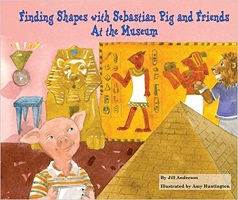
Grade K
4 skill lessons · 1 math-through-reading
Math
Skill lessons
The mathematics the book carries, taught directly. Printable workbook pages and teacher keys are not available for this book yet.
- 1Say the Shape's Name Before You Say Where It Is
- 2Flat, or Sticking Up Off the Table
- 3Two Long and Two Short, or All Four the Same
- 4Start With a Flat Shape, Finish With a Solid One
Math + reading
Math through the reading
The same book, entered through a sentence it prints. Change one word in the reading and the numbers change with it.
- 5Change the Words About the Sides, Change the Shape
Reading
Reading and language lessons
The same book read as a text. What a word means in its sentence, how a character is shown, how the writing is put together - no mathematics.
- 6The few words at the top of each part
- 7When the book talks to you
- 8First, then, now
- 9The part at the end that explains the words
- 10What was wrong, and who helped
Skill lessons
4 lessons on the mathematics the book carries. Printable workbook pages and teacher keys are not available for this book yet.
1. Say the Shape's Name Before You Say Where It Is
The book walks a pig through ten rooms and gives each room one shape and one name for it. Students take the ten solids and tiles the book names, put a name to each one by feel and by sight, and then find the same shape somewhere in the classroom in a size and a position the tray never showed them. What concept means here is that the name travels with the shape and not with the object: the same word covers a big one and a small one, a tipped one and an upright one, a wooden one and a painted one. No student counts anything in this lesson, because the book counts nothing.
Full lesson — 20 minutes
1. Hear the ten names and hold the ten shapes (5 min)
Work in pairs with one tray between you. Listen for the closing list of ten names and pick up each shape as its name is said, so the shape is in your hand while the word is in the air. Say each name back once with the shape still in your hand. Do not sort anything yet and do not put a shape down until you have said its name.
Word preview: circle, sphere
Can you find these shapes? Circle, oval, square, rectangle, triangle, sphere, cone, cube, cylinder, pyramid.
2. Put a name to a shape your partner hides (5 min)
One of you closes their eyes and holds out both hands. Your partner puts one shape from the tray into them. Feel it all over and say its name out loud before you open your eyes. Open them and check the shape against the name you said. Swap and do it again until every shape on the tray has been named once by each of you.
Word preview: sphere, cube
Sebastian draws a sphere.
He makes sure it looks like a ball.
3. Find the same shape somewhere in the room (6 min)
Take one shape from your tray and carry it around the room until you find a classroom object shaped the same way. Hold your shape up beside the object you found and say the shape's name, then say where you found it, in that order: the name first and the place second. Find one for each of four different shapes. If you cannot find one for a shape, say so out loud and pick a different shape.
Word preview: circle, cylinder
Look at the whole room. What circles do you see?
Point to all the cylinders.
4. Name a shape that is turned or the wrong size (4 min)
Your teacher tips one shape onto its side, stands another on its point and sets a very big one next to a very small one of the same kind. Say the name of each one while it is tipped or standing oddly. Then say one sentence to your partner: this is still a cone even though it is lying down. Your partner says whether they agree and why, using the shape in front of them and not a picture.
Word preview: triangle, cone
The mountains are triangles.
The building has four solid cylinders in front.
Short version — 9 minutes
1. Hear the ten names and hold the ten shapes (4 min)
Work in pairs with one tray between you. Pick up each shape as its name is said in the closing list, so the shape is in your hand while the word is in the air. Say each name back once with the shape still in your hand.
Word preview: circle, sphere
Can you find these shapes? Circle, oval, square, rectangle, triangle, sphere, cone, cube, cylinder, pyramid.
2. Find the same shape somewhere in the room (5 min)
Take one shape from your tray and carry it around the room until you find a classroom object shaped the same way. Hold your shape beside it and say the shape's name first and the place second. Do this for two different shapes.
Word preview: circle, cylinder
Look at the whole room. What circles do you see?
Three levels
- Support
- Work with five shapes rather than ten: circle, square, triangle, sphere and cube, the five whose names most children already carry. Keep the same three steps and the same tray, and keep the room hunt whole. The names are what is reduced here, not the finding, so a child still walks the room and still says a name before a place.
- At Grade
- All ten shapes the book names, on the tray and in the room hunt. The child names a shape held out of sight by feel alone, and names a shape that has been tipped or resized, saying the name before the place every time.
- Extension
- After the room hunt, take a shape nobody found a match for and say what you would have to change about a classroom object to make it that shape. Then find two objects that are the same shape as each other but as different in size as you can make them, hold them up together and say the one name that covers both.
English learners
The shapes themselves transfer completely. A child who has held a ball, a box and a tube already owns the ideas here, and many children arrive with a word for each in their strongest language. English gives the flat one and the solid one two unrelated words, circle and sphere, square and cube, where several languages build the solid name out of the flat one. Rehearse the pair aloud with both objects in hand: this one is a circle, this one is a sphere. Invite a child to name each shape first in their strongest language and then in English, with the shape held up both times, so the object and not the translation carries the meaning.
Materials
- A tray of ten wooden or plastic shape solids and flat shape tiles per pair: circle, oval, square, rectangle and triangle tiles, and a sphere, cone, cube, cylinder and pyramid solid
- A flat table or desk surface each pair can look at from eye level
- Word cards: circle, sphere, cylinder, pyramid
Standards & curriculum
Choose your curriculum above to see the standards for this lesson.
Standards are held back while this plan is edited. Every standard shown here was matched against the supplied wording of this lesson, quoting its steps, so a changed step is no longer the thing that was checked. Undo your changes to bring the standards back — your edits stay in this browser either way.
2. Flat, or Sticking Up Off the Table
The back matter of this book gives a child two categories and one physical test for each: flat, or sticking up from the surface it is sitting on. Students put every shape on the table, look at it from eye level, and let what they see decide which loop it goes into. What concept means here is that a category can be settled by a test a child performs rather than by a name a teacher supplies, and that the same test run on a new object gives an answer nobody has told them.
Full lesson — 20 minutes
1. Hear the two tests and try one shape each way (5 min)
Sit with your eyes level with the table top. Listen for the two lines that say what makes a shape flat and what makes a shape solid. Put a square tile on the table and look at it from the side, then put a cube next to it and look at that from the side. Say which one you can still see from down there and which one has almost gone.
Word preview: flat, solid
Some of the shapes Sebastian draws are plane shapes. plane shapes are flat.
Sebastian also draws solid shapes. Solid shapes stick up from the surface they are sitting on.
2. Run the eye-level test on all ten (6 min)
Take the shapes off the tray one at a time. Set each one on the table, drop your chin to the table top and look straight along it. If the shape stands up off the table where you can see it, put it in the loop for shapes that stick up. If it lies down flat where it nearly disappears, put it in the other loop. Do all ten. Do not sort by name and do not sort by guessing.
Word preview: flat, solid
Solid shapes stick up from the surface they are sitting on.
3. Say the test back for one shape in each loop (5 min)
Pick one shape out of each loop and hold them up, one in each hand. Tell your partner where each one went and what you saw at eye level that put it there. Say what you saw before you say the name of the loop. Your partner picks two different shapes and does the same, and you say whether the eye-level look agrees with where they put them.
Word preview: flat, solid
plane shapes are flat.
4. Sort an object the book never showed you (4 min)
Your teacher hands your pair one classroom object that is not on the tray and is not in the book. Put it on the table, look along the table at it, and put it in one of the two loops. Say out loud which loop and what you saw. If your two loops now hold something the book never named, say that too.
Word preview: flat, solid
Can you find these shapes? Circle, oval, square, rectangle, triangle, sphere, cone, cube, cylinder, pyramid.
Short version — 9 minutes
1. Hear the two tests and try one shape each way (4 min)
Sit with your eyes level with the table top. Listen for the two lines that say what makes a shape flat and what makes a shape solid. Put a square tile and then a cube on the table and look along the table at each. Say which one you can still see from down there.
Word preview: flat, solid
Some of the shapes Sebastian draws are plane shapes. plane shapes are flat.
Sebastian also draws solid shapes. Solid shapes stick up from the surface they are sitting on.
2. Run the eye-level test on all ten (5 min)
Take the shapes off the tray one at a time. Set each on the table, drop your chin to the table top and look straight along it. Put the ones that stand up off the table in one loop and the ones that lie down flat in the other. Do all ten, and sort by what you see rather than by name.
Word preview: flat, solid
Solid shapes stick up from the surface they are sitting on.
Three levels
- Support
- Sort six shapes rather than ten, taking the three flat ones and the three solid ones whose difference is largest: circle and sphere, square and cube, triangle and cone. Keep the eye-level look and keep the two loops exactly as they are. What is reduced is how many decisions a child makes, not the test they run to make each one.
- At Grade
- All ten shapes sorted by the eye-level look, each one placed before the next is picked up, and the test said back aloud for one shape from each loop with what the child saw named before the loop is named.
- Extension
- Find a classroom object that made you hesitate and say what about it made the test hard to run. Then set a solid shape down, look at it from directly above instead of from the side, and say what you see from up there and why the book's test says to look from the side and not from the top.
English learners
The sorting itself needs almost no English. A child looks along a table and puts a thing in one of two loops, and the loops carry drawings rather than words, so a child new to English can complete every step of this lesson correctly. What must be taught is that flat and solid are being used here as a matched pair of opposites about one property, which is narrower than either word's everyday range: flat also means a tyre with no air and solid also means not runny. Rehearse one frame with the shape in hand, this one is flat and this one sticks up, and let a child say which loop in their strongest language first while pointing, then say the loop's English word.
Materials
- A tray of ten wooden or plastic shape solids and flat shape tiles per pair: circle, oval, square, rectangle and triangle tiles, and a sphere, cone, cube, cylinder and pyramid solid
- A flat table or desk surface each pair can look at from eye level
- Two large loops of yarn or two hoops laid on the floor
- A ball, a party hat, a block box and a tube from the classroom, one set per pair
- Word cards: flat, solid
Standards & curriculum
Choose your curriculum above to see the standards for this lesson.
Standards are held back while this plan is edited. Every standard shown here was matched against the supplied wording of this lesson, quoting its steps, so a changed step is no longer the thing that was checked. Undo your changes to bring the standards back — your edits stay in this browser either way.
3. Two Long and Two Short, or All Four the Same
This is the one place in the book where two shapes are held against each other and the difference between them is put into words. The cloth has four corners like a square, and its sides are not all the same length: two long, two short. Students lay paper strips end to end against the sides of a square and a rectangle to find out for themselves which shape's sides match, then say which shape they have and give the sides as the reason. What reasoning means here is that a name is earned by a check the child ran, not accepted because a shape looks familiar.
Full lesson — 20 minutes
1. Hear what the square's sides do (4 min)
Hold your paper square flat. Listen for the question the book asks about a square's sides and the one-word answer it gives. Lay one short strip along one side of your square, then move that same strip round to the next side and the next and the last. Say what happened every time you moved it.
Word preview: square, side
Are all four sides the same length?
He draws a square. Are all four sides the same length? Yes.
2. Hear what the cloth's sides do and check them (6 min)
Now hold your paper rectangle. Listen for what the book says about the cloth's corners and its sides. Take your two long strips and your two short strips and lay one on every side of the rectangle, choosing whichever strip fits. Look at which strips you used up. Say how many long sides you found and how many short ones, using the strips in front of you as the reason.
Word preview: rectangle, side
The cloth has four corners like a square. But its sides are not all the same length. Two sides are long. Two are short.
3. Sort mixed cut-outs by running the strip check (6 min)
Your teacher mixes the squares and rectangles from every pair into one pile and turns some of them so they are standing on a corner or lying long ways. Take one at a time, run the strip check on it, and put it on the square pile or the rectangle pile. Do not sort by how it looks from where you are sitting. Run the check on at least four cut-outs.
Word preview: square, rectangle
It's a big rectangle, Olivia says.
Can you find more rectangles?
4. Name a shape and give the sides as your reason (4 min)
Take one cut-out from each of your two piles and hold them up to your partner. Say the shape's name and then say what the strips showed you about its sides, in that order. Your partner listens for whether the sides were named as the reason, and hands the cut-out back if the reason was only that it looked like one.
Word preview: square, rectangle
Can you find all the squares?
Short version — 9 minutes
1. Hear what the cloth's sides do and check them (5 min)
Hold your paper rectangle. Listen for what the book says about the cloth's corners and its sides. Lay a long or a short strip on every side, choosing whichever fits. Say how many long sides and how many short ones you found, with the strips in front of you as the reason.
Word preview: rectangle, side
The cloth has four corners like a square. But its sides are not all the same length. Two sides are long. Two are short.
2. Name a shape and give the sides as your reason (4 min)
Hold up one cut-out to your partner. Say the shape's name and then say what the strips showed you about its sides, in that order. Your partner listens for whether the sides were named as the reason.
Word preview: square, rectangle
Can you find all the squares?
Three levels
- Support
- Give the child two cut-outs only, one square and one rectangle, both sitting the usual way up rather than turned, and keep every strip move exactly as it is. The child still lays a strip on all four sides of each shape and still names the shape with the sides as the reason. What is reduced is how many shapes must be judged, not what the judging consists of.
- At Grade
- Both shapes checked with strips, a mixed pile sorted by running the check on turned cut-outs rather than by appearance, and a shape named to a partner with the strip result given as the reason before the partner accepts it.
- Extension
- Cut a rectangle whose long sides are only a little longer than its short ones and hand it to a partner without saying which it is. Watch them run the strip check, and afterwards say what your shape would have to change to become a square. Then find a square standing on one corner and say whether turning it changed any of its sides.
English learners
The comparison is done with hands and paper, so the mathematics is reachable before the English is. What is genuinely hard here is the syntax of the book's own line, which states a fact by denying it: its sides are not all the same length. Negation plus the quantifier all is a construction that trips fluent adults, and a child may hear it as no sides are the same. Do not lean on that sentence for meaning. Build the meaning from the strips instead and give the child a positive frame to rehearse: two sides are long, two sides are short. Invite a child to say what the strips showed in their strongest language and then say the frame in English with the strips still on the paper.
Materials
- Two paper cut-outs per child, one square and one rectangle, cut so the square's side and the rectangle's short side are the same length
- Four paper strips per child, two long and two short, the two short ones matching the square's side
- Word cards: square, rectangle, side
Standards & curriculum
Choose your curriculum above to see the standards for this lesson.
Standards are held back while this plan is edited. Every standard shown here was matched against the supplied wording of this lesson, quoting its steps, so a changed step is no longer the thing that was checked. Undo your changes to bring the standards back — your edits stay in this browser either way.
4. Start With a Flat Shape, Finish With a Solid One
Three times over, this book draws a solid by starting with a flat shape and adding to it: a cone starts as an oval, a cube starts as a square, a pyramid is a square on the bottom with four triangles for sides. Students follow those recipes in order with paper shapes and their own pencil, so the flat shape they began with is still visible inside the solid they finish with. What representation means here is that a drawing of a solid is built out of flat parts a child can name, and the naming is what makes the building repeatable.
Full lesson — 20 minutes
1. Find the flat shape hiding in a cone (5 min)
Listen for the four short lines that tell how a cone gets drawn. Put your finger on the paper oval and keep it there while you hear them. Then draw the same way on your own paper: the oval first, then the two sides, sloping them down until they meet. Say the name of the flat shape you started with while you draw it, before you add anything.
Word preview: oval, cone
First, he draws an oval. Then he adds sides. They slope down into a point. Now he has a cone.
2. Find the flat shape hiding in a cube (5 min)
Now listen for how a cube gets drawn. Draw the square first and say its name as you draw it, then add the other lines until it looks like a box. Hold your cube drawing next to the wooden cube from the tray and put a finger on the square you started with, on the paper and then on the block.
Word preview: square, cube
First, he makes a square. Then he draws a few other lines. Now it looks like a box.
3. Build a pyramid out of the two shapes it is made of (6 min)
Listen for the three lines that say what a pyramid is made of. Take one paper square and four paper triangles and lay them out on the table so the square is underneath and the triangles lean in until their tips touch. Say the name of the shape on the bottom and the name of the shapes on the sides, and touch each one as you say it. Then draw it.
Word preview: square, triangle, pyramid
It is a square on the bottom. The four sides are triangles. They meet at a point at the top.
4. Tell a partner how to draw one without naming it (4 min)
Pick one of the three solids you drew. Tell your partner the moves in order, starting with the flat shape, but do not say the solid's name. Your partner draws what you say. When they are finished they say which solid they think they drew, and the two of you put the drawings side by side to see whether the order of the moves got them there.
Word preview: cone, cube, pyramid
How will Sebastian draw a cone?
How will he draw a pyramid?
Short version — 9 minutes
1. Find the flat shape hiding in a cone (4 min)
Listen for the four short lines that tell how a cone gets drawn. Draw the same way on your own paper: the oval first, then the two sides, sloping them down until they meet. Say the name of the flat shape you started with before you add anything.
Word preview: oval, cone
First, he draws an oval. Then he adds sides. They slope down into a point. Now he has a cone.
2. Build a pyramid out of the two shapes it is made of (5 min)
Listen for the three lines that say what a pyramid is made of. Lay one paper square underneath and four paper triangles leaning in until their tips touch. Say the name of the shape on the bottom and the name of the shapes on the sides, touching each one as you say it.
Word preview: square, triangle, pyramid
It is a square on the bottom. The four sides are triangles. They meet at a point at the top.
Three levels
- Support
- Build the pyramid with the paper square and the four paper triangles and leave the drawing out entirely. The child still hears the three lines, still lays the square underneath and the triangles leaning in, and still names the bottom shape and the side shapes while touching each one. The pencil is what is removed, not the naming or the building.
- At Grade
- All three recipes run in order, the flat shape named aloud before anything is added to it, the pyramid laid out in paper before it is drawn, and one recipe told to a partner as moves rather than as a name.
- Extension
- Look at the cylinder on the tray, which the book draws without giving you the moves, and work out the moves yourself: say what flat shape you would start with and what you would add. Then take one of your three drawings and say what would happen if you did the moves in the other order, starting with the added lines and putting the flat shape in last.
English learners
First and then carry all the weight in this lesson, and they are doing mathematical work rather than narrative work: they fix which move comes before which, and a child who reverses them draws something else. That ordering is expressed very differently across languages and is worth rehearsing on its own with two hands, one move per hand. The shape names themselves are more forgiving, because the paper shape is in the child's fingers as the word is said. Invite a child to say the order of the moves in their strongest language while doing them, then say only first and then in English as they repeat the moves.
Materials
- Blank paper and a fat pencil or crayon per child
- A tray of ten wooden or plastic shape solids and flat shape tiles per pair: circle, oval, square, rectangle and triangle tiles, and a sphere, cone, cube, cylinder and pyramid solid
- A flat table or desk surface each pair can look at from eye level
- Word cards: oval, cone, pyramid
Standards & curriculum
Choose your curriculum above to see the standards for this lesson.
Standards are held back while this plan is edited. Every standard shown here was matched against the supplied wording of this lesson, quoting its steps, so a changed step is no longer the thing that was checked. Undo your changes to bring the standards back — your edits stay in this browser either way.
Math through the reading
The mathematics is reached through a sentence the book prints: change one word in the reading and the numbers change with it. These carry their own standards, matched against these lessons rather than inherited from the skill ones.
5. Change the Words About the Sides, Change the Shape
Students lay paper strips on the sides of two cut-outs to test the book's two sentences about sides, then hear one word changed and build the shape the changed sentence describes.
Full lesson — 20 minutes
1. Test the square sentence with strips (5 min)
Each child holds a paper square and one short strip. They lay the strip along one side, then move that same strip round to the second, third and fourth side, saying what happens each time. They then say back, without being given the words, whether all four sides matched the strip.
2. Test the cloth sentence with strips (6 min)
Each child takes the paper rectangle and four strips, two long and two short, and lays a strip on every side, choosing whichever one fits. They look at which strips they used and say how many long sides and how many short sides they found. They then hear the book's sentence about the cloth and put a finger on the part of their own shape that the sentence is talking about.
3. Hear one word change and build what it says (6 min)
Children hear the square sentence twice, once as the book asks it and once with one word changed. For each version they pick up four strips from a mixed pile and lay them out into a closed shape that does what the sentence says. Both shapes stay on the table side by side.
4. Say which word moved your hands (3 min)
Each child tells a partner which word was different in the second sentence and what they picked up differently because of it, pointing at both shapes on the table as they speak. The partner says whether the strips agree with what was said, and hands back a shape if the reason given was only that it looked different.
Short version — 9 minutes
1. Test the square sentence with strips (5 min)
Each child holds a paper square and one short strip. They lay the strip along one side, then move that same strip round to the second, third and fourth side, saying what happens each time. They then say back, without being given the words, whether all four sides matched the strip.
2. Hear one word change and build what it says (6 min)
Children hear the square sentence twice, once as the book asks it and once with one word changed. For each version they pick up four strips from a mixed pile and lay them out into a closed shape that does what the sentence says. Both shapes stay on the table side by side.
Three levels
- Support
- Keep every strip move and cut the sentence work in half: use only the square sentence and its changed version, and leave the cloth sentence out. The child still lays a strip on all four sides, still picks up four strips for each version and still says which word changed. Two shapes on the table instead of three, and one contrast to talk about instead of two.
- At grade
- Both book sentences tested with strips, both versions of the square sentence built from a mixed pile, and the changed word named aloud to a partner with the strips given as the reason rather than the look of the shape.
- Extension
- Change a different word yourself. Take the cloth sentence and say it with three where two is, then try to build it out of strips and say what goes wrong when you reach the fourth side. Then take a shape a partner built and work out which sentence they were following without being told.
English learners
The strips carry the meaning here, so a child new to English can do every physical step of this lesson correctly before understanding a word of either sentence. Number and matching are largely language-independent and transfer whole. The shape of the book's rectangle sentence is the difficulty — it states a fact by denying one: its sides are not all the same length. Negation combined with all is a construction that misleads fluent adults, and a child may reasonably hear it as no sides are the same, which the strips will contradict. Do not use that sentence to carry meaning. Build the meaning from the strips and rehearse a positive frame instead, two sides are long and two sides are short, said with a hand on each pair. Invite a child to say what the strips showed in their strongest language first, pointing as they go, and then say the frame in English with the strips still lying on the paper.
Materials
- One paper square cut-out and one paper rectangle cut-out per child, cut so the square's side and the rectangle's short side are the same length
- Four paper strips per child, two long and two short, the short ones matching the square's side
- A mixed pile of loose long and short strips per table, enough for every child to take four twice
- The book's square sentence and cloth sentence on two large cards, read aloud rather than given to children to read
- One card carrying the changed version of the square sentence
Standards & curriculum
Choose your curriculum above to see the standards for this lesson.
Standards are held back while this plan is edited. Every standard shown here was matched against the supplied wording of this lesson, quoting its steps, so a changed step is no longer the thing that was checked. Undo your changes to bring the standards back — your edits stay in this browser either way.
Reading and language lessons
5 lessons on the reading and language the book carries - what a word means in its sentence, how a character is shown, how a text is built. No mathematics: these are matched against the English language arts curricula, which are a different and smaller set than the mathematics ones.
6. The few words at the top of each part
This book is built in parts, and each part opens with a few words that say what it is about before the reading starts. Students read a heading, say what they expect the part to talk about, then read on and check. They compare two headings and finish by writing a heading of their own for a part that has one. Naming and using a heading is a text-feature skill; no shape in these parts is described, drawn or counted by the lesson.
Full lesson — 20 minutes
1. Read the heading first (6 min)
The teacher reads only the first three words of the passage below and stops: Circles in the sky. Say what you think this part will be about. Then the teacher reads the whole passage. Say whether the few words at the top told you right.
Word preview: heading
Circles in the sky. Sebastian sees a painting he loves. The stars seem to shine right at him. Sebastian likes to draw stars with points. But these stars are round. Circles, Sebastian says, they would look good in his room. So he draws one in his notebook. Circle. Look at the whole room. What circles do you see?
2. Find the heading in another part (5 min)
Read the passage below with the teacher. Point with your finger to the words at the very top that tell you what this part is about. Say them aloud. Then say one word from the heading that also turns up later in the same passage.
Word preview: top
Snowy triangles. The next room is full of small pictures. Each one has a snowy mountain. The mountains are triangles. Sebastian draws some in his notebook. What is the trick to triangles? Three straight lines. Triangles. Find all the triangles.
3. Say which heading tells you more (5 min)
Read the two passages below with a partner. Each starts with a heading. Say both headings aloud. Then say which of the two told you more about what was coming, and say why you think so.
Word preview: more
A silver sphere. Come see this, Leo says. It is a drawing of a hand holding a silver sphere. Sebastian draws a sphere. He makes sure it looks like a ball. Sphere. Spot all the spheres.
Strong cylinders. A tall building is in the next room. It looks very old, Sebastian says. The building has four solid cylinders in front. They're holding up the roof. Can Sebastian draw one? Yes, his cylinder is shaped like a tube. Cylinder. Point to all the cylinders.
4. Write a heading of your own (4 min)
Read the passage below, which already has a heading at the top. Say it aloud. Then think of different words of your own that would work as a heading for this same part, and say them to a partner. Say why yours would help a reader.
Word preview: your own
Surprise! At Sebastian's house, the friends get to work. Olivia finds yarn. Leo paints. Sebastian goes into the kitchen. At last they are done. Sebastian has a surprise. Thank you for helping me, he says. I have the best friends.
Short version — 9 minutes
1. Read the heading first (5 min)
The teacher reads only the first three words and stops: Circles in the sky. Say what you think this part will be about. Then the whole passage is read. Say whether the words at the top told you right.
Word preview: heading
Circles in the sky. Sebastian sees a painting he loves. The stars seem to shine right at him. Sebastian likes to draw stars with points. But these stars are round. Circles, Sebastian says, they would look good in his room. So he draws one in his notebook. Circle. Look at the whole room. What circles do you see?
2. Find the heading in another part (4 min)
Read the passage. Point to the words at the very top that say what this part is about, and say them aloud. Then say one word from the heading that turns up later in the passage.
Word preview: top
Snowy triangles. The next room is full of small pictures. Each one has a snowy mountain. The mountains are triangles. Sebastian draws some in his notebook. What is the trick to triangles? Three straight lines. Triangles. Find all the triangles.
Three levels
- Support
- Read the heading of the printed passage aloud and have the child echo it. Point to it on the page together. Ask only whether the part will be about stars or about socks. A choice between two is a complete answer.
- At Grade
- Say the heading of the printed passage, say what you expect the part to be about, then say whether the reading matched.
- Extension
- The printed passage is headed Circles in the sky, and the part itself talks about stars in a painting. Say why a writer might choose a heading that names something other than the thing you actually see, and say whether it helped you.
English learners
Headings are the cheapest way into an unfamiliar text, because they are short and they repeat words the reader will meet again. Read the heading, then find the same word inside the passage and point at both. Invite the child to say what the heading means in their strongest language before the part is read. Rehearsable frame: This part is about ___.
Materials
- Finding Shapes with Sebastian Pig and Friends at the Museum, the passage printed in this step
- Pointing finger
- Word cards: heading, top, more, your own
Standards & curriculum
Choose your curriculum above to see the standards for this lesson.
Standards are held back while this plan is edited. Every standard shown here was matched against the supplied wording of this lesson, quoting its steps, so a changed step is no longer the thing that was checked. Undo your changes to bring the standards back — your edits stay in this browser either way.
7. When the book talks to you
Again and again this book breaks off telling its story and asks the reader a question directly. Students learn to hear the difference between a sentence that tells and a sentence that asks, find the question mark, and say what a reader is supposed to do when the book asks. They finish by asking a question of their own in the same voice. This is about the asking, not the answering; no step requires the reader's answer to be worked out.
Full lesson — 20 minutes
1. Hear the sentence that asks (6 min)
The teacher reads the passage below. Most of it tells you things. One sentence at the end asks you something instead. Say that sentence aloud. Then say how your voice went differently on it than on the telling sentences.
Word preview: asks
Circles in the sky. Sebastian sees a painting he loves. The stars seem to shine right at him. Sebastian likes to draw stars with points. But these stars are round. Circles, Sebastian says, they would look good in his room. So he draws one in his notebook. Circle. Look at the whole room. What circles do you see?
2. Find the mark at the end (5 min)
Read the two passages below with the teacher. Point with your finger to every mark that curls at the top and sits at the end of a sentence. Say what that mark tells your voice to do. Then read one of those sentences aloud with your voice going up.
Word preview: mark
Oval faces. Look, Olivia sees some masks. Some look scary. Some look happy. All of them are ovals. Sebastian draws some ovals. They look like circles that have been squished. Oval's. How many ovals can you find?
A tower of cubes. Will all those cubes fall over? No. They only look like they will fall. Sebastian draws a cube. First, he makes a square. Then he draws a few other lines. Now it looks like a box. A cube. Find more cubes.
3. Sort telling from asking (5 min)
Read the passage below with a partner. Take turns reading one sentence each. After each sentence, the listener says telling or asking. Then say aloud which kind there was more of in this part.
Word preview: telling
A great pyramid. Are we in Egypt? Leo asks. I wish, Sebastian says. He would like to see the real pyramids. How will he draw a pyramid? It is a square on the bottom. The four sides are triangles. They meet at a point at the top. Pyramid. How many pyramids can you spot?
4. Ask a question the same way (4 min)
Read the passage below, which asks the reader something at the end. Say that question aloud. Then make up a question of your own that a book could ask a reader about this room, and say it to a partner with your voice going up at the end.
Word preview: your own
A silver sphere. Come see this, Leo says. It is a drawing of a hand holding a silver sphere. Sebastian draws a sphere. He makes sure it looks like a ball. Sphere. Spot all the spheres.
Short version — 9 minutes
1. Hear the sentence that asks (5 min)
The teacher reads the passage. Most of it tells you things; one sentence at the end asks you something. Say that sentence aloud, then say how your voice went differently on it.
Word preview: asks
Circles in the sky. Sebastian sees a painting he loves. The stars seem to shine right at him. Sebastian likes to draw stars with points. But these stars are round. Circles, Sebastian says, they would look good in his room. So he draws one in his notebook. Circle. Look at the whole room. What circles do you see?
2. Find the mark at the end (4 min)
Read both passages. Point to every mark that curls at the top and sits at the end of a sentence. Say what it tells your voice to do, then read one of those sentences aloud with your voice going up.
Word preview: mark
Oval faces. Look, Olivia sees some masks. Some look scary. Some look happy. All of them are ovals. Sebastian draws some ovals. They look like circles that have been squished. Oval's. How many ovals can you find?
A tower of cubes. Will all those cubes fall over? No. They only look like they will fall. Sebastian draws a cube. First, he makes a square. Then he draws a few other lines. Now it looks like a box. A cube. Find more cubes.
Three levels
- Support
- Read the printed passage and stop at the last sentence. Read it once as a telling sentence and once as a question, and ask the child which sounded right. Then say the question together. Finding it unaided is not needed.
- At Grade
- Say the sentence in the printed passage that asks the reader something, and say how your voice changed on it.
- Extension
- The printed passage ends by asking the reader What circles do you see? Say why a writer would put a question to a reader in the middle of a book, and say what it makes the reader do that a telling sentence would not.
English learners
English marks a question by word order and by a rising voice, and both are worth hearing before either is read. Say one telling sentence and one asking sentence from the passage back to back, exaggerating the rise, and let the child point to the one that went up. Invite the child to ask a question in their strongest language and notice whether their voice rose there too. Rehearsable frame: This sentence asks ___.
Materials
- Finding Shapes with Sebastian Pig and Friends at the Museum, the passage printed in this step
- Pointing finger
- Two cards marked telling and asking
- Word cards: asks, mark, telling, your own
Standards & curriculum
Choose your curriculum above to see the standards for this lesson.
Standards are held back while this plan is edited. Every standard shown here was matched against the supplied wording of this lesson, quoting its steps, so a changed step is no longer the thing that was checked. Undo your changes to bring the standards back — your edits stay in this browser either way.
8. First, then, now
Twice this book stops to explain how something is done, and both explanations are held together by the same three order words: first, then and now. Students find those words, follow the steps in the order the words give, and say what would go wrong if the order were swapped. This is following and using sequence language; the drawing itself is the example, and no step asks a child to describe or produce a shape.
Full lesson — 20 minutes
1. Find the order words (6 min)
The teacher reads the passage below. Three words in it tell you what comes when: first, then and now. Say each one aloud as you hear it, and hold up one finger, then two, then three. Say which word told you the job was finished.
Word preview: order
A funny cone. Olivia is laughing. There is a big, soft ice cream cone. How will Sebastian draw a cone? First, he draws an oval. Then he adds sides. They slope down into a point. Now he has a cone. Cone. What cones do you see?
2. Follow the same three words again (5 min)
Read the passage below with the teacher. It explains a job using the very same three order words. Say the three words aloud in order. Then tell a partner what happens after the word then in this passage.
Word preview: after
A tower of cubes. Will all those cubes fall over? No. They only look like they will fall. Sebastian draws a cube. First, he makes a square. Then he draws a few other lines. Now it looks like a box. A cube. Find more cubes.
3. Say what would go wrong swapped round (5 min)
Read the passage below with a partner. Say what comes first in it. Then say what would happen if a reader did the last thing before the first thing. Say one sentence about why the order words matter.
Word preview: wrong
A funny cone. Olivia is laughing. There is a big, soft ice cream cone. How will Sebastian draw a cone? First, he draws an oval. Then he adds sides. They slope down into a point. Now he has a cone. Cone. What cones do you see?
4. Use the order words yourself (4 min)
Read the passage below, which explains a job in order but without the word first at the front. Then tell a partner how to do something easy you know, like putting on a coat, using first, then and now to hold your directions together.
Word preview: yourself
A great pyramid. Are we in Egypt? Leo asks. I wish, Sebastian says. He would like to see the real pyramids. How will he draw a pyramid? It is a square on the bottom. The four sides are triangles. They meet at a point at the top. Pyramid. How many pyramids can you spot?
Short version — 9 minutes
1. Find the order words (5 min)
The teacher reads the passage. Three words tell you what comes when: first, then and now. Say each aloud as you hear it, holding up one finger, then two, then three. Say which word told you the job was finished.
Word preview: order
A funny cone. Olivia is laughing. There is a big, soft ice cream cone. How will Sebastian draw a cone? First, he draws an oval. Then he adds sides. They slope down into a point. Now he has a cone. Cone. What cones do you see?
2. Follow the same three words again (4 min)
Read the passage. It explains a job using the same three order words. Say the three words in order, then say what happens after the word then.
Word preview: after
A tower of cubes. Will all those cubes fall over? No. They only look like they will fall. Sebastian draws a cube. First, he makes a square. Then he draws a few other lines. Now it looks like a box. A cube. Find more cubes.
Three levels
- Support
- Read the printed passage and ask the child to clap only when they hear the word first. Read it again for the word then. One order word at a time, heard and clapped, is a full sitting.
- At Grade
- Say the three order words in the printed passage as you hear them and say which one told you the job was finished.
- Extension
- The printed passage says First, then Then, then Now. Say what a reader would still know if the word first were taken out, and what they would lose.
English learners
Order words are small, unstressed and easy to miss in fast speech, so read the passage once at half speed with a clear beat on first, then and now. Let the child act each part out as the word is said, so the order is carried by the body before it is carried by the words. Invite the child to give the three order words in their strongest language and set them beside the English. Rehearsable frame: First ___, then ___, now ___.
Materials
- Finding Shapes with Sebastian Pig and Friends at the Museum, the passage printed in this step
- Word cards: order, after, wrong, yourself
Standards & curriculum
Choose your curriculum above to see the standards for this lesson.
Standards are held back while this plan is edited. Every standard shown here was matched against the supplied wording of this lesson, quoting its steps, so a changed step is no longer the thing that was checked. Undo your changes to bring the standards back — your edits stay in this browser either way.
9. The part at the end that explains the words
This book keeps a short explaining section at its very end, where two of its words are given plain meanings. Students read that section, say what each explanation tells them, then look back at an earlier part and use the explanation to talk about it. The skill is using a book's own explaining section to get at a word's meaning, and saying it in your own words. No shape is described or classified by the lesson.
Full lesson — 20 minutes
1. Read the explaining part (6 min)
The teacher reads the passage below, exactly as it is printed. It comes at the very end of the book and explains two of its words. Say aloud the two words it explains. Then say what the passage tells you about the first of them.
Word preview: explains
Now you know, plane shapes. Some of the shapes Sebastian draws are plane shapes. plane shapes are flat. Solid shapes. Sebastian also draws solid shapes. Solid shapes stick up from the surface they are sitting on.
2. Say the explanation in your own words (5 min)
Read the passage below again with the teacher. Pick one of the two words it explains. Say what the book says about it. Then say the same thing again using words of your own, not the book's, to a partner.
Word preview: own words
Now you know, plane shapes. Some of the shapes Sebastian draws are plane shapes. plane shapes are flat. Solid shapes. Sebastian also draws solid shapes. Solid shapes stick up from the surface they are sitting on.
3. Find the list the book gives you (5 min)
Read the passage below with a partner. It is a list of words the book has taught. Say aloud how you can tell this is a list and not a sentence that tells you something. Then say one word on the list that you can also find in this room.
Word preview: list
Can you find these shapes? Circle, oval, square, rectangle, triangle, sphere, cone, cube, cylinder, pyramid.
4. Take the explanation back into the book (4 min)
Read the passage below, which comes from earlier in the book, and think about the explaining part you read before. Say aloud one word from this passage that the explaining part would help a reader with, and say how it would help.
Word preview: back
Strong cylinders. A tall building is in the next room. It looks very old, Sebastian says. The building has four solid cylinders in front. They're holding up the roof. Can Sebastian draw one? Yes, his cylinder is shaped like a tube. Cylinder. Point to all the cylinders.
Short version — 9 minutes
1. Read the explaining part (5 min)
The teacher reads the passage exactly as printed. It comes at the very end of the book and explains two of its words. Say the two words it explains, then say what it tells you about the first of them.
Word preview: explains
Now you know, plane shapes. Some of the shapes Sebastian draws are plane shapes. plane shapes are flat. Solid shapes. Sebastian also draws solid shapes. Solid shapes stick up from the surface they are sitting on.
2. Say the explanation in your own words (4 min)
Read the passage again. Pick one of the two words it explains. Say what the book says about it, then say the same thing again in words of your own.
Word preview: own words
Now you know, plane shapes. Some of the shapes Sebastian draws are plane shapes. plane shapes are flat. Solid shapes. Sebastian also draws solid shapes. Solid shapes stick up from the surface they are sitting on.
Three levels
- Support
- Read the printed passage and stop after the sentence that explains the first word. Ask the child to say only the last word of that sentence. Then say the whole explanation together, twice. Explaining it again is not required.
- At Grade
- Say the two words the printed passage explains and say what it tells you about the first of them.
- Extension
- The printed passage explains one kind of shape as flat and another as sticking up from the surface it sits on. Say which of those two explanations would be easier to check by touching something, and say why.
English learners
An explaining section at the back of a book is a resource a learner can use alone for years, so the point of this lesson is as much finding it as reading it. Show where it sits, at the very end and set apart from the story. This passage begins one of its explanations in lower case where a reader expects a capital, so read it whole and do not stop to mend it. Invite the child to give the plain meaning in their strongest language first. Rehearsable frame: The book says ___ means ___.
Materials
- Finding Shapes with Sebastian Pig and Friends at the Museum, the passage printed in this step
- Word cards: explains, own words, list, back
Standards & curriculum
Choose your curriculum above to see the standards for this lesson.
Standards are held back while this plan is edited. Every standard shown here was matched against the supplied wording of this lesson, quoting its steps, so a changed step is no longer the thing that was checked. Undo your changes to bring the standards back — your edits stay in this browser either way.
10. What was wrong, and who helped
This book opens with somebody who has a problem and ends with friends who have solved it. Students read the opening, say the trouble in one sentence, read the ending, say who helped and how, and then say what the book never tells them. The skill is tracking a problem to its solution across a whole text, and noticing what a text leaves out. Nothing is measured, drawn or counted.
Full lesson — 20 minutes
1. Say what is wrong at the start (6 min)
The teacher reads the two passages below, which are how the book begins. Say aloud who has a problem. Then say what the problem is in one sentence, and say the words in the passages that told you.
Word preview: problem
546_Finding Shapes with Sebastian Pig and Sebastian Pig loves his new house, but his new room is grey. His friends will help him fix it. They will get ideas at the Art Museum. Look at the art with Sebastian. What shapes do you see?
Sebastian's new room. Sebastian Pig needs help. How can he make his bedroom not look gray? Let's go to the art museum. We will get some great ideas, says Olivia Austroch.
2. Say who is going to help (5 min)
Read the two passages below with the teacher. Two other characters appear in them by name. Say both names aloud. Then say one thing each of them does, and say whether they are helping Sebastian.
Word preview: help
Sebastian's new room. Sebastian Pig needs help. How can he make his bedroom not look gray? Let's go to the art museum. We will get some great ideas, says Olivia Austroch.
A silver sphere. Come see this, Leo says. It is a drawing of a hand holding a silver sphere. Sebastian draws a sphere. He makes sure it looks like a ball. Sphere. Spot all the spheres.
3. Read how it was settled (5 min)
Read the passage below with a partner. It is near the end of the book. Say aloud what each of the three friends does here. Then say whether the problem from the start has been solved, and say the words that made you sure.
Word preview: settled
Surprise! At Sebastian's house, the friends get to work. Olivia finds yarn. Leo paints. Sebastian goes into the kitchen. At last they are done. Sebastian has a surprise. Thank you for helping me, he says. I have the best friends.
4. Say what the book does not tell you (4 min)
Read the passage below once more. It says Sebastian has a surprise but never says what the surprise is. Say aloud one thing you still want to know at the end of this book. Then say what you think the surprise was, and why.
Word preview: not told
Surprise! At Sebastian's house, the friends get to work. Olivia finds yarn. Leo paints. Sebastian goes into the kitchen. At last they are done. Sebastian has a surprise. Thank you for helping me, he says. I have the best friends.
Short version — 9 minutes
1. Say what is wrong at the start (5 min)
The teacher reads both passages, which are how the book begins. Say who has a problem, then say what the problem is in one sentence and which words told you.
Word preview: problem
546_Finding Shapes with Sebastian Pig and Sebastian Pig loves his new house, but his new room is grey. His friends will help him fix it. They will get ideas at the Art Museum. Look at the art with Sebastian. What shapes do you see?
Sebastian's new room. Sebastian Pig needs help. How can he make his bedroom not look gray? Let's go to the art museum. We will get some great ideas, says Olivia Austroch.
2. Read how it was settled (4 min)
Read the passage, which is near the end of the book. Say what each of the three friends does here, then say whether the problem from the start has been solved and which words made you sure.
Word preview: settled
Surprise! At Sebastian's house, the friends get to work. Olivia finds yarn. Leo paints. Sebastian goes into the kitchen. At last they are done. Sebastian has a surprise. Thank you for helping me, he says. I have the best friends.
Three levels
- Support
- Read the second printed passage only and ask who needs help. Then ask what is wrong with his room, accepting one word. Point to the word grey and to the word gray and say them together.
- At Grade
- Say who has a problem in the printed passages, say what the problem is in one sentence, and name the words that told you.
- Extension
- The first printed passage says his new room is grey and the second asks how he can make his bedroom not look gray. Say what a reader notices about those two spellings, and say whether it changes what the problem is.
English learners
Problem and solution is a shape a learner can hold across a whole book even with few English words, because it needs only two answers: what was wrong, and what fixed it. Ask for those two and nothing else at first. The first printed passage runs the book's title straight into its first sentence without a break, so read past that join without stopping. Invite the child to say the problem in their strongest language and supply the English beside it. Rehearsable frame: The problem was ___. It was fixed when ___.
Materials
- Finding Shapes with Sebastian Pig and Friends at the Museum, the passage printed in this step
- Word cards: problem, help, settled, not told
Standards & curriculum
Choose your curriculum above to see the standards for this lesson.
Standards are held back while this plan is edited. Every standard shown here was matched against the supplied wording of this lesson, quoting its steps, so a changed step is no longer the thing that was checked. Undo your changes to bring the standards back — your edits stay in this browser either way.