Money Math with Sebastian Pig and Friends at the Farmer's Market
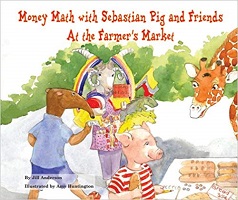
Grade 2
4 skill lessons · 4 math-through-reading
Math
Skill lessons
The mathematics the book carries, taught directly. Printable workbook pages and teacher keys are not available for this book yet.
- 1How Much Is Left
- 2What a Coin Is Worth
- 3Four Ways to Pay Thirty-Five Cents
- 4Counting a Purse to One Dollar
Math + reading
Math through the reading
The same book, entered through a sentence it prints. Change one word in the reading and the numbers change with it.
- 5The Word That Chooses the Coins
- 6Spending a Dollar in Order
- 7Which Coins Would You Give?
- 8Enough, and Saying It Both Ways
Reading
Reading and language lessons
The same book read as a text. What a word means in its sentence, how a character is shown, how the writing is put together - no mathematics.
- 9Packing for a Picnic: Reading the Short Line That Opens a Section
- 10Nickel Know How: When a Heading Plays With Its Words
- 11But Louis Does Not Hear Him: Reading a Line That Lets You In on It
- 12First, Next, At Last: The Words That Hand a Reader Forward
- 13Words to Know: Reading a List That Is Not a Story
Skill lessons
4 lessons on the mathematics the book carries. Printable workbook pages and teacher keys are not available for this book yet.
1. How Much Is Left
Three purchases take the friends' dollar down to twenty-five cents, and the book prints the subtraction for the first and the third and skips the middle one. Students run the whole trace with coins on a mat, pushing each exact payment into a paid-out tray and counting what stays, and write all three sentences in cents including the one the book never prints. Each answer becomes the next sentence's starting number, so a slip at the cheese is visible at the loaf.
Full lesson — 20 minutes
1. Pay for the carrots and count what stays (6 min)
Start with the dollar purse from before. Read the price of the carrots, hand the farmer exactly the quarter, and push it off the mat. Count what is still on your mat and say the number, then write the book's subtraction sentence in cents underneath.
Word preview: costs, minus
One bunch costs 25 cents.
He gives the farmer the quarter.
100 cents minus 25 cents equals 75 cents.
2. Pay for the cheese and find the number the book skips (6 min)
Take out one dime and one nickel for the cheese and push them off the mat. Count what stays and say that number before you look at the book. Then find the sentence where the book says the same number, and write the subtraction the book never prints on your strip.
Word preview: left
He takes out a dime and a nickel.
One dime plus one nickel equals 15 cents.
They have 60 cents left.
3. Ask the book's question before you pay (4 min)
Read the price of the loaf. Before you touch a coin, say out loud whether the money on your mat is enough, and say both numbers when you say it. Then pay the thirty-five cents, count what stays, and write the last subtraction sentence.
Word preview: enough, minus
A small loaf costs 35 cents.
Do they have enough money left?
60 cents minus 35 cents equals 25 cents.
4. Read your strip back as the day's story (4 min)
Read your three sentences in order to a partner, naming what was bought at each one. Point at the number that ends one sentence and begins the next and say why it is the same number twice. Your partner checks the coins in the paid-out tray add up to the seventy-five cents that left the mat.
Word preview: left
Keep track of how much money is left.
Short version — 9 minutes
1. Pay for the carrots and count what stays (5 min)
Start with the dollar purse. Read the price of the carrots, hand over exactly the quarter and push it off the mat. Count what is still there, say the number, and write the book's subtraction sentence in cents.
Word preview: costs, minus
One bunch costs 25 cents.
100 cents minus 25 cents equals 75 cents.
2. Pay for the cheese and find the number the book skips (4 min)
Take out one dime and one nickel for the cheese and push them off the mat. Count what stays and say that number before you look at the book, then find where the book says the same number.
Word preview: left
He takes out a dime and a nickel.
They have 60 cents left.
Three levels
- Support
- Run the same three purchases with the coins and count what stays each time, and say each answer aloud rather than writing all three sentences. Write only the middle sentence, the one the book leaves out, and take the first and last from the book's own printed lines with a finger on each.
- At Grade
- Run all three purchases, count what stays after each, and write all three subtraction sentences in cents, including the middle one the book never prints. Say the enough verdict for the loaf before any coin moves, naming both numbers.
- Extension
- Say what would have been left if the loaf had been bought first and the carrots last, and work it out with the coins before you say the number. Then say whether the friends could still have answered yes to the enough question at every stop along that different order, and name the stop where it would have been closest.
English learners
Left is the hard word and it is hard for a reason a teacher can name: the book uses it for what remains, and a child hears the direction or the past tense of leave. It is also the only cue in the module that is not a number, so rehearse the frame we have ___ cents left with the coins actually sitting on the mat, and let the coins carry the meaning before the word does. Enough carries a comparison rather than a total and is worth previewing separately; a child saying sixty is more than thirty-five, so it is enough has done both halves. Minus and costs both appear in the book's own sentences and can be met there rather than pre-taught. A child who states the verdict in their strongest language and then names only the two numbers in English has met the demand of the third step.
Materials
- Plastic or real coins: five pennies, four nickels, five dimes and one quarter
- A shopping mat with a paid-out tray
- Price cards for the carrots, the cheese and the loaf
- A recording strip ruled for three subtraction sentences in cents
- Word cards: left, enough, minus, costs
Standards & curriculum
Choose your curriculum above to see the standards for this lesson.
Standards are held back while this plan is edited. Every standard shown here was matched against the supplied wording of this lesson, quoting its steps, so a changed step is no longer the thing that was checked. Undo your changes to bring the standards back — your edits stay in this browser either way.
2. What a Coin Is Worth
The book states a worth for the penny, the nickel, the dime and the quarter and then counts piles of one kind of coin by ones, fives and tens. Students build each worth as a row of pennies so the number in the sentence is something they have counted rather than something they were told, then count four nickels to twenty and five dimes to fifty. A coin's worth is not its size: the dime is the smallest disc on the mat and outranks the nickel, and the penny rows are the only thing that settles it.
Full lesson — 20 minutes
1. Lay a penny row under each coin (6 min)
Take one penny, one nickel, one dime and one quarter and set them in a row. Under each coin lay that many pennies, five to a line, while a partner reads the book's worth sentence for it. Touch every penny as you count it and stop dead on the number the sentence gave. The quarter's row is the long one; lay it five to a line so you can see the fives.
Word preview: worth, cent
Each penny is worth one cent.
Each nickel is worth five cents.
Each dime is worth ten cents.
2. Say the worth with the coin in your hand (5 min)
Pick up each coin in turn and say its worth sentence yourself, with a hand flat on the penny row beneath it. Say the coin first and the cents second, the way the book says it. Your partner recounts the row before agreeing, and hands the coin back if the row and the number disagree.
Word preview: worth
It's worth 25 cents.
3. Count a pile of one kind of coin (5 min)
Take four nickels and count them the way the book counts them, one number word per coin, and stop where the count stops. Do it again with five dimes. Say aloud which number you counted by each time and put a finger on the coin that made you count that way.
Word preview: equals
Sebastian counts by fives.
Four nickels equals twenty cents.
Louis helps Sebastian count by tens.
One dime plus four dimes equals fifty cents.
4. Put the four coins in worth order (4 min)
Set the four coins in a line from least worth to most worth, using the penny rows and not the coins to decide. When the nickel and the dime argue, count both rows again before you move either one. Tell a partner which coin you nearly put in the wrong place and what the rows showed you.
Word preview: worth
They need coins that are worth more.
Short version — 9 minutes
1. Lay a penny row under each coin (5 min)
Take one penny, one nickel and one dime and lay under each that many pennies while a partner reads the book's worth sentence for it. Touch every penny as you count and stop on the number the sentence gave.
Word preview: worth, cent
Each penny is worth one cent.
Each nickel is worth five cents.
Each dime is worth ten cents.
2. Count a pile of one kind of coin (4 min)
Count four nickels the way the book counts them, one number word per coin, and stop where the count stops. Do the same with five dimes and say which number you counted by each time.
Word preview: equals
Sebastian counts by fives.
Four nickels equals twenty cents.
Three levels
- Support
- Work with the penny, the nickel and the dime only, and keep the quarter off the mat. Lay the rows five to a line so the nickel is one full line and the dime is two, and count every row by ones. The ordering step is the same three coins, and the nickel-and-dime argument is still the one worth having.
- At Grade
- Build all four rows, counting the quarter's twenty-five by fives along its five lines rather than by ones. Order the four coins by worth using the rows, and count four nickels to twenty and five dimes to fifty without dropping back to counting by ones.
- Extension
- Build twenty-five cents a second way, out of nickels, and set that row beside the quarter's row. Say what is the same about the two rows and what is different about the coins that made them, and then say which of the two you would rather carry and why in cents rather than in size.
English learners
Worth is the word to rehearse, because the everyday sense of the word (deserving, valuable) will not get a child to a number. Give the frame a ___ is worth ___ cents and let it be said with the coin in hand and the penny row underneath, so the number is visible while the sentence is produced. Cent and cents are worth previewing separately from sense and scent, which sound identical; the coin in the hand disambiguates. Counting by fives and by tens transfers directly from a child's strongest language, and a child who counts the nickel row aloud in that language and then says only the final number in English has done the mathematics of this step in full.
Materials
- Plastic or real coins: pennies, nickels, dimes and quarters
- A four-square coin mat
- The book's four worth sentences on cards
- A five-box and a ten-box count strip
- Word cards: worth, cent, equals
Standards & curriculum
Choose your curriculum above to see the standards for this lesson.
Standards are held back while this plan is edited. Every standard shown here was matched against the supplied wording of this lesson, quoting its steps, so a changed step is no longer the thing that was checked. Undo your changes to bring the standards back — your edits stay in this browser either way.
3. Four Ways to Pay Thirty-Five Cents
The book asks how Sebastian will pay thirty-five cents and prints one answer without saying why that one. From the coins actually in hand there are four exact payments, and students find them. Each is built in a tray and counted to thirty-five before it is recorded, so the target is checked by the child rather than granted. A price fixes an amount and not a set of coins, and the evidence is four trays that all count to the same number.
Full lesson — 20 minutes
1. Set out the sixty cents (4 min)
Build what the friends have left before the bread: five pennies, three nickels and four dimes. Count it to check you have sixty cents. Read the book's question about how Sebastian will pay and keep it where you can see it.
Word preview: pay
Sebastian counts the rest of the coins.
How will Sebastian pay the 35 cents?
2. Build the book's payment (5 min)
Move into the payment tray exactly the coins the book says Sebastian picks. Count the tray to check it comes to thirty-five cents. Count what stays in the keep tray and say that number too.
Word preview: pay
Sebastian picks two dimes, two nickels and five pennies.
He has 25 cents left.
3. Find a different way to pay the same price (7 min)
Put every coin back and pay the thirty-five cents a different way, using only the coins you have. Count your tray to prove it is thirty-five. Find as many different ways as you can and record each one by drawing round the coins, and count the keep tray each time.
Word preview: pay
which coins?
4. Say what stayed the same across every way (4 min)
Lay your recorded payments side by side. Say what number was the same in all of them and what was different. Tell a partner which way used the fewest coins and which used the most, and say both counts.
Word preview: worth
Can you figure out how much each bunch of coins is worth?
Short version — 9 minutes
1. Build the book's payment (4 min)
Build the sixty cents the friends have left, then move into the payment tray exactly the coins the book says Sebastian picks. Count the tray to check it comes to thirty-five cents.
Word preview: pay
Sebastian picks two dimes, two nickels and five pennies.
2. Find a different way to pay the same price (5 min)
Put every coin back and pay the thirty-five cents a different way, using only the coins you have. Count your tray to prove it is thirty-five, and record the way you found.
Word preview: pay
which coins?
Three levels
- Support
- Work with a payment mat already ruled into thirty-five ones, and lay coins onto it until the mat is covered, so a full mat is the proof rather than a count. Find the book's way and one other, and say the number both trays came to.
- At Grade
- Find the book's payment and at least two others from the coins in hand, count each tray to thirty-five before recording it, and count the keep tray each time. Say what number was the same across every payment you found.
- Extension
- Argue that you have found every way there is, by sorting your payments by how many dimes each one uses and showing there is nothing left to try in each group. Say what happens to the number of coins as the number of dimes goes up, and give the two counts that show it.
English learners
Pay is the word to rehearse and it is a verb where the child's other money words are nouns, so the frame I can pay ___ cents with ___ is worth having on a card and saying with the tray full. The book's own question is transcribed as the two-word fragment which coins?, which is a heading rather than a sentence, and it is used here exactly as it stands: a child can answer it by pushing a tray forward without producing a sentence at all, which is why the naming step follows. Same and different carry the reasoning of the last step and are worth previewing as a pair. A child who counts a tray in their strongest language and then says only thirty-five cents in English has proved the tray.
Materials
- Plastic or real coins: five pennies, three nickels and four dimes
- A payment tray and a keep tray
- The book's payment question on a card
- A recording sheet with room for four payments
- Word cards: pay, worth
Standards & curriculum
Choose your curriculum above to see the standards for this lesson.
Standards are held back while this plan is edited. Every standard shown here was matched against the supplied wording of this lesson, quoting its steps, so a changed step is no longer the thing that was checked. Undo your changes to bring the standards back — your edits stay in this browser either way.
4. Counting a Purse to One Dollar
The book pools the two friends' coins and counts them in one run from the quarter down to the pennies, arriving at a dollar. Students build that exact purse, five pennies, four nickels, five dimes and a quarter, and count it as one continuous run, changing the step at each new coin and never restarting. The count does not go back to one: the child holds a number already reached and carries it across a change of coin, twice.
Full lesson — 20 minutes
1. Fill a purse with the friends' coins (5 min)
Build the friends' pockets on your mat: two pennies and three more, four nickels, one dime and four more, and one quarter. Keep each kind in its own group. Count the pennies aloud and check you land where the book lands.
Word preview: plus
Sebastian has two pennies.
Louis has three.
Two pennies plus three pennies equals five cents.
Sebastian has four nickels.
2. Count the whole purse in the book's order (6 min)
Start at the quarter and count the whole purse down to the pennies, the way Sebastian does, without starting over when the coin changes. Say the running number out loud at every coin. Stop when you run out of coins and say the number you finished on.
Word preview: equals
He starts with the quarter.
He works his way down to the pennies.
Sebastian and Louis have $1 to spend.
3. Mark where the count changed step (5 min)
Run the count once more and put a paper flag on each coin where you had to change the number you were counting by. Say the two numbers at each flag, the one you stopped counting by and the one you started counting by. Tell a partner why the count did not go back to one at any flag.
Word preview: equals
Sebastian counts by fives.
4. Count the purse a second way (4 min)
Count the same coins again, this time starting at the pennies and finishing at the quarter. Say the number you land on. Tell a partner whether the purse changed and how you know.
Word preview: add up to
How much do all of these coins add up to?
Short version — 9 minutes
1. Fill a purse with the friends' coins (4 min)
Build the friends' pockets on your mat: two pennies and three more, four nickels, one dime and four more, and one quarter, each kind in its own group. Count the pennies aloud and check you land where the book lands.
Word preview: plus
Sebastian has two pennies.
Louis has three.
Two pennies plus three pennies equals five cents.
2. Count the whole purse in the book's order (5 min)
Start at the quarter and count down to the pennies without starting over when the coin changes, saying the running number at every coin. Say the number you finished on.
Word preview: equals
He starts with the quarter.
Sebastian and Louis have $1 to spend.
Three levels
- Support
- Count the purse in three stops rather than one run: count the dimes to fifty and say fifty, count the nickels on to seventy, then the pennies on to seventy-five, leaving the quarter out. Say the number you are holding before each new group, out loud, so the carried number is spoken rather than remembered.
- At Grade
- Count the whole purse in one run from the quarter down to the pennies, changing step at each coin without restarting, and flag the two places the step changed. Then count the same coins in the reverse order and say whether the amount changed.
- Extension
- Take out the quarter and build twenty-five cents again from the coins still on the mat, so the purse is a dollar once more. Say which count of the two was easier to run and name the coin that made the difference, in cents rather than in how many pieces you touched.
English learners
The counting sequences by fives and by tens usually transfer whole from a child's strongest language and are worth inviting there first; the number the child lands on is the mathematics, and it can be said in English afterwards. The English trap in this module is not a number word at all but the phrase add up to, which is three words for one operation and looks like the ordinary verb add followed by two prepositions. Rehearse it as a unit against the book's own question, and pair it with the frame all of these coins add up to ___ cents so the child produces the whole phrase rather than assembling it. Dollar is worth previewing because the book writes it as a symbol before it ever says the word.
Materials
- Plastic or real coins: five pennies, four nickels, five dimes and one quarter
- A purse mat with four grouped areas
- A hundred-square counting frame
- Paper flags
- Word cards: plus, add up to
Standards & curriculum
Choose your curriculum above to see the standards for this lesson.
Standards are held back while this plan is edited. Every standard shown here was matched against the supplied wording of this lesson, quoting its steps, so a changed step is no longer the thing that was checked. Undo your changes to bring the standards back — your edits stay in this browser either way.
Math through the reading
The mathematics is reached through a sentence the book prints: change one word in the reading and the numbers change with it. These carry their own standards, matched against these lessons rather than inherited from the skill ones.
5. The Word That Chooses the Coins
Students act out four of the book's money sentences with real coins, then act out the same sentences with one word changed, and count the two different amounts the two words leave on the mat.
Full lesson — 20 minutes
1. Read a sentence and mark the word that acts (5 min)
Students read each of the four book sentences aloud from a card and put a counter on the one word that tells them what to do with the numbers, arguing with a partner where they disagree before any coin is touched.
2. Build both lanes and count them (7 min)
Students build the coins the sentence describes in the top lane, then build the same sentence with the marked word changed in the bottom lane, and count both lanes into written cents amounts.
3. Say what the word cost you (5 min)
Students say aloud, for two of the four sentences, what the word was and how many cents separated the two lanes, then write one sentence naming the word and the amount it produced.
4. Sort the four words by what they do (3 min)
Students sort the four marked words into the ones that put coins on the mat and the ones that take coins off, and place the word left where they think it belongs, giving a reason.
Short version — 9 minutes
1. Read a sentence and mark the word that acts (5 min)
Students read each of the four book sentences aloud from a card and put a counter on the one word that tells them what to do with the numbers, arguing with a partner where they disagree before any coin is touched.
2. Build both lanes and count them (7 min)
Students build the coins the sentence describes in the top lane, then build the same sentence with the marked word changed in the bottom lane, and count both lanes into written cents amounts.
Three levels
- Support
- Work with two sentences rather than four, the plus one and the minus one, since they share a shape and differ in a single word. Build both lanes with the coins already counted into piles of five so the counting does not compete with the reading, and say the two amounts aloud instead of writing them.
- At grade
- Work all four sentences, build both lanes for each, count each lane into a written cents amount, and write the naming sentence for at least two. Place the word left in the sort with a reason that names coins rather than direction.
- Extension
- Take the sentence 'Four nickels equals twenty cents.' and write the sentence that would be true if the word nickels were dimes, then build both and say what changed and what stayed the same. Then find the one word in the book that has to mean remaining rather than a direction, and say how the coins on the mat prove which meaning is intended.
English learners
The four words split cleanly by difficulty and it is worth saying which is which. Plus and minus are cognate or near-cognate for many children and transfer with the coins; each and left do not. Each distributes a price across items and has no single-word equivalent in many languages, so rehearse the frame each ___ is worth ___ cents with a finger moving from coin to coin as it is said. Left is the sharper trap because its ordinary senses, the direction and the past tense of leave, are both common and neither is this one; give we have ___ cents left with the remaining coins physically on the mat, so the meaning is visible before the word is asked for. Costs is met inside the book's own sentence and needs no pre-teaching. A child who marks the acting word correctly and states the two amounts in their strongest language has done the whole of this lesson's thinking; the English naming sentence can follow.
Materials
- Plastic or real coins: pennies, nickels, dimes and quarters
- A two-lane building mat
- The four book sentences on cards
- Counters for marking a word
- Cents amount cards and a pencil
- The book's plus sentence and minus sentence side by side on one large card
- A sorting line labelled coins on and coins off
Standards & curriculum
Choose your curriculum above to see the standards for this lesson.
Standards are held back while this plan is edited. Every standard shown here was matched against the supplied wording of this lesson, quoting its steps, so a changed step is no longer the thing that was checked. Undo your changes to bring the standards back — your edits stay in this browser either way.
6. Spending a Dollar in Order
Students walk the friends' dollar through three purchases in the book's order with coins on a mat, saying the amount left after each one, then try to move the bread to the front and find what the story loses.
Full lesson — 20 minutes
1. Walk the dollar through the three stops (7 min)
Students build the dollar purse, pay each of the three stated prices in the book's order by pushing exact coins into a paid-out tray, and count and record what is left on the mat after each stop.
2. Retell the trip with the numbers carried (6 min)
Students retell the three stops in order to a partner, saying at each stop how much they came in with, what was bought, and how much was left, with the partner refusing any stop given without its incoming number.
3. Ask the book's question at the right moment (3 min)
Students find the stop where the book asks whether there is enough, say the two numbers that answer it, and say why that question could not have been asked at the first stop.
4. Move the bread to the front (4 min)
Students buy the loaf first and then rerun the other two purchases with the coins, recording the new amount left at each stop, and say which numbers changed and which did not.
Short version — 9 minutes
1. Walk the dollar through the three stops (7 min)
Students build the dollar purse, pay each of the three stated prices in the book's order by pushing exact coins into a paid-out tray, and count and record what is left on the mat after each stop.
2. Retell the trip with the numbers carried (6 min)
Students retell the three stops in order to a partner, saying at each stop how much they came in with, what was bought, and how much was left, with the partner refusing any stop given without its incoming number.
Three levels
- Support
- Walk the three stops with the coins and say the amount left at each, using a strip that already carries the three prices so the reading does not compete with the counting. Retell two stops rather than three, and take the incoming number from the strip rather than from memory.
- At grade
- Walk all three stops, record the amount left after each, and retell the whole trip with every stop naming its incoming amount. Say why the enough question belongs at the third stop, naming both of its numbers.
- Extension
- Having moved the bread to the front, say whether the friends could have answered yes to the enough question at every stop in that new order, and name the stop where it would have been closest. Then say what the final amount was in both orders and explain why those two numbers agree when every number before them changed.
English learners
The retelling frame is the whole language demand and it should be on a card: we had ___ cents, we bought the ___, and then we had ___ cents left. Rehearse it once with the teacher's coins before any child runs it, because the difficulty is the three slots rather than the vocabulary. Left is the hard word here for the same reason it is hard elsewhere in this book, and the paid-out tray is the fix: the coins that have gone are physically in one place and the coins left are in another, so the word can be pointed at. First, then and after are the ordering words to preview, and a child who marks the order correctly with counters and gives the numbers in their strongest language has met the mathematics of this lesson in full; the English frame can be built on top of a sequence already established.
Materials
- Plastic or real coins: five pennies, four nickels, five dimes and one quarter
- A shopping mat with a paid-out tray
- Price cards for the carrots, the cheese and the loaf
- A three-stop recording strip
- The retelling frame on one large card
- The book's enough question on a card
Standards & curriculum
Choose your curriculum above to see the standards for this lesson.
Standards are held back while this plan is edited. Every standard shown here was matched against the supplied wording of this lesson, quoting its steps, so a changed step is no longer the thing that was checked. Undo your changes to bring the standards back — your edits stay in this browser either way.
7. Which Coins Would You Give?
Students find every way to pay thirty-five cents from the coins the friends actually hold, then argue for the one they would hand the baker and defend it with counts.
Full lesson — 20 minutes
1. Find every way to pay thirty-five cents (8 min)
Students build the sixty cents the friends hold, then find and record every exact payment of thirty-five cents those coins allow, counting each tray to thirty-five before recording it and counting what stays each time.
2. Take a position and defend it (6 min)
Students choose the payment they would have handed the baker and say why to the class in one sentence that names a count other than thirty-five, while a partner restates the position and its reason before the next child speaks.
3. Hear the other side and say what would change your mind (4 min)
Students listen to a classmate holding a different position and say what would have to be true about the coins for them to change to it, naming the coins.
4. Say what every payment had in common (2 min)
Students say the one number that was the same across every payment found in the room and name what varied instead.
Short version — 9 minutes
1. Find every way to pay thirty-five cents (8 min)
Students build the sixty cents the friends hold, then find and record every exact payment of thirty-five cents those coins allow, counting each tray to thirty-five before recording it and counting what stays each time.
2. Take a position and defend it (6 min)
Students choose the payment they would have handed the baker and say why to the class in one sentence that names a count other than thirty-five, while a partner restates the position and its reason before the next child speaks.
Three levels
- Support
- Find the book's payment and one other, working from a mat ruled into thirty-five ones so a full mat proves the amount without a separate count. Take a position between just those two, and give the reason as a count of coins in each tray with both trays in front of you.
- At grade
- Find at least three of the four payments, count each to thirty-five before recording, and take a position defended by a count other than thirty-five. Restate a partner's position and reason before speaking your own.
- Extension
- Argue that four is all the ways there are, by sorting the payments by how many dimes each uses and showing nothing is left to try in each group. Then say what happens to the number of coins as the number of dimes rises, and use that to say which payment Sebastian should make if he wants to keep the most coins for the next picnic.
English learners
This lesson is oral throughout and the defended position is the point, so give the frame early and rehearse it aloud: I would pay with ___ because ___ coins. The frame's second slot is the demanding one, because a child has to put a number there that is not thirty-five, and thirty-five is the number everyone has just been saying. Rehearse one example with the teacher's trays so that the shape of an acceptable reason is heard before any child has to produce one. Because is worth previewing on its own for children whose strongest language marks reasons by word order or by a particle rather than a conjunction. The restating step is where a child with less English gains the most, since restating a partner's reason is a smaller demand than composing one, and a child who restates accurately has shown they followed the argument; a position stated in the strongest language and then given as coins pointed at in the tray is a complete contribution.
Materials
- Plastic or real coins: five pennies, three nickels and four dimes
- A payment tray and a keep tray
- A recording sheet with room for four payments
- A pencil for drawing round coins
- The book's payment question on one large card
- The reason frame on a card
- A class chart of positions taken
Standards & curriculum
Choose your curriculum above to see the standards for this lesson.
Standards are held back while this plan is edited. Every standard shown here was matched against the supplied wording of this lesson, quoting its steps, so a changed step is no longer the thing that was checked. Undo your changes to bring the standards back — your edits stay in this browser either way.
8. Enough, and Saying It Both Ways
Students weigh the sixty cents in the purse against the thirty-five cent loaf with coins, say the book's own comparison, and then say the same fact the other way round, which the book never does.
Full lesson — 20 minutes
1. Build the two rows and decide (6 min)
Students build sixty cents in one row and thirty-five cents in a second row aligned beneath it, and say which row is more before any sentence is written or spoken.
2. Say it both ways (7 min)
Students say the book's own sentence with a hand on the sixty row, then say the reversed sentence with a hand on the thirty-five row, while a partner holding the strip refuses any reversal that moves a coin.
3. Box the part that does not match (4 min)
Students draw a box round the coins in the longer row that have nothing beneath them, count the box, and say the amount by which the two rows differ.
4. Answer the shopper's question from both ends (3 min)
Students answer is this enough while looking at the purse, then answer can we afford it while looking at the price card, and say whether the two answers could ever disagree.
Short version — 9 minutes
1. Build the two rows and decide (6 min)
Students build sixty cents in one row and thirty-five cents in a second row aligned beneath it, and say which row is more before any sentence is written or spoken.
2. Say it both ways (7 min)
Students say the book's own sentence with a hand on the sixty row, then say the reversed sentence with a hand on the thirty-five row, while a partner holding the strip refuses any reversal that moves a coin.
Three levels
- Support
- Build the two rows in dimes and nickels only, so the coins line up in fives and the overhang is easy to see, and lay the thirty-five row directly beneath the sixty row rather than beside it. Say the book's sentence first with a hand on its row, then say the reversed sentence with the same two rows untouched, taking the word less from a card.
- At grade
- Build both rows, decide which is more before speaking, say the book's sentence and its reversal with a hand on the row named first in each, and box and count the twenty-five cent overhang. Say whether the reversal changed anything about the coins.
- Extension
- Say both sentences again for the comparison at the carrot stall, where one hundred cents stands against twenty-five, and say which of the two comparisons has the bigger overhang without counting either box. Then find the one stop in the whole trip where the two rows would have matched exactly and say what a shopper would say there, given that neither more than nor less than would be true.
English learners
This lesson is oral and the two sentences are the deliverable, so both belong on cards from the start: ___ cents is more than ___ cents, and ___ cents is less than ___ cents. The book supplies only the first, and less is the word students must bring, so preview it against more directly rather than in isolation - many children have one of the pair securely and reach for the other by negating it. Than is the harder word than either comparative for children whose strongest language marks comparison by a case ending or a separate particle, and it is worth saying that than always sits between the two amounts, which the cards make visible. The reversal itself is a syntactic move that exists in every language a child brings, so invite it in the strongest language first: a child who reverses the sentence there and then names only the two amounts in English has performed the whole mathematical and syntactic act.
Materials
- Plastic or real coins: dimes, nickels and pennies
- A two-row comparison strip
- The book's comparison sentence on a card
- A blank card for the reversed sentence
- A pencil for boxing the overhang
- The two sentence frames, more than and less than, on one large card
- The book's enough question on a card
Standards & curriculum
Choose your curriculum above to see the standards for this lesson.
Standards are held back while this plan is edited. Every standard shown here was matched against the supplied wording of this lesson, quoting its steps, so a changed step is no longer the thing that was checked. Undo your changes to bring the standards back — your edits stay in this browser either way.
Reading and language lessons
5 lessons on the reading and language the book carries - what a word means in its sentence, how a character is shown, how a text is built. No mathematics: these are matched against the English language arts curricula, which are a different and smaller set than the mathematics ones.
9. Packing for a Picnic: Reading the Short Line That Opens a Section
Every section of this book opens with a short line set off from the sentences that follow, and the line names what the section is about rather than saying anything itself. Students read three printed sections, separate the opening line from the body each time, and say what each heading promised. They finish by writing a heading for a section that has one they can check against. The skill is recognising a text feature and its job; no coins are counted anywhere in the lesson.
Full lesson — 20 minutes
1. Find the line that stands apart (6 min)
Read the passage below with a partner. The first few words are a heading: they name the section instead of telling you something. Underline the heading and read only it aloud. Then say what you expected the rest of the section to be about.
Word preview: heading
Packing for a picnic. It's a beautiful day. Sebastian and Louis are packing a picnic lunch. Sebastian looks inside the cooler. He is not sure there's enough to eat.
2. Check the heading against the section (5 min)
Read the passage below. Underline its heading, then read the sentences after it. On your chart, write what the heading promised and what the section actually gave you. Tell a partner whether they matched.
Word preview: promise
Time to count dimes. They still do not have enough money for shopping. They need coins that are worth more. Dimes are more like it.
3. Compare two headings (5 min)
Both passages are printed below. Read the two headings one after the other, without the sentences under them. Tell a partner which heading told you more before you read on, and give one reason.
Word preview: compare
Packing for a picnic. It's a beautiful day. Sebastian and Louis are packing a picnic lunch. Sebastian looks inside the cooler. He is not sure there's enough to eat.
Time to count dimes. They still do not have enough money for shopping. They need coins that are worth more. Dimes are more like it.
4. Write a heading of your own (4 min)
Here is a section printed with its heading. Cover the heading with your finger, read the sentences, and write a heading of your own for them. Then uncover the real one and say to a partner which of the two does the job better, and why.
Word preview: write
Time to shop. The friends go to the farmer's market. Sebastian likes carrots. One bunch costs 25 cents. He gives the farmer the quarter.
Short version — 9 minutes
1. Find the line that stands apart (5 min)
Read the passage below with a partner. Underline the heading, read it aloud on its own, and say what you expected the section to be about.
Word preview: heading
Packing for a picnic. It's a beautiful day. Sebastian and Louis are packing a picnic lunch. Sebastian looks inside the cooler. He is not sure there's enough to eat.
2. Write a heading of your own (4 min)
Cover the heading of the passage below, read the sentences, and write your own heading. Then uncover the real one and say which does the job better.
Word preview: write
Time to shop. The friends go to the farmer's market. Sebastian likes carrots. One bunch costs 25 cents. He gives the farmer the quarter.
Three levels
- Support
- Read the printed passage in step 1 with the teacher. Point to the heading and read only those words aloud. Then say one word from the heading that also appears in the sentences underneath.
- At Grade
- Read both printed passages, underline each heading, and say for each one what it promised and whether the section delivered it.
- Extension
- One printed heading names the topic plainly and the other plays with words. Say two or three sentences about which kind helps a reader find a section again, and what the other kind is for.
English learners
Headings in English are noun phrases with no verb, Packing for a picnic, and a learner may read one as an unfinished sentence rather than a label. Read the heading and then the full sentence it stands for so the shortening is heard as a convention. Invite students to describe how sections are marked in a book from home. Rehearsable frame: The heading says ___. So this part is about ___.
Materials
- Money Math with Sebastian Pig and Friends at the Farmer's Market, the passage printed in this step
- Heading and body chart
- Word cards: heading, promise, compare, write
Standards & curriculum
Choose your curriculum above to see the standards for this lesson.
Standards are held back while this plan is edited. Every standard shown here was matched against the supplied wording of this lesson, quoting its steps, so a changed step is no longer the thing that was checked. Undo your changes to bring the standards back — your edits stay in this browser either way.
10. Nickel Know How: When a Heading Plays With Its Words
Three of this book's headings do something a plain label does not: one swaps a sound into a familiar phrase, one repeats the same word twice, and one borrows an everyday saying. Students read each heading beside the section under it, say what the familiar phrase behind it was, and explain what the play adds. The skill is hearing word play and saying what it does; no coin values are used.
Full lesson — 20 minutes
1. Hear the phrase behind the heading (6 min)
Read the passage below. Its heading sounds almost like a phrase you already know that means being good at something. Say the heading aloud, then say the familiar phrase aloud. Tell a partner which sound the writer swapped and what word they swapped in.
Word preview: play
Nickel know how. Next, they count their nickels. Sebastian has four nickels. Louis has zero nickels.
2. Find a heading that repeats a word (5 min)
Read the passage below. Its heading uses the same word twice in a row. Say it aloud. Then find that same word again in the sentences underneath and read that sentence out. Tell a partner what the repeated word is doing in each place.
Word preview: repeat
Enough is enough. Yum! Sebastian smells bread. A small loaf costs 35 cents. Do they have enough money left?
3. Say what the play adds (5 min)
Both passages are printed below. For each one, write on your chart a plain heading that would have named the same section without any play. Then say to a partner what the book's version gives a reader that your plain one does not.
Word preview: plain
Nickel know how. Next, they count their nickels. Sebastian has four nickels. Louis has zero nickels.
Enough is enough. Yum! Sebastian smells bread. A small loaf costs 35 cents. Do they have enough money left?
4. Try one yourself (4 min)
Here is a section printed with a plain heading. Invent a playful heading for it that swaps a sound or repeats a word, the way the book's headings do. Read it to a partner, who says which trick you used.
Word preview: invent
Time to shop. The friends go to the farmer's market. Sebastian likes carrots. One bunch costs 25 cents. He gives the farmer the quarter.
Short version — 9 minutes
1. Hear the phrase behind the heading (5 min)
Read the passage below. Say its heading aloud, then say the familiar phrase it is playing with, and name the sound the writer swapped.
Word preview: play
Nickel know how. Next, they count their nickels. Sebastian has four nickels. Louis has zero nickels.
2. Say what the play adds (4 min)
Read the passage below. Write a plain heading for the same section, then say what the book's playful version gives a reader that yours does not.
Word preview: plain
Enough is enough. Yum! Sebastian smells bread. A small loaf costs 35 cents. Do they have enough money left?
Three levels
- Support
- Read the heading of the printed passage in step 1 aloud with the teacher. Say the familiar phrase it sounds like. Then say both aloud one after the other and point to the word that changed.
- At Grade
- Read both printed headings, name the trick each one uses, and write a plain heading for one of the two sections.
- Extension
- One printed heading plays with sound and the other plays with repetition. Say two or three sentences about which is easier for a reader in a hurry, using both printed sections as evidence.
English learners
Both of these headings depend on a fixed English phrase a learner may never have met, so the joke is invisible without the phrase. Teach the plain phrase first and then the heading, saying the two back to back. Invite students to share a saying from their strongest language that gets played with, and to explain the play. Rehearsable frame: The usual phrase is ___. The book changed it to ___.
Materials
- Money Math with Sebastian Pig and Friends at the Farmer's Market, the passage printed in this step
- Word play chart
- Word cards: play, repeat, plain, invent
Standards & curriculum
Choose your curriculum above to see the standards for this lesson.
Standards are held back while this plan is edited. Every standard shown here was matched against the supplied wording of this lesson, quoting its steps, so a changed step is no longer the thing that was checked. Undo your changes to bring the standards back — your edits stay in this browser either way.
11. But Louis Does Not Hear Him: Reading a Line That Lets You In on It
One printed passage puts a short sentence between two speeches, and that sentence tells the reader that one character has missed what the other said. Students find the sentence, work out what each character knows at that moment, and then read the next section to see the joke land. The skill is tracking what a character knows against what the reader knows; no amount of money is compared or added.
Full lesson — 20 minutes
1. Find the sentence about not hearing (6 min)
Read the passage below with a partner. One short sentence in the middle tells you about somebody who missed something. Underline it. Then say aloud, in your own words, what Louis has just missed.
Word preview: missed
Yes! We can buy the bread! Sebastian says. But Louis does not hear him. 60 cents is more than 35 cents. Wow! I found a dollar bill!
2. Fill in who knows what (5 min)
Here is the passage from step 1 printed again. On your chart, write what Sebastian knows at this moment, what Louis knows, and what you the reader know. Tell a partner which of the three knows the most.
Word preview: knows
Yes! We can buy the bread! Sebastian says. But Louis does not hear him. 60 cents is more than 35 cents. Wow! I found a dollar bill!
3. Read what happens next (5 min)
Read the passage below. It is the next section, and it shows what Louis was busy with instead of listening. Tell a partner whether that explains the sentence you underlined, and read aloud the words that explain it.
Word preview: explain
Louis' lucky day. Just then Sebastian sees something red go by. It's a flying disc. Sebastian picks it up. Where did you get this? Sebastian asks. It's my lucky day. Louis says. I found a dollar.
4. Say why the writer told you (4 min)
Both passages are printed below. The writer could have left the not hearing out and let it be a surprise. Tell a partner what telling the reader early does that a surprise would not. Say your answer in two sentences.
Word preview: reader
Yes! We can buy the bread! Sebastian says. But Louis does not hear him. 60 cents is more than 35 cents. Wow! I found a dollar bill!
Louis' lucky day. Just then Sebastian sees something red go by. It's a flying disc. Sebastian picks it up. Where did you get this? Sebastian asks. It's my lucky day. Louis says. I found a dollar.
Short version — 9 minutes
1. Find the sentence about not hearing (5 min)
Read the passage below with a partner. Underline the short sentence about somebody missing something, and say in your own words what Louis missed.
Word preview: missed
Yes! We can buy the bread! Sebastian says. But Louis does not hear him. 60 cents is more than 35 cents. Wow! I found a dollar bill!
2. Read what happens next (4 min)
Read the passage below and say whether it explains why Louis was not listening. Read aloud the words that explain it.
Word preview: explain
Louis' lucky day. Just then Sebastian sees something red go by. It's a flying disc. Sebastian picks it up. Where did you get this? Sebastian asks. It's my lucky day. Louis says. I found a dollar.
Three levels
- Support
- Read the printed passage in step 1 with the teacher. Point to the sentence that says Louis does not hear. Say aloud who was speaking when he missed it.
- At Grade
- Read both printed passages, fill in what each character and the reader knows, and say what Louis was doing instead of listening.
- Extension
- The printed passage tells the reader about the missed line before showing the reason for it. Say two or three sentences about what the reader is doing in the gap between the two printed passages.
English learners
The sentence turns on but and the negative does not hear, and English puts the surprising fact after but rather than marking it on the verb. Read the two speeches with the middle sentence removed, then with it in, so the reversal is heard. Invite students to describe a moment when someone missed what was said, in their strongest language. Rehearsable frame: Sebastian said ___. But Louis ___. So Louis does not know ___.
Materials
- Money Math with Sebastian Pig and Friends at the Farmer's Market, the passage printed in this step
- Who knows what chart
- Word cards: missed, knows, explain, reader
Standards & curriculum
Choose your curriculum above to see the standards for this lesson.
Standards are held back while this plan is edited. Every standard shown here was matched against the supplied wording of this lesson, quoting its steps, so a changed step is no longer the thing that was checked. Undo your changes to bring the standards back — your edits stay in this browser either way.
12. First, Next, At Last: The Words That Hand a Reader Forward
This book hands the reader from one section to the next with a small set of order words placed at the start of a sentence. Students find the order word in each of three printed passages, put the passages in the order those words demand, and then retell the trip using the book's own words. The skill is following and using sequence language; nothing is added, subtracted or counted.
Full lesson — 20 minutes
1. Find the order word (6 min)
Read the passage below with a partner. One word near the beginning tells you this is the start of a series. Underline it and read the sentence aloud. Then say what that word promises will come afterwards.
Word preview: first
How many pennies? First, they count their pennies. Sebastian has two pennies. Louis has three.
2. Find the one that follows (5 min)
Read the passage below. It carries the order word that answers the one you just found. Underline it. Tell a partner how you would know this passage came second even if the sections were shuffled.
Word preview: next
Nickel know how. Next, they count their nickels. Sebastian has four nickels. Louis has zero nickels.
3. Find the one that closes (5 min)
Read the passage below. Its order words tell you the series is over. Underline them. Say aloud one thing you expect a section to do when it starts with those words.
Word preview: last
At last, it is time for the picnic. We have everything we need. Sebastian says, food, a toy, and look more friends.
4. Retell using the book's own order words (4 min)
All three passages are printed below. Put them in the order their order words demand, then retell the day to a partner using the words First, Next and At last in your own sentences.
Word preview: retell
How many pennies? First, they count their pennies. Sebastian has two pennies. Louis has three.
Nickel know how. Next, they count their nickels. Sebastian has four nickels. Louis has zero nickels.
At last, it is time for the picnic. We have everything we need. Sebastian says, food, a toy, and look more friends.
Short version — 9 minutes
1. Find the order word (5 min)
Read the passage below with a partner. Underline the order word near the beginning and say what it promises will come afterwards.
Word preview: first
How many pennies? First, they count their pennies. Sebastian has two pennies. Louis has three.
2. Retell using the book's own order words (4 min)
All three passages are printed below. Put them in the order their order words demand, then retell the day using First, Next and At last.
Word preview: retell
How many pennies? First, they count their pennies. Sebastian has two pennies. Louis has three.
Nickel know how. Next, they count their nickels. Sebastian has four nickels. Louis has zero nickels.
At last, it is time for the picnic. We have everything we need. Sebastian says, food, a toy, and look more friends.
Three levels
- Support
- Read the printed passage in step 1 with the teacher. Point to the word First and say it aloud. Then point to the word Next in the passage in step 2 and say that aloud too.
- At Grade
- Read all three printed passages, underline the order word in each, and retell the day in order using the book's own words.
- Extension
- The printed order words all sit at the very start of a sentence, set off by a comma. Say two or three sentences about what would change for a reader if the writer had buried them in the middle instead.
English learners
These order words are adverbs that float to the front of an English sentence and take a comma, First, they count, which is a punctuation habit rather than a grammar rule and is easy to drop. Read each sentence with a clear pause at the comma. Invite students to give the ordering words of their strongest language and say where in the sentence they sit. Rehearsable frame: First, ___. Next, ___. At last, ___.
Materials
- Money Math with Sebastian Pig and Friends at the Farmer's Market, the passage printed in this step
- Order word strips
- Word cards: first, next, last, retell
Standards & curriculum
Choose your curriculum above to see the standards for this lesson.
Standards are held back while this plan is edited. Every standard shown here was matched against the supplied wording of this lesson, quoting its steps, so a changed step is no longer the thing that was checked. Undo your changes to bring the standards back — your edits stay in this browser either way.
13. Words to Know: Reading a List That Is Not a Story
This book ends with a word list, and it is written in a shape no sentence in the story uses: a word, then a short definition, with no verb of its own. Students read the list, notice the pattern, and then hold two of its entries beside the narration sentences that say the same thing, deciding which they would rather use. Two of the printed entries are damaged in the source and students are asked to say so rather than to guess the missing words. The skill is using and judging a text feature; no coin value is computed.
Full lesson — 20 minutes
1. Read the list and find the pattern (6 min)
Read the passage below with a partner. It is a word list, not a story. Read the first two entries aloud. Tell a partner what each entry has in it and in what order, and say whether any of them is a full sentence.
Word preview: list
Words to know. Dollar. 100 cents. Nickel. Acquine worth 5 cents. Penny. Acquine worth 1 cent. Quarter. Acquine worth 25 cents.
2. Say which entries you cannot read (5 min)
Here is the list printed again. Three of these entries begin with a run of letters that is not an English word, so those entries cannot be read. Point to them. Tell a partner what a reader should do about an entry they cannot read, and say why guessing at it would be risky.
Word preview: unclear
Words to know. Dollar. 100 cents. Nickel. Acquine worth 5 cents. Penny. Acquine worth 1 cent. Quarter. Acquine worth 25 cents.
3. Find the same idea told properly (5 min)
Both passages are printed below. The second one is from the story and says in a full sentence what one broken list entry was trying to say. Read them side by side and read aloud the sentence from the story that does the job. Say which of the two you would rather rely on.
Word preview: compare
Words to know. Dollar. 100 cents. Nickel. Acquine worth 5 cents. Penny. Acquine worth 1 cent. Quarter. Acquine worth 25 cents.
Nickel know how. Next, they count their nickels. Sebastian has four nickels. Louis has zero nickels.
4. Say what a word list is for (4 min)
Here is a passage that sends a reader somewhere for help. Read it, then say to a partner what a reader would go to a word list for, and what they would go to the story pages for instead. Give one reason for each.
Word preview: purpose
Need a hint? Look in Sebastian's notebook.
Short version — 9 minutes
1. Read the list and find the pattern (5 min)
Read the passage below with a partner. Read the first two entries aloud and say what each entry has in it and in what order.
Word preview: list
Words to know. Dollar. 100 cents. Nickel. Acquine worth 5 cents. Penny. Acquine worth 1 cent. Quarter. Acquine worth 25 cents.
2. Say which entries you cannot read (4 min)
Read the list below again. Point to the entries that begin with a run of letters that is not an English word, and say what a reader should do about them.
Word preview: unclear
Words to know. Dollar. 100 cents. Nickel. Acquine worth 5 cents. Penny. Acquine worth 1 cent. Quarter. Acquine worth 25 cents.
Three levels
- Support
- Read the first entry of the printed list in step 1 with the teacher. Say the word, then say the words that follow it. Then point to one entry you cannot read and say the word unclear.
- At Grade
- Read the printed list, describe its pattern, point out the entries that cannot be read, and say which entries the story says properly instead.
- Extension
- Three printed entries in the list are unreadable while the story says the same things in full sentences. Say two or three sentences about what a word list is still good for even when some of it has gone wrong.
English learners
A glossary entry drops the verb entirely, Dollar. 100 cents., which reads as two unconnected fragments to a learner expecting a sentence. Say the full sentence each entry stands for and then the entry, so the shortening is heard as a convention rather than an error. Invite students to bring the word for a coin from their strongest language and give it an entry in the same shape. Rehearsable frame: The list says ___. In a sentence that is ___.
Materials
- Money Math with Sebastian Pig and Friends at the Farmer's Market, the passage printed in this step
- Glossary pattern chart
- Word cards: list, unclear, compare, purpose
Standards & curriculum
Choose your curriculum above to see the standards for this lesson.
Standards are held back while this plan is edited. Every standard shown here was matched against the supplied wording of this lesson, quoting its steps, so a changed step is no longer the thing that was checked. Undo your changes to bring the standards back — your edits stay in this browser either way.