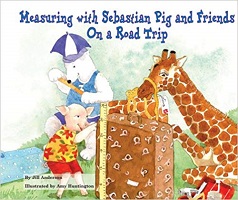
Measuring with Sebastian Pig and Friends on a Road Trip
Grade 2
4 skill lessons · 4 math-through-reading
Math
Skill lessons
The mathematics the book carries, taught directly. Printable workbook pages and teacher keys are not available for this book yet.
- 1Take the End With the 1
- 2Still the Winner
- 3The Biggest Number Is Not Always the Winner
- 4Around It Like a Belt
Math + reading
Math through the reading
The same book, entered through a sentence it prints. Change one word in the reading and the numbers change with it.
- 5The Word Picks the Tool
- 6Whose Slide Was Which
- 7Telling Ben Why
- 8Say It the Other Way Round
Reading
Reading and language lessons
The same book read as a text. What a word means in its sentence, how a character is shown, how the writing is put together - no mathematics.
- 9Biggest, Heaviest, Longest: One Word Picked Out of a Group
- 10First Stop, Next Stop: How the Book Moves You Along
- 11No, No, Gina Says: How a Disagreement Is Built
- 12The Writer Asks, and Sometimes Answers
- 13Not Always the Winner: The Sentence That Is True Anywhere
Skill lessons
4 lessons on the mathematics the book carries. Printable workbook pages and teacher keys are not available for this book yet.
1. Take the End With the 1
The book shows two friends settle a contest badly, by standing beside their suitcases and reporting a chest and a knee, and then shows Sebastian do it properly with a yardstick in four stated moves. Children reproduce the bad method first so the trouble is theirs rather than described to them, then run the yardstick procedure exactly as the text gives it and read a number in inches off the tool. The concept is that a measurement is a number and a unit produced by a stated procedure anyone can repeat, and the evidence is that two pairs measuring one object get the same number.
Full lesson — 20 minutes
1. Try it the way the friends do first (4 min)
Stand your two things on the floor. Do not use a ruler. Say where the top of each one comes to on you: my knee, my waist, my chest. Now swap with the pair next to you and say it again for their things. Read out what you both said about the same object. Did you agree?
Word preview: tall
Sebastian stands next to his suitcase.
It goes up to his chest.
How high is knee high?
It depends.
2. Read the yardstick before you use it (4 min)
Find the 1 on your yardstick. Find the 36. Run your finger from the 1 to the 36 and say the numbers out loud as you go. Now turn it over. This side is for centimetres. Which side has more numbers on it? The stick did not change length, so what does that tell you about a centimetre?
Word preview: inch
Sebastian finds a yardstick.
Its numbers go from 1 to 36.
Ben turns the yardstick over.
Those are for centimeters.
3. Run the four moves and read the number (7 min)
Take the end with the 1. Put it at the bottom of your object, right on the floor. Hold the stick straight up, not leaning. Look at where the top of your object meets the stick. What number is there? Write it down and write inches next to it. Now hand your object to the other pair and do not tell them your number. When they are done, put their number under yours.
Word preview: measure, height
He takes the end with the 1.
He puts it at the bottom of his suitcase.
He holds it straight.
The yardstick meets the top of the suitcase.
What number is there?
My suitcase is 30 inches tall, Sebastian says.
4. Say why this way settles it (5 min)
Look at what you said in the first go: it came up to somebody's knee. Now look at the two numbers on your sheet. If a class down the hall wanted to check, which one could they check? Say why out loud. Then say your finishing sentence: my ___ is ___ inches tall.
We need a better way to measure, says Sebastian.
How high is knee high?
Gina measures her suitcase the same way.
Her suitcase is 35 inches tall.
Short version — 9 minutes
1. Read the yardstick before you use it (3 min)
Find the 1 on your yardstick. Find the 36. Run your finger from one to the other and say the numbers. Now turn it over. That side is for centimetres.
Word preview: inch
Sebastian finds a yardstick.
Its numbers go from 1 to 36.
Ben turns the yardstick over.
Those are for centimeters.
2. Run the four moves and read the number (6 min)
Take the end with the 1 and put it at the bottom. Hold the stick straight. Where does the top of your object meet it? What number is there? Write it with the word inches. Now let the other pair measure the same object, and put their number under yours.
Word preview: measure, height
He takes the end with the 1.
He puts it at the bottom of his suitcase.
He holds it straight.
The yardstick meets the top of the suitcase.
What number is there?
My suitcase is 30 inches tall, Sebastian says.
Three levels
- Support
- Put a strip of tape on the floor and stand the object on it so the bottom edge cannot drift while the yardstick is placed. Hold the yardstick for the child at the bottom so both of their hands are free to keep it straight, and let them do the reading. They still take the end with the 1, they still read the number where the top meets the stick, and they still say the number with the word inches after it.
- At Grade
- Stand the object on the floor, put the end with the 1 at its bottom edge, hold the yardstick straight, and read the number where the top of the object meets it. Say and write the number with the word inches. Measure your partner's object the same way and check that they get your number for your object.
- Extension
- Before you measure the second object, say how many inches you think it will be and why, using the first object's number as your reason. Then measure and say how close you were. Now put the yardstick away, pick a taller thing in the room, and say roughly how many of your first object would stack up to reach its top.
English learners
The mathematics here is a placement and a reading, and both are visible, so a child with no English can do this step correctly and be seen to do it correctly before saying anything. Watch the hands, not the mouth, for the first two steps. The load-bearing English is the unit word riding behind the number: thirty inches, not thirty. In many languages the unit is said in a different position or dropped in speech where English keeps it, so the frame to rehearse is my object is ___ inches tall, said aloud with the finger still on the number. Sebastian says it that way himself in the book and the sentence is worth hearing in his voice before it is asked for. Children may count and think in their strongest language throughout; only the closing sentence needs English.
Materials
- Two objects of clearly different heights per pair, a backpack and a lunchbox or similar, standing on the floor
- Yardstick or metre rule marked in inches on one side and centimetres on the other, one per pair
- Measurement record sheet, one per pair, ruled for a number and a unit word
- Word cards: height, inch, measure, tall
Standards & curriculum
Choose your curriculum above to see the standards for this lesson.
Standards are held back while this plan is edited. Every standard shown here was matched against the supplied wording of this lesson, quoting its steps, so a changed step is no longer the thing that was checked. Undo your changes to bring the standards back — your edits stay in this browser either way.
2. Still the Winner
The book measures the same two suitcases three times over. In inches they are 30 and 35, in centimetres 76 and 89, and on the scale 40 pounds and 23. Children measure one unchanged pair of objects in inches and then in centimetres and find, as the book does, that the two numbers change and the winner does not. Then they weigh the same objects and find the winner flip. The concept is that a measurement carries a unit and a kind, that changing the unit changes the number without changing the object, and that taller and heavier are two separate questions the same object can answer differently.
Full lesson — 20 minutes
1. Measure both objects in inches (5 min)
Measure both of your objects in inches, the same way as before, the end with the 1 at the bottom. Write both numbers on the top line and write inches after each one. Now say out loud which one is taller and say both numbers when you say it.
Word preview: unit
My suitcase is 30 inches tall, Sebastian says.
Her suitcase is 35 inches tall.
The tallest suitcase, 30 inches, 35 inches.
2. Turn the stick over and measure them again (5 min)
Do not change your objects. Do not swap them. Just turn the stick over to the centimetre side and measure both again. Write the two new numbers on the second line with the word centimetres. Look at your two lines. The numbers are different. Is the winner different?
Word preview: centimetre
Sebastian measures the suitcase is again.
This time he uses centimeters.
Gina is still the winner.
76 centimeters.
89 centimeters.
3. Weigh the same two on the scale (5 min)
Now put the first bag on the scale. Where does the arrow point? That is your number of pounds. Write it on the third line. Take it off and put the second bag on. Write that number too. Which bag is the heavier one? Is it the same bag that was taller?
Word preview: pound, heavy
Sebastian gets his bathroom scale.
He sets each suitcase on the scale.
The arrow points to the number 40.
40 pounds, Sebastian says.
40 pounds.
23 pounds.
4. Say what changed and what did not (5 min)
Read your three lines out loud. For each line say what those numbers measure: how tall, how tall again, how heavy. Now say the hard one. Your objects never changed. So why did the numbers change on the second line? And why did the winner change on the third line but not on the second?
On the scale, Gina's suitcase is the tallest, but who's is the heaviest?
Still the winner.
The heaviest suitcase.
Short version — 9 minutes
1. Measure both objects in inches (4 min)
Measure both objects in inches, the end with the 1 at the bottom. Write both numbers on the top line with the word inches. Say which is taller and say both numbers.
Word preview: unit
My suitcase is 30 inches tall, Sebastian says.
Her suitcase is 35 inches tall.
The tallest suitcase, 30 inches, 35 inches.
2. Turn the stick over and measure them again (5 min)
Do not change your objects. Turn the stick over and measure both again in centimetres. Write them on the second line. The numbers changed. Did the winner change?
Word preview: centimetre
Sebastian measures the suitcase is again.
This time he uses centimeters.
Gina is still the winner.
76 centimeters.
89 centimeters.
Three levels
- Support
- Give the child one object rather than two and measure it in both units alongside a partner who has the other, so each child produces two numbers instead of four. Mark the inch side of the yardstick with a coloured dot and the centimetre side with a different colour, and let the child point to the colour as they say which unit their number is in. The pairing of number with unit is the part that must not be reduced.
- At Grade
- Measure both objects in inches and record both numbers with the unit. Measure the same two objects in centimetres and record those two under them. Say which object won in inches and which won in centimetres. Then weigh both on the scale, record the pounds, and say which won that time.
- Extension
- Your four length numbers all describe two objects that never changed. Say what did change and what did not, using all four numbers in your answer. Then explain to your partner how one object can win the height contest and lose the weight contest, and say what you would have to know about the packing to have guessed that in advance.
English learners
This lesson is built on one word doing one job, and the job is visible: the number changes, the object does not, so the difference has to be carried by the word after the number. That makes it an unusually good place for a new speaker, because the meaning of inches and centimetres is demonstrated by the sticks rather than defined in English. Show both sides of the yardstick against the same object before any word is required. The frame to rehearse is ___ inches but ___ centimetres, for the same one, said while pointing at the object that did not move. The heavier trouble is that English uses tall and heavy for questions a child may answer with one word in their strongest language, so keep the two records physically apart on the sheet and let children label them in whichever language they choose before the English words are asked for. The book supplies its own frame, still the winner, and it is worth putting on a card.
Materials
- Two objects of clearly different heights per pair, a backpack and a lunchbox or similar, standing on the floor
- Yardstick or metre rule marked in inches on one side and centimetres on the other, one per pair
- Measurement record sheet, one per pair, ruled for a number and a unit word
- Two packed bags per group, the taller one deliberately the lighter
- Bathroom or kitchen scale reading in pounds, one per group
- Word cards: centimetre, heavy, pound, unit
Standards & curriculum
Choose your curriculum above to see the standards for this lesson.
Standards are held back while this plan is edited. Every standard shown here was matched against the supplied wording of this lesson, quoting its steps, so a changed step is no longer the thing that was checked. Undo your changes to bring the standards back — your edits stay in this browser either way.
3. The Biggest Number Is Not Always the Winner
The map offers a path of 100 yards and a path of 200 feet and Ben picks the wrong one out loud, because 200 is more than 100. The book overturns him with a fact about the units rather than a calculation: a yard is longer than a foot, so 100 of the longer thing wins. Children lay a yardstick against a foot ruler to see the size difference for themselves, walk two short trails marked in the two units, and then argue Ben's case and the book's case with the sticks in their hands. Nobody converts anything; the reasoning is about which unit is bigger, which is exactly how the book settles it.
Full lesson — 20 minutes
1. Hold the two sticks together (4 min)
Hold the yardstick and the foot ruler up together with the bottoms level. Which one is longer? Now lay the short one along the long one, mark where it ends, and move it up. How many times does the foot ruler fit along the yardstick? Say the number out loud.
Word preview: yard, foot
A yard is longer than a foot.
One yard equals three feet.
2. Walk ten of each (5 min)
Start at the tape line. Lay the yardstick down ten times, end to end, and mark where the tenth one finishes. Now start at the other tape line and lay the foot ruler down ten times and mark that finish. Walk both trails. Which mark is further from the start?
There are two walks.
The north path is 100 yards long.
The south path is 200 feet.
3. Hear Ben's answer and test it (6 min)
Here are the two path cards. Put the yards card next to the yardstick and the feet card next to the foot ruler. Now listen to what Ben says: two hundred is more than one hundred, so the south path is longer. Point at your two sticks. Is Ben right? Tell your partner why, and make the sticks part of your reason.
Word preview: longer
Which one is longer?
Well, 200 is more than 100, Ben says.
But the biggest number is not always the winner.
A yard is longer than a foot.
4. Say the rule in your own words (5 min)
Say the rule in your own words: when can you trust the bigger number and when can you not? Then say which path wins and why. Last, say what Ben looked at and what he forgot to look at. Check your partner's sentence: does it have a unit in it, or only a number?
At 100 yards, the north path is the winner.
The longest path, 100 yards, 200 feet.
But the biggest number is not always the winner.
Short version — 9 minutes
1. Hold the two sticks together (4 min)
Hold the yardstick and the foot ruler up together, bottoms level. Which is longer? Now lay the short one along the long one end over end. How many times does it fit?
Word preview: yard, foot
A yard is longer than a foot.
One yard equals three feet.
2. Hear Ben's answer and test it (5 min)
Put the yards card by the yardstick and the feet card by the foot ruler. Ben says two hundred is more than one hundred, so the south path is longer. Point at your sticks. Is he right? Say why.
Word preview: longer
Which one is longer?
Well, 200 is more than 100, Ben says.
But the biggest number is not always the winner.
A yard is longer than a foot.
Three levels
- Support
- Keep the yardstick and the foot ruler physically in the child's hands for the whole lesson and let them answer every question by holding the two up together rather than by remembering which is longer. Reduce the trails to five of each unit rather than ten, so the walking is short and the point survives. The child still has to say which unit is bigger and still has to say who was wrong.
- At Grade
- Lay the foot ruler along the yardstick and say how many fit. Walk a trail of ten yards and a trail of ten feet and say which took you further. Then read Ben's sentence and the answer the book gives him, and tell your partner who is right and why, with the two sticks in your hands as your reason.
- Extension
- Ben's rule works fine most of the time, which is what makes it dangerous. Make up two paths of your own where the bigger number really does win, and two more where it does not, and say what you have to know about the units before you can tell the difference. Then say what you would need to find out to say how much longer the north path is, and say whether the book ever tells you.
English learners
Nothing here needs a child to read the two path cards in English, because the numbers are digits and the unit words can be matched to the object: put the card reading yards next to the yardstick and the card reading feet next to the foot ruler and let them stay there all lesson. That turns a vocabulary problem into a matching problem. The genuinely difficult English is the comparative, longer than, and its trap is that many languages build comparison with a separate word or a different word order, so a child may produce yard longer foot and be entirely correct mathematically. Accept it, then supply the frame a yard is longer than a foot in the book's own words and rehearse it while the two sticks are held side by side. Children should argue Ben's case in whichever language argues best; only the closing judgement needs English.
Materials
- Yardstick or metre rule marked in inches on one side and centimetres on the other, one per pair
- Foot ruler, one per child
- Masking tape to mark two starting lines on the floor
- Two path cards, one reading 100 yards and one reading 200 feet
- Word cards: foot, longer, yard
Standards & curriculum
Choose your curriculum above to see the standards for this lesson.
Standards are held back while this plan is edited. Every standard shown here was matched against the supplied wording of this lesson, quoting its steps, so a changed step is no longer the thing that was checked. Undo your changes to bring the standards back — your edits stay in this browser either way.
4. Around It Like a Belt
Ben holds a rigid ruler across the top of a round pie and Gina stops him, because she wants the distance around the pumpkin rather than the distance across it, and she reaches for a tape to get it. Children make Ben's measurement and Gina's measurement on the same round object and find two different numbers for one thing, which forces the question of what each number is a measurement of. They then rank three round objects by the distance around, as Gina does, and find the biggest.
Full lesson — 20 minutes
1. Measure across the top with a stiff ruler (4 min)
Take the stiff ruler and lay it across the top of your round object, right over the widest part. Read the number and write it down. Now put your hand flat on the object the same way the ruler went and say out loud: this number is how far it is across.
Word preview: across
Ben sees a pumpkin pie.
It is round.
He holds a ruler across its top.
This way, he says.
2. Wrap the tape around the middle (5 min)
Now take the soft tape. Wrap it around the middle of the very same object, like a belt, until it comes back to where it started. Hold that spot with your thumb and read the number. Write it under the first one. Trace your finger the whole way round and say: this number is how far it is around.
Word preview: around
She does not want to measure the top of the pumpkin.
She wants to measure around it.
She takes the tape measure.
She wraps it around each pumpkin like a belt.
3. Wrap all three and put them in order (6 min)
Wrap the tape around each of your three objects and write down all three numbers with the word inches. Now put your three numbers in order, smallest first. Move the objects to match your numbers. Point at the biggest one and say its number out loud.
Word preview: biggest
There will be a prize for the biggest one.
Which one is it?
She finds the biggest one.
100 inches.
4. Say which number answers which question (5 min)
Look at the two numbers you got from your first object. One is across and one is around. Which is which, and which is bigger? Now say why you could not have got the around number with the stiff ruler. Finish with this sentence: my ___ is ___ inches around.
Word preview: measure
How do you measure round things, she asks?
No, no, Gina says.
She wants to measure around it.
Short version — 9 minutes
1. Measure across the top with a stiff ruler (4 min)
Lay the stiff ruler across the top of your round object, over the widest part. Read the number and write it down. Say out loud: this is how far it is across.
Word preview: across
Ben sees a pumpkin pie.
It is round.
He holds a ruler across its top.
This way, he says.
2. Wrap the tape around the middle (5 min)
Now wrap the soft tape around the middle of the same object, like a belt, until it meets itself. Read the number and write it under the first. Trace it with your finger and say: this is how far it is around.
Word preview: around
She does not want to measure the top of the pumpkin.
She wants to measure around it.
She takes the tape measure.
She wraps it around each pumpkin like a belt.
Three levels
- Support
- Wrap a length of ribbon around the object for the child, mark where it meets itself, and let the child unwrap the ribbon and lay it flat along the tape to read the number. The wrapping is the part that is fiddly and the reading is the part that is mathematical, so the wrapping is what gets carried. The child still says which number came from across and which came from around.
- At Grade
- Measure across the top of your round object with the rigid ruler and write that number down. Then wrap the tape around its middle like a belt and write that number down. Say which is which and which is bigger. Now measure around all three objects and put them in order from smallest to biggest.
- Extension
- Before you wrap anything, look at your three objects and say which will have the biggest distance around, and say what you looked at to decide. Then measure and see. Now say whether an object could ever have a bigger number across than around, and try to find one in the room.
English learners
Across and around are two of the hardest small words in English to tell apart by ear, and this lesson is the ideal place to separate them because the difference is a gesture rather than a definition. Teach both with the hand on the object before either is spoken: a flat hand laid over the top for across, a finger travelling the whole way round the middle and coming back to where it started for around. Many languages mark this contrast with a verb or a case ending rather than a preposition, so a child may understand the mathematics perfectly and still reach for the wrong English word; treat a swapped preposition as a vocabulary slip and not a measurement error. The frame is across is ___ and around is ___, said with the hand doing the matching gesture. Gina's own objection in the book is worth reading aloud twice, because it names the distinction in a child's voice.
Materials
- Three round objects per group of clearly different sizes, a pumpkin, a ball and a tin
- Rigid ruler marked in inches, one per pair
- Measurement record sheet, one per pair, ruled for a number and a unit word
- Flexible tape measure marked in inches, one per pair
- Word cards: across, around, biggest, measure
Standards & curriculum
Choose your curriculum above to see the standards for this lesson.
Standards are held back while this plan is edited. Every standard shown here was matched against the supplied wording of this lesson, quoting its steps, so a changed step is no longer the thing that was checked. Undo your changes to bring the standards back — your edits stay in this browser either way.
Math through the reading
The mathematics is reached through a sentence the book prints: change one word in the reading and the numbers change with it. These carry their own standards, matched against these lessons rather than inherited from the skill ones.
5. The Word Picks the Tool
Students meet four measuring words in the book's own sentences and discover that each one sends them to a different tool and a different number for the very same object.
Full lesson — 20 minutes
1. Sort the words by the tool they call for (4 min)
Children are given the book's measuring words on cards, tall, around, heaviest and longest, and three tools on the table. They put each card beside the tool that could answer it and say aloud why, changing their minds as pairs disagree.
2. Measure one object three ways (6 min)
Each pair takes one object and measures it under three of the words in turn: how tall with the yardstick, how far around with the tape, how heavy on the scale. They write the three numbers with their units on a three-row record and write the word that produced each one beside it.
3. Read the three numbers back (4 min)
Pairs read their three rows aloud and say what each number is a measurement of, then say which two of their three numbers a classmate could confuse if the unit word were dropped. They add the missing unit word aloud to any bare number a partner reads.
4. Swap the word and say what happens (6 min)
Each child takes one of the book's contest questions, replaces its measuring word with another from the cards, and writes the new question. They say aloud which tool the new question needs, whether their own object's answer would change, and whether they can tell from their record who would now win.
Short version — 9 minutes
1. Sort the words by the tool they call for (4 min)
Children are given the book's measuring words on cards, tall, around, heaviest and longest, and three tools on the table. They put each card beside the tool that could answer it and say aloud why, changing their minds as pairs disagree.
2. Measure one object three ways (6 min)
Each pair takes one object and measures it under three of the words in turn: how tall with the yardstick, how far around with the tape, how heavy on the scale. They write the three numbers with their units on a three-row record and write the word that produced each one beside it.
Three levels
- Support
- Reduce the record from three rows to two, keeping how tall and how heavy, which are the pair the book itself proves can disagree. Give the word cards already matched to their tools so the sorting is a check rather than a search, and let the child say the swap sentence rather than write it. The measuring is not reduced, because the two numbers for one object are the whole argument.
- At grade
- Sort the four word cards to their tools, measure one object under three of the words, record each number with its unit and its word, and rewrite one contest question with a different measuring word, saying which tool it now needs and whether the answer would change.
- Extension
- Find a word in the book that sounds like a measuring word but does not pick a tool, and say how you can tell. Biggest is the one to hunt for: the friends use it for suitcases and for pumpkins and it means a different measurement each time. Then write a contest question that nobody could answer until they were told which word was meant, and say what one word would fix it.
English learners
The four words in this lesson are best taught as four gestures before they are taught as four words, because each of them corresponds to something a hand can do to an object: a flat hand rising for tall, a finger travelling right round the middle for around, a hand hefting for heavy, a hand tracing end to end for long. Do the gesture, then the tool, then the word, in that order, and a child can join the sorting round with no English at all and be seen to be right. The trap specific to this set is that many languages cover big and tall and long with fewer words than English uses, so a child saying big for tall is making a translation slip and not a measurement error; treat it as one, then supply the English word with the gesture. The frame worth fixing for the closing round is this asks how ___, so I need the ___. Children may argue about the sorting in their strongest language and give the class only the finished sentence in English.
Materials
- Word cards reading tall, around, heaviest and longest, one set per pair
- One object per pair that can be stood up, wrapped and weighed
- Yardstick marked in inches, flexible tape measure, and a scale reading in pounds, shared between pairs
- Three-row record sheet, one per pair
- The two suitcase contests written large on two cards, the height contest with 30 inches and 35 inches, and the weight contest with 40 pounds and 23 pounds
Standards & curriculum
Choose your curriculum above to see the standards for this lesson.
Standards are held back while this plan is edited. Every standard shown here was matched against the supplied wording of this lesson, quoting its steps, so a changed step is no longer the thing that was checked. Undo your changes to bring the standards back — your edits stay in this browser either way.
6. Whose Slide Was Which
The book gives three slide lengths and never says whose slide is whose, and students recover the assignment from the order the friends hit the water and one sentence Gina says about turns.
Full lesson — 20 minutes
1. Put the three numbers in order (4 min)
Pairs lay out three number cards reading 60 feet, 80 feet and 100 feet and put them in order from smallest to largest, saying each number with its unit as they place it. They say aloud that they do not yet know whose is whose.
2. Find who finished where (5 min)
Pairs hunt the book's own sentences for the finishing order and lay three name cards in the order the friends hit the water. They read the sentences aloud that prove the order and put a finger on each one.
3. Find the sentence that settles it (5 min)
Pairs are asked which friend had the longest slide and hunt for the sentence that says so. They read Gina's line about the turns, decide together whether finishing last means the longest slide or the shortest, and turn their name cards over if they had it the wrong way round.
4. Match them up and write it down (6 min)
Pairs draw a line from each name to a number and write three sentences saying whose slide is how long. Each child then writes one sentence naming the book sentence that made the answer certain, and pairs compare which sentence they chose.
Short version — 9 minutes
1. Put the three numbers in order (4 min)
Pairs lay out three number cards reading 60 feet, 80 feet and 100 feet and put them in order from smallest to largest, saying each number with its unit as they place it. They say aloud that they do not yet know whose is whose.
2. Find who finished where (5 min)
Pairs hunt the book's own sentences for the finishing order and lay three name cards in the order the friends hit the water. They read the sentences aloud that prove the order and put a finger on each one.
Three levels
- Support
- Give the finishing order already laid out on the name cards so the child is not holding an order in memory while reasoning about lengths, and read Gina's sentence about the turns aloud twice with the cards in view. The child still decides which end of the number order the last finisher belongs to, still draws the three lines, and still says which sentence made them sure. Do not give away the reversal; that is the lesson.
- At grade
- Order the three lengths, find the finishing order in the book's own sentences, find the sentence that says why the last finisher took longest, match the names to the numbers and write the three assignment sentences and one sentence naming your evidence.
- Extension
- Say what you would have to be told to work out how much longer Ben's slide is than Sebastian's, and then say whether the book ever tells you. Then invent a fourth friend and a fourth slide, decide where they finished, and say what length their slide could be and what lengths it could not be, with a reason for each.
English learners
The evidence in this lesson is three short sentences and the whole reasoning turns on two ordinary words, first and last, so the reading load is small and the words are worth teaching physically: line three children up and walk them in, first, then, last, before the book is opened. Once that is done a new speaker can lay the name cards correctly and be seen to be right. The genuine difficulty is the reversal, and it is a difficulty of logic rather than of English, so do not let a child's silence be read as not following; ask for the answer with the cards rather than with a sentence. The frame for the written round is fixed and short, ___'s slide is ___ feet long, and it can be copied three times with only two blanks changing. Children should reason about the reversal in whichever language they think fastest in, and write only the three finished sentences in English. Gina's sentence about the turns is the one to rehearse aloud, because it is the piece of evidence and it is worth every child being able to say it.
Materials
- Three number cards reading 60 feet, 80 feet and 100 feet, one set per pair
- Three name cards reading Sebastian, Gina and Ben, one set per pair
- Assignment sheet with three sentence frames and one evidence line
- The four water-slide sentences written large: the three finishing sentences and Gina's sentence about the turns
Standards & curriculum
Choose your curriculum above to see the standards for this lesson.
Standards are held back while this plan is edited. Every standard shown here was matched against the supplied wording of this lesson, quoting its steps, so a changed step is no longer the thing that was checked. Undo your changes to bring the standards back — your edits stay in this browser either way.
7. Telling Ben Why
Students take a position on whether the bigger number wins, prove it with a yardstick and a foot ruler in their hands, and write the explanation to the friend in the book who got it wrong.
Full lesson — 20 minutes
1. Take a side before you measure (3 min)
Ben's sentence and the map's two path figures are read aloud. Each child says whether they think Ben is right or wrong and stands on one side of a line, with no tools out and no discussion yet.
2. Prove it with the two sticks (6 min)
Pairs lay a foot ruler along a yardstick end over end, marking each finish, and count how many fit. They then lay ten yardstick lengths from one line and ten foot lengths from another and mark both end points, saying which end point is further out.
3. Write it to Ben (7 min)
Each child writes a short explanation to Ben saying whether he is right and why, and puts at least one number from their own measuring into it. They may change the side they took in the first round and say so in the writing.
4. Would it persuade him (4 min)
Pairs swap explanations and each child says whether their partner's would persuade Ben or only tell him the answer, pointing at the number in it as their reason. Writers add one sentence if their partner found none.
Short version — 9 minutes
1. Take a side before you measure (3 min)
Ben's sentence and the map's two path figures are read aloud. Each child says whether they think Ben is right or wrong and stands on one side of a line, with no tools out and no discussion yet.
2. Prove it with the two sticks (6 min)
Pairs lay a foot ruler along a yardstick end over end, marking each finish, and count how many fit. They then lay ten yardstick lengths from one line and ten foot lengths from another and mark both end points, saying which end point is further out.
Three levels
- Support
- Supply the opening and keep it fixed: Ben, you are ___ because ___. I know because I ___. The child still measures, still counts how many foot rulers fit the yardstick, still chooses the side and still supplies the number, and only the sentence shape is carried. If writing is the barrier rather than the reasoning, let the child dictate the explanation to a partner who writes it and then reads it back for the child to approve.
- At grade
- Take a side on Ben's claim, lay the foot ruler along the yardstick and count, walk the two trails, then write Ben an explanation that says whether he is right, says why, and contains a number you measured yourself.
- Extension
- Write Ben a second, harder letter. Tell him what he would have to change about the map for his rule to have worked, and give him one pair of path lengths where his rule gives the right answer and one where it gives the wrong one. Then tell him honestly what this book never tells either of you: how much longer the north path actually is, and why you cannot say.
English learners
The reasoning in this lesson can be completed entirely with two sticks and no English, and it should be, before any writing is asked for: the child who has laid the foot ruler three times along the yardstick has the argument in their hands. Let that be seen first. The written round is the demanding one and its difficulty is specific, because it needs a because clause carrying a number, and languages vary in where the reason goes relative to the claim. Fix the frame and do not vary it, Ben, you are ___ because ___, and let the number sit in the second blank. A child may plan the sentence aloud with a partner in their strongest language and write only the finished version in English. Accept a written explanation that is mathematically right and grammatically bent; the partner round asks whether it would persuade Ben, not whether it is well formed, and that distinction is worth stating to the class so that nobody's argument is judged on its English.
Materials
- Yardstick and foot ruler, one of each per pair
- Masking tape for two starting lines
- Explanation sheet with the sentence frame at the top
- Ben's sentence and the book's answer to it written large on two cards, with the two path figures beneath them
Standards & curriculum
Choose your curriculum above to see the standards for this lesson.
Standards are held back while this plan is edited. Every standard shown here was matched against the supplied wording of this lesson, quoting its steps, so a changed step is no longer the thing that was checked. Undo your changes to bring the standards back — your edits stay in this browser either way.
8. Say It the Other Way Round
The book only ever names the winner, and students turn each of its contests into a pair of true sentences that say the same fact from both sides.
Full lesson — 20 minutes
1. Measure both and write both numbers (5 min)
Pairs stand two objects side by side against one yardstick, measure both in inches, and write the two numbers one above the other on a single record with the unit on each. They circle the greater number.
2. Say it forwards, then backwards (6 min)
Each child writes one sentence saying which object is taller and one saying which is shorter, putting both numbers in each sentence. They read the pair aloud to a partner, who says whether the two sentences disagree anywhere.
3. Weigh the same two (4 min)
The same two objects go on the scale and both weights are written on the record beneath the heights. Children circle the greater weight and notice aloud whether it is the same object they circled the first time.
4. Both ways again, and catch the winner sentence (5 min)
Children write the reversed pair for the weights, then look at how the book reported its own contests and rewrite one of the book's winner sentences as a pair of reversed sentences carrying its two numbers.
Short version — 9 minutes
1. Measure both and write both numbers (5 min)
Pairs stand two objects side by side against one yardstick, measure both in inches, and write the two numbers one above the other on a single record with the unit on each. They circle the greater number.
2. Say it forwards, then backwards (6 min)
Each child writes one sentence saying which object is taller and one saying which is shorter, putting both numbers in each sentence. They read the pair aloud to a partner, who says whether the two sentences disagree anywhere.
Three levels
- Support
- Give both sentence frames side by side and keep them fixed all lesson, ___ is taller than ___ and ___ is shorter than ___, with a box under each blank for the number. The child measures both objects themselves and fills every blank themselves, including both numbers in both sentences, which is the part that must not be reduced. Cut the second contest if time runs short rather than cutting the reversal.
- At grade
- Measure two objects in inches and write both numbers, write the comparison as a taller sentence and a shorter sentence each carrying both numbers, then weigh the same two and do it again with heavier and lighter. Finish by rewriting one of the book's winner sentences as a reversed pair.
- Extension
- Write a pair of reversed sentences about the two suitcases using the centimetre numbers instead of the inches, and say whether the sentences change and whether the fact changes. Then find the one contest in this book where you could not write a reversed pair at all no matter how you tried, and say what the book does not give you.
English learners
Comparative sentences are among the most structurally varied things across languages, and English builds them in two ways at once, with an ending on the adjective and a separate word after it, which is a great deal to carry while also holding two numbers. Separate the load: build both sentences physically first, with the two objects moved so the taller stands on the left for one sentence and on the right for the other, and let children say the pair with a gesture and the two numbers before writing anything. The two frames should be visible side by side all lesson so the reversal is a matter of moving names between slots rather than of recalling a rule, and the numbers should be written on cards that physically move with the names. Accept taller from for taller than and correct it lightly; it is a preposition slip and the mathematics is intact. The word to watch for genuine confusion is still, which the book uses in still the winner to mean that a second measurement did not change the result, and which many learners meet first as a word about time.
Materials
- Two objects per pair of clearly different heights, the taller deliberately the lighter
- Yardstick marked in inches, one per pair
- Scale reading in pounds, shared between pairs
- Comparison record with two sentence frames repeated twice
- The book's two suitcase panels written large, the heights with 30 inches and 35 inches, and the weights with 40 pounds and 23 pounds
Standards & curriculum
Choose your curriculum above to see the standards for this lesson.
Standards are held back while this plan is edited. Every standard shown here was matched against the supplied wording of this lesson, quoting its steps, so a changed step is no longer the thing that was checked. Undo your changes to bring the standards back — your edits stay in this browser either way.
Reading and language lessons
5 lessons on the reading and language the book carries - what a word means in its sentence, how a character is shown, how a text is built. No mathematics: these are matched against the English language arts curricula, which are a different and smaller set than the mathematics ones.
9. Biggest, Heaviest, Longest: One Word Picked Out of a Group
The book's whole trip is organised around -est words, and each one only makes sense once a reader knows what group it is choosing from. Students collect three of them from the opening, name the group behind two more, then meet farthest, whose base word changes when the ending goes on. They finish by writing one of their own. Nothing is measured or compared numerically; the work is how the -est ending works and what a reader must supply to understand it.
Full lesson — 20 minutes
1. Collect the words that end in -est (6 min)
Read the passage below with the teacher. Three words in it end with the same two letters. Underline all three. Read them aloud together. Say aloud what each one would be if you took the ending off, and what the ending adds.
Word preview: biggest, heaviest, longest, ending
It's a big day for Sebastian Pig. He and his friends are going on a road trip. They will have contests too. Who can find the biggest things, or the heaviest, or the longest? Sebastian will measure many things. Can you help him?
2. Say which group each -est word is picking from (5 min)
Read the two passages below with a partner. Each has an -est word in it. For each one, say aloud what group of things the word is picking out of: the biggest suitcase out of what, the longest slide out of what. Say how you know from the words printed in front of you.
Word preview: group, out of
A friendly contest. Wow! Ben Bear says, your suitcase is big, Sebastian. Sebastian says, let's have a contest. Let's see who has the biggest suitcase.
Twists and turns. The next stop is the water park. The friends go on three water slides. Ready? Set? Go! They're off! Sebastian hits the water first. Then Gina. Ben hits last. Why didn't they all hit the water together? Gina knows Ben's slide has the most turns. That makes it the longest.
3. Find the -est word built a different way (5 min)
Read the passage below. It has an -est word too, but it is not made from a short word by adding letters; the writer has used a different word altogether for distance. Circle it. Say aloud what plain word it is built from, and say why English does not say the far-est.
Word preview: farthest, far
Flying footballs. Now they're at the sports show. There's a contest. Who can throw the farthest? Ben steps up to the line. He throws the football. It goes way down the field.
4. Write an -est sentence about your own classroom (4 min)
Read the passage below one more time. Then write one sentence of your own in the same shape, about something in this room: the ___est ___ is ___. Read it to a partner and have them say which group your word is picking from.
Word preview: -est
The biggest pumpkin. The friends go to a fair. Pumpkins are everywhere. There will be a prize for the biggest one. Which one is it? Gina will find out.
Short version — 9 minutes
1. Collect the words that end in -est (5 min)
Read the passage below with the teacher, underline the three words ending in the same two letters, and say what each would be without that ending.
Word preview: biggest, heaviest, longest
It's a big day for Sebastian Pig. He and his friends are going on a road trip. They will have contests too. Who can find the biggest things, or the heaviest, or the longest? Sebastian will measure many things. Can you help him?
2. Say which group each -est word is picking from (4 min)
Read the passage below and say what group of things its -est word is picking out of, using the words printed in front of you.
Word preview: group
Twists and turns. The next stop is the water park. The friends go on three water slides. Ready? Set? Go! They're off! Sebastian hits the water first. Then Gina. Ben hits last. Why didn't they all hit the water together? Gina knows Ben's slide has the most turns. That makes it the longest.
Three levels
- Support
- In the printed passage in step 1, find the three words ending in -est and read them aloud. Then say the plain word inside each one: big, heavy, long.
- At Grade
- Read the printed passages in steps 1 and 2 and say, for each -est word, what group of things it is choosing from.
- Extension
- The word in step 3 changes its base when the ending goes on. Say two sentences about why a reader still recognises it as the same kind of word.
English learners
The -est ending carries meaning that many languages express with a separate word, so it is easy to read past. Say the base word and the -est word as a pair, big and biggest, several times. Note aloud that the group is usually left unsaid in English and must be worked out. Invite students to say the most-something of three classroom objects in their strongest language. Rehearsable frame: The ___est ___ out of ___ is ___.
Materials
- Measuring with Sebastian Pig and Friends on a Road Trip, the passage printed in this step
- pencils
- partner
- Word cards: biggest, heaviest, longest, farthest, ending, group
Standards & curriculum
Choose your curriculum above to see the standards for this lesson.
Standards are held back while this plan is edited. Every standard shown here was matched against the supplied wording of this lesson, quoting its steps, so a changed step is no longer the thing that was checked. Undo your changes to bring the standards back — your edits stay in this browser either way.
10. First Stop, Next Stop: How the Book Moves You Along
The writer keeps the trip in order with a handful of small phrases, and one of them is used twice, which is where a reader gets stuck. Students underline the signposts in two printed passages, try to order three passages from their signposts alone and find that one cannot be placed, then meet the closing passage that ends the trip without any signpost at all. The work is order and the words that carry it.
Full lesson — 20 minutes
1. Find the words that move the trip along (6 min)
Read the two passages below with the teacher. Each one begins a new part of the trip, and each tells you where the friends have got to. Underline the words that say the trip has moved. Read those words aloud and say which passage happens first.
Word preview: first stop, next stop, order
A pound of candy. It's time to hit the road. The first stop is the chocolate house, yum! Gina sees a giant chocolate bar. It is one pound. Wait a minute. Gina looks at the candy bar again. Why does it say 16? That's for 16 ounces, Sebastian says.
Twists and turns. The next stop is the water park. The friends go on three water slides. Ready? Set? Go! They're off! Sebastian hits the water first. Then Gina. Ben hits last. Why didn't they all hit the water together? Gina knows Ben's slide has the most turns. That makes it the longest.
2. Put four stops in the order the book gives them (5 min)
Read the three passages below with a partner. Each one starts a stop on the trip. Using only the moving words inside them, put the three in the order the book puts them. Say aloud which passage you could not place from its own words alone, and why.
Word preview: now, next
Twists and turns. The next stop is the water park. The friends go on three water slides. Ready? Set? Go! They're off! Sebastian hits the water first. Then Gina. Ben hits last. Why didn't they all hit the water together? Gina knows Ben's slide has the most turns. That makes it the longest.
Flying footballs. Now they're at the sports show. There's a contest. Who can throw the farthest? Ben steps up to the line. He throws the football. It goes way down the field.
A good guess. The next stop is dinosaur o'rama.
3. Say what the last passage does that the others do not (5 min)
Read the passage below. It comes at the very end of the trip. It has no moving words like the others did. Say aloud what tells a reader the trip is over instead, and say what the second sentence looks back at.
Word preview: looks back, ends
The sun is setting, Sebastian and his friends are going home. He thinks of all they have seen and measured.
4. Retell the trip using the book's own moving words (4 min)
Read the two passages below one more time. Then tell a partner the trip in three sentences, using the moving words the book uses: The first stop is ___, the next stop is ___, at the end ___.
Word preview: retell
A pound of candy. It's time to hit the road. The first stop is the chocolate house, yum! Gina sees a giant chocolate bar. It is one pound. Wait a minute. Gina looks at the candy bar again. Why does it say 16? That's for 16 ounces, Sebastian says.
The sun is setting, Sebastian and his friends are going home. He thinks of all they have seen and measured.
Short version — 9 minutes
1. Find the words that move the trip along (5 min)
Read the two passages below, underline the words that say the trip has moved, and say which passage happens first.
Word preview: first stop, next stop
A pound of candy. It's time to hit the road. The first stop is the chocolate house, yum! Gina sees a giant chocolate bar. It is one pound. Wait a minute. Gina looks at the candy bar again. Why does it say 16? That's for 16 ounces, Sebastian says.
Twists and turns. The next stop is the water park. The friends go on three water slides. Ready? Set? Go! They're off! Sebastian hits the water first. Then Gina. Ben hits last. Why didn't they all hit the water together? Gina knows Ben's slide has the most turns. That makes it the longest.
2. Say what the last passage does that the others do not (4 min)
Read the passage below, from the end of the trip. Say what tells a reader the trip is over, since it has no moving words.
Word preview: ends
The sun is setting, Sebastian and his friends are going home. He thinks of all they have seen and measured.
Three levels
- Support
- In the printed passage in step 1, find the words first stop and read the sentence they are in. Say the name of that stop aloud.
- At Grade
- Read both printed passages in step 1, underline the moving phrase in each, and say which stop comes first and how you know.
- Extension
- In step 2, two of the printed passages carry the same moving phrase. Say two sentences about what else a reader has to use to order them.
English learners
First and next here mark position in a sequence rather than counting anything, and first in particular is used in a second sense a few lines away, Sebastian hits the water first. Read both uses aloud and say which is about order and which is about winning. Invite students to describe a journey they have made in their strongest language and notice the ordering words. Rehearsable frame: The first stop is ___. The next stop is ___.
Materials
- Measuring with Sebastian Pig and Friends on a Road Trip, the passage printed in this step
- pencils
- partner
- three passage strips
- Word cards: first stop, next stop, order, now, ends, retell
Standards & curriculum
Choose your curriculum above to see the standards for this lesson.
Standards are held back while this plan is edited. Every standard shown here was matched against the supplied wording of this lesson, quoting its steps, so a changed step is no longer the thing that was checked. Undo your changes to bring the standards back — your edits stay in this browser either way.
11. No, No, Gina Says: How a Disagreement Is Built
Gina refuses Ben's idea in five words and then rebuilds it, using two nearly identical sentences that differ by the word not. Students read the exchange in two voices, underline the mirrored pair, hold it beside Sebastian's gentler objection earlier in the book, and then disagree in the same shape themselves. Nothing is measured; the work is how a writer builds an objection out of a refusal plus a replacement.
Full lesson — 20 minutes
1. Read a disagreement and say who says what (6 min)
Read the passage below with the teacher. Two friends want to do the same job in two different ways. Read Ben's line and Gina's line in two voices. Say aloud which words Gina uses to say no, and where in her turn she says them.
Word preview: disagree, No, no
Ben sees a pumpkin pie. It is round. He holds a ruler across its top. This way, he says. No, no, Gina says. She does not want to measure the top of the pumpkin. She wants to measure around it. I know, she says. She takes the tape measure. She wraps it around each pumpkin like a belt. She finds the biggest one.
2. Find the two sentences built as opposites (5 min)
Read the passage below again with a partner. Two sentences in a row start almost the same way, and one of them has an extra word that flips it around. Underline both. Say aloud what the extra word is and what it does.
Word preview: not, opposite
Ben sees a pumpkin pie. It is round. He holds a ruler across its top. This way, he says. No, no, Gina says. She does not want to measure the top of the pumpkin. She wants to measure around it. I know, she says. She takes the tape measure. She wraps it around each pumpkin like a belt. She finds the biggest one.
3. Say what a character's disagreement shows about them (5 min)
Read the passage below. It is a different disagreement, earlier in the book. Sebastian does not say no to anyone, but he does say something is not good enough. Point to the sentence where he says it. Say aloud what both of these disagreements show about how these friends settle an argument.
Word preview: better way, settle
Who will win? Gina is taller. Her knees are high off the ground. We need a better way to measure, says Sebastian. How high is knee high? It depends.
4. Disagree in the book's own shape (4 min)
Read the passage below one more time. Then say to a partner a polite disagreement in Gina's shape: No, not ___. I want to ___. Use anything at all as your subject. Have your partner say whether they could tell what you did want.
Word preview: polite
Ben sees a pumpkin pie. It is round. He holds a ruler across its top. This way, he says. No, no, Gina says. She does not want to measure the top of the pumpkin. She wants to measure around it. I know, she says. She takes the tape measure. She wraps it around each pumpkin like a belt. She finds the biggest one.
Short version — 9 minutes
1. Read a disagreement and say who says what (5 min)
Read the passage below with the teacher, read Ben's line and Gina's line in two voices, and say which words Gina uses to say no.
Word preview: disagree
Ben sees a pumpkin pie. It is round. He holds a ruler across its top. This way, he says. No, no, Gina says. She does not want to measure the top of the pumpkin. She wants to measure around it. I know, she says. She takes the tape measure. She wraps it around each pumpkin like a belt. She finds the biggest one.
2. Find the two sentences built as opposites (4 min)
Read the passage below again. Underline the two sentences in a row that start almost the same way, and say which word flips one of them around.
Word preview: not, opposite
Ben sees a pumpkin pie. It is round. He holds a ruler across its top. This way, he says. No, no, Gina says. She does not want to measure the top of the pumpkin. She wants to measure around it. I know, she says. She takes the tape measure. She wraps it around each pumpkin like a belt. She finds the biggest one.
Three levels
- Support
- In the printed passage in step 1, find the words No, no and read Gina's turn aloud after the teacher. Say who she is saying no to.
- At Grade
- Read the printed passage in step 1 and say what Gina refuses and what she offers instead, naming the sentence that carries each.
- Extension
- The printed passage in step 2 holds two sentences differing by one word. Say two sentences about why a writer would build a refusal that way rather than just saying no.
English learners
English carries a whole refusal in the single small word not, placed inside the verb group where it is easy to miss when listening. Read the two mirrored sentences slowly, one after the other, stressing not. Invite students to disagree politely in their strongest language and say which word does the refusing there. Rehearsable frame: I do not want to ___. I want to ___.
Materials
- Measuring with Sebastian Pig and Friends on a Road Trip, the passage printed in this step
- pencils
- partner
- Word cards: disagree, No no, not, opposite, better way, polite
Standards & curriculum
Choose your curriculum above to see the standards for this lesson.
Standards are held back while this plan is edited. Every standard shown here was matched against the supplied wording of this lesson, quoting its steps, so a changed step is no longer the thing that was checked. Undo your changes to bring the standards back — your edits stay in this browser either way.
12. The Writer Asks, and Sometimes Answers
This writer keeps asking questions, and a reader cannot assume the answer is coming. Students find a question and its answer inside one printed passage, meet another passage that walks away from its own question, sort a story question from one aimed at the reader, and finally try to answer an unanswered one from the words available. The work is holding a question in mind while reading on, and saying honestly when a text has not answered it.
Full lesson — 20 minutes
1. Find the question and then find its answer (6 min)
Read the passage below with the teacher. It asks a question partway through and answers it before the passage ends. Underline the question, then underline the sentence that answers it. Say aloud whether the answer comes straight after the question or later, and read out what stands between them.
Word preview: question, answer
Twists and turns. The next stop is the water park. The friends go on three water slides. Ready? Set? Go! They're off! Sebastian hits the water first. Then Gina. Ben hits last. Why didn't they all hit the water together? Gina knows Ben's slide has the most turns. That makes it the longest.
2. Find a question the passage leaves hanging (5 min)
Read the two passages below with a partner. Each asks a question. In one, the answer arrives inside the same passage. In the other, it does not. Say aloud which is which, and say what a reader has to do when a question is left open.
Word preview: open, hanging
The biggest pumpkin. The friends go to a fair. Pumpkins are everywhere. There will be a prize for the biggest one. Which one is it? Gina will find out.
Two ways to try. The friends are ready for a walk. Which way is the lake? Gina looks at the map. There are two walks. The north path is 100 yards long. The south path is 200 feet. Which one is longer? Well, 200 is more than 100, Ben says. But the biggest number is not always the winner. A yard is longer than a foot. At 100 yards, the north path is the winner.
3. Read a question the book asks you rather than itself (5 min)
Read the two passages below. One asks a question about the story. The other asks a question of the person reading. Read both questions aloud. Say aloud which is which, and say what word in one of them tells you it is aimed at you.
Word preview: aimed at, reader
Sebastian looks at the meat eaters. He likes the alosaurus. How long is it? He cannot see the sign. He makes a guess.
Need a hint? Look for answers in Sebastian's notebook.
4. Write the answer the book did not print (4 min)
Read the passage below one more time. It asks a question and then walks away from it. Write one sentence answering that question, using only what the passage actually says. If the passage does not give you enough, write that instead and say what is missing.
Word preview: enough, missing
The biggest pumpkin. The friends go to a fair. Pumpkins are everywhere. There will be a prize for the biggest one. Which one is it? Gina will find out.
Short version — 9 minutes
1. Find the question and then find its answer (5 min)
Read the passage below with the teacher. Underline the question, then underline the sentence that answers it, and say whether the answer comes straight after the question or later.
Word preview: question, answer
Twists and turns. The next stop is the water park. The friends go on three water slides. Ready? Set? Go! They're off! Sebastian hits the water first. Then Gina. Ben hits last. Why didn't they all hit the water together? Gina knows Ben's slide has the most turns. That makes it the longest.
2. Find a question the passage leaves hanging (4 min)
Read the passage below. Say what question it asks and whether the passage answers it before ending.
Word preview: open
The biggest pumpkin. The friends go to a fair. Pumpkins are everywhere. There will be a prize for the biggest one. Which one is it? Gina will find out.
Three levels
- Support
- In the printed passage in step 1, put your finger on the question mark and read that sentence aloud. Then read the sentence that answers it after the teacher.
- At Grade
- Read the printed passage in step 1 and say what it asks and which sentence answers it.
- Extension
- In step 2 one printed passage never answers its own question. Say two sentences about what a careful reader does at that point instead of guessing.
English learners
Some of these questions are real requests and some are the writer thinking aloud, and the difference is carried by tone rather than by words. Read each question twice, once as a real request and once as a writer musing, and ask which fits. Invite students to say in their strongest language a question nobody expects an answer to. Rehearsable frame: The text asks ___. It answers here / it does not answer.
Materials
- Measuring with Sebastian Pig and Friends on a Road Trip, the passage printed in this step
- pencils
- partner
- Word cards: question, answer, open, reader, missing
Standards & curriculum
Choose your curriculum above to see the standards for this lesson.
Standards are held back while this plan is edited. Every standard shown here was matched against the supplied wording of this lesson, quoting its steps, so a changed step is no longer the thing that was checked. Undo your changes to bring the standards back — your edits stay in this browser either way.
13. Not Always the Winner: The Sentence That Is True Anywhere
Twice this book stops telling the trip and states something that would hold true outside it, and each time it is signalled by a small word rather than announced. Students underline the general sentence in a printed passage, work out what But is doing in front of it, find a second one elsewhere alongside a two-word sentence that refuses to answer, and restate the rule in their own words. The work is telling a general claim from a particular one.
Full lesson — 20 minutes
1. Find the sentence that is not about this story (6 min)
Read the passage below with the teacher. Most of its sentences are about two paths and two friends. One sentence is not about them at all; it says something that would be true anywhere. Underline it. Read it aloud and say what makes it different from the sentences around it.
Word preview: general, always
Two ways to try. The friends are ready for a walk. Which way is the lake? Gina looks at the map. There are two walks. The north path is 100 yards long. The south path is 200 feet. Which one is longer? Well, 200 is more than 100, Ben says. But the biggest number is not always the winner. A yard is longer than a foot. At 100 yards, the north path is the winner.
2. Say what the word But is doing there (5 min)
Read the passage below again with a partner. The general sentence starts with But, and the sentence before it is something a character said. Read those two sentences one after the other. Say aloud what But is telling a reader about the sentence that came before.
Word preview: but, corrects
Two ways to try. The friends are ready for a walk. Which way is the lake? Gina looks at the map. There are two walks. The north path is 100 yards long. The south path is 200 feet. Which one is longer? Well, 200 is more than 100, Ben says. But the biggest number is not always the winner. A yard is longer than a foot. At 100 yards, the north path is the winner.
3. Find another sentence that would be true anywhere (5 min)
Read the passage below. It also has one sentence that would be true away from this story, and one short sentence that refuses to give a single answer. Underline both. Say aloud which of the two you would put in a book of facts, and why the other one could not go there.
Word preview: it depends, fact
Who will win? Gina is taller. Her knees are high off the ground. We need a better way to measure, says Sebastian. How high is knee high? It depends.
4. Say the general rule in your own words (4 min)
Read the passage below one more time. Say the general sentence in your own words to a partner, without using the word biggest. Then say one thing outside this book that your sentence would also be true about.
Word preview: in your own words
Two ways to try. The friends are ready for a walk. Which way is the lake? Gina looks at the map. There are two walks. The north path is 100 yards long. The south path is 200 feet. Which one is longer? Well, 200 is more than 100, Ben says. But the biggest number is not always the winner. A yard is longer than a foot. At 100 yards, the north path is the winner.
Short version — 9 minutes
1. Find the sentence that is not about this story (5 min)
Read the passage below with the teacher. Underline the one sentence that would be true anywhere, and say what makes it different from the sentences around it.
Word preview: general
Two ways to try. The friends are ready for a walk. Which way is the lake? Gina looks at the map. There are two walks. The north path is 100 yards long. The south path is 200 feet. Which one is longer? Well, 200 is more than 100, Ben says. But the biggest number is not always the winner. A yard is longer than a foot. At 100 yards, the north path is the winner.
2. Find another sentence that would be true anywhere (4 min)
Read the passage below. Underline the sentence that would be true away from this story and the short one that refuses to give a single answer.
Word preview: it depends
Who will win? Gina is taller. Her knees are high off the ground. We need a better way to measure, says Sebastian. How high is knee high? It depends.
Three levels
- Support
- In the printed passage in step 1, find the sentence beginning with But and read it aloud after the teacher. Say whether it names any character.
- At Grade
- Read the printed passage in step 1, underline the sentence that would be true anywhere, and say what makes it different from its neighbours.
- Extension
- The printed passage in step 3 ends on a two-word sentence that refuses to answer. Say two sentences about what that refusal tells a reader.
English learners
But at the start of a sentence works backwards, marking the sentence before as wrong or incomplete, and that backwards reach is easy to miss. Read the pair of sentences aloud with a clear pause and a shake of the head at But. Invite students to give the word their strongest language uses to correct what was just said. Rehearsable frame: Ben says ___. But really ___.
Materials
- Measuring with Sebastian Pig and Friends on a Road Trip, the passage printed in this step
- pencils
- partner
- Word cards: general, always, but, corrects, it depends, fact
Standards & curriculum
Choose your curriculum above to see the standards for this lesson.
Standards are held back while this plan is edited. Every standard shown here was matched against the supplied wording of this lesson, quoting its steps, so a changed step is no longer the thing that was checked. Undo your changes to bring the standards back — your edits stay in this browser either way.