Game Time!
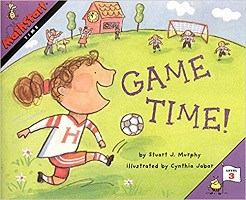
Grade 2
5 skill lessons
Math
Skill lessons
The mathematics the book carries, taught directly. Printable workbook pages and teacher keys are not available for this book yet.
- 1Four Quarters of One Hour
- 2The Game on a Sixty-Minute Line
- 3The Day the Story Never Names
- 4Count Back Through the Last Minute
- 5Was Half an Hour Enough?
Math + reading
Math through the reading
The same book, entered through a sentence it prints. Change one word in the reading and the numbers change with it.
No math-through-reading lessons for this book yet.
Reading
Reading and language lessons
The same book read as a text. What a word means in its sentence, how a character is shown, how the writing is put together - no mathematics.
No reading and language lessons for this book yet.
Skill lessons
5 lessons on the mathematics the book carries. Printable workbook pages and teacher keys are not available for this book yet.
1. Four Quarters of One Hour
The book opens with a fact page that names four amounts of time twice over, once in minutes and once as parts of an hour, and the soccer game then arrives at exactly those four marks: fifteen minutes gone at the first whistle, half an hour at half time, forty-five at the third whistle and sixty for the whole game. Students fold a paper circle into four quarters, label the creases, and colour one quarter for each whistle, saying each amount in minutes and in hour-parts. The quarter stops being a word and becomes a piece of a whole that can be counted.
Full lesson — 20 minutes
1. Crease the hour into four quarters (4 min)
Each pair takes a paper circle that stands for one hour and folds it in half, then in half again, so four equal quarters open up. Open it flat and write START where one crease meets the edge. Going one way round from START, write 15 on the next crease, 30 on the one after, 45 on the one after that, and 60 back at START. Run a finger all the way round once and say sixty minutes.
Word preview: quarter of an hour, half an hour
60 minutes equals 1 hour.
2. Say each crease two ways (5 min)
One partner reads a fact card aloud and the other puts a finger on the crease it names, then says the amount both ways: fifteen minutes, a quarter of an hour. Swap after every card until all four have been read. If the finger and the words disagree, read the card again before anything moves.
Word preview: three quarters of an hour
15 minutes equals a quarter of an hour.
30 minutes equals half an hour.
45 minutes equals 3 quarters of an hour.
3. Shade a quarter for every whistle (5 min)
Read the first whistle card aloud, colour one quarter of the circle for the minutes gone, and write a small 1 in it. Read the second card, colour a second quarter and write 2 in it; read the third, colour a third and write 3. Say how many minutes are coloured each time before you pick the crayon up again.
Already 15 minutes had gone by.
Half an hour was gone, and the score was Falcons 2, Huskies 1.
They had been playing for 45 minutes and the Falcons were still in the lead.
4. Say what is left after each whistle (6 min)
Put a finger on the quarter you numbered 1 and count every quarter after it, going round: three, which is forty-five minutes still to come at the first whistle. Move your finger to the quarter numbered 2 and count after it, then to the one numbered 3. Say each amount in quarters and then in minutes, and write the three amounts on your record line.
Short version — 9 minutes
1. Crease the hour into four quarters (4 min)
Fold the paper circle in half and in half again so four equal quarters open up. Mark one crease START, then going round write 15, 30 and 45 on the next three and 60 back at START. Run a finger round once and say sixty minutes.
Word preview: quarter of an hour, half an hour
60 minutes equals 1 hour.
2. Shade a quarter for every whistle (5 min)
Read each whistle card aloud and colour one quarter for the minutes gone, numbering it 1, then a second quarter numbered 2 at half time and a third numbered 3 at the end of the third period. Say the minutes coloured each time.
Already 15 minutes had gone by.
Half an hour was gone, and the score was Falcons 2, Huskies 1.
They had been playing for 45 minutes and the Falcons were still in the lead.
Three levels
- Support
- Fold once before you fold twice. Colour the half that was gone when Jake called half time and say it both ways, half an hour, thirty minutes. Then fold again and colour one more quarter and say that one both ways too. The circle you colour and the amounts you say are the same ones the rest of the class uses.
- At Grade
- Crease all four quarters, colour a quarter for each of the three whistles, and say every amount in minutes and in quarters of an hour before you write it down.
- Extension
- Take a second circle for the fifteen-minute break. Colour the quarter the break used and say what part of an hour the team spent resting. Then say why the break cannot be coloured on the first circle with the game's own quarters, and show what you would have to change to fit it there.
English learners
The mathematics is a fold and a count, and a child can make every fold before saying a word of English. The words are the hard part: English hides a fraction inside a quarter of an hour and half an hour, where many languages simply say the minutes, so a child may know exactly which crease is meant and have no phrase for it. Write both namings on the circle side by side and rehearse the frame ___ minutes, ___ of an hour. Let children count creases and say amounts in their strongest language first, then say the pair in English with a finger on the crease.
Materials
- Paper circle standing for one hour, one per pair
- Pencil, one per student
- Four fact cards, one time equivalence per card
- Whistle cards, one sentence per card
- Crayon, one per pair
- Record line with three blanks
- Second paper circle standing for one hour
- Word cards: quarter of an hour, half an hour, three quarters of an hour
Standards & curriculum
These lessons are being matched against curricula now.
Standards are held back while this plan is edited. Every standard shown here was matched against the supplied wording of this lesson, quoting its steps, so a changed step is no longer the thing that was checked. Undo your changes to bring the standards back — your edits stay in this browser either way.
2. The Game on a Sixty-Minute Line
The narration names the minute at nearly every turn of the game, and it names two of them from inside a period rather than from the kickoff: five minutes into the second period, and two minutes to go in it. Students build one strip from 0 to 60, stand the three whistle cards on the marks their sentences give, and then count on and count back from those marks to place the two cards that name no minute of the game at all.
Full lesson — 20 minutes
1. Stretch the hour out straight (4 min)
Tape a strip of sixty minute-squares along the table and write 0 before the first square and 60 after the last. Fold the strip into four equal parts and write 15, 30 and 45 on the three creases. Run a finger from 0 to 60 saying the four numbers out loud.
60 minutes equals 1 hour.
2. Pin the three whistles (5 min)
Read each whistle card aloud and stand it on the mark its sentence gives. Three cards, three marks, and each one is where a period ended and the next began. Then count the minutes from 0 to the first card, from the first to the second and from the second to the third, and say what those three gaps have in common.
Word preview: gone by
Already 15 minutes had gone by.
Half an hour was gone, and the score was Falcons 2, Huskies 1.
They had been playing for 45 minutes and the Falcons were still in the lead.
3. Work out the two moments inside a period (6 min)
Two more cards name no minute of the game at all. For the first, put a finger on the first whistle card, where the second period begins, and count on that many squares. For the second, start at the second whistle card, where that period ends, and count back that many squares. Stand each card on the square you land on and say the minute out loud.
Word preview: into, to go
Just five minutes into the second period, a teammate passed the ball to Rebecca.
There were two minutes to go in the second period.
4. Pin the last minute (5 min)
Read the card about Rebecca's goal in the fourth period and the card that says how much of the game was left after it. That card gives the minutes still to come, not the minute reached, so count back that many squares from the end of the strip and stand the card where you land. Then mark the stretch from there to 60 that the crowd's counting covers, and say how many minutes wide it is.
Rebecca turned, got the ball and kicked it right into the goal.
there's one minute to go
Short version — 9 minutes
1. Stretch the hour out straight (4 min)
Tape the strip of sixty minute-squares down, write 0 before the first square and 60 after the last, fold it into four equal parts and write 15, 30 and 45 on the creases. Run a finger from 0 to 60 saying the four numbers.
60 minutes equals 1 hour.
2. Pin the three whistles (5 min)
Read each whistle card aloud and stand it on the mark its sentence gives, then count the minutes from 0 to the first card and from each card to the next, and say what those three gaps have in common.
Word preview: gone by
Already 15 minutes had gone by.
Half an hour was gone, and the score was Falcons 2, Huskies 1.
They had been playing for 45 minutes and the Falcons were still in the lead.
Three levels
- Support
- Work with a strip of minute-squares that already carries 0, 15, 30, 45 and 60. Read each whistle sentence aloud and stand its card on the right mark, then say the minute each card landed on. Those are the same three marks the rest of the class places.
- At Grade
- Fold and mark the quarters yourself, place the three whistle cards, then count on and count back to place the two cards that name no minute.
- Extension
- Take the fifteen-minute break. Say where on the strip it seems to belong, then say why it cannot sit anywhere on this strip at all, and show what you would have to add to the strip to hold it.
English learners
Standing a card on a mark needs no English, so a child can place every card before saying a word. The English is in the direction words: into counts forward from where a period starts, to go counts backward from where it ends, and a child who reads one for the other lands a whole quarter of an hour away. Say each phrase with a finger moving the way it points and rehearse the frame ___ minutes into means start at ___ and count on. Children may explain a placing in their strongest language before saying it in English.
Materials
- Strip of sixty minute-squares, one per pair
- Tape
- Whistle cards, one sentence per card
- Moment cards, one sentence per card
- Last-minute cards, one sentence per card
- Word cards: into, to go, gone by
Standards & curriculum
These lessons are being matched against curricula now.
Standards are held back while this plan is edited. Every standard shown here was matched against the supplied wording of this lesson, quoting its steps, so a changed step is no longer the thing that was checked. Undo your changes to bring the standards back — your edits stay in this browser either way.
3. The Day the Story Never Names
Maria says it is October 7th and that they have seven more days, the book says a week is seven days, and then the game arrives without the story ever naming the date it arrived on. Students lay a day strip, write the starting date, hop one day at a time while saying day and date together, and land on the date the book leaves out. The check is the book's own week sentence, so a pair that miscounts the hops finds the mismatch itself.
Full lesson — 20 minutes
1. Lay out the week from October 7th (4 min)
Each pair takes a strip with a start box and seven empty boxes after it. Read Maria's sentence about the date and write Saturday, October 7th in the start box. Read her next sentence and count the empty boxes to check the strip holds exactly as many days as she says are left.
Word preview: date
It's already October 7th said Maria.
We only have seven more days.
2. Count on one day at a time (5 min)
Hop along the strip one box at a time, saying the day and the date together, Sunday the 8th, Monday the 9th, and writing each one in its box as you say it. Stop at the seventh box and say what day and date you landed on. Count your hops against the sentence that says how long a week is.
One week equals seven days.
The big soccer game between the Falcons and the Huskies was just one week away.
3. Mark the practising and the last day (6 min)
Read the sentence about how the Huskies spent the week and draw a ball in every box from the first one up to the box before game day. Then find the box for the Friday the story stops on, read the sentence saying how far away the game was, and draw one hop arrow from that box to the next. Say what the single hop landed on.
All week long, the Huskies practiced dribbling, passing and scoring.
Finally, it was Friday.
The championship game was just one day away.
4. Say the date the story never says (5 min)
Say the whole answer out loud to another pair: the day, the date, and the number of hops that got you there. Write the date in numbers on your record card. Then point at the two sentences you leaned on and read them in the order you used them.
Word preview: one week
Short version — 9 minutes
1. Lay out the week from October 7th (4 min)
Write Saturday, October 7th in the start box of the day strip after reading Maria's sentence about the date. Read her next sentence and count the empty boxes to check the strip holds the days she says are left.
Word preview: date
It's already October 7th said Maria.
We only have seven more days.
2. Count on one day at a time (5 min)
Hop one box at a time, saying the day and the date together and writing each one in its box. Stop at the seventh box, say the day and date you landed on, and count your hops against the sentence about the week.
One week equals seven days.
The big soccer game between the Falcons and the Huskies was just one week away.
Three levels
- Support
- Work with a strip whose day names are already printed, Saturday through Saturday, so the only thing you write is the dates. Hop one box at a time saying the date aloud and stop after seven hops. The date you land on is the one the whole class is looking for.
- At Grade
- Write the day and the date in every box, count the seven hops, mark the practice days and the Friday, and say the date the story never gives.
- Extension
- Find the sentence that says how many hours make one day. Use it to say how many hours were left on the Friday the story stops on, then how many were left the day before that, and show the counting you used both times.
English learners
The counting on is a set of hops that needs no English at all, and a child can make all seven before saying anything. The English is the shape of a date: the month comes before the number and the number carries an ending you cannot hear in the numeral, October 7th, and the day name and the date have to arrive together in one phrase. Say the frame slowly and let children repeat it before they write, ___ day, October ___. Children may count the hops and name the days in their strongest language first, then say the landing date in English with a finger on the box.
Materials
- Day strip with a start box and seven empty boxes, one per pair
- Record card with a line for the day and a line for the date
- Word cards: week, date, day
Standards & curriculum
These lessons are being matched against curricula now.
Standards are held back while this plan is edited. Every standard shown here was matched against the supplied wording of this lesson, quoting its steps, so a changed step is no longer the thing that was checked. Undo your changes to bring the standards back — your edits stay in this browser either way.
4. Count Back Through the Last Minute
The story's last minute is counted out loud twice, first by the narration saying how many seconds were already gone and then by the crowd shouting the seconds away. Students lay a strip of sixty second-squares, cross off the seconds the book says are spent, count what is left, and then count those back to zero, first on the strip and then without it. The count back has to come fast and without a gap, which is what the partner is listening for.
Full lesson — 20 minutes
1. Cross off the seconds that are gone (4 min)
Each pair takes a strip of sixty second-squares and counts it once to check that sixty are there. Read the sentence about the last minute, then cross off from the left the number of seconds it says were gone. Count the squares still uncrossed and say that number out loud.
Word preview: second, minute
60 seconds equals 1 minute.
Already 45 seconds of the last minute were gone
2. Count back with the crowd (5 min)
Put a finger on the first square after the crossing-off and say fifteen. Move along one square at a time, counting back one number for each square, loudly, the way the crowd does, and say zero as you come off the end of the strip. Then find the crowd's own three numbers in the story and check that your count went through them in that order.
the crowd counted down the seconds as Rebecca ran
11, 10, 9, the crowd yelled.
3. Count back with the strip face down (5 min)
Turn the strip over and count back from fifteen to zero out loud while your partner listens for a skipped number or a repeat. Swap and listen for your partner. Three clean runs each, then turn the strip back over and check the numbers you were least sure of.
4. Start anywhere in the last fifteen (6 min)
Your partner draws a card and names any second from fifteen down to one, and you count back from there to zero without stopping. Take turns, one card each time. Say zero out loud at the end of every run so both of you hear where the minute ended.
Short version — 9 minutes
1. Cross off the seconds that are gone (4 min)
Count the strip of sixty second-squares once, then cross off from the left the seconds the story says were gone. Count what is left uncrossed and say the number out loud.
Word preview: second, minute
60 seconds equals 1 minute.
Already 45 seconds of the last minute were gone
2. Count back with the crowd (5 min)
Put a finger on the first square after the crossing-off, say fifteen, and move along one square at a time counting back, loudly, saying zero as you come off the end. Check that your count went through the crowd's three numbers in the same order.
the crowd counted down the seconds as Rebecca ran
11, 10, 9, the crowd yelled.
Three levels
- Support
- Take a strip with the forty-five squares already crossed off. Count the squares that are left, say fifteen, then count back from fifteen to zero with a finger moving one square at a time, out loud, as many times as you need. The count back you run is the same one everybody else runs.
- At Grade
- Cross off the forty-five yourself, count what is left, then count back to zero on the strip and again with the strip face down.
- Extension
- The crowd shouts eleven, then ten, then nine. Work out how many seconds of the minute had gone by the time they shouted nine, then say how you got it two different ways, one counting forward from the forty-five and one counting back from sixty.
English learners
Counting back is a rhythm and it carries over from whatever language a child already counts in, so every hop can be made before any English is produced. The trap is the English: gone and left point opposite ways along the same strip, and second and minute sound alike while naming amounts sixty apart. Let children count back in their strongest language first with a finger on the squares, then run it in English, and rehearse the frame ___ seconds gone, ___ seconds left.
Materials
- Strip of sixty second-squares, one per pair
- Number cards 1 to 15, one set per pair
- Word cards: second, minute, count back
Standards & curriculum
These lessons are being matched against curricula now.
Standards are held back while this plan is edited. Every standard shown here was matched against the supplied wording of this lesson, quoting its steps, so a changed step is no longer the thing that was checked. Undo your changes to bring the standards back — your edits stay in this browser either way.
5. Was Half an Hour Enough?
At the break the book prints three numbers and no more: half an hour gone, sixty minutes for the whole game, and a score of two to one. Two teammates then take opposite views on whether there is time to catch up, and the story never says which of them the numbers support. Students count the minutes still to play, build the score in counters, pick a side, and are required to put a number from the strip or the counters inside the reason they say out loud.
Full lesson — 20 minutes
1. Split the hour at half time (4 min)
On a strip of sixty minute-squares marked at 15, 30 and 45, clip the minute that half time falls on and read the two sentences that fix it. Then count from your clip along to the end of the strip in two jumps, clip to the 45 mark and 45 mark to the end, and add the two jumps to say how many minutes the teams still had to play.
Word preview: half time
Half an hour was gone
Half an hour equals 30 minutes.
60 minutes equals 1 hour.
2. Count the goals each side had (4 min)
Build the half-time score with counters, one row for the Falcons and one for the Huskies, and say how many goals behind the Huskies were. Then say how many more goals the Huskies needed to be ahead, and set that many counters to one side.
Half an hour was gone, and the score was Falcons 2, Huskies 1.
3. Take a side and pay for it with a number (5 min)
Read what Maria says at the break and what Rebecca says back. Choose the side you think the numbers support, and write it on a card with one number from the strip or from the counters inside it. A card with no number in it goes back.
Maria said, sighing, we'll never get to be champions.
We can still do it, said Rebecca.
4. Say it to Maria (7 min)
Sit facing a pair that chose the other side. Each pair says its reason out loud to Maria as if the break were still running, naming its minutes and its goals. The listening pair says back which number the reason rested on, and whether the strip and the counters agree with it.
Short version — 9 minutes
1. Split the hour at half time (4 min)
Clip the minute half time falls on, on a strip of sixty minute-squares, after reading the two sentences that fix it. Count from the clip to the 45 mark and from there to the end, and add the two jumps to say the minutes still to play.
Word preview: half time
Half an hour was gone
Half an hour equals 30 minutes.
60 minutes equals 1 hour.
2. Take a side and pay for it with a number (5 min)
Read what Maria says at the break and what Rebecca says back, choose the side the numbers support, and write it on a card with one number from the strip inside it. A card with no number goes back.
Maria said, sighing, we'll never get to be champions.
We can still do it, said Rebecca.
Three levels
- Support
- Work with the clip already set on the strip at half time. Count the two jumps to the end, say the minutes left, then choose your side and say one sentence with that number inside it. The sentence you say is the same one the rest of the class says.
- At Grade
- Set the clip yourself, count the minutes left, build the score with counters, and write a side and a number down before you say the reason out loud.
- Extension
- Both sides have a number behind them. Say which of your two numbers is doing more of the work in your reason, the minutes left or the goals behind, and then say what would have to change about the other number to make you switch sides.
English learners
The counting on and the counters carry over completely; the argument is where English gets in the way. A reason needs a because and a number in the same breath, and English puts the number in a place a child from another language may not expect, so a child with the mathematics right can be heard as having said nothing. Rehearse both frames aloud with the strip in view, there is still time because ___ minutes are left, and there is no time because they are ___ goals behind. Let children reason in their strongest language first with a finger on the strip, then say the frame in English.
Materials
- Strip of sixty minute-squares marked at 15, 30 and 45, one per pair
- Paper clips, two per pair
- Counters, six per pair
- Answer card with a line for the side and a line for the number
- Word cards: half time, goals behind, minutes left
Standards & curriculum
These lessons are being matched against curricula now.
Standards are held back while this plan is edited. Every standard shown here was matched against the supplied wording of this lesson, quoting its steps, so a changed step is no longer the thing that was checked. Undo your changes to bring the standards back — your edits stay in this browser either way.