The Grizzly Gazette
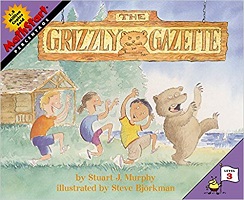
Grade 2
5 skill lessons
Math
Skill lessons
The mathematics the book carries, taught directly. Printable workbook pages and teacher keys are not available for this book yet.
- 1Ten Campers Out of a Hundred
- 2Who Is Ahead and Who Is Gaining
- 3What Changed on Election Night
- 4Make It Add to a Hundred
- 5The Poll as One Hundred Squares
Math + reading
Math through the reading
The same book, entered through a sentence it prints. Change one word in the reading and the numbers change with it.
No math-through-reading lessons for this book yet.
Reading
Reading and language lessons
The same book read as a text. What a word means in its sentence, how a character is shown, how the writing is put together - no mathematics.
No reading and language lessons for this book yet.
Skill lessons
5 lessons on the mathematics the book carries. Printable workbook pages and teacher keys are not available for this book yet.
1. Ten Campers Out of a Hundred
Camp Grizzly holds exactly one hundred campers and the Gazette's reporters ask every one of them, so each number the paper prints is a count of campers and a percent at the same time: the ten who say Cory on Wednesday are the 10% Katie is so pleased about. Students build the hundred campers as a hundred grid, turn over the squares one poll row names, and read that part twice, once as campers and once as a percent, with the whole hundred still on the desk. Katie's Friday claim is the test worth having, because twenty-one campers beat 20% by exactly one square.
Full lesson — 20 minutes
1. Build the hundred campers (5 min)
Lay one counter on every square of the hundred grid, ten to a row, counting the rows by tens as you fill them. That grid is Camp Grizzly, one square for every camper a reporter has to ask. Say how many campers the paper must ask before it can say it asked all of them.
Word preview: percent
If Cory won, she would get to wear the famous Grizzly Bear costume and lead all 100 campers in the Grizzly Parade.
Then they printed a circle graph to show how all or 100% of the campers felt.
2. Turn over Cory's ten (5 min)
Turn over the counters on one whole row, ten squares, one for each camper who told the reporters on Wednesday that they would vote for Cory. Count what you turned, then count the rows you did not touch. Say the ten twice, first as ten campers and then the way Katie says it.
Ten said they would vote for Corey.
You already have 10% of the vote, said Katie, in just one day.
3. Test what Katie says on Friday (6 min)
Set the grid back and turn over one square for each of the twenty-one campers who said Cory on Friday. Now count off twenty of those turned squares and see how many turned squares are left over. Say out loud whether Katie is right that Cory has more than 20%, and say how many campers the extra is.
Twenty-one said they would vote for Cory.
You've got more than 20% said Katie.
4. Read a row of your own both ways (4 min)
Take one full row of the grid, ten squares, and say what part of the camp it is in both of the paper's ways. Then turn five whole rows and do the same for those. Keep the untouched squares in view every time you say it, so the hundred the part came out of is never off the desk.
Short version — 9 minutes
1. Turn over Cory's ten (4 min)
Turn over one whole row of the hundred grid, ten squares, one for each camper who said Cory on Wednesday. Count them and count the rows you left, then say the ten as campers and the way Katie says it.
Ten said they would vote for Corey.
You already have 10% of the vote, said Katie, in just one day.
2. Test what Katie says on Friday (5 min)
Set the grid back and turn twenty-one squares for Friday's count. Count off twenty of them, say how many turned squares are left over, then say whether Katie is right that Cory has more than 20%.
Twenty-one said they would vote for Cory.
You've got more than 20% said Katie.
Three levels
- Support
- Stay with Cory's ten. Turn the counters one at a time, saying one camper for each, then count the ten again as one part of the hundred still lying in front of you. Say the count of campers first and take Katie's way of saying it only once the ten turned squares are there to point at.
- At Grade
- Turn Cory's ten and then her twenty-one, read each part as campers and as a percent with the whole grid in view, and settle Katie's more than 20% by counting what stands above twenty.
- Extension
- Take the paper's two animal lines, the squirrels at 100% and the rabbits at 75%, and say what somebody would have had to count before either could be printed the way the campers' 100% was. Build seventy-five squares, say how many squares are left out of that part, and say why the poll's hundred percent has a number behind it and the squirrels' does not.
English learners
Percent is one word doing a job the grid makes visible: the whole is a hundred squares and a percent is how many of them are turned. Number words to a hundred carry over from any language of schooling, so they are not the load here; the word percent and the % sign are, because neither can be guessed from the counters. Attach both to squares a student has just turned, and rehearse one frame in both directions, blank campers out of the hundred is blank percent. Accept the answer pointed at on the grid before the frame is settled, and let a student give the count in their strongest language first.
Materials
- Hundred grid, ten by ten, one per pair of students
- 100 counters per pair of students
- Printed source passage in this step
- Poll row cards for Wednesday and Friday, one row to a card, per pair of students
- Word cards: percent, poll
Standards & curriculum
These lessons are being matched against curricula now.
Standards are held back while this plan is edited. Every standard shown here was matched against the supplied wording of this lesson, quoting its steps, so a changed step is no longer the thing that was checked. Undo your changes to bring the standards back — your edits stay in this browser either way.
2. Who Is Ahead and Who Is Gaining
Every headline the Gazette prints is a comparison of the numbers underneath it: two names neck and neck at twenty-five each, Sophie holding the lead with thirty-six, and Jacob telling Cory she is gaining on them. Students lay Friday's four counts out as cards, order them, and check each headline word against what the cards actually show, then follow one camper from one poll to the next and say who gained and who lost. The Wednesday count for Sophie is damaged in the source transcript, so Cory and Daniel are followed from Wednesday to Friday and Sophie is followed from Tuesday to Friday.
Full lesson — 20 minutes
1. Put Friday's four counts in order (5 min)
Write Friday's four numbers on separate cards, thirty-six, twenty-one, twenty-eight and fifteen, with the name or the word undecided beside each one. Lay them out from most to fewest. Only then read the paper's headline for that day, and say whether the headline sits on the card at the front of your line.
Word preview: ahead, lead
Thirty-six said they would vote for Sophie.
Twenty-one said they would vote for Cory.
Twenty-eight said they would vote for Daniel.
Fifteen hadn't made up their minds.
The Grizzly Gazette, Sophie holds the lead.
2. Say what neck and neck was worth (5 min)
Tuesday's headline puts two names together. Find the two counts printed under it and say what is true of them that makes the headline fair. Then go back to your Friday cards and find how far apart each pair of neighbours is, thirty-six and twenty-eight, twenty-eight and twenty-one, twenty-one and fifteen. Say whether any two of Friday's counts are neck and neck, and which two come closest.
Word preview: gaining
The Grizzly Gazette, Sophie and Daniel, Neck and Neck.
25 said they would vote for Sophie.
25 said they would vote for Daniel.
3. Follow one camper from one poll to the next (6 min)
Cory and Daniel each have a Wednesday count and a Friday count. Lay Cory's two out, ten and then twenty-one, and count on from ten to twenty-one to say how many she gained. Do the same for Daniel, thirty and then twenty-eight, and say whether counting on works for him or whether you have to count the other way. Then take Sophie from Tuesday's twenty-five to Friday's thirty-six.
Ten said they would vote for Corey.
Twenty-one said they would vote for Cory.
Thirty said they would vote for Daniel.
Twenty-eight said they would vote for Daniel.
25 said they would vote for Sophie.
Thirty-six said they would vote for Sophie.
4. Say who is gaining (4 min)
Put your Wednesday-to-Friday numbers side by side and say who gained and who lost, and by how many campers each. Then read what Jacob says to Cory on Friday and say which two counts he could be looking at when he says it.
You're gaining on them said Jacob.
Short version — 9 minutes
1. Put Friday's four counts in order (4 min)
Lay Friday's four cards out from most to fewest, thirty-six, twenty-one, twenty-eight and fifteen, then read the paper's headline and say whether it sits on the card at the front of your line.
Word preview: ahead, lead
Thirty-six said they would vote for Sophie.
Fifteen hadn't made up their minds.
The Grizzly Gazette, Sophie holds the lead.
2. Follow one camper from one poll to the next (5 min)
Lay out Cory's ten and twenty-one and count on from one to the other to say her gain. Do the same for Daniel, thirty and twenty-eight, and say which way you had to count for him.
Ten said they would vote for Corey.
Twenty-one said they would vote for Cory.
Thirty said they would vote for Daniel.
Twenty-eight said they would vote for Daniel.
Three levels
- Support
- Work Friday's four cards only. Lay them most to fewest and say the biggest count and the smallest. Then build just those two on the hundred grid, thirty-six squares in one colour above fifteen in another, so how far apart they are is something you can see before anybody has to say a number for it.
- At Grade
- Order Friday's four counts, settle whether any two are neck and neck by finding how far apart each pair of neighbours is, then follow Cory and Daniel from Wednesday to Friday and say who gained and who lost.
- Extension
- Find how far Cory's twenty-one is behind Sophie's thirty-six on Friday, then find how many campers had still not made up their minds that day. Say what those two numbers being the same would mean if every undecided camper went to Cory, and say whether that would be enough for her to pass Sophie or only to draw level.
English learners
The mathematics here is comparison of two-digit counts, which carries over from any language of schooling; the load is that this book states every comparison as an idiom. Ahead, neck and neck, holds the lead and gaining on cannot be worked out from the words in them, and a learner who knows more and fewer still cannot read the headlines. Teach each one on the two cards it compares, laid out and touched while the phrase is said, and rehearse one frame that does the same job plainly, blank has more than blank, so blank is ahead. Let a student point at the cards to give a verdict, and take the comparison in their strongest language first.
Materials
- Four number cards for Friday's poll, one count to a card, per pair of students
- Printed source passage in this step
- Word cards: ahead, lead, gaining
Standards & curriculum
These lessons are being matched against curricula now.
Standards are held back while this plan is edited. Every standard shown here was matched against the supplied wording of this lesson, quoting its steps, so a changed step is no longer the thing that was checked. Undo your changes to bring the standards back — your edits stay in this browser either way.
3. What Changed on Election Night
The Gazette prints Friday's poll and Sunday's result and never once puts the two against each other, so every change in the story is there in print and none of it is worked out. Students set the two lists side by side, name by name, and count on or count back on the hundred grid to find what Cory gained and what Sophie and Daniel lost. Sunday's list is one row shorter than Friday's, and the total is what says so.
Full lesson — 20 minutes
1. Set Friday's poll against Sunday's count (5 min)
Write Friday's four numbers down one column and Sunday's three down a second column beside them, lining each name up with itself. Read the two columns aloud and say for each name whether the number went up or down. Say which row of Friday's list has nothing beside it at all.
Word preview: gain
Thirty-six said they would vote for Sophie.
Twenty-one said they would vote for Cory.
Twenty-eight said they would vote for Daniel.
Fifteen hadn't made up their minds.
Corey Wins, 25 voted for Sophie, 50 voted for Corey, 25 voted for Daniel
2. Find Cory's gain (6 min)
Cory had twenty-one on Friday and fifty on Sunday. Build twenty-one squares on the hundred grid, then keep going to fifty, saying one number word for each new square. Count only the squares you added after twenty-one, write that number in the space between your two columns, and say it as a sentence with the number in it.
Twenty-one said they would vote for Cory.
50 voted for Corey
3. Find what Sophie and Daniel lost (5 min)
Do the same for Sophie, thirty-six down to twenty-five, and for Daniel, twenty-eight down to twenty-five. Count back on the grid this time, one number word per square you take away, and write each loss between the columns beside the name it belongs to.
Thirty-six said they would vote for Sophie.
Twenty-eight said they would vote for Daniel.
4. Look for the undecided row (4 min)
Sunday's paper prints three numbers and no undecided row at all. Add Sunday's three and say the total. Then say how many campers still had not made up their minds when the votes were counted, and say how the total is what tells you.
Fifteen hadn't made up their minds.
Short version — 9 minutes
1. Set Friday's poll against Sunday's count (4 min)
Write Friday's four numbers in one column and Sunday's three beside them, name against name, and say for each name whether the number went up or down.
Word preview: gain
Thirty-six said they would vote for Sophie.
Twenty-one said they would vote for Cory.
Twenty-eight said they would vote for Daniel.
Fifteen hadn't made up their minds.
Corey Wins, 25 voted for Sophie, 50 voted for Corey, 25 voted for Daniel
2. Find Cory's gain (5 min)
Build twenty-one squares on the hundred grid and keep going to fifty, one number word per square. Count only the squares you added and say Cory's gain as a sentence with the number in it.
Twenty-one said they would vote for Cory.
50 voted for Corey
Three levels
- Support
- Work Cory's two numbers only. Build twenty-one squares on the grid, then carry on to fifty saying one number word for each square you add. Count just the squares added after twenty-one and say the gain with the grid still in front of you, so the answer is something counted rather than remembered.
- At Grade
- Fill both columns, find all three changes by counting on or counting back on the grid, and settle the missing undecided row from Sunday's total.
- Extension
- Write Cory's gain on its own. Then add Sophie's loss and Daniel's loss together, and add to that total the fifteen campers who had not made up their minds on Friday. Compare what you get with Cory's gain and say what you notice. Then say what it means about campers who had already chosen a name on Friday, given that the undecided fifteen on their own are not enough to make up her gain.
English learners
Counting on and counting back are the same actions in any language of schooling, so the arithmetic is not the load. The load is that this task needs three different English phrasings of one difference: she gained twenty-nine, he lost three, eleven fewer than before. Teach them on the grid as it is being counted, one phrase per change, and give one frame that carries the number either way, blank more than on Friday and blank fewer than on Friday. A student may show a change by sliding counters and say the number alone, and may report the direction in their strongest language before taking the frame.
Materials
- Two-column recording sheet headed Friday and Sunday, one per student
- Pencil per student
- Printed source passage in this step
- Hundred grid, ten by ten, one per pair of students
- Word cards: gain, fewer
Standards & curriculum
These lessons are being matched against curricula now.
Standards are held back while this plan is edited. Every standard shown here was matched against the supplied wording of this lesson, quoting its steps, so a changed step is no longer the thing that was checked. Undo your changes to bring the standards back — your edits stay in this browser either way.
4. Make It Add to a Hundred
Three of the paper's lists are printed complete, and each one accounts for every camper in the camp: twenty-five, fifty and twenty-five on Tuesday, four numbers on Friday, and three again on election night. Students add each list and get a hundred every time, then work the other way round, with a partner covering one row and the missing count found by counting on to a hundred from the rows still showing. Speed comes from the hundred being fixed: once three of Friday's rows are read, the fourth is not a guess.
Full lesson — 20 minutes
1. Add Tuesday's three numbers (4 min)
Write Tuesday's three numbers down the page, twenty-five and fifty and twenty-five, and add them. Say the total out loud. Then say how the total shows that the reporters left nobody in the camp out.
Word preview: undecided
25 said they would vote for Sophie.
50 hadn't made up their minds.
25 said they would vote for Daniel.
Again, they asked the 100 campers how they planned to vote.
2. Add Friday's four numbers (6 min)
Friday's poll has four rows instead of three. Write thirty-six, twenty-one, twenty-eight and fifteen down the page. Add the tens first and say that total, then add the ones and say that total, then put the two together. Say whether Friday's poll accounts for the whole camp the way Tuesday's did.
Thirty-six said they would vote for Sophie.
Twenty-one said they would vote for Cory.
Twenty-eight said they would vote for Daniel.
Fifteen hadn't made up their minds.
3. Cover a row and find it (6 min)
Your partner covers one of Friday's four cards with a blank card and you find the number underneath. Add the three counts you can still see, then count on from that total to a hundred and say the number you counted on. Uncover the card and check. Take it in turns until every one of the four rows has been the covered one.
4. Check election night (4 min)
Sunday's paper prints only three numbers. Add them and say the total, then say which row Friday's list had that Sunday's list does not. Say how many campers that missing row stands for on election night, and how the total tells you.
Corey Wins, 25 voted for Sophie, 50 voted for Corey, 25 voted for Daniel
Short version — 9 minutes
1. Add Tuesday's three numbers (4 min)
Write Tuesday's three numbers down the page, twenty-five and fifty and twenty-five, add them, and say how the total shows the reporters left nobody out.
Word preview: undecided
25 said they would vote for Sophie.
50 hadn't made up their minds.
25 said they would vote for Daniel.
2. Cover a row and find it (5 min)
Your partner covers one of Friday's four cards and you find it: add the three counts still showing, then count on from that total to a hundred and say the number you counted on. Uncover and check.
Three levels
- Support
- Work Tuesday's three numbers only, and build each one on the hundred grid before adding anything: twenty-five squares, then fifty, then twenty-five, filling from the top left so the grid runs out exactly as the last row goes on. Then cover one of the three counts and find it by counting the squares of the grid that its part had filled.
- At Grade
- Add both polls, then find each of Friday's four counts once with it covered, counting on to a hundred from the three rows still showing.
- Extension
- Tuesday's poll and Sunday's result print the same three numbers, twenty-five, fifty and twenty-five, with a different name on the fifty. Say which name moved. Then work out what Tuesday's poll would have said if the fifty undecided campers had split evenly between Sophie and Daniel, and check that your two new counts still add to a hundred.
English learners
Adding to a hundred is the same operation in any language of schooling, and a learner who has done it will recognise it here. What does not carry over is the word the book uses for the row that belongs to nobody: undecided is a long English word for a part of the total, and hadn't made up their minds is an idiom that will not come apart word by word. Teach undecided as the row on the card that has no name on it, and rehearse one frame, blank and blank and blank make a hundred. A student may point to the covered card and say only the missing number, and may count on aloud in their strongest language.
Materials
- Pencil per student
- Printed source passage in this step
- Four poll cards for Friday's counts and one blank covering card, per pair of students
- Word cards: undecided, hundred
Standards & curriculum
These lessons are being matched against curricula now.
Standards are held back while this plan is edited. Every standard shown here was matched against the supplied wording of this lesson, quoting its steps, so a changed step is no longer the thing that was checked. Undo your changes to bring the standards back — your edits stay in this browser either way.
5. The Poll as One Hundred Squares
The story says the reporters printed a circle graph and never says what it showed, so the four counts are all the reader is given and the display is the class's to make. Students colour each poll onto a strip of a hundred squares, one unbroken run per part, write the count inside each part, and then hit the decision that makes it a display rather than a colouring: the paper lists Friday's parts in a different order from Tuesday's, and the two strips only answer questions once the same person sits in the same place on both.
Full lesson — 20 minutes
1. Colour Tuesday's poll onto the strip (5 min)
Take the strip of a hundred squares and colour Tuesday's poll onto it in one unbroken run for each part, twenty-five for Sophie, fifty for the undecided campers, twenty-five for Daniel. Start at the left and stop each colour where its count stops. Write the number inside its own part, and check that the last square of the strip is the last square of the last part.
Word preview: part, whole
25 said they would vote for Sophie.
50 hadn't made up their minds.
25 said they would vote for Daniel.
2. Colour Friday's poll onto a second strip (6 min)
On a second strip colour Friday's four parts, thirty-six, twenty-one, twenty-eight and fifteen, using the same colour for the same person as before and a new colour for Cory. Write each count inside its part. Say which part of this strip has no part to match it on the Tuesday strip.
Thirty-six said they would vote for Sophie.
Twenty-one said they would vote for Cory.
Twenty-eight said they would vote for Daniel.
Fifteen hadn't made up their minds.
3. Settle one order for both strips (5 min)
The paper does not list the two polls in the same order. Choose one order for your strips and put the same person in the same place on both, cutting and reassembling the parts or relabelling them so they match. Say out loud why you chose that order. Then lay the strips one under the other, lined up at the left edge, and say which part got longer, which got shorter, and by how many squares.
4. Label what the whole strip is (4 min)
Write at the end of each strip how many squares the whole strip holds and how many campers those squares stand for. Then read the sentence the paper uses for the whole camp, and say it with your hand flat along the whole strip.
Then they printed a circle graph to show how all or 100% of the campers felt.
Short version — 9 minutes
1. Colour Tuesday's poll onto the strip (4 min)
Colour Tuesday's poll onto the strip of a hundred squares, one unbroken run per part, twenty-five and fifty and twenty-five, and write each count inside its part. Check that the last part ends on the last square.
Word preview: part, whole
25 said they would vote for Sophie.
50 hadn't made up their minds.
25 said they would vote for Daniel.
2. Colour Friday's poll onto a second strip (5 min)
Colour Friday's four parts onto a second strip, thirty-six, twenty-one, twenty-eight and fifteen, keeping each person's colour. Write each count inside its part and say which part has nothing to match it on the Tuesday strip.
Thirty-six said they would vote for Sophie.
Twenty-one said they would vote for Cory.
Twenty-eight said they would vote for Daniel.
Fifteen hadn't made up their minds.
Three levels
- Support
- Colour Tuesday's poll only, then cut the strip between its parts so the twenty-five, the fifty and the twenty-five come apart in your hands. Count the squares in each piece and say its count, then push the three pieces back together and count the whole strip to a hundred.
- At Grade
- Colour both polls, settle one order for the parts and say why you chose it, then read the two strips against each other part by part and say how many squares each part moved.
- Extension
- Make a third strip for election night, twenty-five and fifty and twenty-five with Corey's name on the fifty, and stand all three strips together in day order. Say which part is missing from the third strip altogether, and how many squares that part held on Tuesday and on Friday before it went.
English learners
A part of a strip is easier to hold on to than the words for it, so let the strip come first. Part and whole are the two words this work needs and neither can be guessed: teach part as one coloured run of squares and whole as the hand laid flat along all hundred. The comparing words come next, longer and shorter, which the two strips make visible before anybody says them. Rehearse one frame, this part is blank squares of the whole hundred, and accept a student pointing along their own strip while the frame is still settling.
Materials
- Paper strip of one hundred squares, one per pair of students
- Four colouring pencils in different colours, per pair of students
- Printed source passage in this step
- Second paper strip of one hundred squares, one per pair of students
- Scissors and tape, one pair per two pairs of students
- Pencil per student
- Word cards: part, whole
Standards & curriculum
These lessons are being matched against curricula now.
Standards are held back while this plan is edited. Every standard shown here was matched against the supplied wording of this lesson, quoting its steps, so a changed step is no longer the thing that was checked. Undo your changes to bring the standards back — your edits stay in this browser either way.