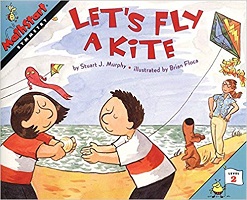
Let's Fly a Kite
Grade 1
3 skill lessons · 2 math-through-reading
Math
Skill lessons
The mathematics the book carries, taught directly. Printable workbook pages and teacher keys are not available for this book yet.
- 1Fold the Kite So Both Sides Match
- 2Two Lines on One Kite
- 3Say It About Your Own Paper
Math + reading
Math through the reading
The same book, entered through a sentence it prints. Change one word in the reading and the numbers change with it.
- 4Middle or Across: Fold What the Sentence Says
- 5Both Folds Match, So Which One Do You Sit On?
Reading
Reading and language lessons
The same book read as a text. What a word means in its sentence, how a character is shown, how the writing is put together - no mathematics.
- 6That's Not Fair: Watching a Grown-Up Solve an Argument
- 7Hold, Let Go, Run: Following What Laura Tells Them to Do
- 8Raced, Flew, Dove, Sprinted: Picking a Strong Action Word
- 9Waves and Whales or a Lightning Bolt: Telling Two Wants Apart
- 10One Windy Saturday: The Words That Set the Scene
Skill lessons
3 lessons on the mathematics the book carries. Printable workbook pages and teacher keys are not available for this book yet.
1. Fold the Kite So Both Sides Match
The book hands over one move and repeats it four times: put a line down the middle of a whole and the two sides come out the same. Laura says it plainly once, about the kite, and children can do the whole of it with their hands. Students fold a paper kite until one side lands on the other with no corner poking out, trace the crease, cut on it and stack the two pieces to test the match by looking rather than by measuring. A second kite folded across, the way Bob's first line went, gives them the failed case to hold beside the good one. What counts is that the child can say what the line did, not that the child knows a word for it: the test is whether the pieces cover each other, and the child performs that test.
Full lesson — 20 minutes
1. Fold a kite so the two sides land on each other (6 min)
Each child takes a paper kite cut in the diamond shape Laura cuts and folds it once so one side lands exactly on the other. Run a thumb along the folded edge and check the four corners: if a corner pokes out past its partner, open the paper and fold again. Keep folding and checking until nothing pokes out.
Word preview: fold, middle
Hannah and Bob watched as she cut a large diamond shape out of white paper.
2. Open the fold and trace the line it left (4 min)
Open the kite flat and run a crayon down the crease so the line Laura draws is now on your own paper. Put one finger on each side of the line and say what the line did to the kite. Hold the traced kite up so a partner can see the line from across the table.
Word preview: line
If I draw the line down the middle, both sides are the same size and shape.
3. Cut on the line and stack the two sides (6 min)
Cut along the traced crease and set the two pieces one on top of the other. Slide the top piece until its point meets the bottom piece's point, then look at every edge for anything sticking out. Tell your partner whether the two pieces match, and show the edge you checked.
Word preview: match, same
4. Fold the second kite a way that does not match (4 min)
Take the second kite and fold it across, the way Bob's first line went, so one part ends up bigger. Stack those two pieces and point at the part that sticks out past the other. Say which fold made two matching pieces and which one did not, with both stacks in front of you.
Word preview: bigger
The bottom part's bigger, said Bob.
Short version — 9 minutes
1. Fold a kite so the two sides land on each other (5 min)
Each child folds a paper kite once so one side lands exactly on the other, then checks the corners for anything poking out. Fold again until nothing does.
Word preview: fold, middle
Hannah and Bob watched as she cut a large diamond shape out of white paper.
2. Cut on the line and stack the two sides (4 min)
Cut along the crease and stack the two pieces point on point. Look along every edge and tell a partner whether anything sticks out.
Word preview: match, same
Three levels
- Support
- Your first kite arrives already creased down the middle, so you fold on a line that is there instead of judging where it goes. Everything else stays yours: you cut on the crease, stack the two pieces, hunt along the edges for anything poking out, and say whether they match.
- At Grade
- Fold your own kite until one side lands on the other with nothing poking out, trace the crease, cut it and stack the pieces to check. Then fold the second kite across and stack those two, and say which fold made matching pieces.
- Extension
- Find a second fold on one kite that also makes the two sides match, the way Laura finds a second fold on the blanket. Fold, cut and stack to prove it, then say what the two folds you found have in common and what a fold that fails does differently.
English learners
Folding and stacking carry across every language: a child who lays one piece on another and points at a corner sticking out has made the argument without English. The load sits in words that sound like everyday talk while doing arithmetic work. "the same" here means covering each other exactly, not merely looking alike, and English uses "same" for both. "down the middle" and "across" name two different lines and differ by one small word. Rehearse this frame with the two stacks in front of you: "I folded ___ and the sides ___ match." Students may decide which stack is right in their strongest language first and then say the frame in English while pointing at the edge they checked.
Materials
- Paper kites cut in a diamond shape, two per child
- Crayons
- Child-safe scissors
- Word cards: fold, middle, match, same, bigger
Standards & curriculum
Choose your curriculum above to see the standards for this lesson.
Standards are held back while this plan is edited. Every standard shown here was matched against the supplied wording of this lesson, quoting its steps, so a changed step is no longer the thing that was checked. Undo your changes to bring the standards back — your edits stay in this browser either way.
2. Two Lines on One Kite
The book puts two different lines on the same kite and lets a child watch the argument change. Laura's first line runs across and Bob announces the bottom part is bigger; she rubs it out and draws one down the middle, and the complaint stops. Students carry out both lines on their own paper kites, cut on each and stack the parts, so the difference between the two lines arrives as a strip of paper with nothing covering it rather than as a rule they are told. They then run the same test on a paper blanket, folding it down the middle and then a second way that also works, which is what stops the lesson from teaching that a whole has exactly one line. The thinking is in choosing where the line goes and defending the choice with the parts in hand.
Full lesson — 20 minutes
1. Draw Bob's line and see who gets more (5 min)
Each pair takes a paper kite and draws Laura's first line across it, dividing it into a top part and a bottom part. Cut on that line and stack the two parts to find out how much bigger the bottom part is. Point at the strip of the bottom part that has nothing above it to cover it.
Word preview: across, part
I'll draw a line across the kite so you two can each have a part to decorate.
Bob's part is bigger than mine.
2. Erase and draw the line Laura drew instead (6 min)
On a second kite, draw the line Laura draws after she rubs the first one out, running from the top point straight down to the bottom point. Cut on that line and stack the two parts the same way you stacked the first pair. Show your partner the edge that proves nothing sticks out this time.
Word preview: middle
If I draw the line down the middle, both sides are the same size and shape.
3. Put both pairs of parts side by side (5 min)
Lay your two stacks next to each other, the one from Bob's line and the one from Laura's. Take one part from each stack and hold it up. Tell your partner which line settled the argument and which one started it, using the parts in your hand as the reason.
Word preview: fair
That's not fair.
4. Test the line on the seat and the blanket (4 min)
Fold a paper rectangle the way Laura folds the blanket, down the middle, and stack the two sides. Then fold a fresh rectangle a different way that also makes the sides match, the way Laura does when Bob says the sides are too skinny. Keep both folded rectangles to show that a whole can have more than one line that works.
Word preview: middle
The sides are the same this way too.
Short version — 9 minutes
1. Draw Bob's line and see who gets more (4 min)
Each pair draws Laura's first line across a paper kite, cuts on it and stacks the two parts. Point at the strip of the bottom part that nothing covers.
Word preview: across, part
Bob's part is bigger than mine.
2. Erase and draw the line Laura drew instead (5 min)
On a second kite, draw the line running from the top point straight down to the bottom point, cut on it and stack the parts. Show the edge that proves nothing sticks out.
Word preview: middle
If I draw the line down the middle, both sides are the same size and shape.
Three levels
- Support
- Both kites come to you with the two lines already drawn, so you choose which line to cut rather than judging where each one goes. You still cut both, stack both pairs, and say which line made the parts match by pointing at the edge you checked.
- At Grade
- Draw both lines yourself, cut each kite and stack each pair, then hold up one part from each stack and say which line settled the argument. Fold the blanket down the middle and find a second fold that also works.
- Extension
- Find a line on the kite that is neither of Laura's two and decide before you cut whether the parts will match, then cut and stack to find out if you were right. Say what you looked at to decide, and whether being wrong changed what you look at next time.
English learners
The stacking test needs no English: a strip of paper with nothing over it is visible to anyone at the table. What is hard is that English marks the whole difference between the two lines with direction words that sound alike in conversation, "across" against "down the middle", and that "part" here means a piece with a size rather than a role in a story. "bigger" is comparative and its syntax differs sharply across languages; a child may know exactly which piece is bigger and still build the sentence the other way round. Rehearse this frame with both stacks out: "This line made the parts ___. That line made one part ___." Students may reason it out in their strongest language first and then say the frame in English while holding the part they mean.
Materials
- Paper kites cut in a diamond shape, two per pair
- Child-safe scissors
- Paper rectangles for blankets, two per pair
- Word cards: across, middle, part, fair
Standards & curriculum
Choose your curriculum above to see the standards for this lesson.
Standards are held back while this plan is edited. Every standard shown here was matched against the supplied wording of this lesson, quoting its steps, so a changed step is no longer the thing that was checked. Undo your changes to bring the standards back — your edits stay in this browser either way.
3. Say It About Your Own Paper
This book settles every argument with a sentence about sides, and the same four or five words carry all of it: same, both, middle, across, bigger. Students sort the book's sentences against papers they have folded, then say a sameness sentence about their own fold while a partner tests it by stacking the two sides. One word of Laura's instruction is then changed and children fold what the new sentence says, so the sentence and the paper come apart in front of them. The spoken sentence and the folded paper are two records of one arrangement, and a child who says the sentence must be able to hand over the paper that makes it true. Nothing is written; the sentence is said, tested against paper, and said again.
Full lesson — 20 minutes
1. Sort the sentences the book says about sides (5 min)
Each pair gets four sentence cards read aloud, two where the sides match and two where they do not. Put each card next to the paper it belongs with: a folded kite whose sides land on each other, or a kite folded across so one part is bigger. Say aloud which pile a card went in before you set it down.
Word preview: same, bigger, both
Now, both sides of the seat are exactly the same, she said.
The bottom part's bigger, said Bob.
2. Say the sameness sentence about your own paper (6 min)
Hold up the paper you folded and say a true sentence about it using the book's own words for sameness. Your partner takes the paper, stacks the two sides and says whether your sentence matches what the stack shows. Swap and do it again with the other paper.
Word preview: same
If I draw the line down the middle, both sides are the same size and shape.
3. Change one word and fold what the new sentence says (5 min)
Listen to Laura's sentence with one word changed from middle to across, then fold a fresh kite doing exactly what the changed sentence says. Stack the two sides of that fold and say whether the sentence about sameness is still true of the paper in your hand.
Word preview: middle, across
Here, I'll make a fold down the middle.
4. Tell the story of one fold from start to finish (4 min)
Take one of your folded papers to a partner who was not at your table and tell them where your line went, what you did next, and how you knew the two sides were the same. Your partner must be able to make the same fold from what you said, without watching you do it.
Word preview: fold, middle
Short version — 9 minutes
1. Say the sameness sentence about your own paper (5 min)
Hold up the paper you folded and say a true sentence about it using the book's words for sameness. Your partner stacks the two sides and says whether your sentence matches the stack.
Word preview: same
If I draw the line down the middle, both sides are the same size and shape.
2. Change one word and fold what the new sentence says (4 min)
Hear Laura's sentence with middle changed to across, fold a fresh kite doing exactly what it says, stack the two sides and say whether the sameness sentence is still true.
Word preview: middle, across
Here, I'll make a fold down the middle.
Three levels
- Support
- You choose your sentence from two the teacher says aloud instead of building one from scratch, and you point at the stack while you say it. The testing stays yours: you stack your partner's two sides and say whether their sentence matches what you can see.
- At Grade
- Sort all four cards, say your own sameness sentence about the paper you folded and have a partner test it by stacking, then fold what the changed sentence says and judge whether sameness still holds.
- Extension
- Change a different word of Laura's sentence, one that is not middle, and fold what your new sentence says. Say which of the two changed words does more damage to the sameness, and show the damage with paper rather than describing it.
English learners
The mathematics travels without English here; the stacking test settles every dispute and needs no words at all. The language is the whole difficulty. English hides the mathematical work inside function words a child hears as filler: "both" fixes that there are two sides and not one, "the same" means covering exactly rather than merely resembling, and "down the middle" against "across" is the entire difference between a match and a failure. Comparative syntax around "bigger" also differs sharply across languages, so a child may see correctly and still say it backwards. Rehearse this frame while holding the paper: "I folded ___, so both sides are ___." Invite students to work out whether the sentence is true in their strongest language first, then say the frame in English while a partner stacks the sides.
Materials
- Sentence cards, four per pair
- Folded paper kites, two per pair
- Paper kites cut in a diamond shape, one per child
- Word cards: same, both, middle, across, bigger
Standards & curriculum
Choose your curriculum above to see the standards for this lesson.
Standards are held back while this plan is edited. Every standard shown here was matched against the supplied wording of this lesson, quoting its steps, so a changed step is no longer the thing that was checked. Undo your changes to bring the standards back — your edits stay in this browser either way.
Math through the reading
The mathematics is reached through a sentence the book prints: change one word in the reading and the numbers change with it. These carry their own standards, matched against these lessons rather than inherited from the skill ones.
4. Middle or Across: Fold What the Sentence Says
Students fold paper kites obeying Laura's instruction and the same instruction with one direction word changed, then stack both pairs of sides to find which sentence made the sides match.
Full lesson — 20 minutes
1. Fold what Laura's sentence says (5 min)
Students hear Laura's folding instruction read aloud twice, then carry it out on a paper kite: one fold running from the top point straight down to the bottom point, pressed flat. They cut on the crease, stack the two parts and slide the top one until the points meet, then say aloud whether anything sticks out.
2. Fold what the changed sentence says (5 min)
Students hear the same sentence with one direction word changed and carry that one out on a second kite, folding across instead. They cut on that crease, stack those two parts the same way, and point at the strip of paper the top part does not cover.
3. Put both stacks under their sentences (6 min)
Each pair lays their two stacks side by side and sets each one under the sentence card that made it. Students take one part from each stack and hold both against a kite kept unfolded, then say which stack came from which sentence and show the edge that proves it.
4. Name the word and say it about your own stack (4 min)
Each student names aloud the one word that differs between the two sentences, then holds up one stack and says a true sentence about it using the book's words for sameness. A partner restacks that pair and says whether the sentence matches the edges.
Short version — 9 minutes
1. Fold what Laura's sentence says (5 min)
Students hear Laura's folding instruction read aloud twice, then carry it out on a paper kite: one fold running from the top point straight down to the bottom point, pressed flat. They cut on the crease, stack the two parts and slide the top one until the points meet, then say aloud whether anything sticks out.
2. Fold what the changed sentence says (5 min)
Students hear the same sentence with one direction word changed and carry that one out on a second kite, folding across instead. They cut on that crease, stack those two parts the same way, and point at the strip of paper the top part does not cover.
Three levels
- Support
- Both kites arrive already creased, one down the middle and one across, so you cut on lines that are there instead of judging where each fold goes. Everything else stays yours: you cut both, stack both pairs, hunt along the edges for anything sticking out, name the changed word and say your sentence about your own stack.
- At grade
- Fold both kites yourself from the two spoken sentences, cut and stack each pair, put each stack under the sentence that made it, then name the changed word and say a true sentence about your own stack while a partner tests it.
- Extension
- Change a different word instead. Keep the fold down the middle and take away "both", so the sentence says only that the sides are the same size and shape, then decide whether that sentence could still be true of a kite folded across. Fold and stack to settle it, and show the answer with paper rather than describing it.
English learners
The folding and the stacking travel without English; a child who lays one part on another and points at a strip nothing covers has made the whole argument silently. The load is in words that sound like ordinary talk while doing the arithmetic. "down the middle" and "across" name the two different lines and are the only difference between the two sentences, and English buries both inside longer phrases where they are easy to lose. "both" fixes that there are two parts and not one. "the same size and shape" means covering each other exactly rather than merely looking alike, and English uses "same" for both senses. Rehearse this frame with a stack in hand: "I folded ___, so the sides are ___." Students may work out which stack is right in their strongest language first, then say the frame in English while pointing at the edge they checked.
Materials
- Paper kites cut in a diamond shape, two per student
- Child-safe scissors
- One paper kite per pair, kept unfolded for comparing
- Laura's folding sentence and the changed sentence on two large cards, each read aloud twice as it is shown
Standards & curriculum
Choose your curriculum above to see the standards for this lesson.
Standards are held back while this plan is edited. Every standard shown here was matched against the supplied wording of this lesson, quoting its steps, so a changed step is no longer the thing that was checked. Undo your changes to bring the standards back — your edits stay in this browser either way.
5. Both Folds Match, So Which One Do You Sit On?
Students fold a paper blanket both of Laura's ways, sit two counters on each, and argue aloud to a partner which fold is the better one for two people, using the parts they folded as their reason.
Full lesson — 20 minutes
1. Fold the blanket both of Laura's ways (5 min)
Each student takes two paper blankets. Fold the first down the middle the long way, and the second down the middle the other way. Stack the two sides of each fold and check that both folds do make sides that cover each other, so nothing is decided yet.
2. Sit two counters on each fold (6 min)
Set two counters side by side on one side of the first folded blanket, then on one side of the second. Find out on which fold the two counters sit without touching each other or hanging over an edge. Leave the counters where they are so both blankets can be looked at together.
3. Tell a partner which fold and why (5 min)
Say to your partner which fold you would give Hannah and Bob, and give your reason by pointing at the side the counters are on. Your partner says back whether your reason was about the sides you folded or only about which one you liked, and sends it back for another try if it was the second.
4. Hear Bob's objection and answer it (4 min)
Hear Bob's objection to the first fold read aloud. Hold up the fold you chose and say whether Bob's objection is true of it, using the counters as your evidence. If you change your mind, fold again and say what made you change it.
Short version — 9 minutes
1. Fold the blanket both of Laura's ways (5 min)
Each student takes two paper blankets. Fold the first down the middle the long way, and the second down the middle the other way. Stack the two sides of each fold and check that both folds do make sides that cover each other, so nothing is decided yet.
2. Sit two counters on each fold (6 min)
Set two counters side by side on one side of the first folded blanket, then on one side of the second. Find out on which fold the two counters sit without touching each other or hanging over an edge. Leave the counters where they are so both blankets can be looked at together.
Three levels
- Support
- Use this frame while pointing at your counters: "I would pick this fold because the side is ___ for the two counters." The folding and the counter test stay yours; only the sentence comes ready to fill.
- At grade
- Fold both ways, confirm both make matching sides, run the counter test on each, then tell a partner which fold you would give Hannah and Bob and give the side you folded as your reason.
- Extension
- Take the fold you did not choose and argue the strongest case for it to your partner, using the same two counters. Then say which of the two arguments you would keep and what would have to be different about the blanket for you to switch.
English learners
The folding and the counter test carry the argument without English, and a child who puts two counters on a narrow side and shrugs has already said the important thing. The difficulty is that this lesson asks for a reason rather than an answer, and reason-giving syntax is where children whose mathematics is fine most often stall. Give them the connector: "because" is doing all the work here and it is easy to leave out. "the same" means covering exactly, and it is true of both folds, which is precisely why it cannot settle this; "too skinny" is Bob's word for a side that is narrow and it is a comparison with nothing named on the other end. Invite students to decide which fold they want in their strongest language first, then say the frame in English while their finger stays on the counters.
Materials
- Paper blankets, rectangles, two per student
- Counters, two per student
- Bob's objection to the first fold on one large card, read aloud twice as it is shown
Standards & curriculum
Choose your curriculum above to see the standards for this lesson.
Standards are held back while this plan is edited. Every standard shown here was matched against the supplied wording of this lesson, quoting its steps, so a changed step is no longer the thing that was checked. Undo your changes to bring the standards back — your edits stay in this browser either way.
Reading and language lessons
5 lessons on the reading and language the book carries - what a word means in its sentence, how a character is shown, how a text is built. No mathematics: these are matched against the English language arts curricula, which are a different and smaller set than the mathematics ones.
6. That's Not Fair: Watching a Grown-Up Solve an Argument
Laura tries something, a child objects, and Laura tries again. Students read the first try, read the objection, then read the fix, and say in order what went wrong and what Laura did about it. They finish by naming what Laura did that made the second try work. Nothing is measured or divided; the work is following a problem through a text to the place it is solved.
Full lesson — 20 minutes
1. Read the first try (6 min)
The teacher reads the passage below once. Then read it together. Say aloud what Laura is going to do with the line. Point to the word that tells you where she will draw it.
Word preview: problem
I know," said Laura. I'll draw a line across the kite so you two can each have a part to decorate.
2. Find out what went wrong (5 min)
Read the passage below with the teacher. Somebody is not happy. Say aloud who complains and read out the three words they use to say it is wrong. Then say what they think is unfair.
Word preview: fair
The bottom part's bigger, said Bob. I'll draw my lightning bolt there. Hey, cried Hannah. That's not fair. Bob's part is bigger than mine.
3. Read how it got fixed (5 min)
Read the passage below. Say aloud the two things Laura did with the line. Then say whether Hannah would still say it was not fair, and read out the words in the passage that made you decide.
Word preview: fixed
I have a better idea," said Laura. They watched as she erased the line and drew a new one. If I draw the line down the middle, both sides are the same size and shape. Now, go to it.
4. Tell the whole thing in three parts (4 min)
Turn to your partner and tell the story of the line in three parts: what Laura did first, what went wrong, and what she did next. Use the words First, Then and So. Then listen while your partner tells it back.
Word preview: idea
Short version — 9 minutes
1. Find out what went wrong (5 min)
The teacher reads the passage below. Say who complains and read out the three words they use to say it is wrong.
Word preview: fair
The bottom part's bigger, said Bob. I'll draw my lightning bolt there. Hey, cried Hannah. That's not fair. Bob's part is bigger than mine.
2. Read how it got fixed (4 min)
Read the passage below. Say the two things Laura did with the line, and say whether Hannah would still call it unfair.
Word preview: fixed
I have a better idea," said Laura. They watched as she erased the line and drew a new one. If I draw the line down the middle, both sides are the same size and shape. Now, go to it.
Three levels
- Support
- In step 2, listen to the printed passage and point to the words That's not fair. Answer aloud: who says it, Bob or Hannah? Say the name twice.
- At Grade
- Read the printed passages in steps 2 and 3, say what Hannah complained about, and say what Laura changed to answer the complaint.
- Extension
- The printed passage in step 3 ends with Laura saying Now, go to it. Say two sentences about what those four words tell you about how sure she is that the argument is over.
English learners
That's not fair is a fixed English phrase children hear as one unit long before they can build it, and fair here means equal rather than pale or pleasant. Say the phrase with the matching face, then say the longer sentence it stands for. Invite students to say, in their strongest language, that something is not fair, and tell the class the words they used. Rehearsable frame: That's not fair, because ___.
Materials
- Let's Fly a Kite, the passage printed in this step
- pointing finger
- partner talk cards
- Word cards: problem, fair, fixed, idea
Standards & curriculum
Choose your curriculum above to see the standards for this lesson.
Standards are held back while this plan is edited. Every standard shown here was matched against the supplied wording of this lesson, quoting its steps, so a changed step is no longer the thing that was checked. Undo your changes to bring the standards back — your edits stay in this browser either way.
7. Hold, Let Go, Run: Following What Laura Tells Them to Do
Laura gives two children different jobs in one speech, and each job has a moment attached to it. Students read the directions, sort out which job belongs to whom, and act them out in the right order. They finish by giving a two-part direction of their own. Nothing is timed or counted; the work is holding spoken directions and carrying them out in sequence.
Full lesson — 20 minutes
1. Sort out who does what (6 min)
The teacher reads the passage below once. Then read it together. Put one finger on Bob's job and one finger on Hannah's job. Say each one aloud starting with the name: Bob has to ___. Hannah has to ___.
Word preview: hold
Bob, you hold the kite high above your head and let go when I tell you. Laura instructed. Hannah, you take the string and when I say run, start running as fast as you can.
2. Find the word that says when (5 min)
Read the passage below again. Each job has a moment attached to it. Find the word when each time it appears and put your finger on it. Say aloud what Bob waits for and what Hannah waits for.
Word preview: when
Bob, you hold the kite high above your head and let go when I tell you. Laura instructed. Hannah, you take the string and when I say run, start running as fast as you can.
3. Act it out standing up (5 min)
Read the passage below one more time. Now stand with a partner. One of you does Bob's job and one does Hannah's, using your hands. The teacher says the signal words. Do nothing until you hear yours.
Word preview: run
Bob, you hold the kite high above your head and let go when I tell you. Laura instructed. Hannah, you take the string and when I say run, start running as fast as you can.
4. Give a direction of your own (4 min)
Give your partner a direction with two parts and a when in the middle, like Pick up your pencil, and when I clap, put it down. Your partner does it. Then swap over.
Word preview: direction
Short version — 9 minutes
1. Sort out who does what (5 min)
The teacher reads the passage below. Point to Bob's job and Hannah's job. Say each one aloud starting with the name.
Word preview: hold
Bob, you hold the kite high above your head and let go when I tell you. Laura instructed. Hannah, you take the string and when I say run, start running as fast as you can.
2. Find the word that says when (4 min)
Read the passage below again. Find the word when each time. Say what Bob waits for and what Hannah waits for.
Word preview: when
Bob, you hold the kite high above your head and let go when I tell you. Laura instructed. Hannah, you take the string and when I say run, start running as fast as you can.
Three levels
- Support
- In step 1, listen to the printed passage and point to the name Bob. Answer aloud: does Bob hold the kite or the string? Say your answer twice.
- At Grade
- Read the printed passage in step 1, name each child's job, then in step 2 find the word when and say what each child is waiting for.
- Extension
- In the printed passage in step 2 both jobs wait on Laura's signal rather than on each other. Say two sentences about why she set it up that way.
English learners
English directions start with the bare verb and leave out the word you, so Hold the kite can sound to a learner like a statement about somebody else rather than an order aimed at them. Say the child's name, pause, then the verb, so the target of the order is heard first. Invite students to give a two-part direction in their strongest language and say which word marked the moment. Rehearsable frame: ___, and when I say ___, ___.
Materials
- Let's Fly a Kite, the passage printed in this step
- pointing finger
- open floor space
- partner talk cards
- Word cards: hold, when, run, direction
Standards & curriculum
Choose your curriculum above to see the standards for this lesson.
Standards are held back while this plan is edited. Every standard shown here was matched against the supplied wording of this lesson, quoting its steps, so a changed step is no longer the thing that was checked. Undo your changes to bring the standards back — your edits stay in this browser either way.
8. Raced, Flew, Dove, Sprinted: Picking a Strong Action Word
This book almost never says went. It picks a sharper word each time and lets the word carry the speed and the direction. Students read three passages, act out each action word, and say what the word tells them that the word went would not. They finish by swapping a plain word for a sharp one. Nothing is measured; the work is noticing what a strong verb adds.
Full lesson — 20 minutes
1. Act out the first one (6 min)
The teacher reads the passage below once. Find the word raced. Show with your feet, in your seat, how raced is different from walked. Then say aloud what raced tells you about how Hannah and Bob felt about the doorbell.
Word preview: raced
The doorbell rang one windy Saturday. Hannah and Bob raced to the door. There stood Laura, their favorite babysitter with her dog Ralph.
2. Find a word for going the wrong way (5 min)
Read the passage below with the teacher. Find the word dove. Show with your hand which way the kite went. Then say aloud whether dove sounds slow or fast, and say which word in the passage helped you decide.
Word preview: dove
The kite started climbing high into the sky, but a few minutes later, it suddenly dove toward the ground.
3. Find a word for going flat out (5 min)
Read the passage below. Find the word sprinted. Say aloud how sprinted is different from ran. Then say why the writer might have wanted the stronger word right here.
Word preview: sprinted
Bob caught up to Hannah and she tossed him the string. They sprinted down the beach until the kite was flying high into the sky once more.
4. Trade a plain word for a sharp one (4 min)
Say this sentence to your partner: I went to the door. Now say it again three times, swapping went for a sharper word each time. Your partner acts out each one.
Word preview: moved
Short version — 9 minutes
1. Act out the first one (5 min)
The teacher reads the passage below. Find the word raced. Show how raced is different from walked, and say what it tells you.
Word preview: raced
The doorbell rang one windy Saturday. Hannah and Bob raced to the door. There stood Laura, their favorite babysitter with her dog Ralph.
2. Find a word for going the wrong way (4 min)
Read the passage below. Find the word dove. Show with your hand which way the kite went, and say whether dove sounds slow or fast.
Word preview: dove
The kite started climbing high into the sky, but a few minutes later, it suddenly dove toward the ground.
Three levels
- Support
- In step 1, listen to the printed passage and point to the word raced. Show it with your feet. Answer aloud: were they in a hurry? Say yes or no twice.
- At Grade
- Read the printed passages in steps 1 and 2, act out raced and dove, and for each say what the word tells you that went would not.
- Extension
- The printed passage in step 3 uses sprinted after the kite was already falling. Say two sentences about how that one word changes how worried the moment feels.
English learners
English packs manner into the verb itself — raced, dove, sprinted all mean went with the speed and direction folded in — where many languages add a separate word for the manner. Act each verb out before reading it, so the meaning arrives through the body. Invite students to name, in their strongest language, three ways of going, and say how they differ. Rehearsable frame: He didn't just go, he ___.
Materials
- Let's Fly a Kite, the passage printed in this step
- pointing finger
- partner talk cards
- Word cards: raced, dove, sprinted, moved
Standards & curriculum
Choose your curriculum above to see the standards for this lesson.
Standards are held back while this plan is edited. Every standard shown here was matched against the supplied wording of this lesson, quoting its steps, so a changed step is no longer the thing that was checked. Undo your changes to bring the standards back — your edits stay in this browser either way.
9. Waves and Whales or a Lightning Bolt: Telling Two Wants Apart
Hannah and Bob want opposite things and the book says both wants in the same short passage. Students read it, say each child's want, and then find a second place where the two want opposite things again. They finish by saying what the two of them do want in common by the end. Nothing is compared by size or amount; the work is holding two characters apart and tracking what each one wants.
Full lesson — 20 minutes
1. Say what each one wants (6 min)
The teacher reads the passage below once. Then read it together. Say aloud what Hannah wants on the kite. Then say what Bob wants. Point to the words in the passage that told you each one.
Word preview: wants
Let's decorate it with waves and whales," said Hannah. We should paint it red with a lightning bolt down the middle, said Bob.
2. Find them disagreeing again (5 min)
Read the passage below with the teacher. Hannah and Bob are arguing here too. Say aloud what each one is complaining about. Then say whether this is the same argument as the kite one or a different one.
Word preview: argue
Bob, you're hogging the whole backseat complaint, Hannah. Well, you were hogging it before," Bob replied.
3. Find the place they finally agree (5 min)
Read the passage below. Say aloud what Bob and Hannah are doing together here. Then say one word from the passage that shows they are pleased with each other now.
Word preview: agree
You're a pretty good kite flying team, Laura said. Bob and Hannah grinned as they watch their kite so far out over the ocean.
4. Tell how they changed (4 min)
Tell your partner, in two sentences, how Hannah and Bob were at the start of the book and how they were at the end. Start with At first ___. By the end ___.
Word preview: changed
Short version — 9 minutes
1. Say what each one wants (5 min)
The teacher reads the passage below. Say what Hannah wants on the kite and what Bob wants. Point to the words that told you.
Word preview: wants
Let's decorate it with waves and whales," said Hannah. We should paint it red with a lightning bolt down the middle, said Bob.
2. Find the place they finally agree (4 min)
Read the passage below. Say what Bob and Hannah are doing together, and say one word that shows they are pleased.
Word preview: agree
You're a pretty good kite flying team, Laura said. Bob and Hannah grinned as they watch their kite so far out over the ocean.
Three levels
- Support
- In step 1, listen to the printed passage and point to the name Hannah. Answer aloud: does Hannah want whales or a lightning bolt? Say your answer twice.
- At Grade
- Read the printed passage in step 1, say what each child wants, then read the passage in step 3 and say what they want together by the end.
- Extension
- The transcript in step 2 has run Hannah's speaker tag into her own words, so it reads complaint, Hannah. Say two sentences about how you worked out which child said which half anyway.
English learners
Keeping two characters apart across a page depends on holding two names in mind at once while still decoding, which is a heavy load in a new language. Give each child a card with a name and a picture and have students hold up the right card as each want is read. Invite students to say, in their strongest language, two things two people in their family want differently. Rehearsable frame: ___ wants ___, but ___ wants ___.
Materials
- Let's Fly a Kite, the passage printed in this step
- pointing finger
- two character cards
- partner talk cards
- Word cards: wants, argue, agree, changed
Standards & curriculum
Choose your curriculum above to see the standards for this lesson.
Standards are held back while this plan is edited. Every standard shown here was matched against the supplied wording of this lesson, quoting its steps, so a changed step is no longer the thing that was checked. Undo your changes to bring the standards back — your edits stay in this browser either way.
10. One Windy Saturday: The Words That Set the Scene
The very first sentence carries a word that quietly explains the whole book, and later sentences pile up describing words to fill a picture in. Students find the weather word in the opening and say what it makes possible, then read a sentence built almost entirely of naming words and say what they see. They finish by describing today outside. Nothing is measured; the work is noticing what describing words do to a sentence.
Full lesson — 20 minutes
1. Find the word that sets it up (6 min)
The teacher reads the passage below once. Find the word windy. Say aloud what kind of day it is. Then say why a windy day matters in a book about kites, using a whole sentence.
Word preview: windy
The doorbell rang one windy Saturday. Hannah and Bob raced to the door. There stood Laura, their favorite babysitter with her dog Ralph.
2. Read a sentence made of things (5 min)
Read the short passage below with the teacher. Say each thing aloud as the teacher names it, then say aloud what the last two words of the sentence tell you about how the room looked.
Word preview: everywhere
Markers, glitter, glue, and crayons flew everywhere.
3. Find a shape word doing a job (5 min)
Read the passage below. Find the words large and diamond. Draw that shape in the air with your finger. Then say what those two words let you picture that the word paper on its own would not.
Word preview: large
Hannah and Bob watched as she cut a large diamond shape out of white paper.
4. Describe today (4 min)
Look out of the window with your partner. Say a sentence about today that starts It is one ___ ___. Use two describing words. Then listen to your partner's sentence and say what you pictured.
Word preview: describe
Short version — 9 minutes
1. Find the word that sets it up (5 min)
The teacher reads the passage below. Find the word windy. Say what kind of day it is and why that matters in a book about kites.
Word preview: windy
The doorbell rang one windy Saturday. Hannah and Bob raced to the door. There stood Laura, their favorite babysitter with her dog Ralph.
2. Read a sentence made of things (4 min)
Read the passage below. Say each thing aloud as the teacher reads it, then say what the last two words tell you about the room.
Word preview: everywhere
Markers, glitter, glue, and crayons flew everywhere.
Three levels
- Support
- In step 1, listen to the printed passage and point to the word windy. Answer aloud: is the wind blowing? Say yes twice, then say the word windy after the teacher.
- At Grade
- Read the printed passage in step 1 and say what windy sets up, then read the passage in step 2 and say what its last word shows you about the room.
- Extension
- The printed passage in step 1 puts windy in the first sentence, before anyone speaks. Say two sentences about what the book would lose if that word were left out.
English learners
English stacks describing words in front of the noun — one windy Saturday, a large diamond shape — where many languages place them after, so a learner may hear the describing word as the thing itself. Read the noun alone, then add each describing word in front of it one at a time. Invite students to describe today's weather in their strongest language and say which word was the describing one. Rehearsable frame: It is one ___ ___.
Materials
- Let's Fly a Kite, the passage printed in this step
- pointing finger
- partner talk cards
- Word cards: windy, everywhere, large, describe
Standards & curriculum
Choose your curriculum above to see the standards for this lesson.
Standards are held back while this plan is edited. Every standard shown here was matched against the supplied wording of this lesson, quoting its steps, so a changed step is no longer the thing that was checked. Undo your changes to bring the standards back — your edits stay in this browser either way.