Mighty Maddie
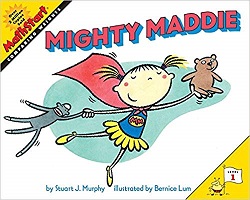
Grade K
4 skill lessons · 2 math-through-reading
Math
Skill lessons
The mathematics the book carries, taught directly. Printable workbook pages and teacher keys are not available for this book yet.
- 1One in Each Hand
- 2Small and Heavy, Big and Light
- 3Heavy, Heavier, Heaviest
- 4Dad's Pile and Maddie's Pile
Math + reading
Math through the reading
The same book, entered through a sentence it prints. Change one word in the reading and the numbers change with it.
- 5The Word That Picks the Hand
- 6Could Maddie Really Carry It?
Reading
Reading and language lessons
The same book read as a text. What a word means in its sentence, how a character is shown, how the writing is put together - no mathematics.
- 7Heavy, heavier: the ending that compares
- 8Big and small, heavy and light
- 9Why Maddie has to and the pets do not
- 10The moment Maddie becomes Mighty Maddie
- 11First, next, then, last before the party
Skill lessons
4 lessons on the mathematics the book carries. Printable workbook pages and teacher keys are not available for this book yet.
1. One in Each Hand
Dad divides the job by weight and not by size: he takes the heavy things and Maddie takes the light things, and the only way either of them knows which is which is by picking the thing up. The book never weighs anything and never says how heavy anything is, so the comparison it models is the one a kindergartner can actually make, a direct one. Students take two real classroom objects, hold one in each hand at the same time, and say which hand feels heavier and which feels lighter. Heavy and light are not properties an object has on its own but answers to a comparison against something else, and the answer is settled by the hands rather than by looking. Students say both words about one pair before the pair is put down, so the pair leaves the lesson described in both directions.
Full lesson — 20 minutes
1. Hold one in each hand (6 min)
Take two objects from the tray, one in your left hand and one in your right, and hold both up at the same time. Do not put either down. Say which hand is pulling down harder, and then say which object is heavier. Say it a second time with the other word: which one is lighter.
Word preview: heavier, lighter
I'll carry the heavy things up to your room, and you can carry the light things.
2. Put the heavier one on Dad's side (5 min)
Set two paper mats down, one marked for Dad and one marked for Maddie. After you hold a pair, put the heavier object on Dad's mat and the lighter object on Maddie's mat. Do the next pair the same way. Every object you put down has to have been in your hand first.
Word preview: heavier, lighter
I'll take this big box of books," said Dad.
These two books are light," said Maddie.
3. Try a pair that fools your eyes (5 min)
Your teacher gives you a small heavy thing and a big light thing. Guess with your eyes first and say out loud which one you think is heavier. Then hold one in each hand and say which one really is. Say whether your hands agreed with your eyes.
Word preview: small, big
Your piggy bank is small said dad, but it must be full because it sure is heavy This pillow is big, but it's very light.
4. Say the pair both ways (4 min)
Pick up one pair again, one object in each hand. Say a sentence with heavier in it about one object, then say a sentence with lighter in it about the other one. Your partner listens and says yes if you named both objects and used both words.
Word preview: heavier, lighter
Heavy, heavy, light.
Short version — 9 minutes
1. Hold one in each hand (5 min)
Take two objects from the tray, one in each hand, and hold both up at the same time without putting either down. Say which one is heavier, then say which one is lighter.
Word preview: heavier, lighter
I'll carry the heavy things up to your room, and you can carry the light things.
2. Try a pair that fools your eyes (4 min)
Guess with your eyes which of the two things your teacher holds up is heavier and say so. Then hold one in each hand and say which one really is heavier. Say whether your hands agreed with your eyes.
Word preview: small, big
Your piggy bank is small said dad, but it must be full because it sure is heavy This pillow is big, but it's very light.
Three levels
- Support
- Stay with three pairs where the difference is large enough to feel instantly, the glue bottle against the empty one, the clay against the cotton ball, the book against the sheet. Hold one in each hand exactly as everyone else does and say both words about every pair. What comes off is the eye-fooling pair, not the holding and not the saying.
- At Grade
- Hold all four pairs one in each hand, sort every pair onto the two mats, meet the eye-fooling pair and say whether your hands agreed with your eyes, then say one pair both ways with heavier and lighter naming both objects.
- Extension
- Find a pair on your tray where you and your partner disagree about which is heavier, and settle it by trading hands: hold the pair, swap which hand holds which, and hold it again. Say whether the answer changed when the hands changed. Then find something in the classroom that is heavier than the cotton ball and lighter than the glue bottle, and say both of those sentences about it.
English learners
The comparison itself transfers completely. Every language a child brings has a way to say one thing outweighs another, and a child who cannot yet say heavier in English can already sort the tray correctly, so never gate the holding behind the word. The English -er ending is unstressed, easy to lose at the end of a sentence, and the only thing separating heavy from heavier in speech. Many languages mark comparison with a separate word before the adjective rather than a suffix on it, so a child may correctly say more heavy and be told they are wrong when their mathematics is perfect. Accept more heavy and echo back heavier without correcting the child aloud. Rehearse the frame The ___ is heavier than the ___. as one whole phrase before any object is lifted, with than said slowly, since than is the word that gets swallowed and it is the word carrying the comparison. Invite children to say which is heavier in their strongest language while the objects are still in their hands, then say it again in English with the frame.
Materials
- A tray of eight paired classroom objects per group: a full glue bottle and an empty one, a hardcover book and a single sheet, a fistful of clay and a cotton ball, a closed marker and a feather
- Two paper sorting mats per pair, one marked Dad and one marked Maddie
- One eye-fooling pair per child: a fist-sized bag of pennies and a large empty cardboard carton
- The sentence frame card: The ___ is heavier than the ___.
- Word cards: heavier, lighter, than
Standards & curriculum
Choose your curriculum above to see the standards for this lesson.
Standards are held back while this plan is edited. Every standard shown here was matched against the supplied wording of this lesson, quoting its steps, so a changed step is no longer the thing that was checked. Undo your changes to bring the standards back — your edits stay in this browser either way.
2. Small and Heavy, Big and Light
The book states this idea more plainly than most picture books state anything: the piggy bank is small but heavy, the pillow is big but very light, and both halves sit in one sentence joined by but. That but is doing the work, because it warns the reader that the second half is about to contradict what the first half led them to expect. Students sort objects twice, once by size with their eyes and once by weight with their hands, and find the objects that land in different places on the two sorts. The concept is that size and weight are two separate questions about one object and that answering one does not answer the other. This is the lesson that inoculates against the commonest early error, which is deciding weight by looking.
Full lesson — 20 minutes
1. Sort by size with your eyes only (5 min)
Look at the six objects on your tray without touching any of them. Put them in a line from biggest to smallest just by looking. Keep your hands off the tray until the line is finished.
Word preview: big, small
Your piggy bank is small said dad, but it must be full because it sure is heavy This pillow is big, but it's very light.
2. Sort the same six by weight with your hands (6 min)
Now hold the same six objects two at a time and build a second line, from heaviest to lightest. Build it underneath your first line so the two lines sit one above the other. Do not look at your first line while you are holding.
Word preview: heaviest, lightest
This dump truck is heavy, grown mighty, Maddie, but this fire truck is even heavier.
3. Find the ones that moved (5 min)
Look at your two lines together. Find an object that sits near one end of the eye line and near the other end of the hand line. Point at it in both lines and say what is surprising about it.
Word preview: big, small
Your piggy bank is small said dad, but it must be full because it sure is heavy This pillow is big, but it's very light.
4. Say it the way the book says it (4 min)
Pick one object that moved. Say a sentence about it with but in the middle: name how big it looks, then say but, then say how heavy it feels. Your partner listens for the word but and says yes when they hear it.
Word preview: but
Your piggy bank is small said dad, but it must be full because it sure is heavy This pillow is big, but it's very light.
Short version — 9 minutes
1. Sort the same six by weight with your hands (5 min)
Hold the six objects two at a time and build a line from heaviest to lightest. Your teacher has already laid out the eye line above it, sorted from biggest to smallest.
Word preview: heaviest, lightest
This dump truck is heavy, grown mighty, Maddie, but this fire truck is even heavier.
2. Find the ones that moved (4 min)
Look at the two lines together and find an object sitting near one end of the eye line and near the other end of the hand line. Point at it in both lines and say what is surprising about it.
Word preview: big, small
Your piggy bank is small said dad, but it must be full because it sure is heavy This pillow is big, but it's very light.
Three levels
- Support
- Work with one pair instead of six objects, the jar of rice against the beach ball. Look at both and say which is bigger, then hold both and say which is heavier, then say the two answers one after the other. The looking, the holding and the surprise are all unchanged; what comes off is holding a whole line of six in view.
- At Grade
- Build both lines of six, one by eye and one by hand, find the objects that sit at opposite ends of the two lines, and say one of them aloud in a sentence with but in the middle naming its size and its weight.
- Extension
- Before you touch anything, mark the object on your eye line that you predict will move the furthest when the hand line is built, and say why you think so. Build the hand line and check. Then find or build an object that would not move at all between the two lines, and say what would have to be true about it.
English learners
The idea transfers and does not need English at all: a child who has carried a heavy schoolbag and a light empty box knows that size and weight are separate questions, and the two lines can be built in silence. What has to be taught is but, which is small, unstressed and sitting in the middle of a long sentence, and which is the whole hinge of this lesson. English uses but to signal that what comes next contradicts what came before, and a child who does not hear it takes the sentence as one long list of facts about the piggy bank rather than as a surprise. Say the book's own sentence twice with a deliberate pause before but and a hand flipping over on the word. Some languages mark this contrast at the end of the clause rather than in the middle, so a child may put their but in a place that sounds wrong while their thinking is exactly right; accept the sentence and echo it back in the frame order. Rehearse The ___ is big, but it is light. as a whole shape before any child is asked to fill it, and invite children to say the surprising pair in their strongest language while both objects are in their hands.
Materials
- A tray of six objects per pair chosen so size and weight disagree: a sealed jar of rice, a beach ball, a rolled sock, a large foam block, a fistful of washers in a bag, an empty tissue box
- Two long paper strips per pair, one labelled with eyes and one labelled with hands
- The sentence frame card: The ___ is big, but it is light.
- Word cards: big, small, but
Standards & curriculum
Choose your curriculum above to see the standards for this lesson.
Standards are held back while this plan is edited. Every standard shown here was matched against the supplied wording of this lesson, quoting its steps, so a changed step is no longer the thing that was checked. Undo your changes to bring the standards back — your edits stay in this browser either way.
3. Heavy, Heavier, Heaviest
Twice near the end the book stops comparing two things and reaches for a third. The dump truck is heavy and the fire truck is even heavier; the tutu is very light and the feathers are even lighter. That word even is the book telling a reader that a second comparison has been laid on top of the first, and the chant Heavy, heavier, light, lighter. prints the ladder outright. Students take three objects and put them in a line from heaviest to lightest, and they can only do it by holding them two at a time, because three will not fit in two hands. The reasoning is that the middle object has to win one comparison and lose the other, and that a child who has compared A with B and B with C can place all three without ever comparing A with C. Students finish by pointing along their own line and saying the three words in order.
Full lesson — 20 minutes
1. Line up three by holding two at a time (7 min)
Take three objects from your bag. You have only two hands, so hold two at a time and set the heavier one nearer the wall. Compare the next two the same way. Keep going until your three objects sit in one line from heaviest to lightest.
Word preview: heaviest, lightest
This dump truck is heavy, grown mighty, Maddie, but this fire truck is even heavier.
2. Say the middle one twice (5 min)
Put your finger on the object in the middle of your line. Say one sentence about the object on its heavy side and one sentence about the object on its light side. The middle object gets talked about twice, once as the lighter one and once as the heavier one.
Word preview: heavier, lighter
My ballerina tutu is very light, she added, but these feathers are even lighter.
3. Read your line like the book's chant (4 min)
Point along your line from the wall end and say heavy, heavier, heaviest, touching one object on each word. Then point back the other way and say light, lighter, lightest. Your partner checks that your finger moved one object for each word.
Word preview: heaviest, lightest
Heavy, heavier, light, lighter.
4. Slide a fourth one in (4 min)
Your teacher hands you one more object. Do not move your line. Hold the new object against each object in the line until you find the two it belongs between, then slide it into that gap. Say which one it is heavier than and which one it is lighter than.
Word preview: heavier, lighter
Heavy, heavier, light, lighter.
Short version — 9 minutes
1. Line up three by holding two at a time (5 min)
Take three objects from your bag. Hold two at a time and set the heavier one nearer the wall, then compare the next two the same way, until the three sit in one line from heaviest to lightest.
Word preview: heaviest, lightest
This dump truck is heavy, grown mighty, Maddie, but this fire truck is even heavier.
2. Say the middle one twice (4 min)
Put your finger on the middle object in your line. Say one sentence about the object on its heavy side and one about the object on its light side, so the middle object gets named twice.
Word preview: heavier, lighter
My ballerina tutu is very light, she added, but these feathers are even lighter.
Three levels
- Support
- Line up the same three bottles, but start with two already placed by your teacher and only find where the third one goes. Hold it against each of the two, exactly as everyone else does, and say which one it is heavier than. What comes off is building the whole line at once, not the holding and not the saying.
- At Grade
- Build the line of three yourself by holding two at a time, name the middle object twice in both directions, read the line in both directions with a touch per word, and slide the fourth object into its gap.
- Extension
- Before you slide the fourth object in, say where you think it will go and why, then hold it and check. Then take the lightest object out of your line and say whether the rest of the line has to change. Say how many pairs you actually had to hold to put four objects in order, and whether you ever needed to compare the heaviest with the lightest.
English learners
The ordering transfers and the superlative does not. A child sorts three bottles correctly in any language, so the line goes down first and the words come after it. English marks this ladder with two different endings on the same root, -er against another thing and -est against everything in the line, and both are unstressed syllables at the end of a word; a child hears heavy, heavy, heavy three times and cannot see the ladder the book is printing. Say the book's own chant slowly with a hand climbing a step on each word, so the ending is attached to a movement before it is attached to a meaning. Many languages mark the superlative with a word meaning most rather than a suffix, so accept most heavy and echo heaviest back without correcting aloud. Rehearse two frames and keep both visible: The ___ is heavier than the ___. and The ___ is the heaviest. Invite children to order and name the three in their strongest language first, with the bottles in their hands, then read the line in English along the chant.
Materials
- A bag of three weighted objects per pair, clearly different in weight: a full water bottle, a half-full one and an empty one
- The sentence frame card: The ___ is heavier than the ___.
- A fourth weighted object per pair, whose weight falls between two objects already in the bag
- Word cards: heaviest, lightest
Standards & curriculum
Choose your curriculum above to see the standards for this lesson.
Standards are held back while this plan is edited. Every standard shown here was matched against the supplied wording of this lesson, quoting its steps, so a changed step is no longer the thing that was checked. Undo your changes to bring the standards back — your edits stay in this browser either way.
4. Dad's Pile and Maddie's Pile
The whole plot runs on one sorting rule stated out loud in a single sentence: the heavy things go with Dad and the light things go with Maddie. It is a real rule with a real consequence, because the wrong sort leaves Maddie holding something she cannot carry. But the book never says how heavy a thing has to be to count as heavy, so the boundary has to come from somewhere, and here it comes from the child's own hands. Students choose one object as the deciding object, then hold every other object against that one and put it in the pile it belongs to. The application is that a two-way sort needs a boundary, that a child can supply the boundary by picking an object, and that the sort changes when the boundary changes.
Full lesson — 20 minutes
1. Pick the deciding object (4 min)
Choose one object from your tray and set it between the two mats. This is your deciding object. Everything heavier than it goes on Dad's mat and everything lighter than it goes on Maddie's mat. Say out loud which object you picked.
Word preview: heavier, lighter
I'll carry the heavy things up to your room, and you can carry the light things.
2. Hold every object against it (7 min)
Take each object from the tray one at a time. Hold it in one hand and your deciding object in the other. Put it on Dad's mat if it is heavier and on Maddie's mat if it is lighter. Every object has to be held against the deciding object before it lands anywhere.
Word preview: heavier, lighter
They'll be very heavy for you.
3. Check Maddie can carry her pile (4 min)
Gather everything on Maddie's mat into your arms at once and see whether you can hold it all. If something is too heavy to carry with the rest, take it out, hold it against the deciding object again, and say which mat it really belongs on.
Word preview: heavier, lighter
Fill up these boxes with your toys and call me when you're finished.
4. Change the deciding object (5 min)
Put everything back on the tray and pick a different deciding object, a much lighter one. Sort all ten again the same way. Say whether Dad's mat has more things on it than it did the first time, and say why the same object could land on a different mat.
Word preview: heavier, lighter
I'll carry the heavy things up to your room, and you can carry the light things.
Short version — 9 minutes
1. Pick the deciding object (3 min)
Choose one object from your tray and set it between the two mats. Everything heavier than it goes on Dad's mat and everything lighter goes on Maddie's mat. Say which object you picked.
Word preview: heavier, lighter
I'll carry the heavy things up to your room, and you can carry the light things.
2. Hold every object against it (6 min)
Take each object one at a time, hold it in one hand with your deciding object in the other, and put it on Dad's mat if it is heavier and Maddie's mat if it is lighter. Nothing lands on a mat until it has been held against the deciding object.
Word preview: heavier, lighter
They'll be very heavy for you.
Three levels
- Support
- Sort five objects instead of ten against a deciding object your teacher picks for you, one that is clearly heavier than two of the five and clearly lighter than the other two. Hold every object against it exactly as everyone else does and say which mat it goes on. What comes off is choosing the boundary and re-sorting, not the holding and not the saying.
- At Grade
- Pick your own deciding object, hold all ten against it and sort them onto the two mats, carry Maddie's pile to check the sort held up, then pick a lighter deciding object and sort all ten again.
- Extension
- Before you re-sort with the lighter deciding object, say which objects you expect to change mats and say why. Then sort and check. Then find a deciding object that would put exactly half your tray on each mat, and say how you would look for it without holding every object against every other one.
English learners
The sorting rule transfers and a child can carry the whole lesson out without speaking, so let the mats fill up before any English is asked for. The English demand here is the word than, which is unstressed, easy to lose, and the only thing in the sentence saying what the comparison is against. Heavier on its own is not a rule; heavier than this one is. Many languages express the thing being compared against with a marker attached to the object rather than a separate word before it, so a child may say heavier this one and have the mathematics exactly right. Accept it and echo back heavier than this one without correcting the child aloud. Rehearse one frame before sorting starts and keep it visible: This is heavier than my deciding object, so it goes to Dad. Say the deciding object's name aloud each time so the thing being compared against stays audible rather than assumed. Invite children to name the two piles in their strongest language as they fill, then report one object per mat in English with the frame.
Materials
- A tray of ten small classroom objects per group, spanning a wide range of weights
- Two paper sorting mats per pair, one marked Dad and one marked Maddie
- A balance-free challenge card asking for a deciding object that splits the tray evenly
- Word cards: heavier, lighter, than
Standards & curriculum
Choose your curriculum above to see the standards for this lesson.
Standards are held back while this plan is edited. Every standard shown here was matched against the supplied wording of this lesson, quoting its steps, so a changed step is no longer the thing that was checked. Undo your changes to bring the standards back — your edits stay in this browser either way.
Math through the reading
The mathematics is reached through a sentence the book prints: change one word in the reading and the numbers change with it. These carry their own standards, matched against these lessons rather than inherited from the skill ones.
5. The Word That Picks the Hand
Students hear one of the book's sentences with a single comparison word swapped, carry out both versions with real objects, and find that the two sentences send the same object to two different piles.
Full lesson — 20 minutes
1. Follow Dad's rule as the book says it (6 min)
Pairs hear Dad's instruction read aloud twice. They take four objects from the tray, hold two at a time one in each hand, and put each object on Dad's mat or Maddie's mat according to the rule as the book states it. Every object is held before it lands. They say which mat the heavy box of books would go on and which mat the two books would go on.
2. Hear it with one word changed (5 min)
Pairs hear the same instruction with heavy and light traded, so that Dad now takes the light things and Maddie the heavy ones. They clear both mats and sort the same four objects again under the new sentence. Two arrangements of the same four objects now exist, and each child touches an object and says which mat it sat on the first time and which mat it sits on now.
3. Say which word sent it there (5 min)
Each child picks one object and says a sentence with the deciding word inside it: this one is heavier than that one, so it went to Dad. The partner listens for the word and for both objects being named, and says so when either is missing, then says the same sentence about the object on the other mat.
4. Check whether Maddie could carry it (4 min)
Pairs gather everything on Maddie's mat under the swapped instruction into their arms at once. They say whether they could carry it, and then say the same about Maddie's mat under the book's own instruction. They say which of the two sentences left Maddie with a load she could handle, and which word made the difference.
Short version — 9 minutes
1. Follow Dad's rule as the book says it (6 min)
Pairs hear Dad's instruction read aloud twice. They take four objects from the tray, hold two at a time one in each hand, and put each object on Dad's mat or Maddie's mat according to the rule as the book states it. Every object is held before it lands. They say which mat the heavy box of books would go on and which mat the two books would go on.
2. Say which word sent it there (5 min)
Each child picks one object and says a sentence with the deciding word inside it: this one is heavier than that one, so it went to Dad. The partner listens for the word and for both objects being named, and says so when either is missing, then says the same sentence about the object on the other mat.
Three levels
- Support
- Work one pair of objects instead of four, the glue bottle against the feather. Hold both, hear the book's sentence and place them, then clear the mats, hear the swapped sentence and place them again. The holding, the two sentences and the saying aloud are all unchanged; what comes off is keeping four objects and two arrangements in view at once.
- At grade
- Sort four objects under the book's sentence, sort the same four under the swapped sentence, say for one object which word sent it to each mat, and test whether Maddie's pile could be carried under both.
- Extension
- Before either sort is built, say for one object which mat it will land on under each sentence and why. Then sort and check. Then find an object on the tray that would land on the same mat under both sentences, and say what would have to be true about it for that to happen.
English learners
The comparison transfers completely and the words do not. A child who sorts correctly in any language will sort these four objects correctly the moment they know which word is in play, so let the objects be held before any English is required. English carries the whole of the difference in this lesson in two short adjectives that share no sound and no shape with each other, which is a help, but it hides the comparison itself in an unstressed suffix and a swallowed than. Say Dad's sentence and its swapped twin slowly and back to back before any sorting, with a hand miming a heave on one and a float on the other, so each word is attached to a movement first. Accept more heavy for heavier and echo the usual English form back without correcting the child aloud, since many languages mark comparison with a separate word rather than a suffix. Rehearse one reporting frame and keep it visible: this one is heavier, so it goes to ___. Invite children to say which word decided the object in their strongest language while it is still in their hands, then report the mat in English with the frame. Never ask a child to explain the word before they have placed the object it moved.
Materials
- A tray of four paired objects per pair, two clearly heavy and two clearly light
- Two paper sorting mats per pair, one marked Dad and one marked Maddie
- The two instructions on one card, Dad's own sentence above and the swapped one below it
- The reporting frame: this one is heavier, so it goes to ___.
Standards & curriculum
Choose your curriculum above to see the standards for this lesson.
Standards are held back while this plan is edited. Every standard shown here was matched against the supplied wording of this lesson, quoting its steps, so a changed step is no longer the thing that was checked. Undo your changes to bring the standards back — your edits stay in this browser either way.
6. Could Maddie Really Carry It?
Students decide whether one object from the tray belongs in Maddie's arms or Dad's, hold it to find out, and tell a partner why, naming what they held it against.
Full lesson — 20 minutes
1. Take a side before you touch it (5 min)
Children hear Dad's warning and the book's ending read back to back and hear that the two do not agree. Each child looks at one object on the tray without touching it and says out loud whether it belongs in Maddie's arms or Dad's. Partners who chose differently keep their choices and do not change them yet.
2. Hold it and say what against (7 min)
Each child picks up the object in one hand and picks a second object from the tray to hold in the other. They say which is heavier. Then they tell their partner which pile the object belongs in and why, and the reason has to name the second object. A partner who does not hear a second object named asks what did you hold it against.
3. Hear the other side (4 min)
Partners who disagreed say their reasons to each other, one at a time, with the objects still on the table. Each child says back what their partner held it against before saying anything of their own. Then each child says whether they are keeping their side or changing it, and either answer is allowed.
4. Say it to Dad (4 min)
Each child says one sentence to Dad, who predicted the boxes would be too heavy for Maddie, telling him which pile their object belongs in and what they held it against. The teacher takes Dad's part and asks one question back: what did you hold it against. The child answers with the object named.
Short version — 9 minutes
1. Take a side before you touch it (5 min)
Children hear Dad's warning and the book's ending read back to back and hear that the two do not agree. Each child looks at one object on the tray without touching it and says out loud whether it belongs in Maddie's arms or Dad's. Partners who chose differently keep their choices and do not change them yet.
2. Hold it and say what against (7 min)
Each child picks up the object in one hand and picks a second object from the tray to hold in the other. They say which is heavier. Then they tell their partner which pile the object belongs in and why, and the reason has to name the second object. A partner who does not hear a second object named asks what did you hold it against.
Three levels
- Support
- Your teacher hands you the two objects to compare rather than asking you to choose the second one. Hold one in each hand, say which is heavier, then say which pile it belongs in and name the object in your other hand. The taking of a side, the holding and the saying why are all unchanged; what comes off is choosing what to compare against.
- At grade
- Take a side before touching the object, choose your own comparison object and hold both, give your partner a reason that names it, hear your partner's reason back, and say your position to Dad naming what you held it against.
- Extension
- After you have given your reason, pick a different second object that would have led you to the opposite pile, hold it, and say what changed. Then say which of your two comparison objects gives the better reason about what Maddie could carry, and why the answer depends on what you chose to hold it against.
English learners
The position transfers instantly and the reason does not. A child who has carried a heavy bag knows exactly which pile the jar belongs in and can point to it before saying a word, so let the choosing and the holding happen first and ask for English after the objects are down. The load here is one word, than, which is unstressed, sits between the two objects, and is the only thing in the sentence that says a comparison was made against something rather than a verdict simply pronounced. A reason without than is the exact failure this lesson is built to catch, and a child can produce that failure while their thinking is perfect. Many languages attach the thing being compared against to the object rather than announcing it with a separate word, so accept heavier the feather and echo heavier than the feather back without correcting aloud. Rehearse one frame before any child speaks and keep it visible: I think it goes to ___ because it is heavier than the ___. Invite children to give the whole reason in their strongest language with both objects in their hands, then say it again in English with the frame, and let the partner's question, what did you hold it against, be asked in either language.
Materials
- A tray of eight objects per group spanning a wide range of weights, including one small heavy object and one large light one
- Two paper sorting mats per pair, one marked Dad and one marked Maddie
- Dad's warning and the book's ending on one card, one above the other
- The reason frame: I think it goes to ___ because it is heavier than the ___.
Standards & curriculum
Choose your curriculum above to see the standards for this lesson.
Standards are held back while this plan is edited. Every standard shown here was matched against the supplied wording of this lesson, quoting its steps, so a changed step is no longer the thing that was checked. Undo your changes to bring the standards back — your edits stay in this browser either way.
Reading and language lessons
5 lessons on the reading and language the book carries - what a word means in its sentence, how a character is shown, how a text is built. No mathematics: these are matched against the English language arts curricula, which are a different and smaller set than the mathematics ones.
7. Heavy, heavier: the ending that compares
Maddie's chant does something a kindergartner can hear in one listening: heavy becomes heavier and light becomes lighter, and each time only the ending changes. Students say the pairs aloud, clap on the added ending, find the same ending on two other words in the book, and then build one of their own. This is a lesson about a word ending and the sound it adds; students say the words and never weigh, measure or compare any quantity themselves.
Full lesson — 20 minutes
1. Clap the ending you can hear (6 min)
Listen while the passage below is read twice, then say its last two sentences aloud with the class. Say heavy and then heavier, clapping once on the part that got added. Do the same for light and lighter.
Word preview: heavy, heavier, light, lighter
Mighty, Maddie cleaned up faster than anybody had ever cleaned up before. Heavy, heavy, light. Heavy, heavier, light, lighter.
2. Find the same ending somewhere else (5 min)
Read the passage below with a partner. Put a counter down on each word that ends the way heavier ends. Say each of those words aloud, then say the shorter word it was built from.
Word preview: heavier, lighter
This dump truck is heavy, grown mighty, Maddie, but this fire truck is even heavier. My ballerina tutu is very light, she added, but these feathers are even lighter.
3. Say which word came first (5 min)
Read the two passages below. In one, Dad and Maddie use short describing words. In the other, Maddie has added the ending. Say two words from the first passage and two from the second, and say which of each pair has the extra ending on it.
Word preview: ending
Come on, Maddie, said Dad, I'll help. I'll carry the heavy things up to your room, and you can carry the light things.
Mighty, Maddie cleaned up faster than anybody had ever cleaned up before. Heavy, heavy, light. Heavy, heavier, light, lighter.
4. Build a comparing word of your own (4 min)
Read the passage below and say the two words in it that end with the added ending. Then pick a describing word of your own, say it, and say it again with the same ending on the end.
Word preview: build
Mighty, Maddie cleaned up faster than anybody had ever cleaned up before. Heavy, heavy, light. Heavy, heavier, light, lighter.
Short version — 9 minutes
1. Clap the ending you can hear (5 min)
Listen to the passage twice, then say its last two sentences aloud. Say heavy then heavier, clapping on the part that got added, and do the same for light and lighter.
Word preview: heavy, heavier, light, lighter
Mighty, Maddie cleaned up faster than anybody had ever cleaned up before. Heavy, heavy, light. Heavy, heavier, light, lighter.
2. Find the same ending somewhere else (4 min)
Read the passage with a partner and put a counter on each word that ends the way heavier ends. Say each aloud, then the shorter word it came from.
Word preview: heavier, lighter
This dump truck is heavy, grown mighty, Maddie, but this fire truck is even heavier. My ballerina tutu is very light, she added, but these feathers are even lighter.
Three levels
- Support
- Work only with the passage in step 1. Echo the teacher: heavy, heavier. Then light, lighter. Clap once on the ending each time. Say both pairs one more time.
- At Grade
- Say the pairs from the chant in step 1 with a clap on the ending, then find the two words in step 2 that carry the same ending and say the shorter word each was built from.
- Extension
- Step 1 prints the chant and step 2 prints two longer words. Say two sentences about why Maddie says heavier in step 2 instead of just saying heavy again, using words from both passages.
English learners
Many languages compare with a separate word placed before the describing word rather than with an ending stuck on the back, so a student may say more heavy and be applying their own rule faithfully. Say heavy, heavier as a pair and clap the ending before naming what it does, so the sound arrives before the rule. Invite students to compare two of their own things in their strongest language and say where the comparing part sits in the word. Rehearsable frame: This one is ___. That one is ___er.
Materials
- Mighty Maddie, read aloud by the teacher
- One counter per child to mark words
- Word cards: heavy, heavier, light, lighter, ending, build
Standards & curriculum
Choose your curriculum above to see the standards for this lesson.
Standards are held back while this plan is edited. Every standard shown here was matched against the supplied wording of this lesson, quoting its steps, so a changed step is no longer the thing that was checked. Undo your changes to bring the standards back — your edits stay in this browser either way.
8. Big and small, heavy and light
The book runs two pairs of describing words side by side and keeps them apart on purpose: big against small, and heavy against light. A box can be big and heavy, a pillow big and light, a piggy bank small and heavy. Students hear both pairs, sort the words into the right pair, and then say a sentence that uses one word from each. The work is knowing which describing word is the opposite of which, and no step asks a child to measure or weigh anything.
Full lesson — 20 minutes
1. Hear the two pairs (6 min)
Listen while the two passages below are read. Say the four describing words you hear: big, small, heavy and light. Then say them in twos, putting each word next to the one that is its opposite.
Word preview: big, small, heavy, light
Come on, Maddie, said Dad, I'll help. I'll carry the heavy things up to your room, and you can carry the light things.
I'll take this big box of books," said Dad. It's so heavy, I can hardly lift it. These two books are light," said Maddie. I can carry them.
2. Sort a tricky sentence (5 min)
Read the passage below with a partner. Say the words the passage uses about the piggy bank, then the words it uses about the pillow. Put a counter down for each describing word you find, and say which pair each one belongs to.
Word preview: pair
Your piggy bank is small said dad, but it must be full because it sure is heavy This pillow is big, but it's very light. I can handle it," said Maddie Proudly.
3. Say what does not have to match (5 min)
Read the two passages below. In one, something big is also hard to lift. In the other, something big is easy to lift. Say the two describing words used for each thing, then tell a partner one sentence about whether big always goes with heavy.
Word preview: opposite
I'll take this big box of books," said Dad. It's so heavy, I can hardly lift it. These two books are light," said Maddie. I can carry them.
Your piggy bank is small said dad, but it must be full because it sure is heavy This pillow is big, but it's very light. I can handle it," said Maddie Proudly.
4. Describe two things in the room (4 min)
Read the passage below and say the two describing words Maddie uses about the pets. Then pick two things you can see in the classroom and describe each with one word from each pair, the way Maddie does.
Word preview: describe
You'd better stay out of the way, Teenian Jumbo," said Mighty Maddie. You're nice and light, teeny, but you're so heavy, jumbo.
Short version — 9 minutes
1. Hear the two pairs (5 min)
Listen to the two passages. Say the four describing words, then say them in twos, each next to its opposite.
Word preview: big, small, heavy, light
Come on, Maddie, said Dad, I'll help. I'll carry the heavy things up to your room, and you can carry the light things.
I'll take this big box of books," said Dad. It's so heavy, I can hardly lift it. These two books are light," said Maddie. I can carry them.
2. Sort a tricky sentence (4 min)
Read the passage with a partner. Say the words used about the piggy bank and about the pillow, putting a counter down for each, and say which pair each belongs to.
Word preview: pair
Your piggy bank is small said dad, but it must be full because it sure is heavy This pillow is big, but it's very light. I can handle it," said Maddie Proudly.
Three levels
- Support
- Work only with the first passage in step 1. Echo the two words heavy and light. Say which one Dad takes and which one Maddie takes. Say the pair once more.
- At Grade
- Say the four describing words in step 1 and pair each with its opposite, then sort the piggy bank and pillow words in step 2 into the right pair.
- Extension
- Step 2 prints a small heavy thing and a big light thing in the same breath. Say two sentences about why that sentence is a surprise, using the describing words printed there.
English learners
Some languages use one word where English splits big and heavy, and a student may reasonably treat them as the same idea until the piggy bank sentence contradicts it. Hold two classroom objects while reading — one big and light, one small and heavy — so the split is felt before it is named. Invite students to give both pairs in their strongest language and say whether their language keeps them apart. Rehearsable frame: It is big, but it is ___.
Materials
- Mighty Maddie, read aloud by the teacher
- One counter per child to mark words
- Word cards: big, small, heavy, light, pair, opposite, describe
Standards & curriculum
Choose your curriculum above to see the standards for this lesson.
Standards are held back while this plan is edited. Every standard shown here was matched against the supplied wording of this lesson, quoting its steps, so a changed step is no longer the thing that was checked. Undo your changes to bring the standards back — your edits stay in this browser either way.
9. Why Maddie has to and the pets do not
Maddie argues that the pets leave their toys out, and Mom answers with a reason rather than an order. The reason is short and printed plainly, and a kindergartner can find it and say it back. Students locate Maddie's complaint, find Mom's reason, test whether it answers the complaint, and then hear Dad give a reason of his own for a different rule. The work is finding the because in what a character says, and nothing is counted or measured.
Full lesson — 20 minutes
1. Find what Maddie complains about (5 min)
Listen while the passage below is read twice. Say what Maddie says about the pets, then say what Mom says back. Show with your hand which of the two sentences is the complaint.
Word preview: complain
Teenie and jumbo don't have to pick up their toys, said Maddie. Dog's and cats don't know any better, said Mom. But you do. You're a big girl now.
2. Say the reason in your own words (6 min)
Read the passage below with a partner. Put a counter down on the sentence that gives the reason Maddie has to tidy when the pets do not. Say that reason aloud, then say it again in your own words.
Word preview: reason
Teenie and jumbo don't have to pick up their toys, said Maddie. Dog's and cats don't know any better, said Mom. But you do. You're a big girl now.
3. Hear a reason for a different rule (5 min)
Read the passage below. Dad tells Maddie to fill the boxes and says he will lift them. Say the sentence that gives his reason for lifting them himself, and say whether it is a reason or just an order.
Word preview: because
Fill up these boxes with your toys and call me when you're finished. I'll lift them onto your closet shelf. They'll be very heavy for you.
4. Say whether the reason answers back (4 min)
Read the passage below once more. Maddie says the pets do not have to tidy up. Say whether Mom's answer really answers that, and say the words from this passage that made you decide.
Word preview: answer
Teenie and jumbo don't have to pick up their toys, said Maddie. Dog's and cats don't know any better, said Mom. But you do. You're a big girl now.
Short version — 9 minutes
1. Find what Maddie complains about (4 min)
Listen to the passage twice. Say what Maddie says about the pets and what Mom says back, and show which sentence is the complaint.
Word preview: complain
Teenie and jumbo don't have to pick up their toys, said Maddie. Dog's and cats don't know any better, said Mom. But you do. You're a big girl now.
2. Say the reason in your own words (5 min)
Read the passage with a partner. Put a counter on the sentence that gives the reason Maddie has to tidy when the pets do not, then say that reason in your own words.
Word preview: reason
Teenie and jumbo don't have to pick up their toys, said Maddie. Dog's and cats don't know any better, said Mom. But you do. You're a big girl now.
Three levels
- Support
- Work only with the passage in step 1. The teacher reads Maddie's sentence, then Mom's. Say which one is Maddie and which one is Mom. Then say Mom's short answer back.
- At Grade
- Find Maddie's complaint in step 1, then in step 2 put a counter on the sentence that gives the reason and say that reason in your own words.
- Extension
- Step 2 prints Mom's reason and step 3 prints Dad's. Say two sentences about which of the two reasons is easier to argue with, and why, using words printed in both.
English learners
Reasons in English are often given without any joining word at all — Mom simply says But you do — where other languages would require a because. A student listening for a joining word may not hear a reason at all. Read Mom's answer, then say it again with because added aloud, so the reason is heard first and the missing word noticed second. Invite students to give a reason in their strongest language and say which words carried it. Rehearsable frame: Maddie has to, because ___.
Materials
- Mighty Maddie, read aloud by the teacher
- One counter per child to mark words
- Word cards: complain, reason, because, answer
Standards & curriculum
Choose your curriculum above to see the standards for this lesson.
Standards are held back while this plan is edited. Every standard shown here was matched against the supplied wording of this lesson, quoting its steps, so a changed step is no longer the thing that was checked. Undo your changes to bring the standards back — your edits stay in this browser either way.
10. The moment Maddie becomes Mighty Maddie
Facing a room she calls one huge mess, Maddie gives herself a new name, and from that page on the book calls her by it. Students find the sentence where the new name arrives, say what the word mighty claims about her, notice the book keeping the name afterwards, and hear Dad give it back to her at the end. The work is following a name through a story and saying what it means; the toys and boxes stay in the background and no step asks a child to count them.
Full lesson — 20 minutes
1. Find where the new name arrives (5 min)
Listen while the passage below is read. Say what Maddie calls the room, then say the two words she calls herself right after. Say those two words again in a big strong voice.
Word preview: mighty
Boy said Maddie. This is one huge mess. It looks like a job for... Mighty Maddie!
2. Say what the new name claims (6 min)
Read the two passages below with a partner. Maddie has just named herself. Put a counter down each time the new name appears. Say what you think the word mighty is claiming about her, in one sentence.
Word preview: mighty, claim
Boy said Maddie. This is one huge mess. It looks like a job for... Mighty Maddie!
You'd better stay out of the way, Teenian Jumbo," said Mighty Maddie. You're nice and light, teeny, but you're so heavy, jumbo.
3. Notice the story keeping the name (5 min)
Read the two passages below. The book has started using Maddie's new name for her when it talks about her. Say the words the book uses in each passage, and say whether the book agrees with her about the name.
Word preview: name
Mighty, Maddie cleaned up faster than anybody had ever cleaned up before. Heavy, heavy, light. Heavy, heavier, light, lighter.
Amazing, said Dad. You not only finished in time, but you moved those boxes with your heavy toys in them all by yourself. You really are mighty Maddie.
4. Give the name back at the end (4 min)
Read the passage below, the last thing that happens in the book. Maddie makes a second name out of the same first word. Say both names aloud, and tell a partner what the new one claims that the first one did not.
Word preview: smart
Just then the doorbell rang. Mighty Smart said Mighty Maddie. Happy birthday!
Short version — 9 minutes
1. Find where the new name arrives (4 min)
Listen to the passage. Say what Maddie calls the room, then the two words she calls herself right after, in a big strong voice.
Word preview: mighty
Boy said Maddie. This is one huge mess. It looks like a job for... Mighty Maddie!
2. Give the name back at the end (5 min)
Read the passage, the last thing that happens in the book. Say both of the names Maddie makes from the same first word, and say what the new one claims that the first one did not.
Word preview: smart, name
Just then the doorbell rang. Mighty Smart said Mighty Maddie. Happy birthday!
Three levels
- Support
- Work only with the passage in step 1. Echo the last sentence. Say the two words Maddie calls herself. Say them once quietly and once as loudly as you can.
- At Grade
- Find the sentence in step 1 where the new name arrives, then mark with counters in step 2 each place the new name is used and say what mighty is claiming.
- Extension
- Step 1 prints the name arriving and step 4 prints a second name built on the same word. Say two sentences about what changed between the two names, using the words printed in both.
English learners
A nickname built from a describing word — Mighty Maddie — reads as a title in English and can be heard as a real name rather than a claim, especially by a student whose strongest language forms nicknames some other way. Say Maddie is mighty as a plain sentence first, then the name, so the claim inside it is heard. Invite students to say a strong-sounding name they would give themselves in their strongest language, and what it would claim. Rehearsable frame: She calls herself ___. That means she is ___.
Materials
- Mighty Maddie, read aloud by the teacher
- One counter per child to mark words
- Word cards: mighty, claim, name, smart
Standards & curriculum
Choose your curriculum above to see the standards for this lesson.
Standards are held back while this plan is edited. Every standard shown here was matched against the supplied wording of this lesson, quoting its steps, so a changed step is no longer the thing that was checked. Undo your changes to bring the standards back — your edits stay in this browser either way.
11. First, next, then, last before the party
The book runs on a clock: a party starts in two hours, toys are everywhere, Dad helps with the downstairs, Maddie is left with her bedroom, Mom calls up that friends are coming, and the doorbell rings. Students put printed moments into that order, say the order aloud with first, next, then and last, notice the words the book itself uses to move time along, and retell the whole thing to a partner. Times and amounts appear inside the passages; no step asks a child to work with them.
Full lesson — 20 minutes
1. Say what the house is like at the start (5 min)
Listen while the two passages below are read in the order they are printed. Say where the toys are, then say what Dad offers to do. Say first for one passage and next for the other.
Word preview: first, next
There were toys in the living room, toys in the kitchen. and toys in the front hallway. There were even toys in the bathroom.
Come on, Maddie, said Dad, I'll help. I'll carry the heavy things up to your room, and you can carry the light things.
2. Find the words that move time along (6 min)
Read the two passages below with a partner. Each one begins with words that tell you time has passed. Put a counter down on those words in each passage and say them aloud, then say which passage happens later in the book.
Word preview: Before long, Just then
Before long, all of Maddie's toys were in her room.
Just then the doorbell rang. Mighty Smart said Mighty Maddie. Happy birthday!
3. Put the hurrying part in order (5 min)
Read the two passages below. In one, Mom calls up that people are coming. In the other, Maddie has finished. Say which one comes first in the book and say the words that told you.
Word preview: then, last
Better hurry up, Maddie! Mom called from downstairs. Your friends will be here any minute.
Amazing, said Dad. You not only finished in time, but you moved those boxes with your heavy toys in them all by yourself. You really are mighty Maddie.
4. Retell the whole day to a partner (4 min)
Read the passage below, which is how the book finishes. Then tell a partner the whole story in four sentences beginning first, next, then and last, and end with what this passage says happens at the door.
Word preview: retell
Just then the doorbell rang. Mighty Smart said Mighty Maddie. Happy birthday!
Short version — 9 minutes
1. Say what the house is like at the start (4 min)
Listen to the two passages in the order they are printed. Say where the toys are, then what Dad offers to do, saying first for one and next for the other.
Word preview: first, next
There were toys in the living room, toys in the kitchen. and toys in the front hallway. There were even toys in the bathroom.
Come on, Maddie, said Dad, I'll help. I'll carry the heavy things up to your room, and you can carry the light things.
2. Retell the whole day to a partner (5 min)
Read the passage, which is how the book finishes. Tell a partner the whole story in four sentences beginning first, next, then and last, ending with what happens at the door.
Word preview: retell
Just then the doorbell rang. Mighty Smart said Mighty Maddie. Happy birthday!
Three levels
- Support
- Work only with the two passages in step 1. The teacher reads them in order. Point to the one that comes first and say first, then point to the other and say next. Say them back in that order.
- At Grade
- Order the two passages in step 1 with first and next, then find in step 2 the words that tell you time has passed and say which passage happens later.
- Extension
- Step 2 prints two different ways the book moves time along. Say two sentences about which of the two moves a longer stretch of time, and how the words told you.
English learners
English marks the passage of time with a phrase parked at the front of the sentence — Before long, Just then — and a student whose strongest language carries that work inside the verb may read straight past them. Read each passage twice, once with the opening phrase and once without, so the difference is heard. Then rehearse first, next, then and last as a chant before the retelling, and accept a first retelling in the strongest language. Rehearsable frame: First ___. Next ___. Then ___. Last ___.
Materials
- Mighty Maddie, read aloud by the teacher
- One counter per child to mark words
- Word cards: first, next, then, last, Before long, Just then, retell
Standards & curriculum
Choose your curriculum above to see the standards for this lesson.
Standards are held back while this plan is edited. Every standard shown here was matched against the supplied wording of this lesson, quoting its steps, so a changed step is no longer the thing that was checked. Undo your changes to bring the standards back — your edits stay in this browser either way.