Paper clock with a long minute hand and a short hour hand full page
Its Time — Which Hand Tells the Hour
Paper clock
Cut out the face and the two hands.
Push a paper fastener through the small hole in each hand and through the middle of the face.
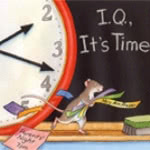
Grade 2
5 skill lessons · 3 math-through-reading
Math
Skill lessons
The mathematics the book carries, taught directly. Each lesson has printable workbook pages and a separate teacher key.
Math + reading
Math through the reading
The same book, entered through a sentence it prints. Change one word in the reading and the numbers change with it.
Reading
Reading and language lessons
The same book read as a text. What a word means in its sentence, how a character is shown, how the writing is put together - no mathematics.
5 lessons on the mathematics the book carries. Each lesson has printable workbook pages and a separate teacher key.
The story calls out the hour more than a dozen times as IQ crosses his school day, and once it stops and reads a face hand by hand: the big hand on the 12, the small hand on the 1. Students take that one worked reading and run it themselves, parking the long hand on the 12 and walking the short hand from numeral to numeral, setting every hour the narration names and writing what the face says in numbers.
1. Sort the long hand from the short hand (5 min)
Each pair takes one paper clock and turns both hands all the way around once. Point to the hand that tells minutes and the hand that tells hours and say which is which to your partner before you touch anything else. Then park the long hand on the 12 and leave it there.
Word preview: hour hand, minute hand
The big hand on the clock tells the minutes and the small hand tells the hours.
2. Read the clock the story reads (4 min)
Set your clock the way the story sets it: the long hand on the 12, the short hand on the 1. Say the hour out loud. Now move only the short hand, to the 2, the 3 and the 4. Say the hour each time. The long hand stays where it is.
The big hand was on the 12 and the small hand was on the 1.
1 o'clock.
3. Set every hour IQ hears (6 min)
One partner draws a card, reads its sentence aloud, and the other sets the hands for the hour in it and holds the clock up. Swap after every card until you have set 8 o'clock, 9 o'clock, 11 o'clock, 3 o'clock and 6 o'clock. Say the hour out loud before you swap, and check that your partner's long hand is still on the 12.
It's 11 o'clock, said Mrs. Ferber, time for math.
By the time IQ had found some paper it was 9 o'clock and Mrs. Ferber needed his help for the science lesson.
4. Write the hours down (5 min)
On your strip, write each hour you set in clock numbers, one line under the next, in the order the story reaches them. Read your finished strip to your partner, touching each line as you say it. Check that two zeros sit after every colon, because the long hand never left the 12.
Word preview: o'clock
1. Sort the long hand from the short hand (5 min)
Turn both hands around once, then point to the hand that tells minutes and the hand that tells hours and name each one for your partner. Park the long hand on the 12.
Word preview: hour hand, minute hand
The big hand on the clock tells the minutes and the small hand tells the hours.
2. Read the clock the story reads (4 min)
Set the long hand on the 12 and the short hand on the 1, the way the story sets it, and say the hour. Move only the short hand to the 2, the 3 and the 4, saying the hour each time.
The big hand was on the 12 and the small hand was on the 1.
1 o'clock.
English word order puts the hour first and hides the word hour inside o'clock, so a child can know the time and still not be able to say it. Model one sentence until it is easy: name the numeral the short hand is on, then name the hour. Invite children to say the hour in their own language first and then in English, touching the short hand both times.
Cut out the face and the two hands.
Push a paper fastener through the small hole in each hand and through the middle of the face.
Name: ______________________________
Write each hour you set in clock numbers.
Write them one line under the next, in the order the story reaches them.
Cut on the box edges. One word to a card.
The long hand is the one that tells the minutes. The short hand is the one that tells the hours. Both hands are parked with the long hand on the 12 before the next step begins.
Long hand on the 12, short hand on the 1, read as 1 o’clock.
Moving only the short hand: 2 o’clock, 3 o’clock, 4 o’clock. The long hand does not move.
Five hours, in the order the story reaches them, each written with two zeros after the colon because the long hand never left the 12.
Three hours only: 1:00, 2:00, 3:00, written on the same strip lines.
Starting at 6 o’clock: when the short hand walks to the next numeral the time is 7 o’clock, and the long hand has travelled all the way around the face once. A strong rule says the long hand makes one full trip for every one numeral the short hand moves.
A close response names the hour from the short hand and checks that the long hand is still on the 12 before reading. A loose response reads whichever hand is pointing at a numeral, or names the numeral instead of the hour, so 3 o’clock is read as twelve because the long hand is on the 12.
On the strip, a close entry is written as a clock time with the colon and the two zeros. A loose entry is written as a bare numeral.
One or more pages for this lesson were held back. The lesson names a set larger than it spells out — a deck of cards, a row of strips — and the missing items were not invented to fill it.
Choose your curriculum above to see the standards for this lesson.
Standards are held back while this plan is edited. Every standard shown here was matched against the supplied wording of this lesson, quoting its steps, so a changed step is no longer the thing that was checked. Undo your changes to bring the standards back — your edits stay in this browser either way.
Mrs. Ferber's math lesson is this lesson: count by fives, then match the minutes to the numbers on the face. Students count by fives around a clock face with one touch per numeral, stick a minute label beside each numeral from five to sixty, answer a partner who names a minute out of order, and then run the whole ring backward.
1. Touch and count by fives (5 min)
Each pair puts one clock face between them. Touch the 1 and say five, touch the 2 and say ten, and keep going all the way around to the 12. The rule is one touch, one number word; if a touch gets skipped, go back to the 1 and start the ring again.
Word preview: count by fives
We are going to count by 5's.
2. Label the minutes (6 min)
Write a minute number on each sticker and press it beside the numeral it belongs to. 5 beside the 1, 10 beside the 2, on around to 60 beside the 12. Say each number out loud as you write it. When the ring is full, read the whole ring of minutes to your partner without stopping.
Word preview: minutes
Each number on the clock stands for 5 minutes, said Mrs. Ferber.
3. Match the minutes to the numbers (5 min)
Your partner names a minute from your ring, 25, then 40, then 55. Put one finger on the numeral that carries it and say the count that got you there out loud: five, ten, fifteen, twenty, twenty-five. Take six turns each, and say the count every single time.
Can you match up the minutes with the numbers?
4. Run the ring backward (4 min)
Start with a finger on the 12 saying sixty, and count by fives backward around the face to five, touching every numeral on the way. Then say how many number words the trip took. Do it once more, faster, without losing a touch.
1. Touch and count by fives (5 min)
Put the face between you, touch the 1 and say five, touch the 2 and say ten, and carry the count around to the 12. One touch, one number word.
Word preview: count by fives
We are going to count by 5's.
2. Run the ring backward (4 min)
Start on the 12 saying sixty and count by fives backward around the face to five, touching every numeral. Say how many number words the trip took.
English names the minutes before the hour in one phrase and after it in another, which makes a correct count sound wrong. Walk through one sentence, naming a numeral and the minutes it stands for, and invite each child to say the ring once in their everyday language and once in English, touching a numeral for every word.
Name: ______________________________
Touch the 1 and say five. Touch the 2 and say ten. Keep going all the way to the 12.
Put each minute label beside the numeral it belongs to.
Cut on the box edges. One word to a card.
25 sits on the 5, and the count that gets there is five, ten, fifteen, twenty, twenty-five.
40 sits on the 8. 55 sits on the 11.
Any minute the partner names from the ring is one of the twelve above; the finger goes on the numeral that carries it.
Sixty on the 12, then fifty-five, fifty, forty-five, forty, thirty-five, thirty, twenty-five, twenty, fifteen, ten, five on the 1.
The trip takes twelve number words, one for each numeral.
The count runs only as far as thirty, from the 1 to the 6: five, ten, fifteen, twenty, twenty-five, thirty. Each numeral added stretches the count by one more number word, and the count never runs past sixty.
With the labels covered, a strong answer names the numeral without counting up from five and can say how it was known, for example that 40 is the eighth five, or that 30 is halfway round and sits on the 6. A weaker answer is a guess, or a silent count under the strip.
A close performance keeps one touch to one number word and returns to the 1 when a touch is skipped. A loose performance chants the fives faster than the finger moves, so the words and the numerals come apart and the ring ends on the wrong number.
Choose your curriculum above to see the standards for this lesson.
Standards are held back while this plan is edited. Every standard shown here was matched against the supplied wording of this lesson, quoting its steps, so a changed step is no longer the thing that was checked. Undo your changes to bring the standards back — your edits stay in this browser either way.
One deadline is spoken once, to the children as they leave, and after that the hour keeps being named without always saying how much time is left. It works the arithmetic three times, six more hours at 1 o'clock, four at 3 o'clock, one at 6 o'clock, and skips the rest. Students count on by whole hours from named hours to 7 o'clock, check themselves against the amounts the story states, fill two hours the story leaves blank, and read the shrinking countdown aloud. The application is the one a child meets every day: how long until the thing happens.
1. Find the deadline and freeze it (4 min)
Listen for the one sentence that says when parents night starts, then say it back to your partner and set that hour on the first clock. Stand that clock in the middle of the table; it does not move again for the rest of the lesson.
Word preview: until
Please remind them that parents night is at 7 o'clock.
2. Count the hours the story counts (6 min)
Set the second clock to 1 o'clock. Hop the short hand one numeral at a time toward the 7, counting each hop out loud, and say how many hours that was. Do the same from 3 o'clock and from 6 o'clock, and after each one say whether your number matches what the story says.
Word preview: count on
He had six more hours to finish his surprise.
The parents would be there in only 4 more hours.
Only one hour left before the parents would arrive.
3. Fill the hours the story skips (5 min)
The story never says how much time is left at 11 o'clock or at 2 o'clock. Set each of those hours on the second clock. Hop the short hand to the 7, counting out loud. Write the hour and the hours left on your card. Say each answer in the story's own words: at 2 o'clock IQ had ___ more hours.
Word preview: hours left
It's 11 o'clock, said Mrs. Ferber, time for math.
At 2 o'clock IQ still couldn't work on his surprise.
4. Speak the countdown (5 min)
Put your five answers in clock order: 11 o'clock, 1 o'clock, 2 o'clock, 3 o'clock, 6 o'clock. Read the amounts aloud to another pair: eight, six, five, four, one. Ask them what the numbers are doing as the day goes on, then say why they do it.
1. Find the deadline and freeze it (4 min)
Listen for the sentence that says when parents night starts, say it back to your partner, and set that hour on the first clock. Leave it standing in the middle of the table.
Word preview: until
Please remind them that parents night is at 7 o'clock.
2. Fill the hours the story skips (5 min)
The story never says how much time is left at 11 o'clock or at 2 o'clock. Set each hour, hop the short hand to the 7 counting out loud, and write the hour and the hours left on your card.
Word preview: hours left
It's 11 o'clock, said Mrs. Ferber, time for math.
At 2 o'clock IQ still couldn't work on his surprise.
Counting on is language-independent, and a child who cannot yet say the sentence can still hop the hand and get the number. The trap is the English words that point in time: more hours and left before both mean the time still ahead, while past and since point the other way, so a child who reads the wrong one counts in the wrong direction. Run one sentence that names the hour and how many hours IQ had left, and let children work out the hops and talk them through in their family language before saying the sentence in English.
Cut out both faces and all four hands.
Push a paper fastener through the small hole in each hand and through the middle of a face.
Name: ______________________________
Set the hour, hop the short hand to the 7, and write what you counted.
Say each one this way: at ______ o’clock IQ had ______ more hours.
Cut on the box edges. One word to a card.
Parents night is at 7 o’clock. That clock is set once and does not move again.
From 1 o’clock to 7 o’clock is six hops, and the story says six more hours.
From 3 o’clock is four hops, and the story says four more hours.
From 6 o’clock is one hop, and the story says one hour left.
From 11 o’clock to 7 o’clock is eight hops, so eight hours left.
From 2 o’clock to 7 o’clock is five hops, so five hours left.
Read aloud the amounts go eight, six, five, four, one. The numbers get smaller as the day goes on because the deadline stays fixed at 7 o’clock while the hour on the clock keeps moving toward it.
6 o’clock and 3 o’clock only, one hour left and four hours left, hopped one numeral at a time so the hops can be heard.
Any two of the five hours work. A strong answer notices that the distance between the two hours and the drop in the hours left are the same number, and can say why: both hours are being measured against the same fixed 7 o’clock, so moving two hours later takes exactly two hours off what is left.
A close response counts the hops from the named hour up to the 7 and lands on the number of hours still ahead. A loose response counts the numerals it lands on including the starting one, giving one too many, or counts backward from the named hour and gives the hours already gone instead of the hours left.
The three amounts the story states are the self-check: if the count from 1, 3 or 6 o’clock does not come out as six, four and one, the counting method is what needs fixing, not the story.
Choose your curriculum above to see the standards for this lesson.
Standards are held back while this plan is edited. Every standard shown here was matched against the supplied wording of this lesson, quoting its steps, so a changed step is no longer the thing that was checked. Undo your changes to bring the standards back — your edits stay in this browser either way.
Twice the story leaves the hour behind, at the name cards in the middle of the morning and at the bell that sends everyone home. Students walk the long hand from the 12 in five-minute steps and name the minutes, set and write both of those times, and then read a face another pair has set without being told what it says.
1. Walk the long hand in fives (6 min)
Start the long hand on the 12 and move it one numeral at a time, saying the minutes as you go, five, ten, fifteen. When your partner says stop, say how many minutes past the hour the long hand is showing. Do it six times, and go back to the 12 before each new walk.
Word preview: minutes past
2. Find half past ten (5 min)
Walk the long hand from the 12 until you reach thirty minutes and leave it there. Now put the short hand where it has to go for that time, and tell your partner why it will not sit on a numeral. Write the time in clock numbers on your card.
Word preview: half past, between
At 10.30 Mrs. Ferber said, we are going to make name cards so tonight your parents will know where you sit.
3. Find the bell that sends them home (4 min)
Set the time the school bell rings at the end of the day. Walk the long hand in fives to forty-five. Then place the short hand between the two numerals where it belongs. Write it on your card and read both of your times aloud to your partner.
At 2.45 the school bell rang.
4. Read somebody else's face (5 min)
Trade clocks with another pair without saying a word about the time. Read their face, write down what you read, and hand the clock back with your reading. If your reading and theirs disagree, settle it by walking the fives from the 12 together.
1. Find the bell that sends them home (4 min)
Set the time the school bell rings at the end of the day: walk the long hand in fives to forty-five, then place the short hand between the two numerals where it belongs. Write it on your card.
At 2.45 the school bell rang.
2. Read somebody else's face (5 min)
Trade clocks with another pair without saying the time. Read their face, write what you read, and hand it back. If the two readings disagree, settle it by walking the fives from the 12.
Rehearse it is ___ minutes past ___, and let children say the minutes in their strongest language while their finger is on the long hand, then say the whole sentence in English.
Cut out the face and the two hands.
Push a paper fastener through the small hole in each hand and through the middle of the face.
Name: ______________________________
Set each time on your clock first. Then write it in clock numbers.
Cut on the box edges. One word to a card.
From the 12 the long hand reads 5 on the 1, 10 on the 2, 15 on the 3, 20 on the 4, 25 on the 5, 30 on the 6, 35 on the 7, 40 on the 8, 45 on the 9, 50 on the 10, 55 on the 11 and 60 back on the 12.
At thirty minutes past ten the short hand sits halfway between the 10 and the 11, because half of that hour has gone but the hour is not finished.
At forty-five minutes past two the short hand sits between the 2 and the 3, three quarters of the way across and much nearer the 3.
A strong explanation says the short hand moves the whole time the long hand is going round, so it only lands on a numeral when the long hand is back on the 12.
Half past only. The long hand stays on the 6 at thirty and the short hand sits halfway between two numerals, for three different hours the pair chooses, written on the same card.
With the short hand between the 2 and the 3, every five-minute reading from 2:05 to 2:55 could go with it. The time is nearer to 3 o’clock than to 2 o’clock once the long hand is past the 6, that is past thirty minutes, and the face shows it because the short hand has crossed the halfway mark toward the 3.
A close reading counts the fives from the 12 to the long hand and takes the hour from the numeral the short hand has already passed. A loose reading takes the hour from the numeral the short hand is closest to, so 2:45 is read as three forty-five, or reads the long hand as a numeral rather than as minutes, so 2:45 is read as two nine.
Where two pairs disagree on a traded face, the settled answer is the one that survives walking the fives from the 12 together.
Choose your curriculum above to see the standards for this lesson.
Standards are held back while this plan is edited. Every standard shown here was matched against the supplied wording of this lesson, quoting its steps, so a changed step is no longer the thing that was checked. Undo your changes to bring the standards back — your edits stay in this browser either way.
A bell rings at 8 o'clock in the morning and the lights go out at 8 o'clock at night, and the face looks exactly the same both times. Students set the two eight o'clocks side by side, lay the day's hours in a line, mark where noon falls, argue each hour into the morning half or the evening half using something that happens in it, and count the hours the line covers.
1. Set the first bell and the last light (5 min)
Set one clock for the bell at the start of the story and the other for the moment the lights go out at the end. Hold the two faces up together. Say to your partner what is the same about the two faces and what is different about the two moments.
Word preview: morning, night
At 8 o'clock the bell rang.
At 8 o'clock all of the parents left and Mrs. Ferber turned out the lights.
2. Split the day at noon (5 min)
Lay the hour cards in a line from the first bell to the lights going out. Slide the noon marker into the line where it belongs and say which cards land before it and which land after. Read the line left to right once you are done.
Word preview: noon
IQ was only on number 5 when the bell rang, telling everyone it was... 12 noon.
3. Prove where each hour sits (6 min)
Take the cards one at a time. Tell your partner one thing from the story that shows whether that hour is morning or evening. The flag salute, lunch, the parents arriving, the lights going out. If your partner is not convinced, find a second thing. Then hop card to card from the first bell to the last and say how many hours your line covers.
At 7 o'clock Mrs. Ferber let all of the parents into the classroom.
4. Say the two eights (4 min)
Tell another pair that the clock said eight o'clock twice in this story, and say what IQ was doing each time. Then say how a person inside that dark classroom could tell the two eight o'clocks apart.
1. Split the day at noon (5 min)
Lay the hour cards in a line from the first bell to the lights going out, slide the noon marker in where it belongs, and say which cards land before it and which land after.
Word preview: noon
IQ was only on number 5 when the bell rang, telling everyone it was... 12 noon.
2. Say the two eights (4 min)
Tell another pair that the clock said eight o'clock twice in this story and say what IQ was doing each time. Then say how a person could tell the two eight o'clocks apart.
Noon is one English word for one moment, and it is easy to hear as a part of the afternoon. Rehearse the frame the bell rang at ___ o'clock in the ___, and let children give their reason for a card in their strongest language first and then in English, keeping their finger on the card both times.
Cut out both faces and all four hands.
Push a paper fastener through the small hole in each hand and through the middle of a face.
Cut on the box edges. One card at a time.
Cut on the box edges. One word to a card.
Both clocks are set to 8 o’clock, and the two faces look exactly the same. What differs is the moment: one is the bell at the start of the school day, the other is the lights going out after the parents have gone.
The noon marker goes between the first 8 o’clock and the 7 o’clock. One card lands before it, in the morning. Two cards land after it, in the evening.
A reason has to come from something that happens in the story at that hour, not from the face. The first 8 o’clock is morning because the school bell is ringing children in. The 7 o’clock is evening because the parents are being let into the classroom. The last 8 o’clock is night because the parents have already left and the lights are going out.
From 8 o’clock in the morning to 8 o’clock at night is 12 hours.
A day takes 24 hours and the line covers 12 of them, so the story never shows 12 hours of that day. A strong walk-through subtracts the covered hours from the whole day and can point to where the missing hours sit, before the first bell and after the lights go out.
There is no single sentence to look for here. A strong response separates the two eight o’clocks by what has already happened rather than by what the clock shows: at the first one school has not started, at the second one parents night is over. A loose response says the two are different because the clock looks different, which it does not.
A close ordering puts the two identical cards in different halves of the day and can say which is which without turning the card over. A loose ordering treats the two 8 o’clock cards as one hour, or reads the numerals straight up so that 7 o’clock is placed before 8 o’clock in the morning.
One or more pages for this lesson were held back. The lesson names a set larger than it spells out — a deck of cards, a row of strips — and the missing items were not invented to fill it.
Choose your curriculum above to see the standards for this lesson.
Standards are held back while this plan is edited. Every standard shown here was matched against the supplied wording of this lesson, quoting its steps, so a changed step is no longer the thing that was checked. Undo your changes to bring the standards back — your edits stay in this browser either way.
The mathematics is reached through a sentence the book prints: change one word in the reading and the numbers change with it. These carry their own standards, matched against these lessons rather than inherited from the skill ones.
Students run the same clock face twice, once counting by fives and once counting to five, and say which word the class was given and what it made the numbers do.
1. Count the sentence the class was given (5 min)
Pairs count by fives around the face, one touch per numeral, and press a minute sticker beside each numeral as they go, from five at the 1 to sixty at the 12.
2. Run the other sentence (5 min)
On a second bare face, pairs count to five instead, mark where that count stops, and stand the two faces side by side.
3. Say what the word did (6 min)
Each pair says aloud, and then writes, one sentence naming the word they were given and both results, and reads it to another pair while pointing at each face.
4. Finish IQ's stickers (4 min)
Pairs start at the numeral where IQ stopped and carry the by-fives count on to the 12, saying how many numerals he still had to label.
1. Count the sentence the class was given (5 min)
Pairs count by fives around the face, one touch per numeral, and press a minute sticker beside each numeral as they go, from five at the 1 to sixty at the 12.
2. Finish IQ's stickers (4 min)
Pairs start at the numeral where IQ stopped and carry the by-fives count on to the 12, saying how many numerals he still had to label.
The mathematics here transfers completely and the words do not: by and to are both tiny English words that many languages carry with one particle, so a child may hear no difference at all in the sentence that decides the whole task. Say both sentences slowly and side by side, and let children run one count while saying the number words in their strongest language before they say the comparison sentence in English. Rehearse the frame: when we count ___ five, we reach ___.
Choose your curriculum above to see the standards for this lesson.
Standards are held back while this plan is edited. Every standard shown here was matched against the supplied wording of this lesson, quoting its steps, so a changed step is no longer the thing that was checked. Undo your changes to bring the standards back — your edits stay in this browser either way.
Phases are not grades. The Primary Years Programme is a developmental continuum and your school places each student in a phase, so this names the strand the lesson works in and the phases it could sit across. Confirm against your own school's placement.
Number · Phases 1–3
Measurement · Phases 1–3
Students find the two sentences that fix the moment and the deadline, then count the hours the story never counts for them.
1. Hunt the deadline (4 min)
Students listen to six sentence strips read aloud, choose the one that says when parents night starts, read it back, and set a clock to that hour to stand in the middle of the table.
2. Check the three the story counts (6 min)
Pairs set 1 o'clock, 3 o'clock and 6 o'clock in turn, hop the short hand to the 7 counting each hop aloud, and say for each one whether their number matches the amount the story states.
3. Count the hour the story skips (5 min)
Pairs find the sentence that puts IQ at 2 o'clock, read it aloud, then hop to the 7 and write the hour and the hours left on their card, in that order.
4. Read the evidence, then say the number (5 min)
Each pair reads their two sentences aloud to another pair, deadline first and moment second, then says the number; the listening pair says whether those two sentences fix that answer.
1. Hunt the deadline (4 min)
Students listen to six sentence strips read aloud, choose the one that says when parents night starts, read it back, and set a clock to that hour to stand in the middle of the table.
2. Count the hour the story skips (5 min)
Pairs find the sentence that puts IQ at 2 o'clock, read it aloud, then hop to the 7 and write the hour and the hours left on their card, in that order.
Counting on is language-independent, and a child who cannot yet produce the sentence can still hop the hand and arrive at the number. The trap is the English words that point in time: left before and more hours both mean the time still ahead, while past and since point the other way, so a child who reads the wrong one counts in the wrong direction and is wrong for a reason that has nothing to do with arithmetic. Rehearse the frame at ___ o'clock, IQ had ___ hours left. Children may find their sentences and talk their hops through in their strongest language, then read the two sentences and say the frame in English.
Choose your curriculum above to see the standards for this lesson.
Standards are held back while this plan is edited. Every standard shown here was matched against the supplied wording of this lesson, quoting its steps, so a changed step is no longer the thing that was checked. Undo your changes to bring the standards back — your edits stay in this browser either way.
Phases are not grades. The Primary Years Programme is a developmental continuum and your school places each student in a phase, so this names the strand the lesson works in and the phases it could sit across. Confirm against your own school's placement.
Measurement · Phases 1–2
Number · Phases 1–2
Students build the story's two amounts of time left as two towers, find the difference, and say the relation both ways round about one arrangement.
1. Build the two hours (4 min)
Pairs read the story's two sentences and snap a tower of six cubes for the first hour and a tower of four for the second, standing them side by side on the desk.
2. Count what stands above (5 min)
Pairs count the cubes standing above the shorter tower, say the difference aloud, and check it by breaking the extra cubes off and snapping them back on.
3. Say it forward and backward (5 min)
Each partner says one direction of the relation while pointing at the towers, then they swap and say the other, keeping the towers untouched and changing only the comparison word.
4. Write the pair (6 min)
Pairs draw the two towers once and write both sentences beneath the one drawing, circle the word that changed, and read the pair to another pair for checking.
1. Build the two hours (4 min)
Pairs read the story's two sentences and snap a tower of six cubes for the first hour and a tower of four for the second, standing them side by side on the desk.
2. Say it forward and backward (5 min)
Each partner says one direction of the relation while pointing at the towers, then they swap and say the other, keeping the towers untouched and changing only the comparison word.
Comparative syntax is where this lesson will be hard, and it is not where the mathematics is hard. English puts the compared thing first and the yardstick last, so six is two more than four, while many languages put the yardstick first or mark the comparison on a separate word entirely, and a child who has the difference right can still assemble the sentence backward. Rehearse both frames aloud with the towers in view, ___ had ___ more hours than ___ and ___ had ___ fewer hours than ___, and let children say the relation in their strongest language while pointing at the towers before they say it in English. Note for everyone that the story's own more, in six more hours, is not comparing anything.
Choose your curriculum above to see the standards for this lesson.
Standards are held back while this plan is edited. Every standard shown here was matched against the supplied wording of this lesson, quoting its steps, so a changed step is no longer the thing that was checked. Undo your changes to bring the standards back — your edits stay in this browser either way.
Phases are not grades. The Primary Years Programme is a developmental continuum and your school places each student in a phase, so this names the strand the lesson works in and the phases it could sit across. Confirm against your own school's placement.
Number · Phases 1–2
Measurement · Phases 1–2
4 lessons on the reading and language the book carries - what a word means in its sentence, how a character is shown, how a text is built. No mathematics: these are matched against the English language arts curricula, which are a different and smaller set than the mathematics ones.
This book runs one school day from morning to bedtime, and it hands a reader the joining words that hold the order together. Students underline While, By the time, Then, By the end, still and Finally where the book actually prints them, cover each one to hear what a reader loses without it, and build a strip of the six words. They finish by retelling the day out loud using only those words to start their sentences. The skill is the language of order, not the clock.
1. Read the morning and find the word that orders it (5 min)
Read the passage twice with a partner, once each. Put your finger on the word While and read that sentence aloud slowly. Two things are happening in it at the same time, so say the two out loud: what Mrs. Ferber is doing, and what IQ is doing. Then say which one you would have to stop to notice.
Word preview: While
IQ realized he was late for school. He was the class pet, but he really wanted to be a student. While Mrs. Ferber, the teacher, took attendance, IQ quickly got ready. He finished just in time for the flag salute.
2. Underline the words that move the day forward (6 min)
Read the printed passage and underline three words that tell you time is moving: By the time, Then, and By the end. Cover each underlined word with your thumb and read the sentence again without it. Tell your partner what a reader loses each time, and write the loss for one of the three on your time-word strip.
Word preview: Then
By the time IQ had found some paper it was 9 o'clock and Mrs. Ferber needed his help for the science lesson. It takes the earth 24 hours to spin around once, she said. That is what we call a day. IQ helped show how the earth spins. Then he showed how the moon spins around the earth. By the end of the lesson IQ's head was spinning too.
3. Put two more time words to work (5 min)
Read both printed passages. Circle still in the first and Finally in the second. With your partner, say what still tells you about all the times before this one, and what Finally tells you about all the times before that one. Add both words to your time-word strip with a three-word note saying what each one points back to.
Word preview: still, Finally
At 2 o'clock IQ still couldn't work on his surprise. Everyone had to go outside for PE. Mrs. Jugger, the PE teacher, said, everyone line up. We are going to run races. IQ borrowed the stopwatch. He timed the runners to see who was the fastest.
Finally he was ready to show Mrs. Ferber what he had made for parents night. Oh IQ she cried. It's perfect.
4. Retell the day using only your strip (4 min)
Close the passages and hold up your time-word strip. Retell IQ's day to your partner in five sentences, and start every sentence with one of the words on the strip. Your partner listens with the strip in hand and taps each word as they hear it, then tells you which word you never used.
1. Read the morning and find the word that orders it (4 min)
Read the passage once with a partner. Put your finger on the word While and read that sentence aloud. Say the two things happening at the same time in it, one for Mrs. Ferber and one for IQ.
Word preview: While
IQ realized he was late for school. He was the class pet, but he really wanted to be a student. While Mrs. Ferber, the teacher, took attendance, IQ quickly got ready. He finished just in time for the flag salute.
2. Underline the words that move the day forward (5 min)
Read the printed passage and underline By the time, Then, and By the end. Cover each one with your thumb, read the sentence again without it, and tell your partner what a reader loses.
Word preview: Then
By the time IQ had found some paper it was 9 o'clock and Mrs. Ferber needed his help for the science lesson. It takes the earth 24 hours to spin around once, she said. That is what we call a day. IQ helped show how the earth spins. Then he showed how the moon spins around the earth. By the end of the lesson IQ's head was spinning too.
Time-order words are the part of English that most often has no one-to-one partner in another language: many languages carry order in the verb ending rather than in a separate word, so a student may know exactly what happened and still have no word to hang it on. Ask students to retell one hour of IQ's day in their strongest language first, then say which English strip word does the job their own language did. Rehearsable frame: First ___, and then ___, and finally ___.
Choose your curriculum above to see the standards for this lesson.
Standards are held back while this plan is edited. Every standard shown here was matched against the supplied wording of this lesson, quoting its steps, so a changed step is no longer the thing that was checked. Undo your changes to bring the standards back — your edits stay in this browser either way.
One sentence near the start states IQ's whole problem with the word but doing the work, and the book's last page answers it. Between them, everything IQ does is the same want in different form: he has an idea, he cuts paper, he saves a plate off his lunch tray. Students copy the wanting sentence, track three actions it produces, and land on the closing line where the want is granted. The skill is reading a character's reason for acting, held across a long text.
1. Find the sentence that says what IQ wants (5 min)
Read the passage twice with a partner. Find the one sentence that names two things IQ is, then say them aloud: what he is now, and what he wants to be. Copy that sentence onto the top line of your wanting chart and underline the word but.
Word preview: student
IQ realized he was late for school. He was the class pet, but he really wanted to be a student. While Mrs. Ferber, the teacher, took attendance, IQ quickly got ready. He finished just in time for the flag salute.
2. Track what the wanting makes him do (6 min)
Read all three printed passages in order. Each one shows IQ doing something because of what he wants. On your wanting chart write the three things he does, in three or four words each. Then tell your partner why a reader knows these are the same want and not three different ones.
Word preview: surprise
This gave IQ an idea. He would make a surprise for parents night. Mrs. Ferber showed the children the teaching clock. The big hand on the clock tells the minutes and the small hand tells the hours. But IQ wasn't listening, he was looking for paper to make the surprise.
He got some scissors to cut his piece of paper into a circle for his project. He decided a paper plate would be better.
Lunch, thought IQ. He stood in line in the cafeteria and Mr. Cook gave him a bowl of macaroni and cheese. IQ's favorite. He was careful to save a paper plate for his project.
3. Read the ending and find the payoff (5 min)
Read the printed passage. Find the last sentence and read it aloud twice. Then look back at the top line of your wanting chart and say to your partner, in one sentence starting with He wanted, why that last sentence is the thing IQ was waiting for all day. Write your sentence on the bottom line of the chart.
Word preview: proud
When they discovered IQ surprise everyone wanted to know who had made it. Mrs. Ferber winked at IQ and replied. One of our students IQ was very proud. Mrs. Ferber had called him a student.
4. Say the want out loud to the class (4 min)
Stand with your chart and read your bottom-line sentence to the class. Point to the top line as you say what IQ was, and to the bottom line as you say what he became. Listeners hold up a thumb if the speaker named the same want on both lines.
1. Find the sentence that says what IQ wants (4 min)
Read the passage once with a partner. Find the sentence that names what IQ is and what he wants to be, say both aloud, and copy it onto the top line of your wanting chart.
Word preview: student
IQ realized he was late for school. He was the class pet, but he really wanted to be a student. While Mrs. Ferber, the teacher, took attendance, IQ quickly got ready. He finished just in time for the flag salute.
2. Read the ending and find the payoff (5 min)
Read the printed passage and read its last sentence aloud twice. Look back at the top line of your chart and tell your partner, starting with He wanted, why that last sentence is what IQ waited for all day.
Word preview: proud
When they discovered IQ surprise everyone wanted to know who had made it. Mrs. Ferber winked at IQ and replied. One of our students IQ was very proud. Mrs. Ferber had called him a student.
The word but in He was the class pet, but he really wanted to be a student. is carrying the whole story, and a student who reads but as merely and will lose it. Many languages mark this contrast with a sentence-final particle or a change in word order rather than a joining word in the middle. Invite students to say the sentence in their strongest language and show where the contrast lives in it. Rehearsable frame: He is ___, but he wants ___.
Choose your curriculum above to see the standards for this lesson.
Standards are held back while this plan is edited. Every standard shown here was matched against the supplied wording of this lesson, quoting its steps, so a changed step is no longer the thing that was checked. Undo your changes to bring the standards back — your edits stay in this browser either way.
Two words in this book do work a second grader can feel but may not be able to name. The book never defines either, and never has to, because the sentences immediately after each one report what happened, and that report is the clue. Students act out a four-verb sentence to warm the ear, then work rummaged and studied by reading forward rather than guessing, writing each meaning with the exact words that produced it. They finish by checking another pair's evidence.
1. Act out four verbs in a row (5 min)
Read the printed passage aloud with your partner, one sentence each. Find the sentence with four action words in a row and read it again standing up, doing a small motion with your hands for each one: taped, stapled, pinned, drew. Say which of the four you could not act out and why.
Word preview: taped, stapled, pinned
IQ escaped just in time. He studied the hands on the wall clock. It was 6 o'clock. Only one hour left before the parents would arrive. He taped, he stapled, he pinned and drew.
2. Work out rummaged from the sentences around it (6 min)
Read the printed passage and circle the word rummaged. It is the only word in the passage you may not know. Read the next two sentences and find two facts they give you: what he was looking for, and where he ended up. Write your own meaning for rummaged in under seven words on your word-meaning log, then write the words from the passage that told you.
Word preview: rummaged
IQ rummaged around for two strips of paper. He found just what he needed at the bottom of the waste paper can. But once he was in he couldn't find a way out.
3. Test the same move on a second word (5 min)
Read the printed passage and circle studied. Say to your partner what IQ is looking at and what he learns from looking. Then decide with your partner whether studied here means the same thing it means when you study for a test, and write your one-sentence answer on the word-meaning log.
Word preview: studied
IQ escaped just in time. He studied the hands on the wall clock. It was 6 o'clock. Only one hour left before the parents would arrive. He taped, he stapled, he pinned and drew.
4. Trade logs and challenge one meaning (4 min)
Swap word-meaning logs with another pair. Read their meaning for rummaged and their answer about studied, and put a small check beside any line where they named words from the passage. Say one sentence to them beginning with You said, naming a word from the passage they could have used and did not.
1. Work out rummaged from the sentences around it (5 min)
Read the printed passage and circle rummaged. Read the next two sentences and name what IQ was looking for and where he ended up. Write your meaning for rummaged in under seven words, then write the words that told you.
Word preview: rummaged
IQ rummaged around for two strips of paper. He found just what he needed at the bottom of the waste paper can. But once he was in he couldn't find a way out.
2. Test the same move on a second word (4 min)
Read the printed passage and circle studied. Say what IQ is looking at and what he learns from looking, then write one sentence on your log saying whether studied means what it means before a test.
Word preview: studied
IQ escaped just in time. He studied the hands on the wall clock. It was 6 o'clock. Only one hour left before the parents would arrive. He taped, he stapled, he pinned and drew.
Reading forward for a clue is a strategy, not a vocabulary item, and it transfers whole into any language a student already reads. Ask each student to name a word in their strongest language that they once worked out this way, and say what the next sentence told them. Say rummaged and studied aloud several times before the writing begins, since both carry an unstressed ending an ear may drop. Rehearsable frame: I think ___ means ___, because the next sentence says ___.
Choose your curriculum above to see the standards for this lesson.
Standards are held back while this plan is edited. Every standard shown here was matched against the supplied wording of this lesson, quoting its steps, so a changed step is no longer the thing that was checked. Undo your changes to bring the standards back — your edits stay in this browser either way.
IQ decides in the first hour to build something and spends the whole book not being allowed to. Students name the plan, gather three separate interruptions with the exact word the book uses to mark each one, find where the making finally happens and what it earns, and then retell the book in six sentences from their map alone with the passages face down. The skill is holding a long text's shape and saying it back in order and in proportion.
1. Name the problem in one sentence (4 min)
Read the printed passage with a partner. IQ has decided to do something, and one thing in the passage is already in his way. Say both aloud, then write them on the first two lines of your problem map: what he plans, and what he is doing instead of listening.
Word preview: surprise
This gave IQ an idea. He would make a surprise for parents night. Mrs. Ferber showed the children the teaching clock. The big hand on the clock tells the minutes and the small hand tells the hours. But IQ wasn't listening, he was looking for paper to make the surprise.
2. Collect three things that get in the way (6 min)
Read all three printed passages. Each one stops IQ from working on his surprise. Write the three stoppers on your problem map in four words each, and beside each one write the word from the passage that told you he was stopped: still, couldn't, or worried. Tell your partner which of the three you think bothered IQ most, and point to the words that make you think so.
Word preview: worried
He had six more hours to finish his surprise. But he couldn't work on it now. It was his favorite time of day. IQ was the first one to the reading rug.
At 2 o'clock IQ still couldn't work on his surprise. Everyone had to go outside for PE. Mrs. Jugger, the PE teacher, said, everyone line up. We are going to run races. IQ borrowed the stopwatch. He timed the runners to see who was the fastest.
IQ was very worried. It was 3 o'clock and he had a lot more to do on his surprise. The parents would be there in only 4 more hours. He had just started working on his project when Mrs. Ferber asked for his help. By 4 o'clock they had finished hanging all of the students work on the bulletin board and decorating the room.
3. Find where the problem is solved (5 min)
Read both printed passages. One of them shows the work getting finished and the other shows what it earned him. Write on the last two lines of your problem map: what solved it, and what IQ got. Then say to your partner which passage you would leave out if you had to retell this book in ten seconds, and why.
Word preview: escaped
IQ escaped just in time. He studied the hands on the wall clock. It was 6 o'clock. Only one hour left before the parents would arrive. He taped, he stapled, he pinned and drew.
When they discovered IQ surprise everyone wanted to know who had made it. Mrs. Ferber winked at IQ and replied. One of our students IQ was very proud. Mrs. Ferber had called him a student.
4. Retell the whole book in six sentences (5 min)
Turn the passages face down and keep only your problem map. Retell the book to your partner in exactly six sentences: the plan, three stoppers, the solving, and what IQ got. Your partner counts your sentences on their fingers and stops you at six. Then swap, and tell your partner which line of their map they never said out loud.
1. Collect three things that get in the way (5 min)
Read the three printed passages. Each one stops IQ from working on his surprise. Write the three stoppers on your problem map in four words each, and beside each one write the word that told you he was stopped.
Word preview: worried
He had six more hours to finish his surprise. But he couldn't work on it now. It was his favorite time of day. IQ was the first one to the reading rug.
At 2 o'clock IQ still couldn't work on his surprise. Everyone had to go outside for PE. Mrs. Jugger, the PE teacher, said, everyone line up. We are going to run races. IQ borrowed the stopwatch. He timed the runners to see who was the fastest.
IQ was very worried. It was 3 o'clock and he had a lot more to do on his surprise. The parents would be there in only 4 more hours. He had just started working on his project when Mrs. Ferber asked for his help. By 4 o'clock they had finished hanging all of the students work on the bulletin board and decorating the room.
2. Retell the whole book in six sentences (4 min)
Turn the passages face down and keep only your problem map. Retell the book to your partner in exactly six sentences while they count on their fingers, then swap.
Retelling in a fixed number of sentences is a hard demand in a new language, because the counting and the remembering compete. Let students plan the six sentences aloud in their strongest language first, then say them in English from the same map; the map holds the order so the English only has to hold the words. Rehearsable frame: First IQ wanted to ___. Then ___ stopped him. At the end ___.
Choose your curriculum above to see the standards for this lesson.
Standards are held back while this plan is edited. Every standard shown here was matched against the supplied wording of this lesson, quoting its steps, so a changed step is no longer the thing that was checked. Undo your changes to bring the standards back — your edits stay in this browser either way.