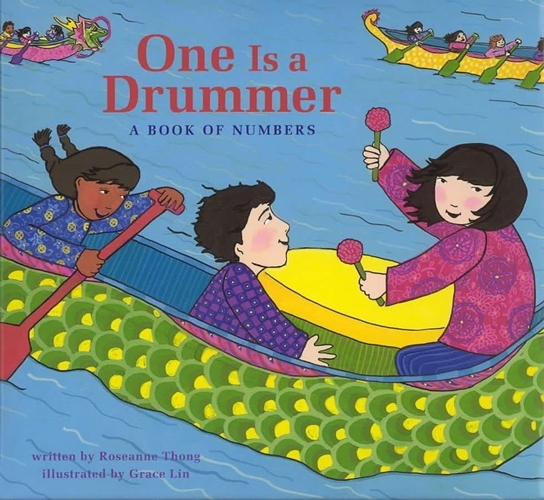
One is a Drummer
Grade 1
4 skill lessons
Math
Skill lessons
The mathematics the book carries, taught directly. Printable workbook pages and teacher keys are not available for this book yet.
- 1One Word, One Thing
- 2Three Lanes, Three Each
- 3The Same Nine, Three Times
- 4Four, and Here They Are
Math + reading
Math through the reading
The same book, entered through a sentence it prints. Change one word in the reading and the numbers change with it.
No math-through-reading lessons for this book yet.
Reading
Reading and language lessons
The same book read as a text. What a word means in its sentence, how a character is shown, how the writing is put together - no mathematics.
- 5Words that end the same
- 6The frame the poem keeps
- 7When the poem turns and asks you
Skill lessons
4 lessons on the mathematics the book carries. Printable workbook pages and teacher keys are not available for this book yet.
1. One Word, One Thing
Every line in this book hands a counter both halves of a count at once: a number and the thing being counted, fastened together and never apart. Two greetings, five fish balls, six horses, ten stepping stones. Students lay out cubes for the line they hear, touch each cube once as they say its number word, and stop on the number the poem stopped on. The concept is one-to-one correspondence and the last-number rule: the number you say on the final cube is how many there are, and here it is a number the text has already printed, so every child can be checked without the teacher supplying a quantity.
Full lesson — 20 minutes
1. Build the line you hear (6 min)
Listen to one line and lay out a cube for each thing it names, then touch each cube once as you say its number word. Stop your count on the last cube and say that number again. Sweep the cubes back into a pile before the next line so you always start from nothing.
Word preview: count
Two are the greetings on our wall.
Five are the fish balls on a stick.
Six of the horses on a merry go round.
2. Carry the count to ten (5 min)
Keep building for the lines that climb higher, up to the bamboo and the stepping stones at the end. Say the last number louder than the rest so your partner hears exactly where you stopped. Check your pile against the number the line printed.
Eight are the Chinese immortals of old.
10 cool stepping stones to walk on through.
3. Say how many without counting again (5 min)
Your partner points at a pile you have already built and asks how many. Answer from the number you stopped on, not by starting over at one. If the number has gone out of your head, count it again and this time say the last number twice.
4. Match the pile to the line (4 min)
Your partner builds a pile while you look away, then reads you one of the book's lines. Count the pile and say whether it is the pile that line asks for. Say your number and the line's number out loud, in that order.
Five are the fingers that I lick.
Short version — 9 minutes
1. Build the line you hear (5 min)
Lay out a cube for each thing the line names. Touch each cube once as you say its number word. Stop on the last cube and say that number again.
Word preview: count
Two are the greetings on our wall.
Five are the fish balls on a stick.
2. Say how many without counting again (4 min)
Your partner points at a pile you built and asks how many. Answer from the number you stopped on, not by starting over at one.
Three levels
- Support
- Stay inside the lines from one to five and keep the cubes in a straight row so no cube is touched twice or skipped. The listening, the touching and the last-number answer stay exactly as they are; only the size of the sets comes down.
- At Grade
- Build every line from the two greetings to the ten stepping stones, touch once per number word, and answer how many from the last number said rather than by counting again.
- Extension
- Scatter the cubes instead of rowing them and count the same pile twice, starting at a different cube each time. Tell your partner why both counts land on the same number even though you began somewhere else.
English learners
Number words are among the first English a new speaker owns, and the counting act itself needs no English at all: one touch, one word, and a child is visibly correct from the first cube. Put a new speaker on the building job first and let that competence show before any sentence is asked for. The noun each number is fastened to is the part that has to be taught, and this book fastens a different one to almost every number, several of them names of food and festival objects a child may know well in another language and not at all in English. Preview those nouns on the picture cards before the count rather than during it. A rehearsable frame for the whole lesson: I counted this many of these. Children may count aloud in their strongest language and say only the final number and the named thing in English; the touching shows you the one-to-one work whatever language rides on top of it.
Materials
- Counting cubes, twenty per child
- A set of ten picture cards, one per counted line, the number and the thing it names
- Word cards: count
Standards & curriculum
Choose your curriculum above to see the standards for this lesson.
Standards are held back while this plan is edited. Every standard shown here was matched against the supplied wording of this lesson, quoting its steps, so a changed step is no longer the thing that was checked. Undo your changes to bring the standards back — your edits stay in this browser either way.
2. Three Lanes, Three Each
Four of this poem's lines say a number three times over in a single breath, once for each of three different things, and the steamers line is the cleanest of them: three steamers, three buns, three egg tarts. The book prints the group size and how many groups there are, and prints nothing else, so the equal-groups structure is the text's and only the counting is the lesson's. Students build the three lanes separately, prove the lanes match by counting each one, then count all nine cubes across the lanes and count on from three as a second route to the same number. The concept is equal groups: the same number, repeated, with the whole reached by counting rather than by any operation the book performs.
Full lesson — 20 minutes
1. Split the line into its three groups (6 min)
Listen to the steamers line and build it in three separate lanes on your mat, one lane for the steamers, one for the buns, one for the egg tarts. Do not let the lanes touch. Count each lane on its own and say its number out loud before you go on to the next.
Word preview: group
Three are the steamers, three are the buns, three are the egg tarts.
2. Say what is the same about the three lanes (4 min)
Look down your three lanes and say what is the same about them. Count each lane again to prove it. Say the sentence out loud to your partner: every lane has the same number, and that number is three.
Word preview: same
3. Count all three lanes together (6 min)
Now count every cube on the mat, sweeping across all three lanes without stopping at the lane edges. Say the number you land on. Then do it a second way: start at three, the first lane, and count on across the other two lanes instead of starting again at one.
4. Build the eight line the same way (4 min)
Listen to the napkins line and build its three lanes the same way, eight in each. Count one lane and say its number. Do not count all three; just tell your partner whether the total will be bigger or smaller than the steamers total, and how you know without counting it.
Eight are the napkins, eight are the dishes, eight are the candles for making wishes.
Short version — 9 minutes
1. Split the line into its three groups (5 min)
Build the steamers line in three separate lanes on your mat, one lane each for the steamers, the buns and the egg tarts. Count each lane on its own and say its number out loud.
Word preview: group
Three are the steamers, three are the buns, three are the egg tarts.
2. Count all three lanes together (4 min)
Count every cube on the mat, sweeping across all three lanes without stopping at the lane edges, and say the number you land on. Then start at three and count on across the other two lanes instead of starting again at one.
Three levels
- Support
- Build only two of the three lanes, the steamers and the buns, and count across those. The lanes, the separate counts and the sweep across them all stay exactly as they are; the child holds two groups instead of three until the structure is secure, then the third lane is added and the sweep repeated.
- At Grade
- Build all three lanes at three each, count each lane on its own, then count across all three to nine and reach nine a second time by starting at three and counting on.
- Extension
- Build the three lanes without the mat's ruled lanes to hold them apart, keeping the groups distinct yourself, and then tell your partner how you would find the total if a fourth lane of three arrived. Say what stays the same about every lane no matter how many lanes there are.
English learners
The mathematics here is visible in the lanes and needs no English to perform: a child who lays out three, three and three has shown the structure before saying anything about it. The poem's syntax is the hard part. This book writes three are the steamers rather than there are three steamers, an inversion that puts the number first and holds the verb in an unusual place, and it is genuinely hard to parse for a new speaker who is otherwise counting fluently. Read the line a second time in plain order before the build, then return to the poem's order. A rehearsable frame that carries the lesson: three lanes, three in each lane. Let children say what is the same about the lanes in their strongest language and report only the numbers in English.
Materials
- Counting cubes, twenty per child
- A plain desk mat per child, ruled into three lanes
- Word cards: group, same
Standards & curriculum
Choose your curriculum above to see the standards for this lesson.
Standards are held back while this plan is edited. Every standard shown here was matched against the supplied wording of this lesson, quoting its steps, so a changed step is no longer the thing that was checked. Undo your changes to bring the standards back — your edits stay in this browser either way.
3. The Same Nine, Three Times
The poem's habit is to say one number and then hang three different things on it inside a single line: nine swimsuits, nine of something else, nine children. A child listening for things hears three things and may reach for three numbers; a child listening for the number hears one number said three times. Students count the repetitions, build a pile for one of the three things only, and then set their pile beside a partner's pile built from a different thing on the same line and match them cube against cube without counting. The representation is one-to-one matching as a way of showing two sets are the same size, and it is available here because the book supplies both sizes rather than because anyone computed them.
Full lesson — 20 minutes
1. Hear the number three times (5 min)
Listen to the swimsuits line and hold up a finger each time you hear the number. Say how many times you heard it. Then say the three different things it was fastened to, one at a time.
Word preview: number
9 colored swimsuits, 9 pairs of feet, 9 are the children escaping the heat.
2. Build one of the three and stop (6 min)
Pick just one of the three things the line names and build a pile for it, counting one cube per object. Do not build the other two. Say aloud which one you built and what number you stopped on, and check that number against the strip.
9 colored swimsuits, 9 pairs of feet, 9 are the children escaping the heat.
3. Show that the piles would match (5 min)
Your partner builds a pile for a different one of the three things. Put your two piles side by side and match them cube against cube without counting either one. Say what you found, and say the number both piles have.
Word preview: match
4. Find the number in a line that hides it (4 min)
Listen to the bamboo and stepping stones lines. Say which number both of them use and how many things that number was fastened to this time. Build one pile for it and check the strip.
10 are the stocks of green bamboo.
10 cool stepping stones to walk on through.
Short version — 9 minutes
1. Hear the number three times (5 min)
Hold up a finger each time you hear the number in the swimsuits line. Say how many times you heard it, then say the three different things it was fastened to.
Word preview: number
9 colored swimsuits, 9 pairs of feet, 9 are the children escaping the heat.
2. Show that the piles would match (4 min)
Your partner builds a pile for a different one of the three things. Put the two piles side by side and match them cube against cube without counting either one. Say the number both piles have.
Word preview: match
Three levels
- Support
- Read the line twice, the second time with a clear pause before each thing that is named, so the child hears where one item ends and the next begins before being asked how many times the number came. Everything else stays: the finger for each hearing, the single pile, the side-by-side match.
- At Grade
- Say how many times the number is spoken in the line and name the three things it is fastened to, build a pile for one of them, and match it cube against cube with a partner's pile built from another of the three.
- Extension
- Match your pile against a partner's pile that was built from a different line of the poem, one you know has a different number. Say what the matching shows this time and how you can tell without counting either pile which one runs out first.
English learners
The listening job in this lesson is genuinely hard in a second language, because it asks a child to attend to a repeated number while three unfamiliar nouns go past. Take the pressure off the nouns: the child does not have to know what a swimsuit is to hear nine said three times, and step one only needs the number. Say plainly that the nouns are not the job here. The matching in step three needs no English whatever and is the strongest place to let a new speaker show what they can do. A rehearsable frame: the same number, three different things. Children may name the three things in their strongest language, or point at them on the page, and say only the number in English.
Materials
- A paper counting strip numbered 1 to 10, one per pair
- Counting cubes, twenty per child
- Word cards: number, match
Standards & curriculum
Choose your curriculum above to see the standards for this lesson.
Standards are held back while this plan is edited. Every standard shown here was matched against the supplied wording of this lesson, quoting its steps, so a changed step is no longer the thing that was checked. Undo your changes to bring the standards back — your edits stay in this browser either way.
4. Four, and Here They Are
Almost every line in this poem states a number and leaves the counted things to the pictures. The seasons line is the one place the text does both: it says four and then names all four, so a child can check a stated count against a set they can lay hands on. Students put down a card per named season, count the cards, and compare that count to the number the poem gave. Then they take one away and count again, and they judge a partner's partial list against the poem's four. The reasoning is completeness: knowing when you have them all is a comparison between a count you performed and a count the text asserted, and the last step turns the same test on the days line, where the poem gives the number and names nothing.
Full lesson — 20 minutes
1. Count the seasons the poem names (5 min)
The poem says how many seasons there are and then names them one at a time. Lay a season card down for each name as you hear it, then touch each card once and count them. Say whether your count matches the number the poem gave.
Word preview: four
Four are the seasons I know them all.
Spring, summer, winter and fall.
2. Take one away and count again (5 min)
Turn one season card face down and count the cards that are still showing. Say the new number. Turn it back up, count again, and say what changed and what did not change about the set of seasons.
3. Check a claim against the cards (6 min)
Your partner names some seasons and stops. Lay a card for each one they name, count the cards, and say whether they have named them all yet. Give your reason using both numbers: how many they named and how many the poem said there were.
Word preview: all
Four are the seasons I know them all.
4. Do it again with the days line (4 min)
The poem says how many days are in a week without naming any of them. Count out that many cubes and lay them in a row. Tell your partner what the poem gave you here and what it did not give you, and why you could not lay down day cards the way you laid down season cards.
Seven is the number of days in a week.
Short version — 9 minutes
1. Count the seasons the poem names (5 min)
Lay a season card down for each name the poem says, then touch each card once and count them. Say whether your count matches the number the poem gave.
Word preview: four
Four are the seasons I know them all.
Spring, summer, winter and fall.
2. Check a claim against the cards (4 min)
Your partner names some seasons and stops. Lay a card for each one, count the cards, and say whether they have named them all yet, using how many they named and how many the poem said.
Word preview: all
Four are the seasons I know them all.
Three levels
- Support
- Lay the four season cards out face up before the poem is read, so the child is matching a spoken name to a card in front of them rather than holding the name and finding the card at once. The counting, the comparison to four and the spoken reason are all unchanged; only the listening load comes down.
- At Grade
- Lay a card per named season, count to four, compare that count to the number the poem stated, and judge a partner's partial list by saying how many they named against how many there are.
- Extension
- Have your partner name a season twice on purpose. Count the cards, say what number you get, and explain why counting the cards no longer answers how many seasons there are. Say what rule about counting the repeat broke.
English learners
This lesson leans on four English nouns that a new speaker may not have, and unlike the counting they cannot be worked around: a child who does not know fall cannot lay the card for it. Put the four season cards up with pictures a day ahead and let children say each season in their strongest language beside the English word, so the two are matched before the poem is read rather than during it. The counting and the comparison transfer completely. A rehearsable frame that carries the whole reasoning step: you named this many, the poem said four. Note also that the poem lists its seasons out of the usual order, spring then summer then winter then fall, which will trip a child who learned the cycle in order; the lesson does not need the order and no step asks for it.
Materials
- Four season cards, one word each: Spring, summer, winter, fall
- Counting cubes, twenty per child
- Word cards: four, all
Standards & curriculum
Choose your curriculum above to see the standards for this lesson.
Standards are held back while this plan is edited. Every standard shown here was matched against the supplied wording of this lesson, quoting its steps, so a changed step is no longer the thing that was checked. Undo your changes to bring the standards back — your edits stay in this browser either way.
Reading and language lessons
3 lessons on the reading and language the book carries - what a word means in its sentence, how a character is shown, how a text is built. No mathematics: these are matched against the English language arts curricula, which are a different and smaller set than the mathematics ones.
5. Words that end the same
This poem rhymes in couplets almost the whole way through, which gives a first grader more clean pairs than one lesson needs. Students isolate nose and toes by ear, collect three more pairs with counters, meet a line where the rhyme sits inside a single long sentence rather than across two, and finish by supplying a rhyming word of their own and building a line that ends on it. The numbers stay inside the quoted couplets; every task here is about the sound at the end of a word.
Full lesson — 20 minutes
1. Hear the pair of end words (5 min)
Listen to the couplet read twice, then say the very last word of each line aloud on its own: nose, then toes. Clap once as you say each one. Say whether the two words end with the same sound, and say the sound by itself.
Word preview: nose, toes
One is a tail and a cool wet nose. One is a tongue that tickles my toes.
2. Collect three rhyming pairs (6 min)
Work in pairs. Read each couplet aloud and write or say the two end words as a pair, then put a counter beside each pair you find: wall and all, stick and lick, old and hold. Say each pair twice, then say the one sound the two words share.
Word preview: wall, all, stick, lick, old, hold
Two are the greetings on our wall. Luck and fortune for us all.
Five are the fish balls on a stick. Five are the fingers that I lick.
Eight are the Chinese immortals of old. Eight are the precious gifts they hold.
3. Find the rhyme inside one long line (5 min)
Read this line with your partner. It is one line, not two, and the rhyme sits inside it rather than at the end of a pair of lines. Say the two words that rhyme, dishes and wishes, and say where in the line each one sits. Read the line again and clap on both rhyming words so the class can hear them land.
Word preview: dishes, wishes
Eight are the napkins, eight are the dishes, eight are the candles for making wishes.
4. Say a rhyme of your own (4 min)
Read this couplet, say its two end words, then say a third word of your own that rhymes with them. Make one new line ending on your word and say the whole thing aloud, the poet's first line and then yours, so your partner can hear the rhyme still work.
Word preview: round, down
Six of the horses on a merry go round. Six of the children going up and down.
Short version — 9 minutes
1. Hear the pair of end words (4 min)
Listen to the couplet twice, then say the last word of each line on its own, nose and then toes, clapping once on each. Say the sound they share.
Word preview: nose, toes
One is a tail and a cool wet nose. One is a tongue that tickles my toes.
2. Collect three rhyming pairs (5 min)
Read each couplet and say its two end words as a pair, putting a counter beside each pair you find. Say each pair twice and name the sound the two words share.
Word preview: wall, all, stick, lick, old, hold, dishes, wishes, round, down
Two are the greetings on our wall. Luck and fortune for us all.
Five are the fish balls on a stick. Five are the fingers that I lick.
Eight are the Chinese immortals of old. Eight are the precious gifts they hold.
Three levels
- Support
- Take one couplet at a time from the three and say only the two end words, without the shared-sound question. Say them together, wall all, wall all, until the child can say the pair without the couplet. One pair secure is better than three half-heard.
- At Grade
- Find all three pairs, mark each with a counter, and name the sound the two words in each pair share.
- Extension
- After finding all three pairs, say which of the three pairs sounds the most alike and which the least, and say what is different about the one that is least alike.
English learners
Rhyme judgements depend on the vowel sounds of the language a child hears at home, and a pair that is obviously rhyming in English may not be audible as one to a child whose vowel system splits those sounds differently. Say the two words slowly and side by side, and let the child answer by putting the two counters together or apart rather than by explaining. Rehearse the frame these two end the same before step two. Invite the child to give a rhyming pair from a song in their strongest language first, so the idea arrives before the English examples do.
Materials
- One is a Drummer, read aloud by the teacher
- Three counters per pair to mark rhyming pairs
- Word cards: nose, toes, wall, all, stick, lick, old, hold, dishes, wishes, round, down
Standards & curriculum
Choose your curriculum above to see the standards for this lesson.
Standards are held back while this plan is edited. Every standard shown here was matched against the supplied wording of this lesson, quoting its steps, so a changed step is no longer the thing that was checked. Undo your changes to bring the standards back — your edits stay in this browser either way.
6. The frame the poem keeps
Almost every line of this poem is built on one frame, and the poem is easier to read aloud once a child can hear it. Students say the frame, find the line that swaps it for a different word, tap the repeats inside a single long line that holds three things instead of one, and finish by building a line of their own on the frame. The lesson is about how a poem holds a shape and where a poet lets it move; the numbers sit in the frame's first slot and no step asks a child to add or compare them.
Full lesson — 20 minutes
1. Say the pattern out loud (5 min)
Listen to these two couplets and say the three words that start almost every line: are the. Say the pattern frame aloud together, a number, then are the, then the thing. Then read each of the four lines and say only the thing at the end, so you can hear the frame stay the same while the thing changes.
Word preview: pattern
Two are the greetings on our wall. Luck and fortune for us all.
Four are the seasons I know them all. Spring, summer, winter and fall.
2. Find the line that breaks the pattern (6 min)
Read these two lines with your partner. One of them uses the frame you just said and the other uses a different word, of instead of are the. Put a counter on the line that breaks the pattern, say the word that broke it, and say the line again with the frame put back so you can hear the difference the poet made.
Word preview: break
Six of the horses on a merry go round. Six of the children going up and down.
Eight are the napkins, eight are the dishes, eight are the candles for making wishes.
3. Count the repeats inside one line (5 min)
Read this line aloud with your partner and tap the table each time the frame starts again inside it. Say how the poet made one sentence hold three things instead of one, and read it a second time so the taps land together. Then read the line that follows the same trick with a different opening word and say which of the two sounds more like a list.
Word preview: repeat, list
Three are the steamers, three are the buns, three are the egg tarts. Here they come!
Eight are the napkins, eight are the dishes, eight are the candles for making wishes.
4. Build a line on the frame (4 min)
Read this couplet, then say a line of your own using the same frame: a number, then are the, then something from your own home or street. Say it twice so your partner hears the frame, and your partner says back only the part you changed.
Word preview: frame
10 are the stocks of green bamboo. 10 cool stepping stones to walk on through.
Short version — 9 minutes
1. Say the pattern out loud (4 min)
Listen to these two couplets, say the three words that start almost every line, and say the frame aloud together: a number, then are the, then the thing.
Word preview: pattern
Two are the greetings on our wall. Luck and fortune for us all.
Four are the seasons I know them all. Spring, summer, winter and fall.
2. Find the line that breaks the pattern (5 min)
Read these two lines, put a counter on the one that breaks the frame, and say the word that broke it. Say the broken line again with the frame put back.
Word preview: break, repeat, list, frame
Six of the horses on a merry go round. Six of the children going up and down.
Eight are the napkins, eight are the dishes, eight are the candles for making wishes.
Three levels
- Support
- Work one line at a time and answer one question only: does this line say are the, yes or no. Let the child hold up a thumb for yes and a flat hand for no rather than name the word. Come back to the deciding word once both lines have been sorted.
- At Grade
- Sort both lines, name the word that broke the frame, and say the broken line again with the frame restored.
- Extension
- After sorting both lines, say why a poet might break the frame in one place and keep it everywhere else, and say what the broken line would lose if it were put back.
English learners
A repeated frame is the single friendliest thing in this poem for a child learning English, because the same four words come back a dozen times and only the last part changes. Lean on it: rehearse a number, then are the, then the thing until the child can say the frame without a line in front of them, and let them fill the last slot with a word in any language before asking for English. In step four accept a whole line where only the final noun is English. The line that breaks the frame is the hard one, so teach it as the odd one out rather than as a rule.
Materials
- One is a Drummer, read aloud by the teacher
- Two counters per pair to mark lines
- Word cards: pattern, break, repeat, list, frame
Standards & curriculum
Choose your curriculum above to see the standards for this lesson.
Standards are held back while this plan is edited. Every standard shown here was matched against the supplied wording of this lesson, quoting its steps, so a changed step is no longer the thing that was checked. Undo your changes to bring the standards back — your edits stay in this browser either way.
7. When the poem turns and asks you
This poem spends most of its length telling and then twice turns and asks the reader directly, once in the middle and once at the very end. Students find the asking sentence inside a line that also tells, sort telling from asking across three stretches, work out who the word you is pointing at and answer with I, and finish by asking a question of their own with the rising voice that marks it. The skill is recognising and producing a question; the numbers live in the sentences that do the telling and no step asks a child to work with them.
Full lesson — 20 minutes
1. Notice the poem asking you something (5 min)
Read this line aloud. Two of its three sentences are the poem telling you something and one of them is the poem asking you something. Say the asking sentence on your own, then say who it is asking, then answer it out loud with today's day.
Word preview: asking, telling
Seven is the number of days in a week. What day is today? Let's take a peek.
2. Sort telling lines from an asking line (6 min)
Work in pairs with a card marked Telling and a card marked Asking. Read these three stretches and put each sentence you hear onto a card, saying aloud what made you choose. Two of the three stretches are all telling. Say the word at the very end of the sentence that made the asking one different.
Word preview: question
Five are the fish balls on a stick. Five are the fingers that I lick.
10 are the stocks of green bamboo. 10 cool stepping stones to walk on through.
There are so many numbers at home and at play. How many have you counted today?
3. Say who the poem means by you (5 min)
Read the closing line again with your partner. Find the word you inside it and say who that word means. Then say the sentence back to the poem, starting with I, so the answer matches the question, and tell your partner what changed between the poem's sentence and yours.
Word preview: you
There are so many numbers at home and at play. How many have you counted today?
4. Ask the reader something back (4 min)
Read the couplet, then say a question of your own that the poem could have asked a reader about it. Say your question with your voice going up at the end so a listener can hear it is asking, and let your partner answer it.
Word preview: answer
One is a tail and a cool wet nose. One is a tongue that tickles my toes.
Short version — 9 minutes
1. Notice the poem asking you something (4 min)
Read this line aloud and say which of its sentences is the poem asking you something. Say that sentence on its own, say who it is asking, and answer it with today's day.
Word preview: asking, telling
Seven is the number of days in a week. What day is today? Let's take a peek.
2. Sort telling lines from an asking line (5 min)
Put each sentence from these three stretches onto the Telling card or the Asking card and say what made you choose. Name the word at the end of the asking sentence that made it different.
Word preview: question, you, answer
Five are the fish balls on a stick. Five are the fingers that I lick.
10 are the stocks of green bamboo. 10 cool stepping stones to walk on through.
There are so many numbers at home and at play. How many have you counted today?
Three levels
- Support
- Work one stretch at a time and let the child answer with a shrug for asking and a nod for telling before any card is touched. Read each sentence twice, once flat and once with the voice rising, so the ear has the difference before the hand has to sort it.
- At Grade
- Sort all three stretches onto the two cards and name the ending word that marked the asking sentence.
- Extension
- After sorting all three, say what the poem would lose if its last sentence were changed into a telling one, and say the telling version aloud to test it.
English learners
Rising intonation marks a question in English but not in every language, and a child may produce a perfectly formed question that a listener hears as a statement, or hear one and miss it. Teach the ear first: read the same sentence twice, once falling and once rising, and let the child point up or down. Rehearse the frame this one asks me, this one tells me before step two. Invite the child to ask a question in their strongest language and let the class hear how that language marks it, then put the English question beside it.
Materials
- One is a Drummer, read aloud by the teacher
- Cards marked Telling and Asking, one pair per partnership
- Word cards: asking, telling, question, you, answer
Standards & curriculum
Choose your curriculum above to see the standards for this lesson.
Standards are held back while this plan is edited. Every standard shown here was matched against the supplied wording of this lesson, quoting its steps, so a changed step is no longer the thing that was checked. Undo your changes to bring the standards back — your edits stay in this browser either way.