Ocean Counting Odd Numbers

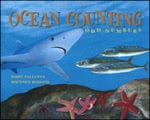
Ocean Counting Odd Numbers book cover

Grade 2
4 skill lessons · 2 math-through-reading

Math

Skill lessons

The mathematics the book carries, taught directly. Each lesson has printable workbook pages and a separate teacher key.

  • 1Count the Odd Pages by Twos
  • 2Pair Them Up to Tell Odd from Even
  • 3Add One More and Watch It Flip
  • 4Walk the Number Path by Twos

Math + reading

Math through the reading

The same book, entered through a sentence it prints. Change one word in the reading and the numbers change with it.

  • 5Swap One Word and Rebuild the Book
  • 6Two More, Two Fewer: Say It Both Ways

Reading

Reading and language lessons

The same book read as a text. What a word means in its sentence, how a character is shown, how the writing is put together - no mathematics.

  • 7What the Heading Tells You Before You Read
  • 8Plankton, Razor, Ray: Meanings the Page Gives You
  • 9One Sentence for the Whole Page
  • 10Not a Weapon: How This Book Tells You Why
  • 11Are You a Lefty or a Righty: The Book Asks You Things
Download
PDF

Both exports carry any edits you have made. Edits are saved in this browser only — nobody else sees them, and they are not sent anywhere.

Skill lessons

4 lessons on the mathematics the book carries. Each lesson has printable workbook pages and a separate teacher key.

1. Count the Odd Pages by Twos Fluency · Skip counting by twos from one within 50

The book turns a page for every odd number from one to forty-nine and says outright how it is moving: it counts by twos and it starts at the first odd number. Students take that run and make it accurate and quick, saying 1, 3, 5, 7, 9 and on to 49 with one touch per number word, forward and then backward, and picking the count up from the middle when a page number is handed to them.

Full lesson — 20 minutes

  1. 1. Echo the first five (4 min)

    Partners lay the odd-number strip flat and put one finger on the 1 card. One partner says 1, 3, 5, 7, 9, sliding the finger to a new card on each number word. The other watches that one card gets one word. They stop the count if two words land on the same card. Swap jobs and run it again.

    Word preview: odd

    Skip count. 1, 3, 5, 7, 9.
  2. 2. Count the whole strip (5 min)

    Partners count every card from 1 to 49, one touch per number word, and go back to 1 whenever a number is skipped or said twice. When the strip comes out clean, count it backward from 49 down to 1 the same way. Say the last card you land on out loud so your partner can check it.

    Word preview: by twos

    This book counts by twos.
    We are starting with the first odd number.
  3. 3. Cover and continue (6 min)

    One partner lays blank cards over three numbers in the middle of the strip while the other looks away. The counter runs the strip from 1 and says each hidden number out loud when a finger reaches it. Lift the covers to check, then trade jobs and hide three different numbers.

  4. 4. Count on from a page (5 min)

    The teacher names a page the class just heard, such as the moon snails or the Black Seabass. Partners put a finger on that number and count on by twos to 49 without sliding back to 1. Then count on from the same number again with the strip turned face down.

    Count the 21 moon snails.
    Don't forget to count the 37 Black Seabass.

Short version — 9 minutes

  1. 1. Echo the first five (4 min)

    Partners put one finger on the 1 card and say 1, 3, 5, 7, 9, sliding to a new card on each number word. The other partner stops the count if two words land on one card. Swap and run it again.

    Word preview: odd

    Skip count. 1, 3, 5, 7, 9.
  2. 2. Count the whole strip (5 min)

    Partners count the strip from 1 to 49 with one touch per number word, restarting at 1 after any skip or repeat, then count it backward from 49 to 1.

    Word preview: by twos

    This book counts by twos.
    We are starting with the first odd number.

Three levels

Support
Stay on the first ten cards, 1 through 19. Everything else holds: one touch per number word, forward and then backward, and a restart at 1 after any skip. Add three cards to the strip each time the shorter run comes out clean twice in a row.
At Grade
Run the full strip from 1 to 49 and back, then count on to 49 from a number the teacher names, with the strip face down on the second try.
Extension
Start at 49 and count back by twos with the strip face down. Then, when a partner says any number from the run, answer with the number just before it and the number just after it before your partner finishes clapping once.

English learners

Teen and decade words collide in a fast count, where thirteen and thirty are close enough to collide in a fast count. Model a sentence that names a number and then names two more than it, with the pair before the timed run, and invite students to count the strip once in their own language and then again in English with the same finger.

Materials

  • Odd-number card strip, 1 to 49, one per pair
  • Blank cover cards, three per pair
  • Word cards: by twos, odd

Workbook

Print these for the class. They carry your edits, and they print in black and white.

Count the Odd Pages by Twos: Odd-Number Card Strip and Blank Cover Cards strip set

Ocean Counting Odd Numbers — Count the Odd Pages by Twos

Odd-number card strip and blank cover cards

Cut on the box edges. Lay the number cards flat in order, 1 first.

The three empty cards at the end are the cover cards.

135791113151719212325272931333537394143454749
Count the Odd Pages by Twos: Word Cards card set

Ocean Counting Odd Numbers — Count the Odd Pages by Twos

Word cards

Cut on the box edges. One word to a card.

by twosodd
Teacher key (1 page) — not for the class
Count the Odd Pages by Twos: Teacher Key full page

Ocean Counting Odd Numbers — Count the Odd Pages by Twos — Teacher Key

The strip in order

1, 3, 5, 7, 9, 11, 13, 15, 17, 19, 21, 23, 25, 27, 29, 31, 33, 35, 37, 39, 41, 43, 45, 47, 49.

Twenty-five cards. The first five are 1, 3, 5, 7, 9. The last card is 49. Counted backward the strip runs 49, 47, 45 and on down to 1.

The first ten cards, the shorter run, are 1, 3, 5, 7, 9, 11, 13, 15, 17, 19.

Cover and continue

Any three cards may be hidden. The counter is right when the number said at a covered card is the one printed under it. Lifting the cover settles it.

Two common slips: saying the next card's number at the cover and then repeating it when the cover is passed, and skipping the covered card in silence.

Count on from a page

From the 21 moon snails: 21, 23, 25, 27, 29, 31, 33, 35, 37, 39, 41, 43, 45, 47, 49.

From the 37 Black Seabass: 37, 39, 41, 43, 45, 47, 49.

Read for

A close count gives one number word to one card, keeps the finger moving on every word, and lands on 49 exactly. A loose count runs ahead of the finger, or lets two words fall on one card, or drifts into counting by ones near the teen numbers.

Counting on is the harder job. A close response starts at the named number and keeps the jump of two; a loose response slides back to 1 first, which is the thing this step is meant to retire.
Standards & curriculum

Choose your curriculum above to see the standards for this lesson.

2. Pair Them Up to Tell Odd from Even Concept · Deciding whether a count within 50 is odd or even by pairing

How can you tell an even number from an odd number? The question is asked out loud, and then fifty pages of ocean animals count past the reader. Students answer it with their hands: build the count from a page, push the counters into twos, and see whether anyone is left without a partner.

Full lesson — 20 minutes

  1. 1. Pair the crabs (5 min)

    Each pair counts out 9 counters for the little green crabs and pushes them two at a time into the boxes on the mat. Count the filled boxes aloud by twos and then say what is sitting outside them. Finish with the sentence: nine is odd because one crab has no partner.

    Word preview: odd, left over

    If you go to a beach at low tide, it is easy to find 9 little green crabs.
  2. 2. Build three more pages (6 min)

    Build the 21 moon snails, then the 23 horseshoe crabs, then the 27 hake, clearing the mat between builds. Each time, fill the boxes two at a time and count the filled boxes by twos. Report the leftover to your partner before you say odd or even. Keep a tally of which counts left someone standing alone.

    Word preview: even

    Count the 21 moon snails.
    The tails of these 23 horseshoe crabs are not weapons.
    If you pick up some of these 27 hake, you will notice that they are soft and mushy.
  3. 3. Test the two even pages (5 min)

    Build the 50 blue sharks with every counter you have, fill the mat two at a time, and report what is left outside the boxes. Then sweep the mat clear for the last page, where the animals are gone, and say what is left over when there is nothing to pair. Tell your partner which pile each of those two numbers belongs in.

    Here are 50 blue sharks.
    50 is an even number.
    Now there are zero ocean creatures on this page.
    Oops, zero is an even number.
  4. 4. Sort the cards (4 min)

    Turn over the number cards one at a time and put each one in the odd pile or the even pile. Before a card moves, the partner holding it says how many pairs that number makes and whether anyone is left standing. Build any card the two of you disagree about on the mat.

    How can you tell an even number from an odd number?

Short version — 9 minutes

  1. 1. Pair the crabs (5 min)

    Each pair counts out 9 counters for the little green crabs, pushes them two at a time into the boxes, counts the filled boxes by twos, and names what sits outside them. Finish with the sentence: nine is odd because one crab has no partner.

    Word preview: odd, left over

    If you go to a beach at low tide, it is easy to find 9 little green crabs.
  2. 2. Sort the cards (4 min)

    Turn over the number cards one at a time into an odd pile or an even pile, saying how many pairs each number makes and who is left standing before the card moves.

    How can you tell an even number from an odd number?

Three levels

Support
Stay with counts under twelve, the 3 sunfish, the 5 bloodstars and the 9 crabs, so the whole build can be seen in one look. The mat, the two-at-a-time filling and the spoken reason are unchanged; only the size of the count comes down. Add one larger page each time a smaller count comes out right twice.
At Grade
Build 9, 21, 23, 27 and 50 on the mat, report the leftover before naming odd or even, and sort the number cards with a reason attached to every card.
Extension
Before building, predict which of two cards will leave a counter standing and say what you looked at to decide. Then defend the hardest card, zero, to a partner who argues that a number with nothing in it cannot be even, using the empty mat as your reason.

English learners

The mathematics here is visible without English: a counter with no partner means the same thing in every language, so a student can decide odd or even before saying a word. Odd and even sound like ordinary describing words rather than mathematical ones, and left over, which is idiomatic. Walk through two sentences, one naming a number as odd because one is left over and one naming a number as even because nothing is left over, with the mat in front of the pair, and invite students to give the reason in their everyday language first and then in English while pointing at the lone counter.

Materials

  • Two-color counters, 50 per pair
  • Pairing mat with twenty-five two-counter boxes
  • Number cards from the book's pages: 3, 5, 9, 21, 23, 27, 37, 50
  • Word cards: even, left over, odd

Workbook

Print these for the class. They carry your edits, and they print in black and white.

Pair Them Up: Pairing Mat and Tally full page

Ocean Counting Odd Numbers — Pair Them Up to Tell Odd from Even

Pairing mat

Name: ______________________________

Push the counters into the boxes two at a time. Start at the top left box.


Tally

Make a mark beside each count that left someone standing alone.

  1. 21 moon snails   _______________________
  2. 23 horseshoe crabs   _______________________
  3. 27 hake   _______________________
Pair Them Up: Number Cards card set

Ocean Counting Odd Numbers — Pair Them Up to Tell Odd from Even

Number cards

Cut on the box edges. Turn the cards face down and shuffle them.

3592123273750
Pair Them Up: Word Cards card set

Ocean Counting Odd Numbers — Pair Them Up to Tell Odd from Even

Word cards

Cut on the box edges. One word to a card.

evenleft overodd
Teacher key (1 page) — not for the class
Pair Them Up: Teacher Key full page

Ocean Counting Odd Numbers — Pair Them Up to Tell Odd from Even — Teacher Key

What each build fills

  • 9 little green crabs — 4 boxes filled, 1 counter left over, odd
  • 21 moon snails — 10 boxes filled, 1 left over, odd
  • 23 horseshoe crabs — 11 boxes filled, 1 left over, odd
  • 27 hake — 13 boxes filled, 1 left over, odd
  • 50 blue sharks — all 25 boxes filled, nothing left over, even
  • the last page, zero — no box filled, nothing left over, even

Expected tally

All three counts on the tally left someone standing alone: 21, 23 and 27 are odd. A tally with only one or two marks means a build was miscounted; rebuild it rather than arguing the number.

Card sort

Odd pile: 3, 5, 9, 21, 23, 27, 37.

Even pile: 50.

Pairs each card makes, with the leftover: 3 makes 1 pair and 1 left; 5 makes 2 and 1 left; 9 makes 4 and 1 left; 21 makes 10 and 1 left; 23 makes 11 and 1 left; 27 makes 13 and 1 left; 37 makes 18 and 1 left; 50 makes 25 and none left.

Read for

A close response names the leftover first and the label second: ten boxes filled and one crab standing alone, so twenty-one is odd. A loose response gives the label alone, or reasons from the size of the number, or from the last digit, which this lesson has not taught.

Zero is the hard one and the book settles it: with nothing to pair there is nothing left over, so zero goes in the even pile. Expect resistance; the empty mat is the argument.

Standards & curriculum

Choose your curriculum above to see the standards for this lesson.

3. Add One More and Watch It Flip Reasoning · Reasoning about one more than an odd or even number within 50

The odd run ends at 49, one more animal is added, and the count lands on 50, a number the book calls even. Students test whether that flip is a one-time event or a rule: build a count, pair it, add a single counter, pair it again, and say what happened to the leftover.

Full lesson — 20 minutes

  1. 1. Add one to the crabs (5 min)

    Build 9 counters for the little green crabs and push them into pairs, then point at the one with no partner. Slide one more counter next to that lonely one and say what the pairs look like now. Tell your partner both numbers and exactly what changed between them.

    Word preview: one more

    If you go to a beach at low tide, it is easy to find 9 little green crabs.
  2. 2. Try three more starts (5 min)

    Do the same with 21, then 23, then 27: build, pair, name the leftover, add one counter, pair again, name what is left now. Say each result as a full sentence, one more than twenty-one is twenty-two, and say which of the two numbers was odd. Keep all four results where both partners can see them.

    Word preview: odd, even

    Count the 21 moon snails.
    The tails of these 23 horseshoe crabs are not weapons.
  3. 3. Run the book's last page (6 min)

    Fill four ten-frames and put nine counters in the fifth, to make the 49 the book counts to. Then point at the empty square and say why 49 cannot pair up. Add one more counter to close that frame and count the full frames by twos to say the new number. Report to the class whether the book's ending obeys the pattern your four smaller builds found.

    And if you add one more, we have counted to 50.
    50 is an even number.
  4. 4. Say the rule and test the last case (4 min)

    Fill in the sentence strip with the rule your builds support and read it to another pair. Then test it on the book's final page: start with zero counters and add one. Say whether that case obeys the rule or breaks it. If it breaks, change the strip until it is true for every build on your table.

    Now there are zero ocean creatures on this page.
    Oops, zero is an even number.

Short version — 9 minutes

  1. 1. Add one to the crabs (5 min)

    Build 9 counters, push them into pairs and point at the one with no partner. Slide one more counter next to it, pair again, and tell your partner both numbers and what changed between them.

    Word preview: one more

    If you go to a beach at low tide, it is easy to find 9 little green crabs.
  2. 2. Say the rule and test the last case (4 min)

    Fill in the sentence strip with the rule your builds support and read it to another pair, then test it by starting with zero counters and adding one, changing the strip if that case breaks it.

    Now there are zero ocean creatures on this page.
    Oops, zero is an even number.

Three levels

Support
Work only with counts under twelve, 3 and 5 and 9, so both pairings can be seen in one glance. The build, the added counter and the spoken sentence stay exactly as they are; only the size of the numbers comes down.
At Grade
Build 9, 21, 23 and 27, add one to each, then carry the rule to the book's 49 on ten-frames before writing the sentence strip.
Extension
Turn the rule around: take one counter away instead of adding one, and say whether the same flip happens. Then say what makes the flip happen at all, using the empty half of a pair as your reason, and defend it to a pair who tried a different number.

English learners

Adding one counter and watching a pair close needs no English, so students who cannot yet say the rule can still show it. The English that carries the load is the comparative phrase one more than, which several languages build in the opposite order, and the word flip, which is figurative and should stay out of the required sentence. Rehearse "One more than ___ is ___" aloud three times with counters in hand before the strip is written, and invite students to state the rule in their strongest language first, then read the English strip to a partner.

Materials

  • Two-color counters, 50 per pair
  • Ten-frames, five per pair
  • Sentence frame strip: One more than an odd number is ___.
  • Word cards: even, odd, one more

Workbook

Print these for the class. They carry your edits, and they print in black and white.

Add One More: Four Results and Five Ten-Frames full page

Ocean Counting Odd Numbers — Add One More and Watch It Flip

Our four results

Name: ______________________________

Write each result after you build it and add one counter.

  1. One more than 9 is ________________
  2. One more than 21 is ________________
  3. One more than 23 is ________________
  4. One more than 27 is ________________

Five ten-frames

Fill four frames and put nine counters in the fifth.

Add One More: Sentence Frame Strips strip set

Ocean Counting Odd Numbers — Add One More and Watch It Flip

Sentence frame strips

Cut on the box edges. Write the rule your builds support on one strip.

The spare strips are there if you have to change the rule.

One more than an odd number isOne more than an odd number isOne more than an odd number is
Add One More: Word Cards card set

Ocean Counting Odd Numbers — Add One More and Watch It Flip

Word cards

Cut on the box edges. One word to a card.

evenoddone more
Teacher key (1 page) — not for the class
Add One More: Teacher Key full page

Ocean Counting Odd Numbers — Add One More and Watch It Flip — Teacher Key

The four results

  • One more than 9 is 10. Nine is the odd one; ten pairs up with nothing left.
  • One more than 21 is 22.
  • One more than 23 is 24.
  • One more than 27 is 28.

The ten-frames

Four full frames and nine counters in the fifth make 49, with one square empty. That empty square is why 49 cannot pair up. The added counter closes the fifth frame and the count reads 50: 2, 4, 6 and on to 50.

The book's ending obeys the pattern the four smaller builds found. 50 is an even number.

The sentence strip

One more than an odd number is even.

The last case does not break it. Zero is even, and one more than zero is one, which is odd, so the strip as written says nothing about zero and stays true. Some pairs will widen the strip to cover both directions, one more than an even number is odd, and that is also true of every build on the table. Either strip passes.

Read for

A close response names both numbers and what changed between them: the lonely counter got a partner, so the leftover went away. A loose response says only that the number got bigger, or gives the rule back as a word, even, without pointing at a build.

Watch for a pair who writes the rule from one build. Four results and the book's 49 are the evidence the lesson asks them to stand on.

Standards & curriculum

Choose your curriculum above to see the standards for this lesson.

4. Walk the Number Path by Twos Representation · Representing the odd numbers to 49 on a number path

Counting by twos is stated and then shown: every other number gets a page and the numbers in between never appear. Students put that on a number path, marking each number the book counts and leaving the skipped ones bare, until the run of markers and the gaps between them are one fact seen two ways.

Full lesson — 20 minutes

  1. 1. Mark the first five (4 min)

    Put a marker on 1, 3, 5, 7 and 9 on the number path, saying each number out loud as the marker lands. Run a finger from one marker to the next and count the squares you cross. Tell your partner how many squares every jump crosses.

    Word preview: odd

    Skip count. 1, 3, 5, 7, 9.
  2. 2. Finish the path (6 min)

    Keep placing markers by the same jump until the path runs out of numbers the book counts. Read the last marked number aloud, then look at every square you left bare and tell your partner what those numbers have in common. Move one marker deliberately onto a bare square and have your partner say what went wrong.

    Word preview: jump of two

    This book counts by twos.
    We are starting with the first odd number.
  3. 3. Read the path back (5 min)

    Read the marked numbers from 1 up to the last one, touching each marker, then read them back down to 1. Put a finger on 50 and say why no marker sits there. Say the same thing about 50 that the book says, using the bare square as your reason.

    Here are 50 blue sharks.
    50 is an even number.
  4. 4. Draw the jump (5 min)

    On your own paper path, circle every number the book counts from 1 to 25 and draw an arrow from each circle to the next. Write the size of the jump above one arrow and check that every other arrow is the same length. Hand the paper to a partner, who reads your circled numbers aloud.

Short version — 9 minutes

  1. 1. Mark the first five (4 min)

    Put a marker on 1, 3, 5, 7 and 9, saying each number as it lands, then run a finger between markers and tell your partner how many squares every jump crosses.

    Word preview: odd

    Skip count. 1, 3, 5, 7, 9.
  2. 2. Read the path back (5 min)

    Read the marked numbers up to the last one and back down to 1, touching each marker, then put a finger on 50 and say why no marker sits there.

    Here are 50 blue sharks.
    50 is an even number.

Three levels

Support
Work the path only to 25 and keep everything else: the number spoken as each marker lands, the finger run across the squares, and the bare squares named at the end. Extend the path by ten numbers each time the shorter run goes down without a gap error.
At Grade
Mark the whole path to 49, read it up and back, and draw the circled path with a labelled jump on paper.
Extension
Cover the path with a strip of paper and place three markers where 31, 33 and 35 belong, then lift the strip to check. Say what you counted from to find each one, and say which square you would have to move a marker to in order to break the pattern.

English learners

A marked path says the same thing in every language: students can show the jump of two long before they can name it. The English load here is positional, every other, in between, skipped, none of which maps word for word from many languages, and every other is easily heard as every second with a different starting point. Rehearse "The jump is ___ squares" and "The number in between is ___" with a finger moving on the path, and invite students to describe the pattern in their strongest language before reading their circled numbers aloud in English.

Materials

  • Number path, 1 to 50, one per pair
  • Round markers, 25 per pair
  • Paper number path, 1 to 25, one per student
  • Crayons
  • Word cards: jump of two, odd

Workbook

Print these for the class. They carry your edits, and they print in black and white.

Walk the Number Path: Number Path 1 to 50 full page

Ocean Counting Odd Numbers — Walk the Number Path by Twos

Number path, 1 to 50

Put one marker on each number the book counts. Start at 1.

1234567891011121314151617181920212223242526272829303132333435363738394041424344454647484950
Walk the Number Path: Paper Path 1 to 25 full page

Ocean Counting Odd Numbers — Walk the Number Path by Twos

Paper number path, 1 to 25

Name: ______________________________

Circle every number the book counts. Draw an arrow from each circle to the next.

Write the size of the jump above one arrow.

12345678910111213141516171819202122232425
Walk the Number Path: Word Cards card set

Ocean Counting Odd Numbers — Walk the Number Path by Twos

Word cards

Cut on the box edges. One word to a card.

jump of twoodd
Teacher key (1 page) — not for the class
Walk the Number Path: Teacher Key full page

Ocean Counting Odd Numbers — Walk the Number Path by Twos — Teacher Key

The marked path

Markers sit on 1, 3, 5, 7, 9, 11, 13, 15, 17, 19, 21, 23, 25, 27, 29, 31, 33, 35, 37, 39, 41, 43, 45, 47, 49. Twenty-five markers, and the last marked number is 49.

Every jump crosses two squares.

The bare squares

2, 4, 6, 8, 10 and on to 50 are left bare. What they have in common is that the book skips them; they are the even numbers, and every one of them sits between two markers.

When a marker is moved deliberately onto a bare square, the error to hear named is that the jump from the marker before it is one square, not two.

Fifty

No marker sits on 50 because the book counts the odd numbers and stops at 49. 50 is an even number.

The paper path, 1 to 25

Circled: 1, 3, 5, 7, 9, 11, 13, 15, 17, 19, 21, 23, 25. Thirteen circles and twelve arrows, every arrow the same length, and the jump written above one of them is 2.

Read for

A close paper path has arrows of one length and circles that begin at 1 and end at 25. A loose one circles the right numbers but draws arrows of different lengths, which means the jump has been read off the printed numbers rather than off the squares crossed.

When the partner reads the circled numbers aloud, listen for the count itself rather than for the reading: a reader who has to work each number out from the page has not yet joined the drawing to the count.

Standards & curriculum

Choose your curriculum above to see the standards for this lesson.

Math through the reading

The mathematics is reached through a sentence the book prints: change one word in the reading and the numbers change with it. These carry their own standards, matched against these lessons rather than inherited from the skill ones.

5. Swap One Word and Rebuild the Book Integrated · Students change one word in the book's setup sentence, build both counting runs with cubes, and say which run the book actually made and which word decided it.

Students change one word in the book's setup sentence, build both counting runs with cubes, and say which run the book actually made and which word decided it.

Full lesson — 20 minutes

  1. 1. Read the two rules and change one word (4 min)

    Pairs read the two setup sentences aloud from the card, then lift the removable slip and read the second sentence again with even in place of odd. Each pair says out loud what it thinks the first page of that other book would show.

  2. 2. Build both runs (6 min)

    Each pair builds the first five stops of the book's run with cubes, one cube then three then five then seven then nine, laying each stop in its own square on the first strip, and marks the rest of that run to twenty. On the second strip they build the swapped run from zero the same way. Nobody writes a sentence yet; the cubes are the answer.

  3. 3. Pair every stop (5 min)

    Students push each cube stop into twos and mark the strip with a dot wherever a cube is left standing. They then count the dots on each strip and say what the two counts tell them about the two runs.

  4. 4. Say which book you built (5 min)

    Each student writes one sentence on a card naming the run the book made and the word that decided it, then reads it to a partner who checks that odd and even are used about the right runs. Partners who disagree take the sentence back to the cubes before changing it.

Short version — 9 minutes

  1. 1. Read the two rules and change one word (4 min)

    Pairs read the two setup sentences aloud from the card, then lift the removable slip and read the second sentence again with even in place of odd. Each pair says out loud what it thinks the first page of that other book would show.

  2. 2. Say which book you built (5 min)

    Each student writes one sentence on a card naming the run the book made and the word that decided it, then reads it to a partner who checks that odd and even are used about the right runs. Partners who disagree take the sentence back to the cubes before changing it.

Three levels

Support
Give the pair a printed copy of both sentences with the swapped word already underlined, so the reading is carried and their work is the building, the pairing and the choosing of the right word for their own result. The numbers and the pairing are untouched.
At grade
Build both runs to twenty, pair every stop, and write the sentence naming which run the book made and which word decided it.
Extension
Swap the other sentence instead, changing twos to threes, and build the run it makes from one. Then say which of the three runs could still be called a book of odd numbers, and settle it by pairing the cubes at each stop rather than by looking at the words.

English learners

Number and quantity travel across languages, so the building and the pairing are open to every student from the first minute. What does not travel is that odd and even are technical words wearing everyday clothes; in many languages the mathematical terms are transparent compounds and the English pair gives no such help. Rehearse the two frames "The book's run is ___ because one is always left over" and "The other run is ___ because nothing is left over" with the cubes in hand before the cards are written. Invite students to say which run is which in their strongest language first and then in English, pointing at the standing cube.

Materials

  • Linking cubes, 40 per pair
  • Setup sentence card with one word on a removable slip, one per pair
  • Two numbered paper strips, 0 to 20, one set per pair
  • Sentence cards, one per student
  • Pencils
  • The book's opening pages, read aloud
  • The two setup sentences printed large

Standards & curriculum

Choose your curriculum above to see the standards for this lesson.

IB PYP developmental alignment

Phases are not grades. The Primary Years Programme is a developmental continuum and your school places each student in a phase, so this names the strand the lesson works in and the phases it could sit across. Confirm against your own school's placement.

Number · Phases 1–3

Phase 1
Develop meaning for counting, quantity, number relationships, simple operations, and early fractions in meaningful contexts.
Phase 2
Develop place value and whole-number operations, mental strategies, fractions, and mathematical language for practical problem solving.
Phase 3
Extend number understanding to larger numbers, fractions, decimals, percentages, and efficient strategies for the four operations.

Shape and space · Phases 1–3

Phase 1
Describe and compare 2D and 3D shapes and use everyday spatial language for position, direction, paths, regions, and boundaries.
Phase 2
Classify 2D and 3D shapes by properties; explore symmetry and transformations; interpret and create simple directions.
Phase 3
Analyze regular and irregular polygons, congruence, similarity, symmetry, angles, and coordinates and apply geometry to real situations.
6. Two More, Two Fewer: Say It Both Ways Integrated · Students match two rows of cubes for two of the book's page counts, find the difference, and say the relation in both directions with the right comparison word each time.

Students match two rows of cubes for two of the book's page counts, find the difference, and say the relation in both directions with the right comparison word each time.

Full lesson — 20 minutes

  1. 1. Build the two rows (4 min)

    Each pair builds a row of twenty-one cubes for the moon snails and a row of twenty-three for the horseshoe crabs, laying the second row directly under the first so that cube sits under cube. Count the cubes hanging off the end and say that number out loud.

  2. 2. Say it starting with the crabs (5 min)

    Students say the relation aloud beginning with the longer row and then write it on the top line of the card. The partner checks the written sentence against the rows by putting a finger on the unmatched cubes while it is read back.

  3. 3. Turn the sentence around (5 min)

    Students say the same fact starting with the moon snails instead, choosing the word that keeps it true, and write it on the second line. Any pair that ends with the same word on both lines rebuilds the rows and reads both sentences again with a finger moving between them.

  4. 4. Do the last page, where the jump is one (6 min)

    Students mark forty-nine and fifty on the number path and produce both sentences for that pair without cubes, then read the pair to another table. They finish by saying what changed from the first comparison besides the numbers themselves.

Short version — 9 minutes

  1. 1. Build the two rows (4 min)

    Each pair builds a row of twenty-one cubes for the moon snails and a row of twenty-three for the horseshoe crabs, laying the second row directly under the first so that cube sits under cube. Count the cubes hanging off the end and say that number out loud.

  2. 2. Turn the sentence around (5 min)

    Students say the same fact starting with the moon snails instead, choosing the word that keeps it true, and write it on the second line. Any pair that ends with the same word on both lines rebuilds the rows and reads both sentences again with a finger moving between them.

Three levels

Support
Give the pair the 5 bloodstars and the 7 basking sharks instead, so the rows can be matched in a single look, and hand them a card with both sentence openings printed. Choosing the word is still their work; only building the sentence from nothing comes off.
At grade
Build twenty-one and twenty-three, produce both sentences in writing and aloud, then produce both for forty-nine and fifty on the number path.
Extension
Take a partner's card that kept the word more on both lines and say exactly what that second sentence now claims about the rows. Then rebuild the rows so that the wrong sentence would be true, and report which count had to change and by how much.

English learners

The difference is language-free: the unmatched cubes say two whether or not a child can name them, so every student can produce the number early. Comparative syntax is the hard part. Many languages mark comparison on the noun or with a particle rather than with a pair of opposite words, and fewer has no everyday partner in classroom English, so students substitute less or simply reuse more. Rehearse the two frames side by side, "There are two more ___ than ___" and "There are two fewer ___ than ___", with a finger moving to the longer row on more and to the shorter row on fewer. Invite students to state the relation in their strongest language first and then produce both English sentences; never accept the number on its own.

Materials

  • Linking cubes, 50 per pair
  • Two-line sentence cards, one per student
  • Number path, 1 to 50, one per pair
  • Pencils
  • The book's moon snail and horseshoe crab pages
  • The two sentence frames printed large

Standards & curriculum

Choose your curriculum above to see the standards for this lesson.

IB PYP developmental alignment

Phases are not grades. The Primary Years Programme is a developmental continuum and your school places each student in a phase, so this names the strand the lesson works in and the phases it could sit across. Confirm against your own school's placement.

Number · Phases 1–2

Phase 1
Develop meaning for counting, quantity, number relationships, simple operations, and early fractions in meaningful contexts.
Phase 2
Develop place value and whole-number operations, mental strategies, fractions, and mathematical language for practical problem solving.

Reading and language lessons

5 lessons on the reading and language the book carries - what a word means in its sentence, how a character is shown, how a text is built. No mathematics: these are matched against the English language arts curricula, which are a different and smaller set than the mathematics ones.

7. What the Heading Tells You Before You Read Reading · Text Features: Headings in an Information Book

This book is built the same way on every page: a heading, then a handful of facts about one animal. Students read two pages side by side, find the shape they share, and name what the heading is for. Then they meet a page with no heading and write one, which only works if they have understood what a heading has to do. No lesson here asks students to count anything; the work is reading a page's furniture.

Full lesson — 20 minutes

  1. 1. Read two pages and find what repeats (6 min)

    Read both printed pages aloud with a partner, one page each. In each one, circle the very first thing on the page and underline the name of the animal. Then tell your partner one thing the two pages do the same way, even though they are about different animals.

    Word preview: heading

    1. One Striped Bass. Sports fishermen love this fish because it can be found near shore. It is a challenge to catch. Striped Bass do not have sharp teeth. Their teeth feel like Velcro.
    23. Horseshoe crabs. The tails of these 23 horseshoe crabs are not weapons. A horseshoe crab uses its tail to flip itself over if it lands upside down. A horseshoe crab's mouth is between its legs.
  2. 2. Name the job the heading does (5 min)

    A heading is the bit of a page that tells you what the page is about before you read it. Write the heading of the printed page on your page map. Then write one sentence answering this: if you covered up everything except the heading, what would you still know about this page?

    Word preview: information

    3. Sunfish. These three huge sunfish are strange looking. They look as if their tails were cut off. Sunfish have a tiny mouth that is shaped like a bird's beak.
  3. 3. Sort sentences into heading and body (5 min)

    Read the printed page. On your page map, put each sentence in one of two columns: the part that names the page, and the parts that tell you about the animal. Then say aloud which column you would read first if you were flipping through the book looking for crabs.

    Word preview: underneath

    9. Little Green Crabs. If you go to a beach at low tide, it is easy to find 9 little green crabs. Gently lift a rock and look underneath. There they are.
  4. 4. Write a heading for a page that lost one (4 min)

    The printed passage has no heading in front of it. Read it, then write a heading of your own that would fit, using the same pattern the other pages use. Read your heading to a partner and let them say what they would expect the page to be about.

    Blue sharks are known for traveling long distances. The other fish in this book would probably be happy if these blue sharks just swam away.

Short version — 9 minutes

  1. 1. Read two pages and find what repeats (5 min)

    Read both printed pages aloud with a partner, one page each. Circle the first thing on each page and underline the animal's name. Tell your partner one thing the two pages do the same way.

    Word preview: heading

    1. One Striped Bass. Sports fishermen love this fish because it can be found near shore. It is a challenge to catch. Striped Bass do not have sharp teeth. Their teeth feel like Velcro.
    23. Horseshoe crabs. The tails of these 23 horseshoe crabs are not weapons. A horseshoe crab uses its tail to flip itself over if it lands upside down. A horseshoe crab's mouth is between its legs.
  2. 2. Name the job the heading does (4 min)

    A heading tells you what a page is about before you read it. Write the heading of the printed page on your page map, then write one sentence saying what you would still know if the heading were all you could see.

    Word preview: information

    3. Sunfish. These three huge sunfish are strange looking. They look as if their tails were cut off. Sunfish have a tiny mouth that is shaped like a bird's beak.

Three levels

Support
Work with the striped bass page alone. Read it with a partner, point to the heading, and say aloud in your own words what the rest of the page tells you. Then copy the heading onto the page map and draw a line under the one sentence you found most interesting.
At Grade
Work both printed pages. For each, write the heading and two facts on the page map, and write one sentence saying what the heading told you before you read.
Extension
After writing your own heading for the blue shark passage, write a second heading that would be a bad fit, and write one line explaining what makes it worse than your first.

English learners

The word heading is a school word, not an everyday one, and its meaning does not transfer from the everyday sense of head. Show it physically: the heading sits at the top, like a name tag on the page. Many students have read information books in their strongest language that use exactly this heading-then-facts pattern, so invite them to describe one, in whichever language is easiest, and point out that this book is doing the same job. Rehearsable frame: The heading says ___, so this page will be about ___.

Materials

  • Ocean Counting Odd Numbers, the two passages printed in this step
  • pencil
  • Ocean Counting Odd Numbers, the passage printed in this step
  • page map
  • Word cards: heading, information, underneath

Standards & curriculum

Choose your curriculum above to see the standards for this lesson.

8. Plankton, Razor, Ray: Meanings the Page Gives You Language · Ocean Words: Working Out a Meaning from the Sentence

An ocean book is full of words a second grader has not met, and this one rarely stops to define them. Instead it surrounds each one with enough to work from: what the animal does with it, what it is shaped like, what larger family it belongs to. Students learn to name which of those three moves the page made, and to point at the words that carried the meaning rather than guessing from the picture.

Full lesson — 20 minutes

  1. 1. Find the word the sentence explains (6 min)

    Read the printed page twice with a partner. Circle the word plankton. Nobody stops to define it, but the sentence around it tells you three things about it. List those three things on your word detective sheet, then write what you think plankton is in under ten words.

    Word preview: plankton

    7. Basking Sharks These seven basking sharks like to swim slowly and bask in the sun. They cruise with their mouth wide open to catch plankton with their gill rakers. Basking sharks are the second largest fish in the ocean.
  2. 2. Use a comparison to get a meaning (5 min)

    Read the printed page. Find the sentence that tells you what the razor clam is shaped like. Write on your word detective sheet what a razor is, according only to what this page tells you, and underline the words on the page that told you.

    Word preview: razor

    41. Razor Clams. It is time for a shave. Razor Clams are shaped like the old fashioned straight edge razor that barbers sometimes use. They live in the sand and mud and are difficult to dig up.
  3. 3. Two pages, one hard word each (5 min)

    Read both printed pages. Choose one hard word from each: from the first, the word camouflaged is not there, so choose ray; from the second, choose actual. For each, write the words on the page that helped you and then your own meaning. Mark which of your two meanings you are surer of, and say why.

    Word preview: ray, actual

    39. Skate eggs. You were walking along a beach and you see these strange pointy things. What are they? They are 39 skate eggs. Skates are a type of ray. Some sharks also have a cases that look like these.
    47. Pipefish. 47. Pipefish fill these two pages. They have been painted their actual size. Pipefish have a skinny body, a small head, little fins, and teeny, winy eyeballs. Sometimes they swim vertically and sometimes they swim horizontally.
  4. 4. Say your meaning and your evidence (4 min)

    Choose one of the words you worked on and find it on your word detective sheet. Say your meaning in one sentence, then read out the exact words you copied onto your sheet that made you decide. Listeners put a thumb up only when the speaker reads out words rather than guessing.

Short version — 9 minutes

  1. 1. Find the word the sentence explains (5 min)

    Read the printed page with a partner. Circle the word plankton. List on your word detective sheet what the sentence around it tells you, then write your own meaning in under ten words.

    Word preview: plankton

    7. Basking Sharks These seven basking sharks like to swim slowly and bask in the sun. They cruise with their mouth wide open to catch plankton with their gill rakers. Basking sharks are the second largest fish in the ocean.
  2. 2. Use a comparison to get a meaning (4 min)

    Read the printed page and find the sentence that says what the razor clam is shaped like. Write what a razor is according to this page only, and underline the words that told you.

    Word preview: razor

    41. Razor Clams. It is time for a shave. Razor Clams are shaped like the old fashioned straight edge razor that barbers sometimes use. They live in the sand and mud and are difficult to dig up.

Three levels

Support
Stay with plankton only. Read the printed page with a partner and answer two questions aloud before writing: what is the shark doing with its mouth, and what is it trying to catch? Then finish one sentence in writing: Plankton is something a shark ___.
At Grade
Work plankton and razor. For each, write your meaning and the exact words from the printed page that led you there, and keep only the clue you can point to.
Extension
After both words, choose one and write a sentence of your own using it correctly about a different animal in the printed passages, then write one line saying how you know your sentence fits the meaning.

English learners

Plankton, ray and actual are all words whose everyday cousins mislead: actual sounds like the Spanish actual, which means current rather than real, and a ray in many languages is a beam of light before it is a fish. Name that trap out loud rather than letting it sit. Invite students to say, in their strongest language, the word for a sea creature they know well and what its name literally means, since this book names several animals by what they look like. Rehearsable frame: The page does not say what ___ means, but it tells me ___, so I think ___.

Materials

  • Ocean Counting Odd Numbers, the passage printed in this step
  • word detective sheet
  • Ocean Counting Odd Numbers, the two passages printed in this step
  • Word cards: plankton, razor, ray, actual

Standards & curriculum

Choose your curriculum above to see the standards for this lesson.

9. One Sentence for the Whole Page Reading · Main Idea and Supporting Details on One Page

Each page of this book is a small, complete piece of writing: several facts that all serve one point. Students say the point in a sentence of their own, then check it by asking whether each fact on the page actually holds it up. The Angel Wings page adds the harder move, because one of its sentences is a warning to the reader rather than a fact about the clam, and it does not sit under the main idea at all.

Full lesson — 20 minutes

  1. 1. Read a page and say what it is mostly about (5 min)

    Read the printed page aloud with a partner. Say in one sentence what the whole page is mostly about, without using any of the page's own sentences. Then write that sentence at the top of your detail chart.

    Word preview: unprotected

    31. Hermit crabs. Since Hermit crabs have a soft, unprotected body, they climb into an empty snail shell and live there. As they grow larger, they move into a larger shell.
  2. 2. List the details that hold it up (5 min)

    Under your sentence on the detail chart, write each thing the page tells you about the hermit crab, one to a line. Then draw an arrow from each detail to your sentence, and cross out any arrow you cannot explain to a partner.

    Word preview: detail

    31. Hermit crabs. Since Hermit crabs have a soft, unprotected body, they climb into an empty snail shell and live there. As they grow larger, they move into a larger shell.
  3. 3. Do it again on a harder page (6 min)

    Read the printed page. This one gives you two kinds of sand dollar, so your one sentence has to cover both. Write your sentence, then list the details underneath it. Compare with a partner and mark one place their sentence covers the page better than yours.

    Word preview: recognize

    33. Sand Dollars. Yay! 33. Most people recognize the white, bony shells of dead sand dollars. The purple sand dollars are alive. They make the ocean floor look like it is covered in purple polka dots.
  4. 4. Spot the detail that does not fit (4 min)

    Read the printed page and write in one sentence what it is mostly about. One of its sentences is advice to you rather than a fact about the animal. Find it, and say aloud why it does not belong under your sentence.

    Word preview: unusual

    35 Angel Wings. The unusual shape of these clams makes it easy to see why they are called Angel Wings. They have a very thin shell. Be careful if you touch one, the shell usually breaks.

Short version — 9 minutes

  1. 1. Read a page and say what it is mostly about (4 min)

    Read the printed page with a partner. Say in one sentence what the whole page is mostly about, using none of the page's own sentences, and write it at the top of your detail chart.

    Word preview: unprotected

    31. Hermit crabs. Since Hermit crabs have a soft, unprotected body, they climb into an empty snail shell and live there. As they grow larger, they move into a larger shell.
  2. 2. Do it again on a harder page (5 min)

    Read the printed page. It gives two kinds of sand dollar, so your sentence has to cover both. Write your sentence, list the details underneath, and compare with a partner.

    Word preview: recognize

    33. Sand Dollars. Yay! 33. Most people recognize the white, bony shells of dead sand dollars. The purple sand dollars are alive. They make the ocean floor look like it is covered in purple polka dots.

Three levels

Support
Stay with the hermit crab page. Read it with a partner and answer aloud: what problem does the hermit crab have, and what does it do about it? Then finish one sentence in writing: This page is mostly about how a hermit crab ___.
At Grade
Work the hermit crab and sand dollar pages. For each, write one sentence saying what the page is mostly about and list the details that hold it up.
Extension
After the sand dollar page, write a second sentence that would be too narrow to cover the whole page, and write one line explaining exactly which detail it leaves out.

English learners

Saying what a page is mostly about is a demanding task in any language, and doing it in a new one doubles the load. Let students say their sentence in their strongest language first and then render it in English; the thinking is the same either way and only the second half is new. Hermit crab, sand dollar and angel wing are all compound names whose two parts are separately picturable, which makes them easier to hold. Rehearsable frame: This page is mostly about ___. I know because it says ___.

Materials

  • Ocean Counting Odd Numbers, the passage printed in this step
  • detail chart
  • Word cards: unprotected, detail, recognize, unusual

Standards & curriculum

Choose your curriculum above to see the standards for this lesson.

10. Not a Weapon: How This Book Tells You Why Reading · How a Writer Gives a Reason: Since, Because, and Not-That-But-This

This author almost never states a fact and leaves it standing. A fact arrives attached to a reason, and often the reason arrives by first knocking down a wrong one: the tail is not a weapon, the lumpfish does not suck blood. Students learn to see the join, name the words that make it, and then produce a reason of their own in the same shape. The work is about how an explanation is built, not about what is counted on the page.

Full lesson — 20 minutes

  1. 1. Find the reason inside the sentence (5 min)

    Read the printed page with a partner. One sentence tells you both a problem and what the animal does about it, joined by the word since. Underline the problem once and the solution twice. Then say the same idea aloud starting with the word because.

    Word preview: since

    31. Hermit crabs. Since Hermit crabs have a soft, unprotected body, they climb into an empty snail shell and live there. As they grow larger, they move into a larger shell.
  2. 2. Match a fact to the reason it is given (5 min)

    Read the printed page. It says the lumpfish has a suction cup, and it says why that matters. On your reason and result chart, write the fact in the left column and the reason in the right. Then find the sentence that tells you what the suction cup is not for, and say aloud why the author bothered to say that.

    Word preview: suction

    19. Lumpfish. Lumpfish have a suction cup on their belly. They do not suck blood. They attach themselves to things so waves won't push them around.
  3. 3. Two pages that correct the reader (6 min)

    Read both printed pages. Each one begins by telling you something a reader might wrongly assume, then explains the real reason. On your chart, write for each page: what people might think, and what the page says instead. Tell a partner which of the two corrections surprised you more.

    Word preview: weapons

    23. Horseshoe crabs. The tails of these 23 horseshoe crabs are not weapons. A horseshoe crab uses its tail to flip itself over if it lands upside down. A horseshoe crab's mouth is between its legs.
    1. One Striped Bass. Sports fishermen love this fish because it can be found near shore. It is a challenge to catch. Striped Bass do not have sharp teeth. Their teeth feel like Velcro.
  4. 4. Explain one animal to someone who has not read the page (4 min)

    Choose one animal from your reason and result chart. Working only from your chart, tell a partner one thing that animal does and the reason for it, in two sentences joined by because. Your partner listens for whether your reason came from the chart or from your own idea, and says which.

Short version — 9 minutes

  1. 1. Find the reason inside the sentence (5 min)

    Read the printed page with a partner. One sentence joins a problem to what the animal does about it with the word since. Underline the problem once and the solution twice, then say the idea aloud starting with because.

    Word preview: since

    31. Hermit crabs. Since Hermit crabs have a soft, unprotected body, they climb into an empty snail shell and live there. As they grow larger, they move into a larger shell.
  2. 2. Two pages that correct the reader (4 min)

    Read both printed pages. Each begins with something a reader might wrongly assume, then gives the real reason. On your chart write, for each page, what people might think and what the page says instead.

    Word preview: weapons

    23. Horseshoe crabs. The tails of these 23 horseshoe crabs are not weapons. A horseshoe crab uses its tail to flip itself over if it lands upside down. A horseshoe crab's mouth is between its legs.
    1. One Striped Bass. Sports fishermen love this fish because it can be found near shore. It is a challenge to catch. Striped Bass do not have sharp teeth. Their teeth feel like Velcro.

Three levels

Support
Stay with the hermit crab page. Read it with a partner and answer aloud: what is the matter with a hermit crab's body, and where does it go because of that? Then finish one sentence in writing: A hermit crab lives in a shell because ___.
At Grade
Work the hermit crab and horseshoe crab pages. For each, write the fact and the reason in separate columns, and underline the word on the page that joins them.
Extension
After the horseshoe crab page, write the sentence the author could have written if they had left out the correction, then write one line saying what the reader would have lost.

English learners

Since and because do the same job here, and many languages use one connector where English offers several, so students may hear them as different ideas rather than the same one. Say both aloud in the same sentence to show they swap. The not-this-but-that pattern is also worth naming, because it is common in explanation writing everywhere; invite students to give an example in their strongest language of correcting something someone wrongly believes. Rehearsable frame: People might think ___, but really ___ because ___.

Materials

  • Ocean Counting Odd Numbers, the passage printed in this step
  • reason and result chart
  • Ocean Counting Odd Numbers, the two passages printed in this step
  • Word cards: since, suction, weapons

Standards & curriculum

Choose your curriculum above to see the standards for this lesson.

11. Are You a Lefty or a Righty: The Book Asks You Things Discussion · Author's Voice: When a Book Speaks Straight to the Reader

Most of this book reports, but every so often it turns and addresses the reader by name: it asks whether you would like to live in a shell, whether you are a lefty or a righty, and it tells you not to be crabby. None of those questions is answered. Students find them, work out what they are for, hear the difference between a page that talks to them and a page that only tells, and then write a line in the same voice.

Full lesson — 20 minutes

  1. 1. Find the places the book talks to you (5 min)

    Read the three printed passages aloud, taking turns. In each one, find the sentence that speaks straight to you, the reader, rather than telling you about an animal. Underline it. Then say aloud what all three underlined sentences have in common.

    Word preview: reader

    Are you enjoying odd numbers? Don't be crabby. Keep counting.
    Would you like to live in a shell? We made it to 31.
    Some welks have a shell that spirals to the left. Other welks have a shell that spirals to the right. Are you a lefty or a righty?
  2. 2. Ask what the question is doing there (5 min)

    None of the questions you underlined has an answer printed anywhere in the book. On your reader's voice sheet, write for each one what you think the author wanted you to do when you read it. Then rank the three from most fun to least fun and be ready to defend your order.

    Word preview: author

    Would you like to live in a shell? We made it to 31.
  3. 3. Compare a talking page with a telling page (6 min)

    Read both printed passages. One speaks to you and gives you something to do; the other only reports facts. On your reader's voice sheet, write one sentence from each that shows the difference, and write which page you would read aloud to a younger child and why.

    Word preview: instruction

    9. Little Green Crabs. If you go to a beach at low tide, it is easy to find 9 little green crabs. Gently lift a rock and look underneath. There they are.
    Blue sharks are known for traveling long distances. The other fish in this book would probably be happy if these blue sharks just swam away.
  4. 4. Write a line in the book's voice (4 min)

    Write one new sentence that could sit on any page of this book and speak straight to the reader, the way the printed sentences do. Read it to a partner. Your partner says whether it sounds like this book or like a different book, and names the word in your sentence that made them decide.

    Are you enjoying odd numbers? Don't be crabby. Keep counting.

Short version — 9 minutes

  1. 1. Find the places the book talks to you (5 min)

    Read the three printed passages aloud, taking turns. In each, underline the sentence that speaks straight to you rather than telling you about an animal, then say what the three have in common.

    Word preview: reader

    Are you enjoying odd numbers? Don't be crabby. Keep counting.
    Would you like to live in a shell? We made it to 31.
    Some welks have a shell that spirals to the left. Other welks have a shell that spirals to the right. Are you a lefty or a righty?
  2. 2. Compare a talking page with a telling page (4 min)

    Read both printed passages. One speaks to you and gives you something to do; the other only reports. Write one sentence from each that shows the difference, and say which you would read to a younger child.

    Word preview: instruction

    9. Little Green Crabs. If you go to a beach at low tide, it is easy to find 9 little green crabs. Gently lift a rock and look underneath. There they are.
    Blue sharks are known for traveling long distances. The other fish in this book would probably be happy if these blue sharks just swam away.

Three levels

Support
Work the two shortest printed passages only. Read them aloud with a partner and point to the word you each time it appears. Then answer one of the book's questions out loud, in a full sentence, and say whether the book told you the answer.
At Grade
Work all three printed passages in the first step. Underline each sentence that speaks to the reader, and write one sentence saying what those sentences do that the fact sentences do not.
Extension
After comparing the two passages, rewrite two sentences of the blue shark passage so that they speak straight to the reader, then write one line saying what the page gained and what it lost.

English learners

Direct address to a reader is not a universal convention in information writing, and in some traditions a book that asks the reader questions reads as informal or as writing for very young children. Name that, so a student who finds it odd knows why. The English second-person you covers both one person and a group, which several languages separate, so be explicit that here it means each reader alone. Invite students to say how a book or storyteller in their strongest language addresses a listener. Rehearsable frame: Here the book is not telling me about ___, it is asking me ___.

Materials

  • Ocean Counting Odd Numbers, the three passages printed in this step
  • pencil
  • Ocean Counting Odd Numbers, the passage printed in this step
  • reader's voice sheet
  • Ocean Counting Odd Numbers, the two passages printed in this step
  • Word cards: reader, author, instruction

Standards & curriculum

Choose your curriculum above to see the standards for this lesson.

Return to this book in TumbleMath