Miss Penny Says Prove It!
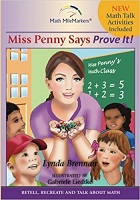
Grade 1
5 skill lessons
Math
Skill lessons
The mathematics the book carries, taught directly. Printable workbook pages and teacher keys are not available for this book yet.
- 1Sixteen in the Tray, Sixteen in the Bag
- 2A Row of Ten, and What Is Left Over
- 3Start at Ten and Keep Going
- 4Guess First, Then Prove It
- 5How Many Are in Your Pocket?
Math + reading
Math through the reading
The same book, entered through a sentence it prints. Change one word in the reading and the numbers change with it.
No math-through-reading lessons for this book yet.
Reading
Reading and language lessons
The same book read as a text. What a word means in its sentence, how a character is shown, how the writing is put together - no mathematics.
No reading and language lessons for this book yet.
Skill lessons
5 lessons on the mathematics the book carries. Printable workbook pages and teacher keys are not available for this book yet.
1. Sixteen in the Tray, Sixteen in the Bag
The book counts one collection three times and gets sixteen every time, and it puts the doubt in the children's own mouths first: once the marbles are tipped out of two cupped hands into a big basket they cover the bottom of it, and several of Miss Penny's students say there must be more than sixteen now. Students count sixteen counters out of a partner's hands, spread the same sixteen across a wide tray, say whether the tray looks like more, and count it again to settle what they said. They finish with the same sixteen in a small paper bag and say its number before anyone opens it. Moving a collection is not the same as changing it, and the way a child knows that here is by counting the same marbles twice and hearing the same number come out.
Full lesson — 20 minutes
1. Count sixteen out of your partner's hands (5 min)
One of you cups both hands and holds sixteen counters. The other takes them out one at a time onto the mat, and the whole pair says one number word for each counter that lands. Stop when the hands are empty and say the number you ended on.
Word preview: collection
The children then gathered in a circle and counted along as Bobby took each marble one by one from Miss Penny's hands and placed them in a pile on the floor.
2. Spread the same sixteen across the wide tray (6 min)
Tip your sixteen counters into the wide tray and push them out to the corners until they cover the bottom. Do not count anything yet. Say out loud whether the tray looks like more counters than the mat held, and say what makes it look that way.
Word preview: space
The marbles that once fit nicely in Miss Penny's hands were now spread out across the bottom of the green basket, making the collection seem larger than ever.
Now that the marbles were spread across the bottom of the large basket, surely there must be more than 16, was the comment from several students?
3. Count the tray and settle what you said (5 min)
Count the tray now, sliding each counter to the far edge as you say its number so no counter is said twice. Say the number you ended on and say whether it is the number you ended on before. If your two counts disagree, count a third time and say which count you trust.
Word preview: prove
Let's count them and prove it, declared Miss Penny.
4. Say the bag's number before it is opened (4 min)
Pour the same counters into the paper bag, hand it to your partner, and have them say how many are in the bag before they look. Then count them onto the mat to check. Say why you could answer a bag you had not looked into.
Word preview: value
Tell me, Bobby, how many marbles do you think are in the bag now?
Short version — 9 minutes
1. Spread the same sixteen across the wide tray (5 min)
Count sixteen counters onto the mat, then tip them into the wide tray and push them out to the corners. Say whether the tray looks like more than the mat held, and say what makes it look that way.
Word preview: space
The marbles that once fit nicely in Miss Penny's hands were now spread out across the bottom of the green basket, making the collection seem larger than ever.
2. Count the tray and settle what you said (4 min)
Count the tray, sliding each counter to the far edge as you say its number. Say the number you ended on, and say whether it is the number you started with.
Word preview: prove
Let's count them and prove it, declared Miss Penny.
Three levels
- Support
- Work with ten counters instead of sixteen, so both counts stay inside a number the child can check by touching. Everything else stays whole: tip the ten into the tray, say whether it looks like more, count it again, and say the bag's number before it is opened. Move up to sixteen once the child has said the unopened bag's number correctly twice running.
- At Grade
- Count sixteen out of a partner's hands, spread the same sixteen across the tray, say whether it looks like more, and count it again. Then say the number in the closed bag before it is opened and count to check.
- Extension
- Say what would have to happen for the number to change, then make it happen: take one counter out of the bag, hide it in your fist, and have your partner count what is left and say how they know one is missing. Put it back and count again. Say the difference between moving the counters and taking one away, using the two numbers you counted.
English learners
Counting to sixteen carries over from any language, and a child who counts in Spanish, Arabic or Somali will get the same sixteen off this tray. Two things do not come free. The book's word value means how many here, not what something is worth, and children who know the money sense of it will hear the wrong question, so show it with the same counters in two containers before the word is said. And the claim itself needs two places named in one breath. Rehearse one frame and reuse it all lesson: sixteen in the ___ and sixteen in the ___. Children may argue about a doubtful counter in their strongest language and give only the frame in English.
Materials
- Glass marbles or round counters, sixteen per pair
- A felt mat or carpet square, one per pair
- A wide shallow tray or baking sheet, one per pair
- A small paper lunch bag, one per pair
- Word cards: collection, space, prove, value
Standards & curriculum
These lessons are being matched against curricula now.
Standards are held back while this plan is edited. Every standard shown here was matched against the supplied wording of this lesson, quoting its steps, so a changed step is no longer the thing that was checked. Undo your changes to bring the standards back — your edits stay in this browser either way.
2. A Row of Ten, and What Is Left Over
Maggie says what she is going to do before she does it, puts the marbles in a straight line, counts ten, starts a new row with the rest, and says the sentence the whole book turns on: ten plus six more equals sixteen. Students lay sixteen counters in one long line, break the line after the tenth counter and move the rest to a second row, then say the ten-and-six sentence with a hand on each row. They push the sixteen back into a heap and say which of the two arrangements let them see the ten. Sixteen counters make the same sixteen in a heap and in two rows, and only one of those arrangements shows a ten without counting it again.
Full lesson — 20 minutes
1. Lay all sixteen in one straight line (5 min)
Lay your sixteen counters along the paper strip in one straight line, touching each one as you say its number. Say the number you ended on. Leave the line where it is.
Word preview: row
Putting the marbles in a straight line, Maggie began to count.
2. Break the line after ten and start a new row (6 min)
Count ten counters off the front of your line onto the ten-square card, one to a square, and stop at ten. Move every counter that is left to the blank card below it. Say how many are in the top row and how many are in the new row.
Word preview: group
Maggie looked back at the class and said, I'm going to count them in groups of ten.
That's ten, she said.
3. Say the ten-and-six sentence (5 min)
Put one hand flat on the top row and one on the bottom row and say the book's sentence with your own counters: ten plus six more equals sixteen. Say it again starting with the bottom row. Say whether the number on the cards changed when you said it the other way round.
Word preview: extra
That's six in this row.
Ten plus six more equals sixteen.
4. Push them into a heap and say which showed the ten (4 min)
Sweep both rows together into one heap. Say how many counters are in the heap without counting them again, then count to check. Say which arrangement let you see a ten without counting, and say whether the heap holds fewer counters than the two rows did.
Word preview: group
It doesn't matter how we count them in piles or in groups of 10 and some extra.
Short version — 9 minutes
1. Break the line after ten and start a new row (5 min)
Count ten counters off the front of your line onto the ten-square card, one to a square, and move the rest to the blank card below. Say how many are in each row.
Word preview: group
Maggie looked back at the class and said, I'm going to count them in groups of ten.
2. Say the ten-and-six sentence (4 min)
Put a hand flat on each row and say it with your own counters: ten plus six more equals sixteen. Say it again starting with the bottom row.
Word preview: extra
Ten plus six more equals sixteen.
Three levels
- Support
- Give the child a ten-square card that is already full and ask only for the leftovers: count the rest of the line onto the blank card and say how many are there. Everything else stays whole, including saying the sentence with a hand on each row. Fill the ten yourself with the child watching, one counter to a square, so the ten is something they have seen made rather than something they were given.
- At Grade
- Lay sixteen in a line, count ten of them onto the ten-square card, move the rest to a second row, and say the ten-and-six sentence with a hand on each row. Then say the total for the heap before recounting it.
- Extension
- Start from fifteen counters instead of sixteen and say the sentence for that number, then do nineteen, then twelve, keeping the top row at ten every time. Say what stays the same in all four sentences and what changes, and say why the top row never has to be counted twice.
English learners
The counting and the counters carry over from any language, and a child can do every part of the moving before saying anything in English. Two things are harder than they look. The book's more in ten plus six more means additional, not bigger, and a child who hears it as a comparison will start hunting for which row wins instead of putting the rows together. And this sentence holds three numbers in one breath, which is a lot of English at once. Rehearse one frame and reuse it for every number: ten and ___ more makes ___. Children may count and check each other in their strongest language and give only the frame in English.
Materials
- Glass marbles or round counters, sixteen per pair
- A long paper strip for the line, one per pair
- Two row cards, one marked with ten squares and one blank, per pair
- Word cards: row, group, extra
Standards & curriculum
These lessons are being matched against curricula now.
Standards are held back while this plan is edited. Every standard shown here was matched against the supplied wording of this lesson, quoting its steps, so a changed step is no longer the thing that was checked. Undo your changes to bring the standards back — your edits stay in this browser either way.
3. Start at Ten and Keep Going
Miss Penny asks for a particular proof, not just an answer: count up from ten and show that there are sixteen. Regina does it by pointing at the first row and saying that is ten, then walking her hand along the second row saying eleven, twelve, thirteen, fourteen, fifteen, sixteen. Students cover a row of ten with a card, say ten for the whole covered row, and count on along the second row, touching one counter per number word. They do it for a partner without lifting the card, then change the size of the second row and count on again. The first row is worth one number word here, and the count that follows starts where that word left off.
Full lesson — 20 minutes
1. Cover the row of ten and say ten (5 min)
Fill the ten-square card with counters, one to a square, and count them aloud to check. Lay the blank card over the whole row so no counter shows. Put a flat hand on the card and say ten, once, for everything underneath it.
Word preview: row
Regina stepped forward and pointing to the first row of Marbles said, well, that's ten.
2. Count on along the second row (6 min)
Put six counters in the row below the covered card. Say ten with your hand on the card, then touch the six counters one at a time saying eleven, twelve, thirteen, fourteen, fifteen, sixteen. One touch, one number word. Say the number you ended on.
Word preview: count up
Moving her hand to the second row, she said, 11, 12, 13, 14, 15, 16.
3. Prove sixteen without lifting the card (5 min)
Your partner watches while you prove there are sixteen counters on the table with the card still down. Say where you started and why you did not begin at one. Your partner lifts the card at the end and counts the whole lot from one to check you.
Word preview: prove
Can anyone show me how we can count up from ten and prove that we have sixteen marbles?
4. Change the second row and count on again (4 min)
Take some counters off the second row or add some, keeping the whole table under twenty, and count on from ten again. Do it three times with three different second rows, saying each ending number aloud. Say what stayed the same every time you counted.
Short version — 9 minutes
1. Count on along the second row (5 min)
Fill the ten-square card, cover it with the blank card, and put six counters in the row below. Say ten with your hand on the card, then touch the six counters saying eleven, twelve, thirteen, fourteen, fifteen, sixteen.
Word preview: count up
Moving her hand to the second row, she said, 11, 12, 13, 14, 15, 16.
2. Prove sixteen without lifting the card (4 min)
Prove there are sixteen with the card still down. Say where you started and why you did not begin at one. Your partner lifts the card and counts from one to check you.
Word preview: prove
Can anyone show me how we can count up from ten and prove that we have sixteen marbles?
Three levels
- Support
- Leave the row of ten uncovered and count on with the ten in plain sight, running a finger along it once while saying ten before moving to the second row. Everything else stays whole, including proving it to a partner. Cover the row once the child has counted on correctly twice with it showing.
- At Grade
- Cover the row of ten, say ten for the covered row, and count on along the second row with one touch per number word. Prove sixteen to a partner without lifting the card, then count on again from two different second rows.
- Extension
- Count on from ten with the second row hidden as well: your partner puts some counters under a cup, tells you the number the whole table ends on, and you say how many are under the cup before it is lifted. Do it three times, keeping the whole table under twenty, and say which part of what you do stays exactly the same each time.
English learners
The number words eleven through sixteen are the hard part of English here, not the counting, and they are irregular in a way that trips children who count fluently in another language. Say the sequence with the child twice before the card goes down. The other trouble is that count up from ten sounds like an instruction to count the ten, so show the flat hand and the single word ten before asking for anything. Rehearse one frame and reuse it: ten, and then ___, ___, ___ makes ___. Children may check each other's touches in their strongest language and give only the frame in English.
Materials
- Glass marbles or round counters, sixteen per pair
- Two row cards, one marked with ten squares and one blank, per pair
- A blank card big enough to cover a row of ten, one per pair
- Word cards: row, count up, prove
Standards & curriculum
These lessons are being matched against curricula now.
Standards are held back while this plan is edited. Every standard shown here was matched against the supplied wording of this lesson, quoting its steps, so a changed step is no longer the thing that was checked. Undo your changes to bring the standards back — your edits stay in this browser either way.
4. Guess First, Then Prove It
Twice in this book Miss Penny asks how many, twice the room fills with numbers that do not agree, and twice she says the same thing about it: there is one way to know for sure, so count them and prove it. Students each say a guess for a jar, hear the whole circle's guesses without changing their own, then count the jar together to settle it. They finish by saying which number in the room is the one the class can prove and what makes it different from the rest. A guess and a count are both numbers about the same jar, and only one of them can be shown to anybody who doubts it.
Full lesson — 20 minutes
1. Say your guess for the jar and stand by it (5 min)
Look at the jar without touching it and say a number out loud when the token reaches you. Say the number even if somebody has said it already. Nobody counts anything yet, and nobody may change a guess once it is said.
Word preview: guess
Can anyone guess how many marbles Bobby put in my hands?
2. Hear how far apart the guesses are (5 min)
Listen while the circle's guesses are read back in the order they were said. Put a hand up if the guess being read is yours. Say whether the room agreed on a number, and say whether your own guess was near anybody else's.
Word preview: estimate
Their guesses filled the air.
Once again, their answers varied greatly.
3. Count the jar to settle it (6 min)
Empty the jar onto the mat and count it as a class, one object moved aside for each number word. Say the number you ended on together. Count it a second time in the other direction and say whether the second count agrees with the first.
Word preview: prove
Let's count them and prove it, declared Miss Penny.
4. Say which number the class can prove (4 min)
Say which of the numbers said today is the one the class can prove, and say how you would prove it to somebody who came in late. Say what your own guess was and whether it was a guess or a proof. Do not say whose guesses were wrong.
Word preview: prove
That's right, prove it.
Short version — 9 minutes
1. Say your guess for the jar and stand by it (4 min)
Look at the jar without touching it and say a number out loud when the token reaches you. Nobody counts yet, and nobody may change a guess once it is said.
Word preview: guess
Can anyone guess how many marbles Bobby put in my hands?
2. Count the jar to settle it (5 min)
Empty the jar and count it as a class, moving one object aside for each number word. Say the number you ended on together, then count again the other way and say whether the two counts agree.
Word preview: prove
Let's count them and prove it, declared Miss Penny.
Three levels
- Support
- Let the child point at the jar and hold up fingers for a small guess rather than saying a number word, and read their guess back for them. Everything else stays whole: they count with the class and they say which number the class can prove. Sit them where they can reach the objects during the count so their hands are in the proof.
- At Grade
- Say a guess for the jar, hear the circle's guesses read back without changing your own, count the jar twice with the class, and say which number the class can prove and how you would prove it to a latecomer.
- Extension
- Guess a second jar, then say what in the first jar helped you guess the second one, naming both numbers. Then take a jar the class has already counted, put a lid on it, and say what somebody would have to do to disagree with the number written on the lid.
English learners
Saying a number and counting a jar both work in any language, and a child at the start of English can take a full part in this lesson from the first minute by holding up fingers and counting along. What is hard is the pair of words this lesson turns on. Guess and prove are not opposites in most children's English, and the book uses them as opposites, so put a guessed number and a counted number side by side on the board before either word is said. Rehearse one frame and reuse it: I guessed ___ and we counted ___. Children may argue about the count in their strongest language and give only the frame in English.
Materials
- A clear jar holding between eleven and twenty objects, one per class
- A talking token or pointer passed round the circle
- A felt mat or carpet square, one per pair
- Word cards: guess, estimate, prove
Standards & curriculum
These lessons are being matched against curricula now.
Standards are held back while this plan is edited. Every standard shown here was matched against the supplied wording of this lesson, quoting its steps, so a changed step is no longer the thing that was checked. Undo your changes to bring the standards back — your edits stay in this browser either way.
5. How Many Are in Your Pocket?
The book opens on a real problem rather than a made-up one: Bobby has a pocketful of marbles, nobody knows how many, and the class settles it by taking them out one at a time and counting along. Students pour their own bag of small objects into a partner's cupped hands, count it out one by one onto the mat, and report the number the way Bobby reports his, saying the number and what was counted. Partners then swap bags and recount to check each other. Nobody in the room knows these numbers before the count, which is what makes the count worth doing and the report worth checking.
Full lesson — 20 minutes
1. Pour your collection into your partner's hands (4 min)
Cup your partner's hands together and pour your whole bag into them without spilling any. Say nothing about how many there are. Hold the bag open and upside down to show it is empty.
Word preview: collection
Miss Penny held out both of her hands as Bobby grabbed handfuls of marbles from his back pocket and placed them carefully within her grasp.
2. Count it out one by one onto the mat (6 min)
Take the objects out of the cupped hands one at a time and put each one on the mat, saying one number word for each object that lands. Do not scoop up a handful. Stop when the hands are empty.
Word preview: one by one
The children then gathered in a circle and counted along as Bobby took each marble one by one from Miss Penny's hands and placed them in a pile on the floor.
3. Report the number the way Bobby does (5 min)
Say your report out loud so the pair beside you can hear it: the number, then what you counted. Nineteen buttons. Fourteen acorns. Say it again with a hand over the objects on the mat.
Word preview: collection
Sixteen marbles, he responded proudly.
4. Swap bags and recount to check (5 min)
Swap bags with the pair beside you and count their collection the same way, one object at a time onto the mat. Say your number and hear theirs. If the two numbers disagree, count that bag again together slowly and say which number you both end on.
Word preview: one by one
She pulled the marbles from the bucket one by one and placed them in the center of the crowd.
Short version — 9 minutes
1. Count it out one by one onto the mat (5 min)
Take the objects out of your partner's cupped hands one at a time onto the mat, saying one number word for each one that lands. Stop when the hands are empty.
Word preview: one by one
The children then gathered in a circle and counted along as Bobby took each marble one by one from Miss Penny's hands and placed them in a pile on the floor.
2. Report the number the way Bobby does (4 min)
Say your report out loud so the next pair can hear it: the number, then what you counted. Nineteen buttons. Fourteen acorns.
Word preview: collection
Sixteen marbles, he responded proudly.
Three levels
- Support
- Give the child a bag of eleven or twelve objects rather than a full one, and put a line of squares on the mat so each object lands in its own square as it is counted. Everything else stays whole, including the spoken report. Take the squares away once the child has counted two bags without doubling back.
- At Grade
- Count a partner's collection of eleven to twenty objects out of their cupped hands one at a time, report the number and what was counted, then swap bags and recount to check somebody else's number.
- Extension
- Count a collection whose objects are not all the same - a bag of mixed buttons and caps - and give one report for the whole bag. Then say how many reports the bag could honestly get if somebody counted only the buttons, and say which of the two numbers answers how many are in the bag.
English learners
Counting objects out of a pair of hands works the same in every language, and a child with no English yet can do the whole of the counting and the swapping. The report is the English in this lesson, and it puts the number in front of the thing counted, which is the reverse of the order several languages use, so a child may say buttons nineteen and be perfectly correct in their own. Rehearse one frame and reuse it for every bag: ___ buttons, ___ acorns. Children may count aloud and settle a disagreement in their strongest language and give only the report in English.
Materials
- A cloth bag per child holding eleven to twenty small objects - buttons, acorns, bread tags, bottle caps
- A felt mat or carpet square, one per pair
- Word cards: collection, one by one
Standards & curriculum
These lessons are being matched against curricula now.
Standards are held back while this plan is edited. Every standard shown here was matched against the supplied wording of this lesson, quoting its steps, so a changed step is no longer the thing that was checked. Undo your changes to bring the standards back — your edits stay in this browser either way.