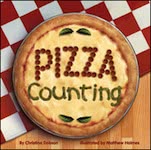
Pizza Counting
Grade 3
3 skill lessons · 4 math-through-reading
Math
Skill lessons
The mathematics the book carries, taught directly. Printable workbook pages and teacher keys are not available for this book yet.
- 1The Slice That Looks Smaller Because There Are More of Them
- 2Cut Into Six, Divided Into Sixths
- 3Ten Slices, Two a Day, and the Same Ten Again
Math + reading
Math through the reading
The same book, entered through a sentence it prints. Change one word in the reading and the numbers change with it.
- 4The Word That Has to Be True Before You Can Say Thirds
- 5The Person the Sentence Forgot to Count
- 6Talking Someone Out of the Bigger Number
- 7Bigger Than and Smaller Than the Same Slice
Reading
Reading and language lessons
The same book read as a text. What a word means in its sentence, how a character is shown, how the writing is put together - no mathematics.
- 8The cat, the whale, and the apple pie
- 9Where the page changes subject
- 10Why this pizza is called that
- 11What the first page promised
- 12A pizza like a blank page
Skill lessons
3 lessons on the mathematics the book carries. Printable workbook pages and teacher keys are not available for this book yet.
1. The Slice That Looks Smaller Because There Are More of Them
The book ends by asking a child which of two slices they would rather have, and every one of its four pairs has the same number on top and different numbers underneath. That is the exact case where children answer wrong, because the larger bottom number looks like the larger amount. Students cut circles of one size into thirds and fourths, then into sixths and eighths, stack one piece from each, and see the piece from the more-divided pizza sit inside the other. What counts is that the child can say why more slices makes each slice smaller, with the two pieces in hand as the reason, rather than reciting which fraction is bigger.
Full lesson — 20 minutes
1. Cut the two pizzas the book names (5 min)
Each pair takes two paper circles of exactly the same size and folds one into three matching parts and the other into four. Cut on the folds, then stack one third on top of one fourth so their points meet at the centre. Say which piece hangs out past the other, and keep both pieces on the desk.
Word preview: thirds, fourths
A pizza that is cut into three equal slices is divided into thirds.
A pizza that is cut into four equal slices is divided into fourths.
2. Answer the book's own question with the pieces (5 min)
The teacher reads the book's question aloud and each pair holds up the piece they would rather have. Say the answer as a whole sentence naming both fractions and the reason, with both pieces still touching. The rule is that the pieces on the desk decide the answer, not the numbers alone.
Word preview: rather, size
Which size slice would you rather have?
One third or one fourth?
3. Test whether the pattern holds for sixths and eighths (5 min)
Each pair folds two more circles of the same size into six parts and into eight, cuts one piece from each, and stacks them the way they stacked the first two. Predict which piece is larger before cutting and write the prediction down. Then check it and say whether the bigger bottom number gave the bigger piece or the smaller one.
Word preview: sixths, eighths
One sixth or one eighth?
4. Say the rule the four pieces show (5 min)
Each pair lines up their four pieces from largest to smallest and reads the bottom numbers aloud in the order the pieces sit. State in one sentence what happens to the size of a slice when a pizza of the same size is cut into more slices. Two pairs compare sentences and settle any disagreement by restacking the pieces.
Word preview: equal, whole
Pizza fractions: halves thirds, fourths, fifths, sixths, eighths, tenths, twelfths, one whole!
Short version — 9 minutes
1. Cut the two pizzas the book names (4 min)
Each pair folds one paper circle into three matching parts and another of the same size into four, then cuts on the folds. Stack one third on one fourth with their points at the centre and say which one hangs out past the other.
Word preview: thirds, fourths
A pizza that is cut into three equal slices is divided into thirds.
A pizza that is cut into four equal slices is divided into fourths.
2. Answer the book's own question with the pieces (5 min)
The teacher reads the book's question aloud and each pair holds up the piece they would rather have. Say the answer as a full sentence naming both fractions and the reason, with the two pieces still stacked.
Word preview: rather, size
Which size slice would you rather have?
One third or one fourth?
Three levels
- Support
- Stay with thirds and fourths only, and use circles the teacher has already folded so the cutting is the child's whole job. Stack the two pieces and answer the book's question by pointing at the piece that hangs out, saying only 'one third is bigger'. Add the sixths and eighths pair only when the first stack has been explained aloud once.
- At Grade
- Cut all four pizzas, predict before each stack, and say the rule in a sentence that names what happened to the size when the number of slices went up. Both fractions must appear in the sentence.
- Extension
- Take the book's third question, Two thirds or two sixths, where the top number is two rather than one, and decide it with pieces. Then say whether the rule found for one piece still holds when two pieces are taken, and show it with the pieces rather than asserting it.
English learners
The ordinal words the mathematics rides on are the hard transfer here: third and fourth are the same forms English uses for places in a line, and a child who has met third only as a position may hear the book's question as being about order rather than size. Sixth and eighth carry consonant clusters that are hard to say and easy to lose, and eighth in particular is spelled with letters it does not pronounce. Rehearse the frame 'One ___ is bigger than one ___ because the pizza was cut into fewer slices' with the two pieces held up on the two blanks, so the sentence is anchored to objects and not to sound. Invite students to say which piece is bigger in their strongest language first and then place the two English fraction words into the rehearsed frame; the comparison itself transfers even when the ordinal words do not.
Materials
- Paper circles, two of the same size per pair
- Scissors
- Glue stick
- Recording sheet ruled into four rows
- Pencils
- Word cards: thirds, fourths, sixths, eighths, equal
Standards & curriculum
Choose your curriculum above to see the standards for this lesson.
Standards are held back while this plan is edited. Every standard shown here was matched against the supplied wording of this lesson, quoting its steps, so a changed step is no longer the thing that was checked. Undo your changes to bring the standards back — your edits stay in this browser either way.
2. Cut Into Six, Divided Into Sixths
Eight times this book says the same sentence with two numbers swapped in: cut into so many equal slices, divided into the name for that many. That repeated frame is the whole representation, and the word equal in the middle of it is doing the work children skip. Students fold and cut circles to match the sentence they are given, fill the frame's two blanks with the count word and the name word, and then meet a circle cut into three pieces that do not match, where the book's word cannot be used. The aim is that the child can move between a cut object, the count of its parts, and the name of one part, in any direction.
Full lesson — 20 minutes
1. Fold and cut the pizza the sentence names (5 min)
Each pair hears one of the book's cutting sentences and folds a paper circle into exactly the number of matching parts it names. Cut on the folds and stack all the parts to check no piece is bigger than another. If one piece hangs out, refold a new circle rather than trimming the old one.
Word preview: equal, parts
A pizza that is cut into three equal slices is divided into thirds.
You could cut a pizza in half so it has two equal parts.
2. Fill the two blanks in the book's frame (5 min)
Every cutting sentence in this book has the same two blanks: cut into ___ equal slices, divided into ___. Each pair writes both words for the circle they just cut, then reads the finished sentence aloud while pointing at their pieces. The count word and the name word must be different words.
Word preview: divided, slices
A pizza that is cut into four equal slices is divided into fourths.
A pizza that is cut into 6 equal slices is divided into 6ths.
3. Catch the cut that is not equal (5 min)
The teacher hands each pair a circle already cut into three pieces that do not match. Students stack the pieces, decide whether the book's word thirds may be used for them, and say what is wrong in one sentence. Write the word the pieces do deserve if thirds does not fit.
Word preview: equal, share
To share this target pizza with two friends, you could aim for two pieces each.
4. Build the book's list and read it back (5 min)
Each pair adds their cut circles to a class line arranged by how many parts each pizza has. Read the whole line aloud using the book's own naming words, and name aloud any pizza in the book's closing list that the class line is missing.
Word preview: halves, whole
Pizza fractions: halves thirds, fourths, fifths, sixths, eighths, tenths, twelfths, one whole!
Short version — 9 minutes
1. Fold and cut the pizza the sentence names (4 min)
Each pair hears one of the book's cutting sentences and folds a paper circle into exactly the number of matching parts it names. Cut on the folds and stack the parts to check that none is bigger than another.
Word preview: equal, parts
A pizza that is cut into three equal slices is divided into thirds.
You could cut a pizza in half so it has two equal parts.
2. Fill the two blanks in the book's frame (5 min)
Each pair writes the count word and the name word for the circle they just cut, then reads the finished sentence aloud while pointing at their pieces. The two words must be different words.
Word preview: divided, slices
A pizza that is cut into four equal slices is divided into fourths.
A pizza that is cut into 6 equal slices is divided into 6ths.
Three levels
- Support
- Work with halves, thirds and fourths only, and fold along creases the teacher has already pressed into the paper. Say the frame aloud with the teacher supplying the naming word until the child supplies it first. The unequal-cut circle comes last and only after two correct namings.
- At Grade
- Cut all the pizzas assigned to the pair, write both blanks unaided, and give a one-sentence reason for refusing the name on the unequal circle that uses the word equal.
- Extension
- Take the book's tenths and twelfths pizzas, which have too many parts to fold reliably by halving, and work out a folding order that produces them. Then say which names in the book's closing list cannot be reached by folding a circle in half over and over, and why.
English learners
The naming words are built from the counting words by a suffix that English applies irregularly, and that is exactly where this lesson can be lost: three becomes thirds rather than threeths, and two becomes halves rather than twoths, with no rule a child can hear. Many languages build fraction names far more regularly, so a student may produce a perfectly reasoned wrong word. Treat halves and thirds as items to be memorised and the rest as the regular pattern, and rehearse the frame 'Cut into ___ equal slices, divided into ___' with the pieces in hand each time so the irregular pair is learned against objects. Invite students to say how their strongest language builds the name for one part of six, and put the two systems side by side; the mathematics is identical and only the word-building differs.
Materials
- Paper circles, six per pair
- Scissors
- Sentence frame card, one per pair
- Pencils
- Pre-cut unequal circles, one per pair
- Long strip of paper for the class line
- Glue stick
- Word cards: equal, divided, halves, thirds, fourths
Standards & curriculum
Choose your curriculum above to see the standards for this lesson.
Standards are held back while this plan is edited. Every standard shown here was matched against the supplied wording of this lesson, quoting its steps, so a changed step is no longer the thing that was checked. Undo your changes to bring the standards back — your edits stay in this browser either way.
3. Ten Slices, Two a Day, and the Same Ten Again
The train pizza is the one place this book states a full situation twice over the same ten slices: two a day lasts five days, five a day lasts two days. Students lay out ten counters, group them by two and count the groups, then rebuild the identical ten and group them by five, so the pair of answers comes out of one unchanged set of objects. The calendar pizza repeats the move with twelve and three against the four seasons the book names. The child uses grouping to answer a question the book asks about eating, and can say why the days went down when the daily slices went up without treating it as two unrelated facts.
Full lesson — 20 minutes
1. Lay out the train pizza's ten slices (5 min)
Each pair sets out ten counters in a row as the ten slices of the train pizza and reads the book's sentence naming how it is divided. Push the counters into groups of two, one group for each day, and count the groups aloud. Say how many days the pizza lasted and keep the groups on the desk.
Word preview: tenths, slices
This train pizza is divided into tenths.
If you ate two slices each day, it would last for five days.
2. Regroup the same ten slices the other way (5 min)
Without adding or taking away a counter, the same pair pushes the ten back together and makes groups of five instead. Count the new groups and say how many days the pizza lasts now. State in one sentence what stayed the same and what changed.
Word preview: groups, days
If you're really hungry, you could eat five slices for two days.
3. Do the calendar pizza the same way (5 min)
Each pair sets out twelve counters for the calendar pizza and groups them by three, the number of pieces the book says makes one season. Count the groups and check the answer against the four seasons the book names. Say whether the count of groups matches the seasons.
Word preview: twelfths, season
This calendar pizza is divided into 12th.
If you eat three pieces, you could eat an entire summer, winter, fall, or spring.
4. Say the pattern the two pizzas share (5 min)
Each pair writes one sentence saying what happens to the number of days when the number of slices eaten each day goes up, using both of the train pizza's answers as the evidence. Two pairs swap sheets and check the other's sentence against the counters. Restack the counters if the sentences disagree.
Word preview: equal, total
The year is divided into 12 months.
Short version — 9 minutes
1. Lay out the train pizza's ten slices (4 min)
Each pair sets out ten counters as the slices of the train pizza and reads the book's sentence about it. Push them into groups of two, one for each day, count the groups aloud, and say how many days the pizza lasted.
Word preview: tenths, slices
This train pizza is divided into tenths.
If you ate two slices each day, it would last for five days.
2. Regroup the same ten slices the other way (5 min)
Without adding or taking away a counter, the pair pushes the ten back together and makes groups of five instead. Count the new groups, say how many days it lasts now, and say what stayed the same.
Word preview: groups, days
If you're really hungry, you could eat five slices for two days.
Three levels
- Support
- Stay with the train pizza's ten counters for the whole lesson and use paper plates so each day's group has a place to sit. Group by two first, count the plates, and only then rebuild and group by five. Say the two answers aloud without writing the comparison sentence.
- At Grade
- Do both train groupings and the calendar pizza, then write the comparison sentence naming both of the train pizza's answers as the evidence for it.
- Extension
- Take the book's sixths pizza shared with two friends at two pieces each and decide whether the same grouping move answers it, then say which of the three pizzas asks a different question from the other two and what makes it different.
English learners
The word day is doing double duty in these sentences and that is the trap: it names both the group and the count of groups, so 'two slices each day' and 'it would last for five days' put the same word on two different quantities. A student can group perfectly and still report the wrong number because both answers are days. Rehearse the frame 'Each day I eat ___ slices, so it lasts ___ days' with a hand on the plate for the first blank and a sweep across all the plates for the second, so the two uses are separated by gesture before they are separated by words. Invite students to say the grouping in their strongest language first, where the two roles may take different words entirely, and then map that onto the English frame.
Materials
- Counters, ten per pair
- Paper plates, five per pair
- Counters, twelve per pair
- Recording sheet with two rows
- Pencils
- Word cards: tenths, twelfths, groups, equal
Standards & curriculum
Choose your curriculum above to see the standards for this lesson.
Standards are held back while this plan is edited. Every standard shown here was matched against the supplied wording of this lesson, quoting its steps, so a changed step is no longer the thing that was checked. Undo your changes to bring the standards back — your edits stay in this browser either way.
Math through the reading
The mathematics is reached through a sentence the book prints: change one word in the reading and the numbers change with it. These carry their own standards, matched against these lessons rather than inherited from the skill ones.
4. The Word That Has to Be True Before You Can Say Thirds
Students cut identical pizzas with and without the book's word equal, stack the resulting pieces to see which cuts survive, and decide from the pieces alone which of two circles has earned the name the book gives it.
Full lesson — 20 minutes
1. Cut it both ways (6 min)
Each pair takes two identical paper circles. On the first they cut three parts any way they like; on the second they fold carefully so the three parts match, then cut. Both sets of pieces stay on the desk, kept apart.
2. Stack and sort (5 min)
Pairs stack the three pieces from each circle and sort the two sets into one that stacks with no overhang and one that does not. They say aloud which circle may be called thirds.
3. Find the word that did it (5 min)
The teacher reads the book's thirds sentence, then reads it again with equal removed. Pairs point at the word that changed and say which of their two circles each version of the sentence would have allowed.
4. Say the condition (4 min)
Each pair states in one sentence what has to be true about the pieces before the naming word may be used, then checks another pair's unequal circle against that statement.
Short version — 9 minutes
1. Cut it both ways (6 min)
Each pair takes two identical paper circles. On the first they cut three parts any way they like; on the second they fold carefully so the three parts match, then cut. Both sets of pieces stay on the desk, kept apart.
2. Find the word that did it (5 min)
The teacher reads the book's thirds sentence, then reads it again with equal removed. Pairs point at the word that changed and say which of their two circles each version of the sentence would have allowed.
Three levels
- Support
- Work with halves rather than thirds so the fold is a single crease and the stack test is unambiguous. The teacher reads both versions of the sentence twice and the pair points at the changed word rather than naming it. The child says only which circle is allowed, and the reason is supplied by holding up the stacked pair.
- At grade
- Cut both circles into thirds, run the stack test unaided, and state the condition in a sentence that uses the word equal and refers to the pieces rather than to the count.
- Extension
- Take the book's sixths sentence and its sharing sentence together, and decide whether a pizza can satisfy cut into six equal slices while failing to give two pieces each to three people. Show the answer with pieces and say which of the two words, equal or each, the failure violates.
English learners
Equal is a false friend in mathematics for many children because its everyday sense is about fairness and its mathematical sense here is about size, and a pair of pieces can be fair to share and still not be equal. Rehearse the frame 'These pieces are equal because they stack with nothing hanging over' with the stacked pieces in hand, so the word is anchored to the test rather than to the idea of fairness. The naming words are irregular in English, with halves and thirds unpredictable from two and three, so accept the mathematics whenever the condition is stated correctly even if the naming word is built regularly. Invite students to say what makes a cut fair in their strongest language first and then to say whether that word means the same as equal here; the distinction is often clearer in the first language than in English.
Materials
- Paper circles, two of the same size per pair
- Scissors
- The book's thirds sentence written out with the word equal on a card that can be lifted away
Standards & curriculum
Choose your curriculum above to see the standards for this lesson.
Standards are held back while this plan is edited. Every standard shown here was matched against the supplied wording of this lesson, quoting its steps, so a changed step is no longer the thing that was checked. Undo your changes to bring the standards back — your edits stay in this browser either way.
5. The Person the Sentence Forgot to Count
Students deal out the six slices of the book's target pizza at two per person to find how many people are eating, then check that number against the party the book names and explain why the reader has to be counted too.
Full lesson — 20 minutes
1. Deal the slices (5 min)
Each pair cuts a paper circle into the six equal slices the book gives the target pizza, then deals them onto plates at two slices a plate until the slices run out. They count the plates and write that number down without saying it aloud.
2. Find the sentence that says how many (6 min)
The teacher rereads the sharing sentence twice. Pairs decide how many people are at this pizza according to the words alone, point at the part of the sentence they used, and say their number.
3. Put the two answers together (5 min)
Pairs compare the number of plates with the number of people they read out of the sentence. Where a pair read two people, they set out two plates and say what happens to the slices left over.
4. Say who got missed (4 min)
Each pair states in one sentence who the phrase two friends leaves out and why that person still eats, using the plates as the evidence.
Short version — 9 minutes
1. Deal the slices (5 min)
Each pair cuts a paper circle into the six equal slices the book gives the target pizza, then deals them onto plates at two slices a plate until the slices run out. They count the plates and write that number down without saying it aloud.
2. Find the sentence that says how many (6 min)
The teacher rereads the sharing sentence twice. Pairs decide how many people are at this pizza according to the words alone, point at the part of the sentence they used, and say their number.
Three levels
- Support
- Use six slices already cut and plates already on the desk so the whole task is the dealing. The teacher rereads the sharing sentence a third time with a hand raised on the word share, and the pair answers by putting out plates rather than by saying a number. The leftover pair of slices in the two-plate arrangement is pointed at rather than explained.
- At grade
- Deal the six unaided, read the number of people out of the sentence before comparing, and state in one sentence who the phrase two friends leaves out.
- Extension
- Take the calendar pizza, where the book states twelve pieces and says three pieces make a season but never says how many seasons there are. Find that number the same way and say which of the two problems gave more help, then name what the calendar sentence supplies that the sharing sentence does not.
English learners
The sentence turns on whether the speaker is inside or outside the group being named, and languages differ sharply here: several mark inclusive and exclusive we with different words, so a student whose first language makes that distinction grammatically may find this problem easier than the English does and may be puzzled that English leaves it to inference. Say so directly and treat it as a place where English is the less precise language. Rehearse the frame 'Two friends and me makes ___ people, so each of us gets ___ slices' with a hand on the chest for the middle word. The word each carries the per-person reading and is easily heard as a total, so pair it with the dealing gesture every time it is said.
Materials
- Paper circles, one per pair
- Scissors
- Small plates, three per pair
- The book's sharing sentence written large
Standards & curriculum
Choose your curriculum above to see the standards for this lesson.
Standards are held back while this plan is edited. Every standard shown here was matched against the supplied wording of this lesson, quoting its steps, so a changed step is no longer the thing that was checked. Undo your changes to bring the standards back — your edits stay in this browser either way.
6. Talking Someone Out of the Bigger Number
Students take a side on the book's last question, build both slices out of the same size pizza, and argue the case to the reader the book has been addressing until the pieces settle it.
Full lesson — 20 minutes
1. Pick a side and say why (5 min)
The teacher reads the book's question. Each student picks three-twelfths or one fourth, stands on that side of the room, and tells a partner from the other side the reason, which must contain a number.
2. Build both slices (5 min)
Pairs take two circles of the same size, cut one into four equal parts and one into twelve, and set one fourth beside three twelfths without stacking them yet.
3. Cover one with the other (5 min)
Pairs lay the three twelfths onto the one fourth and say what they see at the edges. Anyone who has changed sides moves across the room and says what moved them.
4. Make the case to the book's reader (5 min)
Each pair answers the book's question aloud as if speaking to the hungry child the book keeps addressing, giving the answer, the number their reason is about, and what they would tell someone who counted the pieces instead.
Short version — 9 minutes
1. Pick a side and say why (5 min)
The teacher reads the book's question. Each student picks three-twelfths or one fourth, stands on that side of the room, and tells a partner from the other side the reason, which must contain a number.
2. Cover one with the other (5 min)
Pairs lay the three twelfths onto the one fourth and say what they see at the edges. Anyone who has changed sides moves across the room and says what moved them.
Three levels
- Support
- Cut only the twelfths circle and hand the pair a fourth already cut from a matching circle, so the whole task is the covering. The teacher asks the reason as two questions rather than one, first the number and then what it counts. The child gives the position and the number, and the sentence about the other side's reasoning is dropped.
- At grade
- Take a side with a reason before cutting, cut both circles, run the covering, and give the closing statement including what the other side's number was counting.
- Extension
- Take the book's second question, one sixth or one eighth, where the two sides are genuinely unequal, and build the argument that would persuade someone who has just learned from the twelfths that these things always come out the same. Say what makes this pair different from the last one.
English learners
Argument syntax is the load here, not fraction vocabulary. The reason clause in English can be led by because, since or so, and the same idea is often carried by word order alone in other languages, so a student may produce a complete mathematical argument that sounds to an English ear like two unconnected statements. Accept the mathematics and rehearse the frame 'I would take ___ because three of the small pieces cover ___ exactly' with the pieces in hand on both blanks. Offer the concession frame separately, 'You counted ___, but the pieces are not the same size', since conceding a point while holding a position is a move that has to be taught in any language. Invite students to make the argument in their strongest language to a partner who shares it before making it in English, so the reasoning is settled before the syntax is attempted.
Materials
- Paper circles, two of the same size per pair
- Scissors
- The book's four closing questions written out, one to a line
Standards & curriculum
Choose your curriculum above to see the standards for this lesson.
Standards are held back while this plan is edited. Every standard shown here was matched against the supplied wording of this lesson, quoting its steps, so a changed step is no longer the thing that was checked. Undo your changes to bring the standards back — your edits stay in this browser either way.
7. Bigger Than and Smaller Than the Same Slice
Students stack a sixth on an eighth cut from equal pizzas and say the one relation both ways round, then find the pair on the book's list where neither word will do.
Full lesson — 20 minutes
1. Stack a sixth on an eighth (5 min)
Each pair cuts two circles of the same size, one into six equal parts and one into eight, then lays one piece of each with their points together at the centre so the overhang shows.
2. Say it the other way (6 min)
With the stack untouched, each student says which slice is bigger in a full sentence naming both fractions, then says the same arrangement starting with the other fraction. Partners check that the second sentence changed the comparison word and did not change what is true.
3. Run the book's other pairs (5 min)
Pairs build and reverse one third against one fourth, then two thirds against two sixths, saying both sentences for each stack before moving on.
4. Find the pair that breaks the sentence (4 min)
Pairs build three-twelfths against one fourth, try both comparison words on it, and say what they would put in place of bigger and smaller when the pieces cover exactly.
Short version — 9 minutes
1. Stack a sixth on an eighth (5 min)
Each pair cuts two circles of the same size, one into six equal parts and one into eight, then lays one piece of each with their points together at the centre so the overhang shows.
2. Say it the other way (6 min)
With the stack untouched, each student says which slice is bigger in a full sentence naming both fractions, then says the same arrangement starting with the other fraction. Partners check that the second sentence changed the comparison word and did not change what is true.
Three levels
- Support
- Work with one third against one fourth only, where the overhang is widest and easiest to see. The teacher says the first sentence and the child says it back, then the teacher begins the reversed sentence with the other fraction and the child completes it. Both sentences are said with a finger on the stack.
- At grade
- Build and reverse the sixths-eighths stack and at least two of the book's other pairs unaided, with both sentences said about the same untouched arrangement.
- Extension
- Take the book's train pizza, where the same ten slices give five days at two a day and two days at five a day, and say that relation in both directions. Then say why the words that worked on the slices do not work here, and what kind of comparison this one is instead.
English learners
Comparative syntax is the whole difficulty and it is where languages diverge most sharply. English marks the comparison on the adjective and puts the thing compared against after than, while many languages mark it with a separate particle, name that thing first, or use a verb meaning to exceed, so a student may know perfectly well which slice is bigger and be unable to assemble the English sentence. The reversal is harder still, because it demands changing two things at once, the order of the fractions and the comparison word, and a student who changes only one produces a false sentence that sounds fluent. Rehearse the paired frames 'One ___ is bigger than one ___' and 'One ___ is smaller than one ___' with the fractions written on cards that are physically swapped between the two sayings, so the double change is visible. Invite students to say the comparison in their strongest language and then to say whether their language changes one word or two when the sentence is reversed.
Materials
- Paper circles, four of the same size per pair
- Scissors
- Fraction name cards that can be swapped
- The book's four closing questions written out, one to a line
Standards & curriculum
Choose your curriculum above to see the standards for this lesson.
Standards are held back while this plan is edited. Every standard shown here was matched against the supplied wording of this lesson, quoting its steps, so a changed step is no longer the thing that was checked. Undo your changes to bring the standards back — your edits stay in this browser either way.
Reading and language lessons
5 lessons on the reading and language the book carries - what a word means in its sentence, how a character is shown, how a text is built. No mathematics: these are matched against the English language arts curricula, which are a different and smaller set than the mathematics ones.
8. The cat, the whale, and the apple pie
Three times this book reaches for an expression that means nothing like what its words say, and once it stops to define the expression before playing with it. Students separate the literal reading from the intended one, name what each expression is actually claiming, and notice that the author supplied a definition exactly where a reader would need one. The work is entirely with meaning, never with the counts on the page.
Full lesson — 20 minutes
1. Read the cat sentence and say the two cats apart (5 min)
Read this aloud with a partner. The author uses the word cat twice and means something different each time. Say what the first cat is — the one in the expression — and say what the second cat is. Neither answer is an animal in a bag.
Word preview: expression
When a surprise is discovered too soon, we say the cat is out of the bag. This cat is out of a box. A pizza box. Would it surprise you to discover a cat pizza?
2. Say why the author defined it first (5 min)
The author explains the expression in the first sentence before using it as a joke. Say the explaining words aloud, then say what a reader who had never heard the expression would have missed if that first sentence were cut. Write one sentence saying what the first sentence is doing for the reader.
Word preview: discovered
When a surprise is discovered too soon, we say the cat is out of the bag. This cat is out of a box. A pizza box. Would it surprise you to discover a cat pizza?
3. Meet two more expressions that are not literal (5 min)
Read these two lines. Neither one is describing a real whale or a real apple pie. For each, say aloud what it actually means, then say which word in it is doing the exaggerating or the comparing.
Word preview: appetite, American
If you have a whale of an appetite, you might eat half a pizza.
Pizza has become as American as apple pie.
4. Sort three expressions by what they do (5 min)
Put these three lines in front of you and sort them: which one names a size, which one names how common something is, and which one names a secret getting out. Say your sorting to a partner and defend one placement using the words in the line itself.
Word preview: sort
When a surprise is discovered too soon, we say the cat is out of the bag. This cat is out of a box. A pizza box. Would it surprise you to discover a cat pizza?
If you have a whale of an appetite, you might eat half a pizza.
Pizza has become as American as apple pie.
Short version — 9 minutes
1. Read the cat sentence and say the two cats apart (5 min)
Read this aloud with a partner. The word cat is used twice and means something different each time. Say what each one is.
Word preview: expression
When a surprise is discovered too soon, we say the cat is out of the bag. This cat is out of a box. A pizza box. Would it surprise you to discover a cat pizza?
2. Meet two more expressions that are not literal (4 min)
Read these two lines. Neither describes a real whale or a real apple pie. Say aloud what each one actually means.
Word preview: appetite, American
If you have a whale of an appetite, you might eat half a pizza.
Pizza has become as American as apple pie.
Three levels
- Support
- Take the whale line alone. Ask whether a person with a whale of an appetite has eaten a whale, and let the child say no and then say what it does mean. One expression, explained aloud, is the whole task.
- At Grade
- Explain all three expressions in your own words and name the word in each that carries the exaggeration or the comparison.
- Extension
- The author defines the cat expression but leaves the whale and apple pie expressions undefined. Say why the cat one needed defining and the other two did not, using what each expression is being asked to do in its own sentence.
English learners
Idioms are the least transferable language in any text and none of these three can be worked out from their parts. Say each meaning plainly before students read, then let them hunt for the words that carry it. Invite a student to name an expression in their strongest language that also means a very large appetite, and to say its literal words — the comparison is often to a different animal, which makes the arbitrariness visible.
Materials
- Printed cat page
- Notebook
- Printed whale line
- Printed apple pie line
- All three printed expression lines
- Three sorting labels: size, how common, a secret out
- Word cards: expression, discovered, appetite, American, sort
Standards & curriculum
Choose your curriculum above to see the standards for this lesson.
Standards are held back while this plan is edited. Every standard shown here was matched against the supplied wording of this lesson, quoting its steps, so a changed step is no longer the thing that was checked. Undo your changes to bring the standards back — your edits stay in this browser either way.
9. Where the page changes subject
This book runs the same two-part page over and over: something about the pizza in front of you, then a fact about the world that the pizza reminded the author of. The joins are sometimes tight and sometimes a stretch. Students find the seam on two pages, name the word or idea that carries the reader across it, and then write a join of their own for a fact the book left standing alone.
Full lesson — 20 minutes
1. Split one page into its two jobs (5 min)
Read this page and draw a line through it with your pencil where the subject changes. Above the line is the part about this book's own pizza; below it is a fact about the world. Say each part aloud in turn.
Word preview: extinct
A triceratops had three horns on its head, and this triceratops pizza has three pieces. Perhaps the triceratops became extinct because it didn't eat healthy foods. Pizza is a healthy food with lots of protein, carbohydrates, vitamins, and calcium.
2. Find the word that hinges the two jobs together (5 min)
The two halves of that page are joined by one idea, not by nothing. Find the word the author repeats to get from the dinosaur to the food fact and say it aloud. Then say whether the join is convincing or a stretch, and why.
Word preview: healthy
A triceratops had three horns on its head, and this triceratops pizza has three pieces. Perhaps the triceratops became extinct because it didn't eat healthy foods. Pizza is a healthy food with lots of protein, carbohydrates, vitamins, and calcium.
3. Do the same split on a second page (5 min)
Read this page and split it the same way: the part about the book's own pizza, then the part about the wider world. Say the joining word or idea aloud, and say whether this join is tighter or looser than the triceratops one.
Word preview: pesto
You'd be really lucky to find this four leaf clover pizza for dinner. For a green pizza sauce, some people like pesto, which is usually made of basil leaves, olive oil, grated cheese, pine nuts, and garlic.
4. Write the join that a bare fact is missing (5 min)
Here are two facts standing on their own, with no pizza picture attached. Choose one and write a single sentence that would come just before it, connecting it to something on a pizza — the way the author connects a dinosaur to three pieces. Read your sentence and the book's fact aloud together as one page.
Word preview: connect
It takes only 10 minutes to bake a pizza in a very hot oven about 550 degrees. In Italy, the baker sometimes uses red hot volcanic rocks to heat their pizza ovens.
People all over the world eat pizza. In some places, people like tuna, coconut, bean sprouts, or pickled ginger on their pizzas.
Short version — 9 minutes
1. Split one page into its two jobs (5 min)
Read this page and mark where the subject changes. Above the mark is this book's own pizza; below it is a fact about the world. Say each part aloud.
Word preview: extinct
A triceratops had three horns on its head, and this triceratops pizza has three pieces. Perhaps the triceratops became extinct because it didn't eat healthy foods. Pizza is a healthy food with lots of protein, carbohydrates, vitamins, and calcium.
2. Do the same split on a second page (4 min)
Read this page and split it the same way. Say the joining word or idea aloud and say whether this join is tighter or looser than the first.
Word preview: pesto
You'd be really lucky to find this four leaf clover pizza for dinner. For a green pizza sauce, some people like pesto, which is usually made of basil leaves, olive oil, grated cheese, pine nuts, and garlic.
Three levels
- Support
- Work with the triceratops page only, and mark the seam with a highlighter rather than describing it. Read the two halves aloud in turn and say one word that appears in both halves.
- At Grade
- Find the seam on both pages, name the joining idea for each, and judge which join is tighter.
- Extension
- Say what the triceratops page claims that it has not shown. The page moves from a dinosaur dying out to pizza being healthy in one step. Say what a reader would need in between for that step to hold, and whether the page's own words supply it.
English learners
The join here is often a pun or a loose association rather than a logical link, which is a habit of English popular non-fiction and can read as incoherence. Say up front that the author is being playful. Rehearse the naming frame aloud: This half is about ___. That half is about ___. They are joined by ___.
Materials
- Printed triceratops page
- Pencil
- Printed clover page
- Both printed fact pages
- Notebook
- Word cards: extinct, healthy, pesto, connect
Standards & curriculum
Choose your curriculum above to see the standards for this lesson.
Standards are held back while this plan is edited. Every standard shown here was matched against the supplied wording of this lesson, quoting its steps, so a changed step is no longer the thing that was checked. Undo your changes to bring the standards back — your edits stay in this browser either way.
10. Why this pizza is called that
The book names one pizza after a dinosaur, another after a clover, another after a train, and it supplies the reason for some and withholds it for others. Students say what earns each name, notice which page leaves the connection for the reader to make, and then invent and defend a name of their own. The judgement they exercise is whether a name is earned by the thing or only asserted.
Full lesson — 20 minutes
1. Say what earns each pizza its name (5 min)
Read these two lines. Each names a pizza after something else entirely. For each one, say aloud what the pizza was named after and what about the pizza earns that name.
Word preview: named
A triceratops had three horns on its head, and this triceratops pizza has three pieces. Perhaps the triceratops became extinct because it didn't eat healthy foods. Pizza is a healthy food with lots of protein, carbohydrates, vitamins, and calcium.
You'd be really lucky to find this four leaf clover pizza for dinner. For a green pizza sauce, some people like pesto, which is usually made of basil leaves, olive oil, grated cheese, pine nuts, and garlic.
2. Find the name whose reason is left out (5 min)
This page names a pizza too, but it does not spell out what earned the name the way the others do. Read it and say what you think the connection is. Then say which words on the page you used to decide, and which you had to supply yourself.
Word preview: divided
This train pizza is divided into tenths. If you ate two slices each day, it would last for five days. If you're really hungry, you could eat five slices for two days. Choo-choo!
3. Read the sound the author put at the end (5 min)
That page ends with a written-out sound rather than a fact. Say it aloud the way it should be read, then say what it is doing there — what it tells you about the picture that the sentences did not.
Word preview: sound
This train pizza is divided into tenths. If you ate two slices each day, it would last for five days. If you're really hungry, you could eat five slices for two days. Choo-choo!
4. Name a pizza and defend the name (5 min)
Invent a pizza named after something in this room or something you know, and say the name aloud with the reason attached, in the pattern the book uses: this ___ pizza, because ___. Your partner decides whether the reason is earned or whether you had to reach for it.
Word preview: earned
You'd be really lucky to find this four leaf clover pizza for dinner. For a green pizza sauce, some people like pesto, which is usually made of basil leaves, olive oil, grated cheese, pine nuts, and garlic.
Short version — 9 minutes
1. Say what earns each pizza its name (5 min)
Read these two lines. Each names a pizza after something else. Say what each was named after and what earns the name.
Word preview: named
A triceratops had three horns on its head, and this triceratops pizza has three pieces. Perhaps the triceratops became extinct because it didn't eat healthy foods. Pizza is a healthy food with lots of protein, carbohydrates, vitamins, and calcium.
You'd be really lucky to find this four leaf clover pizza for dinner. For a green pizza sauce, some people like pesto, which is usually made of basil leaves, olive oil, grated cheese, pine nuts, and garlic.
2. Find the name whose reason is left out (4 min)
This page names a pizza but does not spell out what earned the name. Say what you think the connection is and which words you used to decide.
Word preview: divided
This train pizza is divided into tenths. If you ate two slices each day, it would last for five days. If you're really hungry, you could eat five slices for two days. Choo-choo!
Three levels
- Support
- Take the clover pizza alone. Show a four leaf clover beside the page and let the child say one thing the clover and the pizza share. Then let them repeat the name with the reason attached.
- At Grade
- Say what earns each of the three names, and say which page made you supply the reason yourself.
- Extension
- Rank the three names — triceratops, four leaf clover, train — by how well the name is earned by the thing, and defend your top and bottom choices using the words each page actually gives you.
English learners
Naming something after what it resembles is a pattern most languages use, so the move transfers even when the referents do not. A four leaf clover meaning luck, and choo-choo standing for a train, both need naming first. Rehearse the frame aloud: It is called ___ because ___. Invite students to name a food in their strongest language named after its shape.
Materials
- Both printed pizza-name lines
- Printed train page
- Printed clover page
- Word cards: named, divided, sound, earned
Standards & curriculum
Choose your curriculum above to see the standards for this lesson.
Standards are held back while this plan is edited. Every standard shown here was matched against the supplied wording of this lesson, quoting its steps, so a changed step is no longer the thing that was checked. Undo your changes to bring the standards back — your edits stay in this browser either way.
11. What the first page promised
The book's first lines do two things at once: they hand the reader an Italian word and they address the reader as you. Both are promises about the pages to come. Students name those promises, then hold a later page up against them and decide, from the page's own words, whether it kept them. This is evidence-checking, and the counts on the pages play no part in it.
Full lesson — 20 minutes
1. Read the opening and find who it talks to (5 min)
Read the first lines of the book aloud. Find the word the author uses to talk straight at you, and say the sentence it sits in. Then say what the author is asking you to do in that very first sentence.
Word preview: Italy
Pizza Counting If you think pizza is delicious, say, delicious also. That's how people say delicious in Italy, where the first pizza was made.
2. Say what the opening promises the rest of the book (5 min)
An opening tells a reader what kind of book they are holding. Say two things this opening promises: something about where pizza came from, and something about how the book will talk to you. Write both promises in your notebook as sentences beginning The book will.
Word preview: promise
Pizza Counting If you think pizza is delicious, say, delicious also. That's how people say delicious in Italy, where the first pizza was made.
3. Test one promise against a later page (5 min)
Here is a page from much later in the book. Read it and decide whether it keeps the promise about where pizza came from and whether it keeps the promise about talking straight to you. Point to the exact words that settle each decision.
Word preview: Naples
The first pizza delivery was to a queen. When Queen Margarita of Savoy visited Naples, she ordered the baker to bring her pizza. Today, you can order pizza on the telephone or over the internet.
4. Find a page that talks to you and one that does not (5 min)
Read both of these. One of them speaks directly to the reader and one just states a fact. Say which is which and read aloud the words that made you decide. Then say why a book might want both kinds of page.
Word preview: reader
Bell peppers come in five colors. Green, yellow, orange, red, and purple. Would you like to be a purple pepper eater?
Pizza chefs need good aim. Some pizza makers flip the dough up into the air. As it spins, the dough stretches out from the center into a thin circle.
Short version — 9 minutes
1. Read the opening and find who it talks to (4 min)
Read the first lines aloud. Find the word the author uses to talk straight at you and say the sentence it sits in.
Word preview: Italy
Pizza Counting If you think pizza is delicious, say, delicious also. That's how people say delicious in Italy, where the first pizza was made.
2. Test one promise against a later page (5 min)
Read this page from later in the book. Decide whether it keeps the opening's promise about where pizza came from and whether it still talks straight to you. Point to the words that settle it.
Word preview: Naples
The first pizza delivery was to a queen. When Queen Margarita of Savoy visited Naples, she ordered the baker to bring her pizza. Today, you can order pizza on the telephone or over the internet.
Three levels
- Support
- Work with the promise about talking to the reader only. Circle every you and your on the opening lines and on the queen page, and say whether the later page still does it.
- At Grade
- Name both promises from the opening and test both against the queen page, pointing to the words that settle each.
- Extension
- The opening promises Italy and the queen page delivers Naples. Say whether that counts as the promise kept, and say what a reader has to already know for it to count. Then find the one place the queen page steps away from the past entirely.
English learners
Direct address with you is not equally polite or equally common across languages, and some students will read it as over-familiar rather than friendly. Name the convention: English popular non-fiction talks to its reader on purpose. Rehearse the frame aloud: The opening promised ___. This page ___ that promise, because ___.
Materials
- Printed opening lines
- Notebook
- Printed queen page
- Both printed pages
- Word cards: Italy, promise, Naples, reader
Standards & curriculum
Choose your curriculum above to see the standards for this lesson.
Standards are held back while this plan is edited. Every standard shown here was matched against the supplied wording of this lesson, quoting its steps, so a changed step is no longer the thing that was checked. Undo your changes to bring the standards back — your edits stay in this browser either way.
12. A pizza like a blank page
The book compares a plain pizza to a sheet of blank paper and then, one clause later, says what the comparison was for: a place to create a picture. Students name both halves, say what the familiar half contributed, hold it against a nearby passage that describes without comparing at all, and finally swap the comparison out to find what breaks. The test is whether a comparison earns its place.
Full lesson — 20 minutes
1. Read the comparison and name both halves (5 min)
Read these two lines aloud. The author compares a plain pizza to something from a completely different part of life. Say the two things being compared, and say which one you already know well.
Word preview: plain
A plain pizza is like a blank piece of paper. A great place to create a picture.
2. Say what the comparison hands you (5 min)
A good comparison gives a reader an idea they can use. Say what the blank paper tells you about the plain pizza that the word plain by itself did not. Write one sentence beginning The comparison tells me.
Word preview: create
A plain pizza is like a blank piece of paper. A great place to create a picture.
3. Compare it with a description that uses no comparison (5 min)
This page describes how dough is made without comparing it to anything. Read it aloud and say what makes it clear anyway. Then say which of the two passages you could picture faster, and what did the work in each.
Word preview: stretches
Pizza chefs need good aim. Some pizza makers flip the dough up into the air. As it spins, the dough stretches out from the center into a thin circle.
4. Replace the comparison and see what breaks (5 min)
Take the blank paper comparison and swap in something else — a plate, a window, an empty field. Say the new sentence aloud, then say what your version tells a reader and what it fails to tell them. Decide together which comparison the book should have used.
Word preview: swap
A plain pizza is like a blank piece of paper. A great place to create a picture.
Short version — 9 minutes
1. Read the comparison and name both halves (4 min)
Read these two lines aloud. Say the two things being compared and say which one you already know well.
Word preview: plain
A plain pizza is like a blank piece of paper. A great place to create a picture.
2. Say what the comparison hands you (5 min)
Say what the blank paper tells you about the plain pizza that the word plain alone did not. Say it as a sentence beginning The comparison tells me.
Word preview: create
A plain pizza is like a blank piece of paper. A great place to create a picture.
Three levels
- Support
- Put a sheet of blank paper on the desk beside the printed line. Ask what a person does with blank paper, then ask what the author says a person does with a plain pizza. One shared idea, said aloud, is enough.
- At Grade
- Name both halves, say what the blank paper contributed, and say which of the two printed passages you could picture faster.
- Extension
- The comparison is finished by the fragment that follows it rather than by a full sentence. Say what that fragment does for the comparison, and say whether the comparison would still work if the fragment were cut.
English learners
Comparison with like is structurally simple and transfers widely; what may not transfer is blank paper as a symbol of possibility rather than of emptiness. Put a real sheet on the desk. Rehearse the frame aloud: ___ is like ___ because both ___. A student may swap in a familiar surface from their own experience and explain the swap in their strongest language.
Materials
- Printed blank paper line
- Notebook
- Printed dough page
- Word cards: plain, create, stretches, swap
Standards & curriculum
Choose your curriculum above to see the standards for this lesson.
Standards are held back while this plan is edited. Every standard shown here was matched against the supplied wording of this lesson, quoting its steps, so a changed step is no longer the thing that was checked. Undo your changes to bring the standards back — your edits stay in this browser either way.