Both exports carry any edits you have made. Edits are
saved in this browser only — nobody else sees them, and they are not sent anywhere.
Skill lessons
5 lessons on the
mathematics the book carries. Each lesson has printable workbook pages and a separate teacher key.
1. Trade Up: Five Pennies for a Nickel, Ten Cents Two WaysConcept · Coin equivalence: trading pennies and nickels for one coin of the same value
The book prints the five-penny trade for a nickel on its own line, and it prints two clean routes to ten cents: five pennies with a nickel, and two nickels. Students run those trades with coins on a two-sided mat, counting what they give and then counting what they get, so the amount is checked twice on every exchange. The concept is equal value rather than addition: a trade swaps the coins and keeps the cents, which is exactly what the plus signs in the book's equations do not say.
Full lesson — 20 minutes
1. Count the five-penny row(4 min)
Each pair lines five pennies along the top of the trade mat and counts them aloud by ones, touching one penny per number word. Say the total in cents: five cents. Leave the row where it is, because it is about to be given away.
Word preview: penny
One penny, two pennies, Three pennies, four.
2. Make the trade(5 min)
Slide the five counted pennies onto the GIVE side and take one nickel onto the GET side. Count the GIVE side, then count the GET side, and say both amounts out loud: five cents of pennies, five cents of nickel. Each partner says the trade sentence once, naming what went and what came back.
Word preview: nickel, trade
1¢ + 1¢ + 1¢ + 1¢ + 1¢ = 5¢
3. Build ten cents the book's first way(7 min)
Set one nickel down first and five pennies beside it. Count the nickel as five, then count on by ones across the pennies: six, seven, eight, nine, ten. Slide all six coins onto GIVE, take one dime onto GET, and count the dime as ten cents. Say what you gave and what you got.
Word preview: dime
one penny + one penny + one penny + one penny + one penny + one nickel = one dime
1¢ + 1¢ + 1¢ + 1¢ + 1¢ + 5¢ = 10¢
4. Build ten cents the other way(4 min)
Clear the mat and put down two nickels, one at a time, counting five and then ten. Trade the two nickels for one dime. Then say the two routes you took to ten cents, five pennies with a nickel and two nickels, and say what each one is worth.
Word preview: dime
Put down two nickels, One at a time.
one nickel + one nickel = one dime
5¢ + 5¢ = 10¢
Short version — 9 minutes
1. Make the trade(5 min)
Each pair counts five pennies, slides them onto GIVE and takes one nickel onto GET. Count both sides and say both amounts: five cents of pennies, five cents of nickel.
Word preview: nickel, trade
1¢ + 1¢ + 1¢ + 1¢ + 1¢ = 5¢
2. Build ten cents the other way(4 min)
Put down two nickels, one at a time, counting five and then ten, and trade them for one dime. Say what you gave and what you got.
Word preview: dime
one nickel + one nickel = one dime
5¢ + 5¢ = 10¢
Three levels
Support
Work with pennies and nickels only and stop at ten cents. Keep the five pennies taped in a row so the row cannot scatter, and trade that whole row for one nickel each time. Count the GET side and say the amount before any other coin comes out of the box.
At Grade
Run both routes to ten cents with loose coins, five pennies with a nickel and then two nickels, counting the set before the trade and the single coin after it, and saying both amounts every time.
Extension
After trading for the dime, put the dime on GIVE and take two nickels back on GET. Say the trade in this direction too and show that the ten cents never moved. Then build a third set worth ten cents from the coins on the table and prove it by counting.
English learners
The coins carry the mathematics on their own: counting, five, ten and the amount on the mat need no English at all, and a child who has ever exchanged money already owns the idea. The verb is what needs teaching. Many languages mark exchange with a word that could never be mistaken for adding, and this book lets trade sit beside a plus sign on the same line. Drill one sentence against the mat until it runs without thinking: what was traded, what came back, and how many cents are still in hand. Students may count and talk the trade through in their home language first, then say the frame in English while pointing at the GIVE side and then the GET side.
Materials
Plastic coin sets: ten pennies, four nickels, two dimes per pair
Trade mat: a paper strip with GIVE on the left and GET on the right
Word cards: dime, nickel, penny, trade
Workbook
Print these for the class. They carry your edits, and they print in black and white.
Trade Mat and Trade Sentence full page
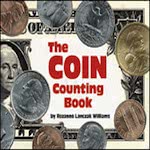
The Coin Counting Book — Trade Up: Five Pennies for a Nickel, Ten Cents Two Ways
Trade mat
Put the coins you give on GIVE. Put the coin you get on GET.
Count GIVE, then count GET, and say both amounts.
Say the trade
Say this after every trade. Point to GIVE, then point to GET.
I gave ________________________________.
I got ________________________________.
It is still ______________ cents.
Word Cards card set
The Coin Counting Book — Trade Up: Five Pennies for a Nickel, Ten Cents Two Ways
Word cards
Cut on the lines. One word on each card.
Teacher key (1 page) — not for the class
Teacher Key: Trade Mat and Trade Sentence full page
The Coin Counting Book — Trade Up: Five Pennies for a Nickel, Ten Cents Two Ways — Teacher Key
What the mat should show at each trade
Five pennies on GIVE, one nickel on GET. Five cents on both sides.
Five pennies and one nickel on GIVE, one dime on GET. Ten cents on both sides.
Two nickels on GIVE, one dime on GET. Ten cents on both sides.
Extension only: the dime goes back on GIVE and two nickels come onto GET. Ten cents on both sides again.
Say the trade: expected completions
I gave five pennies. I got one nickel. It is still five cents.
I gave five pennies and one nickel. I got one dime. It is still ten cents.
I gave two nickels. I got one dime. It is still ten cents.
Read for
A close response names the coins on both sides of the mat and says the same amount twice, once for what went and once for what came back. A loose response names only the coin that came back, or reads the trade as adding, so the amount grows instead of staying where it was.
Support pairs stay with pennies and nickels and stop at ten cents, so the dime trade is not expected from them. Extension pairs also build a third ten-cent set from the coins on the table and count it to prove it.
Standards & curriculum
Choose your curriculum above to see the standards for this lesson.
Standards are held back while this plan is edited.
Every standard shown here was matched against the supplied wording of this
lesson, quoting its steps, so a changed step is no longer the thing that
was checked. Undo your changes to bring the standards back — your edits stay
in this browser either way.
2. Count the Money by Fives, Then by TensFluency · Counting on by fives and tens to find the value of a set of coins
Both count runs are printed whole: 5, 10, 15, 20, 25 for coins counted in fives, and 10, 20, 30, 40, 50, 60, 70, 80, 90, 100 for coins counted in tens. Every row is counted twice, once slowly and once at speed.
Full lesson — 20 minutes
1. Count five nickels by fives(5 min)
Each pair lays five nickels in a row on the counting strip. Count them aloud by fives, touching one coin per number word. Five, ten, fifteen, twenty, twenty-five. Run the row twice, once slowly and once at speed, and say the total in cents at the end of each run.
Word preview: nickel
But it’s faster, It’s quicker, If we count them by fives.
5, 10, 15, 20, 25
2. Count on from the dimes(6 min)
Set two dimes down first and one nickel after them. Count ten, twenty, then count on five more to twenty-five, touching each coin once. Now change the order, nickel first and then the dimes, count again, and say whether the total moved.
Word preview: dime
one dime + one dime + one nickel = one quarter
10¢ + 10¢ + 5¢ = 25¢
3. Count ten dimes by tens(6 min)
Fill the counting strip with ten dimes and count across the whole strip by tens: ten, twenty, thirty, forty, fifty, sixty, seventy, eighty, ninety, one hundred. Say the last number two ways, one hundred cents and one dollar. Then clear the strip. Start again with three dimes already down at thirty. Keep the count going as your partner adds the rest one at a time.
Word preview: dollar
Let’s count pennies by tens.
10, 20, 30, 40, 50, 60, 70, 80, 90, 100
10 dimes = one dollar
4. Partner speed round(3 min)
One partner lays a row of dimes and nickels and the other counts the row aloud, dimes first, and says the total in cents. Swap after every row and keep each row at or under one hundred cents.
Short version — 9 minutes
1. Count on from the dimes(6 min)
Set two dimes down and one nickel after them. Count ten, twenty, then count on five more to twenty-five. Change the order, count again, and say whether the total moved.
Word preview: dime
10¢ + 10¢ + 5¢ = 25¢
2. Partner speed round(3 min)
One partner lays a row of dimes and nickels; the other counts it aloud, dimes first, and says the total in cents. Swap after every row.
Three levels
Support
Stay with one kind of coin at a time: five nickels counted by fives, then five dimes counted by tens, each coin sitting in its own square on the strip so one number word lands on one square. Mixed rows wait until both runs come out without a stumble.
At Grade
Count mixed rows of dimes and nickels to one hundred cents, dimes first, saying the running total on every coin and the amount in cents at the end.
Extension
Take a row your partner built and count it twice, once dimes first and once nickels first. Say where the two counts said different numbers along the way and why they still finished in the same place.
English learners
The number words are the work here, and number words are exactly what a student may hold in another language long before English. The count sequence itself transfers completely: a child who can already count by fives in Spanish or Somali has the mathematics and needs the English words fastened to the same coins. Model the two runs as chants against a full row, five, ten, fifteen, twenty, twenty-five and ten, twenty, thirty, and let students count the row in their own language first and then again in English without moving the coins. The reporting sentence is short on purpose: name the row, then say its cents.
Materials
Plastic coin sets: ten nickels and ten dimes per pair
Counting strip: a paper track of ten empty coin squares
Word cards: dime, dollar, nickel
Workbook
Print these for the class. They carry your edits, and they print in black and white.
Counting Strip and Reporting Sentence full page
The Coin Counting Book — Count the Money by Fives, Then by Tens
Counting strip
One coin in each square. Touch one square for each number you say.
The track carries on in the second row.
Say the row
Name the row. Then say its cents.
This row is ________________________________.
It is ______________ cents.
Word Cards card set
The Coin Counting Book — Count the Money by Fives, Then by Tens
Word cards
Cut on the lines. One word on each card.
Teacher key (1 page) — not for the class
Teacher Key: Counting Strip and Reporting Sentence full page
The Coin Counting Book — Count the Money by Fives, Then by Tens — Teacher Key
What the counts should sound like
Five nickels, counted by fives: 5, 10, 15, 20, 25. Twenty-five cents, slowly and then at speed.
Two dimes then one nickel: ten, twenty, twenty-five. Nickel first: five, fifteen, twenty-five. The total does not move.
Ten dimes across the strip: 10, 20, 30, 40, 50, 60, 70, 80, 90, 100. The last number said two ways, one hundred cents and one dollar.
Restarted with three dimes already down: thirty, forty, fifty, sixty, seventy, eighty, ninety, one hundred.
Say the row: what a strong response does
The row belongs to the partner who built it, so there is no single answer. A strong response names what is in the row before it gives a number, three dimes and two nickels, forty cents, and the cents match the coins sitting on the strip.
Read for
A close count lands one number word on one square, takes the dimes before the nickels, and finishes with an amount in cents. A loose count slides two coins under one number word, starts again at one when the dimes run out, or stops on a number word without saying cents.
Support pairs keep one kind of coin in the row at a time. Extension pairs count the same row twice, dimes first and then nickels first; read for the place where the two counts said different numbers and for the agreement at the end.
Standards & curriculum
Choose your curriculum above to see the standards for this lesson.
Standards are held back while this plan is edited.
Every standard shown here was matched against the supplied wording of this
lesson, quoting its steps, so a changed step is no longer the thing that
was checked. Undo your changes to bring the standards back — your edits stay
in this browser either way.
3. Every Way to Make Twenty-Five CentsReasoning · Finding every way to make twenty-five cents with nickels and dimes
Two ways to build a quarter out of smaller coins are given, two dimes with a nickel and five nickels, and then the book stops. With nickels and dimes there is a third, and the whole set falls out when it is organised by how many dimes it uses: two, one, or none. Students build the ways, count each one to prove its amount, sort them by dimes and then say why the list is finished. The reasoning is the point: the argument is three dimes is thirty cents, not we could not find any more.
Full lesson — 20 minutes
1. Build the book's two ways(4 min)
Each pair builds two dimes with a nickel and counts it: ten, twenty, twenty-five. Then clear the mat and build five nickels. Count that one: five, ten, fifteen, twenty, twenty-five. Write 25¢ on an amount card for each pile and set the card beside it.
Word preview: quarter
Two dimes and a nickel Make one quarter, too.
one dime + one dime + one nickel = one quarter
5¢ + 5¢ + 5¢ + 5¢ + 5¢ = 25¢
2. Hunt for a way the book does not print(6 min)
Using nickels and dimes only, build a pile worth twenty-five cents that is neither of the book's two. Count it to prove the amount before you claim it. When you have one dime and three nickels, check it by counting ten, fifteen, twenty, twenty-five and card it like the others.
Word preview: nickel, dime
So do five nickels, Five nickels for you!
3. Sort the ways by how many dimes(7 min)
Put every pile that used two dimes in the first column. Put the pile that used one dime in the second. Put the pile that used none in the third. Then try to fill a fourth column with three dimes: build it, count it, ten, twenty, thirty, and say what happened to the amount.
one nickel + one nickel + one nickel + one nickel + one nickel = one quarter
4. Say why the list is finished(3 min)
Tell another pair the whole list in order. Two dimes and a nickel, one dime and three nickels, five nickels. Finish with the reason there is no fourth: three dimes is thirty cents, and thirty cents is past twenty-five.
Short version — 9 minutes
1. Hunt for a way the book does not print(6 min)
Using nickels and dimes only, build a twenty-five-cent pile that is neither of the book's two, and count it to prove the amount. Card it when the count reaches twenty-five.
Word preview: nickel, dime
So do five nickels, Five nickels for you!
2. Say why the list is finished(3 min)
Tell another pair all three ways in order and finish with the reason there is no fourth: three dimes is thirty cents, and thirty cents is past twenty-five.
Three levels
Support
Take the two-dime column and the no-dime column already built and counted, and find only the middle case. Start with one dime on the mat and add nickels one at a time, counting fifteen, twenty, twenty-five, and stop the moment the count reaches twenty-five.
At Grade
Find the third way with no column prepared, fill all three columns, and give the reason the list stops where it does.
Extension
Put pennies back in the coin set, with no pile allowed more than five of them, and find how many new ways to twenty-five cents open up. Then say why five pennies can stand in one place and never in two.
English learners
The English is harder here than the counting. The numbers and the sorted columns are visible to everyone at the table; what is hard in English is the shape of a completeness claim, the sentence that says there is no other way and gives a number as the reason. Give the frame and walk through it against the chart: There are ___ ways. There is no way with ___ dimes because ___ dimes is ___ cents. Students may sort, count and reason in their everyday language and then say the finished frame in English, pointing at the column as they say it.
Materials
Plastic coin sets: ten nickels, six dimes, and five pennies for the extension, per pair
Amount cards: blank slips for writing a cents amount
Sorting chart: three labelled columns, two dimes, one dime, no dimes
Word cards: dime, nickel, quarter
Workbook
Print these for the class. They carry your edits, and they print in black and white.
Amount Cards card set
The Coin Counting Book — Every Way to Make Twenty-Five Cents
Amount cards
Cut on the lines. Write the amount for one pile in the box.
Set the card beside the pile it belongs to.
Sorting Chart and Completeness Sentence full page
The Coin Counting Book — Every Way to Make Twenty-Five Cents
Sorting chart
Put each pile in the column that says how many dimes it used.
Say why the list is finished
Point at the columns as you say it.
There are ____________ ways.
There is no way with ____________ dimes because ____________ dimes is ____________ cents.
Word Cards card set
The Coin Counting Book — Every Way to Make Twenty-Five Cents
Word cards
Cut on the lines. One word on each card.
Teacher key (1 page) — not for the class
Teacher Key: Amount Cards, Sorting Chart and Completeness Sentence full page
The Coin Counting Book — Every Way to Make Twenty-Five Cents — Teacher Key
The three ways, in the columns they belong in
two dimes: two dimes and a nickel. Counted ten, twenty, twenty-five.
one dime: one dime and three nickels. Counted ten, fifteen, twenty, twenty-five.
no dimes: five nickels. Counted five, ten, fifteen, twenty, twenty-five.
The column that cannot be filled
Three dimes counts ten, twenty, thirty. Thirty cents is past twenty-five, so there is no fourth way and the list of three is finished.
Amount cards
Every carded pile reads 25¢. The three-dime pile gets no card, because it is not twenty-five cents.
Say why the list is finished: expected completion
There are three ways. There is no way with three dimes because three dimes is thirty cents.
Read for
A close response gives a number as the reason, and the number is thirty, past twenty-five. A loose response says there is no fourth way because the pair could not find one, which is a report of the search and not a reason.
Support pairs are handed the two-dime and no-dime piles already built and counted, and find only the middle case, one dime and three nickels. Extension pairs put pennies back with no pile holding more than five: three new ways open, each one swapping five pennies for a single nickel, and five pennies can only stand in one place because a second five would put ten pennies in the pile.
Standards & curriculum
Choose your curriculum above to see the standards for this lesson.
Standards are held back while this plan is edited.
Every standard shown here was matched against the supplied wording of this
lesson, quoting its steps, so a changed step is no longer the thing that
was checked. Undo your changes to bring the standards back — your edits stay
in this browser either way.
4. Say It in Coins, Write It in CentsRepresentation · Writing the cent equation that matches a set of coins
Every spread in this book carries the same fact twice, once in coin words and once as an equation with cent signs. Students work that second line themselves: they lay coins, write the matching equation with a ¢ on every term, and read it back aloud, then run it the other way and build the coins for an equation a partner wrote. The representation is the whole lesson. Ten cents looks like six coins on one mat and two coins on another, and the writing has to show that it is the same ten cents either way.
Full lesson — 20 minutes
1. Write the equation for what you built(5 min)
Each pair lays two dimes and one nickel and counts to twenty-five. Then write the equation on the whiteboard, with a cent sign on every number: 10¢ + 10¢ + 5¢ = 25¢. Read it aloud, touching one coin for each term as you say it.
Word preview: equals, cents
one dime + one dime + one nickel = one quarter
10¢ + 10¢ + 5¢ = 25¢
2. Build what your partner wrote(5 min)
One partner writes an equation for ten cents without letting the other see the coins. The other builds it and counts to check. Swap and go again. Every equation ends in 10¢ and every term carries a cent sign.
5¢ + 5¢ = 10¢
1¢ + 1¢ + 1¢ + 1¢ + 1¢ + 5¢ = 10¢
3. Two equations, one amount(6 min)
Build both routes to ten cents side by side, five pennies with a nickel and two nickels, and write the equation under each one. Read the two equations aloud one after the other and say the part that is the same in both.
Word preview: dime
one penny + one penny + one penny + one penny + one penny + one nickel = one dime
one nickel + one nickel = one dime
4. Post the equations under their totals(4 min)
Copy each equation onto a card and post it under the 10¢ heading or the 25¢ heading on the class chart. Before a card goes up, read it aloud and count the coins that match it one more time.
Short version — 9 minutes
1. Build what your partner wrote(5 min)
One partner writes an equation for ten cents; the other builds it in coins and counts to check, then they swap. Every term carries a cent sign.
5¢ + 5¢ = 10¢
2. Post the equations under their totals(4 min)
Copy each equation onto a card and post it under the 10¢ or the 25¢ heading, reading it aloud and counting the matching coins before it goes up.
Three levels
Support
Keep every equation at ten cents. The two routes the book prints, five pennies with a nickel and two nickels, are enough for the whole lesson, and the coins stay on the mat while you write so one term is copied for each coin you touch.
At Grade
Write and read equations at ten cents and at twenty-five cents, and build a partner's equation from the writing alone with the coins out of sight.
Extension
Write two different equations for twenty-five cents, one using the most coins you can and one using the fewest, then read both aloud and say which coin did the work that made the short one short.
English learners
A cent sign, a plus and an equals mean the same thing in every classroom a student has ever sat in, and a child who cannot yet say twenty-five cents can still write 25¢ correctly and be right. Reading the equation aloud in English word order is the load: ten cents plus ten cents plus five cents equals twenty-five cents is a long sentence, and equals is usually the missing piece. Rehearse that one sentence against a single equation until it runs. Students may count and check in their strongest language and then read one finished equation aloud in English.
Materials
Plastic coin sets: ten pennies, four nickels, four dimes per pair
Small whiteboard and marker per pair
Equation cards: index cards, one equation per card
Class chart with two headings, 10¢ and 25¢
Word cards: cents, dime, equals
Workbook
Print these for the class. They carry your edits, and they print in black and white.
Build Mat full page
The Coin Counting Book — Say It in Coins, Write It in Cents
Build mat
Build one way on the left and the other way on the right.
Leave the coins on the mat while you write, and touch one coin for each term.
Word Cards card set
The Coin Counting Book — Say It in Coins, Write It in Cents
Word cards
Cut on the lines. One word on each card.
Teacher key (1 page) — not for the class
Teacher Key: Build Mat full page
The Coin Counting Book — Say It in Coins, Write It in Cents — Teacher Key
Equations for ten cents
Two nickels: 5¢ + 5¢ = 10¢
Five pennies and a nickel: 1¢ + 1¢ + 1¢ + 1¢ + 1¢ + 5¢ = 10¢
Equation for the first build
Two dimes and a nickel: 10¢ + 10¢ + 5¢ = 25¢
Two equations, one amount
Both ten-cent equations end in 10¢. Six coins on one side of the mat and two on the other, and the amount written at the end is the same.
Read for
A close equation carries a cent sign on every term and not only on the total, has one term for each coin on the mat, and is read aloud with equals in it. A loose equation counts coins instead of cents, or writes the total with no cent sign.
Support pairs keep every equation at ten cents and write with the coins still in front of them. Extension pairs write twenty-five cents twice: the fewest coins from this set is two dimes and a nickel, three coins, and the dime is the coin that made it short; the most depends on how many pennies the pair has out, ten pennies with three nickels being thirteen coins.
Standards & curriculum
Choose your curriculum above to see the standards for this lesson.
Standards are held back while this plan is edited.
Every standard shown here was matched against the supplied wording of this
lesson, quoting its steps, so a changed step is no longer the thing that
was checked. Undo your changes to bring the standards back — your edits stay
in this browser either way.
5. Four Ways to Make a DollarApplication · Making one dollar with quarters, dimes and nickels
What makes a dollar is listed at the close, twenty nickels, ten dimes, four quarters, along with a question about whether the coins can be traded for something less heavy. Students build the dollar from dimes, build it again from nickels and trade their way up two at a time, then set all three versions side by side and record how many coins each one takes. The application is the trading itself: the amount is pinned at one hundred cents and the only thing that changes is how many coins end up in the pocket.
Full lesson — 20 minutes
1. Count ten dimes to a dollar(4 min)
Each pair lays ten dimes along the counting strip and counts by tens to one hundred, touching one coin per number word. Say the last number two ways, one hundred cents and one dollar, and write the coin count on the recording slip.
Word preview: dollar
10, 20, 30, 40, 50, 60, 70, 80, 90, 100
10 dimes = one dollar
2. Trade twenty nickels up to ten dimes(6 min)
Build the dollar again out of twenty nickels and count the pile by fives. Then trade in pairs, two nickels for one dime, again and again until no nickels are left. Count the dimes you finished with and say whether the dollar changed.
Word preview: trade, nickel
20 nickels = one dollar
one nickel + one nickel = one dime
Let’s trade all our coins, Our nickels and dimes.
3. Count the coins, not the cents(7 min)
Build all three dollars at once: twenty nickels, ten dimes and four quarters. Write how many coins are in each pile on the recording slip: twenty, ten, four. Then count back from twenty to four to find how many more coins the nickel dollar takes, and write that number on the slip too.
Word preview: quarter
4 quarters = one dollar
Four quarters, Ten dimes in a row.
Twenty nickels, Spread out our coins.
4. Say which dollar you would carry(3 min)
Tell another pair which of the three dollars you would rather have in your pocket and give both coin counts as the reason. Every reason names two numbers and finishes the same way: they are all one dollar.
Can we trade them in For some money less heavy?
Short version — 9 minutes
1. Trade twenty nickels up to ten dimes(6 min)
Build the dollar out of twenty nickels and count it by fives. Trade two nickels for one dime, again and again, until no nickels are left, then count the dimes and say whether the dollar changed.
Word preview: trade, nickel
20 nickels = one dollar
one nickel + one nickel = one dime
2. Say which dollar you would carry(3 min)
Tell another pair which dollar you would rather have in your pocket and give both coin counts as the reason, finishing with the amount they share.
Can we trade them in For some money less heavy?
Three levels
Support
Keep most of the dollar in dimes on the strip and trade only a small batch of nickels: six nickels, traded two at a time, for three dimes. Count the strip after every trade so the hundred cents is checked while the pile is still small.
At Grade
Build all three dollars, run the nickel-to-dime trades to the end, and record the three coin counts and the difference between the largest and the smallest.
Extension
Trade the ten dimes up into four quarters. Two dimes and a nickel make a quarter and you have no nickels, so work out what you must trade first, do it, and finish all four quarters with nothing left over.
English learners
Everything that matters in this lesson can be pointed at: three piles, three counts, one amount. Counting and trading transfer straight across; the sentence at the end does not. English puts the two numbers of a comparison in an order that many languages reverse, and four coins instead of twenty coins is a hard sentence for a student whose mathematics is fine. Rehearse the frame with the piles in front of them: I would carry the ___. It is ___ coins instead of ___ coins, and it is still one dollar. Let students count and decide in their strongest language, then say the frame in English.
Materials
Plastic coin sets: twenty nickels, ten dimes, four quarters per pair
Counting strip: a paper track of ten empty coin squares
Coin-count recording slip: three rows labelled nickels, dimes, quarters
Word cards: dollar, nickel, quarter, trade
Workbook
Print these for the class. They carry your edits, and they print in black and white.
Counting Strip full page
The Coin Counting Book — Four Ways to Make a Dollar
Counting strip
One coin in each square. Touch one square for each number you say.
The track carries on in the second row.
Coin-Count Recording Slip and Carrying Sentence full page
The Coin Counting Book — Four Ways to Make a Dollar
Coin-count recording slip
Write how many coins are in each dollar.
Say which dollar you would carry
I would carry the ____________________.
It is __________ coins instead of __________ coins, and it is still one dollar.
Word Cards card set
The Coin Counting Book — Four Ways to Make a Dollar
Word cards
Cut on the lines. One word on each card.
Teacher key (1 page) — not for the class
Teacher Key: Counting Strip and Coin-Count Recording Slip full page
The Coin Counting Book — Four Ways to Make a Dollar — Teacher Key
The counts
Ten dimes across the strip: 10, 20, 30, 40, 50, 60, 70, 80, 90, 100. The last number said two ways, one hundred cents and one dollar.
Twenty nickels counted by fives finishes at one hundred. Traded two at a time they come back as ten dimes, and the dollar has not changed.
Recording slip
nickels: 20
dimes: 10
quarters: 4
how many more coins the nickel dollar takes: 16
Say which dollar you would carry: expected completion
Any of the three piles is acceptable so long as both counts are named: I would carry the quarters. It is 4 coins instead of 20 coins, and it is still one dollar.
Read for
A close response gives two coin counts and finishes on the amount the piles share. A loose response names one pile and stops, or gives a preference with no number in it, or treats the pile with more coins as more money.
Support pairs trade only six nickels, two at a time, for three dimes, and count the strip after each trade. Extension pairs trade the ten dimes up into four quarters: with no nickels in hand they must trade two dimes for four nickels first, after which each quarter is two dimes and a nickel and nothing is left over.
Standards & curriculum
Choose your curriculum above to see the standards for this lesson.
Standards are held back while this plan is edited.
Every standard shown here was matched against the supplied wording of this
lesson, quoting its steps, so a changed step is no longer the thing that
was checked. Undo your changes to bring the standards back — your edits stay
in this browser either way.
Math through the reading
The mathematics is reached through a sentence the book prints:
change one word in the reading and the numbers change with it. These carry their own
standards, matched against these lessons rather than inherited from the skill ones.
6. Trade It or Add ItIntegrated · Students build the same twenty-five pennies twice, once traded for a quarter and once with a quarter added, then say which word the book used and what it did to the amount.
Students build the same twenty-five pennies twice, once traded for a quarter and once with a quarter added, then say which word the book used and what it did to the amount.
Full lesson — 20 minutes
1. Count the penny pile(5 min)
Each pair counts twenty-five pennies into five rows of five, counts the rows by fives — five, ten, fifteen, twenty, twenty-five — and sets a 25¢ card beside the pile.
2. Read the sentence and mark the word that acts(3 min)
Read the book's sentence aloud with your partner and put a finger on the one word that tells you what to do with the pennies. Say what that word tells your hands to do before you touch a coin.
3. Build the trade mat and the add mat(6 min)
On the TRADE mat, do what the book's word says: the twenty-five pennies come off and one quarter goes on. Count it — twenty-five cents. On the ADD mat, do what the swapped word says: the pennies stay and one quarter joins them. Count that one, twenty-five and then on to fifty, and card both mats.
4. Say the sentence that matches each mat(6 min)
Each child says a sentence about each mat naming the word and the amount, then writes the one that matches the book. Partners check that the number of cents in the sentence is the number of cents on the mat.
Short version — 9 minutes
1. Read the sentence and mark the word that acts(3 min)
Read the book's sentence aloud with your partner and put a finger on the one word that tells you what to do with the pennies. Say what that word tells your hands to do before you touch a coin.
2. Build the trade mat and the add mat(6 min)
On the TRADE mat, do what the book's word says: the twenty-five pennies come off and one quarter goes on. Count it — twenty-five cents. On the ADD mat, do what the swapped word says: the pennies stay and one quarter joins them. Count that one, twenty-five and then on to fifty, and card both mats.
Three levels
Support
Work at ten cents instead of twenty-five: ten pennies on the mat and one dime for the trade. Both mats get built the same way, and both totals — ten cents and twenty cents — can be checked by counting the pennies one at a time if the fives run out.
At grade
Run both mats at twenty-five cents, counting by fives, and produce both sentences with their amounts before writing the one that matches the book.
Extension
Take the book's other trading sentence, “We can trade both of them For one coin to spend.”, and show with quarters what changes if both becomes one. Then say which of the two words, the verb or both, did more to the amount, and how the coins show it.
English learners
The counting transfers and so does the money: a child who has traded coins in any language already owns the idea. English lets one verb sit beside a plus sign and mean something the plus sign does not. Many languages mark an exchange with a word that could never be confused with adding. Put the two mats side by side and rehearse both frames against them: I traded ___ for ___, so I have ___ cents, and I added ___ to ___, so I have ___ cents. Students may talk the difference through in their strongest language while they build, then say one frame in English pointing at the mat it describes.
Materials
Plastic coin sets: twenty-five pennies and two quarters per pair
Two paper mats per pair, one labelled TRADE and one labelled ADD
Amount cards: blank slips for writing a cents amount
Small whiteboard and marker per pair
A sentence strip carrying the book's line: We can trade for one quarter, shiny and new.
A second strip with the same line, one word changed
Standards & curriculum
Choose your curriculum above to see the standards for this lesson.
Standards are held back while this plan is edited.
Every standard shown here was matched against the supplied wording of this
lesson, quoting its steps, so a changed step is no longer the thing that
was checked. Undo your changes to bring the standards back — your edits stay
in this browser either way.
IB PYP developmental alignment
Phases are not grades. The Primary Years Programme is a
developmental continuum and your school places each student in a phase, so this
names the strand the lesson works in and the phases it could sit across. Confirm
against your own school's placement.
Number · Phases 1–3
Phase 1
Develop meaning for counting, quantity, number relationships, simple operations, and early fractions in meaningful contexts.
Phase 2
Develop place value and whole-number operations, mental strategies, fractions, and mathematical language for practical problem solving.
Phase 3
Extend number understanding to larger numbers, fractions, decimals, percentages, and efficient strategies for the four operations.
Measurement · Phases 1–3
Phase 1
Compare and describe measurable attributes of objects and sequence familiar events using direct experience and non-standard units.
Phase 2
Use standard units, estimation, measuring tools, calendars, money, temperature, and time to describe and solve practical problems.
Phase 3
Measure perimeter, area, and volume; select appropriate units and tools; interpret scales and develop angle as a measure of rotation.
7. Is the Quarter Really Faster?Integrated · Students count one dollar in three different coin piles, then take a side on the book's claim that quarters save counting time and defend it with the coin counts.
Students count one dollar in three different coin piles, then take a side on the book's claim that quarters save counting time and defend it with the coin counts.
Full lesson — 20 minutes
1. Count the dollar three ways(5 min)
Each pair builds one dollar three times — four quarters, ten dimes, twenty nickels — and counts each pile aloud to one hundred cents, touching one coin per number word. Write the number of coins in each pile on the slip: four, ten, twenty.
2. Take a side out loud(4 min)
Each child tells their partner which pile they would rather be handed to count and says both coin counts as the reason. Partners who disagree say both positions again, with their numbers, without changing them yet.
3. Test your side by counting it twice(6 min)
Count your chosen pile aloud twice while your partner listens for the place the count stops or starts over, and mark that place on the slip. Then count the pile you did not choose and mark that one too.
4. Report the position with its numbers(5 min)
Each pair reports to the class in one sentence: which pile, how many coins, and which count run they could say without stopping. A pair that changed its mind after counting says what changed it.
Short version — 9 minutes
1. Count the dollar three ways(5 min)
Each pair builds one dollar three times — four quarters, ten dimes, twenty nickels — and counts each pile aloud to one hundred cents, touching one coin per number word. Write the number of coins in each pile on the slip: four, ten, twenty.
2. Take a side out loud(4 min)
Each child tells their partner which pile they would rather be handed to count and says both coin counts as the reason. Partners who disagree say both positions again, with their numbers, without changing them yet.
Three levels
Support
Compare two piles only, ten dimes and four quarters, with the count words printed along the counting strip so the run is in front of you while you count. Take your side once both piles have been counted twice.
At grade
Count all three piles, take a side, and report it with both coin counts and the count run you used.
Extension
Argue the case against your own position: take the pile you rejected, give the strongest reason someone would choose it with its numbers in the sentence, then say whether your first position still holds and what would have to be true for it not to.
English learners
Number words are the whole argument here, and number words are the part of mathematics that stays longest in a student's first language. Counting by tens to one hundred may already be automatic there and still slow in English, which is precisely the thing this lesson is arguing about, so let students count each pile in their strongest language first and then in English, and let them say which run was faster in each. The hard English is comparative: four coins instead of twenty coins puts the two numbers in an order many languages reverse. Rehearse one frame against the piles — I would rather count the ___. It is ___ coins, and I can count by ___ — and nobody is asked to say anything about themselves beyond which count they can run.
Materials
Plastic coin sets: twenty nickels, ten dimes, four quarters per pair
Counting strip: a paper track of ten empty coin squares
Recording slip: three rows labelled quarters, dimes, nickels, with a box for the number of coins
The book's closing lines listing what makes one dollar, displayed for the class
A posted card carrying the book's claim: Quarters are better. They save counting time.
Standards & curriculum
Choose your curriculum above to see the standards for this lesson.
Standards are held back while this plan is edited.
Every standard shown here was matched against the supplied wording of this
lesson, quoting its steps, so a changed step is no longer the thing that
was checked. Undo your changes to bring the standards back — your edits stay
in this browser either way.
IB PYP developmental alignment
Phases are not grades. The Primary Years Programme is a
developmental continuum and your school places each student in a phase, so this
names the strand the lesson works in and the phases it could sit across. Confirm
against your own school's placement.
Number · Phases 1–4
Phase 1
Develop meaning for counting, quantity, number relationships, simple operations, and early fractions in meaningful contexts.
Phase 2
Develop place value and whole-number operations, mental strategies, fractions, and mathematical language for practical problem solving.
Phase 3
Extend number understanding to larger numbers, fractions, decimals, percentages, and efficient strategies for the four operations.
Phase 4
Apply whole-number, fraction, decimal, percentage, ratio, and proportion concepts with increasingly efficient and flexible computation.
Measurement · Phases 1–4
Phase 1
Compare and describe measurable attributes of objects and sequence familiar events using direct experience and non-standard units.
Phase 2
Use standard units, estimation, measuring tools, calendars, money, temperature, and time to describe and solve practical problems.
Phase 3
Measure perimeter, area, and volume; select appropriate units and tools; interpret scales and develop angle as a measure of rotation.
Phase 4
Use procedures and formulas for perimeter, area, and volume; convert units, determine required accuracy, and measure and construct angles.
Reading and language lessons
5 lessons on the reading and
language the book carries - what a word means in its sentence, how a character is shown,
how a text is built. No mathematics: these are matched against the English language arts
curricula, which are a different and smaller set than the mathematics ones.
8. The words this book keeps: penny, nickel, dime, quarter, half-dollarConcept · Domain vocabulary: the coin words a money text names
This book names a coin the first time it needs it and then keeps using that name, so the coin words are the words a reader must hold to follow anything else. Students read the printed lines aloud, put a finger on each coin word, match it to a coin card, and sort coin words away from the how-many words standing next to them. They finish by writing a glossary line for each coin word in the book's own wording. No student adds or counts anything; the work is holding a domain word steady across the pages that use it.
Full lesson — 20 minutes
1. Say the coin word, then point to the coin(5 min)
Read the printed lines aloud with a partner, one line each. Every time a coin word comes — penny, nickel, dime — put a finger on that word and say it again by itself. Lay the matching coin card beside the word so the word and the coin sit together on the desk.
Word preview: penny, nickel, dime
One penny, two pennies, Three pennies, four. What will we get When we add just one more?
What else equals A dime or ten cents? Five pennies and one nickel— Makes perfect math sense.
2. Sort the coin words from the counting words(5 min)
Cut the word strip into single words and sort them into two piles: words that name a coin you can hold, and words that tell how many. Put nickel and dime in the coin pile; put four and twenty-five in the how-many pile. Say why each word went where it went, out loud, to your partner.
Word preview: quarter, twenty-five
Look! Lots of pennies! Can you count twenty-five? But it’s faster, It’s quicker, If we count them by fives.
3. Find the coin word the book uses for a bigger coin(6 min)
Read the two printed passages and underline every coin word you find. Notice that half-dollar is written with a hyphen and names one single coin, not two. Tell your partner which coin word in these lines is new to you, and say the sentence it came from.
Word preview: half-dollar
We can trade for one quarter, shiny and new. Two dimes and a nickel Make one quarter, too. So do five nickels, Five nickels for you!
What can we do With two quarters, my friend? We can trade both of them For one coin to spend. One half-dollar Fifty cents.
4. Build a coin-word glossary line(4 min)
Write one glossary line for each coin word on your cards: the word, then the book's own words for it. For half-dollar, copy the words the book prints right after the coin name. Read your four lines to a partner without looking at the passage.
Word preview: dollar
What can we do With two quarters, my friend? We can trade both of them For one coin to spend. One half-dollar Fifty cents.
Short version — 9 minutes
1. Say the coin word, then point to the coin(5 min)
Read the printed lines aloud with a partner. Each time a coin word comes, put a finger on it, say it by itself, and lay the matching coin card beside it.
Word preview: penny, nickel, dime
One penny, two pennies, Three pennies, four. What will we get When we add just one more?
What else equals A dime or ten cents? Five pennies and one nickel— Makes perfect math sense.
2. Find the coin word the book uses for a bigger coin(4 min)
Underline every coin word in the printed passages. Notice half-dollar is hyphenated and names one coin. Say aloud which coin word is new to you and the sentence it came from.
Word preview: quarter, twenty-five, half-dollar, dollar
We can trade for one quarter, shiny and new. Two dimes and a nickel Make one quarter, too. So do five nickels, Five nickels for you!
What can we do With two quarters, my friend? We can trade both of them For one coin to spend. One half-dollar Fifty cents.
Three levels
Support
Work with three coin words only — penny, nickel, dime — using the first step's two passages. Hold the coin card while you say the word, and say the word once more before you set the card down. Leave quarter and half-dollar for the group chart.
At Grade
Work all five coin words across both of the first step's passages and the third step's. Say each word, match its card, and give the sentence it appeared in.
Extension
Using the third step's two passages, explain to a partner why the book writes half-dollar with a hyphen and one coin word, while it writes two quarters as two words. Point to the printed line that shows each.
English learners
Coin names do not transfer: a learner who names coins fluently in another language still has to learn penny, nickel, dime, quarter and half-dollar as new sound-shapes. What does transfer is the idea that a coin has a name and a worth. Rehearse the frame "This coin is a ____." while holding the card. Invite students to name the same coin in their strongest language first, then say the English word; both go on the card.
Two sorting mats labelled coin word and how-many word
Coloured pencils for underlining
Glossary line sheet
Word cards: penny, nickel, dime, quarter, twenty-five, half-dollar, dollar
Standards & curriculum
Choose your curriculum above to see the standards for this lesson.
Standards are held back while this plan is edited.
Every standard shown here was matched against the supplied wording of this
lesson, quoting its steps, so a changed step is no longer the thing that
was checked. Undo your changes to bring the standards back — your edits stay
in this browser either way.
9. The book asks, then the book answersConcept · How an informational text organizes information: question then answer
This book moves by asking a question and answering it in the very next lines, and it signals a fresh one with the words "What else". Students find the question marks, read the questions aloud with rising voices, arrow each question to the words that answer it, and underline the repeated opening words. They close by writing a question in the same shape for a partner to answer aloud. Students do no counting; they trace how a non-fiction text is put together.
Full lesson — 20 minutes
1. Find the question mark and read the question aloud(5 min)
Read the printed passage and put your finger on the question mark. Read just the question aloud in a questioning voice, letting your voice go up at the end. Tell your partner what the book has just asked and whether the answer is anywhere inside these lines.
Word preview: question
One penny, two pennies, Three pennies, four. What will we get When we add just one more?
2. Match each question to the lines that answer it(6 min)
You have two printed question passages and the lines that follow each one. Draw an arrow from each question to the words that answer it. Read the question aloud, then read your answer aloud right after it, so the pair sounds like one turn of talk.
Word preview: answer
What else equals A dime or ten cents? Five pennies and one nickel— Makes perfect math sense.
What else makes one dollar? It’s important to know. Four quarters, Ten dimes in a row. Twenty nickels, Spread out our coins. Let’s have a coin show!
3. Notice the words that start a new question(5 min)
Underline the first two words of each printed question. Say aloud what you notice about how many of them begin the same way. Tell your partner what the words "What else" tell a reader is coming next.
Word preview: what else
What else equals A dime or ten cents? Five pennies and one nickel— Makes perfect math sense.
What else makes one dollar? It’s important to know. Four quarters, Ten dimes in a row. Twenty nickels, Spread out our coins. Let’s have a coin show!
Twenty-five pennies! We might drop a few. We have too many pennies. What can we do?
4. Ask the book's kind of question about your own coin(4 min)
Write one question of your own in the book's shape, starting with the words "What else". Hand it to a partner, who answers it in a full sentence out loud. Neither of you writes any numbers; the work is the question shape and the answering sentence.
Word preview: ask
What else makes one dollar? It’s important to know. Four quarters, Ten dimes in a row. Twenty nickels, Spread out our coins. Let’s have a coin show!
Short version — 9 minutes
1. Find the question mark and read the question aloud(4 min)
Put your finger on the question mark in the printed passage. Read the question aloud with your voice rising at the end, and say what the book has just asked.
Word preview: question
One penny, two pennies, Three pennies, four. What will we get When we add just one more?
2. Match each question to the lines that answer it(5 min)
Draw an arrow from each printed question to the words that answer it, then read the question and its answer aloud as one turn of talk.
Word preview: answer, what else, ask
What else equals A dime or ten cents? Five pennies and one nickel— Makes perfect math sense.
What else makes one dollar? It’s important to know. Four quarters, Ten dimes in a row. Twenty nickels, Spread out our coins. Let’s have a coin show!
Three levels
Support
Stay with the first step's single passage. Find the question mark, read only the question aloud with a rising voice, and say in your own words what was asked. Do not sort a second question yet.
At Grade
Work both of the second step's passages. Arrow each question to its answering lines and read the pair aloud as one turn of talk.
Extension
Using the second step's two passages, tell a partner what a reader would lose if the book printed the answers without the questions. Point to the words that would have to change.
English learners
Rising intonation for a question is not universal; several languages mark a question with a final particle or word order instead, so the English question mark and rising voice both need rehearsing. Rehearse the frame "The book asks ____ and answers ____." using the second step's passages. Invite students to ask the same question in their strongest language first, then in English, so the shape is clear before the sounds are.
Materials
Printed passage strips
Arrow-matching sheet
Coloured pencils for underlining
Question-frame slips
Word cards: question, answer, what else, ask
Standards & curriculum
Choose your curriculum above to see the standards for this lesson.
Standards are held back while this plan is edited.
Every standard shown here was matched against the supplied wording of this
lesson, quoting its steps, so a changed step is no longer the thing that
was checked. Undo your changes to bring the standards back — your edits stay
in this browser either way.
10. Trade: one word this book will not let go ofConcept · The key verb an informational text repeats, and the reason printed beside it
One verb carries this whole book, and it comes back page after page: trade. Students act the word out with cards so the giving and getting are in their hands, circle it in three printed passages, swap it for a weaker word to hear what breaks, and underline the reason the book prints beside each trade. Nobody totals coins. The skill is holding a repeated verb and finding the because-words a non-fiction writer sets next to it.
Full lesson — 20 minutes
1. Act out the word trade(5 min)
Read the printed passage aloud, then act it with a partner: each of you holds a card, you hand yours over, your partner hands theirs back, and you both say "trade". Say what each of you had before and after. Say the word once more while your hands are still moving.
Word preview: trade
Twenty-five pennies! We might drop a few. We have too many pennies. What can we do?
We can trade for one quarter, shiny and new. Two dimes and a nickel Make one quarter, too. So do five nickels, Five nickels for you!
2. Circle every place the book says trade(5 min)
Circle the word trade wherever it appears in your three printed passages. Beside each circle, write the two words that come right after it. Tell a partner what a reader learns about this book from how often that one word comes back.
Word preview: trade in
We can trade for one quarter, shiny and new. Two dimes and a nickel Make one quarter, too. So do five nickels, Five nickels for you!
Let’s trade all our coins, Our nickels and dimes. Quarters are better. They save counting time.
We have lots of coins. We have so many. Can we trade them in For some money less heavy?
3. Say what trade means here, in your own words(6 min)
Using the printed passage, finish this sentence out loud for a partner: "When the book says trade, it means you give ____ and you get ____." Then test it — swap the word trade for the word give in the passage and read it aloud. Say what stops making sense.
Word preview: give, get
We have lots of coins. We have so many. Can we trade them in For some money less heavy?
4. Find the reason word beside the trading(4 min)
In the printed passage, underline the words that tell WHY the book wants to trade. Read the reason aloud on its own. Tell your partner what problem those words say the coins are causing.
Word preview: heavy
Let’s trade all our coins, Our nickels and dimes. Quarters are better. They save counting time.
We have lots of coins. We have so many. Can we trade them in For some money less heavy?
Short version — 9 minutes
1. Act out the word trade(4 min)
Read the printed passage aloud, then act it with a partner: hand your card over, take theirs back, and say "trade". Say what each of you had before and after.
Word preview: trade
Twenty-five pennies! We might drop a few. We have too many pennies. What can we do?
We can trade for one quarter, shiny and new. Two dimes and a nickel Make one quarter, too. So do five nickels, Five nickels for you!
2. Circle every place the book says trade(5 min)
Circle the word trade in each printed passage and write the two words that follow it. Say what a reader learns from how often that word comes back.
Word preview: trade in, give, get, heavy
We can trade for one quarter, shiny and new. Two dimes and a nickel Make one quarter, too. So do five nickels, Five nickels for you!
Let’s trade all our coins, Our nickels and dimes. Quarters are better. They save counting time.
We have lots of coins. We have so many. Can we trade them in For some money less heavy?
Three levels
Support
Stay with the first step's acting. Hold one card, hand it over, take one back, and say "trade" each time. Then say only what you had first and what you have now — one clause each, no reason yet.
At Grade
Circle trade in all three of the second step's passages and write the two words that follow each one. Say what the repetition tells a reader about the book.
Extension
Using the second step's three passages, tell a partner which of the three trades the book argues hardest for, and read the printed words that make the case.
English learners
Many languages have a single verb covering both trade and exchange, so the meaning transfers even where the word does not; the two-way action is already familiar. The English phrasal form trade in is the part to teach: it does not mean trade while inside something. Rehearse "I trade my ____ for your ____." with cards in hand. Invite students to say the verb in their strongest language while acting it, then in English.
Choose your curriculum above to see the standards for this lesson.
Standards are held back while this plan is edited.
Every standard shown here was matched against the supplied wording of this
lesson, quoting its steps, so a changed step is no longer the thing that
was checked. Undo your changes to bring the standards back — your edits stay
in this browser either way.
11. Two kinds of line: the rhyme and the labelRepresentation · Text features: a label line that names what the page shows
Beside its rhyming verse this book prints bare coin-name labels — a run of words that has no beat, no rhyming partner, and one job: telling a reader which coin the page is showing. Students box the label inside a printed passage, read the passage with and without it, compare a label aloud against a rhyme line, say what the label gives a reader that the verse does not, and write a label for a passage that has none. This is reading the furniture of an informational page; no student counts money.
Full lesson — 20 minutes
1. Find the line that is only a name(5 min)
Read the printed passage aloud. One short run of words in it is not part of the rhyme at all — it just names a coin. Put a box around it, read the passage again skipping the box, and tell your partner whether the rhyme still works without it.
Word preview: label
What can we do With two quarters, my friend? We can trade both of them For one coin to spend. One half-dollar Fifty cents.
2. Compare a label line with a rhyme line(5 min)
You have two printed passages, each carrying a label. Box the label in each. Then read one rhyme line and one label aloud, one after the other, and tell your partner how the two sound different — one has a beat and a rhyming partner, one does not.
Word preview: title
One quarter We can trade for one quarter, shiny and new. Two dimes and a nickel Make one quarter, too.
What can we do With two quarters, my friend? We can trade both of them For one coin to spend. One half-dollar Fifty cents.
3. Say what job the label does for a reader(6 min)
Answer out loud for your partner: what does a reader get from the label that the rhyme does not give? Point at the boxed words while you answer. Then find the label in the second printed passage and say which coin the reader is being shown right there.
Word preview: caption
One quarter We can trade for one quarter, shiny and new. Two dimes and a nickel Make one quarter, too.
What can we do With two quarters, my friend? We can trade both of them For one coin to spend. One half-dollar Fifty cents.
4. Write a label for a page that has none(4 min)
The printed passage here carries no coin label. Write the label you think belongs with it, in the book's own style — the word One and then a coin name, nothing more. Read your label and then the passage aloud, in that order, the way the book does it.
Word preview: name
There’s one more way To make a dime. Put down two nickels, One at a time.
Short version — 9 minutes
1. Find the line that is only a name(4 min)
Read the printed passage aloud, box the short run of words that only names a coin, then read it again skipping the box and say whether the rhyme still works.
Word preview: label
What can we do With two quarters, my friend? We can trade both of them For one coin to spend. One half-dollar Fifty cents.
2. Compare a label line with a rhyme line(5 min)
Box the label in each printed passage, then read one rhyme line and one label aloud in turn and say how the two sound different.
Word preview: title, caption, name
One quarter We can trade for one quarter, shiny and new. Two dimes and a nickel Make one quarter, too.
What can we do With two quarters, my friend? We can trade both of them For one coin to spend. One half-dollar Fifty cents.
Three levels
Support
Stay with the first step's single passage. Box the label with the teacher, read the passage once with it and once without, and say which reading sounds like a rhyme. One passage only.
At Grade
Box the label in both of the second step's passages and read a label and a rhyme line aloud in turn, naming what makes them sound different.
Extension
Using the second step's two passages, tell a partner why the label sits before the verse rather than after it, and read the words on each side of the label to make your case.
English learners
The idea of a label is widely familiar from signs and packaging, so it transfers; what does not is hearing English rhyme, which is what marks the label as different in kind here. Let students hear a rhyme pair read twice before asking them to judge one. Rehearse the frame "This part is a label because it only ____." Invite students to name the coin on the label in their strongest language before saying it in English.
Materials
Printed passage strips
Coloured pencils for underlining
Label-and-rhyme comparison sheet
Sentence-frame slips
Label-writing slips
Word cards: label, title, caption, name
Standards & curriculum
Choose your curriculum above to see the standards for this lesson.
Standards are held back while this plan is edited.
Every standard shown here was matched against the supplied wording of this
lesson, quoting its steps, so a changed step is no longer the thing that
was checked. Undo your changes to bring the standards back — your edits stay
in this browser either way.
12. What the book was about, and the question it hands backReasoning · Main idea, and the choice an informational text leaves its reader
The last lines do two jobs at once: they close the book and they hand the reader a question. Students read the ending aloud in turns, find the question inside it, put a passage from near the start beside it and say in one sentence what the whole book has been doing, underline the two choices the ending names, and answer the book's question aloud using one of its own words. Nothing is added or counted; students state a main idea and respond to a text.
Full lesson — 20 minutes
1. Read the last lines and find the question in them(5 min)
Read the printed passage aloud with a partner, taking one sentence each. Put a finger on the question the book asks at the end. Say aloud who the book is asking — is it asking itself, or is it asking you?
Word preview: ending
We’ve counted our money, Lots for me and for you. Our pockets are full! Now what do we do? Let’s see . . . Well, that all depends . . . If we save some of it— The rest we can spend!
2. Say what the whole book has been about, in one sentence(6 min)
Read the two printed passages, one from near the start and one from the end. Say one sentence to your partner that would be true of both: what has this book been doing the whole way through? Write that sentence on a strip and read it aloud.
Word preview: main idea
Look! Lots of pennies! Can you count twenty-five? But it’s faster, It’s quicker, If we count them by fives.
We’ve counted our money, Lots for me and for you. Our pockets are full! Now what do we do? Let’s see . . . Well, that all depends . . . If we save some of it— The rest we can spend!
3. Find the two choices the ending offers(5 min)
In the printed passage, underline the two things the book says you could do with money at the end. Read them aloud as a pair, with the word between them. Tell your partner which one the book seems to like better, and read the words that made you think so.
Word preview: save, spend
We’ve counted our money, Lots for me and for you. Our pockets are full! Now what do we do? Let’s see . . . Well, that all depends . . . If we save some of it— The rest we can spend!
4. Answer the book's last question out loud(4 min)
The printed passage leaves a question hanging. Answer it aloud in one full sentence that uses one of the book's own two words. Your partner says whether your answer came from the book's words or from your own life — both are fine, but say which.
Word preview: depends
We’ve counted our money, Lots for me and for you. Our pockets are full! Now what do we do? Let’s see . . . Well, that all depends . . . If we save some of it— The rest we can spend!
Short version — 9 minutes
1. Read the last lines and find the question in them(4 min)
Read the printed passage aloud with a partner, one sentence each. Put a finger on the question at the end and say who the book is asking.
Word preview: ending
We’ve counted our money, Lots for me and for you. Our pockets are full! Now what do we do? Let’s see . . . Well, that all depends . . . If we save some of it— The rest we can spend!
2. Say what the whole book has been about, in one sentence(5 min)
Read both printed passages, one from near the start and one from the end, then say and write one sentence that is true of both.
Word preview: main idea, save, spend, depends
Look! Lots of pennies! Can you count twenty-five? But it’s faster, It’s quicker, If we count them by fives.
We’ve counted our money, Lots for me and for you. Our pockets are full! Now what do we do? Let’s see . . . Well, that all depends . . . If we save some of it— The rest we can spend!
Three levels
Support
Stay with the first step's passage. Read it aloud with the teacher, put a finger on the question, and say the question back in your own words. Do not add a second passage yet.
At Grade
Put both of the second step's passages side by side and say one sentence true of both, then write it on a strip and read it aloud.
Extension
Using the second step's two passages, tell a partner what changes about the book if the last lines are cut off, and read the words that would be lost.
English learners
Save and spend are a matched pair in English and most learners already have the concepts, so the ideas transfer even when the words do not; the harder item is depends, which carries the book's whole hedge. Rehearse the frame "This book is mostly about ____." before the second step's writing. Invite students to say what they would do with the money in their strongest language, then in English.
Materials
Printed passage strips
Main-idea sentence strips
Coloured pencils for underlining
Sentence-frame slips
Word cards: ending, main idea, save, spend, depends
Standards & curriculum
Choose your curriculum above to see the standards for this lesson.
Standards are held back while this plan is edited.
Every standard shown here was matched against the supplied wording of this
lesson, quoting its steps, so a changed step is no longer the thing that
was checked. Undo your changes to bring the standards back — your edits stay
in this browser either way.