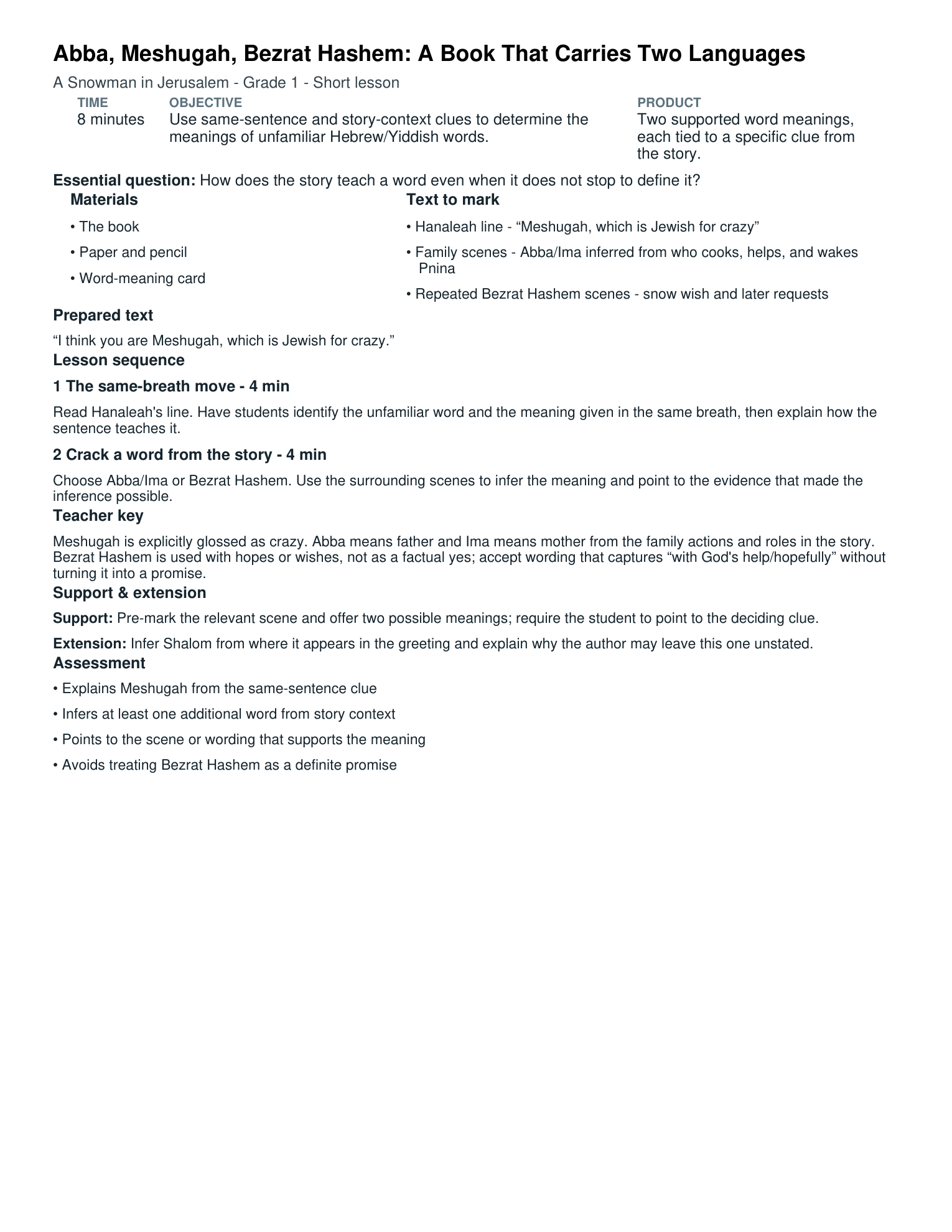
Ready-to-teach lesson
Abba, Meshugah, Bezrat Hashem: A Book That Carries Two Languages A Snowman in Jerusalem - Grade 1 - Short lesson
TIME
OBJECTIVE
PRODUCT
8 minutes Use same-sentence and story-context clues to determine the meanings of unfamiliar Hebrew/Yiddish words. Two supported word meanings, each tied to a specific clue from the story.
Essential question: How does the story teach a word even when it does not stop to define it?
Materials
- The book
- Paper and pencil
- Word-meaning card Text to mark
- Hanaleah line - “Meshugah, which is Jewish for crazy”
- Family scenes - Abba/Ima inferred from who cooks, helps, and wakes Pnina
- Repeated Bezrat Hashem scenes - snow wish and later requests Prepared text “I think you are
Meshugah, which is Jewish for crazy.”
Lesson sequence
1 The same-breath move - 4 min Read Hanaleah's line. Have students identify the unfamiliar word and the meaning given in the same breath, then explain how the sentence teaches it. 2 Crack a word from the story - 4 min Choose Abba/Ima or Bezrat Hashem. Use the surrounding scenes to infer the meaning and point to the evidence that made the inference possible.
Teacher key
Meshugah is explicitly glossed as crazy. Abba means father and Ima means mother from the family actions and roles in the story. Bezrat Hashem is used with hopes or wishes, not as a factual yes;
accept wording that captures “with God's help/hopefully” without turning it into a promise. Support & extension
- Support:
- Pre-mark the relevant scene and offer two possible meanings; require the student to point to the deciding clue. Extension: Infer Shalom from where it appears in the greeting and explain why the author may leave this one unstated.
Assessment
- Explains Meshugah from the same-sentence clue
page 1
- Infers at least one additional word from story context
- Points to the scene or wording that supports the meaning
- Avoids treating Bezrat Hashem as a definite promise
page 2
page 3